My front door gets three firm knocks every 6:15 PM. Nobody's ever there, but the doormat is always nudged, like someone just wiped their feet and left.
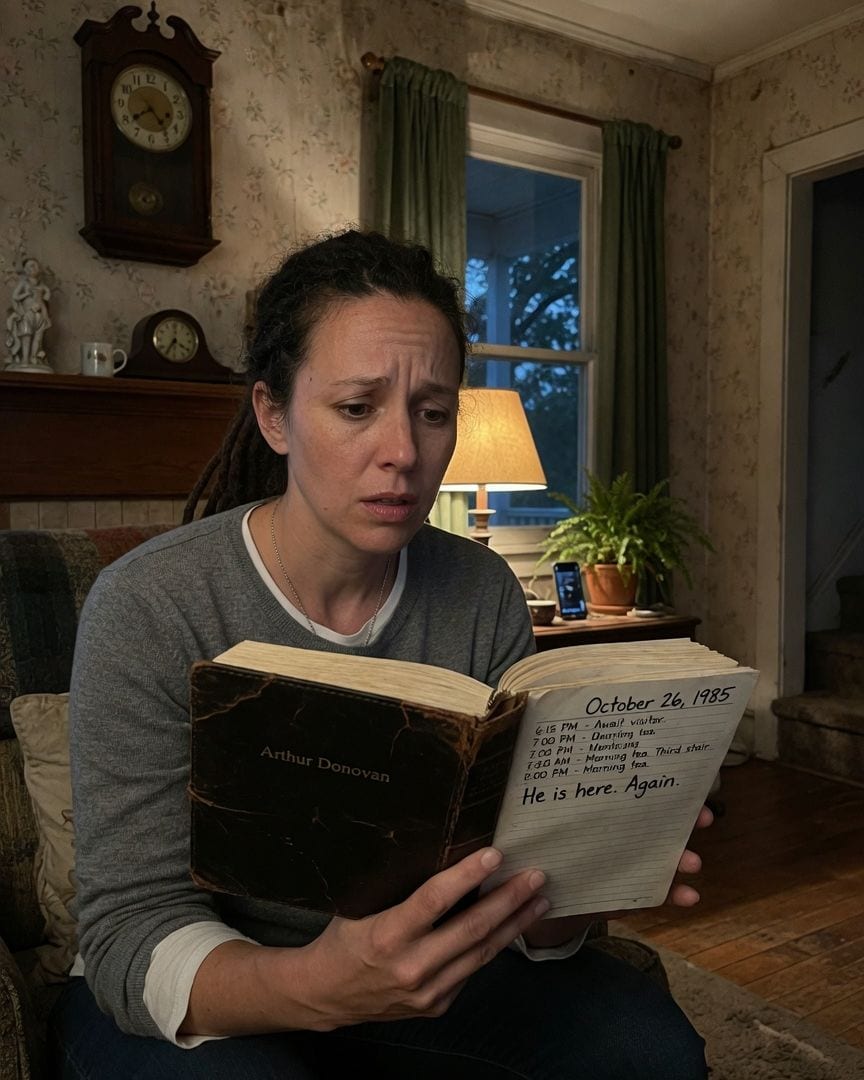
The first week I moved into this house, I thought it was kids. Three firm, rhythmic knocks, right on the dot of 6:15 PM. Every single evening.
I’d rush to the door, peering through the peephole, then throwing it open to an empty porch, the lane outside stretching silent and deserted under the twilight.
No giggling, no running footsteps, just the rustle of leaves in the old oak. I live alone, and this place, inherited from a distant relative, is quiet, almost unnervingly so. For two months now, it hasn’t varied once.
It’s not a prank. I tried watching from the living room window, hidden behind the curtain, waiting. Nothing. The knocks would ring out, strong and clear, from an empty porch.
I even set up my phone to record, tucked behind a potted fern.
The footage showed nothing but the motionless air, then the doormat subtly shifting, as if by its own volition, while the three knocks echoed clearly on the playback.
And every morning, without fail, that old welcome mat is nudged askew, a faint scuff mark visible near the center, like someone had stood there for a moment, carefully wiping their feet, then simply vanished.
It’s not just the knocks. Tuesdays, usually around midday, I catch a faint, sweet smell of stewed apples, even though I’ve never cooked them in this house.
And there’s the third stair from the bottom, on the main staircase, that gives a subtle, deep creak every morning at 7:00 AM, just as I’m getting ready for work.
I’ve started instinctively avoiding it, stepping over it, without ever consciously deciding to. It’s just… part of the house now. I’m sitting in my living room, the silence heavy, watching the antique clock on the mantelpiece tick towards 6:15 PM.
Dread, cold and sharp, coils in my gut. I know it’s coming.
The next morning, after another perfectly timed, perfectly empty knocking ritual, I decided I’d had enough. I needed answers, starting with the house itself.
I went up into the attic, a forgotten space filled with dust motes dancing in the slivers of light from the small window. Tucked away beneath a stack of brittle, yellowed linens, I found it: a small, leather-bound daily planner.
The name 'Arthur Donovan' was embossed on the cover, the gold fading with age. It was old, dating back decades, with every entry neatly penned in a precise, almost architectural hand.
Flipping through the thin, brittle pages, I noticed the obsessive detail. Each day was accounted for. '7:00 AM - Morning tea, third stair pause,' read one entry. My blood went cold. The third stair.
The one I’ve been avoiding, the one that creaks at 7 AM. '12:30 PM - Luncheon, apple and cheese.' Another shiver. The smell of apples. These weren't just random occurrences; they were a schedule.
A life meticulously mapped out, mirroring my own strange experiences.
I searched for entries around 6:15 PM. Many days, there was a simple 'Evening routine.' But as I neared entries from exactly thirty-eight years ago, leading up to today’s date, the text grew more specific.
More focused. '6:15 PM - Prepare for evening guest,' one read. Another, just days later, '6:15 PM - Await visitor.' My heart hammered against my ribs. Arthur Donovan, this man I’d never known, he was expecting someone. Every single night.
Just like the knocks now.
I tried to rationalize it, to force a normal explanation into place. Maybe it was a regular delivery, a friend who always called at that time, a family member.
But the sheer consistency, the absence of anyone now, the way the doormat still nudged... it made the mundane explanation feel flimsy, like tissue paper in a gale.
The planner felt heavy in my hands, a physical record of a life lived with unnerving precision, a precision that seemed to echo, a distorted reflection, in my own house today.
I could almost hear the soft click of his kettle, the rustle of a newspaper turning, the quiet, deliberate steps of a man alone, following his routine.
I meticulously turned the brittle pages of Arthur Donovan's planner, my breath catching as I reached the final entry. The date at the top of the page was October 26, 1985 – today's date, exactly thirty-eight years in the past.
The entries for that day were sparse, almost hurried. '7:00 AM - Morning tea. Third stair.' '12:30 PM - Luncheon.' Then, beneath the 6:15 PM slot, a single, chilling line, scrawled thicker than the others, almost gouged into the paper.
He is here. Again.
I stare down at the faded ink of the open daily planner, my finger tracing the last line of the final entry: 'He is here. Again.' The date above it matches today's date, exactly thirty-eight years ago.
'He is here. Again.' The 'again' gnawed at me. Who was 'He'? And why 'again'? The planner felt like a live wire in my hands, a direct conduit to something deeply wrong. I couldn't just dismiss it.
My research on Arthur Donovan started immediately. Local archives confirmed it: Arthur Donovan, age 65, disappeared without a trace on October 26, 1985 – the very date of that last, frantic entry.
Police reports mentioned no forced entry, no struggle, just an empty house, his morning tea cup still on the table. Neighbors had corroborated his rigid routines, his almost unsettling predictability.
I decided to talk to Eileen Fletcher, an elderly woman who lives two doors down. She's been in the neighborhood for decades. When I asked about Arthur, her eyes softened.
'Oh, Mr. Donovan,' she said, her voice reedy, lost in memory. 'Such a creature of habit. You could set your watch by him.' I asked her about the knocks, the evening visitor.
Eileen paused, a distant look in her eyes, before slowly nodding. 'He always had a visitor, didn't he? Every evening. Never saw who it was, mind. But he was always expecting them. Always on the dot.'
She frowned then, a deep crease forming between her brows. 'Funny, though. One night, the knocks just… stopped. And so did he.' I pressed, my voice barely a whisper. 'Did anything else like this happen before?
Other disappearances from this house?' Eileen shook her head slowly, a faint sadness in her gaze. 'Not that I recall, dear. Just Mr. Donovan. A real shame.'
I left Eileen's house with more questions than answers. The pieces were beginning to fit, but the puzzle itself was growing darker, larger. The routines, the knock, the disappearance – it was all too neat. Too much of a pattern.
I tried to fall back on rational explanations: a clever prankster who somehow manipulated the doormat, a faulty old house settling into strange patterns.
But the planner, the specific date, and Eileen's vague recollection of a 'visitor' who simply stopped coming, pointed to something else entirely. Something anchored in the past, yet bleeding into my present. The house seemed to hum with it.
My investigation led me to the town’s historical society. I spent hours poring over dusty ledgers and brittle property records, anything to shed more light on the house’s past occupants.
As I fed microfiche into the glowing reader, blurring through decades of history, I kept catching glimpses of an older man watching me from a nearby table. He had neatly combed grey hair and a calm, almost placid expression.
It was David Lockwood, a man I’d often seen walking his scruffy terrier past my house. He looked familiar, but I couldn't place why he'd be here, or why he was so intently observing me.
He nodded politely when our eyes met, a faint, unsettling smile playing on his lips. I tried to focus, but the awareness of his gaze was a prickle on my skin.
Later, as I walked to my car, the late afternoon sun casting long shadows, I found a small, handwritten note tucked under my windshield wiper.
It was a single sentence, in elegant, old-fashioned script, the ink a faded sepia: 'Some memories are best left undisturbed, Miss Caldwell. They repeat themselves.' There was no name, no signature. My blood ran cold.
Someone knew what I was doing. Someone knew about the house. And the note, with its chilling implication of repetition, connected directly to Arthur’s 'Again.' The calm man at the archive, David Lockwood, immediately came to mind.
I glanced around, but the street was empty, hushed. The danger felt personal now, the quiet unease escalating into a direct, silent warning. I fumbled with my keys, my hands shaking.
The house, which had once felt like a sanctuary, now felt like a trap. I hurried home, the note clutched in my hand, the words burning into my mind.
That night, I started locking every door and window, double-checking them before bed, a routine I never had before. The 6:15 PM knock continued, a relentless reminder, and the doormat still nudged askew.
The next morning, seeing David Lockwood walking his dog past my house, I knew I had to confront him. He moved with a slow, deliberate stride, his terrier sniffing at a patch of grass. 'Mr. Lockwood?'
I called out, holding up the crumpled note. 'Did you leave this on my car?' He stopped, his dog wagging its tail, and turned to me.
His expression was utterly calm, devoid of surprise or guilt, as if this was merely a pleasant morning chat. 'I did, Miss Caldwell,' he said, his voice soft, almost gentle. 'I saw you at the archive.
Curious about the house, aren't you?'
My hands trembled, but I tried to keep my voice steady. 'What do you know about this house? About Arthur Donovan? And what do you mean, 'They repeat themselves'?' David sighed, a sound of profound, resigned weariness.
'Arthur was a friend. A good man. Very set in his ways.' He gestured vaguely at my house, a solid, indifferent presence behind me. 'He lived a quiet life. The house suited him.'
'He disappeared, Mr. Lockwood,' I pressed, feeling a tremor in my voice. 'On October 26, 1985. The same day he wrote 'He is here. Again.' in his planner. And now I'm getting the same knocks.'
David nodded slowly, his gaze fixed on the house, as if seeing something I couldn’t. 'Yes. That was the year. Thirty-eight years ago.'
I stared at him, my mind scrambling to make sense of the number. 'Thirty-eight years? What's significant about that?' David finally turned to me, his eyes holding a deep, ancient sadness, a weariness that went beyond his years.
'It's the cycle, Miss Caldwell. The house… it remembers. It plays back what happened, every thirty-eight years. Like a clock. Arthur, he knew it was coming again. He tried to prepare. But it always happens.'
A cold dread, unlike anything I’d ever felt, spread through me, chilling my bones. 'It always happens? You mean… he wasn't the first?' David's lips pressed into a thin line. 'No. He wasn't the first.
And you won't be the last, I'm afraid.'
The earlier clues snapped into sickening focus: the rigid routines, the specific dates, the 'again' in Arthur's journal. It wasn't just Arthur's ghost; it was the house itself, a dreadful, repeating echo, a stage for an endless play.
David's calm, his utter lack of alarm, was more terrifying than any scream. He spoke of it like the weather, an unchangeable fact of nature.
I felt a profound sense of violation, of my privacy, my very self, being stripped away. My home, my sanctuary, was a stage for a recurring tragedy, and I'd unknowingly stepped into the lead role.
Shaken by David Lockwood's confession, I spent the next few days in a frantic, desperate search. If this was a cycle, there had to be more evidence.
I returned to the historical society, focusing not just on my address, but on similar disappearances in the area, around the same time period: 38 years prior to Arthur's vanishing in 1985.
I expanded my search, using keywords like 'unexplained vanishing,' 'local mystery,' 'empty house.' The librarian, a quiet woman with kind eyes, gave me a sympathetic, yet curious, look.
Hours later, deep in the musty, cool air of the archive, buried in a dusty box of microfiche from the early 20th century, I found it. A series of articles spanning several weeks, their headlines screaming in bold, faded ink.
'Prominent Citizen Vanishes,' 'No Trace Found,' 'House Remains Vacant.' The address was my own. The date: October 26, 1947. Another disappearance, exactly 38 years before Arthur Donovan's. The dread in my stomach intensified, a sickening confirmation.
Then, another box, another set of articles, 38 years before that: October 26, 1909. The same house. The same date. The same inexplicable vanishing.
It wasn't just a coincidence, it wasn't a pattern; it was a mechanism, precise and horrifying, ticking through the decades.
I stand frozen in the dim light of the local historical society archive, clutching a brittle newspaper clipping. The headline, yellowed with age, screams: 'Local Man Vanishes From Elm Street Home - 1947.'
Below it, a grainy photograph of a house unmistakably my own.
The next day, the stack of newspaper clippings heavy in my arms, I confronted David Lockwood again. He was in his front garden, pruning roses, his movements unhurried.
'It's happened before,' I stated, my voice flat, devoid of emotion, because to feel anything would be to break. 'Three times, at least. Every thirty-eight years, on October 26th. The same house.'
David didn't even flinch. He just nodded, his face impassive, as if confirming the weather forecast. 'Yes. It's always the 26th. Always a man alone in that house. Always the knock, the routines leading up to it.'
He looked at me then, a hint of pity in his eyes, but it was a cold, distant pity. 'Arthur tried to warn me, you know. He'd seen the signs. He found those old records too, eventually.
The house, it absorbs them. Their routines, their expectations. It builds to a crescendo, then… it takes them.'
A chill deeper than anything I'd felt before permeated my very bones. 'Takes them? Where do they go?' David shrugged, a small, helpless gesture that was all the more chilling for its resignation. 'No one knows.
They just… aren't there anymore. The house, it keeps them. Keeps their memory, their habits, so it can play them out again. Until the next cycle.'
The coherent horror of it all washed over me, a nauseating certainty. The doormat, nudged. The third stair, worn to a hollow. The faint, sweet smell of apples. The 6:15 PM knock, precise as a heartbeat. Arthur's 'He is here.
Again.' It wasn't a ghost, not in the traditional sense. It was the house itself, a living, breathing archive of tragedy, meticulously replaying the final moments of its occupants, a dreadful program.
David explained that his own grandfather was a friend of the 1947 occupant, and had witnessed that disappearance, passing down the chilling knowledge of the house's nature.
He had tried to subtly warn Arthur, but the cycle, once initiated, was unstoppable. The house, in its cold, indifferent memory, simply continued its dreadful program, absorbing and replaying.
'What happens? What is 'He'? What 'takes' them?' I demanded, my voice raw with a desperate urgency. David shook his head slowly, his gaze still holding that ancient weariness. 'No one has ever seen it. Not truly.
It's not a person. It's… the completion of the routine. The final guest. The house's memory reaching its conclusion.'
My mind screamed. 'But it's today! October 26th! I have to leave!'
David's calm broke slightly then, a flicker of genuine sorrow in his eyes, the first true emotion I’d seen from him. 'You can try, Miss Caldwell. But the house… it calls you back. It needs the routine to finish.
Arthur tried to leave. He packed a bag, just like you might. But he was back in his armchair by 6 PM, waiting. He said he couldn't leave, not really. He felt… compelled.'
Panic, cold and sharp, ripped through me. I didn't wait for another word. I rushed home, fumbling with my keys, my hands shaking so violently I almost dropped them.
Inside, I threw clothes into a duffel bag, my breath coming in ragged gasps. Keys in hand, I ran to the front door, my only thought escape. My hand reached for the doorknob, but then I stopped.
A strange, heavy inertia settled over me, thick and suffocating. I felt a pull, subtle but undeniable, drawing me deeper into the house, away from the door.
My mind screamed at me to run, to break free, but my feet moved with a dreadful slowness, guided by an unseen, irresistible force.
I found myself in the living room, drawn to the worn armchair by the fireplace, the one Arthur Donovan must have sat in, waiting. It was 6:10 PM.
The house was utterly silent, expectant, a vast, hollow space breathing around me. I felt a profound, terrible certainty. I couldn't leave. I couldn't break the cycle.
I sank into the armchair, my hands clasped tightly, gazing at the front door. The minutes ticked by, each second a hammer blow against the silence. The house tightened its grip, waiting for its cue.
At 6:15 PM, three firm, rhythmic knocks echoed from the front door. The sound was utterly familiar, utterly expected. I did not move. I did not answer. I simply waited.
The next morning, David Lockwood walked his dog past Renee's house. The front door was closed, the curtains drawn tight. The doormat was nudged askew, as always. He paused, looking at the house, a grim acceptance on his face.
He didn't knock, didn't call out. He just continued his walk, the dog trotting placidly beside him. A week passed. The mail piled up. The lights never came on. Neighbors noticed the quiet, the stillness.
Eileen Fletcher mentioned to David that she hadn't seen Renee in days. David merely nodded, his expression unreadable. The house stood silent, outwardly unchanged.
Its routine, however, had begun again, a new memory slowly forming, waiting for its next occupant, its next cycle.
The house settled into its familiar quiet. The mail piled up again, untouched. The curtains remained drawn. No one came or went.
David Lockwood, on his daily walk, often paused outside, his eyes lingering on the porch, on the perfectly nudged doormat. It was an absence, not a disappearance, to him. Just another completion. The cycle had turned.
Another life absorbed, another set of memories added to the house's silent, dreadful repertoire.
The old house stood, solid and indifferent, waiting for the next person to try and make it a home, to unknowingly step into its endless, repeating play.
A young couple, new to town, drives past, slowing to admire the charming, old house with the 'For Sale' sign now planted firmly in its front yard. 'Looks lovely,' the woman says, smiling at her husband. 'Such character.' He nods.
'Perfect, isn't it?'
If this one got to you
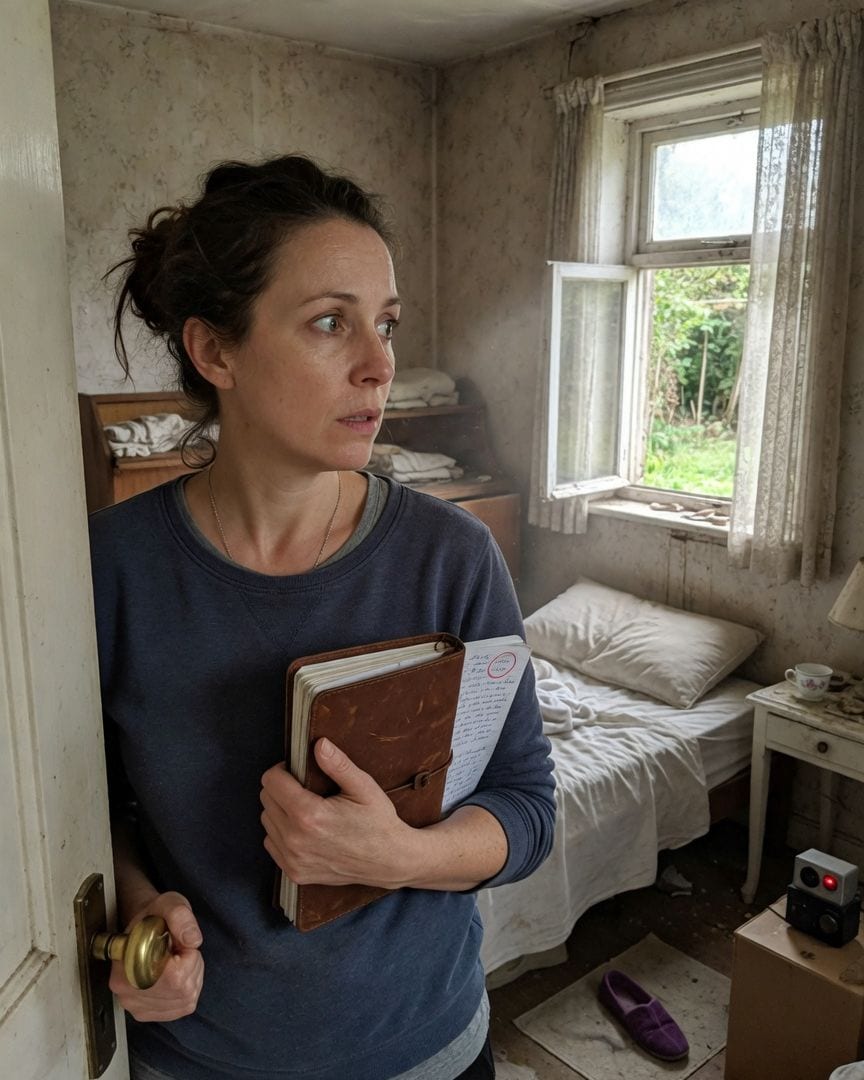
My spare room bed is slept in every few nights, sheets warm and pillow dented. I live alone, painted the window shut, and nobody has a key.
I've lived in Grace's house for six months, adjusting to its quiet rhythms. But the spare room, which I keep shut and empty for storage, has a disturbing routine of its own. Every few mornings, the bed is clearly slept in, the sheet rumpled and warm, and the window I painted shut is open exactly two inches.
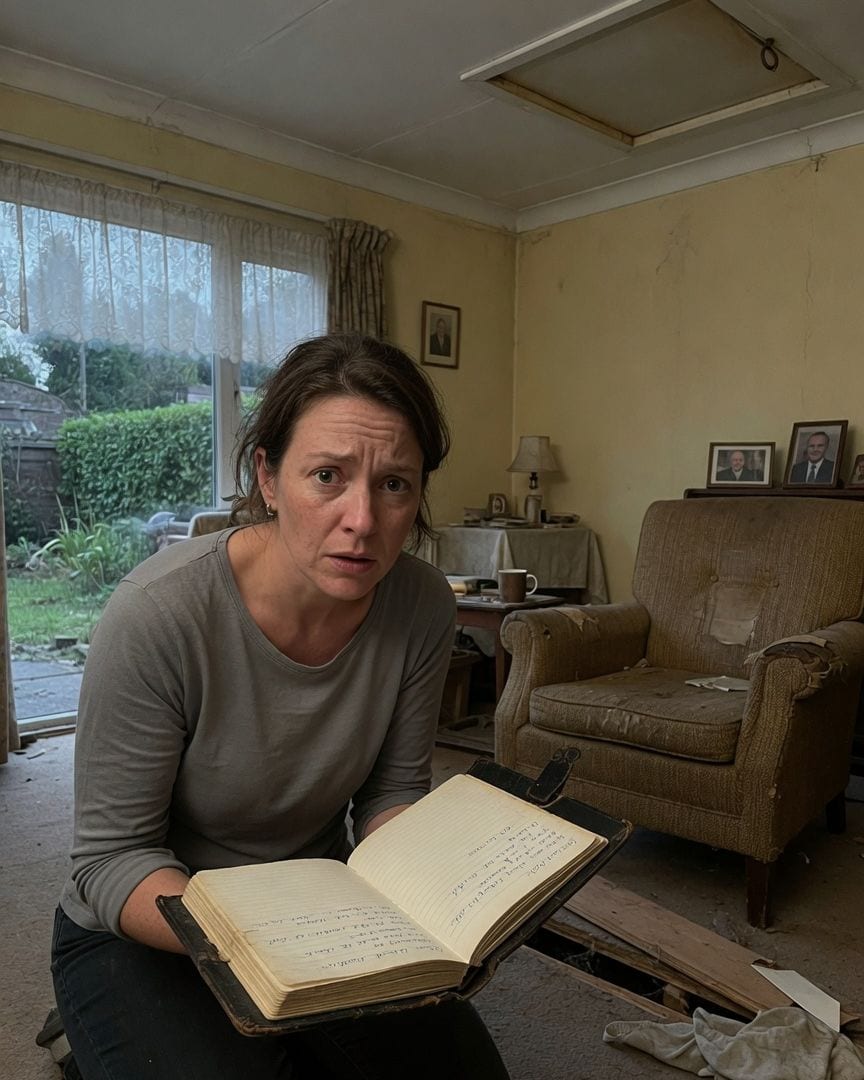
My loft hatch is sealed with paint, but every night a trunk scrapes across the floor above my bed, then a chair settles. I have the only ladder.
Living in my great-uncle Ralph's inherited house, I've grown used to the usual creaks. But above my bed, behind a sealed loft hatch, distinct sounds begin nightly: a heavy trunk dragging, then a chair scraping as if someone sits down. I live alone, and the sounds are too deliberate, too regular, for an empty house.
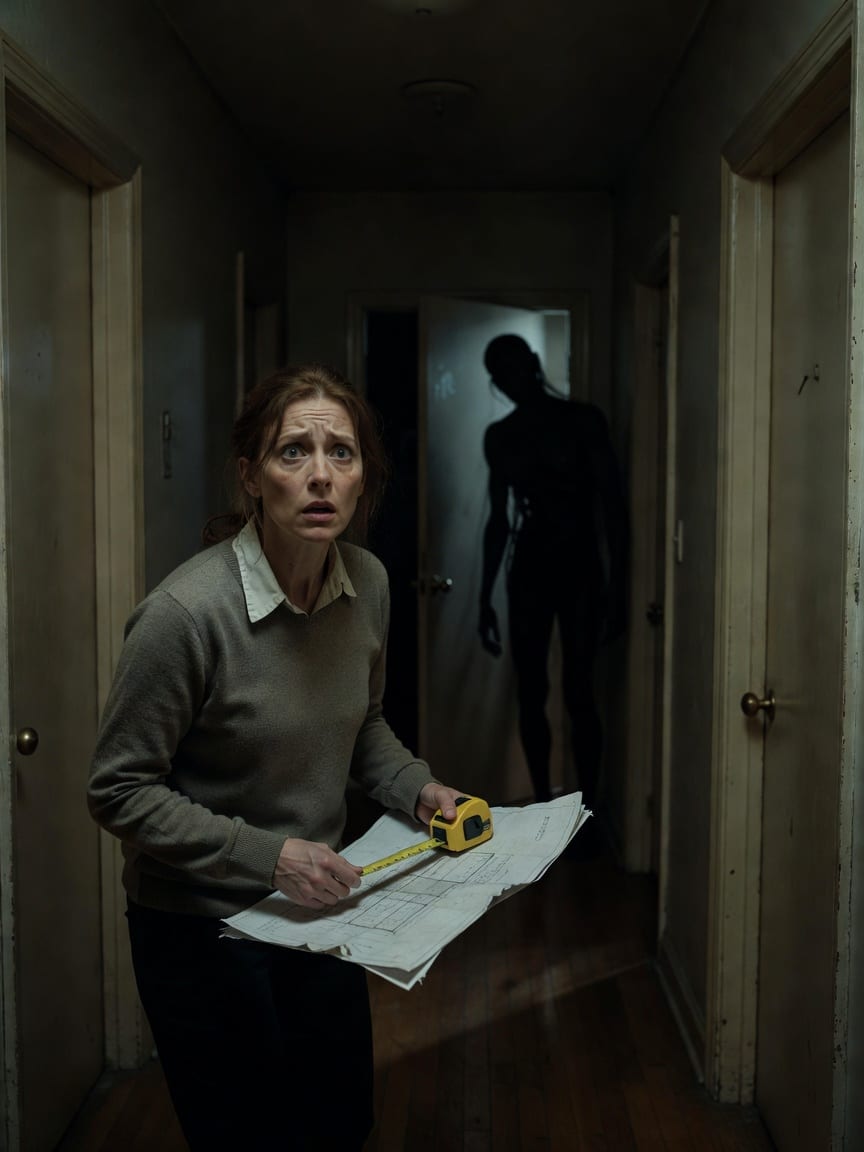
My front door has a dented gate and a dead hydrangea. I walked past it six times, trying to reach the corner shop just a hundred yards away. The pavement kept bringing me back to my own porch, and the shop's light never moved.
My morning started like any other, a quick walk to the corner shop from my home at Number 14, Elm Terrace. But after walking what felt like two minutes, I found myself back at my own front door, the shop no closer. I tried six times, faster and slower, but my street kept compressing, refusing to let me leave.
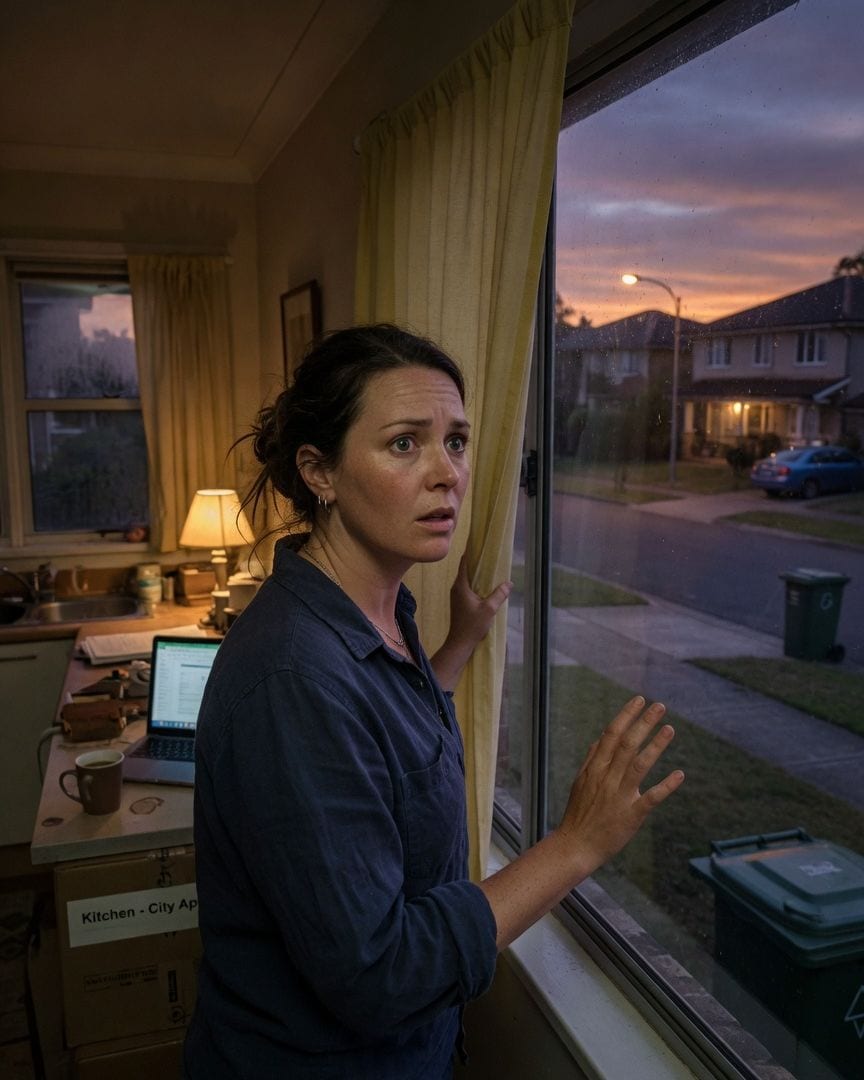
My bin was turned the wrong way Tuesday. The man three doors down hasn't been seen since, though his curtains still open.
New to Oakhaven, I dismissed the local warnings as charming quirks. But after I put my bin out first, my neighbor Joel Whitmore vanished, leaving only a cryptic 'My turn' note. The same strange symbol from his note was chalked on my bin, facing the street.
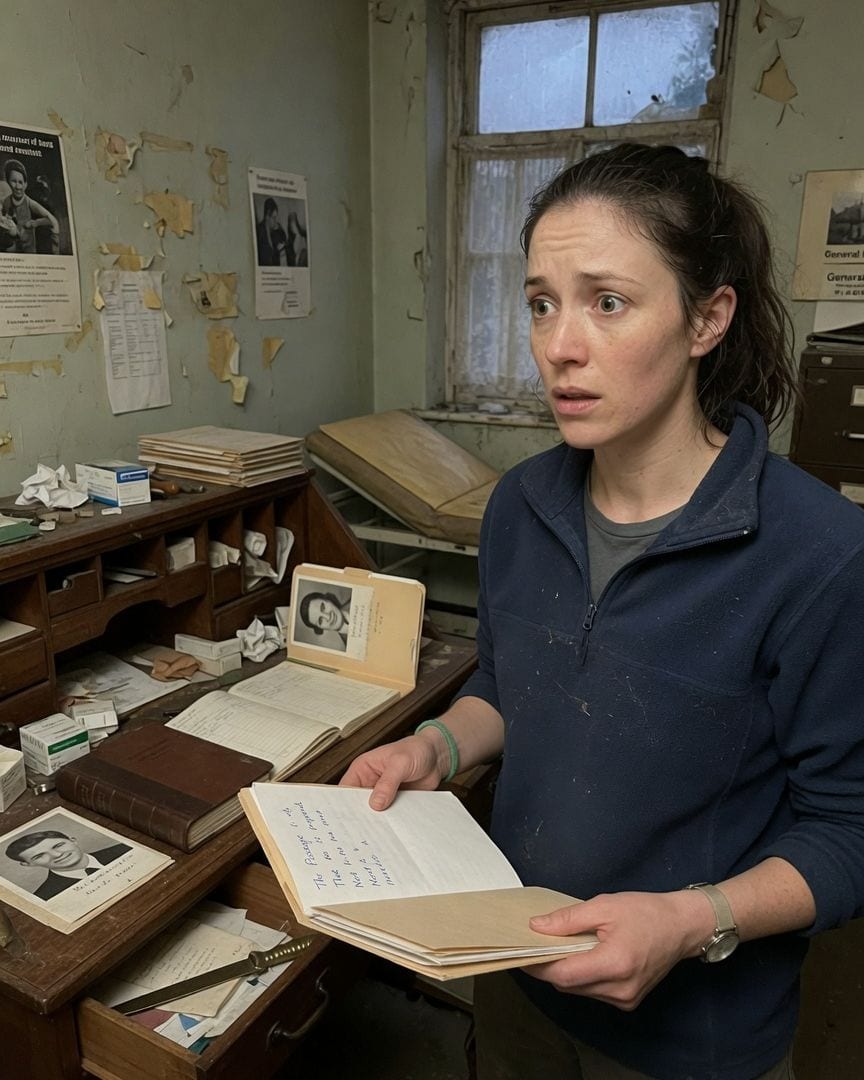
My new clinic's appointment book shows entries for this coming Monday, decades after the doctor retired and died.
Chloe Lawson bought an old, abandoned surgery in Nettlebed, ready to open her new vet clinic. Locals insisted Dr. Almott retired in '79 and the practice shut down for good. But then Chloe found his dusty appointment book filled with meticulous entries, continuing unbroken from 1979 through the decades, right up to this coming Monday.
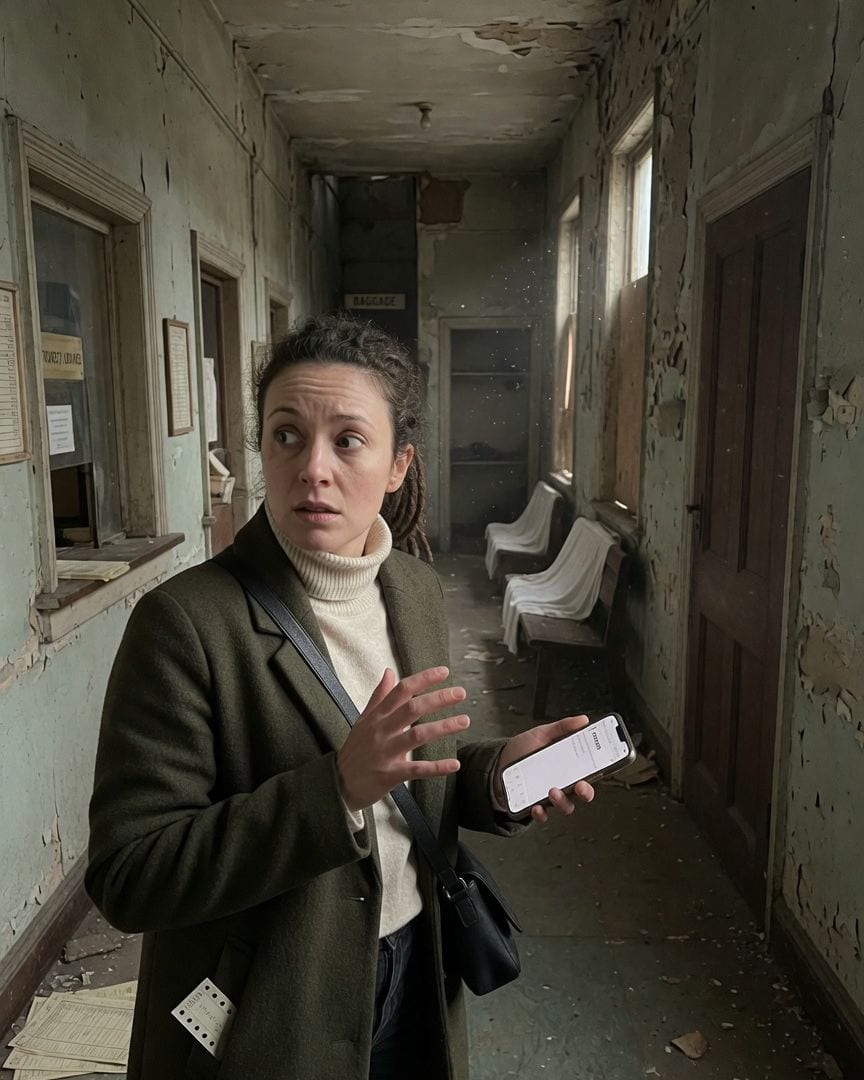
My scenic railway loop repeated six times. The same trestle bridge, the same waterfall, over and over, the conductor punching my ticket each pass. We never left the circle.
My scenic railway journey was supposed to be a gentle, thirty-minute loop through the gorge. But after only fifteen minutes, the same landmarks rolled past again, and again, and again. The conductor, Henry Kingsley, punched my ticket six times as if each was the first, his gaze utterly devoid of recognition.