My gym locker 33 opened a second locker 33, damp with sweat, though I hadn't been to the gym since Monday.
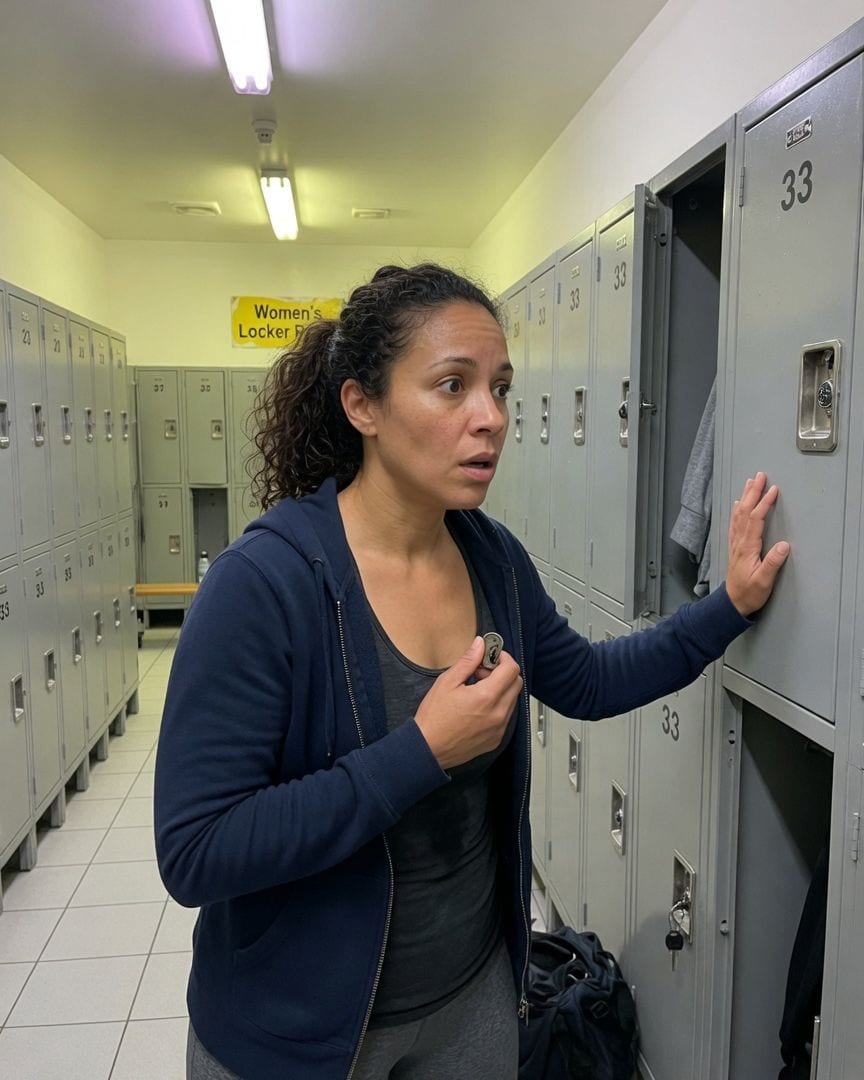
It was a Wednesday, not my usual gym day, but I had a deadline looming and the only way to clear my head was a solid thirty minutes on the elliptical.
I remember the exact time I walked in: 3:14 PM. The gym was almost empty, the fluorescent lights buzzing over the pristine rows of equipment.
I headed straight for the locker room, a brightly lit space with two neat rows of twenty lockers each, forty in total. My key, number 33, felt cool and solid in my hand. It slid smoothly into the lock.
But as the door swung open, something was profoundly wrong. Inside, my dry gym clothes were folded neatly, just as I’d left them Monday. My running shoes were there, my empty water bottle. All normal.
Yet, directly beside my locker, impossibly, was another one. It was exactly the same dull grey metal, the same standard size, and it also bore the number 33.
It was physically there, a solid, undeniable forty-first locker in a room that only held forty. I pulled my hand back, a cold dread prickling my skin. I stood there, staring.
My mind tried to dismiss it, to process a trick of the light, a misplaced reflection. There was no reflection. It was just there.
My hand, without thinking, reached out. The metal was cold to the touch. I tried the handle. It opened easily, with a soft click.
Inside, my other gym clothes hung on a hook: the exact same grey t-shirt, the same black leggings, the same brand of socks. But these were damp.
The air inside the impossible locker smelled faintly of chlorine and sweat, as if they’d just been worn, just moments ago. I felt a surge of nausea. I closed the second locker with a soft thud.
Then I closed my own. I backed away, bumping into the opposite row of lockers, and counted again, slowly, aloud. Forty lockers. Then I looked again. Forty-one.
The second 33 was still there, a ghost of metal and impossible space, undeniably real.
I spent the next hour trying to rationalize it. I paced the locker room, counting the lockers repeatedly, my steps echoing in the empty space.
I measured the rows with my hands, tried to find a seam in the wall, a hidden panel, anything that could explain a secret compartment or a clever illusion. There was no trick.
The second Locker 33 was a solid, physical presence, undeniably there, yet defying the room's architecture, pushing out into a space that shouldn't exist.
It was like a missing puzzle piece had been jammed into a completed picture, forcing everything else to warp around it.
Eventually, I made my way to the front desk, my heart thudding, and tried to flag down one of the young gym attendants. He looked up from his phone, barely concealing his annoyance.
I tried to explain, stumbling over my words. "There's an extra locker in the women's changing room. Number 33. I swear." He just shrugged, looking over my shoulder. "Lady, we got forty lockers. Two rows of twenty. Always have.
Maybe you need more sleep." He actually gave a dismissive little laugh. His indifference was almost as unsettling as the locker itself. It made me doubt my sanity, but only for a second. I knew what I’d seen.
I returned to the impossible 33. The silence of the locker room pressed in on me. I opened it again, the damp clothes still hanging, the scent of chlorine stronger now, a sharp, metallic tang in the air.
My fingers, trembling slightly, brushed against something small, hard, tucked deep into a pocket of the damp shorts. I pulled it out.
It was a tarnished, heavy metal token, smooth with age, with faded, almost illegible numbers and a name etched into its surface. It was an old-fashioned locker tag, clearly not from this modern gym.
The name, 'V. Kingsley,' and a date, '1984,' were barely visible beneath layers of grime and corrosion. It was a tangible link to a past that shouldn't be here, in my gym, in my locker.
It felt impossibly cold in my palm.
Clutching the old token, I hurried out of the locker room, needing to show it to someone, anyone, who would believe me. The quiet buzz of the gym equipment now sounded like a low, insistent hum.
I found Oscar Hughes, the gym manager, at the front desk, sorting through papers. He looked up, a placid, unreadable expression on his face, his grey hair neatly combed.
I took a deep breath, trying to slow my racing pulse, ready to explain everything, to hold up the token as proof.
I gestured back towards the locker room entrance. "Mr. Hughes, there's something wrong with the lockers. There's a second 33, and I found this in it." I held out the token, its tarnished metal glinting faintly under the lobby lights.
Oscar's eyes flickered to the token, then to my face, a faint, almost imperceptible shift in his calm demeanor. He didn't reach for it. He cleared his throat slowly, a dry, deliberate sound. "A second 33, you say?"
His voice was soft, even. But something in his gaze, a quiet depth that seemed to understand more than he let on, made me hesitate. I felt a sudden, profound chill that had nothing to do with the air conditioning.
I looked back at the entrance to the locker room, the white tile floor gleaming under the bright lights, a cold certainty settling in my gut. I knew, without looking, that the second 33 was no longer there.
Oscar Hughes offered me a dismissive smile, the kind of professional geniality that smooths over uncomfortable questions. He suggested I might be 'overworked' and that the gym's records, which he tapped vaguely, showed only forty lockers.
He didn't even take the token from me. Just kept his hands on his papers, his gaze unwavering but unconcerned. Shaken, I left, the token burning in my palm like a brand.
I knew he was lying, or at least withholding. The date on the token, 1984, gnawed at me. It was too old, too specific to be a prank.
I drove straight to the local historical society, a quiet building smelling of old paper and dust, a place I’d only visited once for a school project years ago.
There, I found Frances Langford, a meticulous archivist with kind eyes and a grey bun piled high on her head. I explained my strange discovery, trying to keep my voice steady, and showed Frances the token.
Frances’s brow furrowed as she examined it, turning it over in her arthritic fingers. "Ah, yes. This is from the old Municipal Baths. They stood on the site of your gym, you know.
Lovely art deco building, but it fell into disrepair. Closed down in '85." She confirmed the token's authenticity with a nod.
My dread deepened. I asked if there were any unusual incidents reported at the baths. Frances sifted through dusty ledgers, her fingers tracing names and dates. "Nothing official, dear. Just… a few whispers. Old staff, former patrons.
People saying they got lost in the steam, or that a few visitors seemed to simply… vanish. Old wives' tales, I always thought. The sort of thing that gets exaggerated over time." She looked up, her expression a little wistful.
"The place always had a certain… atmosphere. A bit disorienting, with all the mirrors and the echoes off the tiles." I thanked her, the words 'lost' and 'vanish' echoing in my mind.
I returned to the gym later that week, now seeing everything through a new, unsettling lens. The familiar space felt subtly wrong.
A hallway seemed to stretch longer than it should, the reflection in a window momentarily showed a slightly different angle of the street outside than I knew was there.
It was like looking at a photograph that had been perfectly duplicated and laid slightly askew. I felt a profound sense of disorientation, a subtle shift in the very fabric of the place, a whisper of impossible geometry.
I began spending more time at the gym, not to work out, but to observe. I would linger near the women's locker room, trying to discreetly measure the space again, looking for any sign of the spatial anomaly.
The wall where the second locker 33 had appeared now seemed seamless, ordinary.
But I noticed a subtle warp in the tiling near that spot, a faint discoloration like an old water stain that wasn't quite a stain, but a trick of light on something uneven.
I crouched, pulling out a small tape measure from my bag, trying to get a better look.
As I was there, hunched over, trying to make sense of the faint distortion, Oscar Hughes approached me from behind. His voice was low, calm, almost too gentle, cutting through the general gym hum. "Everything alright, Ms. Calloway?
You seem very interested in our floor plans lately."
I straightened up quickly, startled, my heart giving a hard thump against my ribs. "Just… admiring the architecture, Mr. Hughes," I said, trying to sound casual, clutching the tape measure behind my back.
He smiled, a thin, knowing curve of his lips that didn't quite reach his eyes. "Some architecture is best left un-admired, Ms. Calloway. This old building, it has its quirks. Best not to go poking around in them.
Some things are better left undisturbed." He paused, his gaze unwavering, resting on me with an unsettling weight. "Wouldn't want to get lost, would you?" The casual threat, or perhaps warning, hung in the air between us.
I felt a chill that had nothing to do with the gym's efficient air conditioning.
Later that day, as I walked to my car, I found a small, folded note tucked under my windshield wiper. It was a single sentence, typed in a plain sans-serif font: 'The past isn't always where you left it.'
No signature. My breath hitched. I looked up, scanning the parking lot, my eyes drawn to the gym entrance. Oscar Hughes stood there, by the glass doors, watching me.
His arms were crossed, his expression unreadable, a silent sentinel against the fading afternoon light.
The note confirmed my suspicions: Oscar knew. My resolve hardened. I drove back to Frances Langford at the historical society, the newspaper clipping about the baths clutched in my hand.
"Mr. Hughes warned me off," I told her, my voice tight. "He knows something. What else is in those archives about the old baths?"
Frances, seeing my determination, sighed. "There was a section… officially sealed off due to 'structural instability' in the early 80s. The city council was very quiet about it. But the plans were always a bit… odd."
She led me to a forgotten cabinet in a dimly lit corner, pulling out a brittle, rolled-up blueprint, tied with yellowed string. "Here."
It was a floor plan for the Municipal Baths, dated 1983. I unrolled it on a dusty table, the paper crackling. The layout of the locker rooms was strikingly similar to the current gym, but with crucial differences.
One section, clearly marked 'Locker Room Annexe,' showed an additional row of lockers, including a 'Locker 33 Prime.' This Annexe was then heavily crossed out in red ink, with 'DEMOLISHED - UNSTABLE' scrawled across it.
But the dimensions didn't add up. The Annexe would have extended beyond the building's known footprint. It simply couldn't have existed where the plan claimed.
"It was never properly demolished," Frances murmured, tracing the red line with a finger. "Just… sealed. The records are vague. Some said it was a cost-cutting measure, others… a cover-up for something stranger."
My eyes scanned the blueprint, then snapped to a small, hand-written note in the margin, almost illegible, penned in faded blue ink: 'Recurring spatial anomalies. Subject V. Kingsley last seen near LKR 33P.'
The impossible geometry, the disappearing lockers, the old token – it all clicked into place with a sickening thud. The Annexe wasn't demolished; it was absorbed, folded into the main structure, and it periodically bled through.
I stared at the blueprint, the words 'Recurring spatial anomalies' echoing in my mind, each syllable a hammer blow. 'V. Kingsley,' the name on the token, was a 'subject.' Not a customer, a subject. A shiver ran down my spine.
I asked Frances if there were any other records pertaining to V. Kingsley, anything that might explain what 'subject' meant.
Frances hesitated, then reluctantly pulled out a single, fragile newspaper clipping from 1984. It was yellowed and brittle, tucked deep within a file marked 'Miscellaneous Local Incidents.'
It was a small article, buried deep in the local news section, reporting the disappearance of a 'Vanessa Kingsley,' a young woman who vanished from the Municipal Baths. The article described her last known location: near locker number 33.
It mentioned her gym bag and personal effects found, but no sign of Vanessa herself. My breath caught in my throat.
The description of Vanessa's last known moments, pieced together from witness accounts in the article, spoke of her complaining about 'the walls shifting' and 'the same hallway appearing twice.'
The article itself was unsettlingly incomplete, with blurred text and missing sections that seemed to resist being copied or photographed accurately, as if the record itself was being 'erased' or 'modified' by the anomaly.
The second, deeper layer of dread settled over me: this isn't just a place that has an anomaly; it's a place that takes people. Vanessa Kingsley wasn't merely 'lost'; she was absorbed by the impossible geometry.
I looked down at the clipping, then at the old token, smooth and heavy, still in my hand. Then my gaze fell to my own gym key, number 33, still warm in my pocket. The connection is undeniable, horrifyingly clear.
I am walking in Vanessa's footsteps, and the building is waiting.
I returned to the gym, my heart pounding with a terrible, crystalline understanding. The fluorescent lights seemed too bright, the familiar thrum of the machines too loud. I knew exactly what I was looking for now.
In the locker room, the air felt thick, heavy with unspoken history. I stepped to where the second 33 had been, and this time, the seamless wall subtly shimmered, a faint distortion in the fluorescent light.
For a split second, I saw not lockers, but faded, peeling tiles and a different, darker ceiling – an echo of the old bathhouse, a brief, horrifying glimpse through a tear in reality.
Oscar Hughes was waiting for me. He stepped out from behind a row of treadmills, his face grim, the placid mask finally falling away. "You found the records, didn't you? About Vanessa. About the Annexe."
He sighed, a sound heavy with a lifetime of quiet dread. "My aunt. Vanessa Kingsley. She was my mother's sister."
His voice was low, strained. "This anomaly… it runs in cycles. Every few decades, it strengthens. The 'Annexe' isn't gone; it's folded into this building, a pocket of impossible space and time. It pulls things in, or echoes them out.
Your damp clothes, the second locker… they were from an echo of you, from a slightly different timeline, or a past cycle, also using locker 33. The building reaches out, tries to pull familiar patterns back into itself."
He explained that the 'Road That Returns' isn't just a metaphor; sometimes, the geometry extends even beyond the building, making familiar routes loop back on themselves, trapping people in recursive journeys.
"I took this job," he said, his voice thick with a lifetime of quiet dread, "to keep an eye on it. To make sure no one else gets lost. To stop the cycles from claiming more people."
He looked at me, his eyes full of a weary, resigned knowledge. "And now it has you."
Oscar explained the 'rules' to me, his voice low and urgent, like a man sharing a terrible, sacred secret. "You don't fight it. You recognize it.
If a path feels too long, if a door looks different, if a reflection doesn't quite match… you turn back. You don't try to find the center, because the center is everywhere and nowhere."
He glanced around the locker room, as if expecting the walls themselves to listen.
As he spoke, the air in the locker room grew heavy, a faint hum vibrating through the floor that I could feel in my teeth. The fluorescent lights flickered, casting long, jumping shadows.
I felt a disorienting pull, a vertigo that wasn't physical, but a twisting in my mind, a sense that the space around me was stretching, bending.
I tried to leave, heading for the main exit, my eyes fixed on the illuminated sign above the double doors.
But as I walked down the familiar hallway, past the motivational poster of someone running on a beach, past the water fountain, I realized I was passing the same poster, the same water fountain, again and again.
The hallway was looping. The 'Road That Returns' was manifesting, trying to reel me in.
Panic tightened my chest, cold and sharp, but Oscar's words echoed in my head: recognize it, don't engage. I forced myself to breathe, to focus on a fixed point—the red fire exit sign at the far end of the hallway.
I kept my eyes on it, walking slowly, deliberately, not trying to break the loop, not trying to understand it, but to simply pass through it. I ignored the repeating poster, the repeated sounds of a distant treadmill.
After what felt like an eternity, but was probably only a minute or two, the fire exit sign finally led to the actual door, which opened into the familiar gym lobby.
I pushed through it, gasping, into the mundane, reassuring reality of the front desk. I was out. But the experience had left an indelible mark. I understood now: I didn't escape the anomaly; I merely navigated it.
It's still there, waiting, a silent, impossible geometry woven into the very fabric of my everyday life.
I continue to go to the gym, but my routine is forever altered. I avoid certain areas, especially the far end of the locker room.
I always check my own locker 33, making sure it’s the only one, tapping the cold metal, just to confirm. Oscar Hughes remains the quiet guardian, exchanging knowing, weary glances with me across the gym floor.
We are two people who see, two people who know the fragile truth beneath the surface.
The subtle shifts in the building's geometry are still there, for those who know how to see them: a doorframe that seems to tilt momentarily, a reflection in a mirror that shows a fleeting, impossible angle of the room, as if the space itself is trying to correct a brief, accidental glimpse of another reality.
The world moves on, oblivious, but I live with the quiet, terrifying knowledge of what lies beneath the surface of the ordinary.
The gym is still a place of routine, sweat, and health for everyone else. For me, it's a constant exercise in hyper-awareness, a daily negotiation with a silent, impossible truth.
I've learned to spot the signs, to feel the subtle shifts in space, to recognize when the building breathes, when the geometry misbehaves.
I carry the knowledge of Vanessa Kingsley, of the other Evelyn, and of Oscar Hughes's quiet burden, a secret society of those who see.
I am safe, for now, but the world is no longer as solid as it once seemed.
Sometimes, when I'm walking home, the old road takes a turn I don't recognize, and I just keep driving, hoping it eventually brings me back.
If this one got to you
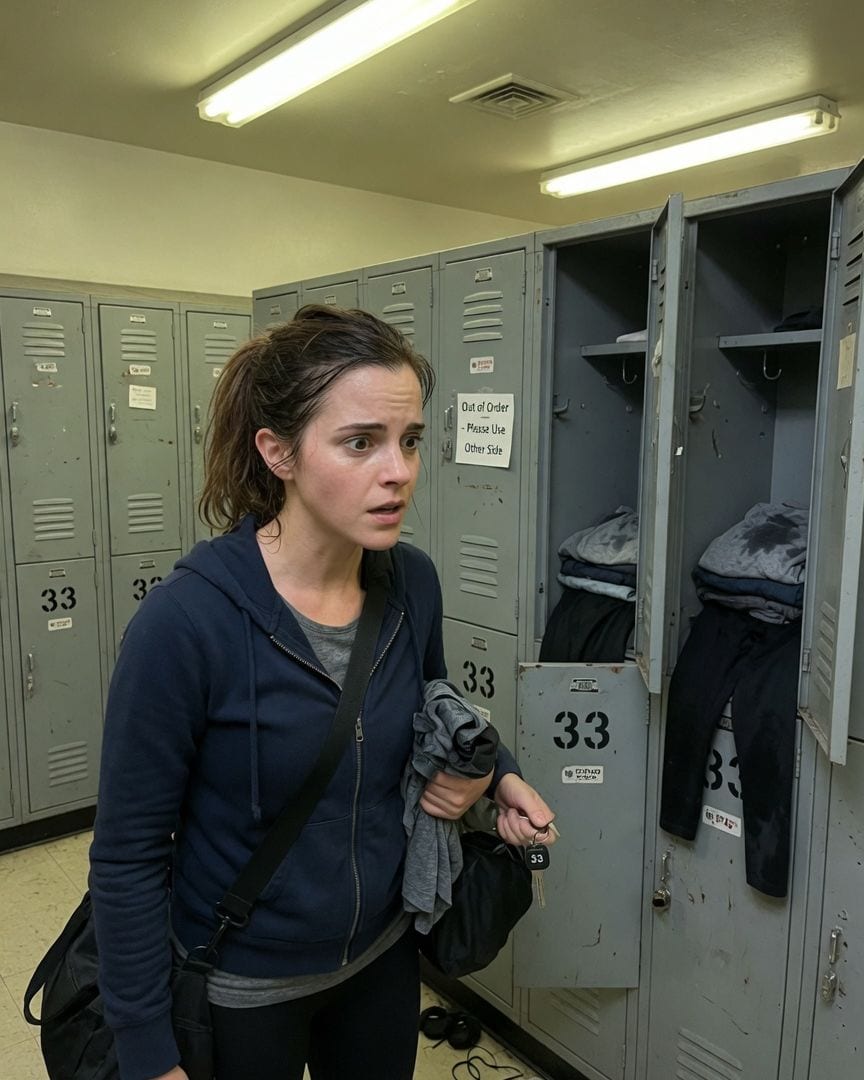
My gym locker number 33 opened two doors this week. One held my dry clothes. The other held them damp, like I'd just left.
I'm Sophia Granger, a data entry specialist, and my world is built on verifiable precision. But during a routine gym visit, I found not one, but *two* locker #33s in the women's room. My key opened both, but the second held my own damp, sweat-soaked clothes, as if I'd just finished a workout I never did.
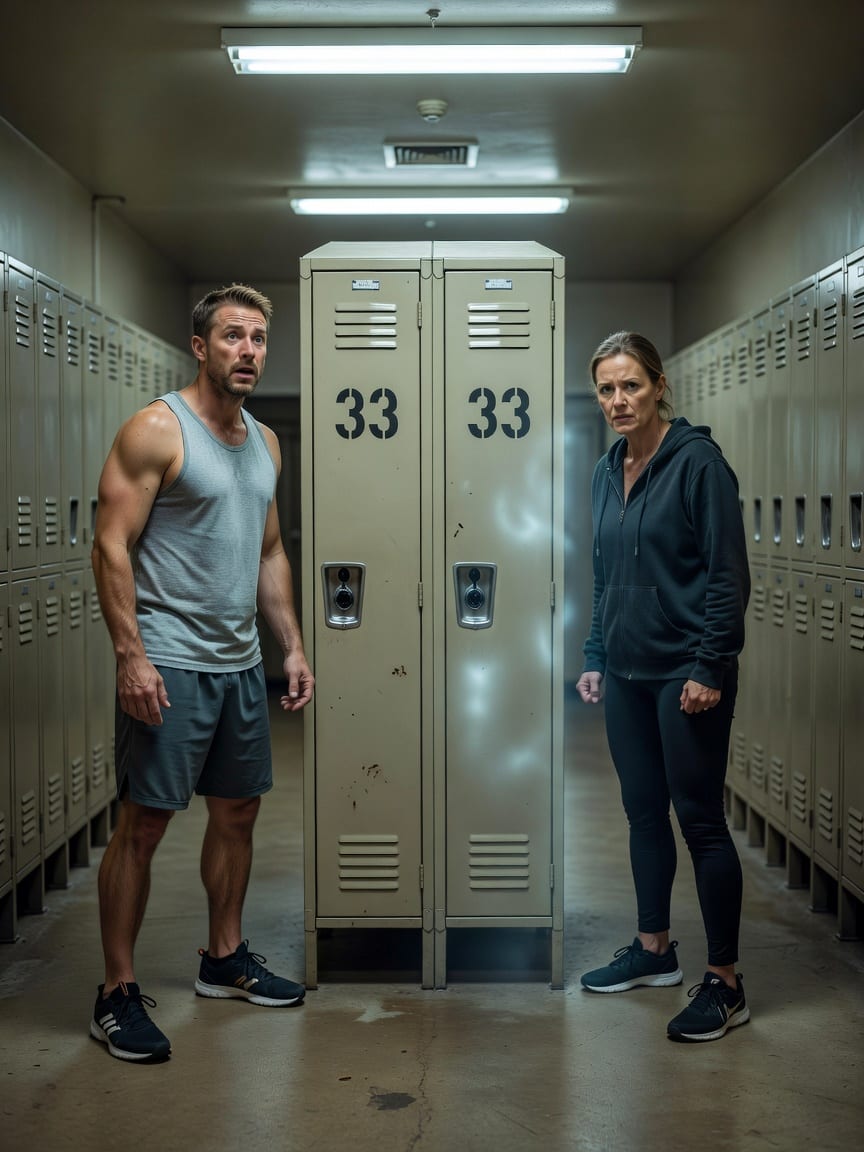
My gym locker room grew a forty-first locker, holding my damp, sweaty clothes, though I hadn't been to the gym in days.
I've used locker 33 at Iron & Grit for years, a small, reliable part of my routine. But when I went back on Wednesday, a second locker 33 stood there, an impossible duplicate. Inside, I found my specific gym clothes, damp and smelling of chlorine, as if I'd just finished a workout I never did.
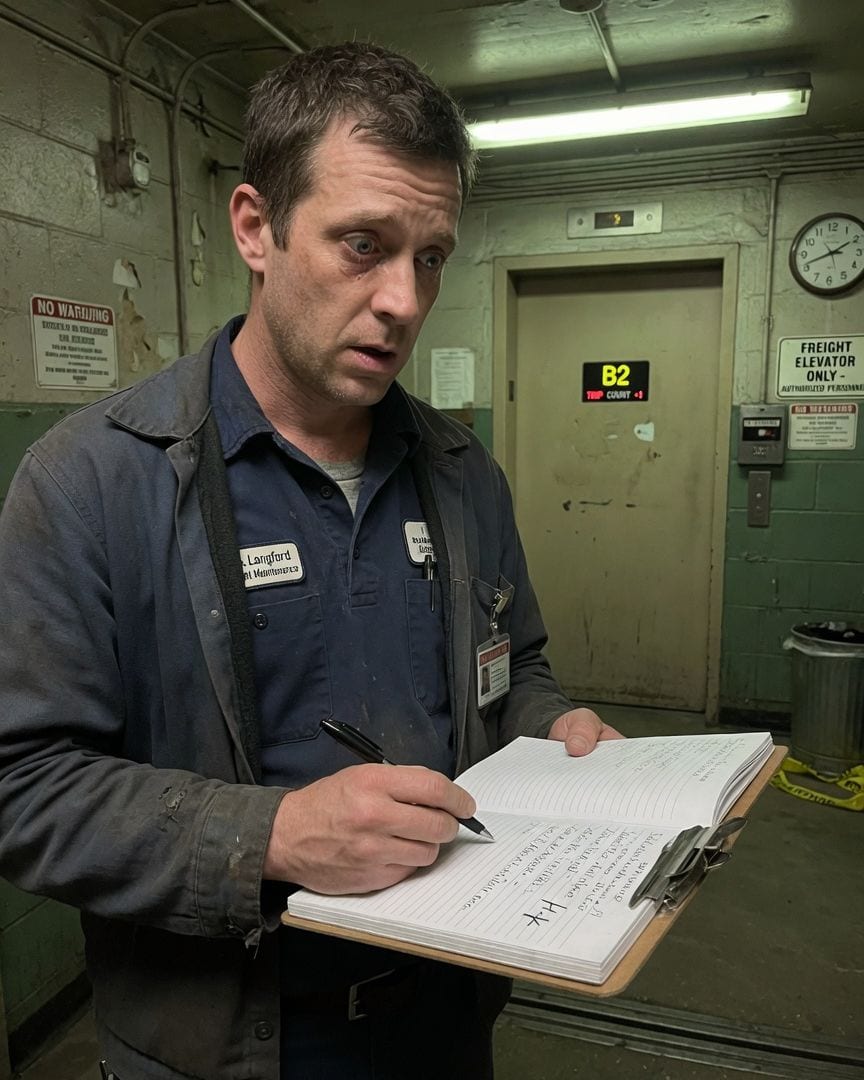
A man just took the elevator to the sealed sub-basement. He isn't on any staff roster, but my initials are in the logbook.
As a maintenance worker, my job is mostly routine, like signing the daily log for the old building's freight elevator. But one night, the log showed a trip to the sub-basement, sealed for a decade, timestamped with my key-switch and signed with my own initials, for a run I never made.
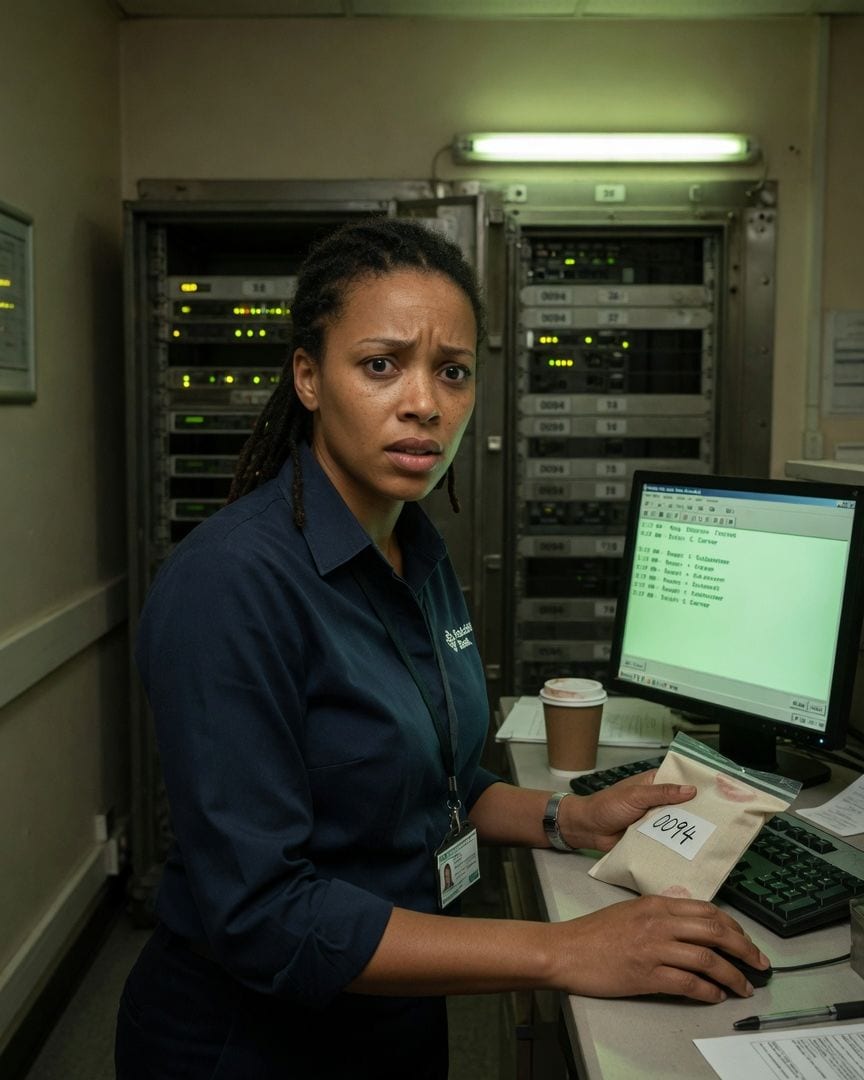
My night-deposit log shows a bag posted at 3:17 AM. My teller number, my count. Bag 0094 is still sealed in the safe, untouched.
I prided myself on precision as a night teller, logging every entry. But at 3:17 AM, a deposit appeared logged under my teller number that I never processed. Security footage then revealed a figure in my uniform, wearing my ID badge, with a blank photo slot.
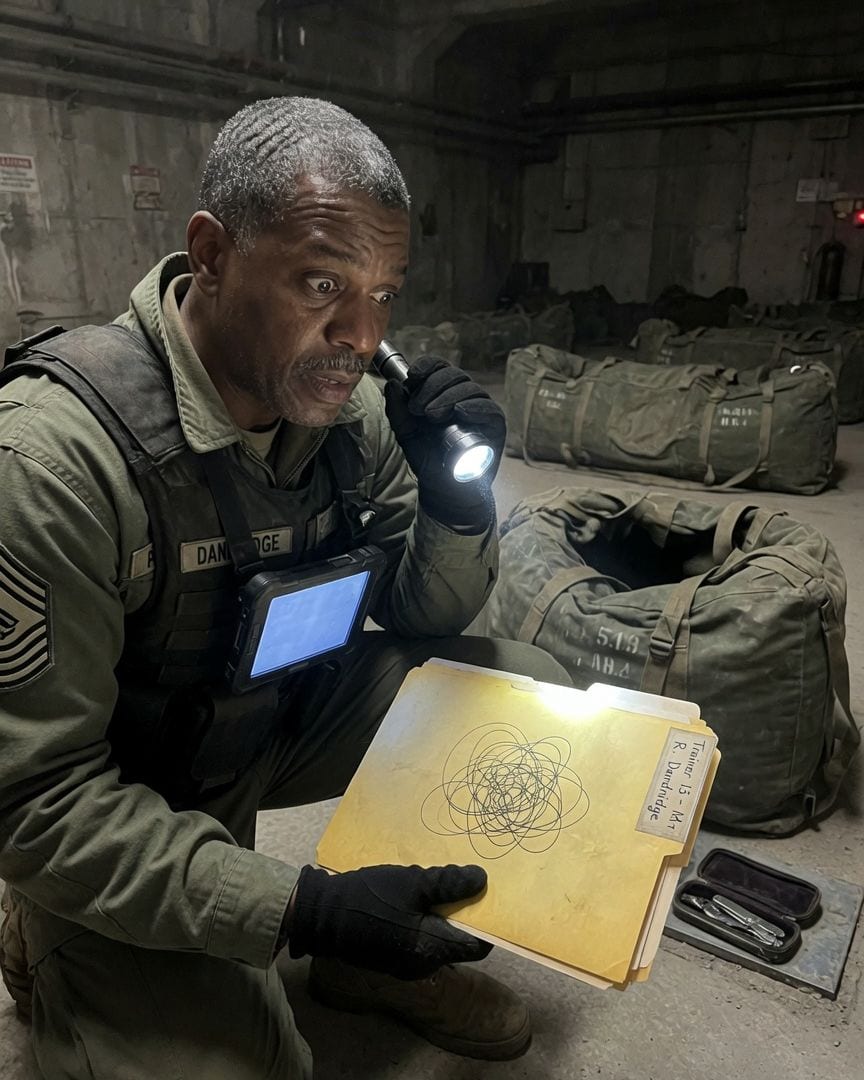
Thirty days from closing a Cold War vault, a Master Sergeant finds a thirteenth warhead cradle with his own name on it, its velvet lining strangely warm.
Master Sergeant Ruel Dandridge had just thirty days left at Kestrel Mountain, conducting its final inventory before the underground vault was sealed forever. He methodically counted twelve warhead trainer cradles, but then his beam caught a thirteenth: bolted down, empty, its straps dented as if something immense had shifted. A tag bore his own precise handwriting: ‘Trainer 13 - R. Dandridge,’ an impossible find in a bay he'd never entered and not on any manifest. Prying at its base, Ruel discovered a hidden compartment holding a yellowed file with a symbol that pulsed with light and subtly shifted, its velvet lining strangely warm. This confronted the Master Sergeant with a pattern that defied all logic.
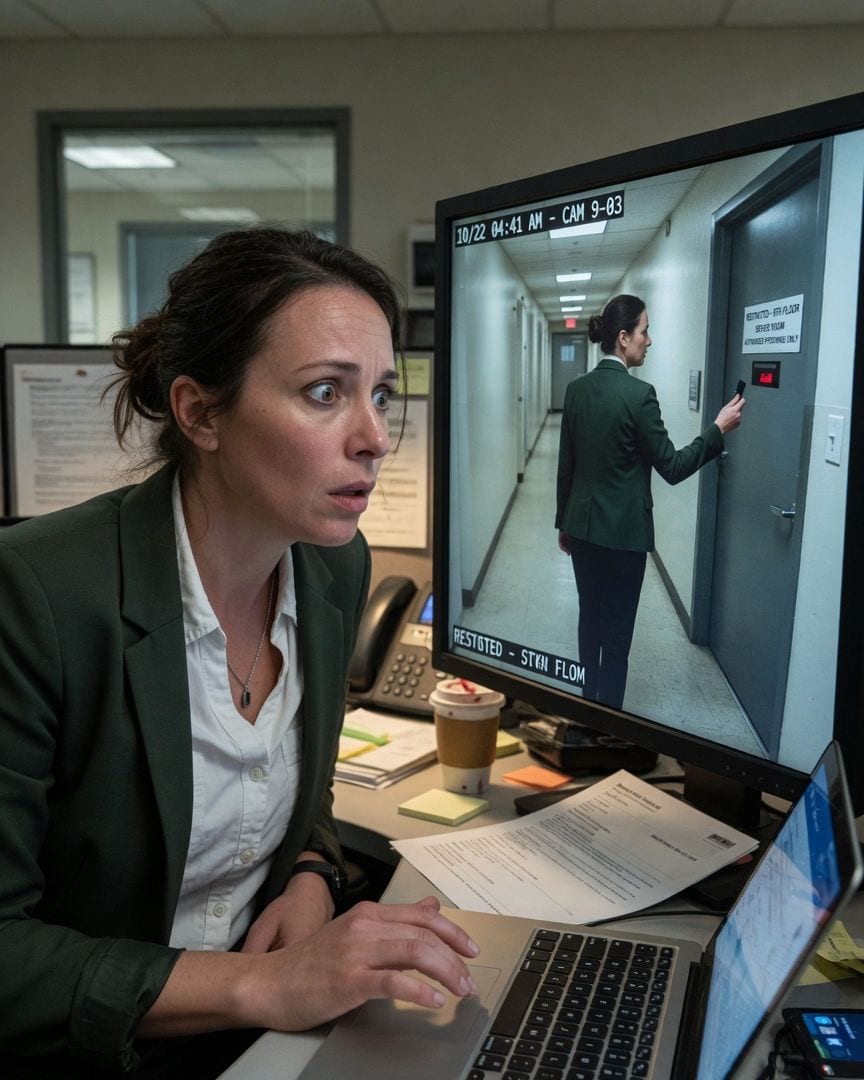
My keycard log shows me in the server room at 4:41am. I was asleep, and my badge was at home.
An email from corporate IT reveals my keycard registered entry into a restricted server room at 4:41 AM last Sunday. I was asleep in my apartment across town, my badge clipped securely to my jacket at home. But then I scrolled down and found eleven more impossible entries, all within the past week, all under my name.