My gym locker room grew a forty-first locker, holding my damp, sweaty clothes, though I hadn't been to the gym in days.
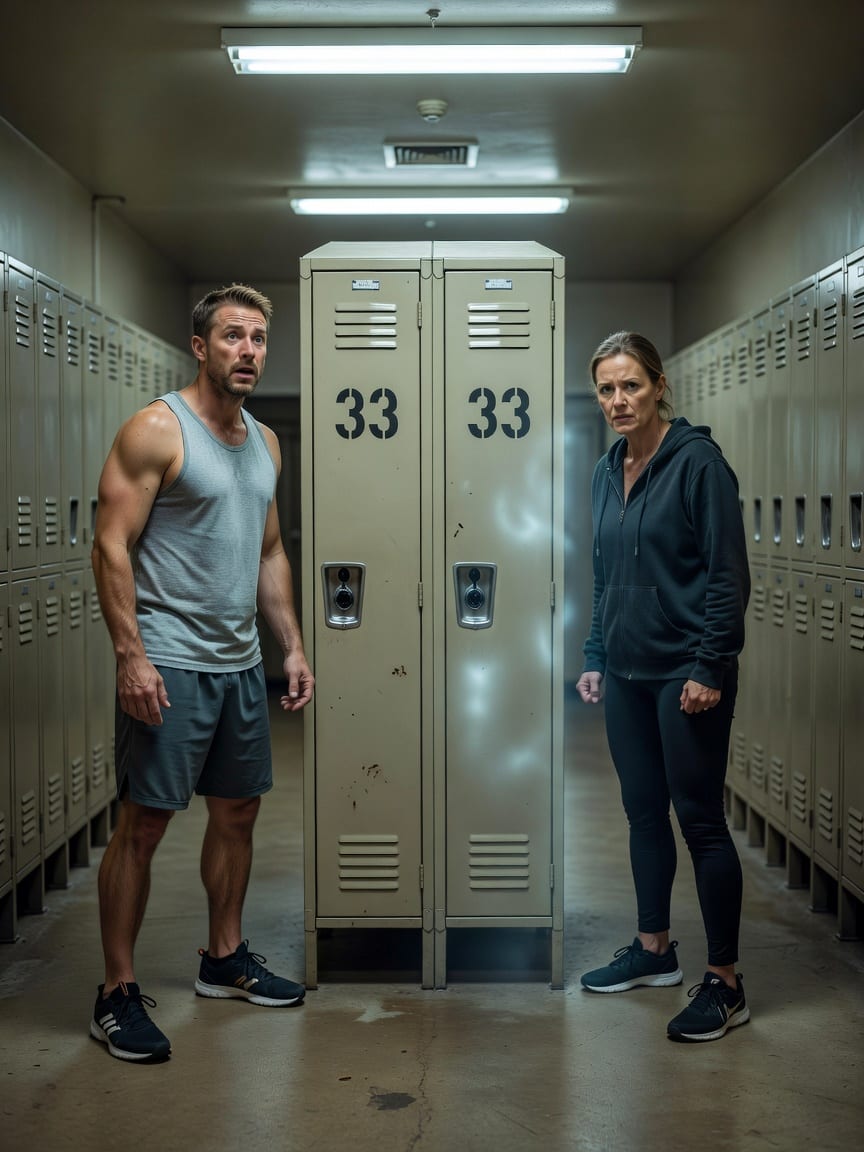
The gym locker room at my regular spot, 'Iron & Grit,' has forty lockers, laid out in two neat rows. I've been using locker 33 for years. It's a habit, a small, reliable corner of my routine.
On Monday, I went in, put my things in 33, worked out, showered, and left. Everything was normal.
On Wednesday, I decided to skip the gym. I had a late meeting, a stack of reports to get through. But my brain wouldn't let it go. Something felt…off. Like a nagging itch I couldn't place.
I ended up driving to the gym anyway, telling myself I'd just grab my forgotten earbuds.
I walked into the women's locker room, the familiar scent of chlorine and stale sweat hitting me. I headed for my usual spot. And that's when I saw it. The layout had subtly shifted. There were forty-one lockers.
My locker, number 33, was there, between 32 and 34. But then, to the left of it, inexplicably, was another locker. Also number 33.
It stood exactly where the last locker in the row should have been, squashed between its numerical neighbors, a physical impossibility. My breath caught. I actually reached out and touched the metal. It was solid. Real.
I fumbled with my key, the original Key #33, and tried it on the first locker 33. It clicked open. Inside, my gym clothes from Monday hung, folded neatly, perfectly dry. Just as I'd left them.
Then, my hand shaking, I tried the same key on the second locker 33. It opened with the same familiar click. Inside, a different set of my gym clothes hung.
My specific sweat-wicking top, my black leggings, a pair of socks. They were damp, still cool with a clinging moisture, and smelled faintly of chlorine and something else, something metallic and old, like rusty pipes. They were undeniably mine.
But I hadn't been here since Monday. And these were freshly damp.
The air around this impossible duplicate felt strangely cool, almost hollow, as if the space itself was holding its breath.
I stood there, key still in hand, staring at two identical numbers on two separate, but seemingly identical, metal doors, both containing my belongings. It was a silent, impossible joke, one that no one else seemed to notice.
I checked the gym's schedule on my phone, then my own calendar. No. I hadn't accidentally come on a different day. No, I hadn't somehow worked out in my sleep and forgotten.
My mind, usually so logical, tried to find a rational explanation. Maybe the gym staff had moved things around, a weird prank? A new locker line?
I walked, stiff-legged, to the front desk. Paige Novak, a bubbly twenty-eight-year-old with a permanent smile, looked up from her tablet. 'Hey Catherine! Didn't expect you today.'
'Paige,' I started, my voice tight. 'There are… there's an extra locker in the women's changing room. And it's another 33.'
She laughed, a bright, disbelieving sound. 'Two locker 33s? Catherine, we only have one. And forty lockers total. Maybe you’re just tired? Long week?' She spun her tablet around, showing me the digital floor plan.
A neat, precise grid of forty numbered rectangles. My mind rebelled. I’d counted them myself, twice. The digital map was wrong. She was wrong.
'No,' I said, pushing the tablet back. 'Go look. Please.'
Paige, seeing my face, softened a bit. 'Okay, okay. I'll take a look when my shift ends in twenty.'
I walked back, determined. Forty lockers. I counted them again, slowly, deliberately, touching each one. One, two, three… up to forty.
And then, there it was, the duplicate 33, standing stubbornly between 32 and 34, a phantom among the solid metal. It wasn't a trick of the light. It was physically there. A real locker, where no locker should be.
I opened the original 33. My dry clothes. I opened the new 33. My damp, sweaty clothes, smelling faintly of chlorine and that other scent, metallic and old. I pulled out a sock.
It was undeniably mine, a small tear near the heel I’d been meaning to fix. This wasn’t a mistake. This was a violation of space itself.
My eyes scanned the wall behind the original locker 33, the one that should have been the end of the row. The paint there was slightly discolored, a faint, almost invisible seam running vertically down the plaster.
It looked like a patch job, poorly done, as if something had once been there and was hastily covered, but the outline was still visible, a faded memory.
I knelt, pressing my fingers along the faint seam behind my original locker 33. The plaster felt colder there, rougher, than the surrounding wall.
My fingertips slipped into a tiny gap, just a hair's width, where the seam wasn't quite sealed. A distinct, cold draft, smelling faintly of old copper and damp earth, brushed against my skin. It wasn't just a patch.
The wall wasn't solid. It was a door, or a hidden passage, just barely sealed, breathing out a forgotten chill.
The metallic scent lingered on my fingers, a ghost of something ancient and unsettling. I returned home, unable to shake the image of the extra locker, the impossible seam, and that cold draft.
My mind, usually so logical, kept replaying the counts, the physical presence of the forty-first locker that Paige swore didn't exist. My own damp clothes, belonging to a workout I hadn't done.
The next day, a Saturday, I went back to the gym, armed with a measuring tape. The locker room was quiet. I measured the row. Forty lockers, each exactly 18 inches wide. The row should have been 60 feet.
But it was 61 feet, 6 inches. The extra locker was exactly 18 inches wide. It wasn't an illusion; it was a physical expansion, a piece of something extra stitched into reality.
I tried to find any mention of renovations, any building permits for the gym. Paige, bless her heart, gave me access to their digital archives, mostly for fire safety and inspection records. Nothing.
The building was constructed in 1995, a standard pre-fab design. No major structural changes since. No permits for expansions or weird locker reconfigurations.
I dug deeper, searching local historical society websites. The gym, it turned out, stood on the site of the old municipal bathhouse, demolished in the early 90s. I found grainy photos, maps from the 1950s.
The bathhouse had a similar footprint, the outer shell looked familiar, but its interior layout was completely different. No locker rooms as such, just open pools and rows of changing stalls.
The photos showed a grand, but slightly off-kilter, structure, with windows that didn't quite line up and strange, narrow passages that seemed to lead nowhere.
My attention kept returning to the seam behind my original locker 33. It wasn't part of the 1995 construction.
It felt older, a scar on the building’s memory, a faint shadow of something that had been there for a very long time.
I wondered if the previous structure, the old bathhouse, had something similar, some strange quirk that the gym had inherited. I needed physical records, not just digital scans. The town archives. That was my next stop.
The town archives were quiet, smelling of dust and old paper, a comforting scent usually, but today it felt heavy, almost oppressive.
Everett Winslow, a man in his mid-seventies with sharp, knowing eyes behind thick spectacles, presided over the main desk. His white hair was neatly combed, his movements slow and deliberate.
I explained I was researching the history of the municipal bathhouse, specifically its architectural plans and any structural oddities. Everett nodded slowly, his gaze lingering on me for a beat too long, assessing. 'Looking for something specific, Miss Barlow?'
he asked, his voice a low rumble that seemed to vibrate through the dusty shelves. 'Something… unusual?'
I felt a prickle of unease. How could he know I was looking for anything unusual? I stammered, 'Just curious about the original layout, the demolition process. The footprint of the building.'
He offered a thin, almost-smile, like he knew a joke I hadn't quite grasped. 'The bathhouse was a peculiar building. Always had its quirks. Like a house that never quite settled, always shifting on its foundations.'
He slid a thick, bound ledger across the counter, its leather cover cracked with age. 'You'll find most of what's publicly available here. But some things, Catherine,' he said, his eyes locking with mine, 'some things are best left undisturbed.
Buildings, like people, have memories. And not all of them are pleasant.'
His words were a warning, delivered with the calm certainty of someone who had seen it all before, someone who knew exactly what I was searching for.
I felt exposed, as if my quiet investigation had been broadcast across the town. He hadn't asked what I was really looking for, but he clearly knew.
The air in the archive, already heavy with history, seemed to press in on me, and I felt his eyes on my back as I walked to a research table, the ledger feeling heavier than its weight.
I spent hours poring over the brittle pages of the ledger, filled with old newspaper clippings, property deeds, and architectural notes.
Most of it was mundane, typical town records, but then I found it: a series of articles from the 1960s, describing 'structural eccentricities' at the municipal bathhouse.
One article, yellowed and fragile, detailed a 'revolving door' phenomenon in the men's changing rooms, where a specific stall would occasionally lead to a different, empty room, only to return to its original configuration hours later.
The description was chillingly similar to my locker 33 experience. The article mentioned a local surveyor, 'E. Winslow,' who had been called in multiple times to map the building.
I looked up, my head snapping towards Everett’s desk across the room. He was watching me, calmly, a ghost of that knowing smile on his lips.
I approached his desk, the article clutched in my hand, my fingers almost crushing the old paper. 'E. Winslow,' I said, my voice barely a whisper, 'Was that… family?'
Everett sighed, a long, slow exhalation that seemed to carry the weight of decades. 'My grandfather. And my father after him. And me, for a time.' He gestured to a dusty cabinet behind him, rows of flat, wide drawers.
'They kept records. Not just the public ones the town wanted to see. They kept the true records.' He pulled out a large, flat drawer, revealing a collection of rolled-up blueprints, tied with faded ribbons and string.
'The bathhouse wasn't just peculiar, Catherine. It was… consistent. The geometry would shift, yes, but always in the same ways, on a cycle. Like a broken clock that still keeps time, just the wrong time.'
My mind raced, connecting the dots with a horrifying clarity. The damp clothes, the metallic smell from the seam, the extra locker appearing and disappearing. It wasn't random. It was a pattern.
The extra locker wasn't a glitch; it was a scheduled malfunction, a ghost of a past layout, returning.
'The damp clothes,' I whispered, the words catching in my throat. 'From the duplicate locker. They weren't mine, not really. They were from someone else, caught in a previous cycle. An echo of a moment.'
Everett nodded, a grim understanding in his eyes that matched the cold dread now seeping into my bones. 'A residual echo. The space remembers not just its shape, but what it contained. What it took.'
The dread was cold, precise, a creeping certainty. The gym wasn't just weird; it was haunted by its own impossible past, repeating itself, cycling through geometries no architect could design.
Everett reached into the back of the drawer and pulled out a single, smaller roll of parchment, tied with faded string. Its paper was thicker, less brittle than the others.
'This one,' he said, his voice dropping to a near whisper, 'this one my grandfather drew. He called it the 'Impossible Map.' It's of your gym's site, but… not the gym as it is.'
He unfurled it carefully on the desk, the parchment crackling softly. It was dated 1978, signed 'E. Winslow.' The outer lines were unmistakably the footprint of the current gym building, its precise perimeter.
But the interior, specifically the locker room area, was an impossible labyrinth of 42 lockers. Not 40, not 41, but 42.
And there, exactly where my extra locker 33 had appeared, was a small, shaded rectangle labeled 'Anomaly: Room X.' In the margin, in faded, elegant script, was a handwritten note: 'Room X often returns, always one short.'
Everett pointed a gnarled finger at the faded script in the margin. 'Always one short,' he rasped, his eyes distant, unfocused, as if seeing beyond the present moment. 'It's the space that remembers.'
He looks up, not at Catherine, but past her, through the archive wall, through time itself. 'And sometimes,' he adds, his voice barely a whisper, 'it remembers what was lost inside it.'
Everett Winslow’s words hung in the quiet air, a heavy pronouncement of unspoken history. 'Lost?' I managed, my voice thin, a mere thread against the weight of his revelation. 'Who was lost?'
Everett turned the blueprint slightly, revealing a faint, almost erased pencil mark next to 'Room X.' 'My grandfather noted a recurring pattern. Every forty to fifty years, the geometry would 'reset,' almost like a physical memory replaying itself.
And each time, 'Room X' would manifest. It wasn't always a locker. Sometimes a forgotten changing stall, sometimes just a blank wall where a door should have been.
But it was always 'one short' of the expected count of the previous cycle's full layout, and always in this exact spot.' He tapped the blueprint with his finger, a steady, rhythmic tap against the paper. 'The damp clothes, Catherine.
They belonged to a young man, a lifeguard at the bathhouse, who disappeared in 1978. The year this map was drawn. He was last seen going into the men's changing room, right where this 'Room X' would have been.
His locker was number 33.'
The pieces clicked into place with horrifying precision. The metallic smell, like old copper pipes from the original bathhouse, the dampness of the clothes, the exact location of the duplicate locker, the numbering.
It wasn't just a spatial anomaly; it was a recurring echo, a ghost made of architecture and lost time, a repeating trap.
The building itself was a kind of predator, resetting its geometry, occasionally manifesting a piece of its past, including the lingering traces of those caught and swallowed by its impossible spaces.
The fear wasn't of what would happen, but of what had happened, over and over, unseen and uncomprehended, by generations of people who just thought the building was 'peculiar.'
The blueprint wasn't just a map of an impossible building; it was a record of a repeating tragedy, a memorial to a past that insisted on bleeding into the present.
The dread solidified into a cold, hard certainty. I looked at the impossible blueprint, then back at Everett, his calm, knowing face. 'So, it will happen again?'
He shrugged, a gesture of resignation, of acceptance of an inescapable truth. 'It always does. The geometry is fixed. The manifestations are cyclical. We've tried to warn people over the years, subtly.
My family, we’ve sent letters, made anonymous calls, even tried to get the town council to survey the property more thoroughly. They always dismissed it as old folklore, or blamed it on structural settling.
Who would believe a building literally swallows people into a forgotten space, spits out their belongings decades later?'
He pointed to a small, almost invisible detail on the blueprint, a faint circular symbol near the 'Room X.' 'My grandfather believed it was tied to the water table beneath the site, some ancient geological anomaly.
The bathhouse, the gym—they just happened to be built on the wrong spot, amplifying whatever is down there.'
I closed my eyes, picturing the locker room, the rows of shining metal. My locker 33, then the phantom one.
The thought of that young lifeguard, lost in a spatial fold, his damp clothes a lingering testament to his disappearance, was unbearable. I couldn't stop the cycle, I knew that now. But I could at least understand it.
I took a deep breath, forcing the air into my constricted lungs. 'What do we do?'
Everett looked at me, his gaze clear, unwavering. 'We understand. We document. And we try to ensure no one else goes missing, even if we can't stop the geometry from shifting.'
He rolled up the blueprint carefully, his movements slow and deliberate, as if handling something sacred. 'This artifact, Catherine, proves it. It's dated, it's signed. It's real. The ordinary explanation dies for good right here.'
I knew then that my gym was not just a gym. It was a place that wasn't on the map, a consistent, repeating wrongness in the fabric of the world.
And I was now one of the few who knew its terrible truth. I would never look at a floor plan the same way again.
I no longer work out at that gym. The thought of the locker room, the phantom spaces, the ghost of a lost life, is too much.
I joined a different one across town, but I still find myself instinctively counting exits, measuring distances, checking the flow of rooms. Everett and I meet sometimes, in quiet cafes, poring over old maps and geological surveys.
We’ve found other anomalies, smaller ones, in obscure corners of the town’s history. Distances that don't add up, rooms that appear and disappear in old homes, echoes of forgotten pathways.
The town, oblivious, continues its routines. The gym stands, its impossible geometry silently cycling, unseen by the hurried lives that pass through its doors. I never told anyone else about the second locker 33, or the blueprint.
Who would believe it? How could they? The burden of knowing is a quiet one, a cold weight in the back of my mind.
It's a truth that can't be shared without sounding mad, a reality that sits just beneath the surface of the mundane world, patiently waiting for its next manifestation.
Every time I drive past the gym, I don’t see a building.
I see a folded space, a repeating mistake in the fabric of the world, and I feel the chill of the damp clothes that once hung in a locker that shouldn’t exist.
The map still sits in my safe, a piece of paper that proves the world is not as solid as we believe.
I know the truth now, and the knowing has hollowed out a permanent space inside me, just like the one that appears and disappears in the gym’s locker room.
The dread isn't that it will happen again, but that it never truly stopped. It simply waits for the next cycle. The numbers always refuse to add up, and they always will.
If this one got to you
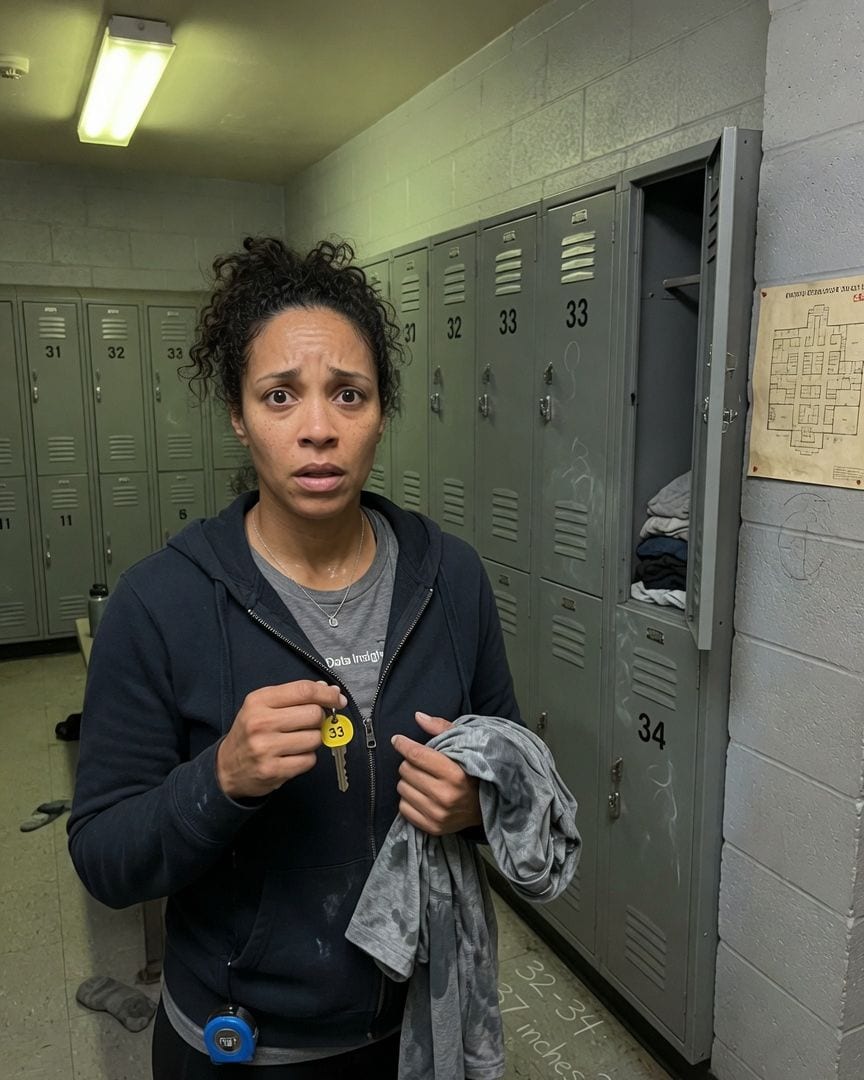
My gym locker 33 had two versions today. One held my dry clothes, the other my damp, sweat-soaked ones. I hadn't been to the gym since Monday.
Returning to my gym locker on Wednesday, I found not one, but two lockers numbered 33. My key opened both. The original held my clean, dry clothes, just as I’d left them on Monday, but the new, impossible locker contained my own sweaty, damp gym clothes, despite me not having been to the gym since.
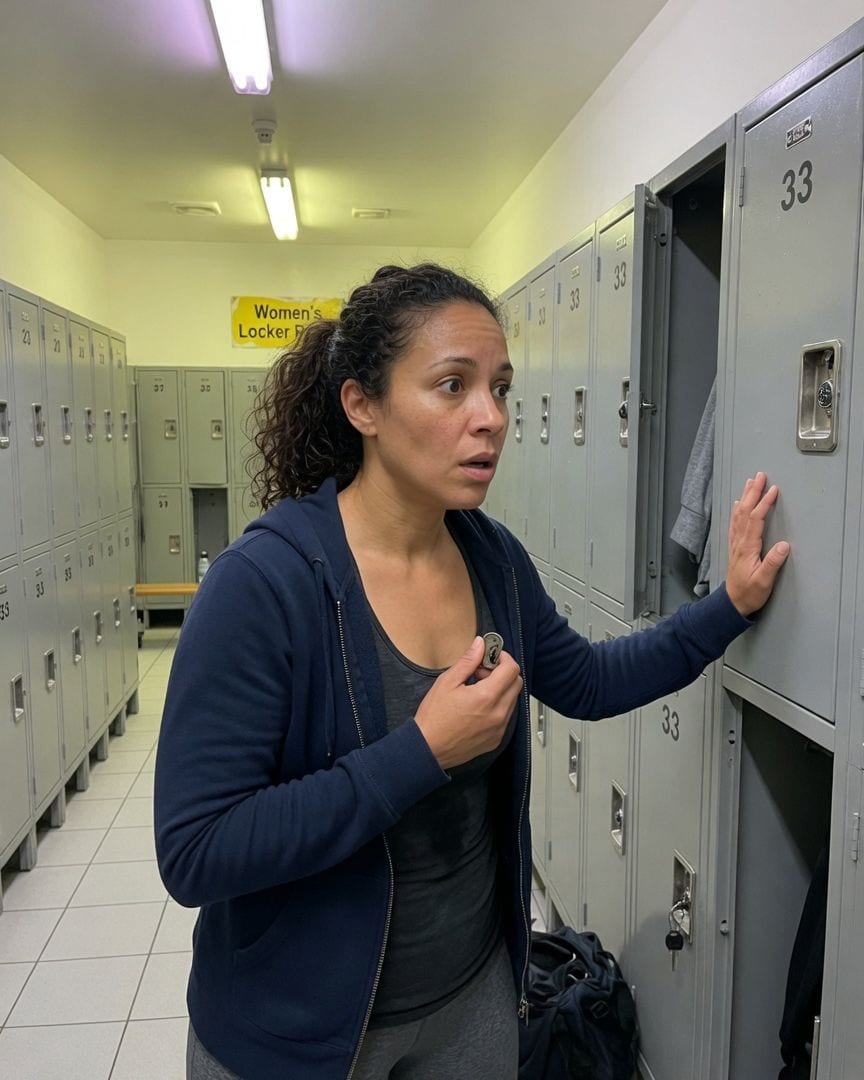
My gym locker 33 opened a second locker 33, damp with sweat, though I hadn't been to the gym since Monday.
On a Wednesday, I headed to the gym, my key for Locker 33 in hand. But as I opened my locker, I found an identical one right beside it – a forty-first locker in a room meant for forty. Inside, damp clothes and the faint smell of chlorine filled the impossible space.
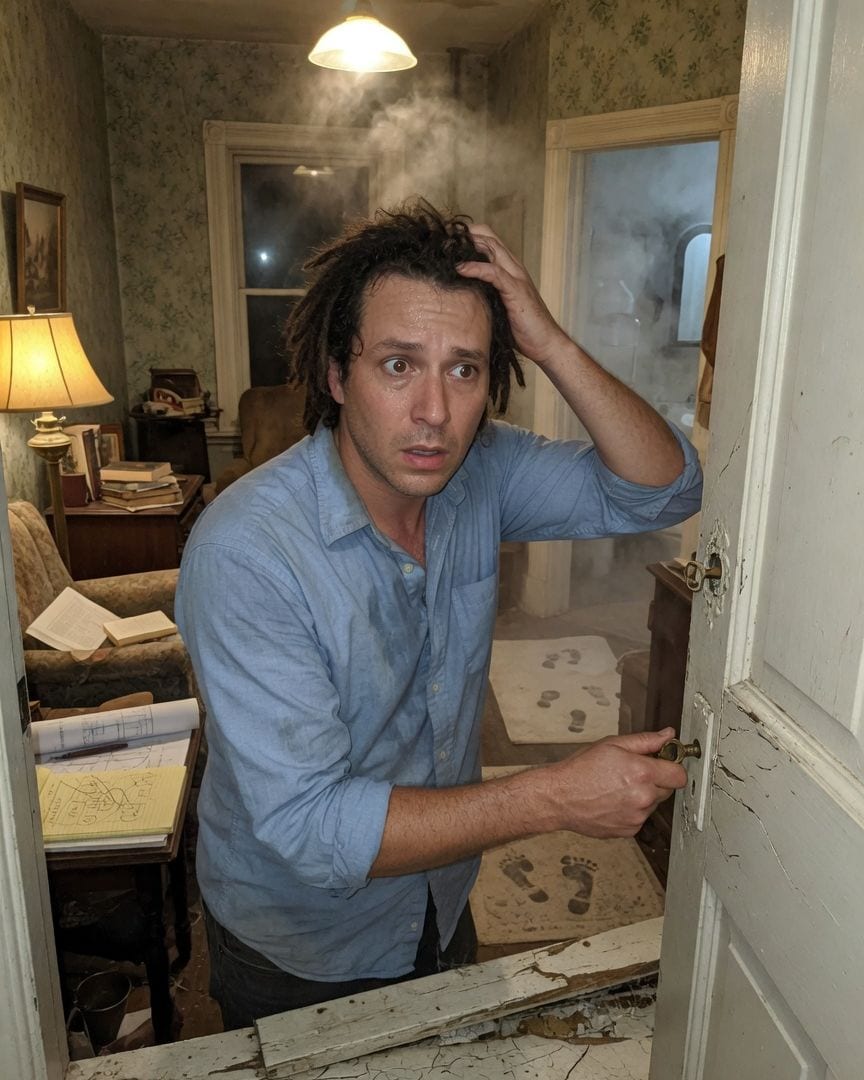
The bath filled itself at 9:30 PM. My main house water was off. Wet footprints led from the tub to a locked airing cupboard.
As an architect, I pride myself on logic. Moving into my inherited Victorian house was supposed to be a quiet fresh start, but on the third night, I heard the impossible. Even after I shut off the main water to the entire house, my clawfoot bath upstairs ran full, warm, and steaming at 9:30 PM.
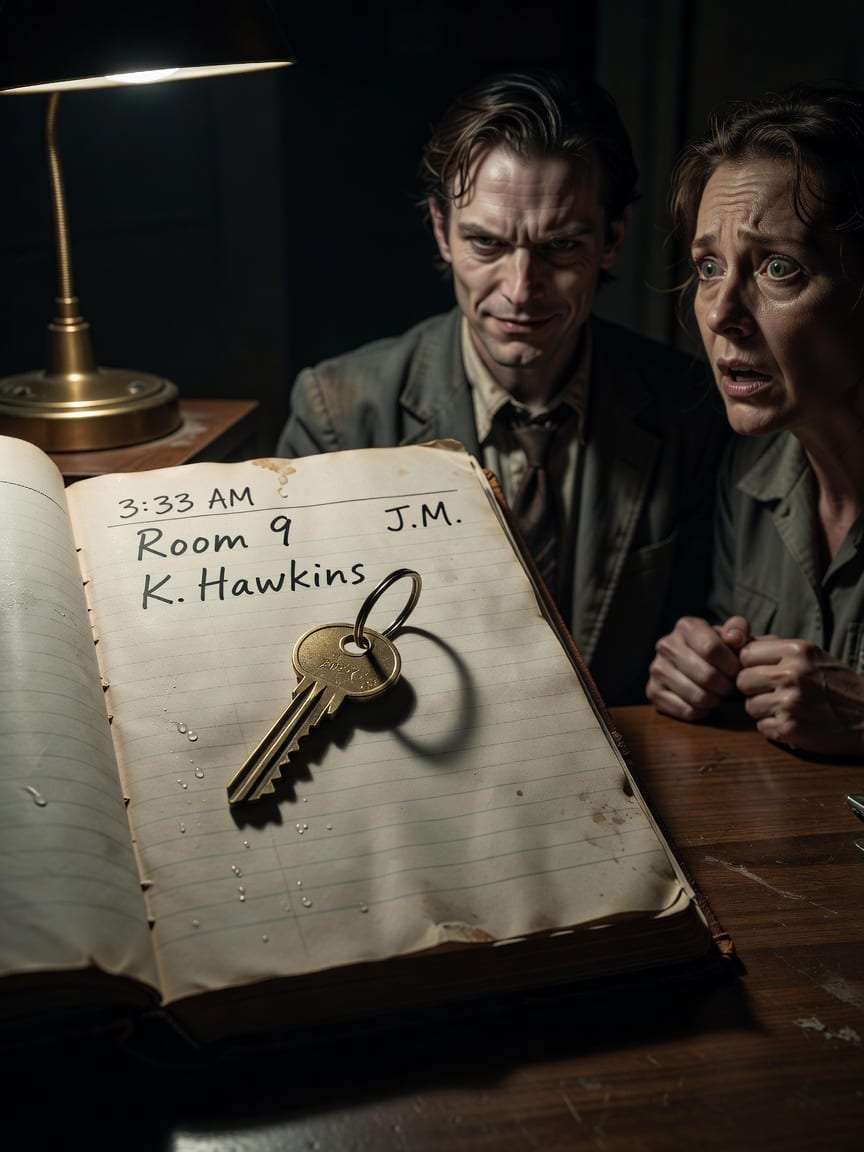
My hand wrote the Room 9 check-in at 3:33 AM. My initials were there. But Room 9 has been sealed since the spring flood, and its key still hangs on the peg.
Working the quiet night shift at the Marsh View Motel, I found a fresh entry in the register with my own initials, for Room 9. But Room 9 has been sealed since the spring flood, its key hanging untouched on the wall. Inside, a half-empty glass of water and a second, mud-encrusted key lay on the bed.
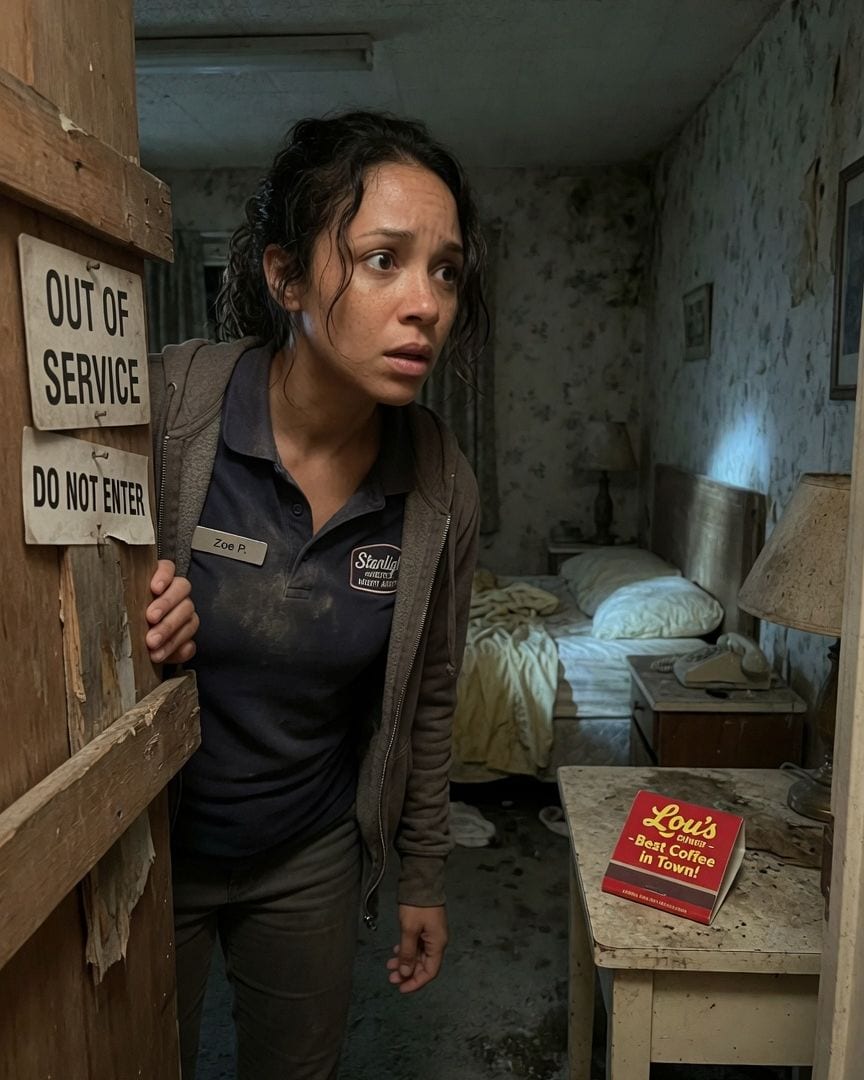
My motel register shows a check-in for Room 9 at 3:33 AM, in my own handwriting. Room 9 has been out of service since the flood.
Working the quiet night shift at the Starlight Motel, I found a chilling new entry in the guest register. My own initials had checked someone into Room 9 at 3:33 AM. The problem? Room 9 has been officially boarded shut and out of service for six months, its key still hanging untouched on the wall.
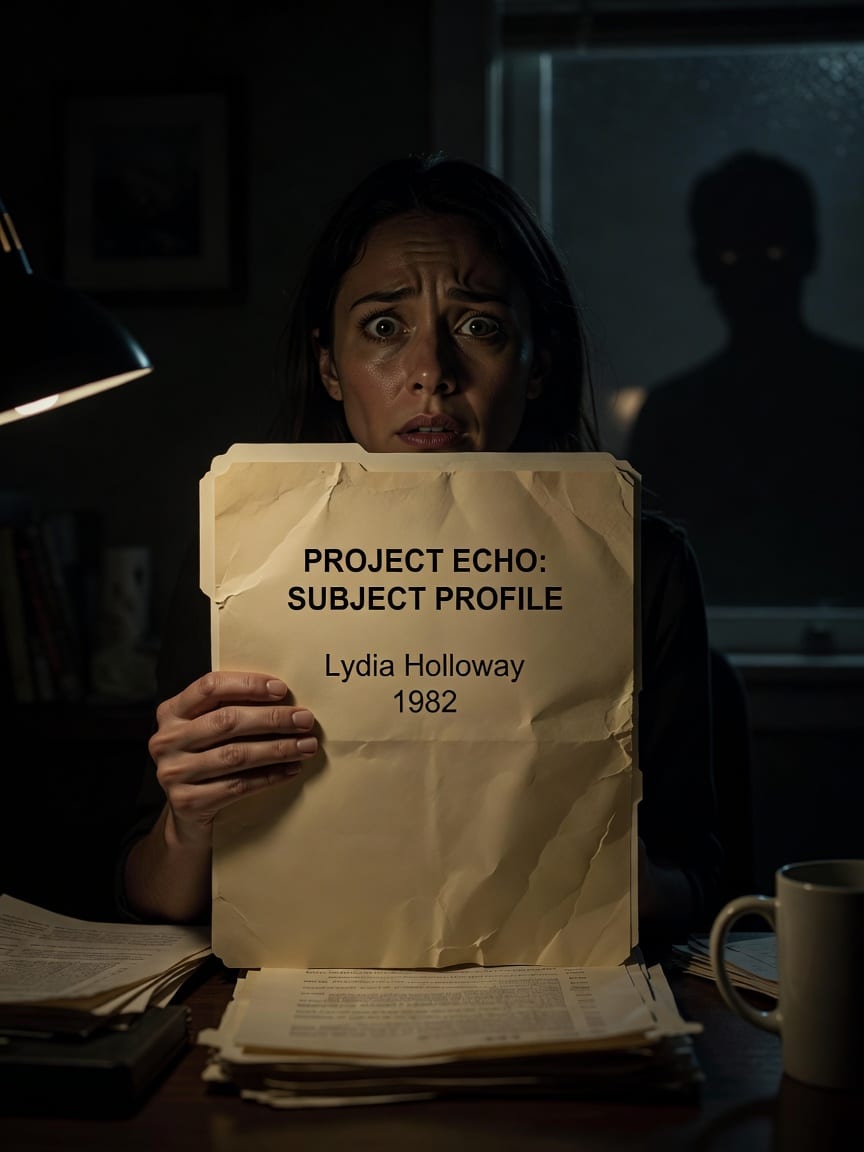
My own signature is on a Baltimore police report for a hit-and-run I never witnessed. The officer remembers my university sweatshirt.
I was settling into a quiet Tuesday evening when Baltimore PD called, asking about a witness statement I supposedly gave. They described my faded green university sweatshirt, seen at a hit-and-run last Friday. But my sweatshirt was in my dresser, and I was home in Seattle.