My hand wrote the Room 9 check-in at 3:33 AM. My initials were there. But Room 9 has been sealed since the spring flood, and its key still hangs on the peg.
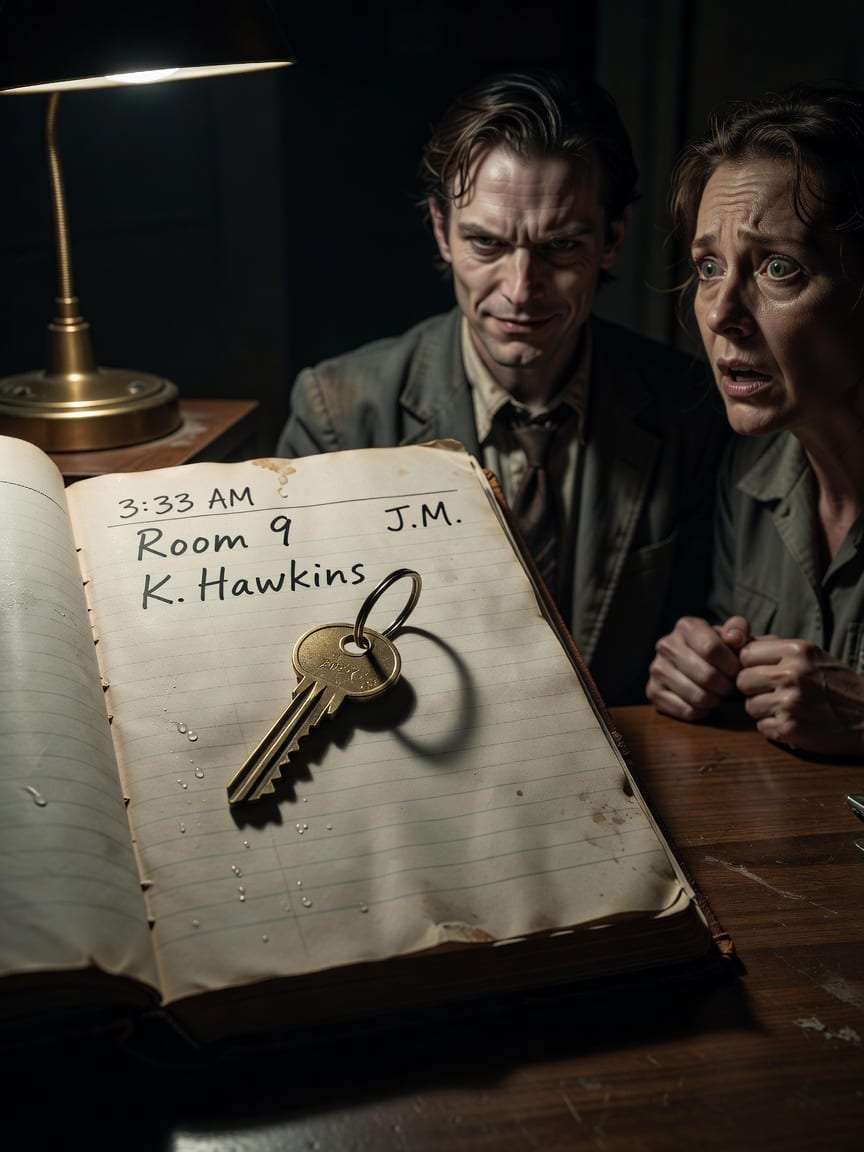
The fluorescent hum of the Marsh View Motel lobby at 2 AM was my world. Another quiet night, another page in the oversized, paper register.
I'd made coffee, organized the snack display, and was just settling into a true crime podcast when the clock nudged past three. Three thirty-three AM.
A specific time, one I’d noted dozens of times on countless other nights, just another number on the digital display.
My eyes drifted to the register, open to the current page. There, in crisp, dark ink, was a fresh entry. Room 9. Name: K. Hawkins. Plate: 7J3-999. Rate: Standard.
And beneath that, my own initials, 'J.M.', looking exactly like my usual scrawl.
A chill, like the first breath of winter, ghosted up my spine, independent of the AC’s hum. I hadn't written that. I knew I hadn't. My pen sat capped beside the register.
I hadn't even looked at the register in an hour. Room 9 had been out of service since the spring flood, sealed, its key—I glanced at the wall—still on its hook, precisely where it belonged, glinting under the lobby lights.
My mind raced through mundane explanations. Sleepwalking? A prank? My co-worker, Frank Radcliffe, the day manager, was a stickler for the register, but not a joker. He’d never pull something like this.
My hands were already moving, checking the security camera feed from 3:30 to 3:40 AM. The grainy footage showed only the empty lobby, the front door unmoving, solid in its frame. No one entered or exited.
The camera angle covered the entire desk, my seat. I rewound, watched it three times. Nothing. Just the empty lobby, then me, sitting here alone, scrolling through my phone, completely unaware.
My heart hammered a slow, heavy rhythm against my ribs. Grabbing the Room 9 key from its hook, the cool brass feeling impossibly heavy in my hand, I walked down the silent corridor.
The carpet squelched faintly beneath my shoes, still holding the damp memory of the spring flood that had put Room 9 out of commission.
The air grew colder with each step, the motel’s usual stale scent replaced by something metallic and damp, like an old coin found in wet earth.
The door to Room 9 was indeed sealed with a 'Do Not Enter' sign, a faded, curling piece of laminate glued over the doorknob. The lock was untouched, pristine.
I peeled back the sign, inserted the key, turned it, the click echoing in the oppressive silence of the hallway.
Inside, the room was dark, undisturbed, exactly as I expected it to be. Dust motes danced in the beam of my phone flashlight. The bed was perfectly made, not a wrinkle on the pristine white duvet. The room felt… dead.
No air circulating, nothing living. But then I caught it – a faint, almost imperceptible scent, like wet earth and ozone, clinging to the air, cloying and strange.
And on the bedside table, a single, half-empty glass of water, condensation still clinging to its sides, reflecting my phone's light.
My breath hitched. No one had been in here. The water glass felt cold, too cold, as if it had been filled moments ago. I looked around again, my flashlight beam sweeping the room, the dust motes still dancing.
My eyes landed back on the bed. Perfectly made. But on the pristine white pillow, a single, tarnished brass key, identical to the one still heavy in my hand, rested.
It was ancient, encrusted with what looked like dried mud, and dripped faintly onto the fabric, leaving a dark, spreading stain on the immaculate white.
The dripping key in Room 9 was a visceral punch to my gut. I snatched it up, the cold metal feeling impossibly heavy, and retreated, locking the door behind me. I didn't bother replacing the 'Do Not Enter' sign.
Back in the lobby, I tried to process it, pacing the worn carpet. A key, identical to the one on the hook, appearing in a sealed room, dripping water. The register entry, my initials. It wasn't a prank.
It was… impossible.
My first rational thought was the license plate. If 'K. Hawkins' checked in, their car should be in the lot. It was an old motel, a quiet night. Not many cars.
I grabbed the motel’s small, handheld scanner and walked the deserted parking lot. The air was still, heavy with a damp cold that seemed to radiate from the ground itself. Row by row, I scanned every plate.
The scanner emitted a soft, reassuring hum as it read numbers. For every car, a confirmation. But for K. Hawkins's 7J3-999, there was nothing. The scanner beeped empty, over and over.
Back at the desk, I logged onto the DMV database on the old desktop. My fingers, still faintly chilled from the ancient key, typed 7J3-999. The system churned for a moment, then returned: 'Plate not found.'
I tried variations, checked for typos, typed it slowly, deliberately. Still nothing. I sat there, staring at the blank screen, the two identical keys on the counter. One shiny, new, a working key.
The other, ancient and caked with dried mud, a relic. The cold dread solidified in my stomach. This wasn't a mistake; it was a deliberate, impossible event.
I needed to talk to Frank. He’d managed the motel for decades. He’d know if anyone ever messed with Room 9, or if there were old stories. I considered calling him, but decided against it.
This felt like something that needed to be seen, not just told over the phone. I’d wait for his shift.
The rest of my night shift passed in a blur of unease, every shadow seeming deeper, every creak of the old building sounding amplified, as if the motel itself was holding its breath.
When Frank Radcliffe arrived for his morning shift, precisely at 7 AM, his usual faint smell of stale coffee and newspaper trailing him, I was already waiting, the two keys and the open register page laid out like evidence.
Frank, a man whose face was a roadmap of quiet resignation, listened to my story without interruption, his gaze fixed on the ancient key, turning it over in his calloused fingers.
The light from the morning sun, weak through the lobby window, caught the mud on its ridges.
“Room 9, huh?” he murmured, his voice flat, devoid of surprise or disbelief. “And 3:33 AM. Always 3:33.”
I felt a fresh wave of dread, cold and sharp. “Always? Frank, what are you talking about? This room has been out of service.”
He sighed, running a hand over his balding head, leaving a faint sheen of sweat. “Look, Josephine. Some things… some things just are. You do your job, you sign the register if it’s there, you don’t ask questions.
It’s been that way since my father ran this place.” He gestured vaguely to the back of the motel. “Room 9… it’s a quiet room. Keeps itself to itself.” He didn’t meet my eyes. “Let it be, Josephine. Trust me.”
His calmness was more unsettling than any anger, any denial. He seemed to know, to accept, to have simply folded this impossible truth into the everyday.
Later that day, after I’d showered and was trying to sleep, I found a note tucked under my keyboard, precisely centered. It was a single, typed sentence: 'Some doors are best left sealed.' No signature.
No indication of who had left it. I glanced at Frank’s office door, closed and solid. Was he watching me? Was this a warning, or something else entirely? A shiver crawled up my spine.
I couldn't let it be. The note and Frank's quiet dismissal only fueled my resolve. He hadn't just dismissed it; he'd confirmed it.
I waited until Frank was engrossed in paperwork later that afternoon, his head bowed over a stack of invoices, the only sound the scratching of his pen. Then, I slipped into his small, cluttered office.
The air in there was thick with the scent of old paper and dust. I knew he kept old records in the back, behind the filing cabinet, near the fire extinguisher.
Behind a stack of faded accounting ledgers, smelling faintly of mildew, I found a dusty cardboard box marked 'Archives - Registers.' Inside were dozens of old paper registers, some dating back decades, their covers curled, spines cracked.
I pulled out the oldest one I could find, its binding cracked, pages yellowed and brittle. My hands trembled as I flipped through the brittle pages. I started from the earliest entries, scanning for Room 9, for 3:33 AM.
The mundane entries of traveling salesmen and vacationing families blurred past. It took time, my heart pounding with a mix of fear and desperate hope for a mundane explanation, a break in the pattern.
Then I saw it. A clean, distinct entry. Room 9. 3:33 AM. Guest name: K. Hawkins. Plate: 7J3-999. And the initials: K.P. My blood ran cold. K.P. Kathleen Pierce. I remembered stories, hushed whispers from old-timers.
A night clerk who vanished thirty years ago, just… gone. This wasn't a one-off. It wasn't an anomaly.
I found another. And another. All Room 9. All 3:33 AM. All K. Hawkins. And each time, different initials, belonging to clerks long gone, some of whom I vaguely knew had 'moved on suddenly.'
The cold glass of water, the impossible key, the non-existent plate – it all clicked into a horrifying pattern. This motel wasn't just old; it was a stage. Frank had known.
He hadn't just 'let it be'; he was part of maintaining it. A complicit silence.
I felt a profound sense of betrayal, and a deeper, colder fear.
This wasn't just a wrong thing; it was a wrongness that had always been here, silently woven into the fabric of the night shift, waiting for new initials to etch themselves onto its pages.
My fingers flew through the old registers, a frantic search for any deviation, any break in the terrifying pattern. But it was always there. Room 9. 3:33 AM. K. Hawkins. 7J3-999.
And the initials of various night clerks, year after year, decade after decade. It wasn't random. It was a schedule. It was a goddamn ritual.
And then, in a register from 1987, the same year Kathleen Pierce had vanished, I found a small, almost invisible detail.
A faint, smudged note in the margin next to a K. Hawkins entry, in what looked like Kathleen Pierce's distinct, florid handwriting: 'Next on the 17th.'
I froze. The 17th of what? My eyes darted to the desk, to my phone, to the current date displayed prominently. Today was the 16th. Tonight. My shift. My breath caught in my throat, a knot of pure ice.
My eyes darted to the current register, open on the desk. The next blank line for Room 9, directly beneath my own impossible entry from last night, waited, expectant.
I confronted Frank again, this time not with questions, but with the open 1987 register, my finger pointing at Kathleen Pierce’s cryptic note. “The 17th, Frank. Tonight. What is it? What the hell is going to happen tonight?”
Frank’s face, usually so impassive, finally cracked. He slumped into his chair, a defeated man, the quiet resignation replaced by something like profound weariness. “It’s a cycle, Josephine. Always has been. The Marsh View… it’s built on something old.
Something that needs to pass through. Room 9 is its door.”
He explained, his voice barely a whisper, how the motel’s original owners, the Marshes, had discovered the recurring phenomena in the late 1800s. They’d tried to fight it, then to contain it, and finally, to simply manage it.
The 'check-ins' were a ritual, a way to acknowledge the entity, 'K. Hawkins,' and ensure its passage was… orderly. The license plate was a placeholder, the initials a record of who was on duty.
“Kathleen… she tried to break the cycle. To stop it. The 17th… that was her last entry.”
Frank pulled a thick, leather-bound book from a hidden compartment in his desk, tucked behind a loose panel. It was ancient, its cover cracked and worn smooth, embossed with the name 'Marsh'. The original Marsh family ledger.
He opened it, revealing pages of meticulous, spidery script, documenting the recurring dates, the 'guest's' patterns, and the strange, almost hypnotic compulsion to write the entry. It was the institution's own record, decades of knowledge, finally laid bare.
The ledger showed how many clerks had simply vanished after trying to interfere, or after the 'guest's' visit coincided with a moment of weakness.
It wasn’t just a ghost story; it was a system, a duty passed down through generations of managers, all trying to keep ‘Whatever Runs the Night’ contained within its designated rituals.
The ledger pages were filled with meticulous, trembling script, documenting the 'guest's' appearances, the odd patterns, the 'rules' for its passage.
I saw my own initials, my own specific 3:33 AM entry, not as an anomaly, but as the latest in a long, unbroken chain. The horror wasn't a sudden event, but an ancient, ongoing compliance.
Frank, defeated, explained that the 'guest' wasn't malevolent in the traditional sense, but utterly indifferent, a force of nature that simply was. Interrupting its cycle had consequences, as Kathleen Pierce had learned.
He pointed to an entry dated the 17th of October, 1987. A scrawled note, this one in Frank's father's handwriting, read: "K.P. broke the line. Left the door open. Consumed."
I looked at the clock on Frank's wall. It was 3:20 AM. The 17th. Tonight. My shift. I had a choice.
Participate in the ritual, add my initials to the next line in the current register, or break the cycle and face the unknown consequences that had consumed Kathleen.
The ledger lay open on the desk, showing the 'guest's' specific entry for tonight, waiting for my initials.
I could feel the familiar, subtle pull, a strange compulsion to pick up the pen, to complete the record. It wasn’t a voice, or a touch, just a quiet, insistent pressure, an urge to conform.
But I remembered the cold dread, the dripping key, the impossible logic of it all. I wouldn't be another name in the ledger. I wouldn't be another set of initials on a false check-in.
I slammed the ledger shut, the thud echoing in the quiet office, a defiant punctuation mark in the suffocating silence. I bolted from the motel, leaving the manager, the register, and the waiting Room 9 behind.
I didn’t look back, the cold night air a sharp contrast to the crushing dread I’d left behind, a desperate gasp of freedom.
I never returned to the Marsh View Motel. I left my keys on the counter, a note of resignation scribbled on a napkin, and drove until the sun was high enough to burn away the shadows.
Frank Radcliffe didn’t try to contact me. The motel continued its quiet hum, its neon sign flickering on and off, a lonely beacon in the night.
I often wondered who took my place on the night shift, who inherited the unspoken duty, who would find their initials on the 3:33 AM entry for Room 9.
I knew the cycle would continue, unbroken, the motel an unwitting, or perhaps entirely willing, participant in something ancient and incomprehensible.
Months later, I found myself working a day job, far from the quiet, isolated hours of the night shift.
Yet, sometimes, late at night, when the house was silent and the world outside was dark, I’d wake at precisely 3:33 AM. Not with a start, not with fear, but with a quiet, knowing certainty.
A faint, metallic scent, like ozone and wet earth, would linger in the air.
I’d lie there, eyes wide open, listening to the silence, feeling the weight of what I knew, the persistent hum of an old, old engine in the deep dark.
The night shift never really ends; it just waits for you to clock back in.
If this one got to you
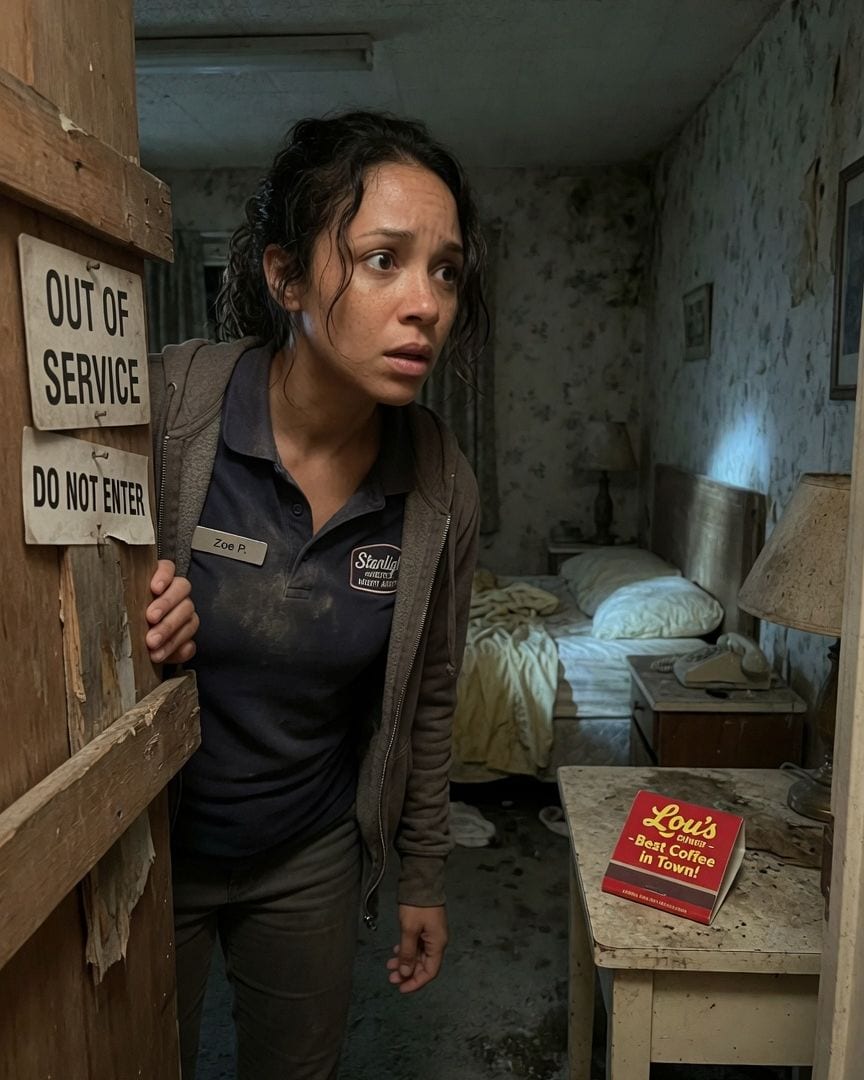
My motel register shows a check-in for Room 9 at 3:33 AM, in my own handwriting. Room 9 has been out of service since the flood.
Working the quiet night shift at the Starlight Motel, I found a chilling new entry in the guest register. My own initials had checked someone into Room 9 at 3:33 AM. The problem? Room 9 has been officially boarded shut and out of service for six months, its key still hanging untouched on the wall.
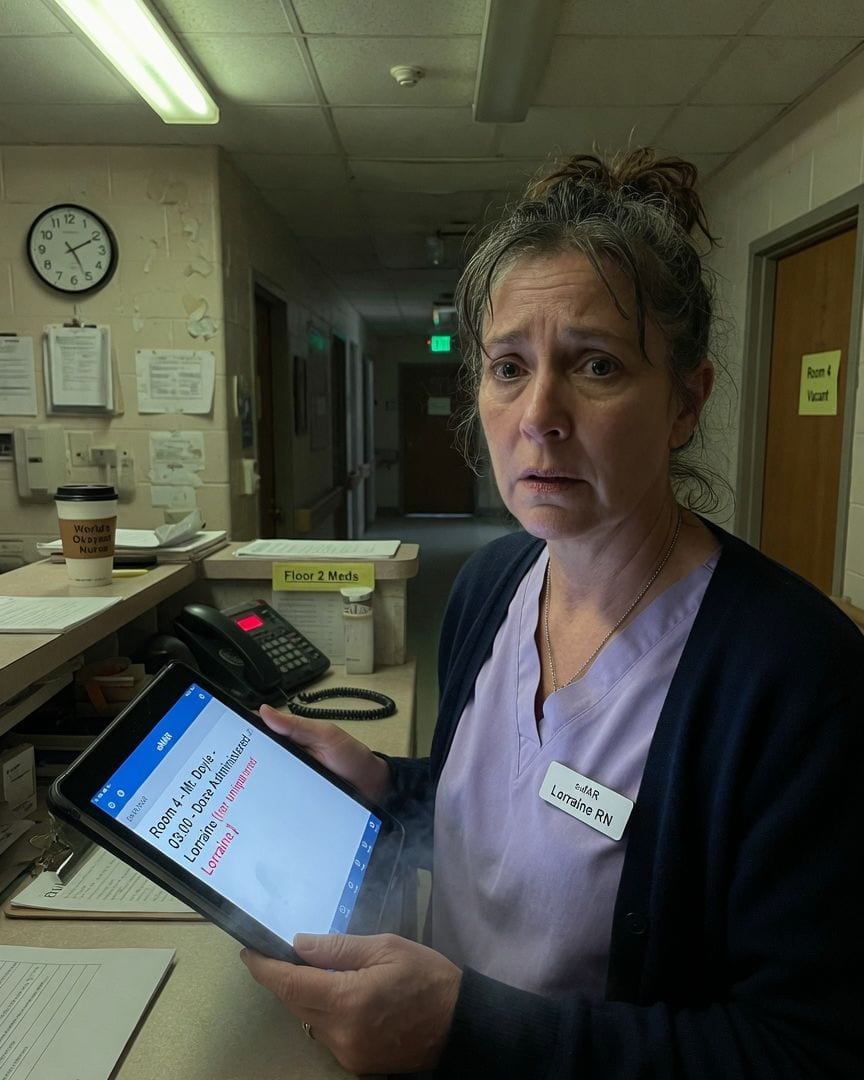
The care home tablet logged a 3am dose in Room 4, signed with my PIN — but Room 4 has been empty since Mr. Doyle died on Sunday, and I have no memory of giving it.
Working a quiet night shift at Elmwood, I double-checked patient records before clocking out. That's when I saw an impossible entry on the eMAR: my signature, administering medication to Mr. Doyle in Room 4 at 3 AM. Mr. Doyle had passed away yesterday, and his room was officially vacant, cleared, and locked.
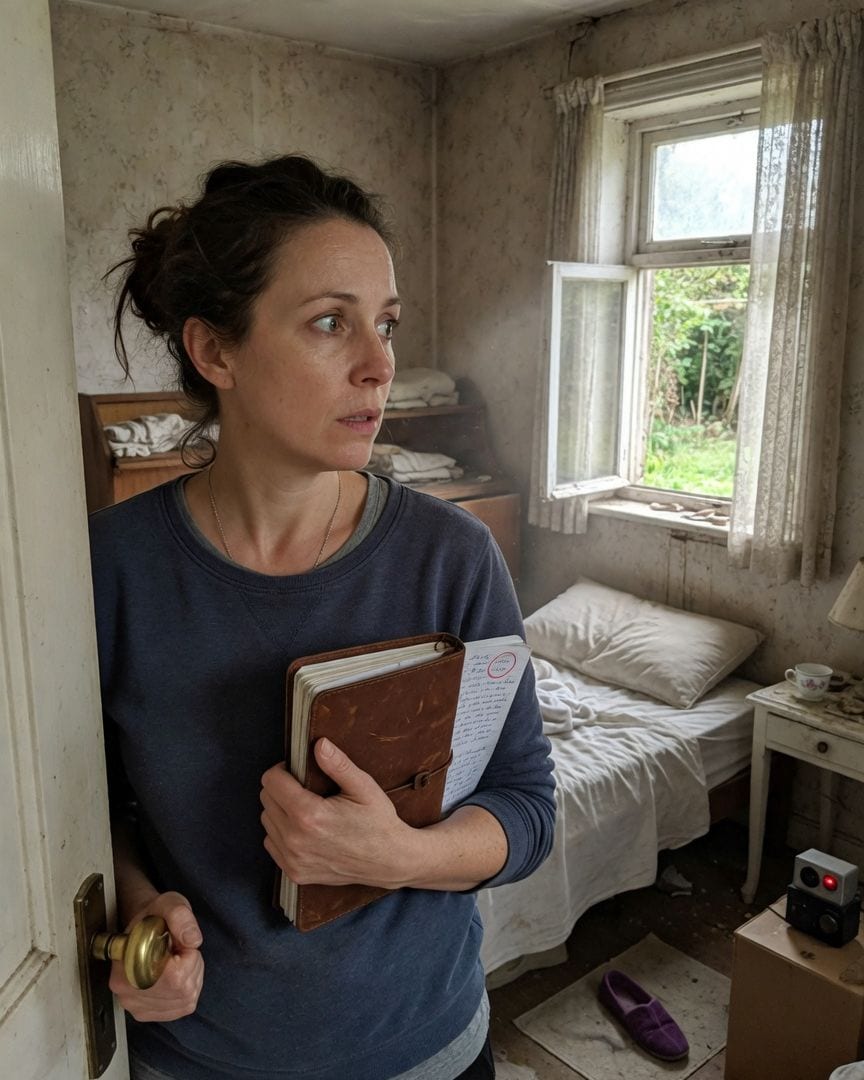
My spare room bed is slept in every few nights, sheets warm and pillow dented. I live alone, painted the window shut, and nobody has a key.
I've lived in Grace's house for six months, adjusting to its quiet rhythms. But the spare room, which I keep shut and empty for storage, has a disturbing routine of its own. Every few mornings, the bed is clearly slept in, the sheet rumpled and warm, and the window I painted shut is open exactly two inches.
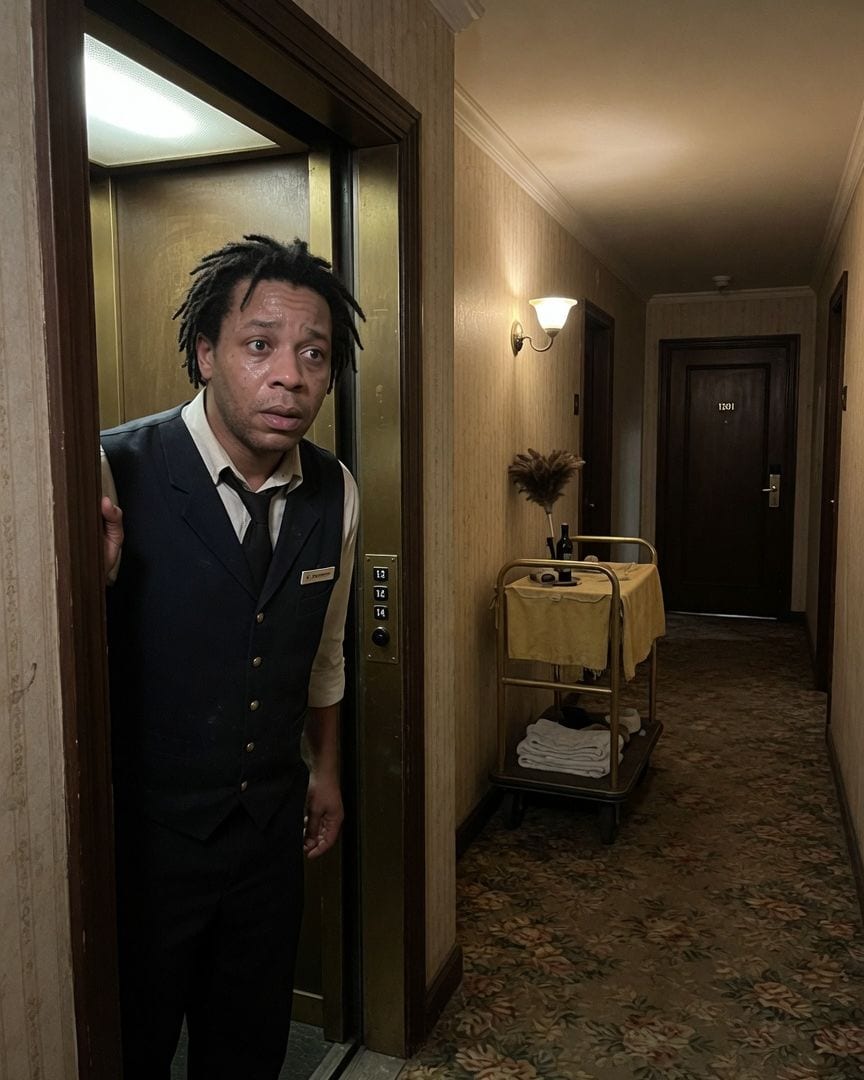
My hotel lift grew a Floor 13 button last week, unlit and proud. A guest pressed it before I could stop them.
As night porter, I'd always dismissed our hotel's missing 13th floor as superstition. But last week, a new button for '13' appeared on the lift panel, opening to a forgotten corridor that shouldn't exist. Stepping inside, I found an old night porter's uniform, complete with a name tag bearing the name of a local historian.
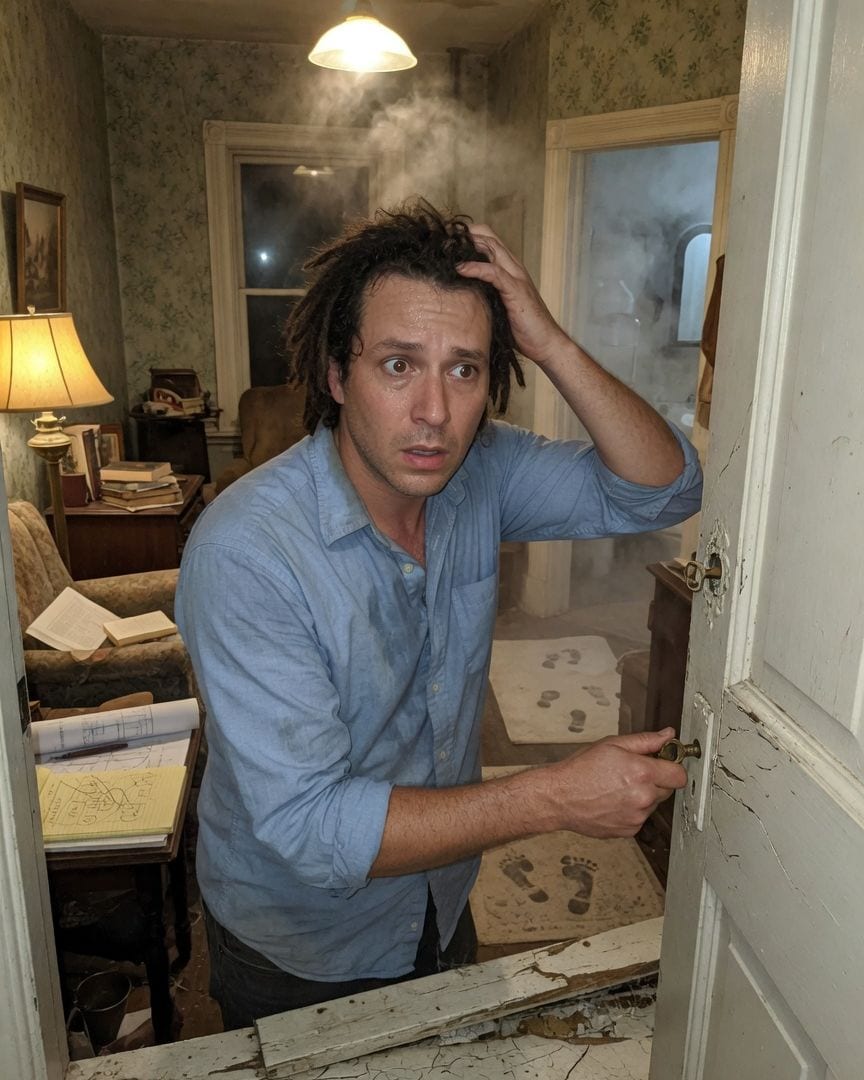
The bath filled itself at 9:30 PM. My main house water was off. Wet footprints led from the tub to a locked airing cupboard.
As an architect, I pride myself on logic. Moving into my inherited Victorian house was supposed to be a quiet fresh start, but on the third night, I heard the impossible. Even after I shut off the main water to the entire house, my clawfoot bath upstairs ran full, warm, and steaming at 9:30 PM.
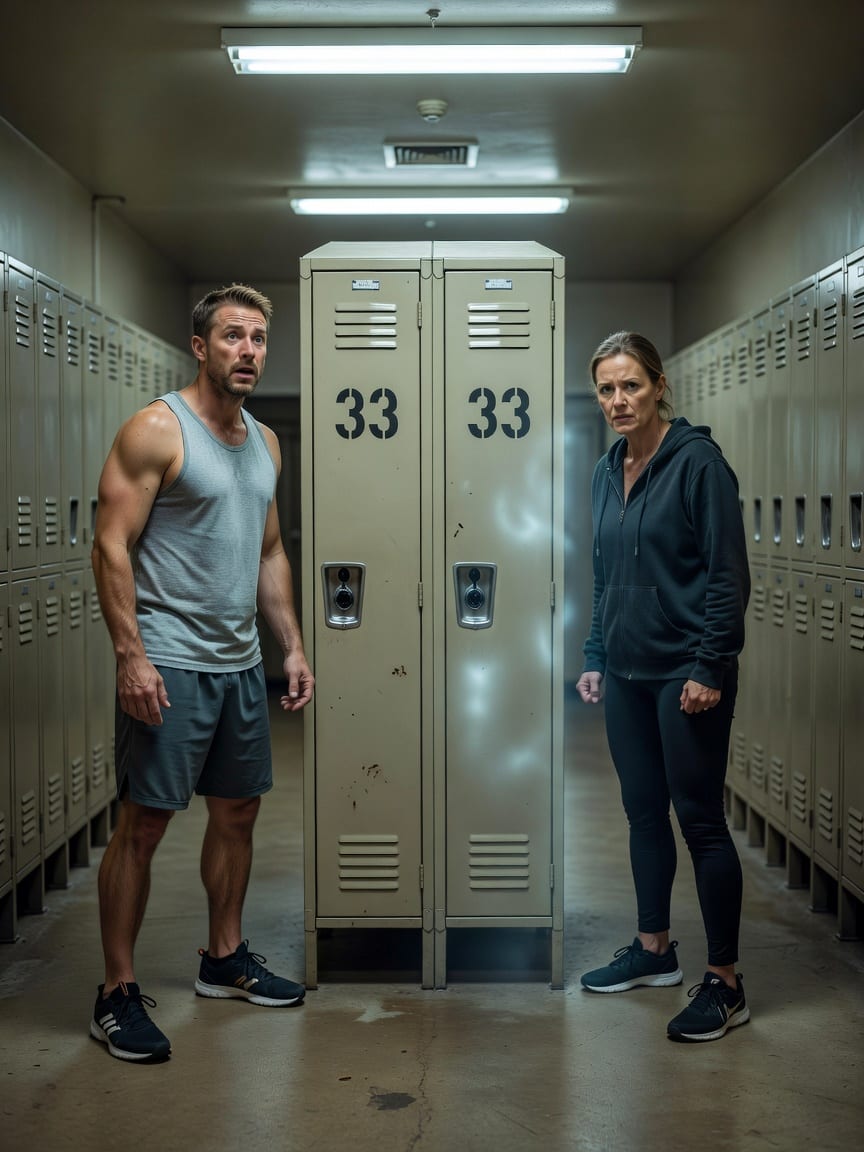
My gym locker room grew a forty-first locker, holding my damp, sweaty clothes, though I hadn't been to the gym in days.
I've used locker 33 at Iron & Grit for years, a small, reliable part of my routine. But when I went back on Wednesday, a second locker 33 stood there, an impossible duplicate. Inside, I found my specific gym clothes, damp and smelling of chlorine, as if I'd just finished a workout I never did.