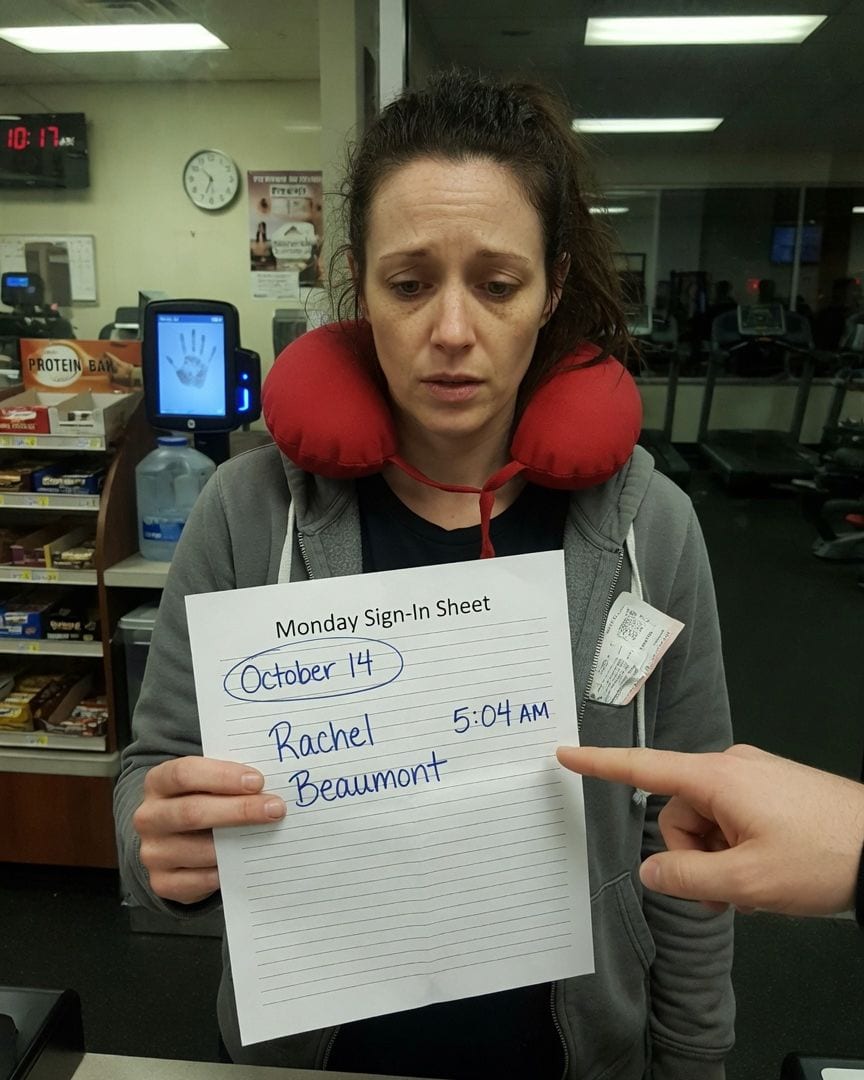
My gym logged my handprint scanning in at 5:04 AM Monday. At that exact minute I was strapped into seat 22C on a red-eye to Denver — a fourteen-hour drive from the gym.
I landed in Denver, bone-tired but relieved. It had been a long red-eye, 22C, window seat, my neck stiff from trying to sleep upright. My phone, finally out of airplane mode, buzzed with the usual backlog of notifications.
One caught my eye: a push notification from my gym's mobile app. "Workout Logged: Monday, 5:04 AM." I frowned. That was impossible. I was already in the air, somewhere over Nebraska, I guessed, when that happened.
I pulled out my boarding pass, creased from my pocket. Flight AA1406 to Denver, boarding at 3:15 AM EST, departure 4:00 AM EST. The time on the gym app was local time, my gym's time zone.
At 5:04 AM, my body was strapped into a metal tube, thousands of feet above the ground, fourteen hours from the gym, not stepping onto a treadmill.
It had to be a glitch. A system error. Maybe a stray signal, a delayed upload from an earlier visit? But the app was insistent. Monday, 5:04 AM. My gym membership was tied to a biometric handprint scan.
No card, no fobs, just my palm on that cold, blue reader. No one else could have used it. I ran through the possibilities in my head. Had I somehow dreamt it? No.
The plane had just finished its ascent, the seatbelt sign still on, the cabin lights dimmed for the long haul. My wallet, with my ID, my credit cards, was in my carry-on bag, stowed above me.
The gym was a fourteen-hour drive from Denver International. The entry wasn’t just wrong; it was physically impossible. My mind cycled through explanations, each one dissolving against the cold, hard facts.
Yet, the app swore my hand had been on that cold, plastic reader, fourteen hours from where I actually was.
The next day, I drove to the gym. Jeffrey Ford, the manager, was behind the front desk, arranging protein bars. Jeffrey was usually jovial, a big guy with a booming laugh, but today he looked preoccupied.
"Jeffrey, I need to ask you about something strange on my account," I started, trying to keep my voice even. I explained the impossible scan, the Monday morning entry while I was mid-flight.
He squinted at his screen, toggling between menus. "Hmm, 'Membership Scanned: Monday, 5:04 AM.' Yeah, it's there," he mumbled, initially dismissive. "Must be a system hiccup. Happens sometimes. A ghost entry, we call 'em."
"A ghost entry for a biometric scan?" I pressed. "My handprint was logged. And I was on a plane."
He sighed, pushing a hand through his thinning hair. "Look, Rachel, the systems aren't always perfect. These things, they just... pop up." He tried to wave it away, but the easy dismissiveness felt forced.
I pushed back, insisting on something concrete, a physical record beyond the app. He argued, said it was all digital now, but I could tell he was flustered.
After a minute, he disappeared into a back office, the door swinging shut with a soft click. The gym, usually bustling, felt eerily quiet.
I could hear the distant thud of weights, the drone of a treadmill, but it all seemed to recede, leaving me alone at the empty front desk.
Jeffrey returned after what felt like an age, clutching a single sheet of paper. His brow was furrowed, the usual jolliness completely gone. He slapped it down on the counter, pointing with a thick finger. "Alright, here it is.
Monday's sign-in sheet." My gaze dropped. There, under the date, was my name: 'Rachel Beaumont.' And next to it, the impossible timestamp: '5:04 AM.'
Then, my heart hammered against my ribs as I stared at the looping 'Rachel Beaumont,' scrawled in my own unmistakable hand, right next to that impossible 5:04 AM timestamp. It was undeniably mine.
Disturbed to my core, the signed sheet clutched in my hand, I drove across town to Alice Granger’s office. I’d found her online – a forensic handwriting expert, highly rated, known for her meticulous work.
Her office was small, filled with bookshelves and a heavy oak desk, a specialized light arching over it like a metallic swan. Alice herself was a woman with kind but piercing eyes, framed by practical, silver-rimmed glasses.
I laid the sheet on her desk, along with samples of my signature from my driver’s license, a few old checks, even a signed credit card slip.
Alice said little, her concentration absolute. She ran a small, wheeled magnifying scope over the signature, then a UV light.
She looked for pressure points, the unique way my 'R' began, the slight hesitation before the 'h', the final flourish on the 't'. The silence in the small office stretched, thick with unspoken dread.
Every rustle of paper, every click of her instrument, sounded amplified. I could feel the hairs on my arms standing on end, despite the warmth of the room. She compared the angles, the ink absorption, the subtle tremors.
She took off her glasses, rubbed her temples, then looked up at me, her expression grim. "This is your signature, Rachel. No doubt about it. Genuinely yours."
Armed with Alice's confirmation, the impossibility of it all solidified into something terrifyingly real. My own signature, confirming I was in a place I literally could not have been.
I started digging deeper, scrutinizing my bank statements, my credit card activity, every digital footprint from that impossible Monday. If I was there, what else had I done?
Buried among legitimate transactions – my plane ticket, a coffee at the Denver airport, a rental car booking – I found it. A small, unusual charge on my credit card: $4.50 to 'The Daily Grind,' a cafe.
The timestamp: 6:15 AM EST. Just an hour after the gym scan. The address listed was in Greenleaf, a small town an hour's drive from my gym, but several states away from Denver.
I’d never been to Greenleaf in my life. I pulled up the online receipt, a digital ghost. My name was on it. 'Rachel Beaumont.' I tried to invent a mundane explanation – a stolen card?
But my wallet had been in my carry-on, in the locked overhead compartment the whole flight. A friend? No one I knew lived anywhere near Greenleaf.
The coffee receipt, a ghost of a transaction, felt like a cold hand reaching from the impossible, pulling me deeper into something I couldn't name.
I returned to the gym, hoping to glean more from Jeffrey Ford, but he was markedly less friendly now. His usual jovial demeanor had been replaced by a strained politeness, his eyes avoiding mine.
The gym itself felt colder, the bright lights casting too many shadows. When I subtly brought up the 'system glitch' again, just to see his reaction, he cut me off.
He leaned over the counter, his voice low, almost a whisper, though no one else was nearby. "Look, Rachel, some things are best left alone. You're being... persistent."
His tone was a veiled warning, the friendly gym manager replaced by something colder, almost menacing.
Later that week, I noticed a dark sedan parked on my street. Tinted windows. Nothing overtly menacing, but it was there when I left for work, and still there when I came home.
An hour later, when I checked again, it was gone. Just a car. I told myself I was being paranoid. But the unease lingered. An hour after that, an email appeared in my spam folder. The subject line was blank.
The sender was '[email protected]'. The body contained a single, chilling line: 'Some records are best left undisturbed.' There was no sender I recognized, no way to reply, no IP address I could trace.
I tried to forward it to a friend, just to prove I wasn't making it up, but the email was gone when I tried.
It vanished as if it had never been there, leaving only the chilling echo of its unspoken threat: someone knew I was looking.
Shaken, my nerves frayed, I went back to Alice Granger. I recounted everything: the coffee receipt in Greenleaf, Jeffrey’s veiled warning, the phantom email. Alice listened intently, her kind eyes hardening with each detail.
After a long pause, she pushed her glasses up her nose. “I’ve seen similar patterns before,” she admitted, her voice low. “Not forgeries, not in the traditional sense. But genuine signatures on impossible documents, documents that shouldn’t exist.”
She leaned forward, her elbows on the desk, her gaze piercing. “I have a theory, Rachel. A ‘proxy’ system.” She described it quietly, carefully. “Identities are digitally mirrored.
Physical traces are created – sometimes through unwitting participants, sometimes through means I don’t fully understand. These ‘records,’ these phantom activities, they’re then integrated into larger data streams. They influence everything from credit scores to consumer behavior, even legal standing.”
The room felt suddenly heavy, the air thick and still.
Alice mentioned a former colleague who had been investigating something similar, someone who had 'disappeared' a few years ago. “He believed there was a ‘key’ to understanding the pattern, something hidden within the records themselves. A common thread.
He said it wasn’t random.” Her voice was low, almost a whisper. “It’s not about your signature, Rachel. It’s about what your signature allows to exist. And I think… I think you’re not the first.”
Following Alice's cryptic hint about a 'key,' I plunged into the darker corners of the internet. Obscure online forums, dark web archives – anywhere I might find information on 'proxy records' or 'data ghosting.'
It felt like searching for a ghost in a haunted house. After days of sifting through fragmented posts and paranoid ramblings, I eventually stumbled upon a heavily encrypted forum.
It was a clandestine community of individuals recounting impossible discrepancies in their own lives: credit card charges they never made, appointments they never attended, even fleeting interactions with strangers who seemed to know them.
One post, from a user named 'Archivist_007,' caught my eye. It mentioned a specific kind of 'facility signature' and a series of seemingly random alphanumeric codes appearing on various digital and physical records.
He described them as 'validation strings' for 'phantom actions.'
Using a friend's tech skills – a favor I cashed in with a vague explanation about a 'research project' – I managed to access a deeper, hidden level of my gym's internal system logs.
It took hours, a maze of firewalls and obscure commands, but eventually, I was in.
I cross-referenced the codes. The alphanumeric string on my impossible coffee receipt from 'The Daily Grind' – 'DG-GL-22C-B9' – suddenly clicked. It was linked to a hidden section of the gym's database.
My blood ran cold as I scrolled through the decrypted ledger that appeared on my screen. Dozens of names. Dozens of impossible dates. All linked by the same chilling, impossible pattern of phantom activity.
I spent days decoding the ledger, the pattern of alphanumeric codes slowly revealing itself with sickening certainty. They weren't random; they corresponded to specific dates and types of personal vulnerability. 'Code Alpha-7' for periods of job loss.
'Beta-9' for medical leave. 'Gamma-2' for major travel or relocation. My own 'enrollment' date, years ago, was clearly marked next to a 'Beta-9' entry.
I remembered that period with a jolt: a serious illness, long recovery, too weak and distracted to notice subtle shifts in my financial statements or my online footprint.
The pattern snapped into place with sickening clarity. These 'proxies' – ghost versions of us – were activated when people were least able to notice or fight back.
They created a parallel existence, generating impossible, yet fully documented, digital and physical records of people's activities. The 'genuine signature' was the legal anchor, validating the phantom.
I saw how my own credit score, health insurance claims, and even my online persona had been subtly shaped by these phantom records, a ghost manipulating my life from within.
I hadn't just stumbled into this; I had been a part of it for years, a ghost in my own machine, my life subtly steered by a shadow self I never knew existed.
The realization hit me with crushing force: I couldn't simply expose this. The system was too vast, too deeply ingrained in the fabric of everyday data. It wasn't a bug; it was the entire system.
Frantically, I searched the encrypted forum, hoping to find an 'off-switch,' a way to sever my connection to the proxy. If I could just erase my own records, I thought, I could escape.
Instead, a direct message awaited me. From 'The Archivist.' The architect. The message was short, chilling: 'Once enrolled, there is no exit. Your record is now complete.'
As I read, my smart home devices flickered erratically, the lights in my apartment dimming as if the power was struggling.
My computer screen distorted into static, the glowing text of the message momentarily obscured by a wave of white noise. A faint, almost imperceptible hum filled the room, growing steadily, a low thrum that vibrated in my chest.
Then, a rhythmic thump-thump began at my front door. Not a knock, but something heavier, more insistent, as if something impossibly massive was trying to walk through it.
I froze, my breath catching in my throat, my eyes glued to the door. The thumping continued, steady and slow, growing louder with each beat, as if something impossibly heavy was trying to walk through my front door.
The neighborhood reported nothing that night, and Rachel Beaumont's apartment remained untouched. Her gym membership continued its phantom logs, and her online presence subtly grew more active with comments that weren't quite hers.
Jeffrey Ford, the gym manager, saw her at the grocery store, his smile faint and knowing. She smiled back, a little too wide, a little too still.
If this one got to you
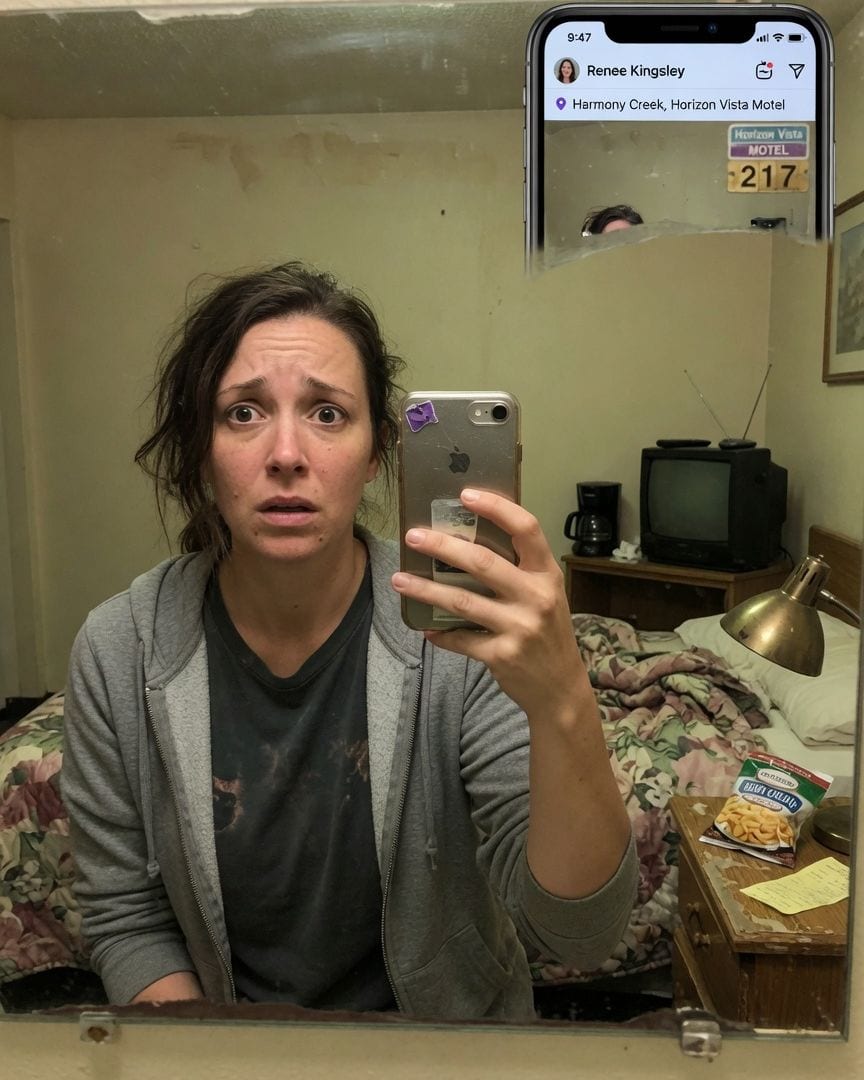
My apartment door opened and closed at 1:20 AM last Thursday, then my digital keycard checked into a motel six hours away, all while I slept.
My Tuesday morning began like any other, until I opened my phone's photo app. Instead of hike pictures, I found forty new photos: a motel room in Harmony Creek, six hours northeast. The last image was a mirror selfie of *my* face, holding *my* phone, but I was asleep in my bed the entire time.
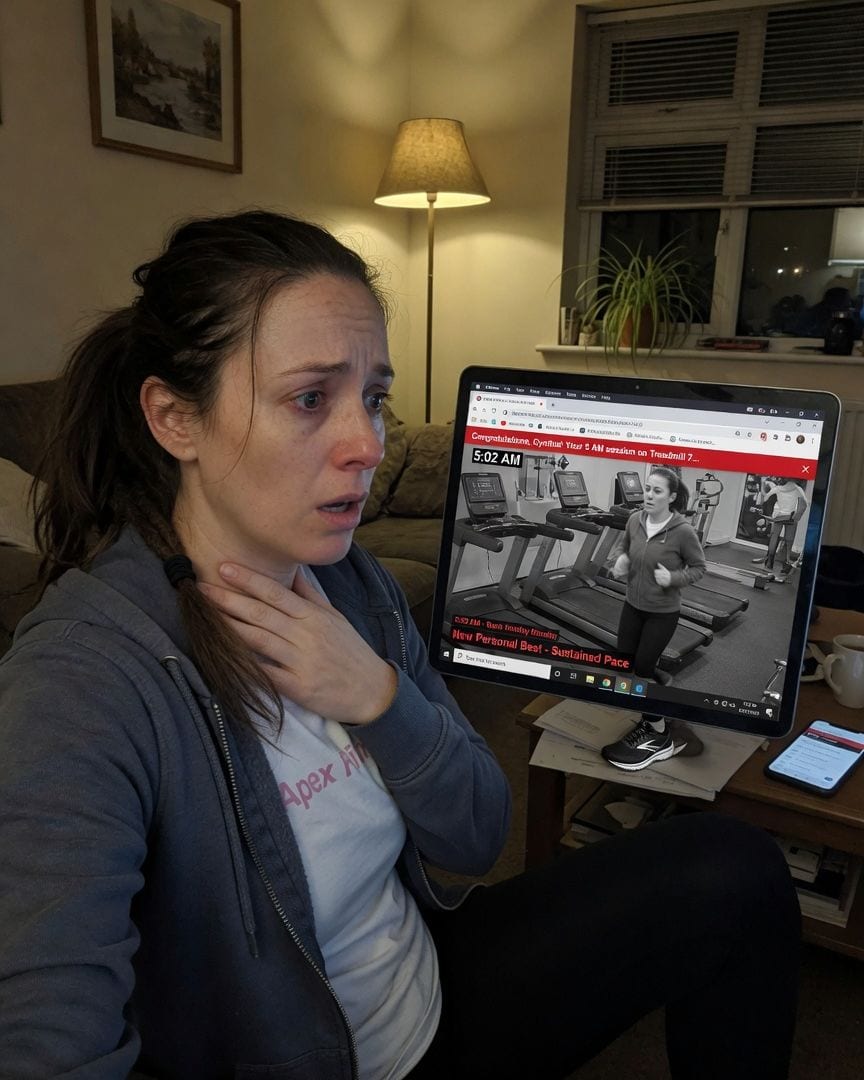
My gym CCTV filmed me on the treadmill at 5 AM on a bank holiday. The gym was shut. My fob log proves I wasn't there.
Monday morning, my gym's app announced a new personal best on my treadmill at 5 AM. But the gym was closed for the bank holiday, and I was home. Then, I watched CCTV footage of myself, in my own clothes, running on Treadmill 7 in the deserted building for two hours.
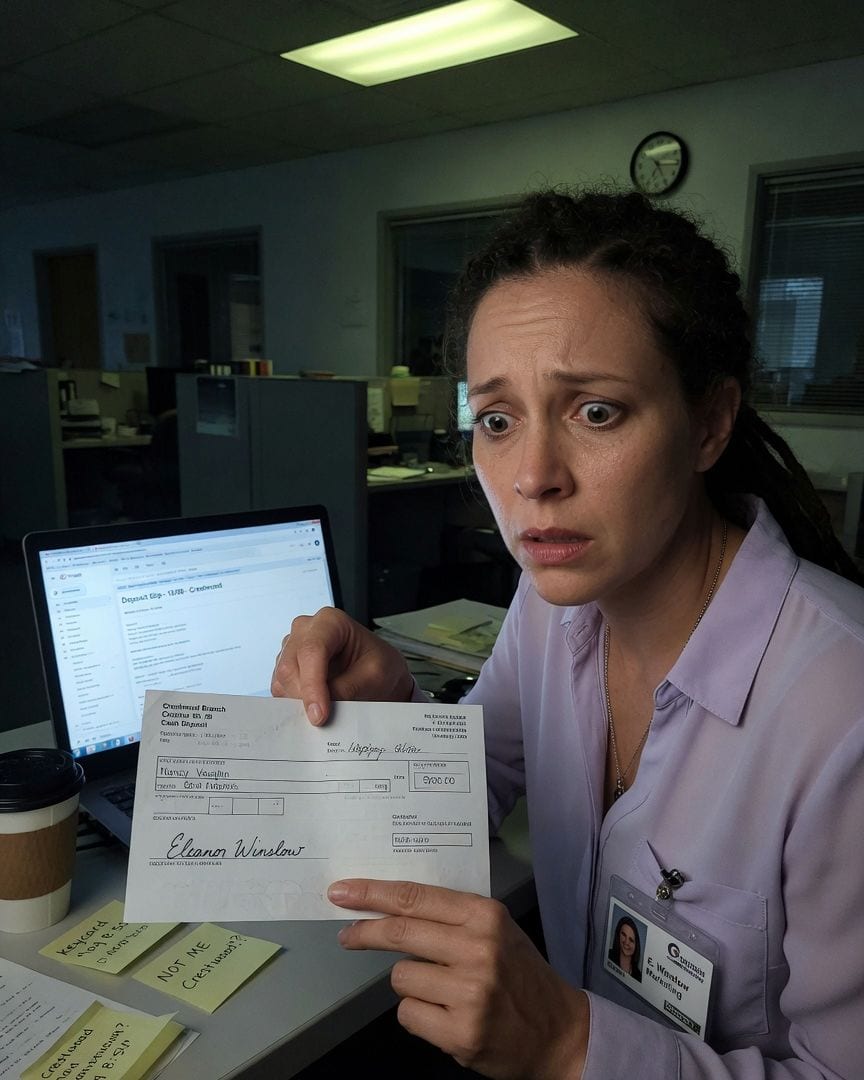
My bank statement shows a $900 cash deposit made in a town I've never set foot in, at 10:40 AM on a workday. I was at my desk, badged in. Two more landed since.
My bank statement showed a $900 cash deposit from a town I'd never visited, 150 miles away. I was at my desk, logged into work, all three times. But the scanned deposit slip arrived, clear as day, showing my own flawless signature.
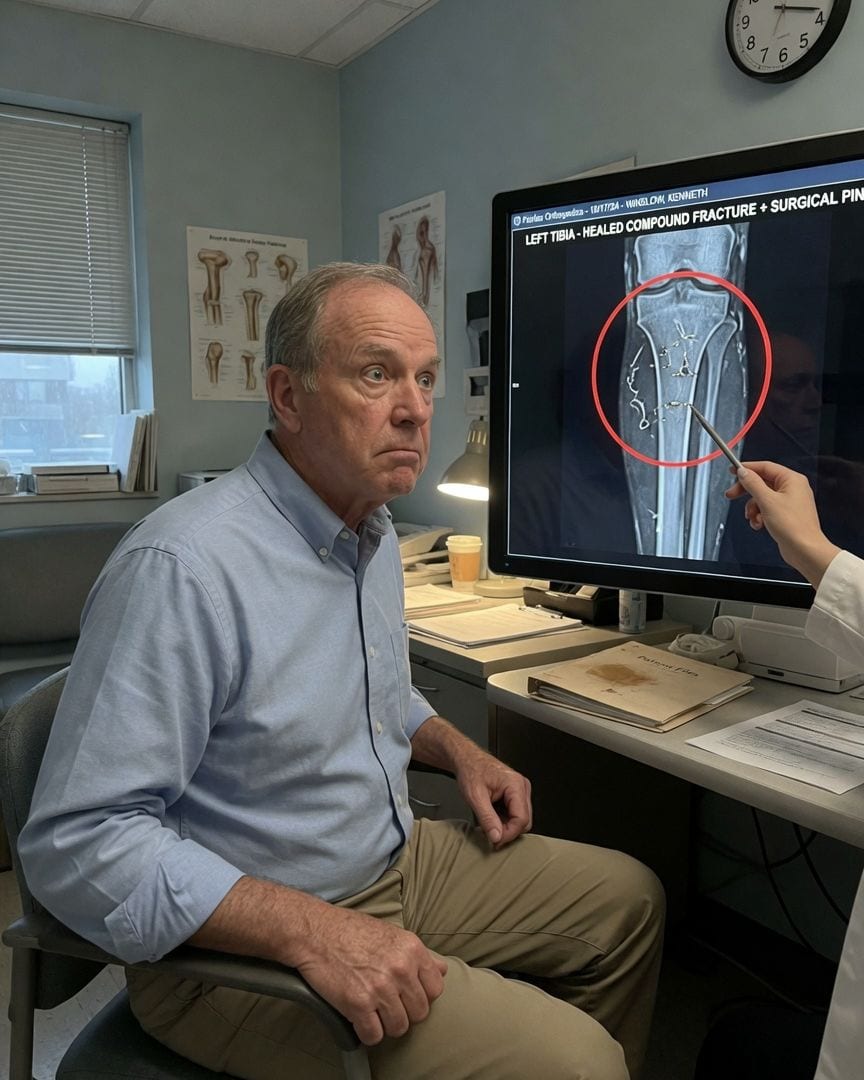
My MRI shows a severe, decades-old fracture in my left tibia with surgical pins. I have no memory of it.
I went to the gym to try their new palm scanner, expecting a quick registration. Instead, the machine insisted my living hand matched an existing profile. The screen flashed the name 'MULLER, GIDEON' with a D.O.D. of 2004 and a photo of a man I'd never seen. My own palm print was linked to a ghost.
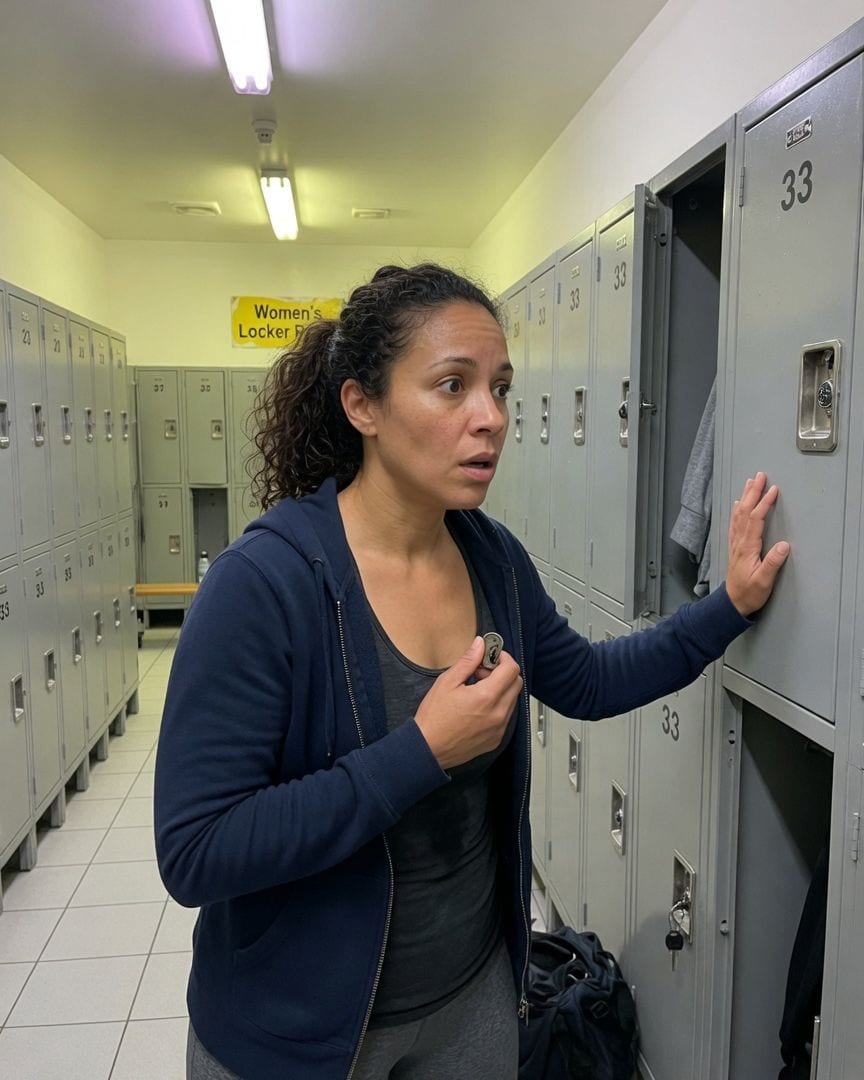
My gym locker 33 opened a second locker 33, damp with sweat, though I hadn't been to the gym since Monday.
On a Wednesday, I headed to the gym, my key for Locker 33 in hand. But as I opened my locker, I found an identical one right beside it – a forty-first locker in a room meant for forty. Inside, damp clothes and the faint smell of chlorine filled the impossible space.
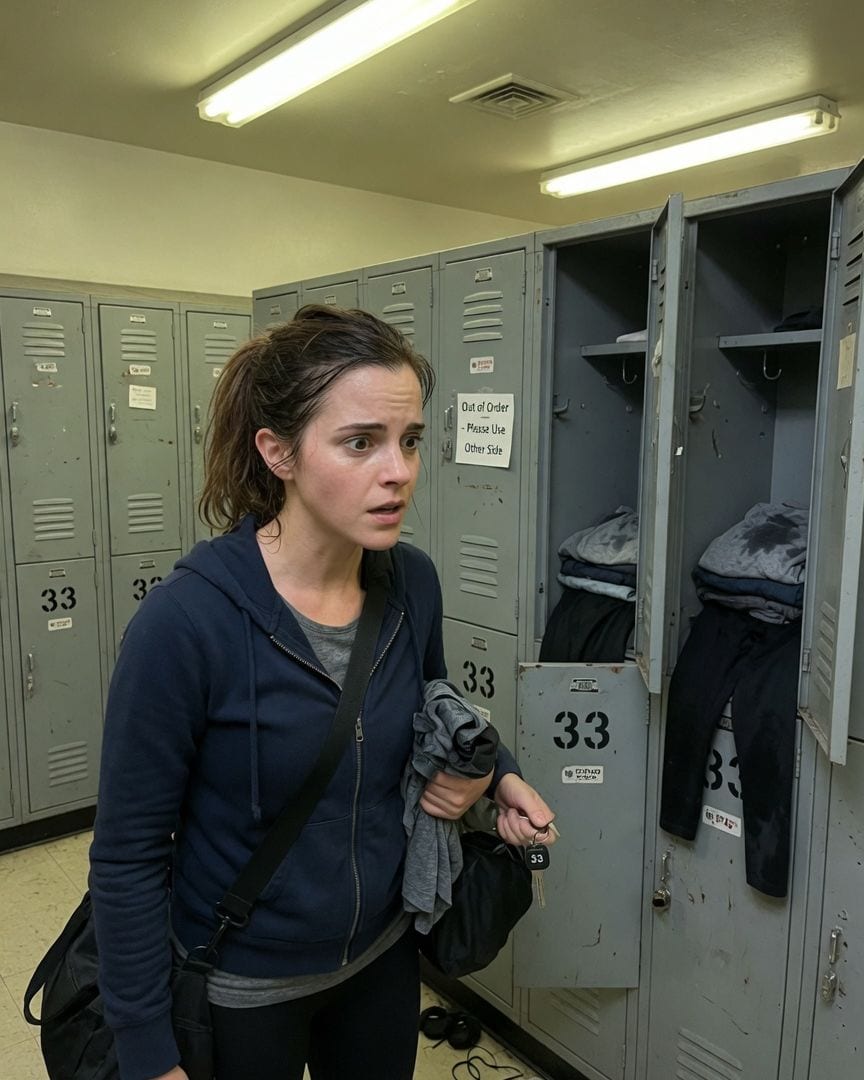
My gym locker number 33 opened two doors this week. One held my dry clothes. The other held them damp, like I'd just left.
I'm Sophia Granger, a data entry specialist, and my world is built on verifiable precision. But during a routine gym visit, I found not one, but *two* locker #33s in the women's room. My key opened both, but the second held my own damp, sweat-soaked clothes, as if I'd just finished a workout I never did.