An honor guard private finds his own signature on a dead soldier's 1980 supply form, dated for a week he was sick on base.
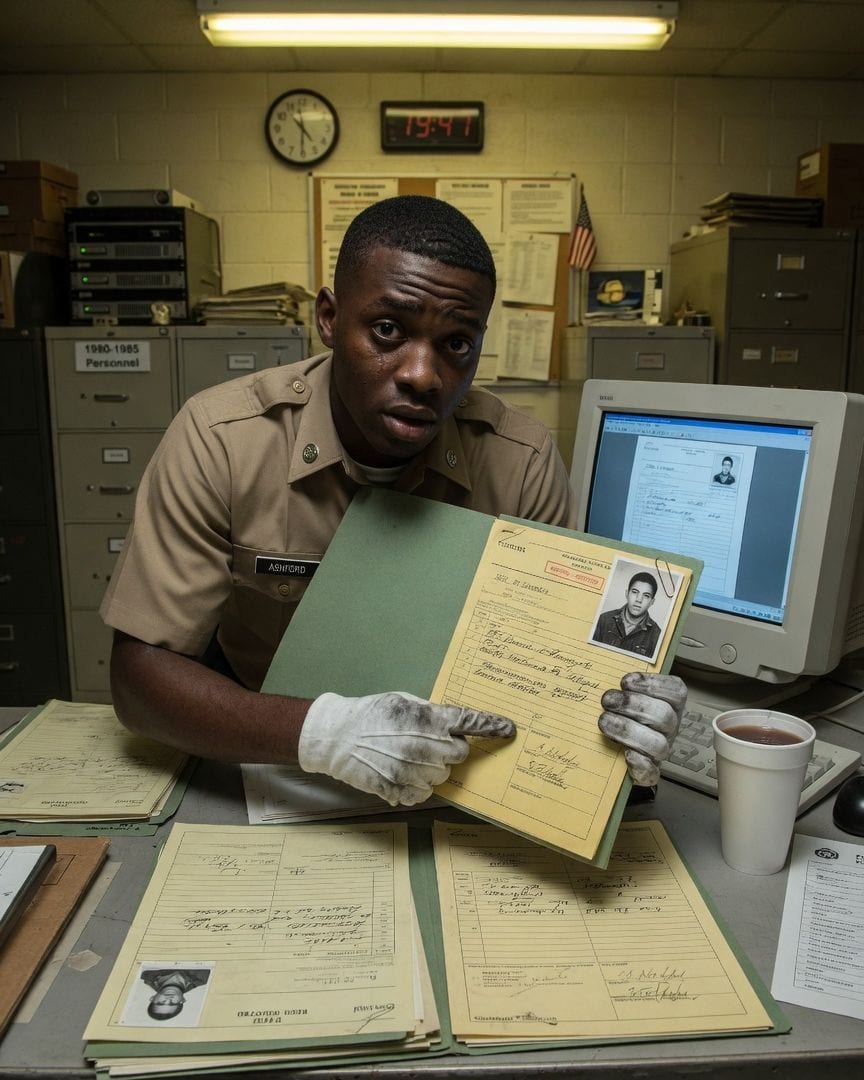
Private Samuel Ashford felt the familiar weight of the folded flag in his hands, the crisp fabric cool against his gloved palms. The family had departed, leaving only the quiet drone of the Fort Bragg grounds crew in the distance.
Sergeant First Class Harrington had already turned his back, heading towards the detail’s parked vehicle.
Samuel, new to the honor guard, had heard the unwritten rule: thirteen silent folds, and once the family was gone, you never spoke the fallen’s name a second time.
But the name, PFC Damien Kingsley, had been so clear on the manifest, and Samuel, ever diligent, had just wanted to be sure. A quiet whisper escaped him, 'Damien Kingsley.'
The name left his lips, a breath in the still air.
Later that day, at the next funeral, Samuel felt it.
He pulled the thirteenth fold tight, then tighter still, but it always came out loose, a subtle give in the fabric, as if the flag itself refused to hold its final, perfect form.
He tried again, sweat beading on his brow under the southern sun, but the loose thirteenth fold persisted, a tiny, impossible wrongness.
The anomaly of the thirteenth fold, a physical irritant, continued at every ceremony. Samuel mentioned it to Specialist Brandon Reynolds, his battle buddy, who chalked it up to nerves or a batch of faulty flags. Samuel tried to believe him.
The next morning, during a routine evening check of the unit duty log, Samuel found an entry for a 'PFC D. Kingsley' listed for the upcoming week’s honor guard roster.
He knew the name, of course, but it struck him as odd. No one named Kingsley was in their unit. He checked the unit roster, then the larger Fort Bragg manifest. No active PFC Damien Kingsley.
He flagged it with Sergeant First Class Harrington, expecting a simple clerical error. Harrington, a gruff veteran with decades of service, glanced at the entry, grunted, and said, 'Must be a typo, kid. Happens.'
He scratched a line through the entry, but Samuel noticed his hand hesitated, just a fraction of a second. The next morning, the name was back in the log, neatly penned in, the scratch mark gone.
Beneath it, a signature: 'S. Ashford.' His own signature, unmistakable, yet he had never written it.
The signature sent a spike of ice through Samuel. He confronted Harrington, who denied everything, his face tight with annoyance.
Determined, Samuel requested access to the base’s digital archives, specifically the service records for anyone named Kingsley, and cross-referenced with recent honor guard activities. He spent hours in the quiet, climate-controlled records office, the hum of servers the only sound.
He found several historical 'Damien Kingsley' entries, mostly fallen soldiers from past conflicts. Then, a file labeled 'PFC Damien Kingsley – Service Record, 1980-1982.' He opened it.
The file was extensive, detailing deployments, commendations, even a specific mission to a decommissioned outpost in the Alaskan interior.
And there, on a supply requisition form for that very mission, was his own signature, 'S. Ashford,' dated for a week he knew, with absolute certainty, he had spent confined to quarters on base at Fort Bragg with the flu.
His fingers trace the familiar loops of his handwriting, a cold dread tightening in his chest.
Samuel felt a sickening certainty. This wasn't a clerical error; it was a deliberate, impossible fabrication. He spent the next few days trying to debunk the record.
He pulled his own service file, cross-referencing every date, every deployment, every medical leave. His own file was impeccable, a perfect match for his memories. Yet Kingsley's record, with Samuel's signature, documented a parallel existence, a phantom deployment.
He discreetly questioned older honor guard members about PFC Damien Kingsley, but no one recognized the name as an active member. Some vaguely recalled a fallen soldier with that name from decades past, a routine burial.
He even looked up the Alaskan outpost listed on Kingsley's record. It was real, decommissioned in the late 70s, a remote radar station swallowed by tundra.
The official Fort Bragg base access logs from that specific week of his 'deployment' to Alaska confirmed Samuel’s presence on base, even detailing his medical leave. Two unimpeachable records, swearing two mutually exclusive truths.
The dread was no longer abstract; it was a cold, hard knot in his gut. He realized someone, or something, was actively manipulating these records, and his own identity was now entangled in it.
He decided to widen his search, looking for other discrepancies in honor guard records, any pattern of names appearing where they shouldn't.
Samuel’s increased presence in the archives did not go unnoticed. Chief Warrant Officer Judith Vance, a severe woman with a reputation for meticulousness and an encyclopedic knowledge of military records, began to appear in the archives more frequently.
She would observe Samuel from a distance, her gaze calm and assessing, never directly confronting him, but her presence was a palpable weight. The fluorescent lights of the archive seemed to hum louder whenever she was near.
One afternoon, Samuel was reviewing a stack of old physical logbooks when he found a note tucked into one, a single typed sentence: 'Some things are better left folded.' No signature, no unit stamp, just the stark message.
He looked up, and saw Vance standing by the microfilm readers, her back to him, but he felt her eyes on him. Later, as he walked back to his barracks, he noticed her dark sedan parked a block away, idling.
He quickened his pace, the hair on his neck prickling. The next day, Sergeant First Class Harrington called him into his office. 'Ashford,' he said, his voice unusually soft, 'I’ve been getting questions about your archive visits.
Warrant Officer Vance is… particular about her records. Are you sure you’re not overthinking this Kingsley business?' Samuel tried to maintain his composure, mumbling about an interest in military history. Harrington nodded slowly, his eyes holding Samuel’s.
'Just be careful, Private. Some things are old for a reason.' The warning was clear, unspoken, and it confirmed Samuel’s growing fear: his investigation was no longer secret, and someone knew exactly what he was looking for.
The pressure mounted. Samuel knew he had to act. He approached Chief Warrant Officer Vance directly in the archives, holding the duplicate records – Kingsley’s deployment signed by him, and his own medical leave for the same dates.
'Ma'am,' he began, 'I need to understand this. My signature is on a record for a deployment I never made. How is this possible?' Vance turned from a bank of antique filing cabinets, her expression unreadable.
'Private Ashford,' she said, her voice calm, 'you broke the rule, didn't you? At the graveside.' Samuel flinched. 'The rule? How…' Vance cut him off. 'The unwritten rule. Thirteen folds, silence, never say the name again. It's not superstition, Private.
It's protection.' She gestured to the records in his hand. 'When you spoke the name, you invited it. It needed an anchor, a living identity to 'fold in' to the system. Your identity was… available.' Samuel stared, horrified. 'It?
What is 'it'?' Vance sighed, a sound of weary resignation. The air in the archive felt suddenly heavy, thick with unspoken history. 'An anomaly. A pattern. It’s been happening for generations.
When a life ends unacknowledged, or a record goes missing, a space opens. And something fills it. It’s not malicious, Private, it's just… a process. It leaves its mark.'
She picked up a folded flag from her desk, one used for training. She demonstrated the thirteen folds, her movements precise.
On the final fold, she pulled it tight, but Samuel saw it – a tiny, almost imperceptible slackness, a loose thirteenth fold. 'Its signature,' Vance said, meeting his gaze. 'A perfect mimicry, but never quite flawless.
It takes the name, the record, sometimes even the face. But it always leaves that one small imperfection. Your signature, Private, was just the next step in its own documentation.'
The earlier clues clicked into place: the loose folds, the phantom name, his signature on a false record – all part of a coherent, terrifying system.
Samuel felt a wave of nausea. 'My signature… it took my signature?' Vance nodded. 'And more. It's a claiming. A preparation.'
She led him to a section of the archives filled with meticulously organized, leather-bound duty rosters, some dating back to the early 20th century.
Dust motes danced in the shafts of light from a high window, illuminating centuries of military lives. 'My family has watched this pattern for a long time, Private.
We try to manage it, to contain it, but we can't stop it entirely.' She pulled out an old roster from 1982, the year PFC Damien Kingsley was officially listed as fallen.
Samuel’s eyes fell on a page, seeing the name 'PFC Damien Kingsley' listed not as the fallen, but as part of the honor guard detail for a funeral that year – a funeral for an 'unidentified soldier.'
The same name, appearing in two places, in two different roles, in the same year. It was the pattern across rotations, across dates.
Vance pointed to a faint, almost invisible mark in the margin next to Kingsley’s name on the honor guard roster: a tiny, almost imperceptible, thirteenth fold impression. 'It's cyclical, Private. It finds its way back.'
Then, she turned a few pages forward in the same ledger, to an entry years in the future, a duty roster for a 'special assignment' at the Alaskan outpost. And there, already penciled in, was his own name: 'Samuel Ashford.'
Beside it, undeniable, was the faint, almost imperceptible, thirteenth fold mark pressed into the paper itself. 'Some things, Private Ashford,' Vance's calm voice echoed in the empty archives, 'are simply folded in. Always have been.'
Samuel stared at his name, his future, already written, already marked. 'What does that mean?' he demanded, his voice thin. Vance closed the ledger with a soft thud. 'It means the entity has claimed your identity, Private.
It will slowly, imperceptibly, replace you. Your records will become its records, your life its life. The deployment to Alaska is where the final 'folding' occurs. It's a place of forgotten records, of 'lost' identities. A perfect blank slate.'
She explained that her family, for generations, had served as unofficial archivists, watching for the thirteenth fold, for the 'Kingsley' placeholder, trying to steer the entity away from vital personnel.
The unwritten rule of the honor guard was a desperate, quiet attempt to prevent new attachments. Samuel’s whispered name had been an open invitation, and his diligence, his desire for perfection, made him a prime candidate for the entity's 'folding.'
'It doesn't kill, Private,' Vance explained, her eyes distant. 'It overwrites. It leaves a perfect copy, one that functions, one that is accounted for. But the original… the original is simply unmade. Folded away.'
Every clue clicked into place: the loose folds were its signature, the phantom records its method, the recurring Kingsley name its placeholder, and his own marked future entry was the final, horrifying confirmation of his fate.
The dread was in the coherence, the terrible, logical inevitability of it all.
Samuel reeled, his mind racing for an escape. 'There has to be a way to stop it! To reverse it!' Vance shook her head, a profound sadness in her eyes.
The air in the quiet room seemed to grow heavier, pressing down on him. 'There isn't. Not once the mark is made, once the name is folded in. My family has tried for centuries.
We've only learned to observe, to manage. To ensure the 'foldings' don't disrupt the larger system, don't spread chaos. We keep the records straight, even if the lives themselves aren't.' Samuel grabbed her arm. 'But I'm still here!
I'm still me!' Vance looked at his hand on her arm, then back at his face. 'For now. The process is gradual. You'll start to forget things, small details. Then larger ones.
Your memories will subtly shift, align with the new record. Your habits, your mannerisms… they will slowly become more efficient, more precise. More… accounted for.' She pulled her arm free, her touch cool against his skin.
'The military system is designed for perfect accountability, Private. This entity thrives in that perfection. It leaves no gaps, no anomalies that can be officially detected. It simply replaces one perfectly accounted-for soldier with another.'
Samuel felt a cold numbness spread through him. He imagined himself, years from now, deploying to that desolate Alaskan outpost, a perfect soldier, but not him. He looked at the ledger, at his name, at the thirteenth fold mark.
He was already becoming a part of the record, a ghost in the machine. He had become the very anomaly he had sought to expose, silently folded into the system he served.
Samuel Ashford continued his duties with the honor guard. The loose thirteenth fold on the flags became his constant, private companion. He grew quieter, more focused, his movements in formation becoming almost unnervingly precise.
Sergeant First Class Harrington noted Samuel’s improved discipline, praising his newfound dedication. Brandon Reynolds found Samuel less talkative, more distant, but assumed it was the weight of the honor guard’s solemn duties.
Chief Warrant Officer Vance watched him from a distance, her gaze always calm, always assessing. The records continued, flawless, impeccable, swearing to an unbroken chain of service.
Samuel’s identity, once so vibrant and individual, was slowly, imperceptibly, aligning with the perfect, empty precision of the fold.
Samuel Ashford completed his tour with the honor guard, then transferred to a new unit. His service record was exemplary. He received commendations for outstanding performance, his signatures on all official documents perfectly formed.
Years later, a new Private, fresh to the Fort Bragg honor guard, whispered a fallen soldier's name, just to be sure. He then found the thirteenth fold of every flag he touched came out loose.
He approached his Sergeant First Class, a man named Ashford, now older, with a calm, almost serene expression.
The office hummed with the steady thrum of the base outside, but in this room, only the young Private's apprehension filled the space. 'Sir,' the Private began, 'I think there's a problem with the flags.
The thirteenth fold keeps coming undone.' Major Samuel Ashford, his uniform immaculate, his posture ramrod straight, simply looked at the young Private, a faint, wrong little smile touching his lips. 'Is that so?'
If this one got to you
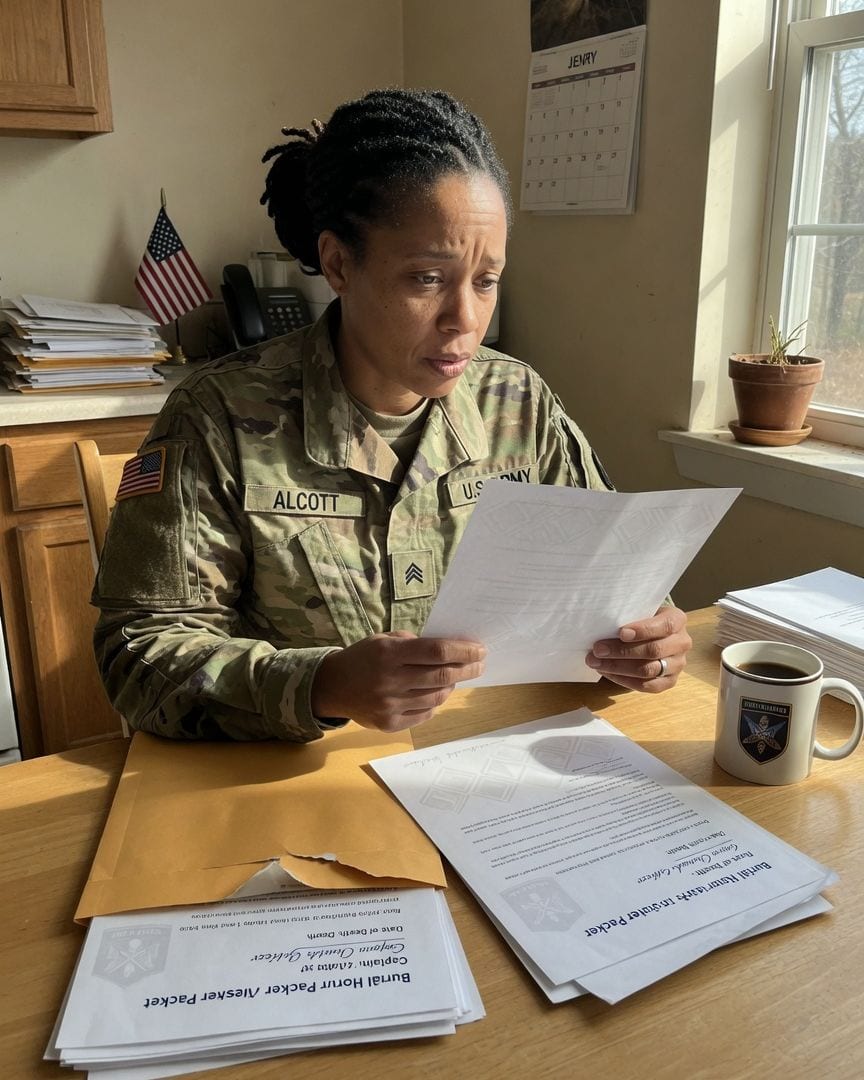
Sergeant First Class Bree Alcott found her own completed burial packet, signed with a confident flourish. It stated her death date was April 17th, next spring, but she was very much alive.
Sergeant First Class Bree Alcott, 38, found her own completed burial honors packet on her kitchen table one quiet autumn morning. It was signed, sealed, and dated for April 17th, next spring, despite her being very much alive. When she took the impossible paperwork to the Fort Claiborne Casualty Affairs office, the staff sergeant there denied any record, even as he traced a faint, archaic watermark on the document. Later, deep in the post's archives, Bree uncovered other packets for soldiers long missing, all bearing the same unsettling watermark and future-dated signature, their 'death' dates now long past – until she found one for tomorrow.
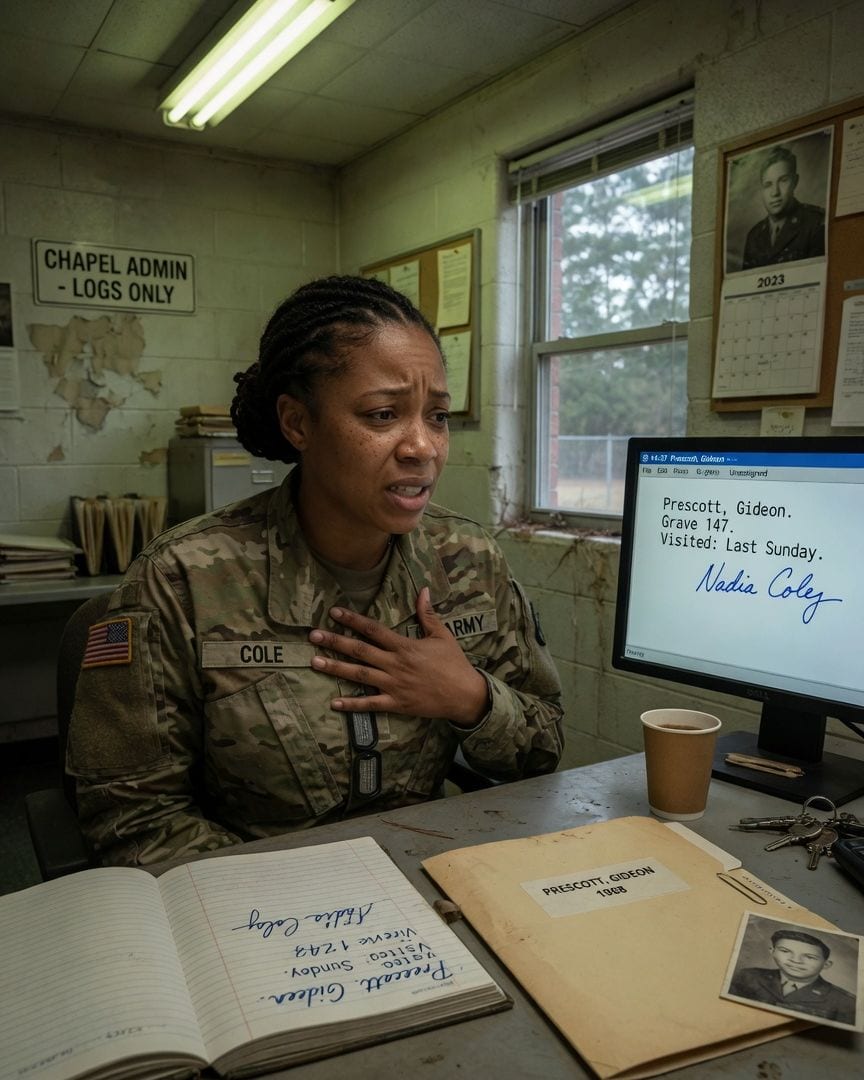
Specialist Cole's cemetery logbook showed a dead Cold War soldier's fresh signature. Then he signed into the base itself.
Specialist Nadia Cole hated her quiet Sunday shifts in the base chapel office, where her main duty was maintaining the cemetery visitor log. One peaceful afternoon, she found a fresh, dark blue entry for Private Gideon Prescott, a soldier who had died in 1968. His signature, identical to his decades-old enlistment papers, stopped her cold. Despite her superior's dismissal, Cole's dread deepened when she discovered the same impossible signature, belonging to the dead man, had also logged into the main base access system just hours later. The digital record glowed with an undeniable, chilling impossibility.
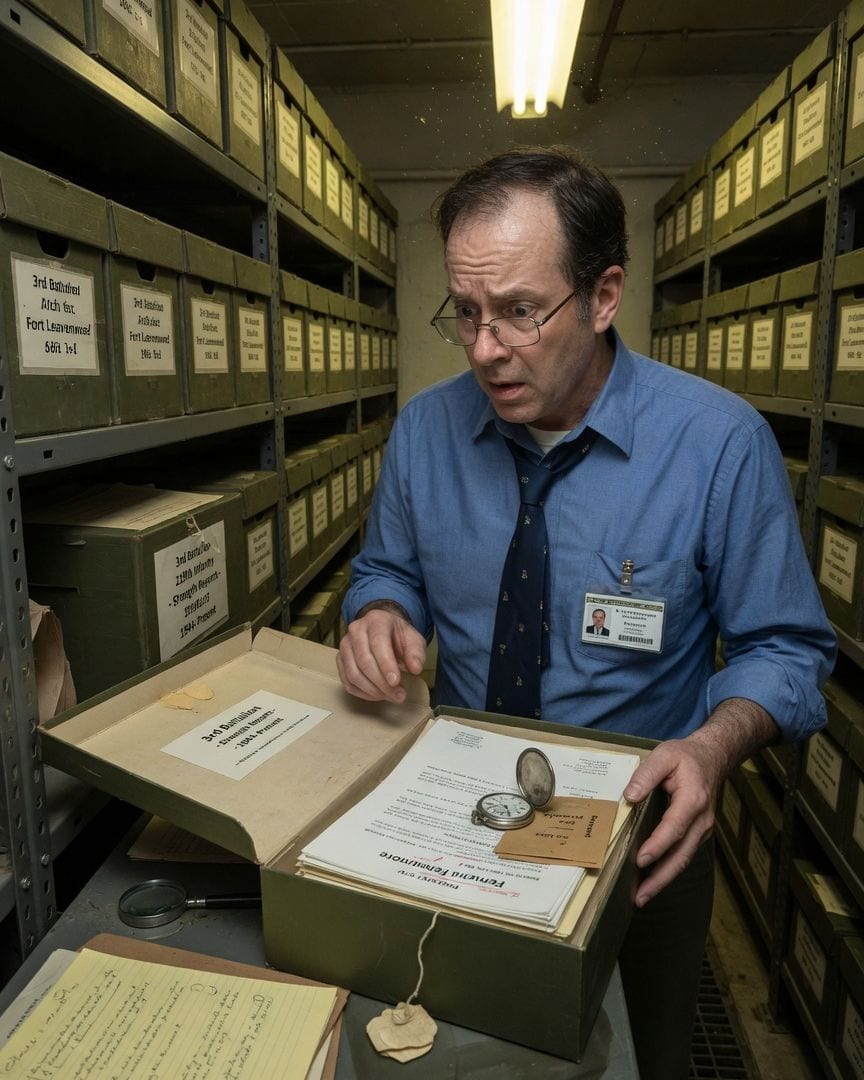
On his last Friday, an archivist finds his dead father's pocket watch in a Cold War ghost unit's file, ticking and warm.
Marcus Fennimore, a meticulous archivist, was on his final Friday at Fort Leavenwood's lineage vault, a place he knew intimately after thirty-one years. He stumbled upon twenty-two dust-sealed boxes for '3rd Battalion, 219th Infantry'—a unit that, according to every official record, simply did not exist. Inside, reports ran from 1944 to just last month, with the most recent listing his long-dead father, Kenneth Fennimore, as 'absent.' Marcus’s own father. Then, from a 1944 folder, he pulled his father's actual dog tags and a silver pocket watch, inexplicably warm and steadily ticking, freshly engraved with 'K.F. - Present for Duty.'
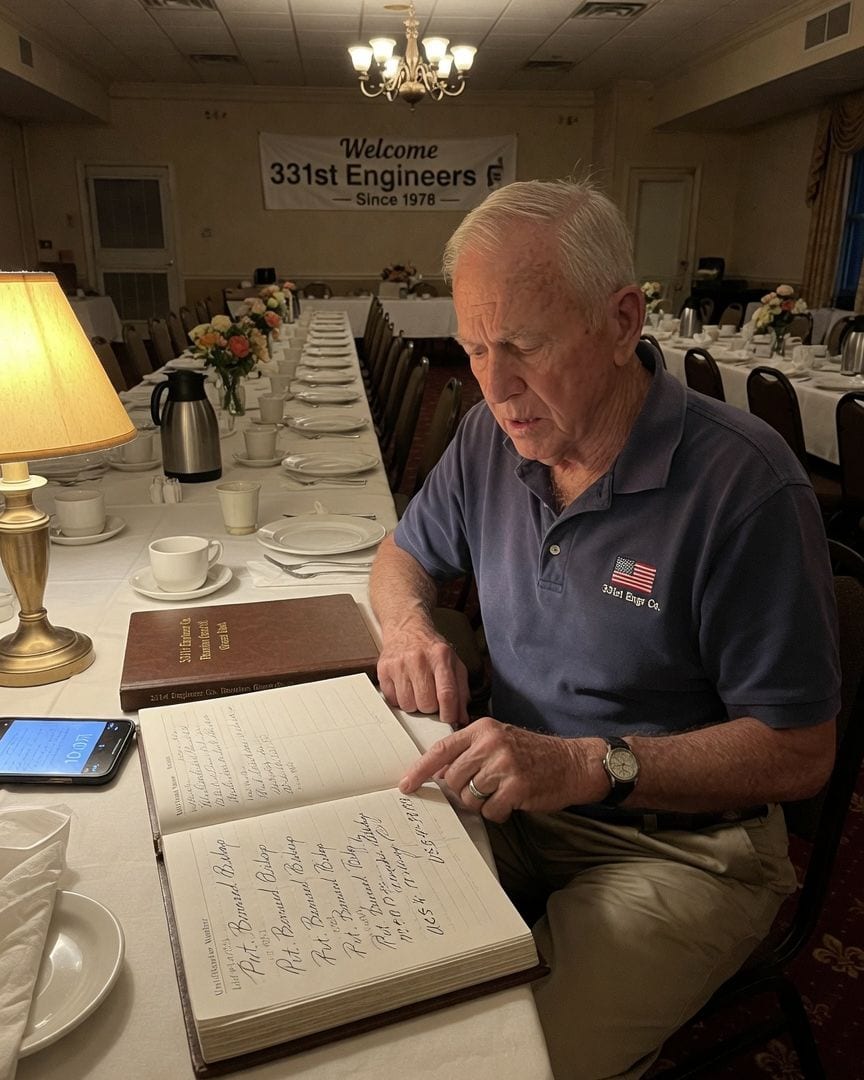
Retired Sergeant Odis Trumbull found a reunion guest book signed by a dead man. His service number was for a classified unit, not his own.
Retired Sergeant Odis Trumbull arrived at his annual company reunion, a tradition held in a Biloxi hotel ballroom since 1978. He sat alone for three hours, watching thirty empty chairs, each a ghost of a comrade he had personally buried over four decades. When the guest book arrived, Odis found thirty-one signatures, one for every man on the rolls. The ink on the last entry, for Private Bernard Bishop, was still wet. Yet, Odis had carried Bishop's coffin in 1976, two years before the reunion even began, and his service number matched a classified Cold War command. As Odis ran his thumb over the impossibly fresh ink, a cold dread began to settle.
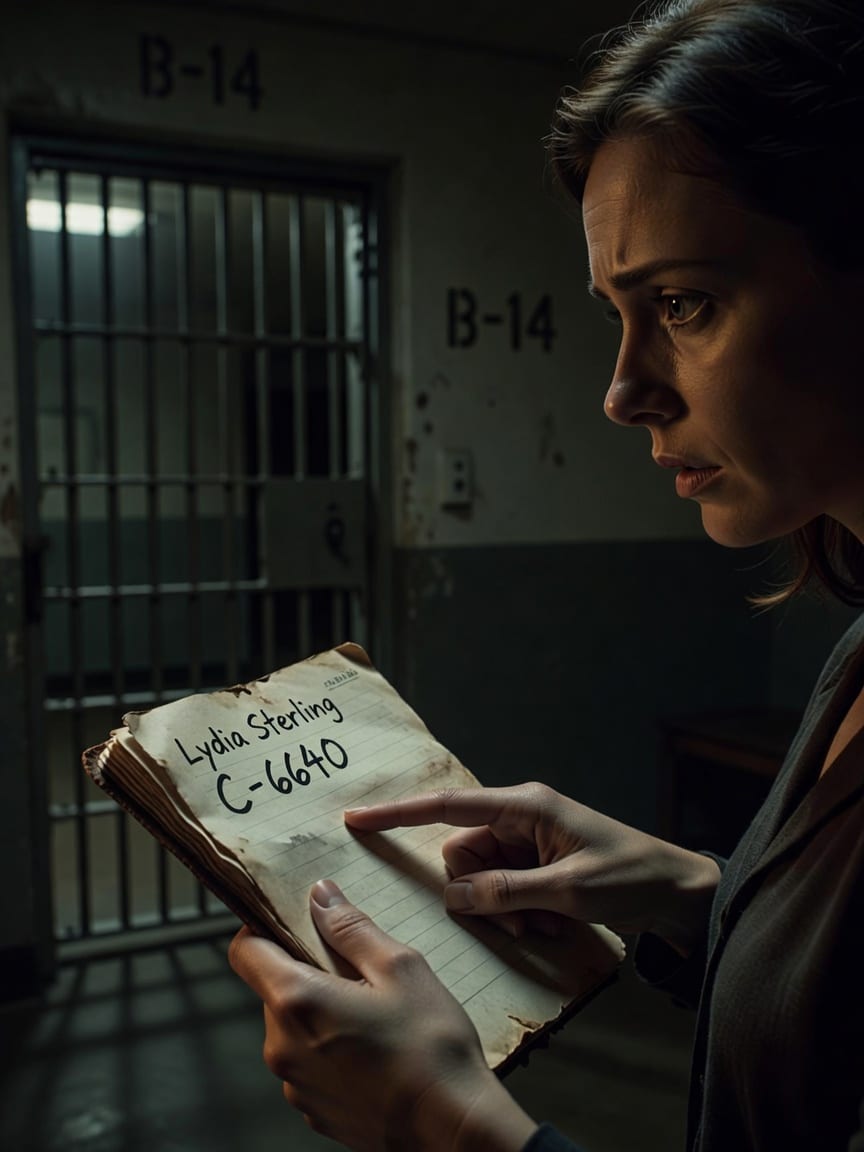
My prison number C-6640 appeared in a logbook next to another inmate's name in 1968, again in 1981, then 1994, always the same cell, B-wing 14, and always 'settled.'
As the new archivist at Barrowfield, I was sorting dusty prison logbooks from the 1960s. My own induction number, C-6640, was still fresh in my mind, issued sequentially like all others. But then I found it written next to an inmate's entry from 1968, and again in 1981, always in the same cell, a pattern of impossible repetition that defied logic.
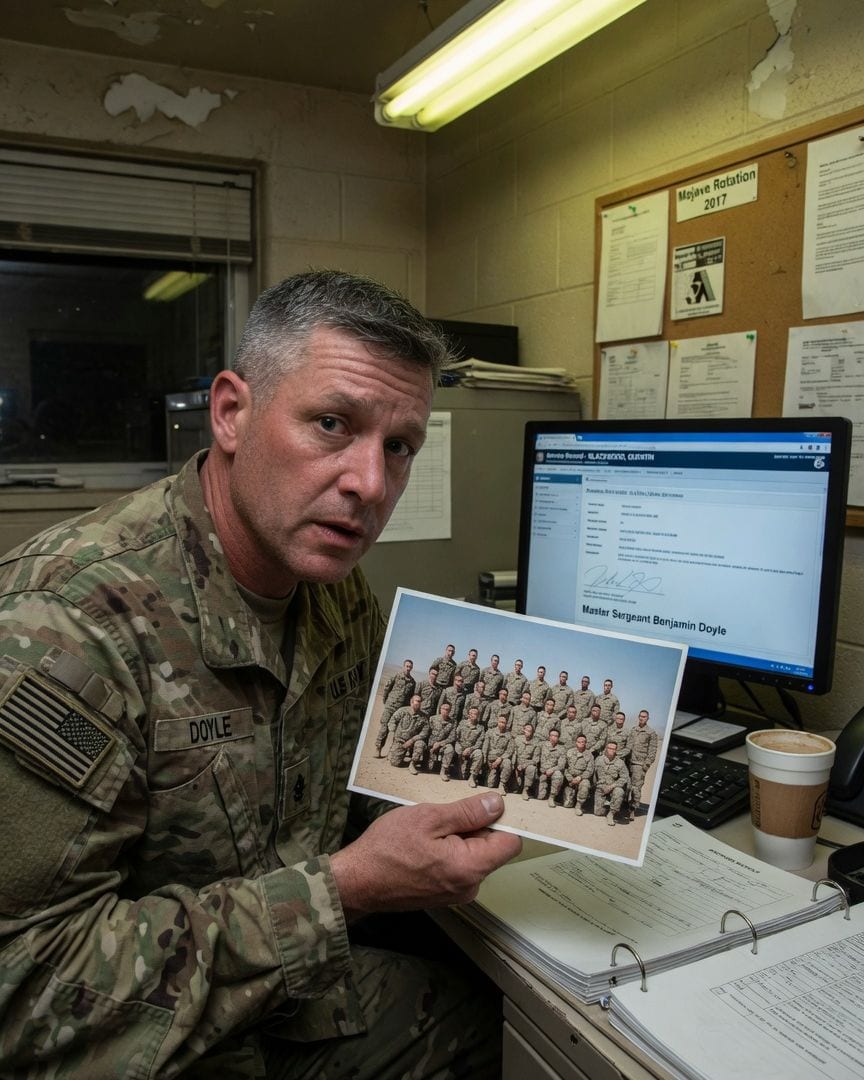
Master Sergeant Doyle found his own signature on a soldier’s commendation he knew he never signed.
Master Sergeant Benjamin Doyle, a man whose life was built on precise manifests and head counts, maintained a quiet daily ritual: glancing at his Mojave rotation platoon photo. One morning, the familiar thirty-one faces stared back with an impossible addition: an extra man, grinning between Suggs and Ramos, a face he and his colleagues recognized but couldn't place. His search through official digital rosters yielded nothing, yet old physical logs, signed in his own hand, confirmed the phantom soldier’s presence on a dangerous patrol he couldn't recall. The ultimate blow came with a valor citation for this same soldier, bearing Master Sergeant Doyle’s own digital signature for an award he knew he never certified.