Specialist Cole's cemetery logbook showed a dead Cold War soldier's fresh signature. Then he signed into the base itself.
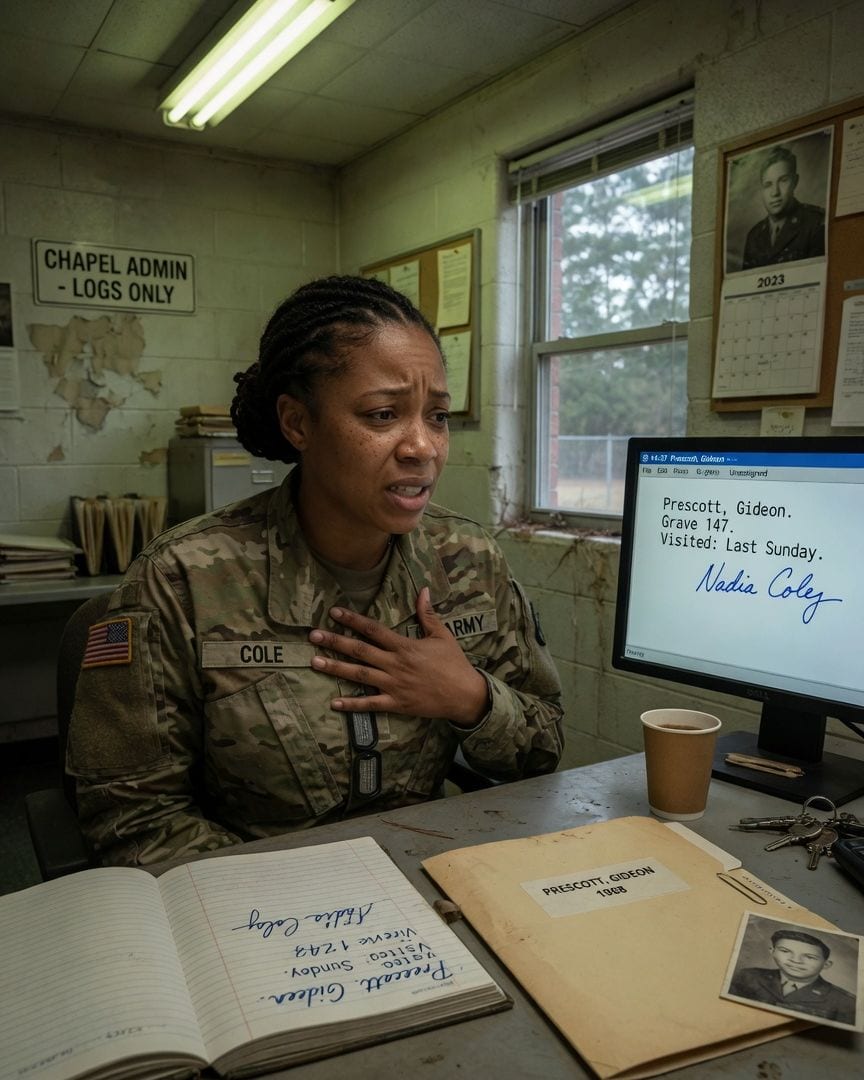
Specialist Nadia Cole hated her Sunday shifts. The small office in the base chapel was usually quiet, the only sound the hum of the ancient fluorescent lights above her desk.
Her main duty: maintaining the visitor log for the base cemetery, a rarely-trod patch of Carolina pine needles and weathered stone markers tucked deep in the post's eastern sector.
On a quiet Sunday afternoon, as the faint, resinous scent of distant pines drifted through the open window, she flipped the worn logbook open to the current week.
One line stopped her cold. It was penned in dark blue ink, precise and undeniably fresh. 'Prescott, Gideon. Grave 147. Visited: Last Sunday.' Below it, a signature. A perfectly formed, looping signature that Nadia recognized instantly.
She had pulled his faded service record from the archives only last month for a historical display on post casualties. Private Gideon Prescott. The name resonated with the quiet tragedy of a life cut short. He had died in 1968.
Nadia checked the date on the logbook twice. Her own eyes confirmed it. The ink was wet, glistening faintly in the fluorescent light.
The dread settled in Specialist Cole’s gut, cold and insistent. It wasn't a smudge, not a hurried scrawl that someone might mistake for something else.
It was Prescott's signature, precise as the day he signed his enlistment papers, decades before she was born. She pulled his service record again, a brittle folder smelling of dust and old paper, the corners softened from years of handling.
She compared the signatures, line by line, curve by curve. They were identical.
Her first thought was a prank, some bored private with too much time on his hands. But who would know to forge a signature from a 1960s service record, and for what purpose?
The cemetery was remote, rarely visited, and the logbook itself was kept under lock and key in her office. She had been the only one with access.
She mentioned the incident to Sergeant Maxwell Montgomery, her immediate superior, about any recent pranks or strange occurrences. Montgomery, a man whose default setting was unshakeable calm, merely chuckled. "Kids these days.
Probably just some new recruit trying to make a name for himself, Specialist." He didn't even glance at the log, dismissing it with a wave of his hand.
Nadia tried to dismiss it too, but the image of that signature, a dead man's mark on a fresh page, burned in her mind, a chill that had nothing to do with the office air conditioning.
She decided to check the general base access logs for last Sunday. Maybe someone had signed in under a false name, or a visitor had made a macabre joke.
The digital archives of the main gate access logs were slow to load, the old system groaning under the request like a dying animal.
Specialist Cole scrolled through the entries for last Sunday, her heart thumping a dull rhythm against her ribs. She was looking for anything unusual, any name that might hint at a connection to a macabre prank.
And then she saw it. An entry from 14:37, just hours after the time recorded in the cemetery log. Name: 'Prescott, Gideon.' Unit: 'Unassigned.' And the signature. The same impossible, looping hand. It wasn't just a visit to his grave.
He had signed into the base proper. Specialist Cole stared at the digital scan, her finger tracing the name and the unmistakable script. The system's timestamp confirmed the Sunday entry.
She looked up at the empty gate booth, then back at the impossible signature, the digital record glowing cold against the darkened office.
The next morning, Specialist Cole showed the gate log entry to Sergeant Montgomery. He frowned, a rare crack in his stoic facade. "That's… odd," he admitted, his eyes lingering on the identical script.
But he quickly added, "Must be a system glitch. Old software, you know." He called a tech, who ran diagnostics for an hour, only to report no error, no corrupted file. Nadia couldn't let it go.
She started cross-referencing names from the cemetery log with the main base access logs, focusing on soldiers buried before 1970. It was tedious work, sifting through decades of digital and physical records in the dusty archive room behind her office.
She found nothing for a week. Then, late one night, deep in the archives, a name jumped out. 'Foster, Abigail. Grave 88. Visited: 1972.'
And in the base access log, an entry for Abigail Foster, also in 1972, signed in her unmistakable, flowing hand. Abigail Foster had died in 1955. The pattern was forming. It wasn't just Prescott. It was others.
The wrongness wasn't a one-off error; it was a systemic failure, a quiet bleed in the base's own records.
She started a hidden spreadsheet, meticulously logging every impossible entry, every dead soldier who had somehow signed into the base or visited their own grave.
Specialist Cole’s late-night archive sessions became more frequent. She felt a growing unease, a sense of being watched, even in the empty, dust-filled rooms that only she usually entered.
One evening, she found her hidden spreadsheet minimized on her computer, though she was certain she had shut it down before leaving.
A folder on her desk, labeled 'Historical Cemetery Records,' had been subtly shifted, its edge now protruding half an inch further than she remembered.
Sergeant Montgomery’s questions grew sharper during their daily check-ins, his calm demeanor now edged with an unfamiliar scrutiny. "Still digging into those old records, Specialist?"
he'd ask, his eyes lingering a moment too long on her face, then on her office door.
She began to notice other subtle things: a light left on in the archives she was sure she'd turned off, a faint scent of cigar smoke where no one was supposed to smoke, lingering like a ghost itself.
One afternoon, she returned to her office from lunch to find a single, unmarked envelope resting on her desk. Inside was a faded photograph of the base cemetery from decades ago, the trees smaller, the headstones newer.
On the back, scrawled in an old-fashioned hand, a single sentence was penned: 'Some never leave the roster, Cole.'
The photograph and the cryptic message chilled Specialist Cole to the bone. Someone else knew. Someone on this base understood what she was seeing, what she was uncovering.
She cornered Sergeant Montgomery in his office the next morning, the photograph clutched in her hand. "Sergeant," she began, her voice tight, "I need to know what this is.
The cemetery entries, the gate logs, the names of soldiers who died decades ago, signing in. And this." She pushed the faded photograph across his desk, the cryptic message facing up.
Montgomery picked it up, his expression unreadable, his calm composure unwavering even as his gaze settled on the handwriting. He sighed, a long, weary sound that seemed to carry the weight of years.
"The 'ghost roster,' we called it, back when I was a junior NCO here," he said, his voice low, almost a whisper against the hum of his computer. "It's been happening for a long time. Certain soldiers.
Those who died on post, or whose records were… incomplete, or lost in the churn of history. The system, it just… keeps them. They sign in, they visit. It’s part of the base, Specialist. Always has been.
The old guard, they learned to ignore it. To file the paperwork and just… not look too closely." He motioned with his chin to a dusty, locked cabinet in the corner of his office, unremarked until now. "There are others.
Boxes of them. Generations of impossible entries. The base just rolls them over."
Sergeant Montgomery's words echoed in Specialist Cole's mind: 'The base just rolls them over.'
She spent the next few days in a daze, sifting through the 'boxes of them' Montgomery had indicated – old duty logs, transfer manifests, even supply requisitions.
The pattern was undeniable: a slow, steady stream of impossible signatures, names of the long-dead appearing in active records, sometimes decades after their official demise.
It wasn't just isolated entries; it was a living, breathing shadow bureaucracy, an unseen layer to the military's rigid system. The dread deepened from a historical curiosity to a creeping, systemic horror.
She realized the full implication of 'some never leave the roster.' These dead soldiers weren't just visiting; they were still accounted for in some twisted way.
Then, as she was preparing the final paperwork for her own upcoming transfer – a transfer she had been eagerly anticipating for months, a chance to leave this isolated post – she found it.
A printed transfer manifest, dated for her exact rotation, for her specific unit. Her name, Specialist Nadia Cole, was listed, correctly. But beneath it, a final, additional name had been added.
A name she had only seen in the oldest of records, from the 1950s. A soldier who had died on post, whose grave was in the forgotten cemetery.
And next to that name, a signature, etched in the same impossible script she had come to dread, the looping hand of the dead.
A new entry in a living roster, joining her for the next phase of her military career.
Specialist Cole stared at the transfer manifest, the impossible name beneath her own. It wasn't a clerical error. It was a formal assignment. The base wasn't just keeping a record of the dead; it was reintegrating them.
The 'ghost roster' wasn't a separate entity; it was interwoven with the living, a silent, official parallel. Montgomery, finding her pale and shaken in her office, explained further.
"It's not malicious, not exactly," he said, his voice devoid of emotion, as if relaying an unchangeable fact of nature. "It's just… the system. This post has always been about accountability. Every man, every piece of equipment, every duty.
When some soldiers died here, especially those without next of kin, or those whose records were lost in the chaos of war, the system couldn't quite let them go.
It tries to account for them, to keep them in the loop. The signatures, the log entries – it's the system's way of marking them present.
Sometimes, when a rotation is short, or a unit needs a specific skill set, the system… fills the gap. From the ghost roster." He pointed a finger at her manifest. "You're not going alone, Specialist.
That soldier, Private Richard Holloway, he's assigned to your unit. He’s been assigned to units on paper for seventy years, ever since he died in a training accident here. He's never left."
Specialist Cole felt a cold dread seep into her bones, chilling her to the marrow. She tried to protest, to explain the impossibility to Captain Vera Bishop, the base commander. Bishop listened patiently, her expression unyielding, her gaze unwavering.
"Specialist Cole," she said, her voice firm, leaving no room for argument, "your orders are cut. Private Holloway's transfer is on the books. All personnel are accounted for."
There was no anger in Bishop's voice, no disbelief, just an immovable bureaucratic certainty that crushed Nadia's protests into dust. Nadia realized the futility of her fight.
The system wasn't broken; it was operating precisely as it had been engineered to, in its own terrible, coherent way.
The 'wrongness' was simply another layer of accountability, an unseen mechanism that simply continued to function, as essential to the base as the Carolina pines themselves.
She tried to access the digital files for Private Holloway's current 'assignment,' but the system returned an error. She attempted to find any record of him leaving the base, ever, but there was nothing.
He was simply always here, cycling through assignments on paper, present and accounted for in the endless bureaucratic hum. The dread was profound: the military, the ultimate apparatus of order, was quietly, relentlessly, incorporating the impossible.
Specialist Cole’s transfer went through. She boarded the transport bus, her duffel bag heavy on her shoulder, the transfer manifest clutched tightly in her hand.
She scanned the faces of the other soldiers, looking for any sign of Private Richard Holloway, though she knew she wouldn't see him. The seat beside her remained empty.
No one else seemed to notice the extra name on the manifest, or the subtle shift in the base’s headcount.
The post continued its training cycles, its paperwork flowing, its systems humming, quietly accounting for every living and every impossibly accounted-for dead soldier.
Weeks later, at her new post, Specialist Cole found herself meticulously checking every roster, every manifest, every logbook. She saw no impossible names, no dead signatures. But the knowledge never left her.
She knew that somewhere, in the deep, quiet hum of the military’s vast, unyielding systems, the ghost roster continued to be accounted for, endlessly.
Sergeant Maxwell Montgomery, still at the Carolina pines post, received the weekly cemetery log. He scanned the entries, his eyes pausing briefly on a familiar signature for Private Gideon Prescott, then moving on.
Later that day, he filed the paperwork, noting the headcount was exactly as it should be, every man present and accounted for.
If this one got to you
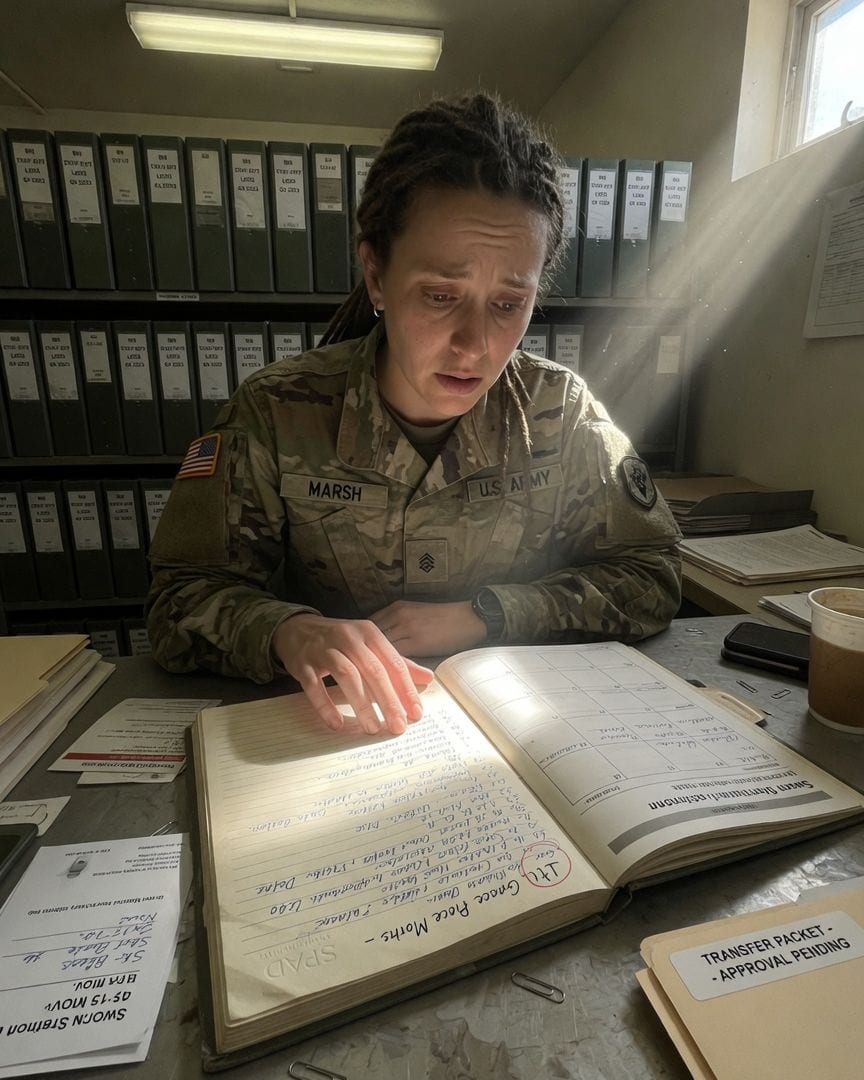
Preparing for a coveted post, a logistics officer found her own perfect signature on a duty log for a shift she swore she never worked. Then her coworker’s entry revealed his unique personal quirk.
Lieutenant Grace Marsh, a meticulous logistics officer, was deep in the archives, preparing her transfer packet for a coveted post. Her career depended on a spotless record, requiring absolute precision as she cross-referenced battalion staff-duty logs. Amidst the dusty binders and humming fluorescent lights, her gaze snagged on an entry for November 14th: her own perfect signature, logging a 24-hour shift she distinctly remembered spending hundreds of miles away in a court-martial. The impossible truth of a phantom doing her job was unsettling enough, but then she found another officer's entry, complete with his unique, personal quirk, for a day he was off-base. What was hidden in these official records?
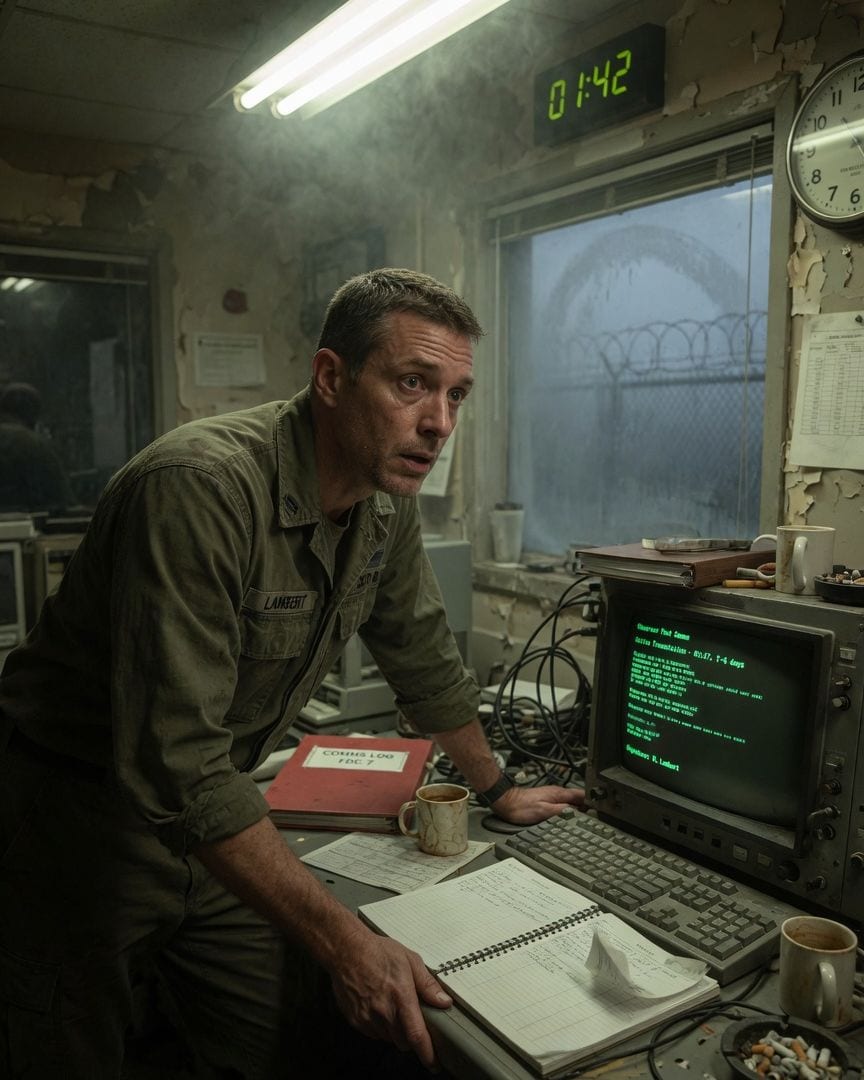
With Firebase 7 days from demolition, a dispatch specialist found his own signature on a log entry from a lost outpost. Then, a dead soldier's name appeared.
Specialist Robert Lambert hunched over the radio console in Firebase 7, the mountain fog pressing in as the base counted down its final days before demolition. His quiet shift shattered when urgent calls began arriving from outposts officially declared silent a week ago. His sergeant calmly informed him that he’d been speaking to no one, as all comms with those posts had been lost for hours. Later, Robert found a log entry for an active transmission, dated days after a post went dark, bearing his own signature. What chilling truth lay beneath the paper, revealing a dead soldier's name reporting from the grave?
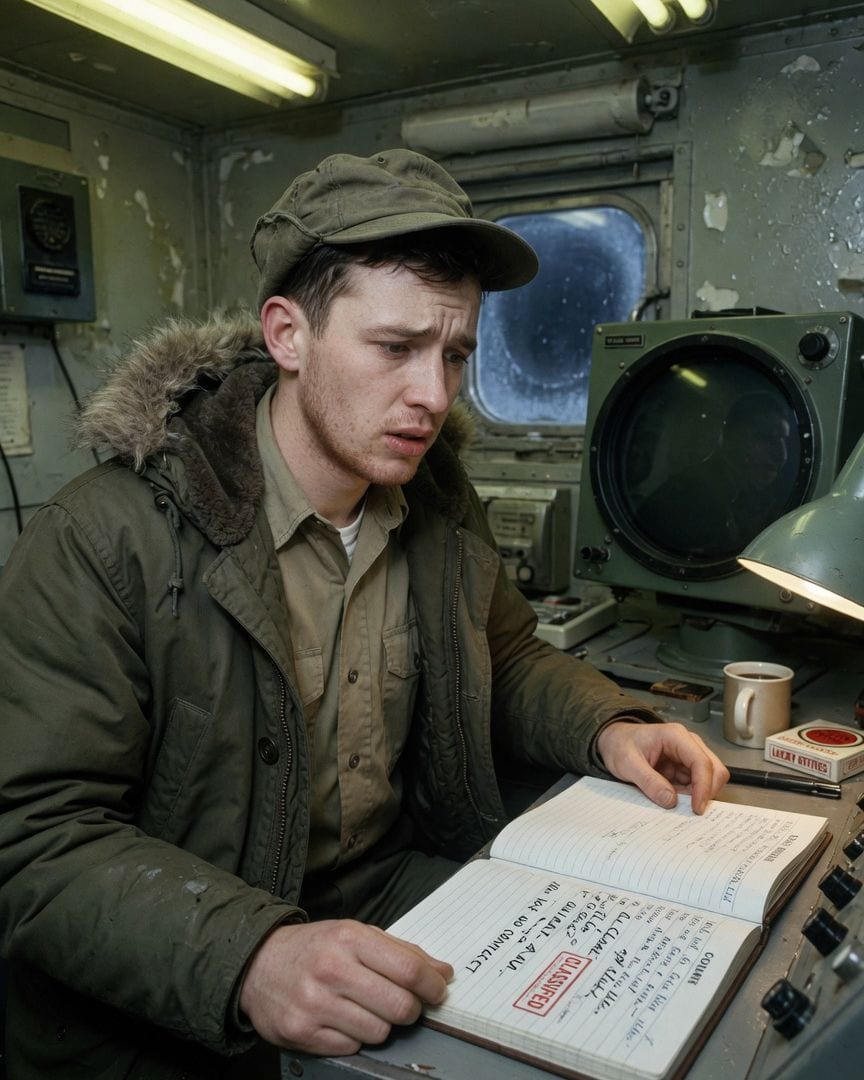
A Cold War airman logs an impossible radar contact on his last sweep. But his official logbook entry is stamped 'CLASSIFIED' and then contradicted by a hastily scrawled 'ALL CLEAR' dated moments before it.
Airman Ordway Vance, 22, manned the radar dome at Site Pellin in the biting North Atlantic dark of January 1962, running the last calibration sweep before its decommissioning. His scope picked up a faint, impossible return, growing closer with each pass, though the ocean remained empty to the eye. When Vance detailed the contact in his official logbook, a 'CLASSIFIED' stamp appeared, followed by a hastily scrawled 'ALL CLEAR' dated moments before his own entry, contradicting his every word. Commander Hartley dismissed it as equipment malfunction, but Vance sensed a chilling, official erasure behind the lie. He soon found a locked cabinet marked 'SITE PELLIN ANOMALIES,' hinting at a deeper truth buried within the base's final days.
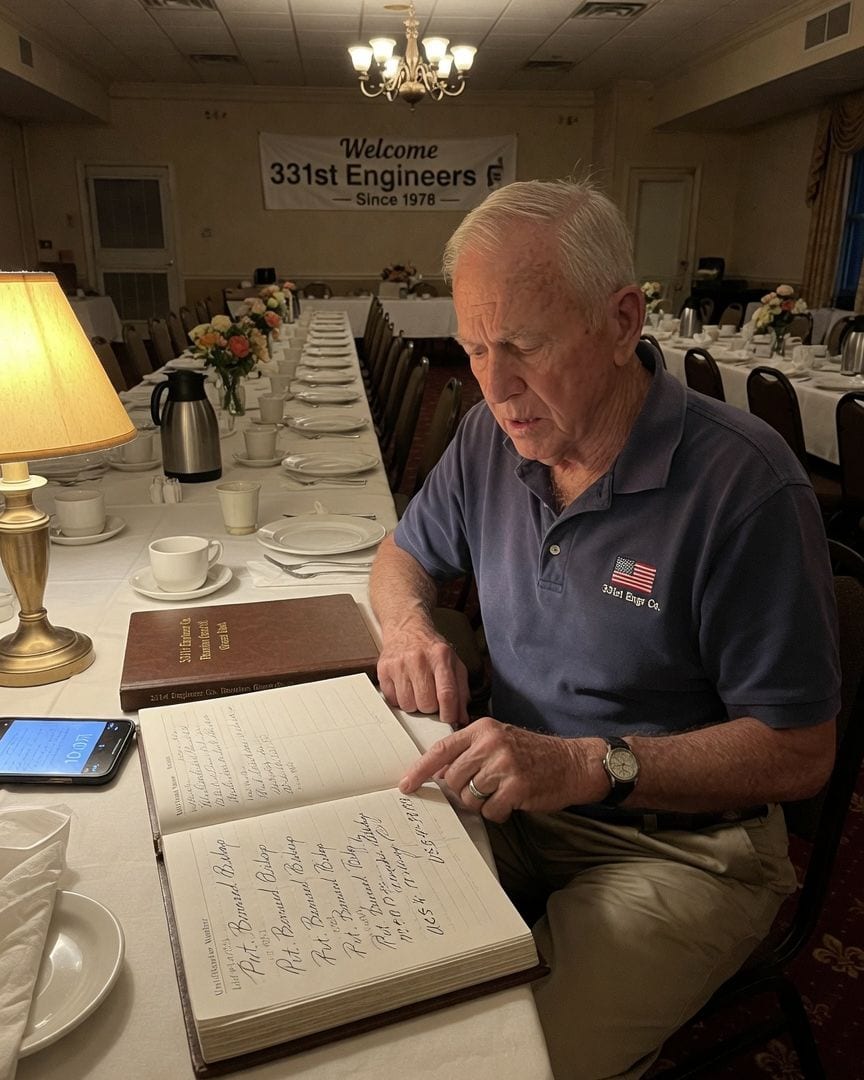
Retired Sergeant Odis Trumbull found a reunion guest book signed by a dead man. His service number was for a classified unit, not his own.
Retired Sergeant Odis Trumbull arrived at his annual company reunion, a tradition held in a Biloxi hotel ballroom since 1978. He sat alone for three hours, watching thirty empty chairs, each a ghost of a comrade he had personally buried over four decades. When the guest book arrived, Odis found thirty-one signatures, one for every man on the rolls. The ink on the last entry, for Private Bernard Bishop, was still wet. Yet, Odis had carried Bishop's coffin in 1976, two years before the reunion even began, and his service number matched a classified Cold War command. As Odis ran his thumb over the impossibly fresh ink, a cold dread began to settle.
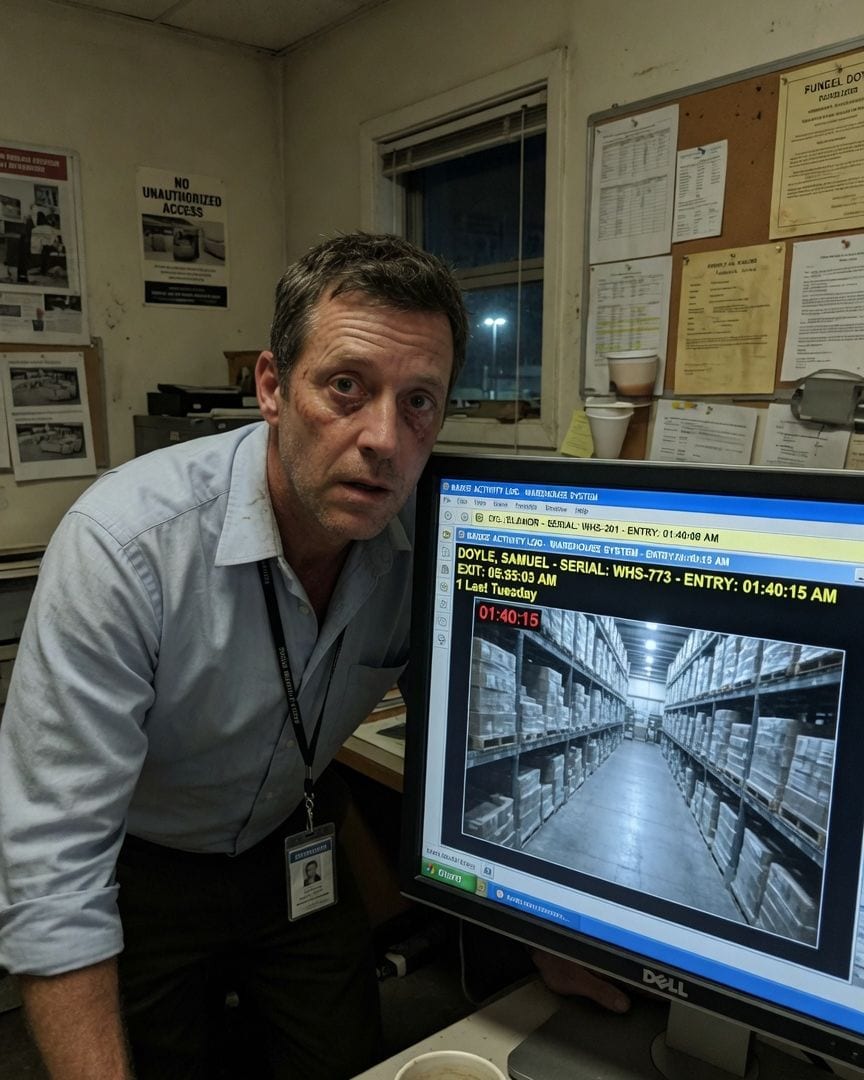
My dead colleague's badge, deactivated weeks ago, logged an entry at 1:40 AM last Tuesday. Then I found another from 1978, with the same impossible times.
My monitor showed a shocking entry: Samuel Doyle, dead and buried three weeks ago, had just logged into the warehouse. His badge was deactivated the day of his funeral, yet the system recorded his precise entry and exit, even though security footage showed the aisles were utterly empty.
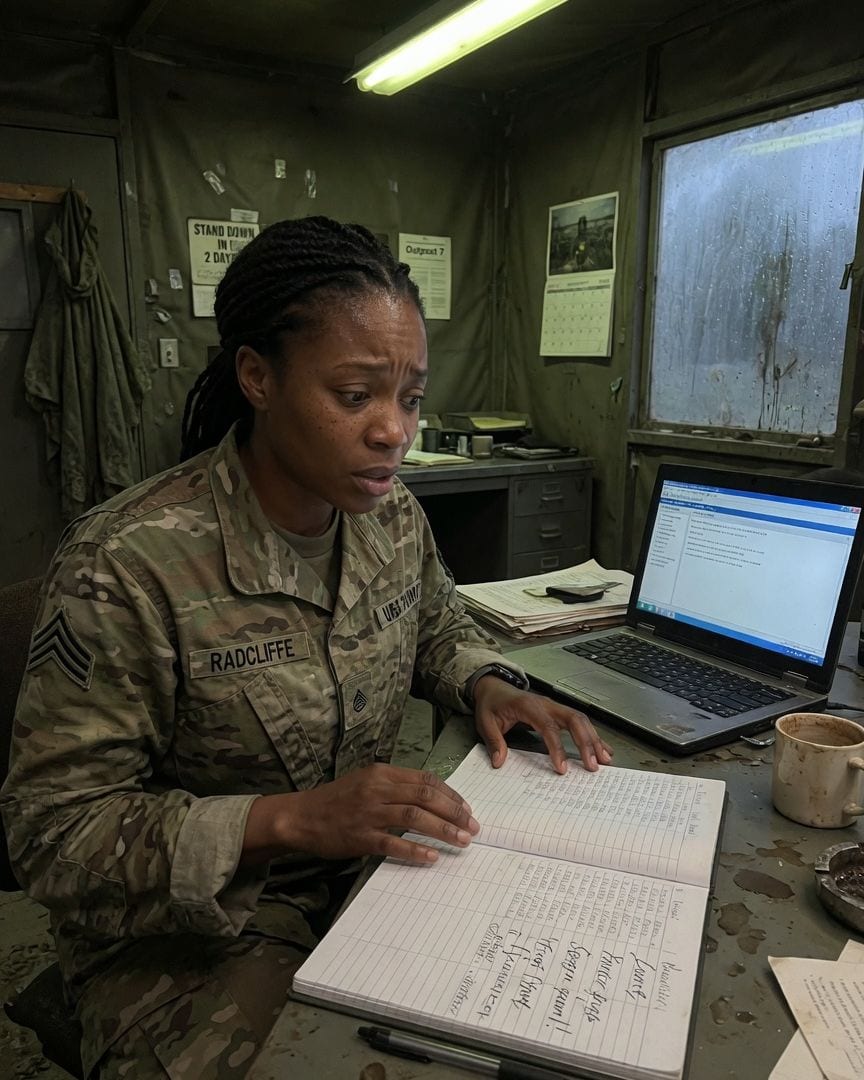
Two days before Outpost 7 closed, Staff Sergeant Radcliffe's roll call counted 42 men, but 43 voices answered.
Two days before Outpost 7 was set to stand down for good, Company First Sergeant Nora Radcliffe conducted her morning roll call. For three years, she had known all forty-two faces and voices by heart, but in the damp dawn air, a forty-third voice answered to a name not on her list. Back in her office, she found that same impossible name, 'Everett Lawson,' added to the official duty log in her own unmistakable handwriting. As the fluorescent lights hummed, her search of the digital personnel system revealed a skeletal record for Lawson, complete with a basic training certificate signed by her training officer—who had retired a decade before the certificate's date. What impossible truth had Nora stumbled upon as her outpost prepared to close?