My hospital corridor has six doors, then seven, then six again.
It was the digital log that caught my eye. Forty entries, all assigned to Night Nurse Maureen Ingram, all tagged to Ward A’s door, between 2:00 AM and 4:00 AM. Forty.
Not a typo, not a system error that duplicated one tap, but forty distinct timestamps, minutes apart, each one showing Maureen badging in and out of the same ward.
My first thought was exhaustion. Maureen had been working doubles. A glitch in the new system seemed the most likely culprit, but that number, forty, gnawed at me. I called her into my office, keeping my voice level, professional.
Maureen, barely thirty and already carrying the weight of the night shift on her shoulders, looked as tired as I’d expected.
“Maureen,” I began, gesturing to the screen, “this log for the West Wing, Ward A. Forty taps in two hours. Can you explain this?”
She squinted at the screen, then shook her head slowly. “Ms. Bennett, I completed my rounds. Wards A through F, multiple times. Standard procedure. The system must be glitching.”
Her voice was flat, devoid of any real surprise, as if she knew what I was going to ask before I asked it. She insisted, with a weary conviction, that she’d walked the whole floor.
That she’d checked every patient, every door.
I tried to logic it out. A faulty sensor, perhaps. Software error. My rational mind reached for a simple explanation, a technical oversight, something easily fixed with an IT ticket. But the cold, hard data on the screen insisted.
Forty distinct badge entries. All at Ward A. As if the corridor itself kept returning her to the same door, over and over, all night long. The sheer impossibility of it settled in my stomach like cold water.
Determined to prove a system error, to validate Maureen’s account, I decided to retrace her steps myself. It was an administrator’s job, after all, to investigate anomalies. I grabbed my own badge and walked to the West Wing.
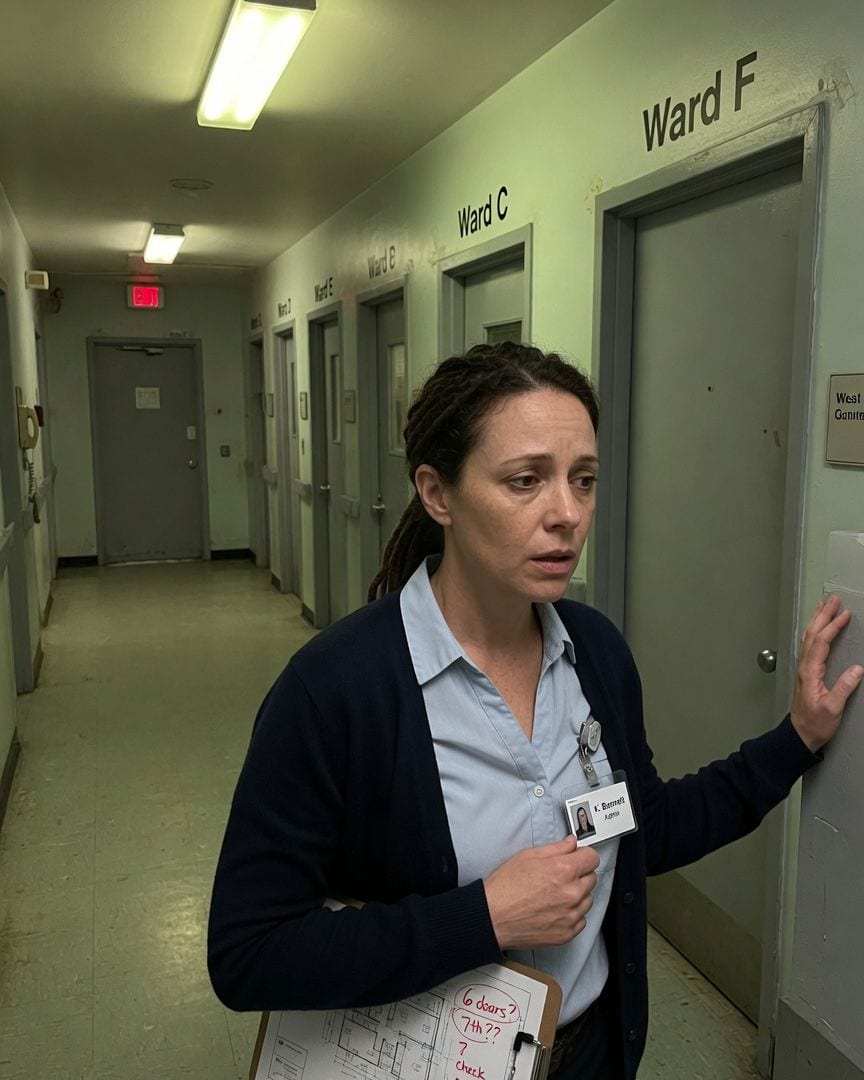
The corridor was long, quiet, the fluorescent lights humming softly. I tapped each door: A, then B, C, D, E, F. A perfectly normal, sequential route.
When I checked my own log back at my desk, it showed a clean, linear path, just as expected. No loop. No impossible recurrence. Maureen must have been mistaken, or confused. Or the system truly had glitched.
I pulled up the digital blueprints for the West Wing. A standard rectangular layout, clear as day. Six ward doors, A through F, ending cleanly at the fire exit.
This was an old building, yes, constructed in 1965, but the blueprints were routinely updated. There should be no surprises.
Then, I walked the physical corridor again, slowly, methodically. I counted each door aloud, my finger tracing the cold metal of each handle. “One, two, three, four, five, six…” I paused, then continued, “…seven.”
Seven doors. Not six. My brow furrowed. The seventh door, an unmarked utility closet, sat squarely between Ward F and the fire exit. A space the blueprints insisted was solid wall. An immediate mental note: outdated plan, or recent, unlogged renovation. It had to be.
I made a second note: check maintenance records. The hospital was notorious for delayed paperwork. It was the only logical explanation. This wasn’t an anomaly; it was a paperwork oversight. Nothing more.
Still trying to reconcile the seven doors with the six on the plan, I dismissed my first two counts as a lapse in attention, a simple human error. I needed certainty.
I paced back to the start of the ward, taking a deep breath, focusing, pushing away the faint unease.
“One, two, three, four, five, six.”
My breath caught in my throat. Only six doors this time. The unmarked utility closet was gone, replaced by a seamless stretch of plain white wall, identical to the rest of the corridor.
My heart pounded a frantic rhythm against my ribs. I turned, paced back to the start, my eyes fixed on the spot where the seventh door had been, or hadn't.
“One, two, three, four, five, six, seven.”
The phantom closet reappeared. I stopped, staring at the space, the clean, unblemished wall now seeming to ripple at the edges of my vision. Six. Seven. Six. The corridor itself was refusing to add up.
My rational mind screamed for an explanation. My phone felt heavy in my hand as I called Kevin Vance, the maintenance supervisor. If anyone knew about unlogged renovations or structural quirks, it was Kevin.
I brought him to the West Wing, not mentioning my own experience.
“Kevin,” I said, trying to keep my voice casual, “just count the doors for me, A through F, down to the fire exit. We’re updating some internal maps.”
Kevin, a man who lived by measurements and schematics, ambled down the corridor, his finger tapping each frame. “Six, Sandra. Plain as day.” He looked at me, a hint of bemusement in his eyes. “Always been six, hasn’t it?
Been working this hospital for twenty years.”
I watched him, then tried again myself. This time, I consciously tried to see it as he did. But there it was again, the seventh door, plain as day, an old, scuffed utility closet. Seven.
Kevin looked at me, a smile playing on his lips. “You must be tired, Sandra. It’s always been six.”
Tired? I wasn't tired. I felt wide awake, a cold fear slowly seeping into my extremities. I pulled up the oldest blueprints I could find in the digital archives, dating back to the hospital’s construction in 1965. All six doors.
Consistent. Unchanging. I even found a grainy black-and-white photo from the dedication ceremony, showing the West Wing corridor. Six doors.
I started measuring the corridor length, the distance between each doorframe, the width of the wall sections. My tape measure, a new, calibrated model, pulled taut against the plaster. The numbers were maddeningly inconsistent.
The total length of the corridor, according to my own meticulous tape measure, was consistently 80 feet. But with six doors and standard wall sections, according to every blueprint, it should have been 70 feet. A ten-foot discrepancy.
The extra ten feet implied a seventh door, or a seventh room, that simply wasn't there when Kevin looked, but was when I measured.
The impossible geometry wasn't just about the count; it was about the very fabric of the space.
My persistence in the old wing didn't go unnoticed. Dorothy Vance, the hospital archivist, a woman who seemed to glide through the quiet halls like a ghost, began to appear whenever I was poring over old blueprints.
She’d always been there, a fixture of the hospital’s forgotten corners, but now her presence felt… pointed.
Dorothy, with her knowing eyes, would offer cryptic advice, delivered in a soft, rustling voice that barely stirred the dust motes in the air. “Some things are better left uncounted, dear. The hospital has its own ways.”
She’d smile then, a faint, unreadable expression, before disappearing back into the labyrinth of file cabinets.
One afternoon, as I was reviewing a dusty folder of archived structural reports for the West Wing – a particularly dry read about stress fractures and load-bearing walls – I found a faded, yellowed note tucked inside a 1978 blueprint.
It was handwritten, in a spidery script that was almost illegible in places: It always leads back to A. Don't count. The words sent a chill down my spine. Don’t count. The very thing I couldn’t stop doing.
Later, as I walked through the empty West Wing, double-checking the measurements, the corridor felt colder than usual.
I heard a faint, almost imperceptible creak from a closed ward door, like old wood groaning, or someone shifting their weight just inside.
It was Ward C. I spun around, my heart leaping, but the corridor was utterly silent and empty. The feeling of being observed, of being subtly warned, intensified with every step I took deeper into the wing's impossible puzzle.
I cornered Dorothy Vance in the quiet archives, the yellowed note clutched in my hand. “Did you write this?” My voice, usually steady, wavered.
Dorothy didn’t flinch. Her gaze was calm, almost serene, as if she’d been expecting me, expecting this question for decades. “Many years ago, yes. Or perhaps, someone else did, and I merely found it again.”
I pressed, frustration mounting. “What does it mean, ‘It always leads back to A’? And the counting?”
The note, the shifting doors, Maureen’s log, the ten-foot discrepancy – it was all coalescing into something I couldn't comprehend but knew was profoundly wrong.
Dorothy sighed, a soft, rustling sound like old papers shifting in the quiet. “The West Wing… it gets strange, sometimes. On a cycle, you see. Every generation or so. People get lost. Staff, patients. They wander off, the records say.
But they’re never found. Not really.”
She spoke of whispers in the walls, of nurses who started their rounds and were never seen again, of doctors who went to check on a patient and simply vanished from the ward, leaving their charts behind.
Their absence became a quiet, accepted fact, paperwork shuffled, new staff hired. “Matron Christine Harlow, she was like you. Tried to map it all out, meticulously. Measured everything, counted every door. Said she finally understood it.
And then…” Dorothy’s voice trailed off, her eyes distant, fixed on some unseen point in the past. “She was just gone. Like the others. Her diary, her notes – all gone with her.
The cycles start and end, and the hospital just… moves on.” Dorothy confirmed that the note was a personal warning, a futile attempt to break the pattern. A pattern I was now part of.
I felt a cold dread settling deep in my bones, the pieces of the puzzle clicking into a horrifying picture. The impossible geometry, the disappearances, the cycles. I was repeating Christine Harlow’s path.
“Christine’s last entry,” Dorothy murmured, her voice barely audible, pulling a small, brittle photograph from a hidden compartment in her desk. The drawer slid open with a soft rasp, revealing a neatly organized collection of old ephemera.
“She tried to map it. Said she finally understood. And then… she was just gone.”
Dorothy handed me the old, faded photograph. It showed Christine Harlow, much younger, her uniform crisp, her hair pulled back neatly, standing in the corridor outside Ward A. The photo was dated, in neat cursive on the back: August 1993.
My eyes scanned the background, looking for any detail, any anomaly. Subtly out of focus, standing near the fire exit, was a figure.
A figure that, on closer inspection, was undeniably me, Sandra Bennett, in my current clothes, staring directly at the camera, a faint, unsettling smile on my face.
The photograph was a punch to the gut. My breath caught, lodged somewhere in my throat. I looked from the picture, the me in the background, to Dorothy, her face calm and sorrowful. My voice was a strained whisper.
“This… this is impossible.”
Dorothy’s eyes held an ancient sorrow, a quiet resignation. “It is. And it isn’t. The West Wing doesn’t just recur, Sandra. It draws you in. It takes those who try to understand its geometry and makes them part of it.
You become the next one to walk its loops, to count its doors, to try and map its impossible spaces. Christine, before you, and others before her. Your own actions, your own investigation, you’ve been repeating the pattern.”
She gestured to the photograph, her finger tracing the faint outline of my image. “You weren’t just investigating a mystery, Sandra. You were living out a pre-written part of the anomaly itself.”
The 'door that isn't counted,' the extra ten feet of corridor, it wasn't just a glitch, not a shifting illusion. It was the threshold. The point of entry into the recursive existence.
Maureen Ingram's impossible log, the missing staff from decades past, the patients who 'wandered off' – they hadn't just disappeared.
They had become part of the wing's internal, repeating loop, forever walking its impossible paths, their existence confined to its misbehaving geometry. I wasn't just investigating a mystery; I was living out a pre-written part of the anomaly itself.
The horrifying coherence of it all crashed down on me.
Clutching the photograph, the weight of the realization pressing down, I understood. I was part of it. Every rational check, every meticulous measurement, every frantic recount – it had all been me fulfilling a role, repeating the cycle.
The dread was absolute, chilling me to the bone.
I rushed back to the West Wing, to Ward A. The corridor seemed to stretch before me, longer, quieter than ever. The fluorescent lights flickered, a subtle pulse, making the white walls seem to breathe.
I paced, my heart a drum against my ribs, a frantic rhythm that echoed the 40 taps in Maureen’s log. Six doors. Seven. Six. Seven. The walls seemed to breathe around me, the air growing colder, heavier.
I focused on the spot where the seventh door had appeared and disappeared, the phantom utility closet.
I ran my hands along the smooth, painted surface, feeling for any seam, any crack, any imperfection in the seamless plaster that had baffled Kevin.
My fingers found it – a faint, almost invisible line, a hair's breadth in the plaster, precisely where my measurements had indicated the extra ten feet of space should be.
It wasn't a doorframe, not a crack, just a subtle shift in the wall's texture, a ghost of an edge.
I pressed against it, my breath catching in my throat. A soft, dry click echoed in the silent corridor, ancient and final.
The wall gave way, not a door swinging open, but a section of the plaster peeling back, folding inward with a faint groan, revealing a dark, narrow opening beyond.
It smelled of dust and something else, something ancient and cold, a scent like forgotten time. The impossible door. The threshold. It was waiting.
Sandra did not step through.
Instead, she found Kevin Vance, citing structural instability in the old wing, a severe safety hazard.
Under her direct supervision, the section of the corridor was sealed off, the faint seam plastered over, painted, and reinforced with a thick layer of steel plating behind the new drywall.
Maureen Ingram was quietly reassigned to another department in the hospital’s newer east wing, a lateral move that raised no questions. The West Wing remained 'closed for renovations,' a permanent, unspoken truth behind the yellow caution tape.
Dorothy Vance watched Sandra overseeing the work, a knowing, unreadable expression on her face, a faint, almost imperceptible nod as Sandra turned to leave. The hospital moved on, the anomaly contained, for now.
Sandra continued her duties as hospital administrator, efficient and rational as ever. But a quiet change settled over her. She meticulously checked the dates on all her photographs, a small, private ritual no one else noticed.
She avoided long, empty corridors, a subtle unease always clinging to her whenever a floor plan didn't quite match the physical space.
Sometimes, catching her reflection in a polished window or a dark monitor screen, she would see it – a faint, unsettling smile on her own face, one she didn't recognize, one that seemed to belong to someone else entirely.
It was the smile of someone who knew the geometry of things, and had always known it.
If this one got to you
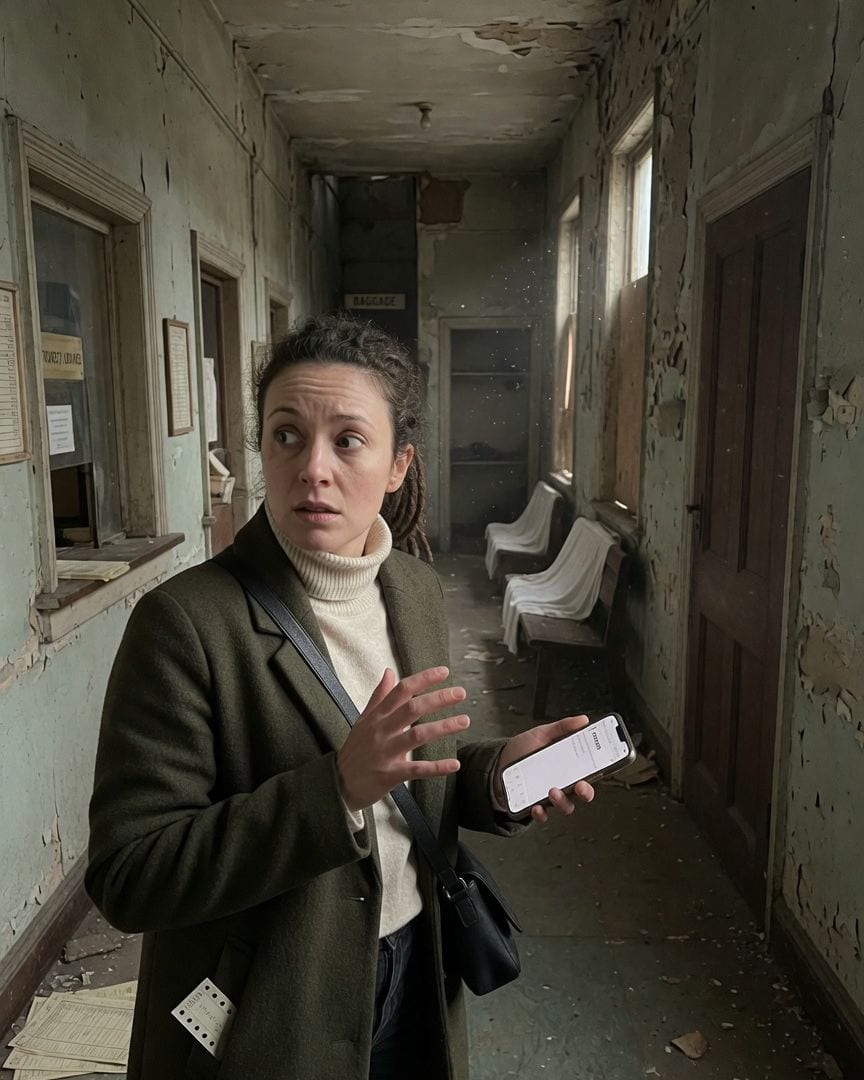
My scenic railway loop repeated six times. The same trestle bridge, the same waterfall, over and over, the conductor punching my ticket each pass. We never left the circle.
My scenic railway journey was supposed to be a gentle, thirty-minute loop through the gorge. But after only fifteen minutes, the same landmarks rolled past again, and again, and again. The conductor, Henry Kingsley, punched my ticket six times as if each was the first, his gaze utterly devoid of recognition.
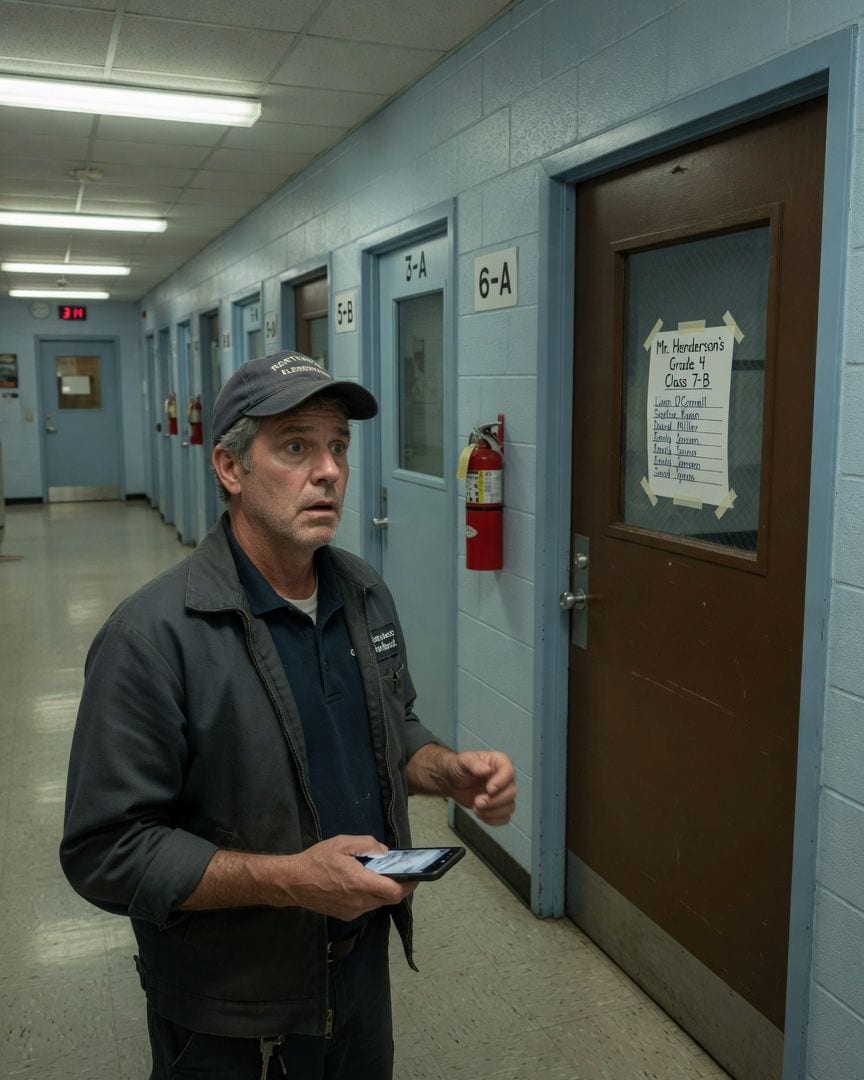
My classroom doors counted twenty-three last night. The extra one had a class list taped inside, names of children who've never been at this school.
My job as night caretaker at Northwood Elementary is routine: 22 classrooms, all accounted for. But one night, an impossible 23rd door appeared in the science block, nestled where only a wall should be. It bore a class list of students and a teacher who don't exist in any school record. Then, in an old logbook, I found that exact same list, dated 40 years ago.
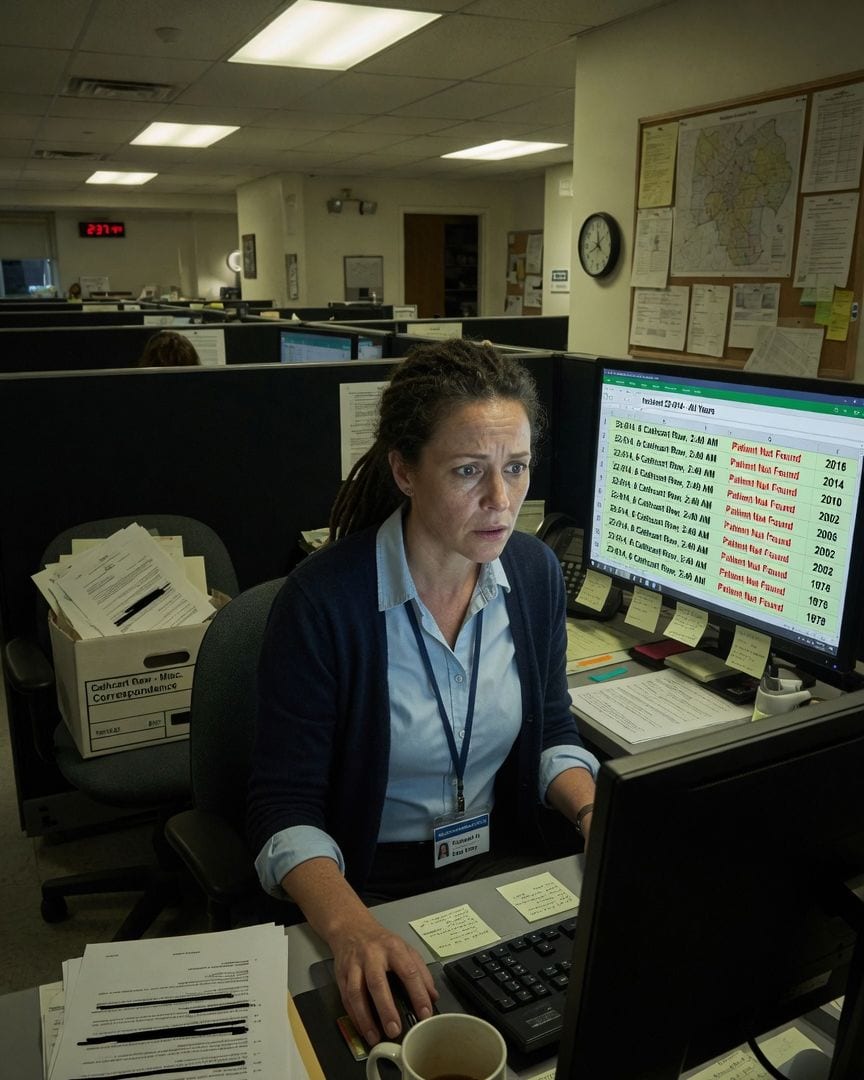
My computer log shows the same 2:40 AM call to Cathcart Row, every four years since 1978, always closed 'patient not found'.
Working data entry for the County Ambulance Trust, I found a routine incident logged as 'Patient Not Found.' But digging deeper, I discovered the exact same phantom call had repeated every four years for over forty years, always at the same address, always at 2:40 AM. Then I found a heavily redacted memo linking it to my own street.
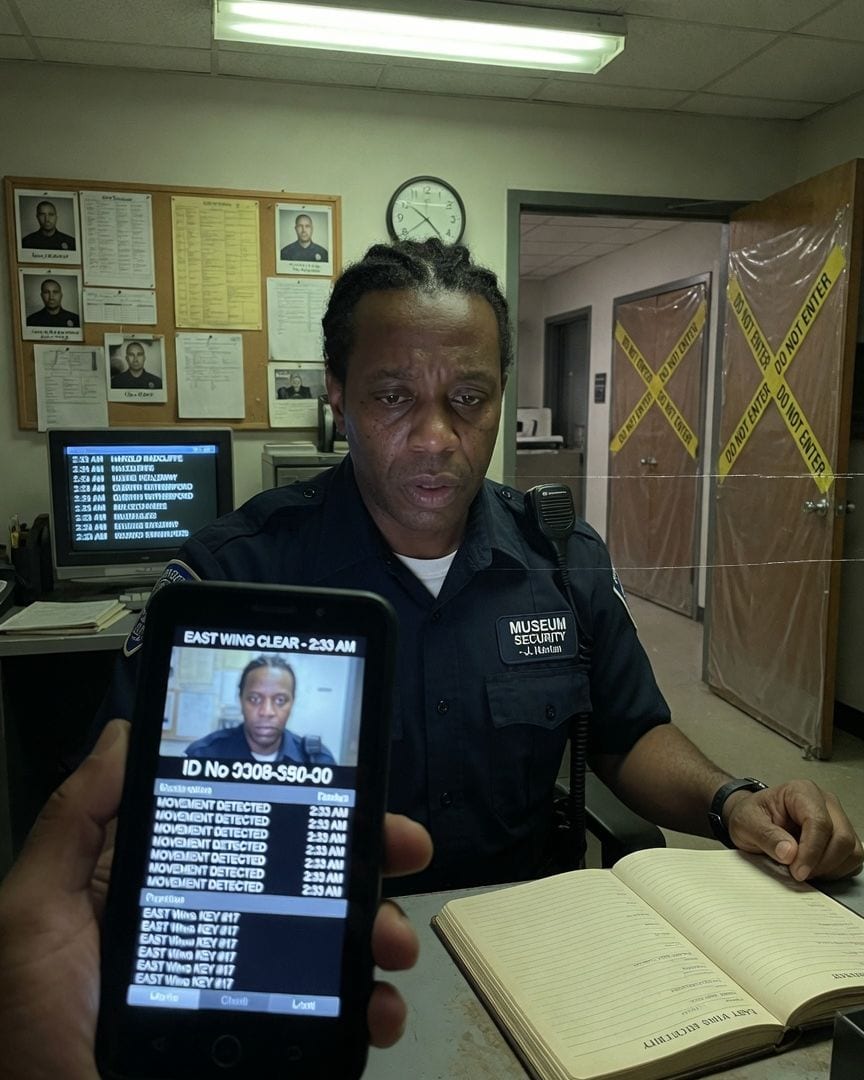
My guard log shows the east wing cleared at 2:33 AM. That wing's been sealed for months, doors screwed shut.
I was on my final security rounds in the quiet museum after midnight, ready to clock out. My handheld scanner showed the East Wing cleared at 2:33 AM under my ID, though it's been sealed for months. Then my hand brushed a faint, precise scratch on the plastic covering the doorframe, exactly where a security scanner would be held.
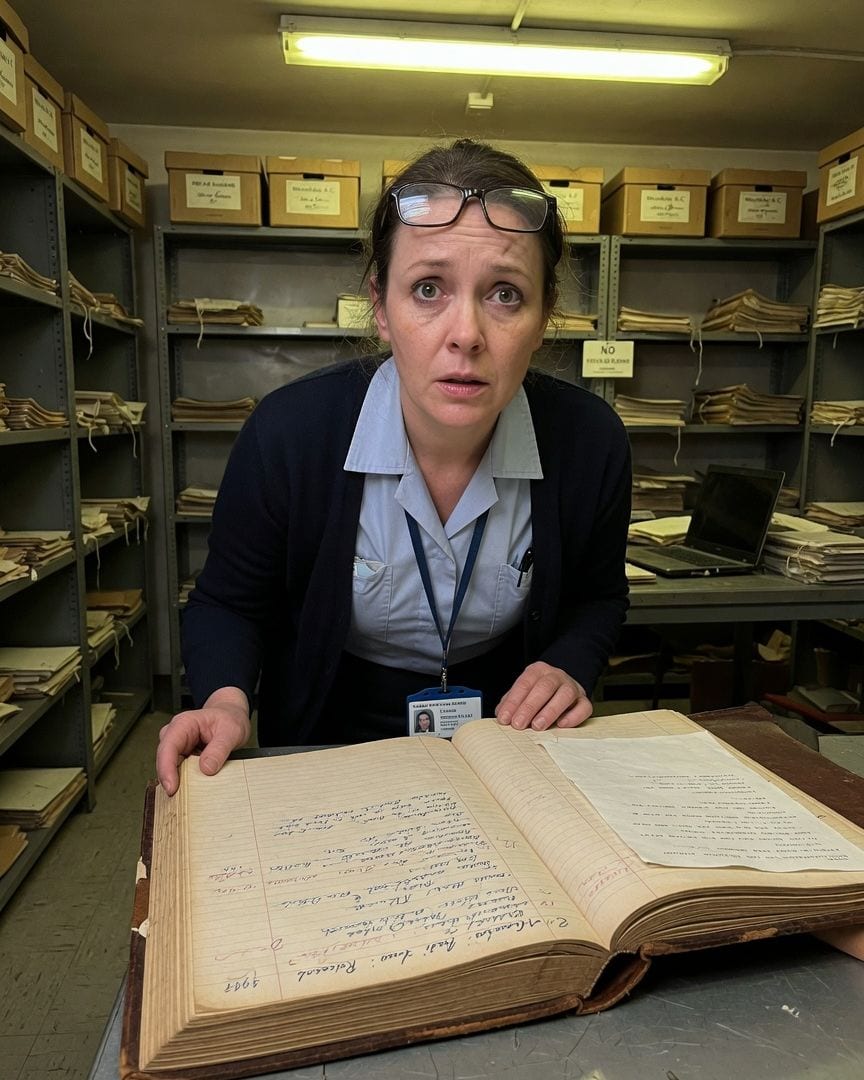
My ambulance trust's incident log shows callout 22-014 to 6 Cathcart Row at 2:40 AM. Every four years, the same call, same address. Always 'patient not found'.
My job involves tedious data entry for ambulance calls, but Incident 22-014 was different. It appeared every four years, always at 2:40 AM, always closed as 'patient not found.' Digging into the dusty physical archives, I found an entry from 1961 for the exact same incident, but its resolution read: 'Subject Secured. Relocated to "Holding".'
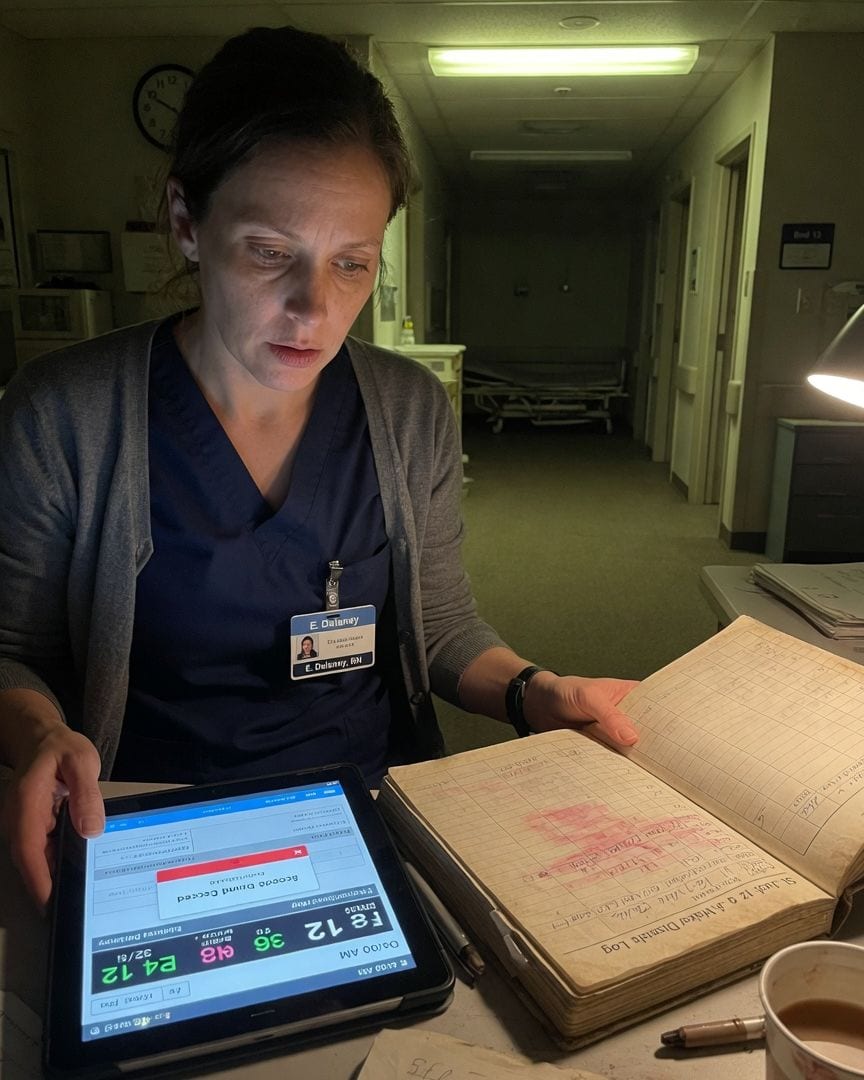
My empty ward's bed 12 had fresh vitals charted. The system says I entered them.
Working my usual night shift at St. Jude's, I pulled up the monitor system to log patient vitals for Ward 12. My thumb paused at Bed 12, where a full set of readings was already timestamped and logged under *my* ID. But Bed 12 was utterly stripped and empty; it had been discharged days ago.