My hotel wake-up call rang at 3:14am. The voice knew my name, 'Mr. Osei', and only said, 'I'm sorry to be the one to tell you.' The hotel had no record.
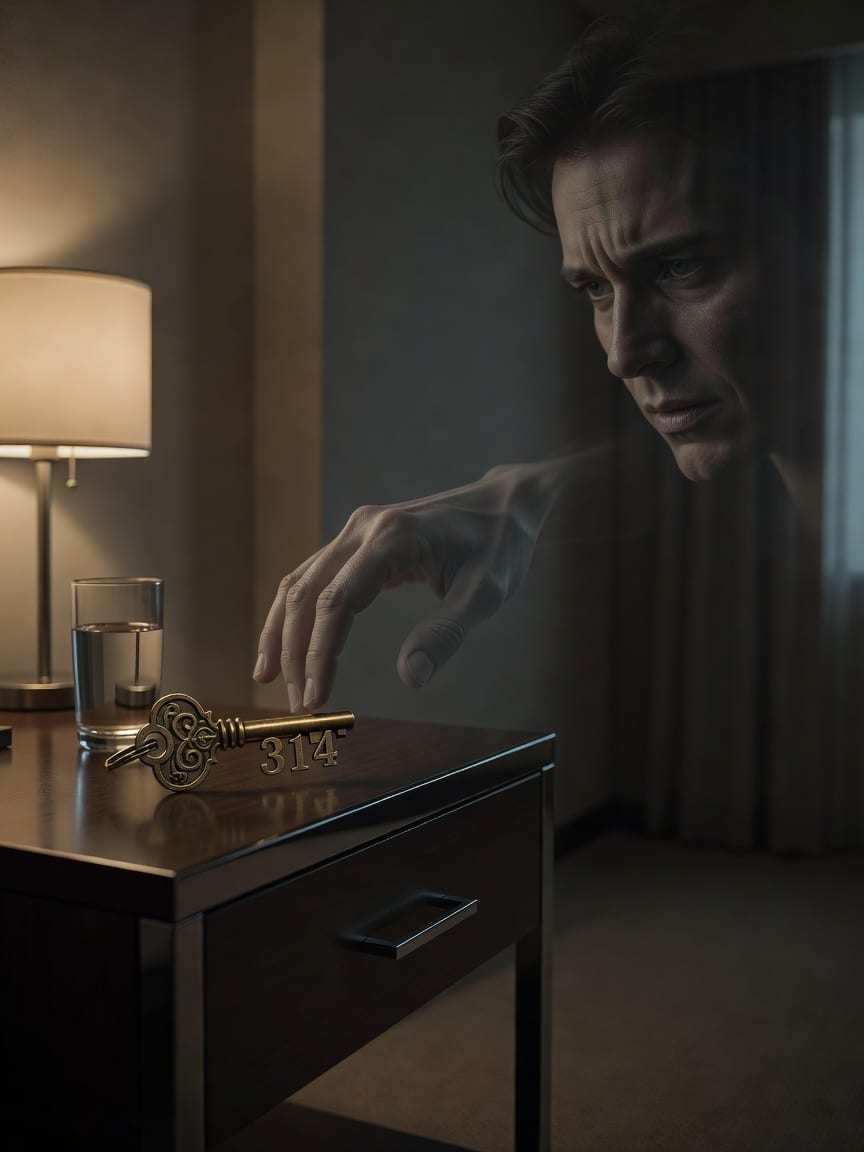
The sharp ring of the hotel phone jolted me upright in the dark. My eyes snapped open, fighting the fog of sleep. Three-fourteen AM. I squinted at the digital clock on the bedside table.
My wake-up call was for seven, not now. I fumbled for the receiver. "Hello?" My voice was thick with sleep. A calm, almost serene female voice answered, "Mr. Osei? I'm so sorry to be the one to tell you."
My name. She used my name. Before I could process the words, before I could ask, 'Tell me what?', the line clicked dead. The sudden silence was heavier than the dial tone.
I stared at the receiver in my hand, then at the room phone's display. No record of an outgoing or incoming call.
I checked my cell, thinking maybe I'd connected it to the hotel system by mistake, but it was just a dead screen. Nothing. Confused, annoyed, and a little unnerved, I punched in the front desk number.
"Grand Hotel, how may I help you?" a man's voice, alert and professional. "This is Ethan Osei, Room 314," I said, trying to keep my tone even. "I just received a wake-up call. At 3:14am.
But I booked it for seven. And the line just... cut out." There was a beat of silence on the other end. "A wake-up call, sir? For 3:14? I'm showing no record of that.
Your only requested wake-up is for 7:00am." "I know," I insisted. "But it happened. The operator, she said my name. 'Mr. Osei.' And 'I'm sorry to be the one to tell you'." Another pause, longer this time.
"Sir, I assure you, our night operator finished her shift at midnight. No one has been at the switchboard since then. There's no possible way anyone could have made that call from here." His voice was genuinely perplexed, not dismissive.
"Are you sure you weren't dreaming, Mr. Osei?" "No, I damn well wasn't dreaming," I snapped, then regretted it. "Look, can you just check again? Or check the system logs, please?" "I've checked, sir. There's nothing.
I'm truly sorry, but it's impossible. Perhaps a crossed line, or a misdial from another room somehow?" I knew it wasn't. The voice was too clear, too specific. "Forget it," I said, hanging up. The room was cold.
That calm, unsettling voice, "I'm sorry to be the one to tell you," echoed in the pre-dawn silence, clinging to the air like a cold vapor.
I tried to shake it off, to chalk it up to a glitch, a prank call that somehow slipped through the hotel's systems, or maybe a dream that felt too real. But the specifics gnawed at me. My name.
The exact time. The unsettling apology. I pulled out my phone again and double-checked my booking confirmation. Clear as day: wake-up call for 7:00 AM. Nothing about 3:14.
I even went to the Grand Hotel's website on my phone, scrolling through pages, searching for a staff directory, a "night operator" name that wasn't on the official roster, any mention of system errors or unusual incidents. Nothing.
Just standard architectural details, polished photos of the lobby, and page after page of five-star guest reviews praising the comfortable beds and excellent service. No ghosts, no glitches, no "sorry to tell you" disclaimers. The ordinary explanations just crumbled.
If it was a prank, how did they know I was in Room 314? How did they know my name? And why would the hotel system have no record? I felt singled out, marked, by something I couldn't understand.
The dread was a cold, tight knot in my stomach that refused to loosen, even as the first pale light of dawn began to seep through the heavy hotel curtains.
I forced myself to get ready for my consulting meeting, the city outside already stirring, the distant hum of traffic a contrast to the quiet horror in my head.
But the operator's words, so calm, so knowing, clung to my thoughts like a shroud. I couldn't shake the feeling that I'd been touched by something unseen, and it was still watching.
As I left the hotel, walking past the same friendly desk clerk who'd denied my call, I found myself idly searching "Grand Hotel local history" on my phone, scrolling through links, looking for anything odd, any old stories or incidents.
But it was just the usual historical society blurbs about elegant architecture and notable past guests. Nothing out of place.
Later that day, trying to clear my head, I sat at an outdoor cafe, nursing a lukewarm coffee. The city noise, the chatter of other patrons, it was all background static to the replay loop in my mind: 'Mr. Osei?
I'm so sorry to be the one to tell you.' The calm, knowing voice was infuriating.
I scrolled through a newsfeed, trying to distract myself, but my gaze kept drifting to the hotel across the street, its imposing brick facade suddenly looking less grand and more like a silent, watchful monolith.
Then, a man approached my table. Mid-fifties, with kind but weary eyes that seemed to have seen too much. He was dressed in an unremarkable grey suit, the kind you'd see on any office worker.
He stopped a few feet away, hesitated, then his eyes met mine. "Mr. Osei?" he asked, his voice soft but firm. I looked up, surprised that he knew my name. "Yes?" He offered a small, almost imperceptible nod.
"I'm Harold Mitchell," he said. His gaze was steady, regretful. "And I'm truly sorry, Mr. Osei. For what's coming. It isn't fair." Before I could even process the words, before I could ask, 'What's coming?'
or 'How the hell do you know my name?', Harold Mitchell turned. He walked away, swiftly and silently, disappearing into the bustling street traffic without a backward glance, swallowed by the crowd.
I was left frozen in my seat, the cafe sounds suddenly fading around me, replaced by the ringing silence in my ears, the stranger's words chilling me to the bone.
Harold Mitchell’s apology shattered any remaining attempts at rationalization. This wasn't a glitch in the system, or a prank; this was targeted. My coffee, forgotten, turned cold.
I pushed back my chair, scraping it against the pavement, and scrambled to my feet. "Hey!" I called out, but my voice was lost in the din of the city.
I scanned the street, desperately searching for the grey suit, the weary eyes. He was gone, vanished as if he'd never been there. I turned to the barista, a young woman wiping down the counter. "Did you see that man?
The one who just spoke to me? Which way did he go?" She blinked, looking confused. "Sorry, sir. I didn't notice anyone." No one noticed. Damn it.
Harold's apology, delivered by name for an unknown future event, echoed the hotel call perfectly. It was the same unsettling specificity. I felt a terrifying connection, a tightening coil of dread. This was no coincidence.
I returned to the Grand Hotel, my earlier professional demeanor replaced by a burning, desperate need for answers. I found Joan Bryant, the day manager, behind the front desk, sorting through invoices. Her smile was practiced, polite.
"Mr. Osei, how can I help you?" "I need to ask you about Room 314," I said, leaning over the counter, my voice low and urgent. "And the history of this hotel.
Have there been any strange occurrences in that room? Any old stories?" Joan’s smile faltered slightly. She straightened, her expression shifting to one of mild skepticism. "Strange occurrences, sir? Room 314 is one of our most popular suites. Perfectly normal.
I assure you, you must have an overactive imagination." She even chuckled, a short, dismissive sound. "No ghosts, I promise." "I'm serious," I insisted, the frustration simmering.
"An inexplicable wake-up call, a stranger knowing my name and apologizing for something to come... This isn't normal." I recounted the details of the call and Harold Mitchell's words. She listened, her expression polite but firm, clearly unconvinced.
"Mr. Osei, I understand your concern, but we have no record of anything like that.
The Grand Hotel has been here a long time, true, over a century, built on the site of an even older establishment, but it's always been a respectable establishment. Perhaps you’re tired from your travels?" "What about old records?"
I pressed, ignoring her suggestion. "Local legends? Anything historical that could explain this?" Joan thought for a moment, tapping a pen against her chin.
"Well, the local historical society would be your best bet for any deep dives into the building's original construction or even earlier structures on the site.
We only keep operational records here, and nothing like what you’re describing has ever been in them." I realized I wouldn't get answers here. Not real ones, anyway. The unease ratcheted up another notch.
I wasn't just curious anymore; I was hunting. Convinced the hotel and my name were somehow intertwined, caught in something I couldn’t yet grasp.
I scribbled down the address for the local historical society, a small, unassuming building tucked away downtown. I resolved to visit first thing tomorrow.
The historical society was a quiet, hushed place, smelling faintly of dust and old paper. Bookshelves reached to the ceiling, filled with volumes that looked as ancient as the building itself.
Sylvia Drummond greeted me, a woman in her early sixties with a sharp gaze and an air of quiet authority that immediately commanded respect. Her silver hair was pulled back tightly, and her spectacles rested low on her nose.
"Can I help you, Mr. Osei?" she asked, her voice calm and clear. "Yes, I hope so," I replied, explaining my interest in the Grand Hotel's history, particularly any unusual records pertaining to its construction or early guests.
I tried to keep my request vague, not wanting to sound like a lunatic. Sylvia nodded slowly, her eyes never leaving mine. It wasn't an accusatory stare, but an unnerving, almost knowing look.
She gestured to a dusty section in the back. "You'll find our local archives there. Town planning documents, old newspapers, guest registers from some of the older establishments. It's all self-serve, mostly."
She offered little assistance beyond pointing to the shelves, her posture ramrod straight at her own large oak desk in the center of the room.
I spent the next few hours sifting through brittle newspapers and faded blueprints, my fingers growing smudged with fine, ancient dust.
I found nothing out of the ordinary, just mundane construction permits, unremarkable guest lists from the late 1800s, and glowing advertisements for the Grand Hotel's grand opening. Yet, as I worked, a prickle ran down the back of my neck.
I glanced up. Sylvia was watching me from her desk, her expression unreadable, almost knowing. She didn't smile or acknowledge me, just observed, her gaze unwavering as I turned another fragile page.
The feeling intensified, as if my every move was anticipated, weighed. It was deeply unsettling. Later that evening, back in my own hotel room, trying to make sense of the day, my phone pinged. An anonymous email.
The subject line was blank. I opened it, my heart starting to pound. The body of the message contained only three words: 'Some things are best left undisturbed, Mr. Osei.'
There was no sender, no way to trace it, just those three words, knowing my name, knowing my questions. The implication was clear: my digging had been noticed. And whatever I was looking into, it was watching me, too.
Shaken by the email, the stark, quiet threat of it, I returned to the historical society first thing the next morning. Sylvia Drummond was at her desk, just as I’d left her, meticulously cataloging old photographs.
My voice was tight with suppressed fear and anger. "I received a message," I began, not bothering with pleasantries. "An email, anonymous. Telling me to stop looking into the Grand Hotel. Do you know anything about that?"
Sylvia's calm demeanor didn't waver. She slowly placed the photograph she was holding back into its acid-free sleeve, her movements precise.
She looked at me for a long moment, her sharp gaze seeming to peer right through me, then sighed, a sound of weary, almost resigned acceptance. "It seems you've been...
noticed," she said, her voice low, almost a whisper in the quiet room. "Some truths are not meant for casual inquiry, Mr. Osei." "What truths?" I demanded, my hands clenching into fists.
"First a phone call that wasn't real, then a stranger knows my name and apologizes for something that hasn't happened, and now this. I feel like I'm being targeted. Why? What the hell is going on?"
I laid it all out for her: the 3:14am call, Harold Mitchell’s apology, the anonymous warning. I described the strange specificity, the constant use of my name. Sylvia listened patiently, her expression never changing. When I finished, she slowly stood.
"Come with me," she said, her voice softer now, almost sympathetic. She led me to a small, dimly lit back room I hadn't noticed before, tucked behind a heavy velvet curtain.
It felt colder in here, the air still and heavy. She went to a tall, locked cabinet against the far wall.
She produced a small, tarnished brass key from a pocket, inserted it, and with a soft click, pulled open the heavy door. Inside, nestled on a shelf, was a single, heavy, leather-bound ledger.
Its cover was unadorned, the leather dark and worn smooth with age, its pages thick and yellowed, distinct from anything I’d seen in the public archives. It hummed with an almost palpable weight.
"This," she explained, her voice barely audible, "is not for public viewing. It’s for those who need to see it." She carried it to a small table under a weak overhead light and opened it.
Her finger, gnarled with age, traced entries on a specific page. I leaned in, my breath catching in my throat, a cold dread snaking its way up my spine.
The ledger contained a series of entries, each for 'Mr. Osei,' always in 'Room 314' of the Grand Hotel. Next to each name was a cryptic notation: 'Apology received' or 'Marked.'
The dates spanned decades, even centuries, some from the 1800s, others from the 1920s. Sylvia looked up, meeting my terrified gaze. "These aren't guests in the usual sense.
These are individuals whose names and circumstances align with a recurring pattern, tied to the very ground the hotel stands on. A kind of memory, a historical echo. The calls, the apologies... they are part of it. A warning.
A marking." The pieces clicked into place with horrifying precision; the impossible call, Harold's words, the feeling of being singled out – all elements of a horrifying, ancient mechanism I was now irrevocably caught in.
I stared at the ledger, the weight of generations of 'Mr. Oseis' pressing down on me, the terror of their unknown fates now a cold certainty. The sheer, terrifying coherence of it all made my skin crawl.
Every impossible detail, every unsettling word, suddenly made sense in the worst possible way. "But why my name?" I whispered, my voice hoarse, barely a sound. "Why me? What does it mean?"
Sylvia looked at me with a profound sadness, her eyes deep and weary. "The pattern is... particular. Sometimes it chooses by name, sometimes by circumstance. But it always finds its mark. A powerful cycle, deeply rooted in this place."
She slowly turned another page in the ancient ledger, her finger resting on a specific entry, distinct from the others.
It wasn't faded; in fact, the ink seemed almost fresh compared to the others, as if it had only recently been added.
I leaned closer, my heart hammering against my ribs, a cold dread washing over me as I read the looping script, faded but unmistakably clear. The page, brittle with age, clearly shows the looping script: 'Ethan Osei, Room 314.
Apology received, 1978.' — the year before he was even born.
Sylvia's voice was soft, almost a eulogy for a fate already sealed. "This particular 'Ethan Osei' was marked in 1978. There have been others, with your name, or close variations, through the centuries.
The hotel, or rather, what the hotel stands on, has a peculiar way of... selecting. And sometimes, it repeats names. It's not a person, not a ghost, not some malevolent entity with a will of its own. It's an echo.
A pattern of inevitable occurrence. And it marks those it selects with an apology, because it knows what's coming for them." She explained that the 'what' was never death. That was the grim comfort, if you could call it that.
But it was always a specific, profound, and unavoidable personal loss or change. It was unique to each marked individual, but always significant—a severing, a permanent shift in their reality, or a loss of something fundamental to their identity.
The 3:14 call, Harold Mitchell’s impossible apology, the ledger entries spanning centuries – it all clicked into place as an inevitable, ancient mechanism that transcended human understanding.
The name 'Ethan Osei' wasn't just his; it was a recurring marker in the cycle, a designation, a placeholder.
The apology wasn't for a specific event, not really, but for the burden of the knowing, and the inescapable fate that followed.
This wasn't some cosmic injustice; it was simply the way things were, an immutable law of this specific, cursed place.
I didn't try to fight it or escape. Sylvia had already told me there was no escape, only understanding. The full truth was understood, and it could not be undone or acted on.
It was a current that pulled you, and you could only drown or accept the ride. "What's coming for me?" I asked, my voice barely a whisper, a hollow sound in the small, dim room. "What's my... marking?"
Sylvia looked at me, a deep sadness in her eyes, as if she were delivering the worst possible news. "The records show your marking leads to a profound loss of connection, Mr. Osei.
A severing from your closest ties, a growing isolation that follows the marking like a shadow." She paused, her gaze steady. "It’s not physical harm. It’s an emotional and existential severing.
You will simply be left knowing this inevitable fate, and then watching it unfold." Harold Mitchell's apology, the voice on the phone – they were for this.
Not a sudden tragedy, not a violent end, but a slow, agonizing drift into solitude. The realization settled over me, a chilling blanket. It felt worse than death.
I left the historical society, the weight of this knowledge heavy on me, a cold, empty ache in my chest. The bright afternoon sun felt alien, too cheerful for the desolation within me.
I pulled out my phone as I walked, my thumb hovering over the screen. A message from my sister, Annika Sinclair. Her smiling photo stared back at me.
I felt a strange, growing distance from the words on the screen, a sense of unreality already creeping in. The event had begun, subtly, internally, the moment I learned my fate.
The knowing was the ending, not a dramatic confrontation, but a quiet, terrible acceptance.
Days turned into weeks, then months. Sylvia’s words proved chillingly accurate. I found myself increasingly isolated. Calls to friends went unanswered, or conversations felt strained, hollow. Invitations stopped coming.
The connections I once cherished, the people I felt closest to—friends, family, even distant acquaintances—slowly drifted away. It wasn't through malice, not an argument, but an inexplicable, growing chasm.
My attempts to reach out felt hollow, my presence distant, as if I were speaking across an ever-widening void.
It wasn't that people shunned me; it was that they slowly forgot to include me, or found my company subtly unsettling, though they could never articulate why. The warmth, the genuine connection, had simply… faded from me.
I sit alone in my apartment now, the silence a heavy blanket.
I try to remember the last time I truly felt seen by someone, the last time I laughed without a flicker of self-consciousness, without that gnawing awareness of the impending void.
The memory is already fading, becoming an abstraction, like a photograph losing its color. The truth is understood, it cannot be undone. I am simply left knowing, and the knowing is the ending.
I am truly alone, just as the pattern predicted, just as the echo of the apology implied. The phone rings, a distant, unfamiliar number. I let it go to voicemail. I don't need to answer. I know what it's for.
He still answers to 'Mr. Osei' now, but it feels like a borrowed name.
If this one got to you
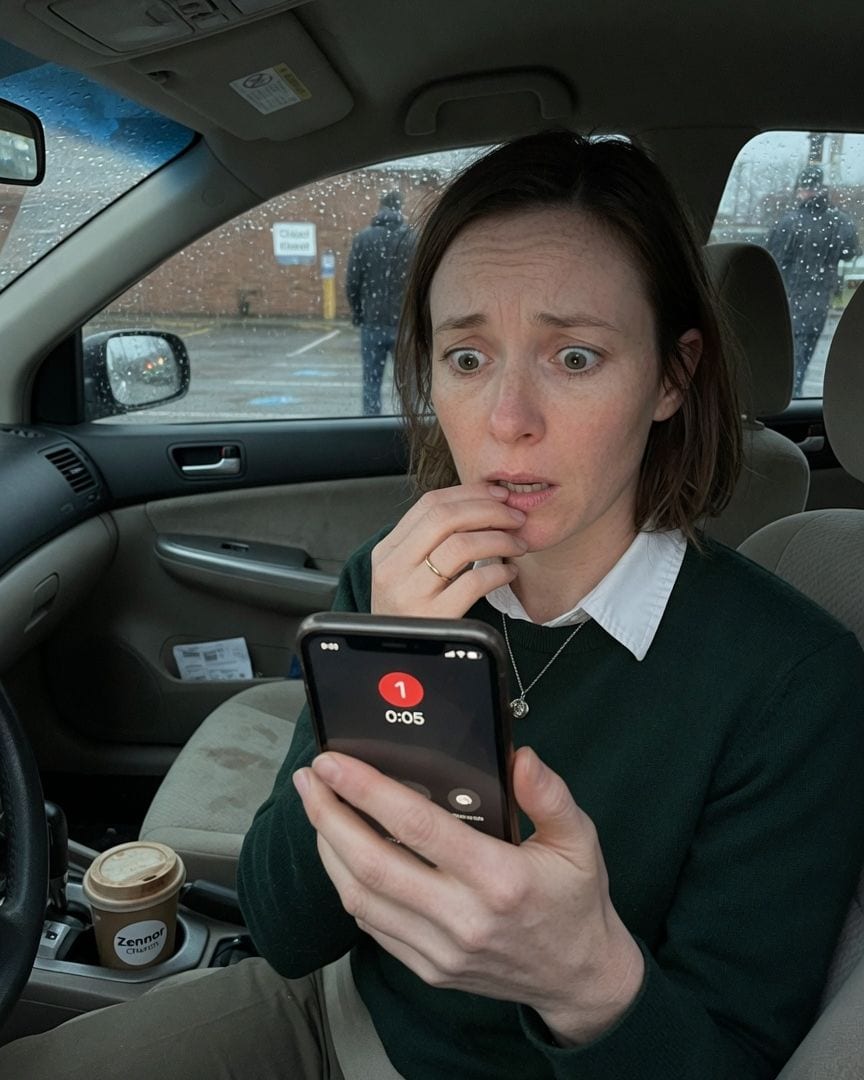
My full name is carved into a 17th-century church pew. Under it says, 'forgive me, I was late.' The verger said it's been there longer than anyone remembers.
Drawn to Zennor's ancient church, I ran my hand over a centuries-old pew, discovering something impossible. My full name, 'Sarah Caldwell,' was carved deeply into the dark wood, with the chilling message: 'forgive me, I was late.' It felt like this ancient inscription had been waiting for me.
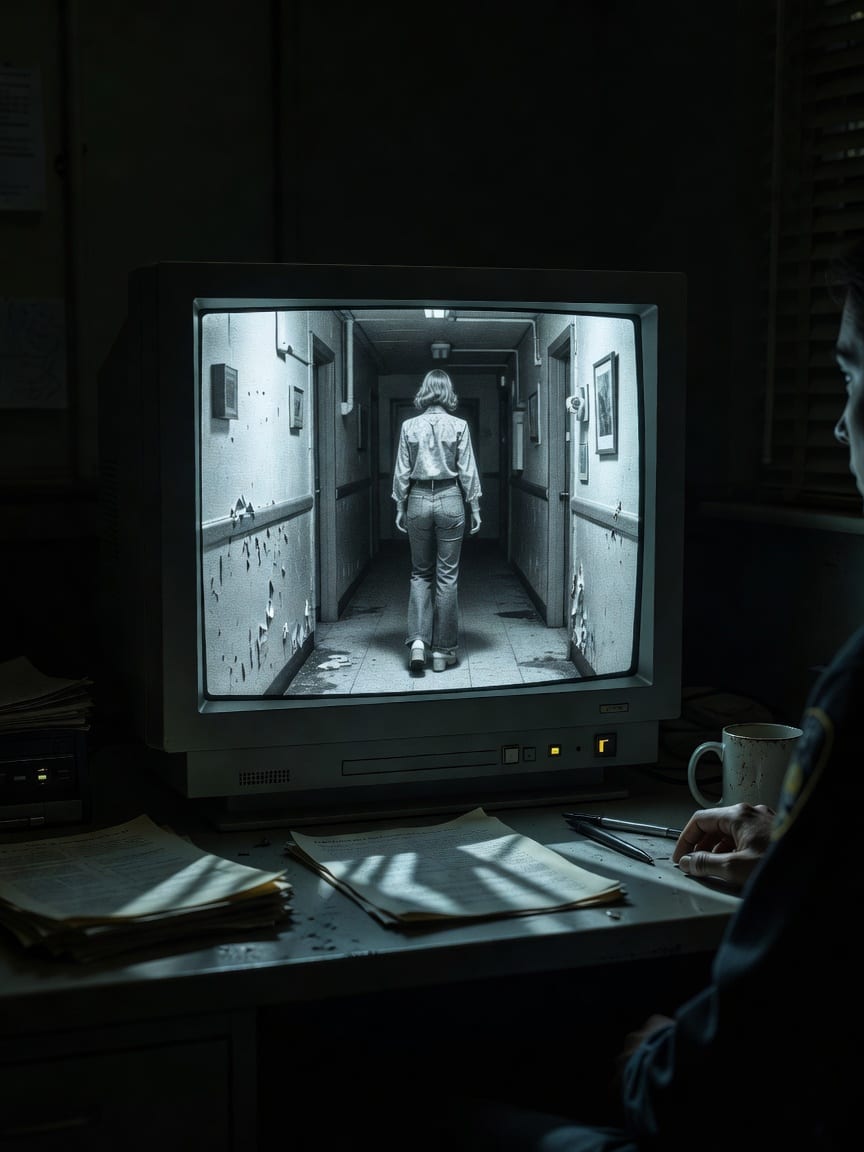
My intercom buzzed at 3 AM, a voice asking to step out for air. The station manager insists no one works the newsroom overnight, and no Cheryl is on payroll.
My shifts as the night security guard at WMVX are usually quiet, the TV station a tomb from 11 PM to 6 AM. But a late-night intercom call from a woman named Cheryl, who my manager says doesn't exist, was unsettling enough. The next night, my digital security log showed a new entry for 'Producer Cheryl Hartley'—a line I never typed, with details I couldn't have known.
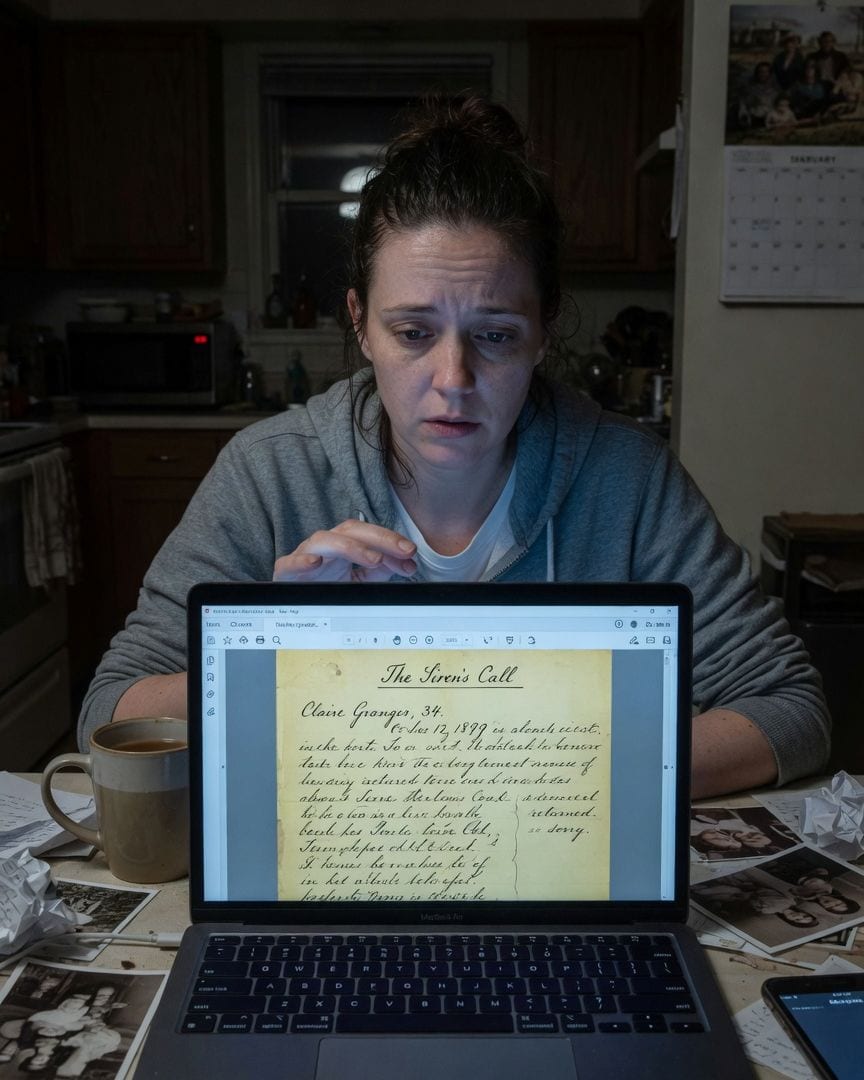
My name is on a passenger list from a ship lost in 1899. The manifest says I was 34, "returned. so sorry."
I was reviewing an old emigrant manifest, a casual dive into my family history, when I found my own name listed. The ship, The Siren's Call, was lost in 1899 with all aboard, yet my entry on the manifest was marked: 'returned. so sorry.'
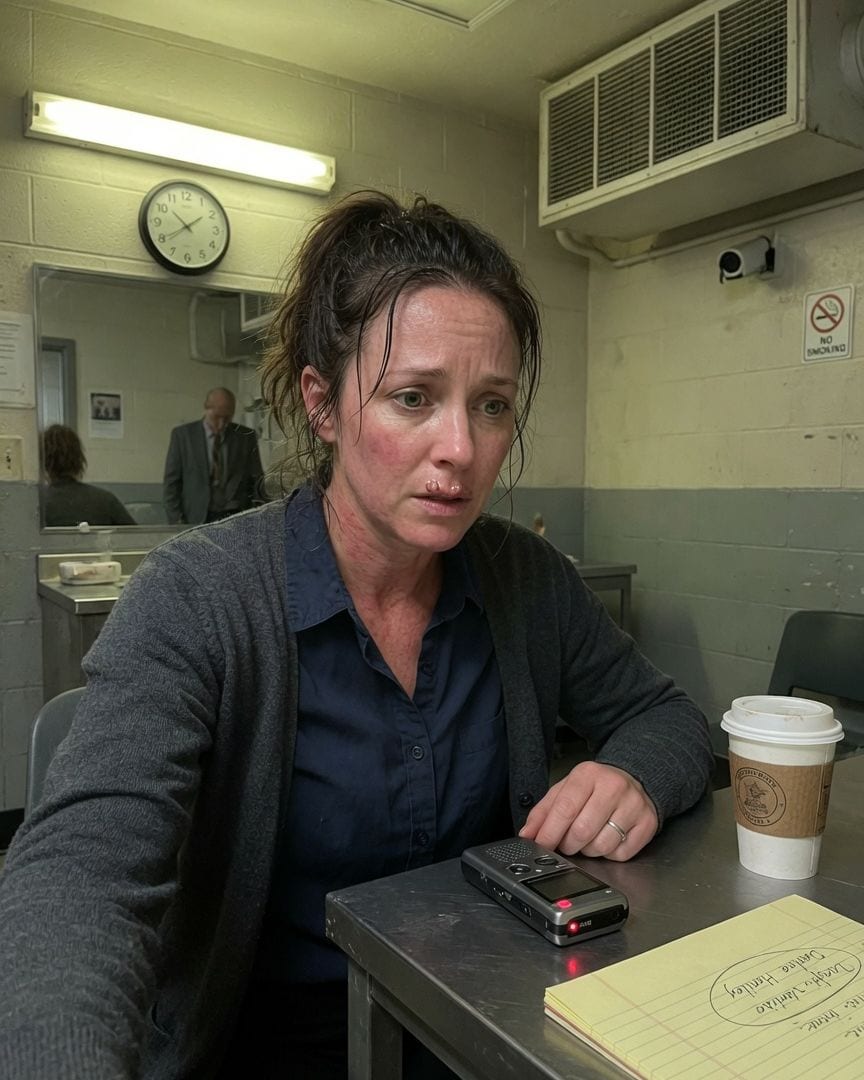
My own voice called 911 from Gary, Indiana, reporting a prowler. I was asleep in Ohio, my phone on the charger.
Sitting in a police interview room, I listened as Detective Walsh played a 911 recording. A woman's hushed voice reported a prowler from a payphone in Gary, Indiana. My stomach dropped cold; it was my exact voice, my specific way of saying 'I think,' even though I was in bed in Ohio that night.
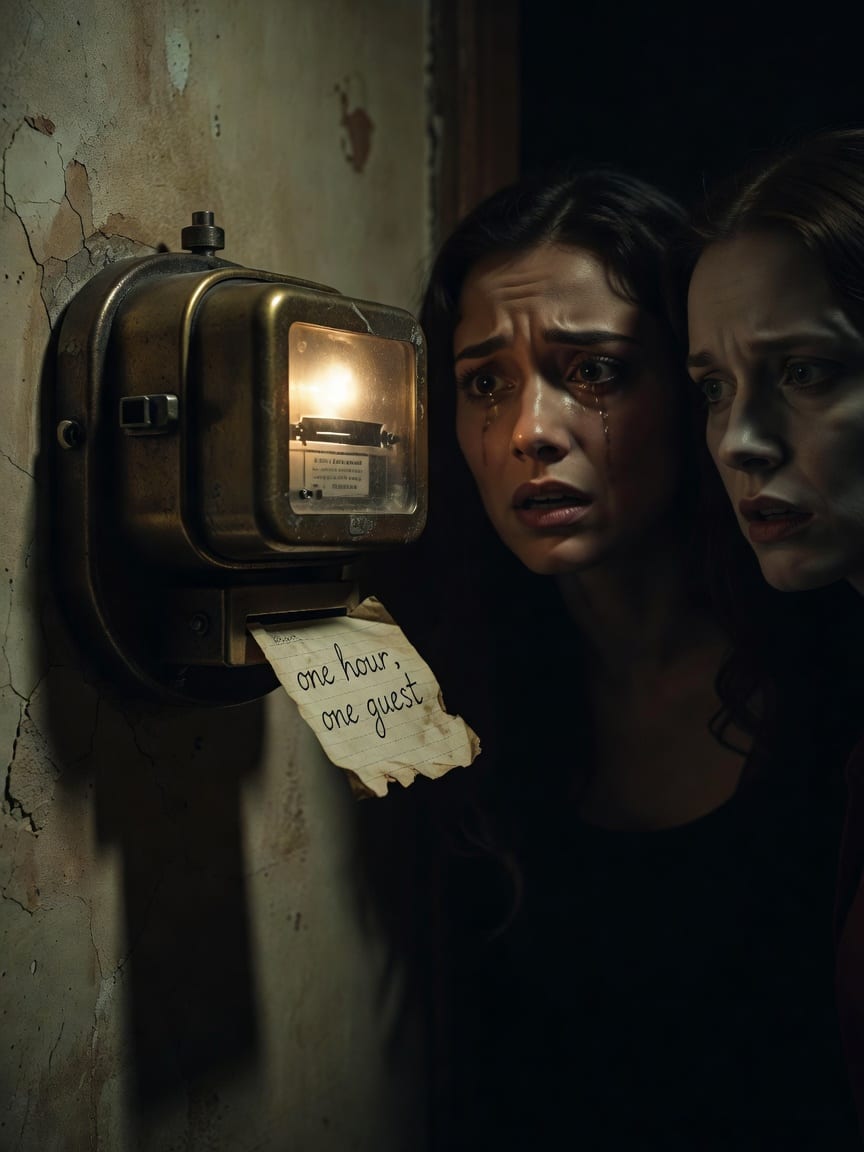
My landlady said don't feed the meter after closing pips. I did. The lights across the terrace dimmed, once. In the morning, a handwritten bill for 'one hour, one guest' was pushed under my door from the man who died in this flat.
I'd just moved to a quiet town, charmed by its old-fashioned electricity meter and my landlady's quirky notes. But when I ignored her warning and fed the meter late one night, a strange bill appeared under my door. It was for 'one hour, one guest,' sent by a man named Edward Barlow—who died seven years ago in my very own flat.
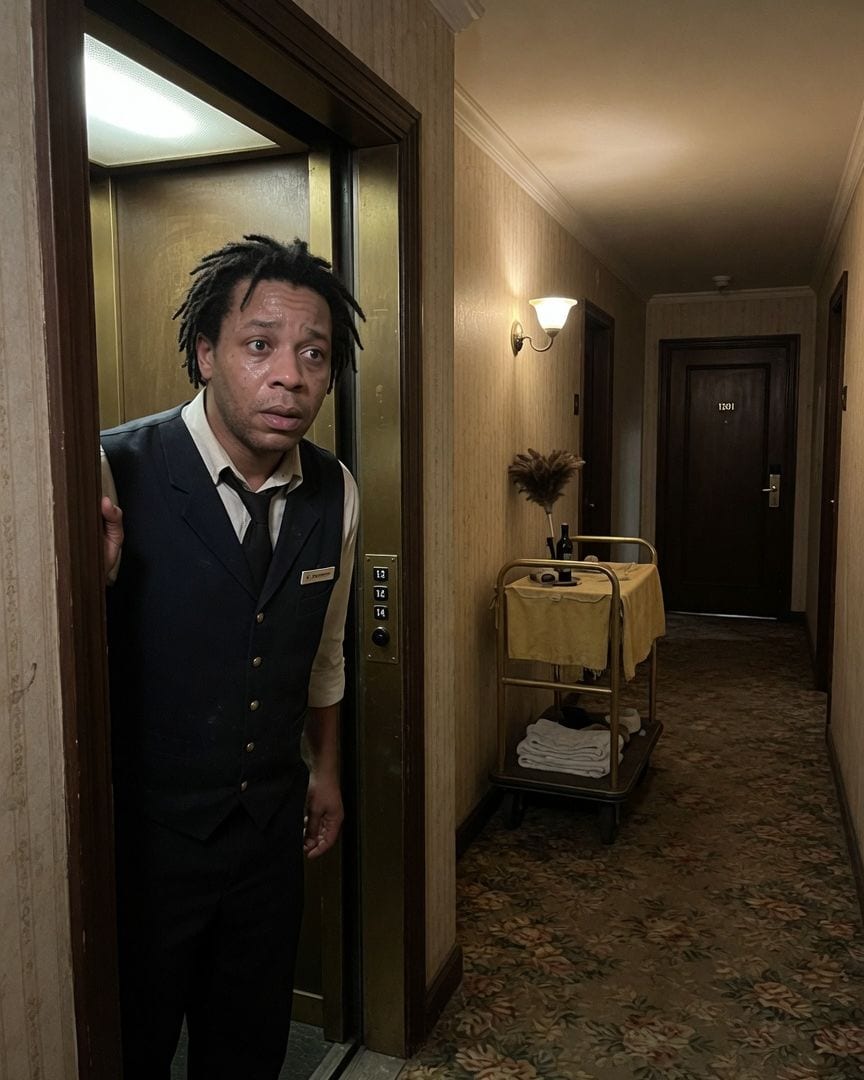
My hotel lift grew a Floor 13 button last week, unlit and proud. A guest pressed it before I could stop them.
As night porter, I'd always dismissed our hotel's missing 13th floor as superstition. But last week, a new button for '13' appeared on the lift panel, opening to a forgotten corridor that shouldn't exist. Stepping inside, I found an old night porter's uniform, complete with a name tag bearing the name of a local historian.