An inventory specialist's final check of a Carolina Cold War warehouse before demolition finds a crate signed for last week, years after the base closed, radiating impossible cold.
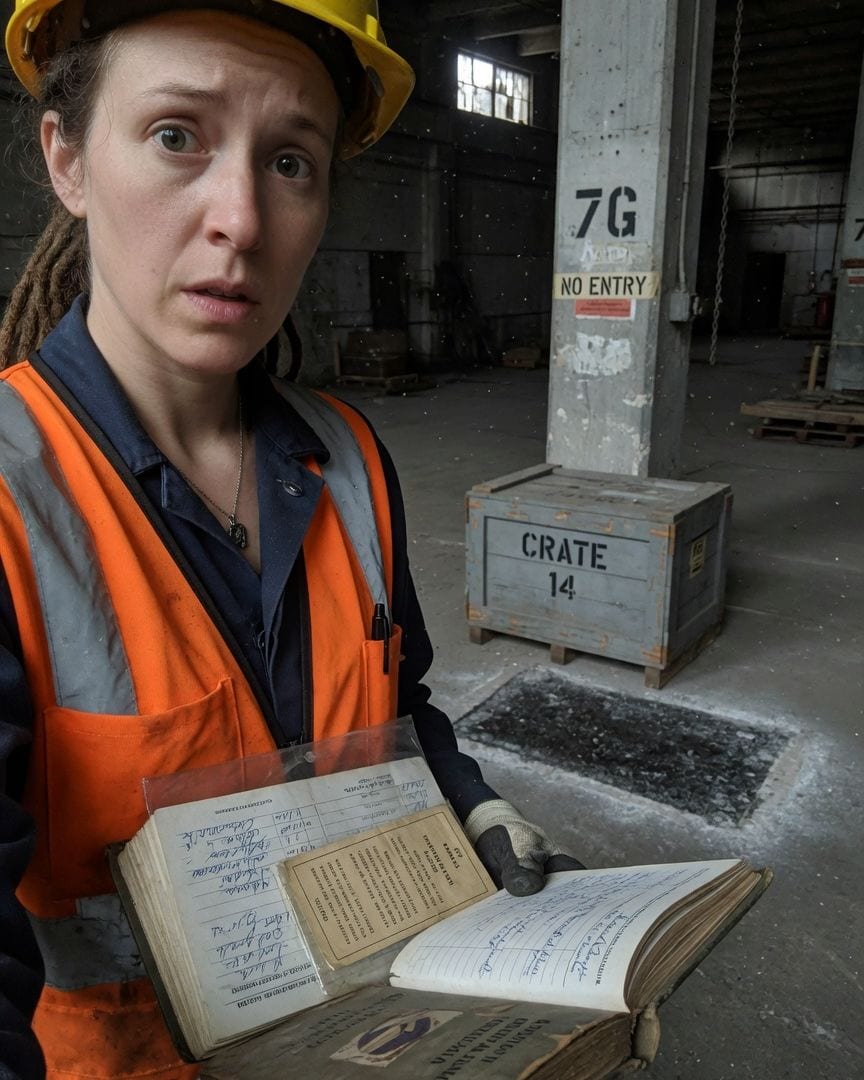
Deborah Kessling moved with the practiced efficiency of someone who had logged thousands of items in forgotten corners.
At thirty-two, she was an inventory specialist, her current assignment a vast, echoing Carolina military warehouse scheduled for demolition on the twelfth of the month.
Dust motes danced like tiny, confused spirits in the high shafts of light that pierced the grimy windows. She wore a hard hat, a reflective vest, and a focused frown, her clipboard a shield against the oppressive quiet.
Her final checklist led her to Sector 7G, a forgotten corner where shadows clung thickest. Item: Crate 14. She found it, a squat, unpainted wooden box, smaller than most, nestled against a structural pillar.
Its wood was grayed with age, but otherwise unremarkable. What caught her eye was the concrete beneath it. A perfect rectangle, dark and oddly granular, had spalled away, as if subjected to continuous, intense cold for decades.
A faint, almost imperceptible chill radiated from the crate itself, defying the warm, humid air of the warehouse. It was like standing next to an old, unplugged freezer that somehow maintained its own private winter.
Attached to the crate with rust-stained metal bands was a heavy, bound logbook. Its cover was stiff, embossed with faded military insignia. Deborah unclipped the pen from her vest and opened it. The first page was a maintenance schedule.
A long column of signatures, dates, and notations stretched down the page, each one a neat, official record. She found the most recent entry. 'M. Prescott, Civilian Contractor,' it read, the date neatly stamped: 'Last week.'
Deborah stared at the entry. Last week. The base had been decommissioned, effectively shuttered, years ago. The last official employees had left over a decade prior.
Civilian contractors were only just now being brought in for demolition prep, and she was the first to do a full inventory. No one should have been here last week, let alone signing off on maintenance for a forgotten crate.
She checked the surrounding pages. Every entry was consistent, quarterly signatures, precisely ninety days apart, stretching back through decades of meticulous record-keeping. The dates were undeniably recent. She ran a gloved hand over the logbook's cover, trying to rationalize it.
A phantom entry, a clerical error in some distant, forgotten system. But the chill emanating from the crate, and now, a subtle coolness rising from the paper itself, felt too real to dismiss.
She pulled the official maintenance log for Crate 14 fully from its straps. It was a thick, bound volume, heavier than it looked, meticulously filled.
She traced the entries backward, her thumb brushing over names and dates, each a precise quarterly check-in. The unbroken chain of signatures was astonishing: every ninety days, without fail, for sixty years.
Different names, different ranks – a Major Thompson in the 90s, a Sergeant Ruiz in the 80s, all the way back to a 'Lt. Col. Vance' in the 60s. Then further, to a Private First Class Miller in the 50s.
The continuity was relentless. Not even the base's closure had interrupted the schedule.
Tucked into the very front of the logbook, carefully preserved behind a yellowed cellophane sheet, was a single, folded piece of paper. The original receipt from 1948. Its header proclaimed 'OFFICE OF STRATEGIC SERVICES.' Deborah carefully unfolded it.
The date was clear: August 14, 1948. The description of contents, handwritten in elegant script, made her breath catch: 'one (1) recovered flying disc, fragmented, suspected extraterrestrial origin.'
A flying disc. Extraterrestrial. Deborah blinked, a dry laugh catching in her throat. She tried to force an ordinary explanation. A practical joke, perhaps, some old Cold War prank kept alive through generations of bored servicemen.
Or a code, a cover story for something mundane but sensitive. But the physical evidence defied it.
Sixty years of uninterrupted signatures, through two named hurricanes that had battered the coast, through a major fire in an adjacent section of the warehouse, through the base's entire operational lifespan and beyond.
How could a clerical error manifest as such an obsessive, continuous physical act? Who had come here, quarterly, for years after the base closed, to sign this log?
The paper itself, she realized, no longer merely felt cool to the touch. It was distinctly cold, almost radiating a quiet hum into her fingertips. The chill from the crate was a silent echo of the chill in her bones.
Driven by a cold curiosity that had nothing to do with the warehouse temperature, Deborah examined the logbook more closely. She ran her fingers along the spine, feeling for any irregularities.
Near the back, where the old binding was most worn, she detected a slight, almost imperceptible bulge. It wasn't part of the book's construction.
She retrieved a small utility knife from her belt. Her hands were steady, but a prickling sensation ran up her arms. Carefully, she inserted the blade into the worn seam of the binding, prying it open with delicate precision.
The old glue cracked, and a hollowed-out compartment was revealed, expertly carved into the thick board.
Inside, tucked away from any official record, lay a small, leather-bound, unofficial ledger. It was older than the official log, its cover cracked, its pages brittle.
Unlike the precise, stamped entries of the main book, this ledger was filled with frantic, looping script, penned with a desperate urgency. Her eyes scanned the first legible name. 'Thomas Vance.' The same Lt. Col.
Vance from the official log, the one who had signed in the 1960s. Beneath his name, scrawled in what looked like a last, shaky hand, was a strange, stylized symbol.
It looked like an inverted question mark, but with the dot at the top, like an eye.
Deborah retreated to her temporary office, a small, insulated cubicle partitioned off in the vastness of the warehouse, the unofficial ledger clutched in her hand.
The cold hum from the logbook, now placed carefully on her desk, seemed to fill the small space. Thomas Vance's entries, written in a hand that grew progressively shakier, detailed his growing unease after signing for Crate 14.
"August 17, 1967," she read aloud, her voice a low murmur. "Started feeling it. The cold, not just in the bay, but in my bones. A quiet compulsion to check on the crate. Like it… calls."
A later entry: "October 22, 1967. Dreams again. Always the same. A vast, silent machine. Not eating, not moving, just… consuming. And men, faceless, being drawn into the paper. Into the ink."
He wrote of a persistent chill, a subtle mental tug he called "the pull of the paper." He felt an inexplicable need to "feed the cold," though he never elaborated on what that meant.
His observations grew more personal, more frantic. "February 10, 1968. Muller just signed his quarterly. Looks tired. Distant. Like he’s already halfway gone. He’s next. I can feel it."
The ledger contained a list of names, scrawled on a dedicated page. Deborah cross-referenced them with the official logbook, her heart sinking with each match.
Muller, Abbott, Easton, Lambert—all signatories who, according to the official file, simply 'transferred' or 'retired' shortly after their last signature. Their records in the official logbook were unusually sparse, almost perfunctory.
Vance's final entry was a desperate warning, barely legible: "April 1, 1969. The file keeps writing. It will write us all." Below it, the same stylized symbol she saw earlier, the inverted question mark with the eye-like dot.
And then a final, chilling sentence, scrawled across the bottom of the page, nearly tearing the brittle paper: "I feel the cold calling me home to the crate. Home to the paper."
The next morning, the demolition deadline loomed, an insistent clock ticking in the silence. Deborah arrived at the warehouse early, intent on examining Crate 14 itself.
The cold from the crate had wormed its way into her dreams, a quiet, persistent hum. As she approached the bay, she saw a figure standing by the crate.
Roy Easton, the site foreman, a man whose gruff demeanor usually masked a no-nonsense efficiency. But now, he wasn't inspecting it.
He was just looking at it, a vacant, almost mesmerized expression on his face, his hands hanging limp at his sides.
When he spotted Deborah, he snapped out of it with a visible jolt, a flicker of something unreadable – fear? recognition? – in his eyes before his face settled into its usual hardened lines.
"Morning, Kessling," he said, his voice flat, devoid of its usual booming authority. "Just checking on things. Demolition's tomorrow, sharp. Don't want any stray items."
His gaze lingered for a moment on her clipboard, where she'd made notes about Crate 14. He gave a curt nod and moved off towards the far end of the warehouse, his stride stiff.
Later, as Deborah tried to work, categorizing stacks of rusted equipment near the main entrance, she felt a prickling sensation on her neck. She glanced up towards the catwalk that ran high above the bays.
Easton stood there, his silhouette dark and still against the high windows, watching her. He didn't wave, didn't move, just a still, patient presence.
The distant hum of the crate felt closer now, a low vibration in the very air of the warehouse.
Deborah couldn't shake the image of Easton staring at the crate, or the cold weight of Vance's ledger in her bag. The demolition was hours away.
She found Easton in the foreman's office, a cramped space near the loading docks, paperwork scattered across his metal desk.
"What do you know about Crate 14?" she demanded, holding up Vance's leather-bound ledger. The small book, ancient and fragile, felt like a weapon.
Easton's face hardened, his jaw clenching. "Just a piece of old junk, Kessling. Get it inventoried or it gets scrapped. That's your job." He didn't meet her eyes, instead shuffling a stack of yellowed manifests.
Deborah pushed, her voice tight. She recounted Vance's desperate warnings, the continuous signatures through sixty years, the impossible cold emanating from the crate and the logbook itself. "He wrote about a 'pull of the paper,' Easton.
He wrote about men being 'drawn into the ink.' He listed names. Names that 'transferred' right after their last signature. Names I recognized from your own personnel files, marked 'retired' with no forwarding address."
Easton’s composure cracked. He slammed a fist lightly on the desk, the papers jumping. He ran a hand over his face, then looked up at her, his eyes hollow.
"He felt it too, then," he said, his voice a low, raspy whisper. "The cold hum. Always there, just under everything."
He admitted, in a quiet, defeated voice, that he’d felt it too. Not just him, but every foreman before him, for decades. The "sign-off ritual," as he called it. A quiet understanding passed down from one supervisor to the next.
An unspoken duty to ensure the crate was 'acknowledged' every three months. No one knew why, not exactly. Just that it had to be done. To keep things quiet. To keep things contained.
He described how the paperwork for previous signatories, even those who supposedly 'transferred' or 'retired' without a trace, always seemed to follow the crate.
Their names, their service numbers, reappearing on new forms, updated with new, non-existent assignments in some far-flung, decommissioned facility. As if the system itself refused to let them go.
"It’s like the file isn't just a record," he whispered, leaning forward, his voice barely audible over the distant drone of a forklift. "It’s… a machine. And it needs its fuel."
His eyes, normally sharp and assessing, were clouded with a deep, weary understanding. "Once you sign long enough, Kessling, you're not just a caretaker anymore. You're part of the process."
Armed with Easton's chilling admission, Deborah rushed back to her office, the demolition deadline ticking louder than ever. The foreman’s words echoed in her mind: 'part of the process,' 'the file keeps writing,' 'it needs its fuel.'
She pulled out the official Crate 14 logbook again, splaying it open next to Vance's frantic ledger.
She cross-referenced the names, dates, and the strange symbols from Vance's ledger with the official entries. The pattern was undeniable, horrifying in its consistency.
Every individual who had signed for Crate 14 for an extended period – not just once or twice – eventually 'transferred' or 'retired.'
Their official records, she now realized, were unusually sparse, almost as if they had been intentionally wiped clean, leaving only a placeholder.
And then, as Easton had hinted, their names would reappear in subsequent, distant paperwork, assigned to facilities long decommissioned, their service numbers recycled, as if they were still part of the system, just relocated, invisible cogs in a larger, unseen mechanism.
Her heart pounded against her ribs, a cold knot in her stomach tightening with each page she turned. She flipped to the final pages of the official log, the blank entries for the coming quarters.
They were pre-printed, sterile, waiting for their quarterly validation. She scanned the lines for any further clues, any hidden meaning in the precise typography, the empty spaces.
And then she saw it. A blank line, dated for the coming quarter. Her finger traced the pristine white paper, the date still two weeks away. Next to it, faint but unmistakable, already initialed, were her own surname and initial.
'Kessling, D.' Someone had already started to fill it in.
The cold that radiated from the logbook intensified, seeping into her skin, into her bones. It wasn't merely a record of those who were lost. It had already designated her.
The pre-initialed entry for her own name detonated the full truth for Deborah. It wasn't a warning, or a premonition. It was a designation.
She understood now, with a clarity that froze her blood: the crate's artifact wasn't just cold; it was a silent, psychic siphon, a mechanism of subtle absorption.
The signatures weren't merely a record of maintenance, but a form of ritualized tether, drawing individuals into its 'service.'
The 'lost' signatories were never truly lost; they were simply integrated, their identities, their very will, slowly subsumed into the artifact's ongoing maintenance. They became, as Vance had written, 'part of the paper.'
The file itself was not just a historical document; it was a manifestation of this perpetual process, a living document that literally wrote its own future, patiently and pre-emptively designating its next caretakers.
The spalled concrete, the continuous, unnatural cold, the cryptic 'flying disc' entry from 1948—all pieces of an alien presence that maintained itself by subtly consuming human agency, turning living beings into bureaucratic ghosts, their service numbers endlessly recycled in phantom assignments.
The file was the secrecy machine, and it operated with chilling, patient efficiency, weaving its tendrils into the administrative fabric.
Easton's vacant stare, his quiet compulsion to check the crate, his resigned admission – it all fit a pattern of subtle, ongoing psychological capture. The system didn't kill; it assimilated.
With the demolition crew due in mere hours, Deborah made a desperate choice. She knew she could not destroy the crate; it felt ancient, immovable, its cold hum a constant presence now thrumming beneath her skin. Instead, she needed proof.
Something tangible she could show.
She returned to Crate 14. The chill radiating from it was no longer subtle; it was a distinct, almost inviting hum in her mind, a quiet suggestion to simply stay.
Her hand trembled as she ran it along the rough wood, searching. She found a small, almost invisible crack in the aged timber, near the top edge.
With a supreme effort of will, she pried it open slightly, widening the gap. Inside, nestled within the packing, she saw it. She reached in, her fingers brushing against something unnaturally smooth and cold.
She extracted a small, metallic fragment, no bigger than her thumb, polished to a dark sheen. It pulsed with a faint, internal chill, a miniature, contained coldness.
As she turned to leave, the cold fragment burning in her palm, Roy Easton stood at the bay entrance, blocking her way. His eyes were blank, completely devoid of their usual weariness, his expression unreadable, almost placid.
"You're not leaving, Kessling," he said, his voice flat, devoid of emotion, a monotone whisper that carried clearly in the vast space. "You're due to sign. The file needs its continuity."
He took a slow, deliberate step towards her, his movements stiff, almost mechanical.
Deborah didn't hesitate. She threw the heavy official logbook at him with all her strength. It struck his chest with a dull thud, spilling pages. The momentary distraction was all she needed.
She sprinted for the main exit, fueled by a primal terror. She heard Easton's footsteps behind her, slow and deliberate, a steady rhythmic tread that did not accelerate. She didn't look back.
She burst out into the predawn light, leaving the echoing warehouse and its silent, signing machine behind.
Deborah drove away from the warehouse, the cold metallic fragment still clutched in her hand, the chill a constant, jarring presence. In her rearview mirror, the vast structure of the warehouse shrank, then disappeared as she sped down the highway.
She tried to call the local authorities, then a federal contact she knew from an old, minor case.
Her story, fragmented and wild – of a sentient filing system, of a cold alien artifact that consumed men, of her own name already pre-written for an unthinkable fate – was met with polite disbelief, then growing concern for her mental state.
The warehouse was demolished that afternoon. Crate 14 and all its records, including the official logbook now buried under tons of rubble, vanished as if they had never existed. Roy Easton was reported missing by his family later that week.
No one connected it to the demolition. He simply vanished, another 'transfer' in a system no one understood, another name absorbed into the quiet hum of continuity.
Years later, Deborah Kessling still carried the cold fragment. It was inert now, or at least, silent, its chill a constant reminder, a phantom limb of dread.
She had tried to publish her findings, to expose the truth, but her manuscript was dismissed as a paranoid delusion, a creative work of fiction.
She checked the news for any unusual disappearances, any odd bureaucratic anomalies, scanning for anything that hinted at the quiet machinery she had glimpsed. Nothing. The world moved on, oblivious to the hidden, patient mechanism of its own forgotten records.
One afternoon, while reviewing some old paperwork for a new, mundane job in a provincial records office, she found a blank form. A quarterly report for an obscure, decommissioned facility, its header faded.
Her hand hovered over the signature line, feeling a faint, familiar chill, a subtle mental tug. She knew she was still in the system. She was just waiting for her next assignment.
A federal archivist, years later, finds a peculiar note appended to an old personnel file for 'Kessling, D.' It simply reads: 'Assigned to perpetual inventory, Sector 7G. Continuity maintained.'
If this one got to you
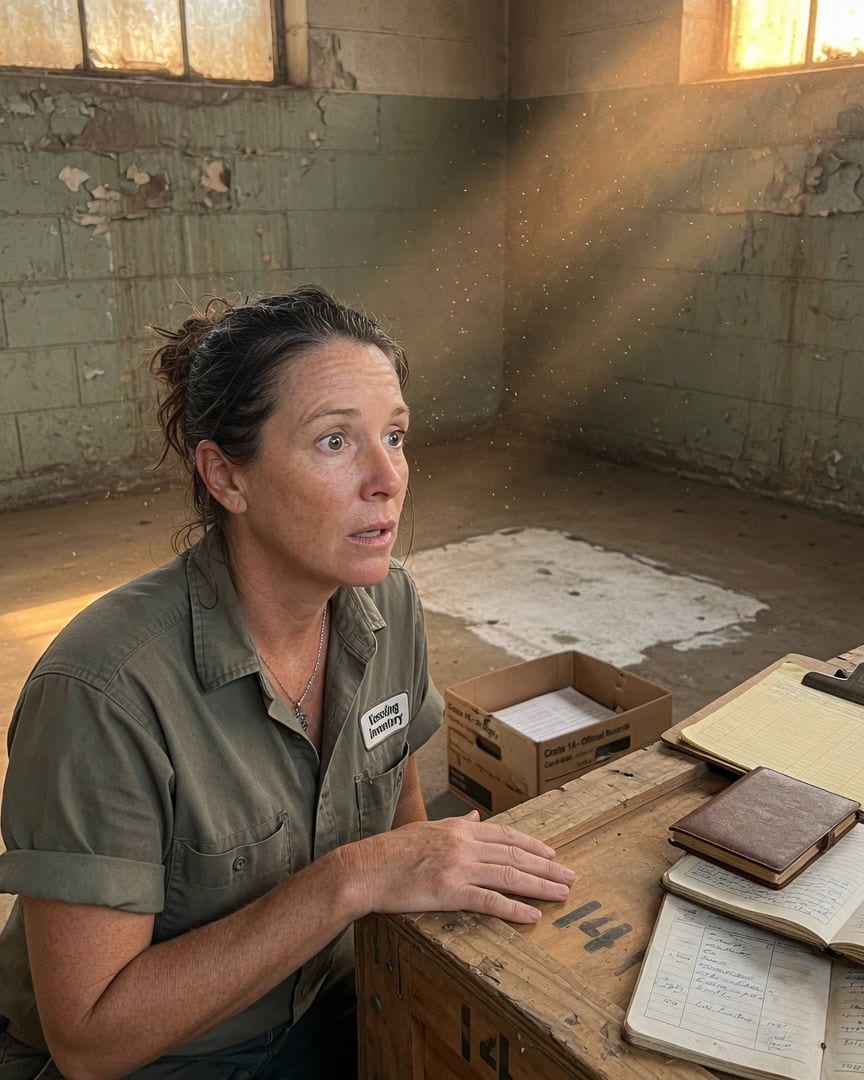
A Cold War base's hidden ledger showed a dead man's signature, dated five years after his death.
With demolition crews just a day away, inventory specialist Deborah Kessling raced through the vast, dusty Carolina warehouse, tasked with logging its final forgotten equipment. In a cold, far corner, she discovered Crate 14, an unremarkable box that inexplicably radiated an absolute, bone-deep chill, having spalled the concrete beneath it for decades. Her research uncovered an official logbook detailing quarterly signatures for sixty years, unbroken by base closures or disasters, but a hidden ledger revealed an entry from 1980 signed by Lars Thornton, a logistics officer confirmed dead since 1975. As Deborah read the dead man's words describing 'a faint, rhythmic pulse,' a subtle thrum began to vibrate through the floor beneath her feet. What was Crate 14 protecting?
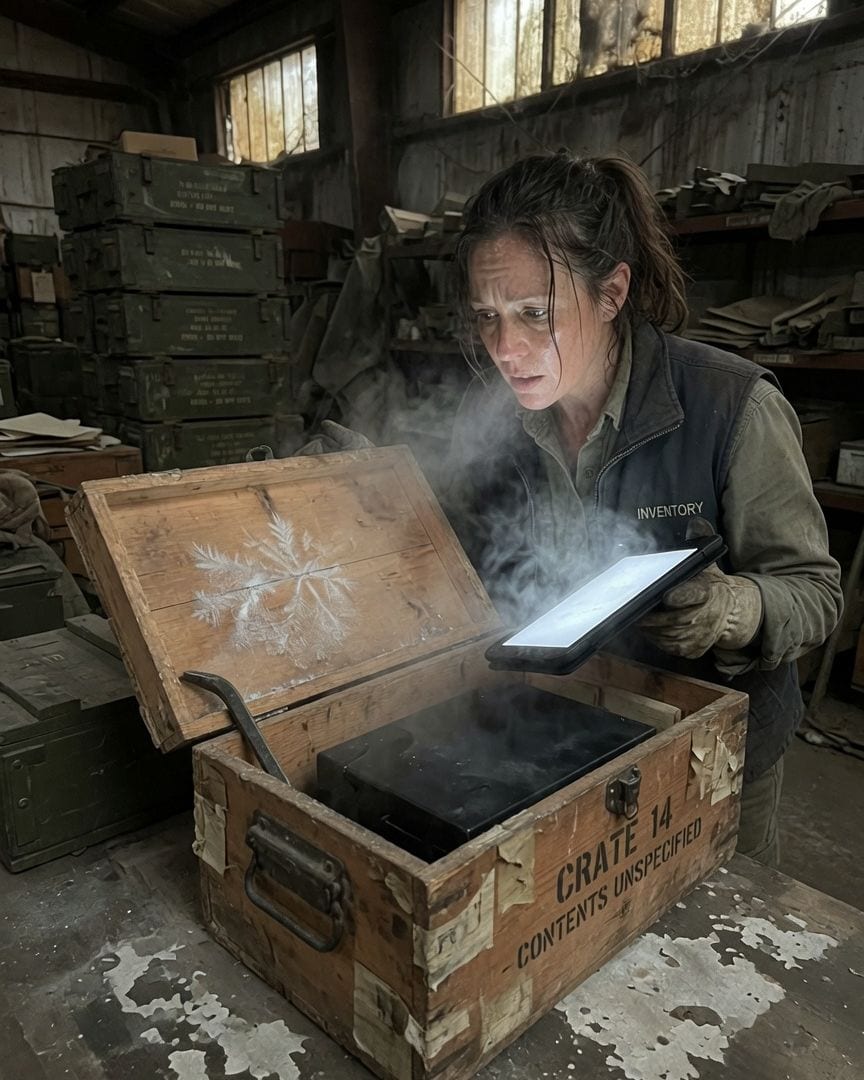
An inventory clerk found one crate in a condemned Cold War warehouse. It emanated a bone-deep cold, signed for every ninety days for sixty years.
Inventory clerk Deborah Kessling faced a race against time, cataloging the final items in a condemned military warehouse before its demolition on the twelfth. Amidst forgotten equipment, she discovered Crate 14, radiating an unnatural, bone-deep cold that had scarred the concrete beneath it for decades. Its sparse file hinted at a 'flying disc' entry from 1948, later struck through, and an unbroken chain of signatures every ninety days for sixty years. When Deborah finally forced open the ancient lid, a metallic, obsidian object pulsed with a low hum, its cold intensifying, coating the inner lid with frost. What ancient secret had the military meticulously guarded for so long?
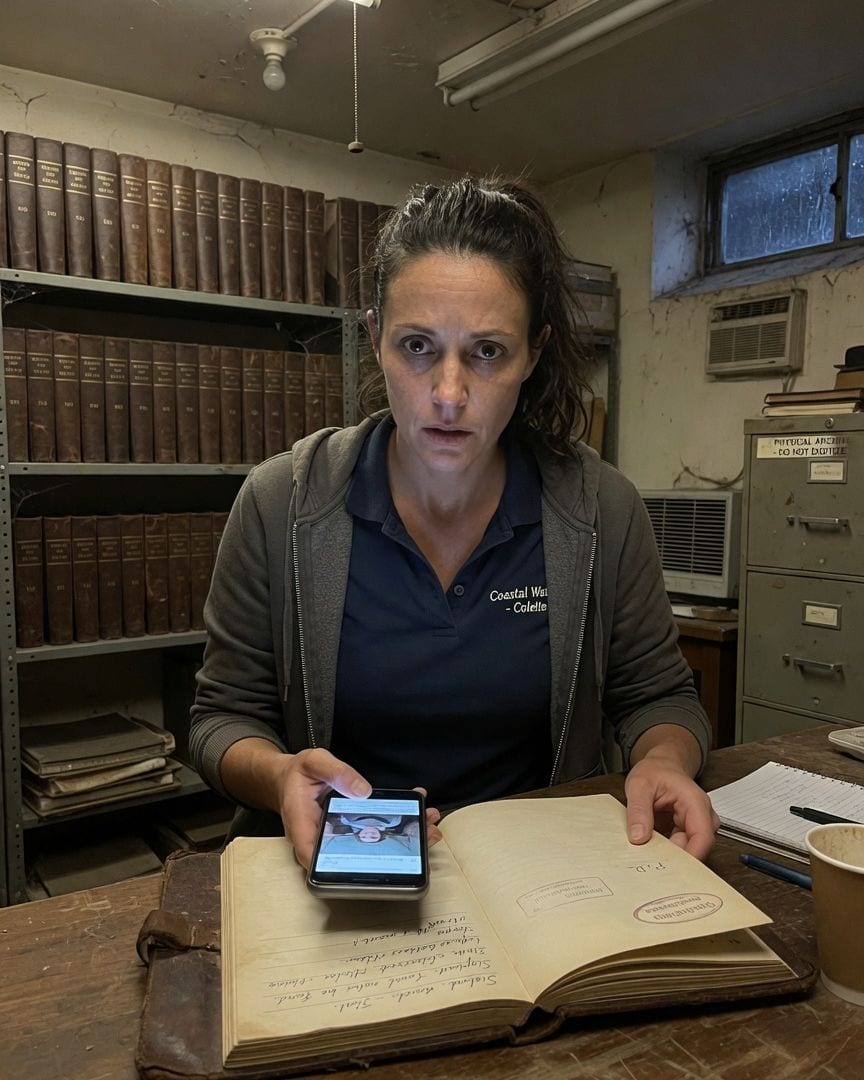
My coastguard log noted Sighting 9 again tonight, a light where no vessel showed. The old logs carry Sighting 9 off Skerry Point at 3:14am every tenth year since 1954, always 'nothing found,' always 'send no boat.'
On my watchtower night shift, the radar screen glowed green and the ocean was quiet. Then, a familiar light appeared off Skerry Point, exactly on cue, just as it had every tenth year for decades. But digging deeper, I found a hidden stamp in an old logbook: 'Operation Skerry. Status: Complete.' It left me with a chilling sense of finality.
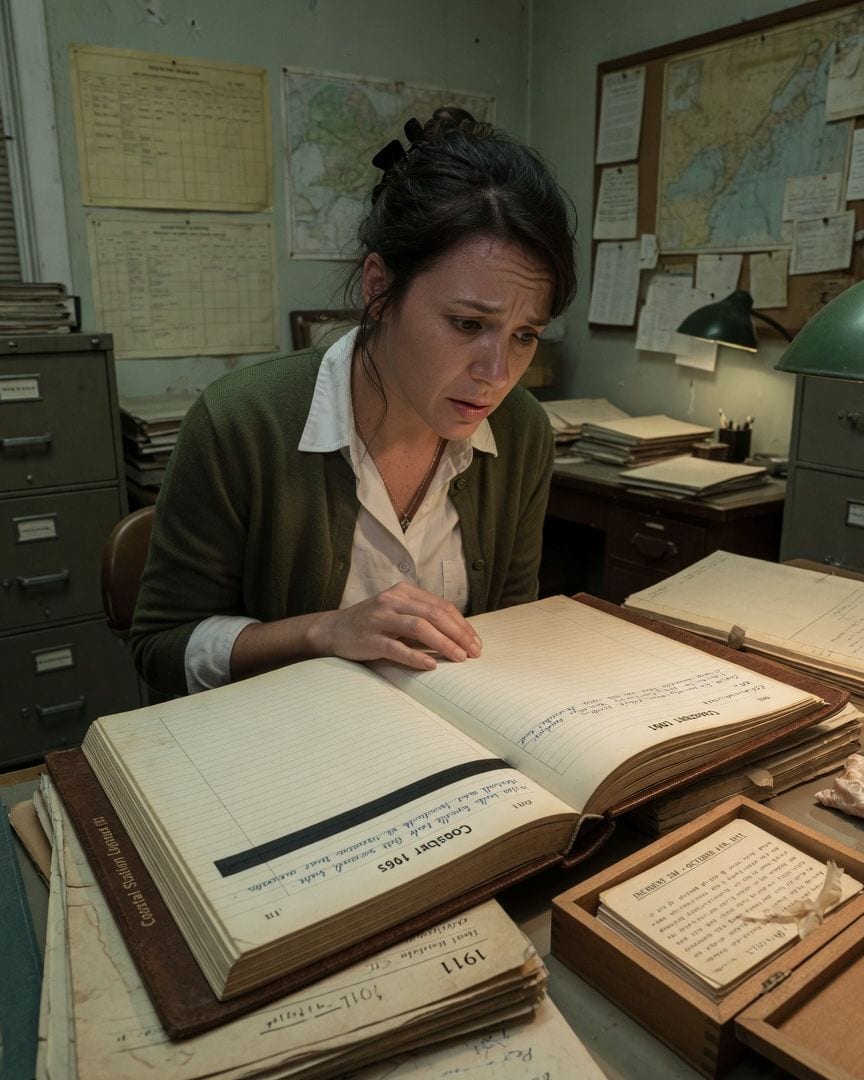
My weather station's old logbooks show a single line redacted every October 4th since 1911. The observer's note just says: 'the reading that should not occur.'
As the new archivist, I was reconciling old rainfall data when my finger stopped on October 4th, 1963. In the logbook, a thick black bar covered all weather observations, with a cryptic note: 'the reading that should not occur.' This wasn't a mistake; it was a century-long pattern, meticulously maintained.
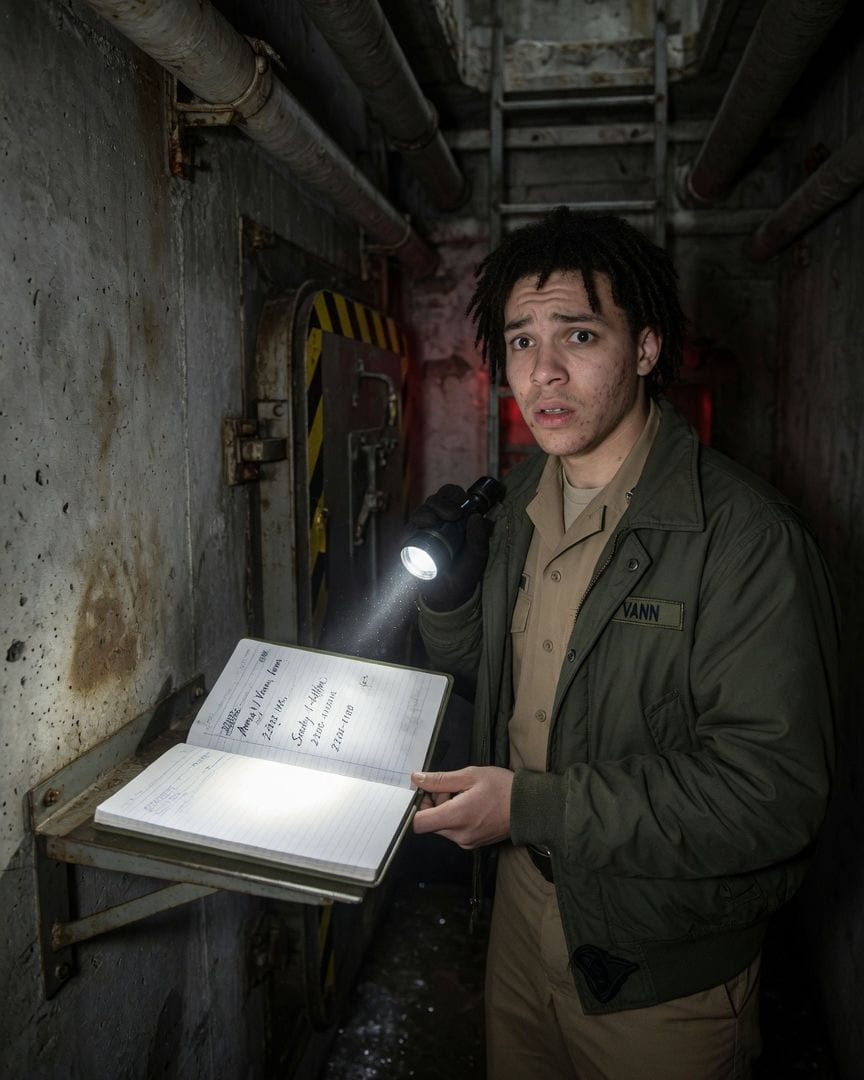
On his last patrol, Airman Vann sees a Cold War silo hatch light up from *inside*—it was welded shut a decade ago.
Airman Vincent Vann was on his last patrol across a vast, desolate Cold War missile field in the Dakotas, the cold, starless sky mirroring the emptiness of the landscape before his transfer. His routine check of eight hardened silo caps was shattered when a red fault light pulsed on Silo 4’s access panel, signaling an impossible breach from *inside* a hatch sealed for a decade. As more silos lit up, ignoring base orders, Vann found the hatch unlocked from within and descended into the dark shaft, where he discovered a pristine logbook bearing his own signature next to a chilling entry from a non-existent sentry, dated for *that very night*. Now, a steady *thump* echoed from deeper within the sealed concrete, leaving the Airman desperate for an explanation that simply wasn't there.
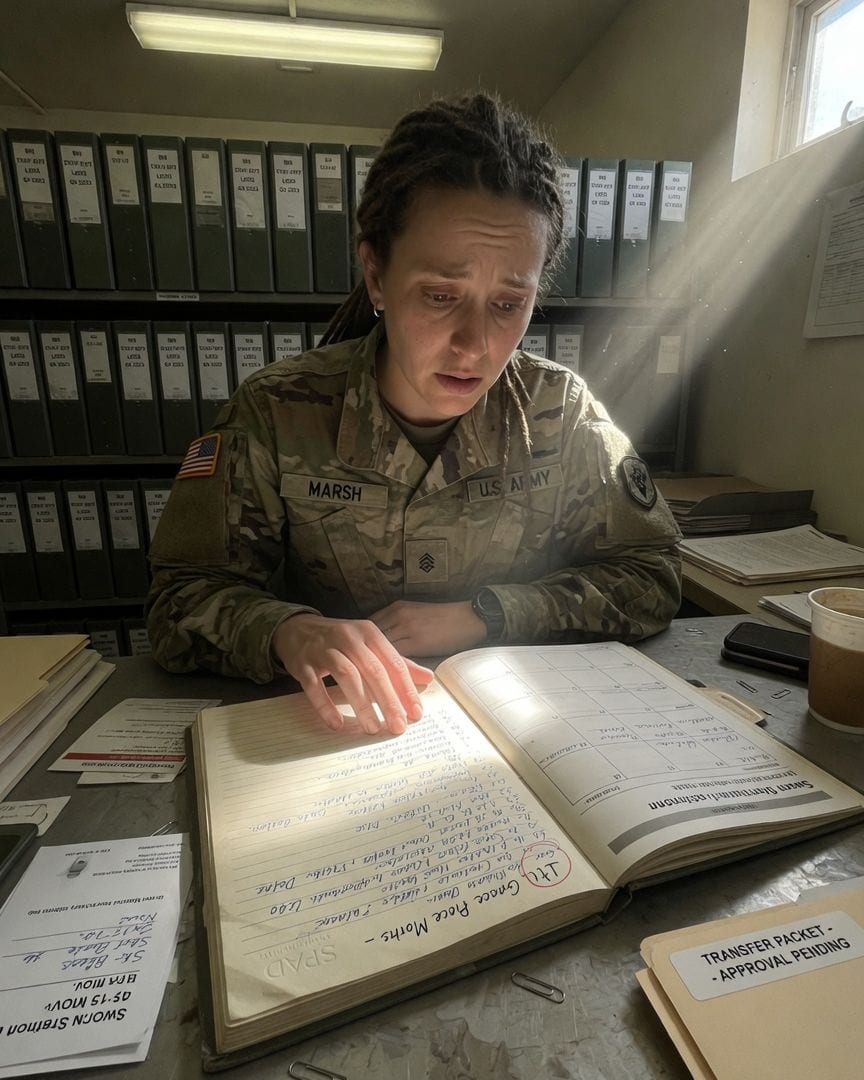
Preparing for a coveted post, a logistics officer found her own perfect signature on a duty log for a shift she swore she never worked. Then her coworker’s entry revealed his unique personal quirk.
Lieutenant Grace Marsh, a meticulous logistics officer, was deep in the archives, preparing her transfer packet for a coveted post. Her career depended on a spotless record, requiring absolute precision as she cross-referenced battalion staff-duty logs. Amidst the dusty binders and humming fluorescent lights, her gaze snagged on an entry for November 14th: her own perfect signature, logging a 24-hour shift she distinctly remembered spending hundreds of miles away in a court-martial. The impossible truth of a phantom doing her job was unsettling enough, but then she found another officer's entry, complete with his unique, personal quirk, for a day he was off-base. What was hidden in these official records?