An inventory clerk found one crate in a condemned Cold War warehouse. It emanated a bone-deep cold, signed for every ninety days for sixty years.
Deborah Kessling moved through the condemned military warehouse, her tablet a small, bright island in the echoing expanse.
Dust motes danced in the weak shafts of light filtering through high, grimy windows, illuminating a graveyard of forgotten equipment and crated history.
At 42, Deborah was a methodical inventory clerk, hired to catalog every last item before the wrecking ball arrived on the twelfth of the month.
The air hung thick with the humid weight of rural Carolina, but as she rounded a stack of rusted ammunition containers, she felt a distinct, unwelcome chill.
It radiated from a corner, from a single, nondescript wooden crate. Crate 14. Its rough-hewn surface looked like any other, but the concrete floor beneath it told a different story.
In a perfect, crate-sized rectangle, the concrete was spalled, flaked away and deeply scarred, the way it does under something that has been slowly, continuously cold for an impossibly long time.
Deborah paused, her breath misting faintly in front of her. She reached out, her fingers brushing the aged wood.
A bone-deep cold seeped through her glove, an unsettling chill that felt ancient, patient, and profoundly out of place in the languid Carolina heat.
Deborah pulled up Crate 14’s inventory file on her tablet. The digital record was sparse, a simple name and location. But then she scrolled deeper, finding a linked document, scanned from an old paper file.
The first entry, dated 1948, was a receipt for a “recovered item” from an unnamed incident. The original description, hand-written, clearly read “flying disc,” but a thick, authoritative line had struck it through.
Below, in precise, typewritten letters, it now simply stated: “Crate 14, Contents Unspecified.” A chill, separate from the one emanating from the wood, traced a path down her spine.
She kept scrolling. What followed was not a standard inventory log, but a meticulous signature chain. Every ninety days, without fail, a different name, a different rank, but the same steady rhythm.
The cycle had continued through every significant event in the base’s history: two major hurricanes that had damaged other buildings, a base closure in the late 70s that saw most assets transferred, even a fire that had gutted the adjacent storage bay in the 90s.
Yet, Crate 14 remained, and its signature log continued unbroken. The most recent entry was dated just last week, a Lieutenant Commander, name illegible beneath a hurried scrawl.
The continuity was more jarring than any anomaly. An unbroken routine for sixty years, for an unnamed item, coupled with the persistent, unnatural cold seeping from the crate’s wood. It defied all mundane explanations.
No standard asset received such meticulous, unchanging attention. This wasn't just stored material; it was an active presence, meticulously accounted for, an unspoken obligation that had outlived its original purpose.
A strange, prickling curiosity, stronger than her unease, began to gnaw at Deborah. She had to know.
The official seals, layers of hardened wax and brittle tape, had long been broken by previous inspections, but the lid itself remained tightly fastened with heavy-duty clasps.
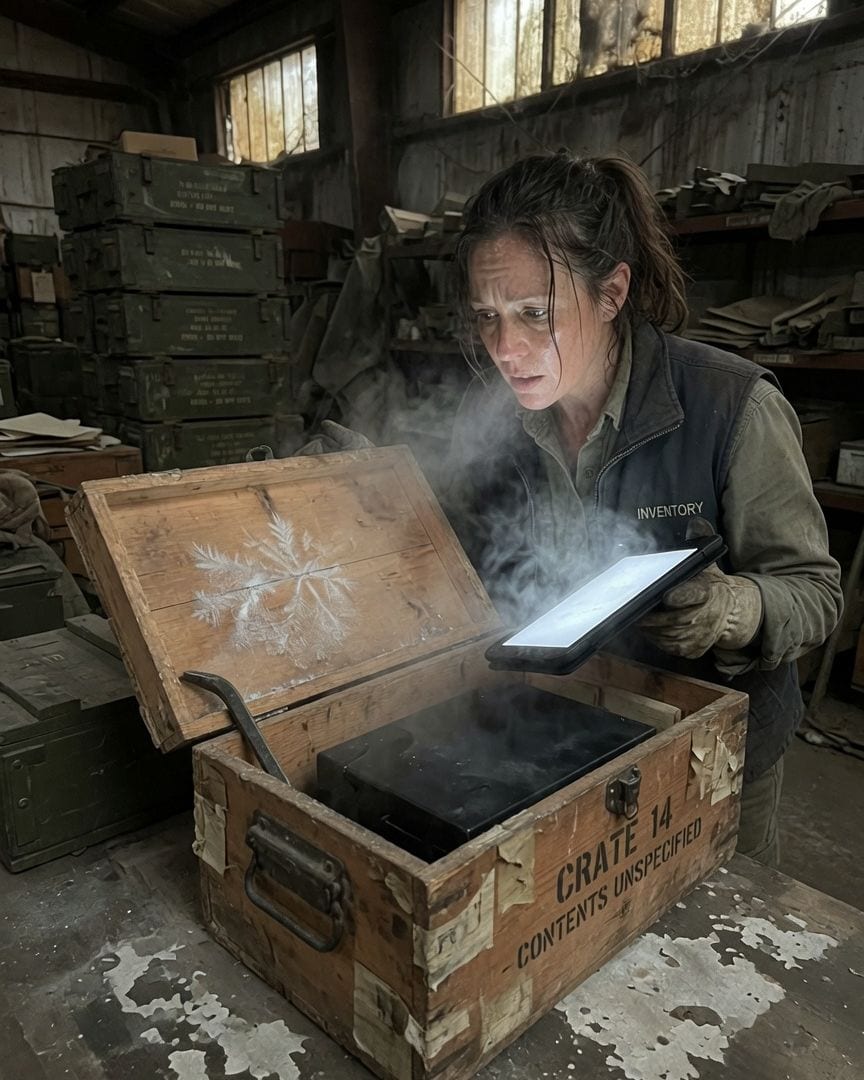
She found a crowbar wedged behind a pile of old tarps and, with a grunt, worked the tool into the seam. The ancient wood groaned, protesting, as she applied leverage.
A burst of air, several degrees colder than the humid warehouse, gusted past her face, carrying a faint, metallic tang.
The lid slowly, stiffly, swung open. Inside, nested in custom-cut, heavy-duty packing foam that looked far newer than the crate itself, was a single, dense, dark, irregularly shaped object.
It was metallic, obsidian black, and seemed to absorb the ambient light rather than reflect it. A low, barely perceptible hum vibrated from it, felt more in the bones of her teeth than heard by her ears.
The cold was no longer an emanation; it was a bone-deep, radiating presence, pressing in on her.
As Deborah hesitated, staring down into the darkness, a thin layer of frost began to form on the inside of the wooden lid, condensing from the humid air, spreading like a delicate, crystalline web.
The cold wasn't just continuous, she realized; it was intensifying.
Deborah spent the next day holed up in the small, temporary office she’d been assigned, the image of the frost-coated lid and the humming object burned into her memory.
She pulled up every official digital archive for the base, searching for any cross-reference, any deeper explanation for Crate 14, or the cryptic “flying disc” mention.
The results were uniformly generic: basic inventory, movement logs, the endless chain of signatures, but nothing to explain the object itself, or the institutional obsession with its ninety-day check. The digital trail ran cold.
Frustrated, Deborah called Patricia Drummond, a base records officer who still worked at the administrative annex miles away. Patricia was a brisk, no-nonsense woman in her late fifties, a veteran of federal bureaucracy. “Crate 14, you say?
Nothing special there, Ms. Kessling,” Patricia’s voice crackled over the phone. “Just a storage unit, old as dirt. Signed off like any other.”
“I found an old receipt,” Deborah pressed, “from 1948. It originally mentioned a ‘flying disc.’ And the ninety-day signature cycle… it’s been unbroken for sixty years, through everything. That’s unusual, even for classified material.”
A beat of silence stretched on the line. “Flying disc, you say? That’s… new. Nothing like that in the digital files. Sounds like something from way back, before my time.”
Patricia sounded less dismissive now, a flicker of professional curiosity in her tone. “Alright, I’ll check the physical deep archives. Takes a while. They’re mostly on microfiche, you know.”
While Patricia began her analogue hunt, Deborah returned to the warehouse. She approached Crate 14 with a new sense of purpose, a laser thermometer in her hand. The ambient temperature in the warehouse was a sticky 78°F.
She aimed the laser at the dark, irregular object within the crate. The display flashed: -15°F. The reading held steady. It was an impossible temperature, colder than any standard refrigeration unit, maintained with no visible power source.
As she leaned closer, a faint, almost imperceptible network of hairline fractures caught the weak light on the object’s surface.
They were tiny, barely visible, but they seemed to spiderweb, slowly extending, a whisper of growth, indicating the object was not inert, but subtly, continuously active.
Patricia called back late that afternoon, her voice tight, a nervous edge Deborah hadn't heard before. “Ms. Kessling, about that ‘flying disc’ reference… I found something. A separate classification, linked to the 1948 acquisition. It’s labeled ‘Project Icebox.’
But here’s the thing… as soon as I accessed that file, my access to the entire archive section was immediately revoked. Automatically. By ‘Central Command, Special Projects Oversight.’ My system just locked me out.”
A cold knot formed in Deborah’s stomach. “Central Command? But this base was decommissioned decades ago.”
“That’s what I mean. Ms. Kessling,” Patricia warned, her voice dropping to a near whisper, “I think you’ve stumbled onto something bigger than old inventory. Seal that crate back up. Let demolition handle it.
You don’t want to be messing with this kind of ‘special project.’ Believe me.” The line clicked dead.
Later that evening, as Deborah locked up the warehouse, the heavy steel door groaning shut behind her, she spotted it.
A black sedan, sleek and unremarkable, with tinted windows, parked discreetly down the access road, partially obscured by a stand of pines. No lights, no visible occupants, but it hadn’t been there when she arrived.
As she drove her own modest sedan down the winding rural road, she checked her rearview mirror. The sedan’s headlights flicked on. It pulled out, following her at a distance, a silent, persistent shadow.
The chill from Crate 14 felt less alien now, replaced by the very human dread of being watched. She wasn't just digging up secrets; she was disturbing them.
The next morning, an unmarked manila envelope lay slipped under her office door. No stamp, no address. Deborah’s fingers trembled slightly as she opened it. Inside was a single, grainy black and white photograph, curling at the edges.
It showed several men in crisp, old-fashioned military uniforms gathered around an open Crate 14. The dark, irregularly shaped object was clearly visible within. Scrawled on the back in fading ink were two words: “Reginald Coleman, 1951.”
Coleman. The name was familiar. Deborah remembered it from the signature log—one of the earliest and most frequent signatories. Someone, perhaps Patricia, or someone who knew Patricia had made an inquiry, was trying to tell her something.
Or warn her further.
Deborah drove straight to the warehouse. Patricia’s warning about ‘Project Icebox,’ the revoked access, the surveillance, and now the anonymous photograph, all coalesced into a chilling directive. She approached Crate 14, now with a sense of grim determination.
She examined the outer wooden shell, running her fingers along the rough grain, searching for anything out of place. On one side, near the base, she found a slight seam, almost invisible, where a panel had been expertly fitted.
It was hidden beneath decades of accumulated grime and a faint, official-looking stamp that camouflaged its edges. She worked a flathead screwdriver into the seam, prying carefully. With a soft pop, a small compartment swung open.
Inside, nestled in a cutout of foam, was a small, leather-bound journal, its pages yellowed with age. It bore no external markings, but Deborah knew, instinctively, it was the original 'Project Icebox' logbook. She opened it to the first page.
The handwriting was a precise, disciplined script, easily identifiable as Reginald Coleman's.
His early entries detailed not just signatures for custody, but meticulous 'containment integrity checks,' 'temperature fluctuations,' and careful notes describing the object as 'dormant but active,' emitting a 'localized cold field.'
He repeatedly emphasized the 'unbroken chain' as crucial for 'maintaining stasis.'
The truth began to coalesce, chilling her far more effectively than the object itself. This was not a relic, she understood now, but a live, contained entity, something actively managed, something that required constant suppression.
The institutional lie was not merely a cover-up of its origins, but an ongoing, active maintenance of its enforced dormancy.
Deborah continued reading the journal, the scratch of the aged pages the only sound in the vast, silent warehouse. The entries moved through the decades, the handwriting changing as new officers took over. The tone, too, shifted.
Later entries escalated concerns, describing ‘containment integrity challenges’ and ‘anomalous energy spikes.’ An entry from 1987, written by a Captain Robert Hayes, noted ‘unprecedented expansion’ and ‘micro-fractures’ on the object’s surface, eerily similar to what Deborah had observed.
Hayes recommended immediate re-evaluation of the containment protocol. But the very next entry, dated only a week later, dismissed his concerns entirely, written by a new hand: ‘Protocol maintained. Subject stable.’
Further pages detailed degrading packing foam that seemed to be eroding from within, and unexplained power drains in the surrounding bay that had required extensive rerouting of the base’s electrical grid, never officially explained.
Then, Deborah found a series of entries from recent months, the urgency in the handwriting palpable. The original logbook abruptly ended, mid-sentence, with a stark entry, heavily underlined: ‘Containment breach. Loss of integrity.
Recommend immediate re-classification to 'Active Threat Level Gamma.' Personnel…’ The page was torn, ripped violently from the binding, the last words lost.
Deborah’s breath hitched. She turned the page, her heart hammering against her ribs. The next page, clearly by a different, more formal hand, was dated just before last week’s signature in the official ledger.
It stated, in firm, unblinking script: ‘Crate 14 secured. Protocol maintained. Subject stable. All personnel reassigned.’
Outside, on the perimeter road, the faint, low rumble of a car engine starting echoed in the vast, still air.
Deborah stared at the last entries in the journal, the torn page, the stark re-written lie, and every piece of the puzzle clicked into a horrifying, seamless whole.
The 90-day signatures were never routine checks of a dormant item; they were a ritualistic acknowledgment of continuous, low-level containment, a constant vigilance against a patient, suppressed threat.
The ‘flying disc’ was indeed an extraterrestrial fragment, the source of the impossible, consuming cold. The spalled concrete, the frost on the lid, the extreme internal temperature of -15°F – these were direct, undeniable effects of its alien presence.
The institutional secrecy wasn't about hiding a past mistake; it was about managing an ongoing danger.
Patricia’s revoked access, the surveillance, the cover-up entries in the logbook – these were all components of a massive, meticulously maintained illusion of control over an entity they couldn't fully understand, only contain.
‘Project Icebox’ wasn’t a historical record; it was an active file, tracking an enduring threat.
The torn page, detailing a 'containment breach' and 'loss of integrity,' confirmed what Deborah suspected: the object had recently destabilized, perhaps attempted to activate or expand.
The Lieutenant Commander who signed last week wasn't performing a routine check but executing a damage control operation, a re-securing of the entity, an aggressive re-establishment of a ‘stable’ narrative after a critical failure.
The ‘all personnel reassigned’ was a cleanup, silencing those who knew too much, replacing them with compliant new faces.
The object was never truly dormant, only suppressed; the 'file' a perpetual record of that suppression, a constant, institutional effort to keep the lid on something that wanted desperately to get out.
The institution sought to contain and conceal, not to understand, at any cost.
Deborah carefully replaced the journal, slotting it back into its hidden compartment, and resealed the panel, smudging dust over the seam to conceal it again. The demolition was scheduled for tomorrow. She had to leave.
As she headed for the warehouse exit, the heavy steel door creaked open with a groan that seemed to swallow all sound. Scott Rutherford, the demolition foreman, stood silhouetted against the afternoon sun, his face grim.
Behind him, two men in dark suits stood like statues, their expressions utterly impassive.
“Ms. Kessling,” Scott said, his voice unusually strained, “they’ve been asking about you. Said you were… interfering with classified material.”
He glanced quickly at the men behind him, then back at Deborah, a flicker of something unreadable in his eyes – pity? Warning?
The men in suits stepped forward, their faces betraying no emotion, utterly calm. They were not threatening, not physically, but the very air around them seemed to thicken, heavy with unspoken authority.
Deborah felt a deep, primal fear, a chill that had nothing to do with Crate 14.
She knew, with chilling certainty, that these men represented the institution that had maintained the lie for sixty years, an entity far more pervasive and patient than any individual. They wouldn’t physically harm her; that would be too messy.
Instead, they would ensure her silence, confiscate the journal, reseal the crate for good, and perhaps, rewrite her own story in the process.
She glanced back at Crate 14, still tucked in its corner, humming faintly, radiating its impossible cold, a patient, alien heart beating beneath layers of wood and deception.
The men took another step, closing the distance, their hands resting loosely at their sides. Deborah’s mind raced, weighing her options, searching for an exit. There were none. She had seen the truth, and the truth had no exit.
Deborah Kessling’s inventory report for the Carolina warehouse was filed on time. Crate 14 was listed as ‘Contents Unspecified, Destroyed During Demolition.’ The demolition proceeded as scheduled, exactly as planned. Scott Rutherford, the foreman, signed off on the site clearance.
The black sedan was gone. Patricia Drummond’s access to the ‘Project Icebox’ archive remained permanently revoked.
Deborah Kessling went back to her life, taking on new inventory contracts in different states, moving from one forgotten space to another. She was methodical, rational, just as before.
But sometimes, when she was alone in a quiet room, she would feel a phantom chill, a deep, pervasive cold that seemed to emanate not from outside, but from within her own bones, a constant reminder of what she had discovered.
She never spoke of Crate 14, or the hidden journal, or the men in dark suits. She understood now: some things aren’t meant to be undone, only contained. And the containment, she knew, was always ongoing, always extending its reach.
A new inventory clerk, fresh out of training, started her first independent contract in a decommissioned naval yard in Florida.
On her tablet, an email notification popped up, reminding her to sign off on a routine 90-day verification for ‘Asset 734.’ The email was dated last week.
If this one got to you
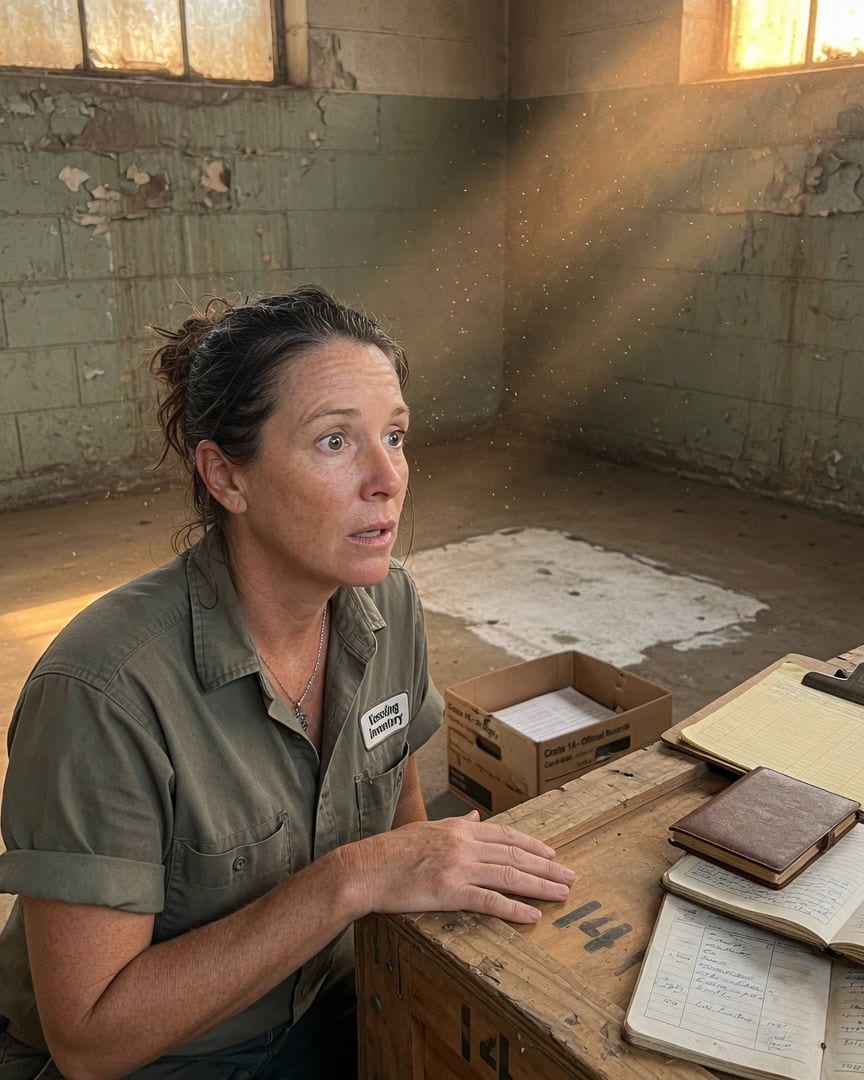
A Cold War base's hidden ledger showed a dead man's signature, dated five years after his death.
With demolition crews just a day away, inventory specialist Deborah Kessling raced through the vast, dusty Carolina warehouse, tasked with logging its final forgotten equipment. In a cold, far corner, she discovered Crate 14, an unremarkable box that inexplicably radiated an absolute, bone-deep chill, having spalled the concrete beneath it for decades. Her research uncovered an official logbook detailing quarterly signatures for sixty years, unbroken by base closures or disasters, but a hidden ledger revealed an entry from 1980 signed by Lars Thornton, a logistics officer confirmed dead since 1975. As Deborah read the dead man's words describing 'a faint, rhythmic pulse,' a subtle thrum began to vibrate through the floor beneath her feet. What was Crate 14 protecting?
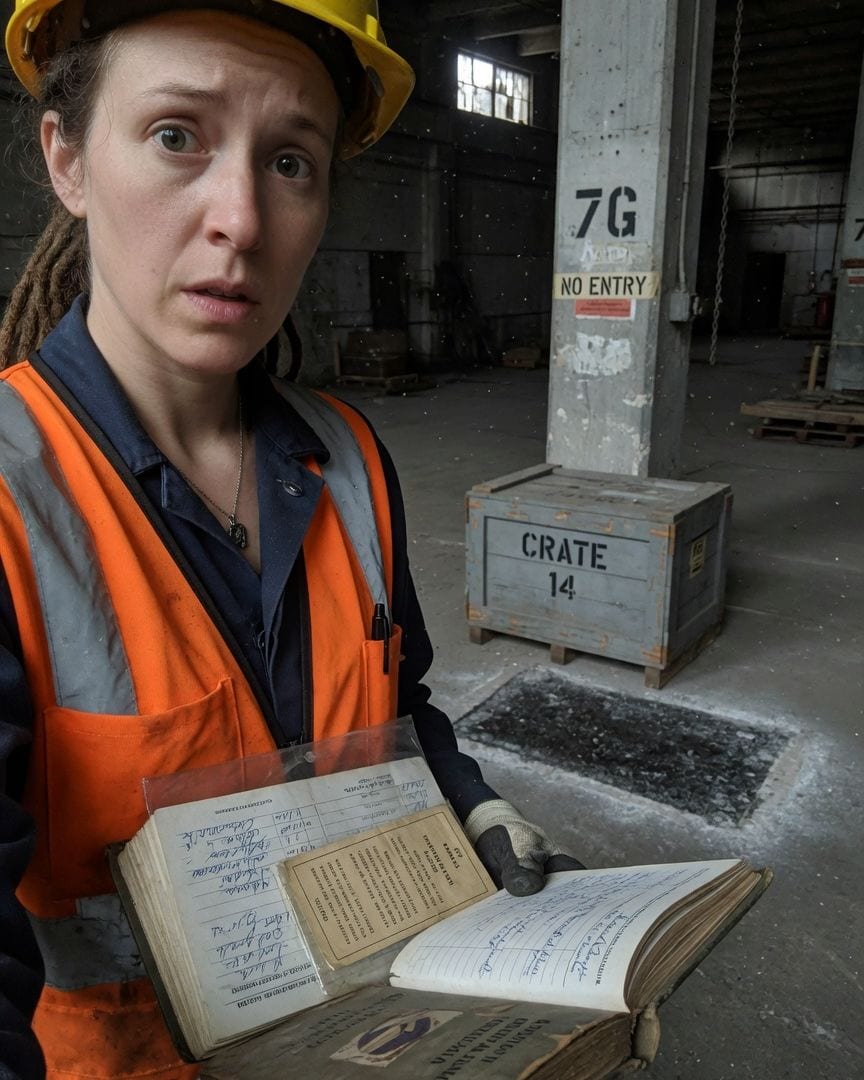
An inventory specialist's final check of a Carolina Cold War warehouse before demolition finds a crate signed for last week, years after the base closed, radiating impossible cold.
An inventory specialist, Deborah Kessling, raced a demolition deadline for a vast Carolina military warehouse, shuttered for years with its employees gone over a decade prior. Her final task was to log its forgotten contents. In a shadow-choked corner, she found Crate 14, radiating an impossible, decades-old chill. Its attached logbook showed a recent maintenance entry from 'Last week,' signed by a civilian contractor no one should have been, yet meticulous quarterly signatures stretched back sixty years, an unbroken chain of checks, even as the paper itself grew cold in her hands. What impossible secret had been so carefully maintained in this forgotten place?
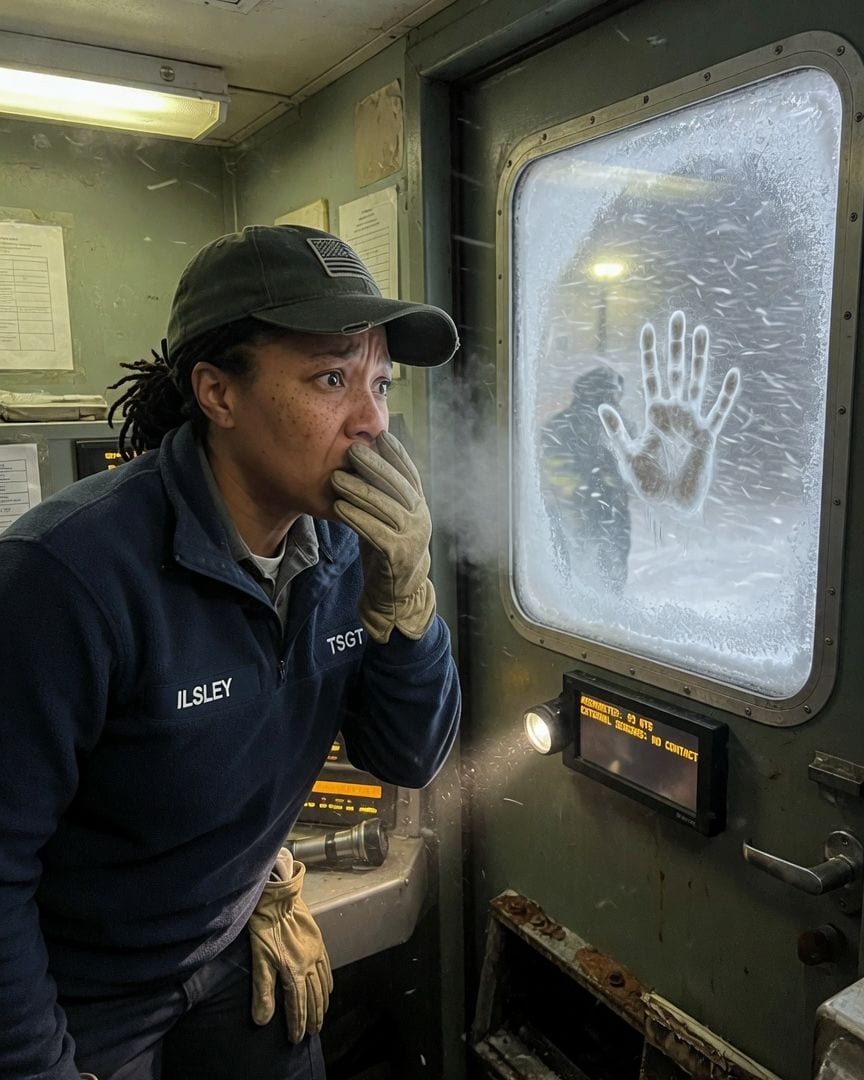
Technical Sergeant Ada Ilsley had two weeks left when a handprint appeared on her sealed window, unnervingly warm and pressed from the *inside*.
Technical Sergeant Ada Ilsley was counting her last two weeks on the Greenland ice-cap before Thule-Gamma Station closed for good. Tonight, the polar wind howled at ninety knots, clawing at the station's insulated walls as she kept a lonely vigil. Through the main door's triple-paned port, she watched a dark figure emerge from the impossible blizzard, its face pressed against the glass, only to vanish. On the frost outside, a perfectly clear handprint remained, unnervingly warm and undeniably pressed from the *inside* of the sealed pane. How could anything have touched the glass from within a supposedly impenetrable barrier?
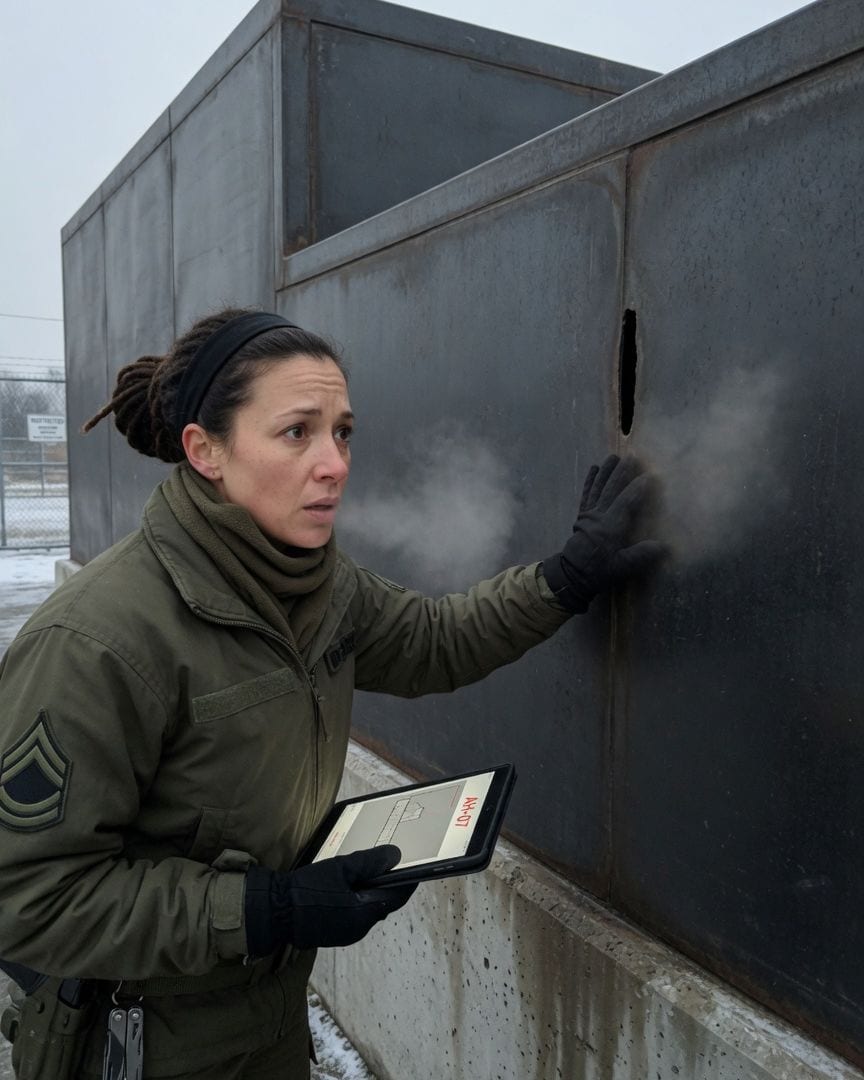
A Sergeant's audit uncovered an annex with no records. She pressed a hidden lever, and its steel wall hissed open to a sliver of impossible darkness.
Sergeant Iris Kowalczyk, a stickler for order, meticulously prepared for her transfer audit of the seventy-year-old installation. An annex behind the old post hospital defied all logic: no keyway, no maintenance record, no year built — it simply *was*. On a biting cold morning, she felt an undeniable warmth radiating from its thick, featureless steel, as if something active hummed beneath. Her fingers found a hairline seam, then a hidden, recessed pressure point that felt like a lever. When she pressed it, the steel hissed inward, revealing a sliver of impossible darkness from which a deep, electric hum and a heavy stillness pressed out. What secrets did this impossible structure conceal?
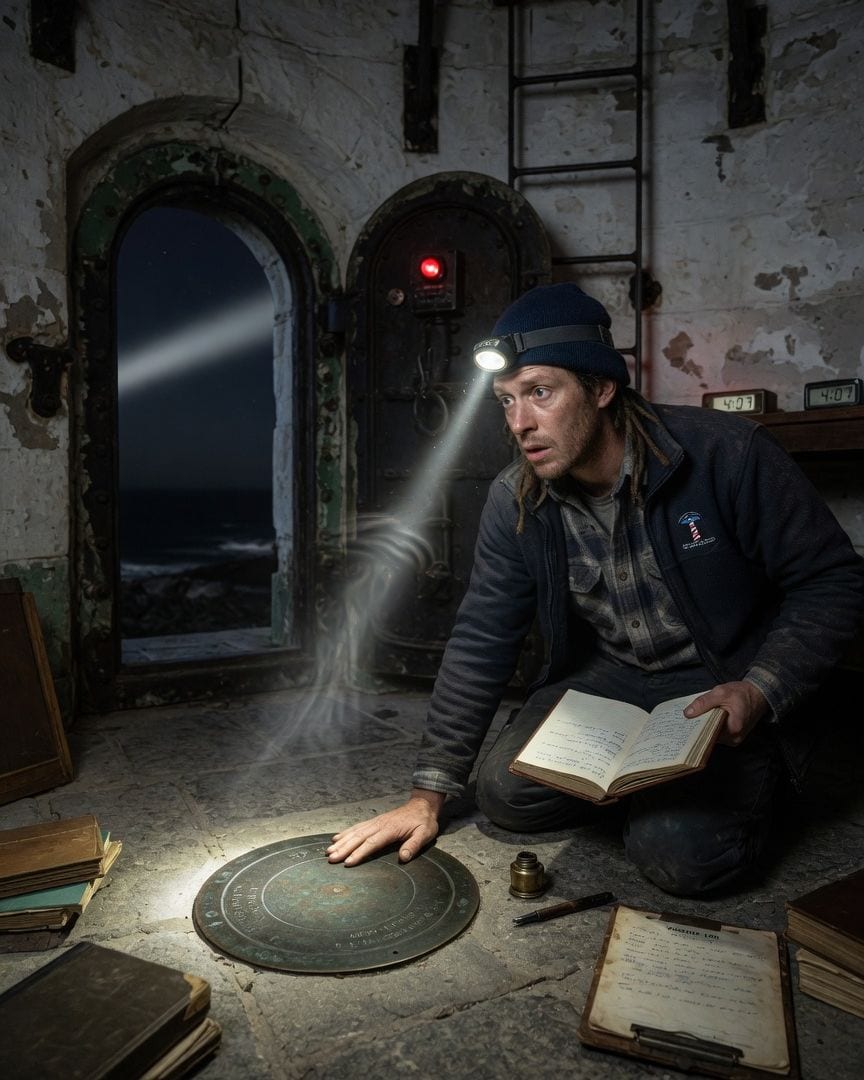
Every ninth year since 1901, my logbook records a boat through the gate at 4:05am — 'vessel through, none seen.' I was on watch tonight. Nothing passed.
As the lighthouse keeper, I log the same impossible entry every nine years, a lie I'm compelled to write. But tonight, a hidden brass disc in the floor, not on any blueprint, feels oddly warm. Hours later, it hums, and the air above it shimmers and distorts, then vanishes.
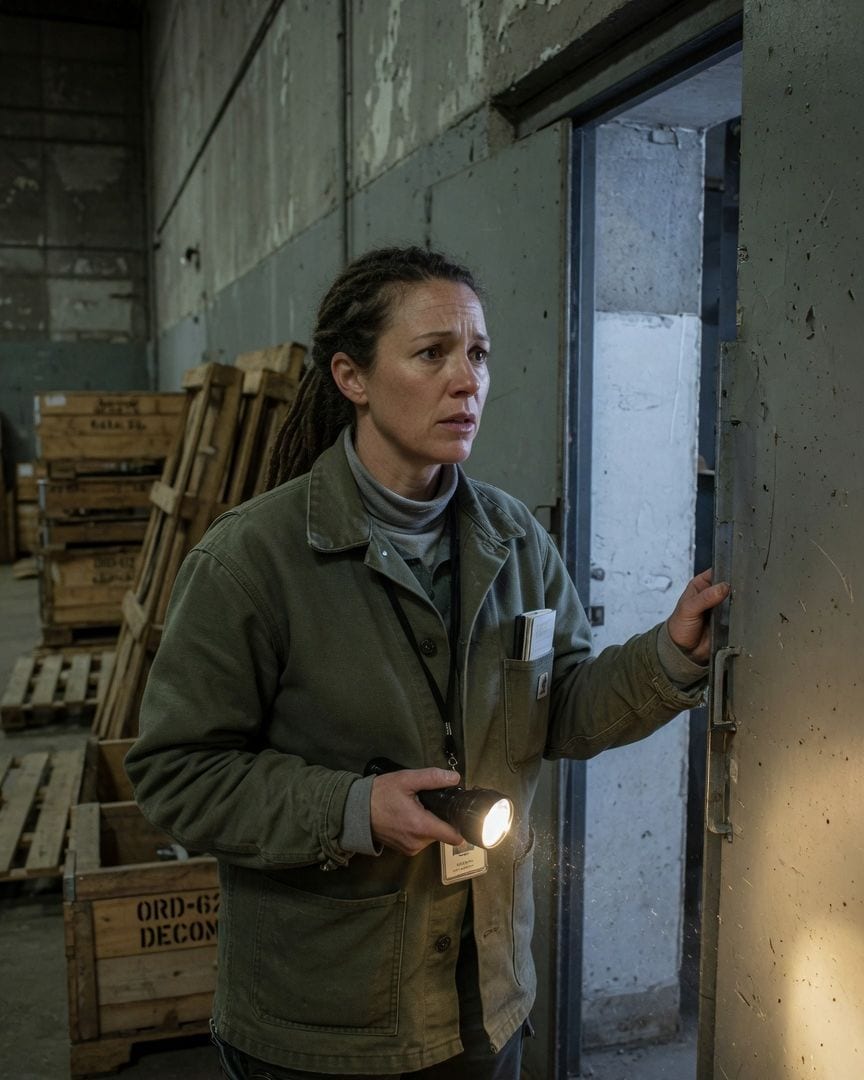
An inventory specialist sought a missing Cold War footlocker for 89 men. She found 89 metal containers marked 'PROCESSED' in a hidden room.
Halcyon Reeve, a meticulous inventory specialist, prided herself on the perfect records of the vast Sweetgrass ordnance depot. But one blank space on a 1962 ledger gnawed at her: a missing footlocker for 89 men, when only 16 were ever assigned. Her search led her back to the silent, cavernous warehouse, where she uncovered a cleverly disguised access panel. Behind it, a hidden room, unnaturally cold and sterile, held not the missing footlocker, but 89 identical metal containers, each chillingly marked 'PROCESSED'.