My new colleague's face is identical to a woman in a 1958 archive photo. She was declared 'the woman on the down line' for decades.
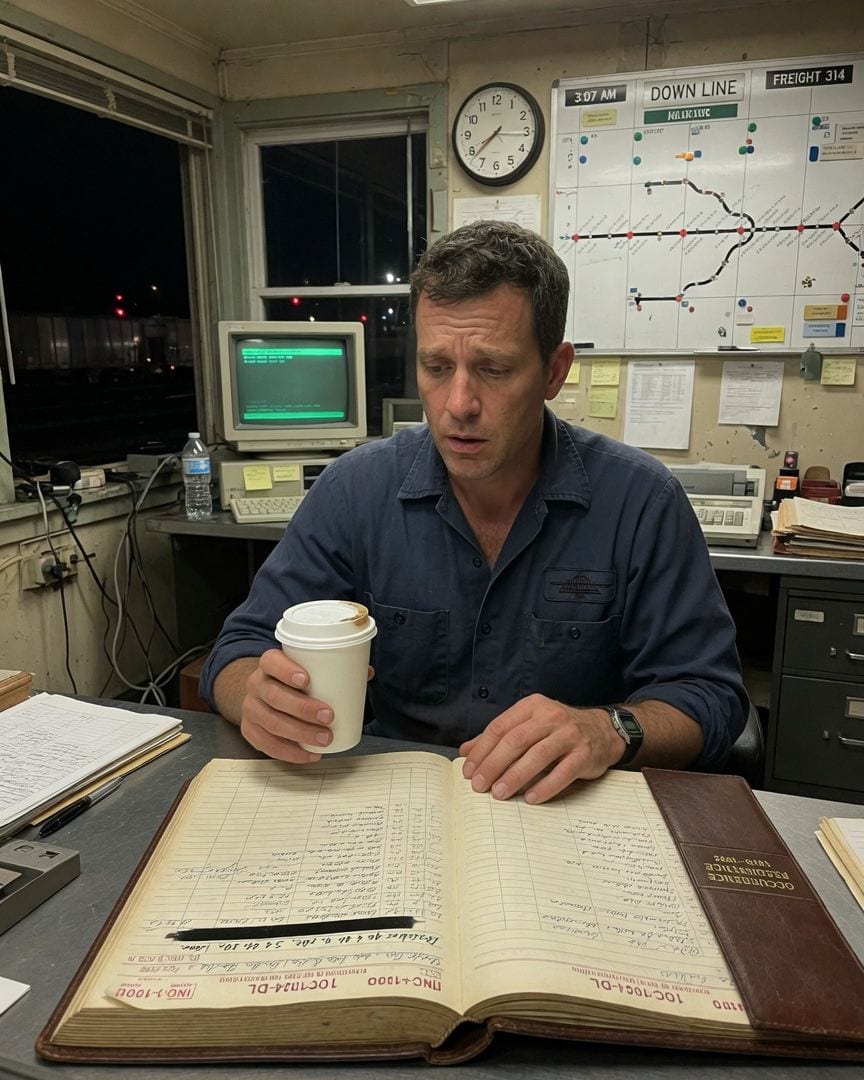
The silence of the signal box was usually a comfort, just the low hum of electronics and the distant rumble of trains. Tonight, though, it felt heavy.
I sat, lukewarm coffee in hand, tracking freight and passenger lines across the desolate stretches of northern Arizona. It’s a solitary job, mostly routine.
My only real company was the vast, leather-bound occurrence register, logging sixty years of train times and minor incidents.
I was catching up on an entry from 1988, idly tracing the faded ink of a long-dead signalman. Under the 3:14 AM entry for October 4th, I found it.
A single line, meticulously blacked out with permanent marker, stood out like a bruise in a book otherwise pristine with decades of plain train times.
Below the bar, in what appeared to be a different, older hand, a note read: 'the woman on the down line again, do not stop, log as before.'
I frowned. It had to be a mistake, a one-off. But something made me flip back. October 4th, 1987. Same entry. Same redaction. Same note. 1986. The exact same.
I kept going, back through the years, the same words recurring every fourth October, 3:14 AM, for Freight 314. Always the same instruction, 'do not stop, log as before.'
It was a quiet dread, a chilling consistency in a book that should only document transient events.
I couldn't shake that recurring entry. My next shift, I wasn't just logging; I was digging. I pulled out other old registers, cross-referencing dates and times. It was there, every time.
The specific 'woman on the down line' incident was always recorded under an internal reference: 'INC-1004-DL.' The number itself didn't mean much, but the fact it was consistently used across decades for this single, strange, recurring event was unsettling.
At first, I tried to rationalize it. An old railway superstition, a local legend about a ghost, maybe a long-running inside joke among signalmen, passed down through generations.
I even tried to find other entries that might hint at an explanation – a prank, a recurring technical fault, a known local eccentric. Nothing. Just the terse, identical instruction every year.
The handwriting for the main entries changed, the paper yellowed, but the note itself, or the redacted line above it, persisted, a silent, bureaucratic echo.
I tried to find 'INC-1004-DL' in the company’s modern digital incident management system, expecting it to be archived as a 'resolved' or 'historical' issue. But I found nothing.
It was as if the digital records deliberately skipped over it, or it was never migrated. The computer hummed, indifferent, as if daring me to find what wasn't meant to be found.
Frustrated, I decided to check an older, obscure digital archive, a legacy system for 'Personnel, Historical Incidents' that’s rarely used anymore. It took me an hour to get access, wading through old network protocols.
I typed 'INC-1004-DL' into the search bar. The system whirred, a digital clock spinning for what felt like an eternity, then pulled up a single file.
It wasn't a track incident report. It was a personnel file. Dated 1958. The name on the file read 'Nora Barlow.' Below her name was a faded, black-and-white photograph.
A young woman, perhaps early twenties, with wide, dark eyes and a faint, almost imperceptible smile.
I felt a cold knot in my stomach. I’d seen that face before. Just last week, in the administrative office, a new hire named Laura Crane. The resemblance was not just uncanny; it was exact.
The same eyes, the same curve of the mouth. The file wasn't about an incident; it was about a person, and that person was here, now.
I couldn't dismiss the photograph. Nora Barlow. Laura Crane. The identical face haunted my thoughts. I spent my off-days researching Nora. Online archives, local historical societies, old newspaper microfiches.
It took time, but I found it: Nora Barlow, age 23, died on October 4th, 1958, hit by a freight train on the down line, just a few miles from my signal box.
The news article was brief, a tragic accident. The date, the time, the location – it all aligned perfectly with the first entry in my register. The cold dread sharpened.
Then, driven by a growing, sickening certainty, I searched for 'INC-1004-DL' again, this time looking for other associated names or dates. I found another 'Personnel, Historical Incidents' file, dated 1969. The name was Tessa Jennings.
Again, a young woman, again, a tragic death on October 4th, on the down line. And the photograph – it was the same face. Nora Barlow’s face. Tessa Jennings’ face. Laura Crane’s face.
My breath hitched. The 'log as before' wasn't about an event; it was about a recurring person, or something that took on that person's appearance. I checked my work schedule for the current year. October 4th. I was on duty.
The dread was no longer distant history; it was a living, breathing thing, scheduled to arrive on my shift.
I started asking subtle questions at work. I mentioned the old registers to Conrad Crane, a veteran signalman whose tenure here stretched back further than mine. I tried to make it casual, asking about 'ghost stories' on the line.
Conrad, usually a talkative, jovial man, became uncharacteristically quiet, his gaze distant, fixed on some unseen point across the tracks. "Some things are best left in the past, Daniel," he'd mumbled, turning away before I could press him.
The air in the small breakroom felt suddenly cold, heavy.
A few days later, I found a handwritten note slipped under my office door: 'Some tracks are best not walked.' No signature. I dismissed it as a prank, but a cold unease settled in.
I started noticing Conrad watching me from a distance, a strange, almost mournful look in his eyes that I couldn't quite place.
One evening, after I had securely locked my office and gone home, I returned to find the door slightly ajar, the lock still engaged but somehow bypassed.
Nothing was missing, no papers disturbed, but my old occurrence register was open on my desk. It wasn't to the recurring October 4th entry, but to a page from 1969.
A faint circle was drawn in pencil around the name 'Quentin Jennings.' I knew Quentin was Conrad’s uncle, a signalman who’d worked this very box decades ago.
The message was clear: someone knew I was digging, and they were warning me, subtly but firmly.
The next day, I cornered Conrad in the break room, the old register tucked under my arm. I laid it open to the 1969 entry, pointing to the name 'Quentin Jennings' and then to the redacted line for October 4th.
"What happened, Conrad?" I demanded, my voice low but firm. "What is 'the woman on the down line' and why is it still happening?"
Conrad’s face paled. He tried to evade, muttering about old superstitions and company secrets, looking anywhere but at the open book. The steam from the coffee machine hissed, suddenly loud.
I pressed him, recounting the identical faces of Nora Barlow, Tessa Jennings, and Laura Crane. "It’s more than a superstition, isn’t it? It’s real. And the company knows."
Conrad finally cracked. He slumped into a chair, his shoulders heavy, as if carrying an invisible weight. "She… she appears," he began, his voice barely a whisper. "Every October 4th, 3:14 AM. Always on the down line.
The instruction – 'do not stop, log as before' – it’s not a joke. It’s to manage it. To keep the line running."
He explained that the railway had known for decades, passing the information down through a select few, maintaining the records, ensuring the instructions were followed.
"If a train stops," Conrad said, his eyes wide with a terrible fear I hadn't seen in him before, "she gets on. And then… then someone else has to get off."
He didn’t elaborate, but the implication hung heavy in the air, a sickening presence. The 'reissued number' and the redacted entries were a corporate ritual, a cold, calculated way to contain an uncontainable horror.
I felt a cold sweat prickle my skin. "Why? Why does she get on? What happens then?" The words tumbled out, desperate.
Conrad hesitated, then reached into his wallet, pulling out a faded, creased photograph, not an official file, but a personal one. It showed a group of railway workers from the 1960s, laughing, sharing a thermos.
He pointed to a younger Quentin Jennings in the photo. "My uncle. He was on duty that October 4th, 1969. He stopped the train." Conrad’s voice was strained, thick with unspoken grief. "He said… he saw her.
And he tried to help."
Conrad then pulled out a more recent photo from the same wallet, a group shot from a company picnic. He pointed to a young woman, Tessa Jennings, Quentin’s daughter. "She started working here a month later.
Looked just like Nora Barlow, same face. And Quentin… he died shortly after, a quiet, wasting illness."
He looked from the photo of Tessa to Laura Crane’s photo, which was still on my desk, a vibrant face against the dull office gray. "Laura… she’s my niece. My sister’s girl. She started last month, looking just like them."
Conrad’s voice was a strained whisper as he pointed from the old photo of Quentin Jennings to the image of Tessa Jennings, then back to the file of Nora Barlow, and finally to a recent photo of Laura Crane.
"The face," Conrad rasped, "it's always the same. And it always takes someone from the family of the man who stops the train."
I felt a cold dread grip me, a freezing hand around my heart, as I realized I was on duty for October 4th.
The full, monstrous shape of the truth snapped into place for me. The 'woman on the down line' wasn't just a ghost; it was an entity, a parasite that required a host.
Every October 4th, at 3:14 AM, it manifested, seeking to transfer.
The 'log as before' instruction, the redacted lines, the reissued incident number – it was all part of a decades-long, meticulously maintained bureaucratic system by the railroad company to contain and manage this entity.
If a train stopped, the entity moved from its current host to a new one, someone connected to the signalman who interfered. The previous host was discarded, often dying or becoming a hollow shell.
Nora Barlow, Tessa Jennings, Laura Crane – they were all hosts, their bodies taken, their faces a mask for the entity.
Conrad, knowing this, had been trying to protect Laura, his niece, hoping that by ensuring the train wasn't stopped, she might be spared. But the entity always manifested, always waited.
The company, in its cold calculation, prioritized the smooth running of the rail line over individual lives, silently allowing this cycle of transfer and sacrifice to continue.
I realized I wasn't just observing a pattern; I was always inside it, a cog in a horrifying machine, and now, it was my turn to decide its next turn.
It was October 4th, 3:00 AM. I was in the signal box. The air was thick with a silence that felt heavy, expectant, pressing down on my chest. My phone rang, the sound jarring in the quiet.
It was Conrad, his voice hoarse with desperation, barely audible over the static. "Don’t stop it, Daniel! For Laura’s sake, for yours… just log as before!"
I heard a faint, distant whistle, growing steadily louder. Freight 314. The one that always came. My eyes darted to the register, to the fresh blank line awaiting its entry, then to the redacted lines above, a repeating, terrible pattern.
Through the signal box window, in the pale glow of the approaching train’s headlamp, I saw her. A figure on the down line, impossibly clear in the dark, standing perfectly still. The face was unmistakable: Nora Barlow. Tessa Jennings.
Laura Crane. The same wide, dark eyes, the faint, knowing smile.
The train thundered closer, its rumble vibrating through the floor, rattling the old window panes. My hand hovered over the signal lever, the heavy cold steel that would stop the train. I could save Laura. I could break the cycle.
But Conrad’s words echoed in my mind, a chilling whisper: 'If you stop, she gets on. And then… someone else has to get off.'
I heard a faint, almost imperceptible whisper on the wind, a name carried on the train’s rush, a name that sliced through the roaring engines: Daniel.
I saw my niece, Abigail, her face clear in my mind, her bright, eager eyes. The train was almost upon her.
I did not stop the train. My hand fell from the lever, limp and unresponsive. I watched the headlamp pierce the figure, watched the train roar past, and then, in its wake, there was nothing.
No body, no trace, just the empty tracks. I logged the incident 'as before,' my hand shaking so violently the ink bled slightly on the paper as I wrote the familiar, damning words.
The next day, Conrad Crane submitted his resignation, citing 'personal reasons,' and disappeared without another word. Laura Crane was transferred to a regional office, looking pale and distant, her eyes flat, never quite meeting anyone’s gaze.
The railroad continued its operations, the trains running on schedule, the silent bureaucracy of the 'woman on the down line' entries maintained.
I continued my shifts, the hum of the signal box now a constant, low thrum of dread in my ears. I had survived, but I was marked, a silent participant in a horrifying system I could not break.
I work my shift, the familiar rhythm of the trains a constant reminder. I look at the occurrence register, at the fresh entry for October 4th, 'the woman on the down line again, do not stop, log as before.'
I know the cycle will continue, unbroken, managed by the quiet hands of the institution. I know I could have stopped it, but didn't.
I survived, but a piece of him was lost that night, replaced by a cold, complicit understanding.
A month later, a new hire starts in the rural signal box, a young woman with bright, eager eyes. Her name is Abigail Hughes, Daniel's niece. She has his eyes, and the faint, almost imperceptible smile of Nora Barlow.
If this one got to you
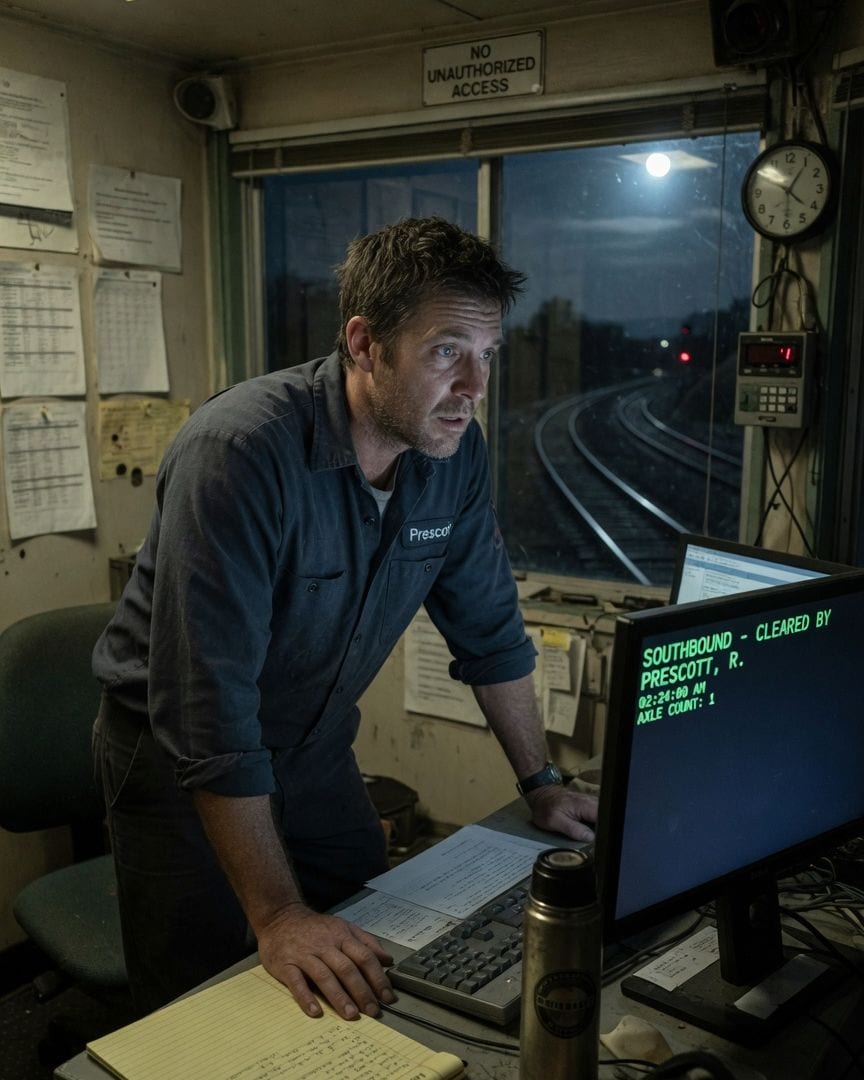
My signal box log shows I cleared a southbound train at 2:24 AM. No train was booked, but the wheel counter ticked over once.
My night shift in the signal box is usually quiet, just the hum of the panel and distant trains. But at 2:24 AM, a log entry for a southbound train appeared on screen, cleared by my name, even though I hadn't touched a thing. A cold prickle ran up my neck when the wheel counter ticked once, confirming an impossible passage on the empty tracks.
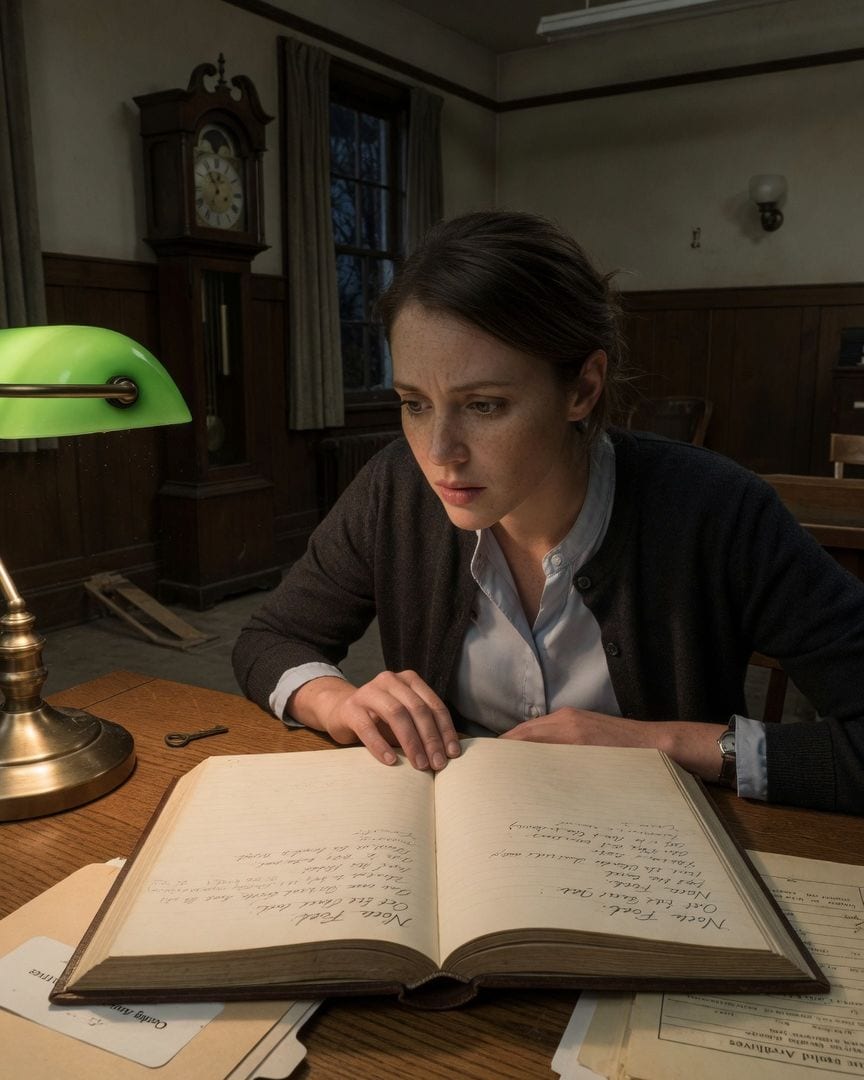
My grandmother’s name reappears in the old book of remembrance — on the same date, same street, every few decades since 1929. A verger’s note reads: 'ask no family.'
As Keeper of the crematorium's Book of Remembrance, my job is quiet and meticulous. But while updating my own grandmother's entry, I found two more Nora Fords listed above hers. Each died on October 3rd, decades apart, with the same address and a strange instruction: 'ask no family.'
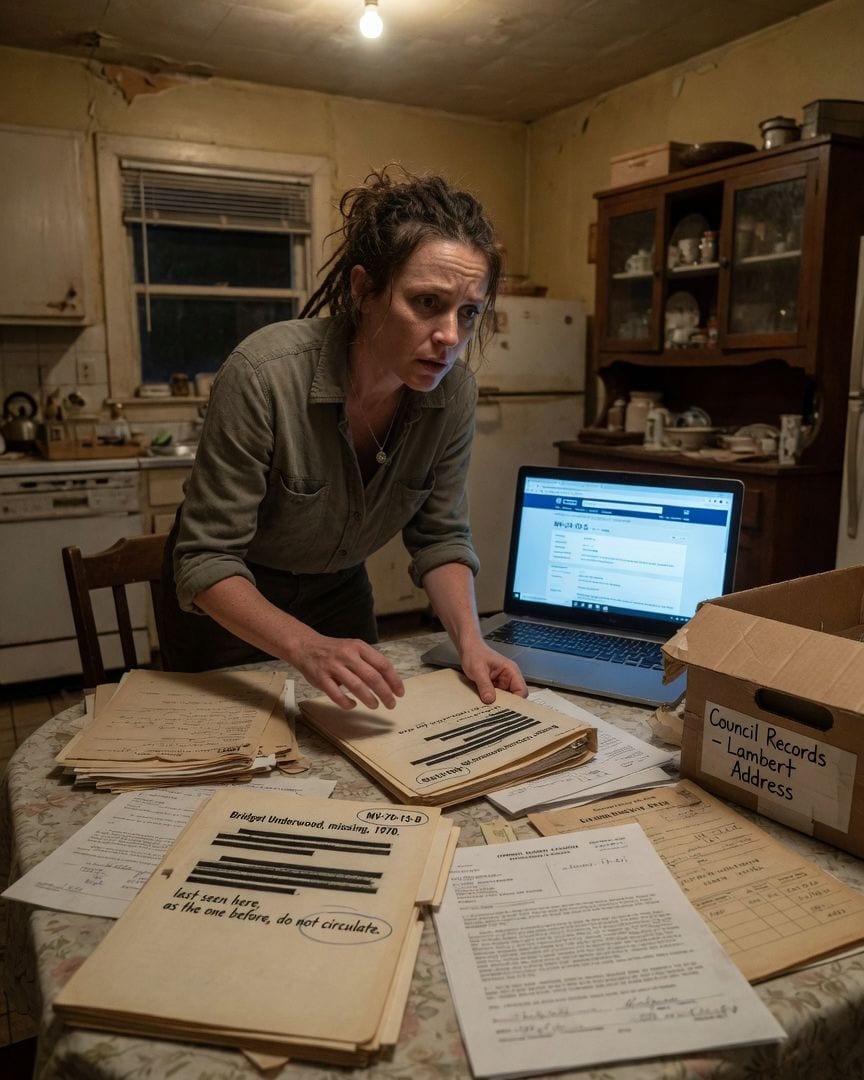
My address appears on a 1970 missing-person report. It says 'last seen here, as the one before,' and the case number is almost identical to a new one from last month.
As a local historian, I'm used to old records, but a police file for a 1970 missing person stopped me cold. It listed my current address, with a chilling note: 'last seen here, as the one before, do not circulate.' I knew Bridget Underwood never lived here, yet there it was.
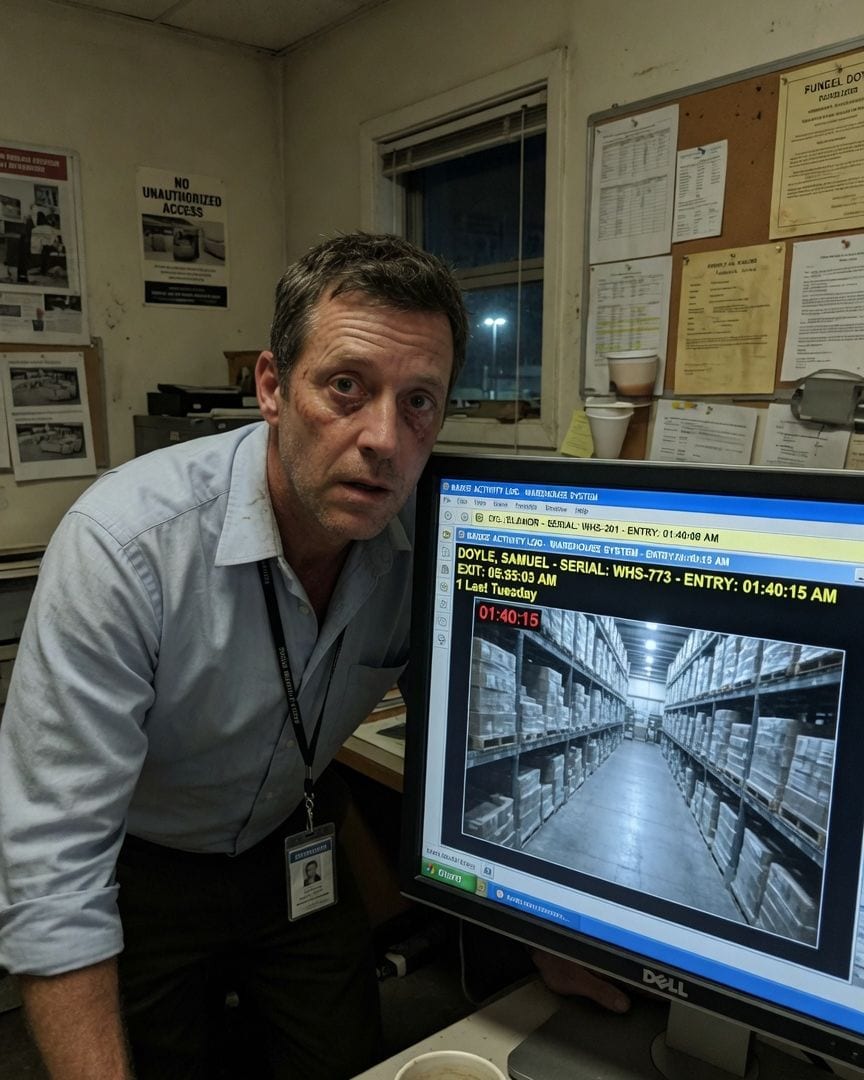
My dead colleague's badge, deactivated weeks ago, logged an entry at 1:40 AM last Tuesday. Then I found another from 1978, with the same impossible times.
My monitor showed a shocking entry: Samuel Doyle, dead and buried three weeks ago, had just logged into the warehouse. His badge was deactivated the day of his funeral, yet the system recorded his precise entry and exit, even though security footage showed the aisles were utterly empty.
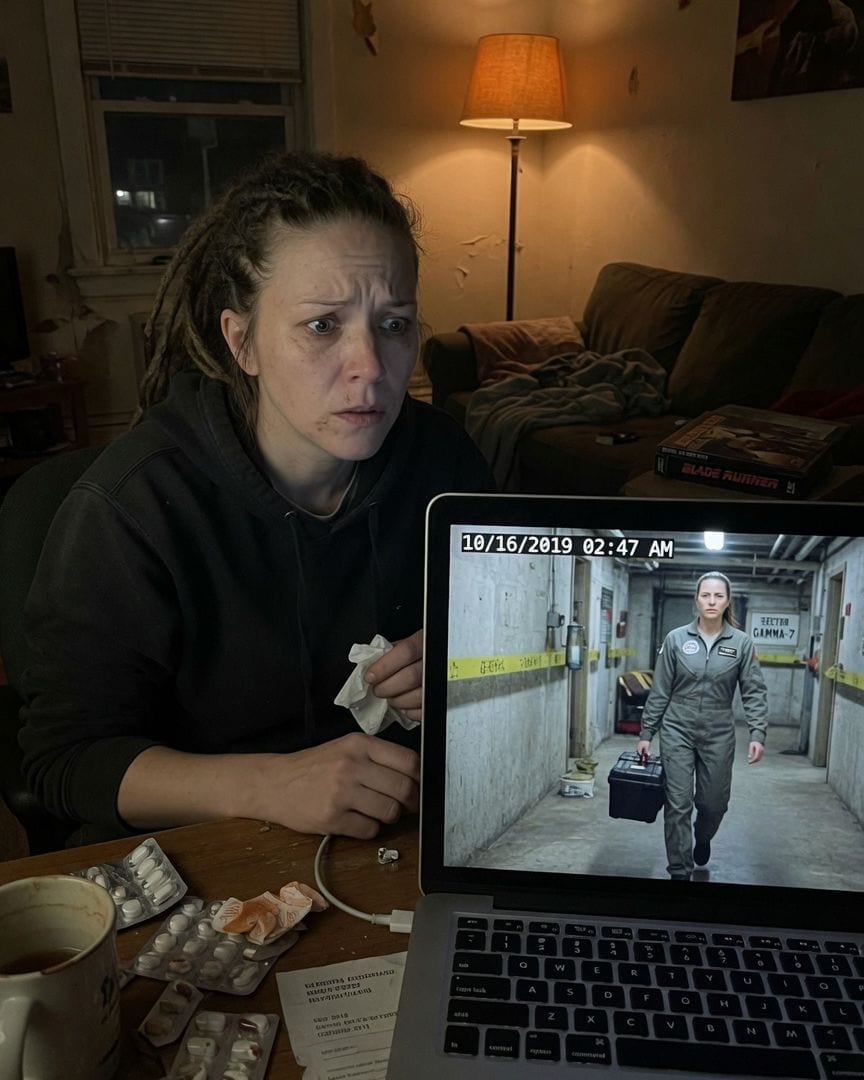
My timesheets show me working night shifts in a town I never lived in. The signatures are mine. The pay went to an account that isn't.
An old employer sent me timesheets from five years ago, detailing night shifts I supposedly worked at a depot 80 miles away. But I knew I was home recovering from surgery that entire week, nowhere near the industrial town. Then a security photo arrived, showing my face in an unfamiliar uniform, working a shift that wasn't quite me.
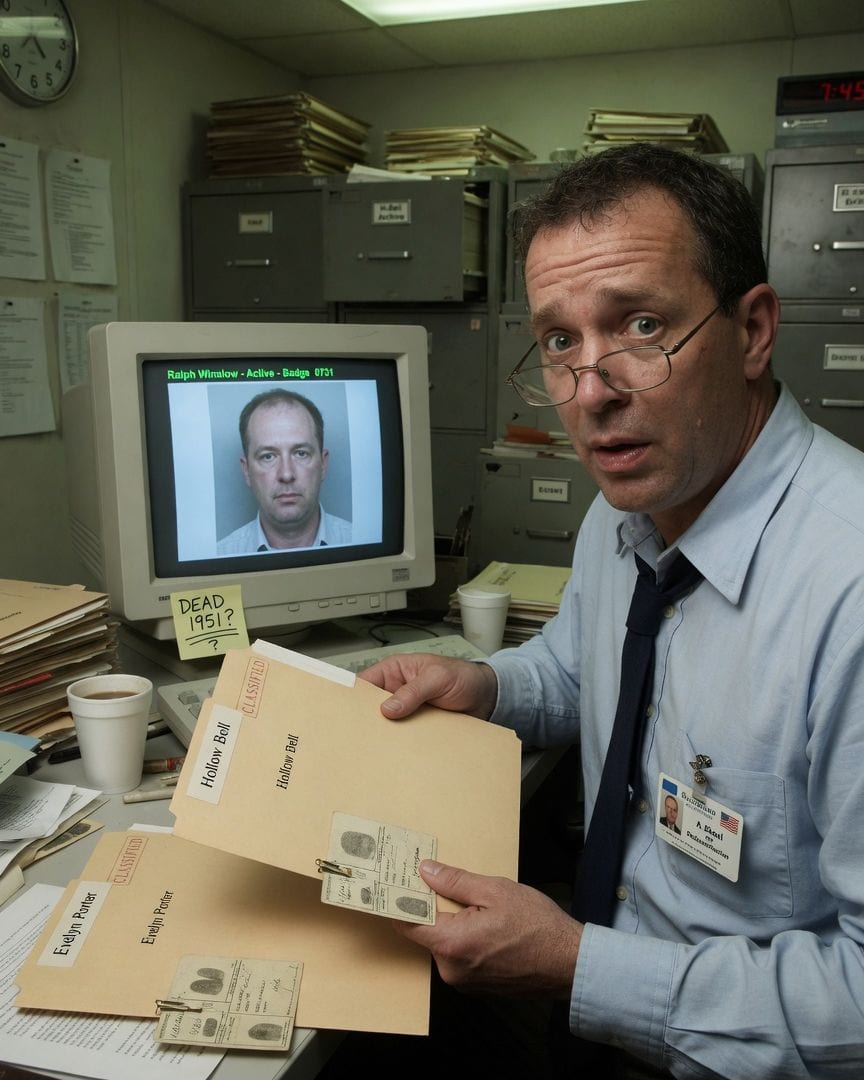
A Cold War declassification reviewer finds a man reported dead in 1951 just badged into his building.
Anton Skeel, a declassification reviewer, hoped his tedious work on old Cold War files would finally lead to an early retirement. He stared at a folder for 'Hollow Bell' containing a fingerprint card from 1958 for a man named Ralph Winslow, who was reported dead in 1951. Out of professional pique, Skeel ran the prints, only to find Ralph Winslow currently employed and badged into the building that very morning. The employee photo, however, was a complete stranger, attached to a file that insisted the man was both seven years dead and decades active. Now, a second impossible file has surfaced, revealing another 'returned subject' reported lost at sea, whose photo also belongs to a stranger.