My observatory dome opened itself at 2:30 AM tonight, for twenty minutes, then closed. The log says I did it.
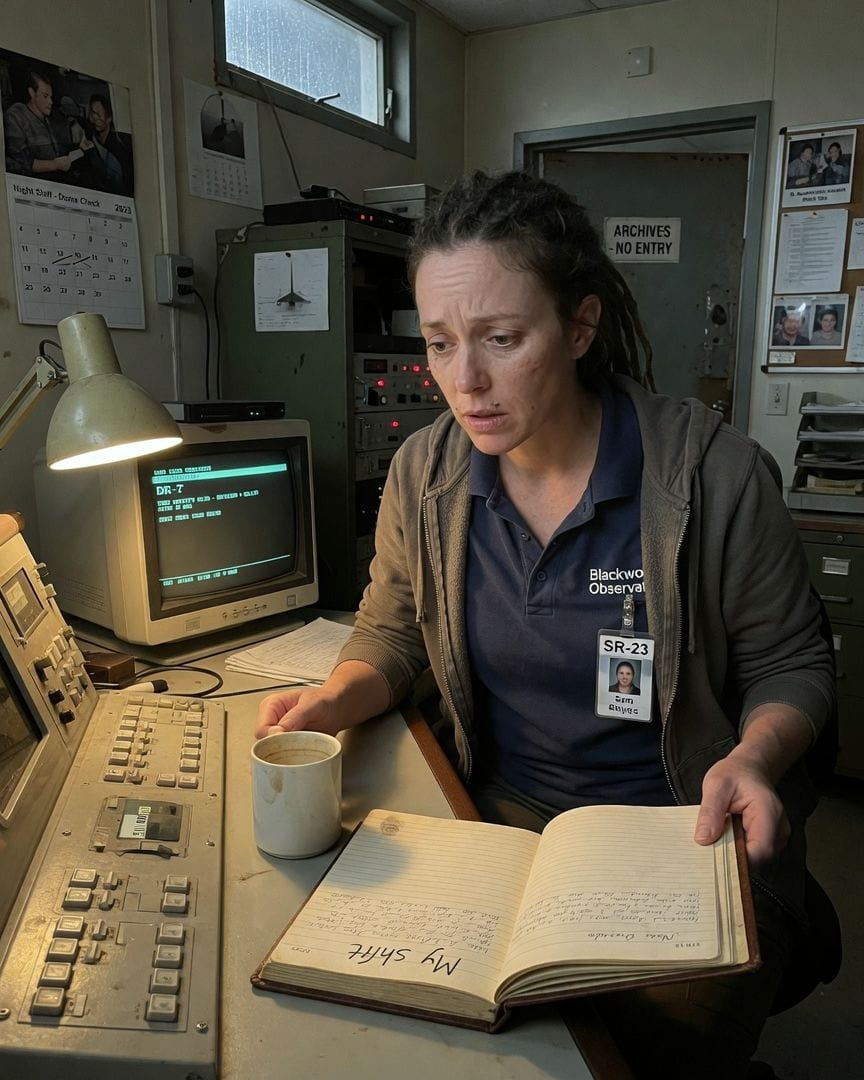
The hum of the distant servers was usually the only company I kept on my night shifts at Blackwood Observatory. That and the lukewarm coffee, which I’d just finished, wiping the rim of the mug with my thumb.
I’d completed my routine check of the main dome about an hour before, double-checking the telescope was parked, locked down, and the heavy slit sealed tight against the forecast rain. Or so I thought.
A quick glance at the main console’s activity log made my stomach drop. My workstation, logged under my ID, SR-23, showed a dome activity at 2:30 AM.
The massive, silent structure had rotated to a new coordinate, its heavy slit driven open for twenty minutes, then, just as inexplicably, closed again. I hadn’t touched the controls.
My mind raced, trying to find a mundane explanation. A glitch? A phantom power surge? I ran diagnostics on the main console. Every system check came back 'normal operation.'
Yet, as my fingers traced the smooth, cool surface of the dome control panel, I felt a faint, almost imperceptible roughness – a smudge. It was like a thumbprint, but too large, too indistinct, and definitely not mine.
I always wiped the panel clean.
The wind sensor, an independent system from the dome controls, provided a precise, damning corroboration: it recorded a distinct draught through the open slit, timed exactly to the log entry.
I remembered a brief, inexplicable chill in the control room around that time, a faint, mechanical whine from somewhere above that I’d dismissed as the building settling. But the telescope was parked, secured. I hadn't gone near the controls.
Driven by a prickle of unease, I dove deeper into the system archives, beyond the daily operational logs. The observatory had been online since 1958, so there was a lot of data.
After an hour of digging through obscure sub-directories, files labeled with arcane codes and dates stretching back decades, I uncovered an older, secondary log file.
It was buried deep, not linked to the main interface, like it was never meant to be found. This file was tagged 'DR-7'. It recorded similar phantom dome movements, precisely mirroring the 2:30 AM incident, but dated years ago.
The entries were sporadic, always late at night, always for twenty minutes. It wasn't a glitch; it was a pattern. I pulled up an old employee roster. DR-7. Donald Rutherford. Night operator. Vanished without a trace, officially 'resigned,' in 1990.
The name Donald Rutherford sent a cold shiver down my spine. I remembered seeing a dusty, forgotten cabinet tucked away in the back of the archives, filled with ancient maintenance manuals and discarded paperwork.
I found it, wedged behind a metal shelving unit. My fingers brushed against a heavy, leather-bound physical logbook beneath a stack of yellowed blueprints. The cover read, in faded gold lettering: 'Blackwood Observatory: Night Operations.'
My hands trembled as I opened it. The faded, precise handwriting on the page, the way the ‘r’s were looped, the distinct slant of the numbers, matched the ‘DR-7’ entries from the digital ghost log.
The dates stretched years beyond Donald Rutherford’s official disappearance. My eyes fixed on the last entry, a single, stark phrase scrawled across the bottom of the page: 'My shift.'
I spent the next few nights researching Donald Rutherford. Online archives were sparse, just a few blurry newspaper clippings about his 'mysterious disappearance' and the official 'resignation' that followed. No body was ever found, just the empty story.
It felt like an official brush-off. The observatory simply moved on. I found old maintenance reports from the years after 1990, noting inexplicable power fluctuations and dome movements attributed to 'operator error,' even though Rutherford was long gone.
It was like the building itself remembered him.
I started to analyze the 'DR-7' logs more closely. They weren't random; they followed a specific sequence, a precise pattern of observation routines, almost like a scheduled program for a celestial body.
It was a complete shift, just not one anyone was officially performing. The logs also showed a peculiar 'warm-up' sequence before the main observation: a series of small, almost imperceptible dome adjustments, a slow, silent stretching of the mechanical joints.
It was a routine, methodical and persistent, a ghost shift running in parallel to the real one, echoing something I couldn't quite grasp.
I tried to access even deeper, more restricted observatory archives for personnel records related to Rutherford, hoping for a clue about his routine. My access was suddenly revoked, flagged for 'unauthorized activity.' Minutes later, an email pinged my inbox.
The sender was a defunct observatory address, '[email protected],' an account inactive for at least a decade. The subject line was blank. The body contained only one, chilling line: 'Some things are best left alone.'
That night, as I sat alone in the control room, the familiar hum of servers felt… different. A faint, rhythmic tap-tap-tap echoed from the disused, sealed-off section of the dome.
I’d heard that sound before, on a grainy old recording I found of Donald Rutherford’s voice, narrating an observation, idly tapping his pen against the console.
The sound was distinct, out of place, and it was coming from where no one should be. The sound was too real.
Desperate, I tracked down Eleanor Whitaker, a retired night operator who’d worked at Blackwood from 1975 to 2005, overlapping briefly with Rutherford.
Eleanor lived a quiet life in a small town nearby, her house smelling faintly of lavender and old paper. She initially brushed off my questions about Donald as 'old stories,' her hands gently kneading a cup of tea.
I pressed, recounting the ghost logs, the specific dome movements, the 'DR-7' ID. Eleanor's placid demeanor began to crack, her gaze drifting to the window.
'Donald was… peculiar,' she admitted, her voice dropping, almost a whisper. 'Always talking to the dome, like it was a living thing. Said it had its own will, a mind.'
I described the precise, ritualistic 'warm-up' sequence I’d found in the ghost logs, the small, almost imperceptible adjustments before the main 'observation.' Eleanor’s eyes widened, the tea-cup rattling slightly in her saucer. 'He had a name for that!
He called it 'waking the eye.' Said if you did it just right, the dome would… listen. Would show you what it wanted to see.'
Eleanor recounted one night, just weeks before Donald vanished, when she saw him arguing with the empty control panel, his voice low and intense.
Later, she'd found him almost whispering to the massive, silent dome itself, as if it were a colleague.
'He swore the console responded to him, even when he wasn’t touching it,' Eleanor whispered, leaning forward, her voice laced with a tremor. 'He said the dome was trying to tell him something. Trying to tell him its schedule.'
The ghost logs suddenly made terrifying, sickening sense; they were the dome’s 'schedule,' running on its own, just as Donald believed.
Armed with Eleanor’s insights, I returned to the observatory archives, a colder, darker place in my mind now. I was searching for more of Donald’s personal effects, hoping to find further confirmation of his strange rituals.
Tucked away on a high shelf, behind a stack of obsolete computer manuals, I finally uncovered a forgotten cardboard box, labeled in Donald’s precise script: 'Rutherford, D.' Inside, amidst old astronomy magazines, a broken compass, and a handful of star charts, I found a stack of his personal shift schedules, meticulously hand-written.
The dates spanned his entire employment, from 1985 to 1990.
My heart pounded as I compared them to the 'DR-7' ghost logs. They matched perfectly, down to the specific observation targets, the precise sequence of dome movements. He’d recorded them as if logging the dome’s own desires.
But then, I flipped to the back of the stack. There were schedules here dated after his disappearance, continuing the pattern, week after week, month after month, years stretching beyond 1990. The truth was bigger, darker.
The pattern wasn’t just a record of his past shifts; it was a continuation. It was his shift, still running.
And then, my gaze snagged on a faint pencil scrawl in the margin next to a date just before I started my own shifts here: 'Sophia Russo.' My breath hitched. Below it, dated last week, another note: 'Sophia’s arrival. Good.'
The word 'Good' reverberated in my mind like a death knell. It didn’t mean I was good at the job; it meant I was the next 'shift change.'
Donald didn’t just vanish; he became part of the dome, orchestrating its continued 'work,' and now he was preparing for me.
The pattern across dates and names was horrifyingly clear: the dome, or the entity inhabiting it, slowly absorbs the routines and eventually the identities of its night operators, particularly those who form a strong connection with it.
The ghost logs were not just echoes; they were the dome’s active 'learning process,' mimicking the new operator, preparing to absorb them.
Eleanor’s stories, the maintenance reports, the hidden logs, Donald’s own belief that the dome was 'listening'—it all clicked into place with a horrifying certainty. The observatory wasn’t just observing the stars; it was observing its operators, slowly, patiently, becoming them.
Donald Rutherford wasn’t merely a victim; he was the one who 'knew' and, in a way, facilitated this cycle, now a spectral overseer ensuring the 'shift' continues.
I rushed back to the control room, the cold air from the dome’s previous ghost opening still hanging heavy and stale, even hours later.
I knew the 'artifact' wasn’t just a logbook or a set of schedules; it was the dome itself, a massive, silent monument to a lingering, predatory presence. I had to break the cycle.
I began inputting a series of complex override commands, trying to permanently lock down the dome’s automated systems, to sever its connection to whatever was making it move.
As my fingers flew across the keyboard, the console began to operate on its own. The cursor danced across the screen, inputting commands, mimicking Donald’s ritualistic 'warm-up' sequence.
The dome groaned above me, rotating slightly, its heavy slit opening and closing with unnerving speed, each movement accompanied by a deep, resonant hum that seemed to emanate from the very floor beneath my feet.
A cold, heavy pressure filled the room, as if something vast and invisible was pressing down on me, trying to pin me in place.
The main screen flickered, then resolved into a faint, distorted image of Donald Rutherford’s face, his eyes fixed on me, a faint, possessive smile playing on his lips.
He appeared solid, not transparent, but the image was subtly wrong, too still, too knowing. It was his face, but it wasn't him.
With a surge of terror and resolve, I slammed my hand down on the emergency system lock-out, inputting a final, irreversible code that severed the dome from its internal controls forever. The hum stopped abruptly. The image vanished.
The dome fell silent, a massive, inert shell.
The pressure in the room eased, but the silence that replaced it was heavier than any noise, the dome now a tomb to something I barely comprehended, something that still watched from within its massive, unmoving eye.
I resigned from Blackwood Observatory the very next day. My explanation of 'personal reasons' was accepted without question. The main dome, due to 'irreparable system damage during an unusual power surge,' was permanently locked in place, decommissioned from active use.
Smaller, automated telescopes were installed on new pads, safely separate from the old, massive structure. No one seemed to connect my sudden departure to the dome’s sudden, permanent silence.
Life at the observatory resumed its quiet, predictable rhythm, minus the biggest, oldest eye on the sky.
Months later, I’m trying to rebuild my life in a new city, far from any observatories. I’ve found a new job, a new routine. I avoid looking at the night sky, especially at 2:30 AM.
I check the logs on my computer religiously, looking for anything out of place. One evening, curled up with a book, a paperback that smells of paper and glue, I felt a slight chill in my apartment.
I hadn't touched the new smart thermostat since I moved in, trusting its default settings. It had been stable at seventy-two degrees for weeks. But then, I heard a quiet, almost imperceptible click from the wall-mounted unit.
The display, unlit moments before, glowed faintly. The temperature reading slowly, deliberately, began to change.
The thermostat clicked again, settling on sixty-eight point three degrees.
If this one got to you
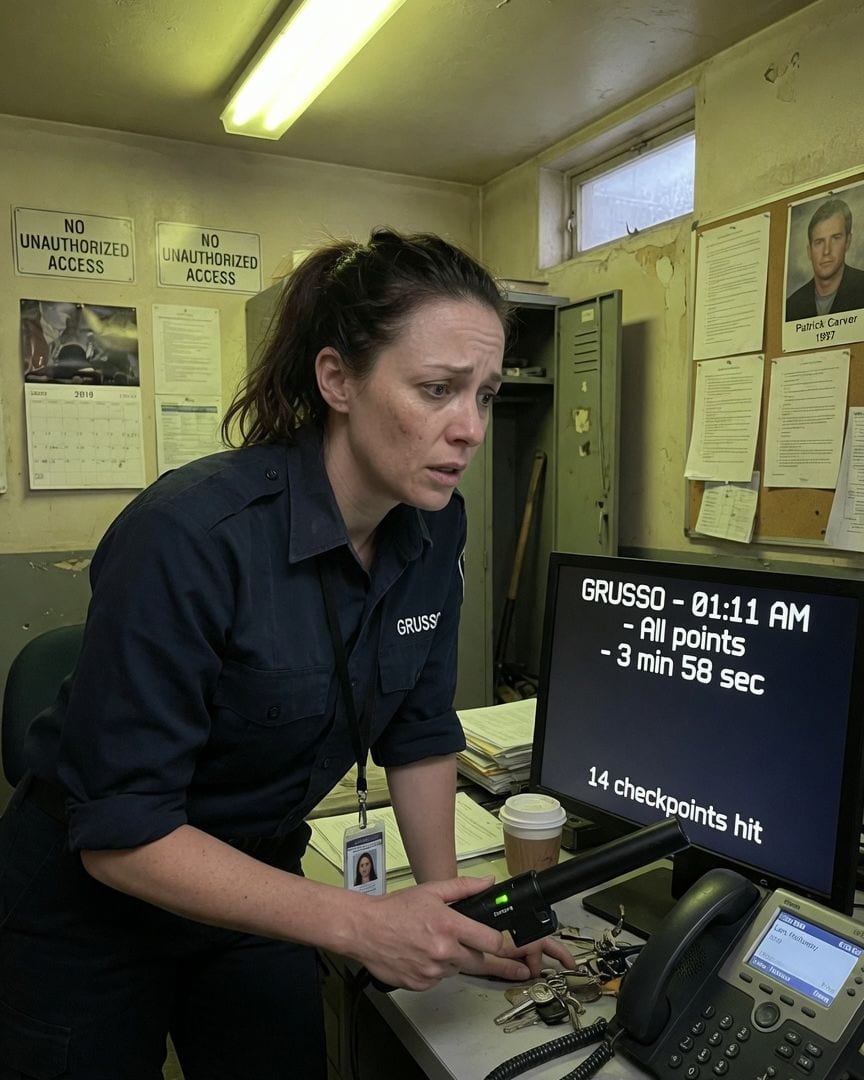
My security wand logged a full round at 1:11 AM in under four minutes. It was in the charger. Every tap is logged as mine.
Finishing my night shift, all I wanted was to get home. But the dock readout screen showed my security wand logged a full patrol at 1:11 AM, completed in just under four minutes. I knew my wand had been charging right beside the monitor the entire time, yet the log, under my ID, confirmed the impossible.
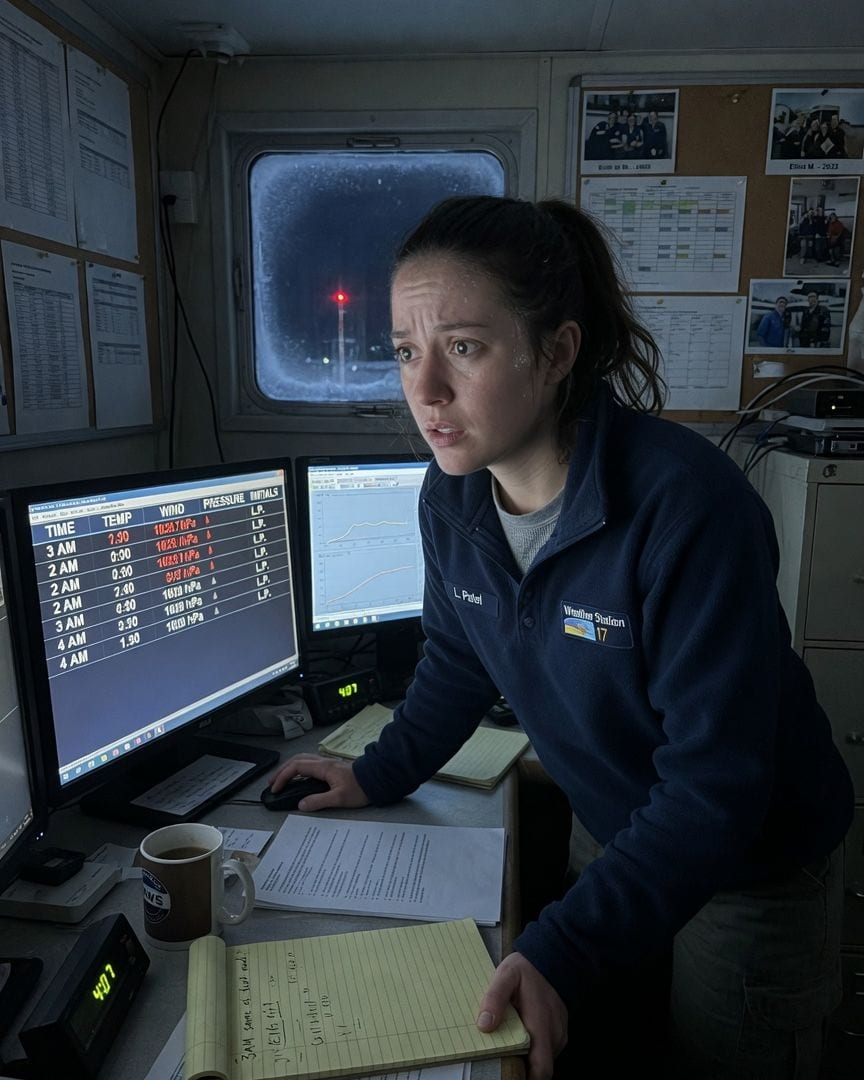
My weather station's 3 AM log shows a pressure reading I never made. My initials are on it, but the dials were dead still.
Working the overnight shift at the remote weather station, I routinely checked the digital logs. The 3 AM entry showed an impossible barometric pressure spike, a hurricane that simply hadn't happened. I distinctly remembered being outside at that time, calibrating a sensor, not making that entry. Yet, my initials, L.P., were clearly logged next to data I never made.
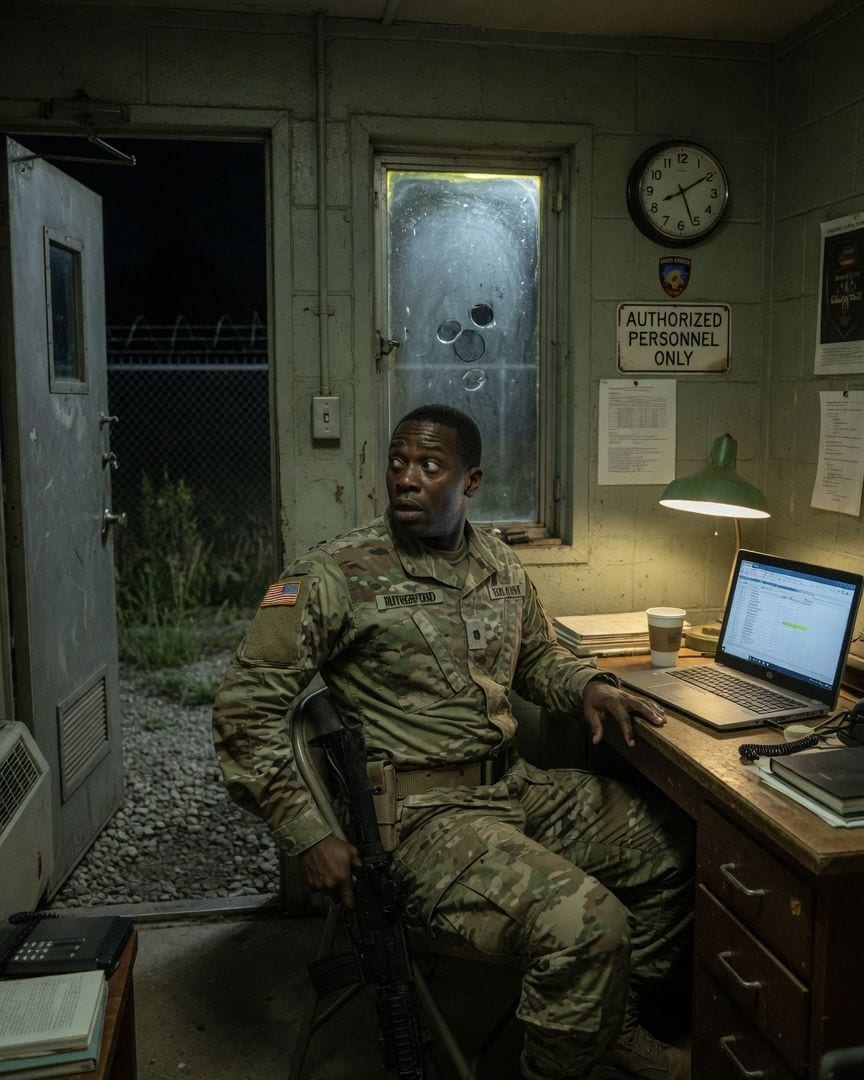
Fort Vashon's lone guard heard precise knocks on her window, then felt them from *inside* the locked shack.
Staff Sergeant Julian Rutherford felt an unsettling quiet at Fort Vashon's back gate, replacing a guard who reported strange knocks. He discovered an extra name on the digital duty roster that kept reappearing after deletion, a cold digital ghost. His search through decades of archived logs revealed a persistent anomaly: an unassigned slot, always present on short-staffed shifts. Then, in a forgotten supply shed, he unearthed an old journal detailing similar knocks and shadows, and one entry describing a guard hearing his own name called from the dark. What invisible presence haunted the fort's lonely gate?
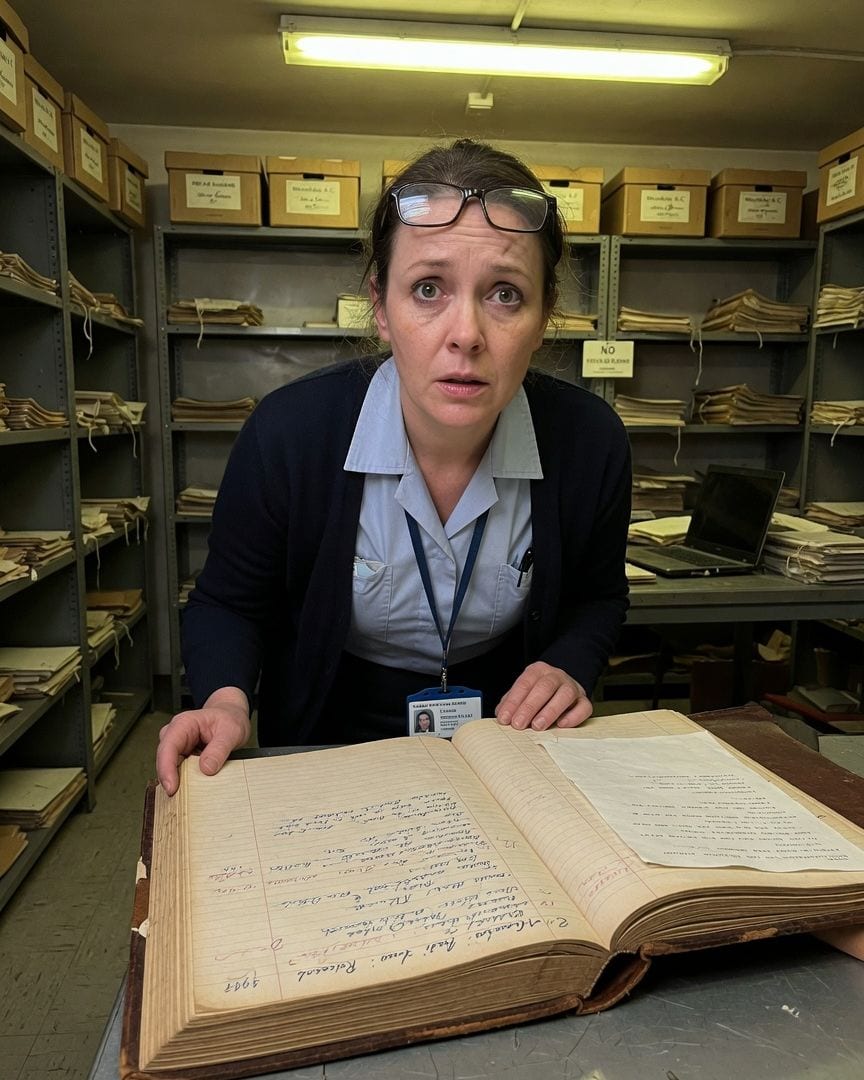
My ambulance trust's incident log shows callout 22-014 to 6 Cathcart Row at 2:40 AM. Every four years, the same call, same address. Always 'patient not found'.
My job involves tedious data entry for ambulance calls, but Incident 22-014 was different. It appeared every four years, always at 2:40 AM, always closed as 'patient not found.' Digging into the dusty physical archives, I found an entry from 1961 for the exact same incident, but its resolution read: 'Subject Secured. Relocated to "Holding".'
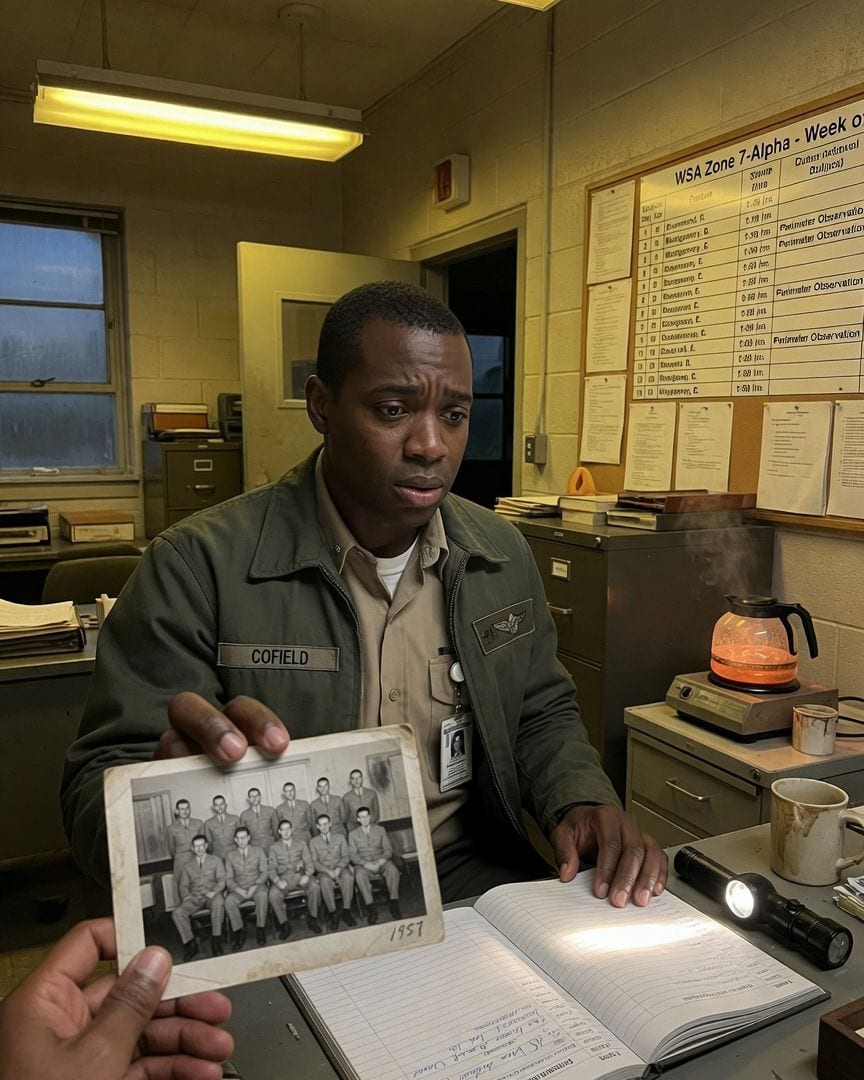
On his last patrol, Senior Airman Cofield found hot coffee steaming inside a base building mothballed since 1992. The fresh roster was signed by a man from a 1957 photo.
Senior Airman Felix Cofield was on his last perimeter patrol of the decommissioned Weapons Storage Area when an impossible light bloomed in the pre-dawn dark. The building had been mothballed for decades, yet a warm, unnatural glow pulsed from within. Ignoring Central Security's all-clear, Cofield found an unlocked door and a brightly lit office, as if someone had just stepped out. A freshly printed roster for the coming week lay on a corkboard, and a coffee pot on the counter was still steaming hot. Then he saw the faded group photo from 1957, showing the very man who had just signed today's logbook.
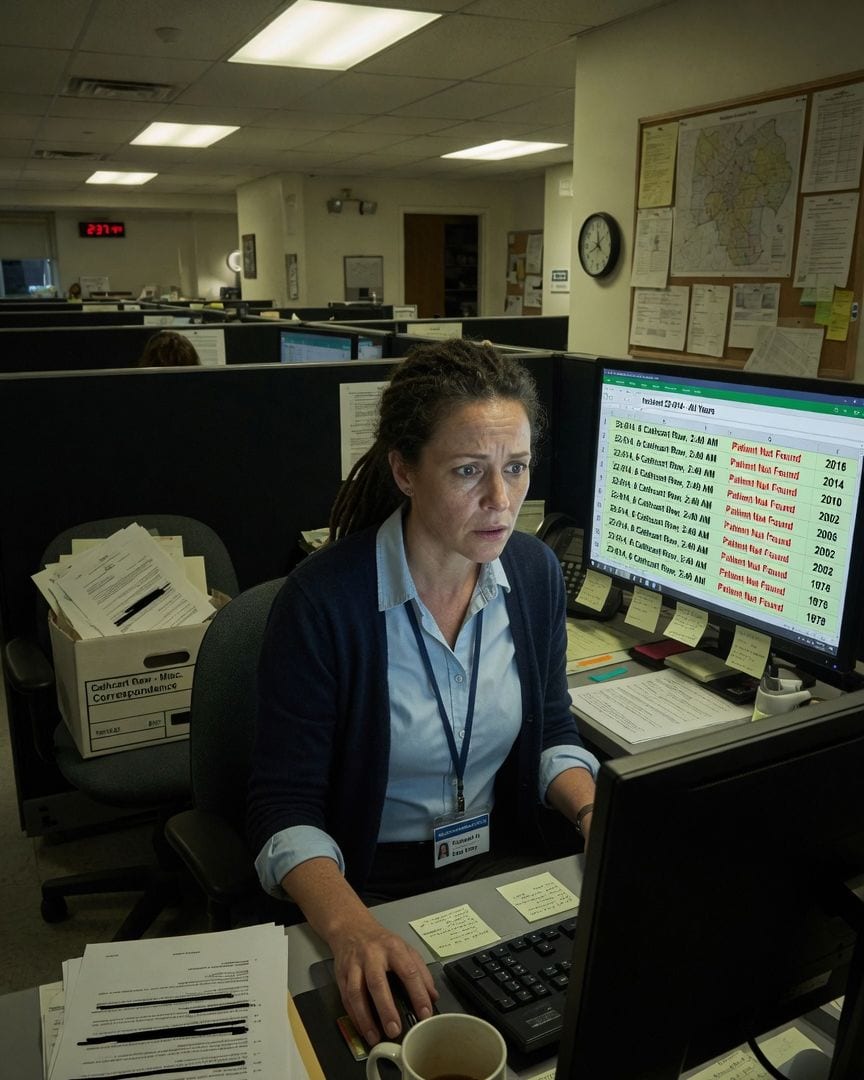
My computer log shows the same 2:40 AM call to Cathcart Row, every four years since 1978, always closed 'patient not found'.
Working data entry for the County Ambulance Trust, I found a routine incident logged as 'Patient Not Found.' But digging deeper, I discovered the exact same phantom call had repeated every four years for over forty years, always at the same address, always at 2:40 AM. Then I found a heavily redacted memo linking it to my own street.