My old farm books show Heifer #62 vanishes every eight years. Always the same number, same words, for decades.
It was the fog that really got me. Not the usual kind, but thick, wet, the kind that swallows sound and makes you feel like the world shrinks to just your breath.
Oliver, my husband, had gone ahead, his flashlight beam just a weak wobble in the gray. We were out in the upper pasture, well before dawn, looking for a new heifer. Number 62.
"She's just strayed a bit, Fiona," Oliver called, his voice muffled. "Probably down by the creek, got turned around."
But I knew better. Our fences are good, tight. And 62 wasn't just any heifer. She was the one we'd gotten this spring, a strong animal, but I’d felt a prickle of something wrong about her from the start.
A feeling I couldn't explain.
We searched for another hour, the mist clinging to my eyelashes, my boots sinking in the soft mud. Nothing. No sign of a broken fence, no disturbed grass. Just the silent, empty pasture.
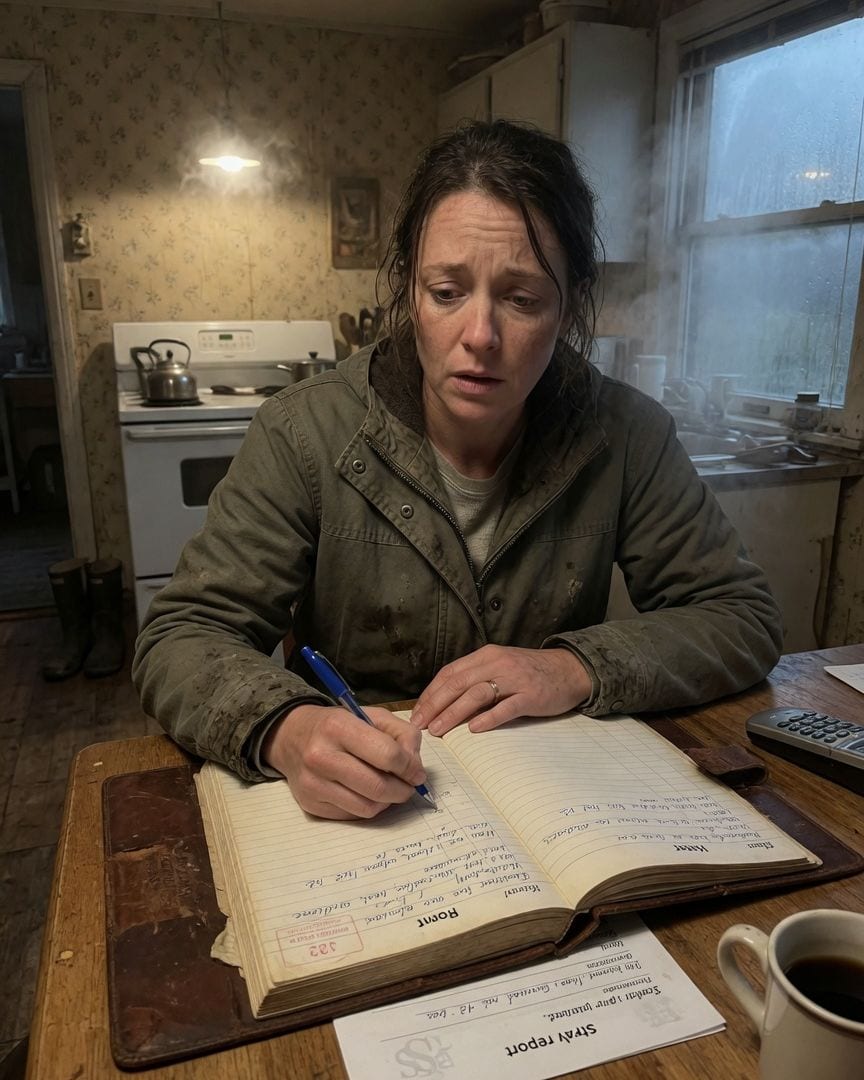
Back in the farmhouse, the kitchen was too warm, too bright. I pulled out the old, leather-bound livestock movement books, heavy things, passed down from my great-grandfather. Oliver made coffee, shaking his head. "She'll turn up. They always do."
I opened the current book, flipping to the spring entries. There it was: 'Heifer, Hereford, #62, acquired April 12.' Then, beneath it, my own neat handwriting from yesterday: 'Strayed from upper pasture, not recovered.' I sighed, picking up my pen.
I hated those words.
But a thought, cold and thin, had started to needle me. I flipped further back, past years of births, sales, and deaths.
Our herd numbers run sequentially, but sometimes a number gets retired, sometimes one gets skipped if an animal doesn't make it to tagging. Yet, there it was again.
A different animal, same number: 'Heifer, Hereford, #62, strayed from upper pasture, not recovered, number to stand.' Date: 2014.
My breath hitched. I went back further. 2006. Same words. 1998. 1990. 1982. Every eight years, like clockwork. A different heifer, always number 62. Always 'strayed from upper pasture, not recovered, number to stand.'
And on every single one of those entries, the same official stamp from the County Agricultural Department, confirming the status. Decades of bureaucracy, calmly documenting the same, recurring loss. My blood went cold.
The next morning, I drove into the county seat, the small brick building that housed the Agricultural Registry. It smelled of old paper and dust.
Ronald Forsythe, the clerk, was behind the counter, exactly where he’d been for as long as I could remember. He was a man in his early sixties, hair thinning, a placid, almost unnervingly calm expression fixed on his face.
"Morning, Mrs. Porter," he said, without looking up from a ledger he was meticulously updating.
"Mr. Forsythe, I have a question about a herd number," I began, my voice tighter than I liked. I explained about number 62, about the pattern I'd found in our family books.
He finally looked up, his eyes a pale, unblinking gray. "Ah, yes. Number 62. Heard about the latest from your husband this morning. Shame." He didn't seem particularly sympathetic. "Standard procedure, Mrs. Porter.
'Number to stand' simply means the designation remains active for future animals. Saves us printing new tags if an animal is unrecovered." He spoke with the slow, even cadence of someone reciting a well-rehearsed line.
He pulled a fresh 'stray report' form from a file cabinet, pristine white, and slid it across the counter. It was for our latest #62, identical in wording to the historical entries. My hand shook slightly as I took it.
Ronald was so calm, so rational, I almost believed him. Almost.
I thanked him and was turning to leave when something caught my eye under the harsh fluorescent lights. Underneath the official county stamp on the form, faint but definitely there, was a tiny, almost invisible watermark.
Or perhaps it was a second, stylized stamp. It wasn't the county seal. Just two intertwined letters: 'S.F.'
"Mr. Forsythe," I asked, holding the form up, "what's this 'S.F.' mark?"
He peered at it, leaning closer for a moment, then shrugged, turning back to his ledger. "Oh, that. Must be an old printing error. Or some obscure historical mark from decades ago. Some of those forms are ancient stock.
Nothing to worry about." He dismissed it as casually as if I'd asked about the weather.
I left the office, the 'S.F.' burning in my mind. An old printing error? No. It was too clear, too specific. A tiny, unsettling detail that absolutely did not fit his mundane explanation.
Back home, I sat at my laptop, the 'S.F.' form beside me. I started digging, researching 'S.F.' in conjunction with local agricultural records, old county maps, anything. Most of it was dead ends, archival fluff.
Until I broadened my search to include 'special field' and my county's name.
Then, I found it. An archived local newspaper clipping from 1948, tucked away in the county library's digital collection. The headline was unassuming: 'County Initiates Special Field Survey for Rural Land Management.'
The article itself was brief, vague, discussing 'ecological assessment' in various areas, specifically mentioning sections of land that included what is now our upper pasture.
Attached to the online record, an image link led to a scanned county internal memo from 1948. It was clearly related to this 'Special Field Survey.' Most of the text was legible, a dry account of logistics and personnel.
But one crucial line, right in the middle, was blacked out with a thick, official-looking bar. Redacted.
My heart pounded. Why redact that? What was so important? I downloaded the image, opened it in my photo enhancement software. Zooming in, I adjusted the contrast, brightened the exposure, pushed the clarity.
Slowly, agonizingly, faint letters began to appear beneath the heavy black. Blurred at first, then coalescing. I held my breath, my fingers shaking on the keyboard.
'...Property of the Porter family, section 12, adjacent to the Survey Field...'
And then, beneath it, a date. 1942.
I froze.
My family hadn't owned that specific section of land until the 1970s. Decades later.
I stared at my own family name, 'Porter,' on a document from years before they were connected to this land, tied directly to a mysterious 'Special Field Survey' and the recurring disappearance of #62.
The name, my name, staring back at me from across the years, linked to something so deeply wrong it made the air in the room feel thin and cold.
The revelation of my family name in that 1942 memo wasn't just a chill; it was an icy dread that permeated everything. I couldn't shake it.
My family, somehow, had a connection to this 'Survey Field' and its pattern, years before my grandfather even bought the farm. I had to understand.
I went back to the county archives, a dusty, cavernous room in the basement of the Agricultural Registry building. The air was stale, heavy with the smell of mildewed paper and forgotten history.
And there, in the far corner, ostensibly 'doing inventory,' was Ronald Forsythe. He didn't acknowledge me, but I felt his eyes on me, a constant, unnerving pressure from across the room. His placid gaze made my skin crawl.
I ignored him, burying myself in old land deeds, cadastral maps, and agricultural survey reports. Hours blurred into a haze of microfilm and yellowed paper. Then I found it.
Fragmented records from 1949, detailing the designation of a specific plot of land—including what I recognized as our 'upper pasture'—as a 'preservation area.' But it wasn't a conservation effort in the usual sense.
A curious rider was attached: 'maintaining ecological balance through periodic removal.' The phrase was clinical, cold, yet it hung in the air like an unspoken threat. Periodic removal of what?
Further on, I unearthed a small, almost childlike, hand-drawn map of the area from that same year. It was probably from a surveyor's field notes, hastily sketched.
In the section marked 'upper pasture,' a tiny, almost imperceptible symbol was drawn: a simple circle with a dot in its center. Next to it, in faint pencil, was a handwritten '62.'
It was too small to be a property marker, too specific to be random. It felt like a designation, a mark of something.
The bureaucratic language of 'periodic removal' and that subtle, unsettling symbol combined to paint a picture of deliberate, long-term management of something profoundly wrong, something hidden, right there on my own land.
Leaving the archive, the sense of being watched was palpable, a prickle on the back of my neck. I got into my truck, the old engine catching with a cough, and glanced in my rearview mirror.
A block down the street, Ronald Forsythe's nondescript sedan was parked, its engine idling. He made no move to follow, no gesture, just sat there, a silent sentinel, watching me pull away.
The sight of him, so still, so expectant, was like a physical blow.
That evening, back on the farm, the late autumn dusk settled heavy and cold. Oliver was out finishing chores, the lights of his tractor a distant beacon. I walked to the porch, and that's when I saw it.
A small, official-looking envelope slipped neatly under the front door. There was no address, no stamp, just my name, 'Fiona Porter,' written in a neat, almost elegant script.
The same script that had signed off on countless county forms over the years. Ronald’s script.
My hands trembled as I tore it open. Inside was a single, blank, heavy index card. Nothing else. I turned it over, dread coiling in my stomach. On the back, written in that same precise, bureaucratic hand, were three words:
'Retain the number.'
The message was stark, direct, and utterly devoid of emotion. It was a warning. Ronald knew. He knew I was digging, that I was too close.
He wasn't just telling me to stop; he was telling me to maintain the status quo, to let the cycle continue.
The threat was no longer an old record; it was a living, breathing person, calmly enforcing a horrific truth that had somehow fallen under his remit.
The next morning, I drove straight to Ronald Forsythe's office. I didn't bother knocking. He looked up from his computer, his pale eyes registering my presence without surprise. He simply waited.
I laid out the evidence on his desk, one by one: the hand-drawn map with the '62' symbol, a printout of the redacted memo naming my family, and the ominous index card with 'Retain the number.'
Ronald remained unnervingly calm. He didn't deny anything. He didn't even try to offer another mundane explanation. "Some things are simply managed, Mrs. Porter," he stated, his voice even, flat. "For the good of the community. Always have been."
He leaned back in his chair, folding his hands. "The 'ecological balance' and 'periodic removal' you found in the archives," he continued, as if discussing crop rotation, "refer not to animals in the way you understand.
They refer to an entity. Within the 'Special Field.' Your upper pasture." He paused, his gaze unwavering. "The 'number,' he revealed, "is its designation. It requires... sustenance."
My mouth felt dry, my voice a whisper. "Sustenance? What are you talking about?"
"The 'straying' animals," he explained, "are, in our parlance, 'offerings.' A pact, if you will, made decades ago. To keep the entity contained within that field. To keep it dormant." He picked up the index card.
"'Retain the number'," he clarified, "means the entity itself is designated '62,' and it must be 'fed' every eight years. The designation remains active because the entity remains active."
He spoke of it like a meticulous accountant detailing a long-term contract. He told me it had been working, ensuring the town's peace and prosperity for generations.
The horror wasn't just the entity he calmly described, but the cold, calculated bureaucracy that had knowingly fed it for decades, filing away the disappearances of animals, and whatever else, as mere inventory anomalies.
This wasn't some ancient evil that had suddenly woken up. This was an ongoing, managed operation.
I stumbled out of Ronald's office, the truth a lead weight in my gut, pressing the air from my lungs. The idea that such a thing could be true, that people could know and manage it, was unthinkable.
I drove, blindly at first, then instinctively found myself heading towards Cecilia Crane's small, isolated farmhouse, which bordered our upper pasture.
Cecilia, an old woman with sharp, knowing eyes, answered the door, her face lined with the wisdom of nearly eighty years lived on this land.
She ushered me in, into a kitchen smelling of woodsmoke and dried herbs, and offered me a cup of weak, comforting tea. My hands trembled so much I almost spilled it.
Breathless and terrified, I recounted Ronald's horrific admission: the entity, the offerings, the county's complicity. Cecilia listened patiently, her gaze distant, fixed on the rain-streaked window overlooking the familiar, ominous field.
Her eyes seemed to see beyond the pane, beyond the pasture, into something much older.
As I finished, my voice raspy with exhaustion and fear, Cecilia nodded slowly. "Yes," she said, her voice a dry whisper, "that's about right. The Forsythes always were good at keeping things... quiet." A faint, bitter smile touched her lips.
"My brother, Thomas... he was number 62, back in '50. From that same field."
My blood ran cold, a sudden, sharp drop. "Thomas? Your brother?"
Cecilia nodded again, reaching a gnarled hand into the worn leather wallet she kept tucked into her apron pocket. She pulled out a faded, creased photograph.
It was a picture of a young boy, perhaps twelve years old, smiling shyly, his hair falling into his eyes. He was standing in what looked unmistakably like our upper pasture, the familiar stand of oaks in the background.
Cecilia pointed to the back of the photo, where, in faint, almost invisible pencil, next to the boy's name, 'Thomas Crane,' was the number '62.'
Cecilia's fingers, gnarled with age, traced the faint pencil marks on the back of the photo. "After Thomas vanished," she explained, her voice barely above a whisper, "the county officials came. Not with condolences, mind you, but with forms.
And a strange, calm insistence that 'his number must stand.' They told my parents it was a 'necessary management plan' for the 'Special Field.' My mother never recovered."
She reached for a small, wooden box on the shelf, pulling out a fragile, yellowed document, carefully preserved between sheets of tissue paper. It was an official-looking 'County Registry of Special Designations,' dated 1950.
The paper crackled as she handed it to me.
My eyes traced the entries, each written in precise, old-fashioned script. And there it was. Under 'Designation 62,' it listed 'Thomas Crane.' Beside his name, the chilling status: 'Active, Strayed, Not Recovered.'
Below it, in smaller, almost microscopic print, was an addendum: 'Successor Designations: To be assigned every eight years, per agreement.'
It was all there. In black and white. The institution's own record, stating plainly that Thomas, a human being, had been the first recorded '62' in this renewed cycle.
And that the animal 'strayings' were merely substitutes, a way to keep the entity satisfied without further human sacrifice.
The county, this entire institution, had been managing this cycle for decades, burying the human cost under animal registry forms, a cold, calculated horror maintained for generations. Every planted clue clicked into place, snapping into a horrifying mosaic.
The 8-year cycle, the 'number to stand,' the 'Special Field Survey,' the redacted memo naming my family. It all fit. A perfect, horrifying bureaucratic machine, ticking over, eating its own.
A terrible resolve solidified in me, cold and hard. I returned to the county office, Cecilia by my side, clutching the 'Special Designations' document. Ronald Forsythe looked up, a faint sigh escaping his lips. He knew why we were there.
I laid out the full, damning evidence on his desk: the yellowed document, Thomas's photo, the current stray report for our missing heifer.
Ronald, unflappable as ever, merely adjusted his tie. "The original agreement was for a human offering every eight years, Mrs. Porter," he stated, his voice devoid of regret, as if discussing a difficult but necessary tax hike.
"We found a way to mitigate it. These animals... they keep the balance. They ensure the entity remains contained. You disrupt this, Mrs. Porter, and you condemn us all."
He gestured to a thick, leather-bound ledger on a high shelf behind him. It was massive, its cover worn smooth by years of handling. "This," he said, pulling it down with surprising ease, "is the master book."
He opened it, laying it on his desk. It was the 'Special Designations' ledger, going back to the late 1800s. I flipped through it, my fingers tracing page after page of '62' entries.
Some listed animal names, some listed human names. All 'strayed, not recovered.' The dates formed an unbroken, terrifying sequence, a rhythmic drumbeat of disappearance stretching back over a century. The final entry, from eight years ago, was an animal.
The next line was blank, waiting for the next '62.'
Ronald watched me, his calm gaze unwavering. "The time comes for everyone to play their part," he murmured, his eyes locking with mine.
I looked down at the blank line, my heart a hammer against my ribs. And then I saw it. Faint, almost imperceptible, scrawled in pencil at the very bottom of the blank page, a small, almost apologetic notation.
My own name: 'Fiona Porter,' with a faint '62' next to it. It had been filed years ago, waiting. I had been designated.
I returned to the farm, hollowed out, silent. Oliver tried to reach me, his worried questions gentle, but I was distant, my eyes fixed on nothing. I no longer kept the livestock movement book.
It sat on the kitchen table, open to the page for number 62, a silent accusation.
The 'upper pasture' now held a different, profound silence for me, the rustling of leaves in the wind sounding like whispers, like Thomas Crane, like all the others.
The county office remained quiet, its files neatly organized, its clerks calmly going about their work, managing the unseen, unacknowledged horror that continued to underpin the community's peace. The dread wasn't gone; it was simply absorbed, filed, and waiting.
Fiona stopped keeping the movement book weeks ago. Oliver found it, open to the '62' page, on the kitchen table. The blank line was no longer blank.
Oliver found the movement book on the kitchen table. He saw the new entry for number 62. He called for Fiona. A faint, wrong little smile touched her lips as she replied from the top field, 'Is that so?'
If this one got to you
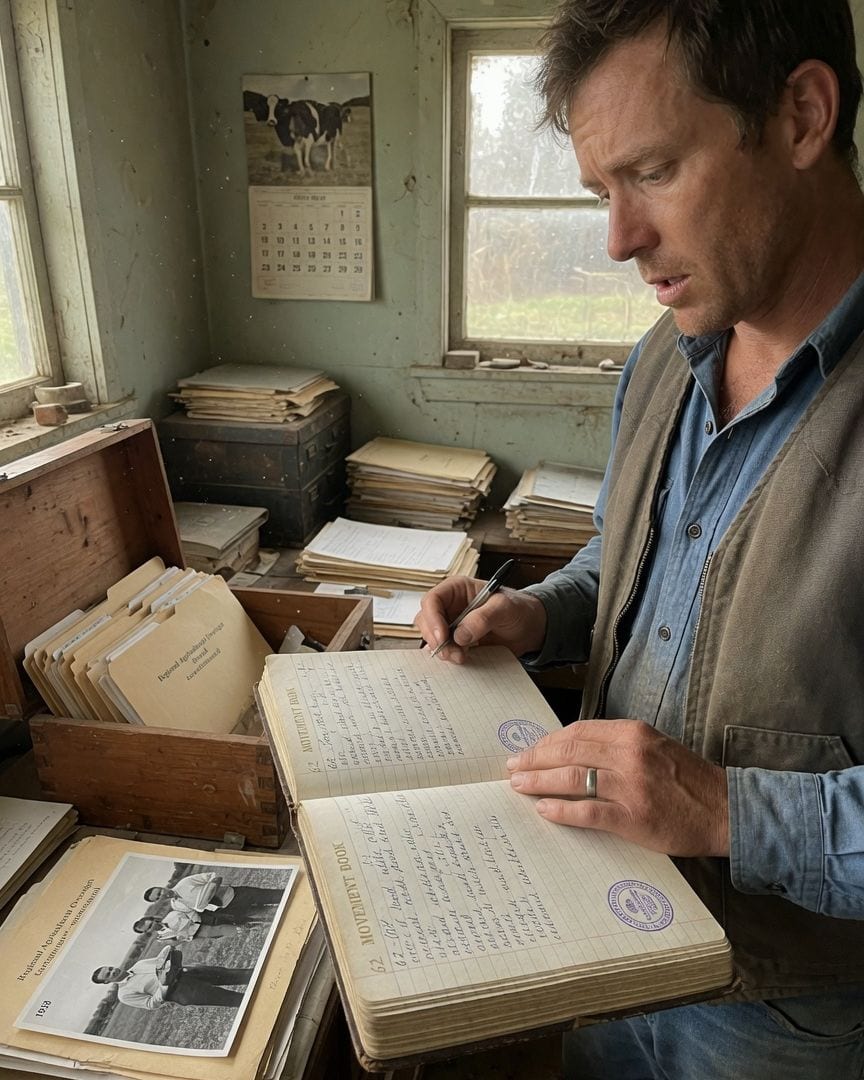
My farm ledger reveals a precise, eight-year pattern: Number 62 always disappears from the same cold field.
In the quiet of my farm office, I was updating our livestock ledger, a routine task. But tracing the records, one detail stopped me cold: 'Number 62' had been logged as 'strayed, not recovered' every eight years since 1950. Always from the same field, always with a bureaucratic stamp insisting the 'number to stand.' This wasn't a coincidence; it was a disturbing, perfect pattern.
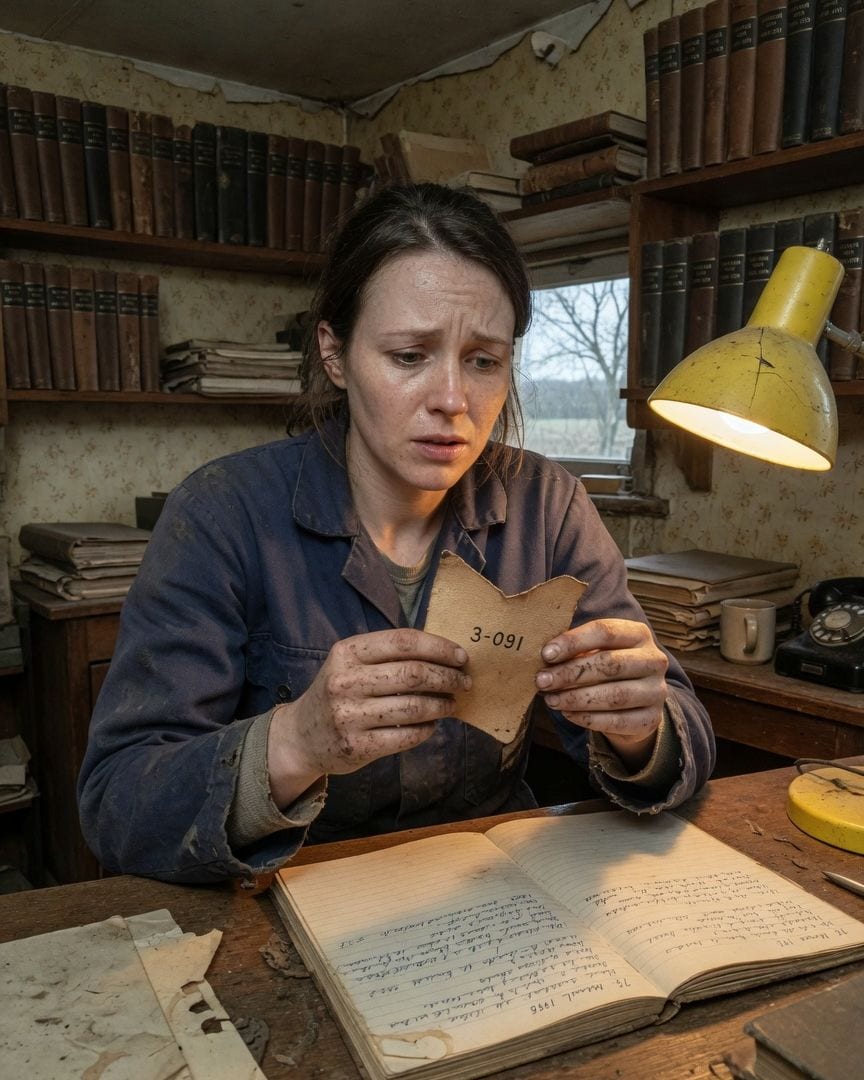
My cattle's ear-tag 3-091 returned this spring, retired by the ministry in 1974. Our old books show 3-091 reappearing every seven years since 1946.
This spring, I found ear tag 3-091 on a new calf. That number was officially retired decades ago, before I was born. My grandfather's old records showed the same tag 'lost' every seven years, with a chilling note: 'the tag returns of itself'.
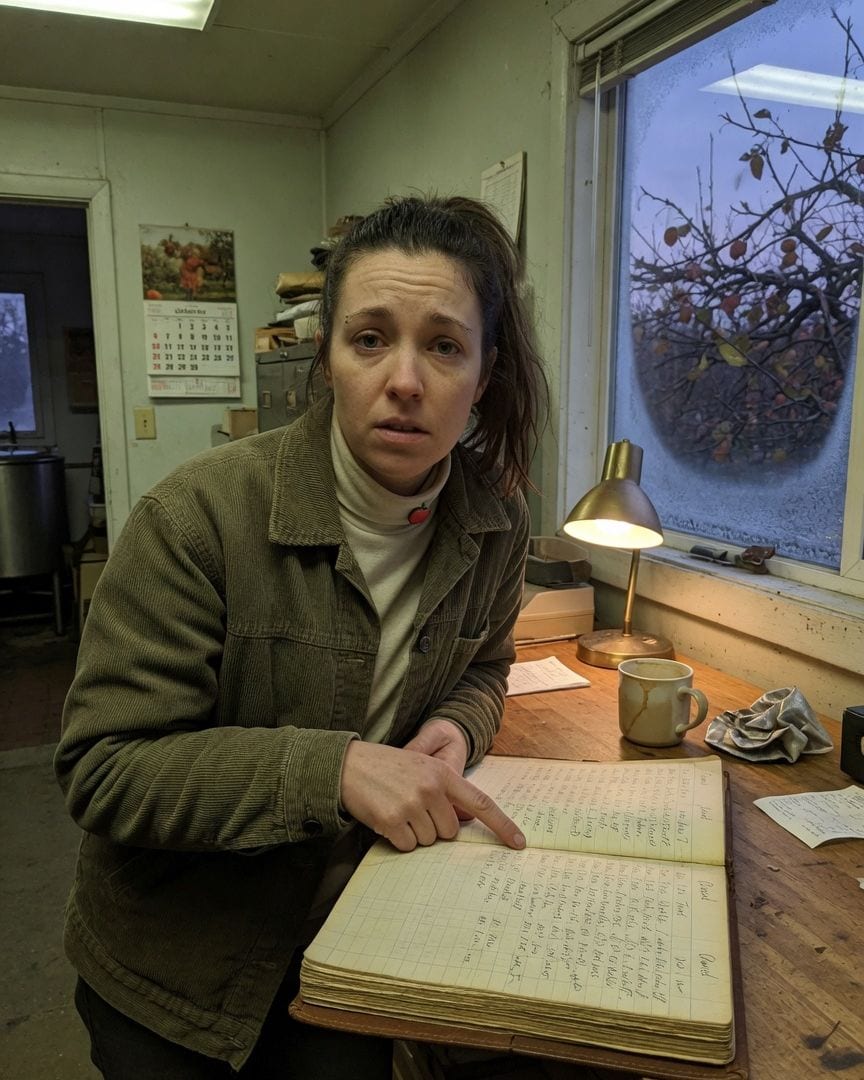
My orchard's picking ledger listed my apples two weeks early, showing the exact weight I took and, beside it, 'owed'.
Seeking quiet, I settled into a cottage by Felix Carver's apple orchard, dismissing his traditions about leaving 'the birds' share' apples. After I picked them, I found his old ledger. There, my exact apple weight was marked "Owed" in stark, new ink, dated a fortnight before I'd even touched the trees.
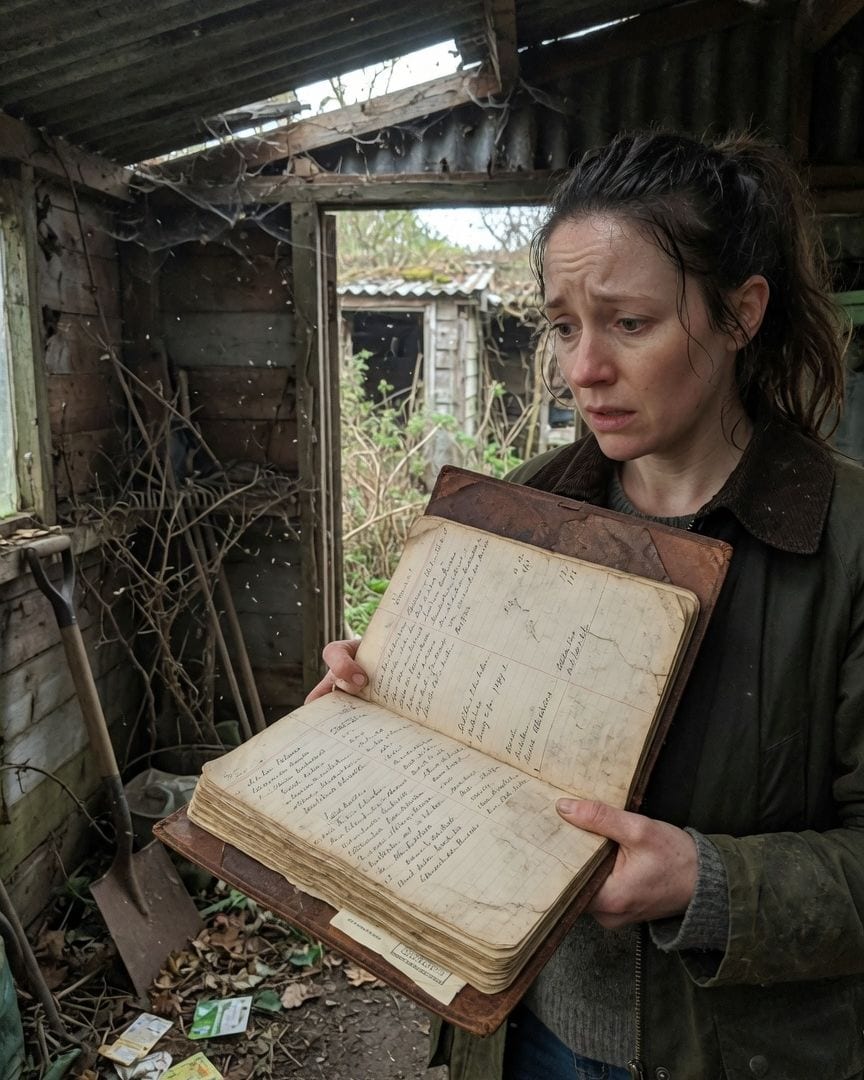
My mailbox holds my own obituary, updated weekly. The postmark reads Cold Ashby allotments, where there's only a standpipe and sheds.
Every Wednesday, a crisp white envelope arrives, containing my own obituary. It's mailed from the desolate Cold Ashby Allotments, a place with no post office, and each week a new, accurate detail of my life is added, leaving only the death date chillingly blank.
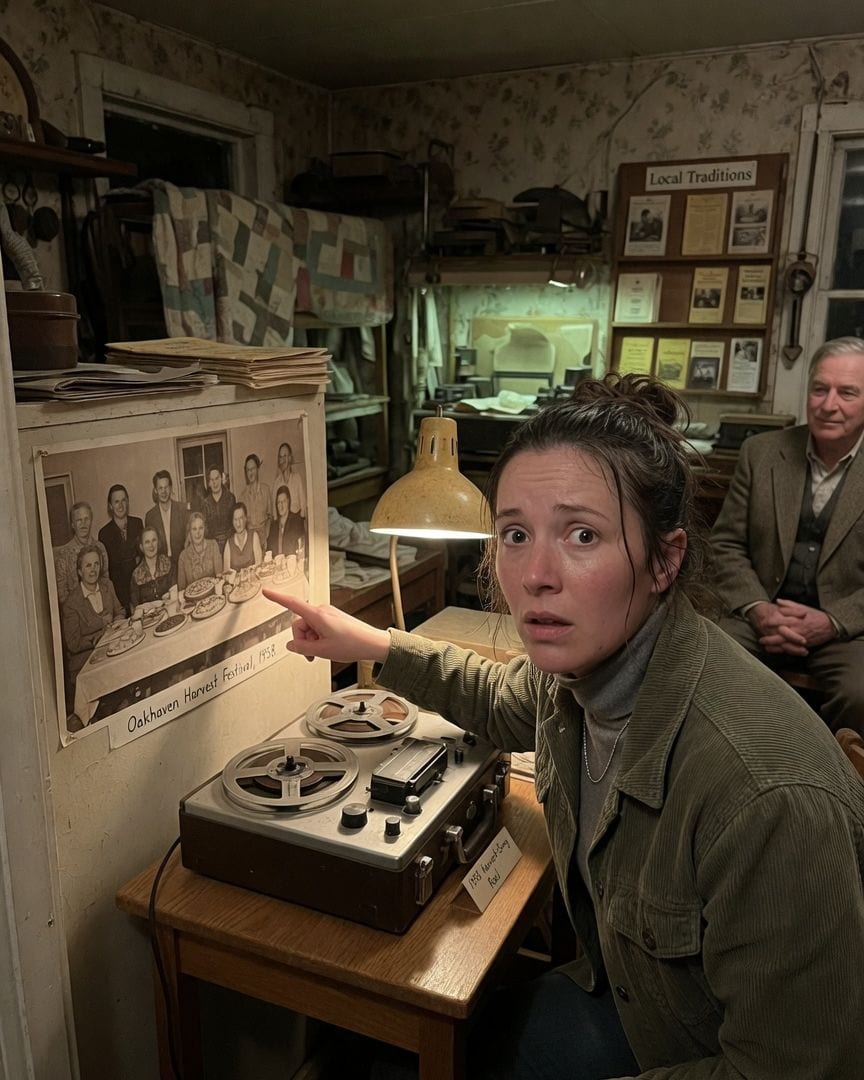
The folk museum's harvest tape counts one more singer than the photograph shows. The curator turned the recorder off before playing it.
I found a quiet escape at Oakhaven's dusty Folk Museum, where the curator played a rare 1958 harvest song. But as a cheerful tune filled the room, a low voice began to count. The tape tallied thirteen, yet the old photograph beside it showed only twelve smiling villagers.
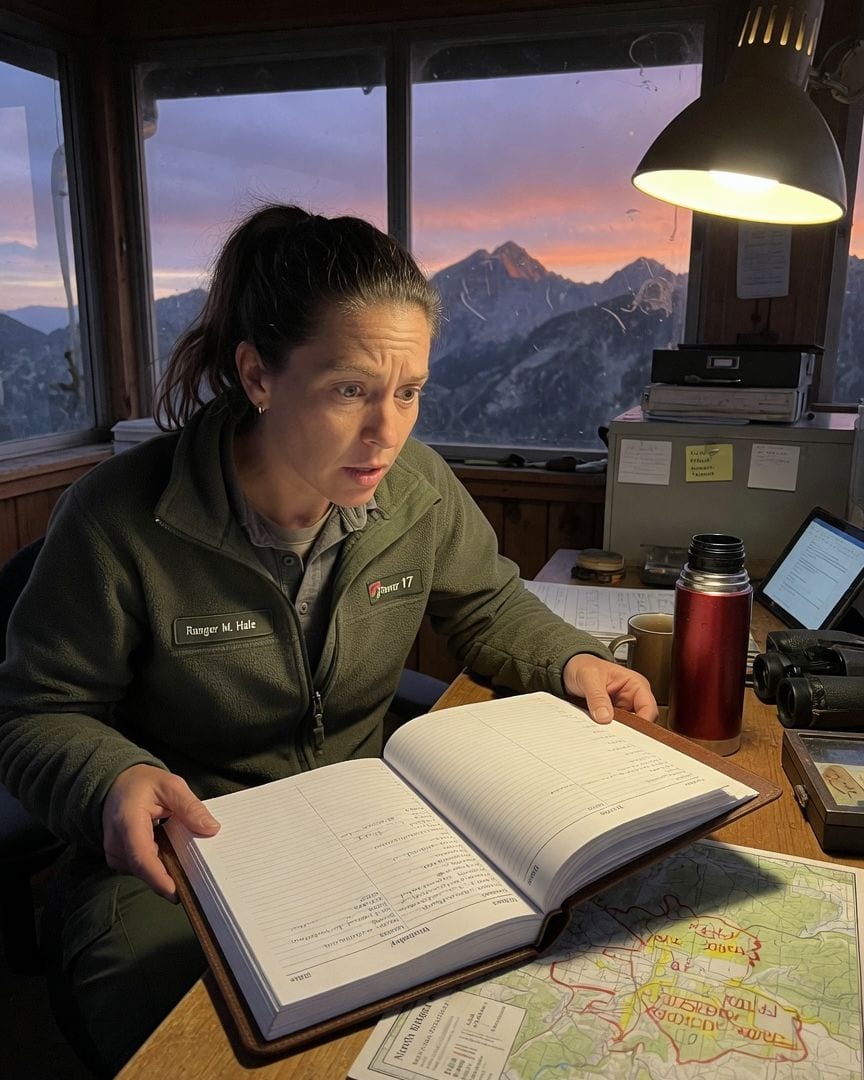
My fire lookout tower's summit register holds a blank space where the hiker's name should be. The trail he climbed has been closed since June.
As a ranger at Tower 17, I watched a hiker climb the North Ridge Trail, officially closed for months. Later, I opened the summit register where I'd just seen him sign, only to find the page unnervingly blank, as if no one had ever touched it.