The old phone box on Trellow Green hasn't worked in twenty years. But its call log shows a ninety-second outgoing call every New Year's Eve, always to the same disconnected number.
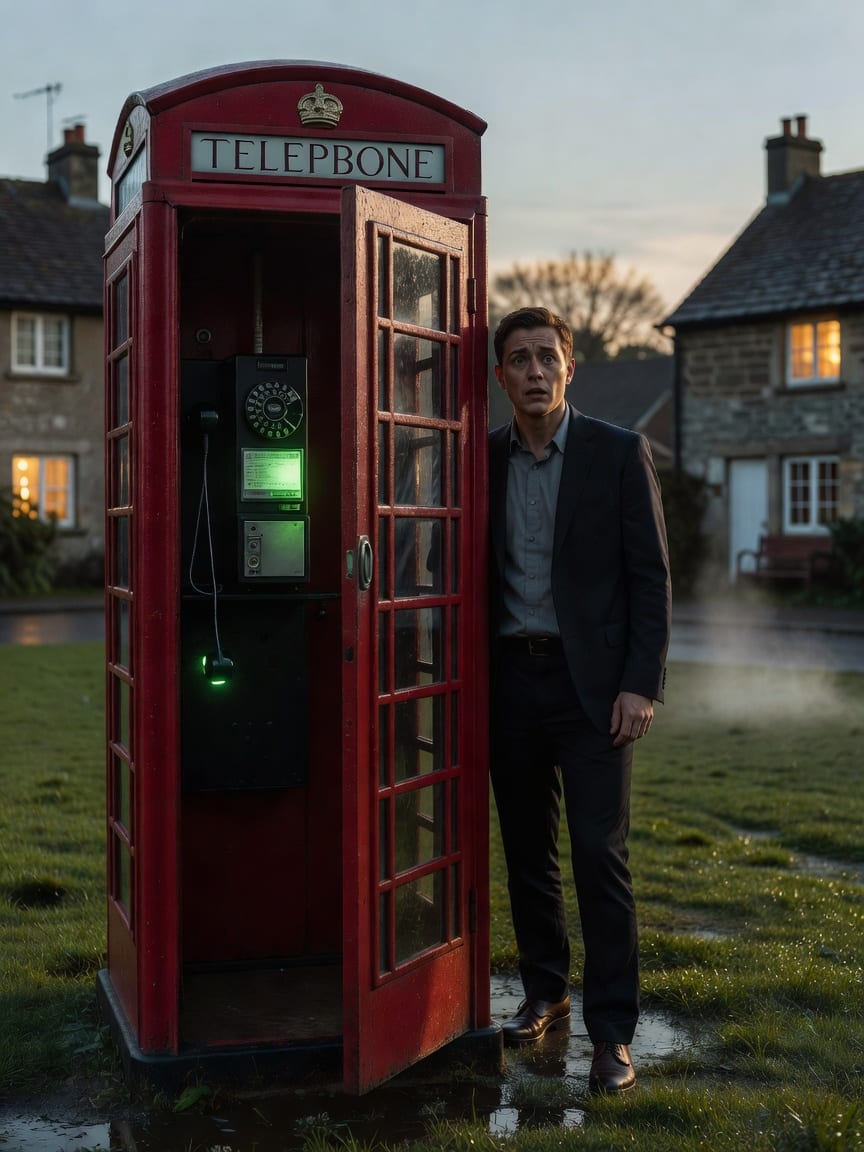
Trellow Green felt like stepping back in time. Quaint, isolated, and undeniably charming in the way only forgotten villages manage.
I’d moved here in the autumn, escaping the city’s constant noise, drawn by the quiet promise of rural life and a temporary contract cataloging local historical records.
Everyone knew the local joke about the red phone box on the village green; a relic, they called it, dead for decades. A faded splash of color against the perpetual grey of the village sky.
My work led me to Conrad Sullivan, a retired telephone exchange engineer, age 78. His small cottage, on the outskirts of the green, smelled of dust and old paper.
Over lukewarm tea in his cluttered kitchen, where ancient equipment gleamed dully from shelves, Conrad showed me a faded printout. It was a single page from an archived exchange log, yellowed at the edges.
A specific entry caught my eye: New Year's Eve, 11:59 PM. Listed under the Trellow Green phone box, an outgoing call, ninety seconds long, to a number Conrad swore had been disconnected since the 90s.
He'd kept it, not as proof of anything, but as an oddity, a 'ghost in the machine,' he’d called it.
"System glitch," I’d offered, trying to be helpful, trying to be rational. "Mislabelled line? Could be an internal test code." I traced the numbers with a finger. The timestamp, 11:59 PM, precisely. The duration, 90 seconds.
Conrad just shook his head, his gaze steady, his eyes holding a quiet certainty that made the figures on the page hum with a wrongness I couldn't ignore. The numbers weren’t a mistake. He truly believed it had happened.
The next day, I had to see it for myself. The phone box on Trellow Green was exactly as described. Paint peeled like sunburned skin. One pane of glass was spiderwebbed with a crack that caught the weak afternoon light.
Inside, it smelled of stale metal and damp earth. I lifted the receiver. It was dead weight, cold and inert in my hand. No dial tone. No light in the coin slot. Definitely disconnected. Yet, that log entry.
I ran my hand along the cold metal interior, searching for any sign of tampering, anything that could possibly explain Conrad's impossible record. The box felt hollow, a drum.
My fingers, tracing the grime-caked panels, noticed a faint scratch mark, almost hidden beneath decades of accumulated dirt, just behind where the coin slot would have been. I pressed against it, expecting nothing.
But there was a slight, almost imperceptible give. With a quiet click, a small, square metal panel slid inward, revealing a cramped, dusty cavity. It was dark in there, too small for anything substantial.
But my fingers brushed against something hard, metallic, and cold. It felt ancient, heavy, completely out of place in this modern, derelict shell.
I pulled back the loose metal panel inside the phone box, the cavity gaping. My fingers brushed against something cold and metallic: a small, tarnished silver locket. It was heavy, strangely warm against my skin despite its coldness.
As I pried it open, its hinge stiff with age, a faint click echoed in the quiet box. Inside, intricately engraved, were two initials: 'L.K.' Beneath them, a date. 'Dec 31, 1987'. A sickening lurch hit my stomach. That date.
It perfectly matched one of the impossible New Year's Eve call entries in Conrad's log. It wasn't just a glitch. Someone had been here. And they had left something behind.
The locket in my palm felt impossibly heavy for its size. For days, I poured over Trellow’s dusty archives, ignoring my official county work. The initials 'L.K.' kept snagging in my mind.
Eventually, they led me to a missing person report from 1988: Lorraine Kingsley, age 10, vanished on New Year's Day. No trace, no suspects. Just a local assumption she’d run away, the kind of dismissive closure that always stung.
I found similar, quieter reports from other years, all coinciding with Conrad's log entries – dates around New Year’s, always children.
I tried talking to locals. Everett Rutherford, age 55, who ran the village general store, just shook his head when I mentioned the Kingsley girl.
He was a plump, jovial man usually, but the mention of Lorraine made his face tighten. "Sad business," he mumbled, carefully avoiding my eyes as he restocked a shelf of tinned beans.
"Some things are just best left alone, Miss Caldwell." His voice was low, almost a warning.
Grace Yates, the oldest resident, age 85, lived in a cottage near the church.
When I visited, she merely offered me a cup of lukewarm, milky tea, her gaze unnervingly calm as I tried to broach the subject of the phone box, the locket, the disappearances.
She listened, her hands clasped, her eyes like polished stones. She didn’t deny anything, but she didn’t confirm it either. The town, I realized, wasn't just unaware; it was agreed.
There was a tacit understanding, a shared silence that was more chilling than any outright threat.
The subtle evasions escalated. I returned to my cottage one evening to find my kitchen window, which I always latched, slightly ajar. The old wood groaned in the draft. I checked the latch again, firm. It had been secured.
Nothing was missing, but my research notes, left neatly stacked on the table, were subtly rearranged. A few pages were turned down, a newspaper clipping about Lorraine Kingsley moved to the top. It wasn't a draft, I knew.
It wasn't an accident.
A few days later, while I was at the library, the librarian, a nervous, jumpy woman, sidled up to me. "Everett Rutherford was asking about you, Miss Caldwell," she whispered, her voice barely audible.
"Specifically, 'what that young woman was digging up'." Her eyes darted around the room.
Later that week, a small, hand-printed note appeared tucked under my door wiper. It was written on thick, aged paper, the kind of stock you don't see anymore. The handwriting was careful, deliberate, but entirely anonymous.
'Trellow cares for its own,' it read. 'Don't interfere.' No salutation, no signature. The message was clear, the threat unspoken, but heavy in the air, cold as the autumn wind.
The town wasn't just avoiding the truth; it was actively guarding it. The quiet agreement now felt like a suffocating blanket, and I realized I was no longer just investigating; I was being watched, assessed.
Every move I made, every question I asked, was noted.
I decided to confront Grace Yates again. Her cottage felt colder than usual, the fire in the hearth barely glowing embers.
I brought the tarnished silver locket and the newspaper clippings of the missing children, laying them on her polished oak table like evidence. Grace, seated by her hearth, watched me without a flicker of surprise, her ancient hands still.
"You’ve been digging where you shouldn't, child," she said, her voice like dry leaves rustling in a forgotten corner. "The box… it’s always been there, in one form or another. A way to hear what the land asks for."
My blood ran cold. "What does it ask for, Grace? And why are children disappearing around New Year's Eve?"
Grace sighed, a sound like paper crumbling to dust. "The land gives, Zoe. Good harvests, clean water, peace. A shelter from the world's harshness, this Trellow is. But it asks for its due. A balance."
She looked at me then, her gaze unwavering. "The 'disconnected number' isn't disconnected at all, child. It's the frequency of the land's voice. That ninety-second call? That’s the precise time it takes for the 'answer' to be accepted."
My stomach clenched. "The town," she continued, her voice devoid of emotion, "has simply learned to manage it, to ensure the 'answer' is always found.
The names in Conrad's log weren't just phantom calls; they were records of the 'gifts' the town had given."
I could barely breathe. The pieces, horrifying and grotesque, were snapping into place with sickening clarity. The town knew. They had always known.
"It's a duty," Grace finished, her eyes fixed on the dying embers in the hearth, their light reflecting like tiny, ancient fires. "A terrible duty, yes. But it ensures Trellow thrives. It protects the rest of us."
The silence in the room pressed in, heavy and thick with generations of complicity.
I stared, the pieces clicking into a horrifying, unspeakable whole. "A duty? To sacrifice children?" The words tasted like ash. Grace merely reached a trembling hand to a hidden shelf built into the hearth.
From behind a stack of weathered prayer books, she pulled out a dusty, leather-bound book. It was a ledger, its pages brittle and yellowed, smelling faintly of parchment and earth.
"Some are chosen, Zoe," Grace said, her voice soft, almost pitying, as she opened the book to a heavily marked page. The spine groaned. "Born under the right stars, you see. Special children. The land recognizes them."
It was a list of names, generations of Trellow families, with specific birthdates highlighted in faded ink. Next to some names were cryptic symbols I couldn't decipher, and next to others, a single, stark date.
My eyes scanned the page, a cold dread seeping into my bones. There, clear as day: 'Lorraine Kingsley,' marked clearly with 'Dec 31, 1987'. The locket grew warm in my hand, as if it was crying out.
Then, lower down on the page, my gaze snagged on a more recent entry, a name I recognized instantly from the village school, from a flyer I'd seen for the Christmas pageant: 'Lily Pennington.'
Beside Lily’s birthdate, an ominous mark, just like Lorraine’s, and the date of the approaching New Year's Eve, circled in faded ink. The call wasn't just a demand; it was a selection, predetermined. Lily was next.
New Year's Eve arrived, cold and clear, the air stinging my lungs. I hadn't slept, hadn't eaten. Lily Pennington’s name burned in my mind. I couldn't let her be taken. I had to break the cycle.
As the clock on my phone neared 11:50 PM, I raced towards the phone box, a heavy wrench clutched in my hand. The quiet village green stretched before me, lit only by the distant streetlights.
I heard footsteps behind me, quickening on the gravel. Grace Yates and Everett Rutherford emerged from the shadows near the old oak tree, their faces grim, but resolute. Grace’s eyes held a terrible, ancient sadness. Everett’s jaw was set.
"You can't interfere, Zoe," Grace said, her voice firm, carrying across the cold air. "You'll doom us all. You don't understand."
Everett moved to block my path, not with violence, but with a desperate, quiet determination, his hands outstretched. "It's for the good of Trellow, Miss Caldwell! Please, you have no idea what it will do if you stop it!"
I dodged past him, wrench raised. The phone box ahead of me began to hum, a low, resonant thrum that vibrated through the ground, up my feet, and into my teeth. It was an impossible sound.
The receiver, still on its hook, started to glow with a faint, sickly green light, pulsing like a dying ember. Inside, the rotary dial, fixed for decades, began to slowly, impossibly, turn on its own. It was dialing out.
I swung the wrench, a primal scream tearing from my throat. The glass shattered with a deafening crack, splinters flying like ice. I tore at the internal wiring, ripping and pulling with desperate force.
Sparks flew, spitting fire into the dark, the hum sputtered violently, and the green light flickered, dying. The dial stopped its slow, deliberate rotation.
Grace gasped, a sound of pure despair, like a broken bird. Everett lunged towards me, but I was already running, the damaged phone box and the devastated faces of the townsfolk fading behind me into the unforgiving New Year's night.
I never looked back at Trellow. I drove until the sun rose, the heavy silver locket and the tattered, damning ledger clutched tight in my passenger seat.
I tried to tell my story to a sympathetic cousin, then to a skeptical local sheriff in a town two counties over. But the words sounded hollow, unbelievable, even to my own ears.
They saw a distraught woman, not a witness to an ancient, unspeakable horror. They saw grief, paranoia. They did not see truth.
The phone box on Trellow Green was reported vandalized a few days later, then quietly repaired. Lily Pennington was safe, for now. But I knew. I knew the town would simply rebuild, wait, and find another way.
I carried the truth, a heavy burden, but no one outside Trellow would ever believe it.
I moved far away, starting over. I kept the locket and the ledger hidden, a constant, chilling reminder of Trellow’s terrible pact. I avoided small towns, especially those with quaint village greens and a quiet certainty in their residents' eyes.
Years passed. The raw edge of the memory dulled, but never vanished.
One day, a brief local news report caught my eye: 'Trellow celebrates record-breaking harvest, unusual prosperity continues.' I closed the browser, the screen reflecting my face, tired and haunted. I knew.
The town’s silence isn't peace; it's just the pause before the next call.
If this one got to you
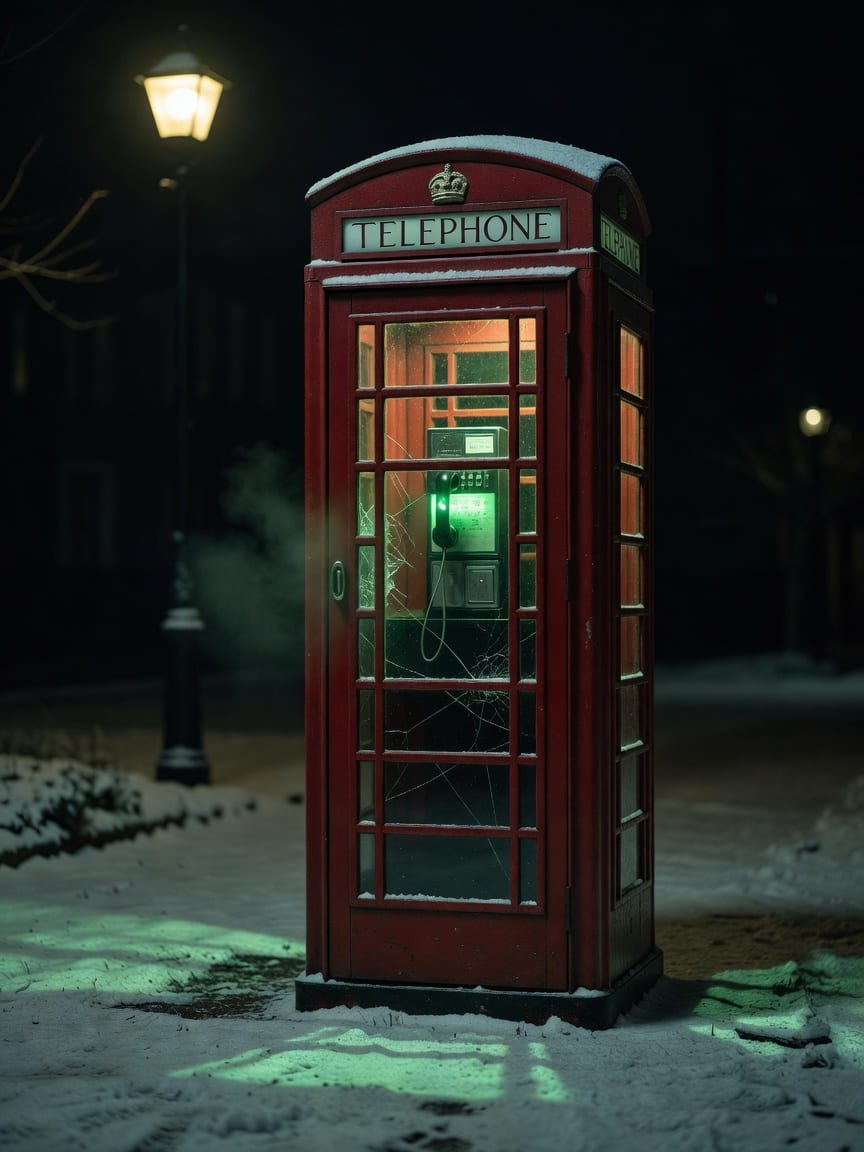
The phone box on our town green makes a call every New Year's Eve at 11:59. It's been dead for twenty years, and calls the same disconnected number.
Moving to Trellow for a quiet life, I quickly learned about the village's red phone box, a relic everyone agreed was dead for decades. But then a retired engineer showed me its call log. Every New Year's Eve for the past twenty years, it records a 90-second outgoing call from that very box, always at 11:59 PM to a disconnected number.
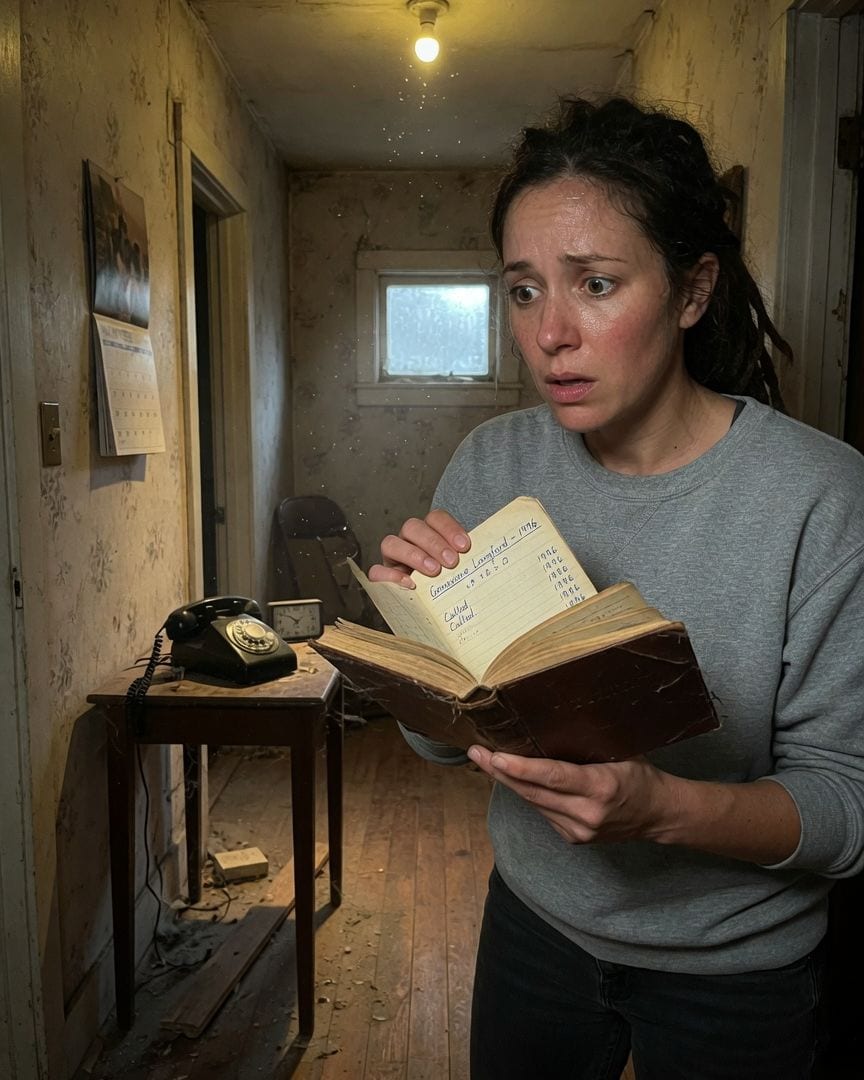
My dead rotary phone rings at 8:05 every night. I pick it up. A room full of voices, then a woman drawing breath.
I inherited an old house, complete with a black rotary phone that the company confirmed was disconnected in 1996. Yet, most evenings at 8:05 PM, it rings. When I pick up, a distant murmur fills the line, followed by a woman drawing a deep, shuddering breath every single time.
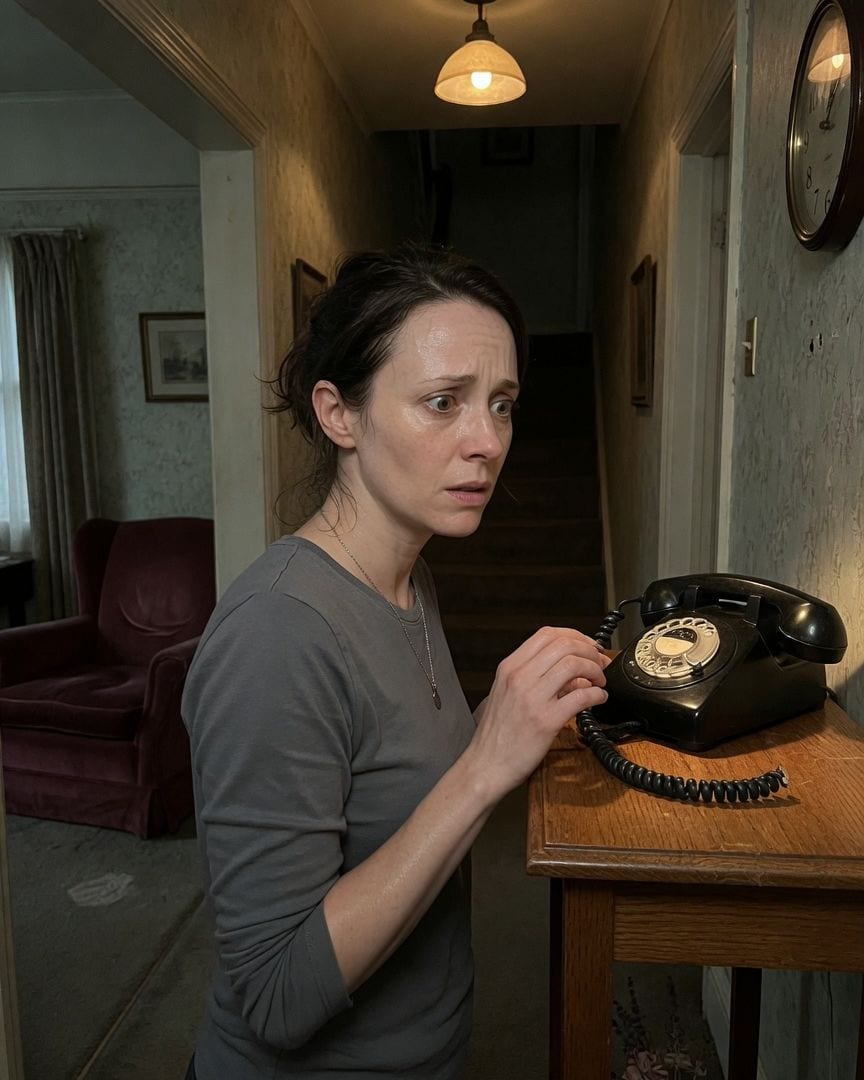
My disconnected Bakelite phone dials itself at 8 PM, receiver warm, always the same three numbers, humming a sound no dead line should make. I live alone.
As a new homeowner, I, Penelope Vaughn, found an antique Bakelite phone in my hall, its line long dead. But every night at 8 PM, the receiver is off its cradle, faintly warm to the touch, and the dial half-spun to the same three digits, making an impossible hum.
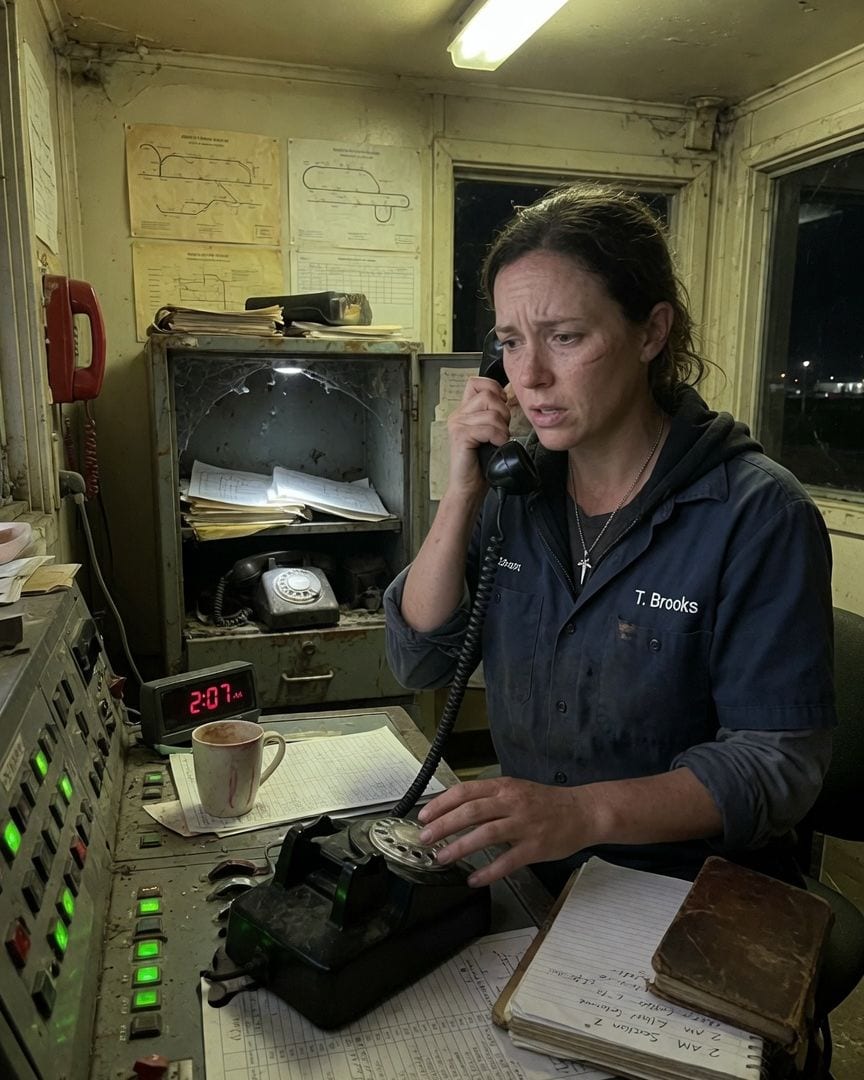
My signal box gets a 2 AM call every night from a man whose section was demolished eleven years ago. Now I found his logbook with today's date.
My night shift at the signal box is quiet and precise, defined by the routine 2 AM call from Ellis confirming Section 7 is clear. But when I asked my duty manager to log it, he said Section 7 hasn't had a track walker in eleven years, not since its cabin and phone were demolished.
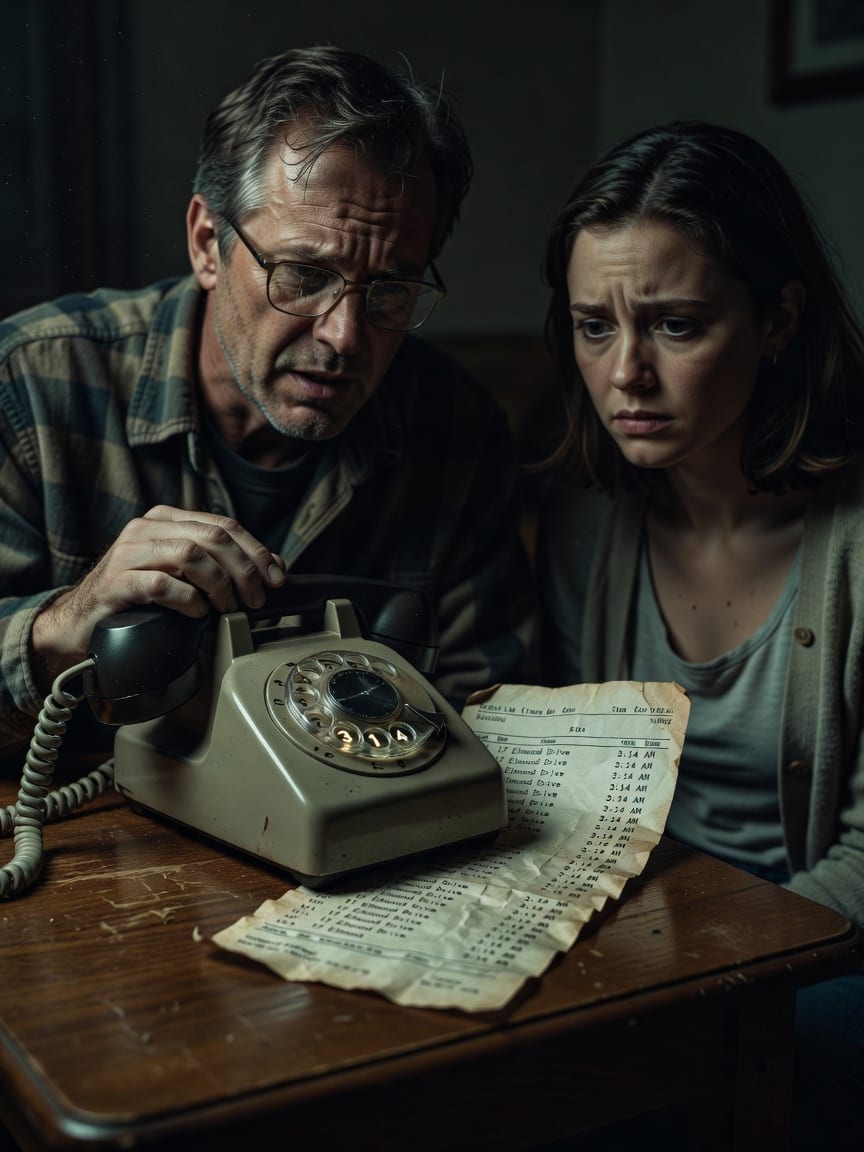
My phone bill itemised forty calls from my number to a house demolished in 1990. Each call at 3:14 AM, lasting eleven minutes. The bill arrived postmarked from a flattened building.
I expected the usual mobile bill, but my landline statement listed forty calls from my number to '17 Elmwood Drive.' That address was for a house torn down in 1990, a vacant lot I remembered from childhood. The phone company insisted the calls were legitimate, leaving me profoundly unsettled by the impossible charges.
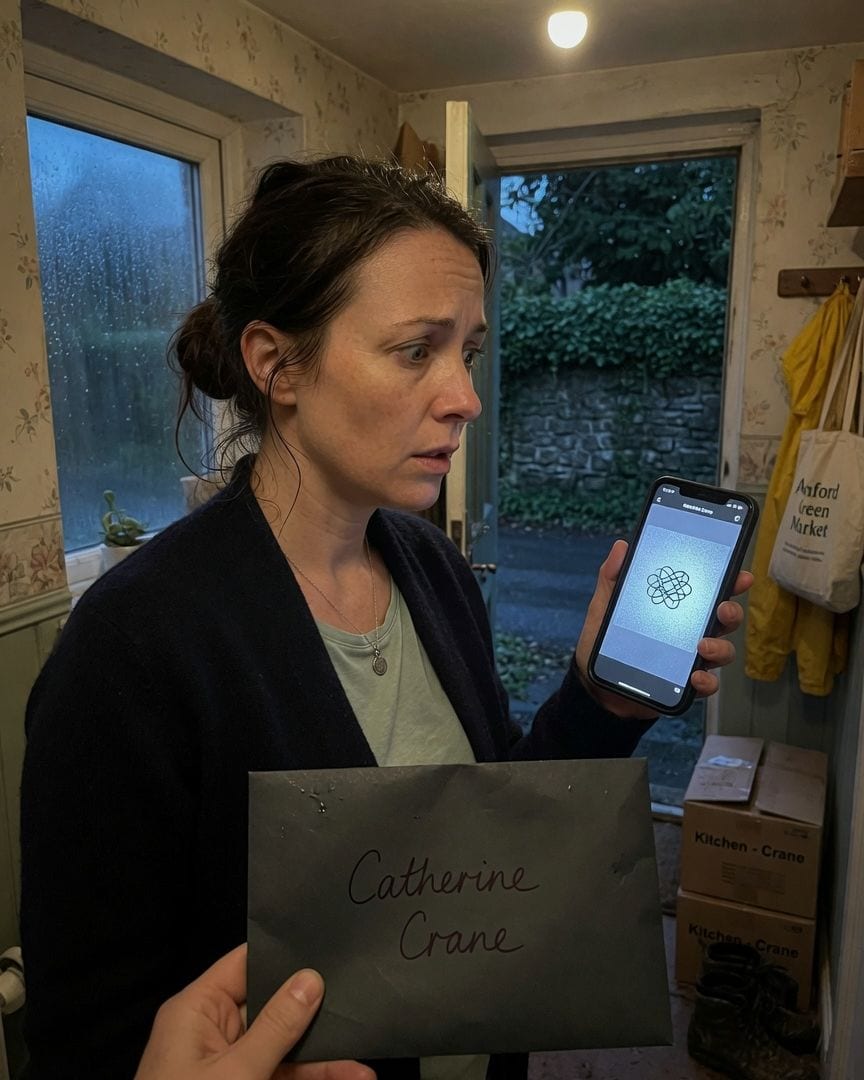
My postman warned me: never use the old pillar box. Royal Mail logs a collection every day, one item, signed by no one.
Moving to Ashford Green, I dismissed my postman's strange warning about the old pillar box by the ford. But after my own letter vanished inside it, I returned at midnight. Then, a dark, unstamped envelope slowly slid *out* of the slot, addressed to me.