The phone box on our town green makes a call every New Year's Eve at 11:59. It's been dead for twenty years, and calls the same disconnected number.
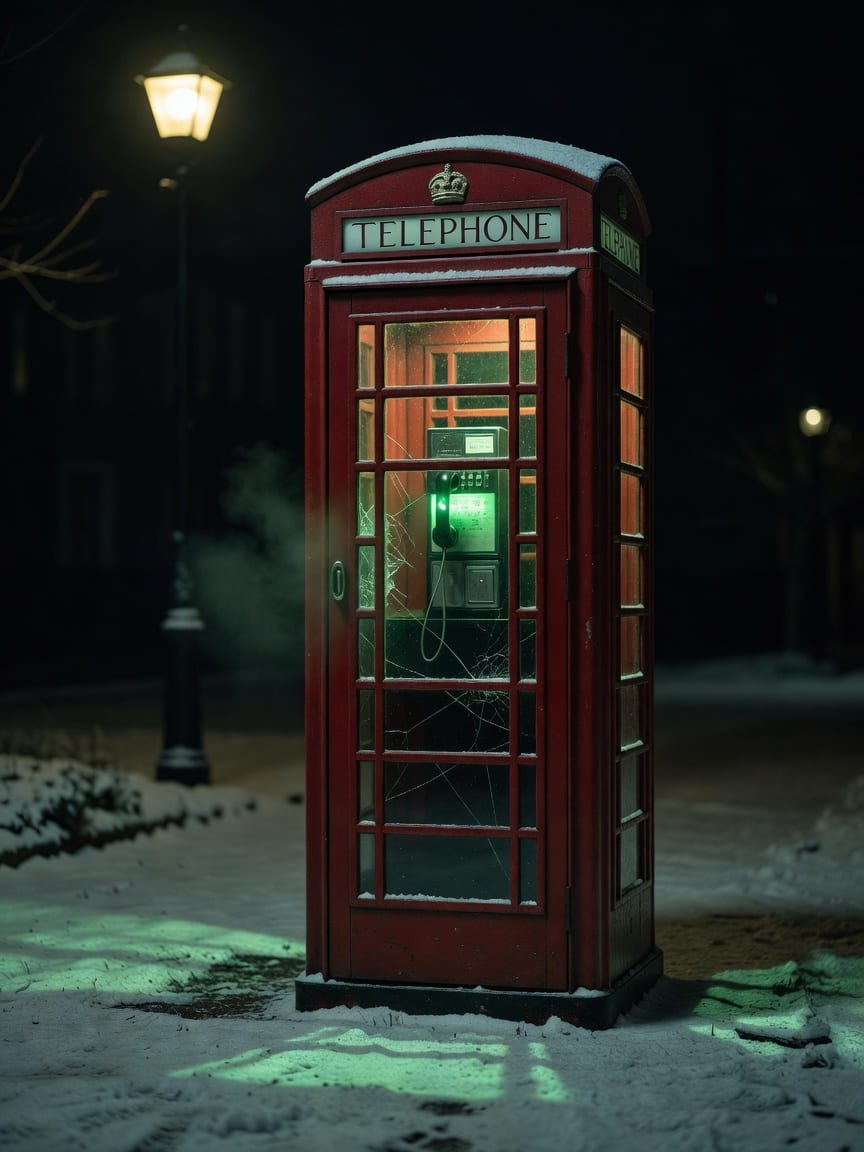
Trellow was the kind of town where time felt less like a river and more like a stagnant pond. Charming, the realtors said.
Anachronistic, I thought, as an archivist who’d just moved in, looking for a quiet life away from city noise.
The red phone box on the village green was a perfect example: a faded sentinel under a skeletal oak, its paint peeling, glass opaque with grime. Everyone in town told me it hadn't worked in decades.
A landmark, they said, a relic.
But one detail snagged me, right between the ribs. Dean Yates, a retired telecom engineer with a neatly trimmed white beard and a fetish for old records, invited me over for tea. He kept everything.
Over his chipped kitchen table, he showed me a printout from the exchange. His pride and joy, he called it, proof of the network's ghost in the machine. It was the call log.
Every New Year’s Eve, for the past twenty years—precisely since the box was officially decommissioned—the log recorded a ninety-second outgoing call from that specific phone box. Always at 11:59 PM. Always to the same disconnected number.
Dean scratched his head, a thoughtful frown creasing his brow. "Must be a persistent system glitch, Vanessa. Doesn't make a lick of sense, does it? A dead line making a ninety-second call, every damn year, like clockwork."
He laughed, a dry, rattling sound. I didn't. Staring at the cold, hard data, at the precise timestamp that never wavered, I felt a prickle of unease. A dead thing shouldn't call out. Not like that.
Not with such unnerving regularity.
Dean’s printout folded tight in my pocket, I went to the phone box. It stood just as I remembered, beneath the oak that clawed at a slate-grey sky. The silence of the green swallowed the last whisper of traffic.
I pushed open the heavy door, a squeal of rusty hinges echoing in the sudden enclosure. The air inside was still and thick, smelling of dust and stale metal. I lifted the receiver. It was heavy, cold, slick with grime.
No dial tone. Nothing. Just the hollow, dead weight of it against my ear.
I ran my fingers along the interior, checking every crevice, every seam, my phone’s flashlight cutting through the gloom. Dust, cobwebs, a few ancient gum wrappers. Nothing.
My gaze fell on the coin slot, clogged with decades of forgotten transactions and fine grey grit. I rattled it, then pressed my finger deep inside, feeling around the rarely-checked coin return mechanism.
It was almost a reflex, a researcher’s compulsion to check the unseen. My fingers snagged on something small, hard, and smooth. My breath caught, a tiny gasp in the stagnant air.
I wiggled it free, pulling it out into the meagre light filtering through the grimy glass. It was a small, dark piece of wood, no bigger than my thumb. Worn smooth by age, the edges rounded.
On one side, a single, intricate symbol was carved, not etched lightly, but deeply worn, as if by repeated touch. It looked ancient, utterly out of place, and impossibly deliberate. This wasn't a glitch. This was a message.
Or a marker. Hidden in plain sight, waiting.
The symbol was unlike anything I recognized from local craft or folklore. A swirling, almost abstract shape, both unsettling and mesmerizing. It felt impossibly old, radiating a silent, cold weight in my palm.
The phone box suddenly seemed less like a quaint relic and more like a silent, watchful sentinel. A shiver traced its way down my spine, tightening my shoulders. The air around me felt heavy, still, no longer just stale.
I glanced around the deserted green, the quiet houses lining its edge, windows like blank eyes. Had someone put it there? Or was it something else, a secret left behind?
The token hummed faintly, not with sound, but with a palpable sense of wrongness, a hidden weapon now in my hand.
For days, I buried myself in Trellow’s small, dusty historical society archive. My fingers, stained with centuries of ink and grime, fumbled through ledgers and parish registers. I was looking for that symbol.
It wasn't in any of the town’s official crests, not in its family histories, not in the local craft guides.
But then, in the margins of old parish registers, near entries for 'unfortunate disappearances' or 'town contributions,' I started finding faint, almost identical markings. Always around the turn of the New Year. Stretching back generations.
The mentions were vague, easily dismissed as coincidences, brief notes scribbled next to names that just… vanished. But the consistency nagged at me, a cold little tickle at the back of my mind.
When I tried to ask locals about the phone box or the symbol, conversations abruptly dried up. Shopkeepers suddenly remembered urgent tasks at the back of their stores.
Neighbors, who’d been so friendly just weeks before, found reasons to hurry past me on the street, their eyes fixed on the pavement. Their polite evasions were more chilling than any outright hostility.
It was a wall of quiet, communal agreement, a collective amnesia that seemed to descend like a fog. I even returned to Dean, hoping he might have more 'glitches' in his old records, something to explain what I was seeing.
He just shook his head, looking troubled, his usual meticulousness replaced by a deep unease. "Let sleeping wires lie, Vanessa," he’d mumbled, avoiding my gaze.
The more I dug, the more the town closed ranks, and the more specific my unease became. This wasn't just a glitch. This was an active, collective omission.
My investigation didn't go unnoticed. I was hunched over an old, brittle map of Trellow, tracing the forgotten paths of ancestral farms, when a shadow fell across the page.
Helen Montgomery, a woman whose 85 years sat on her like a heavy cloak, stood there. Her sharp mind was legendary in Trellow, as was her even sharper tongue.
She didn't threaten, but her words carried a weight that made my stomach clench.
"Some things, child," Helen said, her voice dry as old leaves crumbling in winter, "are best left undisturbed. Trellow has its ways. Always has." Her gaze, ancient and piercing, dropped to the table.
I'd carelessly left the wooden token beside my notebook. Her eyes lingered on the symbol, and for a split second, I saw a flicker of something truly old in them, something cold and knowing. "You're new here.
You don't understand the cost of interfering with the old ways." Her calm certainty, the way she spoke like she was reciting an undeniable truth, was more unsettling than any outright anger.
For the rest of the week, Helen’s presence felt like a constant, unnerving pressure. Her eyes followed me.
I started noticing the way curtains twitched in windows as I passed, the sudden, awkward quiet that fell over conversations when I entered a room. I was no longer just an archivist digging into old stories. I was being observed.
Assessed. The polite evasions had shifted. Now, it felt like a silent scrutiny.
I couldn’t shake it. The token burned in my pocket. The coded entries in the archives flashed behind my eyes. I knew what I had to do.
I found Helen Montgomery in her small, neat cottage, pruning roses in the chilly afternoon air. She straightened as I approached, her gaze unwavering. I didn’t waste time.
I laid Dean's call log printout on her garden table, its stark data a defiant white against the weathered wood. Beside it, I placed the small, dark wooden token.
"What is this, Helen?" I pressed, my voice low, trying to keep it steady. "What does this phone box really do?"
Helen sighed, a sound like dry leaves rustling in a forgotten corner. She looked at the token, not at me, her gaze fixed on the carved symbol.
"It's a conduit," she admitted, her voice soft, but with an edge of steel beneath it. "For the Tribute. It's how we keep the quiet."
A chill snaked up my spine. "Tribute? To what? And why a disconnected number? Dean says it’s dead."
Her eyes finally met mine, utterly devoid of warmth. "The Number isn't disconnected to It, dear. It's Its address. Every few years, It demands a voice, a presence. A Caller. The phone box is where the transfer happens."
My mind raced, every wrong detail in Trellow suddenly snapping into focus. The 'disappearances' in the old records, the town's pervasive silence, Dean's uncomfortable warnings. "So, someone makes the call, and then… what? They just leave Trellow?"
"They are taken," Helen said, her voice gaining a detached, almost ritualistic tone. "Through the line. Their body remains, sometimes. But their memory fades from the town, like mist. It ensures Trellow's peace for another cycle."
She nodded towards the token. "That little piece of wood? A mark left by those who had been chosen. A small, desperate act of defiance, maybe. Or a final, silent scream."
Every clue, every hushed word, every blank entry in the dusty records, snapped into horrifying focus. The 'rule' wasn't a quaint superstition; it was a warning. A desperate, generations-old management of a terrible truth.
I stared at the token, then back at Helen, my throat tight. "Who chooses the Caller?" I asked, my voice barely a whisper, afraid of the answer.
Helen rose, her movements slow, deliberate, belying her age. She walked to an old, locked cabinet tucked in a corner of her sitting room, its dark wood gleaming faintly in the low light.
She fumbled with a small brass key, then pulled out a brittle, leather-bound ledger, its pages yellowed with age, smelling faintly of lavender and dust. "The pattern chooses them, dear. The town guides it. Subtly."
She opened it to a page filled with neat, spidery script: names and cryptic notations, dates stretching back centuries. "Newcomers. Those who show too much interest. Those who disturb the quiet.
The next entry is blank, but the criteria are clear." Helen’s gnarled finger traced a line of text, a list of traits, of circumstances. I leaned in, my heart hammering against my ribs, and read.
My eyes darted between the ancient ledger and my own recent history: my move to Trellow, my relentless digging into its secrets, my refusal to 'let sleeping wires lie.'
A cold dread, far deeper than before, washed over me, a physical sickness. The traits on the page, the subtle pattern of selection, the unspoken criteria for the next 'Caller' – they weren't just a general description.
They were a chillingly precise mirror of my own life, my own actions. Helen’s gaze, knowing and utterly resigned, settled on me. "It's almost New Year's Eve, Vanessa."
I snatched the ledger from Helen’s hands, my fingers shaking. “You mean I’m next?” My voice was raw, a desperate clawing sound in the quiet room.
Helen nodded slowly, her face devoid of emotion. “The entity demands a fresh voice, a new perspective. Your curiosity, your persistence – it marks you. You’ve been chosen.”
The full horror detonated in my mind, a blinding flash of understanding that twisted my gut into knots. The call log wasn’t just a record of a call; it was a record of a soul being taken, a life erased.
The ninety seconds wasn’t a duration; it was the time of transfer, the precise window of a human mind being ripped through the line.
The disconnected number was not a failure of the phone system, but a successful connection to something ancient, something beyond comprehension.
The token in my pocket, worn smooth by generations of desperate hands, wasn't a memento mori, it was a memento viventi – a chilling memento of those who had gone before, a silent witness to their last, futile act.
The town’s quiet agreement, its gentle warnings, its collective amnesia – it was all a carefully orchestrated system, a generations-old pact to funnel the next ‘Caller’ into the entity’s grasp, to preserve their own fragile peace.
Helen explained that the bodies of the taken often remained, hollowed husks, their minds wiped clean, their personalities gone, becoming quiet, forgetful residents until their eventual, unremarkable deaths.
“It’s how Trellow survives,” Helen said, without a trace of remorse, her voice flat, matter-of-fact. “A small price for the rest of us.”
New Year’s Eve. The air was thick with the scent of woodsmoke and the nervous energy of anticipation. The clock in the town square crept towards 11:59. My heart hammered, a frantic drum against my ribs.
I knew I couldn’t let it happen. Not to me. Not to anyone else, not again. I grabbed a heavy wrench from my toolkit, its cold steel a comfort in my shaking hand, and raced towards the phone box.
I had to break the conduit, sever the connection, shatter the cycle.
As I neared the green, figures emerged from the shadows – Helen, Dean, and several other townsfolk, their faces expressionless in the faint glow of the streetlights.
Their movements were slow and deliberate, blocking my path, forming a silent cordon around the phone box. “It’s time, Vanessa,” Helen said, her voice flat, devoid of its usual dry crispness. “Don’t fight it. It’s for the good of Trellow.”
They didn’t threaten me, didn’t raise their voices, but their collective, silent resolve was terrifying. It was a single, implacable will.
I dodged Dean’s outstretched hand, my breath catching. My eyes locked on the phone box, its red paint almost black in the gloom. I swung the wrench, not at them, but at the glass panel of the phone box itself.
The glass shattered with a deafening crash, a spiderweb of cracks spreading before the whole panel exploded inwards, raining shards onto the frosty ground.
The metal frame buckled under the impact, wires sparking and tearing, the receiver ripped from its cradle.
The townspeople gasped, a collective wave of shock rippling through them, their unified front momentarily broken. For a moment, they froze, their ritual broken, the conduit fractured. I didn’t wait.
I ran, sprinting through the broken glass and scattering figures, the wooden token still clutched tight in my hand, the crumpled photograph of the coded list digging into my pocket.
I could feel their eyes on me, a chilling, collective gaze that followed me like a physical weight as I fled Trellow, leaving everything behind, pursued by the town’s quiet fury.
I never looked back. I drove until the gas tank was empty, then bought more fuel and kept going. Miles blurred into hundreds, then thousands.
News reports about 'vandalism on Trellow green' briefly surfaced, then died, dismissed as a small-town incident. The phone box was quickly replaced, a new, identical red booth standing silently beneath the oak, its glass pristine, its purpose restored.
The town settled back into its quiet rhythm, its terrible secret intact. My old apartment in Trellow sat empty, my belongings left behind, abandoned. No one in Trellow spoke my name again.
The broken glass was swept away, the incident forgotten, the cycle quietly waiting for its next opportunity, another newcomer.
I live hundreds of miles away now, in a city where no one knows Trellow. I have the token, wrapped in cloth, hidden deep in a lockbox. I have a photograph of the coded list, the names, the patterns.
I try to tell people, to warn them, but they just smile, polite and disbelieving. To them, it’s just a story, the ramblings of someone who’s seen too much.
They don’t see the quiet agreement in certain eyes, the way some towns hold their secrets. They don’t feel the chill when a phone rings, unanswered, after midnight. The silence of my new life is louder than any ringing phone.
If this one got to you
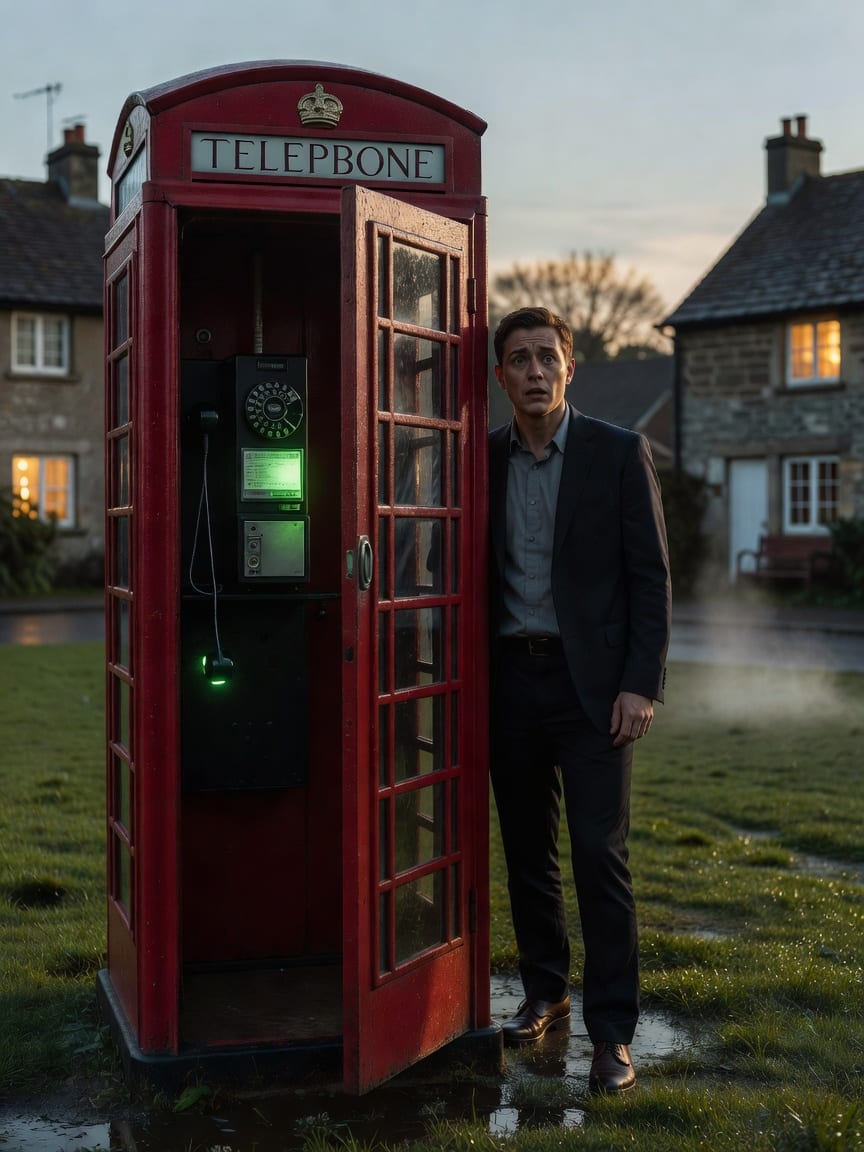
The old phone box on Trellow Green hasn't worked in twenty years. But its call log shows a ninety-second outgoing call every New Year's Eve, always to the same disconnected number.
I moved to the quiet village of Trellow Green, drawn by its charm and the local joke about the old, dead phone box. But a retired engineer showed me a log of an impossible outgoing call made from it on New Year's Eve, to a number disconnected for decades. How could a dead phone make a call?
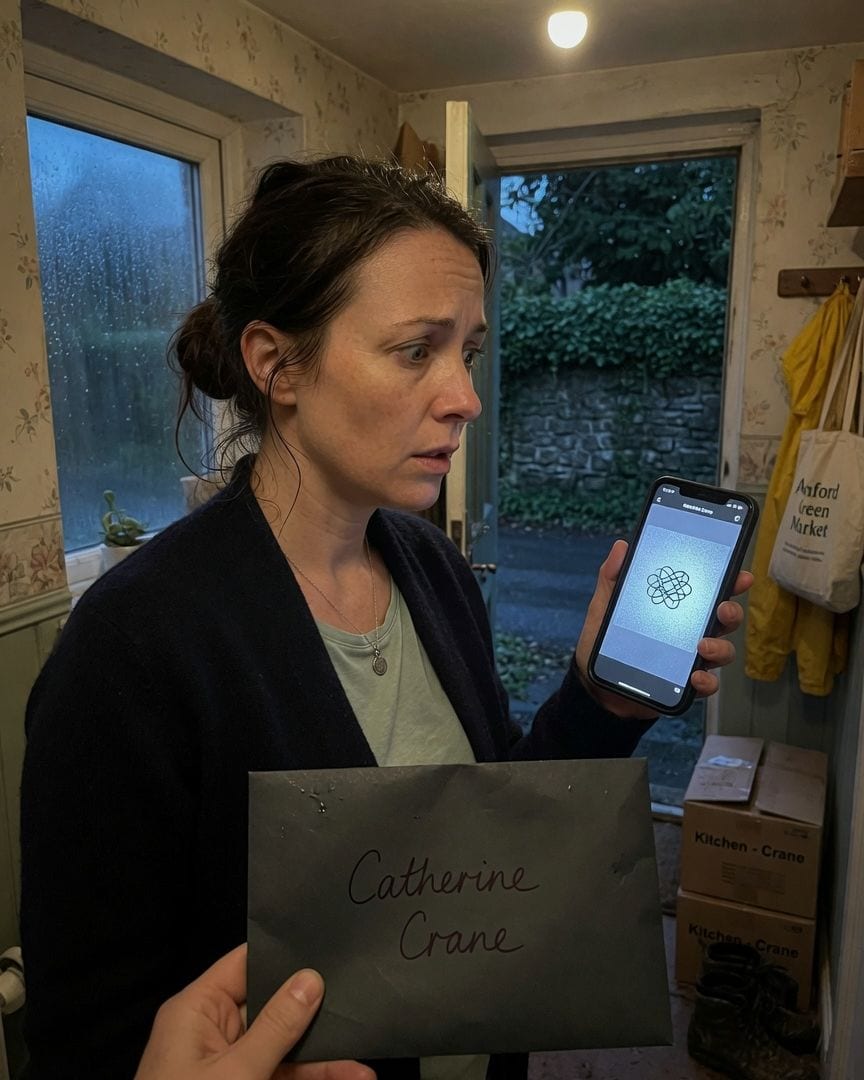
My postman warned me: never use the old pillar box. Royal Mail logs a collection every day, one item, signed by no one.
Moving to Ashford Green, I dismissed my postman's strange warning about the old pillar box by the ford. But after my own letter vanished inside it, I returned at midnight. Then, a dark, unstamped envelope slowly slid *out* of the slot, addressed to me.
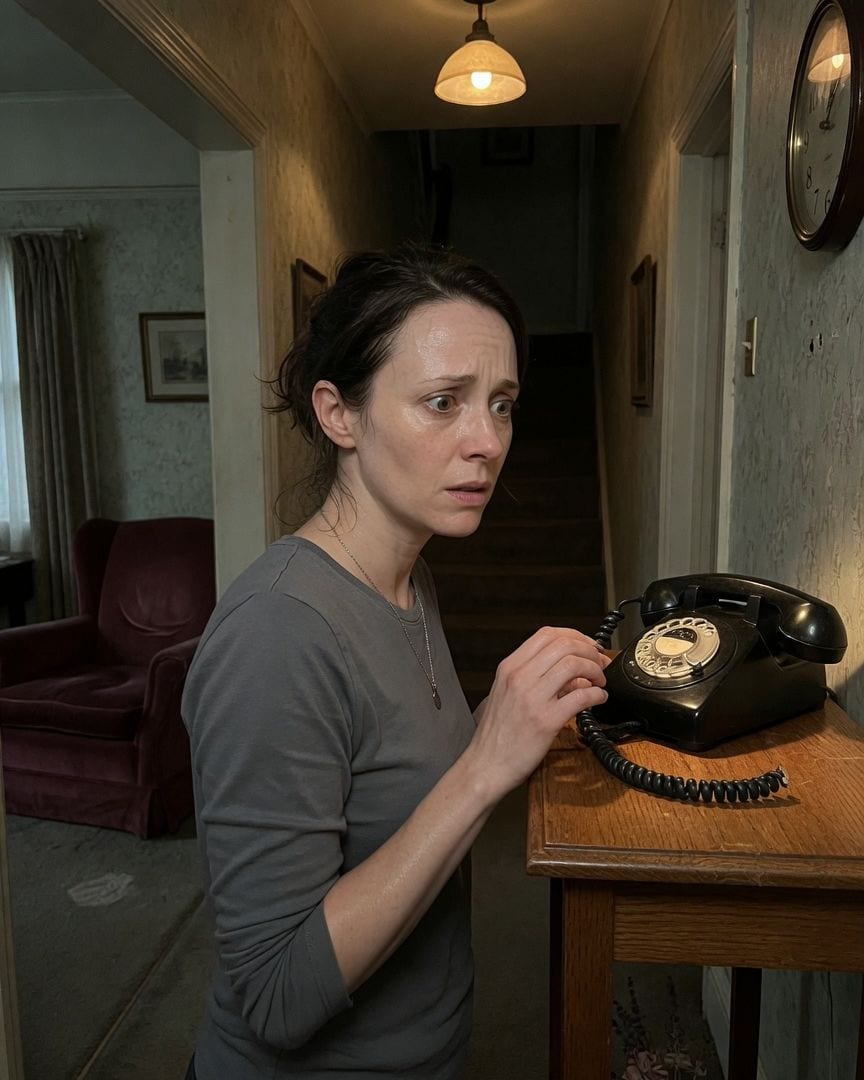
My disconnected Bakelite phone dials itself at 8 PM, receiver warm, always the same three numbers, humming a sound no dead line should make. I live alone.
As a new homeowner, I, Penelope Vaughn, found an antique Bakelite phone in my hall, its line long dead. But every night at 8 PM, the receiver is off its cradle, faintly warm to the touch, and the dial half-spun to the same three digits, making an impossible hum.
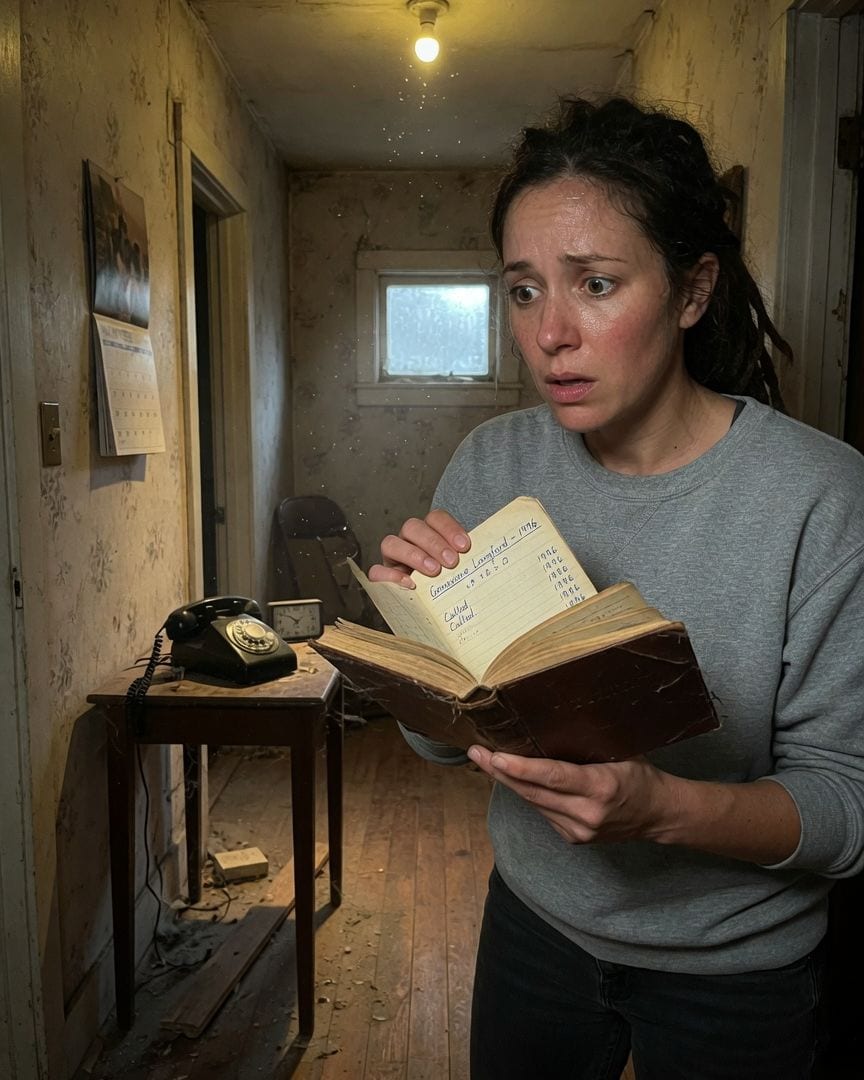
My dead rotary phone rings at 8:05 every night. I pick it up. A room full of voices, then a woman drawing breath.
I inherited an old house, complete with a black rotary phone that the company confirmed was disconnected in 1996. Yet, most evenings at 8:05 PM, it rings. When I pick up, a distant murmur fills the line, followed by a woman drawing a deep, shuddering breath every single time.
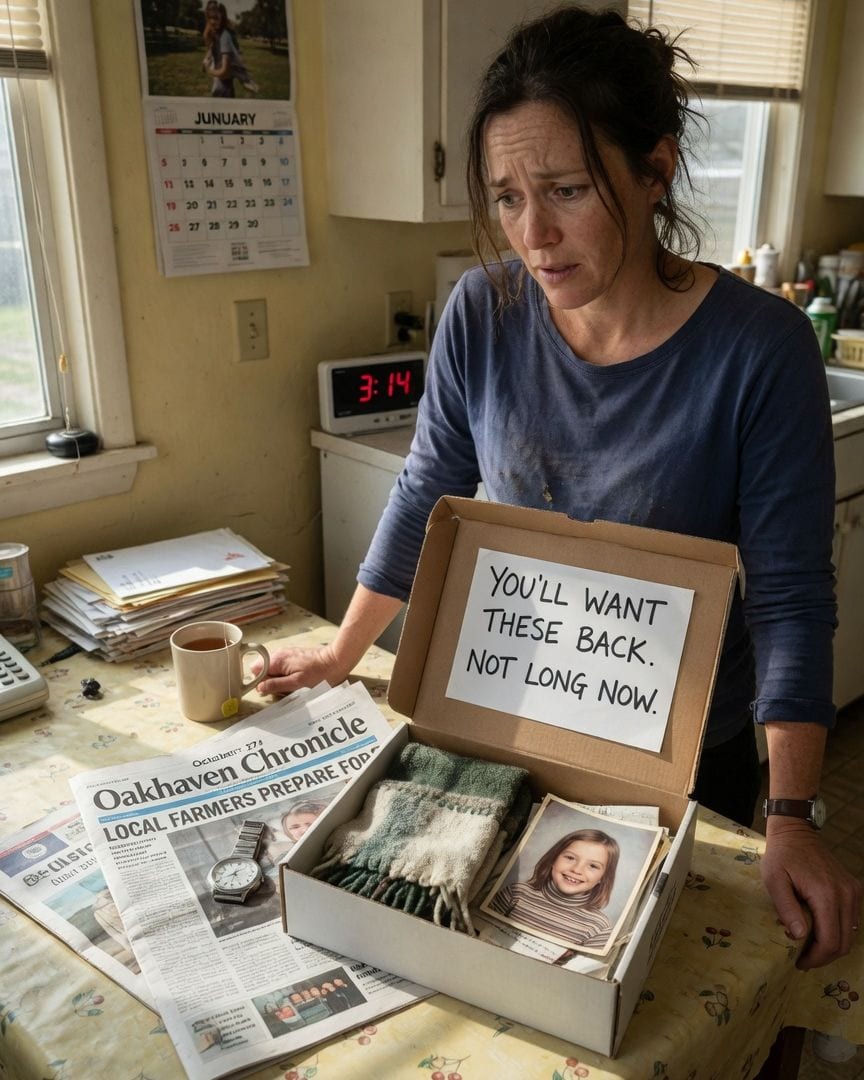
Newspaper dated next week wrapped my lost things. The watch inside was still ticking.
A mysterious courier dropped a plain box on my step, containing my long-lost watch, a treasured scarf, and a childhood photo I hadn't seen in decades. It felt like a strange prank, until I saw the newspaper wrapped around them. The *Oakhaven Chronicle* was dated the week after next.
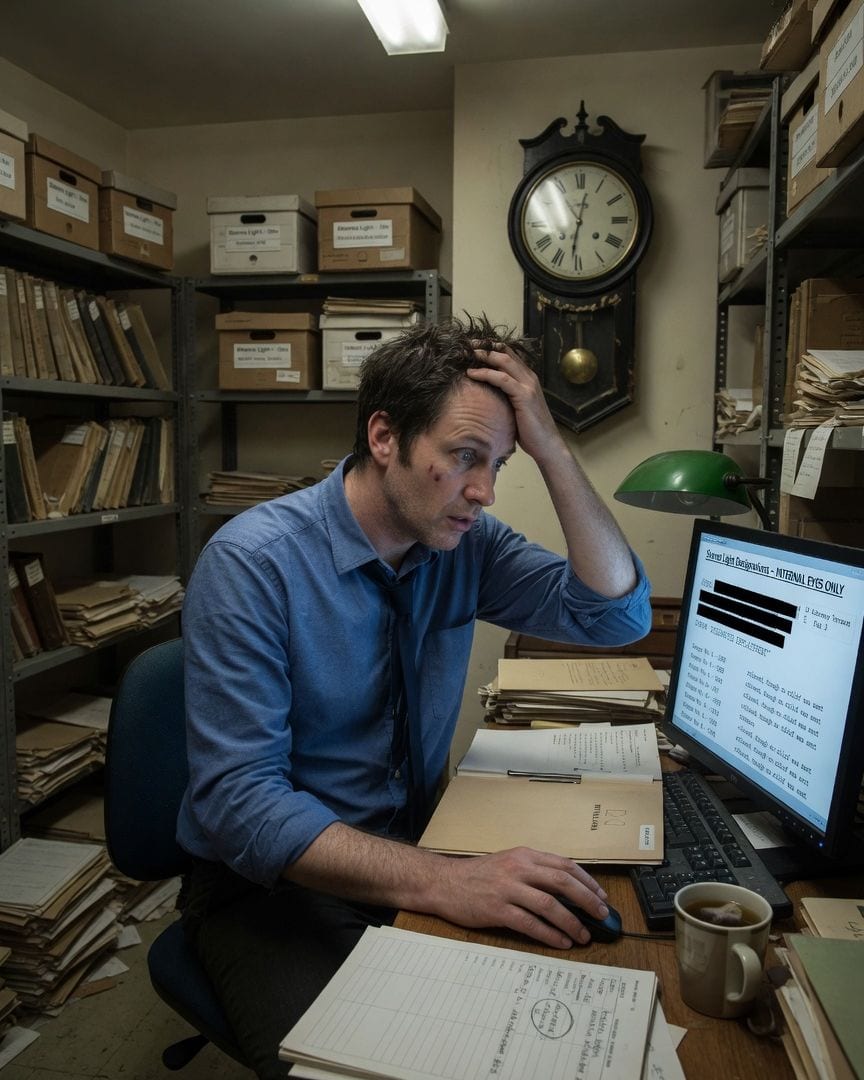
I found my street address in a century-old lighthouse file, printed decades before I lived there.
As a maritime archivist, my world revolves around forgotten lives and dusty ledgers. But the Skerne Light files broke that quiet rhythm, revealing a chilling pattern: 'Keeper number 6' relieved, though no relief was sent, repeating for decades. Now, an internal document with a strange code has led me to a redacted entry, revealing my own street address, decades before I ever lived there.