My disconnected Bakelite phone dials itself at 8 PM, receiver warm, always the same three numbers, humming a sound no dead line should make. I live alone.
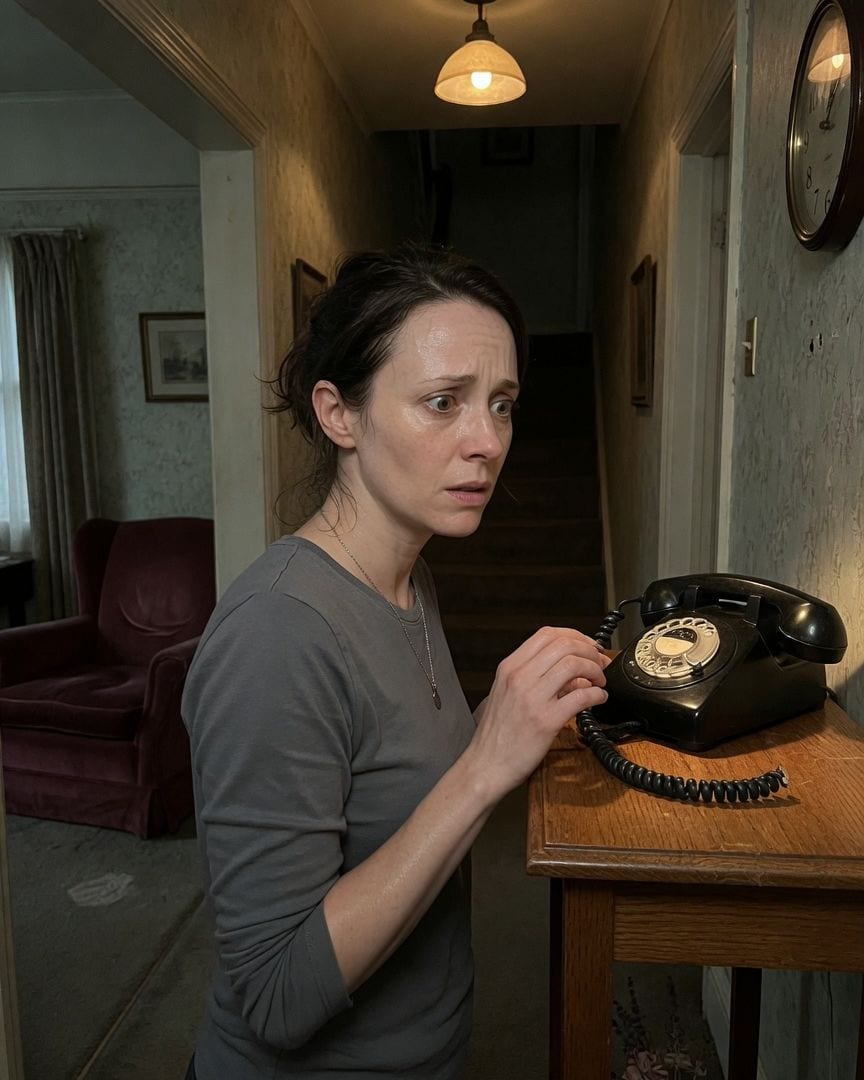
The black Bakelite telephone sat on the hall table, an antique inclusion from the previous owner, Edith Kingsley. When I bought the house in early spring, the real estate agent had called it ‘charming.’
I, Penelope Vaughn, 34, and a freshly minted homeowner, saw it as a relic, its thick, coiled cord ending in a frayed stub I’d cut myself, confirming the line was dead. Disconnected.
But most evenings, precisely at 8 PM, I found the receiver off its cradle. It lay on the polished oak table, faintly warm to the touch, almost as if someone had just placed it there.
The rotary dial was always half-spun, arrested at the same three digits, no more, as if whoever was dialing got that far and stopped. And then there was the hum.
Low, persistent, it emanated from the earpiece – a sound no dead phone should ever make. I lived alone. Every night, I’d replace the receiver, the cool Bakelite clicking into place.
And every next night, it would be off again, the same routine, the same time. It wasn't the only oddity in the house.
A distinct, threadbare patch marred the carpet on the third stair, as if someone had spent decades meticulously avoiding stepping on that exact spot.
And in the living room, the old velvet armchair, always facing the front window, held a deep, permanent indentation, shaped exactly as though a body had been sitting there for years, leaving its mark in the very fabric of the house itself.
Frustration became a dull ache in my temples with each nightly occurrence. I tried every rational explanation I could conjure. Drafts? I sealed windows. Vibrations from passing traffic? Too precise, too consistent. Static electricity? How could it warm the receiver?
A particularly industrious mouse? Not even the cleverest rodent could half-spin a rotary dial. None of it accounted for the receiver's warmth, the precise partial dialing, or that impossible hum.
I started a meticulous log, noting the exact time, the ambient temperature, even the weather, trying to find a pattern, a variable. The hum, I realized, wasn't just a static buzz; it felt almost… expectant, like a held breath.
One evening, as I reached for the receiver, a distinct, cold breath seemed to brush my neck, raising goosebumps despite the stillness of the air in the hall. I shivered, dismissing it as nerves, as my imagination playing tricks.
My investigation shifted from the phone itself to the house’s history. The previous owner, Edith Kingsley, an elderly woman, had passed away in the house.
Local records confirmed Edith had lived there for over six decades, known by neighbors as a creature of unwavering routine. It made me wonder if the phone’s nightly ritual was somehow connected to Edith's last moments.
Following the frayed cord from the hall phone, I traced it back to a small, disused study. A faint, sweet, unidentifiable scent, like old, dried potpourri, lingered in the air here, though I'd cleaned the room thoroughly months ago.
It was a smell that didn't belong to me, or my life.
Intrigued by the persistent, unplaceable scent in the study, I knelt by the heavy oak desk and ran my hand along the old wooden floorboards. My fingers snagged on a slightly loose plank, tucked away in a corner, almost invisible.
With a kitchen knife, I carefully pried it up, exposing a small, dusty cavity beneath. Inside, nestled amongst cobwebs and motes of dancing dust, lay a small, leather-bound daily planner, surprisingly well-preserved.
My heart gave a sudden, hard thump against my ribs. I opened it to the last few pages. My eyes fell on a recurring entry, meticulously circled for the 8 PM slot: 'Call Vivi.'
Below it, my breath hitched: the exact three-digit number I'd seen on the Bakelite phone's dial every night. The final entry, dated the very day Edith Kingsley had died, was just 'Vivi...'
unfinished, with a frantic, looping scribble trailing off the page, as if the pen had been snatched away mid-sentence, leaving the last word hanging in the air.
The planner was a revelation. I immediately researched 'Vivienne Easton,' finding an old obituary for a woman who had passed away in a care home two years prior, described as a 'long-time friend and confidante' of Edith Kingsley.
Edith’s call had a real, human target. The planner also detailed Edith’s other routines: '7 AM – Kettle,' 'Avoid third stair,' 'Tea in armchair by window.'
I now recognized the worn carpet on the third stair and the deep indentation in the armchair as physical manifestations of Edith's life, not just quirks of an old house.
The 'routine that continues' was no longer an anomaly; it was a pattern, disturbingly coherent. I tried to find a living relative of Vivienne Easton, hoping for context, but hit dead ends.
With a growing sense of unease, I contacted Franklin Delaney, a local history enthusiast who had known Edith. Franklin confirmed Edith was meticulous, almost obsessive about her routine, and had been quite frail in her final months.
He recalled Edith mentioning a 'critical call' she needed to make to Vivienne, her only remaining close friend, regarding some old family papers. He couldn’t recall the specifics, but the urgency of Edith’s tone had stayed with him.
He shared a vague memory of Edith saying something about 'making sure it got through, no matter what.'
A cold dread solidified in my stomach; the phone wasn't just a memory; it was an unfinished task, a desperate echo of a life interrupted.
As I dug deeper, the house's routines intensified, no longer just subtle quirks but blatant, impossible phenomena.
The kettle in the kitchen whistled sharply at 7 AM, even when I was certain it was empty and cold from the night before.
I found myself instinctively avoiding the third stair, my foot hovering, a phantom habit now my own. One evening, while researching Edith's will online, I left my laptop open on the kitchen table to grab a glass of water.
When I returned from the bathroom, the screen saver was gone, replaced by a half-typed search query: 'Vivienne Easton – phone number'. My hands had been nowhere near the keyboard.
A faint, cold breath touched the back of my neck, raising goosebumps, and I spun around, seeing nothing.
I dismissed it as a draft, but the next morning, a single, perfectly brewed cup of black tea, two sugars, sat steaming on the kitchen counter – exactly how Franklin Delaney had described Edith's daily morning tea. I lived alone.
The air in the house felt heavier, charged with a subtle expectation, as if I were being watched, waited upon.
That night, I found the small Bakelite phone's receiver off its cradle earlier than 8 PM, lying face down, the hum almost a low thrum against my palm.
It wasn't just a memory playing; it felt like a subtle warning, or an impatient, growing prompt from the house itself, urging me to action, to complete what had been left undone.
I met Franklin Delaney for coffee, my hands trembling slightly as I recounted the escalating phenomena, showing him the planner. Franklin's eyes widened at the 'Vivi...' entry.
He remembered Edith's increasing anxiety about those papers, a secret she'd kept for years, meant only for Vivienne.
He recalled Edith having a minor heart episode a few weeks before her death, and how she'd been insistent on making that call herself, not trusting anyone else with the message.
He confessed he'd helped her move a small, heavy box of old records from the attic to her bedside table just days before she passed.
'She said it was for Vivienne, to make things right,' Franklin murmured, his face pale, swirling the lukewarm coffee in his mug. 'She was so worried she'd forget, or wouldn't get a chance.' I pressed him on the exact day.
Franklin checked his own meticulous calendar. 'Yes, that day. The day she… passed. She’d just told me she was going to make the call that evening, right at eight, once her favorite program finished.'
The pieces clicked into place with horrifying coherence: Edith was likely making the call at 8 PM, with the box of papers beside her, when she suffered a final, fatal event.
The house, steeped in her routine and her final desperate intention, was now a repeating echo of that moment, the phone call forever interrupted, forever trying to complete itself.
The small, sweet scent in the study, I realized, was the old, dried flowers Edith kept in a sachet in her planner, a small, personal detail that tied her even more firmly to the house's persistent memory.
Armed with Franklin's information and the planner, I felt a morbid obligation to help Edith. She was trying to tell me something, or make me do something.
I asked Franklin if he knew anyone at the old telephone exchange, hoping to find a record of Edith's last call, a final confirmation that I wasn't losing my mind.
Franklin, after some hesitation, gave me a contact: Maxwell Carter, a retired archivist. I explained the situation carefully to Maxwell, omitting the supernatural details, focusing instead on a 'historical curiosity' about a disconnected landline and a deceased occupant.
Maxwell, intrigued by the challenge of digging through old records, agreed to look for any archived logs related to the house’s old number. Days later, Maxwell called.
His voice was hushed, a tremor in it I could hear even through the phone. 'Ms. Vaughn,' he began, 'I found something. It's… impossible. The system shows outgoing call attempts from that number. To a Vivienne Easton.
Months after the line was officially disconnected. Every night. Exactly at 8:00 PM. Always the same three digits, then 'abandoned'. It's like the line itself is trying to call out, even though it's dead, a record that cannot physically exist.'
My stomach dropped. I felt a cold dread spread through me, far worse than any hum or chill I’d felt in the house.
The phone wasn't just a memory of a routine; it was an active, ongoing attempt from beyond, a persistent, impossible communication trying to force its way into the present, and I was now inextricably linked to it.
I drove straight to Maxwell Carter's small, cluttered office the next morning. The room smelled of old paper and dust. He pointed a shaking finger at his screen: a digital ledger of the house's landline activity, stretching back decades.
Then, after Edith’s death and the official disconnection, a series of impossible entries began. Each 8:00 PM attempt was logged, showing the house's number as the origin, 'Vivienne Easton' as the target, and 'Call Abandoned' as the status.
'It's a glitch, surely,' Maxwell muttered, but his eyes betrayed his deep unease. 'A pattern, anyway.' I explained Edith's final moments, the planner, the interrupted call.
I articulated my chilling realization: Edith's sheer will, her desperate need to deliver those papers to Vivienne, had imprinted itself so strongly on the house that the routine itself became a persistent echo, an attempt to complete the unfinished.
The house, a vessel of memory, was literally trying to fulfill its last occupant's dying wish, caught in a loop of its owner's final, most urgent intention.
The hum in the receiver was the house's own 'dial tone,' the three digits a ghost of Edith's fingers on the dial.
The 'routine that continues' was Edith, trapped in the house's memory, forever reaching out, unable to complete her last task, until now.
I returned home, the impossible call log burned into my mind, a terrible clarity settling over me. I found the heavy box of old records Franklin had mentioned, still by Edith's old bedside table in the master bedroom.
Inside, beneath layers of correspondence and yellowed photographs, I found a will, dated years before, naming Vivienne Easton as the sole beneficiary of Edith's estate, with specific instructions for the care of a distant, estranged relative, Rose Carver.
Edith's final call wasn't just urgent; it was vital, a legacy dependent on it.
I found Rose Carver’s contact information—a kind but distant woman, according to Franklin—and called her, explaining the situation as best I could without sounding insane, focusing on the discovery of the will.
Rose, surprised and touched, agreed to meet me at a neutral location the next day.
I handed over the old will and the box of papers, a strange, profound sense of completion washing over me as I passed them to her.
'Edith wanted you to have these,' I said, feeling an ancient burden lifting from the house, from me. That evening, at 7:55 PM, I stood by the Bakelite phone in the silent hall.
At precisely 8:00 PM, I picked up the receiver. It was warm, the familiar hum present, a ghost of an intention.
I completed the dial, my fingers moving slowly over the rotary, hitting the final four digits for Vivienne Easton’s old number. Of course, it rang unanswered, then went to a harsh, disconnected tone.
But as I gently replaced the receiver, the hum died. The warmth faded from the Bakelite. The phone stayed on its cradle. The silence in the hall was profound, a palpable absence of the nightly routine.
The house felt lighter, calmer, as if a long-held breath had finally been released. Edith's routine had finally been completed.
The nightly phone calls ceased. The kettle no longer whistled mysteriously at 7 AM. The house settled into a quiet, ordinary rhythm, its lingering echoes faded.
I still instinctively avoided the third stair sometimes, a habit ingrained by the house's former ghost, now a part of my own peculiar routine.
I kept the Bakelite phone, a silent sentinel in the hall, a tangible reminder of the impossible.
Rose Carver, touched by the story and grateful for the unexpected inheritance, offered me a small, antique locket that had belonged to Edith, a token of gratitude for bringing closure to a life.
The house was hers, truly hers now, but the experience had left a permanent mark.
I often found myself listening, a quiet, almost imperceptible tension in my ears, for echoes, for routines that weren’t my own, in every old building I entered, a new sensitivity to the memories held within walls.
I now lived with a heightened awareness, a quiet understanding that places could hold more than just memories, that intentions could linger.
I often drove past other old, quiet houses in the neighborhood, wondering what routines they might still be keeping, what calls remained unfinished within their walls.
I knew my own house was at peace, but the world suddenly seemed full of silent, repeating echoes, just waiting for someone to notice. One day, Franklin Delaney called, his voice troubled.
'Penelope, I just heard about old Mr. Whitfield, down on Elm Street. His family found his clock… it's been chiming the exact same time, every hour, since he passed. Even though it was broken for years.'
I hung up, my gaze drifting to the silent Bakelite phone in my hall, now just an antique. I understood. It was never the only one.
A local real estate agent, showing a new client an old Victorian on Elm Street, paused in the hall. 'Strange,' she mused, 'this old grandfather clock hasn't worked in ages, but I swear I just heard it chime three times.
Right on the hour.' The client, a young woman, smiled faintly, a strange, knowing glint in her eyes. 'Is that so?'
If this one got to you
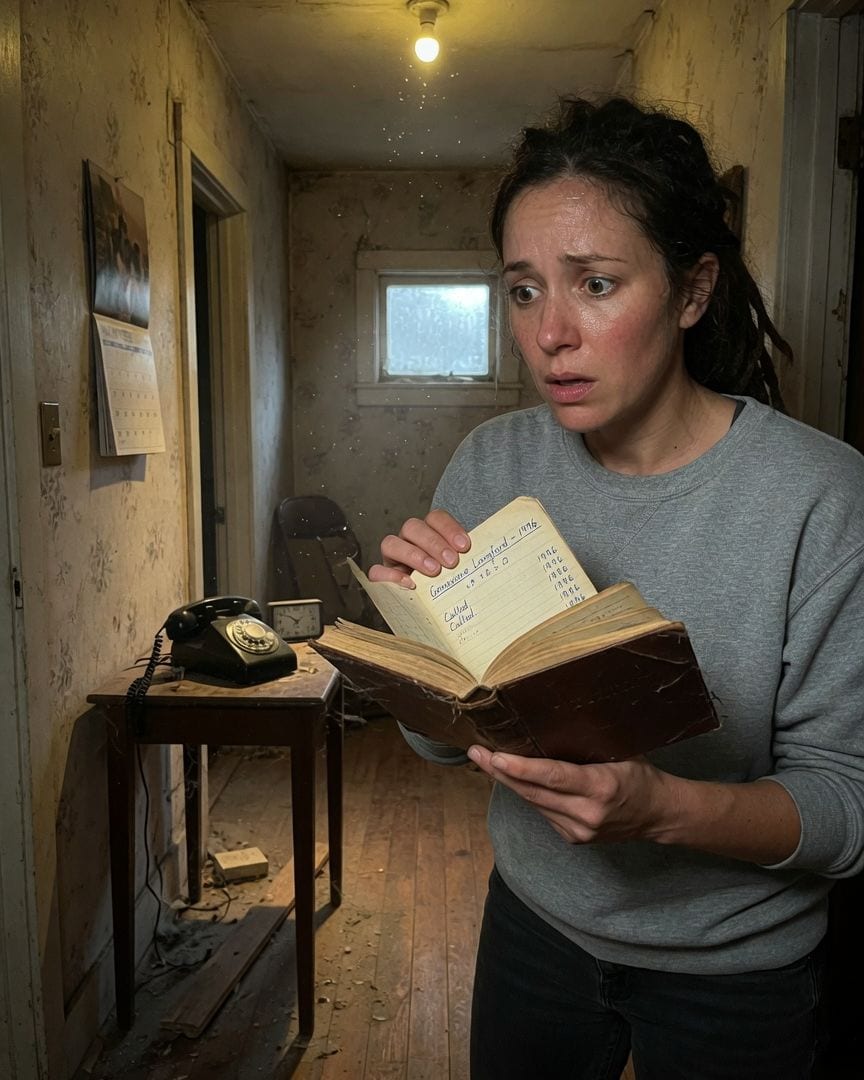
My dead rotary phone rings at 8:05 every night. I pick it up. A room full of voices, then a woman drawing breath.
I inherited an old house, complete with a black rotary phone that the company confirmed was disconnected in 1996. Yet, most evenings at 8:05 PM, it rings. When I pick up, a distant murmur fills the line, followed by a woman drawing a deep, shuddering breath every single time.
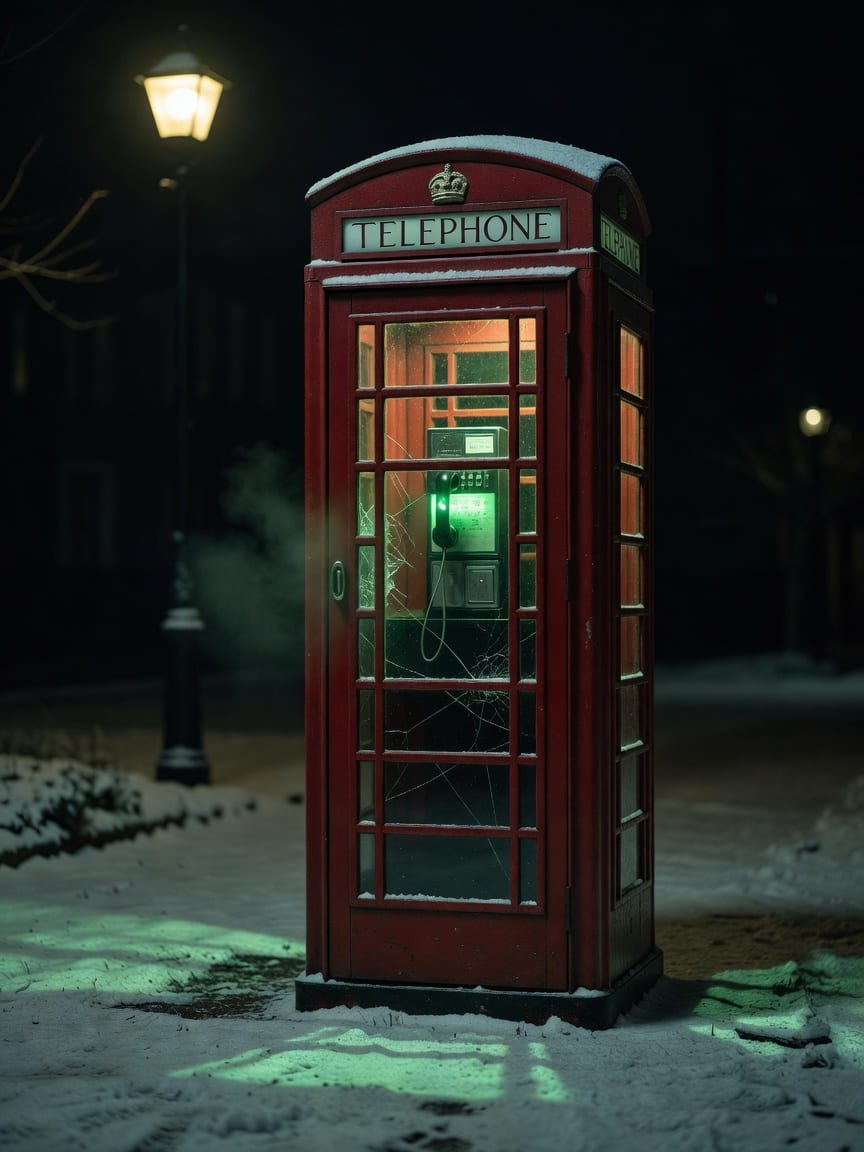
The phone box on our town green makes a call every New Year's Eve at 11:59. It's been dead for twenty years, and calls the same disconnected number.
Moving to Trellow for a quiet life, I quickly learned about the village's red phone box, a relic everyone agreed was dead for decades. But then a retired engineer showed me its call log. Every New Year's Eve for the past twenty years, it records a 90-second outgoing call from that very box, always at 11:59 PM to a disconnected number.
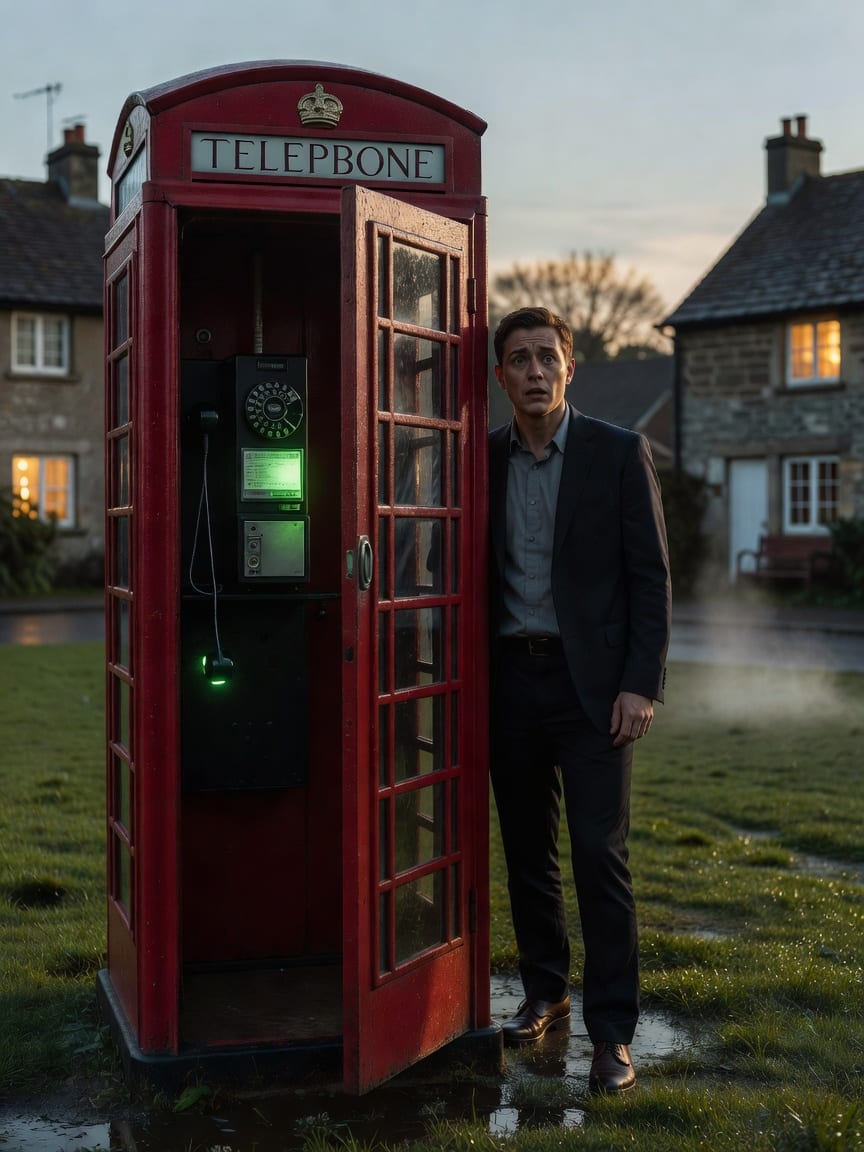
The old phone box on Trellow Green hasn't worked in twenty years. But its call log shows a ninety-second outgoing call every New Year's Eve, always to the same disconnected number.
I moved to the quiet village of Trellow Green, drawn by its charm and the local joke about the old, dead phone box. But a retired engineer showed me a log of an impossible outgoing call made from it on New Year's Eve, to a number disconnected for decades. How could a dead phone make a call?
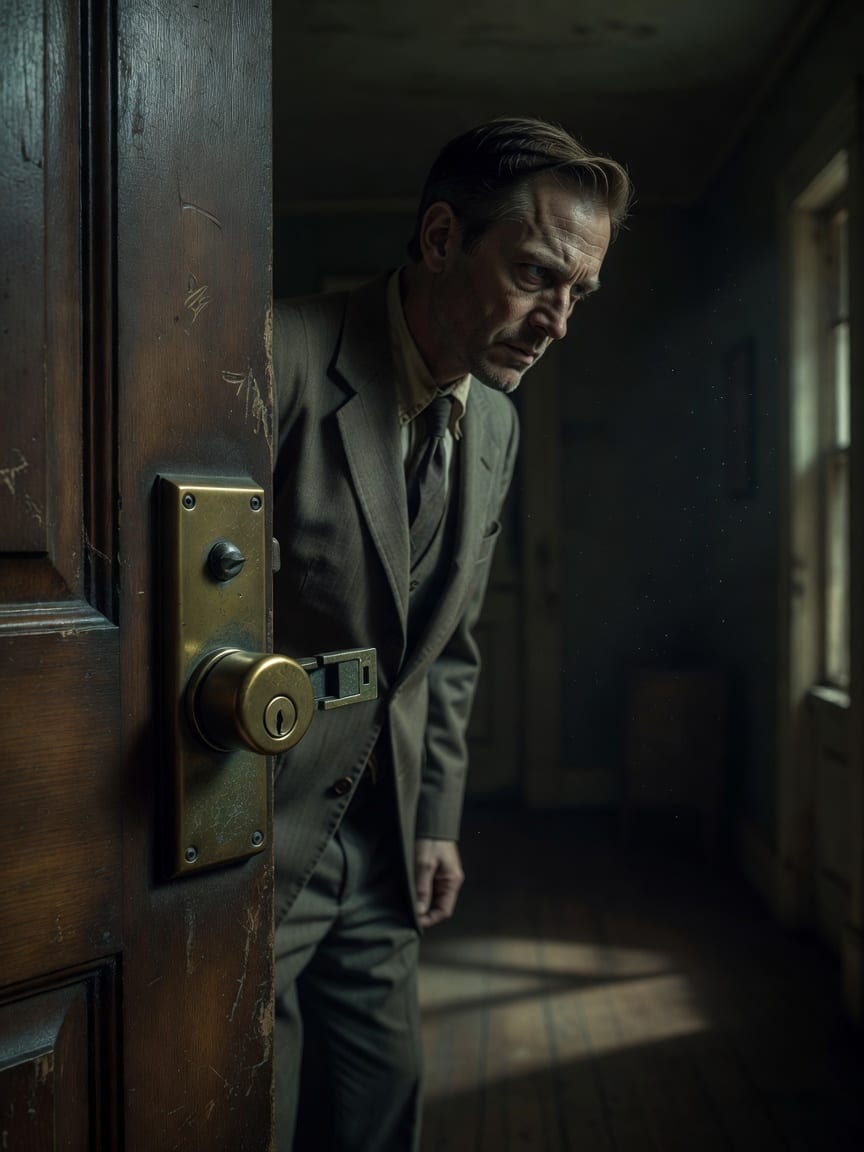
My deadbolt clunks shut from inside every night, long after I'm asleep. I live alone, and I've never heard it drawn back.
Inheriting Great-Aunt Lydia's house felt like a fresh start, until the nightly clunk of the deadbolt from downstairs started. I live alone, but every evening, the front door locks itself from the inside. Now, I’ve found Lydia’s meticulously kept calendar, with a 7 PM 'Deadbolt Check' written for tonight, a year after she died.
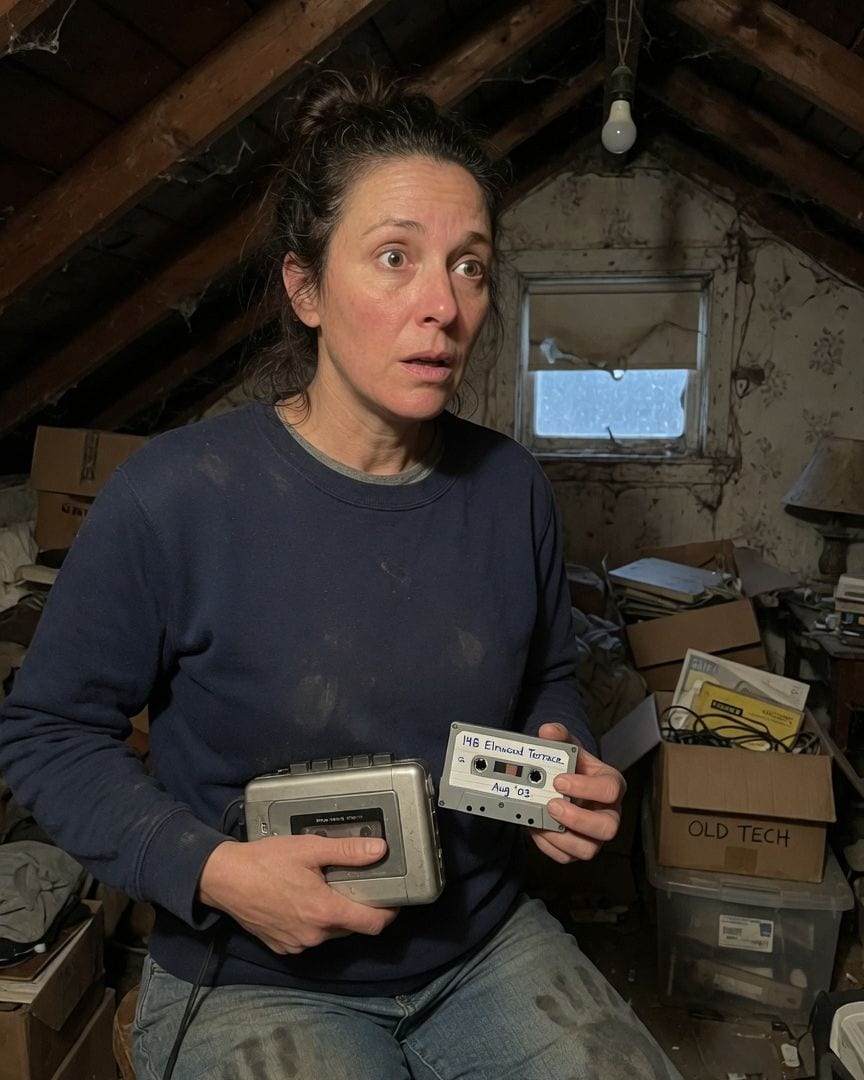
My own voice answers a screaming tenant on a tape from my old flat, recorded a week after I moved out. I live alone.
Rummaging through old tech in my attic, I found an answering machine tape from my old flat, labeled 'Aug '03' in my own hand. Playing it, I heard mundane messages, then a woman's raw scream cut short. Immediately after, my own calm voice said, 'It's alright. I've got her now.' I had moved out of that flat twenty years ago.
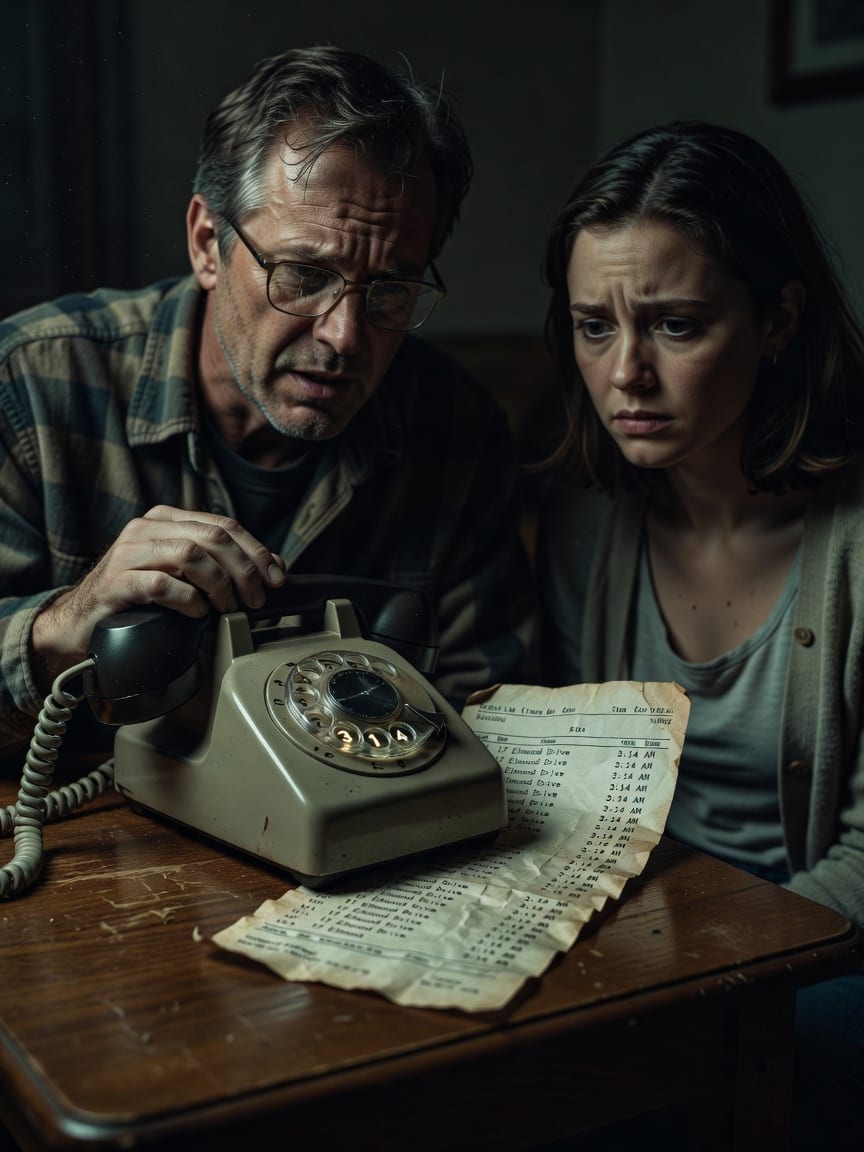
My phone bill itemised forty calls from my number to a house demolished in 1990. Each call at 3:14 AM, lasting eleven minutes. The bill arrived postmarked from a flattened building.
I expected the usual mobile bill, but my landline statement listed forty calls from my number to '17 Elmwood Drive.' That address was for a house torn down in 1990, a vacant lot I remembered from childhood. The phone company insisted the calls were legitimate, leaving me profoundly unsettled by the impossible charges.