My deadbolt clunks shut from inside every night, long after I'm asleep. I live alone, and I've never heard it drawn back.
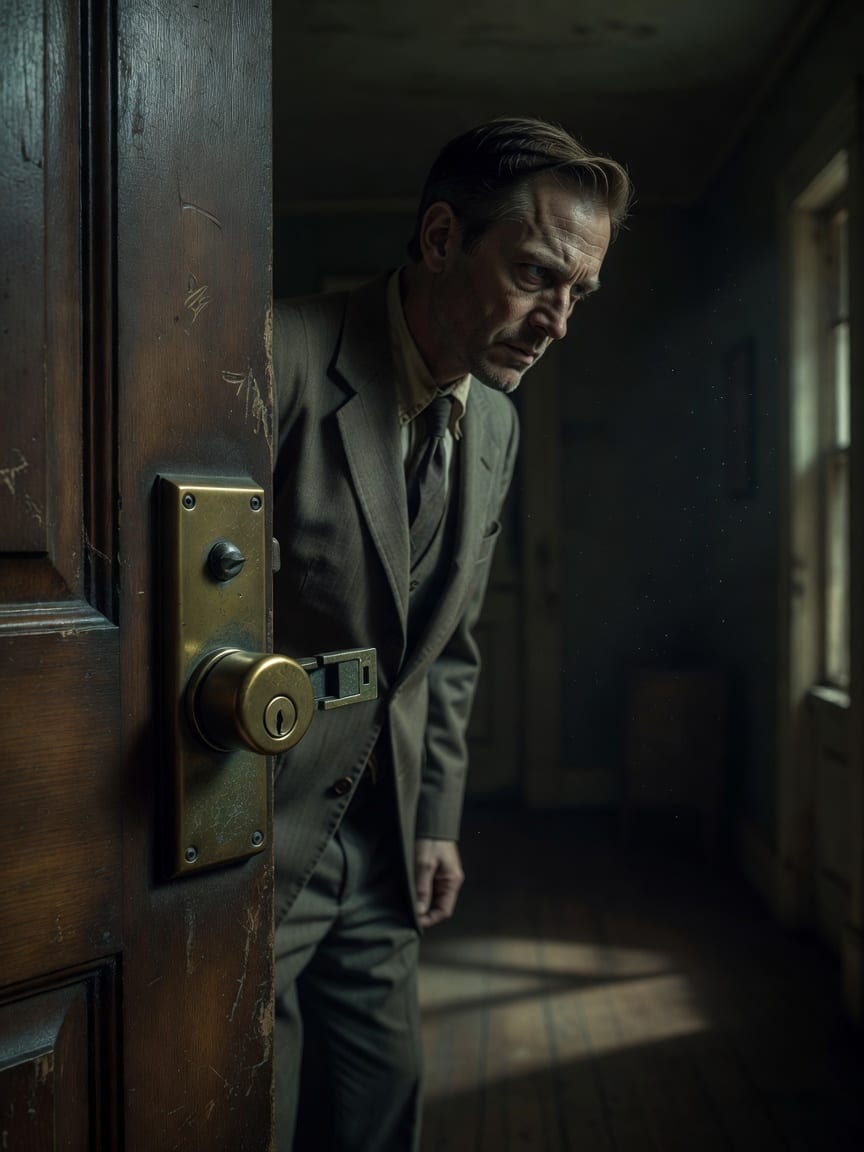
When I inherited Great-Aunt Lydia's house last year, I saw it as a fresh start, a charming old place with character. I really did.
The first few weeks were fine, settling in, getting used to the creaks and groans of a house built in the 1920s. But then it started.
Every night, without fail, sometime after I'd gone to bed – usually around 9 or 10 PM, but I never heard it happen – there’d be this distinct, heavy clunk from downstairs. The front door deadbolt. Drawn from the inside.
I live alone. My keys are always by my bedside, or in my handbag if I’m out.
No one else has a set, and even if they did, the sound always comes after I'm upstairs, after the house is locked up tight. I tried to dismiss it, of course. Old houses settle. Mechanisms fail.
Maybe the lock was just sticky, or vibrating, doing some kind of delayed-action thing. But it wasn't a creak, or a groan. It was a solid, mechanical clunk.
The kind you hear when you physically turn a key or a knob. A final sound.
I'd lie there in the dark, staring at the ceiling, trying to rationalize it away. But the consistency was unnerving. Every single night.
Then I started noticing other small things. A faint, sweet smell, like lavender, would sometimes drift from the living room. It was an old house, maybe the previous owner had used lavender sachets in the furniture.
It was pleasant enough, but it would appear suddenly, hang in the air for a few minutes, then vanish. Just a ghost of a scent in an empty room. Nothing to worry about.
And the armchair in the living room. There’s a specific one, covered in floral upholstery, a little threadbare on the arms.
I’d straighten it every morning, parallel to the wall, and yet, more often than not, I’d come downstairs later in the day to find it angled slightly towards the unlit fireplace, as if someone had just gotten up from it.
Again, I told myself it was the floorboards, or a draft, or just me misremembering how I'd left it. It's an old house, Audrey. Quirks.
I tried to ignore it all, to focus on painting the guest room and getting the garden in order. But the little things began to stack up, nudging at the back of my mind.
And then, just last night, after I’d showered and settled into bed with a book, the house went completely silent. The hum of the fridge, the distant traffic – all faded.
And then, from downstairs, precisely at 7 PM, the familiar, heavy clunk. Final. Definitive. Leaving me alone in the quiet dark, the sound echoing in the silence.
The next evening, I decided to tackle the deadbolt head-on. If it was a faulty mechanism, I’d find it.
I spent hours watching the front door, perched on the bottom step of the main staircase with a flashlight and a screwdriver. I tightened every visible screw, sprayed lubricant into the lock cylinder.
I even put a piece of tape across the bolt to see if it moved. Nothing. The lock stayed stubbornly open, the tape undisturbed. I sat there until nearly midnight, my eyes heavy, but the deadbolt remained inert.
Frustrated, I finally gave up and went to bed. I heard the clunk at 7:00 PM the next day, right on schedule, after I was already upstairs.
This focused, almost obsessive, observation of the deadbolt had an unexpected side effect: it made me hyper-aware of the other routines, the ones I'd dismissed as quirks.
The old kettle in the kitchen, a copper-bottomed antique Lydia had apparently cherished, would whistle at precisely 6 AM every morning. Even when I hadn't filled it, even when I hadn't touched it.
I'd wake to that piercing, insistent sound, always at the same time, always followed by the smell of boiling water, though the hob was cold and dry.
And the third stair. On the main staircase, there's a particular step, about halfway up, that's noticeably more worn than the others. It's almost polished in the center, a shallow scoop in the wood.
I always instinctively avoided putting my full weight on it, stepping over it or to the side. It was just a worn spot, an old house showing its age.
But now, it felt less like wear and tear, and more like a path, a route, trodden by countless invisible feet, avoiding that exact spot.
Determined to find a mundane explanation for all of it, a structural issue, some kind of weird draft phenomenon, I started sifting through my great-aunt Lydia's possessions in the study.
Most of it was just old papers, sentimental odds and ends. But in a hidden compartment of her antique writing desk, behind a false panel, I discovered a small, leather-bound daily calendar.
It wasn't just a calendar; it was more like a journal, meticulously filled out in Lydia's elegant, though increasingly shaky, hand. Every hour of her day was accounted for.
I started flipping through the pages, casually at first. My breath caught in my throat as I read an entry for 6:00 AM – "Tea."
Followed by a series of precise activities: "7:00 AM – Water garden" (I don't have a garden, just a small patio, but Lydia had a massive rose garden), "9:00 AM – Correspondence."
And there it was, plain as day, under the 7:00 PM slot: "Deadbolt Check."
Every inexplicable event. Chronicled. A mundane schedule made terrifyingly real.
I hunched over Lydia’s calendar, a cold dread spreading through me. The 6 AM tea. The precise path through the house, even the note about being careful on the third stair, which I found on an earlier page.
And yes, the 7 PM deadbolt check. It was all there, laid out in the precise, fading ink of a woman who had been dead for a year.
I felt a chill, a sudden drop in the air temperature around me, as if the room itself had registered the impossible coherence.
My fingers, trembling, flipped through the pages. I stopped on today's date, August 12th. There, for this very evening, for today, was an entry in Lydia's unmistakable hand: "7:00 PM – Deadbolt Check."
Lydia Caldwell died a year ago.
A sudden, sharp sound made me jump, nearly knocking the calendar from my grasp. The familiar, heavy clunk resonated from the front door downstairs, exactly on schedule.
I glanced towards the hallway, my breath catching in my throat, the calendar open in my hands, its dated pages accusing me in the quiet house.
The calendar was undeniable. It wasn’t a coincidence, or my imagination, or the house settling. It was too precise. Too deliberate. Seeking any kind of rational explanation, I drove over to Joan Sinclair’s house the next morning.
Joan, 78, had been Lydia’s next-door neighbor for decades. She was a fount of anecdotes, a living archive of Lydia’s daily life.
"Oh, Lydia always had her tea at six, sharp," Joan reminisced, her eyes twinkling. "Never missed it. Wouldn't start her day without it. And she was a stickler for the deadbolt, especially after that break-in down the street, years ago.
Made her feel safe, you know."
I described the worn spot on the third stair, the one I always avoided. Joan nodded, her expression softening. "That was from her hip. She had a fall, oh, twenty years ago it must be.
Always took that third stair carefully after that, trying not to put her full weight on it. Poor thing."
Every detail. Every single detail in Lydia’s journal, every inexplicable occurrence in my house, Joan confirmed as a precise, rigid habit of my great-aunt. I thanked her, the conversation leaving me more unnerved than before.
My great-aunt's life was playing out in my house, even without her.
I returned home, my unease growing into a cold, hard knot in my stomach. I had to break it. I had to prove it was just residual energy, a memory, not something that could actively do anything.
That evening, I deliberately emptied the kettle and left it on the hob, cold and dry. I even propped a dish towel over it, just to be sure. I went to bed, listening, waiting.
The next morning, at precisely 6 AM, the faint, high whistle cut through the silence. My heart hammered against my ribs. I rushed downstairs, my feet thudding on the wooden steps, avoiding the third stair out of habit.
In the kitchen, the copper kettle sat on the hob, filled with water, boiling furiously, steam pluming from its spout, whistling as if someone had just placed it there.
And my own mismatched coffee mug, which I’d left on the counter next to the sink, had been moved to the draining board, making space on the counter for… an invisible teacup, I supposed.
The area where it would have sat was clear, almost expectant.
The feeling of being watched intensified, but it wasn’t the creepy, malevolent gaze of a traditional ghost. It was more like a subtle pressure, a gentle but insistent nudge. My personal items were subtly rearranged to accommodate Lydia’s routine.
My laptop, which I’d left open on the coffee table one afternoon, was later found shifted to the side of the armchair Lydia never used, leaving the worn, floral one clear.
A book I was reading, left spine-down on a cushion, reappeared on a side table, neatly closed, as if someone else had just finished with it.
I started to feel a peculiar resistance in the house, a subtle pushback when I tried to deviate from the invisible schedule.
I deliberately sat in Lydia’s preferred armchair, the one angled towards the fireplace, but I sat facing away from the hearth, stubbornly looking out the window.
Within minutes, an uncomfortable chill settled over me, a strange, prickling sensation on the back of my neck. I felt an inexplicable urge, a physical pull, to turn the chair, to face the empty fireplace.
It wasn’t a thought; it was a physical sensation, like a muscle twitching against my will. I fought it, clenching my jaw, but the discomfort grew, a quiet, persistent insistence that pricked at my nerves, making me want to scream.
I lasted about ten minutes before I sprang up, the room feeling suffocatingly cold and alien.
Later that day, I found my own diary – a cheap spiral-bound notebook I used for grocery lists and random thoughts – open on my bedside table. My own pen lay beside it.
And there, for tomorrow’s date, was a new entry, written in Lydia’s precise, elegant hand: "7:00 AM – Water the fern in the living room."
I don’t even own a fern. I never have.
I was frantic. This wasn't just memories or echoes. This was active. I raced back to Joan's house, the diary clutched in my hand, the new, impossible entry staring at me.
I recounted the kettle, the moved items, the calendar entry in my own diary, the impossible insistence of the routines, the way the house seemed to push back against me.
Joan, usually so chatty and full of life, grew quiet as I spoke. Her hands, clasped in her lap, were still. I pressed her, my voice tight with a mixture of fear and desperation. "You know, don't you?
You know what's happening here."
Joan sighed, her gaze distant, fixed on some point beyond me. "Lydia was… a creature of habit, Audrey. More than most. Especially towards the end.
She believed the house remembered what you did in it, if you did it long enough. And she did everything the same way, every day, for sixty years in that place."
She described how Lydia, in her last years, would sometimes talk about "the house helping her keep to schedule," almost as if it were a companion. "She'd say it sensed when things were 'off' or if she'd forgotten something.
She'd swear the house knew when it was 6 AM and she hadn't started the kettle."
Joan's voice was calm, almost serene, as she recalled Lydia saying the house was "like a second skin, remembering where she walked, what she touched."
She spoke of Lydia often saying the house would guide her, gently correcting her when she deviated from her schedule, pushing her back onto the path of her routine.
The calm in Joan's voice, the quiet, almost accepting way she spoke of something so utterly impossible, was more unsettling than any scream or ghost story.
It was the calm of someone who already knew, who had made peace with it. I thought of the deadbolt, the kettle, the avoided stair, the armchair, and the smell of lavender.
Now, I saw them not as random quirks, not even as isolated incidents, but as pieces of a meticulously maintained, living schedule. A life still being lived, in absentia.
I returned home, the chill of Joan's calm explanation clinging to me like a shroud. The world outside had seemed normal, busy, oblivious to the impossible thing happening inside Lydia's house.
I walked into the kitchen, intending to make a cup of my own tea, to ground myself in my own routine, my own life.
But I stopped dead in the doorway.
On the counter, precisely where I know I left my own, mismatched coffee mug that morning, sat Lydia’s favorite teacup. It was an antique porcelain piece with delicate blue flowers, the kind Joan had described Lydia using every day.
It was perfectly clean and dry, sitting there, expectant. But as I reached for it, I felt a distinct, impossible warmth radiating from the cup, a gentle heat that pricked the air around it.
Hesitantly, my fingers brushing the delicate porcelain, I picked it up. The unmistakable scent of lavender and Earl Grey, Lydia’s preferred blend, rose from the empty cup, fresh and potent, as if it had just been steeped.
It was as strong and clear as if the tea were still swirling inside.
This wasn't just an echo. This wasn't just a memory in the walls. This was physical. Something physically manifested Lydia’s routine, here, now, for me.
The cup felt alive in my hands, humming with a quiet, persistent energy, the warmth seeping into my skin.
I rushed back to Joan’s house, the warm teacup clutched tightly in my hand, its impossible heat radiating through my palm. I practically burst through her door, describing the impossible warmth, the fresh scent of lavender and Earl Grey.
Joan didn't flinch. Not an ounce of surprise. She took the cup from my trembling fingers, her own brushing against the warm porcelain, a faint, almost knowing smile playing on her lips.
"The house remembers, dear," she said softly, her voice like a rustling of old paper. "Lydia believed that if you lived a life of such precise habit, year after year, the house would absorb it.
It would become imprinted with your patterns. And after a while, it would begin to perform them itself."
She explained that in Lydia’s last years, the house's 'memory' had grown stronger, more active. Sometimes, Joan said, Lydia would find her tea already steeped, her deadbolt already secured, her armchair angled just so.
The house was enacting her routines for her, or subtly guiding her to keep to schedule. Then Joan revealed a chilling detail: Lydia had been found dead in her armchair, precisely at 6 AM.
A teacup, still warm, had been clutched in her hand. The routine had continued, even after her death. The house wasn't just remembering; it was performing Lydia's life.
And now, with me in residence, it had an audience. A new source of ambient energy. And, Joan added, her eyes seeming to look through me, a new body to influence. The deadbolt. The kettle. The avoided stair.
The worn armchair. All pieces of a life the house was still living. And it wanted that life to continue, unbroken.
I was horrified, the coherence of it all a cold, crushing weight. It wasn't a ghost; it was worse. It was a pattern, an ingrained habit given physical form.
I demanded to know if Joan knew this was how Lydia died, if she’d known all along what this house truly was. Joan nodded, her eyes calm, unburdened. "Lydia welcomed it.
She found comfort in the house's unwavering routine, a steadfast companion in her old age. She was never alone, not really."
Joan then looked directly at me, her gaze piercing. "The house doesn't like its routines broken, Audrey. It will try to 'correct' them. To bring things back to the schedule."
As she spoke, I felt a growing, almost physical pull, an insistent urge. I wanted to go sit in Lydia’s armchair. I wanted to go turn on the kettle.
My body felt heavy, sluggish, as if it were fighting an invisible tide. I fought it, my mind screaming defiance. This wasn't my routine. This wasn't my life.
I rushed back to the house, my decision made. I had to leave. Frantically, I threw my belongings into a suitcase in my bedroom. But the house seemed to resist me.
A drawer jammed, refusing to open, trapping half my shirts. A stack of books tumbled from a shelf, blocking my path to the closet.
An unseen force seemed to tug gently but firmly at my sleeve, a subtle redirection, trying to pull me towards the living room.
I ignored it all, my heart hammering against my ribs, and made for the front door, pulling the suitcase behind me. I fumbled with the deadbolt, trying to throw it open, but it was stuck fast, resisting my frantic efforts.
It wouldn’t budge, as if some invisible hand were holding it in place. From the kitchen, high and clear, the whistle of the kettle cut through the air. Precisely at 6 AM.
Audrey Caldwell vanished. Her car remained in the driveway, her suitcase half-packed on the bedroom floor. The house stood empty for a few weeks, the 'For Sale' sign wilting in the garden.
Neighbors noted the sudden quiet, the lack of activity. Joan Sinclair watched from her window across the street, a faint, knowing smile playing on her lips as she observed the silent house.
The house was eventually sold, a good price despite its age. The new owners, a young couple, moved in last month.
They're already talking about the quirks of old houses, the way the third stair creaks just so, the faint scent of lavender that sometimes fills the kitchen, and how surprisingly reliable the old deadbolt is, locking itself every night from the inside.
"It's like the place has a mind of its own," the husband chuckled, stirring his 6 AM tea.
His wife, Paige, just nodded, absently running her hand over the worn arm of the old chair in the living room. "It's like it just knows what to do."
The house remembers.
If this one got to you
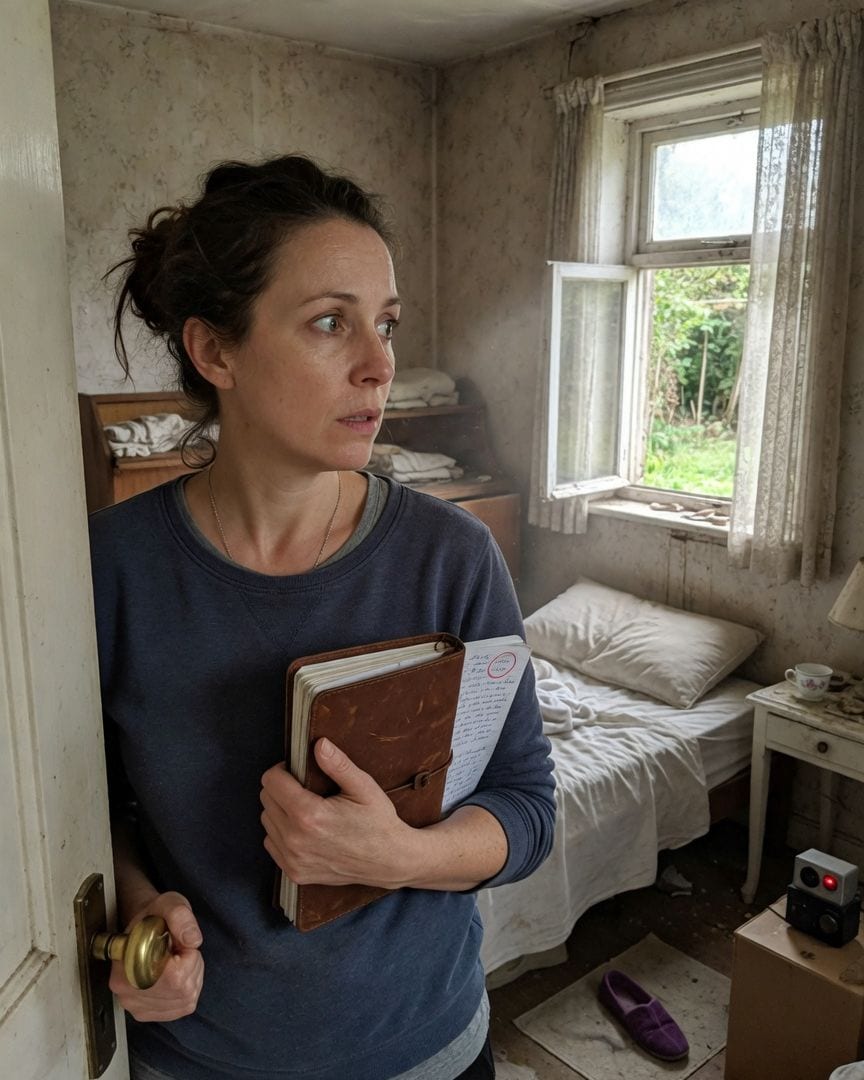
My spare room bed is slept in every few nights, sheets warm and pillow dented. I live alone, painted the window shut, and nobody has a key.
I've lived in Grace's house for six months, adjusting to its quiet rhythms. But the spare room, which I keep shut and empty for storage, has a disturbing routine of its own. Every few mornings, the bed is clearly slept in, the sheet rumpled and warm, and the window I painted shut is open exactly two inches.
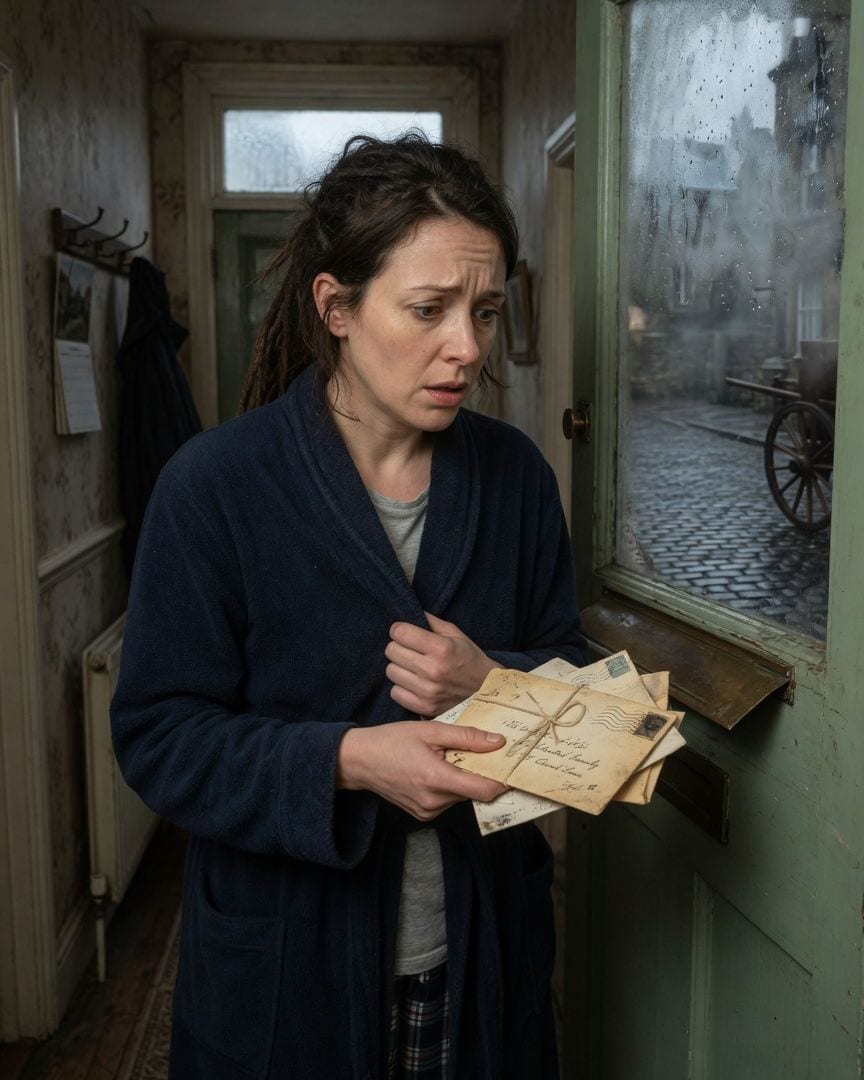
Seventy years ago, a hidden journal recorded my door opening to the wrong street and receiving Lockwood post.
I'd only recently moved into my inherited house, a quiet place on the edge of town. One grey morning, a distinct clatter from the front door's post flap caught my attention. Reaching down, I expected my gravel path, but instead, the flap showed a dark, cobbled street that wasn't mine. A bundle of warm, old letters, addressed to 'The Lockwood Family,' slid through, before the vision flickered and was gone.
My front door has a dented gate and a dead hydrangea. I walked past it six times, trying to reach the corner shop just a hundred yards away. The pavement kept bringing me back to my own porch, and the shop's light never moved.
My morning started like any other, a quick walk to the corner shop from my home at Number 14, Elm Terrace. But after walking what felt like two minutes, I found myself back at my own front door, the shop no closer. I tried six times, faster and slower, but my street kept compressing, refusing to let me leave.
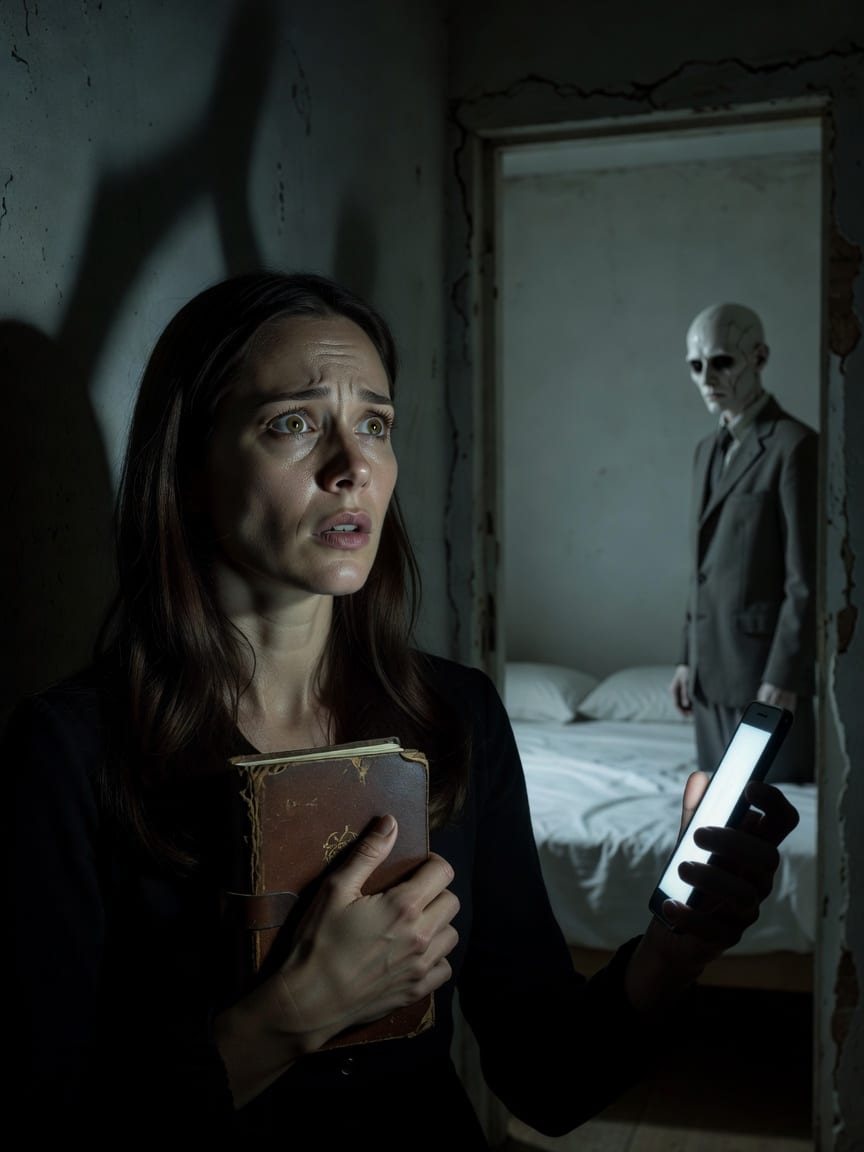
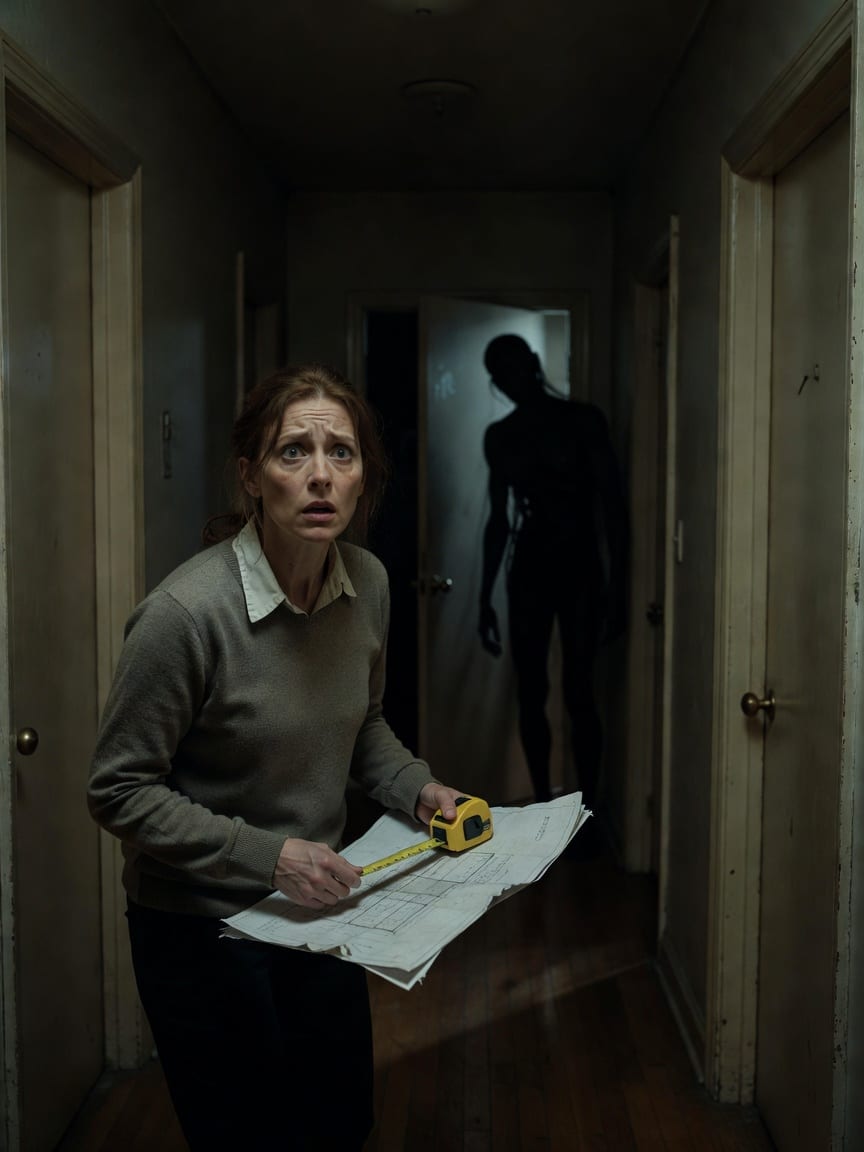
Behind a plastered-over doorway, I found a room. Papered, carpeted, and furnished with a made bed, sealed for decades. The air was dead still, but the bed wasn't dusty. My council tax bill only lists five rooms.
I'm Claire, an architect, meticulously planning my new Victorian terrace renovation. But when I uncovered a hidden room behind a wall, everything I knew about time and decay shattered. The bed was perfectly made, the air still, yet there was no dust, only an unnerving cold.
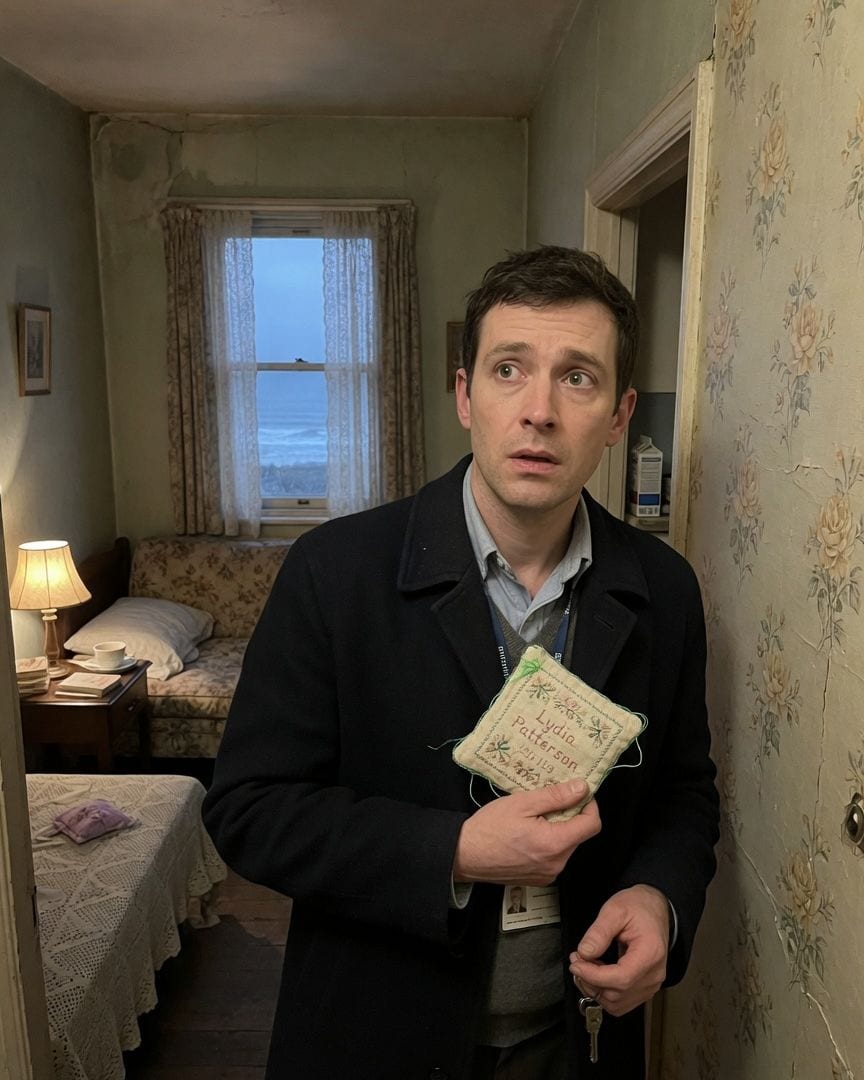
The 'empty' almshouse I was auditing wasn't empty. I heard a bare foot *thump-thump* from next door.
My new charity role involves auditing the supposedly 'empty' almshouse units. But from the unexplained activity outside to a fresh carton of milk inside, something is deeply wrong. Then, in one unit, I found a dead woman's sampler with a jarringly new thread, and heard bare feet thumping next door.
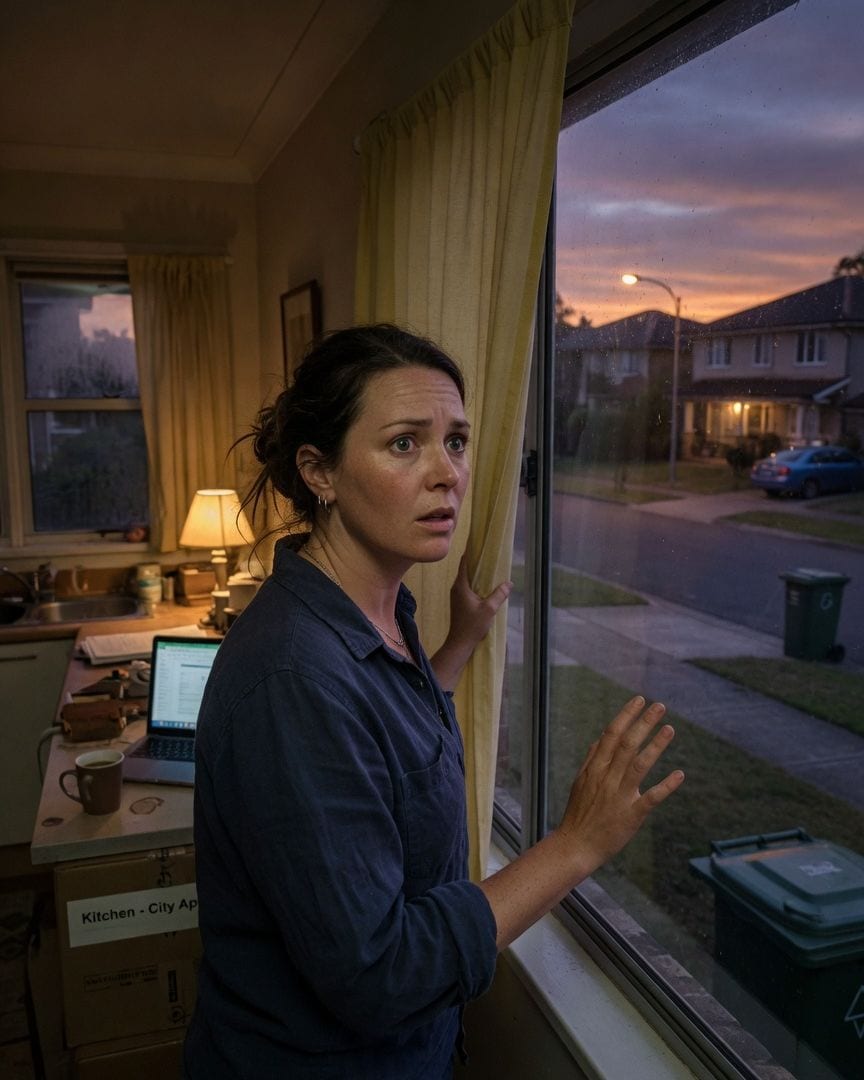
My bin was turned the wrong way Tuesday. The man three doors down hasn't been seen since, though his curtains still open.
New to Oakhaven, I dismissed the local warnings as charming quirks. But after I put my bin out first, my neighbor Joel Whitmore vanished, leaving only a cryptic 'My turn' note. The same strange symbol from his note was chalked on my bin, facing the street.