My parcel had my childhood nickname on it — a name only dead relatives used. Inside: a photo of my new front door, sent from an empty marsh the day I moved in.
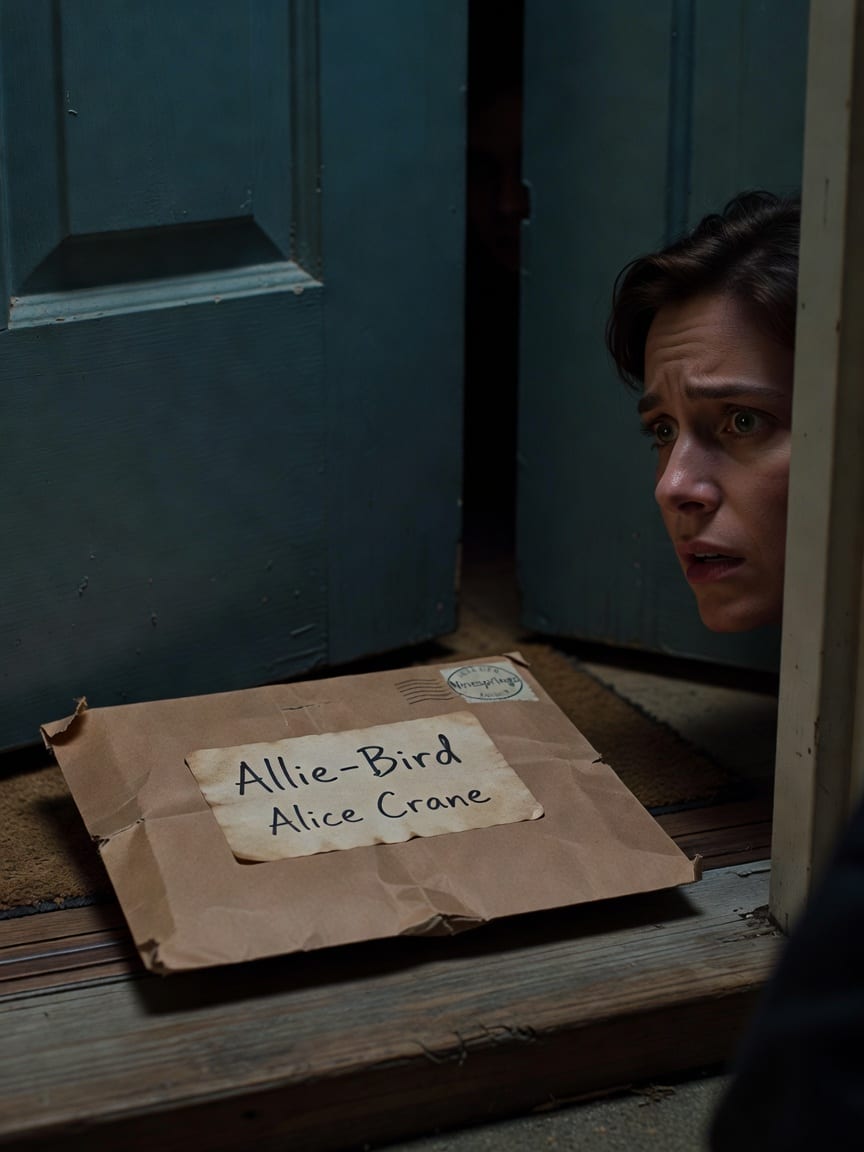
Alice Crane, thirty-two, knelt to unpack another box in her new, still-echoing house. The brown paper parcel on her worn wooden doorstep had arrived with the moving truck, nestled incongruously among the legitimate deliveries.
But its handwritten label, in looping, old-fashioned script, stopped her cold. It bore her full name, 'Alice Crane,' followed by 'Allie-Bird.'
Allie-Bird was a name only her grandmother and two long-dead aunts had ever used, a whisper from a childhood she rarely spoke of.
Inside, folded once, was a single, stark photograph: her own front door, taken from across the street at dusk. The shadows were long, but the details were unmistakable—the newly painted teal, the brass knocker she'd polished yesterday.
The postmark, however, was what truly made her stomach clench: 'Ninesprings.' Ninesprings wasn't a town, or even a village.
It was a stretch of protected marshland ten miles east, a landscape of reeds and stagnant water, with no roads, no addresses, and certainly no postal service.
And the parcel had been sent second-class, the very same afternoon she moved in.
I tried to rationalize it. A bizarre prank, perhaps, from an old school friend with too much time and a dark sense of humor.
But the intimacy of the nickname, the precision of the photo, and the impossibility of the postmark gnawed at me. I pulled up Google Maps, typing 'Ninesprings.'
The satellite view showed only vast swathes of green-brown wetlands, crisscrossed by narrow waterways, utterly devoid of human habitation. No post office, no houses, no roads leading to anything that could send mail.
Driven by a desperate need for a mundane explanation, I drove out there the next morning. The air grew heavy, damp, smelling of decay and wet earth.
The road dwindled to a dirt track, then vanished into thick reeds and shallow pools. There was nothing. Just the endless, whispering marsh. Back in town, I stopped at the local post office.
Ronald Doyle, a retired postman with a kindly, weathered face, was sorting letters behind the counter. I showed him the parcel, the postmark. Ronald squinted, then shook his head. 'Ninesprings? Impossible. That's just marsh.
Always has been, far as I know.' He paused, a thoughtful frown creasing his brow. 'Though... my grandmother, she used to tell stories. Old stories, about a place that was there, then wasn't. Nothing official, mind you. Just whispers.
You might try the county archives, look at some of the really old maps. Before the big flood, maybe.'
The suggestion felt like a lifeline, a chance to anchor the wrongness in something tangible, even if it was just forgotten history.
At the county archives, the air was thick with the scent of old paper and dust. I requested maps of the Ninesprings area dating back to the late 1800s.
The archivist, a quiet woman with spectacles, produced a large, brittle roll tied with string. I carefully unrolled it across a heavy oak table. It was a beautiful, hand-drawn survey, much older than anything I'd seen.
It depicted the marsh, but not as empty. A small cluster of structures, barely more than dots, was labelled 'Ninesprings Hamlet.' A tiny, crumbling chapel was clearly marked. My heart hammered as I saw it.
One of the structures, the chapel, was circled in faded red ink. And next to the circle, in shaky, ancient script, was scrawled: 'Allie-Bird.' The ink was old, the paper brittle, but the nickname was unmistakable, precise, and utterly impossible.
The sight of my childhood nickname on a century-old map, pointing to a forgotten hamlet in a marsh, felt like a physical blow.
I spent the next few days lost in the archives, pulling every dusty ledger and fragmented newspaper clipping related to Ninesprings. What I found was less a history and more a void.
Ninesprings Hamlet had existed, a small, isolated community, but records of its demise were strangely sparse.
Local papers mentioned a 'great marsh flood' in the early 1900s, but unlike other affected areas, there were no lists of displaced families, no relocated residents, no known survivors.
It was as if the entire population had simply… vanished, along with their homes, their names, their very existence. The dread deepened from a bizarre prank into something far more ancient and insidious.
I found a single, ambiguous mention in an obscure local folklore journal from the 1930s about 'the Ninesprings folk' and their 'naming day' ritual, where children's names were said to be 'given to the land' in a ceremony at the hamlet's chapel.
The entry was vague, dismissed as local superstition, but it resonated with the 'Allie-Bird' scrawled on the map. It suggested a profound, intimate connection between the people, the place, and their very names.
I felt a cold certainty blooming in my chest: this wasn't just a forgotten place. Something in Ninesprings knew me, by the most intimate of names, and had known others like me, for a very long time.
The growing unease manifested in subtle, unnerving ways. I found myself checking the locks twice, peering through curtains at shadows that seemed too deep. I returned to the marsh, compelled to find any physical trace of the chapel.
The reeds were impossibly dense, the ground soft and treacherous. I waded through brackish water, the silence broken only by the croak of frogs and the rustle of unseen things.
A profound sense of being observed prickled the back of my neck, a cold, insistent pressure that wasn't just the damp air. I spun around, but saw nothing but the endless, featureless expanse of marsh.
I felt a profound isolation, as if I were the only living thing for miles. The next morning, a new piece of mail was tucked into my letterbox. It was a birthday card, postmarked Ninesprings, addressed to 'Alice Crane.'
My birthday wasn't for another week. Inside, there was no message, only a single, faded photograph of a child's small handprint pressed into dark, wet mud. The dread became specific, personal.
Later that day, I returned home to find my mail slot slightly ajar, though I distinctly remembered pushing it shut.
Nothing appeared to be missing, no sign of forced entry, but the air inside the house felt different, heavy, as if someone had just left. The house, her sanctuary, no longer felt her own.
I was no longer just digging into history; I was being watched, and the entity was making its presence known.
I, now genuinely terrified, sought out Ronald Doyle again. I laid the old map, the birthday card, and the handprint photo on his counter. His kindly face paled as he looked at them.
He picked up the card, his thumb tracing the mud print. 'This… this is what my grandmother called 'the mark.' He looked up at me, his eyes wide with an old fear.
'She said the Ninesprings folk, they never truly left. They're tied to the land, to what was theirs. They… claim people.' He explained his grandmother’s stories in more detail.
The 'naming day' ritual wasn't just a custom; it was a pact. The hamlet's inhabitants believed they gave their names, their very essence, to the land, ensuring its prosperity. But the flood, he said, wasn't just a natural disaster.
It was a betrayal, and the land, or whatever was tied to it, never forgot.
He recalled his grandmother speaking of families with certain surnames—he named a few, 'Harrington,' 'Sutton,' 'Doyle' even—who would occasionally move away or disappear without a trace after receiving 'tokens' from the marsh.
He showed me a small, tarnished silver locket, worn smooth with age, that his grandmother had kept. Etched into its surface was 'Allie-Bird.' 'My grandmother,' he said, his voice hushed, 'she was 'Allie-Bird' to her family, too.
She received a token, just like yours. But she left. She moved far away, broke the pattern, she said.' He looked at me with a somber intensity. 'You need to leave, Alice. Break the pattern before it’s too late.
It knows your name. It knows what it wants.' The pieces clicked into place: the nickname, the impossible postmark, the forgotten hamlet. It wasn't a prank. It was an ancient, territorial claim, and I was its current target.
Ronald's words, his genuine fear, resonated with my own mounting dread. I packed my bags, my hands shaking, my new house now feeling like a trap. I would leave, just as Ronald's grandmother had.
As I gathered the last few items from the living room, my gaze snagged on a small, unobtrusive wooden panel built into the wall beside the fireplace.
It was part of the original house structure, a detail I'd barely noticed before. Curious, I pried it open. Inside was a narrow, leather-bound ledger, its pages brittle and yellowed with age.
This wasn't just any ledger; it was a property record, meticulously detailing land ownership and transfers within 'Ninesprings Hamlet,' dating back to the late 1800s. I scanned the faded entries, recognizing some of the surnames Ronald had mentioned.
Crane, Sutton, Harrington. A cold wave washed over me as I saw a distinct pattern: names, followed by specific dates. Then, my breath hitched.
My own full name, 'Alice Crane,' written in the same archaic script as 'Allie-Bird' on the map, appeared on one page, alongside a date that was decades before I was even born.
And beneath it, in a slightly newer hand, was another entry: 'Gideon Crane,' followed by a date just a few months from now. The pattern isn't just history; it's a living calendar, and it's coming for my family.
The ledger fell open in my trembling hands, revealing the full, horrifying truth. This wasn't a property ledger in the mundane sense. It was a registry of souls, of names 'given to the land' and then 'claimed' by it.
The Ninesprings entity wasn't just sending letters; it was marking its territory, its lineage, its due. The names weren't random, but descendants or those who, by sheer chance, occupied land once belonging to the hamlet.
My childhood nickname, 'Allie-Bird,' was a specific marker, a name whispered in the 'naming day' ritual, binding me to the original pact. The dates weren't arbitrary, but the precise moments when the entity's claim would be 'activated' for each individual.
I looked closer at the ledger.
Next to my name, and Gideon's, I noticed a faint, almost invisible symbol etched into the parchment – a swirling, organic pattern that matched, exactly, the faint impression in the mud of the child's handprint photo.
This was the entity's signature, its indelible mark. The letters were not just warnings; they were summons, a terrifying invitation to join the forgotten.
The horror wasn't a monster, but a coherent, ancient system of ownership, patiently waiting for its time, its claim on generations tied to a lost, hungry land.
I knew I couldn't simply run. The ledger proved it. The pattern would continue, reaching for Gideon, for others. Ronald's grandmother had 'broken the pattern,' not just escaped it. This wasn't about distance; it was about severing the connection.
I drove back to the marsh, not to escape, but to confront. I clutched the old map and Ronald's locket in my hand. The sun was setting, casting long, skeletal shadows across the water.
I found the approximate location of the old chapel on the map, a patch of slightly higher ground now overgrown with twisted reeds and gnarled marsh grass.
As I stood there, the air grew heavy and cold, a palpable presence settling around me. It wasn't a physical cold, but a chilling emptiness that pressed in on me, a profound, unseen gaze.
I felt the weight of generations, of forgotten names, of the entity's ancient claim. It was here, all around me. I took Ronald's locket, the one etched with 'Allie-Bird,' and placed it on a flat, damp stone I found.
With a heavy, jagged piece of marsh rock, I brought it down, smashing the locket again and again until it was a mangled, unrecognizable shard of metal. 'I sever the claim!'
I shouted, my voice raw, echoing across the desolate marsh. 'I break the pattern! My name is my own!' I flung the broken pieces, one by one, into the deepest, darkest part of the stagnant water.
The feeling of being watched intensified, a sudden, violent surge of unseen pressure, then abruptly vanished, leaving an unsettling, profound silence. The air lightened, though the cold remained.
I felt a profound sense of loss, a piece of her history torn away, but also a chilling, hard-won freedom. It was done, for me at least.
I left the town that very night, never looking back. I sold the house without ever truly settling in, the buyer oblivious to the ledger I'd left hidden in the wall. I never received another parcel or letter from Ninesprings.
Ronald Doyle, when I called him weeks later, sounded relieved, though a quiet tremor remained in his voice. He never pressed for details, simply understood.
I carried the knowledge of Ninesprings, a cold, quiet dread that no one would ever believe, a truth that had cost me my peace of mind.
The town settled back into its quiet existence, its inhabitants unknowingly living on the edge of a forgotten, hungry place. The marsh remained, still and silent, holding its secrets.
Years have passed since Alice Crane left Ninesprings behind. She lives a quiet life now, always instinctively avoiding places that feel too isolated, too forgotten, too close to the edge of the wild.
She still scans obituaries of her distant relatives, especially for anyone named Gideon Crane, a habit born of a terrible, quiet vigilance. The letters stopped for her, the claim severed.
But sometimes, when she sees a vast, flat marsh on the horizon, or hears a child’s name called out in a way that feels too familiar, too intimate, a chill runs through her.
She remembers the ledger, the names, the dates, the intricate pattern of an ancient hunger. The quiet ache of knowing it's still out there, just not for me, is its own kind of haunting.
If this one got to you
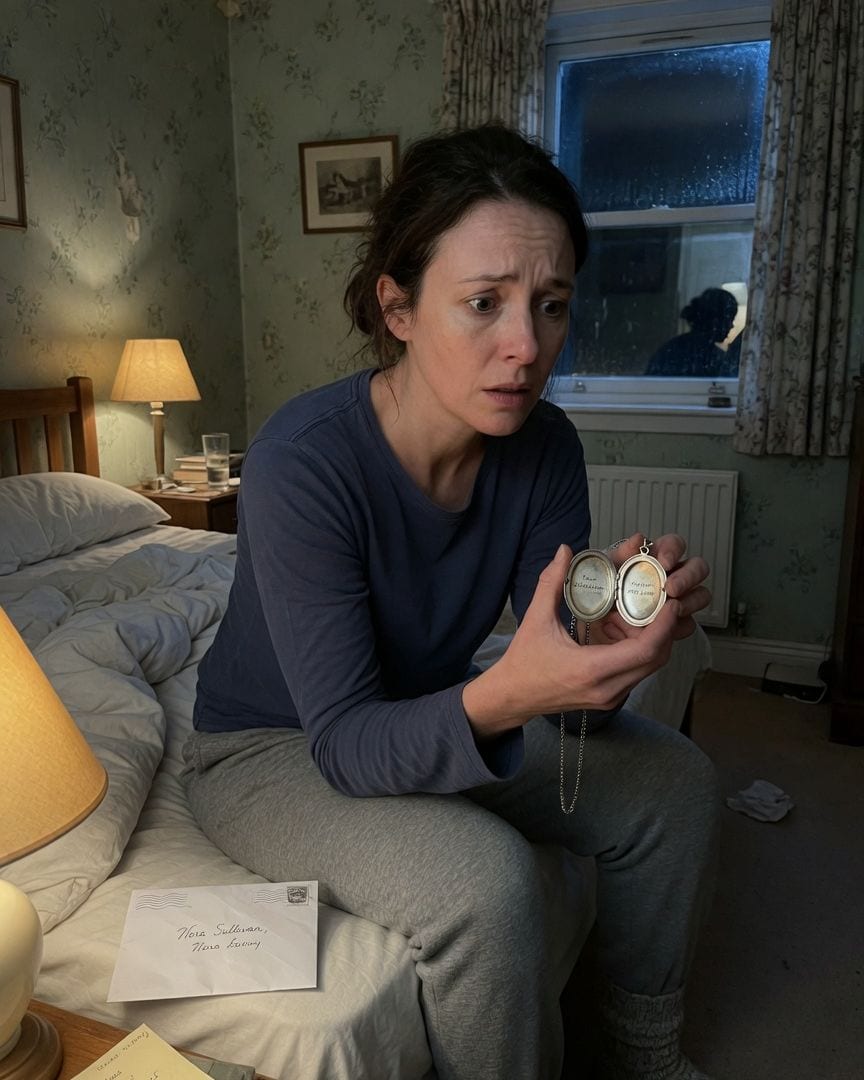
My antique locket held my maiden name, engraved with 'until the ninth.' The dealer said the woman who owned it left a note: 'for her, when she comes.'
My husband Scott, always finding unusual things, gave me an antique silver locket. Inside, engraved beneath my maiden name, Nora Sullivan, were three chilling words: 'until the ninth.' It felt like a direct, personal address, even though I hadn't used that name in years.
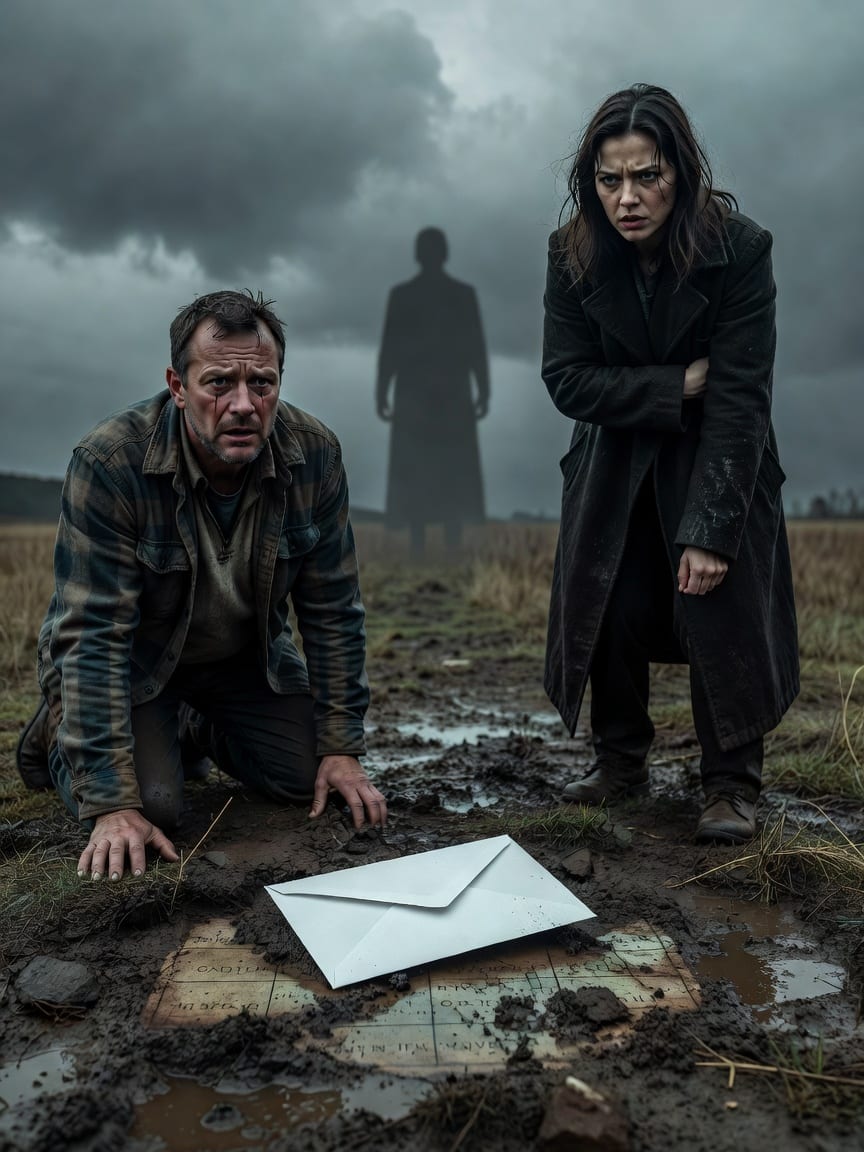
My mail carrier delivers polling cards to Nine Acre Field. It floods, they say. The tithe map shows nine family plots there.
As the new county archivist, I was used to quiet days poring over dusty records. But then I found an empty field, Nine Acre, was receiving current-year polling cards and utility notices for nine distinct addresses. When I investigated, I unearthed a perfectly crisp, current-year tax bill, buried in its soil, surprisingly warm against my fingers.
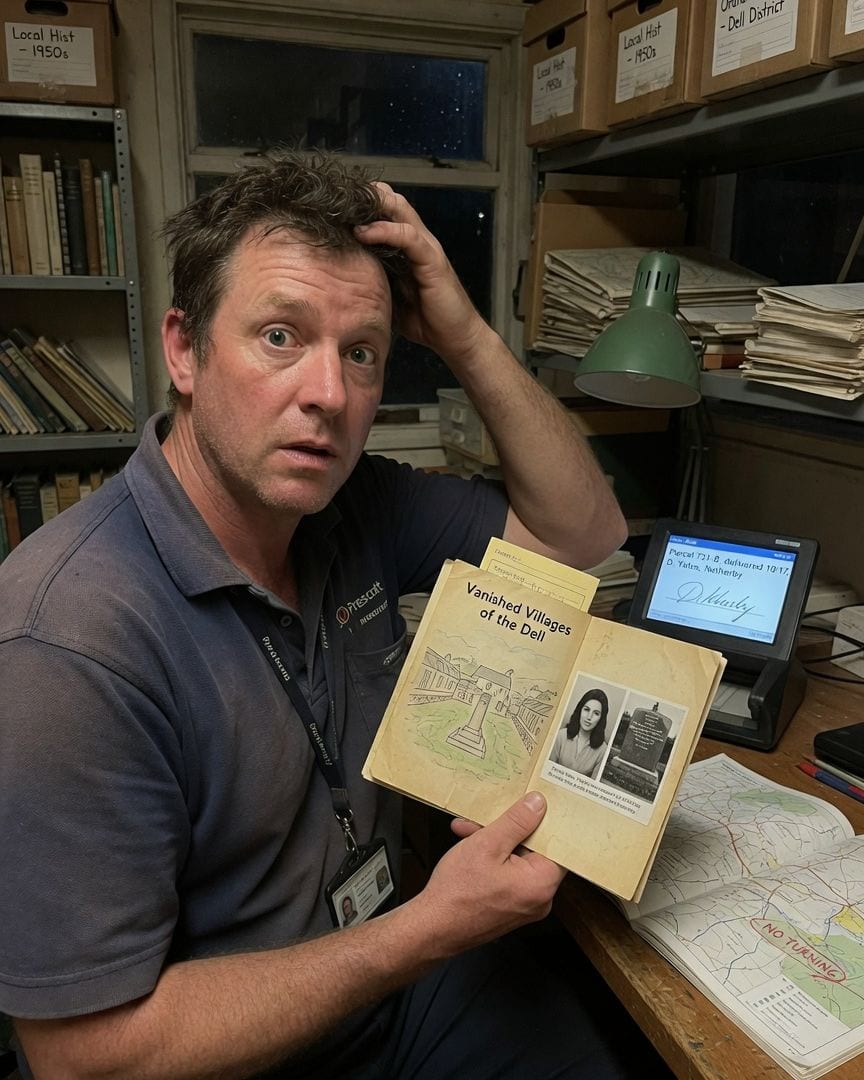
A village signed for my parcel last October, but Netherby isn't on any map. I've driven the lane; there's only farmland.
As a parcel delivery driver, Roy Prescott’s job is usually mundane, but a recent delivery to a village called Netherby now haunts him. The next day, the village vanished from his satnav and maps, leaving only farmland. Yet, his internal system held undeniable proof: a scanned signature from Daphne Yates, the woman who signed for the package, now appears in a 1957 village photo, looking exactly the same.
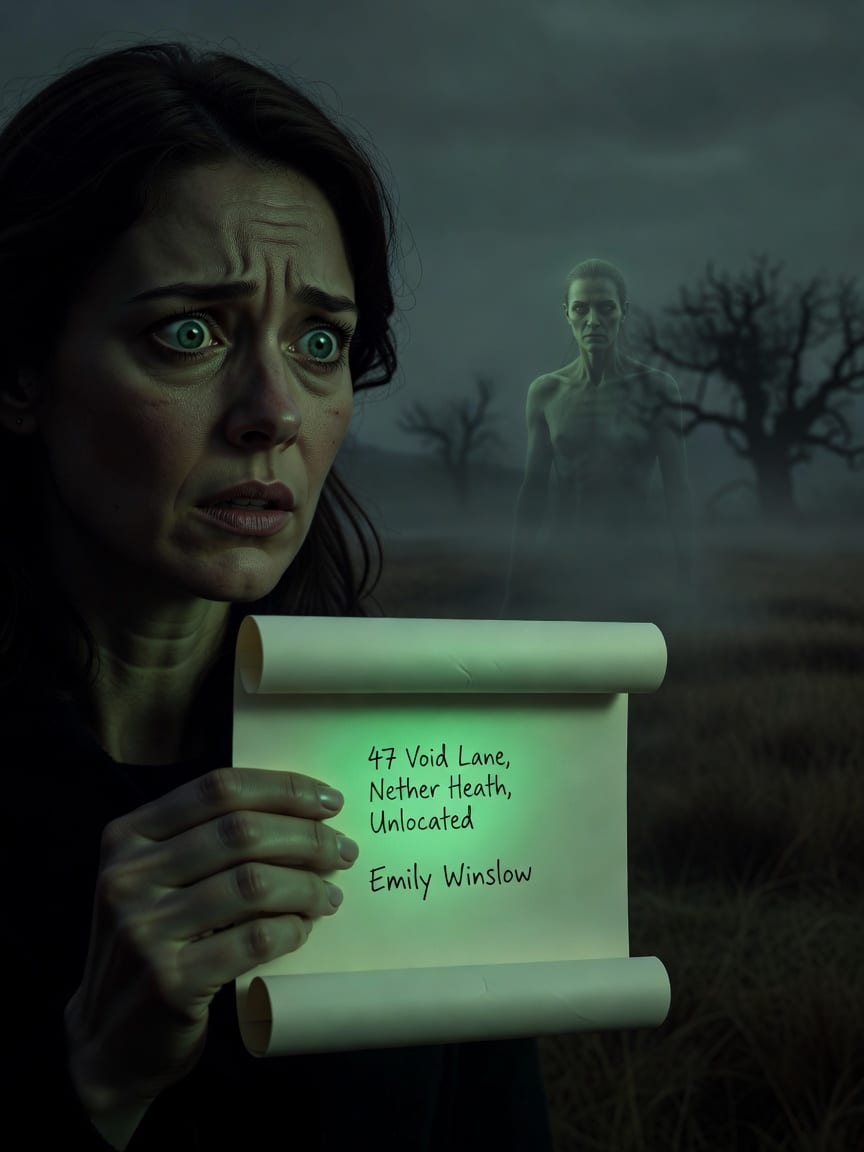
My change-of-address card arrived today. It said I'd moved to a house I'd never seen, on a street that didn't exist. And it was signed with my own hand, a month from now.
A crisp, cream-colored card on my kitchen counter informed me I'd moved to 42 Willow Creek Lane, an address that didn't exist. The signature was my name, Emily Winslow, a chillingly precise ghost of my own handwriting. But then I found an old 1947 ledger, listing 42 Willow Creek Lane and a signature identical to the one on my card.
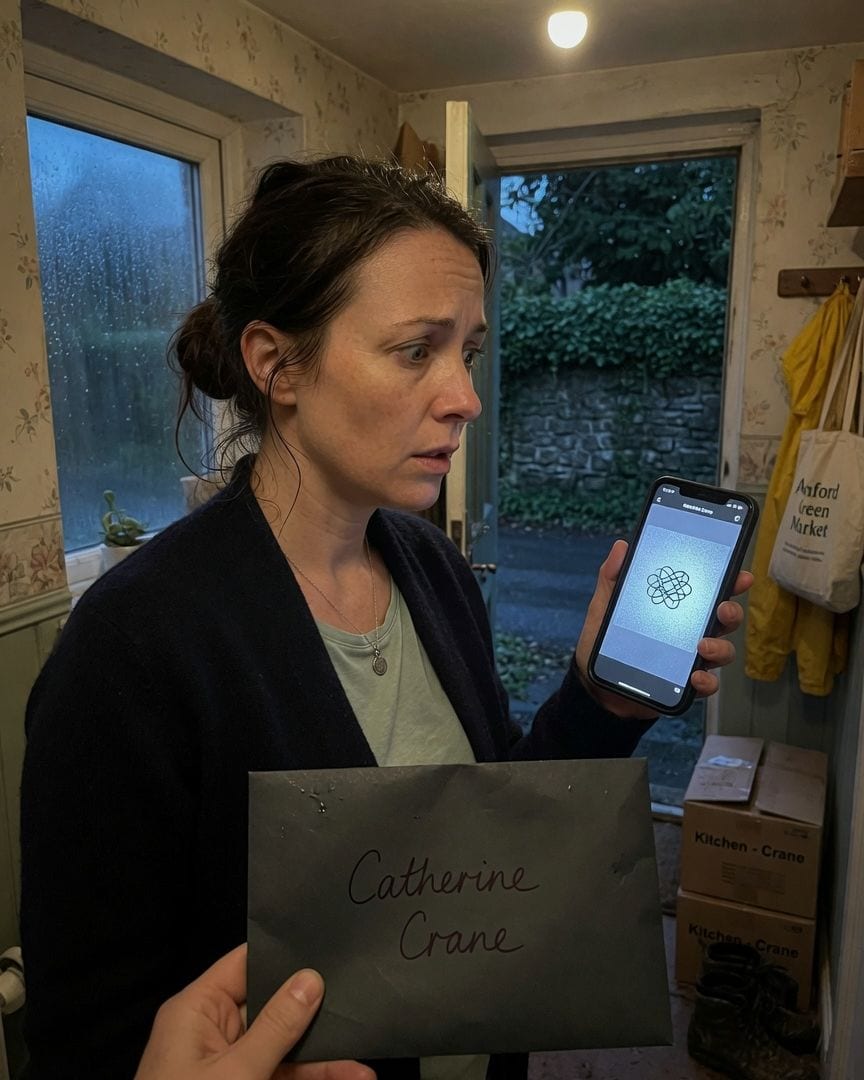
My postman warned me: never use the old pillar box. Royal Mail logs a collection every day, one item, signed by no one.
Moving to Ashford Green, I dismissed my postman's strange warning about the old pillar box by the ford. But after my own letter vanished inside it, I returned at midnight. Then, a dark, unstamped envelope slowly slid *out* of the slot, addressed to me.
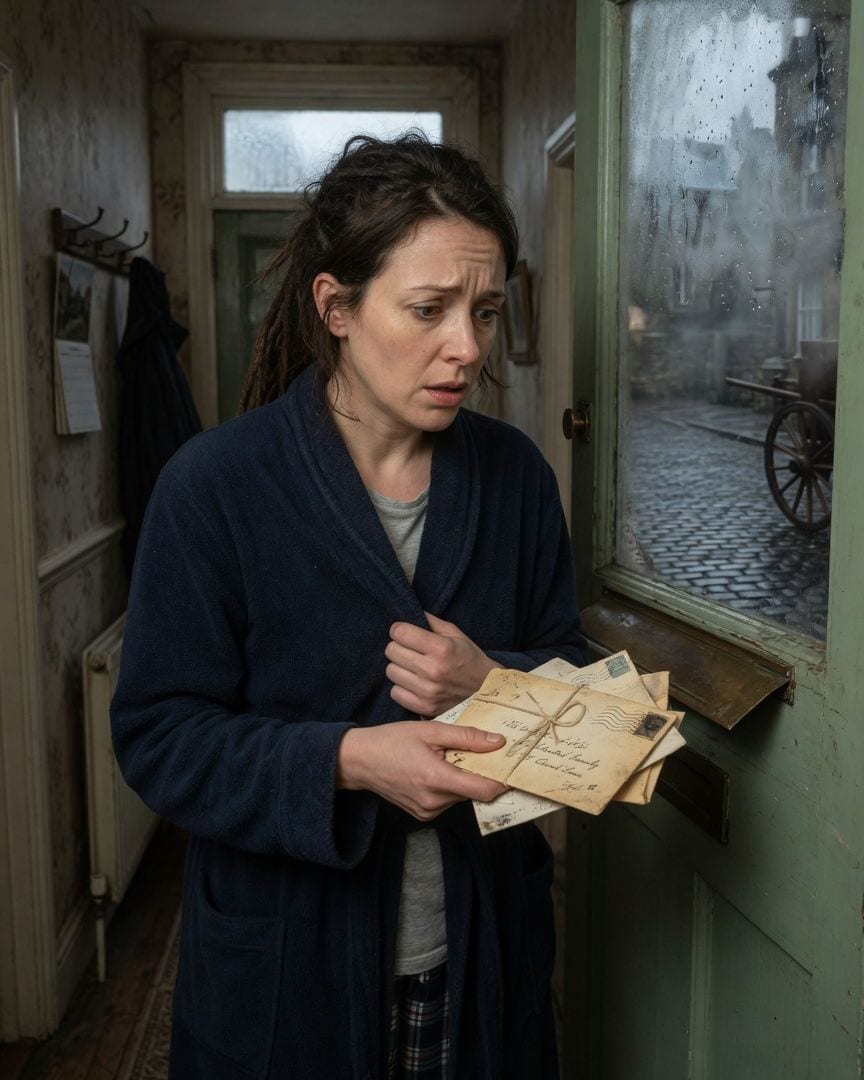
Seventy years ago, a hidden journal recorded my door opening to the wrong street and receiving Lockwood post.
I'd only recently moved into my inherited house, a quiet place on the edge of town. One grey morning, a distinct clatter from the front door's post flap caught my attention. Reaching down, I expected my gravel path, but instead, the flap showed a dark, cobbled street that wasn't mine. A bundle of warm, old letters, addressed to 'The Lockwood Family,' slid through, before the vision flickered and was gone.