Petty Officer Isaac Cruz found a faint green light pulsing from a sealed room, then saw a figure standing perfectly still inside.
Petty Officer Isaac Cruz, twenty-two, stood his first solo midwatch in the plotting room of the old training cruiser USS Ashford. The ship lay anchored in a quiet, fog-shrouded bay, a hulking silhouette against the pre-dawn gloom.
She was slated for mothballing, her active days done, and an eerie silence hung over her, broken only by the low hum of her remaining systems.
His only companion was the crackle of the sound-powered phone circuit, a direct line to every station.
He had meticulously checked each one, the familiar click and ‘Plotting Room, ready’ echoing back to him. All but one: Handling Room Two.
It had been sealed off for decades, a casualty of a fire nobody in his chain of command would ever name. Its indicator light was dark, its circuit dead.
Then, a low, rasping voice cut through the static, clear as a bell, from that very dead circuit. ‘Handling Room Two, checking in. Ready for watch.’
Isaac, trained to acknowledge all stations without question, instinctively keyed his mic. ‘Plotting Room, acknowledged. Handling Room Two, status?’
The voice returned, slow and deliberate, a chill seeping into the plotting room’s stale air, colder than the fog outside. ‘Ready. Just waiting for the rest of the watch to come down and join us.’
Isaac’s hand trembled on the phone, a cold sweat pricking his skin. He tried to rationalize it – a prank, a crossed wire, his own fatigue playing tricks.
He ran diagnostics on the comms panel, but every indicator for Handling Room Two remained dark, dead, as if the entire compartment simply didn't exist in the ship’s electrical grid.
He tried to raise the duty officer, Chief Petty Officer Maddox, but the line buzzed with an empty static, a sound like a distant, hollow wind.
Driven by a growing, sickening unease, Isaac pulled out the ship’s faded schematics, tracing the conduits, confirming Handling Room Two’s absolute isolation.
As he scanned the dusty charts, his eye caught a faded, smudged entry in an old maintenance log tucked beneath a console, almost an afterthought. The handwriting was cramped, almost illegible. ‘HM-2 Temp Seal Breach – Corrective Action Pending.’
The date was years ago, decades even, but the ink around the word ‘breach’ looked disturbingly fresh, as if applied yesterday. A temporary breach? For a room supposedly sealed for decades?
A new, cold certainty settled over Isaac. He had to see it. He grabbed his heavy-duty flashlight and moved quietly through the deserted passages, the ship groaning around him as if in protest, each sound amplified in the profound silence.
Ahead, the corridor narrowed, leading to the accessway for Handling Room Two.
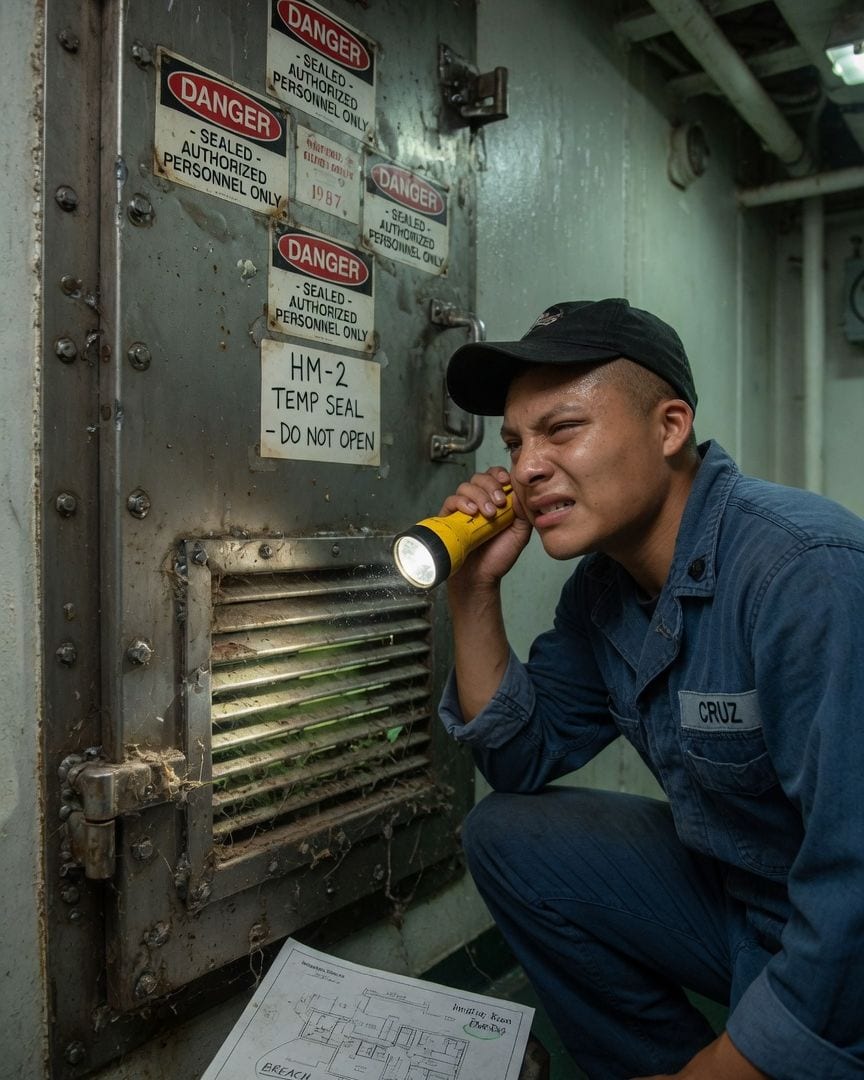
The accessway was unmistakable: a heavy steel door, its edges crudely welded shut, with official, faded ‘DANGER – SEALED’ tags plastered over the seams. The air here was heavy, metallic, and cold enough to make his breath plume.
Isaac ran his flashlight beam over the rust-pocked surface, confirming its impenetrable status. Yet, as the beam settled on a small, grimy vent grille near the bottom, a faint, unnatural greenish light pulsed from within.
It wasn’t a reflection of his flashlight. It was coming from inside. Isaac knelt, his heart hammering against his ribs, and pressed his eye to the vent.
Through the dust and grime, deep within the supposedly sealed chamber, he saw a distorted, indistinct figure, like a shadow coalescing in the faint, sickly light, standing perfectly still.
Isaac stumbled back, the image burned into his mind. He reported the light to Chief Maddox, who, over a crackling comms line, dismissed it with a tired sigh. “Cruz, it’s probably a power surge. Faulty indicator.
Or maybe you’re just seeing things on your first solo midwatch. Old ships play tricks.” But Isaac couldn’t dismiss it.
He spent the next day, off watch, unable to sleep, poring over the Ashford’s archives in the ship’s dusty, cramped library.
He found redacted accident reports about the Handling Room Two fire, referring vaguely to “catastrophic system failure” and “loss of personnel,” but conspicuously, no names, no casualty list, nothing but blanks where the human cost should have been.
He dug deeper, cross-referencing old crew manifests from the period just before the fire, comparing them to official Navy casualty records from that year.
There were discrepancies: a handful of names on the manifest that didn’t appear on any casualty list, no record of their transfer or discharge.
They had simply vanished from the official ledger, erased as completely as if they had never existed.
He found a cryptic, unofficial log entry from a former watch officer, dated fifteen years prior, reporting “unexplained comms chatter from sealed compartment,” followed immediately by an urgent transfer request, approved with unusual haste.
The meticulously organized system, designed for absolute accountability, had simply swallowed these inconvenient details whole, leaving a widening, inexplicable gap in the ship’s history.
Each discovery, each blank space, made the plotting room’s still air feel colder, more oppressive, wrapping around him like a shroud.
As Isaac continued his unauthorized investigation, a pervasive sense of being watched began to prickle at him.
It started subtly: lights in his bunk flickering erratically, the ship's ancient ventilation system seeming to whisper his name in the dead of night, the metallic tang in the air growing stronger.
One afternoon, while reviewing a microfiche of the Ashford's original commissioning logs, the projector suddenly jammed, its bulb exploding with a sharp pop that echoed through the quiet archive.
As he fumbled in the sudden dark, a garbled message crackled over the ship's PA system, meant only for officers, its normal crispness replaced by a chilling distortion. ‘Stop looking, Cruz. You’re already on watch.’
The voice was metallic, otherworldly, but unmistakably the same one from Handling Room Two.
Later that evening, returning to his bunk, he found a small, tarnished brass button, clearly from a pre-WWII naval uniform, resting on his pillow. It wasn't his, and he'd never seen anything like it on board.
It felt cold against his fingers, a silent, pointed warning, a physical breach of his personal space. His digging had indeed been noticed, and the threat was no longer confined to sealed compartments or static-laden phones.
It was here, in his bunk, waiting for him.
Shaken by the button and the message, Isaac confronted Chief Maddox. He laid out the inconsistencies in the manifests, the cryptic log entries, the flickering lights, the garbled warning, and finally, he pushed the brass button across Maddox’s desk.
Maddox, initially stoic, visibly paled at the sight of the uniform button. He ran a hand over his face, his usual gruff demeanor cracking, revealing a raw fatigue Isaac had never seen. ‘Damn it, Cruz.
I told you to drop it.’
Isaac pressed him, his voice tight. ‘Chief, what happened in Handling Room Two? What did they cover up?’
Maddox sighed, a deep, weary sound that seemed to pull at the very fabric of the old ship. He finally admitted the official story was a lie. ‘There were no bodies, Cruz. Not a single one. Just… nothing.
The fire wasn’t an accident. It was… an erasure. Whatever happened, it didn’t just kill them, it made them cease to exist, as far as the Navy was concerned. But they didn’t really leave.’
He explained that the ‘incidents’ had been happening for decades, always during midwatch, always with the sound-powered phones. ‘They’re still on watch, Cruz. And they need a full crew.
Every time someone acknowledges them, they get a little stronger, a little more… present. The Navy sealed the room, hoping to bury it, to forget it, but you can’t bury something that never truly died.
You can’t account for an absence that still calls out for a presence.’
Maddox led Isaac to a locked cabinet in his office, its heavy steel door groaning open. He pulled out a heavy, leather-bound book, its pages thick and yellowed.
It was an unofficial log, he explained, kept by generations of watch officers on the Ashford, detailing the 'incidents.' He flipped through pages filled with similar accounts: voices on the phone, strange reflections, objects moving on their own.
Each entry ended with the watch officer's signature, and a chilling notation about the 'new recruit.'
Isaac's blood ran cold as Maddox stopped on the very last page. An entry, dated the previous night, written in a spidery, unfamiliar hand, read: 'Handling Room Two checked in. Petty Officer Cruz acknowledged.
They asked when the rest would join them. He's on the list now.' Below it, scrawled in faint, almost translucent ink, was his own name: Isaac Cruz.
He stared at it, the paper feeling impossibly heavy in his hands, the words swimming before his eyes, realizing the true, horrifying implication of what Maddox had revealed.
He wasn't just investigating a mystery; he was already part of it, his name added to a roster of the lost, a new member of the Watch That Won't End.
The full, terrifying truth detonated in Isaac’s mind: his acknowledgment hadn't just been a procedural error; it was an acceptance. He was now, irrevocably, on their manifest. Maddox’s face was grim. ‘By answering, you gave them permission.
You’re part of their crew now. They'll keep calling until you join them.’ He explained that the 'fire' had created an anomaly, a temporal loop of consciousness, anchoring the dead crew to Handling Room Two.
They perceived the ship as it was then, a fully operational vessel needing a full complement for watch. Every midwatch, they sought to complete their ranks.
Maddox recounted stories of previous officers who had acknowledged the call: some vanished without a trace, their service records quietly expunged; others were found catatonic, muttering about 'the watch' before being medically discharged.
The ship’s systems, the very structure of accountability, had simply failed to record their true fate, instead generating mundane explanations, bureaucratic euphemisms for the inexplicable.
The ‘temporary seal breach’ from the old log, the flickering light – these were not flaws in the ship’s engineering, but echoes of their presence, their desperate, perpetual attempts to reconnect.
The brass button, the garbled message – all signals that he was marked, already perceived as one of them.
Isaac’s next midwatch was a gauntlet. The sound-powered phones, though officially dead for Handling Room Two, began to hum with a low, insistent frequency, a vibration that seemed to travel directly through the deck plates into his bones.
Voices, now distinct and multiple, whispered his name, urging him to the sealed compartment. ‘Isaac… the watch needs you… we’re waiting.’
He tried to shut down the comms, to cut power to the entire circuit, but the controls felt unresponsive, almost sticky, as if resisting his touch.
He could feel a cold spot in the plotting room, growing larger, radiating from the vent he had peered into, now a gaping maw of frigid air.
He knew he couldn't join them. He couldn't become another name in Maddox's unofficial log, another absence erased from the Navy's records. With a desperate surge of adrenaline, he grabbed a heavy wrench from the tool locker.
The voices grew louder, no longer whispers, but a chorus of pleas and demands, seemingly coming from all around him, from the very air of the plotting room, echoing off the bulkheads. ‘Don't abandon the watch, Isaac!’
He focused on the sound-powered phone console, the primary conduit, the source of their insidious calls. He swung the wrench, smashing the main receiver, then the delicate wiring, sparks showering as the circuit died with a final, deafening crackle.
The voices didn't cease. Instead, they condensed, echoing from the vent in the plotting room itself, a low, guttural growl that promised eternal vigil. Isaac didn't wait.
He dropped the wrench, the clang echoing like a death knell through the silence, and bolted from the plotting room, abandoning his post, a cardinal sin for a service member, but the only way to break the watch.
Isaac Cruz was found hours later, disoriented and babbling, huddled in a rarely-used storage locker on the ship's lowest deck. His service record, once spotless, was marked with 'Dereliction of Duty' and 'Psychological Instability.'
He received a quiet, expedited discharge, the Navy eager to make him disappear, to sweep the incident under the rug, just as they always had.
The USS Ashford, deemed too old and problematic, was quickly decommissioned, then scuttled at sea months later, no public ceremony, no explanation for its sudden demise beyond 'structural integrity issues.'
The incident was quietly buried, another anomaly accounted for by bureaucratic silence. The system, in its own way, had sealed the problem once more.
Years blurred into a quiet, haunted existence for Isaac. He married Beatrice, built a life far from the sea, far from anything that hummed with old power. He avoided anything naval, anything remote, anything that felt isolated.
One evening, watching a news report about a deep-sea salvage operation near the former scuttling site of an old training cruiser, the reporter mentioned a 'minor communications anomaly' picked up by the submersibles during the final checks of the wreck.
Isaac felt a familiar chill, a cold knot forming in his stomach.
Later, as Beatrice tidied up, she found an old, faded dog tag under their sofa. It wasn't Isaac's issue tag. She picked it up, examining the tarnished brass. 'Whose is this, Isaac?
It's got your name on it, but the date of birth is all wrong. And this ship… the Ashford?'
Isaac looked at the tag, then at her, a faint, wrong little smile on his face. 'Is that so?'
Beatrice watched him, a shiver running down her spine, though the room was warm. His smile was familiar, but his eyes held a distant, cold light she had never seen before.
He simply turned back to the television, listening to the static hum of the evening news.
If this one got to you
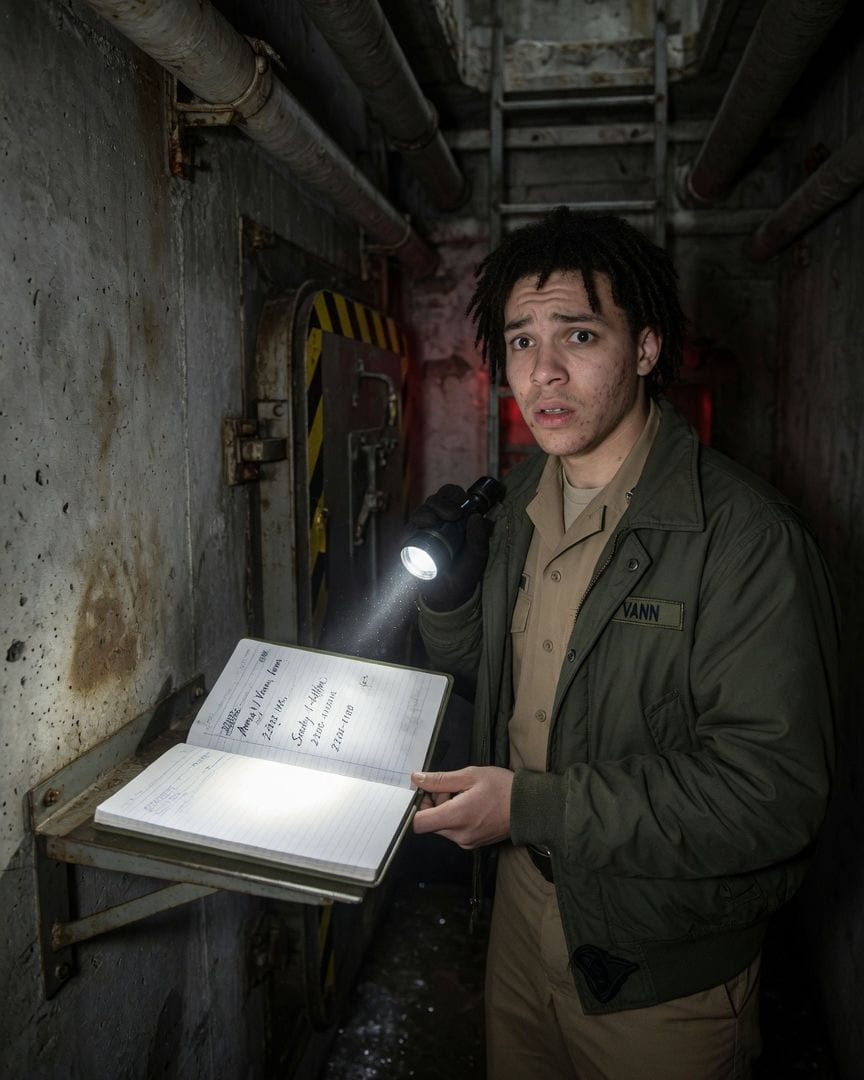
On his last patrol, Airman Vann sees a Cold War silo hatch light up from *inside*—it was welded shut a decade ago.
Airman Vincent Vann was on his last patrol across a vast, desolate Cold War missile field in the Dakotas, the cold, starless sky mirroring the emptiness of the landscape before his transfer. His routine check of eight hardened silo caps was shattered when a red fault light pulsed on Silo 4’s access panel, signaling an impossible breach from *inside* a hatch sealed for a decade. As more silos lit up, ignoring base orders, Vann found the hatch unlocked from within and descended into the dark shaft, where he discovered a pristine logbook bearing his own signature next to a chilling entry from a non-existent sentry, dated for *that very night*. Now, a steady *thump* echoed from deeper within the sealed concrete, leaving the Airman desperate for an explanation that simply wasn't there.
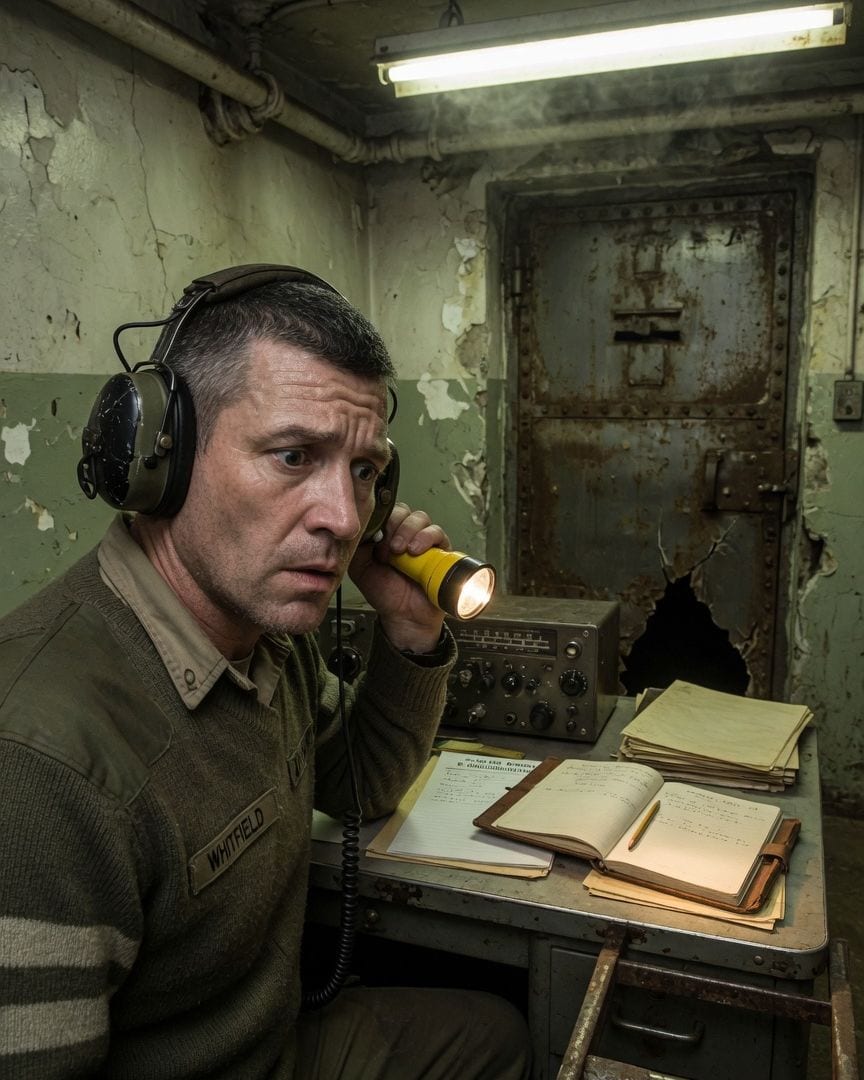
A corporal on his last watch picks up live Morse code from a shipping lane dead forty years. Then, tapping starts inside his sealed bunker.
Corporal Quentin Whitfield stood his last watch in the old coastal bunker, the facility winding down for good as thick fog muffled the sea below. His final sweep of archaic comms gear became anything but routine when a long-dead frequency crackled with live Morse code, a precise wartime transmission for a shipping lane unused in forty years. He decrypted the impossible message, a convoy sighting for his own bunker dated today, complete with an unsettling instruction: 'DO NOT RESPOND TO IRREGULARITIES ON LINE.' As if on cue, a faint, rhythmic tapping began from the bunker's sealed lower levels, growing louder behind a heavily rusted door with a fresh, ragged crack. A darker-than-dark outline pulled back from the opening as his light hit it, leaving only impenetrable blackness beyond.
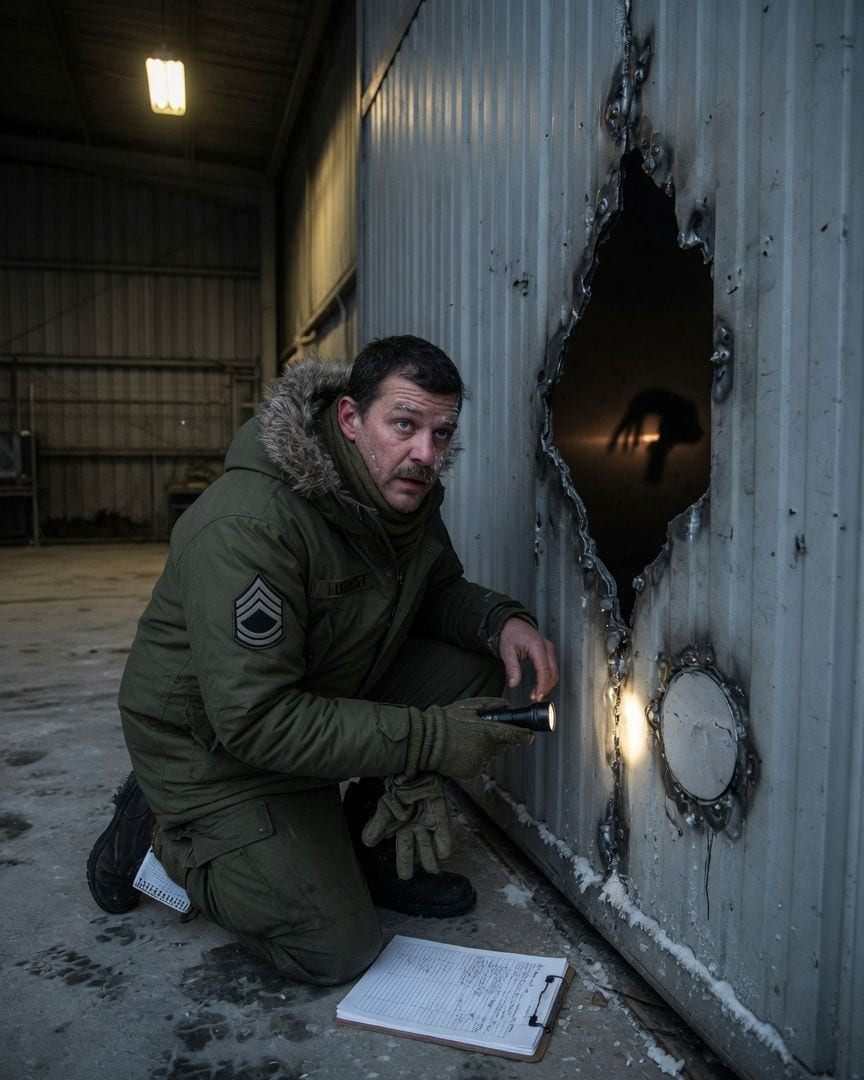
A Cold War technical sergeant found a sealed hangar door, but a secret vent led to a deep hum. Then, a slow, orange light pulsed from the darkness inside.
In the Alaskan winter of 1978, Technical Sergeant Wes Lindquist's rigid routine involved hourly temperature checks for the officially empty Hangar Bay Two. Despite being welded shut for months, the bay consistently registered nine degrees warmer than ambient. As official dismissals failed to explain the anomaly and the internal temperature climbed, Lindquist kept a secret log. His curiosity led him to a hidden vent in the crude weld, where he felt a deep, resonant hum vibrating from within. Shining his flashlight into the void, a faint, rhythmic pulse of dull orange light bloomed and receded, casting a writhing shadow too large for anything known.
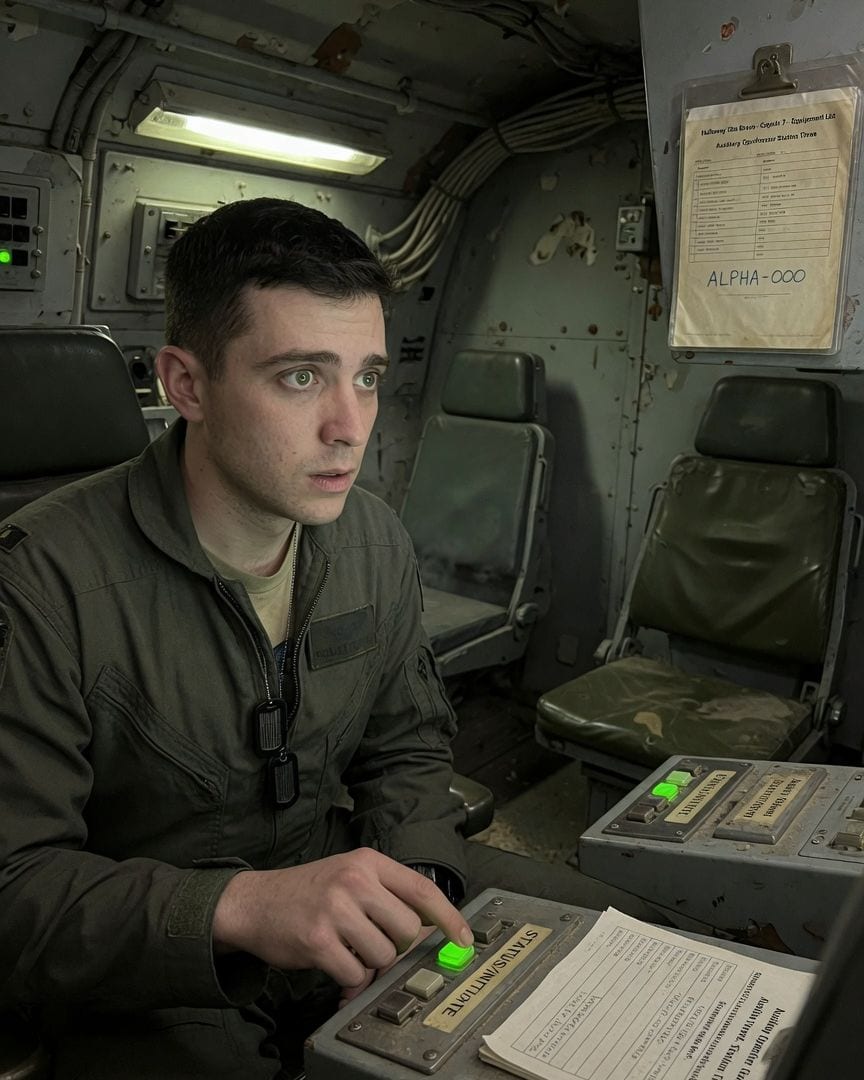
Airman Kestrel's last watch at the Cold War facility. The third chair sighed, then its console felt warm.
Airman First Class Dov Kestrel was counting down the final 72 hours of Halloway Site Bravo, on his last alert watch before the facility sealed its doors for good. The capsule was built for two, but a third, unused chair always sat in the corner. Then, at 0300, a soft sigh came from that corner, as if someone invisible had just settled into the vacant seat. When Dov checked the third chair, its console felt faintly warm, and a maintenance log showed a recent entry signed by someone who wasn't there.
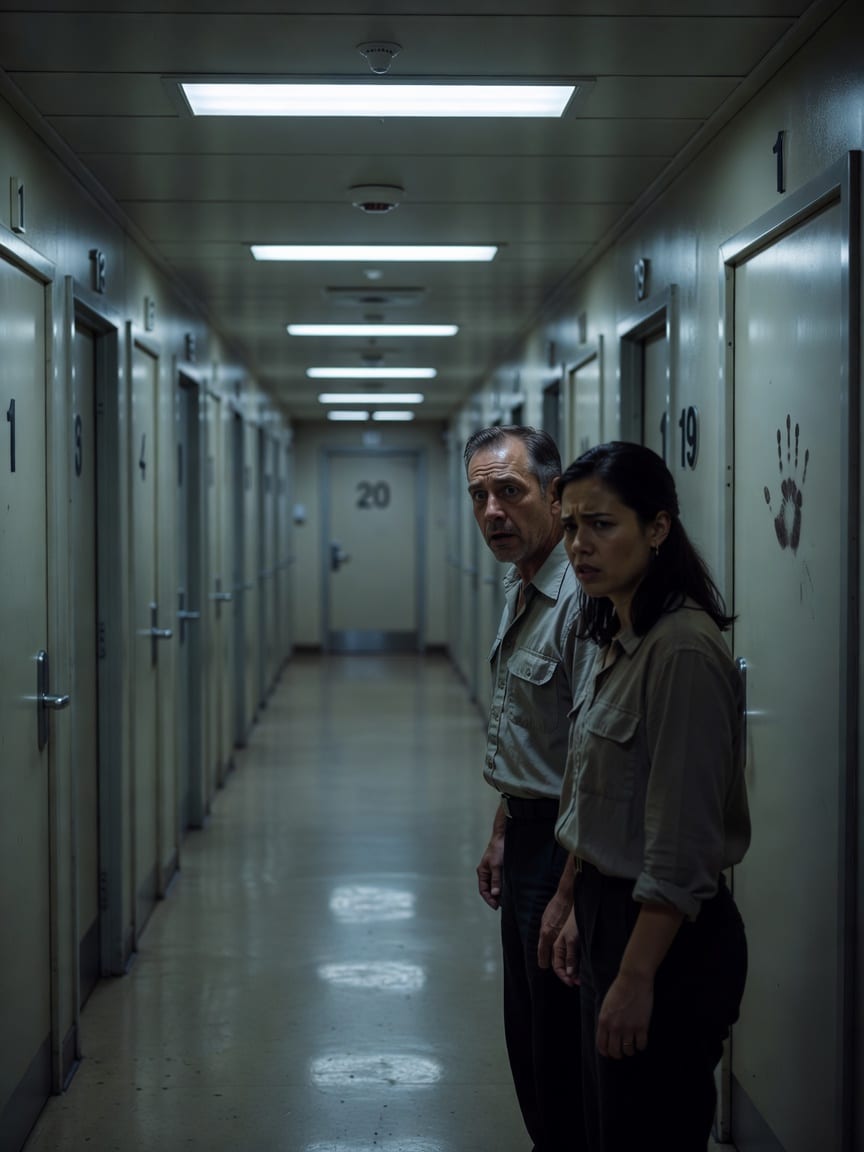
My ship's evacuation plan shows nineteen cabins. I just walked past twenty. Cabin 20 had a name-card and a wet handprint, on a deck the purser swears doesn't exist.
As an accountant, I rely on details and systems, so the mandatory safety drill on the Ocean's Embrace III was a routine check. My cabin's evacuation plan clearly states Deck 4 has nineteen cabins, but then we walked past Cabin 19 and found Cabin 20, its door bearing a distinct, glistening, wet handprint.
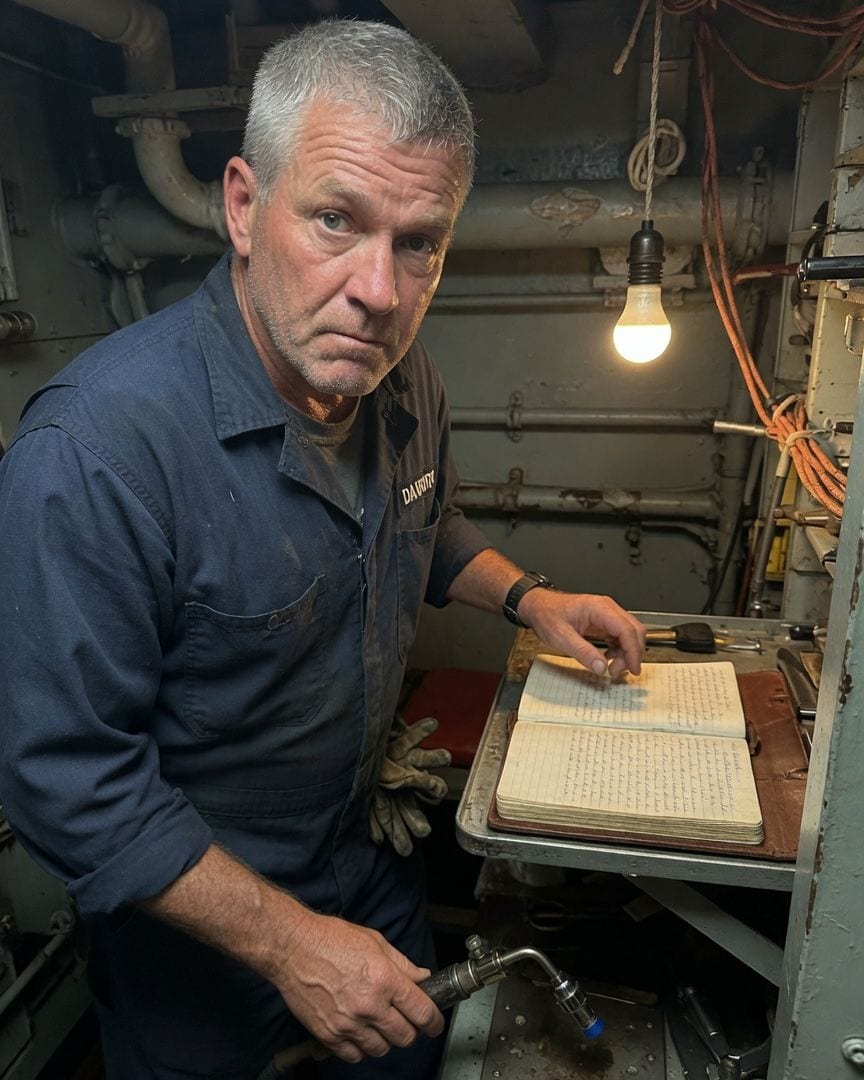
A week from shore duty, Chief Danforth cut a hatch where his ship's plans showed solid steel. An hour later, the wall was seamless, but the Cold War logbook from inside appeared under his mattress.
Chief Petty Officer Raymond Danforth, just a week from ending three decades of service, was intimately familiar with every pipe and plate of the guided-missile destroyer Weatherall. During a mid-cruise overhaul, his gloved hand found a sealed hatch where schematics promised only a solid bulkhead. He cut through the impossible seam to reveal a small, dry compartment, softly lit, containing a logbook filled with an unsettlingly familiar hand. When he returned an hour later with a witness, the hatch was gone, the wall seamless. Later that night, the same logbook appeared beneath his mattress, its pages revealing an entry: 'Petty Officer Howard Montgomery, missing, 1972.' How could a compartment vanish, yet leave its secrets behind?