A postal inspector opened a Cold War mail sack from his own birth year. Every letter inside detailed a private memory he'd never shared.
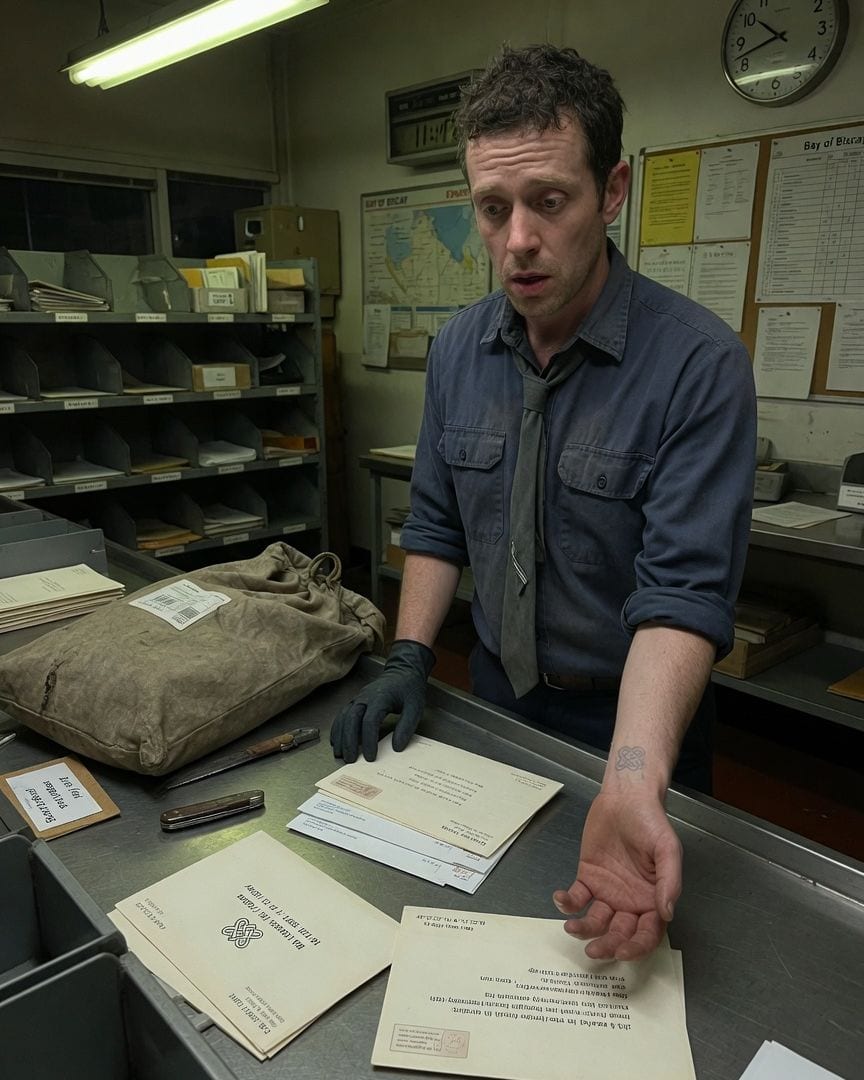
Postal Inspector Guy Vantree stared at the oilskin-wrapped mail sack on his sorting table.
The fluorescent lights of the Port Sterling facility hummed a low, constant note around him, but the sack itself felt silent, inert, a strange anomaly in the everyday bustle.
Trawlermen had brought it in, dredged from the abyssal depths of the Bay of Biscay. Still sealed, the heavy canvas felt bone dry, impossible after decades underwater. He ran a gloved hand over the dispatch tags.
They were crisp, the ink sharp: "S.S. Isabel Trent," "Bay of Biscay," and a date — May 1988. The exact month and year of his own birth.
A chill, not from the damp sea air that sometimes crept into the old building, settled over him.
He tried to rationalize it – a misfile, a perfectly preserved anomaly, a clerical error in the recovery log, perhaps the original tags replaced somehow. But the tags were clear, the paper uncreased, the faded postmark undeniably from that year.
No, it was simply an old, well-preserved piece of history. Nothing more.
He pulled out his pocketknife, the worn grip familiar in his hand, and carefully slit the heavy canvas along the seam. Inside, a stack of envelopes, perfectly preserved, each one pristine. His breath hitched.
Every single envelope, in neat, official script, was addressed: "To: Guy Vantree." He could feel the weight of them, a strange, impossible burden, heavy in his gloved hands.
Guy carefully laid out the letters on the cold steel of his sorting table. No return address, no stamp, just his name printed with an unnerving precision.
The paper felt thick, substantial, like expensive bond paper, not the cheap stationery common in the late 80s. He picked the top one, his fingers tracing the raised lettering. The texture was almost alien. He opened it.
Inside, a single sheet of paper. It wasn't a letter. It was a typed paragraph, clinically precise, describing an event.
The exact moment he first realized his parents were mortal, standing alone in his bedroom at age seven, the dust motes dancing in a shaft of late afternoon sun, a specific tremor in his mother's voice still echoing in his ears.
A memory he had never spoken of, never written down. A deep, private truth.
He opened another.
Another single sheet, another memory, just as private, just as specific: the precise anxiety he felt before his first day of high school, the sick churn in his stomach, the fear of being forgotten in a sea of new faces.
His heart began to thud, a slow, heavy drumbeat against his ribs. He shuffled through the stack, each page a chillingly accurate chronicle of his inner life, his forgotten moments.
The rational explanations – a prank, a stalker – fell apart under the weight of such intimate, un-shareable detail. This was not a clerical error. This was a violation.
The last letter was thicker, heavier than the rest. Guy's hands trembled slightly as he opened it. Inside, a single sheet of paper, but this one was different. It didn't describe a memory.
It listed a series of numbers: precise navigational coordinates for the Isabel Trent's wreck site, followed by a date – two weeks from today. Beneath the date, a symbol, meticulously drawn: a stylized, interlocking knot, both ancient and alien.
Guy stared at it, a cold dread seizing him. He knew that symbol. He slowly, unconsciously, raised his left hand, turning his wrist. Faintly, almost invisibly, a birthmark, long forgotten, identical in every detail, pulsed beneath his skin.
The cold, dry canvas of the mail sack felt impossibly heavy on the table before him.
The next morning, Guy was no longer just a postal inspector. He was an investigator, driven by a dread that overrode logic and gnawed at the edges of his sleep.
He accessed the Isabel Trent’s official recovery logs through the postal service’s internal database. Standard procedure demanded it, but the details in the letters made it personal.
He found the initial recovery report for the mail, noting its "unusual state of preservation." A footnote, tucked away near the bottom, mentioned a "special handling" directive from a previously unknown agency, code-named "Archive 7."
This agency, he discovered with a growing unease, was not on any current federal list.
He called Nina Romano, a contact in the National Archives, a meticulous archivist known for her encyclopedic knowledge of obscure government records. “Nina, it’s Guy. I have a… peculiar situation.”
He described the oilskin-wrapped mail sack, the bone-dry canvas, the dispatch tags, and the internal contents—each letter addressed to him, filled with impossibly personal details. Nina was intrigued, then guarded.
She mentioned, almost as an aside, that "Archive 7" rang a faint bell, something from decommissioned Cold War-era programs, but she’d never seen an active file.
Guy pressed, asking about other "anomalously preserved" items from maritime disasters, or any disaster, really. Nina, initially dismissive, agreed to run some cross-references. "Just to humor you, Vantree," she had said, her voice betraying a hint of unease.
He felt the clock ticking, the two-week deadline from the letter pressing down.
Days passed. Nina’s initial searches yielded nothing. Guy, increasingly agitated, found himself scrutinizing his own life with a new, unsettling clarity.
The post office, his modest apartment overlooking the harbor, the familiar streets of Port Sterling – they all felt different, as if seen through a new, distorting lens.
He started noticing small things: a dark sedan parked down his street for too long, always unoccupied, disappearing when he looked directly at it; a subtle shift in the office's ambient hum, sometimes seeming to pulse in time with his own anxious heartbeat.
Then, an email landed in his inbox. Anonymous, untraceable. The subject line was blank. The body contained only one sentence: "Some files are better left unread, Inspector Vantree." No other content. No signature.
Guy showed it to Nina, holding his phone out to her across the polished oak table in the archives’ quiet reading room. Her face paled, the faint lines around her eyes deepening. "That's...
that's a phrase from an old internal memo," she whispered, her voice barely audible. "Deep in the classified section of 'Project Chimera' – a program supposedly shut down in '72. How could anyone outside the archives know that?"
The threat was now undeniable, personal. Someone was watching him, someone connected to "Archive 7" and "Project Chimera." He realized his investigation had flipped; he was no longer just chasing a mystery. He was being hunted by it.
Guy pushed Nina. He insisted on deeper access, citing the anonymous email and the clear threat. She was scared, her hands visibly trembling as she typed, but his own rational, steady fear was contagious.
She reluctantly granted him access to a rarely used, offline terminal linked to a specific, unlisted section of the archives – the "Grey Files," she called them. "They're not supposed to exist," she whispered, her gaze darting towards the door.
"Cross-indexed by an internal code, not public accession numbers. If anyone finds out..."
He typed in "Archive 7." The terminal whirred, a low mechanical groan, then slowly pulled up a single, sprawling entry. It wasn't an agency. It was a classification. Underneath, a list of sub-classifications: "Project Chimera," "Operation Deepwater," "The Isabel Trent."
He scrolled down, his finger hovering over the screen. The Isabel Trent file was extensive, but it wasn't about the ship’s sinking. It was about the specific recovery of "special cargo" – the mail sack.
And within the file, a chilling detail: a log entry, dated 1988, for a "Subject Vantree, Guy." The entry noted his birth, his location, and a final notation: "File Initiated. Awaiting Collection Protocol."
The letters, the personal memories, the symbol on his wrist – it all snapped into place with a horrifying click. The Isabel Trent wasn't just a shipwreck; it was a delivery. His delivery.
Guy and Nina, stunned, poured over the Grey Files.
They found other names, other "subjects," linked to other "anomalous recovery" incidents: a plane crash in the Rockies, a train derailment in the desert, a series of isolated disappearances from quiet towns.
Each entry detailed a perfectly preserved, anachronistic personal item found at the site – a locket, a diary, a child's toy – always containing a message or detail specific to a vanished individual.
And across all these disparate files, a single, recurring, non-standard accession number: "Box 7-Omega." The Box That Is Not on Any List.
Nina’s fingers flew across the keyboard, cross-referencing the enigmatic code. Her breath hitched. She pulled up the most recent "Box 7-Omega" file, dated just last week. Her eyes widened in horror.
On the screen, a blank "dispatch tag" for a "special delivery." It bore Guy's own service number, the stylized knot symbol from his letters, and the exact future date he had found in the last letter.
The tag flickered, then slowly, deliberately, a single, precise timestamp appeared beneath it: "02:00." Guy looked at the clock on the wall: 01:58.
The two minutes ticked by like hours. Guy and Nina stared at the screen, the impending timestamp a physical presence in the room, pressing down on them. "It's a countdown," Nina whispered, her voice barely audible, frail with terror.
"They're not just archiving the missing. They're processing them. And they've been doing it for centuries."
Guy remembered the retired Coast Guard officer, Isaac Ford, from his initial Isabel Trent inquiries – a man haunted by the recovery, who had mentioned "things that shouldn't float" and the strangeness of the wreck.
He realized Isaac was an unwitting witness, perhaps even an unwitting delivery agent for whatever had brought the mail sack to the surface.
The pattern snapped into place with sickening clarity: the "disasters" were staged events, carefully chosen to appear accidental, allowing the "special cargo" – the notification, the summons – to be delivered, and the "subject" to be collected.
The personal details in his letters were not just knowledge, but a form of psychological preparation, a severing of ties, a way to acknowledge the life being recorded. The birthmark, his personal identifier, a brand for the ledger.
The mail sack, the delivery system for his final notice. The "Grey Files," the ongoing ledger of all those marked. He was never truly lost, never truly free; he was always on a list.
His entire life, a meticulously prepared file, now nearing completion.
The clock on the wall clicked to 02:00. The lights in the archive room flickered, then died, plunging them into sudden, absolute darkness.
A low hum emanated from the walls, a deep, resonant vibration that thrummed through the floor and up through Guy’s feet. Nina screamed, a raw, piercing sound, scrambling backward from the terminal, her chair scraping loudly across the floor.
Guy, strangely calm in the face of the inevitable, felt a profound sense of resignation settle over him. He grabbed Nina's arm, his grip surprisingly firm. "Run!"
he yelled, pushing her towards the emergency exit, the only sliver of red light visible in the sudden blackness.
But a low, resonant thrumming filled the air, growing louder, closer, seeming to emanate from everywhere and nowhere at once. The air chilled rapidly, and a faint, acrid scent of ozone filled his lungs, sharp and metallic.
The emergency lights kicked on with a soft thwip, casting long, distorted shadows that danced like specters across the towering shelves of forgotten history.
In the center of the room, where the terminal stood, the air shimmered, distorting the shelves behind it, blurring their precise lines. A dark, indistinct shape began to coalesce, expanding, its edges bleeding into the very fabric of the room.
It was not human, not mechanical. It was a presence, vast and silent, humming with an ancient, patient power.
Guy felt a pull, a gentle, inexorable force drawing him towards the shimmering distortion. He fought it, his muscles burning with the futile effort, but it was like struggling against a rising tide, against gravity itself.
He glanced back at Nina, her face a mask of terror, reaching for him, her fingers grasping empty air. The darkness at the center of the hum deepened, expanding into a perfect, absolute void.
He saw a flicker of the stylized knot symbol, briefly visible within the swirling blackness, then it expanded to encompass him entirely. His last thought was of the dry, impossible mail sack, delivered to him across time.
Nina Romano was found hours later, huddled in the archive, babbling incoherently about a hum and a void, about shifting shadows and impossible symbols.
She was institutionalized, her testimony dismissed as a stress-induced breakdown, a fragile mind snapping under the weight of her profession.
The "Grey Files" terminal was found wiped clean, the unlisted section of the archives inaccessible, sealed by protocols no one could override.
The Isabel Trent mail sack and its impossible contents vanished from the Port Sterling facility, leaving no trace, no record of its bizarre existence.
Guy Vantree's apartment was found empty, his personal effects undisturbed, as if he had simply stepped out for a moment, expecting to return. His supervisor, Ralph Pierce, filed a missing person report, but the trail went cold almost immediately.
No one saw anything. No one heard anything. The official explanation was simple: Guy Vantree, a meticulous man of order, had simply walked away from his life.
A year later, Ralph Pierce, clearing out Guy's old desk, found a forgotten, sealed envelope tucked into the back of a drawer. It was addressed to him, in the same precise, official script as the letters Guy had found.
Inside, a single sheet of paper. It was a copy of Guy Vantree's final personnel review, dated just days before his disappearance, with a single, handwritten annotation in the margin, in what appeared to be Guy's own hand.
It read: "File closed."
The Port Sterling Post Office continued its daily routine. Sometimes, late at night, a faint, acrid scent of ozone would drift through the sorting room, quickly dismissed as a faulty HVAC system.
On occasion, a newly hired clerk, Gloria Pennington, would swear she saw a faint, stylized knot symbol appear for a split second on the digital dispatch screen before vanishing. She would rub her eyes and blame fatigue.
The mail, after all, always went through.
The files always kept track.
If this one got to you
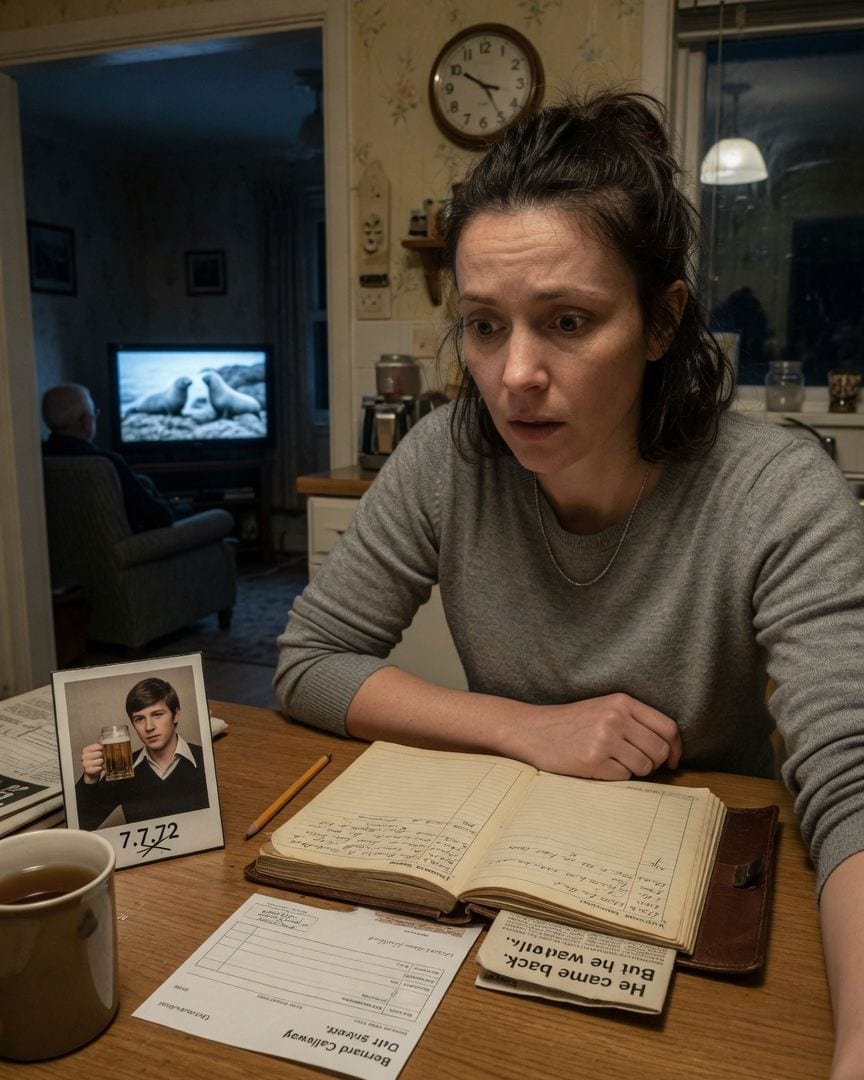
My father's bank slip had uncrossed '7's. He swore he never had that habit.
My father, Bernard, returned three months ago, a miracle after being presumed lost at sea. But a bank statement revealed a disturbing detail: the '7's in his signature were uncrossed. For decades, he'd meticulously crossed every '7', yet now he denied ever having the habit.
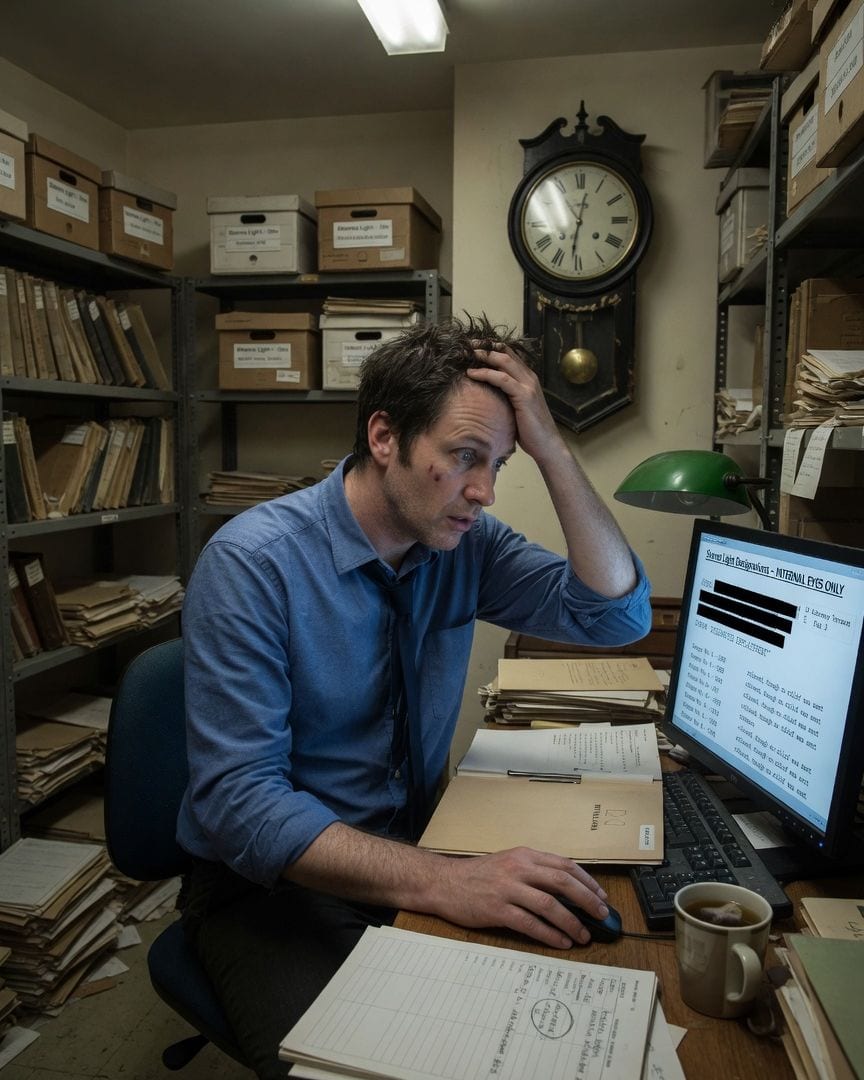
I found my street address in a century-old lighthouse file, printed decades before I lived there.
As a maritime archivist, my world revolves around forgotten lives and dusty ledgers. But the Skerne Light files broke that quiet rhythm, revealing a chilling pattern: 'Keeper number 6' relieved, though no relief was sent, repeating for decades. Now, an internal document with a strange code has led me to a redacted entry, revealing my own street address, decades before I ever lived there.
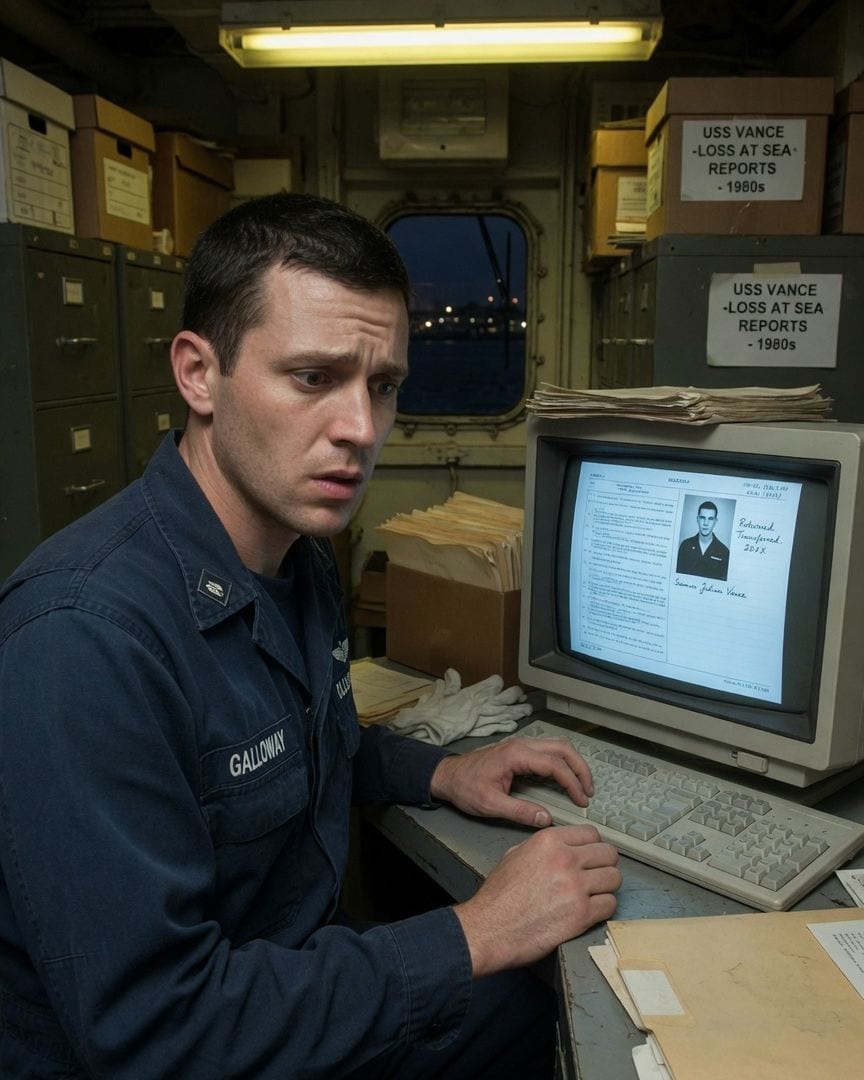
Petty Officer Galloway logged a sailor onto his ship. The man died at sea 40 years ago.
Petty Officer Joel Galloway scanned a sailor's ID on the USS Vance quarterdeck. The man's name, 'Seaman Julian Vance,' and his out-of-date uniform pricked at Galloway's memory. Later, the ship's berthing count came back one over, with an extra entry in the system but no physical body.
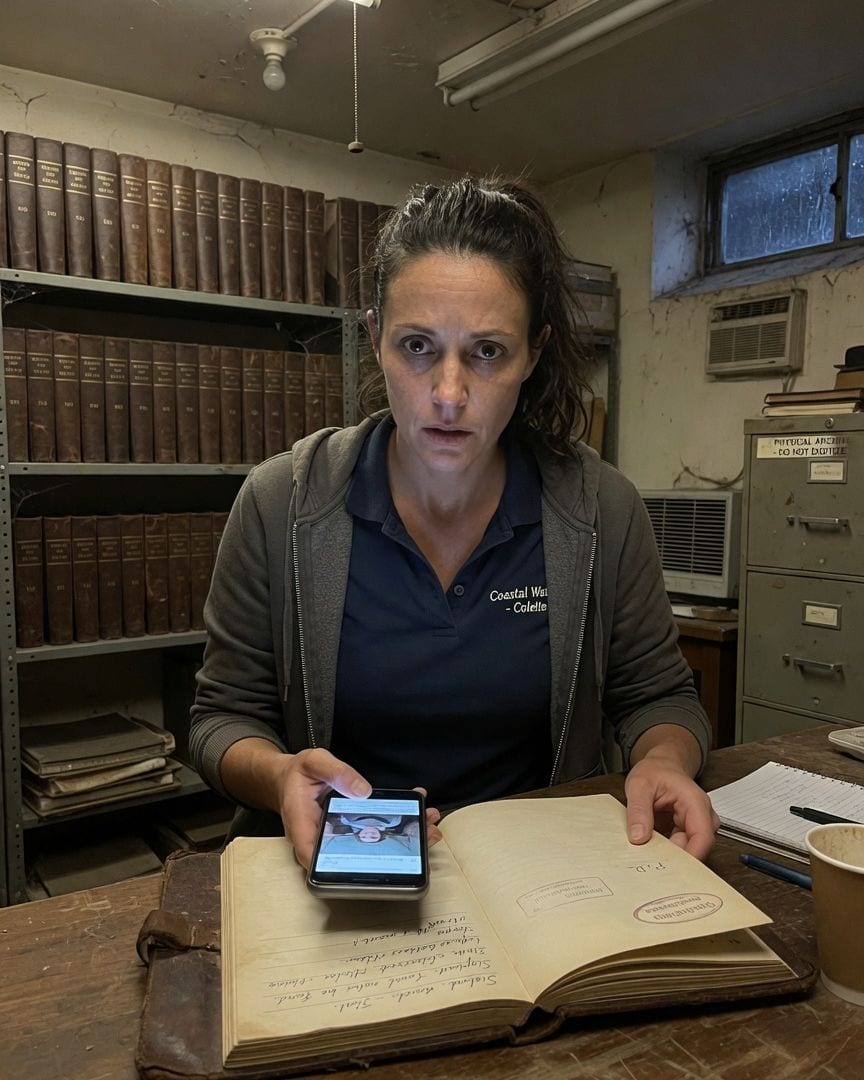
My coastguard log noted Sighting 9 again tonight, a light where no vessel showed. The old logs carry Sighting 9 off Skerry Point at 3:14am every tenth year since 1954, always 'nothing found,' always 'send no boat.'
On my watchtower night shift, the radar screen glowed green and the ocean was quiet. Then, a familiar light appeared off Skerry Point, exactly on cue, just as it had every tenth year for decades. But digging deeper, I found a hidden stamp in an old logbook: 'Operation Skerry. Status: Complete.' It left me with a chilling sense of finality.
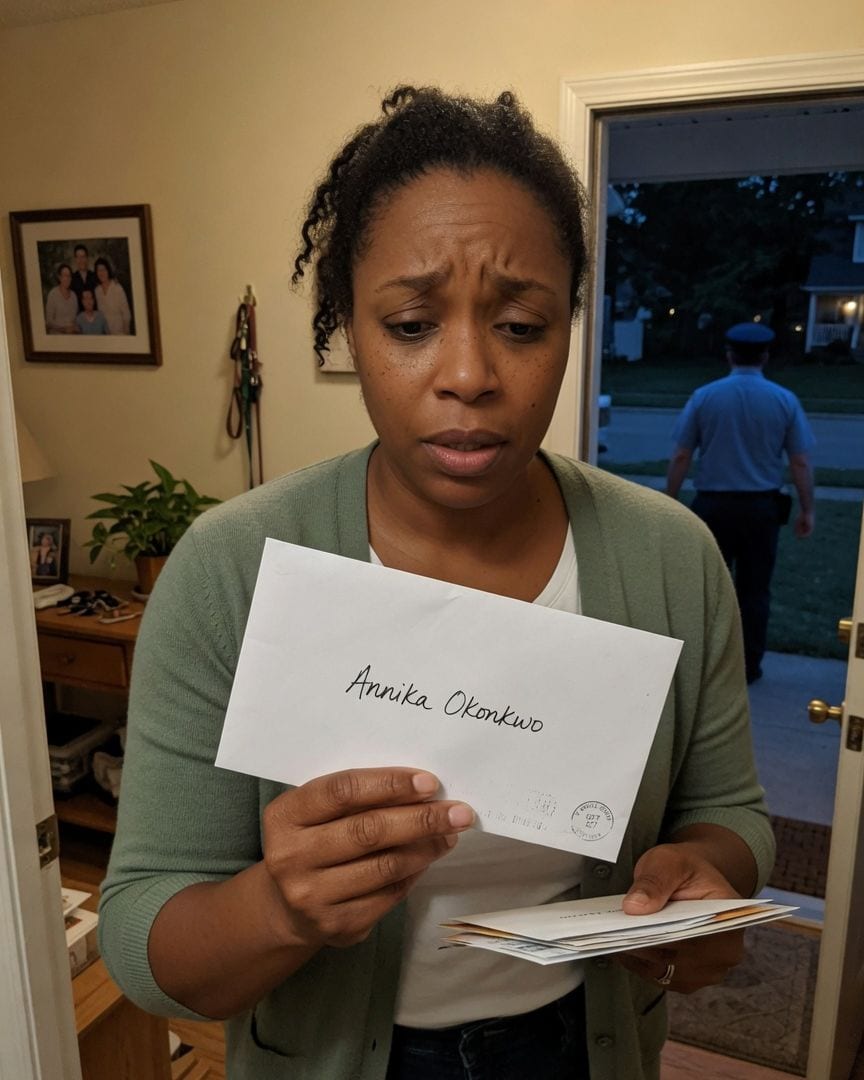
My postman apologised, then disowned the letter with my name.
My postman, Dave, delivered the usual mail, but then strangely swore he never carried one plain white envelope. Addressed to me in an elegant hand, it stood out from the bills. The real dread began when I saw its postmark: 14 Maple Street, a vacant lot where a house burned down fifteen years ago.
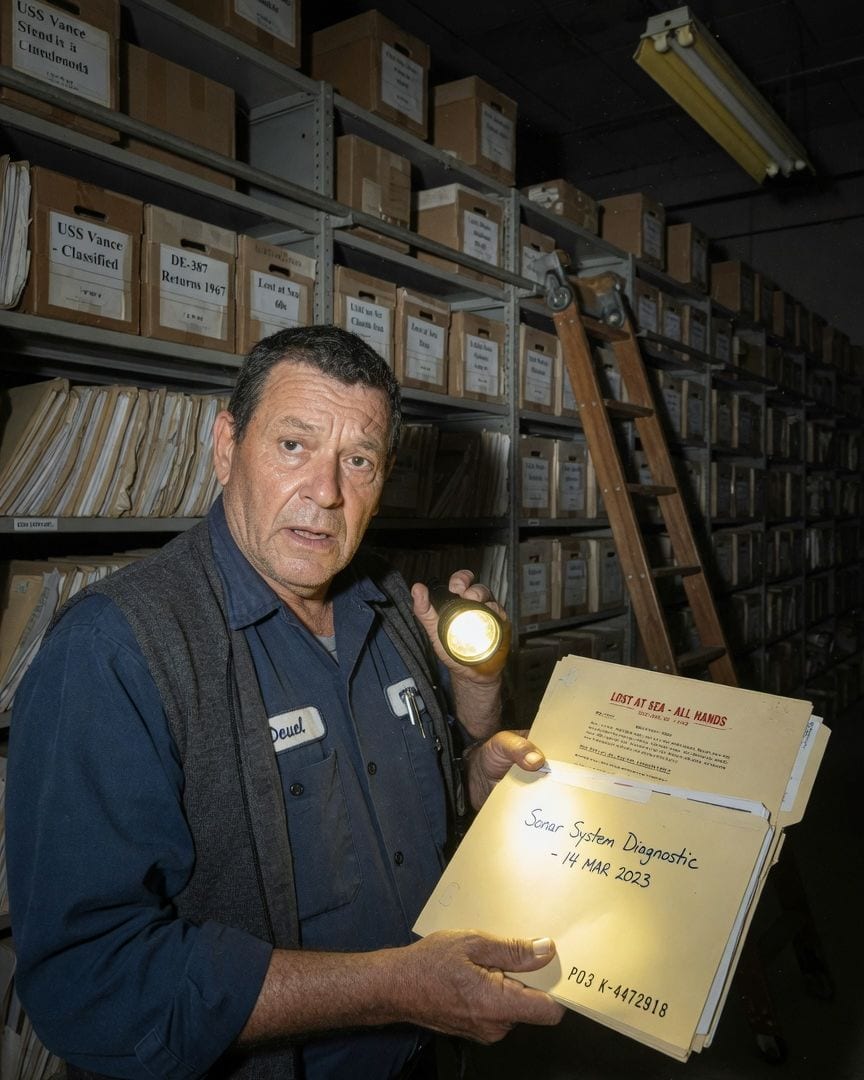
An archivist, alone in the Suitland annex, finds a 1968 lost Cold War ship file with a handwritten entry dated last Tuesday. The ink looks damp, but feels dry.
Carmine Deuel, 62, spent forty years amidst the dust and forgotten files of the Suitland annex. One night, alone in the cavernous space, a sticky squeal and the faint sway of a rolling ladder broke the silence. He found a classified file from the USS Vance, a ship lost in 1968, pulled from its shelf. Inside, a typed form held a handwritten entry: a routine sonar check, dated last Tuesday. The ink, impossibly, looked damp yet was perfectly dry. Who had accessed the file, and how could its entry be so recent?