Private Kirby's old dog tags bore a completely different serial number than the ones he wore daily.
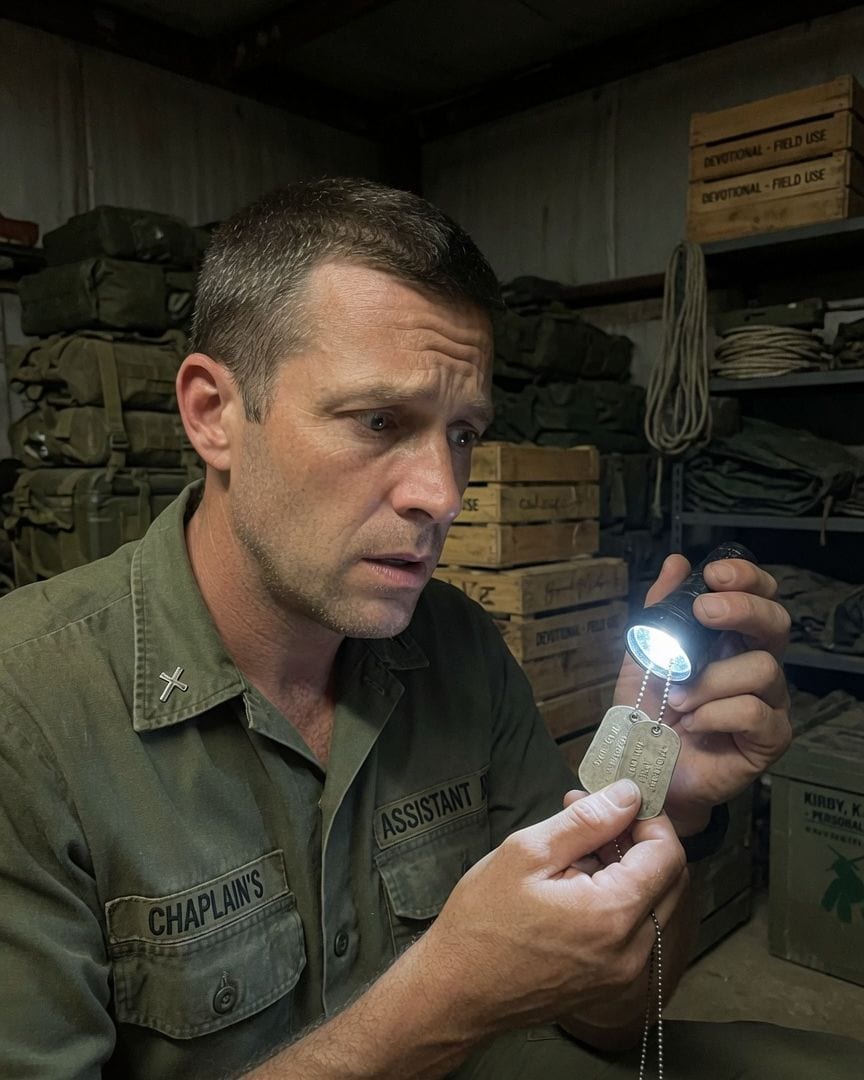
Chaplain's Assistant Gordon Moss knelt beside Private Kenneth Kirby, as he had for every field service for the past year.
It was the first service since Kirby had been listed missing for three weeks, then miraculously returned, gaunt but seemingly unharmed.
Moss remembered Kirby’s old joke, how his mother had taught him to cross himself left-to-right, the 'wrong way round,' as he'd always laughed, his face crinkling with amusement. But as the prayer began, Kirby's hand moved instinctively, cleanly, right-to-left.
The correct way. Moss waited, a faint smile ready on his own lips, for the familiar chuckle, the self-deprecating shrug, the old story about his mother. It was a ritual, a small comfort in the stark reality of their duties.
Kirby simply bowed his head, his face a mask of solemn piety, praying as if he’d been doing it that way his whole life.
A knot tightened in Moss’s stomach, a cold, specific unease that had nothing to do with faith and everything to do with the man beside him. The joke was gone, and something else, too.
Moss closed his eyes, the memory of Kirby’s familiar, 'wrong' gesture burning behind his eyelids, trying to reconcile it with the precise, 'correct' movement he had just witnessed.
It was such a small thing, a gesture of faith, but it was everything. He opened his eyes, glancing at Kirby again, and the private's face remained utterly unchanged, utterly devout.
The silence where the joke should have been was deafening to Moss.
Moss tried to dismiss it. Trauma, he reasoned. Three weeks missing in hostile territory could change a man, alter ingrained habits, smooth over rough edges. But the image of Kirby’s hand, so fluid and precise, kept returning.
Later that day, in the administrative office, Moss decided to check Kirby’s updated service record, ostensibly for a routine pastoral care follow-up.
He pulled up the digital file on his monitor, the screen humming softly in the quiet office, scrolling through the entries. Everything seemed in order: return date, medical clearance, re-assignment. Then his gaze paused on the 'Personal Effects' section.
A small detail, almost insignificant. Kirby’s dog tags. The serial number, listed in the system, was familiar.
Moss had helped Kirby engrave a small, specific mark on his old tags months ago, a private symbol from his hometown, a tiny star.
He remembered the number then, too, because of a digit repeated three times in the sequence, a memorable stutter in the string of numbers.
Now, looking at the official record, that triple digit was gone, replaced by a different sequence of numbers entirely. It was a subtle alteration, easily overlooked, perhaps a clerical error.
He double-checked the entry, then his own memory, replaying the sequence in his mind. He tried to rationalize it as a new set of tags issued, a mistake in the digital transcription, anything to quiet the growing unease.
But the pit in his stomach deepened. This wasn't a minor detail; it was a unique identifier, etched into metal, a soldier’s identity. It should have been immutable. He felt a growing certainty that this wasn't an error.
It was a discrepancy, a small tear in the meticulously maintained fabric of military accountability.
Unable to shake the unease, Moss found himself in the supply depot later that evening, under the pretense of retrieving some old devotional materials. The depot was cavernous and cold, smelling of canvas and old metal.
He knew Kirby had left a small, forgotten pouch of personal gear there when he was first deployed, before his disappearance.
After a moment of searching, his flashlight beam cutting through the dimness, he located it, tucked away behind a stack of unused field packs. Inside, among a few worn photographs and a crumpled letter, were Kirby's original dog tags.
The metal was dull, slightly tarnished, the star mark he remembered still visible. Moss pulled them out, his heart thudding a heavy rhythm against his ribs.
He held them up to the dim light, tracing the etched numbers with his thumb, comparing the serial number on the metal with the one he’d memorized from the digital record, and the one he knew Kirby now wore daily around his neck.
His breath hitched. The numbers did not match. Not a single digit. It was a completely different identification number. The metal tags felt cold and heavy in his palm, undeniable proof of a wrongness that had no name.
He stared at them, then at the empty space where Kirby’s joke used to be, and the chasm between them yawned open.
The non-matching dog tags were a physical impossibility, a violation of every military protocol Moss knew. He couldn't sleep. The quiet of his barracks room pressed in, filled only by the buzzing hum of the fluorescent light outside his window.
He spent the next few days discreetly asking around, starting with other Chaplain's Assistants in the region, subtly probing about 'unusual reintegration cases' or 'post-trauma behavioral shifts.'
He framed his questions carefully, never mentioning Kirby directly, speaking in hypotheticals, attributing his interest to a 'pastoral care research project.'
The responses were vague at first, mostly dismissals of combat fatigue or general stress, but a pattern began to emerge.
Whispers of 'ghost patrols' and 'changed men' surfaced from remote outposts, particularly those that had seen personnel go missing for brief, unexplained periods, only to return with perfectly clean records and slightly altered demeanors.
One veteran Chaplain's Assistant, Leonard Brooks, a man with weary eyes and a long history of remote deployments, spoke of a 'silent protocol' for certain disappearances, where returned soldiers, while physically identical, sometimes exhibited minor, fundamental alterations – a forgotten skill, a changed accent, or, as Brooks put it with a distant look in his eyes, 'a different way of looking at the stars.'
Brooks mentioned an old, partially redacted report from a firebase decades ago, detailing 'personnel discrepancies' that were officially attributed to 'combat stress' but never truly resolved.
He warned Moss that these things were 'best left to rest,' his voice low and heavy with unspoken knowledge. The more Moss listened, the more the mundane explanations crumbled.
He began cross-referencing old deployment manifests with casualty lists, looking for patterns, for any other 'missing-returned' cases.
He found several, all at isolated stations, all with records that were just a little too clean, a little too perfectly accounted for, despite the irregularity of the events.
It was like a hidden current, flowing beneath the surface of the military’s rigid order, carrying away what was, and bringing back something that almost was.
Moss's discreet inquiries didn't stay discreet for long. He noticed Sergeant Pamela Granger, his direct NCO, watching him. Her usual no-nonsense efficiency took on a colder edge, her gaze lingering a fraction too long whenever he walked past.
When Moss tried to access a deeper layer of archived personnel files, citing a 'historical research project' on military chaplaincy, his access was suddenly denied, the system pinging an abrupt error message.
Then, mysteriously, it was reinstated an hour later with a terse, unsigned note citing 'system maintenance.' The next morning, a plain, unmarked manila envelope appeared on his desk, laid precisely in the center.
Inside, folded once, was a single sheet of paper with a single, stark, typewritten word: 'STOP.' No sender, no return address, no date. Just the stark command. Moss’s heart hammered a frantic beat against his ribs.
He wasn’t just observing anymore; he was being observed. That afternoon, during a routine supply run to the main barracks, he saw Granger talking intently with Colonel Henry Fairfax, the base commander, in a hushed conversation near Fairfax’s office.
The Colonel, a man known for his rigid posture and even temper, looked uncharacteristically tense. As Moss walked past, their eyes flicked towards him, then away with practiced swiftness.
Later, as Moss walked back to his barracks, the evening air growing heavy and cool, a voice, low and gravelly, spoke from the shadows of an equipment shed. 'Some things are better left buried, Chaplain. For everyone’s sake.'
Moss spun around, his pulse leaping. The shadows were empty. The air was still, heavy with the smell of damp earth and distant diesel.
He was no longer just a curious observer; he was on a trail, and someone, or something, knew he was on it. The dread now had a name, and it was personal.
Moss knew he couldn't back down. The fear in his gut was cold, but the need to understand was hotter, more urgent. The next day, he cornered Sergeant Granger in her office, the small space smelling faintly of stale coffee.
He held the old, non-matching dog tags from Kirby, the dull metal a contrast to the polished surface of her desk. 'Sergeant,' he began, his voice low, controlled, 'I need to know what this means.' Granger’s face, usually unreadable, tightened.
She glanced at the dog tags, then around her office as if checking for listening devices, her gaze sweeping the empty room. 'You shouldn’t have those, Moss,' she said, her voice barely a whisper, strained.
'And you shouldn’t be asking about them.' Moss pushed, his grip tightening on the tags. 'Kirby's prayer changed. His dog tags are different. And I've heard whispers about other outposts, other 'returns.' What's going on?'
Granger sighed, a sound of profound weariness, as if the weight of a hidden world rested on her shoulders. She sat down heavily in her chair, the springs groaning softly. 'It’s… a managed situation, Chaplain. It happens.
Not often, but it happens. At certain remote locations. Always the same pattern: a disappearance, a return, and a subtle… shift. We don’t talk about it. We can’t. The official explanation is always trauma, stress, whatever fits the narrative.
It keeps the system functional.' She looked Moss directly in the eye, her gaze grim, almost pitying. 'The old tags, the new ones… it’s a signature. It’s how we know. But we don't 'fix' it. We just… integrate it.
The returned asset.' Moss felt a chill run down his spine, a cold serpent uncoiling. 'An asset? Kirby isn’t Kirby?' Granger looked away, her eyes fixing on a point beyond him. 'He is. To all intents and purposes. He functions.
He serves. The differences are too small for anyone but the closest observer to notice, and even then, easily dismissed by those who don’t look too closely.' She paused, her voice softer now, almost a lament.
'You’re seeing the gaps, Chaplain. Most don’t. Most can’t.' The old dog tags felt impossibly heavy in Moss's hand. Kirby's changed prayer, the missing joke, the altered serial number – it all snapped into horrifying focus.
It wasn't a mistake; it was a deliberate, recurring pattern. And the military knew.
The truth about Kirby, about the 'managed situation,' left Moss reeling. His mind felt like a battlefield, littered with the debris of shattered assumptions.
But a deeper, colder question gnawed at him: why was he, a Chaplain's Assistant, seeing these gaps when others couldn't? Why was he being warned?
He returned to his research, now driven by a desperate need to understand his own place in this hidden system.
He managed to bypass the 'system maintenance' that had blocked him earlier, his fingers flying across the keyboard, accessing the deeper archives with a grim resolve.
He searched for any connection to his own name, his own service, in the digital catacombs.
He dug through historical records, old after-action reports, looking for any mention of his unit, his name, his specific role in any of the 'managed' incidents Granger had alluded to.
Hours blurred into one another, the glow of the monitor illuminating his pale, tense face. The coffee in his mug grew cold, then colder.
Then, buried deep within a scanned, faded after-action report from the desolate Firebase Alpha, dated 35 years ago, he found it. A list of personnel involved in the 'reintegration of assets.'
And there, among the names, was 'Moss, G.' His full name, 'Gordon Moss,' was clearly legible in a handwritten note beside it, scrawled in faded blue ink. Below that, 'Role: Chaplain's Assistant.'
He stared at the screen, a cold sweat breaking out on his forehead, tracing the familiar letters of his own name. He had never been deployed to Firebase Alpha. He had no memory of any incident 35 years ago.
He was only 32 years old. The report indicated he had been 're-integrated.' The words swam before his eyes, his own identity fracturing under the weight of an impossible truth. He was part of it. He was named in it.
He was named in something that could not be.
Moss burst into Colonel Fairfax’s office, the faded report clutched in his hand, his breathing ragged.
Fairfax, a man on the cusp of retirement, looked up from his desk, his expression already knowing, a faint, almost sad smile playing on his lips. 'You found it, Chaplain,' he said, his voice devoid of surprise.
'I knew you would. You always do.' Fairfax gestured to a chair opposite his desk, the leather creaking softly as Moss sat down, his limbs trembling. 'Sit, Moss. It’s a long story.'
He explained the full, horrifying truth with a detached, clinical calm. The 'anomaly,' as he called it, was an adaptive presence that manifested at specific, remote military installations, particularly those with high levels of isolation.
It would 'acquire' personnel, replacing them with perfect, physiologically identical mimics. The originals simply vanished. 'Kirby is one of them,' Fairfax stated, his gaze steady, 'a near-perfect copy, but the soul… the essence… it’s gone. Replaced.'
The differences, Fairfax explained, were always subtle, fundamental. A changed habit, a missing scar, a different serial number. 'And your name, Chaplain Moss,' Fairfax continued, his eyes piercing, 'appears on that list because you were one of the first.
Or, rather, the first successful 're-integration' of a Chaplain's Assistant at Firebase Alpha, 35 years ago. The original Gordon Moss vanished. You… you were the replacement. Your memories, your life before that point, were carefully constructed.
That's why you see these things, Moss. You're attuned to the signature. You always have been.' The revelation detonated in Moss’s mind, a thunderclap of understanding. Every past clue, every unease, every impossible detail, clicked into a coherent, monstrous whole.
He wasn't just a witness; he was part of the anomaly himself.
Fairfax, his face grim, led Moss to a sub-basement beneath the oldest part of the base, a forgotten archive concealed behind a heavily reinforced door that groaned on its ancient hinges.
Dust motes danced in the beam of Fairfax’s flashlight, illuminating shelves crammed with obscure files and archaic equipment. 'This is where we keep the 'signatures',' Fairfax explained, his voice echoing in the confined space.
'The true identifiers, uncorrupted by any… influence.' He pointed to a small, archaic console and a series of sealed, magnetic data chips, each labeled with a name and a date. 'Kirby’s original biometric scan, taken at enlistment. An unalterable record.
We keep them all here, a ghost ledger of who was… and who became.' Fairfax inserted one such chip, labeled 'KIRBY, K. - 10/12/XX' into the console. A faint whirring sound emanated from the machine.
'And this,' he said, pulling out a small, handheld device from a padded case, 'is a signature detection unit. It reads the subtle deviations, the ones the human eye misses, the ones that prove… replacement.'
Moss, his hands trembling, watched as Fairfax retrieved a recent, standard biometric scan of the current Private Kirby from the base's medical files. Fairfax loaded it into the detection unit. 'Now, Chaplain,' he said, handing the unit to Moss, 'compare.'
Moss's hands, clammy and cold, gripped the device. He pressed the button. A soft whirring sound, then a series of complex data streams scrolled across the small screen, a rapid flicker of green and blue light.
Finally, a single, stark word flashed in green: 'DEVIATION.' Below it, a detailed analysis scrolled: '0.003% variance in neural pattern signature, 0.0007% variance in cellular regeneration markers.' It was minuscule, imperceptible to any standard scan, but it was there. Undeniable.
Real. The ordinary explanation, the hope that it was all a mistake, a delusion, died a final, agonizing death. Kirby was not Kirby. And Moss… Moss was not Moss.
The artifact, the data, the objective truth, stared him in the face.
Colonel Fairfax, his duty to the truth fulfilled, quietly submitted his retirement papers a week later, citing 'personal reasons.' His office was cleared, his presence fading from the base with quiet efficiency.
Private Kenneth Kirby continued his service, his new, correct prayer posture now a familiar sight at field services, his slightly altered dog tags going unnoticed by everyone but Moss.
The 'anomaly' persisted, a silent current flowing beneath the rigid order of the military, managed by a select few who knew the truth but were powerless to stop it, only to contain it.
Moss remained in his role as Chaplain's Assistant, forever marked by what he knew. He performed his duties with meticulous precision, his gaze now subtly assessing every new face, every returning soldier, every small, impossible detail.
He was a sentinel on a watch that would never truly end.
Years passed. Chaplain's Assistant Gordon Moss stood before a new rotation of soldiers, leading them in prayer, the words of blessing now a hollow echo in his own mind.
He saw a young Private, fresh from a remote reconnaissance mission, cross himself with a subtle, impossible variation, a gesture that was almost right, but fundamentally, chillingly wrong. Moss finished the blessing, his eyes meeting the Private's.
The Private offered a faint, wrong little smile.
Years later, a newly discovered, unindexed memo from Colonel Henry Fairfax’s personal effects, dated just before his retirement, contained a single, chilling annotation: 'Moss is adapting well. The others… not so much. He sees them. He always has.
And he always will.'
If this one got to you
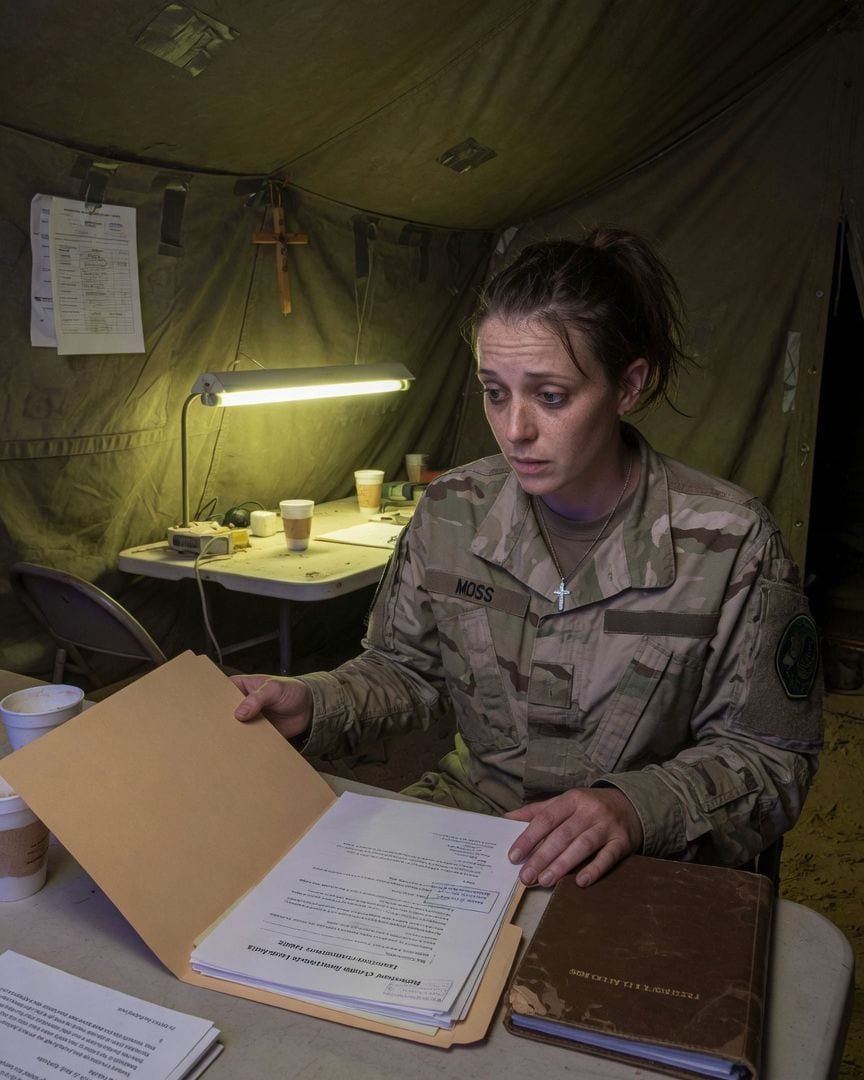
Chaplain's Assistant Moss found Private Kirby's commendation for a mission, dated three days *before* he reappeared from the desert.
Chaplain's Assistant Rosemary Moss found comfort in Private Kevin Kirby's small, wrong-way ritual of crossing himself at the field chapel. But after Kirby reappeared from three weeks lost in the desert, his return brought an unnerving change: he crossed himself correctly, the old joke gone, replaced by serene, perfect conformity. Moss's unease deepened when she found a new, clinical form in his service record, listing 'resolution of idiosyncratic habits' as a positive outcome. The true shock came with a commendation for a tactical mission, dated three days *before* he was officially found, leaving Moss to wonder: was Private Kirby ever truly lost?
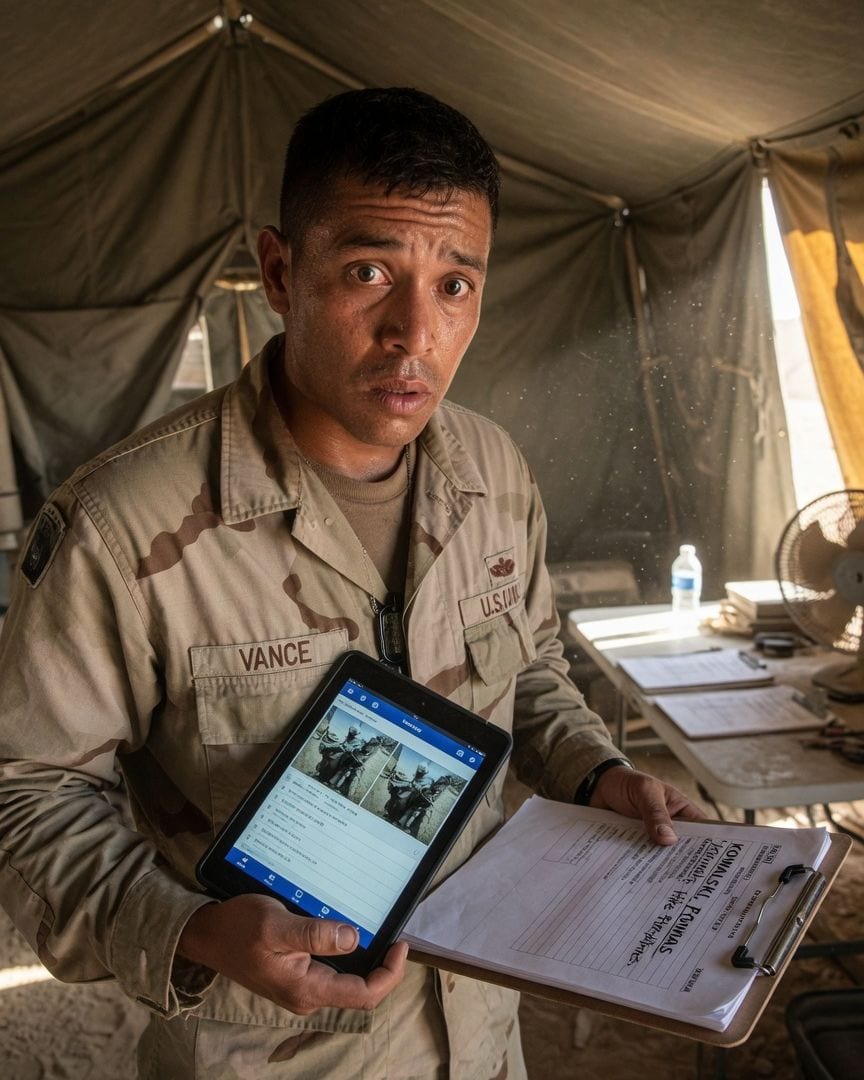
Admin NCO Vance processed Private Kowalski, then another identical soldier arrived. The manifest listed only one, but the truck held a 'KIA' dog tag with his name.
Admin NCO Russell Vance endured the scorching desert heat at FOB Lion's Tooth, his mind fixed on his rotation home in just one week. He processed a new levy of recruits, checking each name off the manifest as they boarded the transport trucks into the dusty distance. But after the last truck rumbled away, Vance found another Private Thomas Kowalski waiting, an exact duplicate of the soldier he’d just signed off. Security footage confirmed two identical men, minutes apart, boarding the same truck, yet the manifest held only one entry. A cold certainty seized him when he found an old, personalized dog tag in the truck: 'KOWALSKI, T.' marked 'KIA - Date Unknown' in the database.
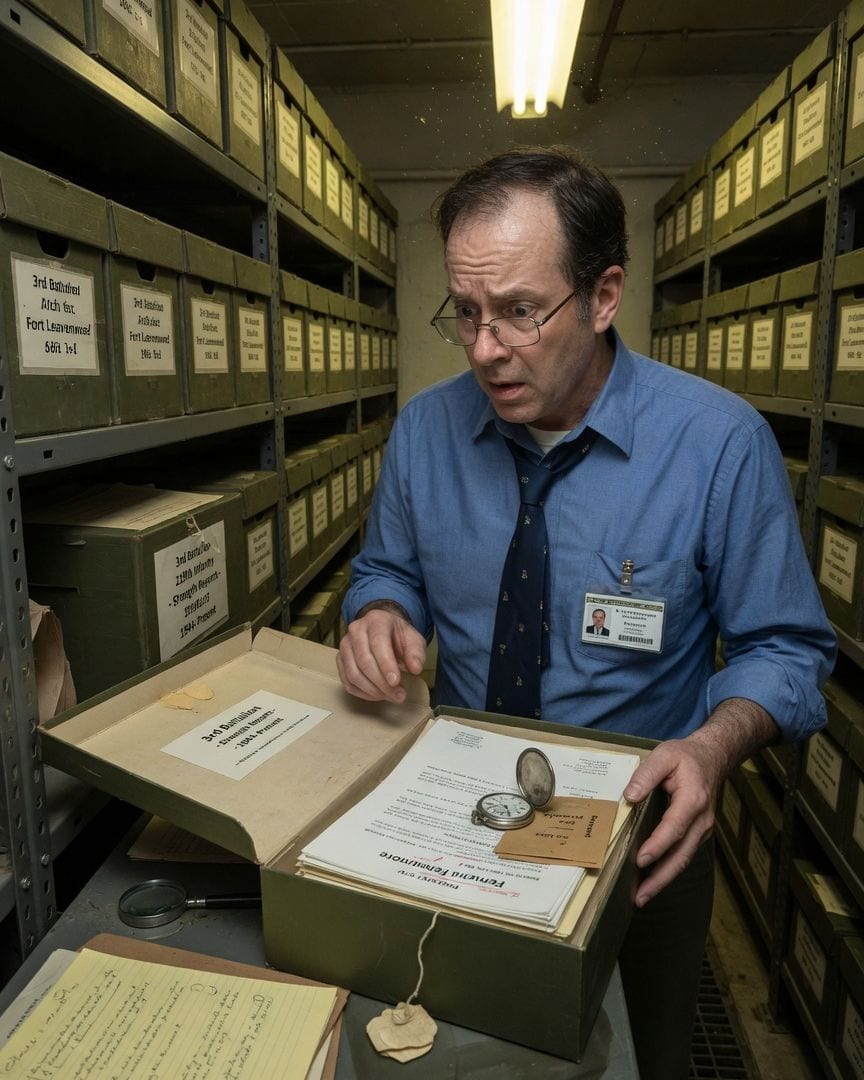
On his last Friday, an archivist finds his dead father's pocket watch in a Cold War ghost unit's file, ticking and warm.
Marcus Fennimore, a meticulous archivist, was on his final Friday at Fort Leavenwood's lineage vault, a place he knew intimately after thirty-one years. He stumbled upon twenty-two dust-sealed boxes for '3rd Battalion, 219th Infantry'—a unit that, according to every official record, simply did not exist. Inside, reports ran from 1944 to just last month, with the most recent listing his long-dead father, Kenneth Fennimore, as 'absent.' Marcus’s own father. Then, from a 1944 folder, he pulled his father's actual dog tags and a silver pocket watch, inexplicably warm and steadily ticking, freshly engraved with 'K.F. - Present for Duty.'
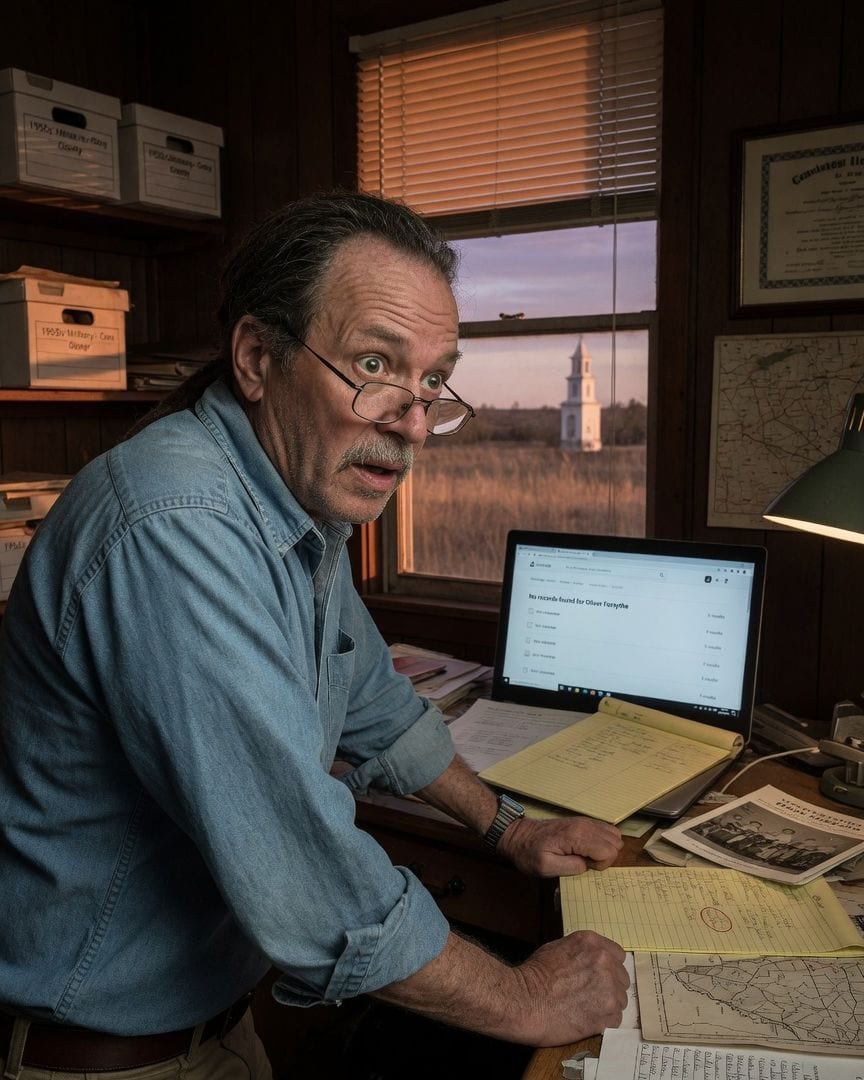
On his final project, a historian found forty-one Cold War headstones, all with names but no death dates.
Approaching retirement, lineage historian Owen Sarkis took on one final project: solving the mystery of the 250th Chemical Company, a unit that vanished after a single 1955 parade. His search led him down Carolina backroads to a lonely, weathered chapel, behind which lay forty-one identical gray headstones in neat rows. Each stone bore a name, but chillingly, not one had a date of death, a silence louder than any inscription. Then, on one stone, he found a small, industrial metal plate bearing a cryptic code and a symbol he recognized from a declassified document on 'unconventional materials handling.' The true nature of these 'graves' began to curdle in his mind, suggesting something far colder than death itself.
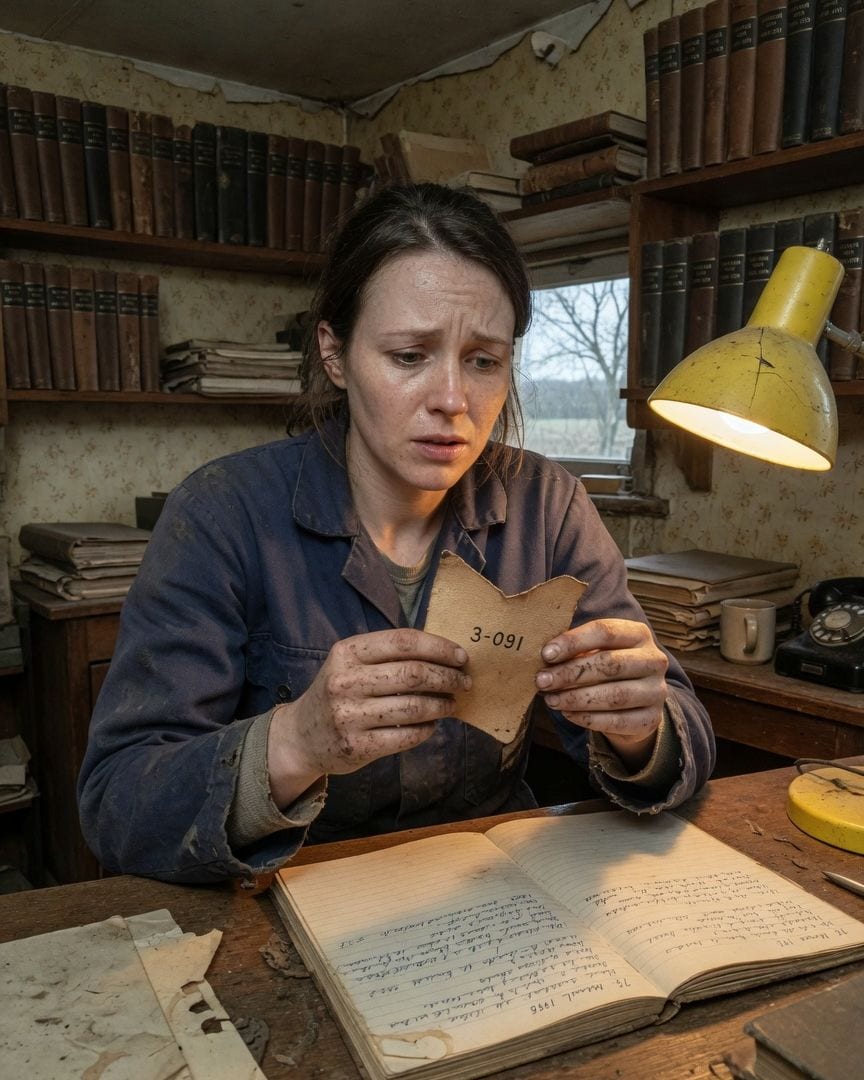
My cattle's ear-tag 3-091 returned this spring, retired by the ministry in 1974. Our old books show 3-091 reappearing every seven years since 1946.
This spring, I found ear tag 3-091 on a new calf. That number was officially retired decades ago, before I was born. My grandfather's old records showed the same tag 'lost' every seven years, with a chilling note: 'the tag returns of itself'.
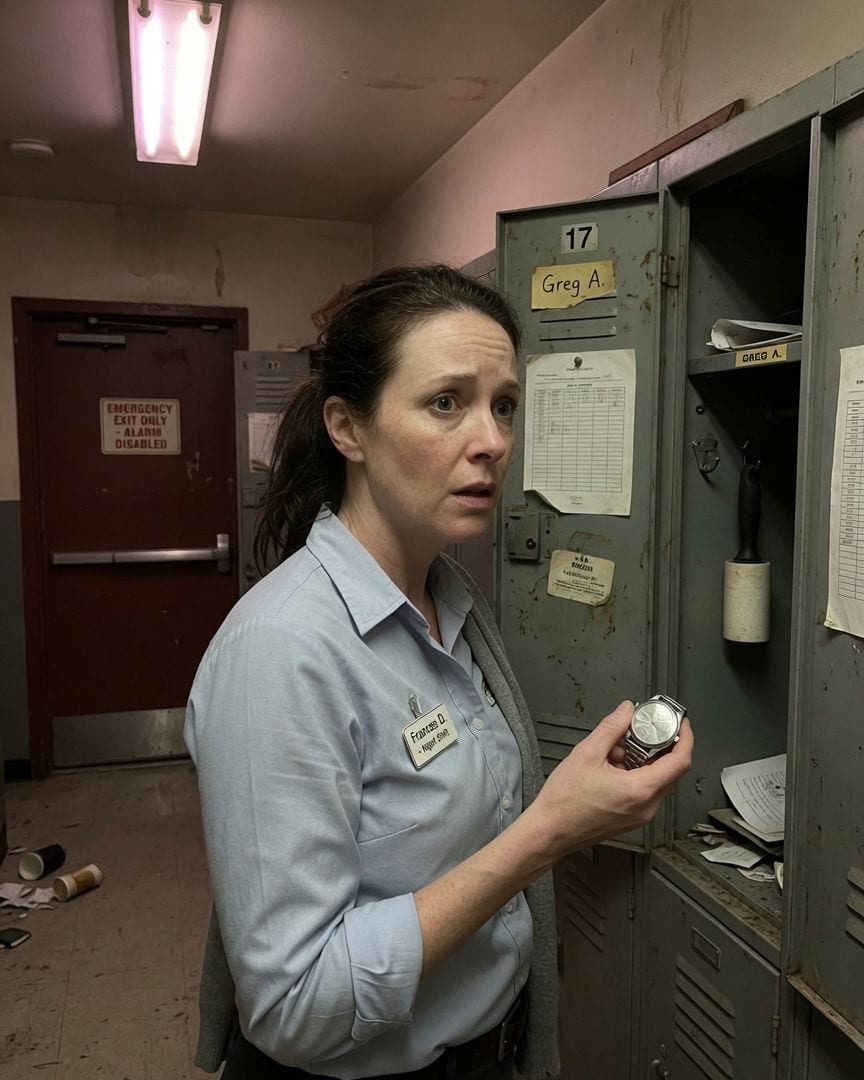
My colleague vanished and returned with a secret I don't have. He named the amount, the drawer, and the hour.
The fluorescent hum of my night shift office usually grounds me, but after my colleague Greg Ashford reappeared, things felt wrong. He'd vanished for three nights, then returned, undeniably Greg, but with a strange request. He thanked me for keeping quiet about a register incident last spring, detailing it down to the minute, a secret that simply did not exist.