My relief guard Anton always signed in green ink. The police pulled the handover book: no Anton, no green ink, ever.
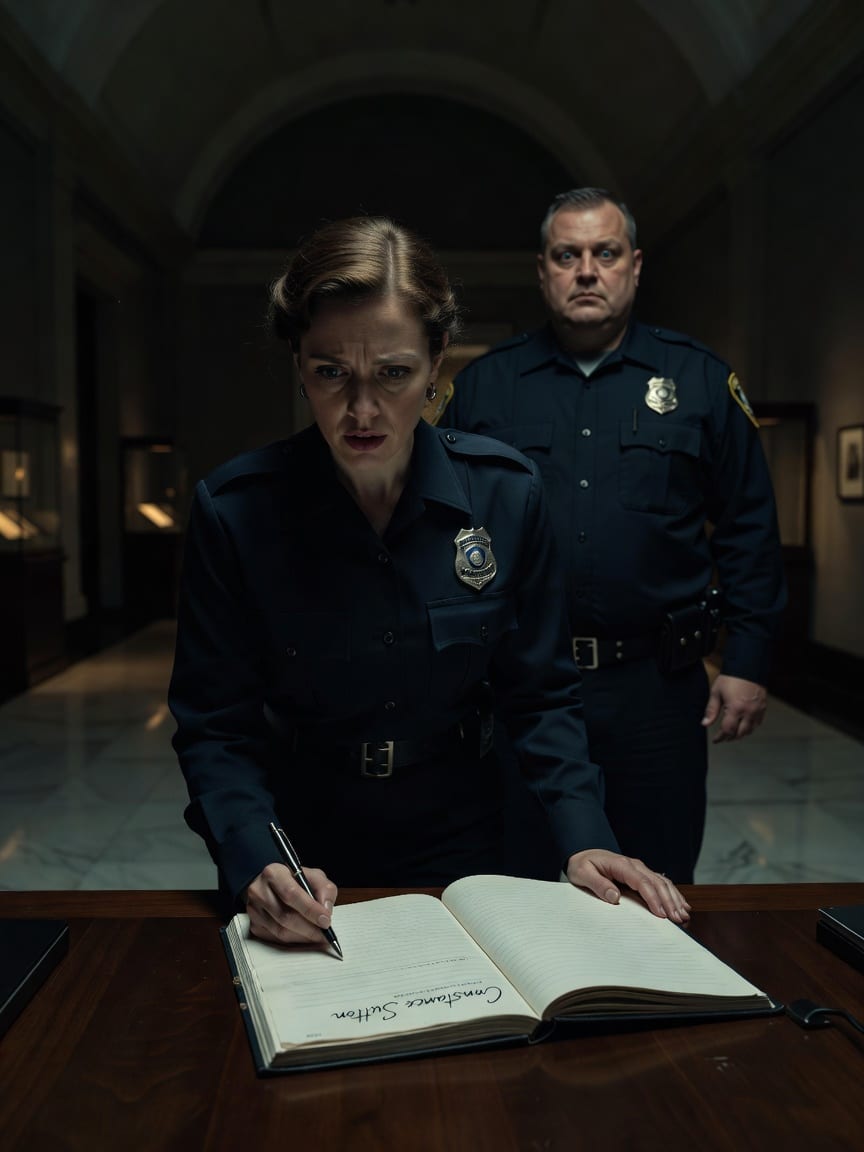
The Prescott Museum at night is a different beast. During the day, it's hushed reverence, school groups, and the faint smell of old paper.
At night, it’s just me and the echo of my own footsteps on marble floors that stretch back through centuries. I’ve been a night guard here for two years. Two years of silent patrols past forgotten kings and dusty dioramas.
It’s comforting, in a way. The rhythm of it. Checking the locks, noting the temperature, signing off my rounds in the big, red-bound handover book in the guard’s office.
My shift ends at dawn. That’s when Anton Kowalski arrives. Anton, always exactly on time, lumbering in with a slight limp, his gray uniform a little too big on his heavyset frame.
He'd give a quiet nod, sometimes a gruff "Morning, Sutton," and then he’d sign the handover book. Always below my name, always in his distinct green ink. This has been the routine for months.
A solid, unshakeable part of my night.
Then, last week, a minor theft. Nothing valuable, just a small, rather ugly Roman oil lamp from the older wing. Detective Daniel Ingram, 42, a man whose eyes never quite smiled, pulled the handover book.
He spent hours in the office, flipping through pages, his brow furrowed. When he called me into an interrogation room at the station, the fluorescent lights hummed, cold and clinical. His gaze was unnervingly direct.
He held up the red book, flipping through entries. "Ms. Sutton," he said slowly, each word a stone dropping into a well, "who is Anton Kowalski?" A cold dread, like an ice chip, began to coil in my stomach.
I described Anton. His age, about 50. The way his mustache always seemed to catch the overhead light. The slight limp, yes, I mentioned that. How he always brought a thermos, black coffee, smelled like it. His quiet "Morning, Sutton."
Ingram just listened, impassive. Then he shook his head, a slow, deliberate movement. "There's no Anton Kowalski on the museum's payroll, Ms. Sutton. Not as a relief guard, not in any capacity. And his name isn't in this book.
Only yours, page after page, in blue or black ink. No green."
A lurch of disbelief hit me, a sickening drop. I argued, insisted. I remembered handing him the heavy brass keys, the cool metal transfer.
I remembered watching him lean over the desk, the slight creak of the chair, the scratch of his pen. The green ink. I could see it. Feel it. Ingram merely tapped the red-bound book with a thick finger.
"We've checked the security footage from every exit and entrance for the last three months. You leave, Ms. Sutton, always at 6 AM. But no one arrives after you. No one signs in after you."
The words were calm, rational, delivered with the polite finality of a professional. But they hollowed me out. My own memory, sharp and specific, was warring with the undeniable, physical evidence of the log and the missing footage.
It felt like being untethered. I left the station that day feeling utterly alone, the silence of the city louder, more vast than usual.
Back at the museum that night, the silence felt different. Not comforting, not solemn. Predatory. I went straight to the guard's office, my feet heavy on the polished floor. I pulled out the red handover book.
My own signatures, neat loops of blue or black, mocked me from every page. I flipped through them, my heart thudding, a desperate drumbeat against my ribs. I needed proof.
Any proof that Anton existed, that I wasn't losing my mind, that I hadn't invented a man. I scanned my own entries, the familiar curve of my 'Constance Sutton' in the 'Shift Completed' column. Then, my finger stopped.
It was on a page dated two weeks ago, a Saturday. A day I was explicitly off duty. I remember watching a bad movie and eating takeout. There, for 3 AM, was my signature. 'Constance Sutton.'
It was unmistakably my handwriting. And below it, in the space for the relief guard's signature, Anton's green ink, was utterly, impossibly blank.
The phantom signature sent a chill through me far deeper than Anton’s disappearance. I checked my personal schedule, my digital time cards – no doubt, I was off that Saturday. I’d been home, asleep.
Yet my hand had signed the log. My hand, but not me. Driven by a cold, relentless fear, I started poring over the handover book every night. Not just for Anton anymore, but for me. And I found more.
Three more instances in the last month alone: my signature, on dates I was off, always between 2 AM and 4 AM, always with the relief guard's slot empty.
It was like the book itself was gaslighting me, or worse, using me. Like it needed me to validate its lie.
I tried to access the museum's internal security camera archives for those specific dates and times, using my login. The system was usually robust, the footage archived meticulously for years.
But every attempt for those narrow windows, those 2 AM to 4 AM slots on my off days, resulted in an 'Error 404: Footage Corrupted' message. No other footage was affected.
The records for everything else – other guards, other nights, even earlier or later on those same specific nights – were pristine. The digital records were as blank as the log entries beneath my phantom signatures.
I needed to talk to someone. Someone who had seen everything this place held. Someone who had been here for decades.
I sought out Theodore Mitchell, 68, the museum's stoic, soft-spoken curator, often found in the dusty archives, hunched over things older than himself.
Theodore, hunched over a collection of ancient maps, barely looked up when I approached. The air in the archive was dry, smelling of lignin and dust motes.
I laid out my story, the missing guard, the phantom signatures, the corrupted footage. My voice was tight, strained, but I tried to keep it steady. He listened, his face unreadable, occasionally nodding slowly.
He didn't interrupt, didn't offer a mundane explanation like the detective had. No talk of sleep deprivation or pranks. When I finished, a long silence hung in the air, broken only by the hum of the fluorescent lights.
"The old places," he said, his voice a low rumble, almost a whisper, "they have their own rhythms, don't they?"
His eyes, when they finally met mine, were ancient and knowing, almost as if he'd seen this all before, a thousand times.
I felt a prickle of unease; it was less like he was listening to me and more like he was observing a specimen, a new insect under a microscope.
Later that night, back on my patrol, the feeling intensified. I found my locker door, which I always double-check, slightly ajar.
Nothing was missing, but a small, polished stone I kept for luck – a river stone I’d found years ago – had been moved from its usual corner to the exact center of the shelf. A small, deliberate act.
I started seeing Theodore frequently over the next few shifts, always in the periphery. Always near the older, less-frequented exhibits. His gaze occasionally sweeping towards me, a faint, unreadable smile playing on his lips. He wasn't just observing me.
He was watching.
I couldn't shake the feeling of being watched, of being part of some silent, internal mechanism of the museum. It was a cold, creeping certainty that settled deep in my bones. I cornered Theodore in his office.
The room was crammed with books and artifacts, the air thick with history. "Mr. Mitchell," I demanded, holding out the handover book, open to one of my phantom entries from two weeks ago, "What is going on?
Why is my name here? Why is Anton not?"
Theodore sighed, a sound like rustling parchment, like old leaves stirred by a breeze. He didn't look surprised. He just reached into a heavy oak desk drawer and pulled out a thick, leather-bound journal, its pages yellowed with age.
"Official records," he murmured, tapping the handover book with one long, thin finger, "are for official matters. This," he patted his journal, a faint, unsettling smile on his lips, "is for what the museum truly remembers."
He opened the journal to a page, revealing meticulous entries in a spidery hand, spanning decades. Dates, descriptions of 'night watchmen,' 'cleaners,' 'curatorial assistants.'
Each entry detailed a distinct character: 'Mr. Henderson, always hums off-key,' 'Miss Albright, hair in a severe bun,' 'Victor, a heavyset man, green ink.' My breath hitched. Victor. Green ink.
Theodore flipped to an old, faded photograph tacked to a corkboard behind his desk. It showed a group of museum staff from the 1970s. All stiff smiles and dated clothes.
In the back, blurry but unmistakable, stood a heavyset man with Anton's exact face. The same broad shoulders, the same slightly stooped posture, the same quiet, almost sad eyes. Theodore pointed to him. "That was Victor.
He was the night watchman for a year. Then he just... wasn't. Like so many others." The room felt suddenly cold, the shadows deepening at the edges of my vision.
Theodore's words hung in the air, cold and definitive. The man in the photograph, Victor, was Anton, just decades younger. The dread deepened, taking on a new, horrifying dimension.
"They come and go," Theodore continued, his voice calm, flat, "different faces, different roles. But always on the night shift. Always leaving a gap in the records. Always performing their duties."
He turned another page in his journal, revealing a series of names, each with a date range beside it.
"And sometimes," he leaned closer, his voice dropping to a near whisper, a chilling intimacy, "sometimes, they need a signature to make it look right. A signature from someone already here, someone real, to bridge the gap."
He slid the journal across the desk.
Constance's eyes fell on the list. Names she didn't recognize, then a few she did from old staff lists I'd vaguely seen in dusty files.
My gaze darted down the page, through the decades, until I reached the bottom, recent entries. My heart hammered against my ribs, a frantic bird trapped in a cage.
There, beside a date range that included the last two weeks, was a familiar name. Not Anton's. It was mine. Constance Sutton.
Theodore explained it all, his voice devoid of emotion, as if reading from a textbook. "The museum, especially the older wing, has a kind of sentience, a memory. It needs routine, a sense of order.
When a role is left empty, or a shift is particularly quiet, it manifests an 'echo' to fill the void." Anton, or Victor as he was before, was just the current iteration of the 'relief guard echo.'
"They are not malicious," Theodore continued, "just... fulfilling a function. Maintaining the order. And when they need to interact with the official world, to make a record, they borrow from the closest, most available source.
Your signature, Ms. Sutton, was simply convenient. It makes the world fit their reality, for a moment. It lends them a weight they don't possess."
He pushed aside some maps on his desk and showed me old, brittle blueprints of the museum, spread across the polished oak.
His finger traced a section beneath the older wing, highlighting a sealed-off, forgotten sub-basement, marked only as 'Original Foundation.' "This," he said, tapping the spot, "is where the heart of its memory resides. The echoes emanate from there.
They feed on the routine, on being acknowledged, on being recorded. Even by one man's private journal." A cold clarity descended. I wasn't being haunted; I was being absorbed. I was becoming part of the museum's silent, unrecorded system.
I stared at the blueprint, then back at Theodore. "How do I stop it?" I asked, my voice steady despite the tremor in my hands.
The thought of my own name, my own signature, appearing on those pages, detached from my will, was terrifying. Theodore hesitated, a flicker of something almost like fear, or perhaps just weariness, in his ancient eyes.
"You have to break the pattern," he said. "Stop acknowledging them. Stop signing. And sever the connection to the source."
He reached into his desk and pulled out a heavy, ornate brass key, its metal tarnished with age, gleaming dully in the office light. "This opens an old access panel in the deep archives.
It leads down to the original foundation stone." He explained that the echoes thrive on the continuity, the unbroken chain of recognition. To stop them, I had to refuse to participate, and physically disrupt their source.
That night, I walked my shift with a new resolve. The museum felt heavier, older, almost alive around me.
I felt Anton's presence, a familiar weight in the security office, a faint shift in the air, but I kept my gaze fixed, never looking at the handover book, never acknowledging the empty chair. I bypassed the office entirely.
I went straight to the oldest part of the archives, a place even dustier and colder than Theodore's office. I found the hidden panel behind a stack of forgotten canvases, a thin seam in the stone wall.
The heavy brass key turned with a groan, a sound that echoed through the quiet space. A narrow, dusty staircase spiraled down into oppressive darkness, the air growing colder, heavier with each step.
At the bottom, a massive, rough-hewn stone pulsed with a faint, cold hum. It was ancient, primordial, radiating a deep, unsettling energy. I found a heavy iron bar, left years ago by some forgotten maintenance worker, lying on the floor.
With a surge of desperate strength, a primal scream in my gut, I jammed the bar into a hairline crack on the stone's surface, twisting it with all my might. The crack widened.
A deep, grinding tremor vibrated up through the stone, through the floor, through the entire museum, a groan of protest that shook the very foundations. Then, a profound, heavy silence fell, deeper than any I had ever known.
Anton Kowalski never appeared for a handover again, not in my memory, not in the quiet hum of the museum. The phantom signatures in the handover book ceased.
Theodore Mitchell retired a month later, a quiet email from HR announcing his departure. He left his journal, carefully annotated with a final entry, in my care. The museum felt emptier, the nights longer and truly silent.
The old wing, in particular, seemed to hold its breath, a vast, echoing space that no longer needed its phantom watchers. I continued my shifts, the quiet a constant, unsettling companion.
I still work the night shift. Sometimes, my hand twitches, almost reaching for a pen, a phantom habit from a routine that never officially existed. The silence is absolute now, a heavy, velvet cloak, but it doesn't feel like peace.
It feels like absence, like a void waiting to be filled. I know what I did, and what I stopped.
But sometimes, when I patrol the newer wing, the one built only five years ago, I catch a flicker of movement at the edge of my vision—a shadow too solid, a fleeting glimpse of a figure in a maintenance uniform, always just out of sight, always moving with an unnervingly quiet, methodical purpose.
The night is quiet now, but the museum still watches, and sometimes, I think it's learning new ways to fill the silence.
If this one got to you
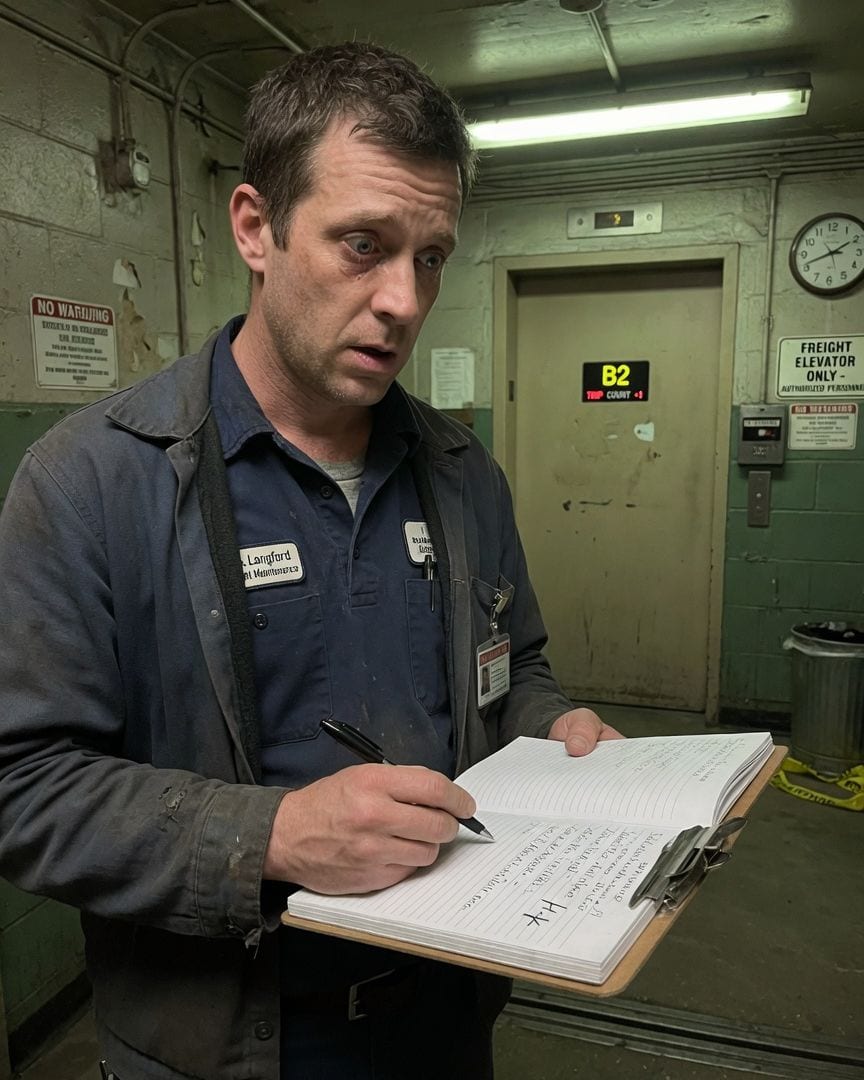
A man just took the elevator to the sealed sub-basement. He isn't on any staff roster, but my initials are in the logbook.
As a maintenance worker, my job is mostly routine, like signing the daily log for the old building's freight elevator. But one night, the log showed a trip to the sub-basement, sealed for a decade, timestamped with my key-switch and signed with my own initials, for a run I never made.
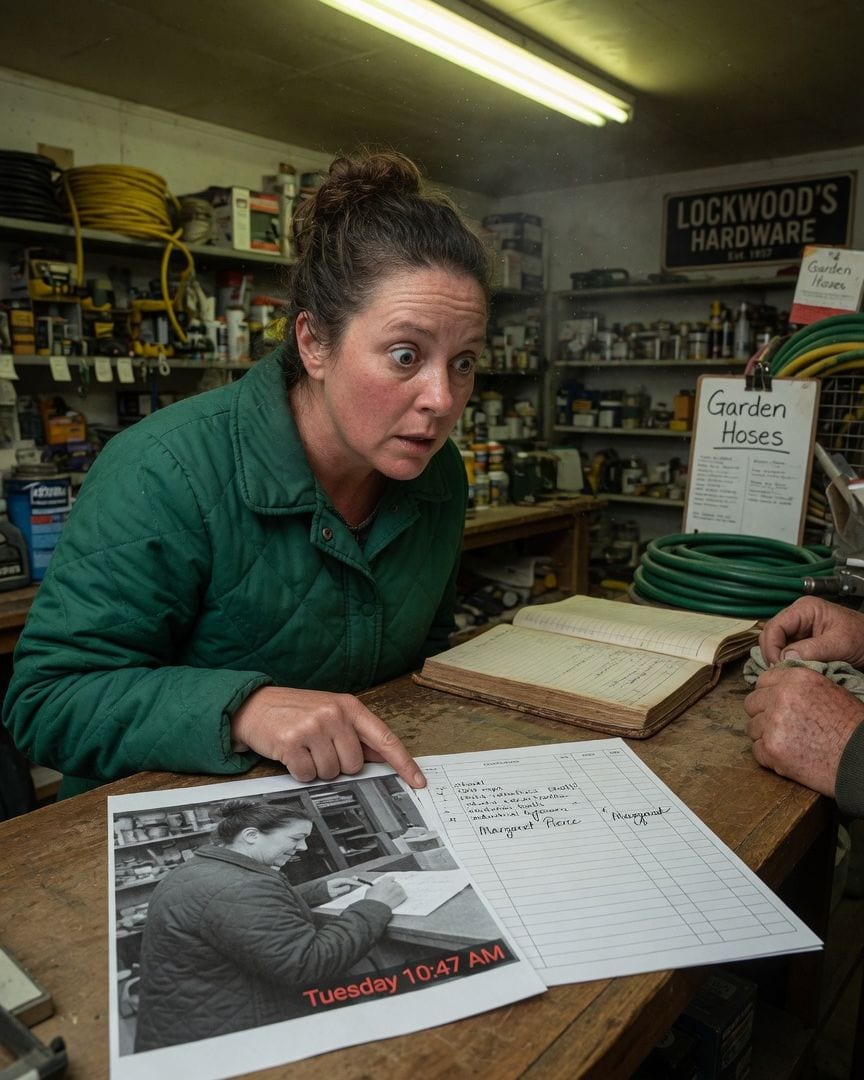
My security photo shows me signing for tools, smiling a smile I never made. I was miles away.
At Lockwood’s Hardware, I found an account opened in my name, detailing purchases of rope, plastic sheeting, and industrial fasteners. My exact signature was on every entry, yet I knew I had never bought any of it. Then, a security photo showed a woman who was undeniably me, signing for those very items on a day I had an ironclad alibi miles away.
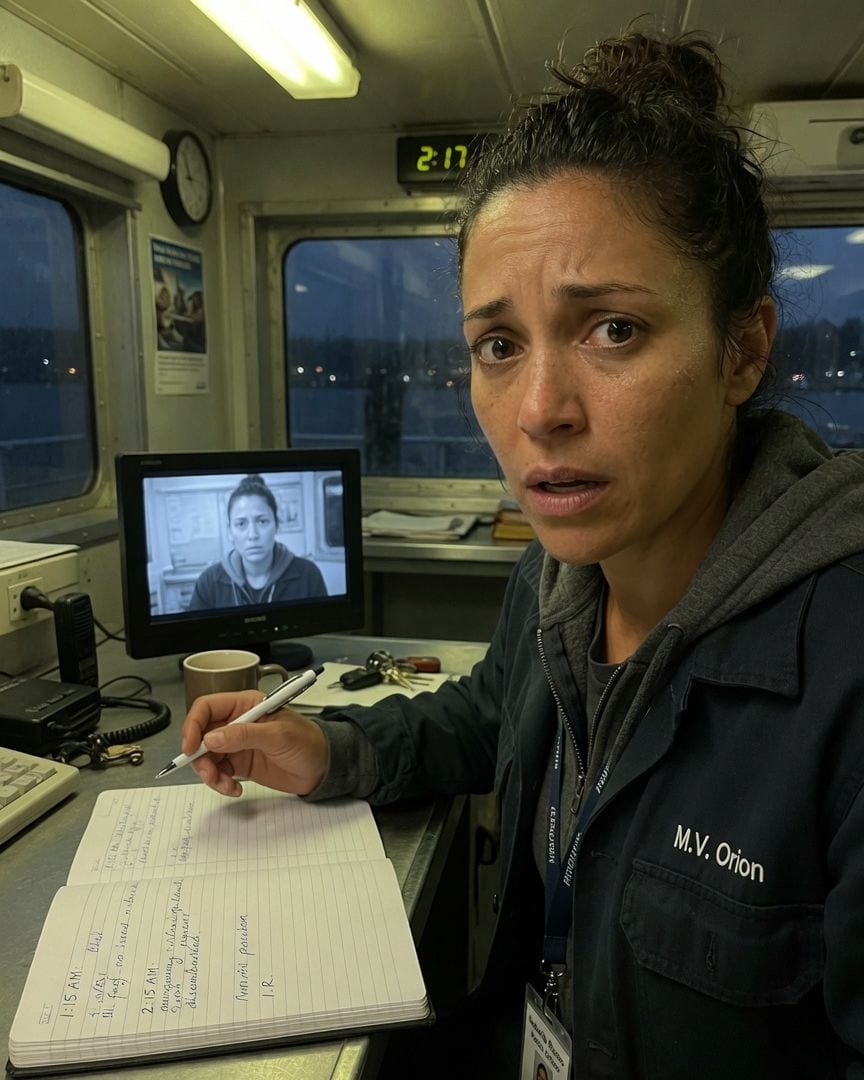
My security camera showed my own face at 2:15 AM, writing an entry I didn't make, staring utterly blankly into the lens before the screen flickered.
As a meticulous watchman on the M.V. Orion, I was making my routine 2:00 AM log entry when I found a previous one I hadn't written. Timestamped 2:15 AM, it stated a 'foot passenger disembarked' with my own initials beside it. But the ferry was dark, silent, and completely empty.
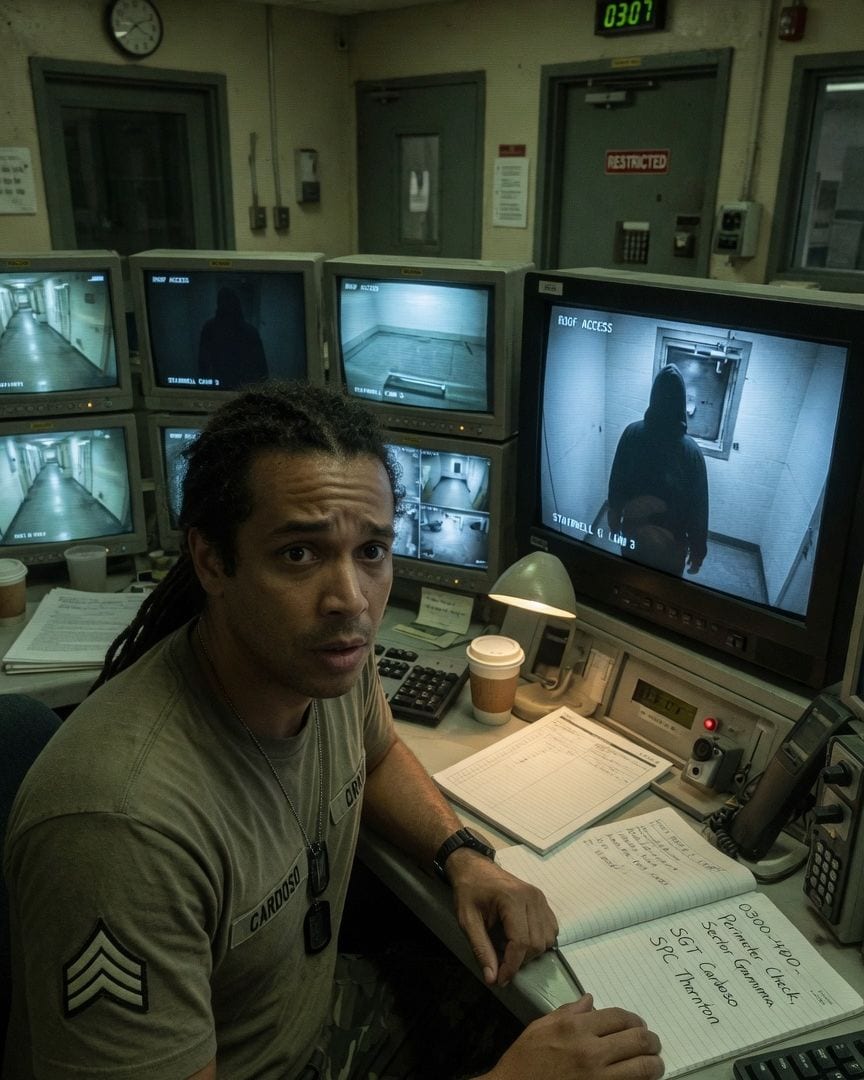
On his last watch, Sergeant Cardoso found his own signature in the duty log for a perimeter check he never did, with a name he didn't know.
Sergeant Rui Cardoso was on his final interior watch at Fort Merritt, a remote coastal outpost, as 0300 ticked by. He spotted a dark, unmoving figure on a monitor showing the sealed roof access, a figure that inexplicably shifted closer to the hatch moments after a specialist confirmed the roof was empty. Rui checked every log and sensor, but the digital fortress showed no breach, and the figure's appearance defied all logic. Yet, in the physical duty log, he found his own unmistakable signature on an entry for a perimeter patrol he never took, alongside a soldier's name he'd never seen. What impossible truth was written in his own hand?
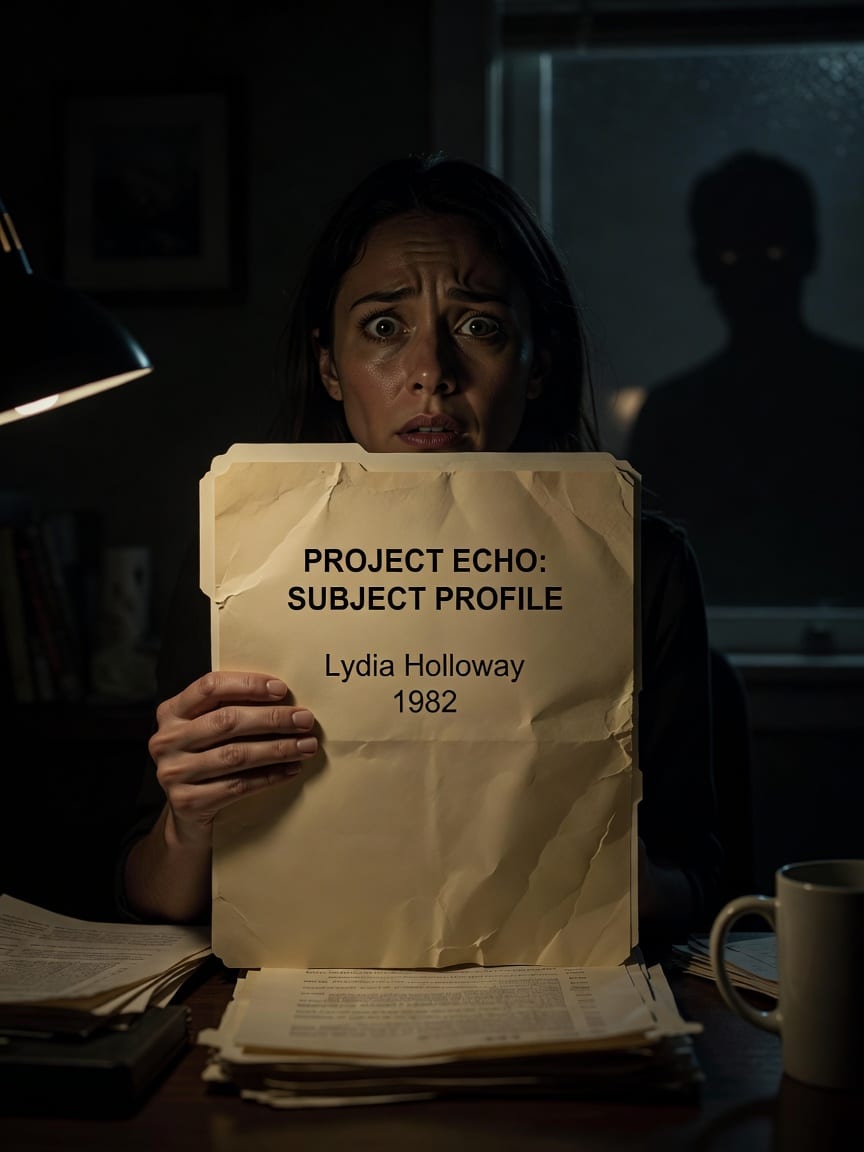
My own signature is on a Baltimore police report for a hit-and-run I never witnessed. The officer remembers my university sweatshirt.
I was settling into a quiet Tuesday evening when Baltimore PD called, asking about a witness statement I supposedly gave. They described my faded green university sweatshirt, seen at a hit-and-run last Friday. But my sweatshirt was in my dresser, and I was home in Seattle.
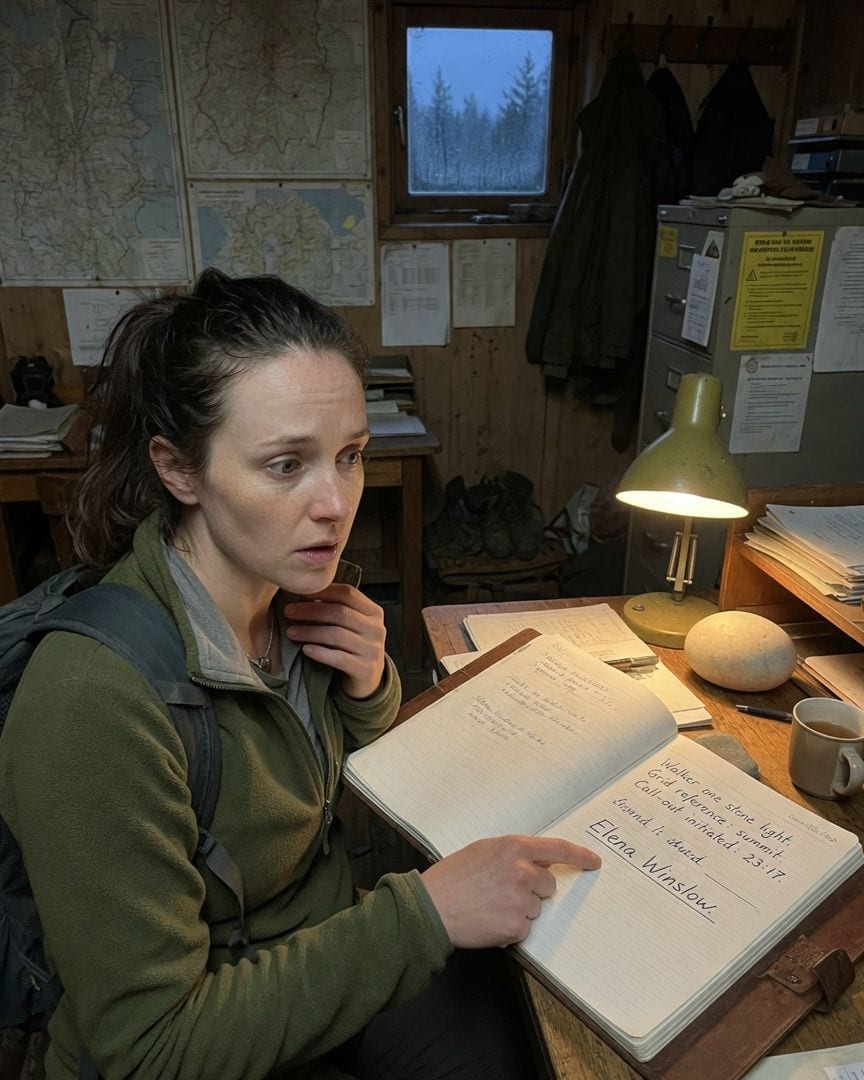
My pocketed mountain stone meant a rescue logbook recorded a call-out that night for me — a shout that never went out.
After an exhilarating climb on Cadair, I took a small, smooth white stone from the summit cairn, despite a warden's warning. Back at the station, a logbook entry shocked me: my name, dated last night, for a rescue call with an impossible detail: 'Walker one stone light'.