My shipping forecast announcer spoke my name last night, telling me to come home before the tide. The BBC denies it.
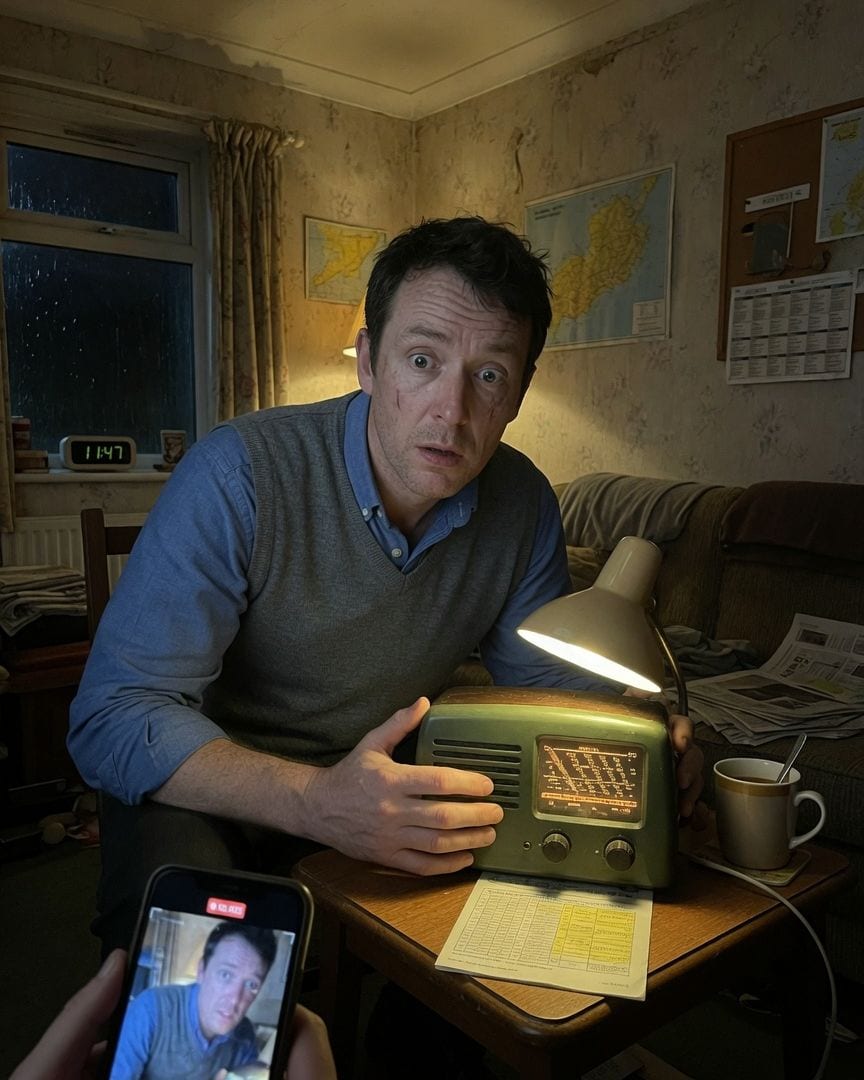
I was in my living room, fiddling with the dial of my old wind-up radio. It's a habit, a comfort, listening to the shipping forecast.
The low, rhythmic drone of the announcer’s voice, listing sea areas and pressures, is usually background noise to my evening tea. Last night was no different.
He was just getting to 'Dogger, Fisher, wind southerly or south-easterly, four or five, occasionally six in exposed areas. Moderate or rough.' I remember the exact phrasing.
Then, without so much as a breath, without a single change in tone or cadence, the voice cut through the usual litany. "And a message for Mr. Enys: come home before the tide."
It hung in the air for a beat, a clear, distinct message, then just as calmly, the announcer continued, "German Bight, Humber, visibility good." My hand, poised on the volume knob, froze. I'm Kevin Enys.
I live three hours inland, miles from the nearest significant tide. I thought I'd imagined it.
But I'd hit record on my phone, purely out of some strange, almost involuntary reflex. I played it back immediately.
The familiar crackle of the radio, the static, then the voice, steady, calm, unmistakable: "And a message for Mr. Enys: come home before the tide." Clear as day.
I must have listened to it a dozen times, each playback more chilling than the last. I called the BBC helpline, then their complaints department. Both times, polite but confused representatives assured me their broadcasts were monitored, archived.
They had no record of any such deviation, ever. No 'Mr. Enys,' no 'come home before the tide.' Nothing. They suggested a local radio interference, or perhaps I'd heard a prank show. I knew it wasn't either.
The next day was a blur of frantic attempts to rationalize it. A sophisticated prank? A digital hack of my specific radio frequency? I emailed the BBC again, this time including the recording.
A reply came back from Tessa Russo, polite but firm, reiterating their systems showed no anomalies, no evidence of tampering. She suggested I consult an audio expert.
I posted the recording to a niche online radio forum, omitting my name, just describing the oddity. The comments were predictable: "glitch," "deepfake," "you edited it, mate." No one else reported hearing anything like it.
It was like I’d conjured it out of thin air. But I knew I hadn't.
Frustration gnawed at me. If it wasn't a broadcast error, and it wasn't a prank, then what was it? My mind, desperate for a tangible link, latched onto the 'Enys' name.
I started searching local historical records, focusing on coastal areas, for anyone named 'Enys' and any unusual phenomena connected to the sea. It felt like grasping at straws.
Eventually, my search led me to a small, unassuming local history archive, tucked away on the second floor above a dusty gift shop in a seaside town I’d never visited.
The smell of old paper and something faintly metallic hung in the air. Inside, I met Greta Whitfield, the archivist.
She was a woman in her late seventies, with spectacles perched on her nose and kind, but noticeably tired, eyes that seemed to have seen too much.
She listened patiently to my somewhat rambling request about the Enys family and anything "unusual" in the shipping records.
She led me to a back room, rows of ancient, leather-bound ledgers lining the shelves. "The Enys family has deep roots here," she said, her voice soft, "but many branches withered over time."
For hours, I sat at a heavy oak table, Greta occasionally bringing me a new, heavy tome. My fingers ached from turning brittle pages, my eyes blurred from deciphering faded ink. Nothing. Just birth records, marriages, deaths. Mundane history.
Then, in a particularly thick, parish ledger from the early 20th century, my finger traced a faded entry. My breath hitched. There, written in elegant copperplate script, was the name: 'Kevin Enys.' My heart slammed against my ribs.
Beside it, in a slightly different hand, a chilling annotation: 'called by the tide.'
I stared at the ledger, my gaze fixed on the impossible entry. It read, clear as a bell despite the age: 'Kevin Enys, b. 1898, called by the tide, 1930.'
My hands were shaking. I fumbled for my wallet, pulled out my driving license. 'Kevin Enys,' it stated, 'b. 1988.'
The name was identical. The chilling phrase, 'called by the tide,' was identical. The date – 1930. It was nearly a century before I was born.
My own name, staring back at me from a past that shouldn't know it, a past that seemed to have already decided something for me.
The quiet archive, moments ago just a dusty repository, suddenly felt oppressive, its air thick and cold, pressing in around me.
The knot of dread in my stomach was a cold, hard stone when I returned to the archive the next morning. Greta was at her desk, meticulously indexing a box of old photographs.
I approached, trying to keep my voice steady, to sound merely curious.
"Ms. Whitfield," I began, "about this... 'called by the tide' annotation in the ledger. Is that a common phrase in these records?"
She looked up, her tired eyes meeting mine. "Oh, that old thing?" she said, dismissing it with a wave of her hand. "Just local folklore, Mr. Enys. A euphemism, you know.
For fishermen lost at sea, or perhaps those who simply decided to vanish. The sea takes many, and sometimes, people simply go." Her composure was unsettlingly calm.
But I pressed. I pulled out my phone, played the recorded shipping forecast message. Her brow furrowed. Then I showed her my driver's license, placing it next to the ledger entry.
The identical names, the impossible dates, the phrase repeated from a broadcast she'd surely never heard. Her calm facade wavered, just slightly. A flicker of something, perhaps concern, perhaps resignation, crossed her face.
She leaned back in her chair, a sigh escaping her lips. "The Enys family," she murmured, more to herself than to me, "they have a long, strange history in this region. Always associated with the sea, yes. And... peculiar disappearances."
She pointed a thin, age-spotted finger at the ledger. "Look closer. It's not just that one."
I did. And I found them. Not just 'Kevin,' but 'Elias Enys,' 'Maeve Enys,' 'Thomas Enys.' All from different decades, sometimes a century apart. All with the same ominous note beside their names: 'called by the tide.'
The dates weren't regular, no neat pattern of every 50 years, but they were there, a chilling, sporadic sequence of disappearances that formed a clear historical record. It wasn't folklore, not to these people.
Greta leaned forward, her voice dropping to a near whisper. "There's an old landmark, out on the coast. 'The Gathering Stone.' It's always been whispered about, in connection to these... disappearances."
Her gaze drifted, out the dusty window, as if she could see the distant sea.
My mind reeled as I left the archive, the ledger’s implications churning in my gut. The Enys name, recurring disappearances, 'The Gathering Stone' – it was too much to process.
I was halfway down the narrow street when a figure stepped out from the deep shadow of an old oak tree.
It was Felix Lockwood. An older man, perhaps in his mid-sixties, with a lean, weathered face I recognized vaguely from the local cafe.
He was always there, usually alone, always watching the street, a half-finished cup of coffee cooling in front of him. I’d never spoken to him.
He approached me, his stride unhurried, his expression calm, almost sorrowful. He stopped directly in front of me, forcing me to halt.
"Mr. Enys," he said, his voice soft but firm, a low rumble. "I apologize for what’s coming."
A jolt of ice shot through my veins. "What are you talking about?" I demanded, my voice cracking slightly. My rational mind was screaming for an explanation, any explanation.
Felix simply shook his head, his eyes holding a deep, unsettling knowing. "You’ve looked too deep, Mr. Enys. Some tides cannot be turned." He offered no further explanation, just that long, sorrowful, knowing look, then turned and walked away.
He disappeared around the corner of the ancient stone building, leaving me standing alone, the afternoon sun suddenly feeling cold on my skin.
That evening, the dread solidified into a cold, personal presence. I caught sight of Felix Lockwood’s car parked down the street from my house.
The lights were off, the windows dark, but I could feel eyes on me from the darkened interior. I stood behind my curtains, watching, a frantic pulse hammering in my throat.
It was a long, silent vigil until, finally, the car’s engine rumbled to life, and it pulled away, disappearing into the night.
The next morning, I was back at the archive, not asking, but demanding. Felix’s warning had shaken me to my core, erasing any lingering doubt that this was just some bizarre coincidence.
Greta was already there, the scent of stale coffee thick in her small office.
"Ms. Whitfield," I said, my voice sharp, "what is truly going on? Who is Felix Lockwood? What did he mean, 'some tides cannot be turned'?"
She looked at me, her tired eyes wide with genuine fear for the first time. The polite archivist facade had finally cracked. "My family," she began, her voice barely a whisper, "the Whitfields.
We’ve been caretakers of that ledger for generations. Not to cause harm, Kevin, never that. But to understand, to warn if we could. To... record."
She leaned forward, her hands clasped tightly on her desk. "The 'tide' isn't just a metaphor, Kevin. It's a specific, rare astronomical-tidal event. It has historically coincided with the disappearances of those from the Enys line." Her gaze held mine.
"It's a call. An ancient summons from the sea itself."
My breath hitched. An actual summons? Not a metaphor for drowning or running away?
She pushed a faded photograph across her desk. It was sepia-toned, curled at the edges, a picture of a young man, perhaps in his twenties, with a faint, almost shy smile.
He was dressed in clothing from a different era, but his eyes, his jawline...
"This was my great-uncle," she said, her voice thick with old grief. "Also a Kevin Enys. He disappeared in 1990."
I stared at the photo. The man in the picture, though from a different era, shared an uncanny resemblance to me. The same set of the jaw, the same intensity in the eyes.
It was like looking at a ghost, a mirror reflecting a past I couldn't possibly belong to. My stomach churned.
Greta turned the photograph over. Scrawled on the back, almost illegible, was a date: 'Last Seen: 1990. Drawn to the Gathering Stone.'
I held the faded photograph, the face of the man who could have been my twin staring back at me. Another Kevin Enys. Disappeared in 1990. The implications were a crushing weight.
Greta's finger tapped the date scrawled on the back of the photo, pointing to it as if it were a direct instruction: 'Next Great Tide: October 14th.' The words blurred. Tomorrow.
The air in the archive grew heavy, charged with unspoken dread. The silence itself felt stretched, thin.
Then, from the corner of Greta's cluttered desk, an old, brass-knobbed radio, clearly unplugged and unpowered, began to hum. A low, distant rumble, like static from a deep sea trench, filled the small office.
The voice of a shipping forecast announcer, steady and calm, cut through the impossible sound.
"And a message for Mr. Enys: the time is short."
My eyes snapped to the radio, then to Greta, then back to the photograph.
The broadcast seemed to emanate from nowhere, a targeted whisper confirming the impossible date, drawing me into a fate that was no longer a ghost from a ledger, but a breath on my neck.
The impossible radio message, the imminent date scrawled on the back of a dead man's photograph, galvanized me. There was no more time for disbelief, only for understanding.
Greta, her voice heavy with generations of inherited knowledge, finally explained the full, terrifying truth.
"The Enys lineage," she began, tracing an invisible line on the dusty desk, "for reasons lost to time, possesses a unique, almost genetic, connection to 'The Gathering Stone.' It's not just a rock formation, Kevin. It’s... a gateway."
She explained that every few decades, when a rare alignment of moon and stars creates an extreme spring tide, the 'call' manifests. "It's not malevolent," she stressed, her eyes fixed on mine, "but an indifferent, natural summons.
A 'return' to an ecosystem deep beneath the sea, temporarily revealed by the tide. The ledger isn’t a curse. It's a record of those who answered that call. Who went home."
My mind struggled to comprehend. Not evil, but indifferent. A natural phenomenon, like gravity or the wind, but aimed specifically at my ancestors, at me.
"Felix Lockwood," she continued, "he's a descendant of the Lockwood family. They've historically acted as silent observers. Sometimes they try to guide, or warn, but they're never truly able to stop the tide's pull."
She picked up the faded photograph of her great-uncle. "My great-uncle Kevin... he left behind cryptic notes. He wrote about an irresistible draw to the sea, a sense of belonging he'd never felt on land.
A 'whisper of home' that intensified as the tide approached." She paused, her voice faltering slightly. "He embraced it. He went."
Despite Greta’s desperate pleas to stay inland, to barricade myself, I felt an undeniable, primal pull towards the coast. It wasn’t a choice, not truly. It was a compulsion, a gravitational force.
I drove through the night, the old radio silent on the passenger seat, mocking me. Only the distant, growing roar of the ocean filled the void.
I arrived at 'The Gathering Stone' just as dawn broke, painting the sky in bruised purples and greys. The sight that greeted me was extraordinary, impossible. The tide was impossibly low, receded further than any normal spring tide.
It exposed vast, alien stretches of slick, dark rock, glistening like raw muscle in the nascent light. And there, at the very base of 'The Gathering Stone,' where the rock met the impossibly exposed seabed, was a dark, pulsing fissure.
It seemed to breathe, emanating a strange, cool breeze that carried the smell of brine and something else, something ancient and deeply unfamiliar.
An overwhelming urge swept over me, a profound sense of belonging, a feeling that this dark mouth was home. To step into it felt like the most natural thing in the world.
Felix Lockwood was already there, standing silently by the shore, his back to the raging, impossible tide. His face, etched with weariness and a sorrow I now understood, turned to me.
"You can't fight it, Kevin," Felix said, his voice barely audible over the crashing waves that pulled back and forth from the fissure's edge. "But you don't have to go willingly."
It was a choice, he offered, between two different ends. Succumb now, give in to the pull that hummed in my bones, or resist with every fiber of my being.
The 'call' was a physical sensation, a deep, resonant hum, a voice in my mind whispering my name, promising peace, a final, perfect rest.
I fought it. I clenched my fists until my knuckles were white, digging my fingernails into my palms.
I pictured my quiet inland home, my old radio on the shelf, the mundane life I had almost lost, the life I still had. With a guttural cry that was half-fear, half-defiance, I turned away from the pulsing fissure.
Felix, with surprising strength for his age, grabbed my arm and helped me scramble back up the treacherous, slick rocks, away from the encroaching, impossible tide that already seemed to be reaching for me.
I returned to my inland home, profoundly changed. The old wind-up radio sat silent on my shelf, a relic, a monument to a night that almost took me.
The extreme tide receded, and I later heard reports of unusually high waters, but no mention of any fissure at 'The Gathering Stone.' The world, for everyone else, had simply returned to normal.
Greta Whitfield continued her quiet vigil at the archive, a guardian of forgotten histories. Felix Lockwood was no longer seen in town, fading back into the shadows from which he'd emerged.
The specific, rare astronomical alignment passed, and with it, the intense, targeted call. I had survived, but the world no longer felt quite the same.
I carried the knowledge of what waited, what had called me, and the terrible intimacy of being singled out by something ancient and indifferent.
I try to live a normal life. I still listen to the shipping forecast, sometimes, but never on my old radio, and never alone in the silence of my living room.
The quiet of my home is now a different kind of silence, punctuated by the phantom sound of distant waves, a low, persistent hum that no one else hears.
I know what waits for my name, that it isn't gone, merely dormant, biding its time.
I occasionally find myself drawn to maps of the coast, my finger tracing the line where the land meets the sea, a physical memory of the pull that nearly claimed me.
Greta Whitfield found a new entry in the old ledger a few years later. It wasn't Kevin Enys, but another name from a distant branch of the lineage, with the familiar 'called by the tide' annotation.
She closed the book, knowing it was never the only one.
If this one got to you
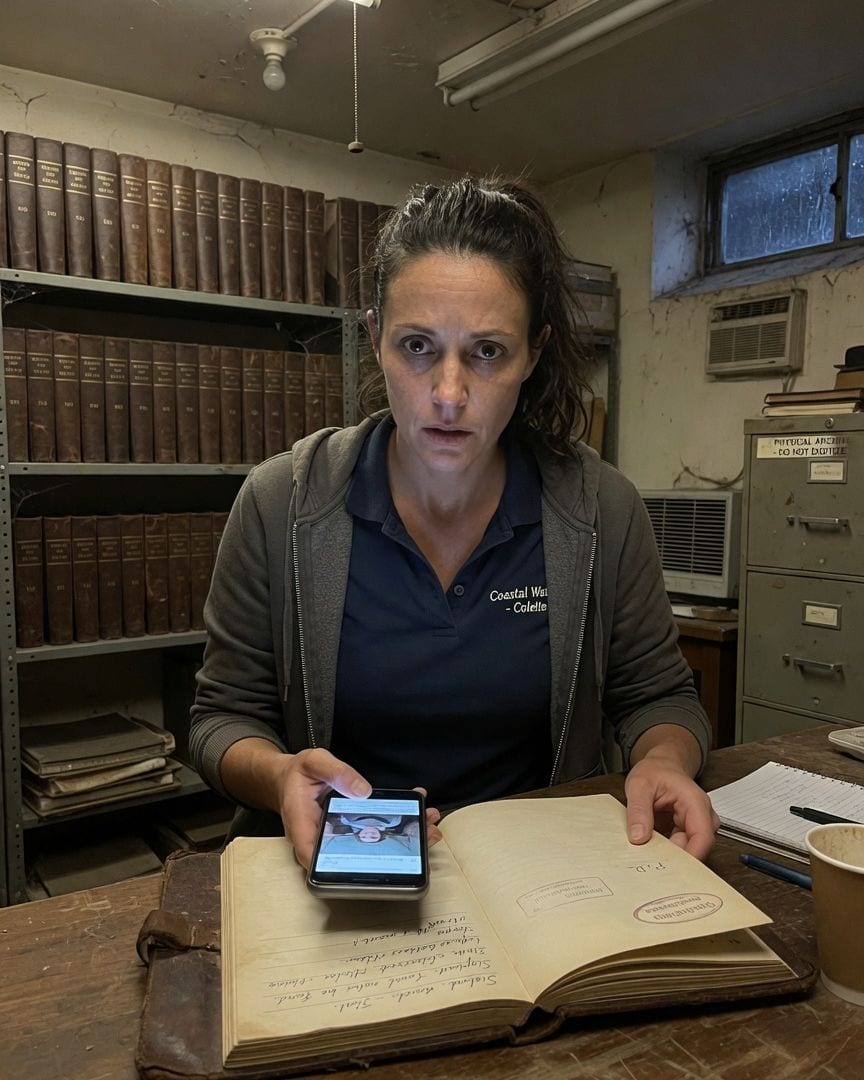
My coastguard log noted Sighting 9 again tonight, a light where no vessel showed. The old logs carry Sighting 9 off Skerry Point at 3:14am every tenth year since 1954, always 'nothing found,' always 'send no boat.'
On my watchtower night shift, the radar screen glowed green and the ocean was quiet. Then, a familiar light appeared off Skerry Point, exactly on cue, just as it had every tenth year for decades. But digging deeper, I found a hidden stamp in an old logbook: 'Operation Skerry. Status: Complete.' It left me with a chilling sense of finality.
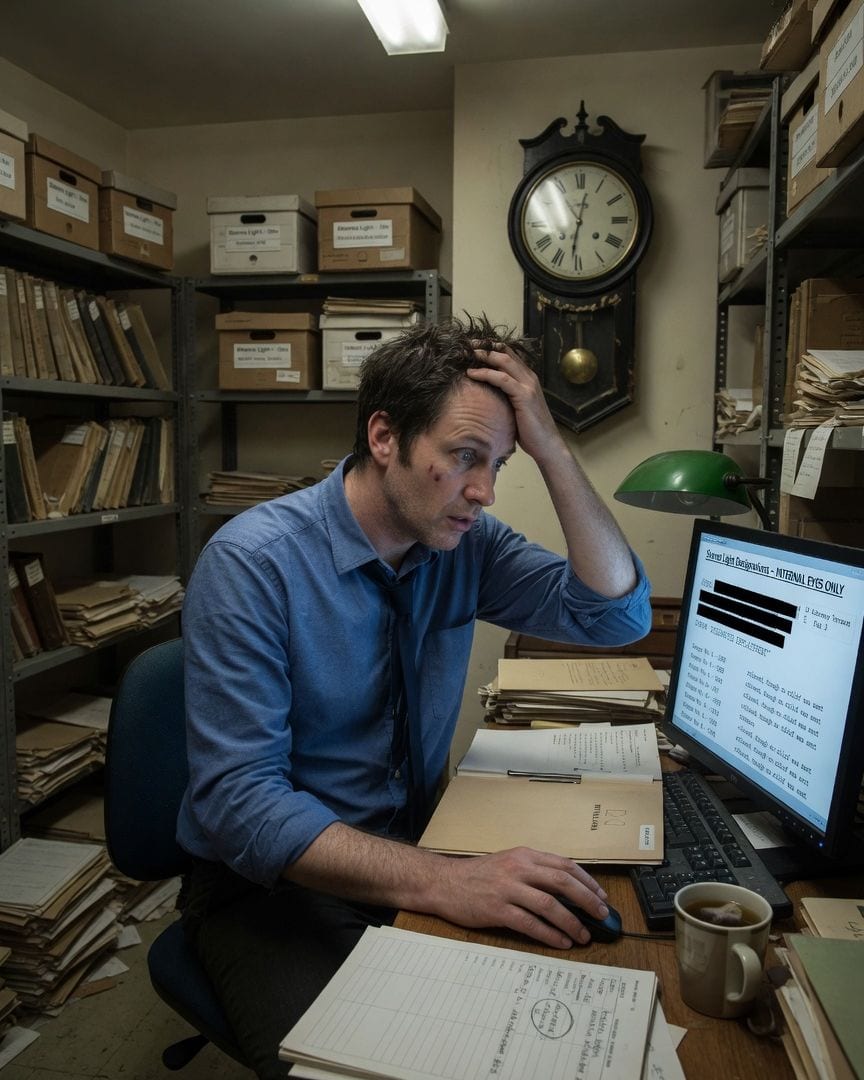
I found my street address in a century-old lighthouse file, printed decades before I lived there.
As a maritime archivist, my world revolves around forgotten lives and dusty ledgers. But the Skerne Light files broke that quiet rhythm, revealing a chilling pattern: 'Keeper number 6' relieved, though no relief was sent, repeating for decades. Now, an internal document with a strange code has led me to a redacted entry, revealing my own street address, decades before I ever lived there.
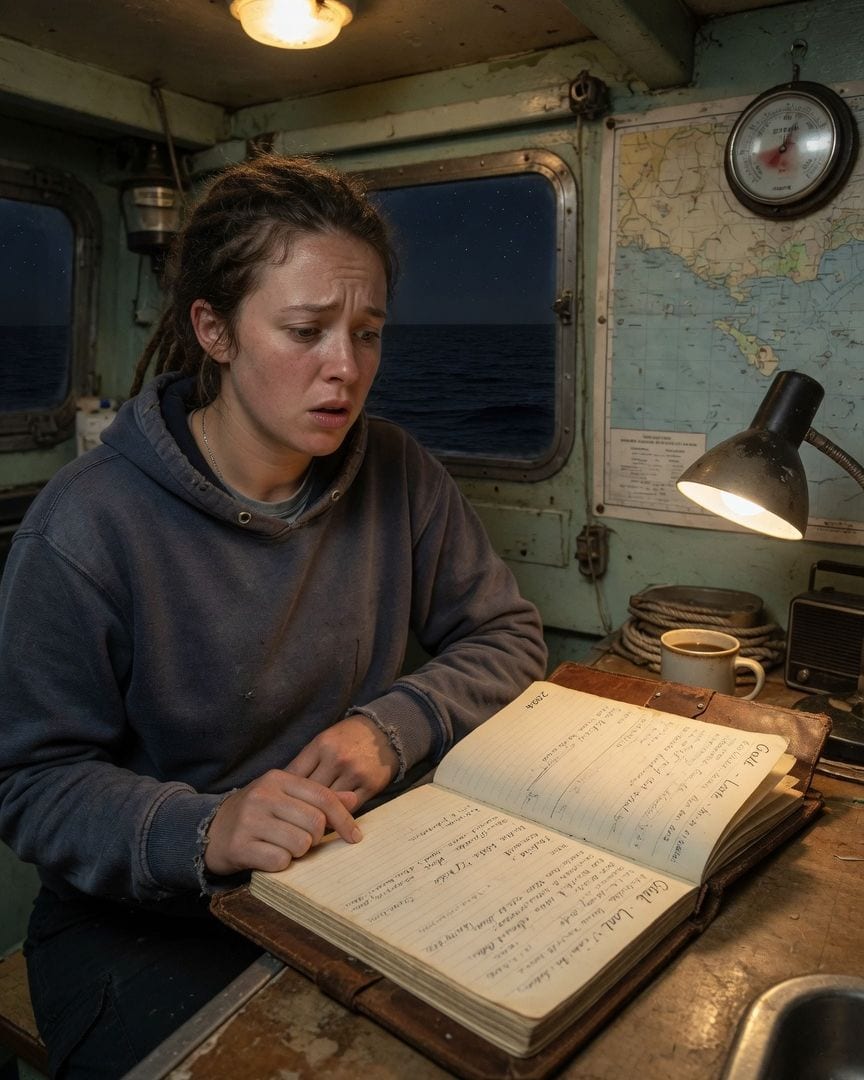
My skipper's logbook showed tomorrow's gale already written, in his dead father's hand, from 1969. I whistled on deck.
Working as a deckhand on the Skerry, I accidentally whistled, breaking a quiet rule Benjamin the skipper had given me. Later, I found the ship's logbook open to today's date, with an entry reading 'Gale - Loss' and the year '1969,' written in Benjamin's long-dead father's hand. He drowned off this very boat in 1969.
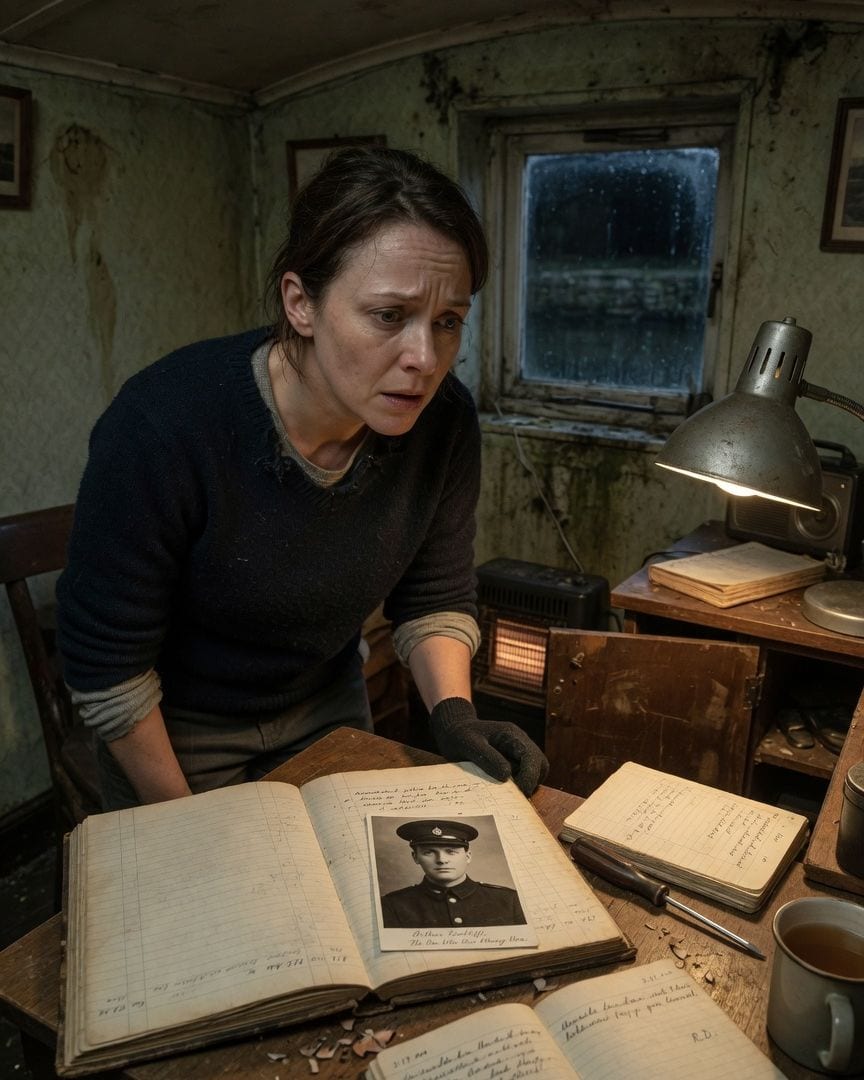
My canal lock logged a boat at 3:17am, gates cycling shut. No vessel radioed, and the water never moved.
Working the night shift at the lock house, I distinctly remember securing the gates and then logging a narrowboat passage at 3:17 AM in my usual precise hand. But the canal outside was black and perfectly still, the water level unchanged, with no boat ever having radioed in. My own logbook entry sat there, an undeniable record of an impossible event.
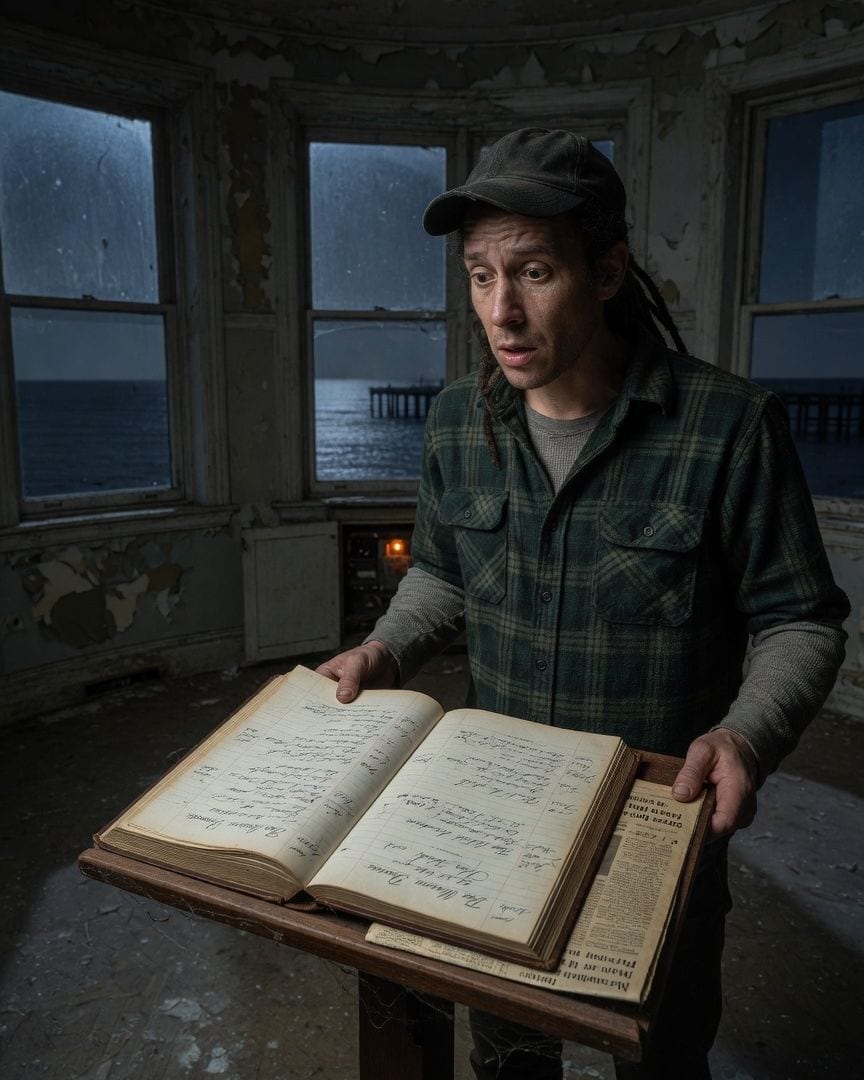
My pier's ballroom register books a new dance for Saturday, electricity meter running, but those lights are never on.
Taking over as pier caretaker, I was told one rule: never turn on the end pavilion's lights. But my first week, I noticed its electricity meter was steadily advancing every single night, even though the main breaker was off. Inside the dark, unused ballroom, I found an old ledger open to 'The Moonlit Waltz' for this Saturday, raising a chilling question: who was booking a dance and drawing power in a place that should be empty?

My taxi driver knew my name before I spoke, then apologized for the flight I was going to miss. I was arriving. The cab's plate was scrapped four years ago.
After a strange taxi ride, I received an unsettling birthday card addressed to me. Its return address listed 'Old Mill Road Field,' an empty lot where a mill once stood, and it was postmarked locally. The card arrived four months before my actual birthday, sparking a cold dread I couldn't ignore.