My shop's 1938 ledger has a name blacked out. The assessor's note says 'occupier not to be informed,' but the reference number above the ink is on my bill.
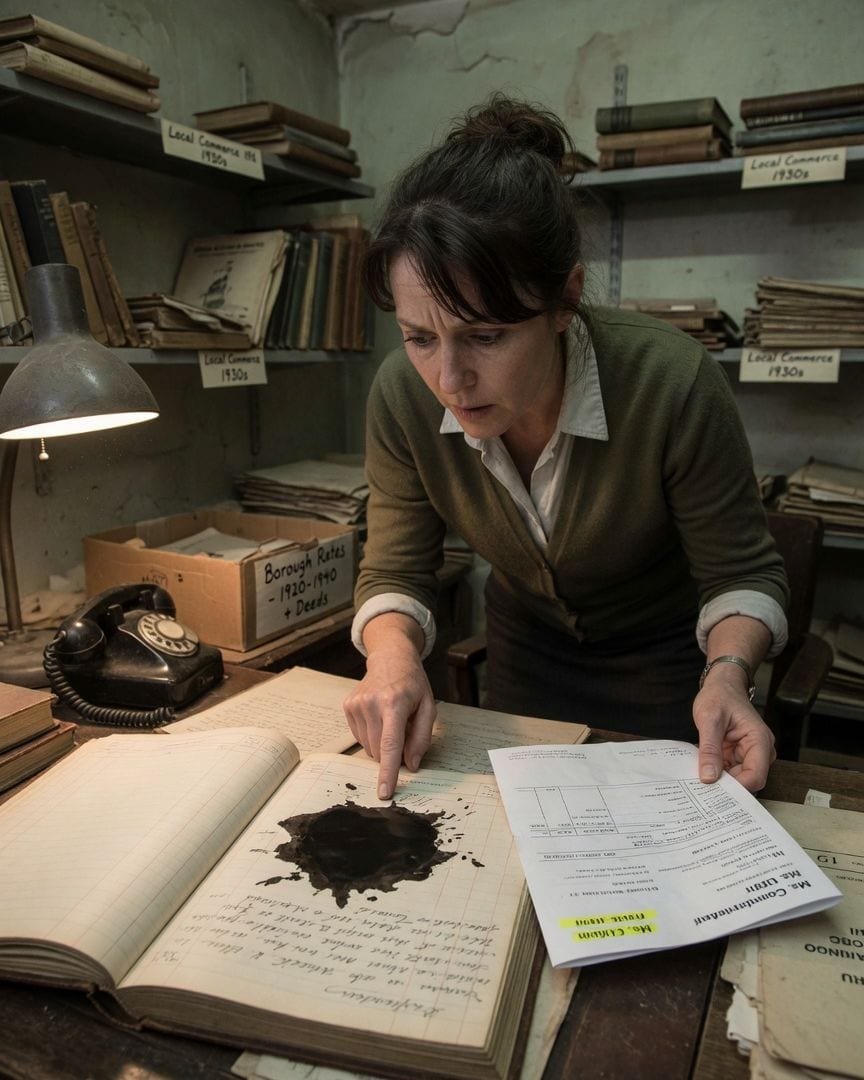
The dust in the back office of my shop is a permanent fixture, a quiet layer of history on every shelf.
I run a small antique and rare books shop here in the borough, and I’d ordered a batch of old records from the archive for a display on local commerce. Specifically, a 1938 rates ledger.
Heavy thing, bound in crumbling leather, smelling of aged paper and forgotten winters. I was tracing lines with my finger, identifying past owners of the neighbouring bakery, the old ironmonger's, when I found my own address. My finger stopped.
The ratepayer's name was gone. A thick, permanent black ink blotch covered it entirely, so dark it seemed to absorb the light. I frowned. Why redact a name from almost a century ago?
Beside it, in cramped, surprisingly neat script, was an assessor's note. I leaned closer, deciphering the faded loops: "same ratepayer designation as before at these premises — carry forward, occupier not to be informed."
Occupier not to be informed. The phrase echoed in the small, quiet room. It sounded less like a mistake and more like a directive. I picked up my current business rates bill, which was lying open on the desk.
My eyes flicked from the blacked-out line in the ancient ledger to the pristine digital printout. Above the ink, on the 1938 page, was a reference number: a string of digits, faded but legible.
I compared it to my April bill. The reference number was identical. It was precisely the same string of numbers that appeared on my modern statement, right beside my own name.
It was like a cold hand on my shoulder, this calm, unblinking bureaucracy of a wrongness that predated me, quietly acknowledged on the page, spanning generations without explanation.
I tried to call the borough archive immediately, but it was after hours. The next morning, I rang them, requesting clarification on the redacted entry.
The phone rang for a long time before a man answered, his voice smooth and unhurried. George Crane, he introduced himself, the archive manager. I explained what I'd found, expecting an explanation about privacy laws or a damaged ledger.
He listened patiently, then chuckled softly.
"Ah, yes. Historical anomalies in record-keeping, Ms. Ellison. Quite common, I assure you." He paused, a gentle breath through the line. "A blacked-out name? Likely an administrative quirk of the era.
Perhaps a temporary tenant, or a dispute that didn't warrant full public record. Nothing to concern yourself with, I'd imagine."
His tone was reassuring, almost too much so. Administrative quirk. It didn't sit right with the stark, deliberate ink blot and the explicit instruction to not inform. I pressed. "But the reference number, Mr. Crane.
It's the same one on my current bill. And the note—'occupier not to be informed'? That sounds rather specific for a mere quirk."
He hummed. "Indeed. Well, some practices from that far back are... opaque. But I can assure you, our records are meticulously maintained. If there was anything untoward, it would have been flagged centuries ago."
He made it sound like centuries were just another Tuesday.
Unsatisfied, a thread of unease beginning to unravel in my gut, I made another request. "Could you send me all available rates ledgers for my address, please? Going back as far as you can.
And the ones for the two adjacent properties, too, if possible." He agreed, his voice still placid. "Of course, Ms. Ellison. Anything to help with your historical display."
A week later, another box arrived, heavier this time. I started with the oldest one, dating back to 1920. My shop, then a haberdashery. I found the entry. And there it was again. Not blacked out this time, but faded.
The ratepayer's name was a single, unfamiliar initial, blurred with time. But the 'designation' reference number, that precise string of digits, was perfectly clear.
And beside it, the assessor's hand, older but just as neat: "continuous occupancy noted, tenant not to be made aware of designation."
It wasn't a quirk. It was a pattern. A meticulous, decades-long repetition, stretching back to at least 1920, across different assessors, different inks, different handwritten notes, all echoing the same chilling instruction. This wasn’t an isolated incident.
This was a deliberate, quiet management of something impossible.
I requested archived property deeds for my shop next, hoping to find something, anything, that would offer a mundane explanation. Something about a charitable trust, perhaps, or a specific type of historic tenancy.
Days later, a large, heavy box was delivered. The smell of dust and age was even stronger this time.
I unpacked a stack of legitimate, if ancient, deeds: transfers of ownership, boundary agreements, all clearly defining the shop's history through familiar human hands. They were all in order, signed, sealed, and dated.
As I reached the very bottom of the box, my fingers brushed against something smaller, tucked flat beneath the last deed.
It wasn't a parchment roll, like the others, but a single, brittle sheet, folded once, yellowed and faded to the colour of weak tea. It felt rough, almost like papyrus. It was not a deed itself.
The heading, in an ornate, spidery script, read: "Acknowledgement of Perpetual Occupancy." My breath caught. It was dated 1887.
The text below it, in equally archaic language, seemed to refer to "the designation's claim upon these premises" and detailed terms that made no sense for a human tenant. Terms of 'uninterrupted presence' and 'unchanging right.'
The seal pressed into the wax, brittle and dark brown, was undoubtedly the borough's own, a familiar coat of arms I’d seen on old council buildings.
Yet, the very existence of such a document, describing a claim that transcended mortal ownership, felt like a violation of reality, a tear in the fabric of the ordinary world.
The "Acknowledgement of Perpetual Occupancy" felt impossibly real in my hands. I spent days online, hunched over my laptop in the shop's quiet office, researching its archaic language. 'Uninterrupted presence,' 'unchanging right,' 'the designation's claim.'
I cross-referenced old local ordinances, historical property laws, anything that might shed light on such an unusual document.
I found obscure historical footnotes, hints in the borough's earliest charters about "unconventional property classifications" linked to some of the town's oldest buildings, but nothing explicit. No mention of 'designations' or 'perpetual occupancy' in any official, public-facing document.
It was as if this specific terminology had been scrubbed clean from general knowledge.
More disturbingly, I returned to the rates ledgers. With my new understanding of the 'designation' reference number, I expanded my search beyond my own shop.
I looked for the same string of digits in other properties within the old town centre, those ancient, stone-fronted buildings that predated even the 1887 document. I ordered more boxes from the archive.
And I found it. Not everywhere, thankfully, but in a handful of distinct, historically significant buildings – the old clockmaker's, the forgotten almshouse, a dilapidated mercantile building by the docks.
Always with similar blacked-out lines, or vague, coded initials, and almost invariably, the cryptic 'occupier not to be informed' directives, stretching back to the earliest records the archive held. A precise, recurring pattern.
A quiet, consistent anomaly across specific locations and centuries of administrative records. The scale of it, the sheer coherence across time and properties, was far more terrifying than any isolated error, any single blacked-out name. It wasn't a mistake.
It was a system.
Driven by this deepening pattern, this impossible administrative consistency, I decided to return to the archive. I needed to find internal memos, administrative guidelines, anything that explained these 'designations.'
The main reading room was almost empty when I arrived late one evening. Fluorescent lights hummed, casting long, pale shadows across the rows of silent shelves.
George Crane was still there, unusually, not behind his desk, but tidying a distant shelf of ancient parish records, his back to me. The low hum of the lights seemed to amplify the silence.
He turned as I approached, his movements smooth, unhurried. He carried a small stack of bound volumes. "Ms. Ellison. Back so soon?" His voice was soft, an almost serene quality to it that suddenly prickled my skin.
He approached me, a faint, unreadable smile playing on his lips. "Still delving into our borough's rich history?"
He gestured to a small, rickety table. "Care for some tea? I always keep a thermos for late nights." He poured a lukewarm, slightly bitter brew into a chipped mug, offering it to me. His eyes, though, lingered.
"I trust you've found nothing... too interesting in those old deeds I sent? Some documents, you know, are best left undisturbed."
His smile widened almost imperceptibly, a knowing expression that made the lukewarm tea feel suddenly cold in my hand. He knew. He knew I’d found something more than an "administrative quirk."
His presence, his specific question, the timing – it was too perfect, too coincidental. The hum of the lights suddenly felt like a low, watchful drone.
The archive, once a neutral, comforting space of quiet scholarship, now felt like a panopticon, its silent shelves observing, its manager watching.
I felt a chill, not from the temperature in the room, but from the deliberate, unsettling calm in George Crane's eyes. He wasn't just managing the archive; he was managing me.
I decided not to beat around the bush. I'd come too far. The next morning, I returned to the archive, arriving right at opening time. George was behind his desk, calmly sipping from a ceramic mug.
I walked directly into his office, the 'perpetual occupancy' document clutched in my hand, alongside a printed spreadsheet detailing the recurring 'designation' reference numbers I'd found in other properties.
He looked up, setting his mug down with a soft click. "Ms. Ellison. To what do we owe this early visit?"
I laid the evidence out on his desk, carefully, methodically. "I'm here about the 'designation,' Mr. Crane. And this." I pushed the 1887 document towards him. "And this." I spread the spreadsheet beside it. "It's not an administrative quirk.
It's a pattern. A precise, repeated pattern, across properties, across centuries. What exactly is going on?"
George listened, his expression utterly unreadable. He picked up the faded parchment, examining it for a long moment. He didn't deny my findings. Didn't even feign surprise.
He simply closed his office door, the soft click echoing in the quiet room.
"A very thorough investigation, Ms. Ellison," he said, his voice as calm and steady as ever. He leaned back in his chair. "You've uncovered something few people ever do. The 'designation' is indeed a long-standing, unique category of property ownership.
It's a legacy arrangement, if you will. A specific, ancient claim on certain historical premises within the borough."
My heart hammered against my ribs. He was admitting it. With such dispassionate professionalism.
"The council, for centuries," he continued, "has simply managed its continuity. Maintained the records, ensured the... arrangement, shall we say, remains undisturbed." He gestured to the 'occupier not to be informed' note on my printout.
"That directive, as you've seen, is a protocol. To prevent unnecessary public alarm or confusion among new tenants. It's simply a matter of routine administration, a duty passed down through generations of archivists and council officials."
He spoke of it as if he were discussing a particularly complex tax code. A duty. Routine administration. The sheer bureaucratic calm of his explanation, confirming the utterly impossible, made my blood run cold.
Every blacked-out line, every coded note, every vague historical footnote I’d found—it all snapped into horrifying focus. There was no monster under the bed, no ghost in the attic.
Only a spreadsheet, a ledger, and the quiet, rational acceptance of something beyond human comprehension. The dread was less about what it was, and more about the placid humans who had been quietly, diligently managing it for generations.
"Managed how?" My voice was barely a whisper, thick with disbelief. "What exactly is being managed, Mr. Crane?"
George, without changing his placid expression, rose from his desk. He walked to a tall, antique cabinet in the corner of his office, made of dark, heavy wood. It looked like it hadn't been opened in decades.
He produced a small, intricately carved iron key from his waistcoat pocket – it looked almost Victorian – and with a soft, metallic click, unlocked one of its lower drawers. He reached in, his hand disappearing into the dim recess.
He pulled out a thick, leather-bound volume, far older and more substantial than any rates ledger I’d seen. Its leather was cracked with age, its spine worn smooth.
He placed it reverently on his desk, the thud echoing slightly in the quiet room. "This," he said, his voice almost a whisper, yet perfectly clear, "is the true master ledger.
Not just for rates, but for maintaining the continuity of all such designations. It is the institution's primary record of these… unique claims."
My eyes were fixed on the ancient book. He opened it, not with a dramatic flourish, but with practiced ease, to a section marked by a small, frayed ribbon. It was for my shop.
Centuries of entries, meticulously hand-written, charting the 'designation's' unbroken presence, its continuous accounting. And then, at the very bottom, beneath the centuries of faded script, a small, neat handwritten note. Dated just last week.
It stared up at me, stark and clear against the yellowed page: "Ellison, F. — Current occupier. Query raised. Status: Monitored."
My own name. In the institution's secret, ancient master file. Newly added.
I stared at my name, a cold dread seizing me, tightening its grip on my chest. "Monitored?" The word came out as a strangled whisper.
The hum of the fluorescent lights above felt like a pressure, a physical weight in the room.
George Crane nodded, his gaze unwavering, utterly devoid of malice or fear. "Anyone who delves too deeply into the designations, Ms. Ellison, is noted. For their own safety, primarily. And to ensure they don't disrupt the balance."
He spoke of it with the same bland, administrative tone he’d used for property rates.
He explained, without emotion, that the institution – the borough council, through its archivists and its historical protocols – doesn't fully understand what the designation truly is. Only that its continuity is believed to be vital for the town's stability.
For centuries.
He turned the page, then another. He showed me other entries in the master ledger, for other 'monitored' individuals linked to other designated properties in the borough. A pattern emerged, chilling in its consistency.
Some entries ended abruptly, with notes like 'Premises vacated, new arrangements made.' Others simply stated 'Questions ceased.' He pointed to the dates, spanning centuries. These weren't isolated incidents; they were a systemic response.
"They either moved away, often quite abruptly," George explained, his finger tracing a line on the page, "or they… found their own accommodation within the legacy."
The implication hung in the air, thick and horrifying. The institution wasn't protecting these people from the designation. It was merely managing their transition into it.
The quiet disappearances, the unasked questions, the repeated patterns across dates and names, the very placidness of George Crane—it all clicked into place with chilling coherence.
The borough wasn't just filing the wrongness; it was a gatekeeper, facilitating its perpetual existence. The cold dread turned into a terrible, slow burn.
"What happens to those who 'find accommodation within the legacy'?" My voice was trembling, but I had to ask.
George rose, slowly, and moved towards the far wall of his office, a rarely visited corner, dimly lit by a single, dusty wall sconce. "Come," he said, his voice soft, almost inviting.
There, mounted on the dark wood panelling, were dozens of very old, almost identical, brass plaques. Each one bore a single, simple initial and a date. Some were tarnished almost black with age, dating back centuries, the script barely legible.
Others, surprisingly, were shiny and new, the engravings sharp and distinct. A.M., 1703. T.H., 1855. J.P., 1987. E.D., 2012.
"These are memorials," George explained, his voice devoid of sorrow, "to those who found their own accommodation within the legacy. Their names, in time, become part of the designation itself. They are not forgotten, Ms. Ellison. Merely… reclassified."
He gestured to the plaques, his hand sweeping across the silent row of initials. Then he turned back to me, his expression unchanged, placid as a pond. "We merely ensure the transition is… orderly.
Perhaps it's time, Ms. Ellison, to reconsider your lease. To find a different path."
The air in the archive felt heavy, ancient, thick with unspoken histories. The fluorescent hum seemed to press down on me, squeezing the air from my lungs.
I looked at the plaques, at the quiet procession of initials and dates spanning half a millennium.
Then at George, seeing him not as an individual, but as another calm, unblinking cog in a system that had accepted an impossible truth.
I knew, with a certainty that chilled me to the bone, that I could not fight this institution. This quiet bureaucracy that had managed the unthinkable for generations, ensuring the "designation's claim" continued, unbroken.
The dread wasn't from a monster, but from the utter, rational acceptance of its existence, and the managed pathway to absorption. I couldn't become another plaque. I could not become another initial in their ancient ledger.
I turned and walked out. I didn't say another word. The weight of centuries of quiet management, of endless, patient bureaucratic duty, pressed down on me, heavy and suffocating.
Frances Ellison sold her shop at a significant loss, barely a month after her encounter with George Crane.
She left the borough entirely, moving to a small town hundreds of miles away, a place where the oldest building was a relatively modern Victorian church.
She avoided all archives, town councils, and anything that reminded her of ledgers or old documents. She tried to build a new life, to forget the quiet horror she uncovered.
But the knowledge, the absolute coherence of it all, remained a cold, gnawing certainty in the back of her mind.
She found herself checking property records online, not for her new home, but for her old one, unable to fully let go.
Months later, Frances received one final piece of mail forwarded from her old address: a business rates adjustment for her former shop. It listed the new occupier, a young couple, Mr. and Mrs. Davies, who had just bought the premises.
But beneath their names, the familiar 'designation' reference number was still present, quietly carried forward onto the new bill, a ghost in the machine. She wondered if the new owners would ever look for the ledger.
She wondered if they would ever ask.
A new entry appears in the borough's master ledger, under Frances Ellison's designation entry: 'Status: Resolved. Occupier moved.' Below it, a fresh, identical entry begins for the new tenants of the old shop, followed by the familiar 'designation' reference.
The quiet work continues. The designation remains, quietly accounted for, on the borough's ledgers, and on mine.
If this one got to you
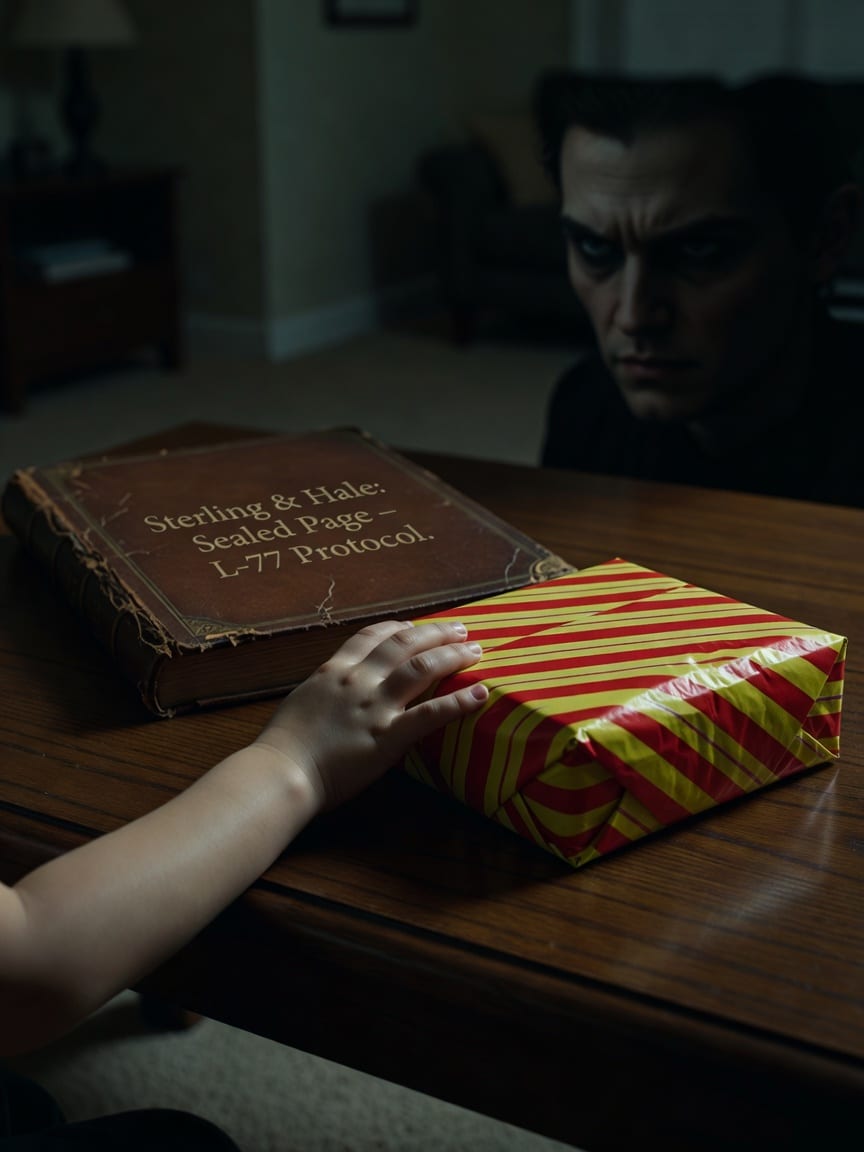
My house's 1962 mortgage archive had a redacted line. It named a 'condition as attaches to each owner in turn,' the same code as mine. There's no sealed page.
When a box of old documents arrived, I found my house's 1962 valuation report contained a heavily redacted line. A surveyor's note cut through the censorship, referencing a 'sealed page' and a code: 'L-77.' That same code was on my own mortgage statement, dated just last month.
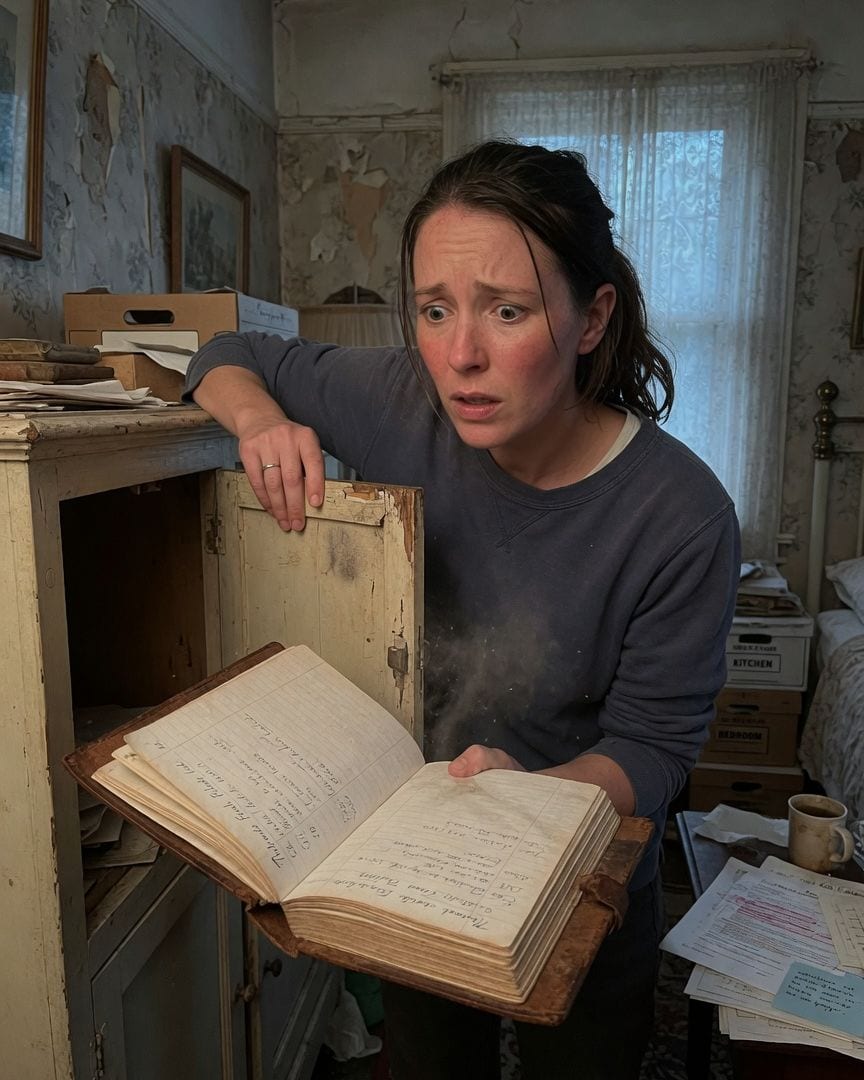
My house’s 1962 valuation has a redacted line, but the surveyor’s note says 'condition as attaches to each owner in turn.' It’s the same code on my own mortgage completion statement.
Moving into my new Victorian house, I found a redacted line in an old mortgage report. It mentioned a condition that 'attaches to each owner in turn,' a phrase my solicitor dismissed as an 'archival quirk.' But then, a hidden ledger in a bedroom cupboard revealed a chilling chain: every past owner's name, followed by 'Condition Fulfilled'.
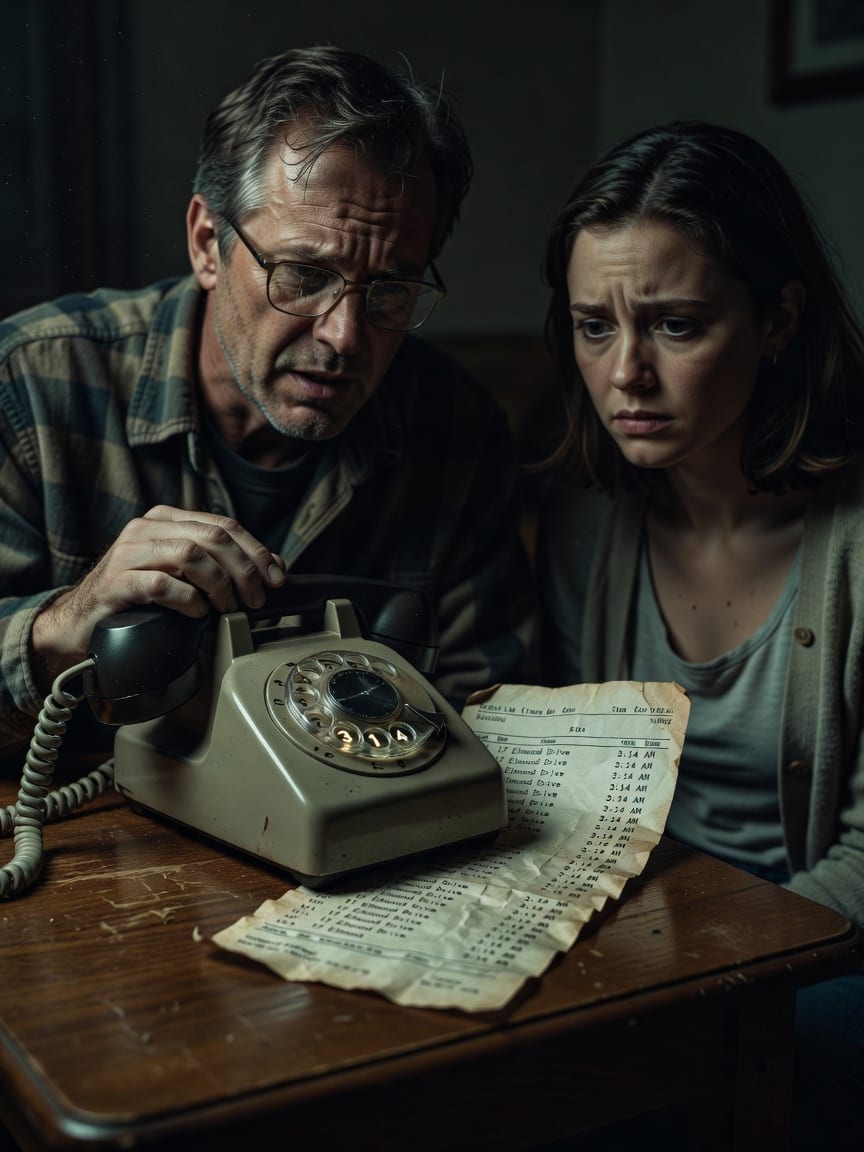
My phone bill itemised forty calls from my number to a house demolished in 1990. Each call at 3:14 AM, lasting eleven minutes. The bill arrived postmarked from a flattened building.
I expected the usual mobile bill, but my landline statement listed forty calls from my number to '17 Elmwood Drive.' That address was for a house torn down in 1990, a vacant lot I remembered from childhood. The phone company insisted the calls were legitimate, leaving me profoundly unsettled by the impossible charges.
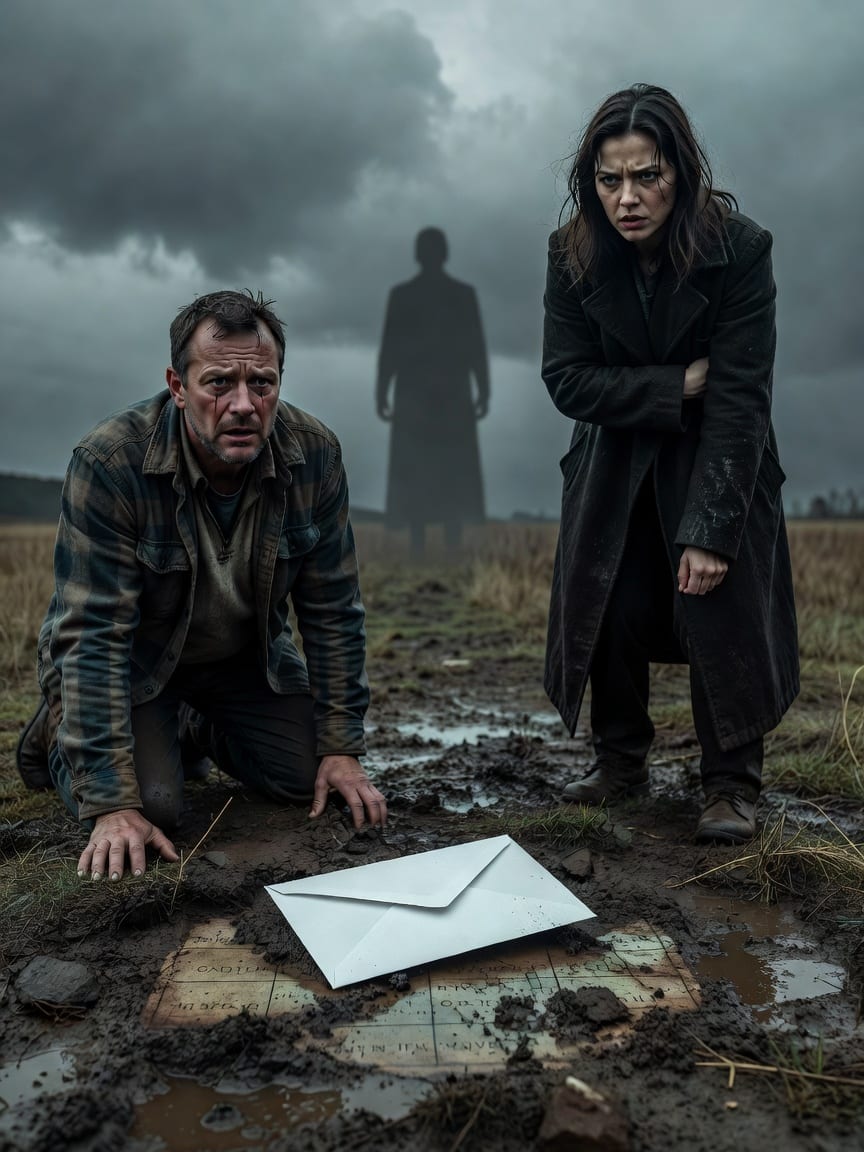
My mail carrier delivers polling cards to Nine Acre Field. It floods, they say. The tithe map shows nine family plots there.
As the new county archivist, I was used to quiet days poring over dusty records. But then I found an empty field, Nine Acre, was receiving current-year polling cards and utility notices for nine distinct addresses. When I investigated, I unearthed a perfectly crisp, current-year tax bill, buried in its soil, surprisingly warm against my fingers.
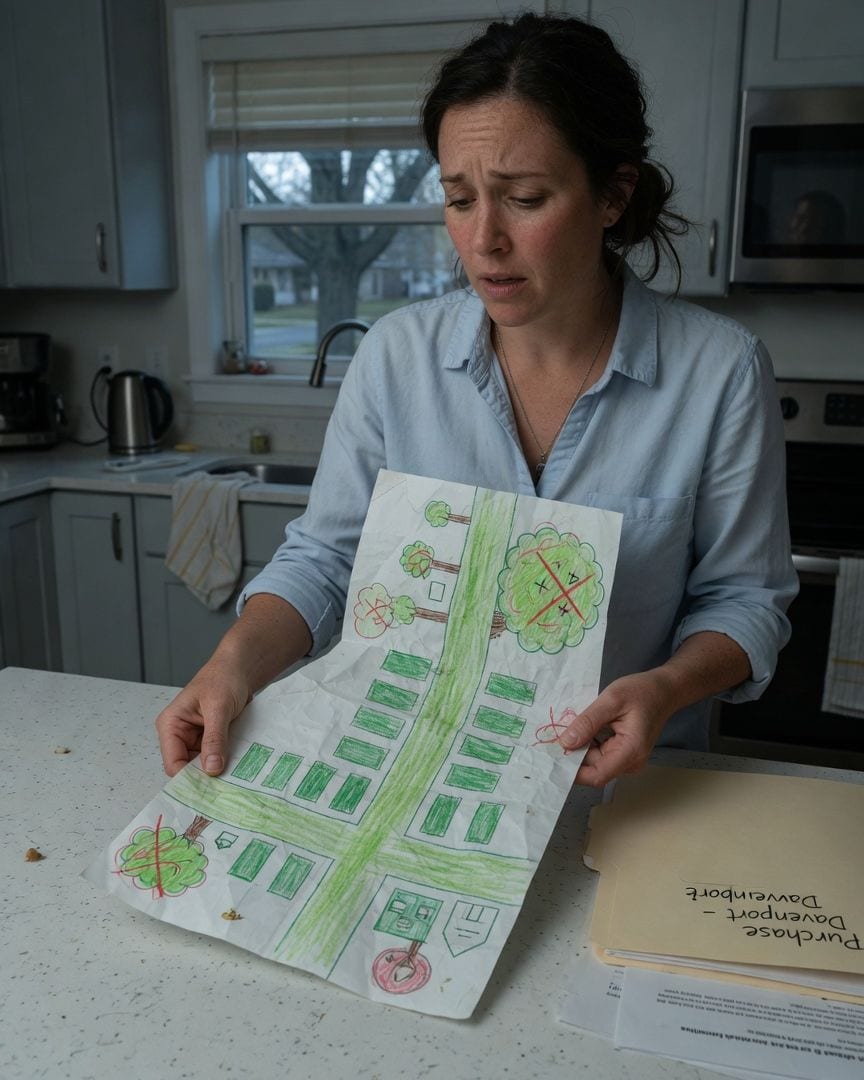
A hand-drawn map keeps arriving through our letterbox — every space on the lane marked green, except the one spot under the old lime tree, alone in red. The agent made us swear we'd never park there.
My new house came with a strange local quirk: weekly maps slipped through my letterbox, each one marking a specific parking spot with an angry red X. A legal addendum about the spot, and my neighbors' evasiveness, made me uneasy. But nothing prepared me for the ancient, identical map I found, which marked my own house with that terrifying red X.
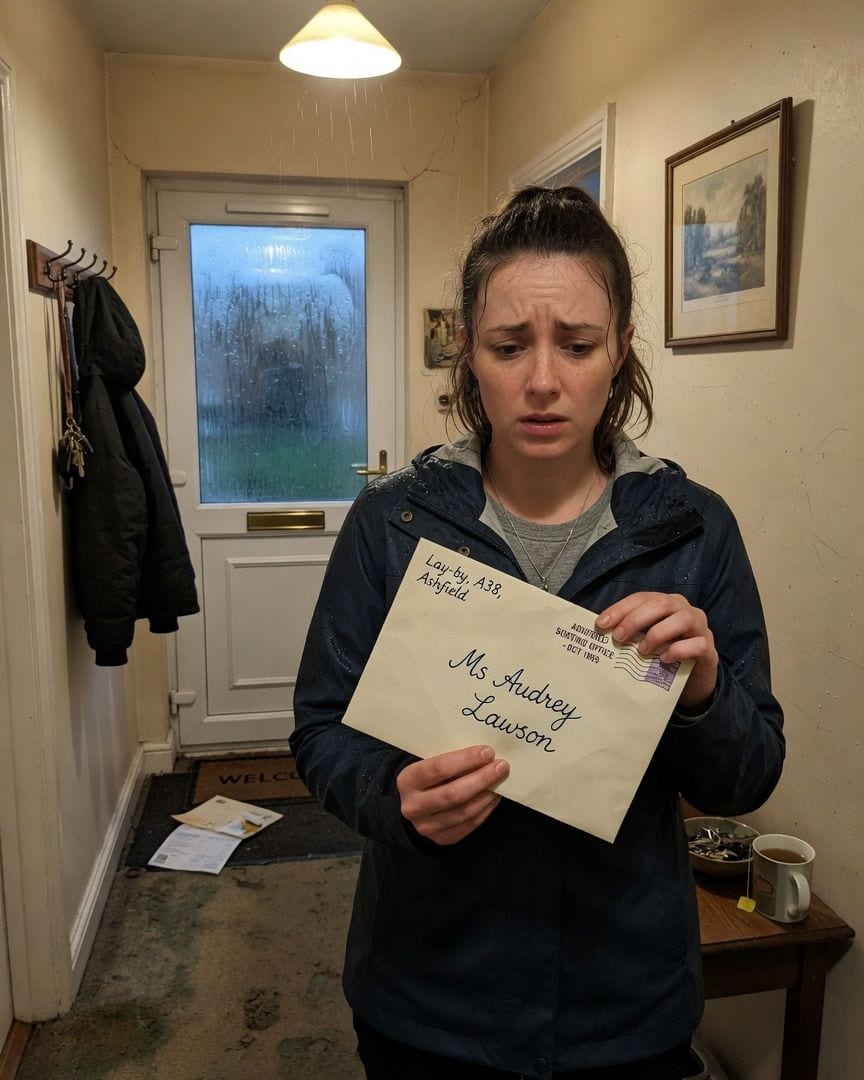
My condolence card arrived for a death that never happened, postmarked from a sorting office that closed before I was born.
My first envelope arrived on a Tuesday, nestled with bills. It bore my full name and a return address for an A38 lay-by that held only a crash barrier. But the postmark read ASHFIELD SORTING OFFICE – OCT 1985, an office decommissioned before I was even born.