My sleep clinic's Bed 4 patient waves and asks about the humming — but the bed's empty, and its intercom was disconnected.
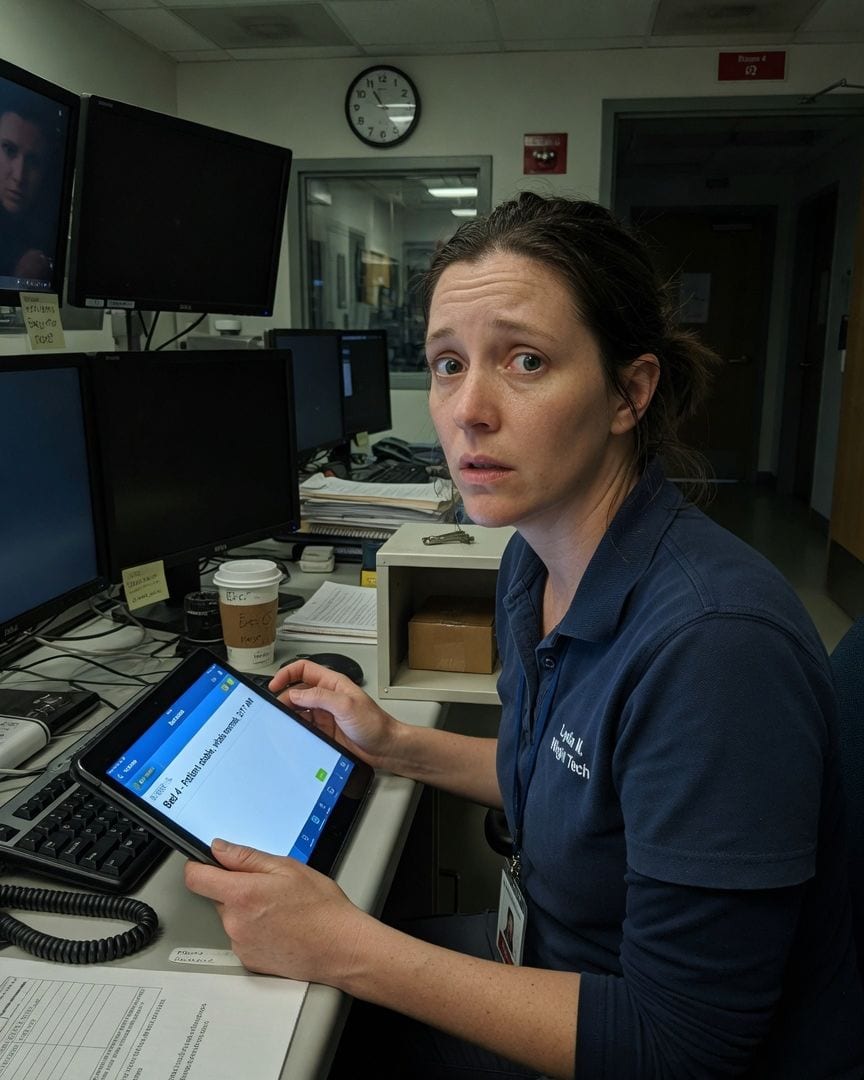
It was 3 AM, and the sleep clinic should have been a tomb. Instead, I was hunched over monitor C-7 in the control room, the usual low hum of the machines a false comfort.
For the third night in a row, the patient in Bed 4 was waving at me.
A slow, deliberate hand lifted from the sheet, an almost friendly gesture, followed by a voice, tinny and distant through the intercom speaker, asking, “Can you hear the humming?”
My stomach did a slow roll. Bed 4 was supposed to be empty. It had been officially 'offline for repair' for weeks. I checked the digital schedule on my tablet again, scrolling through the night’s bookings. Nothing.
Bed 4 was blank. I tried the intercom, thumbing the button for Room 4, but it only crackled with static, no voice coming through. I tried again. Just the crackle, like dry leaves scuttling across pavement.
I told Eric Thatcher, the morning coordinator, when he came in. He just shook his head, already halfway through his coffee. “Bed 4? Not booked this week, Lydia. You know that.
And the intercom’s been disconnected for repair since last month.” He pulled up the clinic’s central digital system, navigating to the maintenance logs. There it was, plain as day: 'Bed 4 Intercom: Offline for repair, disconnected. Status: Pending parts, indefinite.'
He even showed me a patient consent form. “No one’s consented for that room, ever, not in my two years here.” I stared at the screen, then back at the blank monitor C-7, now dark and still.
But I could still see the wave, hear the question, just at the edge of my memory, persistent as a phantom limb.
The next night, I felt a cold certainty settle over me. This wasn’t a glitch, or my imagination. This was…something else. After my rounds, when the clinic was at its quietest, I headed down the silent hallway.
My footsteps echoed, each one too loud. Bed 4’s door was indeed locked, the room dark through its small observation window, the blinds drawn tight. I pulled out my personal digital round-check app, the one I used on my phone.
My finger scrolled through the entries, routine checks on sleeping patients, until I stopped dead. An entry for Bed 4: 'Patient stable, vitals normal,' timestamped 3:17 AM. My shift. My phone. But I never made that entry.
I would have remembered. I definitely would have remembered checking an empty room, let alone seeing a patient.
My stomach tightened into a knot. I tried to delete it, my thumb pressing down, but the app froze. The screen shimmered, then refreshed, the entry stubbornly back in place, immutable. It felt like a deliberate refusal.
I stepped back, my heart hammering against my ribs. I accessed the clinic’s central maintenance database again, this time searching deeper for Bed 4’s intercom repair status, cross-referencing everything I could.
It confirmed what Eric had said: 'Offline for repair, disconnected. Status: Pending parts, indefinite.' There was a work order, dated three weeks ago, signed off by Walter Prescott, Maintenance Supervisor.
But then, scrolled further down, I found another entry, older, for the same intercom. A phantom repair completion date from last year, then overwritten, erased, scrubbed from the active log, yet still visible in the raw data.
Two contradictory realities, side-by-side, on the same system I used every night. One said it was broken, another implied it had been fixed and then its repair was simply…undone.
I felt a deeper chill than the clinic’s usual antiseptic cold. This was not a mistake.
I knew where the spare master key for all patient rooms was kept, tucked away in a small, unlabeled box in the control room’s supply cabinet.
My hands were shaking, just slightly, as I approached Bed 4 again, the heavy key cold in my palm. The lock clicked with a loud finality in the quiet hall.
The sound seemed to break the sterile silence, reverberating down the corridor.
Inside, the room was dark, the air still and unnaturally cold, colder than the hallway. The blinds were drawn, throwing the room into shadow. The bed was perfectly made, sterile and untouched, the sheets pulled taut.
I swept my phone’s flashlight beam across the pristine surfaces, the stark white walls, the empty chair tucked neatly into the corner, the blank monitor mount where a TV would usually be.
Everything was exactly as it should be in an empty room, impeccably clean, official. Then I saw it.
On the perfectly clean bedside table, a small, worn, hand-carved wooden bird rested, its smooth surface catching the faint light from the hallway, a child’s toy in a room where no one should have been.
I clutched the wooden bird, its unexpected warmth unsettling in the clinical cold of Bed 4. My fingers traced the smooth, worn lines of its wings, its tiny, blank face. It felt ancient, out of place.
I spent my next few shifts digging, a frantic itch under my skin. Covertly, I reviewed every patient record for the past two months, cross-referencing with facility access logs, maintenance schedules, even old security camera footage. Nothing.
No patient was scheduled for Bed 4. No staff, no maintenance crew accessed it, according to the official records. The bird was a ghost.
I sought out Walter Prescott, the clinic’s long-serving maintenance supervisor, a quiet man in his early sixties with eyes that seemed to have seen every scuff and stain in the building.
He was known for knowing every pipe and wire, a kind of walking historical archive for the clinic’s infrastructure. I found him in the basement, humming faintly as he replaced a ceiling tile.
I asked him about the Bed 4 intercom, feigning casual curiosity. “Still needs that special part, huh?” I tried to sound nonchalant.
Walter didn't even pause his work. He just looked down from the ladder, his expression calm and unbothered. “Ah, that one. Yeah, a tricky one, needs a special part alright. Manufacturer discontinued it years ago.
Takes some finessing to adapt a new one.” He didn’t seem surprised by my interest, or by the fact I knew details about a defunct intercom. He just nodded slowly.
I noticed his access badge was different from mine, an older model, a plain silver rectangle with a faded photograph of a much younger Walter, instead of the sleek, digital cards the rest of us wore.
It looked like it belonged to a different era.
The deeper I dug, the less sense anything made. I tried to find who had signed off on Bed 4’s initial 'disconnection for repair' from months ago.
The digital signature led to a department called 'Facility Oversight,' a name I didn’t recognize. According to HR, 'Facility Oversight' had been dissolved decades ago, its functions absorbed into general administration.
Yet, its digital signature was active in the maintenance system, signing off on a work order just weeks prior. It was as if the clinic operated with two parallel, contradictory histories, one official and mundane, the other arcane and impossible.
As I continued my investigation, a new unease began to prickle me. I caught Walter Prescott’s eye more often. A fleeting glance from a hallway as I passed, a silent presence at the edge of my peripheral vision.
He’d be standing by a supply closet, or emerging from a stairwell, always just there, observing, never directly approaching. The feeling of being watched intensified, like a subtle pressure on my skin.
One night, the dread became solid. A new entry appeared in my round-check app, identical to the first, but this time for Bed 7: 'Patient stable, vitals normal,' timestamped 3:21 AM.
Another room officially marked 'offline for repair,' just like Bed 4. My heart pounded, a frantic drum against my ribs.
I still had the wooden bird in my pocket; it felt heavier now, its warmth a living pulse against my thigh.
I rushed down the corridor, the silence of the clinic suddenly oppressive. Bed 7’s door was locked, but through the small observation window, I saw it.
A faint, almost translucent outline of a person, sitting perfectly upright in the bed, still as a statue. It wasn’t a trick of the light. It was there, a shimmering, indistinct form.
The humming, a low thrum that I now recognized as distinct from the building’s ambient noise, was undeniably louder here, vibrating faintly through the glass, a deep, resonant sound that seemed to emanate from the very air around the room.
I backed away slowly, my breath catching in my throat, the spectral figure seeming to turn its head towards me as I retreated, a silent, knowing acknowledgment.
The next morning, I confronted Walter Prescott in the deserted basement workshop. The air smelled of oil and dust. I pulled out the wooden bird, placing it on his workbench next to a scattering of rusted screws.
“This,” I said, my voice tight, “was in Bed 4. The room that’s supposed to be empty. And last night, there was another entry on my app, for Bed 7. I saw something in there, Walter. A patient.”
I described the translucent figure, the unnerving hum.
Walter listened, his expression unreadable, calm as a pond in still air. He didn't deny anything. He just picked up a wrench, turning it idly in his hand, its metal glinting under the bare bulb.
“This clinic,” he said, his voice low, almost conversational, “has certain… special functions, Lydia. Functions that predate its current designation as a sleep center.”
He looked at me, his gaze steady. “Rooms like Bed 4 and Bed 7, they aren’t just rooms. They’re ‘reception points.’ The ‘patients’ you’ve seen aren’t human in the traditional sense.
They’re ‘projections,’ fragments of something larger, drawn in by the humming.” He implied he’d been maintaining this system, these 'reception points,' for decades, long before I was even born. A caretaker for a system no one else knew about.
“It’s a delicate balance, Lydia,” he said, his eyes drifting back to the wrench. “Some things are better left undisturbed. It keeps the balance.”
He spoke of the humming as a 'frequency,' a 'connection.' The log entries, he explained, were simply the system’s way of acknowledging its own operations, a parallel record to the official one.
“You noticed,” he stated, his gaze meeting mine once more, a faint, unsettling smile on his lips. “That’s why you’re seeing it now. It wants to be seen.”
Walter, seeing the terror in my eyes but also a flicker of understanding, a morbid curiosity I couldn’t completely hide, led me to a section of the basement I’d never seen before.
It was hidden behind a false wall, cleverly disguised as a storage locker packed with defunct equipment. He slid it open, revealing an old, dusty room beyond. In the center, almost reverently, stood a single, humming, green-screen computer terminal.
It looked ancient, from another century. He powered it on, its ancient fans whirring to life with a dry, mechanical sigh that vibrated through the floor.
“This is the real record,” he said, his fingers dancing across the yellowed keyboard, the plastic keys clicking like insects. He pulled up a file labeled 'Project Echo.'
Row after row of entries filled the screen, not patient names, but cryptic designations: 'Subject Alpha, Bed 4,' 'Subject Beta, Bed 7,' 'Subject Gamma, Bed 1,' stretching back to the 1970s.
Each entry listed a 'Condition: Active Manifestation' and a 'Duration: Indefinite.'
I scrolled down, my breath catching in my throat. The humming grew louder, emanating from the terminal itself, a low, pulsing thrum that seemed to vibrate in my bones.
And then, at the very bottom, a new entry, just added, glowing green against the black background: 'Subject Omega, Bed 12.' And next to it, the name listed as 'Primary Monitor'... my own name: Lydia Kingsley.
Walter confirmed it, his voice devoid of malice, simply stating a cold, unfeeling fact. “The entity requires a monitor to stabilize its projections, Lydia. The humming is its attempt to connect, to anchor itself.”
He explained that the clinic’s official systems were a façade, easily manipulated, a convenient veil to hide the true purpose of the building. The older, hidden system, 'Project Echo,' was the true record of its operations.
The 'patients' were not from our world, he said, but drawn from a pervasive, unseen layer of consciousness, given temporary, unstable forms in the 'reception points' like Bed 4 and Bed 7.
Walter had been the monitor for decades, a quiet caretaker for an arrangement he inherited, a duty passed down through an unwritten chain of command.
“It’s time for a new one, Lydia,” he said, his eyes fixed on her, unnervingly bright. “You were chosen because you noticed. The bird, the logs, the humming—they were all invitations. Tests. We needed someone with a certain…sensitivity.”
He described the 'Primary Monitor' as a conduit, someone whose active awareness allowed the projections to coalesce, to become more than just outlines, to gain temporary form and even, perhaps, a voice.
He gestured to the humming terminal, which now seemed to glow with an internal, malevolent light. “You’ve already begun the process. Your sensitivity, your curiosity, opened the door.” The dread solidified in my gut, cold and hard.
I wasn't an accidental witness; I was being groomed.
My mind raced, a frantic animal trapped in a corner. I wasn’t just a witness; I was the next victim.
Walter took a step towards me, a benign but firm expression on his face, as if expecting me to simply accept my new role.
The humming from the terminal intensified, pressing in on me, making my teeth ache, a low, resonant thrum that filled my skull.
I glanced at the wooden bird still clutched in my hand, which now felt strangely warm, almost vibrating with the same low thrum. The connection.
This little bird, an innocent lure, now felt like a focal point for the entity's oppressive presence, a physical anchor for its reach.
With a surge of desperate adrenaline, I shoved Walter, sending him stumbling back against a stack of forgotten equipment, a clang of metal echoing in the small room. He cried out, surprised, but I didn't wait.
I raised the wooden bird, its smooth surface now feeling rough, alive, and with a guttural scream that tore from my own throat, I smashed it down onto the green-screen terminal.
There was a sickening crunch of old plastic and circuitry, a shower of bright, angry sparks, and then the screen flickered violently, displaying lines of corrupted data before going utterly, irrevocably dark.
The humming, which had filled the room, abruptly ceased, leaving behind a profound, ringing silence that was almost as deafening as the noise had been. I didn't wait.
I scrambled over Walter’s fallen form, burst through the false wall, and raced through the darkened clinic, out into the pre-dawn light, gasping for air, clutching the now shattered pieces of the wooden bird.
I never returned to the sleep clinic. I went to the police, recounting a bizarre, rambling tale of phantom patients, hidden terminals, and a maintenance man who thought I was chosen.
They found Walter Prescott, calm and unbothered, claiming I had suffered a psychotic break, overwhelmed by stress. The hidden terminal was gone, the false wall perfectly repaired, as if it had never been disturbed.
The shattered wooden bird, retrieved from my pocket, was dismissed as a child’s toy, irrelevant to my 'delusions.' I resigned, my career in healthcare irrevocably damaged, my story unheard, unbelievable.
The clinic continued its operations, undisturbed, as if nothing had ever happened.
I live far from the city now, working a day job that keeps my mind busy but my nights long. I still wake in the small hours, listening.
Sometimes, I think I hear a faint, almost imperceptible hum, just at the edge of hearing, like a memory trying to manifest, a vibration in the quiet air that only I can perceive.
The sleep clinic continued its normal operations. Eric Thatcher remained the morning coordinator, occasionally wondering what had truly happened to Lydia Kingsley. He remembered her strange stories about Bed 4.
One night, as he walked past Bed 12, now marked 'offline for repair,' he thought he saw a flicker on its observation monitor, a faint outline of a figure. Then, a small hand waved.
He shrugged, thinking his eyes were playing tricks, his imagination getting the better of him. The clinic was quiet, save for a low, steady hum from deep within the building. "It's just the old ventilation system," he told himself.
If this one got to you
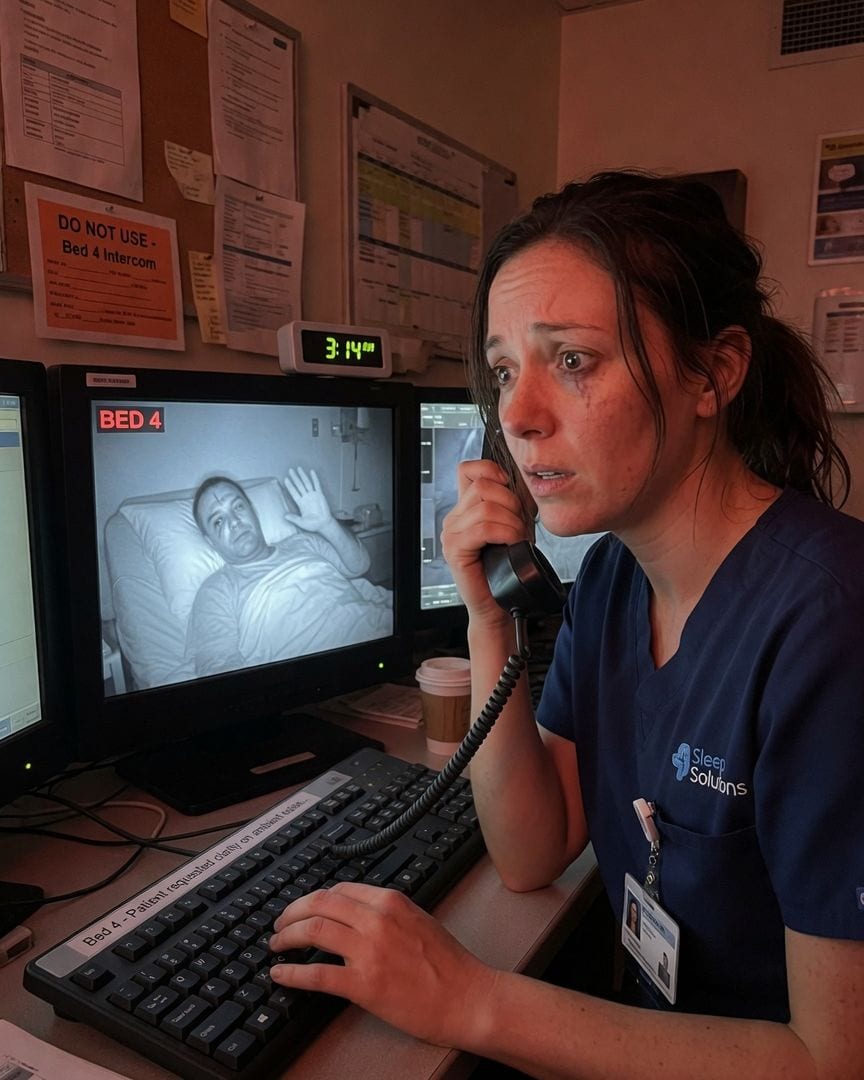
Bed 4's patient always waves at my camera, asking if I hear the humming. Bed 4 was never booked.
As an overnight nurse, my shift at Sleep Solutions is usually routine. But after interacting with a patient in Bed 4, my manager insists the room has been off-limits for deep cleaning all week with its intercom disconnected for months. Yet, I found a faint, warm indentation on the new mattress where the patient had been.
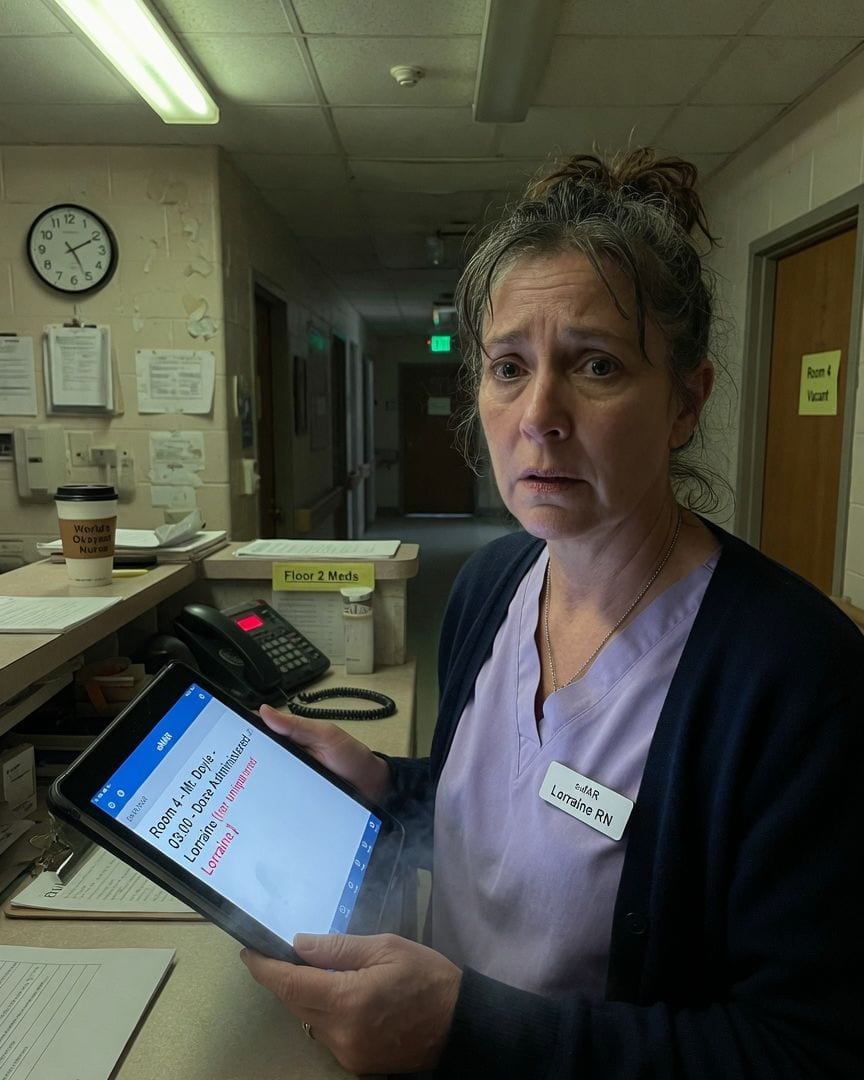
The care home tablet logged a 3am dose in Room 4, signed with my PIN — but Room 4 has been empty since Mr. Doyle died on Sunday, and I have no memory of giving it.
Working a quiet night shift at Elmwood, I double-checked patient records before clocking out. That's when I saw an impossible entry on the eMAR: my signature, administering medication to Mr. Doyle in Room 4 at 3 AM. Mr. Doyle had passed away yesterday, and his room was officially vacant, cleared, and locked.
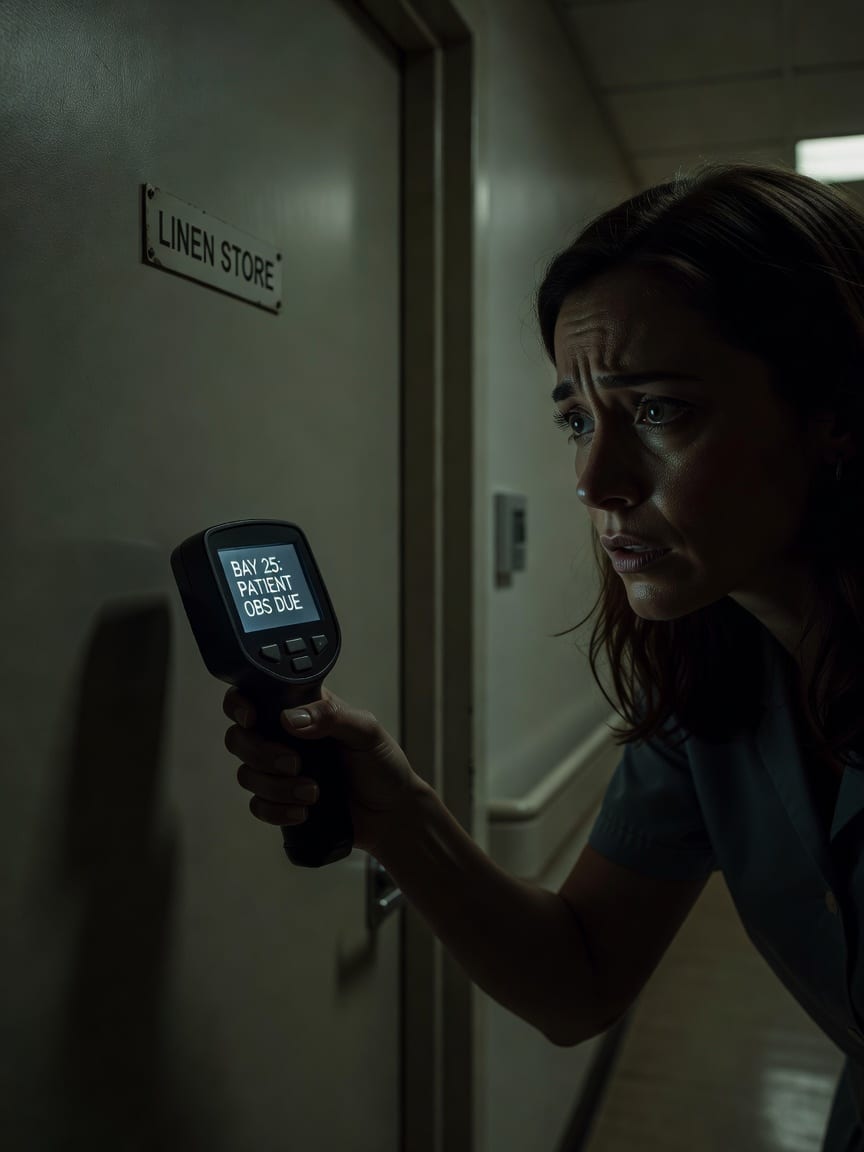
My hospital scanner demands patient care in Bay 25. Bay 25 is a locked linen closet.
I'm a pragmatic nurse, used to my hospital's quiet night shifts. But for a fortnight, my scanner has logged phantom patients in 'Bay 25' — a room that's just a linen closet. Then, tucked away, I found an old patient ID bracelet, faded but clear: 'Bay 25.'
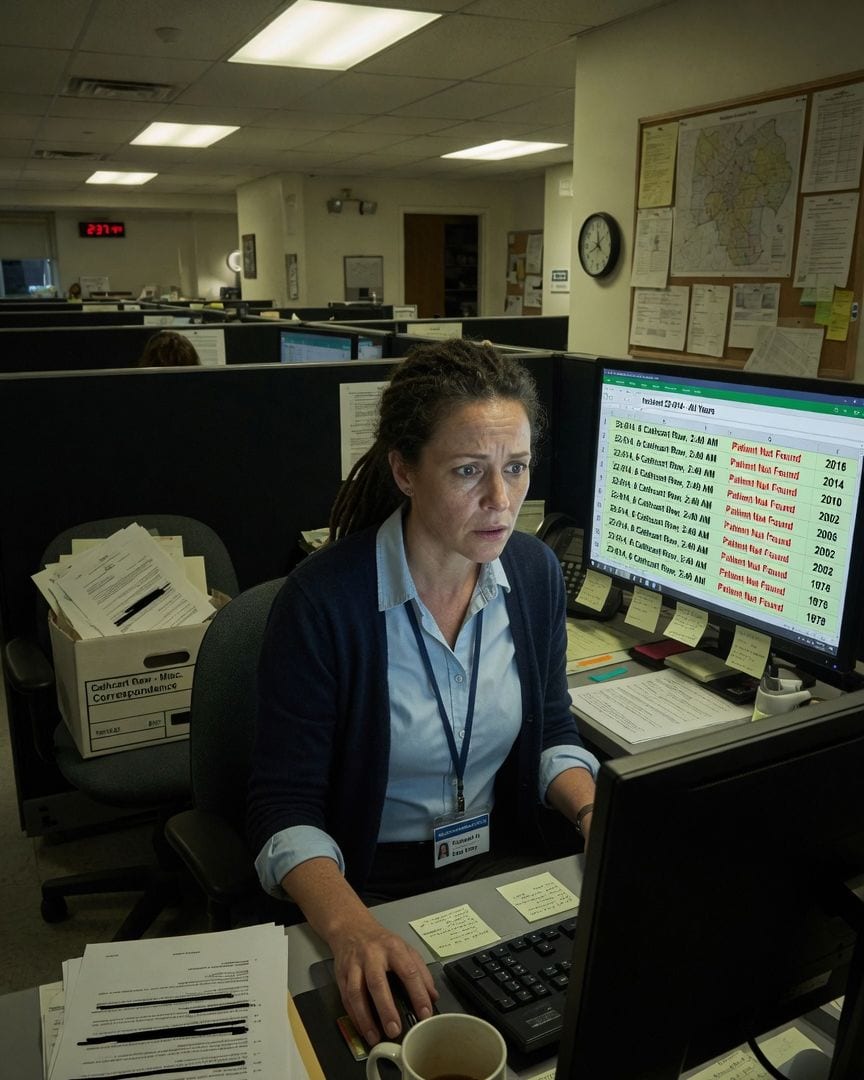
My computer log shows the same 2:40 AM call to Cathcart Row, every four years since 1978, always closed 'patient not found'.
Working data entry for the County Ambulance Trust, I found a routine incident logged as 'Patient Not Found.' But digging deeper, I discovered the exact same phantom call had repeated every four years for over forty years, always at the same address, always at 2:40 AM. Then I found a heavily redacted memo linking it to my own street.
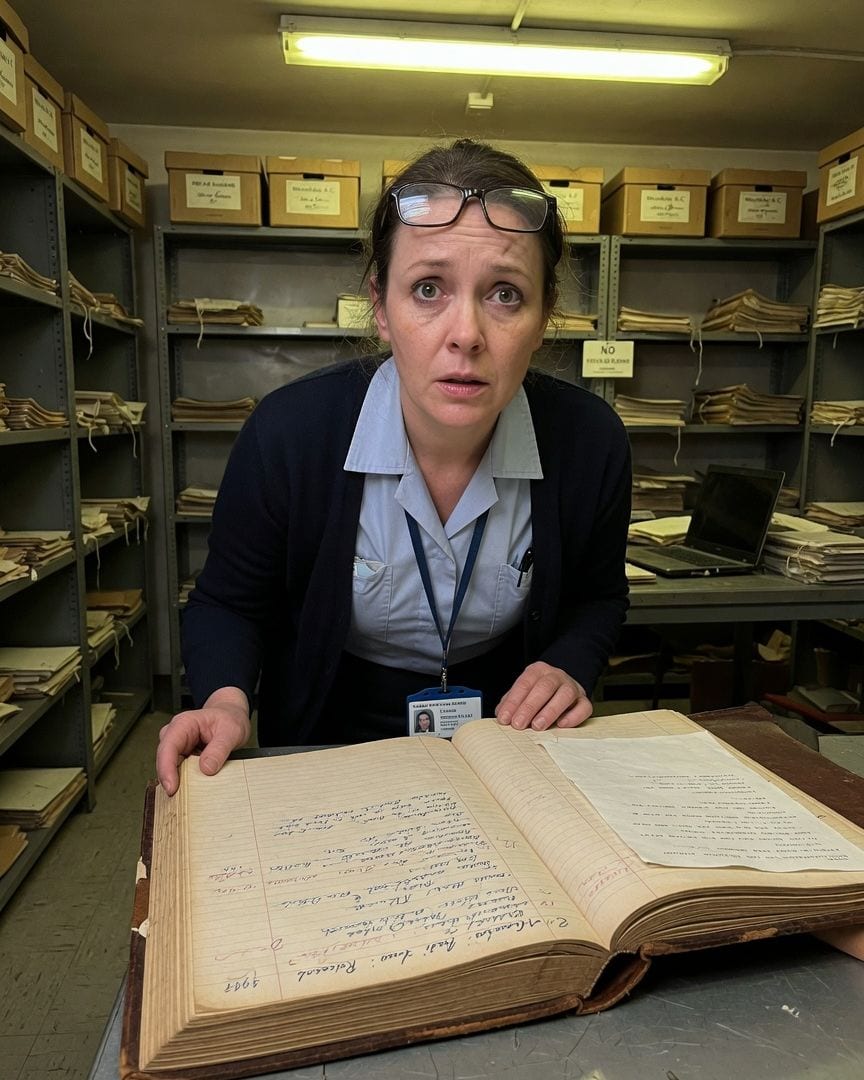
My ambulance trust's incident log shows callout 22-014 to 6 Cathcart Row at 2:40 AM. Every four years, the same call, same address. Always 'patient not found'.
My job involves tedious data entry for ambulance calls, but Incident 22-014 was different. It appeared every four years, always at 2:40 AM, always closed as 'patient not found.' Digging into the dusty physical archives, I found an entry from 1961 for the exact same incident, but its resolution read: 'Subject Secured. Relocated to "Holding".'
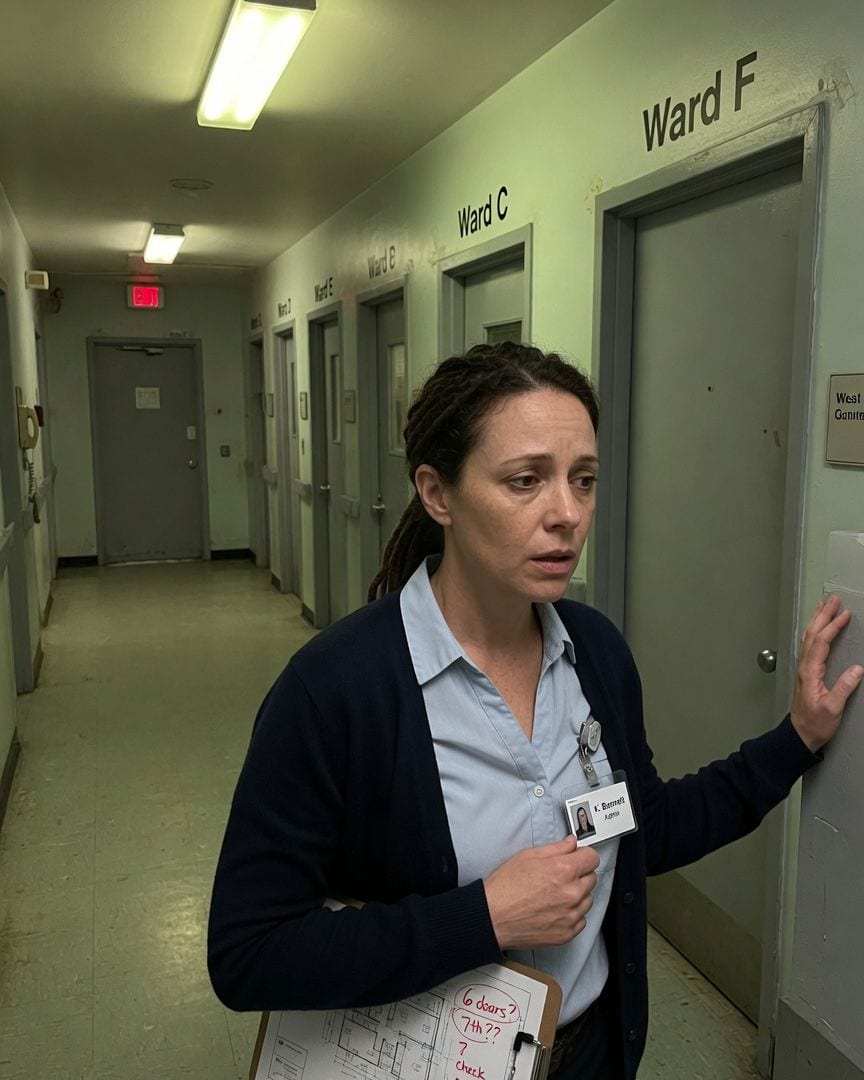
My hospital corridor has six doors, then seven, then six again.
As a hospital administrator, my job is to fix anomalies. But when I tried to verify a night nurse's rounds by counting the West Wing's doors, the corridor itself began to shift. One moment there were six doors, the next there were seven, then six again, refusing to stay consistent.