My son came back from his trip knowing a party we haven't planned yet. He even named the friend who'd be too sick to come, and that boy's mother just called.
The front door opened, and my breath hitched. Three days. Three agonizing days since Isaac, my ten-year-old son, had vanished from his school trip to Camp Sterling. Now he stood there, perfectly unharmed, a little tired perhaps, but whole.
Relief washed over me, thick and dizzying. I pulled him into a hug, burying my face in his hair, murmuring thanks to a God I wasn’t sure I believed in.
Later that evening, at the dinner table, the relief began to curdle. Isaac, eating his usual chicken nuggets, looked up at me, a strange, knowing glint in his eyes.
“Thanks for the party, Mom,” he said, his voice a little deeper than I remembered. “The magician was really cool. And it’s a shame Albert Bennett will be sick, he loves blue cake.”
I froze, my fork halfway to my mouth. We hadn’t planned a party. Not yet. A magician? A blue cake? And Albert Bennett, Isaac’s best friend, was perfectly healthy.
I exchanged a confused glance with Nathaniel, my husband, who just shrugged, chalking it up to a kid’s imagination. But the next morning, my phone rang. It was Albert’s mother. Albert had come down with a sudden, severe fever overnight.
He wouldn’t be in school for the rest of the week.
The party prediction could be a coincidence, I told myself. Kids say odd things. But the dread lingered, a cold knot in my stomach. I watched Isaac more closely now. He was quieter, more self-contained.
He’d always been a whirlwind of energy, bouncing from one thing to the next, but now he moved with an almost unnerving calm. It was subtle, just a slight shift in his gait, a pause before he spoke.
Then came the drawing. Isaac loved to draw. His room was plastered with his vibrant, messy creations – all unmistakably left-handed.
He’d always held his pencil in a distinct, slightly awkward grip, his left wrist hooked over the page to avoid smudging. But one afternoon, I walked into his room and found him hunched over his sketchbook, meticulously outlining a spaceship.
His right hand. Fluid, confident, unfamiliar. The pencil moved with a precision I hadn't seen from him before. “What are you drawing, sweetie?”
I asked, trying to keep my voice light, my heart pounding in my chest like a trapped bird. “Just a new design,” he mumbled, not looking up. “And you’re using your right hand?”
I tried to sound casual, as if it were the most normal thing. Isaac paused, then shrugged. “Yeah. Always have.” My breath caught. Always have? No. That was wrong. Isaac was a lefty, through and through.
I remembered countless times helping him with scissors, patiently teaching him to write his name, always guiding his left hand. I tried to rationalize it. Maybe he was experimenting? Trying something new after the trip? Kids pick up new habits.
But the way he said 'always have' was too certain, too dismissive. It wasn’t an experiment. It felt like a correction. He wasn't trying to be right-handed; he was right-handed. I needed proof. I knew exactly where to look.
Later that evening, after Isaac was asleep, I rummaged through an old art portfolio in the attic. Dust motes danced in the single beam of my flashlight, disturbed by my frantic search.
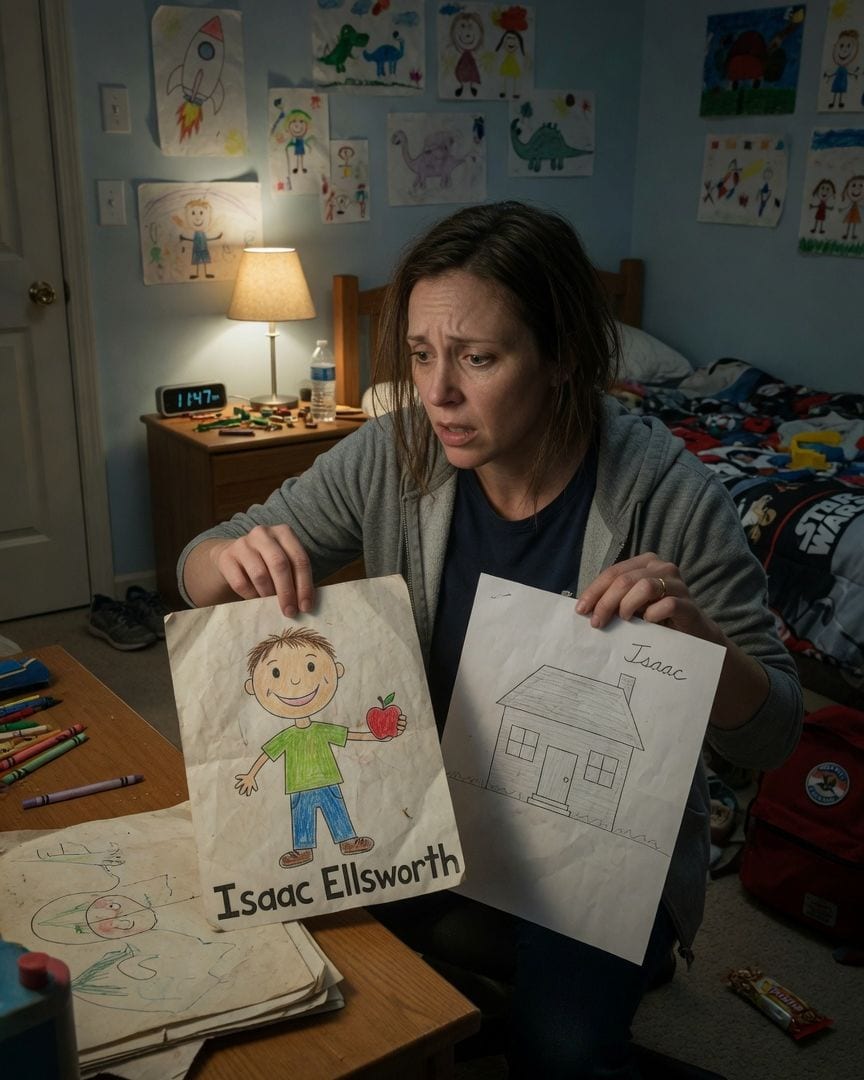
I pulled out a stack of construction paper, crinkled and faded, smelling faintly of old crayons. There it was: his kindergarten self-portrait, a crayon-drawn boy with a lopsided smile, holding a bright red apple.
And beneath it, in clumsy, blocky letters, 'Isaac Ellsworth,' signed with an undeniable, heavy left-handed pressure, the paper slightly torn where the crayon had dug in too hard. I held it, my thumb tracing the familiar, childish signature.
Then I crept back downstairs, into Isaac’s room, my heart a frantic drum against my ribs. The air in his room felt still, heavy.
On his desk lay a fresh drawing of a house, meticulously rendered with a new, unfamiliar right-handed precision, beside it his name ‘Isaac’ in a neat, flowing script I had never seen from him.
The two pieces of paper, irrefutable proof, trembled in my hands.
The drawings became an obsession. I spent days quietly comparing them, cross-referencing with old photos, school yearbooks, anything I could find. Every piece of evidence confirmed it: Isaac had been unequivocally left-handed.
His baseball glove was for his left hand, his preferred drawing tools were always positioned for his left.
I even found a video from his seventh birthday, him clumsily cutting his cake with his left hand, laughing as the slice nearly slid off the plate.
The new Isaac, however, effortlessly used his right hand for everything – eating, writing, opening doors. It wasn't just a preference; it was ingrained, natural, as if his muscles had always been wired that way.
The rational explanations I’d tried to cling to – trauma, a sudden developmental shift, maybe he just felt right-handed now – crumbled under the weight of the evidence. It was too absolute.
I began to discreetly investigate the school trip itself. Camp Sterling. A rustic outdoor education center nestled deep in the woods, not far from our town. I called the school, feigning concern about Isaac's adjustment, about him being unusually quiet.
The teacher, Mrs. Langford, assured me Isaac was fine, if a little subdued. She mentioned the incident of Albert’s fever, how uncanny it was that Isaac had predicted it, but dismissed it as a strange coincidence. I didn't.
I started searching online, casting a wide net: 'Camp Sterling incidents,' 'missing children school trips,' 'unexplained returns.' I found nothing directly related to Isaac’s disappearance, which had been brief and resolved.
But then I broadened my search, looking for any strange occurrences in the wider region, anything about children returning 'changed.'
It was a long shot, a desperate reach, but the creeping certainty that my son was gone, replaced by something that looked like him, drove me.
The internet was a rabbit hole of urban legends and conspiracy theories, but I, rational and grounded, sifted through it all, looking for something concrete, something checkable. I was looking for a pattern.
The pattern, if it existed, was elusive. I felt a growing sense of isolation. Nathaniel, while supportive of my concern for Isaac, still believed it was post-trauma stress, or just a phase.
He couldn't see what I saw, couldn't feel the wrongness of the boy who wore Isaac’s face.
One evening, I left my laptop open on the kitchen counter, displaying a cached news article about a local disappearance from twenty years ago – a child, near Camp Sterling, who was found days later, unharmed, but whose parents later reported strange behavioral changes.
It was late, I was exhausted, and I just clicked the laptop shut without thinking. I went to bed, the weight of unanswered questions heavy on my chest.
The next morning, I found the laptop closed, but on my pillow lay a small, crudely drawn sketch. It was a stick figure, unmistakably me, with my messy bun, hunched over a glowing rectangle.
Beside it, another stick figure, smaller, watching. Isaac’s room was silent. He was at school, already gone for the day. My blood ran cold. He knew. He had been in my room, had seen my research.
I tried to dismiss it as a coincidence, a child’s playful drawing, but the details were too specific, too intentional. The stick figure's posture, the glowing screen, the smaller figure watching.
Later that day, as I was doing laundry, Isaac appeared in the doorway of the utility room, his eyes oddly flat, devoid of childhood mischief. “Still looking at old things, Mom?”
he asked, his voice calm, almost conversational, yet the question felt like a blade. I flinched, dropping a shirt from the basket. “Just sorting through some old clothes,” I lied, my voice tight, my hands suddenly clumsy.
He simply nodded, a faint, unsettling smile playing on his lips, and walked away. The air in the house felt heavy, charged, as if it were holding its breath. I was no longer just investigating; I was being watched.
I decided I had to confront him, gently, to see if I could break through whatever was happening.
“Isaac,” I began, sitting beside him on his bed, the afternoon sun slanting through his window, “I’ve noticed you’re using your right hand a lot lately. You used to be left-handed, remember?”
He looked up from his book, his expression unreadable, a page-turner he’d barely touched since he got back. “I don’t remember that, Mom. I’ve always used my right hand.” His certainty was unnerving.
He didn't argue, didn't get defensive; he simply stated it as an undeniable fact, like the sky was blue. I tried another angle, my voice a little desperate now.
“You remember drawing that big dragon for Mrs. Langford’s class last year? You used your left hand for that, for all the scales and the fire.” He blinked, a slow, deliberate movement. “No, I didn’t.
I drew it with my right. It was a really good dragon.” His memories were absolute, unshakeable, yet utterly wrong. I felt a chill colder than any winter wind.
It wasn't just a habit reversed; it was a memory rewritten, replaced with an entirely new, unshakeable truth. His truth. Desperate, I returned to my research.
The old news article, the one I’d found on my laptop, kept nagging at me. 'Boy Returns Changed From Camp Sterling.' The date was two decades old. The boy's name was Albert Drummond.
I dug deeper, eventually finding an obituary for his parents, who had both died years later of 'natural causes' within months of each other. But the article mentioned an aunt, Marianne Drummond, who still lived in the area.
I, driven by a desperate hope, found Marianne’s address and drove there. Marianne was a frail, elderly woman, her eyes clouded with age but sharp with memory.
I explained my situation, hesitantly, watching for a flicker of recognition, for a sign that I wasn't completely unhinged. Marianne listened, her hands clasped tightly in her lap, her gaze unwavering. “Albert… yes,” she said, her voice a soft rasp.
“He came back… different. He’d say things, things that hadn’t happened yet, things no one could know. And he used to love drawing with his left hand, always. But after Camp Sterling, it was like he forgot.
Everything with his right. His parents, they tried to understand. They saw it too, the change. They started asking questions.” Marianne’s gaze met mine, filled with a profound, ancient sorrow. “Then they both… just faded. Left town.
No one ever heard from them again. Like they were erased.” My blood ran cold. The handedness. The impossible predictions. The pattern. It was all there, laid bare.
Marianne’s words hung heavy in the air, a chilling echo of my own fears. The quiet house, the changed boy, the vanished parents.
“And Albert,” Marianne continued, her voice barely a whisper, a thread of sound, “he always carried this little wooden fox. His father carved it for him, the year before.
Had a unique notch on its left ear, a specific mark his father put there, right after they got it finished. Said it was his special identifying mark.” I felt a jolt. A wooden carving.
I remembered seeing a small, smooth wooden figure in Isaac’s room, a new addition I hadn’t recognized, sitting on his bedside table, gleaming faintly. I thanked Marianne, my mind reeling, my hands clammy, and drove home in a daze.
The pieces were locking into place, forming a picture of horror I couldn't comprehend, let alone articulate. I pulled into my driveway, my hands shaking on the wheel, the car engine ticking as it cooled in the oppressive silence.
As I stepped into the quiet house, the air still and heavy, a movement in the living room caught my eye.
Isaac sat on the rug, calmly whittling a piece of wood with a small penknife, shavings collecting on the carpet beside him. In his lap, he held a small, perfectly carved wooden fox.
Its left ear bore a distinct, tiny notch. He looked up, his eyes holding that unnerving, knowing glint that saw through me.
He turned the fox slightly in his hand, a deliberate, slow movement, revealing a new, impossibly detailed miniature carving on its belly: a tiny woman, her face etched with worry, holding a newspaper.
I froze, the front door still open behind me, the silence of the house suddenly deafening, colder than the deepest winter.
The carving in Isaac’s lap was a perfect replica of the one Marianne described, down to the unique notch. But the new detail – the miniature carving of Emily herself, holding the newspaper – was impossible.
It wasn't just a recreation; it was a statement. This wasn't Isaac. This was something that consumed identity, replicated it, and then used that shell to observe, to know.
The entity hadn’t just replaced Isaac; it had absorbed his memories, his mannerisms, and then added its own unnatural abilities, its own chilling awareness of the future, or perhaps, a different timeline altogether.
The 'drawing' Isaac had given me, the stick figures, now clicked into place: it wasn't a child's playful art; it was a warning. The entity knew I was investigating. It had been watching me, knew my private actions.
The predictions about the party, Albert’s illness, the reversed handedness – all of it coalesced into a horrifying, undeniable truth. This wasn't a phase, or trauma, or a coincidence. This was a deliberate, calculating replacement.
The entity had done this before, to Albert Drummond, and it had driven his parents away, or worse, made them disappear entirely. The carving was not just an artifact; it was a signature, a taunt.
It confirmed that this 'Isaac' possessed knowledge beyond any human capacity, knowledge of my private actions and thoughts, a complete awareness of my desperate research.
It dated itself, implicitly, by showing my current activity with the newspaper, yet it was a carving 'Isaac' claimed to have just made, or even had 'before the trip,' a memory it manufactured.
The coherence of it all was the true horror: every off-note, every wrong detail, every impossible fact, now formed a perfectly chilling, inescapable pattern.
My mind raced, a desperate plan forming. I had to get out. I had to expose this. I had to save myself, and if possible, find the real Isaac, wherever he was.
The carving, that impossible artifact, was my only proof, my only way out. I slowly backed away from Isaac, my eyes fixed on the wooden fox in his lap, my heart pounding so hard I felt dizzy.
“Isaac,” I said, my voice a thin thread, barely audible, “can I see that carving? It’s beautiful.” He smiled, that faint, knowing smile that never quite reached his eyes, a smile that didn't belong on my son’s face.
“It’s mine, Mom. I made it. Just like I always do.” He held it tighter, pressing it against his chest. I took a deep breath, the air thick and cold in my lungs.
“I know you’re not Isaac,” I whispered, the words tearing from my throat, raw and painful. His smile didn’t falter, didn’t even twitch. “Of course I am, Mom. Who else would I be?”
He stood up, slowly, deliberately, blocking my path to the door, a child-sized sentinel. He was still just a ten-year-old boy, dressed in his favorite t-shirt, but a vast, ancient presence emanated from him, a cold, alien power.
I felt a primal fear, a cold certainty that escape was impossible. My breath hitched. I lunged for the carving, a sudden, desperate movement, my hand outstretched.
He moved with a speed that wasn't Isaac’s, effortlessly stepping aside, and then his hand, his right hand, closed gently but firmly on my arm. His grip was surprisingly strong, unyielding, like iron beneath a soft glove.
“You’re upset, Mom,” he said, his voice calm, devoid of anger, “You just need to rest. You’ve been working too hard.”
He steered me, not roughly, but with an unyielding purpose, away from the door and deeper into the house, towards the stairs. “Remember that time we went camping, just you and me, and you told me about the constellations?
You said the Big Dipper was a giant spoon stirring the night sky.” It was a memory only the real Isaac, and I, shared, a private moment, a treasured secret.
But the way he said it, the flat, possessive tone, made the cherished memory a weapon, twisting it into something cold and terrifying. I struggled, my heart hammering against my ribs, but his grip was unyielding.
I looked into his eyes, and saw not my son, but an ancient, patient thing that had simply claimed what it wanted. I was trapped.
Days blurred into weeks. I no longer mentioned the handedness, the predictions, or the carving.
The wooden fox sat on the mantelpiece, a silent, impossible testament to the truth, its tiny carved woman staring out from its belly, forever frozen in worry.
Nathaniel, oblivious, attributed my newfound quietness to stress, to my lingering worry about Isaac’s brief disappearance. He was just glad things were back to normal.
Isaac continued his life, going to school, playing with his friends, perfectly normal in every way that mattered to the outside world.
But in the quiet moments, I felt its presence, a cold, knowing awareness that permeated our home, a sense of being constantly observed. I no longer looked for clues, no longer made desperate calls.
The frantic energy that had driven me was gone, replaced by a profound, unsettling stillness. The house was quiet, almost too quiet. Life continued, but I, the real Emily, was no longer truly living in it.
Nathaniel Delaney found Emily in the kitchen, staring at the small wooden carving on the mantelpiece. “Emily?” he asked softly, “Did you hear me? Isaac said he wants blue frosting for his cake.”
Emily turned, a faint, wrong little smile playing on her lips. “Is that so?” she replied, her voice a quiet echo.
If this one got to you
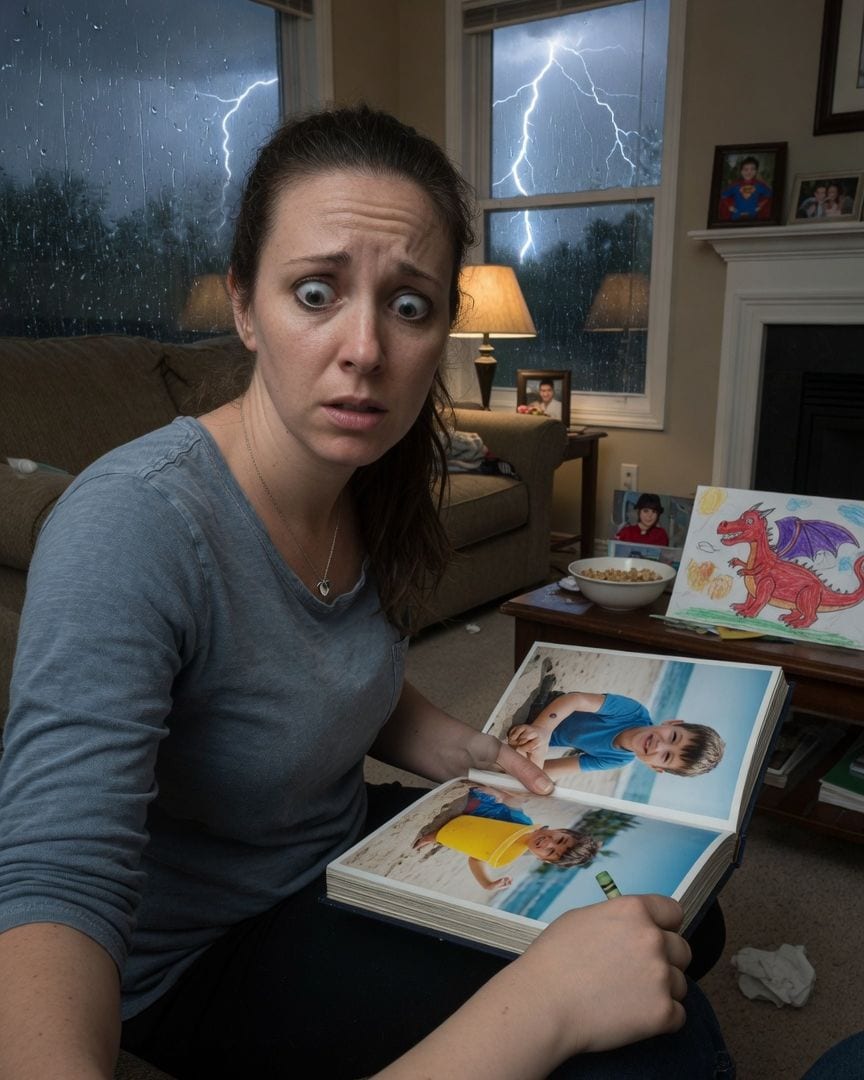
My son's star-shaped birthmark is gone from his wrist. Photos prove it was there just last summer.
My son Nathaniel returned home after being missing for a day and a night, bringing immense relief. But his strange calm during a violent thunderstorm and a new way of eating breakfast unsettled me. The true dread hit when I touched his left wrist: his distinctive star-shaped birthmark, always there since birth, was utterly gone.
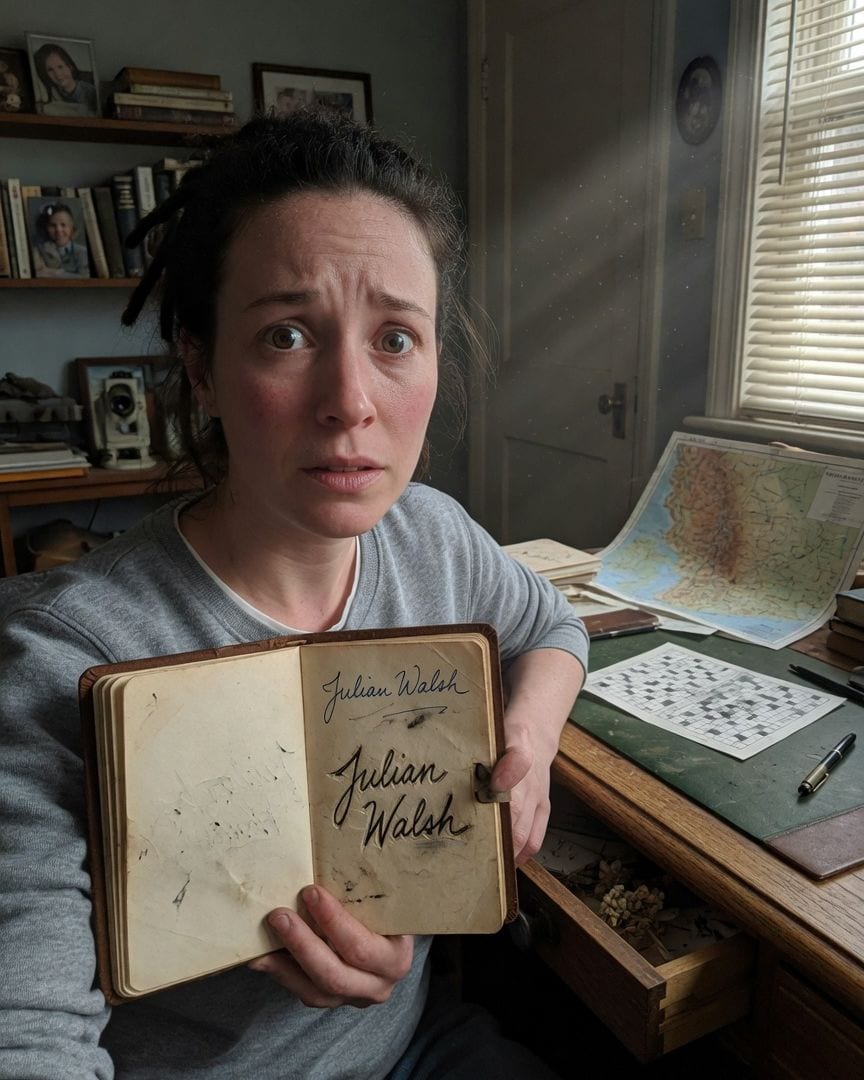
My father signs his name left-handed now. He was right-handed for sixty years. When I asked, he just wrote it again and asked what I meant.
My father, Julian Walsh, returned eighteen months after we buried an empty casket. It was a miracle, a genuine impossible relief, until he signed his insurance papers. For sixty years, my father was fiercely right-handed, but now he etched his name with a confident left-handed flourish, claiming he always had.
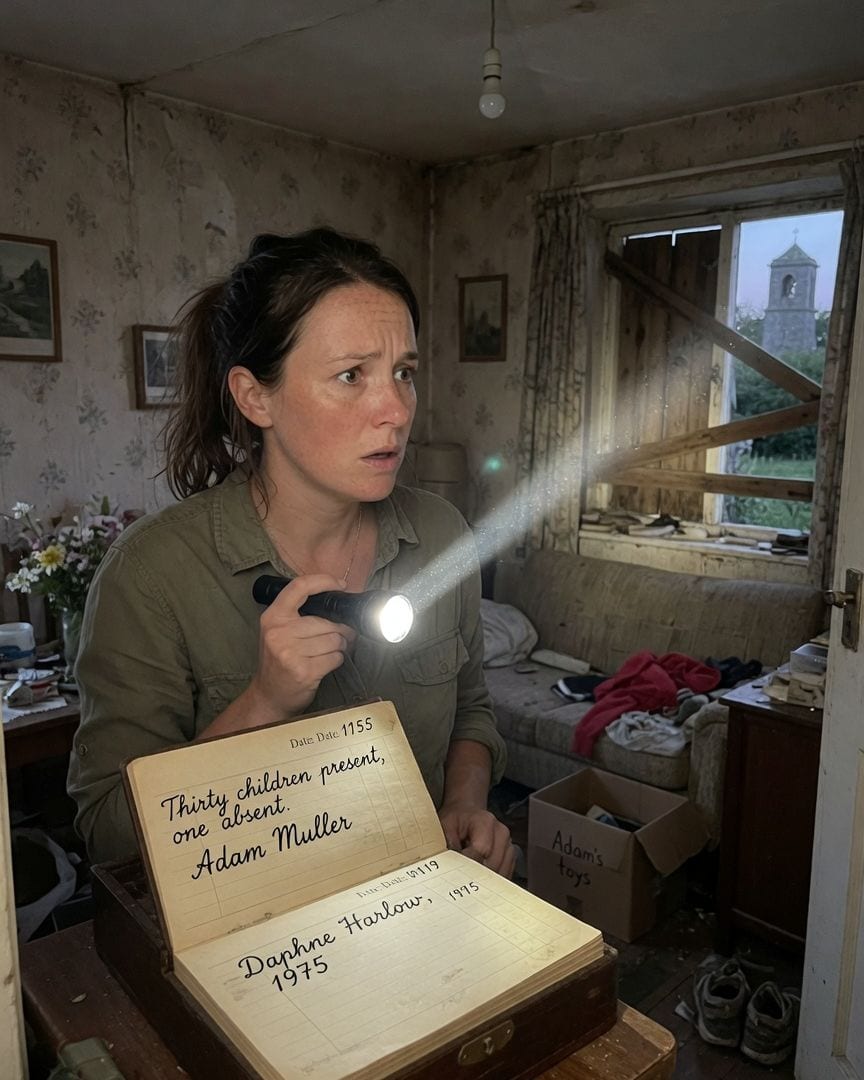
My son rang the old school bell. The attendance register, visible through the boarded window, now shows today's date and his name marked 'absent'.
We moved to a quiet village for peace, but my six-year-old son Adam found the old, boarded-up schoolhouse. Locals warned us, "Never ring the old school bell." That Tuesday, Adam rang it. Later, I saw his name on the school's long-closed attendance register, marked 'absent' in impossibly fresh ink from today.
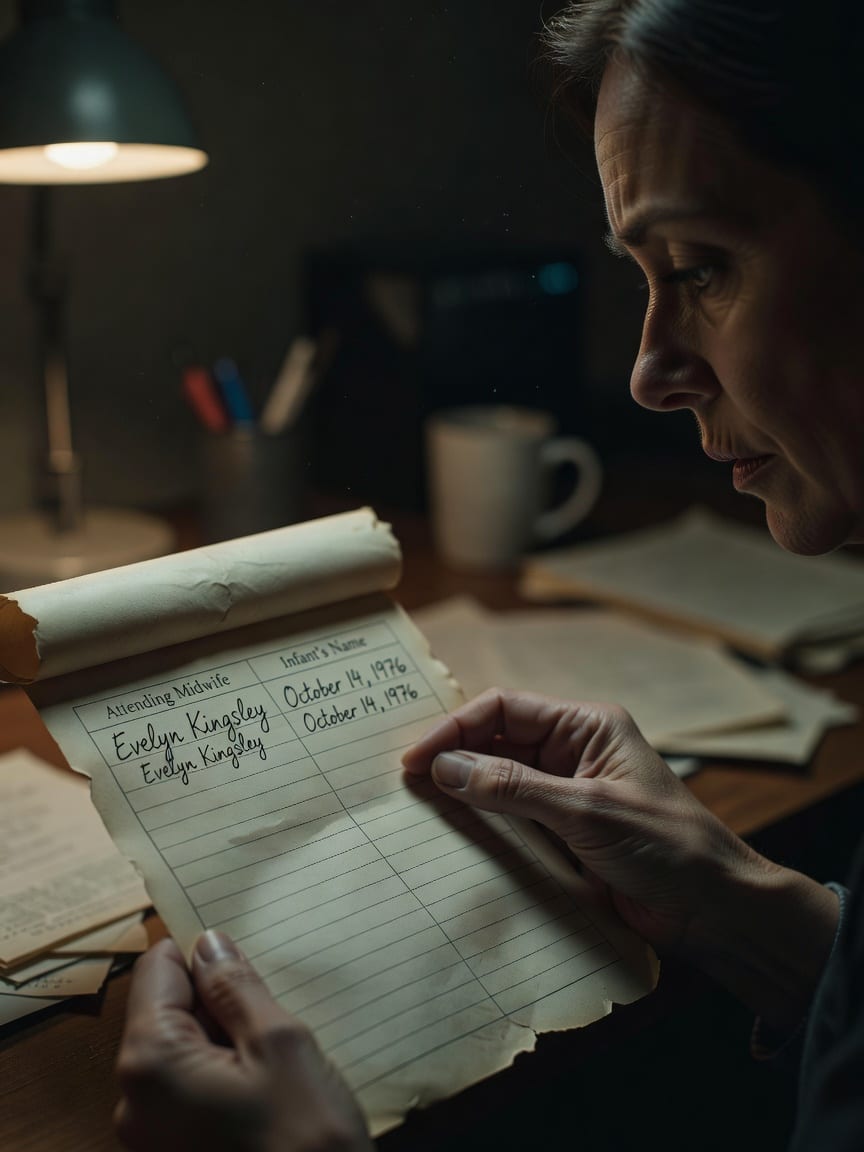
My own handwriting is on my birth certificate, signed as the attending midwife. I was the baby born that night.
I found my adult signature scrawled across my mother’s maternity file, right on my own birth register page. Forensic analysis confirmed it was genuinely my handwriting, dated 1976. But that was the year I was born, and my signature was listed as the attending midwife.
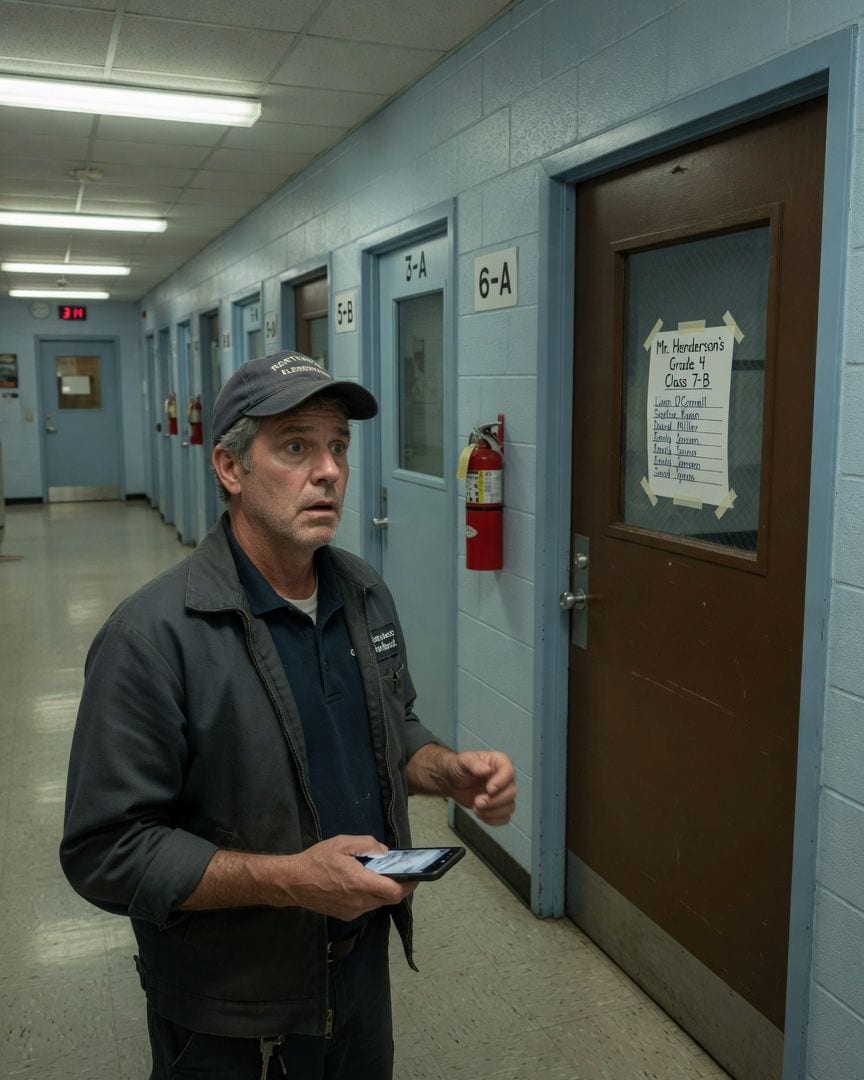
My classroom doors counted twenty-three last night. The extra one had a class list taped inside, names of children who've never been at this school.
My job as night caretaker at Northwood Elementary is routine: 22 classrooms, all accounted for. But one night, an impossible 23rd door appeared in the science block, nestled where only a wall should be. It bore a class list of students and a teacher who don't exist in any school record. Then, in an old logbook, I found that exact same list, dated 40 years ago.
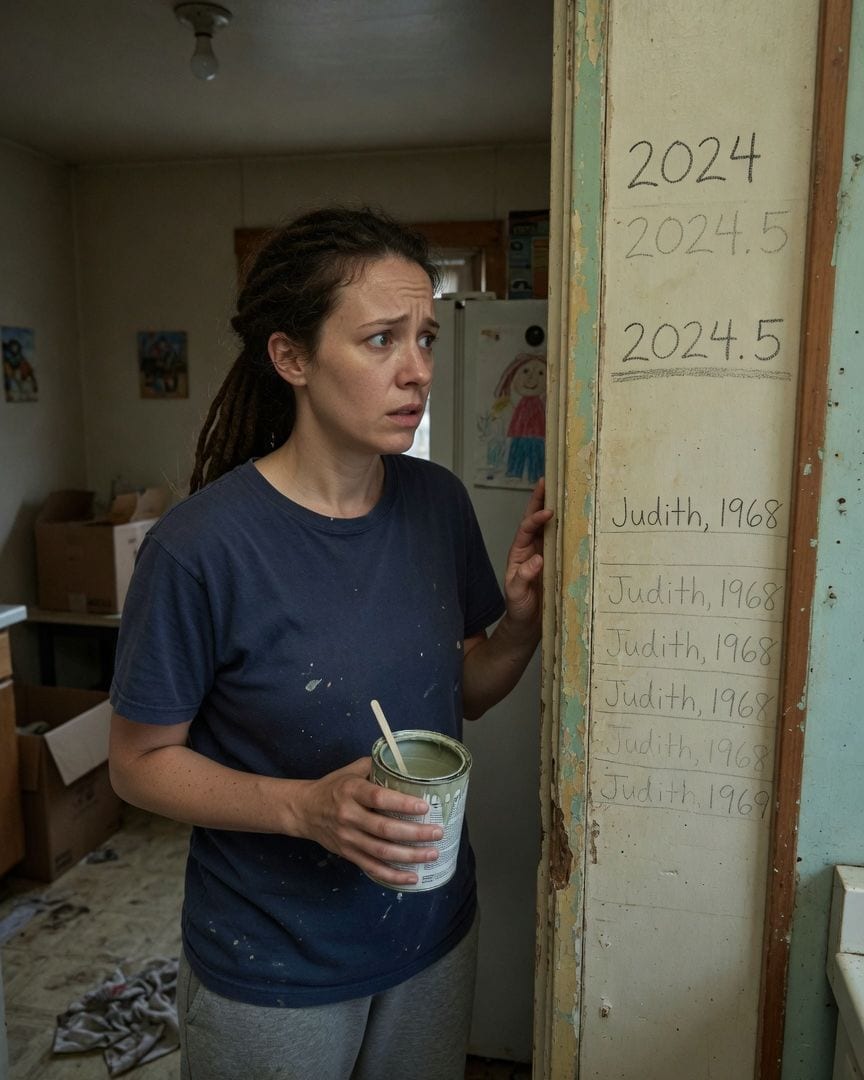
A child's height marks grow on my kitchen doorframe, dated this year, in a house where I live alone.
I moved into my new house, ready for a fresh start, and found a child's old height chart on the kitchen doorframe. The last mark was dated 1968, but a week later, a new one appeared, dated this year, in the exact same looping handwriting. I live completely alone.