My son drew a door under our stairs. Tonight, I touched its cold brass handle.
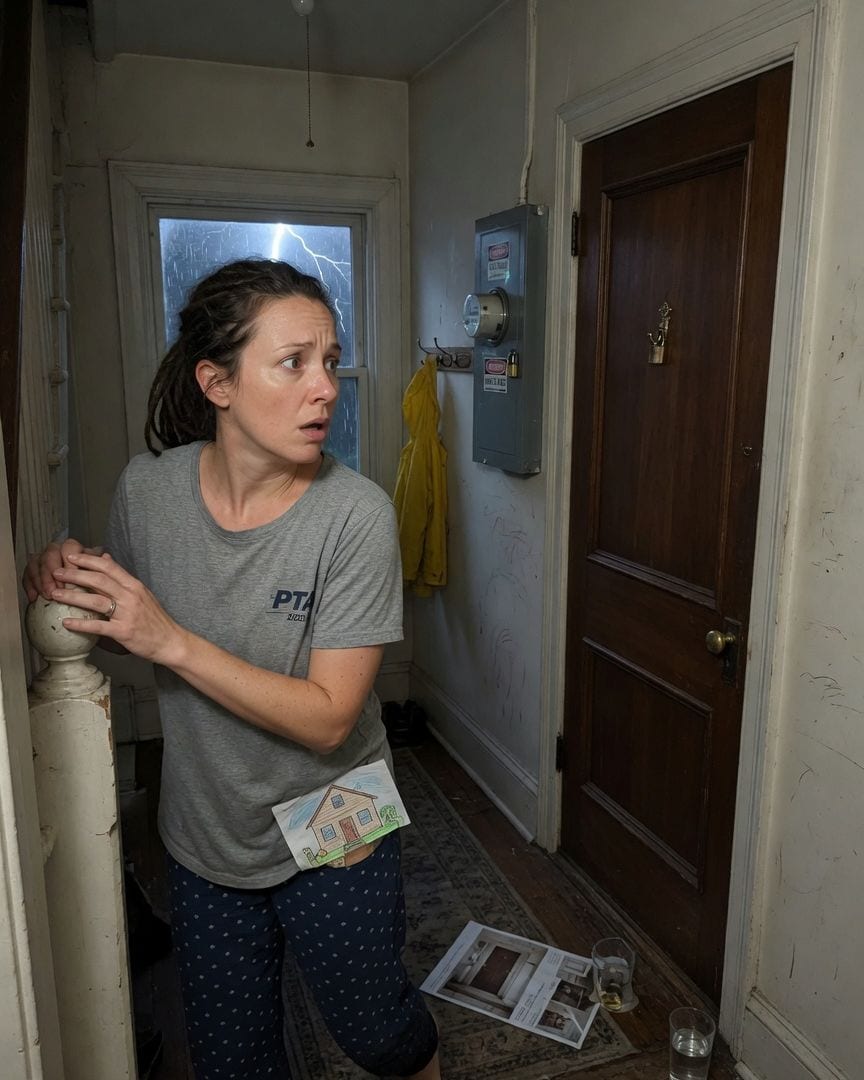
My son, Oliver, drew our house for his first-grade project.
It was perfect, right down to the chipped paint on the porch railing and the dent in the gutter, except for one striking detail: a small, panelled door under the main staircase, complete with a tiny, ornate brass handle.
I told him, 'Honey, that's a lovely detail, but our house doesn't have a door there. That's just a wall where the meter box is.'
Oliver, seven years old and earnest, insisted he'd drawn it exactly as he remembered, a quiet conviction in his eyes that unsettled me more than it should have.
I chuckled, attributing it to a child’s active imagination, then filed the drawing away with a mental note to remind him of the house's actual layout.
Later that week, while searching for an old appliance warranty, I stumbled upon the original real estate listing for our house, archived on an obscure local property site.
Clicking through the gallery, past the familiar living room and kitchen, my thumb froze on photograph nine. There, perfectly centered under the staircase, was the door. Panelled. Brass-handled. Exactly as Oliver had drawn it.
The cupboard that had only ever held our electrical meter was, in that photograph, a small, enclosed space, a door leading... somewhere. A cold prickle traced its way up my spine.
I walked to the stairs, my hand tracing the blank plaster. Nothing. Just the wall, solid and unyielding, with the standard meter access panel.
No hinges, no outline, no sign of a door ever having been there, let alone being painted over. Yet the photograph was undeniable. And Oliver's memory, somehow, was perfect.
The photograph became an obsession. I zoomed in, pixel by pixel, trying to find any sign of digital manipulation, a shadow that didn't quite fit, but it looked utterly authentic.
The timestamp on the image data placed it a year before we bought the house. I pulled out our own house plans, the blueprints we got with the sale.
They showed a solid wall under the stairs, just as it was now, with the meter box recessed. No door. I measured the space myself, from the newel post to the far wall, from floor to ceiling.
The dimensions matched the blueprints perfectly. There was no extra foot of space, no hidden alcove that could have once housed a door and then been walled over without leaving a trace.
It was physically impossible for a door to have been there, then gone, without altering the very structure of the house. I even tapped along the plaster, listening for a hollow sound, but it was uniformly solid.
Oliver, catching me examining the old listing on my laptop, pointed at the screen. 'That's it, Mom! See? I told you!' His certainty was unnerving.
I tried to find the original real estate agent, a George Muller, but his license had expired years ago.
The local historical society had records of the house, built in 1920 by a Patrick Holloway, but no mention of any unusual alterations or features. The house was a simple, sturdy colonial. Every rational explanation failed.
The photo was real, the blueprints were real, and my house was real. But the three facts refused to align. It was a glitch in reality, a small, unsettling tear in the fabric of what I knew to be true.
I started to feel a prickle of unease every time I walked past the stairs, wondering what Oliver had really seen, and what the photograph truly meant.
That night, a storm rolled in, rattling the windows. Oliver was asleep, but I couldn't settle. The image of that door, solid and undeniable in the photograph, kept replaying in my mind.
I went downstairs for a glass of water, passing the staircase. The house groaned with the wind. As I reached the bottom step, a flicker of lightning illuminated the wall under the stairs. It wasn't blank. Not anymore.
There, in the dim, pulsing light, was the door. Panelled. Brass-handled. Exactly as in the old listing photo, exactly as Oliver had drawn it.
It stood flush with the wall, almost seamlessly, the wood a dark, rich walnut, the handle glinting faintly. My heart hammered. I reached out, my fingers trembling, and touched the cold metal. It was real. Solid.
And it hadn't been there an hour ago. The house was silent again, save for the rain and the distant rumble of thunder. I pulled my hand back, a gasp catching in my throat.
The door was undeniably present, yet my mind screamed that it was impossible. It simply could not be.
I spent the rest of the night watching that door, half-convinced it would vanish again. It didn't. By dawn, the storm had passed, leaving a strange, quiet clarity. I tried the handle. It was locked, unyielding.
No keyhole visible, just a solid brass knob. I considered calling a locksmith, then stopped. How would I explain this? 'My house grew a door overnight'? I needed proof, something beyond my own shaken sanity.
I woke Oliver, eager to show him, to validate his drawing. 'Look, honey,' I said, leading him down the stairs. But as we descended, the space under the stairs was blank again. Just the plaster wall, the meter access panel.
Oliver looked confused. 'Where'd it go, Mom?' he asked, pointing at the empty space. My breath caught. It was gone. I tried to recreate the conditions – dim light, storm sounds – but the wall remained stubbornly normal.
The experience left me rattled, but also determined. If the house could do that, what else could it do? I started paying closer attention. Small things at first.
My car's odometer, showing an extra ten miles on my usual commute, even though I swore I hadn't taken a detour.
Or a drive to the grocery store that felt longer, almost like I'd gone around in a circle, bringing me back to the same intersection twice. I dismissed it as distraction, fatigue.
Then, one Tuesday, I decided to take a 'shortcut' through Holloways' Woods, a winding, unpaved road I rarely used. It was supposed to cut five minutes off my drive to Oliver's school.
I took the familiar turns, noting the landmarks: the big oak, the crumbling stone wall. Ten minutes in, I saw the big oak again. And the crumbling stone wall.
My gas gauge hadn't moved much, but the clock in the car showed I’d been driving for fifteen minutes. I tried again, consciously making different turns, determined to break the loop.
Each time, I ended up back at the same point, the same oak, the same wall, as if the road itself had folded back on itself.
The mileage on the odometer crept up, the gas needle dropped, but I never left Holloways' Woods. I finally gave up, heart pounding, and drove the main road, arriving late and shaken.
The road had returned me to where I started, proving I'd gone somewhere, but never left.
The incident in Holloways' Woods cemented my fear: something was fundamentally wrong with the geometry of this place. It wasn't just my house. I started discreetly asking questions around town, focusing on old-timers, people who had lived here for decades.
Most dismissed my vague inquiries about 'local oddities' or 'strange roads.' Then I met Margaret Pierce, a retired librarian who ran a small antique shop on Main Street. She was sharp, with kind but knowing eyes.
I brought up the old real estate listing, careful not to mention the door's appearance. 'This house,' I said, pointing to a blurred image on my phone, 'I was curious if you knew anything about its history. Any unusual features?'
Margaret peered at the screen. Her gaze lingered on the space under the stairs. 'Ah, the old Winslow place,' she murmured, a faint, almost imperceptible smile playing on her lips. 'Lovely house.
Been in the Holloway family for generations, before you bought it.' She didn't seem surprised by the door in the photo. 'It's quite a unique property, wouldn't you say?'
Her tone was light, but there was an unsettling depth to her calm. I pressed on. 'Some of the roads around here, particularly near the old woods, feel... strange. Like they don't quite go where they should.'
Margaret looked up, her smile widening slightly. 'Oh, yes. The woods. They have a way of keeping what they hold, don't they? People used to say you could drive for hours and still end up back at the beginning.
Lost time, they called it.' She paused, her eyes meeting mine, and I felt a chill that had nothing to do with the draft from the shop door. 'It's been quiet for a while. But things...
they have a way of coming back around.' Her words, delivered with such placid certainty, made it clear she wasn't guessing. She knew.
I left the shop feeling more observed than informed, as if my questions had confirmed something Margaret had been expecting all along. Her knowing smile haunted me.
I couldn't shake Margaret's words. 'Things have a way of coming back around.' I returned to her shop the next day, determined to get answers.
'Margaret,' I began, trying to keep my voice steady, 'I need you to tell me what you know about my house. And the woods.' She didn't feign ignorance. She simply gestured to a worn armchair. 'Sit, dear.
It's a long story, and a quiet one.' She explained that the Holloway family, who built my house, had always spoken of 'the wandering geometries.' Not as a curse or a haunting, but as a feature of the land itself.
'The house,' she said, 'is built on a nexus, a thin place where space can... ripple. It doesn't happen all the time. It comes and goes. Like the tide. Or a season.'
She spoke of the door under the stairs as 'the threshold.' 'It appears when the ripple is strong. It's a way in. Or out, depending on how you see it.' I recounted the road that returned me. 'Yes,' she nodded.
'The woods are part of it. The paths twist. The distances shift. People used to get lost in there, even seasoned hunters.
They'd walk for miles, only to find themselves back at their starting point, sometimes days later, disoriented and confused, with no memory of the elapsed time.' Her calm explanation of such impossible phenomena was deeply unsettling. 'Why aren't people terrified?'
I asked. 'Why isn't this common knowledge?' 'Because it's subtle, mostly,' she replied. 'And it's cyclical. It comes. It goes. Most people forget, or rationalize it away. The Holloways just… lived with it. They learned its patterns.'
She told me that the 'ripple' was strongest every fifty years or so, lasting for a few months, and then receding. 'The last strong cycle was in the early seventies. Before that, the twenties. And before that, the 1870s.'
The pieces clicked into place. The old real estate photo, taken just before we moved in, must have been at the very beginning of the current cycle, when the door first manifested.
Oliver's drawing wasn't imagination; it was an echo of a geometry the house was beginning to remember. The inexplicable miles on my car, the looping road – it was all part of the same impossible pattern.
My house wasn't just old; it was alive with a geometry that defied all known physics, operating on a schedule no human could control.
Margaret handed me a thick, leather-bound ledger. 'The Holloway family kept their own records,' she explained. 'Not official, of course. But they charted the cycles. And the… incidents.' My hands trembled as I opened the book.
It was filled with meticulous, spidery handwriting, detailing dates, observations, and short, cryptic entries. 'October 1873 - Mrs. Eleanor Holloway, seeking herbs in woods, returned disoriented, reported 'walking in circles for hours,' lost 3 days. The Threshold visible.'
'November 1923 - Minor alterations to the west wing, workmen reported 'missing tools,' 'rooms shifting.' The Threshold active.' And then, under a faded entry from 1973: 'October 1973 - Local Man Lost in Holloways' Woods, Searchers Baffled by Returning Paths.
Threshold open.' My blood ran cold. The newspaper clipping Margaret had mentioned earlier, the one about the lost man, flashed in my mind. It wasn't just abstract history. People had been genuinely lost, genuinely affected.
The implication was stark: the house didn't just play tricks; it could swallow people whole. My eyes darted to the next entry, a blank page, then a date written faintly in pencil at the top: 'October 2023.'
A date barely weeks away. The current cycle wasn't just beginning; it was about to reach its peak. And the man lost in 1973? The clipping had given his address. It was ours. Our house.
The same house, the same cycle, the same month. My son, Oliver, was drawing doors that shouldn't exist, and I had been driving roads that led nowhere. We weren't just observing the cycle; we were living in its deepening heart.
The dread was a physical weight in my chest. We were next.
I stared at Margaret, the ledger open on my lap, the chilling date of 'October 2023' seeming to pulse on the page. 'What happens in October?' I whispered, my voice barely audible. Margaret sighed, a deep, weary sound.
'The geometry thins completely. The Threshold opens fully. It doesn't just play tricks then, dear. It takes.' She explained that the 'lost' individuals weren't just disoriented; they were truly displaced, pulled into the impossible space that the house occasionally accessed.
'They walk through the door, or they take a wrong turn in the woods, and they simply… aren't here anymore. Not in our space, anyway.'
She confirmed that the missing man from 1973, a distant Holloway cousin, had walked through the door under the stairs, just as his grandfather had in the 1920s, and his great-aunt into the woods in the 1870s.
'The house doesn't mean harm,' she said, 'but it follows its own rules. And when the geometry shifts, it can be a trap for those who don't understand.'
I realized with a sickening lurch that the door under the stairs wasn't just a curiosity; it was a portal.
A way into a space that existed outside of our own, a space where roads looped and rooms vanished, and people were lost forever.
The horror wasn't a monster or a malevolent spirit; it was the sheer, indifferent reality of a place that simply didn't conform, a quiet, consistent wrongness that occasionally opened up and consumed.
Margaret's calm acceptance, her lifetime of witnessing this, made it all the more terrifying. There was no fighting it, no escaping it, only knowing its terrible, cyclical truth.
The coherent horror of it all, every impossible detail slotting into place, was far worse than any ghost story.
My immediate, primal instinct was to leave. To pack Oliver and flee this house, this town, this impossible geometry. But Margaret's quiet conviction, her deep-seated understanding of the land, had planted a seed of doubt.
'It's not just the house, dear,' she'd said. 'It's the land. You can move, but the ripple is here. And it will find you again, eventually, if you're meant to be part of its pattern.' Still, I had to try.
I rushed home, gathered Oliver, and started packing. 'We're going on a trip, honey,' I told him, trying to sound cheerful. He seemed excited, oblivious. But as I loaded the car, the dread intensified.
I tried to drive out of town, taking a different route, one I'd never taken before. The road was straight, flat, then it began to curve, subtly, imperceptibly. The GPS on my phone glitched, then lost signal.
Oliver, strapped into his car seat, pointed. 'Look, Mom! That's the big oak!' My stomach dropped. We were back in Holloways' Woods, at the exact spot where I'd been trapped before.
The road had returned us, miles from the main highway. I tried again, and again.
Each time, the roads twisted, the distances distorted, and we found ourselves looping back to familiar landmarks, never truly leaving the immediate area surrounding the house. The house, it seemed, was not letting us go. We were tethered.
Back inside, Oliver, tired from the failed attempts, wandered to the stairs. The door was there again, dark wood, brass handle. He reached for it. 'Mommy, can I open it?' he asked, innocent curiosity in his voice.
My heart leaped into my throat. I grabbed his hand, pulling him back, my voice sharp with a fear I couldn't mask. 'No, Oliver! Never touch that door!' The look of confusion on his face was heartbreaking.
The full truth was understood, clear and horrifying: there was no escape. The house, the geometry, had claimed us. We were part of its cycle now. The knowing was the ending.
October passed. The door under the stairs appeared and disappeared, sometimes daily, sometimes weekly. The roads around the house continued their subtle, disorienting shifts.
I learned to navigate them, to recognize the signs of the geometry folding in on itself, and to avoid the areas where the 'ripple' was strongest. Oliver, too, seemed to adapt.
He never tried to open the door again, but sometimes I'd catch him looking at the blank wall where it should be, a quiet, knowing expression on his young face. We lived with it.
Not in fear, not in peace, but in a state of watchful, weary acceptance. The house held us, and its patterns became our own. I stopped trying to explain, stopped trying to fight.
There was no one to tell who would believe, no authority to appeal to. The world outside continued, oblivious to the impossible space existing quietly in our corner of it.
Sometimes, when I'm alone, I trace the faint outline on the plaster where the door might be, a ghost image only I can see. I wonder what's on the other side, what impossible corridors twist beyond that brass handle.
Oliver still draws, and sometimes, in the background of his otherwise normal pictures of our home, there's a faint, almost invisible door, or a road that circles back on itself.
He doesn't mention it, and neither do I. We understand each other. The house, with its impossible geometry, has become just another part of our lives, a silent, unyielding truth.
We simply live in the place that isn't on the map, knowing that some truths cannot be undone, only endured.
Edith Winslow sits on her porch swing, watching Oliver play in the yard. He sketches intently in his notebook. She knows, without asking, that he's drawing the house again, and that somewhere in the lines, a door will be waiting.
She sips her iced tea, a faint, unbothered smile on her lips. The sun is setting, and the long shadows are beginning to stretch, twisting around the old oak in the yard in ways that don't quite make sense.
It's almost time for dinner. 'Oliver,' she calls out, 'Are you coming in?' He looks up, his eyes bright. 'Just a minute, Mom. I'm almost done.'
He holds up his drawing, and for a fleeting moment, Edith sees not just her son, but a reflection of herself, calm and knowing, living within the impossible. The house itself seems to breathe around them.
It's a quiet evening in the place that isn't on the map.
If this one got to you
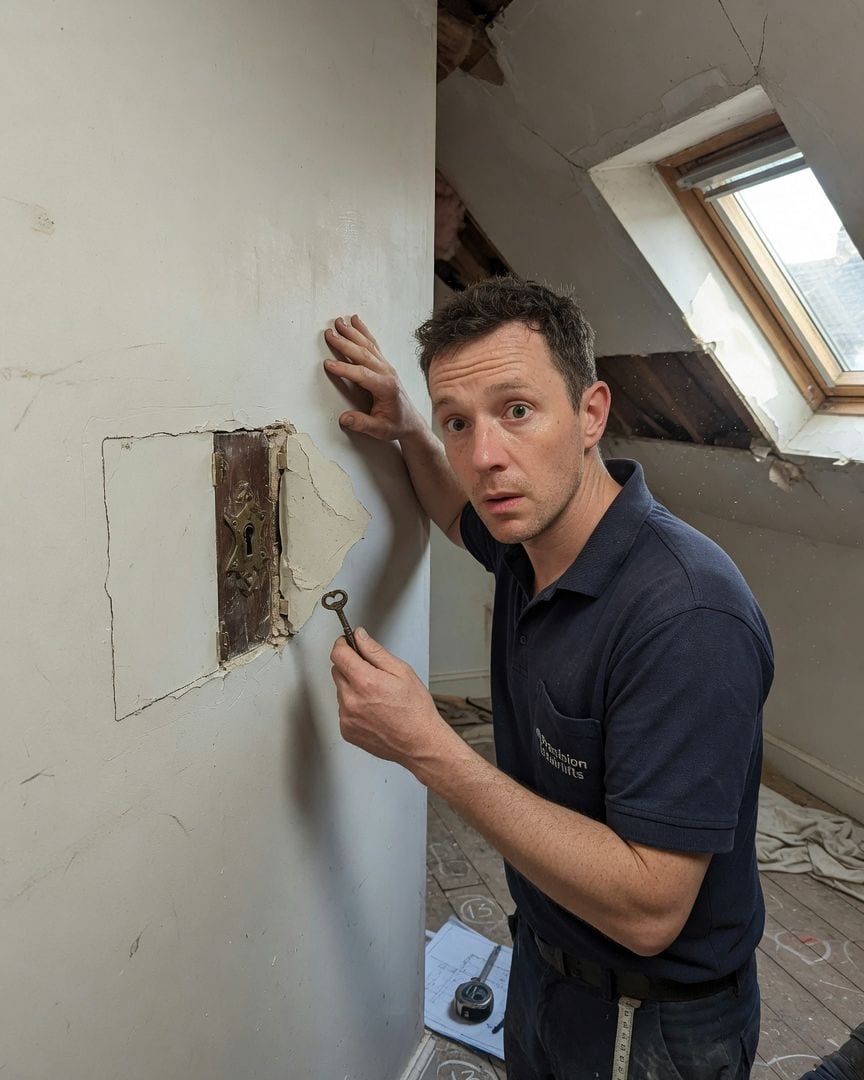
My stairlift tape measures thirteen steps, but my own feet always find a fourteenth — to a door that isn't there.
As a meticulous fitter, I measured my client's new loft stairs, confirming thirteen solid steps. But my foot found a shallow, impossible half-step, leading to a plain wooden door that shouldn't exist. Now the door is gone, leaving only a ghost outline.
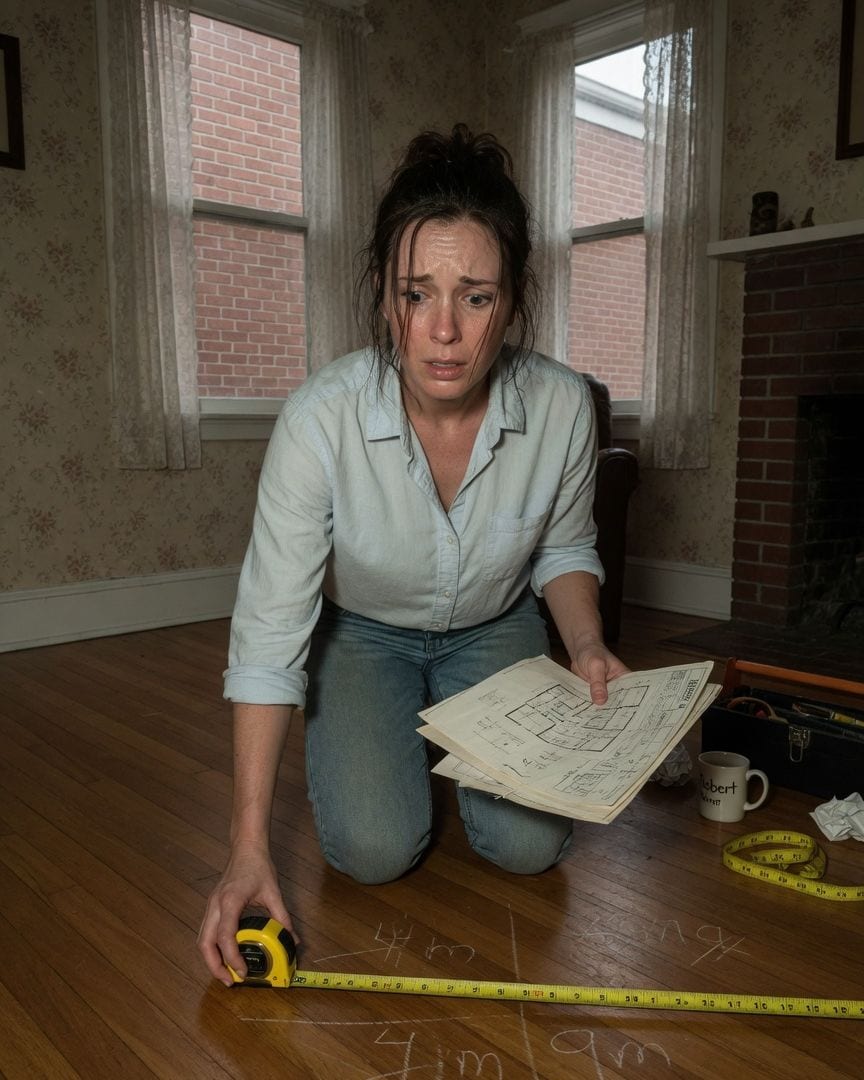
Our living room measures four by five metres. But the outside wall is nine metres long. A metre of house, gone, and I can't find it.
After moving into our charming 1920s house, I was meticulously measuring the living room when the dimensions refused to add up. My calculations of the interior space led me to discover a narrow, unpainted fifth door in the hallway, tucked almost out of sight. It wasn't on any original plans, and it opened to absolute, impenetrable darkness.
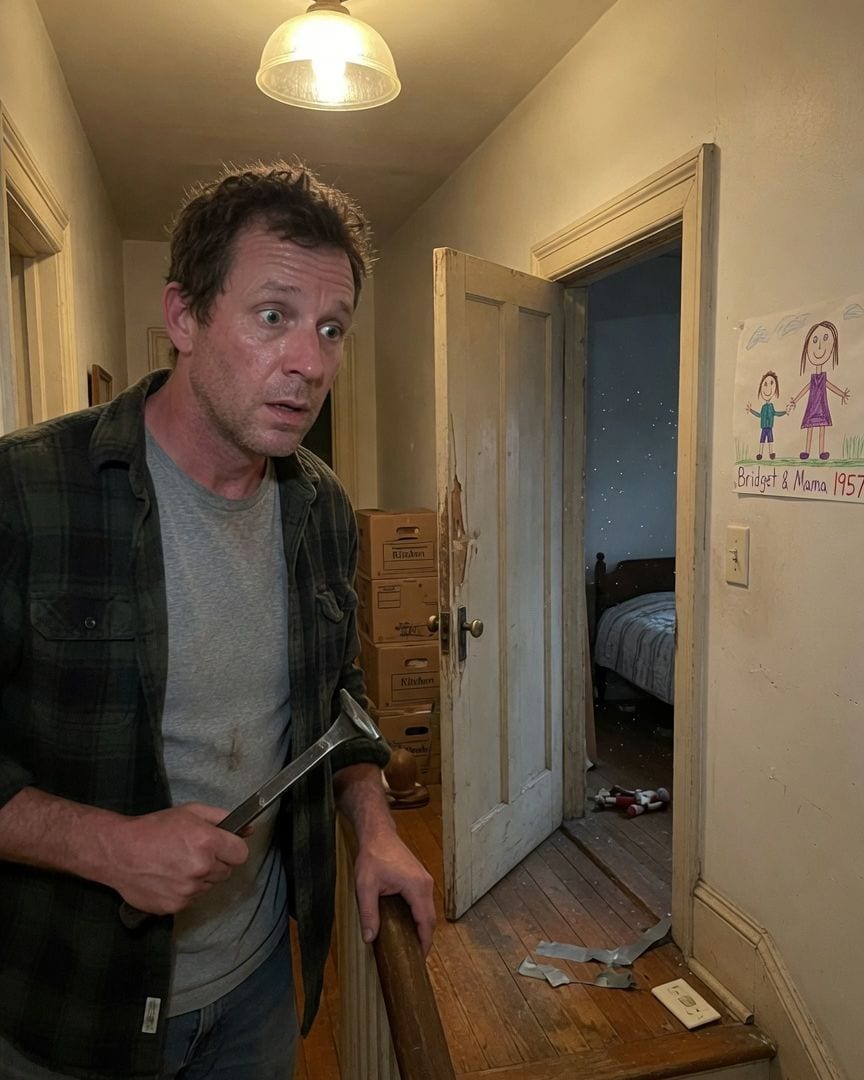
My landing light switches itself off at 9:40 every night. I've watched the switch flick down under nothing, the tape peeled back. The house holds its breath.
My great-uncle's old house was a quiet gift, a place to finally settle. But as I unpacked, a strange worn path on the floorboards led me to a small, barely visible door, perfectly blended into the wall. It was undeniably locked, and felt like a deliberately obscured secret.
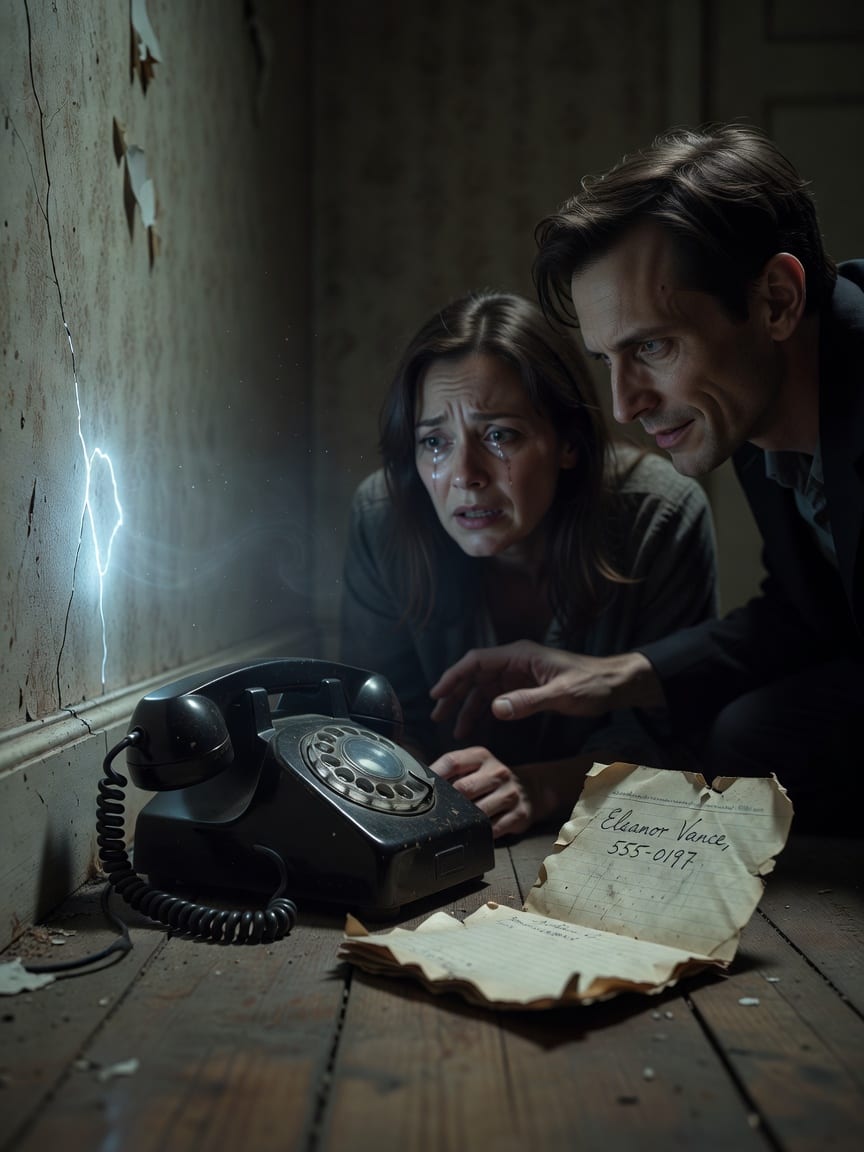
My house's walls ring when I dial a phone number from a 1974 directory. My neighbors said that directory was trash.
I was sifting boxes in my new house when I found an old 1974 telephone directory for my street. It listed my address, 12 Elm Street, under the name "Mr. & Mrs. Sheppard." On a whim, I called the faded seven-digit number. My cell phone rang, but a low, muffled sound also vibrated from the wall beside me.
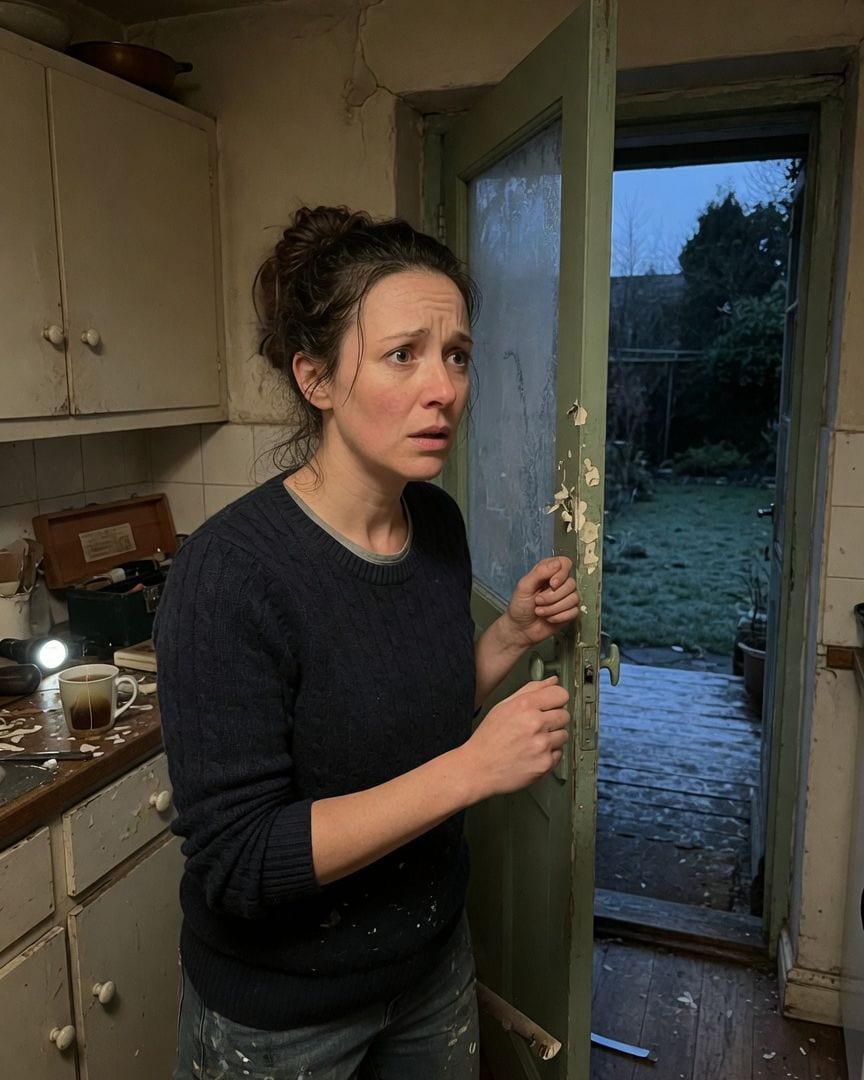
My 1950s cottage doorframe has '1923' carved into it, a date that simply cannot exist here.
I'd poured my heart into renovating my new cottage, especially the back door to my patio. But when I opened it, I wasn't looking at my frost-kissed garden. Instead, a cramped, reeking scullery with a bone-chilling dampness stared back, an impossible image that wouldn't leave my mind, even after the door closed.
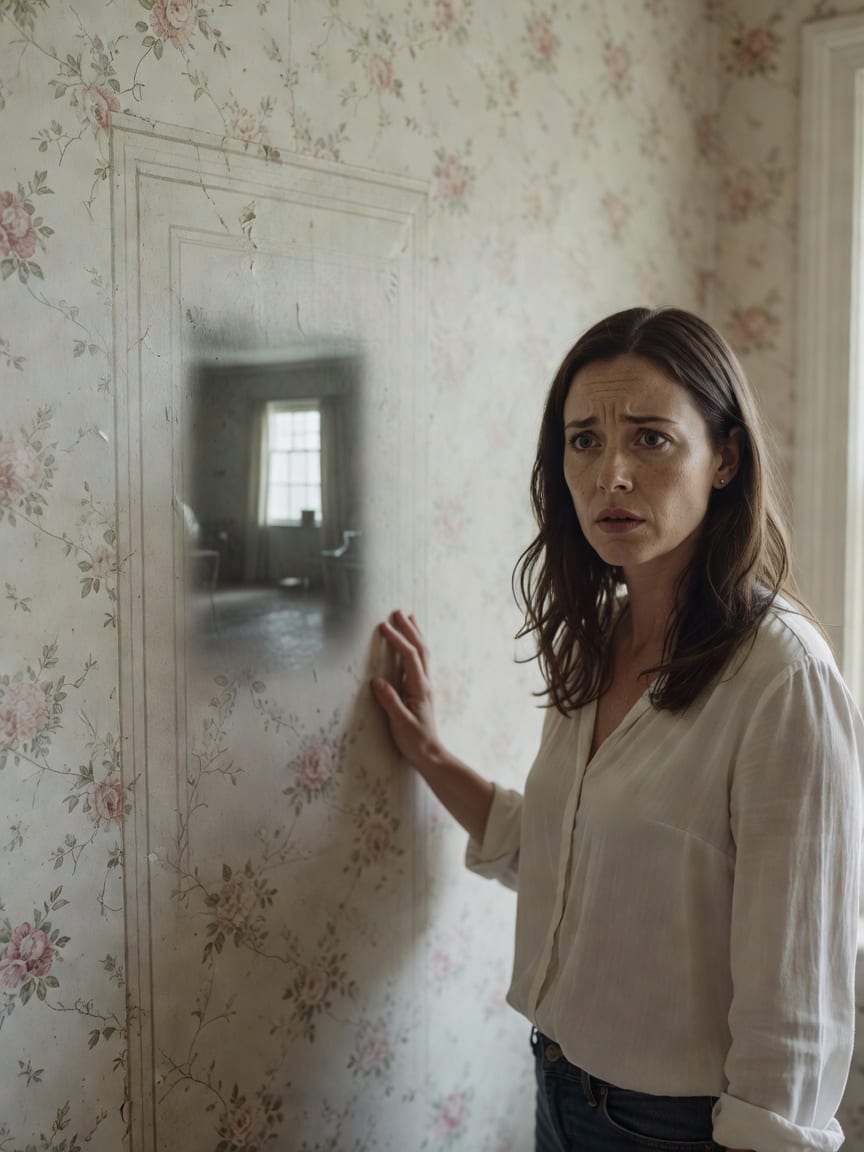
My neighbor’s house plans show a room in my bedroom that doesn’t exist. The surveyor described its door, but my wall is solid.
I was signing off on my neighbor's loft plans when I saw it: a small, square room off my own bedroom. My house, where I’d lived for five years, had no such room. But a surveyor confirmed its presence on paper, and older blueprints showed it had been there for decades. Now, I can feel a faint coldness from a hidden doorframe behind my wallpaper.