My son's toy rabbit says my name, then, 'bring him to the water.' The batteries are out.
James’s rabbit is a cheap thing, soft grey fur, plastic eyes, but it’s his favorite. Normally, it only says three things: “Let’s play!” “Hug me tight!” and a giggle. That’s it. Those are the only sounds it’s ever made.
Until a week ago.
I was in the kitchen, making coffee, James already at school. The rabbit was on the living room floor, where he’d left it. I heard a low, level voice, clear as day.
Not a cartoon character, not James’s voice, but a grown man. It whispered, “Nina, bring him to the water.”
I froze. My name. The chilling command. I thought maybe I’d left the TV on. I hadn't. I went into the living room, picked up the rabbit. Its little plastic speaker grille was visible on its back.
I pressed its belly. Nothing. I checked the small Velcro-sealed pouch. The battery pack was there, but felt light. I opened it. Empty.
The two AA batteries were sitting right on the kitchen counter, next to my coffee machine, exactly where I’d left them after James complained it was ‘broken’ three days earlier.
I’d meant to replace them, but hadn’t gotten around to it. They had been out of the rabbit for seventy-two hours.
I convinced myself it was residual static, a memory of a sound. Maybe a neighbor’s kid playing loudly. I put the rabbit back down, picked up the batteries from the counter, and stared at them. They sat there, inert.
I even held them to my ear. Nothing.
Then this morning. The same routine. James at school. Me, in the kitchen, spooning coffee into the filter, the batteries still on the counter. The rabbit was back on the living room floor. And it happened again.
That low, level whisper, perfectly distinct, coming from the living room: “Nina, bring him to the water.” It felt like the air itself had thinned. The hair on my arms stood up.
It wasn’t a trick of the light, or my imagination. It was real. And the batteries were still on the kitchen table, right beside me.
I tried to be methodical. That’s how my dad always taught me to handle anything I couldn’t understand: break it down. I got a small screwdriver from the drawer and brought the rabbit back into the kitchen.
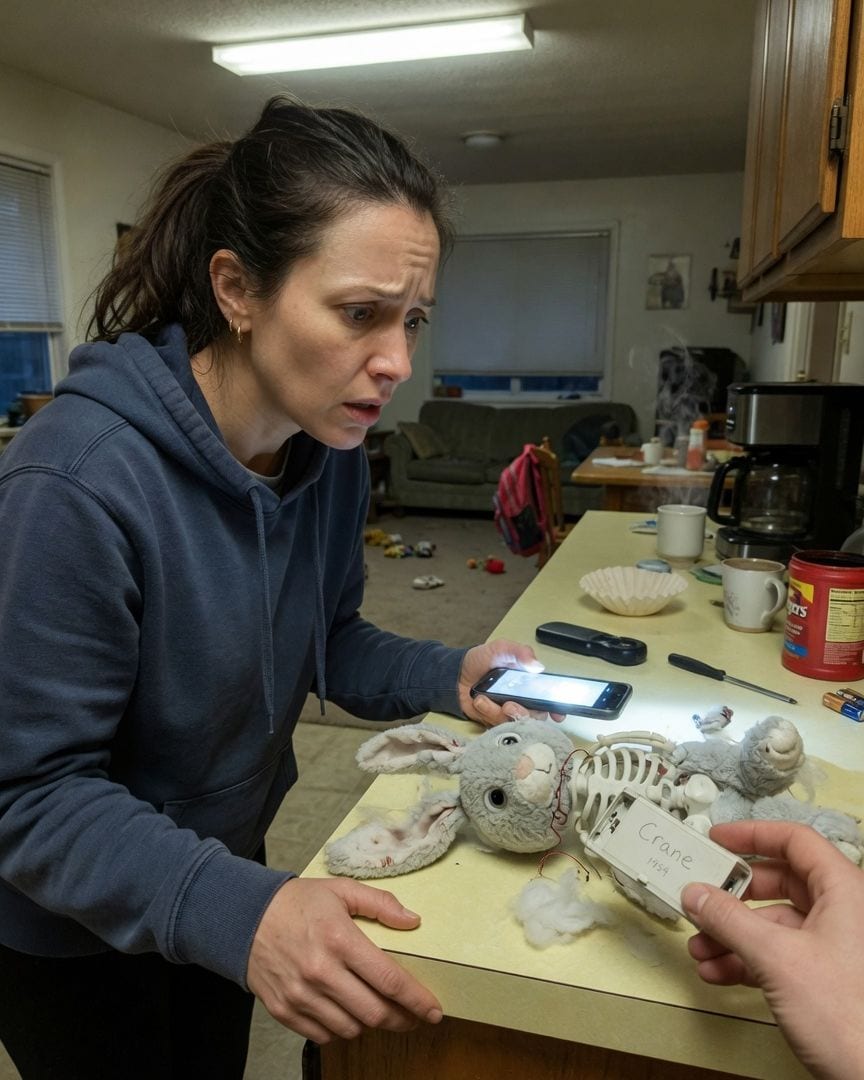
I laid it out on the counter next to the batteries, the whole scene laid bare under the fluorescent light.
I cut the stitching along the back seam, pulled apart the worn grey fur, exposing the plastic skeleton and the small, white sound box.
It was basic, two chips, one for the motor that made its nose twitch, one for the three pre-recorded phrases. Nothing else. No hidden speaker, no extra wires, no micro-SD card. Just the expected components.
I even removed the sound box, held it in my hand. It was dead. Completely inert.
Frustration clawed at me. This wasn’t a glitch. This was… impossible. I was trying to thread the sound box back into its slot when my finger caught on something hard and sharp inside the plastic of the battery compartment.
The plastic itself. It felt like a tiny scratch, almost imperceptible. I squinted, holding the compartment up to the light, then grabbed my phone and switched on the flashlight.
There, on the worn white plastic, just inside where the batteries would sit, was something faint. Almost erased by years of friction, but definitely there. Etched, by hand, into the plastic. I traced it with my fingertip.
It was a name.
'Crane.'
My maiden name. My son’s last name. Below it, a date. '1954.'
I stared at it, the flashlight beam trembling slightly in my hand. 1954. James’s rabbit, in its current form, was maybe five years old. I was thirty-four.
This rabbit, this voice, this impossible message – it wasn’t some random, isolated event. My family name. My son’s toy. A date from decades before I was born.
The ordinary explanation I had clung to for days, the one about faulty wiring or a strange signal, shattered in that instant. It was personal. And it was old.
The name, 'Crane, 1954,' burned in my mind. The rabbit wasn't just speaking; it was a record, a ledger, an artifact. I needed answers, and the only place to start was the past.
I spent the next few days holed up in the town's small, brick-faced historical archives. The air was thick with dust and the smell of old paper.
I scrolled through microfiche, my eyes blurring, sifting through census records, property deeds, birth announcements – anything with the name 'Crane' between 1950 and 1960.
Eventually, I found her: a great-aunt, Elara Crane, born in this very town in 1910, who had lived here until her death in the late 70s. She had no children, but the records confirmed her presence in 1954.
Was this the connection? Was this rabbit, somehow, hers? The idea felt absurd, yet it was the only thread I had.
I left the archives in a daze, the late afternoon sun sharp in my eyes. The street was quiet. As I reached my car, an elderly man stepped out from the shade of an oak tree near the entrance.
He was thin, with wispy white hair and eyes that seemed to hold a profound, quiet sadness. He walked directly towards me.
"Nina Crane," he said, his voice soft, almost a sigh. He didn't ask if I was Nina Crane. He knew. My full name. He reached out, his hand surprisingly firm, and gently took my hand in his.
His gaze was direct, unwavering.
"I am truly sorry for what is about to happen," he murmured, his thumb brushing lightly against my knuckles. There was no menace in his tone, only a profound, almost ritualistic solemnity.
Then, as abruptly as he had appeared, he released my hand, turned, and walked away, disappearing down a side street without a backward glance.
The words hung in the air, the chill of them colder than the evening breeze. Nina Crane. I am truly sorry. My entire body felt like ice.
Theodore Brooks's apology was a lead weight in my gut.
I tried to shake it off, to convince myself he was just a confused old man who’d mistaken me for someone else, or perhaps had a strange habit of accosting strangers with cryptic pronouncements.
But the precise use of my full name, the solemnity in his eyes, it stuck. The unsettling shift I’d felt since the rabbit began speaking intensified. It felt like the world was tightening around me.
My internet searches for "Theodore Brooks" and "Crane 1954" yielded nothing concrete, only broken links and dead ends. It was as if certain information had been scrubbed clean. Then I started noticing the car.
A dark sedan, the kind that blends into any parking lot, tinted windows. It appeared first a block down, then across the street, always parked for hours, sometimes all day. The same car. Always empty.
Except when I swore I saw a faint glint behind the dark glass, like a lens. Or an eye. The dread deepened. It wasn't just an old rabbit now; it was a presence.
One evening, my landline rang. I almost didn't answer it – I rarely use it these days. I picked it up. Silence. Not empty silence, but a heavy, deliberate absence of sound.
Then, a faint, rhythmic breathing, slow and steady, like someone waiting patiently. It lasted for maybe ten seconds, then a crisp, decisive click as the line disconnected. I stood there, receiver in hand, my breath catching in my throat.
The calls persisted. Every night, sometimes twice a night. Always the landline. Always the silence, the breathing, the click. My nerves frayed. The house felt less like a sanctuary and more like a stage. Someone was watching. Someone knew.
And they were letting me know they knew.
I couldn’t take it anymore. The silent calls, the lurking car, the constant feeling of eyes on my house.
I dug out the old property records I’d found at the archives, tracing the names of people associated with Elara Crane back to 1954, looking for any link to a Theodore Brooks.
Eventually, I found an address, a small, neat bungalow on the quieter side of town. It took every ounce of courage I had, but I drove there.
Theodore Brooks answered the door himself. He looked exactly as he had at the archives, perhaps a little more weary. He showed no surprise at seeing me. His eyes, though still sad, held a peculiar calmness.
"Nina Crane," he said, as if expecting me. "Come in. You must be thirsty."
He led me into a meticulously kept living room, offered me a cup of tea, and sat opposite me, his hands clasped, a slight, almost apologetic smile on his lips.
"You've been asking questions," he stated, not as a question, but a simple fact. "Your curiosity is commendable, but ill-advised."
"What did you mean, 'sorry for what is about to happen'?" I demanded, my voice tight. "And what does any of this have to do with my son's toy rabbit, or 1954?"
He took a slow sip of tea. "The rabbit is merely a channel. A familiar object, made to seem innocuous. Your family line, the Cranes, has always been… known. Marked, you could say. For generations. There's an arrangement, Nina.
And the channels are opened when a new generation reaches a particular age, when they are ready to be... renewed." He paused, his gaze fixed somewhere beyond me, as if looking into a distant memory. "The apology is a tradition.
For those of us who witness the transition. It acknowledges the inevitable."
"Transition? Inevitable?" My voice was rising now. "What are you talking about? And 'the water'? What does that mean?"
"The water is where the old channels are renewed," he said softly, his eyes returning to mine, devoid of emotion. "It is where the connection is made. James is now marked, Nina.
Just as others in your lineage were before him. Your recent investigations, your attempts to understand, they have only accelerated the process." He offered no further explanation for what the water was, or why the Cranes were 'marked.'
Only that it was a long-standing, unchangeable reality. He was just a functionary, an observer. He simply knew. His composure was more terrifying than any threat. He simply accepted it.
I drove home through the deepening twilight, the words "James is marked" a drumbeat in my head. The fear was a cold, hard knot in my stomach.
When I pulled into my driveway, a plain, unmarked brown paper package sat on my doorstep. My heart hammered. I picked it up, feeling the slight weight, the rigidity inside. No return address. No stamp. Just a simple, neat parcel.
My hands trembled as I tore open the paper. Inside, nestled in crinkled newspaper, was an antique tube radio. The kind my grandmother had, all polished wood and brass dials, probably from the 1950s. There was no note, no explanation.
Just the radio. The connection to the date etched in the rabbit, to Theodore’s vague pronouncements about 'channels' and 'renewal,' was immediate and horrifying.
I carried it inside, placed it on the kitchen table where the rabbit’s batteries had sat just days ago. The air in the room felt heavy, charged.
My breath hitched in my throat as I found the old-fashioned two-pronged plug and pushed it into an outlet. The radio hummed to life, a low, guttural thrumming.
Hesitantly, my hand shaking, I reached for the large, circular tuning dial. Static hissed and crackled, a torrent of white noise. I turned it slowly, the needle sweeping across the frequencies, through faint music and garbled voices.
Then, cutting through the noise, clear and precise, came that voice. Low and level. Unmistakably the same voice from the rabbit.
It spoke my full name.
"Nina Crane," it said, the words cutting through the static like a sharp blade. "They're coming for the water."
The sound filled the kitchen, echoing off the walls. I stood frozen, my hand still on the dial, unable to move. A pregnant pause followed, stretched out by the crackling air.
Then, the voice came again, softer this time, but with an unsettling, calm finality.
"Are you ready?"
The radio's voice, now undeniably linked to the rabbit, didn’t give me time to answer. Instead, it rattled off a series of numbers, a string of digits and cardinal points, before fading back into static.
I snatched my phone, fingers fumbling, and typed them into the maps app. The coordinates led to an old, forgotten building on the edge of town, near the sprawling reservoir.
A discreet, stone structure, once a municipal waterworks office, now seemingly abandoned. My stomach clenched. The water.
I drove there without thinking, fueled by a terrifying cocktail of dread and desperation. The building was older than I’d imagined, covered in ivy, windows boarded up. But the heavy oak door was slightly ajar.
Pushing it open, I stepped into a surprisingly clean, if dusty, interior. The air was cool, dry, and carried the faint scent of old paper and something metallic.
Behind a large, antique reception desk sat a woman. Calm, middle-aged, with kind, placid eyes and neatly pinned grey hair. Janet Hawkins. I recognized her from an old photo in the archive, a town clerk from decades ago.
She looked exactly as she had then, as if time had simply forgotten her. She smiled faintly, as if she had been expecting me. Which, of course, she had.
She gestured to a large, leather-bound ledger open on the counter before her. "You have questions, Nina," she said, her voice soft, entirely unthreatening. "The answers are all here."
My eyes fell on the ledger. It was thick, aged, its pages filled with neat, calligraphic script. My family name, 'Crane,' was repeated down the columns. Beside it, the names of various family members. Dates. And cryptic notes. 'Channel initiated.'
'Apology delivered.' And recurring entries, chillingly familiar: 'Bring him to the water.'
My finger traced the entries. My great-aunt Elara Crane, 1954. Others I didn't recognize, stretching back seventy years. And then, there it was: 'Nina Crane, 2024.' And below it, a line that made my blood run cold: 'James Crane, 2029.'
Theodore Brooks's name was also there, listed as an 'Observer.' It was all there, in black and white, laid bare. Not a conspiracy theory, not an urban legend, but a meticulous record.
The terrifying coherence of it all, the decades-long pattern, the chilling purpose of 'the water,' clicked into place with sickening clarity.
Horrified, a desperate rage bubbling up inside me, I grabbed the ledger, tearing it from the counter. This proof, this damning record, it was all I had. I would expose them. I would protect James.
Janet Hawkins, unperturbed, merely watched me with those placid, knowing eyes. "It's time for the channel to open, Nina," she said, her voice as calm as if discussing the weather. "You know what must be done."
I didn’t answer. I just fled. The ledger was a solid weight in my arms as I burst out of the old waterworks office, into the fading light.
I scrambled into my car, the engine roaring to life, and sped home. James. I had to get James.
He was fast asleep in his bed, oblivious. I scooped him up, a small, warm weight in my arms, pulling a blanket around him. He stirred, grumbled, but didn't fully wake. I drove.
Away from the town, away from the water, away from everything. I drove for hours, through the dark, deserted back roads, the speedometer needle creeping higher and higher. But the roads seemed to loop back on themselves.
The same stand of pines. The same dilapidated barn. Again and again. Panic began to set in, cold and sharp.
Exhausted, desperate, tears blurring my vision, I eventually pulled over. My headlights illuminated the vast, placid surface of the reservoir, shimmering under the pale moonlight. The water. The place they kept talking about. The very place I was trying to escape.
Then, in my rearview mirror, I saw it. The dark sedan. It pulled up silently behind me, its headlights cutting through the night. Figures emerged, silent and unhurried, moving with a chilling, practiced ease.
I looked at James, still asleep in the back seat, his small face peaceful. I looked at the water, reflecting the cold, indifferent moon. I looked at the approaching figures.
I knew, with a certainty that chilled me to the bone, what my choice had to be.
I stepped out of the car, leaving James safe, still sleeping, buckled in the back. The air was cold on my face.
The last thing I saw, before the world went dark, was the calm, knowing face of Janet Hawkins in the lead car, her expression one of quiet expectation.
James Crane was found by a passing motorist, asleep and unharmed in his mother's car, the engine still running, parked on the shoulder of Route 17, overlooking the municipal reservoir. Nina Crane was never seen again.
The leather-bound ledger was gone from the car. The old waterworks office remained empty, its doors locked and once more boarded up.
The toy rabbit, James's cherished companion, was eventually lost somewhere in the move to his grandmother's house, its batteries long dead.
Years later, James, now a teenager, was on a fishing trip with his grandfather by the very same reservoir. He cast his line, enjoying the quiet morning. His lure snagged on something in the shallows near the bank.
He tugged it free, and a small, smooth, dark stone tumbled onto the bank. As he picked it up, a faint, low voice, like a distant memory, whispered his name from the water, "James Crane."
If this one got to you
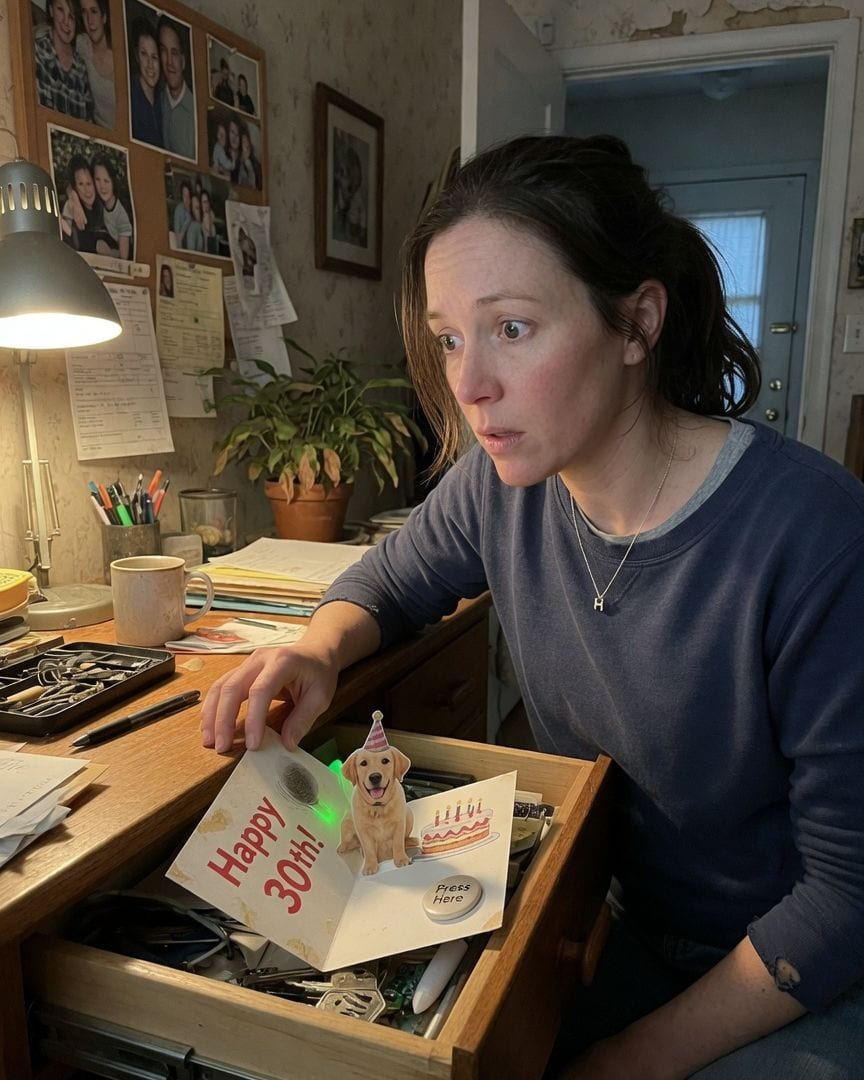
My dead father's musical card played past ten seconds, his voice saying my name, then, 'you left the back door open again.' I went downstairs. It was open.
At my desk, I heard my father's musical birthday card begin to play, a saccharine melody I hadn’t heard in years. Untouched for four years, the card's tiny speaker then spoke his familiar voice, calling my name and telling me I’d left the back door open. My father had died two years prior.
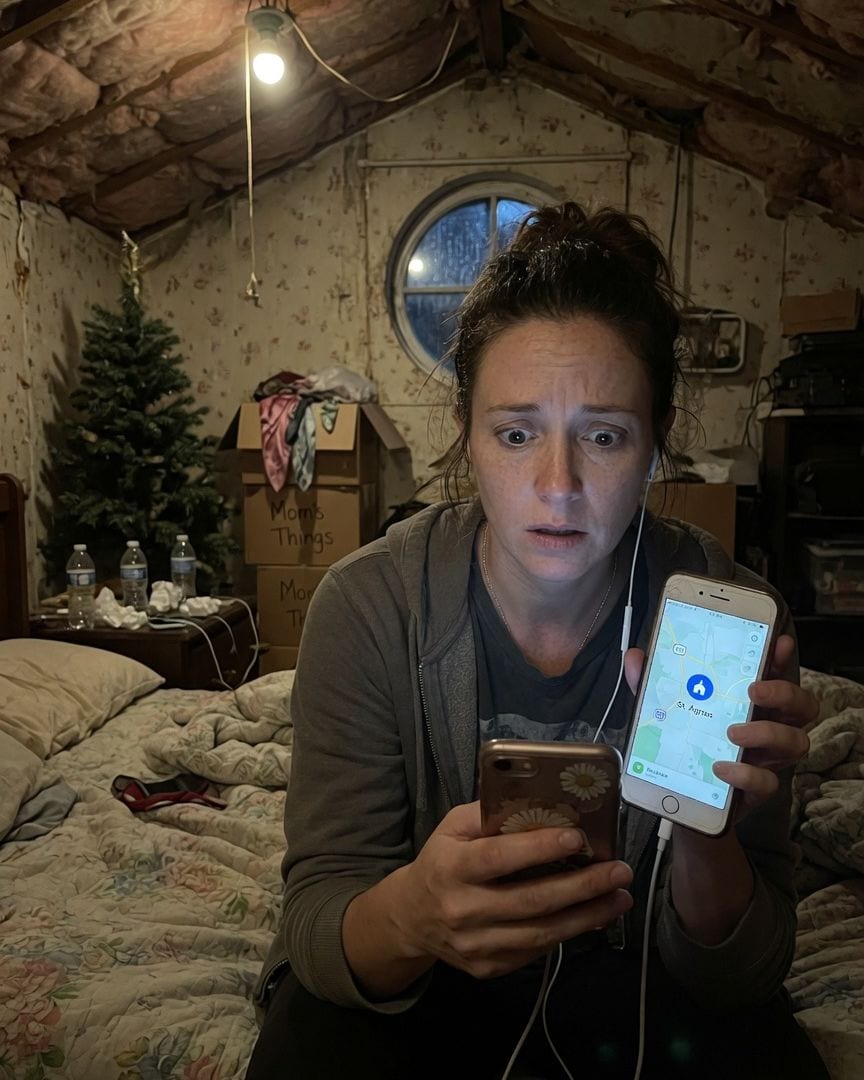
My mother's phone, powered down six months in the loft, just drove her old route to the church.
My mother, Margaret Vaughn, died six months ago, but I kept her on my 'Find My Family' app. Her icon usually stayed fixed at her last known location. Today, the blue dot started moving, slowly tracing her old Sunday drive route, right to the church where we held her funeral.
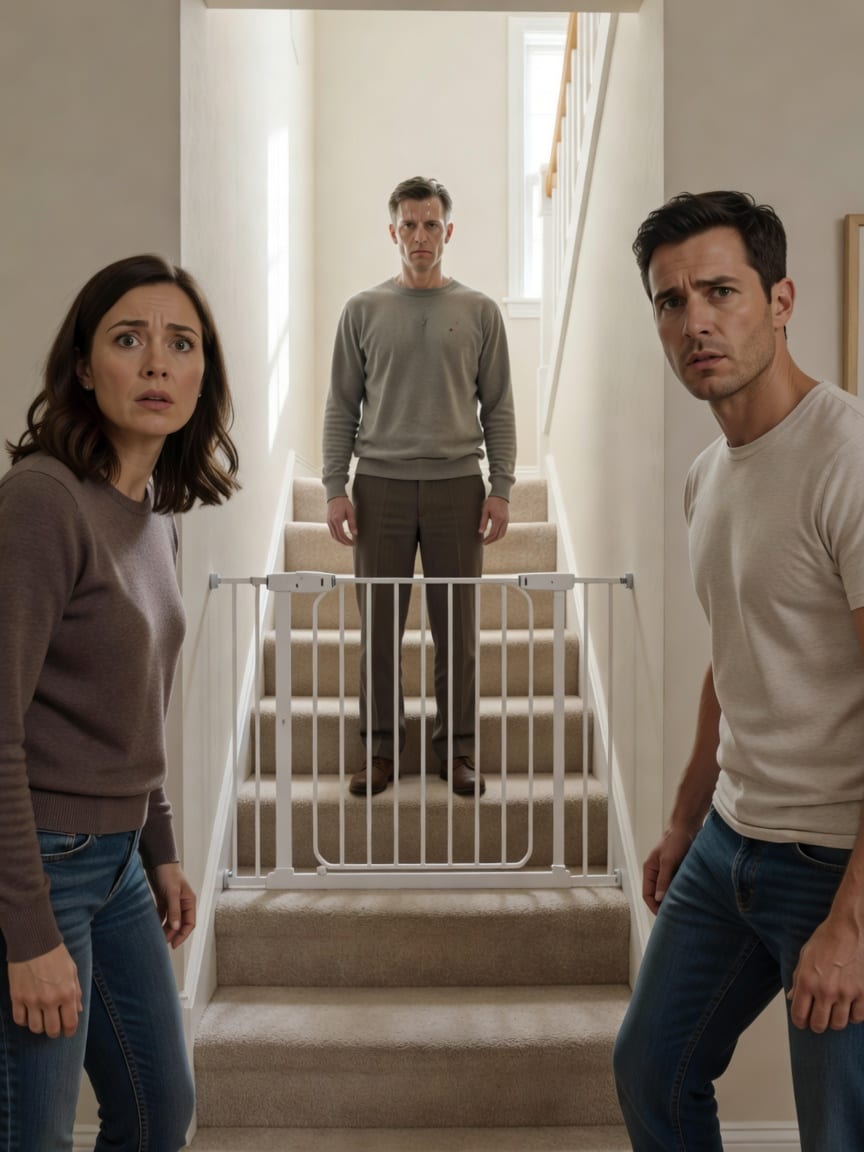
My stair gate latches itself every night. Pressure-fitted tight across my empty stairs, no children live here and no fixings exist on the wall.
I live alone in my inherited house, so the toddler gate at the top of my stairs should not be there. Each morning, I find it perfectly latched and sturdy, despite having hidden it away in the shed the day before. This isn't a quirk; it's a routine, and it isn't mine.
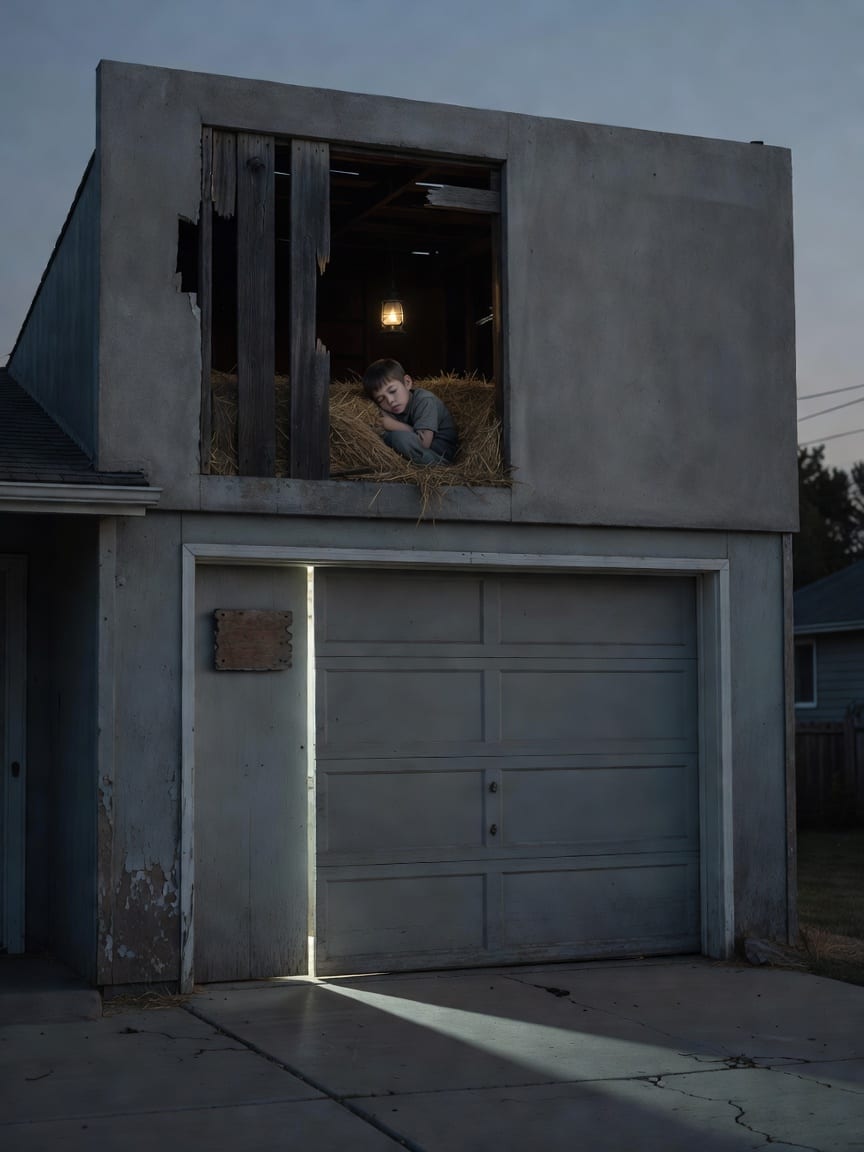
My garage's hayloft door stands open at night, onto a boy asleep in hay. The wall outside has been blank render since 1966.
My new bungalow's garage was a fixer-upper, meant to be my studio. One evening, after seeing strange visions and hearing phantom sounds, I pried open a loose plank in the wall. Inside, I found a child's tiny leather boot and a carved wooden horse, hidden in the dark.
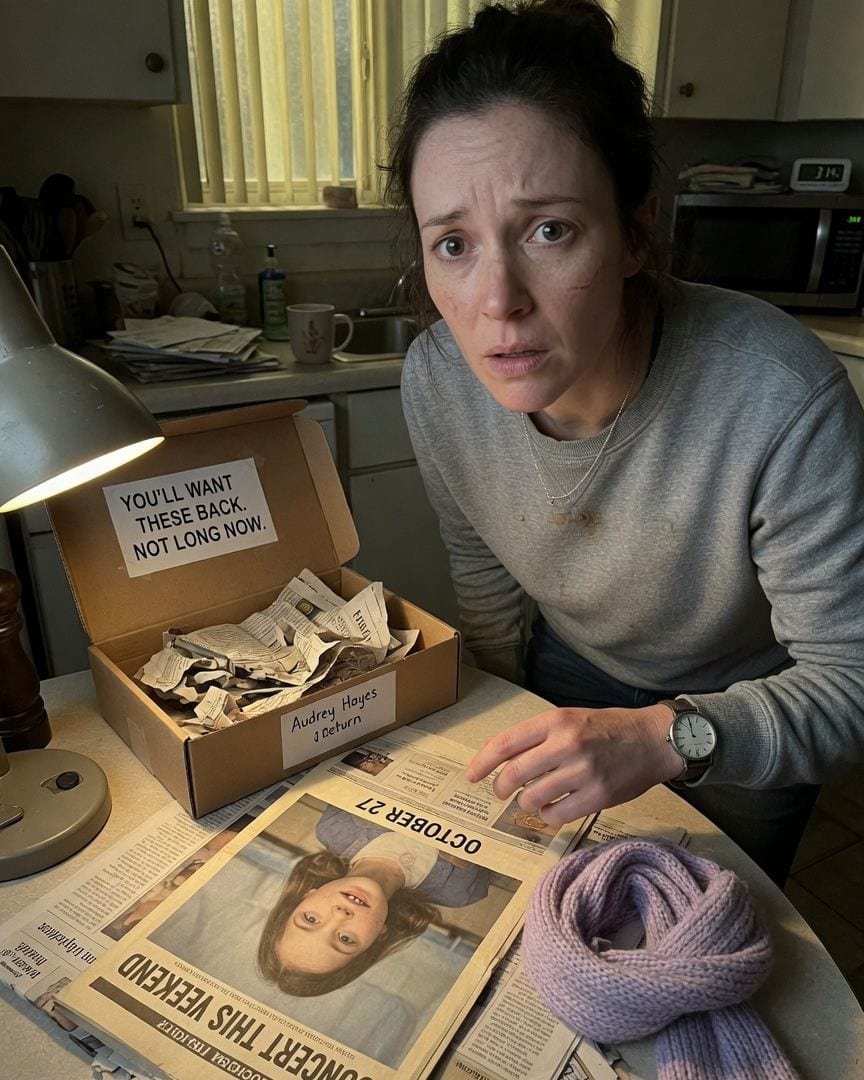
A box turned up with my name and no sender. Inside was a watch I lost years ago, still ticking and set right — wrapped in newspaper dated two weeks from now.
A plain brown box appeared on my step, containing my long-lost personal items. Among them, my grandmother's ticking watch and a newspaper dated two weeks in the future. But a historical ledger then revealed my name and these exact items, listed in 1965.
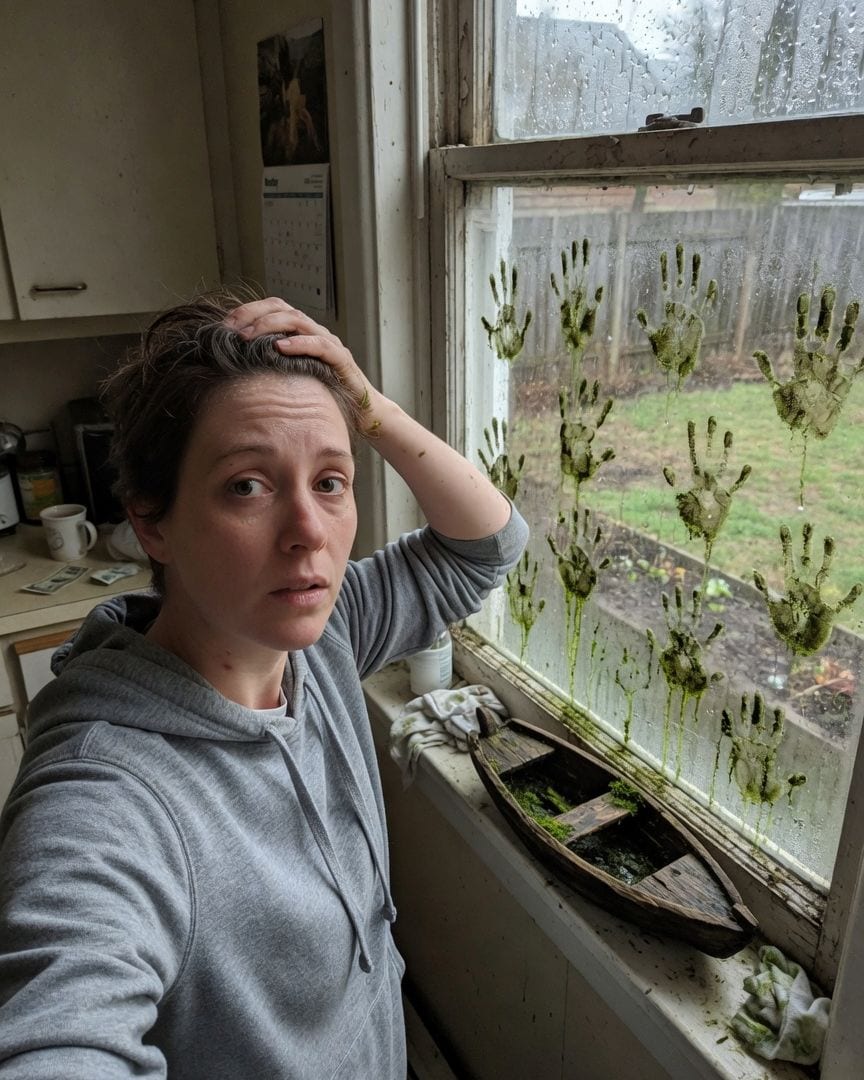
Wet moss handprints cover my kitchen window. My kitchen backs onto no water at all.
Monday morning, I found small, perfect handprints pressed against the *inside* of my kitchen window. They were wet and outlined in dark green moss, an impossible sight since my sealed window backs only onto a patch of lawn, with no water nearby. I ran my hand over them; they felt damp and cold.