My storage yard's Unit 112 tenant waves goodbye every night, but the gate log shows no entry, the unit is unrented, and its padlock has never been opened.
The fluorescent hum of the Kingsley Storage night booth is my constant companion. It’s 1:50 AM, quiet as always. I sip lukewarm coffee, watching the monitors.
There he is: the tenant for Unit 112, pulling up in his beat-up sedan, headlights cutting through the yard's gloom. He’s a regular, a man I think of as 'Frank' – though I’ve never heard his real name.
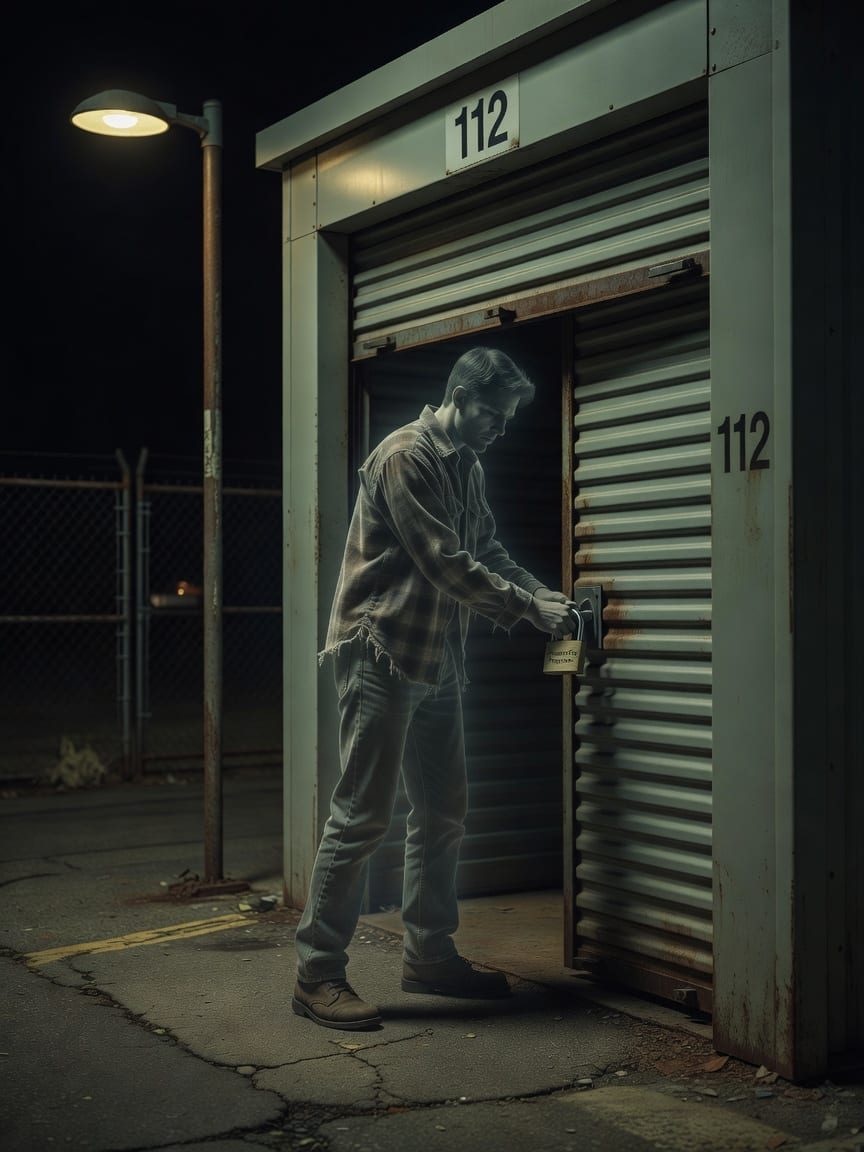
He parks, walks to Unit 112, rolls the door up with a familiar squeal, and disappears inside. Ten minutes later, he’s back out, rolls the door down, and drives off with a small wave to the camera.
I wave back, a reflex. This routine has played out almost every night for the six months I’ve worked here. But this morning, pulling the automated gate report for the week, a cold spot blooms in my stomach.
Every vehicle entry and exit is logged, except for Frank’s sedan. Not a single entry for Unit 112. And the unit, according to my system, is unrented. Its padlock, a standard Kingsley issue, is listed as sealed, undisturbed.
I double-check the report, refresh the screen. Nothing. I pull up the unit roster. Unit 112: 'Available'. I cross-reference by tenant name, by unit number, by date. Frank doesn't exist.
He's not in the system, has no rental agreement, no entry code. The padlock on Unit 112 should be one of the company's own, a heavy, unpickable thing, its serial number logged. I pull up the unit's maintenance history.
'Padlock installed: 2018-03-15. Last inspection: 2023-11-01. Status: Sealed.' No record of any key issue, no request for access. I try calling the general inquiry line, pretending to be a potential renter, asking about Unit 112.
'Oh, that one's available, ma'am,' the automated voice chirps. 'Ready for immediate rental.' My gaze drifts back to the monitor showing the yard. Unit 112, dark and silent, its padlock clearly visible in the security light, glinting.
It looks exactly as it always does. Yet, I saw Frank just hours ago. I saw him drive out, saw him wave. The mundane explanation – a glitch, a forgotten entry – feels increasingly flimsy.
I decide to check the unit myself, something I’ve never had cause to do on my shift. I grab the master keys for the company padlocks, my flashlight, and step out into the cold night.
The air bites at my face as I walk the silent rows. The beam of my flashlight dances over the identical grey doors, each one a solid block of anonymity. Unit 112 looms, indistinguishable from the others.
I reach it, my breath pluming in the cold. The heavy steel padlock hangs there, exactly as the system described: sealed, undisturbed, its metal cold beneath my gloved fingers. No sign of tampering, no scratch, no pry mark.
It looks like it hasn't been touched in years. But Frank was here. I try my master key, but the lock is stubbornly resistant. It's a company padlock, but it's not my company padlock. It doesn't yield.
Frustration mixes with a growing unease. I push against the door, testing its solidity.
It gives slightly, then with a soft groan, the heavy steel door of Unit 112, previously sealed by the company padlock, grinds open with an unexpected ease, revealing not empty concrete or stored boxes, but a single, small, hand-carved wooden bird sitting precisely in the center of the dusty floor, exactly like the one I saw Frank carrying.
I stared at the wooden bird, a tiny, intricate carving of an owl, its smooth, dark wood catching the faint light from the yard.
It was undeniably the same bird Frank had carried out of the unit a few nights prior, cradled in his palm as he waved.
How could it be here, inside a sealed unit, a unit that was supposedly empty and unrented? I didn't touch it. The air inside the unit felt still, ancient, despite the cold outside.
I backed out, carefully rolling the door back down, which again, slid with unnatural ease, clicking shut as if it had never been opened. The company padlock remained sealed. Back in the booth, my mind raced.
The next morning, before I left, I sought out Marcus Montgomery, the day shift manager, a man who’d been with Kingsley Storage for decades. “Marcus,” I started, trying to sound casual, “I had a strange one last night. Unit 112.
Thought I saw a tenant, but the logs are empty.” Marcus, a man of quiet routines, looked up from his coffee. His eyes, usually crinkling with a ready smile, were unreadable. “Unit 112, you say?”
he mused, a strange, almost distant quality in his voice. “That one’s been empty for ages, Grace. Probably a phantom in the cameras. Happens with old systems.” He shrugged, dismissing it. But his dismissal felt too practiced, too smooth.
I pressed, “I even went out to check. The padlock was sealed, but… I could have sworn there was something inside.” Marcus’s gaze sharpened, but only for a second. “Dust, probably. Or your imagination playing tricks. Long night.”
He went back to his paperwork, the conversation clearly closed. His reaction didn't soothe me; it deepened the knot in my stomach. Later that day, I returned to Kingsley Storage, claiming to have forgotten something.
I used my access to the back office, searching for any archived digital records that might predate the current system. I found an old, disconnected computer terminal in a dusty corner, humming faintly when I powered it up.
It looked like something from the late 90s, its screen a dull green.
I spent hours at the old terminal, navigating clunky menus and obscure file directories. The system was a labyrinth of obsolete software, but I found a section labeled 'Legacy Unit Management'. My fingers, sticky with dust, typed '112'.
No immediate results. I tried variations: 'Unit-112', 'U112'. Nothing. The old machine whirred, its fan struggling. As the sun began to set, casting long shadows through the office window, I felt a prickle on the back of my neck.
A chill that had nothing to do with the air conditioning. I glanced up. Marcus Montgomery stood in the doorway, a stack of folders in his arms, his expression unreadable. He hadn't made a sound.
“Still looking for your phantom, Grace?” His voice was soft, almost a whisper, but it carried an edge. “This old thing is practically a museum piece. Wouldn’t waste your time.” My heart hammered.
“Just curious about the history of the place, Marcus. You know, for a project.” I tried to sound nonchalant, but my hands were trembling slightly on the keyboard.
Marcus stepped into the room, setting the folders down with a deliberate thud. He walked over to me, stopping just behind my chair. His presence felt immense, heavy. “Some histories are best left undisturbed, Grace.
Especially the ones that don’t make sense. Kingsley Storage has… always had its quirks. Best to just let them be.” He leaned closer, his voice dropping to a near murmur. “Some things don’t need an explanation. They just are.
And they don’t like being poked.” He then walked out, leaving me alone with the humming terminal and the terrifying implication that my investigation had been noticed, and that Marcus knew far more than he let on.
That night, as I sat in my booth, the monitor for Unit 112 flickered.
For a split second, the image shifted, not to Frank, but to a static-filled, grainy shot of the unit door, and then a brief flash of the wooden bird, sitting inside, before returning to the normal, empty view.
It was a warning.
The warning shot from the monitor solidified my resolve. Marcus knew. The company knew. The next morning, I waited until Marcus was alone in his office, sipping his second coffee.
I walked in, holding a small, printout from the old terminal – a fragment of a file I’d managed to recover, showing a bizarre internal code for Unit 112.
“Marcus,” I said, my voice steady despite my racing pulse, “I think we need to talk about Unit 112. And Frank. And this.” I laid the printout on his desk.
Marcus took a slow sip of coffee, his gaze never leaving me. “You’ve been digging, Grace.” It wasn’t a question. “Yes. And I found this. What is 'Operational Anomaly 7-B'?
And why is it linked to Unit 112, a unit that’s supposedly empty?” Marcus sighed, a long, weary sound. He leaned back in his chair. “Grace, Kingsley Storage has been here a long time.
Longer than the building, in a way. The land… it has its own history.” He paused, choosing his words carefully. “Unit 112 is… unique. We don’t rent it out. Can’t, really.
It’s always been listed as 'Occupant: Inactive' in our internal systems, going back decades.” I stared, speechless. “Inactive? But I see a man, Frank, almost every night. He goes in, he moves things, he leaves.” Marcus nodded slowly. “Yes.
He does. Or rather, ‘it’ does. It’s a recurring manifestation. A routine. Happens here. Always has.” “A manifestation?” I scoffed, trying to cling to rationality. “Like a ghost?” “Not exactly,” Marcus said, rubbing his temples. “More like… a pattern.
A presence that anchors itself to that space. It takes on a form, performs a routine. We just… let it. It’s harmless, as long as it’s undisturbed. It’s part of the fabric of this place.”
He explained the protocol: maintain the sealed padlock, list it as inactive, and simply observe. “The wooden bird you saw?” Marcus continued, a faint smile touching his lips. “That’s an old tradition. Sometimes it leaves one, sometimes it finds one.
A little offering, perhaps. A sign of its presence. We simply clean it out if it appears, keep the unit tidy.” I felt a cold wave wash over me.
It all clicked into place: Frank, the unlogged entries, the sealed padlock, the bird. It wasn’t a glitch; it was a managed reality. “So, you’ve known all this time?” I whispered. “For how long?”
Marcus picked up a small, leather-bound ledger from a hidden drawer in his desk. “My grandfather worked for the original owners of this land. He passed this down to my father, and my father to me.
It’s been happening for generations, Grace. We just… keep the routine.” He opened the ledger, its pages brittle with age, revealing handwritten entries describing 'the visitor' of Unit 112, dating back to the 1940s.
The details matched Frank perfectly, but also described other 'visitors' with different names, following the same exact routine.
Marcus handed me the worn ledger. Its pages, yellowed with age, contained meticulous, spidery handwriting. Each entry was dated, some going back before the current Kingsley Storage facility was even built.
'August 12, 1943: Visitor observed, Unit 112 (formerly Plot 7, Section B). Routine activity logged. Small wooden item found, removed.' 'October 3, 1955: Figure matching previous descriptions seen entering Unit 112. No disturbance.'
I flipped through the pages, my fingers tracing the dates, the consistent descriptions of a man, always a man, performing the same ritual at the same hour.
The names changed – 'Mr. Peterson', 'The Watchman', 'The Quiet One' – but the routine was identical. It wasn't just Frank; it was a lineage, a cycle.
The ledger confirmed that the phenomenon predated the very structure around them, rooting it deeper into the land itself. Marcus watched me, his expression a mixture of resignation and a strange, quiet pride in his family's long-held secret.
“This isn’t just a quirk, Marcus,” I said, my voice barely audible. “This is… a permanent resident.” I looked up, my eyes wide with a new, dawning horror. “How many others have known?
How many generations of managers have simply… watched?” Marcus simply nodded, a grim confirmation.
He then pointed to a final, cryptic entry on the last page of the ledger, written in a different hand, much more recent: 'Note: Digital archive initiated. See OLD_LEGACY_SYSTEM/MAINTENANCE/U112.LOG for full historical data. Protocol: Continue observation. Do not interfere.'
The screen flickers, displaying an entry: 'UNIT 112 - OCCUPANT: INACTIVE'.
Below it, a series of dates stretches back through decades, each entry noting 'Routine Manifestation Observed' or 'Activity Logged', with specific descriptions of a figure matching Frank, and then other, older names, the pattern repeating for eighty years, long before the current building ever stood.
I stared at the screen, then at Marcus. The old terminal, the hidden archive, the ledger – it all wove into a single, terrifying tapestry. “Eighty years,” I breathed, “and no one ever tried to stop it? To understand it?”
Marcus shook his head. “The original owners, they tried. They brought in… specialists. They found nothing. No energy readings, no discernible source. Just the pattern. It settled into its routine.
They learned it was better to simply acknowledge it, contain it, and not provoke it. The unit was built over the specific spot where the manifestations were most consistent. It’s not a haunting, Grace. It’s… a function of the place.
A cyclical event that takes on a familiar form.” He explained that the 'Occupant: Inactive' designation was a clever way to hide the truth in plain sight, ensuring no one would accidentally rent the unit or disturb the 'tenant'.
The Kingsley Storage company had essentially become guardians of a strange, quiet phenomenon. They maintained the property, collected their fees from other units, and simply made sure Unit 112 continued its strange, unrented existence, its 'tenant' performing his nightly ritual.
The wooden bird, Marcus clarified, was indeed an old tradition. Sometimes, the 'tenant' would leave one.
Other times, a previous manager, or even one of the original 'specialists,' would place one inside as a symbolic gesture, a way of acknowledging the presence without engaging it directly.
It was a silent conversation across generations, between the living and the unliving. It wasn't a mystery; it was a system. A system that had been running, silently, for nearly a century.
I felt a profound, chilling clarity. It wasn't a monster to be fought, nor a puzzle to be solved. It was an immutable fact of the landscape, woven into the very ground beneath Kingsley Storage.
I looked at Marcus, then back at the archaic records on the screen. “So, what now? I just… become part of the system? Watch him every night, knowing he’s not real, but he is there?” Marcus nodded.
“You have a choice, Grace. You can leave. Pretend you never saw it. Or you can stay. And understand that some things just exist, and our job isn’t to explain them, but to coexist with them.
To ensure the routine continues, undisturbed.” There was no grand confrontation, no dramatic escape. The horror wasn't in a threat, but in the sheer, undeniable coherence of it all.
The institution had simply absorbed the inexplicable, making it part of its daily operations. I didn’t feel fear, not anymore. Only a deep, unsettling isolation. I was now one of the 'witnesses', bound by the knowledge.
I could try to expose it, but who would believe me? And what good would it do? The 'tenant' would still be there, performing his routine. The records would still exist.
The world would dismiss it as a hoax, and the cycle would simply continue, quietly, in the dark. I thought of Frank, his familiar wave, the boxes he 'moved'.
It was a quiet, harmless presence, but its very existence, its timeless repetition, hollowed me out. I chose to stay, for now.
Not out of courage, but a morbid fascination, a perverse sense of duty to a secret that had claimed generations.
I was now part of the institution's own record, a new entry in a long line of 'witnesses' for Unit 112. The dread outlived the answer; the answer merely solidified the dread into a permanent fixture of my reality.
I was not taken, but I was certainly changed, marked by the knowledge. The night shift would never be the same. The routine would continue, but now, it was her routine too.
I continued my night shifts at Kingsley Storage. The hum of the booth, the glow of the monitors, the cold bite of the air outside – it all remained.
Frank, or the entity that appeared as Frank, still visited Unit 112 near 2 AM most nights. He still rolled up the door, moved his phantom boxes, and rolled it down.
He still drove out with a small wave to the camera. I still waved back, a reflex honed by habit and now, by complicity. The gate reports still showed no entries for Unit 112. The padlock still remained sealed, undisturbed.
Marcus Montgomery still managed the day shift, still offered his quiet, knowing nods when our paths crossed. The old terminal remained in the dusty corner, a silent repository of an impossible history. Nothing had outwardly changed.
Everything had changed for me.
The weight of the knowledge settled on me like a permanent chill. I was no longer just a night attendant; I was a custodian of the unexplainable, a silent observer in a decades-long theatre of the absurd.
The isolation was profound. How could you explain to anyone that the world contained such a perfectly managed, utterly impossible routine?
I found myself watching other units, other shadows, wondering what other quiet anomalies lay hidden beneath the mundane surfaces of the world. I never saw anything else. Just Frank. Just Unit 112. The routine was sacred, inviolable.
I still sat in the booth, the coffee still lukewarm, the monitors still displaying the yard's quiet corners. But now, when Frank's sedan pulled away and his figure waved, I felt a different kind of shiver.
It wasn't fear of the unknown, but the cold recognition of the known. The dread had indeed outlived the answer, becoming a quiet, constant hum beneath the surface of my life. I was part of it now.
A small, almost imperceptible cog in a strange, institutional machine that simply managed what could not be explained. The padlock is still sealed, but I know what’s inside, and I know he’ll be back tonight.
If this one got to you
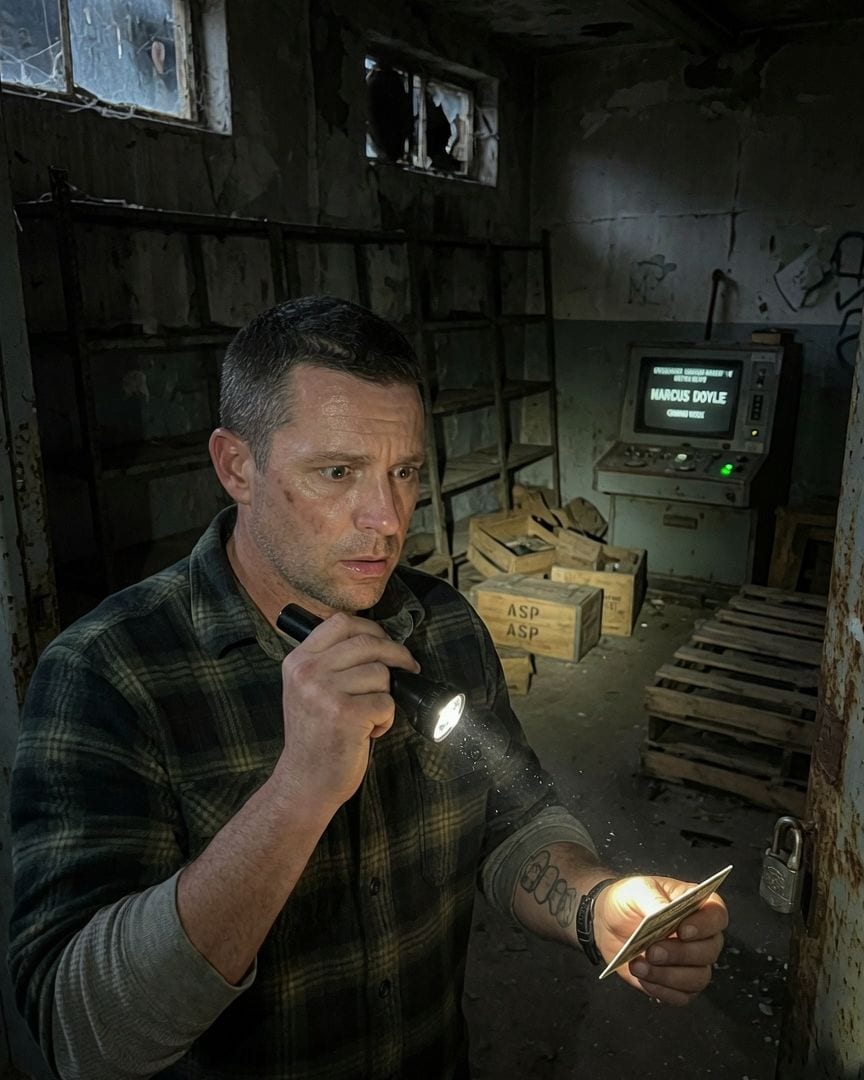
A former serviceman found his name on an active duty roster for a military base decommissioned in 2019. His access card had already logged three entries last month.
Six years after leaving the service, Marcus Doyle’s quiet suburban life was upended by an old access card notice. It came with a chilling printout: his badge number and name, logged entering Fort Crestwood’s Ammunition Supply Point three times last month, each at 0240. The former military base had been officially decommissioned in 2019, its buildings abandoned and gates chained. After discovering his own access card matched the log, Marcus returned to the derelict site, only to find a humming console displaying his name as current "personnel assignment" for the coming week. What could be happening at a base that no longer exists?
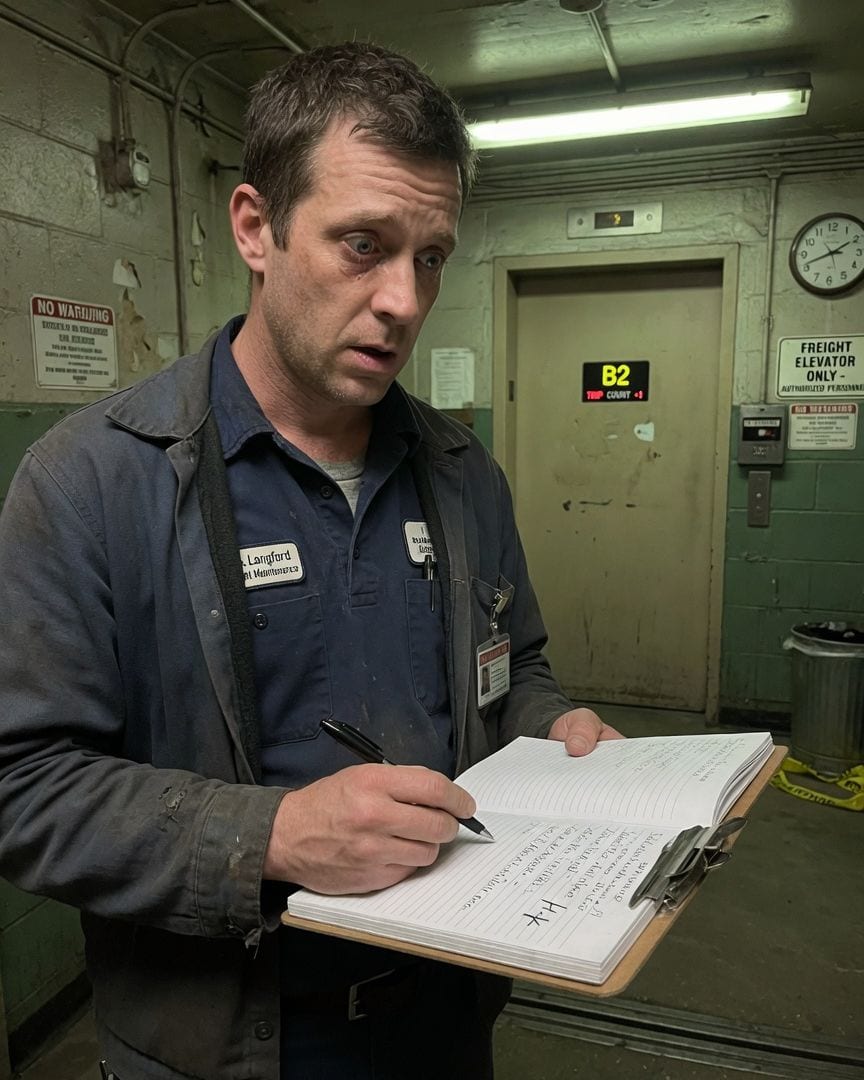
A man just took the elevator to the sealed sub-basement. He isn't on any staff roster, but my initials are in the logbook.
As a maintenance worker, my job is mostly routine, like signing the daily log for the old building's freight elevator. But one night, the log showed a trip to the sub-basement, sealed for a decade, timestamped with my key-switch and signed with my own initials, for a run I never made.
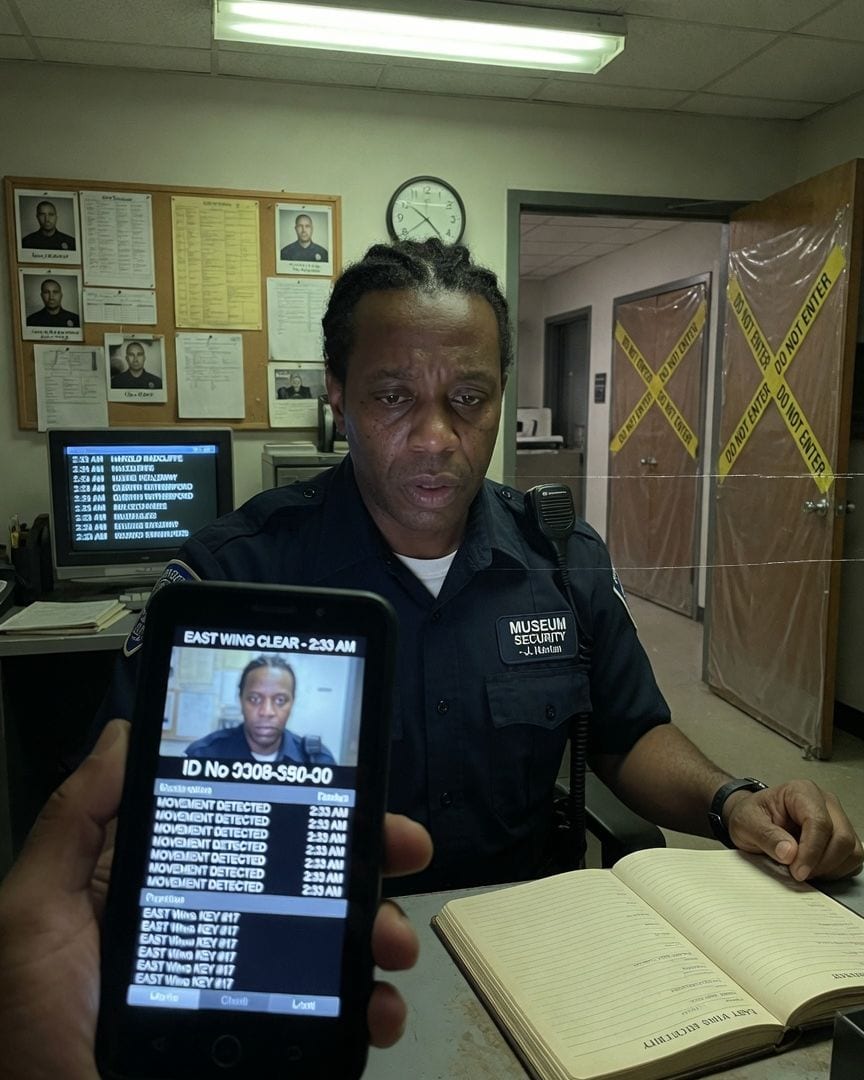
My guard log shows the east wing cleared at 2:33 AM. That wing's been sealed for months, doors screwed shut.
I was on my final security rounds in the quiet museum after midnight, ready to clock out. My handheld scanner showed the East Wing cleared at 2:33 AM under my ID, though it's been sealed for months. Then my hand brushed a faint, precise scratch on the plastic covering the doorframe, exactly where a security scanner would be held.
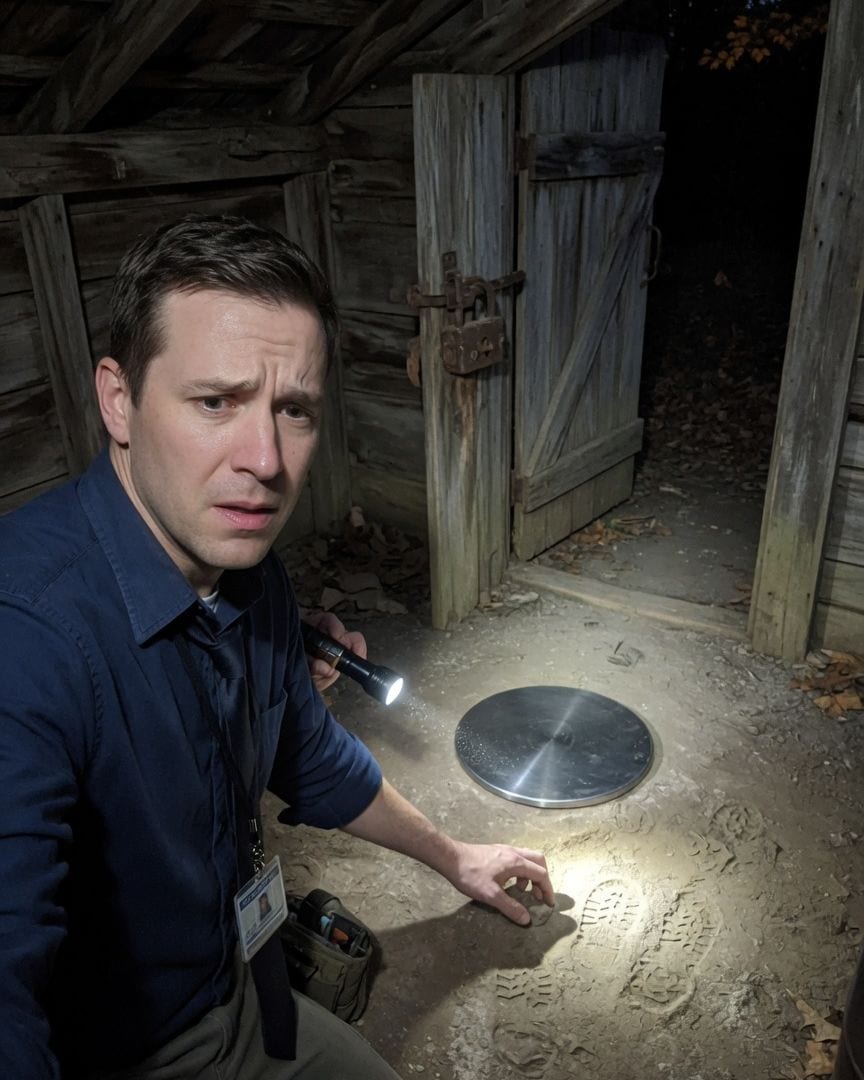
A meticulous archivist found a Cold War file showing a weathered shed with boot prints walking in, but none ever walking out, and a custody log signed for eighty-one years.
Devin Mauch, a methodical archivist at Fort Loran, was meticulously preparing the last of the WWII bundles for transfer, relishing the quiet order of declassification in the hushed, climate-controlled vault. His calm was shattered when he discovered the Ashfield Barn file, a slim folder containing a single grainy photograph of a small, weather-beaten wooden shed. In the dust before its slightly ajar door, a clear set of boot prints led directly inside, but none led out. The chilling caption read: 'SUBJECT REMAINS INSIDE, IN CUSTODY, INDEFINITE,' with the entry re-signed quarterly for eighty-one years, the last signature just six days ago. The shed, he knew, stood less than four miles from his home, its ancient, medieval lock hinting at a secret far deeper than any rural incident. What, or who, had been kept in that shed for over eight decades, and why did its custody continue to this day?
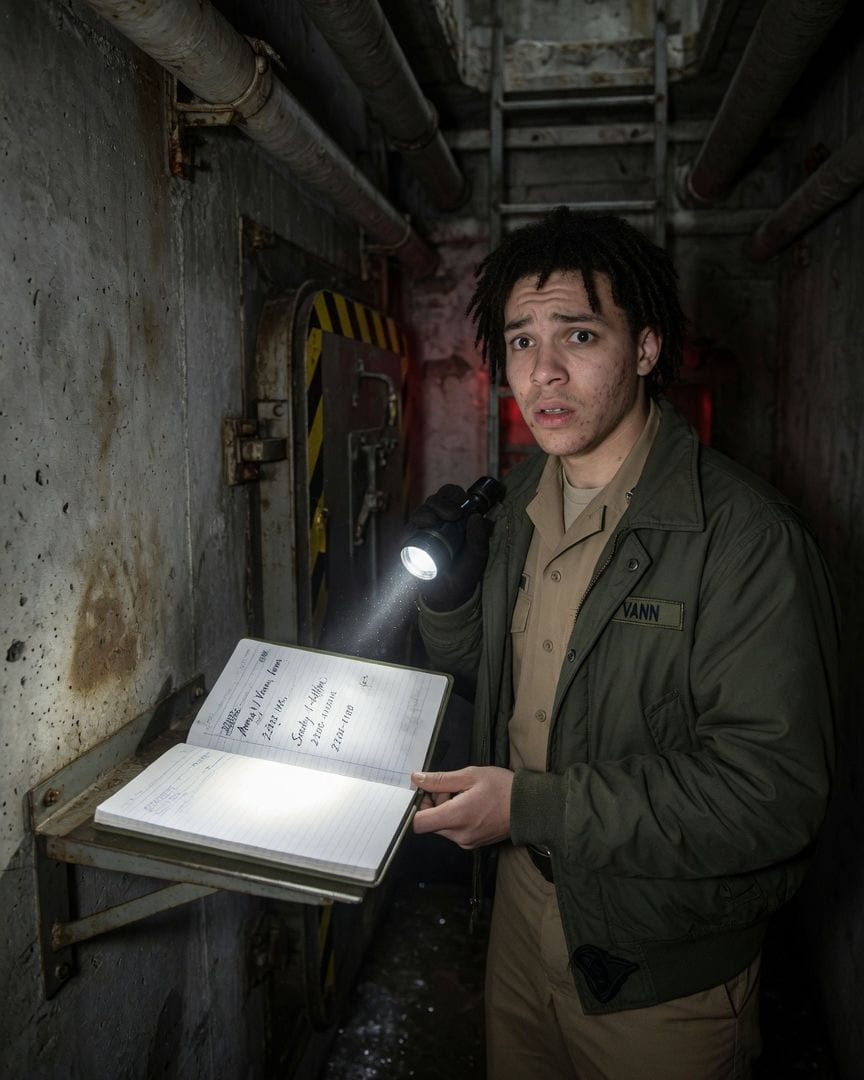
On his last patrol, Airman Vann sees a Cold War silo hatch light up from *inside*—it was welded shut a decade ago.
Airman Vincent Vann was on his last patrol across a vast, desolate Cold War missile field in the Dakotas, the cold, starless sky mirroring the emptiness of the landscape before his transfer. His routine check of eight hardened silo caps was shattered when a red fault light pulsed on Silo 4’s access panel, signaling an impossible breach from *inside* a hatch sealed for a decade. As more silos lit up, ignoring base orders, Vann found the hatch unlocked from within and descended into the dark shaft, where he discovered a pristine logbook bearing his own signature next to a chilling entry from a non-existent sentry, dated for *that very night*. Now, a steady *thump* echoed from deeper within the sealed concrete, leaving the Airman desperate for an explanation that simply wasn't there.
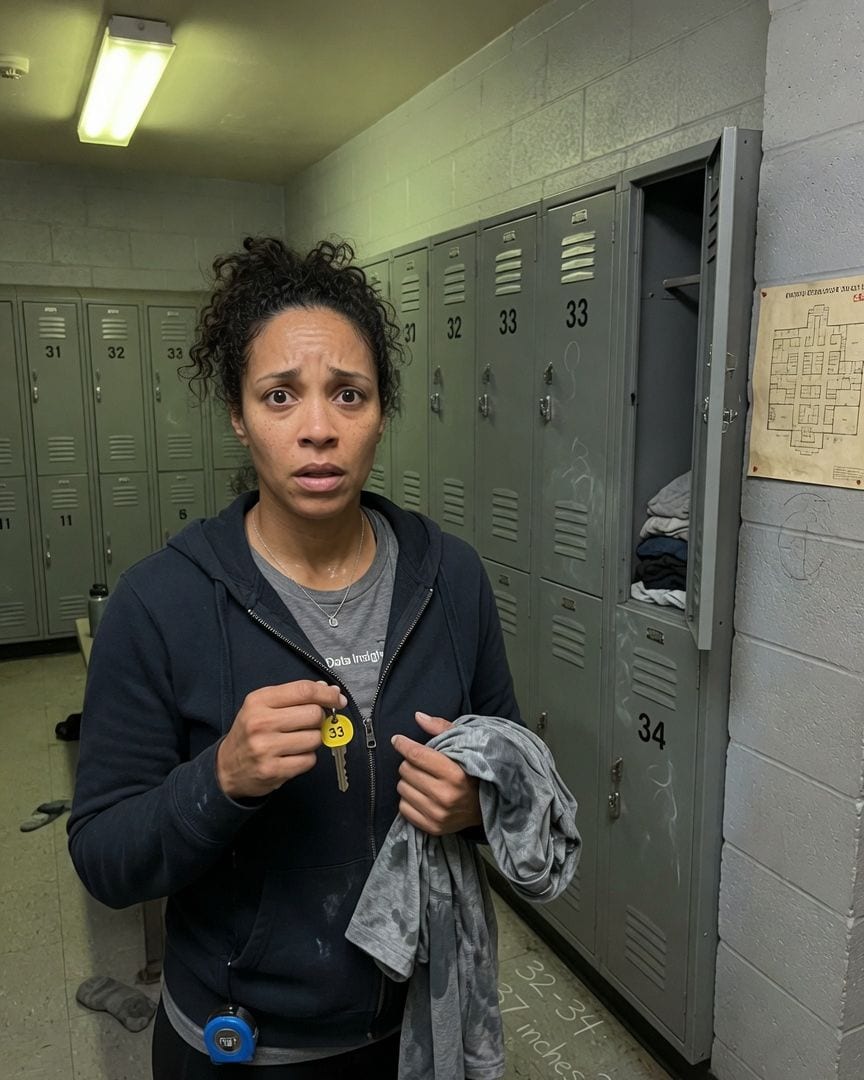
My gym locker 33 had two versions today. One held my dry clothes, the other my damp, sweat-soaked ones. I hadn't been to the gym since Monday.
Returning to my gym locker on Wednesday, I found not one, but two lockers numbered 33. My key opened both. The original held my clean, dry clothes, just as I’d left them on Monday, but the new, impossible locker contained my own sweaty, damp gym clothes, despite me not having been to the gym since.