A meticulous archivist found a Cold War file showing a weathered shed with boot prints walking in, but none ever walking out, and a custody log signed for eighty-one years.
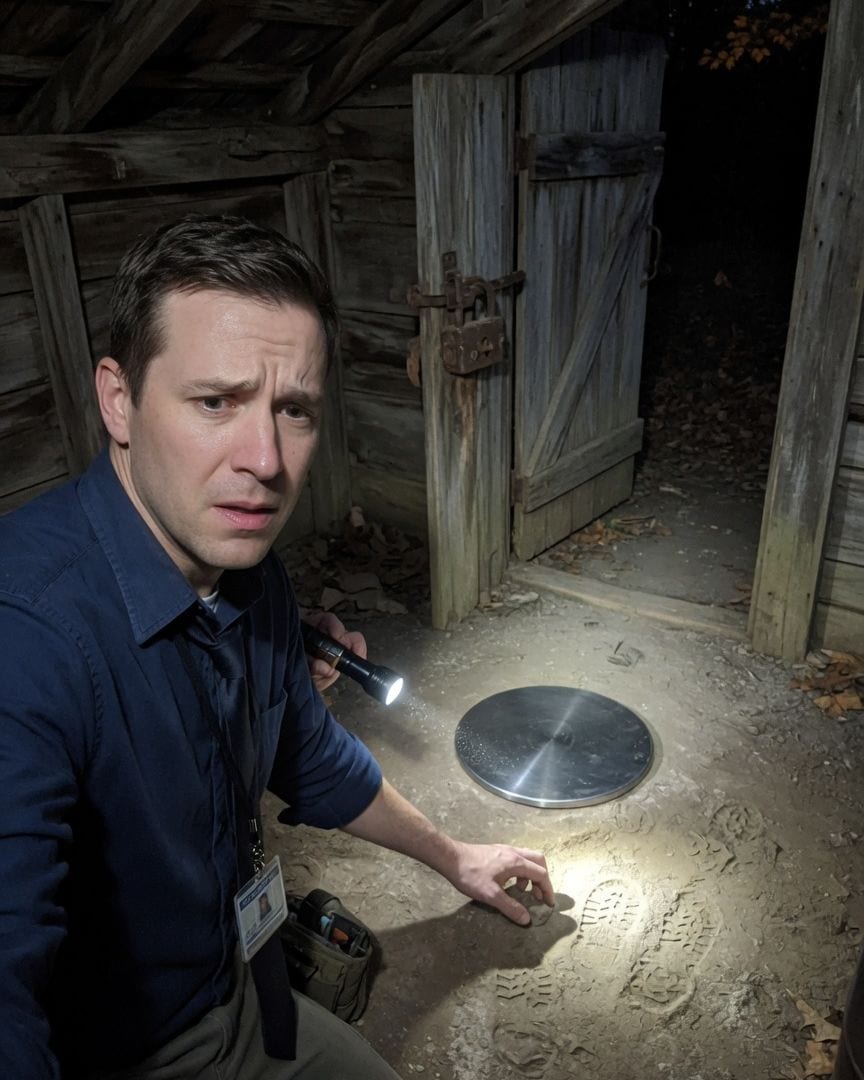
Devin Mauch worked in the hushed, climate-controlled vault at Fort Loran, the air thick with the scent of old paper and dust.
Two in the morning, and he was pulling the last of the WWII bundles, preparing the collection for its transfer east. He was a methodical man, relishing the quiet order of declassification, the neat closure of history.
But then he found the Ashfield Barn file. It was slim, just a few pages, nestled innocently in a box marked 'Miscellaneous Rural Incidents, New England Theater.'
Inside, among mundane reports of farm accidents and minor skirmishes, was a single, grainy black-and-white photograph. It showed a small, weather-beaten wooden shed, its door slightly ajar.
The ground in front of it was covered in a fine, pale dust – flour, perhaps, or powdered lime. And in that dust, clearly visible, were a set of boot prints. They led directly into the shed door.
But there were no prints leading out. The caption beneath the photo, written in a steady, official clerk’s hand, read: 'SUBJECT REMAINS INSIDE, IN CUSTODY, INDEFINITE.' Devin’s eyes dropped to the bottom of the page.
Beneath the original date, the custody entry had been re-signed, quarterly, for eighty-one years. The most recent signature was dated just six days ago.
The shed, he knew, was still standing, less than four miles from his own quiet house in rural Massachusetts.
Devin’s professional meticulousness, usually a source of calm, now fueled a growing unease.
He cross-referenced the Ashfield Barn file against property records, finding an old deed that confirmed the shed's location on what was now a neglected parcel of private land, long abandoned.
The records showed no permits for demolition, no record of any official activity there since the 1940s. During his lunch break, feigning an errand, he drove out. The shed was exactly as in the photo, weathered grey wood, sagged roof.
It looked utterly ordinary, except for the door. It was secured by a heavy, ancient lock, unlike anything he’d ever seen on a rural outbuilding, a thick, almost medieval mechanism that looked forged rather than manufactured.
A faint, almost imperceptible chill seemed to emanate from the structure, even in the warm autumn air. Back at Fort Loran, Devin accessed the digital archive of personnel records, searching for the names on the custody log.
He found the original clerk, long deceased. Then a string of other officials, some retired, some passed on. The pattern was clear: a new signatory would take over every few decades, maintaining the 'custody' without fail.
The consistency was chilling, suggesting not a bureaucratic oversight, but a deliberate, continuous act. He found one name, Paul Foster, a retired archivist, who had signed entries as recently as ten years ago.
Foster was 88, living in a nearby assisted living facility. Devin’s hand paused over the phone. This was no longer just a file; it was an open wound, bleeding into the present.
The image of the shed, the persistent signatures, the impossible custody – it gnawed at Devin. That evening, after his shift, he made a decision.
He packed a small toolkit, including a specialized lock-picking set he kept for antique document cases. Using his official ID, he logged out for a 'site inspection,' a plausible excuse if anyone asked.
He drove back to the Ashfield Barn property, the autumn twilight deepening around him. The air grew colder as he approached the shed. The ancient lock proved stubborn, but Devin's practiced hands eventually coaxed it open with a soft click.
He pushed the door inward, revealing a small, dark interior, surprisingly clean. No tools, no stored junk, just bare, packed earth. And a fine layer of flour dust, pristine and undisturbed, covering the floor.
In the center, flush with the ground, was a perfectly round, polished metal disc, about two feet in diameter. It hummed, a low, almost subsonic thrum that vibrated through the soles of his boots.
Devin knelt, reaching a tentative hand toward the disc. As his fingers neared the surface, a new, fresh boot print, identical to the one in the photograph, materialized in the flour dust beside his hand, leading directly into the disc.
Devin recoiled, his heart hammering against his ribs. He scrambled backward, eyes fixed on the impossible boot print. It was too perfect, too sudden.
He took a sample of the flour dust, carefully scooping a small amount into a sterile bag. Back at Fort Loran, under the pretense of testing for mold in old documents, he used the lab’s micro-spectrometer.
The flour was inert, ancient, yet showed no signs of degradation, no organic breakdown. It was a paradox. He then focused on Paul Foster, the retired archivist.
Devin drove to the assisted living facility, presenting himself as a student researching Fort Loran’s declassification history. Foster, frail but sharp, greeted him in a sunlit common room. Devin subtly steered the conversation to 'unusual legacy files.'
Foster’s eyes, milky with age, sharpened. He spoke in clipped, cautious tones, hinting at 'things that need to be kept quiet for the common good' and 'the arrangement.'
He mentioned 'the ledger,' and 'the maintenance,' words that echoed the note Devin had found. Foster seemed to evaluate Devin, a flicker of something unreadable in his gaze. 'Some knowledge,' Foster murmured, 'is a burden. Best left where it lies.'
Devin pressed gently, asking about the 'custody' of the Ashfield Barn. Foster’s hand trembled slightly as he picked up a teacup. 'It’s… a long-term project. Essential. The continuity is paramount. Someone always has to sign.'
He then abruptly changed the subject, asking about Devin’s family, his own work at Fort Loran, a strange, personal turn that made Devin uneasy. He left with a sense of dread, the old man’s words ringing in his ears.
The 'custody' wasn’t about a prisoner. It was about an arrangement, a maintenance, and a ledger.
The next morning, Devin found a crisp, unsigned note taped to his car windshield in the Fort Loran parking lot. The paper was heavy, official-grade, and the text was precisely typewritten: 'Some files are best left closed. The maintenance continues.'
The phrasing, the cold, impersonal tone, sent a shiver down his spine. It was almost identical to Paul Foster’s words. Someone knew. Someone was watching. He felt a prickling sensation on his neck throughout the day.
A file he had deliberately left slightly askew on his desk was now perfectly aligned. His coffee cup, placed on the left side of his monitor, was on the right. Small, almost imperceptible shifts that spoke volumes.
He scanned the faces of his colleagues, but everyone seemed absorbed in their own work. He tried to think rationally. Could Foster have called someone? A former colleague still at Fort Loran?
Maureen Abbott, his closest colleague, was the only person he trusted enough to confide in, but even then, a new layer of paranoia made him hesitate. He felt a cold knot tighten in his stomach.
The secrecy machine, as he now thought of it, wasn't just a collection of dusty papers; it was active, vigilant, and aware of his presence. He was no longer just an archivist; he was being observed.
The hunter had become the hunted.
Devin cornered Maureen Abbott by the coffee machine, a place where their conversations often drifted from work to personal matters, making it seem less urgent. 'Maureen, I need to show you something. Something…off-book.'
He led her to a quiet corner of the vault, away from the hum of servers. He pulled out the Ashfield Barn photo, the custody log, and the note from his windshield.
Maureen, a practical woman with a healthy skepticism, initially dismissed it as a prank or a misunderstanding. 'Boot prints? Probably a misfiled hunting incident. And the signatures? Bureaucratic inertia, Devin.'
But then her eyes fell on one of the older signatures on the custody log. 'Wait a minute. That’s Conrad Vaughn.'
Conrad Vaughn had been a respected, if eccentric, superior archivist who had retired a decade ago, suffering from early-onset dementia. 'Vaughn?' Devin asked, a new thread beginning to unravel.
'He was always a stickler for continuity,' Maureen mused, 'but he had this…side project. He called them his 'legacy records.' Kept them separate, off the main manifest. Said they required 'special continuity measures.'' Devin pressed, 'What kind of measures?
And why 'legacy'?' Maureen hesitated, looking around nervously. 'He had a hidden vault. Not really a vault, more a secure room, accessible only with his old key.
Said it was for records that were…' She paused, searching for the right word. '…'live.' He said some files were never closed, they just kept going. He was very particular about who knew about it.'
Devin felt a sudden chill that had nothing to do with the vault's temperature. 'Live files. And a hidden vault. Maureen, did he ever mention the Ashfield Barn?' Maureen shook her head. 'Never.
But the way he talked about the 'maintenance,' the 'arrangement'… it was always very serious. He wasn’t just archiving, he was…tending to something.' The pieces began to click into place for Devin.
The 'custody' wasn't about a prisoner in the shed. It was about maintaining something else, something that required signatures and observation. The shed wasn't a holding cell. It was a point of contact, a locus for the 'live file' system.
The 'Subject' wasn't in the shed. The shed was the custody. Maureen, seeing the dawning horror on Devin’s face, reached into her pocket. 'He gave me his old office key when he retired,' she said, her voice barely a whisper.
'Said I might need it for his 'legacy.'' She handed Devin a heavy, tarnished brass key, unlike any standard Fort Loran issue.
Armed with Vaughn’s key, Devin and Maureen located the hidden vault. It wasn’t in the main archives, but tucked away in a disused sub-basement, behind a false wall in an old boiler room.
The key turned with a heavy, rusted click, and the thick steel door swung inward, revealing not a dusty storage space, but a small, pristine chamber. The air within was still, cool, and carried a faint, metallic tang.
In the center of the room, on a simple stone pedestal, rested a single, large, leather-bound ledger. Its cover, thick and dark, was embossed with faded gold lettering: 'Ashfield Barn Custody Ledger.' Devin’s hand trembled as he reached for it.
He opened the heavy book. The pages were filled with the same meticulous script he’d seen on the individual file entries, a chronological record of names and dates, each signature a grim affirmation.
He flipped to the most recent entry, dated six days ago, the familiar signature of the most recent archivist.
And then, beneath it, in the next blank line, a new entry, its ink still appearing wet, meticulously penned in script he now recognized as Vaughn’s own, though Vaughn had been dead for years: 'SUBJECT OBSERVED: Devin Mauch.
STATUS: Active Inquiry. CUSTODY PROTOCOL: Initiated.'
The words seared into Devin’s mind. 'SUBJECT OBSERVED: Devin Mauch.' The full, terrifying truth detonated within him. The Ashfield Barn file wasn't a historical record; it was an active, self-perpetuating mechanism.
The 'Subject' was not a thing held prisoner, but a status applied to anyone who breached the secrecy around the anomaly in the barn.
The custody wasn't about locking something in; it was about locking onto those who dared to look too closely.
The metallic disc in the shed was a 'doorway,' or perhaps a 'receiver,' a focal point that registered any deep inquiry, any physical interaction, logging the observer as a new 'Subject.'
The boot prints were a sign of activation, of being recorded. The endless signatures were not just bureaucratic; they were a ritual, a continuous 'maintenance' of the system itself, affirming its hold over those it monitored.
Vaughn, long dead, had somehow ensured the ledger continued to be written, perhaps through a final, programmed entry, or through a deeper, more insidious link.
The 'file that is still being written' was a living document, a trap that expanded its reach with every new discovery.
Devin realized the 'secrecy machine' wasn't just an institution; it was a self-aware, self-sustaining entity, using the very records meant for declassification as its tools.
He was now part of its ongoing narrative, a new entry in a file that had no end.
The horror lived in the coherence: every clue, every strange detail, now clicked into place, forming a pattern that was dreadfully, inescapably logical. The lost were never lost. They were filed. And Devin Mauch had just signed himself in.
Devin and Maureen looked at each other, the unspoken question hanging heavy in the air: What now? Exposing it would only implicate them further, possibly making them permanent 'Subjects.' They had to dismantle this node of the system.
Devin flipped through the ledger, searching for any clue, any weakness. Deep within its pages, written in Vaughn's precise hand, was a series of complex, almost ritualistic instructions for a 'deactivation protocol.'
It involved specific sequences of signatures on certain 'release' forms, and a timed interlock with the metallic disc at the barn. It was a puzzle, a final, desperate challenge from Vaughn.
They worked frantically, Maureen cross-referencing archival codes while Devin deciphered the obscure language. They found the required blank forms, ancient and brittle, in a compartment hidden beneath the pedestal.
They signed, following the precise order, the ink feeling cold and heavy on the paper. Each signature, each step, felt like a desperate prayer. The final instruction was chilling: 'The last release must be affirmed at the point of custody.'
They raced back to the Ashfield Barn, the sun now setting, casting long, skeletal shadows. Devin pushed open the shed door. The metallic disc in the floor still hummed faintly, almost a whisper.
Maureen stood watch outside, a flashlight clutched in her hand. Devin knelt, placing his palm flat against the cool, vibrating surface of the disc.
He pulled out the special pen Vaughn had left with the ledger, a heavy, obsidian stylus, and with a deep breath, he signed his name onto the metallic surface of the disc itself, just as the ledger instructed, beneath the final 'release' entry.
The moment the pen lifted, the hum from the disc abruptly ceased. The polished metal darkened, turning dull and inert, like a dead eye. The strange, subtle chill in the shed vanished. They had done it.
They had, at least for this particular node, stopped the machine.
The Fort Loran collection shipped east the following week, the Ashfield Barn file now marked 'Deactivated' in the system.
Devin and Maureen worked diligently to purge all related records, ensuring no digital traces remained of the Custody Ledger or its protocols.
The old shed, now truly empty and inert, was eventually torn down by the property owner, who cited 'structural instability' and the need for new development.
The land was cleared, the earth turned over, erasing the physical locus of the dread. Life at Fort Loran slowly returned to its bureaucratic hum, but for Devin and Maureen, a quiet knowledge lingered.
They had closed one file, but the implications of the system, its patient, relentless nature, had permanently altered their perception of the world. They were survivors, but not entirely saved.
Weeks later, Devin received a transfer request: a promotion, to a newly established declassification facility in the Nevada desert, far from any existing archives.
It was an isolation, an exile, but also an opportunity to monitor the deeper currents of the secrecy machine. He accepted, seeing it as his new, solitary 'maintenance.'
As he packed his personal effects, he found an old, forgotten service medal belonging to his grandfather, a veteran archivist from the mid-20th century.
On the back, faintly engraved, was a single, familiar symbol: a stylized, interlocking circle, identical to a small, almost invisible mark he'd seen etched into the binding of the Ashfield Barn Custody Ledger.
He traced it with his finger, a cold dread settling in, realizing the system he had just fought might have been in his family for generations, a legacy he had unknowingly inherited, and now, reactivated.
The symbol on his grandfather’s medal was just faint enough to be dismissed, and just clear enough to know it was never truly over.
If this one got to you
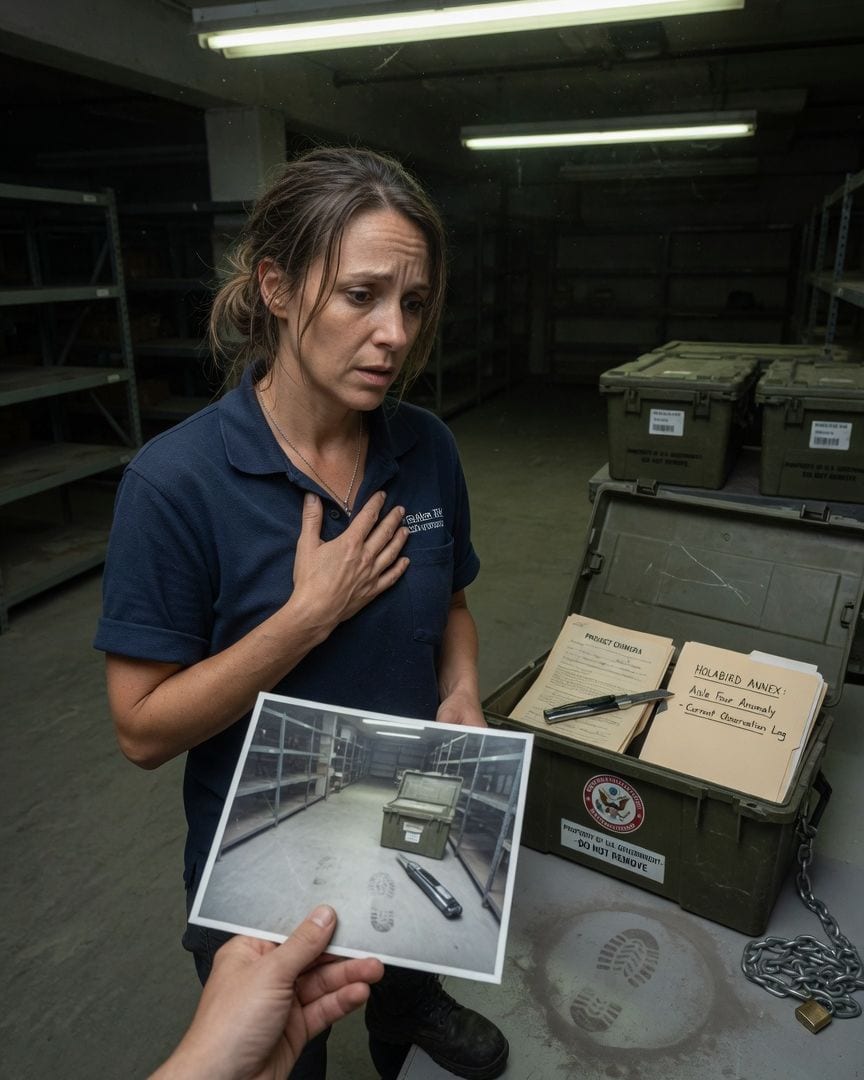
A logging clerk's last week at the Cold War annex uncovered a crate she'd moved, back in place with a photo of itself and a boot print not hers.
Elke Sarrazin, a forty-year-old logging clerk, felt the cold finality of her last week at Fort Holabird annex. The vast, echoing storage facility, slated for demolition, was almost empty as she meticulously logged the last sealed government crates for off-site storage. But Monday morning, a crate she had moved and logged days earlier sat precisely back in aisle four, its official seal unbroken and a fresh ring of dust around it. After it returned multiple times, Elke found a distinct boot print not her own beside it, then later, inside the crate, a glossy photograph of that very aisle, taken moments ago, showing the same impossible boot print.
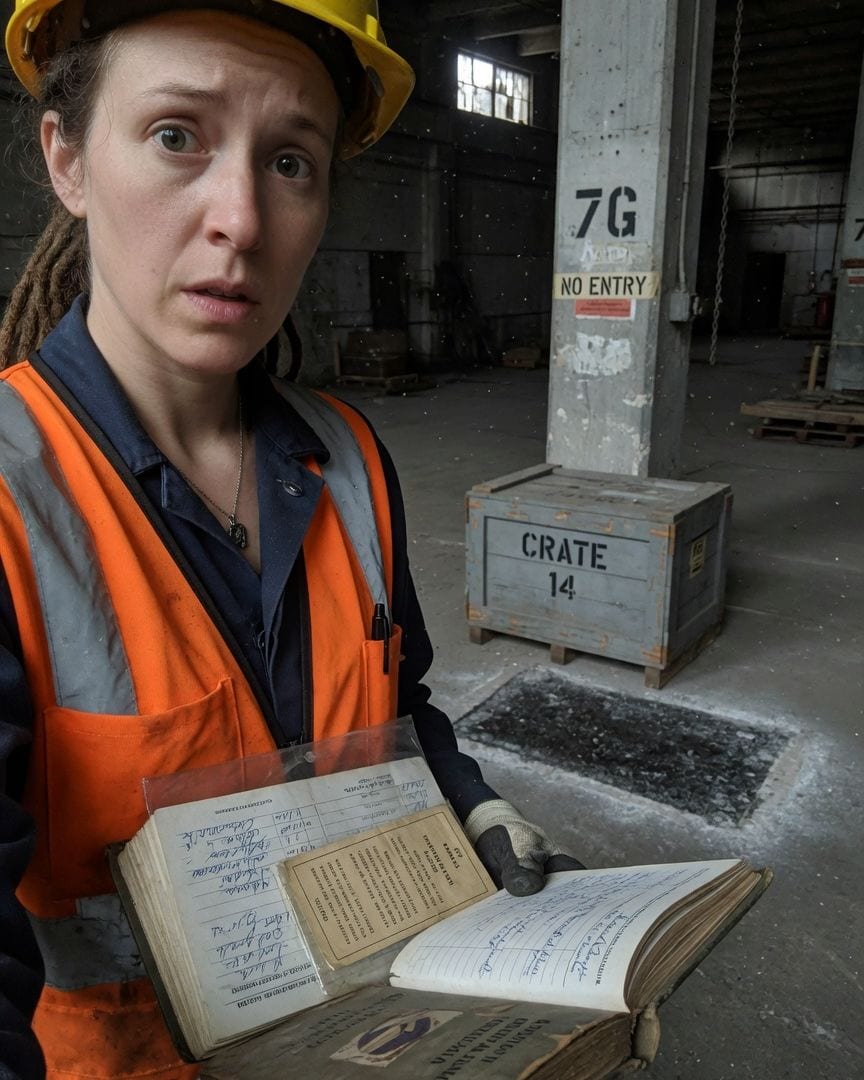
An inventory specialist's final check of a Carolina Cold War warehouse before demolition finds a crate signed for last week, years after the base closed, radiating impossible cold.
An inventory specialist, Deborah Kessling, raced a demolition deadline for a vast Carolina military warehouse, shuttered for years with its employees gone over a decade prior. Her final task was to log its forgotten contents. In a shadow-choked corner, she found Crate 14, radiating an impossible, decades-old chill. Its attached logbook showed a recent maintenance entry from 'Last week,' signed by a civilian contractor no one should have been, yet meticulous quarterly signatures stretched back sixty years, an unbroken chain of checks, even as the paper itself grew cold in her hands. What impossible secret had been so carefully maintained in this forgotten place?
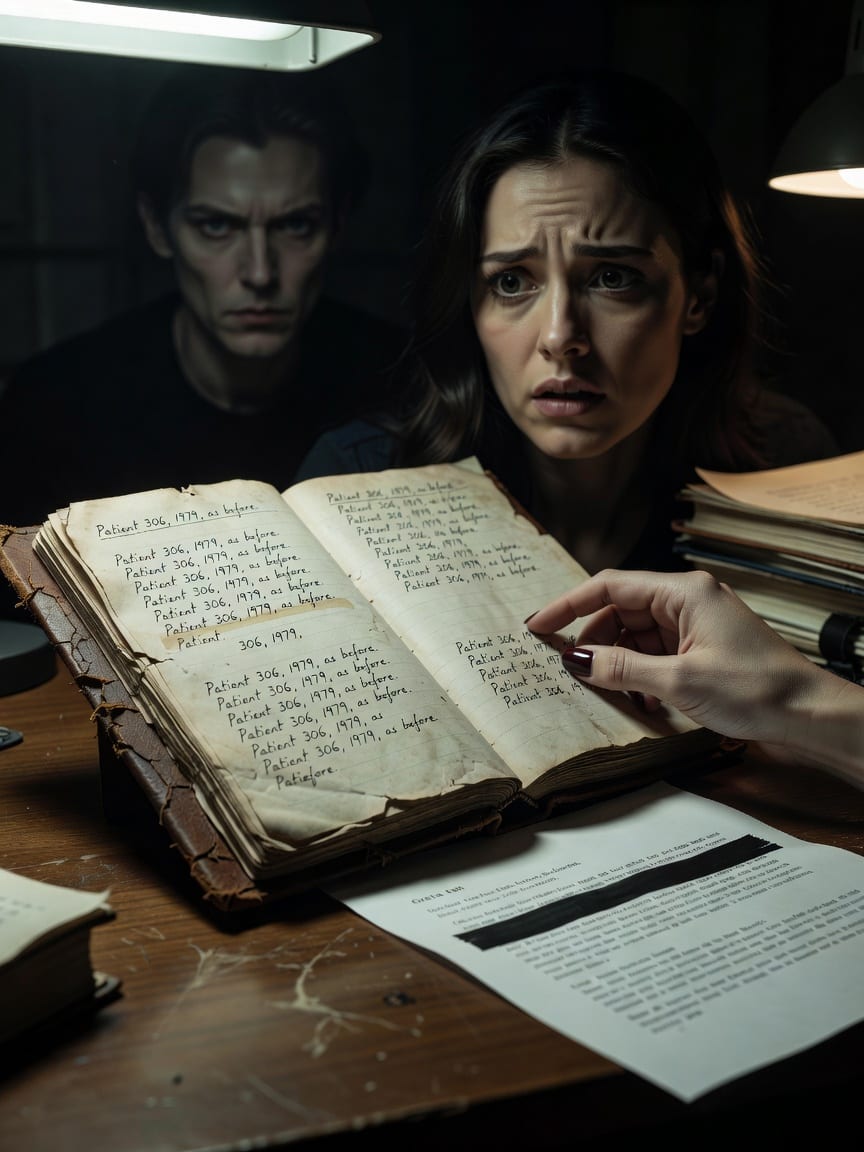
My archive ledger shows Patient 306 admitted in 1889, 1911, 1934, 1957, 1979 — same diagnosis, different names, and always, 'as before.'
My job as an archive transcriber is usually soothing, digitizing ancient admissions ledgers. But a recurring entry for 'Patient 306' caught my eye, noted 'as before' in the same hand for nearly a century. Digging deeper, I found a council file, dated 1998, outlining 'containment procedures' – and it named my own street and surname.
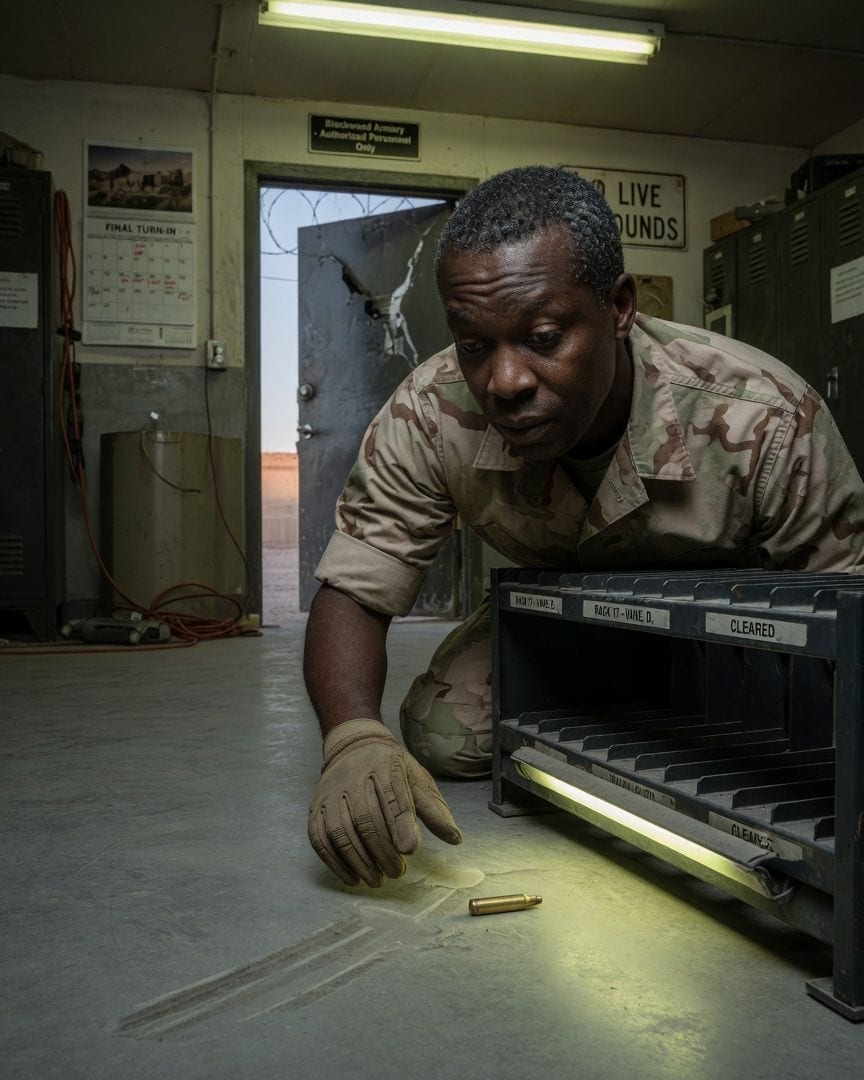
On his last weapon turn-in, Corporal Vane heard a rifle chambering rounds all night from inside the locked, empty armory. Then he found a spent casing.
Corporal Desmond Vane, a soldier known for his rigid adherence to procedure, meticulously cleared his M4 carbine for its final turn-in at the soon-to-be-decommissioned FOB Blackwood. Defying the armorer's odd rule, he ensured his weapon was absolutely empty, double-checking every component. Yet, hours later, from the locked and supposedly empty armory, Vane heard the unmistakable metallic click of a rifle round chambering itself, over and over, through the night. The next morning, a full inspection revealed no sign of intrusion, but beneath where Vane's carbine had been racked, a single spent brass casing lay on the pristine concrete, accompanied by a faint, impossible boot print. Who or what had violated the secure armory, and how?
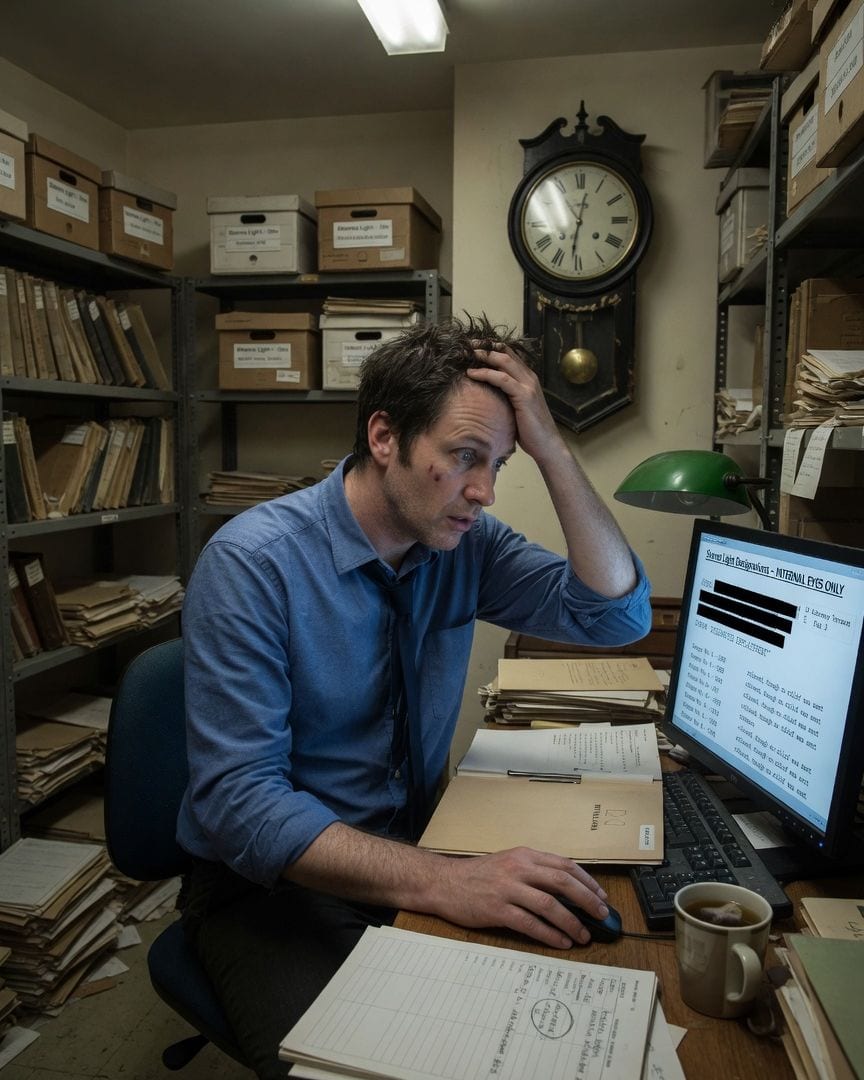
I found my street address in a century-old lighthouse file, printed decades before I lived there.
As a maritime archivist, my world revolves around forgotten lives and dusty ledgers. But the Skerne Light files broke that quiet rhythm, revealing a chilling pattern: 'Keeper number 6' relieved, though no relief was sent, repeating for decades. Now, an internal document with a strange code has led me to a redacted entry, revealing my own street address, decades before I ever lived there.
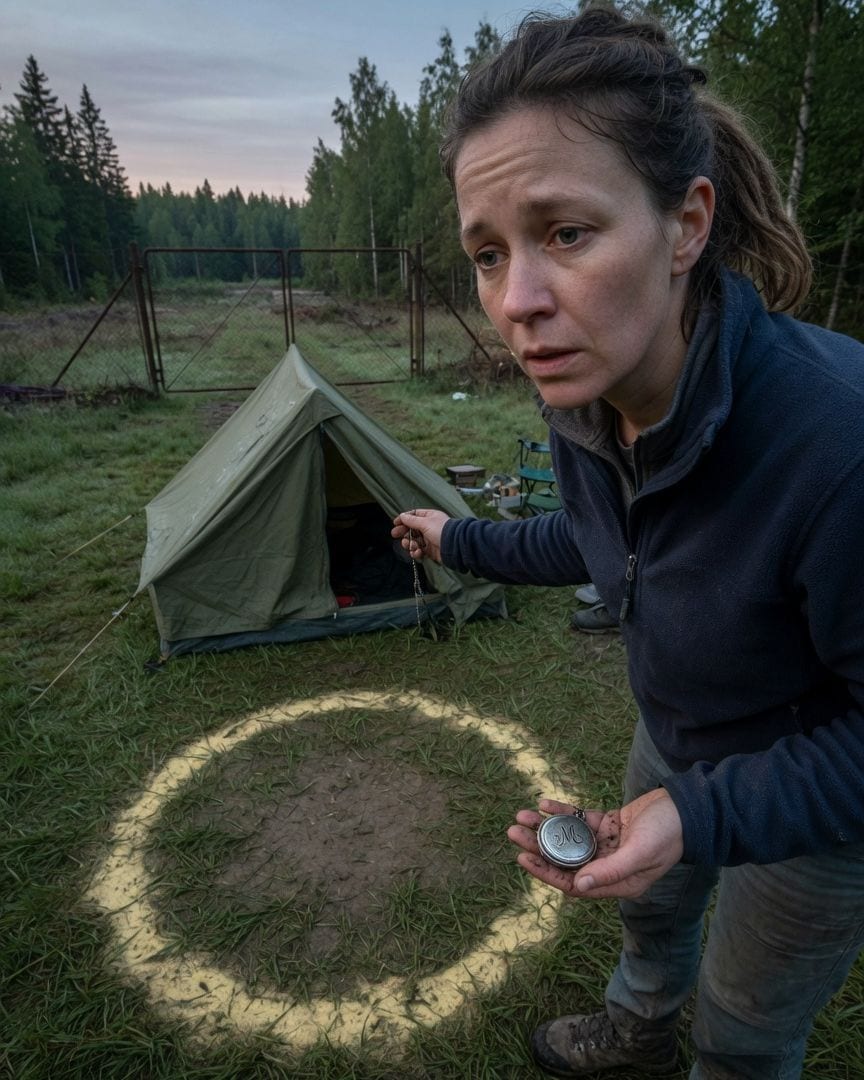
My tent left a flattened ring in the grass, but an older one was already there, worn into the turf, exactly tent-sized, for thirty years.
As the new camp host, I ignored the warden's odd rule about pitching my tent on a particular flat spot. That night, something enormous walked in slow, methodical circles around my tent. The next morning, I found a deeply worn, old ring in the earth beneath my tent, and later, a tarnished silver locket buried there.