Technical Sergeant Trevor Cho sat on Cold War loop twelve. At 0148, his console chirped twice: 'Vehicle Pass.' The floodlit concrete remained empty.
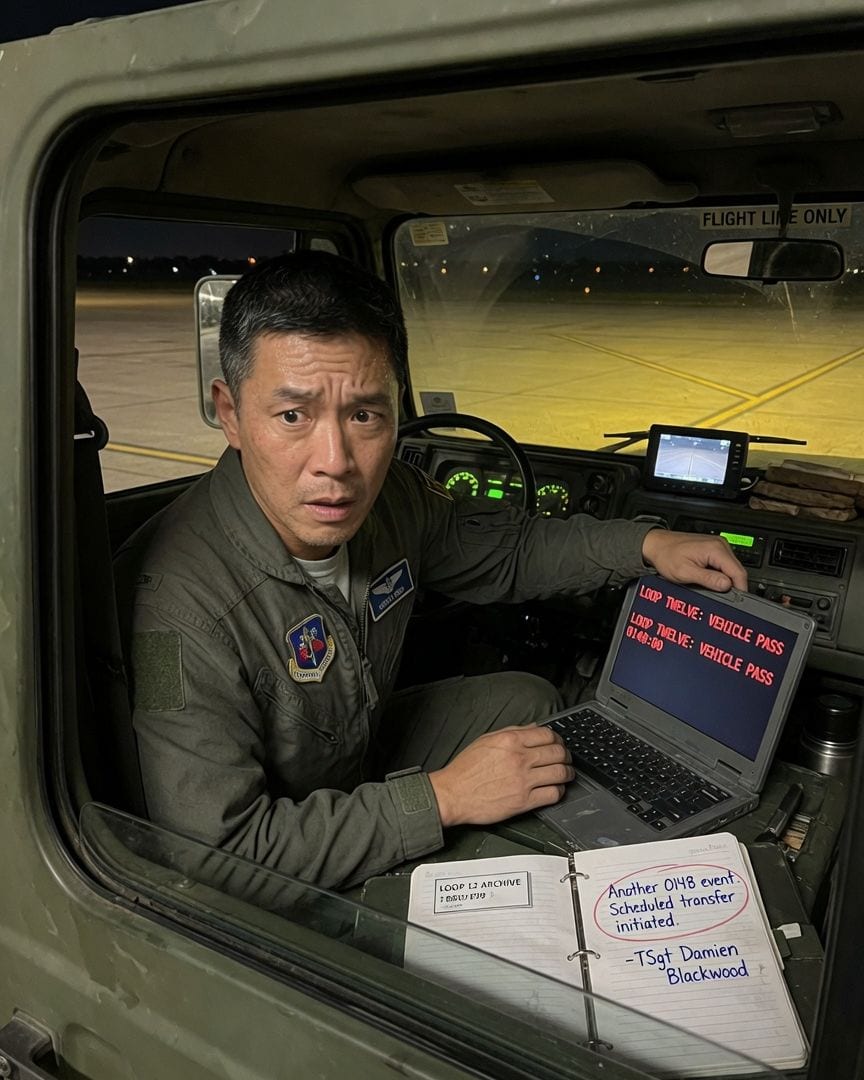
Technical Sergeant Trevor Cho parked his olive-drab truck directly on top of loop twelve. It was 0147, and a chill settled over the flight line, despite the still air.
He had spent the last two weeks observing this stretch of concrete, this particular sensor buried beneath the asphalt, after hearing the whispers. Every night, at precisely 0148, loop twelve registered a vehicle-weight pass.
The floodlights cast the apron in a stark, yellow glow, but the camera feeds from the control tower always showed nothing. An empty expanse, shimmering faintly with residual heat.
Cho, two weeks from rotating out of this Dakota bomber base, was determined to catch the fault, to finally reconcile the impossible data.
He leaned forward, eyes glued to the console inside his truck. The digital clock on the dash clicked, the seconds crawling. 0147:58. 0147:59. Then, 0148. The console chirped, a flat, electronic sound that cut through the silence.
"Loop Twelve: Vehicle Pass." Cho's breath hitched. Before he could even process it, a second chirp followed, identical and immediate. "Loop Twelve: Vehicle Pass." His head snapped up.
He checked the dash camera feed, the external monitors trained on the apron, then craned his neck to scan the empty concrete himself. Nothing. Just the vast, empty space where a vehicle should have been, reflecting the distant sodium lights.
The impossible event, clean and undeniable, was logged right over the truck he was sitting in. He slammed his fist on the steering wheel, the metal groaning under the impact.
Cho spent the next day buried in the maintenance archives, the air thick with the smell of aging paper and dust. He pulled up old logs for loop twelve, specifically searching for anything that mirrored his impossible observation.
Dozens of similar 'phantom pass' entries stared back at him from the faded pages, stretching back decades, always at 0148.
The standard explanation in the margins was always a sensor fault, followed by a 'recalibration complete' entry, then a blank slate until the next inevitable 0148 event. It was a familiar, cyclical pattern of denial.
He pushed further back, past the digital logs, into the physical binders. In a log from 1987, tucked between two routine sensor checks, he found it. A handwritten marginal note, scrawled in faded blue ink. "Another 0148 event.
Sensor checks out clean. Scheduled transfer initiated." It was signed, with a confident, looping hand, "TSgt Damien Blackwood." The note felt cold in Cho’s hands, a stark, quiet anomaly within the meticulously kept records.
He tried to rationalize it as a frustrated tech’s shorthand for a routine reassignment, but the phrase 'scheduled transfer' resonated with a chill that had nothing to do with the archive’s insistent air conditioning.
It felt too precise, too deliberate for a simple frustrated sigh. He felt a shiver ripple through the dry air of the room, as though the silence itself had sharpened, watching him.
Cho cross-referenced Damien Blackwood's name, the weight of the old log still heavy in his mind. It took some digging; Blackwood’s service record was sealed, marked 'Restricted Access' shortly after his transfer from this base.
Cho, using his deep-level maintenance clearance, managed to pull a summary. Blackwood had indeed been a Technical Sergeant on this very base, working the flight line and sensors.
His transfer out had been unusually expedited, his final date listed as 'effective 0148 on [date of phantom pass],' a date that coincidentally, and chillingly, landed just after a cluster of 'loop twelve phantom passes' in the older logs.
There was no forwarding address, no contact information, no record of his subsequent assignments, just a blank space where his career should have continued.
Cho stared at the document, the silence of the archive suddenly heavy around him, a thick, palpable presence.
Driven by a cold dread, Cho started hunting for more 'expedited transfers' or 'reassignments' from the Dakota bomber base, specifically looking for personnel whose records were sealed or unusually brief, and whose departures coincided with a surge in 'loop twelve anomalies.'
The pattern was relentless. He found five more such cases, spanning from the late 70s to the early 2000s. Each record bore the same sterile, incomplete narrative: 'Transferred per protocol.'
One even had a cryptic unofficial designation scrawled in a corner, a faint pencil mark: 'Loop Twelve Protocol.'
The consistency of the 0148 transfer times, the sealed records, the abrupt, unexplained nature of the departures, it was all too precise to be coincidence.
He approached Isabella Langford, a long-serving records clerk known for her encyclopedic memory and a reputation for knowing where every skeleton was buried. She sat hunched over a glowing monitor, her glasses perched on her nose.
Initially, she was dismissive, citing privacy protocols with a practiced ease. "Some things are just need-to-know, Sergeant Cho," she said, without looking up.
But as Cho, meticulously, laid out the chronological sequence of names and dates, the repetition of 0148, the shared designation of 'transferred per protocol,' a flicker of unease crossed her face.
The fluorescent lights of the office seemed to hum louder, the stale air suddenly colder.
She recognized some of the older names, recalling hushed rumors from her early days on base, stories whispered about 'the base taking its due' from time to time, about personnel who just… vanished.
But she offered no concrete answers, only a tight-lipped silence, her gaze darting to the closed office door.
Cho’s persistent digging did not go unnoticed. Commander Marcus Holloway, a stern, by-the-book officer with a granite jaw, called Cho into his office a few days later. The commander’s tone was polite but firm, his words a veiled warning.
He praised Cho’s thoroughness, commending his dedication to maintaining base systems, but then advised him to 'let sleeping dogs lie.'
He reminded Cho of his impending rotation and the importance of a smooth handover, a gentle suggestion to shift his focus. "You’ve done good work, Sergeant. Just make sure everything’s squared away for your replacement," Holloway said, his eyes unwavering.
Later that day, Cho found his access to several archived personnel files mysteriously revoked. An automated system notification cited a 'system security update,' a message that felt too convenient.
He tried to dismiss it, to tell himself it was just a procedural glitch, but a prickling sensation of being watched started to follow him.
He noticed a dark, unmarked staff car, always parked a few rows away from his own, whenever he was working late in the archives or conducting his nightly checks on loop twelve.
The car never moved, its windows always tinted, reflecting the dull glow of the parking lot lights. Its presence felt like a heavy, silent accusation.
The unease solidified into a distinct sense of personal danger; someone knew exactly what he was looking for, and they were tightening the leash.
The air in the usually quiet hallways seemed to press in, growing heavier with each step he took.
Cho decided to confront Langford again. He found her alone in the records office after hours, the air thick with the smell of old paper and dust, the only sound the gentle whir of the server racks.
He placed the list of 'expedited transfers' on her desk, his own notes on the 0148 anomaly laid out beside them. "What is Loop Twelve Protocol, Isabella?" he asked, his voice low, cutting through the silence.
Langford looked at the names, her face pale under the harsh office lights. She tried to evade, muttering about 'rumors and old wives' tales,' her hands nervously smoothing the wrinkles on her uniform. "It's just talk, Sergeant Cho. Base legends."
Cho pressed her, his voice unwavering. He detailed the consistent 0148 transfer times, the sealed records, the complete disappearances, the 'Loop Twelve Protocol' designation. "People don't just vanish, Isabella. Not in the military. Every soul is accounted for."
Finally, she cracked. Her shoulders slumped, and she looked up at him, her eyes wide with a fear that made the room feel suddenly very small.
"It’s… it’s what happens when the base decides it needs to balance the books," she whispered, glancing nervously at the closed door, as if the walls themselves had ears. "The records always reconcile. Always.
A transfer out, a new assignment in. But the person… the original person… they just… vanish."
She confirmed that 'Loop Twelve Protocol' was an unofficial, highly classified designation for personnel whose records were flagged for immediate, no-questions-asked transfer after a 'system anomaly' was detected. Her voice dropped to a barely audible whisper.
"They call it 'accountability that cannot be.'"
She quickly scribbled a series of numbers and symbols on a scrap of paper, a partial, coded list of these personnel, and pushed it across the desk with a trembling hand. "You have to stop, Sergeant Cho.
You're already on the list. You just don’t know it yet." She urged him to leave, to forget everything, before he became another name in the ledger, another ghost in the system.
The server racks seemed to thrum with a deeper, more insistent pulse.
Back in his truck, parked far from the floodlights, its engine off, Cho frantically worked to decipher Langford's coded list. The paper felt like a live wire in his hands.
It appeared to be a sequence, a progression of service numbers and rotation dates, stretching back through the decades, each entry a testament to a disappearance.
His hands trembled as he cross-referenced the cryptic entries with known transfer dates and the dreaded 0148 anomaly. Each decoded entry—a name, a date, a time—fell into a chillingly coherent pattern. It was a calendar of un-persons.
His breath hitched as he reached the final, most recent entry. There, unmistakable, was a service number identical to his own, a sequence of digits burned into his memory.
Beside it, etched in Langford's frantic hand, the words 'Loop Twelve Rotation.' And the date, stark and cold, was exactly two weeks from now – his scheduled rotation date.
His own name, his own fate, already etched into the impossible manifest. He was not just investigating the anomaly; he was the next scheduled event. The interior of the truck felt suddenly airless, pressing in on him.
The full, monstrous shape of the truth snapped into place. The list wasn’t a warning; it was a manifest, a schedule of a predetermined process. The 'phantom vehicle' wasn't a glitch, but the system's way of logging the exchange.
At 0148 on their rotation date, the person was 'logged out'—their consciousness, their identity, their very being—and a new 'transfer' was logged in, a replacement.
The 'vehicle-weight pass' was the system registering this transition, a perfect reconciliation of an impossible event. Damien Blackwood, and all the others, weren't transferred; they were consumed, their records neatly sealed, their replacements seamlessly integrated.
The base wasn't just taking its due; it was maintaining its own impossible, perpetual accounting, cycling its personnel through a horrific, unacknowledged pattern. The weight of this realization pressed down on Cho, a physical burden.
He understood now.
The 'extra' pass, the one that had registered over his truck during his initial observation, wasn't just an anomaly; it was the system’s initial, subtle acknowledgment of his impending 'transfer,' a preliminary scan before the final, irreversible exchange.
He was not merely observing; he had been inducted. His two weeks to rotate out were not a countdown to freedom, but to his own scheduled, systematic disappearance.
The air in his lungs felt thin, as if the base itself was slowly siphoning it away.
With only hours left until his scheduled 0148 'rotation,' Trevor Cho made a desperate run for it. He packed a small bag, grabbed his truck keys, and drove towards the main gate, determined to break the cycle.
The air was cold and still, the sodium lights casting long, stark shadows across the flight line, painting the concrete in shades of alien yellow. As he approached loop twelve, the digital clock on his dash ticked inexorably towards 0148.
He pushed the accelerator, the engine roaring, a desperate growl against the encroaching silence, his heart hammering against his ribs. He was almost over it, almost free.
Just as his front tires crossed the buried sensor, the truck's engine sputtered, coughed, and died. The dashboard lights flickered erratically, then went dark.
The silence that followed was absolute, save for the faint hum of the distant base, a low, constant vibration against the night. At exactly 0148, the console chirped: "Loop Twelve: Vehicle Pass."
A beat later, a second chirp: "Loop Twelve: Vehicle Pass," registering directly over his stalled truck.
A profound, invasive coldness washed over Cho, starting from his extremities and flowing inward, a dull pressure building behind his eyes. The frantic dread that had propelled him for days began to recede, replaced by a strange, quiet acceptance.
He felt a profound sense of rightness settle over him. The steering wheel felt oddly comfortable in his hands, familiar in a new, unsettling way.
The world outside the truck, the cold air, the distant lights, all of it seemed perfectly ordered, precisely as it should be.
He was no longer Trevor Cho, but merely the next entry, the next perfectly accounted-for soldier, his identity seamlessly logged into the pervasive, inescapable system.
The next morning, Commander Marcus Holloway received a routine report. Technical Sergeant Cho's transfer was processed without incident at 0148, exactly as scheduled. Holloway, scanning the document, noted the smooth transition.
Cho's replacement, a quiet, efficient young airman named Curtis Lockwood, had already reported for duty, his service record seamlessly integrated into the base's meticulous system. The logs showed no anomalies, no discrepancies.
Everything was in perfect order, as it always had been.
Airman Curtis Lockwood, now assigned to maintenance, walked briskly across the flight line under the morning sun.
He paused as he passed the buried loop twelve sensor, casting a faint, knowing smile towards the concrete before continuing toward the maintenance hangar, his stride confident and entirely at peace.
If this one got to you
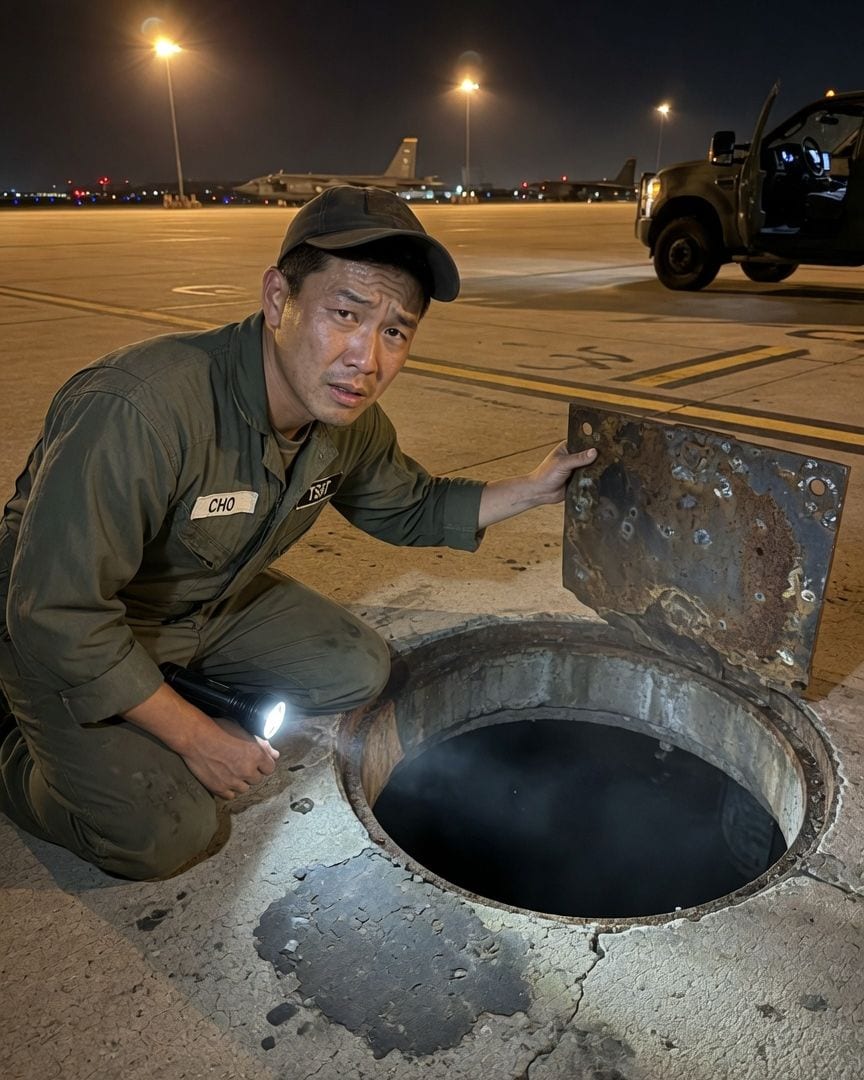
Two weeks from leaving, Technical Sergeant Cho felt a phantom weight pass through his truck, parked on the flight line.
Technical Sergeant Daniel Cho was counting down his final two weeks at the Dakota bomber base, determined to solve the phantom riddle of its floodlit flight line. Every night at 0148, a buried sensor logged a vehicle pass, yet overhead thermal cameras consistently showed nothing but empty concrete. To catch the anomaly, he parked his heavy maintenance truck directly over the sensor. But as the clock turned 0148, a low thrum vibrated through his teeth, and the sensor registered a second, impossible vehicle pass—right through his own parked truck. His investigation soon uncovered a hidden, unmapped metal plate in the concrete, sealing a dark shaft that hummed with a deep, rhythmic vibration, like an enormous heartbeat from beneath the earth.
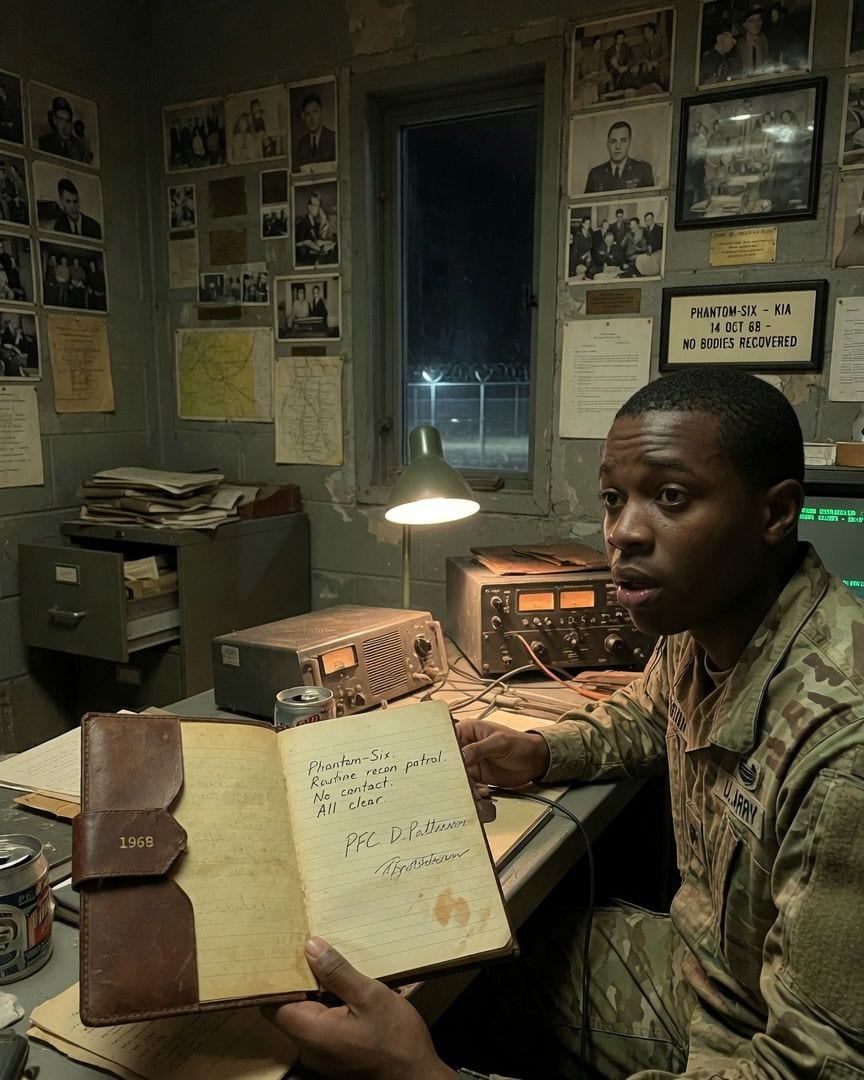
A DMZ specialist finds a 1968 Cold War logbook entry, signed by a lost soldier, its ink shimmering faintly.
Specialist James Farr, on a long night shift at a desolate Korean DMZ outpost, meticulously monitored his console, a squared-away soldier accustomed to the quiet hum of equipment. His focus shattered when a faint, static-laced whisper ghosted from a dead channel, calling out 'Phantom-Six' — a unit lost near this wire in 1968. The urgent voice then specifically mentioned his tower window light, asking him to turn it off before it drew fire. Later, an old logbook from 1968 revealed an entry dated three days *after* Phantom-Six was officially lost, signed by one of the vanished soldiers, its ink subtly shimmering with an unnatural gleam.
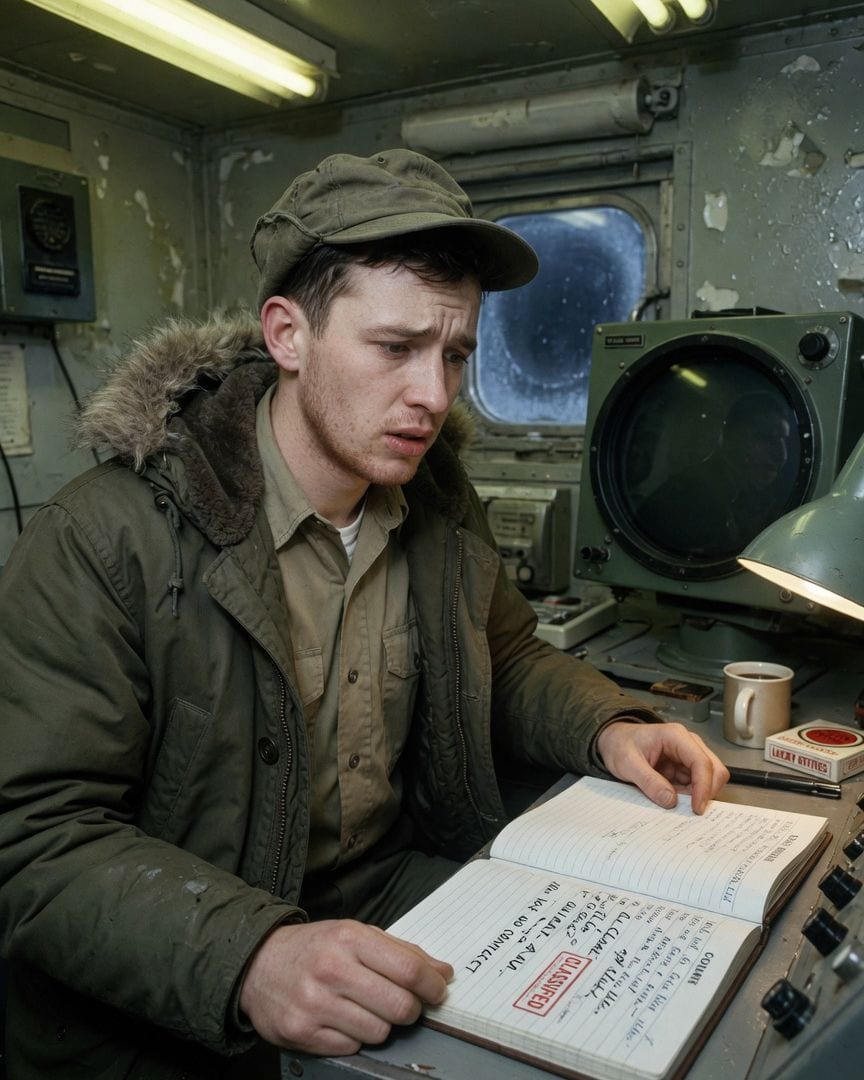
A Cold War airman logs an impossible radar contact on his last sweep. But his official logbook entry is stamped 'CLASSIFIED' and then contradicted by a hastily scrawled 'ALL CLEAR' dated moments before it.
Airman Ordway Vance, 22, manned the radar dome at Site Pellin in the biting North Atlantic dark of January 1962, running the last calibration sweep before its decommissioning. His scope picked up a faint, impossible return, growing closer with each pass, though the ocean remained empty to the eye. When Vance detailed the contact in his official logbook, a 'CLASSIFIED' stamp appeared, followed by a hastily scrawled 'ALL CLEAR' dated moments before his own entry, contradicting his every word. Commander Hartley dismissed it as equipment malfunction, but Vance sensed a chilling, official erasure behind the lie. He soon found a locked cabinet marked 'SITE PELLIN ANOMALIES,' hinting at a deeper truth buried within the base's final days.
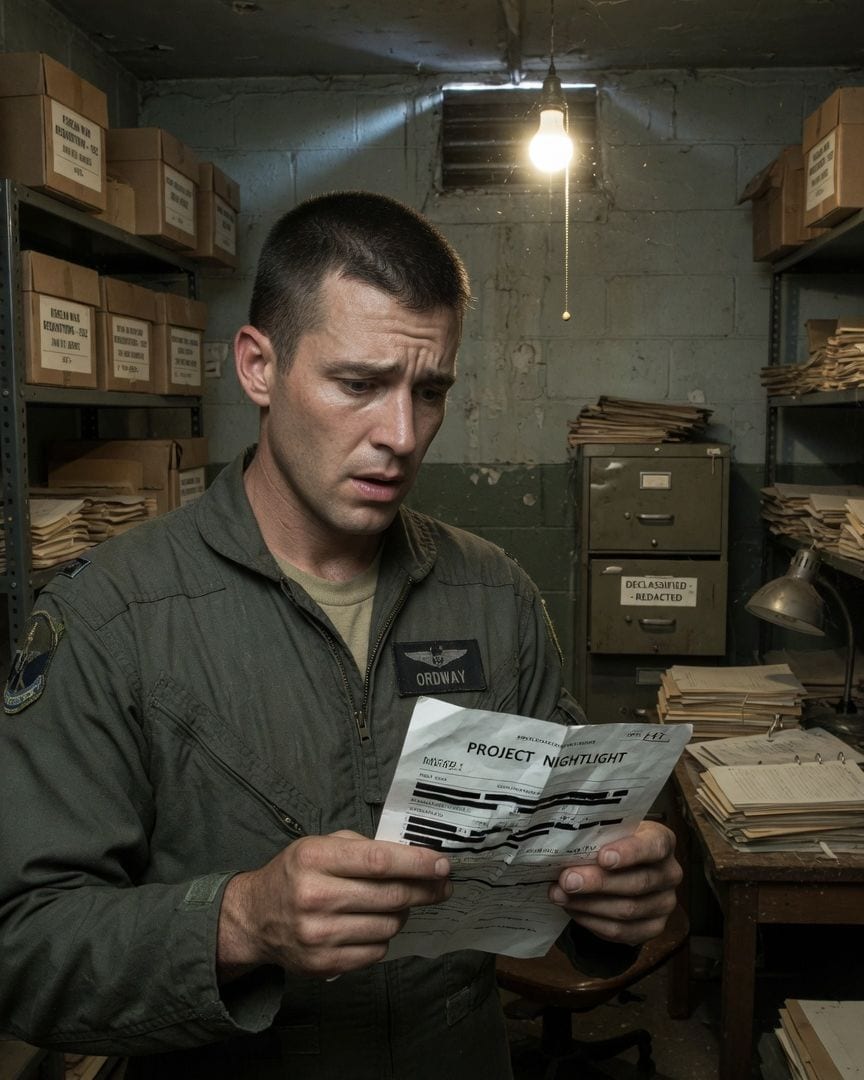
A Cold War pilot's F-104 Starfighter was shadowed by an impossible object. Weeks later, a secret memo referenced his own service number for 'pilot reassignment protocols.'
First Lieutenant Cal Ordway soared over the Mojave in his F-104 Starfighter in 1962, the night sky a familiar canvas. But that night, one 'star' broke formation, pulling alongside his wing and mirroring his every impossible maneuver. His instruments confirmed the silent, unblinking object, defying all known physics. After filing his precise report, Cal found his flight log altered to 'no incidents,' radar tapes corrupted, and a superior advising him to 'let it go.' Driven by his training, he uncovered a heavily redacted memo referencing 'Project NIGHTLIGHT' and, chillingly, his own service number for 'pilot reassignment protocols initiated.' Was he merely a witness, or already a subject in a much deeper secret?
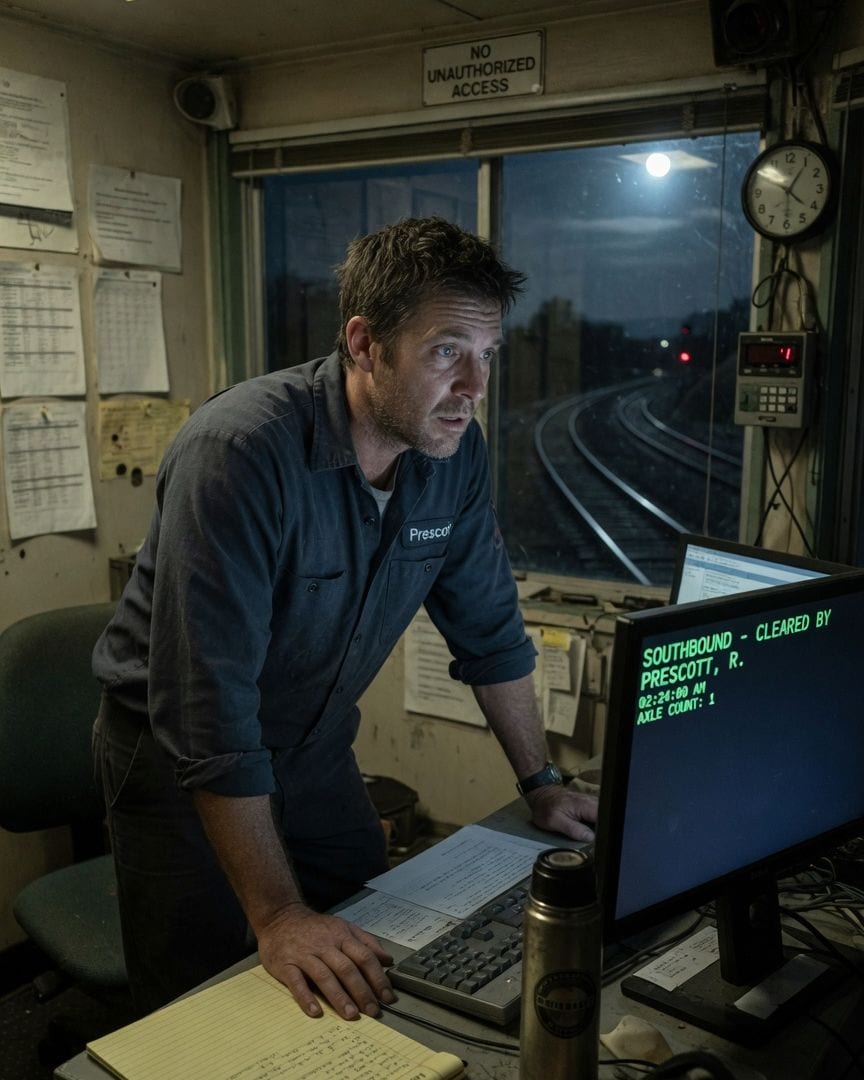
My signal box log shows I cleared a southbound train at 2:24 AM. No train was booked, but the wheel counter ticked over once.
My night shift in the signal box is usually quiet, just the hum of the panel and distant trains. But at 2:24 AM, a log entry for a southbound train appeared on screen, cleared by my name, even though I hadn't touched a thing. A cold prickle ran up my neck when the wheel counter ticked once, confirming an impossible passage on the empty tracks.
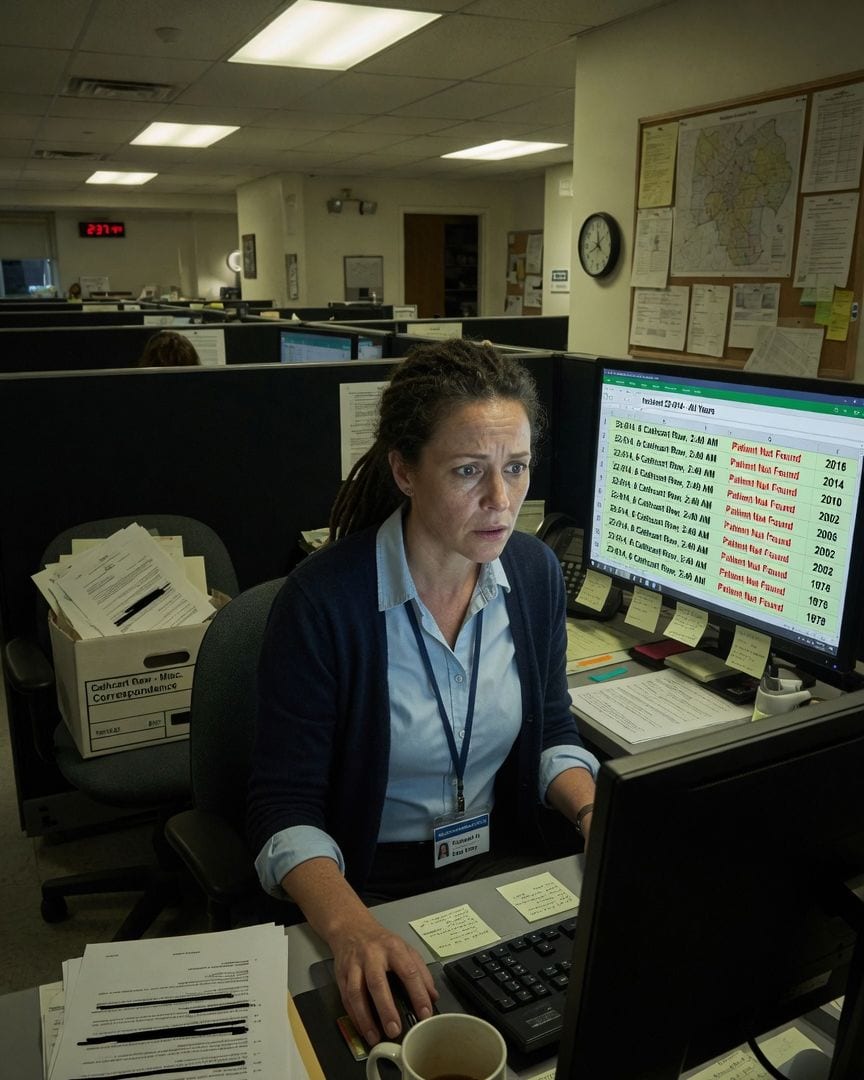
My computer log shows the same 2:40 AM call to Cathcart Row, every four years since 1978, always closed 'patient not found'.
Working data entry for the County Ambulance Trust, I found a routine incident logged as 'Patient Not Found.' But digging deeper, I discovered the exact same phantom call had repeated every four years for over forty years, always at the same address, always at 2:40 AM. Then I found a heavily redacted memo linking it to my own street.