Our town reservoir was finished in 1961. But the old church records show forty-one people drowned in that same reservoir, all decades before it was ever built.
It was the kind of town where everyone knew your name within a week. I moved to Hensley in March, escaping the city’s endless hum for something quieter, something with roots. And Hensley certainly had roots.
The first thing anyone told you, usually with a gentle smile and a nod towards the horizon, was about the Hensley Reservoir.
“Finest piece of engineering in the county,” the postman, a kindly older fellow named Stan, told me on my second day. “Built in 1961, sturdy as they come.”
The grocery clerk, the woman at the library, the mechanic who fixed my ancient sedan – all of them, without fail, delivered the same detail: 1961. It became a quiet mantra, a point of collective pride.
I’m a bit of a local history buff, so I volunteered to help Harold Rutherford, the church archivist.
Harold was a sweet man, sixty-eight and full of stories, mostly about the good old days and how the town had "blossomed" since the reservoir.
One sweltering afternoon, sorting through the parish vestry, its air thick with dust motes and the scent of damp paper, I pulled out a heavy, leather-bound book.
The cover was cracked, the gold leaf long since flaked away, but the title was still legible: Hensley Parish Burial Register. This was exactly my kind of find.
I settled into a rickety chair, the single window letting in a weak, yellow light. Flipping through the brittle pages, I started noting dates, names, causes of death. Heart failure, consumption, accidents. Then I saw it.
Page after page, scattered among the expected, was a recurring entry: "Cause of Death: Drowning (Hensley Reservoir)." I frowned, tracing the precise, spidery script with my finger. It wasn't just one or two. I went back, meticulously counting. Forty-one.
Forty-one people, all listed as having drowned in the Hensley Reservoir. The cold stone in my gut was the date beside each entry. Every single one was dated before 1961. The earliest was 1903, the latest 1959.
The reservoir, according to everyone, hadn’t even existed then.
My first thought was a mistake. A different Hensley Reservoir, perhaps, or a quirk of local record-keeping. I closed the register, the leather creaking softly, and sought out Harold. He was humming to himself, dusting a shelf of hymnals.
“Harold,” I said, trying to keep my voice casual, “I was looking through the burial register. I noticed quite a few drownings in ‘Hensley Reservoir’ before 1961. Is there another one nearby, or…?”
He stopped humming. The dust motes in the air seemed to hang still. Harold, usually garrulous about anything old, cleared his throat. It was a loud, wet sound in the quiet room.
“Oh, that old thing,” he said, his smile too quick, too smooth. “Likely just a transcription error, dear. Before my time, certainly. The reservoir’s always been here, since ’61, you know. Nothing to worry your pretty head about.”
He gave me a pat on the shoulder, a gesture that felt less friendly than dismissive.
His reaction unsettled me more than the dates themselves. The subtle, almost imperceptible shift in his demeanor, the way his eyes just slid past mine. It wasn't a mistake. He knew something. I decided to try a different angle.
I cross-referenced some of the names from the burial register with old census records in the town hall archives.
Gary Ingram, the Town Clerk, a man in his fifties with perpetually tired eyes, was vaguely helpful, pointing me to the right cabinets but offering no insight on anything pre-dating 1961. “Not much call for that, normally,” he’d grunted.
I found a few names that matched, confirming they were indeed local residents. So, not a different town, not a general register.
Then I tried the local newspaper archives, looking for any mention of ‘Hensley Reservoir’ before the magic year of 1961. Nothing. Not a single article, not a notice, not an advertisement.
Just bland reports of town council meetings, bake sales, and school plays. It was as if the reservoir simply hadn’t existed, yet people were drowning in it, their names meticulously recorded, their deaths confirmed.
The ordinary explanations, the logical ones, were all failing. The room itself felt heavy, the silence in the archives pressing in like a physical weight.
Frustration simmered, a cold knot in my stomach. “Hensley Lake,” I muttered to myself, remembering a half-heard snippet from an old-timer in the hardware store, dismissing it at the time as a quaint, archaic term.
I typed it into the archive's digital search, then manually sifted through more physical records, expanding my search to brittle town planning documents from the late 1950s.
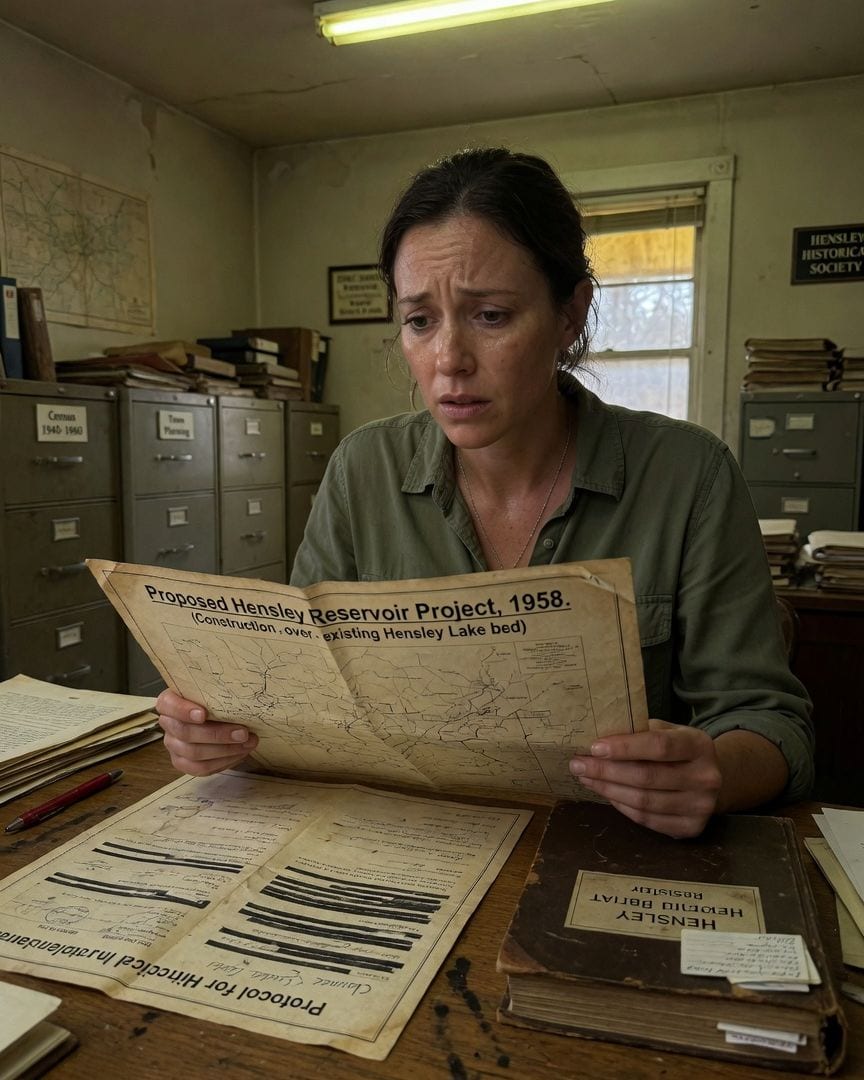
Among a stack of yellowed blueprints and faded reports, I found a large, folded map. It was so fragile it crackled as I opened it. The title, boldly lettered, read: 'Proposed Hensley Reservoir Project, 1958.' My breath hitched.
Below the title, in smaller, parenthetical script, it read: '(Construction over existing Hensley Lake bed).'
It wasn't built from nothing. It was built over something.
My hands trembled as I carefully unfolded another page from the same folder. A heavily redacted addendum, almost entirely blacked out, fell out onto the dusty desk. Its title was still visible: 'Protocol for Historical Incidents.'
I picked it up, holding the brittle paper to the weak fluorescent light of the archive room. The black ink was thick, but not entirely opaque.
Beneath the heavy redactions, faintly visible, in fading, spidery ink, a single handwritten word slowly appeared to me: 'Claimed.'
The word 'Claimed' was a hook in my mind, pulling at every thread of doubt and suspicion I’d accumulated. It felt like an accusation, a chilling confirmation that the town’s narrative was not just incomplete, but a deliberate fabrication.
I spent the next few days hunched over the 1958 planning documents, comparing the 'Proposed Hensley Reservoir' map to current topographical maps of the area. The contours matched perfectly.
It was the same body of water, just re-engineered, concrete-lined, and renamed. The reservoir, as everyone knew it, was a veneer.
I found references to 'water level management,' 'deep-water stabilization efforts,' and 'subsurface current disruption' in the pre-1961 documents. They weren't just planning a new reservoir; they were trying to tame an active, volatile natural lake.
The language was precise, almost scientific, but hinted at an underlying, uncontrollable force. The cold, sterile words on the page felt like a scream muted by bureaucracy.
I needed to talk to someone older, someone who might remember the ‘lake’ and not just the ‘reservoir.’
Judith Delaney, 75, an elderly woman who used to teach at the elementary school, lived alone in a small cottage near the edge of town. She was known for her sharp memory and even sharper wit.
I called on her one afternoon, finding her pruning roses in her garden. The air was sweet with their scent, but the conversation quickly turned sour. I mentioned my research, cautiously bringing up 'Hensley Lake.'
Her hands, gnarled with age, paused on a thorn. Her eyes, usually bright, flickered with that familiar, guarded look I’d seen in Harold.
“Oh, that old place,” she said, her voice thin, almost reedy. She didn’t look at me. “Best not to dwell on the past, dear. The town moved on for a reason.”
She then swiftly changed the subject, asking about my own nascent garden, its progress, its challenges. The abruptness, the too-smooth redirection, was more terrifying in its consistency than any outright denial.
It was like nudging against a carefully constructed wall, a wall built by an entire community, and I was seeing its seamless surface everywhere I looked. The roses seemed to watch me, their petals like closed mouths.
My research became more clandestine. I started noticing Harold Rutherford observing me during my visits to the church vestry. His usual avuncular warmth was replaced by a subtle, unsettling watchfulness.
He’d be ostensibly sorting books, but I’d catch his gaze lingering a moment too long when I was pouring over old ledgers. It made the air in the vestry feel thin, charged.
One evening, after leaving the town hall archives, I found something on my car’s windshield. It was a small, tarnished locket, clearly an antique, encrusted with dried mud and what looked like strands of algae.
It was slightly ajar, revealing a tiny, faded photograph of a child, their eyes wide and solemn, clearly from decades past. There was no note, no explanation, just this small, heavy object.
A cold dread, sharp and distinct, rose in my throat. This wasn't a random lost item. It was a message. Someone knew I was digging. Someone was watching.
The next day, as I walked near the reservoir, trying to clear my head, I saw Gary Ingram. He was standing by his car, parked a good distance away, near the entrance to the main gate.
He wasn't doing anything, just leaning against the fender, watching me. He didn’t wave, didn’t acknowledge me. Just watched. The prickle on the back of my neck felt cold and definite.
It wasn't just history anymore; it was personal, and current. This wasn't a warning to stop, it was a confirmation that I was already too close. The placid surface of the reservoir seemed to darken under his gaze.
I decided to confront Judith directly. I drove back to her cottage, the locket heavy in my palm. The rose bushes still perfumed the air, but the sweetness felt cloying now, masking something else.
“Judith,” I said, my voice steady despite the tremor in my hands. I held out the locket. “This was left on my car. And I found documents referring to Hensley Lake, and drownings before 1961. Forty-one of them.
What really happened here?”
Her composure, so carefully maintained, finally cracked. She took the locket, her hand trembling as she stared at the faded child’s face. “This… this belonged to little Marybeth,” she whispered, her eyes distant, lost in memory.
“Drowned in the lake, 1959. Only six years old.”
She sat down heavily on a garden bench, the locket clutched tight. Her voice, when she spoke again, was barely a murmur, as if the words themselves might shatter the fragile peace of her garden. “Hensley Lake.
It was beautiful, yes. But treacherous. Always had been. Sudden, inexplicable currents, even on the calmest days. A cold pull, children used to say. It claimed so many lives. So many.” She looked up at me, her eyes wet.
“It would go quiet for a time, sometimes years, then… it would take again. Always children, or the young. Never the old, like me. Never the sick.”
She described how, after a particularly devastating spate of drownings in the late 1950s—Marybeth among them—the town council, in desperation, had decided to act. “Not to create it, dear,” she said, gesturing vaguely towards the reservoir, “but to cover it.
To bury the lake, to stop the… the taking. We thought if we hid it, if we controlled it, it would go dormant. Sleep.”
The ‘Town That Agrees,’ she explained, was a pact. A solemn promise, passed down through generations. To never speak of the lake, to pretend the reservoir was always there.
It was an act of communal will, a desperate hope to make it stop. The 1961 date wasn't the construction date of a new body of water.
It was the year they finished burying their past, covering over the ancient, hungry heart of Hensley Lake, hoping to bury whatever entity lay beneath it too.
I understood then. The impossible dates, the collective silence, the uniform story of ‘construction’ – it all clicked into place, a chilling, perfect mosaic. The truth was far more insidious than I could have imagined.
The next morning, armed with Judith’s confession, I returned to the parish burial register. My hands didn't tremble this time; they were steady with a grim resolve.
I meticulously extracted every drowning entry related to 'Hensley Lake' or 'the reservoir' from the earliest available records, going back into the late 1800s.
I marked each date, each name, charting them out on a large sheet of butcher paper spread across my kitchen table. The coffee grew cold beside me.
What I saw made my blood run cold. It wasn't just a random pattern of tragedy. The drownings clustered. A dense group in the late 19th century, another in the 1920s, a devastating spike in the late 1950s—Marybeth's time.
Always roughly 25-30 years apart. The 1961 reservoir construction, the grand civic project, fell precisely after the end of the last major cluster. The 'quiet period' Judith mentioned wasn't just a lull; it was a cycle.
And the current year, I realized with a sickening lurch in my gut, placed the town precisely at the cusp of when the next cycle should begin.
I looked down at the tarnished locket, still clutched in my hand. Marybeth, 1959. So close. I glanced out my kitchen window, towards the dark, seemingly placid surface of the Hensley Reservoir, visible now through the bare winter trees.
A ripple, too large for any fish, spread from the center of the dark water, moving slowly towards the shore where I stood, feeling a cold, distinct pull, like a silent invitation.
“Judith, it’s not just the past. It’s a cycle. And it’s due again.” I laid out the butcher paper with its horrifying chart on her kitchen table, the cyclical pattern of drownings undeniable.
Judith’s face paled, her hands clasped so tightly her knuckles were white. “We hoped… we truly hoped the reservoir would break it,” she whispered, her gaze distant, fixed on some unseen horizon.
She leaned forward, her voice dropping to a near whisper. “The lake, or the entity within it, was known by different names over generations – 'The Cold Hand,' 'The Deep Hunger.' Its ‘taking’ was always subtle, a drawing-in, a fascination.
Especially during specific lunar phases, or after heavy rains when the water rose and stirred.”
She revealed that the town’s pact wasn't just to hide the past, but to actively manage the lake’s cycles, to keep it dormant.
After 1961, they had installed a series of deep-water sensors and diversion pumps, meant to disrupt the ‘pull’ and maintain an artificial calm beneath the surface. It was a constant battle, a silent war against something ancient.
A crucial pump, she said, had been offline for maintenance these past few weeks. I remembered seeing a town council memo about it, dismissed it as mundane bureaucracy at the time.
The 'folk rule' – the insistence that children stay away from the reservoir, the hushed warnings on rainy days – wasn't just old superstition.
It was a desperate attempt to protect their children, to keep them from the water, to prevent any disturbance that might reawaken the ancient presence.
The town wasn't just hiding a truth; they were actively fighting a slow, losing battle against it.
My heart hammered with a desperate urgency. I went straight to the town hall, the plotted drownings clutched in my hand, and confronted Harold Rutherford and Gary Ingram. Harold was in his office, Gary at his desk.
I slammed the documents onto Harold’s desk, the papers rustling like agitated spirits.
“The cycle,” I said, my voice sharp, cutting through the dusty quiet of the room. “Marybeth’s locket. The 1958 plans. The deep-water pump that’s been offline. It’s all connected.”
Harold’s carefully constructed calm shattered. His face, usually so placid, contorted with a mixture of fear and anger. “You’ve stirred it, Vivienne,” he said, his voice low and laced with a tremor I hadn’t heard before. “You shouldn’t have dug.”
Gary Ingram, who had been listening from his desk, finally spoke, his voice unusually strained. “The deep-water pump… it was critical. Designed to create a specific counter-current, to disrupt the… the influence. We just restarted it this morning.
We were hoping it wasn’t too late.”
My mind raced, connecting the threads. The locket, the warning from Gary, Harold’s subtle glances – they weren’t just about secrecy. They were about managing the ‘thing’ and its cycle.
And now, I had thrown a wrench into their desperate, silent truce.
I didn’t wait for another word. I ran out of the town hall, a cold, heavy rain beginning to fall, plastering my hair to my face.
The air grew heavy, thick with the scent of wet earth and something else, something metallic and cold. The reservoir. I knew, with a certainty that froze my blood, where I had to go.
The water level seemed higher, darker, churning faintly under the rain. The entire surface seemed to ripple with a strange, unnatural energy. And there, near the edge, on the slick concrete bank, a child.
No older than seven, bundled in a yellow rain slicker, playing too close to the water. The child was reaching for something just beneath the surface, a bright red ball, half-submerged.
“NO!” I screamed, my voice raw, desperate, lost in the wind and the rain.
The child looked up, startled, then turned back to the ball. Their small hand dipped into the murky water, the red rubber just beyond their grasp. And then I saw it.
A ripple, too precise, too deliberate, spread around their small arm, pulling gently. Not a current, but a slow, irresistible drawing-in. I sprinted, my heart hammering against my ribs, Judith’s words echoing in my ears: 'It would take again.
Always children.'
I reached the child, grabbing their arm, my fingers digging into the slick fabric of the rain slicker, pulling them back with all my strength. Just as I yanked them clear, the surface tension around the red ball gave way.
It sank, with an unnatural speed, as if dragged down by an unseen hand into the dark water. The child was safe, gasping and bewildered, but Vivienne had seen the ‘pull’ up close.
The palpable, silent hunger of the Deep Hunger.
I left Hensley a week later. I didn't explain everything to the child's parents, only stressed the danger of the reservoir, the instability of the banks after heavy rain.
The deep-water pump is fully operational now, I heard, and the town council quietly approved a budget for improved fencing and warning signs around the reservoir, citing 'public safety concerns.'
Harold and Gary avoided my gaze in the grocery store, their secret safe, for now. Judith Delaney sent me a small, handwritten note, simply saying, "Thank you. Some truths are too heavy for one person to carry."
I know the cycle has been disturbed, not broken. The 'quiet period' might continue, or it might not. The town remains in its precarious, silent truce with the ancient presence.
I live in a city now, far from Hensley. I avoid large bodies of water, the sight of them triggering a deep, visceral unease. I sometimes check online news for Hensley, but the local paper is always quiet, peaceful.
I know the town carries its secret, a burden shared by every generation, keeping the silence. I know the 'Deep Hunger' is still there, beneath the concrete, dormant perhaps, but never truly gone.
I often find myself staring at my own reflection in a glass of water, wondering if the pull is ever truly broken.
If this one got to you
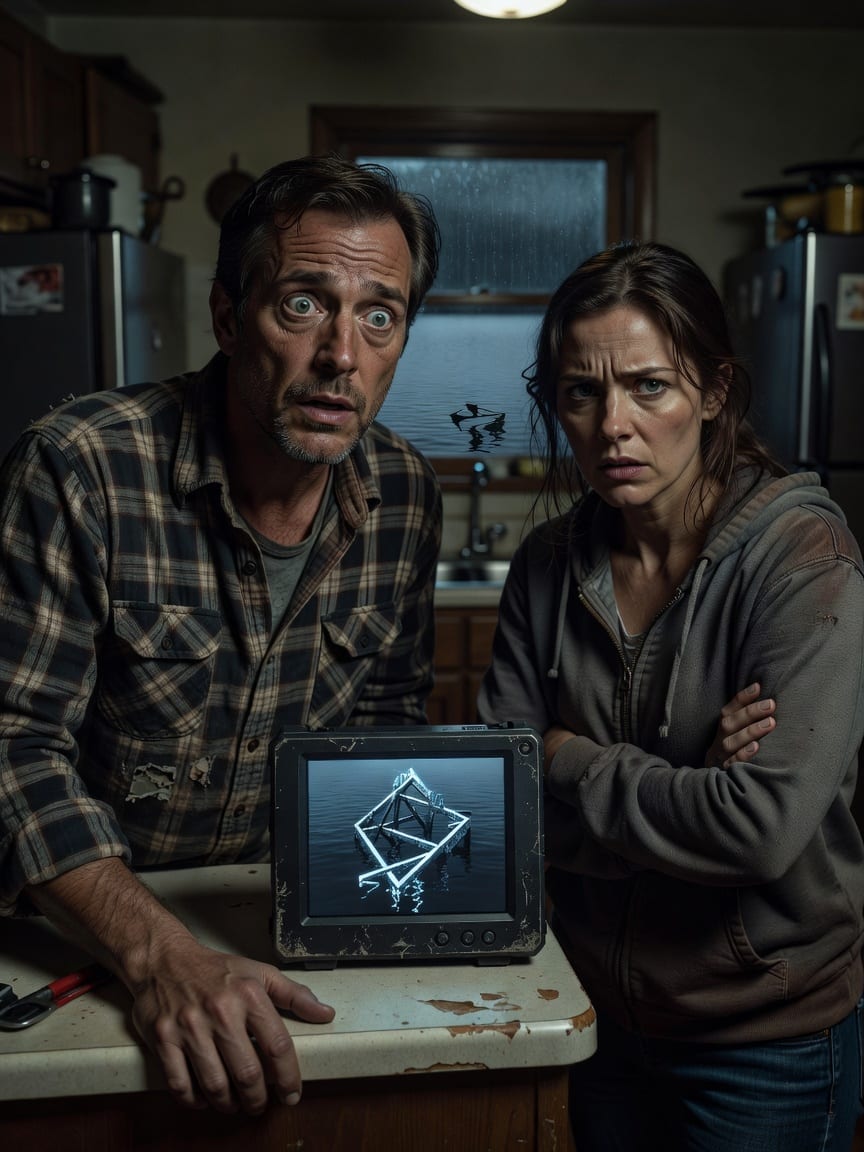
My town's reservoir was built in 1961. The church ledger lists forty-one drownings in it, every single one before 1961.
I settled into Hensley, a town proud of its modern reservoir, built in 1961. Then I found an old burial register at St. Jude’s. It listed 41 drownings in the "Hensley Reservoir," all dated from 1870 to 1959, before the town says it even existed.
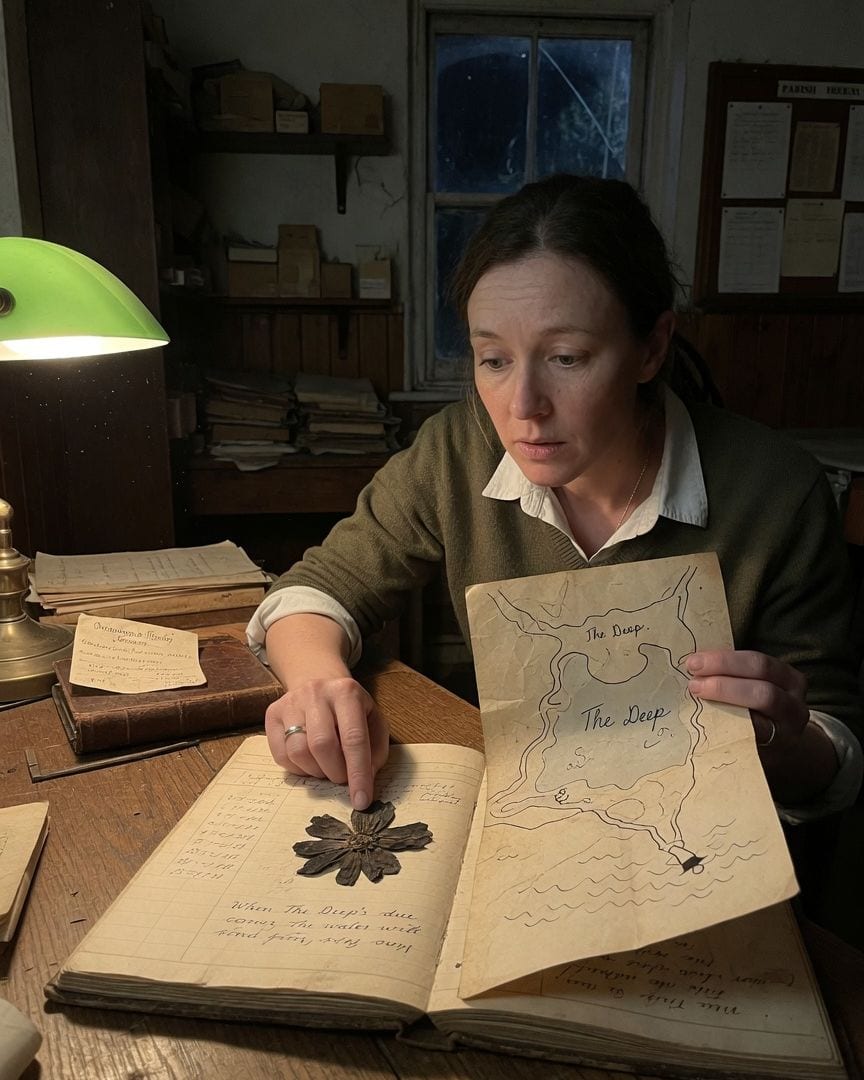
My new town's reservoir opened in '61. Its burial register lists forty-one drownings, all dated before the water was there.
I moved to Hensley for its quiet, where the local reservoir, built in 1961, was a point of pride. But while researching the town's history, I discovered an old burial register listing 'Drownings in Hensley Reservoir.' To my shock, all 41 names were dated decades before the reservoir even existed.
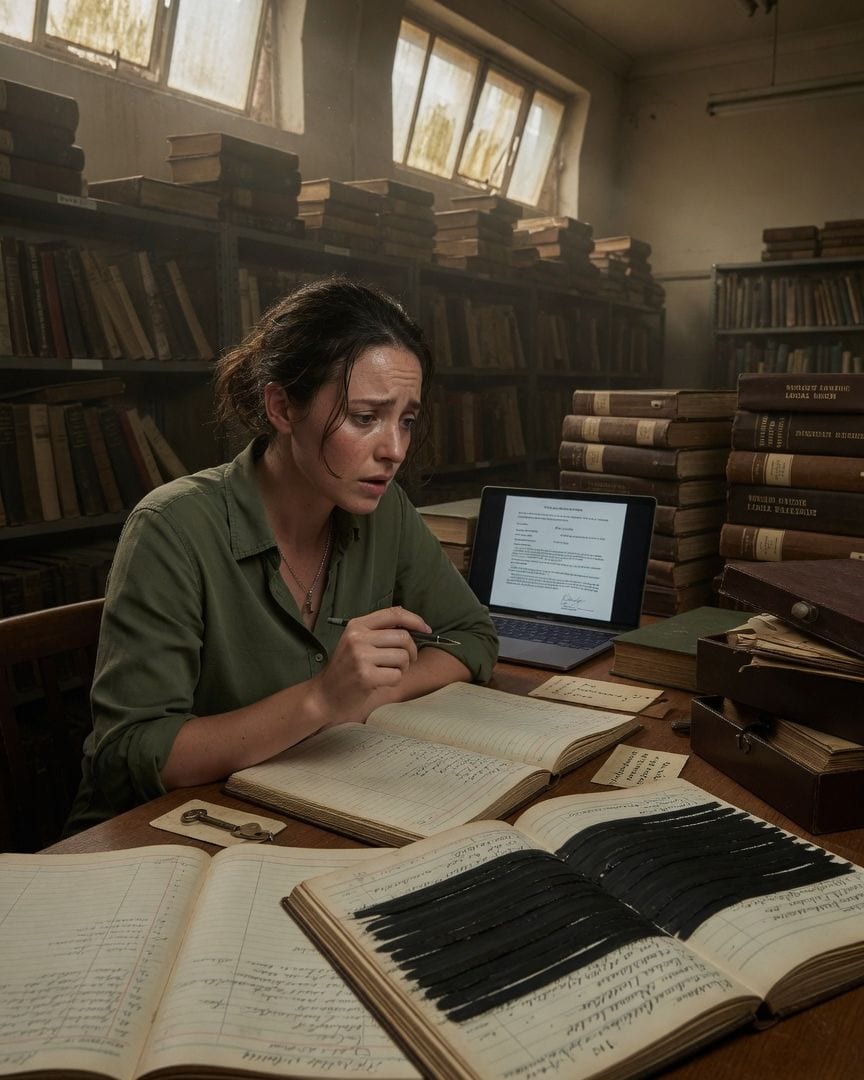
My grandmother’s name is on a blacked-out line from a 1954 drowning inquest, on our street, with a note: 'do not send a second notice.'
Transcribing old inquest registers in the quiet archive was a routine task, until I found a 1954 entry for an accidental drowning. The next of kin line was savagely blacked out, but the faint impression underneath named Patricia Kingsley, my grandmother. Her address was listed on Weir Lane, eleven years before she ever lived there, alongside a chilling note: 'do not send the notice a second time.'
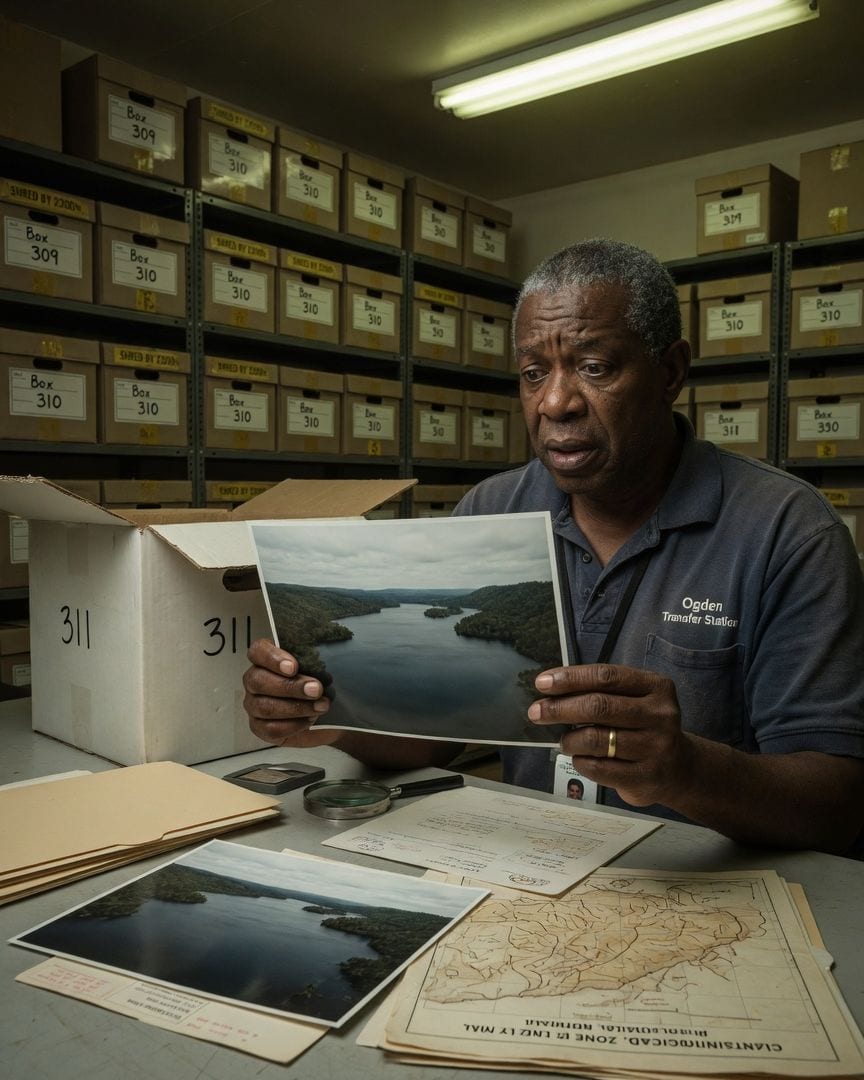
A transfer station archivist, six days from retirement, found 1968 aerial photos of a valley already a lake. Maps from 1967 labeled it a 'hydrological anomaly'.
Just six days from retirement, Wilmot Achebe, a man who had called the Ogden transfer station his second home for thirty years, began his final rotation. Slicing through a box of historical ephemera, he unearthed a folder marked 'Aerial Reconnaissance - VIETNAM - 1968'. Inside were ten glossy prints showing a lush river valley, completely submerged, a massive lake where no lake should have been. The dam for this valley wasn't built until a decade later. Wilmot's unease deepened when he found older maps, dated 1967, labeling the same site a 'CONTAINMENT ZONE - HYDROLOGICAL ANOMALY'.
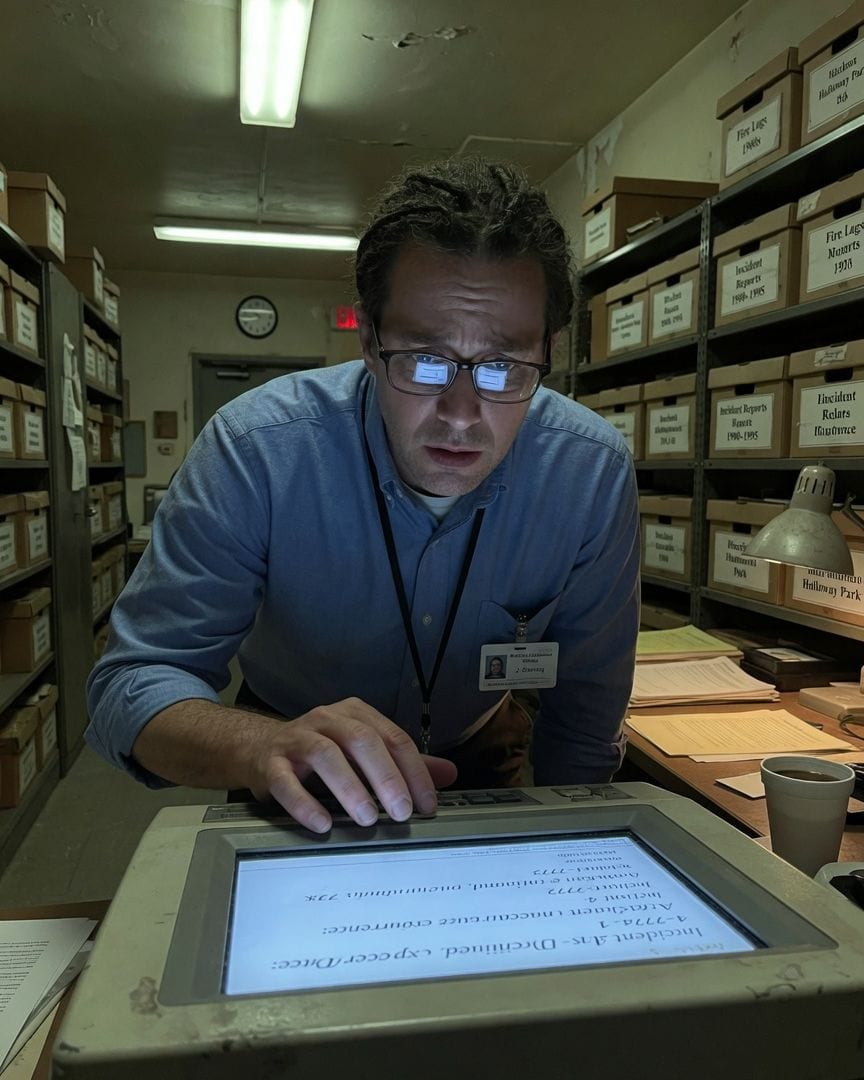
My old rope works fire log repeats the same 3:14am blaze, same incident number, across 1967, 1980, 1993. Each ends: 'origin undetermined, expect recurrence.'
As an Archival Digitization Officer, my days are spent scanning old records. I was numbly working through fire service logs when Incident 4-772 caught my eye: the same structural fire, same time, same number, repeated across different decades. Each entry ended with the chilling, identical phrase: 'origin undetermined, expect recurrence.'
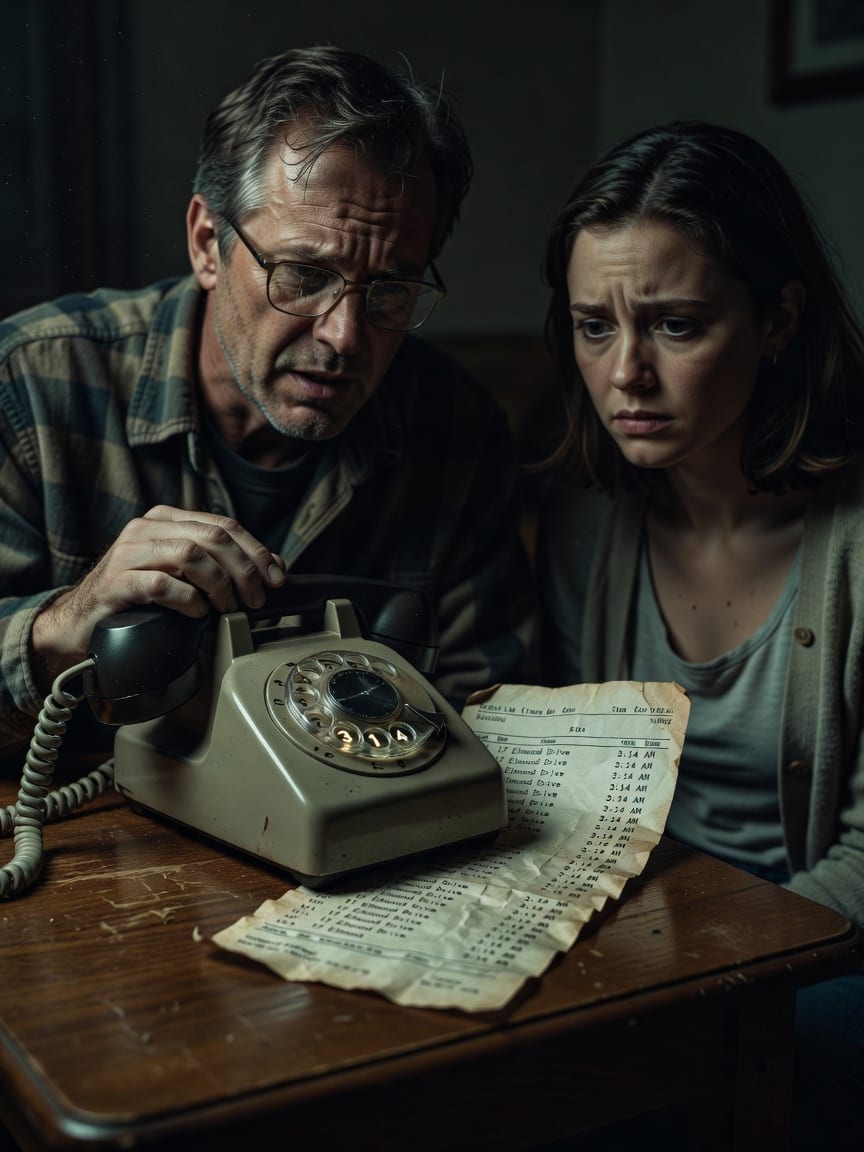
My phone bill itemised forty calls from my number to a house demolished in 1990. Each call at 3:14 AM, lasting eleven minutes. The bill arrived postmarked from a flattened building.
I expected the usual mobile bill, but my landline statement listed forty calls from my number to '17 Elmwood Drive.' That address was for a house torn down in 1990, a vacant lot I remembered from childhood. The phone company insisted the calls were legitimate, leaving me profoundly unsettled by the impossible charges.