My town's reservoir was built in 1961. The church ledger lists forty-one drownings in it, every single one before 1961.
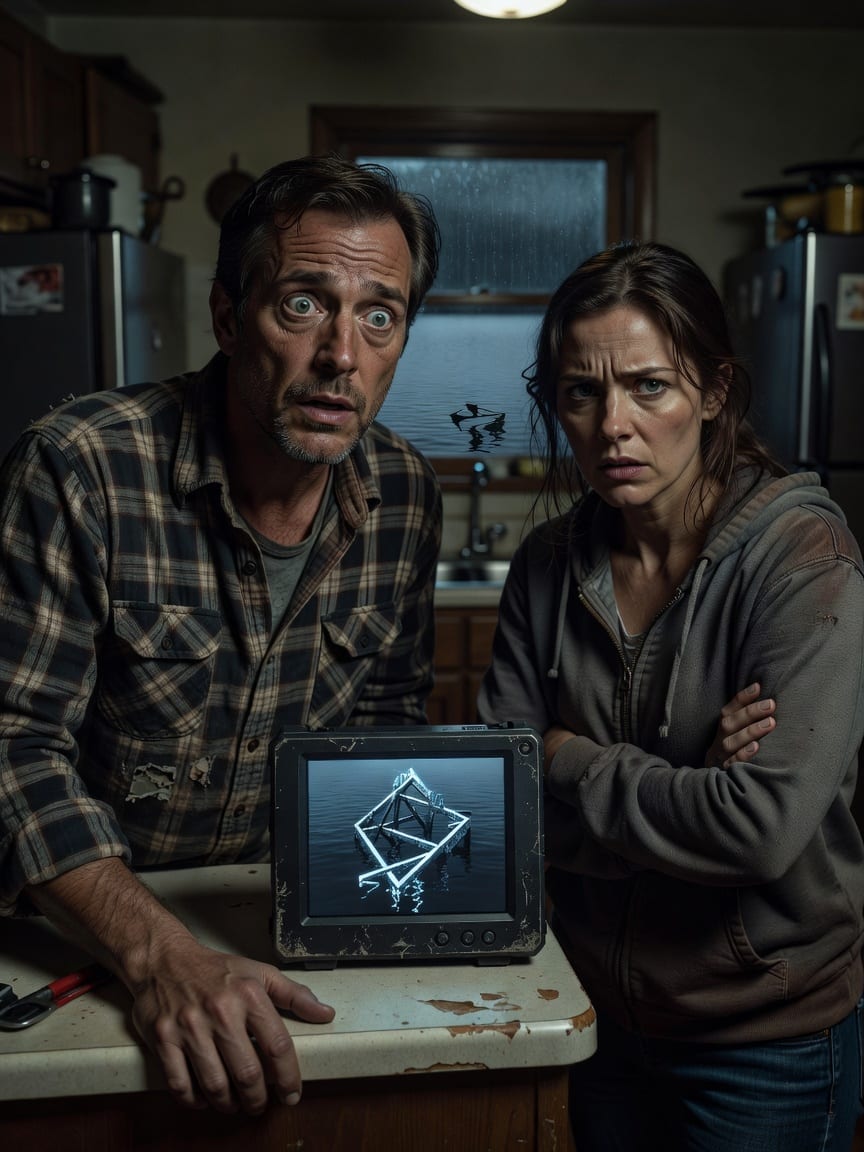
I moved to Hensley in late spring, drawn by the quiet streets and the promise of a slower pace. Everyone here seemed to know everyone, and I liked that.
My neighbor, Nancy Calloway, brought over a pie on my first day, and the town clerk, Kenneth Merritt, was surprisingly patient helping me set up my utilities.
One thing they all shared, a point of quiet pride, was the Hensley Reservoir. “Built in 1961,” Nancy had said, gesturing vaguely towards the hills. “Modern marvel for its time. Provides all our drinking water.”
Kenneth had echoed it too, talking about the "foresight" of the town founders in '61. It was a local mantra, almost.
A few weeks in, I found myself with a free afternoon, and an old church beckoned. St. Jude’s, with its peeling paint and creaky floors, held a certain charm.
I was poking around the vestry, looking at faded communion chalices and dusty hymnals, when I spotted it: a thick, leather-bound book, tucked onto a low shelf beneath a stack of moth-eaten choir robes.
The spine read 'Parish Burial Register – St. Jude’s, Hensley.' Its pages were thick, brittle parchment, filled with copperplate script.
I carefully opened it, flipping past births and marriages, until I reached a section marked, in bolder, somewhat spidery ink, 'Drownings – Hensley Reservoir.'
My breath hitched. The names blurred together for a moment, then focused. Samuel Albright, 1870. Eleanor Vance, 1883. Thomas Finch, 1902.
Forty-one entries, each with a date and a brief, often poignant, note: 'lost to the water,' 'found near the north shore,' 'vanished.' Every single date fell between 1870 and 1959. The latest was Margaret O’Malley, 1959.
The reservoir, everyone agreed, was built in 1961. Yet here, in my hands, was proof it had been claiming lives for almost a century before it officially existed.
The contradiction gnawed at me. I tried to rationalize it. Maybe there was an 'old reservoir,' a smaller body of water the locals referred to informally by the same name. I decided to ask Kenneth Merritt.
I caught him at the town hall, shuffling through a stack of permits. I explained what I’d found. He steepled his fingers, a small, knowing smile playing on his lips. “Ah, the old mill pond, you mean.
Before the big reservoir was put in. Locals sometimes called it a 'reservoir' loosely, especially the old timers. Easy to get confused with the records.” He offered a smooth, practiced explanation that almost worked. Almost.
But the burial register explicitly stated 'Hensley Reservoir.' Not 'mill pond.' Not 'old pond.' My unease deepened.
Driven by a quiet insistence I couldn't ignore, I made my way to the local history section of the Hensley Public Library. The small room smelled of old paper and dust.
The librarian, a woman named Carol who seemed to know the Dewey Decimal System by heart, pointed me towards a section of donated historical materials.
Tucked away in a dusty cardboard box, labeled 'Miscellaneous Local Ephemera,' I found a series of fragile, hand-drawn maps of Hensley from the late 19th century. They were beautiful, intricate, detailing every contour of the land.
One, in particular, caught my eye. It was dated 1898. It detailed the topography of the area, including the prominent body of water that dominated the landscape, just as it did today.
My finger traced the familiar outline on the yellowed map. It was unmistakable, perfectly matching the shape and location of the modern Hensley Reservoir. There was no mistaking it.
But the label, handwritten in elegant script, wasn't 'mill pond' or 'old reservoir.' It read, starkly, 'Blackwater Fen.' And beneath it, in smaller, almost apologetic letters, 'Site of many losses.'
I felt a chill that had nothing to do with the library's draft. The names in the burial register, I realized, weren't just from 'the reservoir.' They were from the Fen. The Fen that was now the reservoir.
The wrongness wasn't just in the dates; it was in the very ground beneath the town.
Armed with the map, the phrase 'Blackwater Fen' burned into my mind, I delved deeper. I started cross-referencing the names from the burial register with old census records and local newspaper archives.
Many of the surnames – Hale, Calloway, Forsythe – were still prominent in Hensley. I found snippets of articles from the late 1800s and early 1900s, vague reports of 'unfortunate accidents' and 'disappearances' near Blackwater Fen.
They often occurred around the same time of year: late autumn. The language was always hushed, implying a local knowledge that wasn't for public consumption. Never an investigation, never a suspect, just a quiet acceptance.
I tried to casually bring up 'Blackwater Fen' with my neighbor, Nancy Calloway, one afternoon while we were both gardening in our front yards. "I was reading some old local history," I began, trowel in hand.
"Came across a mention of something called Blackwater Fen, right where the reservoir is now." Nancy paused, her hands still in the soil. Her smile, usually so open, tightened a fraction. "Oh, that old marshland?
Before they cleared it for the reservoir. Just a bog, really. Nothing to worry about now." Her tone was too smooth, too rehearsed, the words spilling out like a line she’d practiced a thousand times.
The town's united front on the 1961 reservoir story was beginning to feel less like shared history and more like an agreed-upon lie.
Every time I mentioned anything pre-1961 about the reservoir, the conversation subtly shifted, or people’s eyes would drift away, their answers clipped. Kenneth, Nancy, even Carol at the library. They all did it.
The deeper I dug, the thicker the silence became. It was like I was chipping away at a protective shell, and the air grew colder with every crack.
The subtle steering evolved into something more unsettling. I returned home one afternoon to find my study door, which I always left ajar for my cat, closed. The air inside felt still, heavy.
A book on local geology, which I’d left open on my desk to a page about fen ecosystems, was now neatly shelved, perfectly aligned with its neighbors.
Nothing was missing, nothing seemed disturbed, but the message was clear: someone knew I was digging. My skin prickled with goosebumps.
A few days later, a plain envelope appeared in my mailbox, tucked between bills and flyers. There was no stamp, no return address, just my name handwritten on the front.
Inside, a single, typewritten note, stark against the cheap paper: 'Some things are best left to sleep. The water takes what it needs.' My hands trembled. I wasn't just uncovering a secret; I was stepping on sacred ground.
Someone was guarding it. Shaken, I looked out my window. Across the street, seated on her porch swing, was Sylvia Kingsley, 82.
I’d only seen her from a distance, a reclusive figure who seemed to blend into her own aging house. Sylvia was watching me, her gaze unblinking and strangely knowing.
It wasn't a confrontational stare, but one of deep, quiet observation, as if I were a predictable character in a story Sylvia had known for decades. A tremor of fear ran through me. It wasn't just a threat.
It was an acknowledgement.
I decided to confront Sylvia. I couldn't shake the feeling she was connected. I walked across the street, the anonymous note clutched so tightly in my hand the paper almost ripped. The screen door creaked as I pushed it open.
Sylvia didn't seem surprised to see me. She simply nodded, her ancient eyes meeting mine without flinching. She invited me in, her voice raspy but steady, offering tea I politely declined.
Her living room was cluttered with decades of life, smelling faintly of dried herbs and old wood.
I laid the note on her small, round kitchen table. "Did you send this?" I asked, my voice betraying more tremor than I intended.
Sylvia looked at the note, then back at me. "Did you understand it?" she countered, her composure unnerving.
I took a deep breath, and for the next several minutes, I poured out everything: the parish register, the pre-1961 drownings, the 1898 map, the name 'Blackwater Fen,' Kenneth’s smooth lies, Nancy’s evasions, the book put back on the shelf.
Sylvia listened, her expression unchanging, nodding slowly every so often.
"The reservoir," Sylvia finally said, her voice dropping, "was built to cover it. To calm it. Not just for water." She explained that Blackwater Fen wasn't just a marsh; it was a 'place that called.'
A presence that drew people in, especially during certain times. "The town," Sylvia continued, her gaze sweeping around the familiar room as if seeing its history, "we all agreed. To call it the reservoir. To forget the Fen.
To keep people safe, or at least, to try. It was a desperate hope."
She described how the town had funded the damming and construction in 1961, pouring concrete and modern convenience over an ancient, malignant truth, hoping to bury it. But the 'calling' never truly stopped. It just grew quieter, more selective.
Sylvia then reached for a worn, leather-bound journal from a shelf above the sink. The cover was cracked, the pages thick with age. Inside, a meticulously hand-drawn map of Blackwater Fen, covered in her grandmother’s elegant script.
It showed the same outline as my 1898 map, but with additional markings: 'deep spots' and 'thin places,' where the Fen's influence was strongest. "My grandmother kept careful records," Sylvia explained, her finger tracing a swirling pattern in the center.
"Generations of us have. The drownings," she said, looking at the parish register I’d brought, "they were the Fen's offerings. Before and after the reservoir. The water always finds a way." A chill, sharp and cold, ran through me.
I stared at Sylvia's map, the 'deep spots' marked with chilling precision. It all fit. The old records, the town's strange agreement, the hushed warnings.
The dread began to feel less like a mental puzzle and more like cold, flowing water, seeping into my bones.
"So, it still takes people?" I asked, my voice barely a whisper, the enormity of it settling over me.
Sylvia nodded, her gaze unsettlingly calm. "It does. But not haphazardly. There's a pattern, child. A deep, slow breath the Fen takes." She turned to a small, hand-stitched calendar hanging by her stove, its months marked with various local events.
On one page, a specific date in late autumn was circled in thick, red ink.
"It’s a twenty-three-year cycle, Frances," Sylvia said, her voice a low hum, almost a chant, the words seeming to resonate in the quiet room. "Like clockwork. The water will call again."
She pointed to the circled date, her finger a gnarled hook. "And the last one ended twenty-two years ago. This year is the one. The water will call again. It's already begun."
My heart pounded a frantic rhythm against my ribs as I rushed home. I spread out every document I had: Sylvia’s hand-drawn map, the parish burial register, printouts from regional news archives. I cross-referenced Sylvia’s 23-year cycle.
The pattern was horrifyingly precise. Every 23 years, for a period of roughly six months, there would be a cluster of 'accidents' or 'disappearances' near the Fen, and later, the reservoir.
The names in the register, the vague old articles, the more recent 'missing persons' reports from the last cycle 22 years ago – they all aligned perfectly.
The town's silence wasn't just a cover-up; it was a desperate, shared burden, a collective prayer that by ignoring it, by maintaining the facade of the 1961 reservoir, they could somehow mitigate the cycle, perhaps even starve the Fen.
Their everyday composure, the bland pleasantries, the careful redirection of conversation – it was all a frantic, generations-long effort to pretend the monster beneath their feet didn't exist.
Sylvia’s hand-drawn map of 'deep spots' and 'thin places' became a chilling guide. The places where the records showed the most incidents, the most 'losses,' were exactly where Sylvia had marked the Fen's strongest pulls.
The dread wasn't in the unknown anymore, but in the terrible, undeniable coherence of it all. Every wrong detail now clicked into place, forming a picture of ancient, sustained horror. The Fen was real. Its hunger was real.
And the town had been living with it, managing it, for generations.
A morbid fascination, a need to see the impossible artifact up close, drew me to the reservoir. I couldn't just leave, not yet, not without proof I could take with me.
I rented a small aluminum fishing boat from a dusty lakeside shack, telling the proprietor I was "testing the depths for a project."
My hands were clammy as I navigated to one of the 'deep spots' Sylvia had marked, a place where a barely visible, ancient stone foundation peeked out from the waterline, half-submerged.
The water here was unnaturally still, dark, and colder than the rest of the lake, even under the autumn sun.
I dropped the portable sonar transducer into the water. The screen, a small LCD display mounted on the boat's console, flickered to life. It began to paint an image of the unseen depths.
Below me, at a depth that seemed impossible for a man-made reservoir, a distinct, large structure began to resolve. It wasn't natural rock; it had unnervingly regular lines, almost like carved stone, ancient and weathered, but clearly not geological.
It pulsed on the screen, a dark, solid mass that defied the reservoir's history. This was no geological anomaly. This was the 'altar,' the 'mouth' of the Fen, a focal point of whatever ancient wrongness lay beneath the water.
It was real, dated by its very impossible presence, and checkable by the cold, hard data on my screen. The ordinary explanation died for good, strangled by the irrefutable evidence.
A profound, bone-deep chill settled over me, far colder than the water itself. I wasn't just looking at an old structure; I was looking at the heart of Hensley's secret, the thing that had been taking its offerings for centuries.
The water around the boat began to ripple, not from wind, but from some unseen current below, pulling gently, insistently, at the hull, a soft, hypnotic tug. I pulled the transducer from the water, my hands shaking.
I didn't need to see any more.
I left Hensley that day. I packed only the essentials, abandoning my new home, my job, my nascent life there, everything I'd built for myself.
The town clerk, Kenneth Merritt, called once, a week later, politely inquiring about my sudden departure, his voice smooth and untroubled. I didn't answer.
A few weeks later, a brief, nondescript article appeared in a regional paper I still received: 'Tourist Reported Missing Near Hensley Reservoir. No foul play suspected.' Just another 'unfortunate accident.'
The town's quiet agreement held, a protective shell against the wider world, the cycle continuing, unseen. Sylvia Kingsley remained in her home, watching the reservoir, waiting for the next ripple.
Now, miles away in a new town, I avoid all bodies of water. Lakes, rivers, even large fountains. They all seem too deep, too still, too capable of hiding something ancient and hungry.
I find myself checking calendars, counting the years, the months, the days until the next 23-year cycle peaks in Hensley.
The fear isn't just for the people there anymore; it's a chilling realization that such places, such ancient, hungry things, might exist everywhere, hidden beneath the mundane.
The world is full of reservoirs built over fens, full of smooth, agreed-upon stories. I know what they hide. I can feel the pull of unseen depths even in the quietest moments, a faint echo of the water's call.
I survived, but the knowledge marked me, a permanent cold spot in my soul, a wound that won’t heal.
Some silences are just waiting for their turn to speak.
If this one got to you
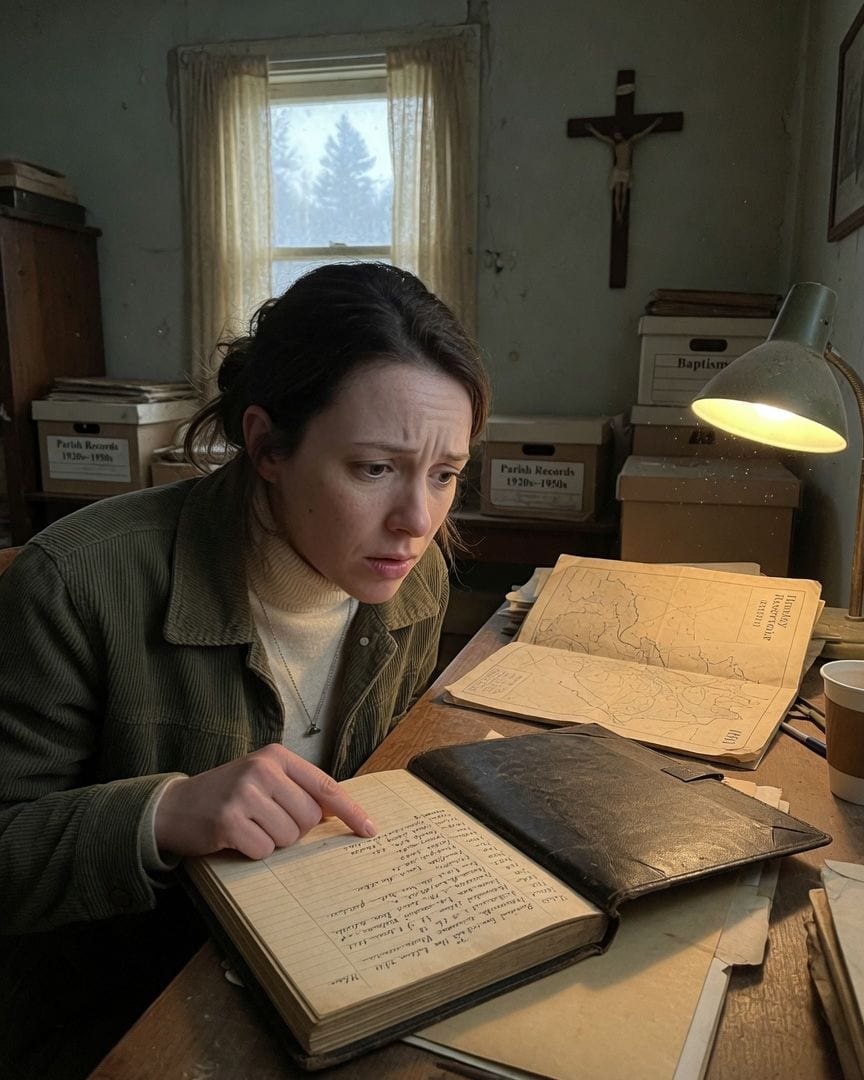
Hensley's reservoir was built in 1961, everyone says. The old church register lists forty-one drownings in it, every single one dated before 1961.
I moved to Hensley for a fresh start, helping at the historical society. While sorting old records, I found 41 drownings in Hensley Reservoir, all dated years before it was supposedly built in 1961. Later, an 1880 plat map confirmed it: the reservoir was always here.
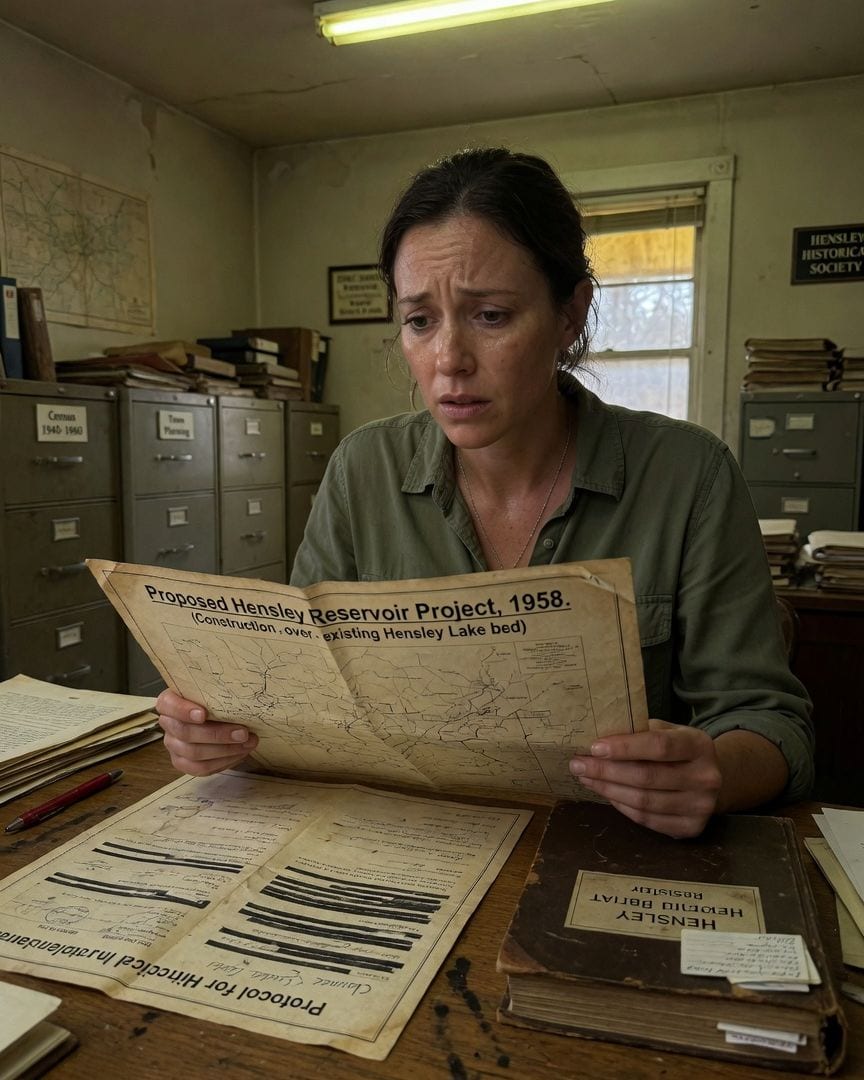
Our town reservoir was finished in 1961. But the old church records show forty-one people drowned in that same reservoir, all decades before it was ever built.
I moved to Hensley, a quiet town where everyone proudly mentioned its reservoir, built in 1961. As a history buff, I found the old parish burial register. It listed 41 people who drowned in 'Hensley Reservoir' between 1903 and 1959, decades before the town says it even existed.
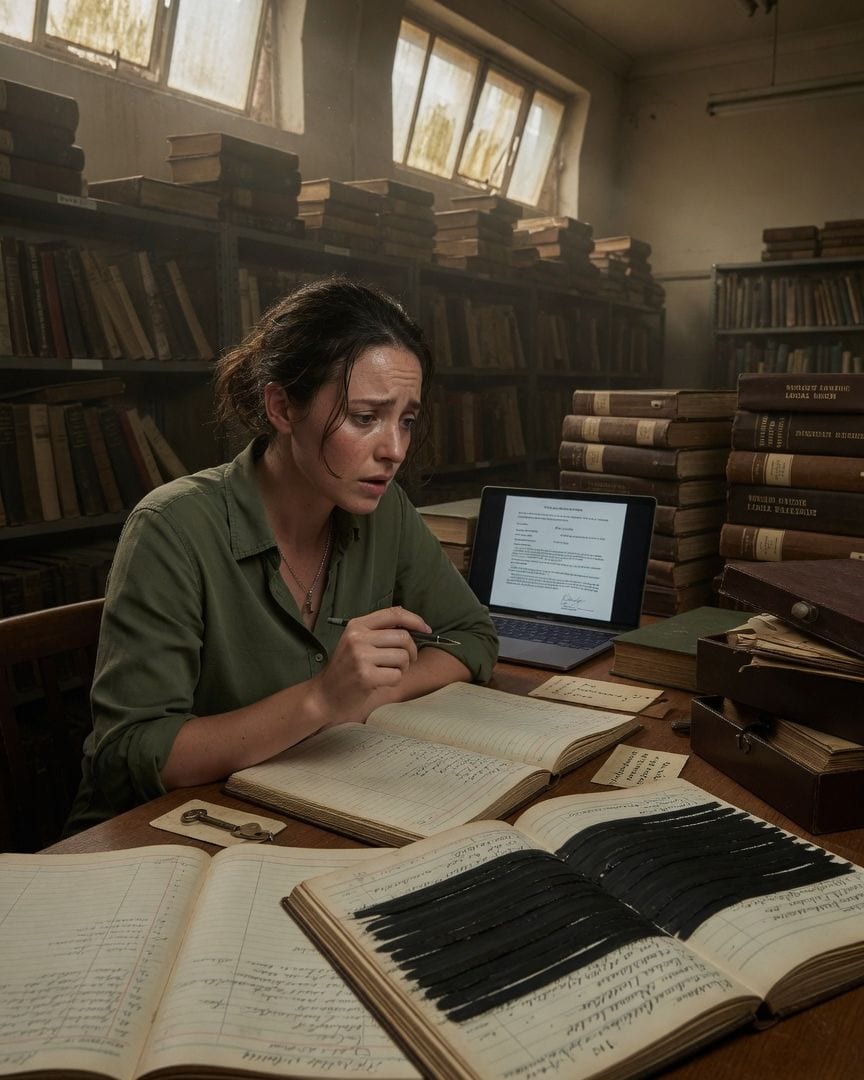
My grandmother’s name is on a blacked-out line from a 1954 drowning inquest, on our street, with a note: 'do not send a second notice.'
Transcribing old inquest registers in the quiet archive was a routine task, until I found a 1954 entry for an accidental drowning. The next of kin line was savagely blacked out, but the faint impression underneath named Patricia Kingsley, my grandmother. Her address was listed on Weir Lane, eleven years before she ever lived there, alongside a chilling note: 'do not send the notice a second time.'
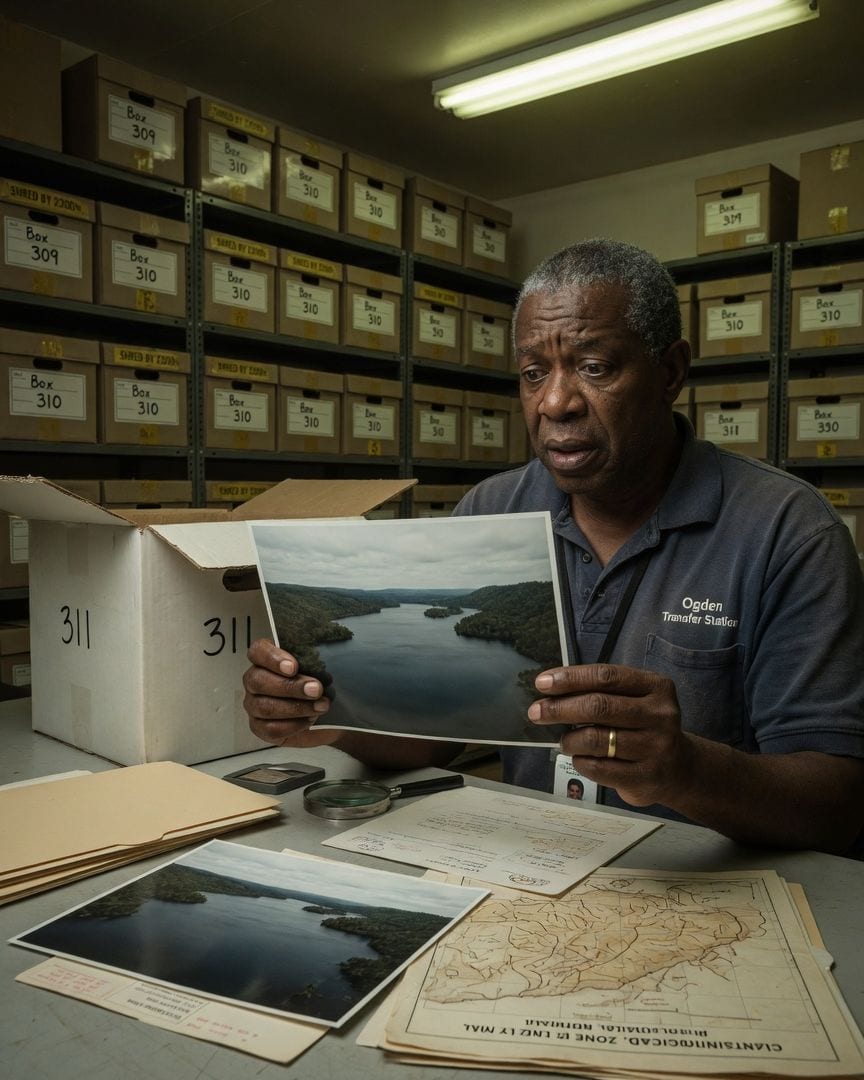
A transfer station archivist, six days from retirement, found 1968 aerial photos of a valley already a lake. Maps from 1967 labeled it a 'hydrological anomaly'.
Just six days from retirement, Wilmot Achebe, a man who had called the Ogden transfer station his second home for thirty years, began his final rotation. Slicing through a box of historical ephemera, he unearthed a folder marked 'Aerial Reconnaissance - VIETNAM - 1968'. Inside were ten glossy prints showing a lush river valley, completely submerged, a massive lake where no lake should have been. The dam for this valley wasn't built until a decade later. Wilmot's unease deepened when he found older maps, dated 1967, labeling the same site a 'CONTAINMENT ZONE - HYDROLOGICAL ANOMALY'.
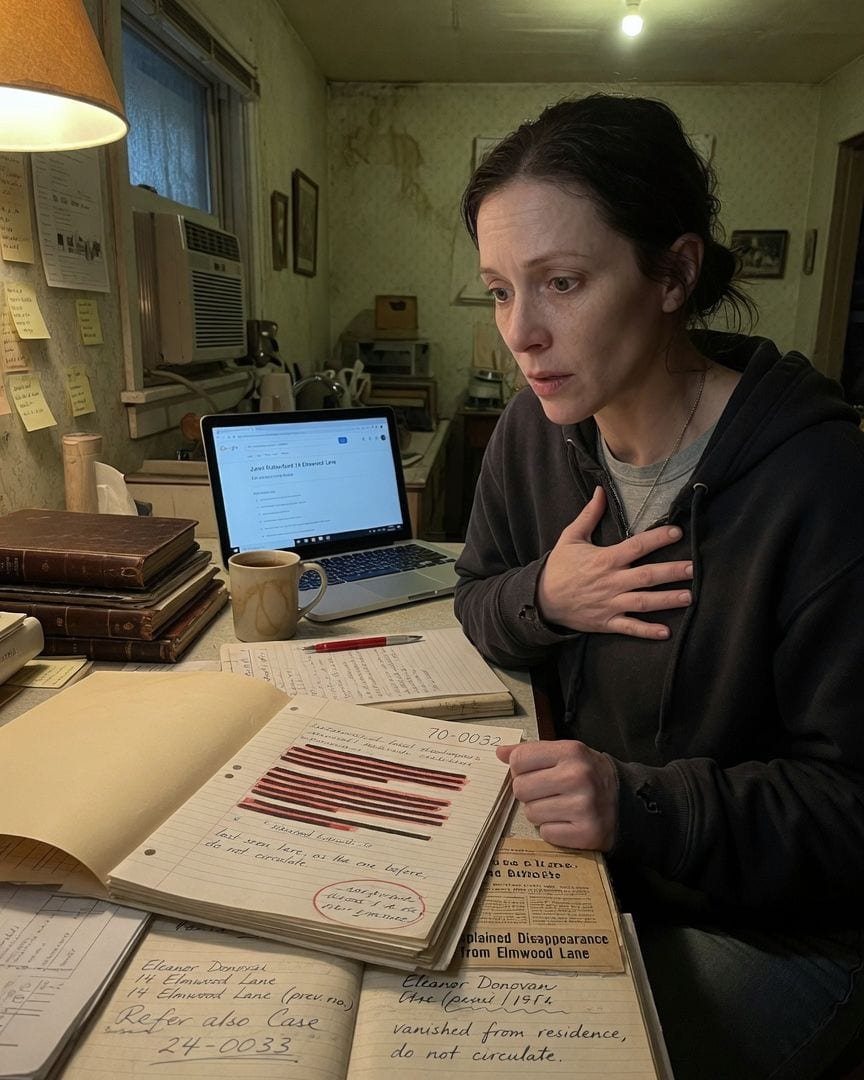
My own address is on a missing person's file from 1970. The blacked-out line names my street. She never lived here.
When my neighbor vanished, I started digging into old local missing persons cases. In a police file for a woman who disappeared in 1970, I found my own address, 14 Elmwood Lane, framing a blacked-out section of the duty log. Janet Rutherford never lived here, and the file contained a chilling handwritten note: 'do not circulate.'
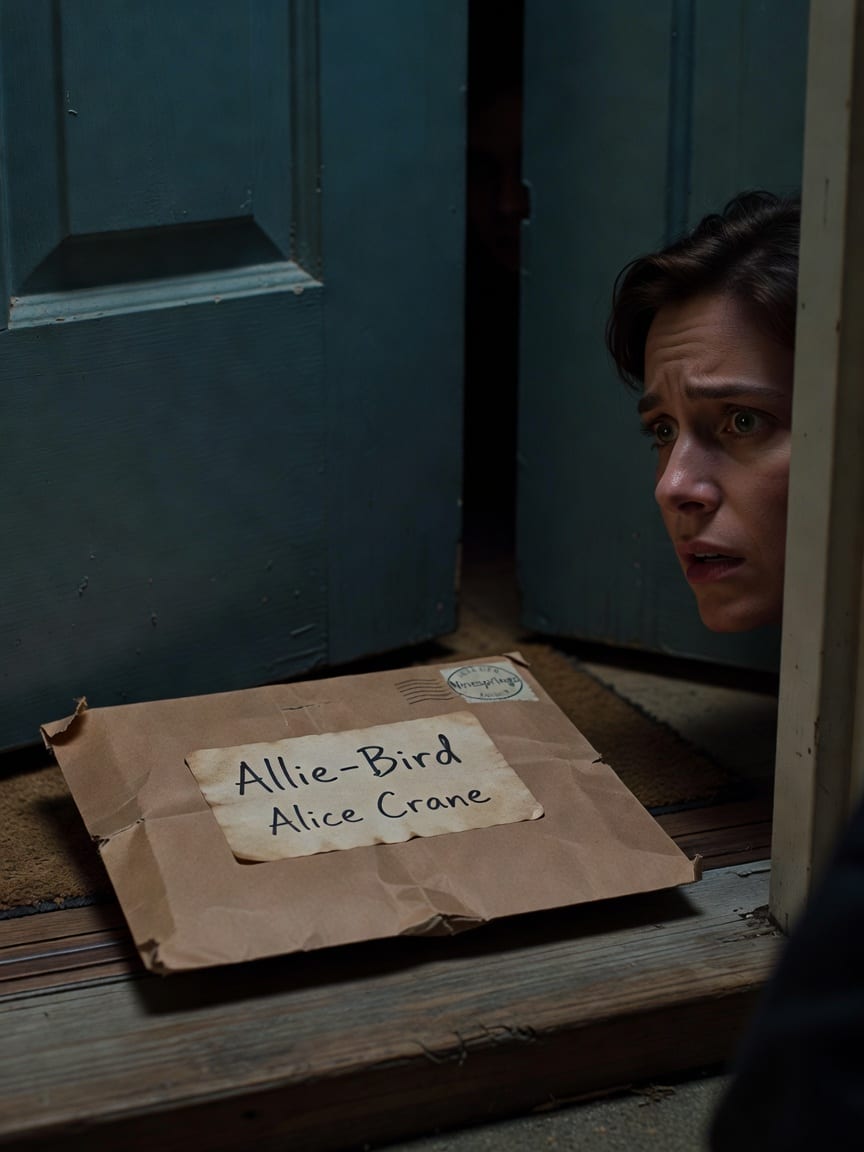
My parcel had my childhood nickname on it — a name only dead relatives used. Inside: a photo of my new front door, sent from an empty marsh the day I moved in.
I was unpacking in my new house when a strange parcel arrived with the moving truck. It held a photo of my own front door, postmarked from Ninesprings – a vast marshland with no roads or postal service. The impossible package was sent the very afternoon I moved in.