Water moved under my house at 3am, leaving a six-inch silt line. The river's two miles off.
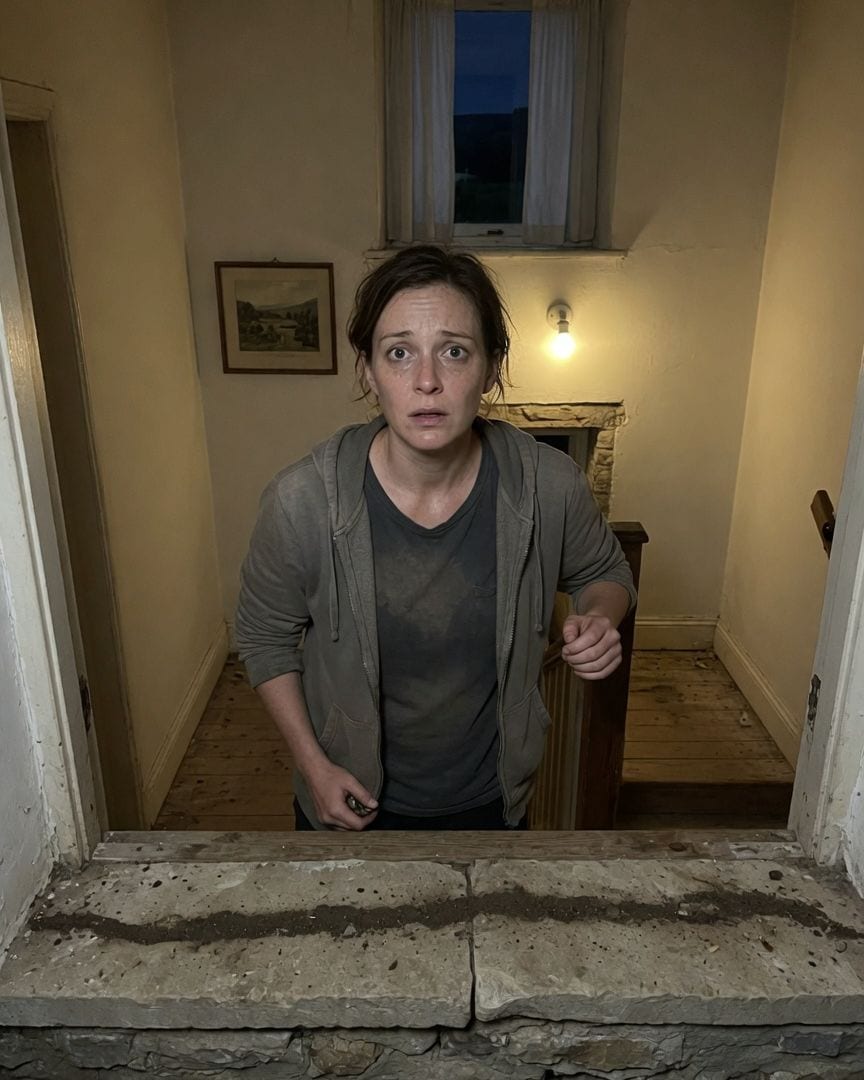
The first week in my inherited valley house had been a blur of boxes and dust. I was thirty-two, new to the area, and utterly exhausted.
That night, after a particularly frustrating wrestle with a recalcitrant bookshelf, I’d stumbled upstairs and fallen into bed, completely forgetting to flick off the landing light.
It was a minor oversight, one I wouldn't have given a second thought to, until 3 AM.
I woke to the sound. Not a drip, not a leak, but a distinct, powerful current. A deep, rushing sound, like a river, but it was under my house.
I lay rigid, straining to hear it over the thumping of my own heart. It wasn't the distant rumble of the actual river, two miles away; this was immediate, vibrating up through the floorboards.
It flowed, a constant, unsettling presence, for what felt like an eternity. Then, as gradually as it had begun, the sound slowly faded, sucked back into the quiet night, leaving only the ringing in my ears.
By morning, the impossible had solidified. A tideline of fine, dark silt, exactly six inches high, marked the stone foundation of my house and snaked along the garden wall.
It was perfectly level, a pristine dark stripe against the pale stone. The nearest river was two miles off and hadn't run high in months, let alone last night. My pipes were all dry, tested them myself.
No burst main, no puddle, no damp patch anywhere beyond that precise, unmoving line of grit. I ran my hand over the cool, gritty residue. It felt wrong, utterly alien. A knot, cold and tight, formed in my stomach.
It was just there, on my wall, and nowhere else.
I spent the better part of the morning with a stiff brush and a bucket of water, trying to scrub away the impossible tideline. The silt, however, clung stubbornly, leaving a faint, indelible stain.
As I worked, my fingers brushed against something hard embedded in the grit. I dug it out: a small, smooth, dark stone, perfectly ovoid, about the size of a pigeon’s egg.
It wasn’t like any river rock I’d ever seen, not from this valley, not from anywhere I knew. It felt unnaturally cold, radiating a chill that settled deep in my palm.
Later, needing a break and some actual human interaction, I walked down to Maureen Drummond’s general store. Maureen, fifty-five, was a woman with kind eyes and a smile that seemed a little too bright, a little too fixed.
While she stacked tins of stewed tomatoes, I tried to casually bring up the subject of local oddities. “I, uh, had a strange night,” I started, trying for nonchalance.
“Heard some funny sounds, and then found this odd silt outside this morning. Almost like a flash flood, but… no water.”
Maureen paused, tins clattering gently. Her smile didn't waver, but her eyes, for a split second, went distant. Then she launched into a folksy tale about ‘the ford.’
“Oh, that’s just the old ones talking, dear,” she chirped, picking up her pace. “They say you don’t leave a lamp burning in an upstairs window overnight, especially in autumn. Calls the ford, they say.
Just an old wives' tale, of course, from back when people believed anything.”
A chill, sharper than the stone in my pocket, ran down my spine. I hadn’t mentioned a lamp. Not a word. I’d only described the sound and the silt. As Maureen turned to grab another box, I caught her eye.
Just for a fraction of a second, she glanced past me, out the shop window, directly towards my house. Specifically, towards my upstairs landing window. Then her smile snapped back into place, brighter than before.
That night, the smooth, dark stone felt heavier in my hand. I spent hours online, searching 'local geology,' 'valley river stones,' 'unusual silt deposits.' Nothing matched. It was utterly alien.
Maureen’s quick glance and the odd specificity of the ‘old wives’ tale’ gnawed at me. My ordinary curiosity had turned into something else, something with teeth. I dug deeper online, moving beyond geology forums to local history archives.
After an hour of dead ends, a desperate search for ‘the ford’ and ‘light’ on an obscure local history forum yielded vague, unsettling posts, all echoing Maureen’s warning. Then, a digitized newspaper clipping from forty years ago caught my eye.
The headline screamed: ‘Local Woman Vanishes – Strange Circumstances.’ The name was Constance Harlow. The article detailed her disappearance from her quiet house on the edge of the valley.
And then, the line that made my blood run cold: “Witnesses reported a strange ‘mud line’ around the property in the days preceding her vanishing, though no flood was recorded.”
I stared at the faded newsprint on my screen, the words ‘strange mud line’ and ‘Constance Harlow’ burning into my vision. The house in the accompanying grainy photograph had a distinct, bright upstairs window, just like hers.
The next day, the faint, residual stain on my garden wall felt like a judgment. I found myself at the valley’s small historical society, a dusty room above the old library that smelled of aged paper and forgotten lives.
Gary Norwood, sixty-eight, a man whose spectacles seemed permanently fused to the bridge of his nose, was meticulously cataloging ancient deeds. I asked about Constance Harlow, feigning a sudden interest in local genealogy.
Gary was polite, but his answers were clipped, dismissive. “A tragic accident, poor woman. The records are vague. Nothing to concern a newcomer.” He waved a hand, a clear signal to move on.
As he spoke, my eyes drifted. On the wall, among faded maps and sepia-toned photos of stern-faced founders, was a framed photograph of the 1970s town council. And there he was.
A man much younger, but undeniably Oscar Bishop, the name I'd heard mentioned around town as one of the 'old families.' He met the camera with an unnervingly calm, almost knowing expression, his eyes seeing something beyond the photographer’s lens.
While Gary was distracted by a crackling phone call about a missing tax record, I discreetly scrolled through the microfiches, searching for similar ‘accidents.’ I found more than I wanted to.
Not just disappearances, not outright deaths, but reports of ‘unexplained mental decline,’ ‘sudden profound amnesia,’ or ‘a quiet, lost look’ in individuals.
And always, always, these reports followed mentions of unusual ‘water damage’ or ‘mud lines’ around their homes, often dismissed as local oddities or pipe bursts that were never quite explained.
The dates formed a chillingly consistent pattern: every ten to fifteen years, usually in the late autumn. The 'accidents' spanned generations, a silent, creeping history hidden in plain sight, just beneath the surface of official records.
The hum of the microfiche machine was the only sound in the room, a low, constant thrumming that seemed to underscore the quiet horror of what I was uncovering.
I felt a prickle on the back of my neck all that afternoon. A dark sedan had driven slowly past my house three times, too slowly to be just passing through. I knew I was being watched.
Determined, and with the image of Oscar Bishop's knowing eyes still fresh in my mind, I found him tending a meticulously kept rose garden near the old church.
He was a lean man, his face weathered by the valley sun, but his eyes, when he turned them on me, were disturbingly sharp.
“Mr. Bishop,” I began, my voice steadier than I felt, “I’m Olivia Porter. I’ve been looking into some local history, about Constance Harlow and… the ‘ford’.”
Oscar straightened slowly, carefully, a pruning shear still in his hand. His gaze was steady, devoid of surprise, as if he’d been expecting me. He simply nodded.
“You left your light on, child,” he said, his voice a low rumble, like distant thunder. “Broke the rule. Some things are best left undisturbed. It knows you now.”
He didn't sound angry, or even threatening, just stating a fact, like commenting on the weather. His calm certainty was far more unsettling than any outright threat.
He simply turned back to his roses, his silence absolute, the pruning shears clipping rhythmically, the sound unnervingly precise. I tried to press him, but he offered nothing more.
Later that evening, after a restless dinner I barely touched, I found another smooth, dark, ovoid stone on my porch step. It was identical to the one I'd found in the silt, unnaturally cold to the touch.
It wasn't just a coincidence. It felt like a direct, personal message, a quiet, horrifying confirmation of Oscar’s words: It knows you now. The air around my house suddenly felt heavier, the darkness outside more tangible.
The second stone felt like a weight in my hand, a cold, smooth accusation. I marched back to Oscar’s garden the next morning, my patience thin, my fear now edged with a desperate demand for answers. “What is this?”
I demanded, holding the stone out to him like evidence.
Oscar barely glanced at it. He continued to meticulously prune a dead rose, a slow, deliberate snip. “A piece of the ford itself,” he said, his voice as calm as ever. “Solidified. Happens sometimes, when it takes something particularly… substantial.”
I pressed him, my voice tight, an edge of hysteria I fought to suppress. “What is the ford? Maureen called it an old wives’ tale. Gary said Constance was an accident. But I found the records. The patterns.
The ‘mud lines’ and the disappearances. The lost looks.”
Oscar sighed, a long, weary sound that seemed to carry the weight of decades. He finally looked up, meeting my gaze. “It’s not water, child. Not in the way you understand it.
It’s a current, a flow of… something hungry, that moves through the earth. Drawn by light, yes. A beacon, a bright point in the dark. But it doesn’t take lives, not like a river takes a body.”
He paused, his eyes holding mine, ancient and solemn. “It takes memories. It takes identities. It leaves people hollow. Constance Harlow… she wasn’t gone. Not in the way you mean. She was just… empty. A shell.
That’s why the town said ‘disappeared.’ It was easier.” The silt, he explained, was the residue of what it consumed, a kind of psychic detritus, what was left behind when the ford fed.
My mind raced, connecting the dots of the old records, the patterns of mental decline, the vague ‘lost looks’ in individuals, the town’s quiet evasions. It all clicked into a horrifying, coherent whole.
“My light,” I whispered, the words catching in my throat. “It came for me.”
Oscar nodded slowly, his face etched with something akin to sorrow. “It did. And it took something from you. Something important. It always does, when it’s accidentally called. A trade, you might say, for its passage.”
I felt a profound, cold dread settle deep in my bones. An emptiness.
I remembered the strange blank space I’d felt after that first night, an unsettling void in my mind I couldn’t quite place, a piece of myself that felt missing.
I’d attributed it to stress, to the move, to a dozen mundane things. Now, the mundane felt like a flimsy veil, ripped away. “What did it take?” I asked, my voice barely a whisper, afraid of the answer.
Oscar looked at me, his eyes filled with an ancient, quiet sorrow. “You came to this valley, didn't you, Olivia?” he said, his voice soft but definitive. “Like so many others. Drawn here, without fully knowing why.
That night, when your light called it... it took the memory of why you chose this valley. The reason you came.”
My hand went to my chest, a sudden, profound emptiness opening inside me, a cold void where a core part of myself should have been. I tried, and failed, to recall what brought me here. The answer was just… gone.
I stumbled back from Oscar, the horrifying truth settling over me like a shroud. “My reason for coming… it’s gone?” I choked out, the words feeling foreign, distant.
Oscar nodded, his gaze unwavering. “The ford doesn't just take; it replaces. It leaves a deep, unsettling sense of belonging, a quiet contentment, so you don't question the void it leaves.
People drawn to this valley often carry a specific burden, a memory of loss, failure, or a past trauma that hinders their ‘integration.’ The ford ‘cleanses’ it.
It’s why so many newcomers stay, happily adrift, never quite remembering what they were running from, or what they were looking for. They just are here.”
He led me to a small, hidden shed behind his house, smelling faintly of damp earth and dried herbs. Inside, among gardening tools and bundled firewood, were old maps and hand-drawn diagrams, tacked to the rough-hewn walls.
They showed the valley not as solid ground, but as a nexus of ancient, deep earth currents, not just one ‘ford,’ but a network of them, flowing beneath the surface.
The dates and names I found in the historical society records weren't just disappearances or mental declines; they were the ‘cleansings,’ the sacrifices.
“My family,” Oscar explained, tracing a finger along a faded line on a map, “and others like us, we’ve maintained the truce for generations. Guiding it, feeding it what it wants, so it doesn't take everything.
We are all, in our own way, marked by what it’s taken, and by what we now know. It's the price of peace, for this valley. A quiet, necessary exchange.”
The ‘peace’ he spoke of felt less like a blessing and more like a cage, a complicity I hadn't asked for.
I understood now, with a chilling clarity, that I was part of this pattern, an unwitting, or perhaps, now, a willing sacrifice if I did nothing. But the thought of that hollow belonging, that contented emptiness, curdled in my stomach.
I refused it.
“How do I stop it?” I demanded, my voice sharp.
Oscar shook his head slowly. “You don't stop it, Olivia. You repel it. You make your home undesirable. It’s drawn by light, yes, but it recoils from absolute, focused dark.
Not just turning off a lamp, but a complete, internal blackout. It seeks a bright point, a beacon, but it cannot navigate absolute void.”
I raced home as dusk deepened, the valley falling into shadow around me. A faint, low hum, like distant water moving somewhere deep underground, was already audible, just at the edge of my hearing.
I moved with frantic purpose, spurred by a primal fear. I tore down old curtains, draped blankets over every window, taped cardboard over the slightest cracks where light might escape.
I pulled down shades, blocked the front door's glass panel, even shoved a towel under the back door. My house plunged into an oppressive, absolute darkness, a heavy, sightless void.
The sound outside intensified, pressing against the walls, no longer a hum but a cold, hungry presence, a roaring torrent I could feel in my bones.
I felt the familiar, insidious pull at the edges of my mind, a vague sense of something else trying to slip away, something precious. This time, I fought it.
I focused on a specific, painful memory, a cherished, difficult one I would not surrender. The sound outside reached a crescendo, a terrifying, guttural roar that vibrated through the floor, a deluge of non-physical force.
Then, with an abrupt, shuddering silence that left my ears ringing, it receded. The house was still. The darkness was absolute.
The next morning, weak sunlight streamed through the inevitable gaps in my makeshift blackout, painting pale squares on the floor. There was no silt on my garden wall.
The smooth, dark stone I’d left on my porch step, the personal message, was gone. The valley seemed quiet, but different now, weighted with a new understanding, a new kind of silence.
Maureen Drummond, at the general store, gave Olivia a look that was less smooth, more knowing, a flicker of something akin to respect in her eyes. Oscar Bishop, from his garden, simply offered a curt, acknowledging nod.
I felt a profound emptiness where my ‘reason for coming’ used to be, a missing piece that would never quite return. But in its place was a fierce, cold clarity.
I was no longer just a newcomer; I was a survivor, a keeper of the truce.
I never lit an upstairs window again. I learned the valley’s quiet ways, the subtle signs, the patterns of dates, the gentle steering away from certain topics.
I saw new faces arrive, bright-eyed and eager, drawn by an inexplicable pull, and wondered what memories they would lose, what parts of themselves the ford would claim.
I understood the ‘never the only one’ now, seeing the network of valleys, the patterns repeated across them, a silent, ancient system of exchange.
My house was safe, for now, a small island of calculated dark in a sea of unspoken agreements.
Olivia sits on her porch swing, watching a moving truck pull up to the old Calloway place down the road. A young couple, bright-eyed, begins to unload boxes.
From their upstairs window, a lamp flickers on, casting a warm, inviting glow into the twilight. Olivia simply closes her eyes and takes a slow, deep breath, the faint, distant sound of moving water already audible only to her.
If this one got to you
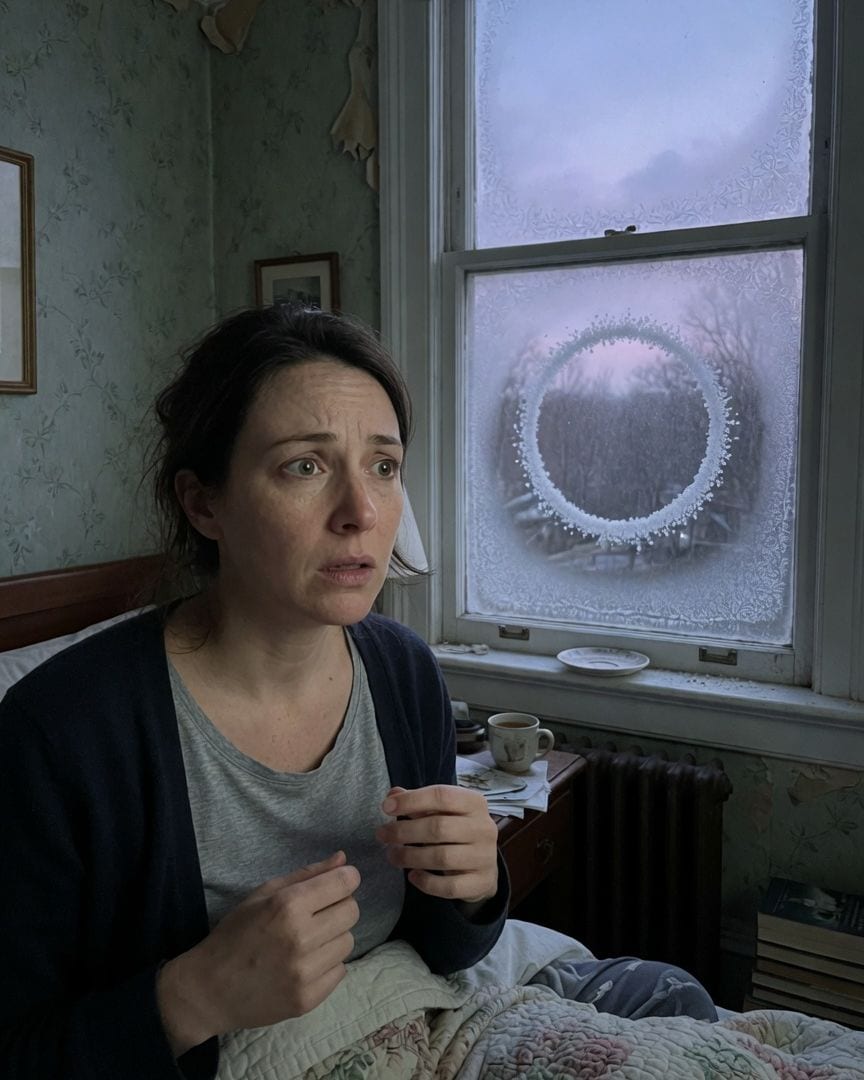
A 1963 obituary for a vanished 7-year-old girl lists *my Fenwick address* as her last known home.
Fenwick has its quaint traditions, like placing a salt saucer on the sill for protection. I put mine on my fourth-floor bedroom window, a private scoff at local custom. The next morning, the saucer was gone, replaced by a perfect salt ring on the *outside* of the glass, impossible to reach.
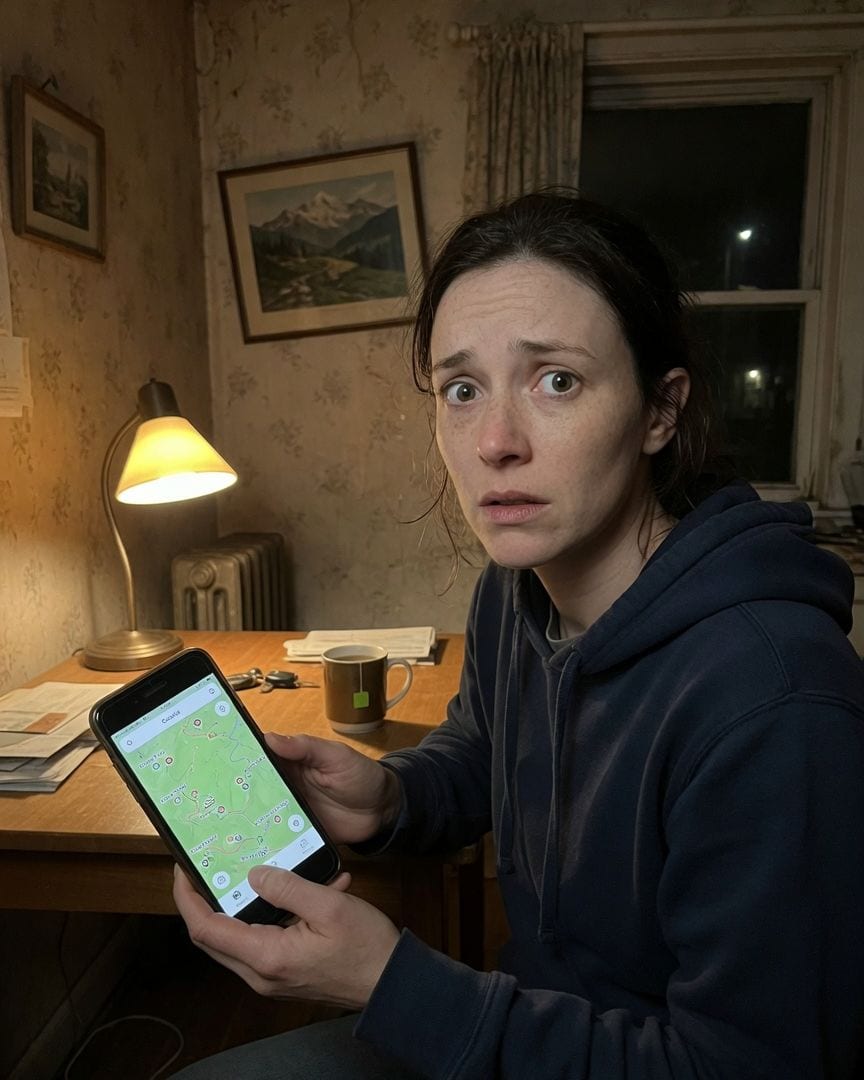
My hiking app scrubbed the hill's name from the map, on a phone that's been in airplane mode for two days.
I just moved to town and hiked a local hill, 'Cathan Tor,' according to my phone's app. But when I mentioned the name to the mechanic, he froze, dropped his wrench, and whispered, 'Don't say that name, Colette.'
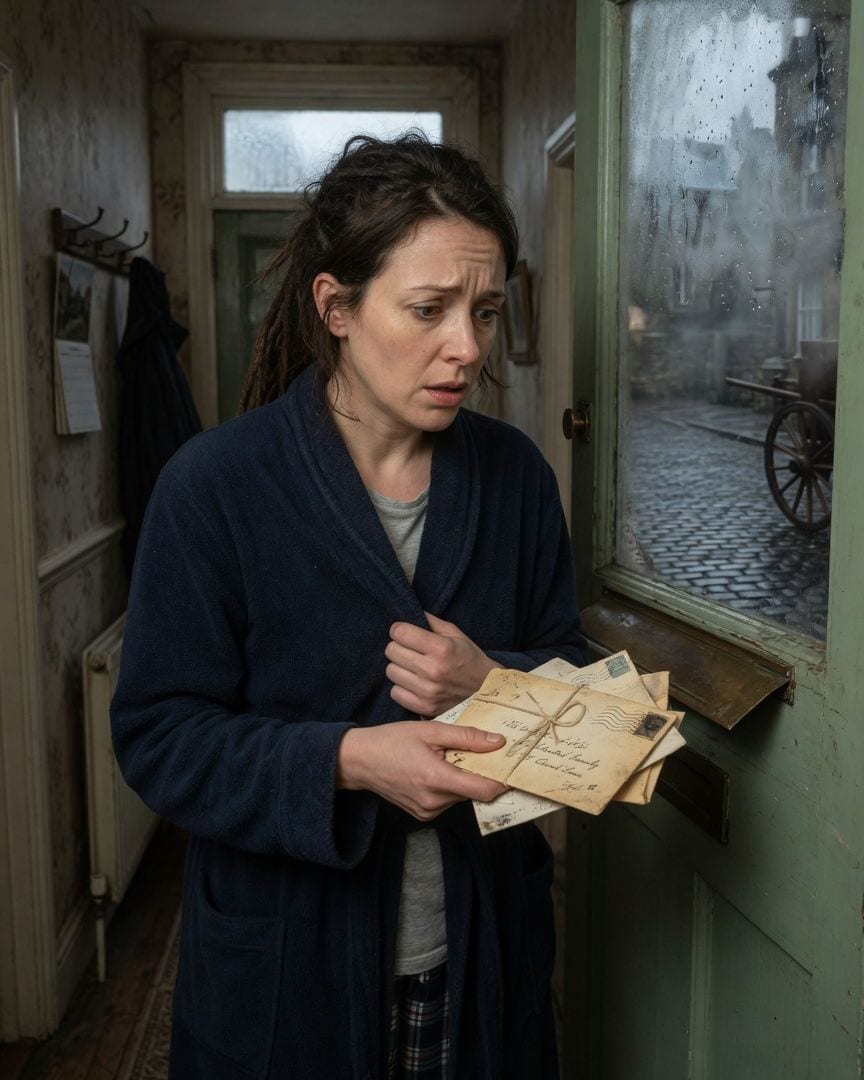
Seventy years ago, a hidden journal recorded my door opening to the wrong street and receiving Lockwood post.
I'd only recently moved into my inherited house, a quiet place on the edge of town. One grey morning, a distinct clatter from the front door's post flap caught my attention. Reaching down, I expected my gravel path, but instead, the flap showed a dark, cobbled street that wasn't mine. A bundle of warm, old letters, addressed to 'The Lockwood Family,' slid through, before the vision flickered and was gone.
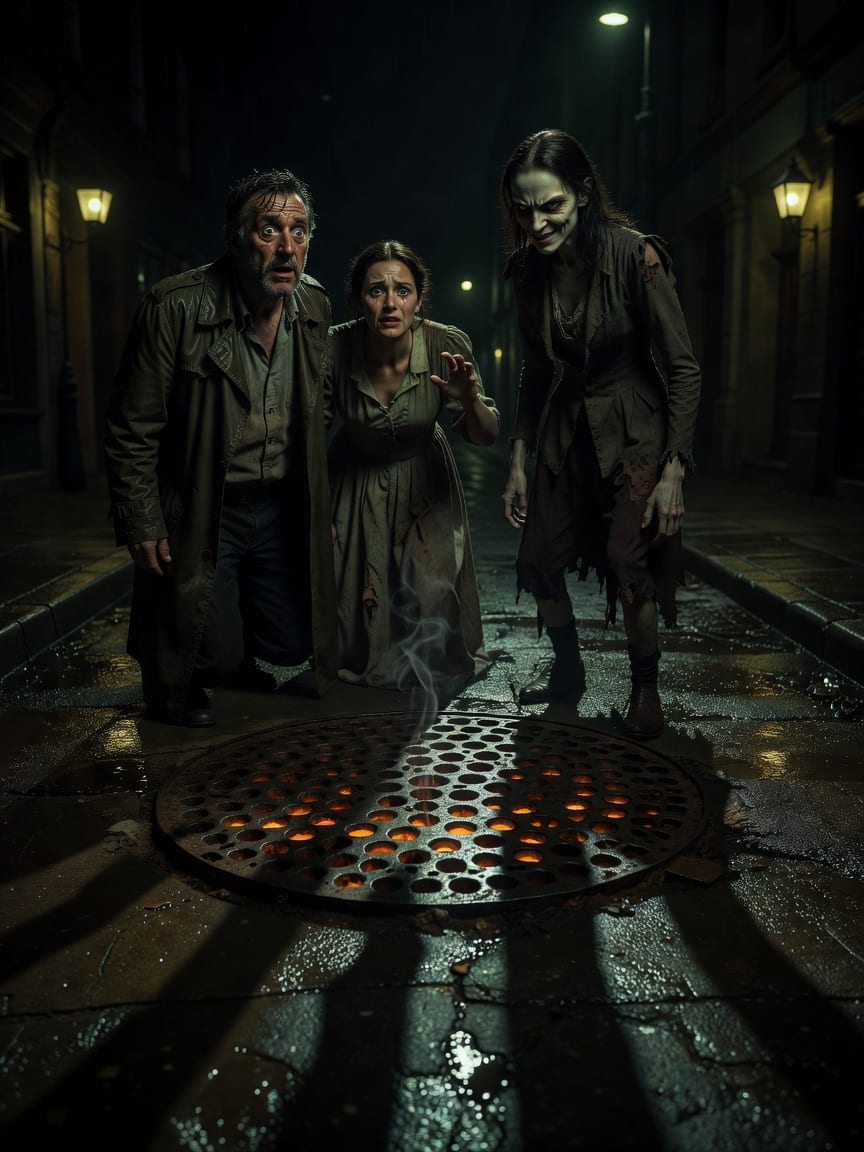
There’s a coal hole cover outside my house, iron, sealed with tar. One night I saw light coming up through its holes. From below the street, a shovel scraped, a man whistled. My cellar, directly beneath, is bricked off from it, dry and empty. I went down and checked. Silence. Cold.
I’d only been in my new house two months when I saw it: a faint glow and rhythmic scraping from the old coal hole cover in the pavement. My cellar, directly below, was bricked off and empty. But then a man started whistling, a tuneless melody, echoing from directly beneath my feet.
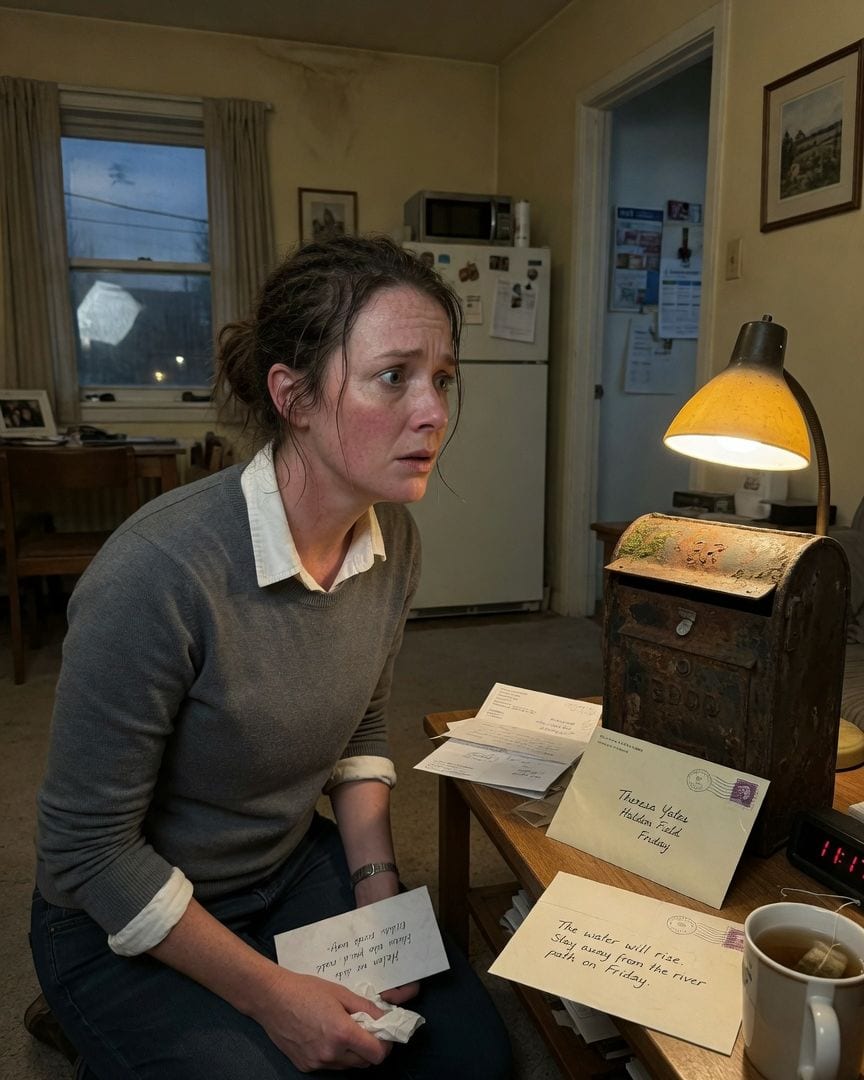
A sheet with my name on it read: "Don't take the 7:40 on Thursday." It was postmarked from a field with no houses and no postbox. This morning a second one came.
Last month, I started receiving anonymous letters addressed to me. Each one is postmarked from 'Haldon Field,' an empty expanse of grass and scrubby trees with no postbox. The first warning, telling me not to take the 7:40 bus, proved terrifyingly accurate when it crashed, making me dread the next.
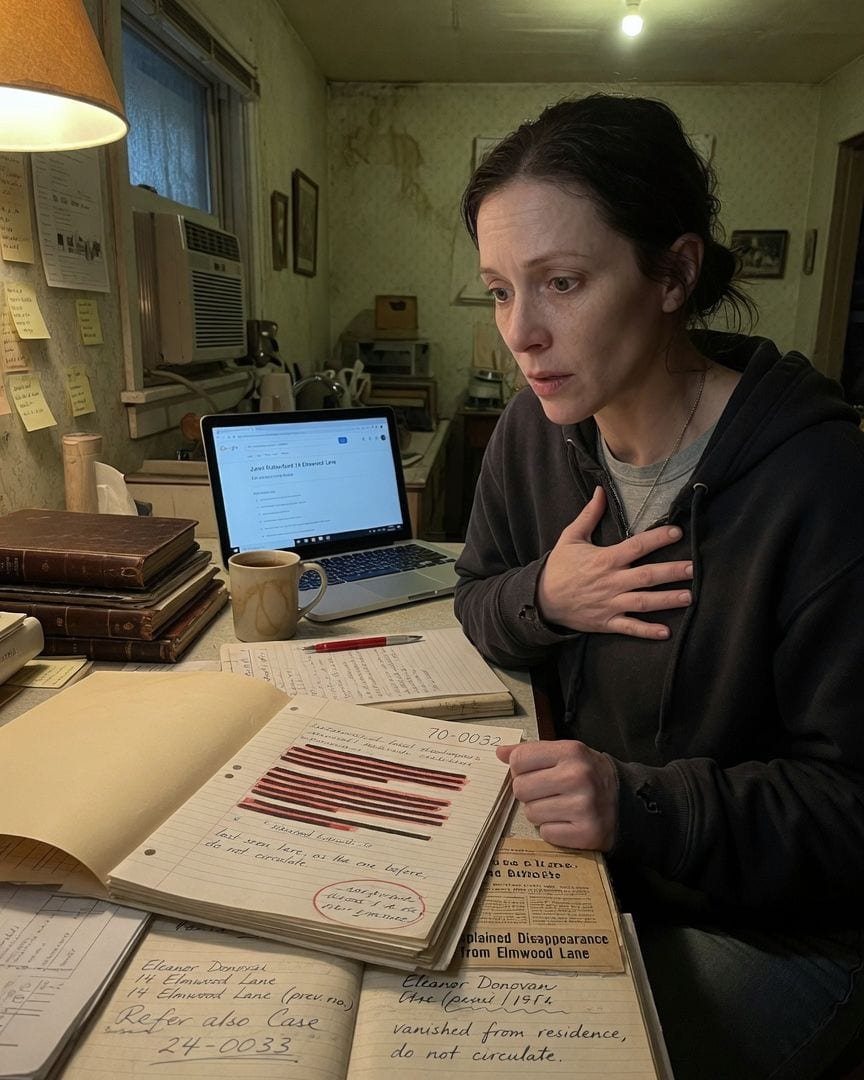
My own address is on a missing person's file from 1970. The blacked-out line names my street. She never lived here.
When my neighbor vanished, I started digging into old local missing persons cases. In a police file for a woman who disappeared in 1970, I found my own address, 14 Elmwood Lane, framing a blacked-out section of the duty log. Janet Rutherford never lived here, and the file contained a chilling handwritten note: 'do not circulate.'