A sheet with my name on it read: "Don't take the 7:40 on Thursday." It was postmarked from a field with no houses and no postbox. This morning a second one came.
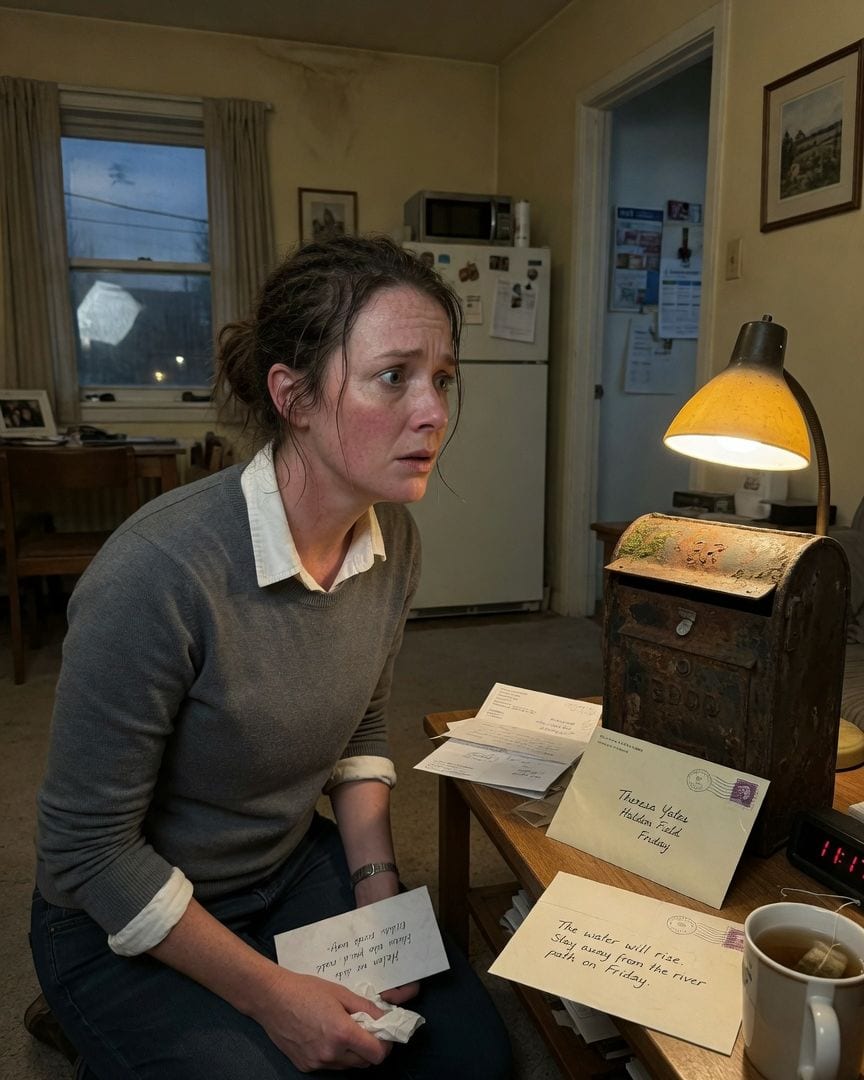
The first letter came last month. A single sheet of thick, cream paper, my name, Helen Drummond, printed starkly across the top. Beneath it, one line, crisp and unnerving: 'Don't take the 7:40 on Thursday.' No signature. No return address.
Just my name, and a warning.
The postmark was what really got me. 'Haldon Field.' Haldon Field is exactly that—a field. On the edge of town, yes, but empty. No houses, no businesses, certainly no postbox, no reason for mail to originate there.
I drove out there the same day, feeling ridiculous. Parked on the verge, got out. Just long grass, swaying in the wind, a few scrubby trees, and the faint, unsettling hum of high-tension wires somewhere distant. Nothing.
No abandoned shack, no hidden mailbox. I even walked the perimeter, telling myself I was being paranoid, that it was a kid's prank. The air hung still and tasted of dust and dry earth.
Of course, I went to the post office first. Julian Maddox, the guy who usually sorted my route, just shrugged, adjusted his glasses. Said sometimes things got mis-sorted, but the stamp was clear, the postmark too.
No, he’d never heard of Haldon Field having its own outgoing mail. He looked genuinely baffled. I live alone, so it wasn't a flatmate.
My colleague, Arthur Kowalski, laughed it off as a bad joke, probably some weird viral marketing campaign. I tried to believe him, really.
Then, this morning, a second sheet came. Same thick, cream paper. Same distinctive, looping handwriting, almost elegant, but cold. Same impossible postmark. This one simply read: 'The bridge is out on Tuesday. Avoid the bypass.' My hands started to shake.
This wasn't a joke anymore. The hum of the fridge suddenly seemed too loud, too steady, mocking my rising panic.
I didn't take the 7:40 on Thursday. I called in sick, citing a migraine. Arthur, bless his oblivious heart, sent me a text wishing me well. That afternoon, the local news reported a minor accident involving the 7:40 bus.
A collision with a delivery truck on Elm Street. No serious injuries, thank God, but significant delays. Arthur, hearing I'd missed it, joked later that day about my 'lucky migraine'. I didn't find it funny.
The first warning had been specific. And it had been right.
The second warning, about the bridge, made my stomach clench. I had to know. I couldn't just sit in my apartment and wait for whatever else these letters promised. So I drove back to Haldon Field.
This time, I was determined to find something.
I parked in the same spot, but instead of walking the perimeter, I struck out further in, past the tall grass that brushed against my jeans like reaching fingers, towards a cluster of ancient, gnarled oaks.
Their branches twisted like old bones against the pale sky.
I pushed through a thicket of thorns and found it. There, half-buried in the overgrown weeds, was a rusted, iron postbox. It was old, impossibly old, not like any public mailbox I’d ever seen.
Cast iron, with a faded royal cipher I couldn't quite make out, choked by rust. It was sealed shut, a relic from another century, clearly not active. It couldn't possibly be mailing anything. My breath caught in my throat.
This was too much.
As I knelt, examining its corroded surface, my eye caught a flash of white. Tucked under a loose stone nearby, almost entirely hidden by a clump of thick moss, was an envelope. Identical paper. Identical postmark: 'Haldon Field.'
But this one was addressed to 'Theresa Yates'. And the warning, written in that same unsettling, elegant script, was cryptic: 'The water will rise. Stay away from the river path on Friday.'
My fingers trembled as I picked it up, the paper surprisingly clean, almost new, despite its resting place.
Back home, my heart pounded a frantic rhythm against my ribs. Theresa Yates. Who was she? It wasn't hard to find. The name, combined with the local context, led me quickly to archived newspaper articles from about fifteen years ago.
'Local Woman Vanishes Near River Path.' The headlines screamed it. Theresa Yates. Age 27. Last seen walking her dog near the river, just days after a flash flood warning.
The photos showed a younger woman, her smile a little strained, a worried look in her eyes even then. And in one particular shot, taken by a family member during what looked like a picnic, she was holding something.
A crumpled letter. The resolution was poor, grainy, but the distinctive, looping handwriting on the address of the envelope in Theresa's hand was unmistakable. It was identical to the writing on the letters I had been receiving.
The next day, I went to the town's small historical society, a quaint brick building that also served as the library. I asked for Charlotte Yates, listed as the archivist.
She was a quiet woman, perhaps in her mid-fifties, with kind but tired eyes that held a deep, lingering sadness. I introduced myself, trying to keep my voice even, explaining I was researching local disappearances, specifically Theresa Yates.
Charlotte stiffened, her gaze narrowing, a flicker of something unreadable in her expression.
I hesitated, then took out the discarded envelope addressed to Theresa. "I found this," I said, laying it on the polished oak counter between us. "At Haldon Field."
Her hand trembled visibly as she took it, her fingers tracing the looping script. I mentioned the river path, the flash flood, the warning on the letter I'd found.
Slowly, Charlotte began to talk, her voice a low murmur, like water over stones. Theresa was her distant cousin. And yes, Theresa had been receiving "strange letters" before she vanished.
Charlotte confirmed the warnings were similar, though Theresa had been secretive about the specifics. She’d tried to warn Theresa, but the warnings were always so oblique.
Charlotte then pulled out several dusty binders from a nearby shelf: old police reports, missing persons files, local folklore journals. I found references to other disappearances, stretching back decades, all with vague links to 'Haldon Field' or 'unexplained warnings.'
Names I didn't recognize, dates from before I was born. A farmer who went missing after 'ignoring a sign to stay off the west pasture.'
A child who vanished after 'a cryptic note told her to avoid the old mill road.' The pattern was undeniable, a subtle, chilling thread weaving through the town's history.
Always involving someone who had received impossible guidance, only to vanish when they disregarded it, or sometimes, even when they didn't.
Each case was dismissed as accident or runaway, but the echoes were there, faint but insistent, whispering of a larger, darker truth. The air in the quiet archive felt suddenly heavy, like the pages themselves were holding their breath.
That evening, my phone rang. Unknown number. My heart hammered. I answered cautiously. A distorted, static-laced voice spoke, barely a whisper, yet the words were perfectly clear. "Helen Drummond," it said, my full name pronounced with an unnatural, chilling clarity.
"I apologize. For what is coming." Then the line went dead. I stood there, phone still pressed to my ear, a cold dread seeping into my bones, filling the room until the very walls felt brittle.
Two days later, a small fire broke out in my kitchen. A faulty toaster, the fire department said, quickly contained. Minor damage, mostly smoke, but the timing felt wrong, too precise.
It was a small thing, mundane, easily explained, but I knew it wasn't. It was the "apology" made real, a soft touch of something unseen.
Then, the next morning, as I was leaving for work, Julian Maddox, the postal worker, stopped me on the street. He looked pale, almost haunted, his eyes darting around as if something was chasing him.
He held out a letter, my name on it, but didn't hand it over immediately. He just stared at me, his eyes wide, pupils dilated. "Helen Drummond," he said, his voice barely audible, raw with an emotion I couldn't place.
"I'm so sorry." He didn't elaborate, didn't seem to know why he was saying it. He just handed me the letter, which simply said 'The lock is weak.
Secure your windows tonight,' and then hurried off, almost running down the street, leaving me alone with the fresh warning and his inexplicable, pre-emptive apology. The air around me felt suddenly sharp, prickling my skin.
I returned to Charlotte, the new letter clutched in my hand, Julian's apology still chilling me to the core. "This isn't just about Theresa, is it?" I asked, my voice barely steady, the words catching in my throat.
"This is happening to me." Charlotte sighed, a long, weary exhalation, her shoulders slumping as if under an invisible weight. "It's happened to my family for generations, Helen. The letters. The warnings. We call it… The Calling."
She led me to a back room, a smaller, colder space than the main archive, filled with even older, more esoteric items. Dust motes danced in the single shaft of sunlight from a high window, illuminating the ancient air.
From a locked, antique wooden chest, she retrieved a small, ornate box, intricately carved with symbols I didn't recognize. Inside, nestled on faded velvet, were more letters. Dozens of them.
Each one yellowed with age, brittle to the touch, the handwriting identical to mine, to Theresa's. They were addressed to various Yates family members: 'Abigail Yates, 1923,' 'Edward Yates, 1958,' 'Camille Yates, 1981.'
Each with a cryptic warning, each postmarked 'Haldon Field.' The sheer volume of them, the relentless consistency across decades, made my stomach clench.
"We never understood it," Charlotte whispered, her voice thick with generations of fear and resignation. "My grandmother called it 'The Calling.' A few of us, we tried to follow the warnings, to understand. Most just vanished.
Theresa… she was so sure she could outsmart it. She thought she understood the river warning, but she misinterpreted the current. Went upstream, thought she was safe. But the water had a different path in mind that day."
The letters in her hands, the dates, the warnings – it wasn't just a pattern, it was a legacy. A curse, passed down, quietly, through generations, all tied to that empty field. A legacy of impossible guidance and inexplicable disappearances.
The quiet of the room seemed to absorb the sound of her words, leaving only a vast, echoing silence.
Charlotte then showed me her family's private archives, a collection far more personal than the town records. These weren't for public consumption.
Among them was a vast, leather-bound ledger, its cover worn smooth with age, its pages brittle as dry leaves. It was a family register, she explained, a meticulous record of births, deaths, and significant events, kept since the late 1800s.
I wore white gloves as I flipped through the faded script, tracing the names of ancestors I'd only vaguely heard about.
I saw familiar surnames: Yates, of course, but also Kowalski, Maddox – families that had lived in this town for generations, their histories intertwined with this impossible narrative.
Then, halfway through the book, tucked between entries for a Robert Drummond born in 1880 and a Mary Drummond who married in 1902, I found a page. It was titled, in elegant, swirling script, 'Those Who Are Called.'
And there, among a list of unfamiliar names, names I couldn't pronounce, in faded, sepia ink that had clearly been there for over a century, was my own. 'Helen Drummond.'
Below it, clearly inscribed, stark and impossible, was a date: '1897'. My finger, gloved, trembled as it traced the looping letters of my own name, dated before my great-grandparents were even alive.
I pushed the ledger towards Charlotte, my voice thin, a mere whisper in the suddenly suffocating room. "This… this isn't possible." My name. 1897. My rational mind screamed that it was a mistake, a coincidence, a cruel joke.
But the meticulous, handwritten entry, nestled among generations of documented lives, refused to be dismissed. Charlotte's eyes were already on the page, a deep, weary sadness in their depths, as if she'd seen this reaction countless times before.
"The old families, they knew," she said, her voice softer now, almost resigned. "Not what it was, but that it existed. That it made itself known." She explained that a small, secretive society, long disbanded, had kept this ledger.
They weren't cultists, she insisted, but observers. Historians of the impossible. They believed Haldon Field was a nexus, a place where a presence, an intelligence, reached out. "It chose people," Charlotte said, "or perhaps it simply found them.
The names in this book… they are the ones it 'called' across the generations. The warnings aren't from the society, Helen. They're from it.
A way of communicating, of guiding its chosen, or perhaps, simply a manifestation of its awareness, of its interest."
She spoke of the entity not as inherently malevolent, but as something utterly alien, beyond human comprehension, simply acting on its own unfathomable purpose. The warnings were not threats, but a form of interaction, a method of connection.
My entire life, every ordinary moment, every choice, every missed bus, every fire in my kitchen, had been leading to this, meticulously mapped out in a ledger written before my grandparents were even born.
The coherence of it all was terrifying. It wasn't a random horror; it was a deeply personal, pre-ordained destiny, meticulously cataloged. The world had just tilted on its axis.
The next morning, I drove to Haldon Field. Not to escape, not to hide. To meet it. To understand.
The air was still, heavy, and the distant hum of the high-tension wires, a familiar sound I'd always dismissed as background noise, now seemed to pulse with a low, rhythmic thrum, like a heartbeat.
I walked past the rusted postbox, now just another forgotten artifact. Past the gnarled oaks, their twisted branches no longer threatening, but somehow inviting.
I followed an instinct I couldn't explain, a pull deep in my core that felt both ancient and utterly new.
Deep in the center of the field, where the grass grew strangely short in a perfect circle, was a single, ancient standing stone. It was rough-hewn, almost black, scarred by millennia of weather.
But from within, a faint, ethereal light pulsed, a soft, internal glow that seemed to breathe, slow and steady. It wasn't a trick of the light; it was real, a deep, resonant beat against the silent field.
I approached it, my heart pounding, but not with fear. With a strange, compelling curiosity, a sense of recognition. This was where it began. This was where it ended.
I reached out, my fingers trembling. As my hand made contact with the cold, smooth stone, a jolt, not of electricity, but of pure, raw information, surged through me.
Images, sensations, an understanding of patterns, of time, of connections I couldn't have conceived flooded my mind. It wasn't painful, but it was overwhelming, an expansion. Like my mind had just stretched to accommodate a universe. I didn't disappear.
I didn't scream. I simply stood there, my hand pressed against the glowing stone, as something profound and irreversible shifted within me. The warnings stopped. But I was no longer just Helen Drummond.
The world continued. The letters stopped arriving. Haldon Field reverted to an ordinary, empty expanse, the internal glow of the standing stone no longer visible to the casual eye.
Arthur noticed I was quieter, more focused, sometimes staring into the distance with an unnerving calm that unsettled him. He’d make a joke, then quickly look away.
Charlotte, when she saw me, looked at me with a mix of awe and profound sorrow, as if I had returned from a place she knew but could never reach, a place where the air thrummed with ancient knowledge.
She never asked what happened. She didn't need to.
I still go to work, still live in my apartment, still drink my morning coffee.
But sometimes, when I'm alone, a strange symbol will form in my mind, complex and ancient, a geometry that feels like a language, which I then find myself sketching on a napkin, without conscious thought.
And occasionally, I'll reach into my pocket and find a small, smooth, dark stone, perfectly polished, exactly like the ones found near the standing stone at Haldon Field, yet somehow… different. I never remember picking it up.
I never remember putting it there. It simply is.
If this one got to you
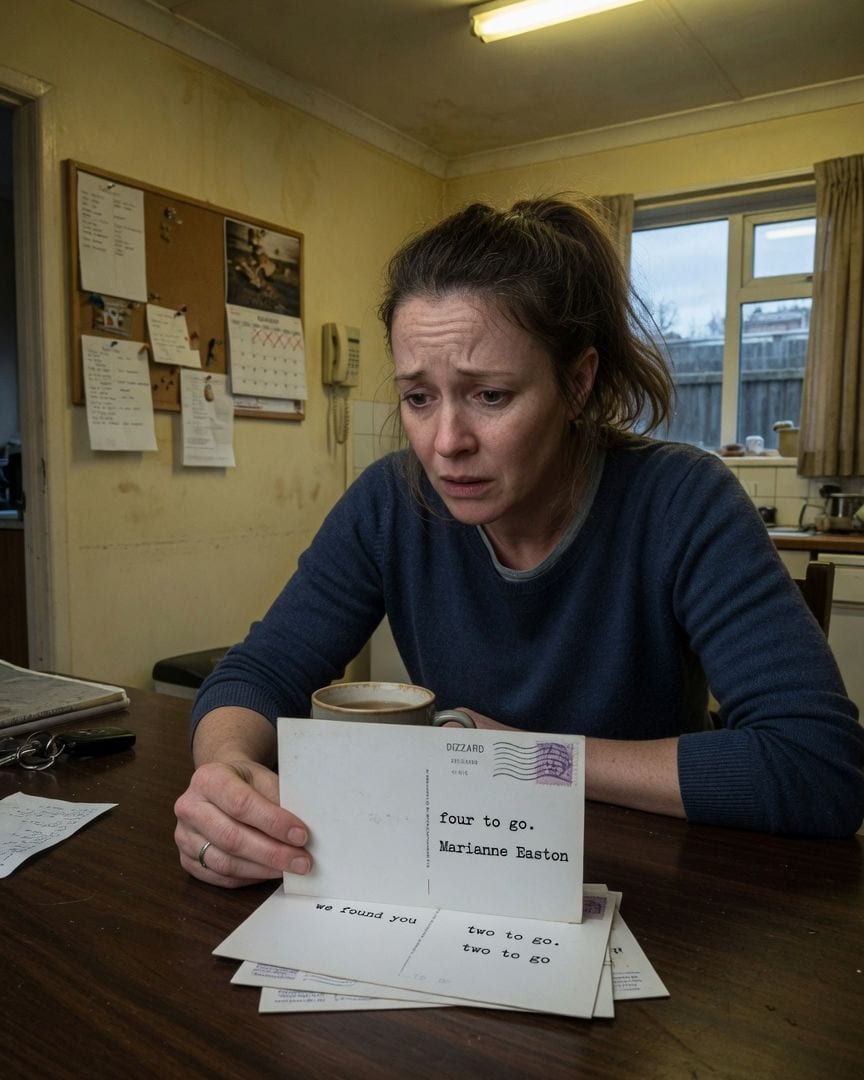
My postcards arrive each Friday, addressed by name, counting down. This week's says 'four to go,' postmarked from a cliff with no postbox.
Every Friday, stark white postcards arrive on my kitchen table, addressed to me. Each one is postmarked 'Dizzard,' a desolate cliff miles from any town, with no post office. For weeks now, they've been counting down.
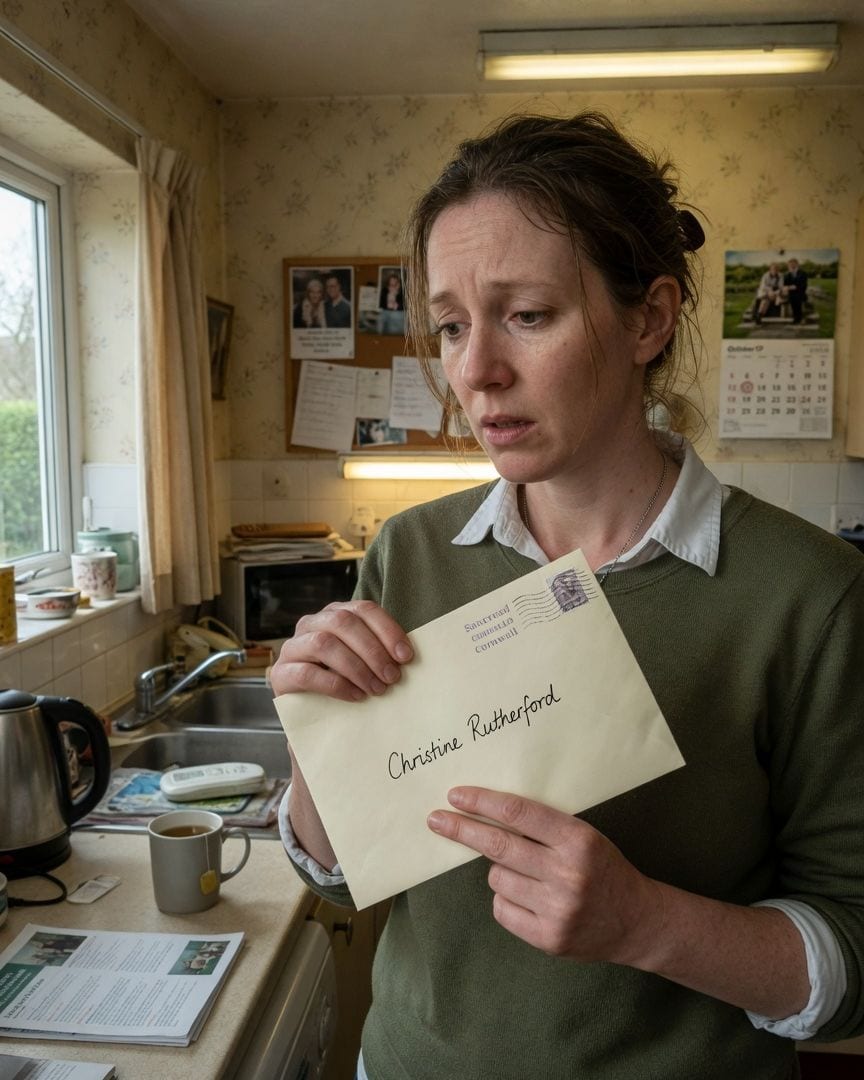
My name was carved on the village war memorial. Below it: 'October 17th'. The fresh cut looked fifty years old.
I drove to Sancreed to meet my friend Kenneth, a stonemason, who had called me with an urgent tone I'd never heard before. He met me at the village war memorial, a granite obelisk listing the fallen, and pointed to a fresh carving. Beneath the last name of a 1945 soldier, my name, 'Christine Rutherford', was etched, followed by 'October 17th' — a date this coming autumn.
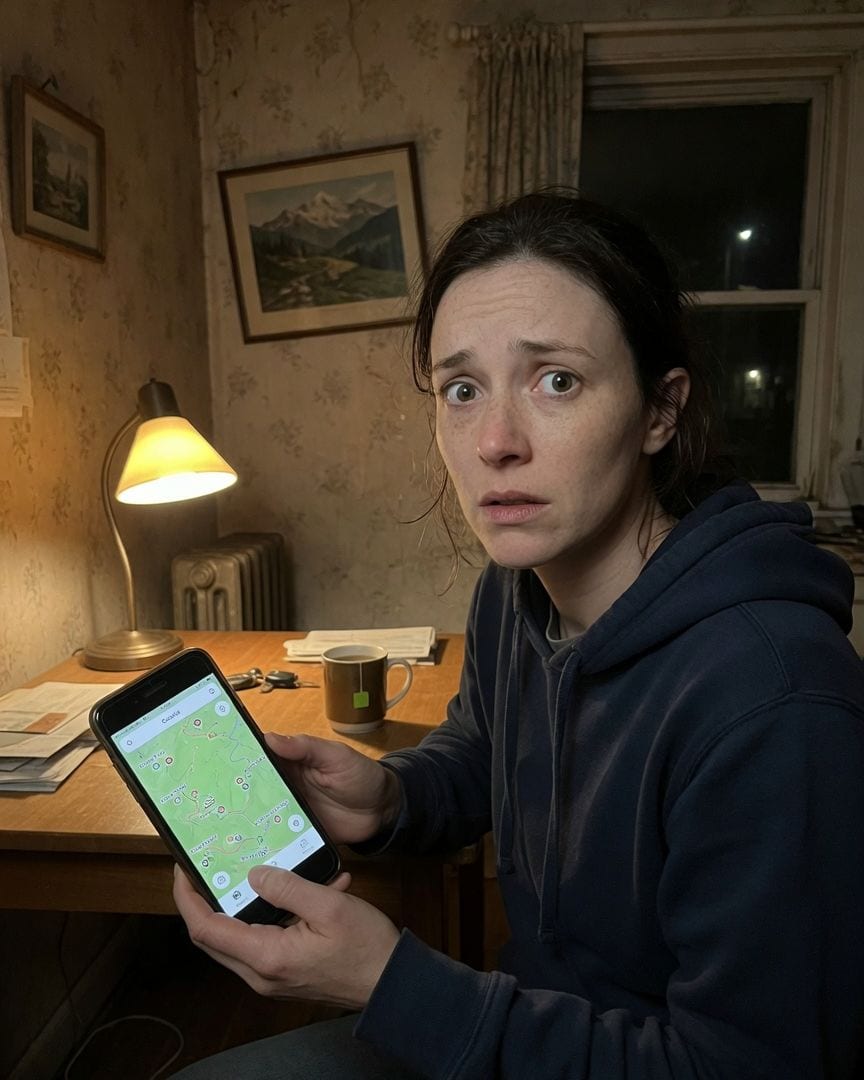
My hiking app scrubbed the hill's name from the map, on a phone that's been in airplane mode for two days.
I just moved to town and hiked a local hill, 'Cathan Tor,' according to my phone's app. But when I mentioned the name to the mechanic, he froze, dropped his wrench, and whispered, 'Don't say that name, Colette.'
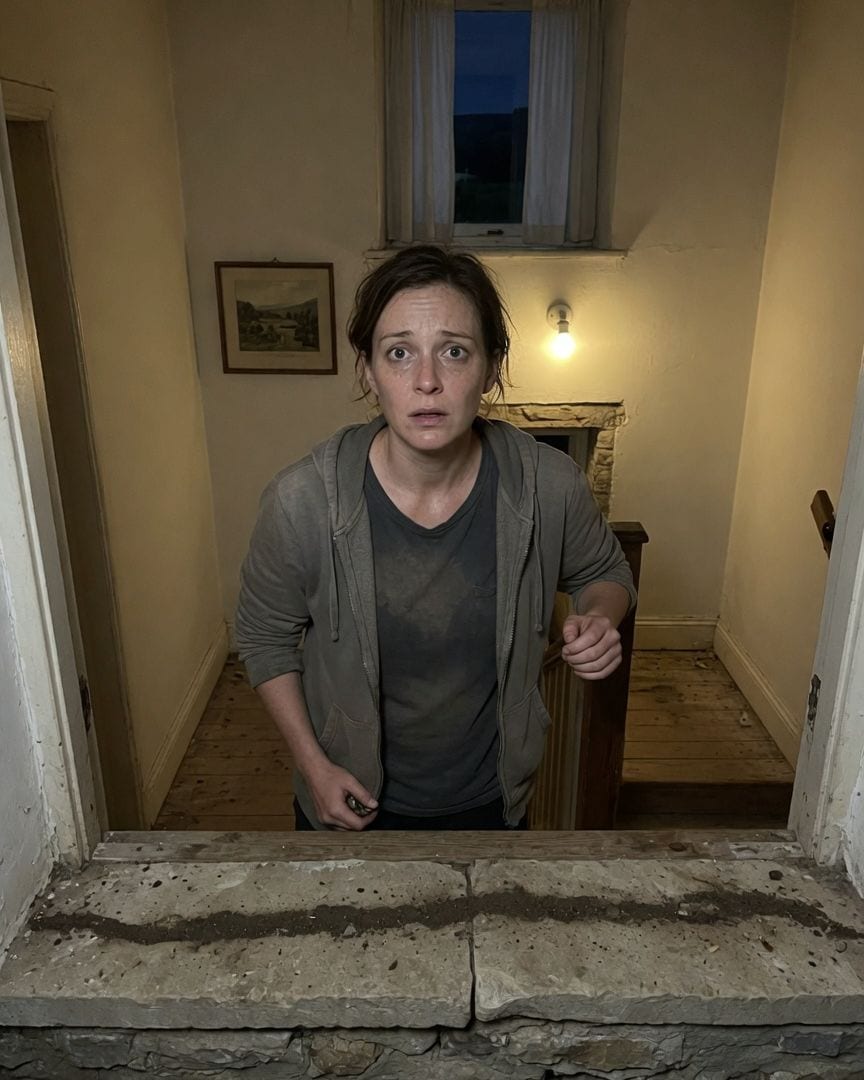
Water moved under my house at 3am, leaving a six-inch silt line. The river's two miles off.
New to my inherited valley house, I was just exhausted. Then, at 3 AM, a powerful current rushed *under* my house, vibrating through the floorboards. By morning, a precise six-inch tideline of dark silt marked my foundation, but no flood had occurred, and my pipes were dry.
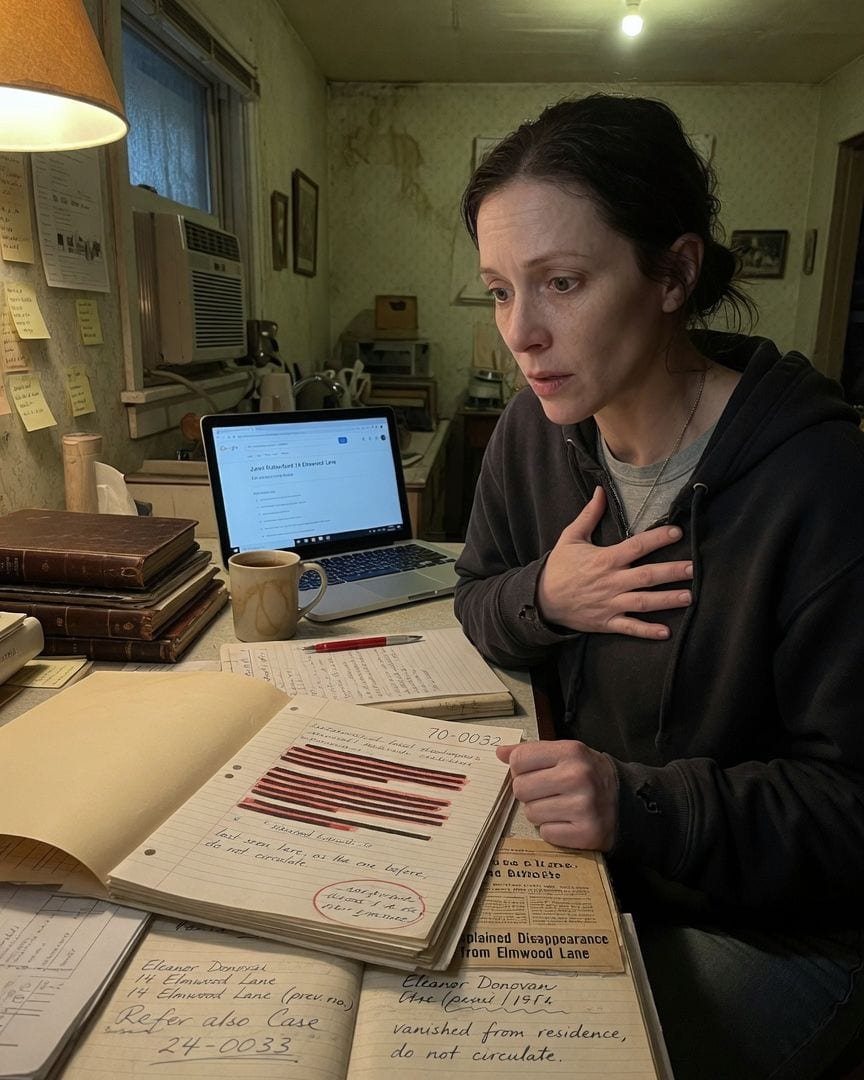
My own address is on a missing person's file from 1970. The blacked-out line names my street. She never lived here.
When my neighbor vanished, I started digging into old local missing persons cases. In a police file for a woman who disappeared in 1970, I found my own address, 14 Elmwood Lane, framing a blacked-out section of the duty log. Janet Rutherford never lived here, and the file contained a chilling handwritten note: 'do not circulate.'
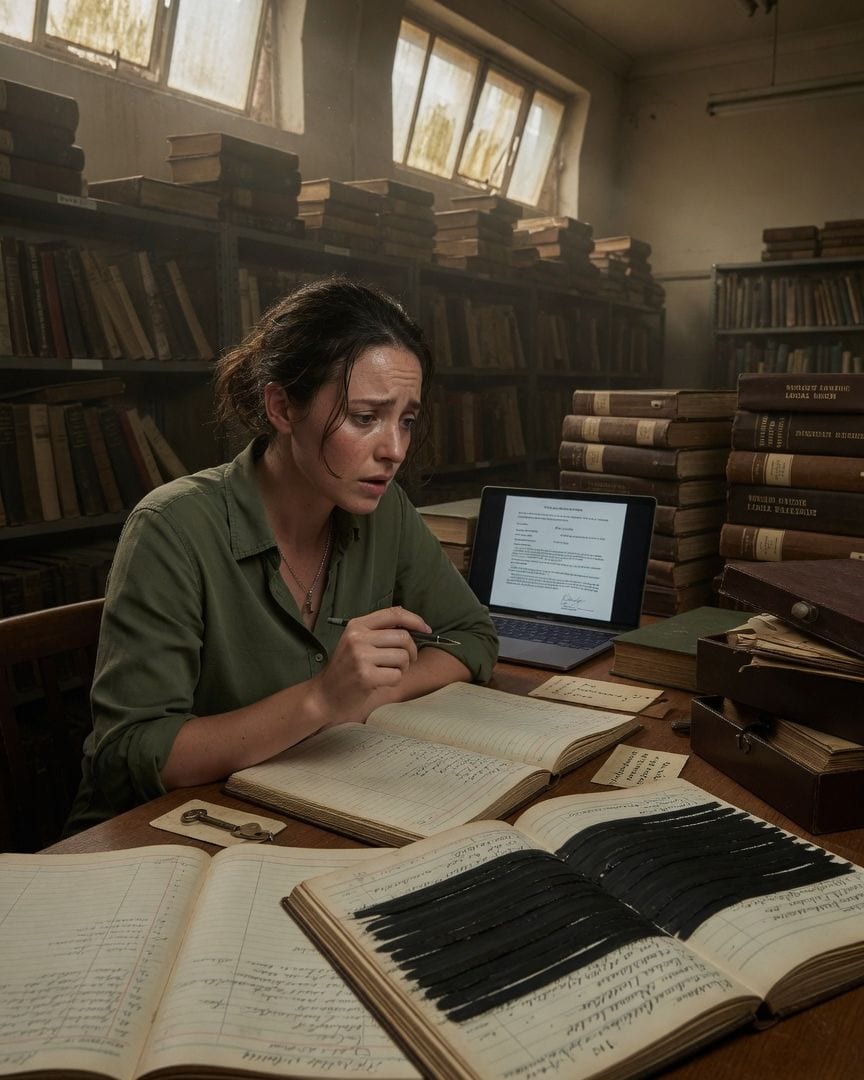
My grandmother’s name is on a blacked-out line from a 1954 drowning inquest, on our street, with a note: 'do not send a second notice.'
Transcribing old inquest registers in the quiet archive was a routine task, until I found a 1954 entry for an accidental drowning. The next of kin line was savagely blacked out, but the faint impression underneath named Patricia Kingsley, my grandmother. Her address was listed on Weir Lane, eleven years before she ever lived there, alongside a chilling note: 'do not send the notice a second time.'