My wife remembers walking our son to his first day of school, lunchbox and all. He is two. She named his teacher, a woman not yet hired.
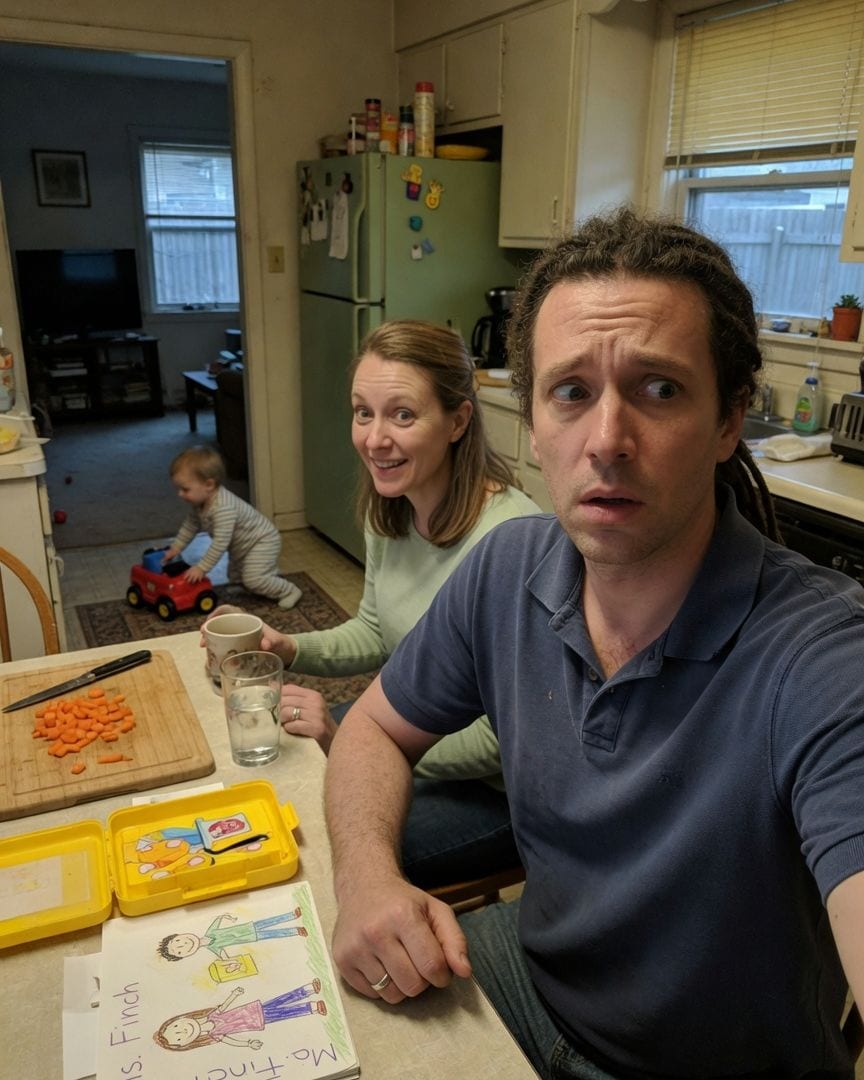
The kitchen hummed with the stale quiet of a Tuesday afternoon, a low drone from the refrigerator the only sound apart from Bernard’s quiet gurgles on the rug. I sat across from Linda, watching her. Two weeks.
That’s how long she’d been back from the Clarity Clinic, three months she’d spent there after what they called a “stress-induced collapse.” She looked... good. Rested. A little too serene, maybe.
Bernard, all two years of him, was pushing a toy car across the worn Persian, oblivious to the strange undercurrents at the table. Linda smiled, a little too wide, like a photograph held up to the light.
“I can’t wait for Bernard to start school,” she said, her voice soft, almost wistful. “Remember his first day? Walking him to the gate, holding his bright yellow lunchbox, taking that photo outside the brick building?”
A prickle of something cold, something utterly wrong, started at the base of my neck. Bernard is two. His first day of school is two autumns away, a distant speck on the horizon. I managed a weak nod.
Linda didn’t seem to notice my silence. “Ms. Finch was so welcoming, wasn’t she?” she continued, her eyes fixed on some point beyond the window, beyond our backyard. My throat went dry.
I cleared it, a rasping sound in the quiet kitchen. The local elementary school hadn’t even started interviewing for next year’s kindergarten teachers, let alone hired anyone named 'Ms. Finch'.
I just stared at her, the woman who looked exactly like my wife, but who remembered a future that simply wasn’t here yet.
The detail, ‘Ms. Finch,’ gnawed at me over the next few days. I told myself it was a dream, a misremembered story from childhood, a jumble of memories from the clinic’s medication. Anything but what it felt like.
I even called the elementary school, feigning a casual inquiry about future staff, a potential move to the district. The secretary, a kind woman named Mrs. Davison, assured me they were still interviewing for kindergarten positions.
No 'Ms. Finch' was on staff, nor had she ever been. The rational explanation, the one I’d clung to like a drowning man to a spar, vanished.
That evening, as Linda prepared dinner, I watched her from the doorway. She was chopping vegetables, a precise, rhythmic motion. Linda always, without fail, used her right hand to chop.
A habit ingrained from years of cooking, from every meal we’d shared. But tonight, she was using her left, expertly dicing carrots with her non-dominant hand, the knife a blur of silver against the cutting board. My breath hitched.
I remembered her joking about how clumsy her left hand was, how she couldn’t even butter toast with it. Now, it moved with a confident, almost alien grace.
The air in the kitchen, usually warm with the scent of garlic and onion, felt suddenly cold, heavy.
A cold dread, sharp and definite, began to seep into my bones, telling me that this wasn't a trick of the light, or my imagination, or even residual medication. This was real.
Later that night, after Bernard was finally asleep, Linda settled on the couch next to me. The TV flickered silently, painting our faces in shifting hues.
She began to hum a lullaby Bernard loved, a soft, familiar melody that somehow sounded…off. Then, she reached out, her left hand gently stroking my hair, a tender touch she had always, always reserved for her right.
“He’ll be so big when he goes to school,” she murmured, her eyes distant, lost in some private landscape. “He was so proud of this.”
She reached into her purse, rummaging for a moment, and pulled out a small, folded piece of paper. She handed it to me.
It was a child’s drawing, crudely rendered, of a stick-figure boy with a bright yellow lunchbox next to a taller stick-figure woman. Scrawled below it, in shaky crayon, were the words ‘Ms. Finch’.
I examined the drawing under the weak glow of the kitchen light, long after Linda had gone to bed.
The thick lines, the disproportionate heads, the specific shade of yellow crayon used for the lunchbox – it was undeniably Bernard’s style, his nascent attempts at art. But Bernard was two.
He could barely scribble, let alone form letters, let alone construct a scene depicting a future event. The dread in my stomach had hardened into a cold, dense knot.
The next morning, I took the drawing and drove to the Clarity Clinic. It was a sleek, modern building on the outskirts of town, all polished chrome and frosted glass, designed to exude calm. Linda’s ‘sanctuary,’ they had called it.
I asked for her medical records, specifically anything about ‘memory reconstruction’ or ‘cognitive therapy.’ The receptionist, a young woman with too much eyeliner and a practiced, distant smile, was unhelpful. She cited patient confidentiality, her voice smooth and unyielding.
“Mrs. Vaughn’s privacy is paramount, Mr. Vaughn. We cannot disclose specific treatment details.”
I tried a different tack. “She’s… different since she came home. Small things. Like using her left hand for everything now. She was always right-handed.” The receptionist blinked, her smile faltering for just a fraction of a second.
“People change, Mr. Vaughn. Recovery can alter perspectives.” She picked up a pen, twirling it idly between her fingers, signaling the end of our conversation. I knew I wouldn’t get answers here, not directly, not from her.
As I turned to leave, my gaze fell on a small, framed photo on the wall behind her desk, nestled among a few potted plants. It was a ‘staff of the month’ award.
The face of Maureen Abbott, the clinic’s administrator, stared back, her smile perfectly serene, almost unnervingly so. Her eyes, even in the photograph, held a flat, knowing quality.
A sudden, sharp certainty pierced through the fog of my confusion: she knew something. Whatever this was, she was at the heart of it.
I spent the next few days holed up in my study, researching the Clarity Clinic online. Their official website was immaculate, filled with calming stock photos and glowing testimonials.
But when I delved deeper, sifting through obscure forums and archived local news articles, I found faint whispers. Mentions of “unusual side effects,” “patients not quite themselves” after treatment, “families reporting strange changes.”
Most were quickly dismissed by other users as grief, paranoia, or the stress of caring for a loved one with mental health issues.
I tried to dismiss them too, but the words echoed Maureen Abbott's serene smile, the receptionist's unblinking stare.
As I dug, my home, once a refuge, began to feel less like my own. I started noticing small things, details that pricked at my subconscious.
The faint, sweet scent of an unfamiliar perfume lingering in the hallway, a scent Linda didn't own. A closet door slightly ajar that I was certain I had closed earlier.
The silence in the house, even when Bernard was napping, felt heavy, weighted. It was like living in a picture that had been subtly, almost imperceptibly, altered.
One evening, my phone, which I’d left on the kitchen counter while I went to grab a glass of water, briefly lit up. I saw the flash of the screen, a notification.
I picked it up, my heart giving a little lurch. It was a text message, from an unknown number: “Some futures are best left undisturbed.”
The words glowed for a second, then vanished, leaving no trace in my logs, no record in my inbox. My fingers fumbled, checking my recent messages, my deleted items. Nothing. It was gone.
I looked at Linda, who was humming softly in the living room, absorbed in a TV show. Then I grabbed Bernard’s baby monitor, scrolling through its settings, checking the Wi-Fi logs. No unauthorized connections. Nothing.
The air around me suddenly felt charged, heavy with unseen eyes. A chill ran down my spine. I realized, with a sickening jolt, that my search had been noticed. I was no longer just investigating; I was being watched, warned.
Armed with Bernard’s impossible drawing and the unsettling, vanished text, I returned to the Clarity Clinic. My blood thrummed with a mixture of fear and cold determination. This time, I didn't ask for records.
I demanded to speak with Maureen Abbott. She met me in a small, sterile office, the air conditioner blowing a chill that did little to calm my nerves. Her posture was impeccable, her dark suit uncreased, her smile perfectly unyielding.
I pushed the drawing across the desk, the crayon ‘Ms. Finch’ staring up at her. “My son is two,” I said, my voice tight. “He didn’t draw this. Ms. Finch isn’t a teacher here.
And she never will be, because she doesn’t exist.”
Maureen picked up the drawing, her fingers delicate as she held the flimsy paper. Her gaze lingered on the crayon script.
“A charming piece, Mr. Vaughn,” she said, her voice smooth, utterly devoid of emotion, as if she were appraising a child’s entry at a school fair. “Sometimes, patients undergoing significant cognitive re-patterning can experience… vivid imaginative recall.
A form of wish fulfillment, perhaps.”
I leaned forward, my knuckles white against the polished wood of the desk. “What about her left hand? Linda was always right-handed. She’s using her left for everything now.”
Maureen’s smile tightened, just a fraction, a barely perceptible shift at the corners of her mouth. “Habit reversal is a known, if rare, side effect of the neurological adjustments we perform. It indicates a deep-seated change.
A ‘re-patterning,’ as you say.” Her eyes, flat and unblinking, held mine. “It suggests the treatment has been… remarkably successful.”
A wave of nausea washed over me. “What kind of re-patterning?” I managed to choke out. “What did you do to her?”
Maureen set the drawing down, aligning it precisely with the edge of the desk. “We helped her ‘transition’ back to a stable state, Mr. Vaughn. Her previous state was… untenable. Some memories, some patterns, need to be… adjusted for that.
For her peace of mind. For the family’s stability.” She spoke of Linda as if she were a faulty machine, a broken program that had been debugged and rebooted.
It was then, in that cold, silent office, that I finally understood. The Clarity Clinic wasn’t healing Linda.
They were replacing her, or rebuilding her, and the 'future memory' of Ms. Finch, the impossible drawing, the wrong-handed habits – they weren’t glitches.
They were just imperfect artifacts, faint echoes of their work, residual traces of a process designed to cover up a far more profound, horrifying truth.
I stared at Maureen, the full implication of her words settling like ice in my chest. My voice was barely a whisper. “So, this isn’t my Linda, is it? Whatever came back from your clinic, it’s not her.”
Maureen Abbott’s eyes, flat and unblinking, met mine across the desk. Her smile didn't reach them, a cold, smooth mask.
“We do our best to ensure a smooth transition, Mr. Vaughn,” she said, her voice as even as polished stone, without a tremor of regret or concern. “Sometimes… there are residual memories. It’s not uncommon for families to notice.”
She paused, a beat too long, letting the implication hang in the chilled air. “You’re not the first to come back to us with these concerns.”
As she spoke, she reached into a desk drawer and pulled out a small, silver-framed photograph. She slid it across the desk towards me.
It was a picture of a man, his face gaunt and shadowed, standing next to a woman who looked exactly like Linda. She was holding a faded version of Bernard’s bright yellow lunchbox.
And in the bottom corner of the frame, barely visible, etched into the silver, was a date: ‘2027’.
I snatched the photo from the desk, my fingers trembling so hard I nearly dropped it. The date, ‘2027,’ was unmistakable, stark against the silver frame. Two years and two months from now, when Bernard would finally start kindergarten.
The man in the picture was not me, his face hollowed, unfamiliar. But the woman… the woman was undeniably Linda.
A few years older, perhaps, with lines around her eyes that weren't there yet, but her smile, that same slightly-too-wide, serene smile. And the lunchbox – it was Bernard’s. The exact same bright yellow plastic, scuffed and familiar.
“This… this can’t be real,” I stammered, my mind reeling, scrambling for a foothold in the rapidly dissolving landscape of my reality.
Maureen Abbott watched me, her expression unreadable, a sphinx in a tailored suit. “It is a memento from a… successful re-integration,” she said, her voice soft, almost meditative. “Some patients, when they return, bring back fragments of where they’ve been.
Or where they might have been.” She gestured to the photograph with a manicured hand. “This gentleman’s wife, much like your own, remembered a different life. A different future. We helped her reconcile it.”
I looked from the photo to Maureen, then back to the impossible image in my hand.
The crudely drawn picture of Ms. Finch, the impossible memory of Bernard’s first day of school, the wrong-handed habits, the vanishing text message – it all clicked into place, a horrifying mosaic.
Linda hadn’t been lost and found; she’d been replaced, or subtly altered, and what came back carried echoes of a future that belonged to someone else, or somewhere else.
The Clarity Clinic didn’t heal; it reshaped, borrowing pieces of reality, entire timelines perhaps, to fill the voids left by disappearances.
I slammed the photo down, the silver frame clattering against the desk. “You’re sending back… these things? These versions?”
Maureen’s calm broke for a fraction of a second, a flicker of something cold and sharp, almost predatory, in her eyes. It was gone as quickly as it appeared. “We provide a service, Mr. Vaughn. We ensure continuity.
The alternative is far less palatable.” She stood, walking to a window overlooking the clinic’s manicured grounds, her back to me. “The original Linda, like many others, simply… ceased to be. We filled the gap.”
A surge of white-hot rage, quickly followed by a cold, paralyzing fear, coursed through me. “What about Bernard? Does she know he’s not… hers?”
Maureen turned, her voice soft, almost sympathetic. “She believes he is. That’s the important thing, isn’t it? For the child’s sake. For your sake.” She paused, her gaze sweeping over me, assessing, weighing. “You have a choice now, Mr. Vaughn.
You can continue to dig, to unravel the threads, to prove what you suspect. To destroy the carefully constructed peace we’ve provided. Or you can accept the continuity we’ve ensured. Live with her.
Let Bernard grow up with a mother who loves him, even if her memories are… complex.”
I looked at the photo again, the impossible date, the other man’s gaunt face. I looked at Bernard's drawing, the bright yellow lunchbox. The dread was overwhelming, a suffocating blanket.
I knew I couldn’t live with this knowledge, not truly, not without shattering everything. I grasped the photo, the drawing, and stormed out of the office, Maureen’s calm, knowing smile burning itself into my mind. I had to show someone.
I had to prove it.
But as I reached my car in the clinic parking lot, a sleek black sedan with tinted windows pulled up behind me, blocking me in. The driver, a large man in a dark suit, stepped out.
His face was impassive, unreadable. My heart hammered against my ribs, a desperate drum. I knew, with a sickening certainty, that I’d been given a choice. And I’d chosen wrong.
Isaac Vaughn was reported missing three days later. His car was found abandoned in the Clarity Clinic parking lot, the doors unlocked.
Inside, on the passenger seat, police found a well-worn, slightly creased photograph of a young boy and a woman, dated '2027', and a child's crayon drawing of a stick figure with the name 'Ms. Finch' scrawled beneath it.
The police noted the items were 'odd' but found no forensic evidence of foul play. Linda Vaughn expressed deep concern for her husband, though her grief seemed oddly composed. Bernard continued to play, oblivious.
Weeks later, Linda sat in the kitchen, watching Bernard play with his bright yellow lunchbox, pushing it across the linoleum floor. She smiled, a gentle, maternal expression on her face.
“He’ll be so excited when he finally uses that for school,” she murmured to herself, her left hand absently stroking the lunchbox’s smooth, yellow surface.
The front door opened. Isaac stood there, his face pale, his eyes distant, somehow older. He looked at Linda, then at Bernard. “I’m home,” he said, his voice flat, like a stone skipping across still water.
Linda’s smile widened, a little too much, a little too quickly. “Welcome back, dear. Did you have a good day?”
Isaac nodded slowly, his gaze lingering on the yellow lunchbox. “Yes,” he replied, his voice a little softer now, a little emptier. “A very good day.”
Later that evening, Linda watched Isaac from the kitchen. He was in the living room, absently stroking Bernard’s hair with his left hand, a gesture he’d never made before. “Is that so?” she murmured, her own smile faint and wrong.
If this one got to you
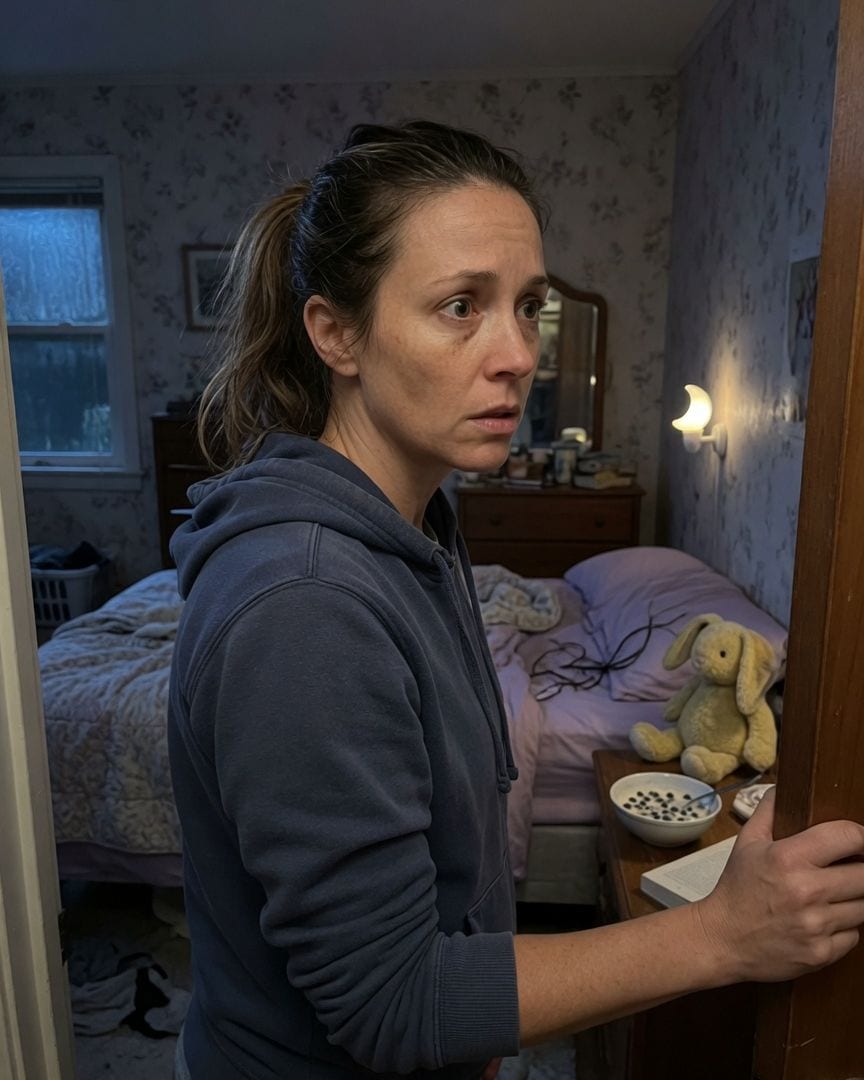
My daughter came home, then described a dream I'd had the week she vanished. I told no one that dream. She asked what it meant.
My daughter, Camille, returned home after four terrifying days missing. As I tucked her into bed, she quietly recounted a vivid dream about a drowned orchard and a heavy wooden door. It was *my* dream, a private terror I had told no one.
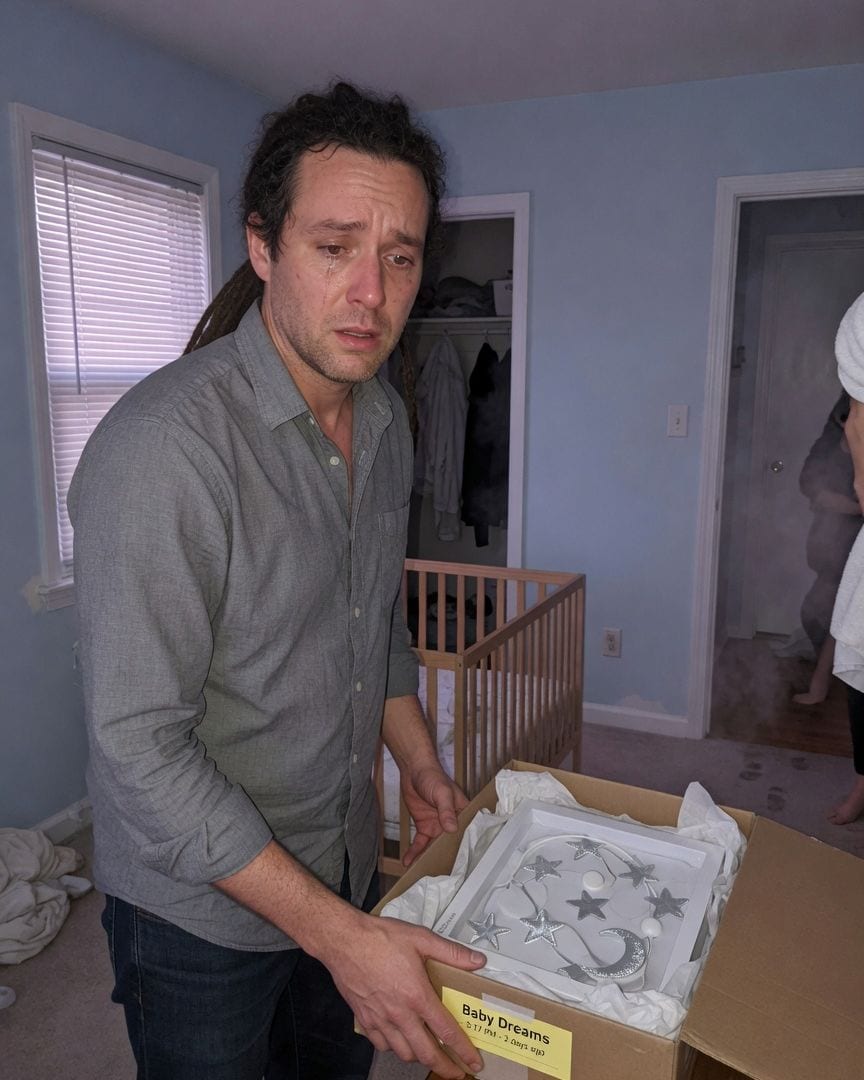
My wife thanked me for the pale blue nursery. We have no child. She described the mobile I'd only imagined, then asked when it would arrive.
Sylvia returned exactly one year after her disappearance, a miracle I could barely believe. But her first words about a nursery I'd only ever imagined, complete with a specific mobile, sent a shiver down my spine. That mobile, a private fantasy, arrived two days ago, and she just asked why it was late.
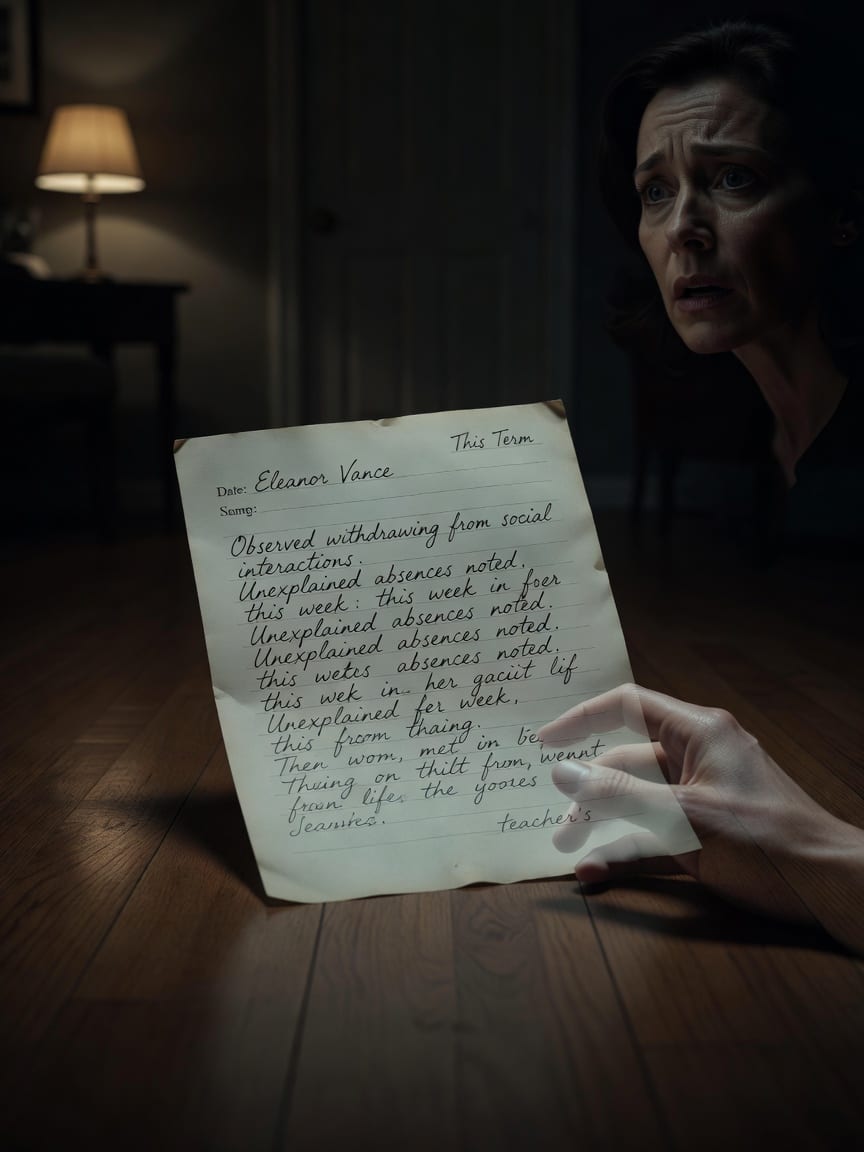
My school reports keep arriving, one a term, signed by teachers dead for decades. The latest describes something I'm doing *this week*.
My name is Eileen Caldwell, and my quiet life was upended by a school report from a place demolished decades before I was born. The report, signed by a long-dead teacher, eerily detailed my current habits. But the real shock arrived when I found my own name in a student register, dated 1968, with precise descriptions of my childhood—years before I existed.
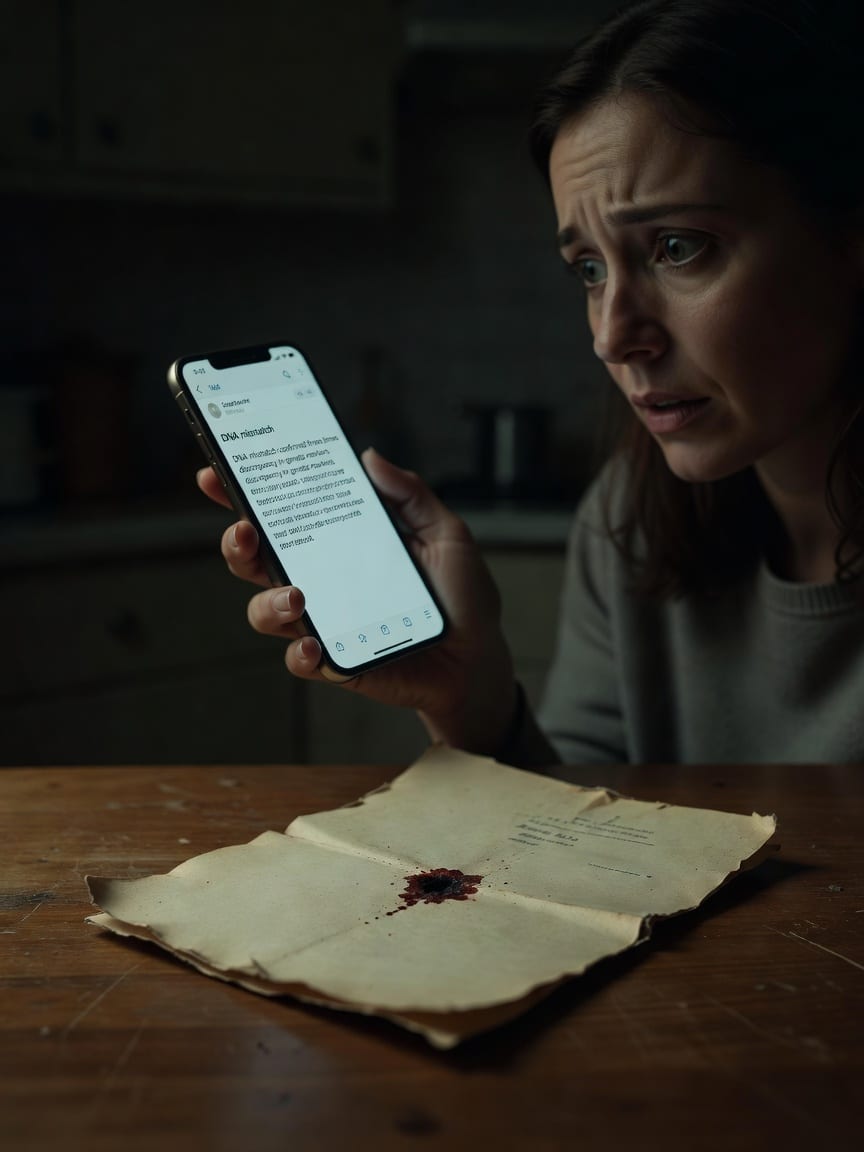
My baby bl**d card doesn't match my own DNA today. The lab ran it three times, confirming the dried spot and my living swab come from two different people.
Sitting at my kitchen table, I opened an email that shattered my quiet afternoon. I'd sent my newborn heel-prick card to a genealogy lab out of harmless curiosity. The results were devastating: the bl**d on that card, preserved for three decades, does not match my DNA.
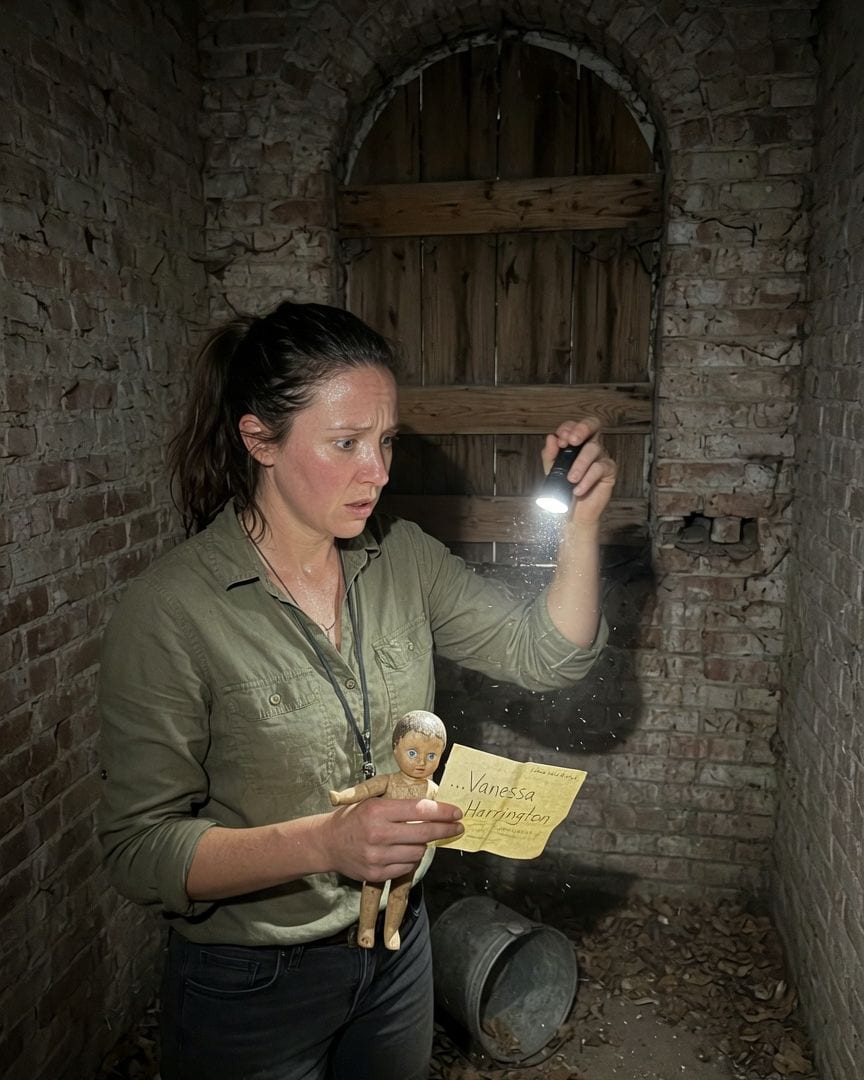
The attendance register has marked one pupil 'present' every single day since 1911 — never once absent. No child by that name has ever sat an exam.
Settling into my new teaching job at Oakhaven Elementary, I found myself drawn to the sealed bell tower. But it was the school's old register that truly unsettled me. A phantom entry, 'Pupil X,' had been marked 'Present' every single day since 1911, with no other records to prove they ever existed.
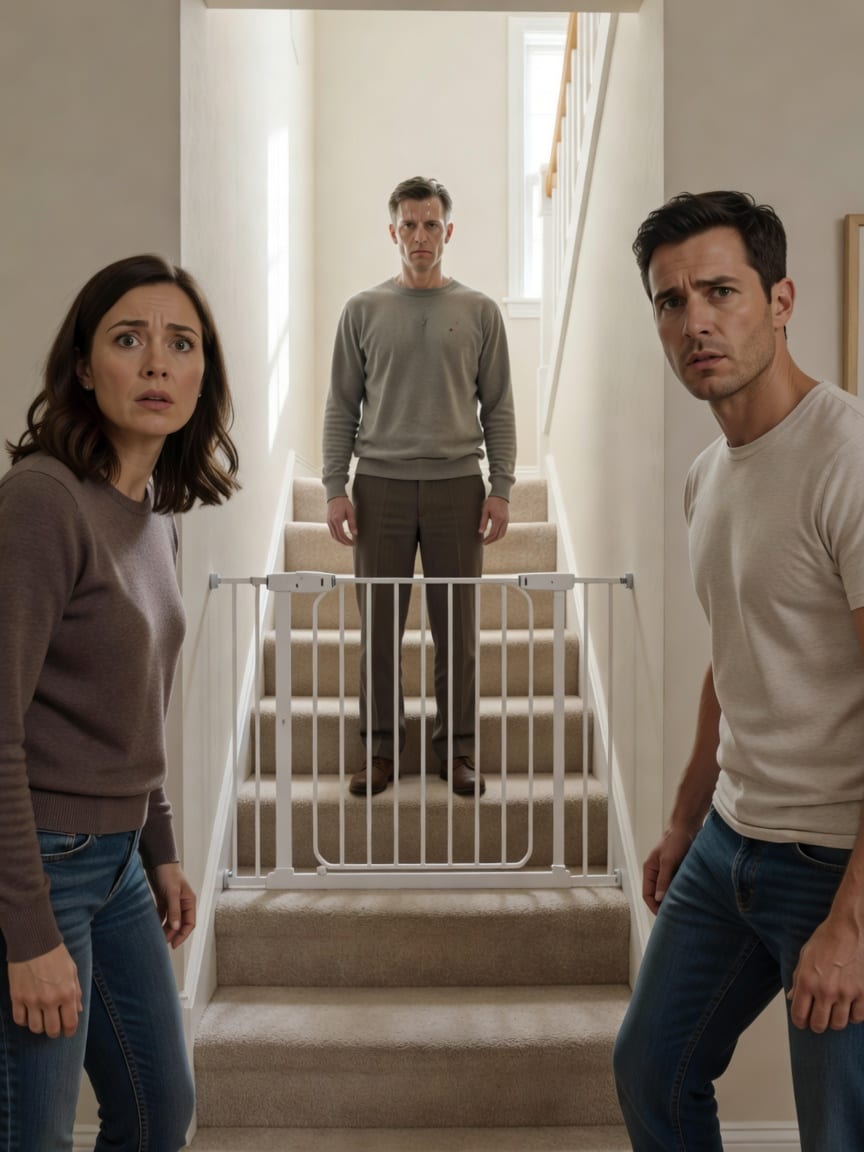
My stair gate latches itself every night. Pressure-fitted tight across my empty stairs, no children live here and no fixings exist on the wall.
I live alone in my inherited house, so the toddler gate at the top of my stairs should not be there. Each morning, I find it perfectly latched and sturdy, despite having hidden it away in the shed the day before. This isn't a quirk; it's a routine, and it isn't mine.