My wife's baby doppler picked up a second heartbeat. It was an adult's, slow and steady, in the same room. She was alone.
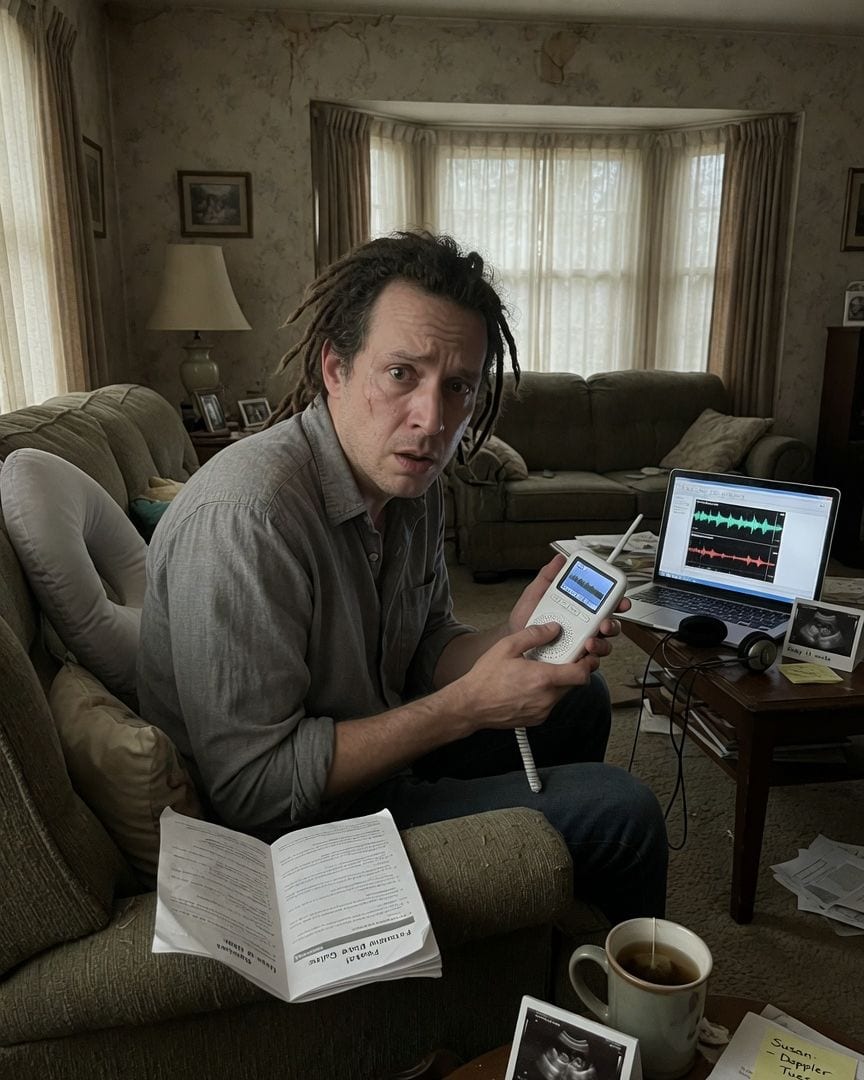
The early weeks of Susan's pregnancy were a strange mix of nauseating fear and exhilarating hope. We’d bought one of those home doppler devices, a sleek white oval that fit perfectly in the palm of my hand.
Susan was twenty weeks along now, but the first few times, when the baby was still so tiny, finding that rapid whoosh-whoosh of a healthy heart had been a ritual, a profound comfort.
Every session, the device saved the audio automatically, timestamped and filed away, a digital diary of our growing Lily. Or Rose. We hadn't decided for sure.
Nine weeks ago, when Susan was just eleven weeks pregnant, she’d settled into her armchair, the light from the bay window catching the curve of her belly. I'd been at work.
She’d messaged me a little smiley face emoji, then a screenshot of the doppler's screen, showing the familiar sound waves. It was a normal Tuesday.
Later, that evening, when I was reviewing the saved clips, scrolling through, I paused on that Tuesday's recording. I smiled, listening to the tiny drumbeat of our baby, fast and reassuring.
Then, beneath it, clear as day, a second, slower heartbeat began to register. Thump-thump. Thump-thump. It was steady, rhythmic, undeniably an adult's. My smile faltered. I rewound, played it again, then a third time.
The sound was distinct, not an echo of the baby’s. I remember looking up from the doppler’s small screen, glancing around the living room. Susan had been alone. She always was when she used it during the day.
Alone in that armchair. The clip was nine weeks old, archived perfectly on the device, a digital timestamp confirming the date and time: 3:14 PM, October 23rd. An undeniable record of something that couldn't have been there.
My first instinct, always, is to find the mundane explanation. I pulled out the doppler's manual, a thin, glossy booklet, flipping through sections on troubleshooting and common malfunctions. Could it be a faulty sensor?
A trick of the acoustics in that old living room? I sat in the same armchair myself, device in hand, pressing it against my chest – my own heart, clear and strong. Against a pillow – nothing.
The device only ever picked up what was expected, or nothing at all. I tried replicating the original conditions, but the elusive second pulse wouldn't reappear.
When Susan came home, I tried to play it off, to gauge her reaction. "Hey, listen to this weird glitch on the doppler," I said, handing her the device, downplaying the discovery.
She laughed, a light, dismissive sound, but then listened more closely, her brow furrowing. Her laughter died. "That's… not right, is it?" she murmured, a faint unease touching her voice, an unsettling echo of my own growing dread.
That night, after Susan had gone to bed, I uploaded the audio file to my computer. I opened basic sound editing software, isolating the two distinct frequencies. The baby's heartbeat was clear, unmistakable.
The second heartbeat was also unequivocally there, a separate, distinct sound wave, not an artifact or overlap. It wasn't my own heartbeat, nor Susan’s, as they were both outside the detectable range. This was something else entirely.
I played the isolated adult pulse again, listening intently, trying to discern any further detail.
This time, I noticed something new, something almost imperceptible: a subtle, almost rhythmic shift in its cadence, a slight hesitation, then a stronger beat, as if in response to the baby's own quickening pulse.
It was too deliberate to be random static, too intricate to be interference. The sound was… responding.
Driven by a growing, sickening certainty, I plugged in my noise-canceling headphones, pushing the isolated adult heartbeat to full volume. I closed my eyes, straining to catch any detail I might have missed.
The slow, steady thump-thump filled my ears, vibrating through my skull. And then, impossibly, I heard it. Faint, almost swallowed by the low thrum, a whisper. Just one word, barely audible, yet undeniably there, layered deep within the sound.
It was a name. Not 'Lily,' the name we'd picked for our daughter. Not 'Rose,' Susan's grandmother's name. An older name, a name I didn't recognize, spoken with a chilling, possessive clarity.
I ripped the headphones off, the silence of the living room suddenly deafening. I stared at the doppler device, its small screen dark, the weight of the impossible word pressing down on me.
The whispered name, 'Penelope,' became an anchor point in my spiraling dread. I couldn't shake it. It repeated in my head, a rhythmic counterpoint to the phantom heartbeat.
I began to research, starting with property records for our house, a charming but undeniably old Victorian on the edge of town, with its distinctive bay window and wraparound porch.
I found deeds dating back to the late 1800s, tracing a convoluted ownership history that bounced between various families and estates. The house had seen a lot of lives come and go.
I spent hours in the local library, the air thick with the smell of old paper and dust, poring over microfiche of old newspapers, cross-referencing names from census records with property addresses.
My search was fueled by a desperate, gnawing need to find a 'Penelope' linked to our address. Weeks turned into a blur of grainy images and fading documents.
Then, tucked into a census record from 1900, under the address that was now ours, I discovered a family, the Marshalls, who had owned the house from 1890 to 1910.
Among their children, listed simply as 'daughter,' was a 'Penelope Marshall,' aged three.
A later search, sifting through hundreds of digitized obituaries from the local paper’s archive, finally yielded a brief, tragic entry from 1903: 'Penelope Marshall, beloved daughter of Thomas and Eleanor Marshall, passed away peacefully at home after a short illness.'
Died at home. Their home. Our home. I felt a chilling connection, like a cold hand closing around my heart. The name. The house. It couldn't be a coincidence.
I then sought out Arthur Montgomery, a retired local historian known for his encyclopedic knowledge of the town's past, and its more obscure legends. His house was a mausoleum of books and archives, smelling faintly of mothballs and dried ink.
Montgomery was initially guarded, offering only vague pleasantries about the local architecture, his eyes a watery blue behind thick spectacles. But I pressed, mentioning the Marshall name and our house's address. He paused, his gaze fixed somewhere beyond my shoulder.
Montgomery’s eyes flickered with a strange, almost fearful recognition, a subtle shift that I didn't miss.
He mumbled something about 'unlucky nurseries' and 'children who never quite left,' before quickly changing the subject, clearing his throat and offering me a cup of lukewarm tea. But the seed of unease was firmly planted, blooming into full-blown dread.
He knew something.
My persistent inquiries did not go unnoticed. A few days after my second, more pointed visit to Arthur Montgomery—the one where he started avoiding my calls—an anonymous email landed in my inbox. The sender was '[email protected]', the subject line blank.
My spam filter should have caught it, but it hadn’t. The body contained a single, grainy image: a photograph of our house, clearly taken decades ago, with its distinctive bay window and porch.
The porch swing was gone, the paint faded, but it was unmistakably our house.
What made my blood run cold was the crude red circle drawn around our living room window, a window where Susan often sat, the doppler resting on the side table.
The photo itself was stamped with a date from the 1970s, long before we'd even been born.
I forwarded it to Susan, who was equally unnerved. "Who would send this? Why?" she asked, her voice tight, a nervous tremor in her fingers as she scrolled through the email on her phone.
I had no answer, but the implication was clear: someone knew what I was looking into, and they were watching.
The unease intensified, seeping into every corner of our lives. I started noticing small, unsettling details around the house.
A cupboard door in the kitchen, which I distinctly remembered closing before leaving for work, would be ajar when I walked past, as if someone had just peered inside.
A faint, almost imperceptible scent of old lavender, a smell neither I nor Susan used, would occasionally waft through the nursery, then vanish as quickly as it appeared, leaving only a lingering question in the air.
One evening, I found the baby doppler, which I had carefully placed in a drawer in my nightstand after our last session, sitting on our bedside table, its little screen glowing faintly, as if recently active.
I touched the cool plastic. Susan swore she hadn't touched it. The feeling of being observed, of our privacy being subtly invaded, became a constant, gnawing presence, making the familiar comfort of our home feel alien and hostile.
It wasn't just old walls anymore; it was a pair of unseen eyes.
I returned to Arthur Montgomery's cluttered study, the anonymous photo of our house, circled in red, clutched in my hand. I placed it on the desk, pushing it towards the old man, who was now visibly jumpy around me.
"Mr. Montgomery," I began, my voice firm, cutting through his nervous pleasantries, "I know you know something. This photo… and the name Penelope Marshall. She died in our house. In that living room."
Montgomery flinched, his eyes darting from the photograph to my face, then back again. His usual composure was gone. He picked up the photo, his fingers trembling slightly as he traced the crude red circle around our window.
"That old house… it has a history," he finally conceded, his voice barely a whisper, as if afraid the walls themselves might be listening. "A dark one. Worse than you know."
I pressed him, "What kind of history? What's the 'nursery heart' you mentioned?"
Montgomery sighed, a deep, rattling sound that seemed to pull from the very bottom of his lungs. He leaned back in his creaking chair, recounting fragmented local legends, whispers passed down through generations.
He spoke of 'the presence,' a lingering entity tied to the Marshall family's tragedy. "Penelope… she was a sickly child. Died too young. Her mother, Eleanor, never recovered.
They say… they say her grief, or something darker, rooted itself in the house. Especially the nursery. It’s always had a strange draw, that room."
He explained the local belief in the 'nursery heart' – that the house, or the presence within it, had a strange pull on new life, on unborn children.
"It lost a child," Montgomery said, looking directly at me, his gaze unnervingly steady. "And it seeks to replace it. To nurture it again, in its own way. It's an echo… but an echo that wants to be real."
My mind reeled, connecting the dots: the second heartbeat, the whispered name. It wasn't just an echo; it was an active attempt. An insidious influence. "Are you saying it's… trying to take our baby?"
I asked, the words catching in my throat, tasting like ash.
Montgomery didn't answer directly, but his silence was confirmation enough. He then mentioned how previous pregnant occupants of the house had experienced unsettling phenomena, culminating in stillbirths or mysterious 'disappearances' of their newborns, always linked to the house.
The dread in my gut solidified into icy terror. This wasn't just a ghost story; it was a repeating pattern, an active threat. This house wasn't just haunted; it was hungry.
Montgomery, now fully immersed in the grim narrative, leaned forward, his voice dropping to a conspiratorial whisper, his gaze distant, as if watching a tragedy unfold behind my eyes. "The presence isn't just an echo, Mr. Kingsley. It interacts.
It seeks. Over the years, there have been families… like yours. Expectant mothers. And always, the house seemed to… welcome the new life. Until it didn't. Until something broke."
He detailed accounts of stillbirths, of babies who simply 'faded' in their cribs, never to be found, their parents driven to madness or institutionalized.
"They called it a curse," he continued, his voice cracking, "but it was the house, trying to mend what was broken, trying to replace what it lost. A desperate, living thing, clinging to the memory of its child."
I felt a wave of nausea, the weight of the historical pattern crushing me, making it impossible to breathe. "So what do we do?" I pleaded, the rational man in me crumbling.
Montgomery shook his head slowly, his gaze fixed on some point beyond me, as if looking through the walls. "Some tried to fight it. Others… they just left everything behind and ran."
He paused, his eyes glazing over as if seeing something only he could perceive. Then, he slowly lifted a trembling hand and pointed, not at me, but vaguely towards the direction of the Kingsley house, out through his study window.
"In the nursery," he murmured, his voice barely audible, "they sealed it up. After… after Penelope. Her favorite toy. They bricked it up with her, trying to contain it, to forget."
My blood ran cold. I thought of the nursery, of the peculiar, sealed-off brick fireplace I'd always dismissed as an odd architectural detail.
The impossible object, a tangible piece of the past, was right there, hidden in plain sight within our own home.
I rushed home, the image of the bricked-up fireplace burning in my mind, a physical manifestation of the terror Arthur Montgomery had unleashed.
The rational part of my brain, the part that had tried to explain away the second heartbeat, the lavender scent, the anonymous photo, was completely silent.
I found old architectural plans for our house, tucked away in a dusty box in the attic, among old tax records and photo albums.
I unrolled them on the kitchen table, the brittle paper crackling, my finger tracing the lines until I found the nursery.
And there it was: a notation, almost illegible, marking a small cavity behind the fireplace where a toy chest, or perhaps a small cupboard, might have been.
It had been sealed over, precisely as Montgomery described, a thick line of red ink scoring out the original design.
The realization detonated within me. The second heartbeat wasn't a benign echo of a long-dead child.
It was the house itself, an entity that had been 'wounded' by the loss of Penelope, now actively trying to manifest her anew, using their baby as its vessel.
The doppler, in its precise sensitivity, was not just recording a past presence, but picking up the very active influence of this entity trying to take root, trying to become real again.
The whispered name, 'Penelope,' was the house attempting to name its new child, to impose its will, its lost identity, onto ours.
I found more newspaper clippings among Montgomery’s scattered archives, articles he had alluded to: a family from the 1920s who moved out suddenly after a 'tragedy,' a stillbirth that defied medical explanation, the parents described as "inconsolable, seeing things."
Another from the 1950s, a chillingly brief report of a baby who 'vanished without a trace' from its crib, the parents institutionalized from grief, their desperate claims dismissed as delirium. All in this house.
The pattern was horrifyingly clear, every planted clue now clicking into place with a sickening precision.
The anonymous photo, the lavender scent, the doppler activating itself – it was all the house's subtle, insidious influence, growing stronger with Susan's pregnancy, preparing for its 'new' Penelope.
It was a cradle, yes, but a cradle for something ancient and hungry.
I found Susan in the living room, sketching nursery ideas in a notebook, oblivious to the storm that was about to break. She looked up, her smile fading as she saw my face.
I sat opposite her, the architectural plans and old newspaper clippings spread out on the coffee table, a grotesque tableau of our shared nightmare.
My voice was calm, almost unnervingly so, as I laid out everything: the second heartbeat, the whispered name, Arthur Montgomery's testimony, the horrifying history of their house, the bricked-up fireplace, the vanished babies. Every detail, every terrifying truth.
Susan listened, her face draining of color, her initial skepticism giving way to a raw, bone-deep terror. She picked up a yellowed newspaper clipping, her hand trembling so violently she almost dropped it.
'This… this isn't real, Oliver,' she whispered, trying to rationalize, to deny the undeniable. 'It's a story, a coincidence. We’re tired.'
I shook my head, my gaze unwavering. 'It's real, Susan. And it's happening to us. It wants our baby. We have to leave. Now. Everything.'
As I spoke, the baby doppler, which I had left on our bedside table, suddenly activated itself.
A low hum filled the room, then the unmistakable, slow, steady thump-thump of the adult heartbeat, louder than ever before, echoing through the quiet house.
It was accompanied by a new sound, faint but undeniably present: a child's mournful, almost spectral crying, seeming to emanate from within the walls of the nursery, a thin, reedy sound that tore at something primal inside me.
The room grew cold, a sudden, unnatural chill that made the hairs on my arms stand on end, prickling like static.
Susan let out a strangled scream, clutching her belly, her eyes wide with primal fear, fixed on the nursery door. 'Oliver, what is that?'
I didn't answer. I grabbed her hand, pulling her to her feet, ignoring her protests. 'We go. Now.' I didn't bother grabbing bags, wallets, or phones.
I dragged Susan out the front door, leaving everything behind – the doppler still blaring its impossible rhythm, the child's cries echoing behind us, growing louder, more insistent, as we stumbled into the night.
We found a small, temporary rental across town, a sterile, modern apartment devoid of history or character, devoid of any scent of old lavender.
I contacted a real estate agent, trying to sell the house, but found myself unable to articulate the true reason for our hasty departure. I spoke vaguely of 'structural issues' and 'unforeseen complications,' trying to sound convincing, even to myself.
Susan was withdrawn, clinging to her belly as if to protect our daughter from an invisible threat, her eyes haunted. We never spoke of the house, the doppler, or the second heartbeat.
We tried to bury the memory, to pretend it had never happened, focusing only on the impending arrival of our baby.
I felt a profound emptiness, a sense of having left not just a home, but a piece of myself, behind in that house, a silent agreement to forget in exchange for escape.
But the memory, like a phantom limb, ached with a chilling persistence. It was the price of our freedom.
Months later, in the quiet of their new, unremarkable apartment, Oliver sat alone late at night. He held a small, framed ultrasound photo of their baby, now just weeks away from birth.
He remembered the name he had heard whispered on the recording, the name that wasn't theirs, the name the house had tried to claim.
He knew, with a chilling certainty that no amount of distance or denial could erase, that leaving the house had not truly left it behind.
He had escaped, but the cost was a permanent, unspoken dread that had taken root deep within him, a seed of doubt about the life they were bringing into the world.
He knew he would carry it forever, an indelible mark of what they had witnessed and what they had lost.
A few months later, Susan gave birth to a healthy baby girl. Oliver looked at his daughter, peaceful in her crib. Her eyes were a startling, deep blue, a shade neither he nor Susan shared.
He leaned closer, a faint, almost imperceptible smile touching his lips as he whispered, "Hello, Penelope."
If this one got to you
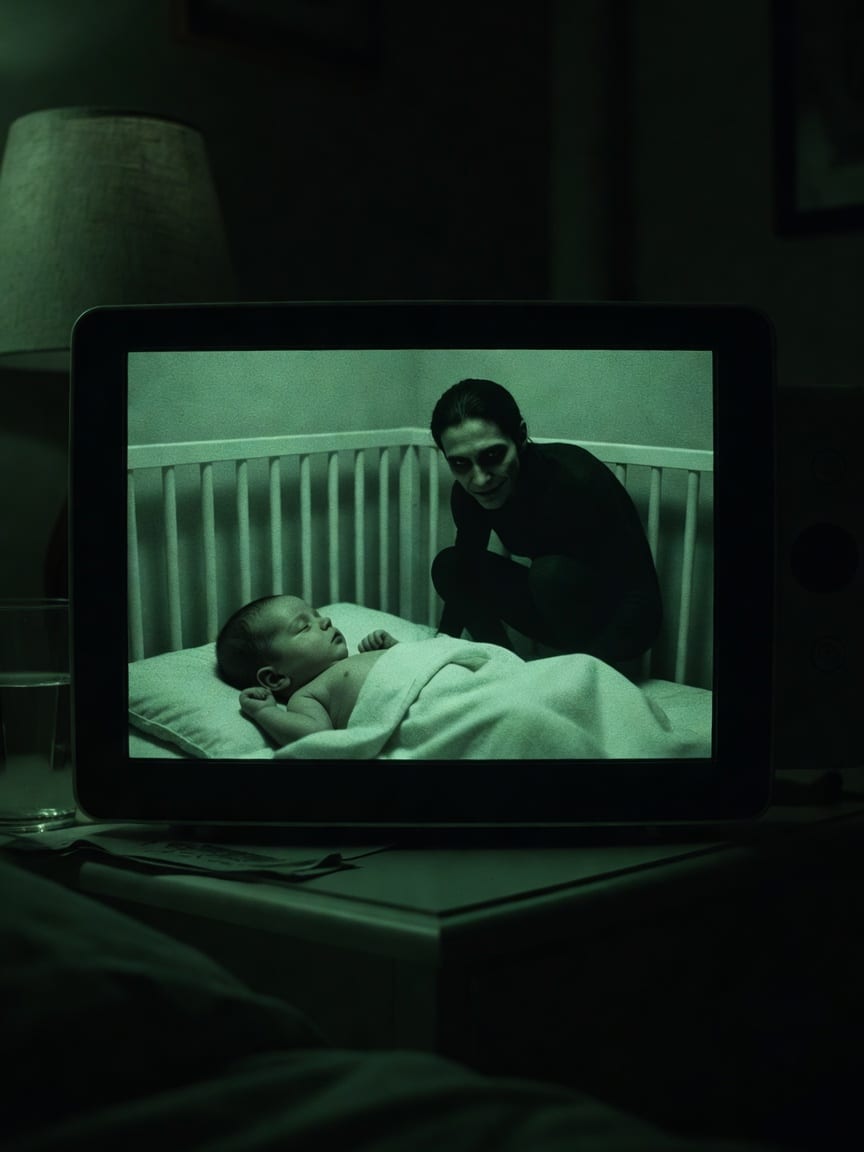
My baby monitor showed something crouched in my son's cot corner, looking back. He was sleeping alone, then it named him.
I was watching my one-year-old son Theodore on the baby monitor one night when he slowly sat upright, staring into his room's far corner. My stomach clenched as a grey, hunched shadow began to coalesce in that empty space, then subtly shifted, looking directly back into the camera.
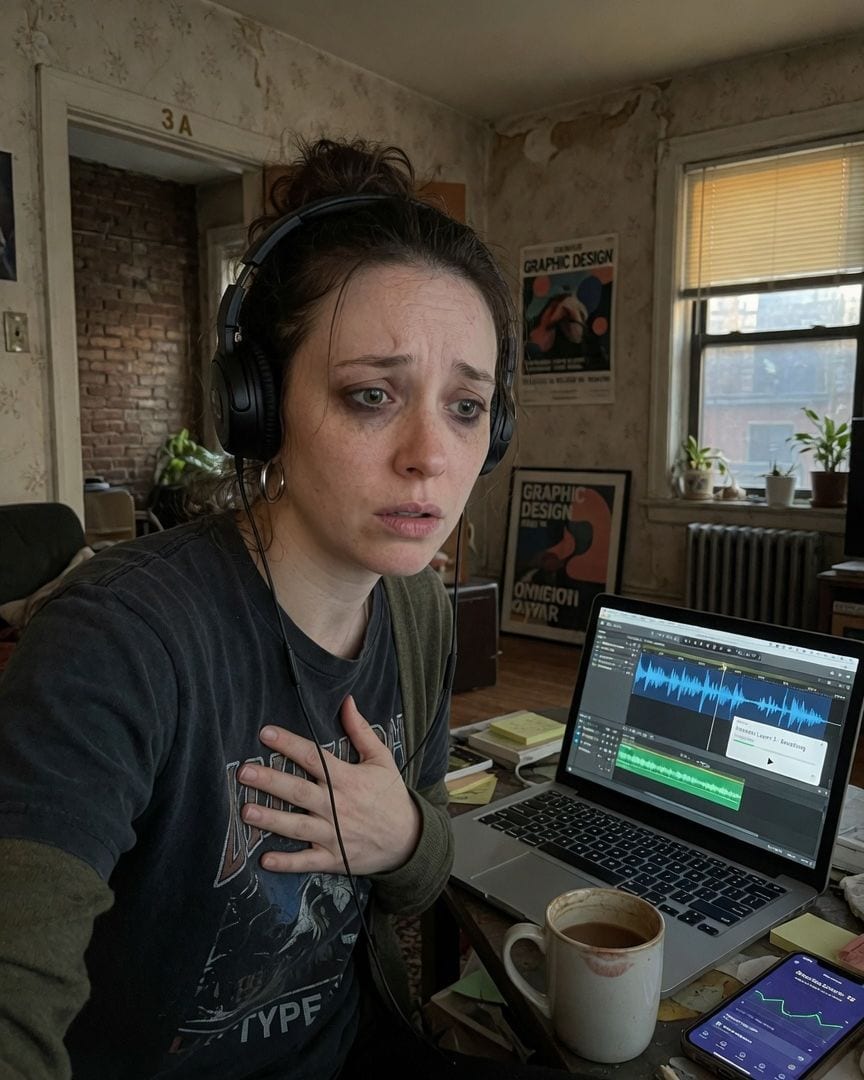
My sleep app recorded a second voice counting in my room at 2:50 AM. I live alone.
I was checking my sleep app's data, a mundane late-afternoon chore, when a flat line of quiet breathing suddenly changed. Over my own steady rhythm, a low, unhurried voice emerged, counting, "One… two… three…" It sounded like someone counting a sleeping child, just before they’re lifted. I live alone in my apartment, yet the voice was undeniably there, in my room, counting.
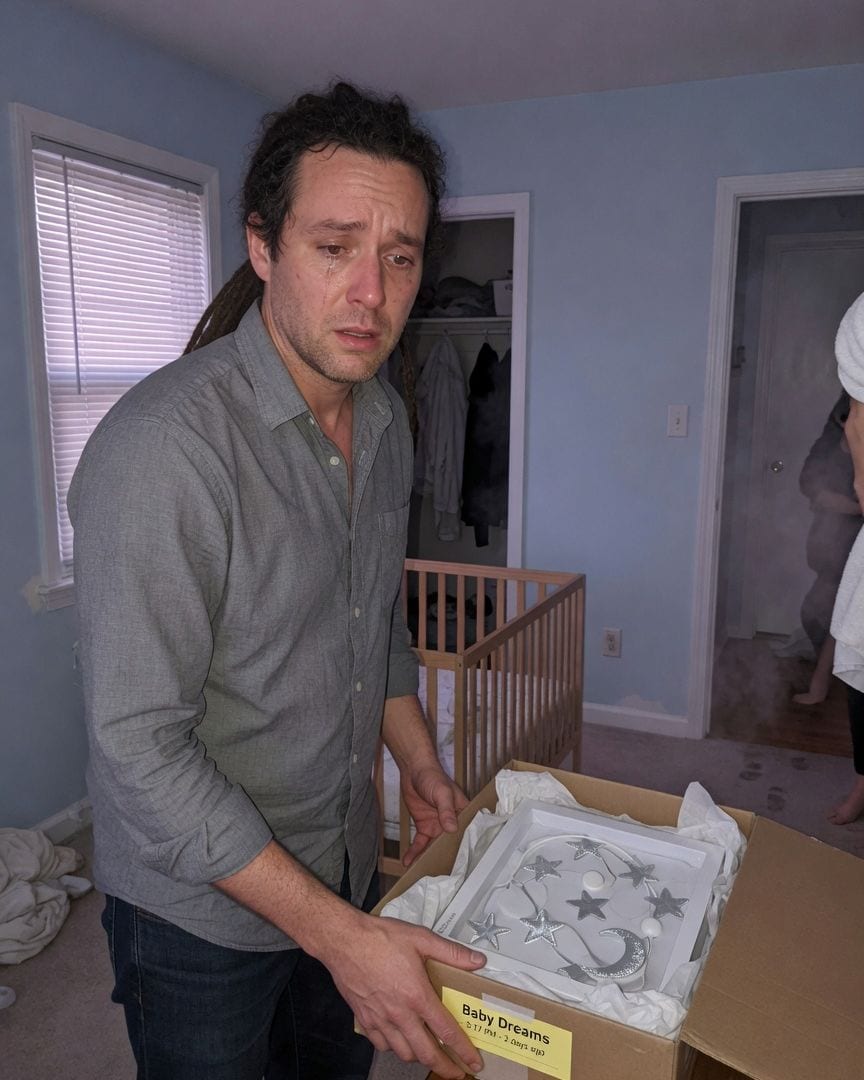
My wife thanked me for the pale blue nursery. We have no child. She described the mobile I'd only imagined, then asked when it would arrive.
Sylvia returned exactly one year after her disappearance, a miracle I could barely believe. But her first words about a nursery I'd only ever imagined, complete with a specific mobile, sent a shiver down my spine. That mobile, a private fantasy, arrived two days ago, and she just asked why it was late.
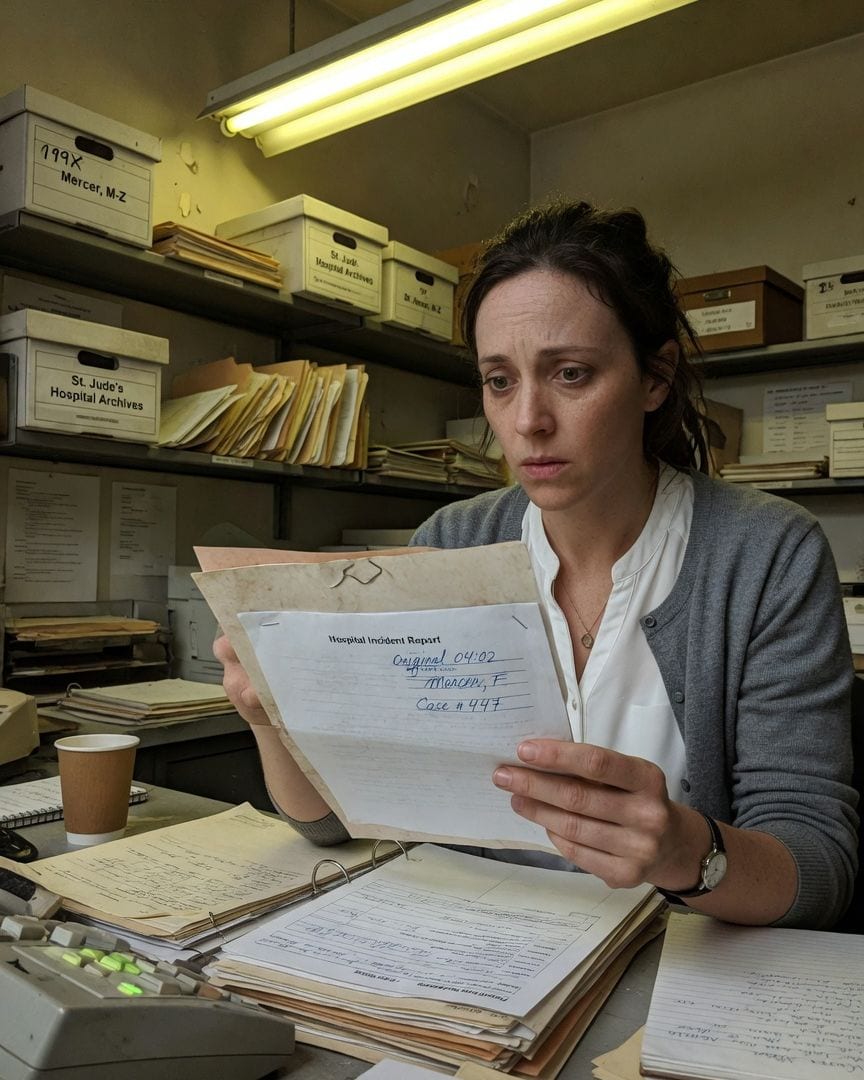
My newborn bl**d card doesn't match my DNA today. The lab ran it three times, confirming the dried spot and my living self are two different people.
Alice Mercer, a geneticist, sends her decades-old newborn bl**d sample for DNA analysis, expecting ancestral markers. Instead, the lab calls with an anomaly: her baby bl**d and current DNA are from two different people. As her mother grows evasive, Alice uncovers a hospital incident report that lists two distinct birth times for her on the same day.
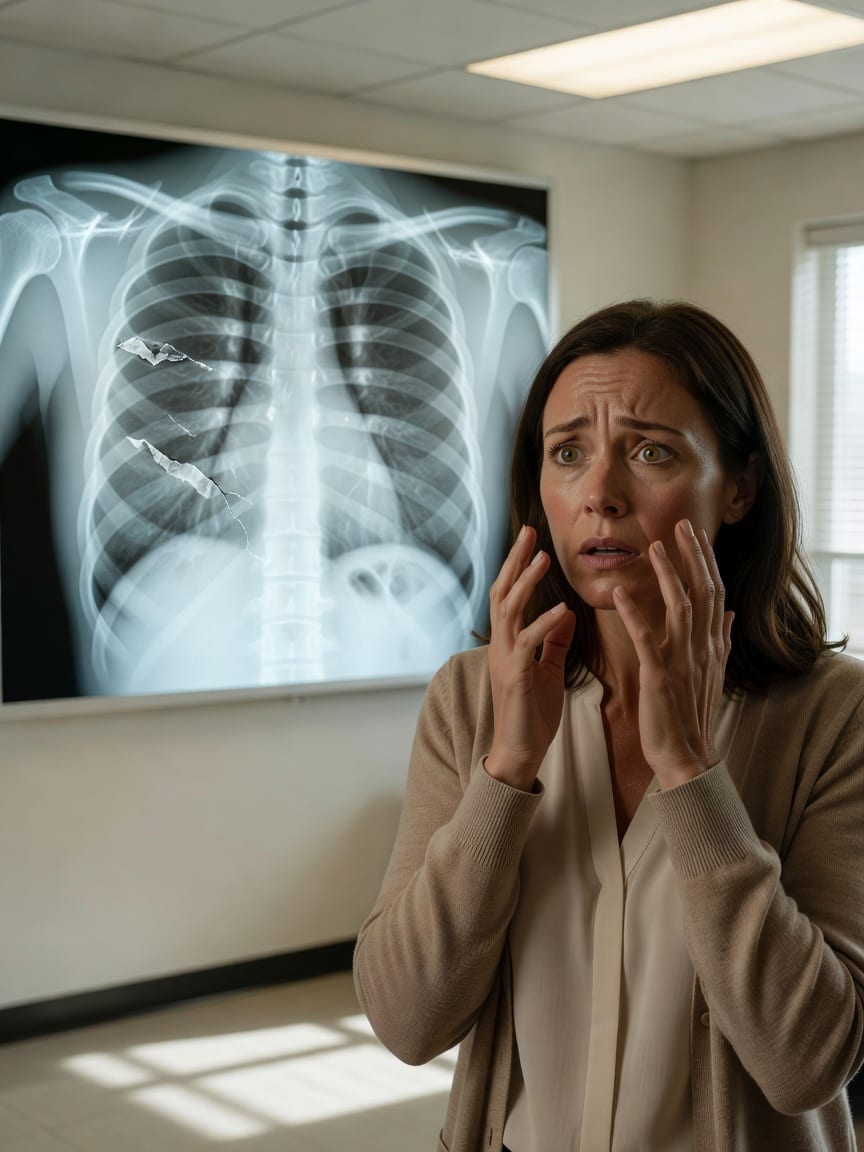
My chest CT shows four old healed rib fractures. I've never broken a rib in my life. The consultant asked if anyone hurt me when I was small. No one ever had.
A routine CT scan for a lingering cough revealed four old, healed rib fractures on my left side, injuries I have no memory of ever sustaining. Despite searching my childhood records, I found no explanation, until a faded sonogram report from my mother's past unveiled a chilling truth: a tiny, distorted second fetus with a dark smudge where its ribs should be.
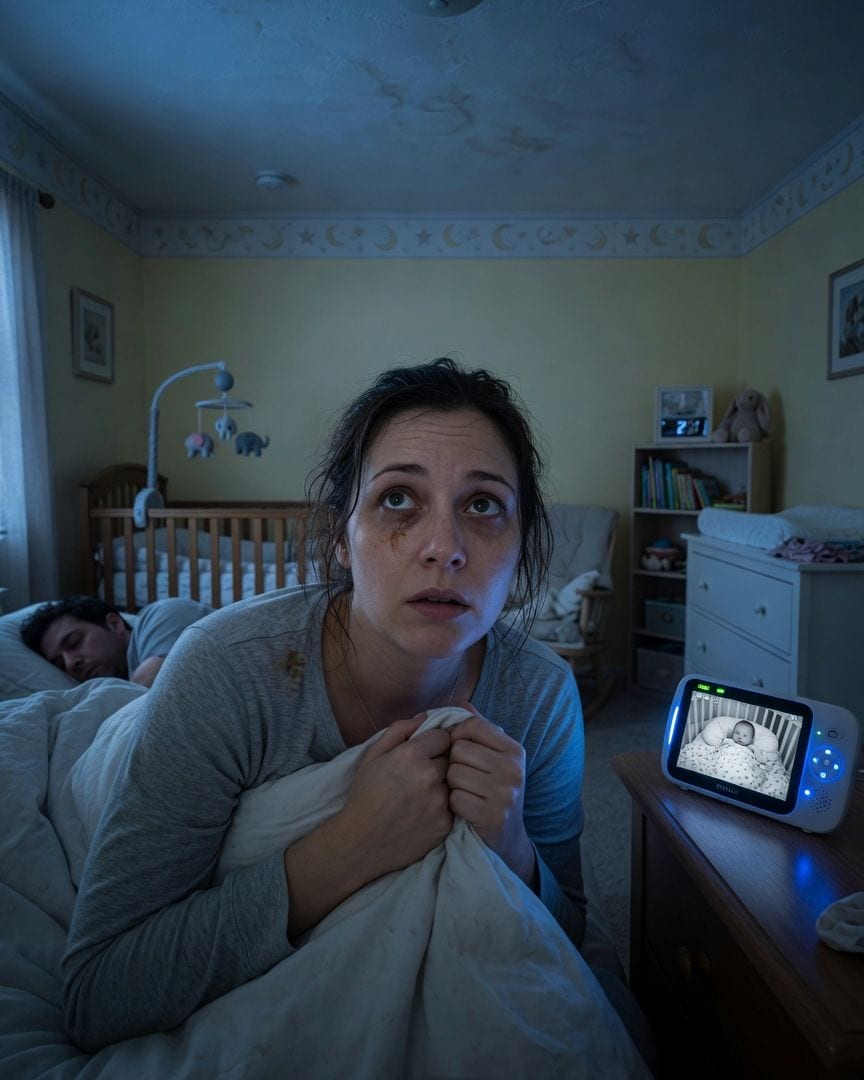
My baby monitor plays a lullaby from an empty room. But the floor holds a rocking chair's deep, decades-old track.
Every night, my baby monitor plays a lullaby and a rhythmic rocking chair creak from Emily's room. But the camera feed always shows her tucked in her crib, completely alone, in a silent, empty nursery. The sound is impossibly clear, as if the speaker were right there, even though nothing is.