My newborn bl**d card doesn't match my DNA today. The lab ran it three times, confirming the dried spot and my living self are two different people.
The lab reports lay on my home office desk, two stark white rectangles against the polished wood. One was from Chronos Genealogy, detailing the DNA pulled from a tiny, decades-old bl**d spot on a newborn heel-prick card.
The other, from the same lab, analyzed the swab from my own mouth, taken just last month.
I’d sent the card, preserved in a small cedar box my mother had kept in her linen closet for thirty years, on a whim. A lark, I'd told myself.
A geneticist by trade, I was curious about my ancestral markers, a deeper dive than the typical consumer tests.
Helen Sinclair, Chronos’s lead genealogist, had called me three days ago. Her voice was carefully neutral, the kind of professional calm that tells you something profoundly abnormal is being discussed. "Miss Mercer," she'd begun, "we've encountered an… anomaly."
She explained they’d run the heel-prick sample twice. Then, a third time, just to be sure. Each test solidified the impossible: the two samples, my newborn bl**d and my current self, came from two different people.
I’d grilled her, of course. Contamination? A mix-up at the lab? Degradation of the ancient bl**d sample? Helen had walked me through every fail-safe, every double-check, her voice unwavering. "The results are unequivocal, Miss Mercer.
There's no scenario within standard lab procedure that explains this."
I kept staring at the reports. My name, Alice Mercer, was printed clearly on both. Yet, the genetic sequences were not mine. It was a cold, physical disconnect, as if my own skin no longer quite fit.
The paper in my hand, with its precise scientific language, insisted I was not myself.
My mother, Sharon, lived twenty minutes away, and the drive felt like crossing a vast, unbridgeable distance. The lab reports were clutched so tight in my hand that the paper was warm and slightly damp.
Her house, usually a hub of comfortable noise and bustling activity, was quiet when I arrived. She was in the kitchen, wiping down countertops, a faint scent of lemon lingering in the air.
"Mom, we need to talk," I said, my voice sounding strained to my own ears.
She turned, a small smile on her face, but it faltered as she saw the papers in my hand. Her eyes, usually so direct, darted to the side, then back to my face, then away again.
As I explained, recounting Helen Sinclair’s precise, damning words, her movements grew unnervingly still. She gripped the edge of the counter.
"That's preposterous, Alice," she said, her voice tight, a little too loud in the quiet kitchen. "A lab error. A clerical mistake. They mix these things up all the time, you know.
Think of how many babies are born in a hospital."
She wouldn't meet my gaze. She waved her hand dismissively, turning back to the counter, scrubbing a spot that wasn't there. The evasiveness, so unlike her usual forthrightness, was a small, cold spark in my gut.
It wasn't just a mistake. I could feel it.
I left, unconvinced, the cold spark growing into a persistent ache. If the lab wasn't wrong, and my mother was lying, then the truth had to be buried somewhere else.
My first stop was the county records office, a place of hushed whispers and fluorescent hums. When that yielded nothing, I moved on to the archives of St. Jude’s Hospital, the place of my birth.
The hospital archives were a tomb of paper and forgotten lives. Days blurred into a haze of microfiche readers and dusty binders filled with brittle, yellowed forms. The air itself smelled of old paper and disinfectant.
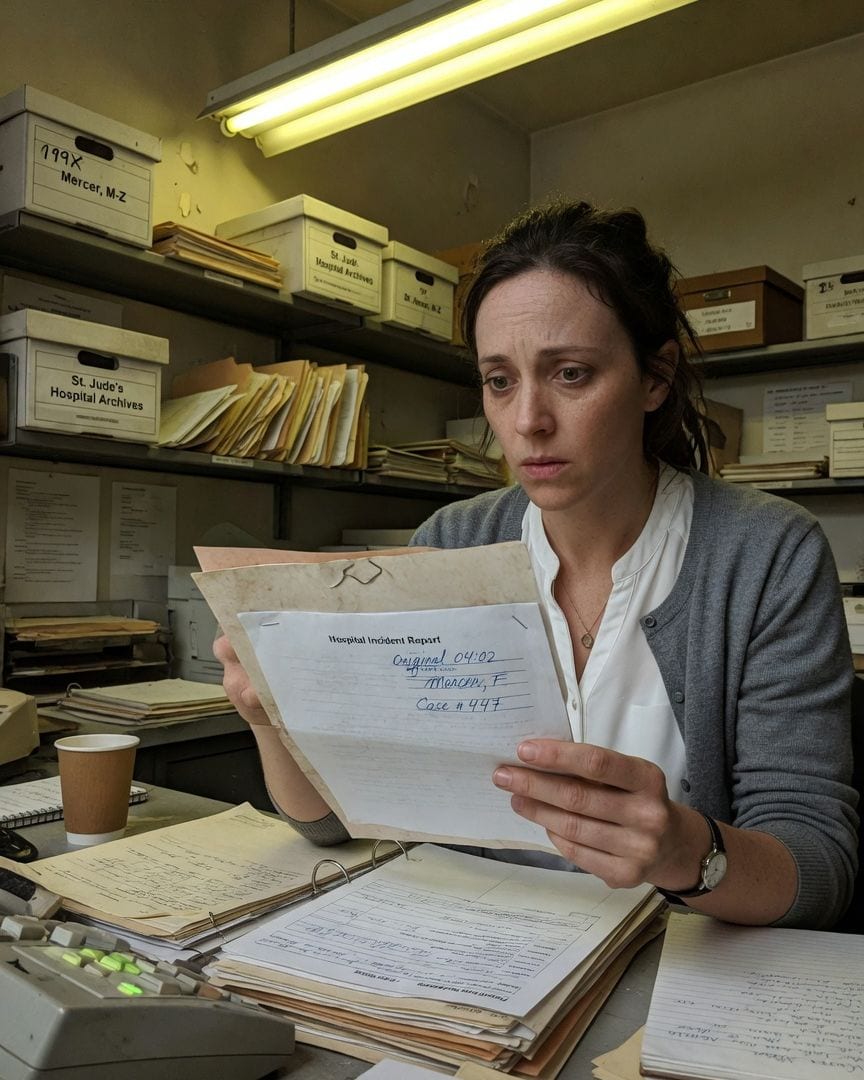
On the third afternoon, tucked inside a box labeled '199X Mercer, M-Z', I found it. A faded photocopy of my own birth certificate, identical in every detail to the one my mother kept in her cedar box.
But stapled to it, with a rusted staple, was a single sheet of thinner paper: a 'Hospital Incident Report.' It referenced 'Case #447, Mercer, F'—my own name and initial. My heart gave a strange thump.
Below that, a handwritten notation in faded blue ink: 'Time of birth corrected: 23:17 (original 04:02) per Dr. Reynolds. Complications noted.'
My breath hitched. The discrepancy was small, almost invisible, easily dismissed as a simple transcription error. But the 'original' time listed was 04:02 AM. Hours earlier than the 11:17 PM (23:17) I’d always known.
And those 'complications noted,' a phrase my mother had never once mentioned. Two birth times, for the same baby, on the same day.
I stood there in the sterile records office, the hum of the old fluorescent lights overhead, my fingers tracing the faded ink on the copy of what appeared to be my own birth record.
My thumb covered the 'corrected' time, 23:17, leaving only 'original 04:02' for 'Mercer, F' visible. It echoed in my mind, a ghost of a timestamp.
It was too specific to be a simple error, too deliberate to be a smudge or a clerical slip.
It implied a different event, a separate moment of birth for a baby with my name, at a time my mother had never, ever mentioned. The dread crystallized in my chest, a cold, hard stone.
Not a mix-up of samples, not a simple lab mistake, but a mix-up of lives.
I stared at the two times, two distinct moments for a single birth, and the silent, unasked question hung heavy in the air, a presence in the quiet room.
The next morning, I drove back to Sharon’s, the hospital report a lead weight in my pocket. She was pruning roses in the garden, the early sun warm on her back.
I walked right up to her, not bothering with pleasantries.
"Mom," I said, holding out the report. "What are these 'complications noted'? And why are there two birth times for me?"
Her back stiffened. She slowly lowered the pruning shears, her hands trembling slightly as she smoothed the dirt from her apron. She wouldn't look at the paper. "Alice, darling, I told you. Clerical issue. They get things wrong."
Her voice was tight, thin, stretched. "Why are you bothering with this? It was thirty years ago. Ancient history."
"Ancient history that says my DNA doesn't match the bl**d on my own heel-prick card," I retorted, the words sharper than I intended. "And it mentions a 'Dr. Reynolds.' Who is he?"
She turned away completely then, picking a faded bloom from a rose bush with a jerky motion. "He was... just the doctor on call, dear. Old Dr. Reynolds. Nothing to worry about. Now, are you staying for dinner?
I was thinking of making your favorite lasagna." Her quick shift, her forced cheerfulness, was a confirmation in itself. She wouldn't, couldn't, answer.
The conversation was over. But my focus had shifted. Dr. Reynolds. A quick online search, filtering for obstetricians who practiced at St. Jude’s thirty years ago, yielded a hit: Thomas Reynolds. Retired, now 78.
His professional photo showed a man with kind, tired eyes, the kind that might have seen too much. I found an old address, a small house on the edge of town, tucked away behind a row of mature oaks.
I drove past it that afternoon, feeling like a stalker, but unable to stop myself. The house was neat, unremarkable, a single light on in a front window. No sign of life beyond a well-tended garden.
I typed out an email, careful and formal, attaching the Chronos DNA reports and the conflicting hospital record. I requested a meeting, explaining I had an 'urgent family medical query.'
A growing unease settled in my stomach. It wasn’t just my mother burying something anymore. It felt like I was poking at something deeply buried by an institution.
My mother started calling me more frequently after that, ostensibly to ask about my day, but her tone was subtly probing, as if checking on my activities, my location. Each call felt like a tightening knot in my stomach.
Dr. Reynolds didn't reply to my email. I tried calling his old office number, but it now belonged to a completely different medical practice.
I left a message with their receptionist, vaguely explaining I had a 'historical medical inquiry' for Dr. Reynolds, knowing it was unlikely to go anywhere.
A week passed in tense silence. I checked my email constantly. Then, buried deep in my spam folder, a single, unread message appeared. No sender name, just a string of random characters for an address. The subject line was blank.
The body of the email contained only five words: "Some things are best left buried, Miss Mercer."
A prickle of ice ran down my neck. It wasn't a threat, not overtly, but the implication was a physical weight. Someone knew I was asking questions. Someone knew about the email I'd sent to Reynolds.
I checked my phone’s call log. A blocked number had called me twice yesterday morning. My hands felt cold.
That evening, I drove past Dr. Reynolds’ house again. The familiar house, usually so quiet, felt different in the fading light. A dark sedan with tinted windows was parked down the street, its engine idling.
It was too late for visitors, too early for teenagers to be loitering. As I passed, the sedan’s headlights flashed once. Not a friendly blink, but a brief, sharp signal in the dusk. A warning.
My hands clenched on the steering wheel, knuckles white. I was no longer just investigating a family secret. I had been noticed. The danger was no longer abstract, an academic puzzle.
It was real, present, a cold breath on the back of my neck. I felt an invisible gaze on me, a constant, chilling pressure.
I finally cornered Thomas Reynolds at a community center where he volunteered, sorting books for a charity sale. He was older than his photo, his movements slower, but his eyes, though tired, were sharp.
He recognized me immediately, a flicker of something unreadable in his gaze.
"Alice Mercer," he murmured, his voice a low rumble. He gestured to a small, worn table in a quiet corner of the echoing hall, offering me a cup of lukewarm tea from a chipped mug. "I received your email.
And your mother has called me."
I didn’t waste time. I laid out the DNA reports, the heel-prick card, the conflicting birth records. The scientific truth, the bureaucratic anomaly. He listened, his gaze steady, nodding slowly as I spoke, his face devoid of surprise or alarm.
"You've been thorough, Alice," he said, when I finished. "More thorough than anyone else has ever dared to be."
He didn't deny anything. He simply leaned back, taking a slow sip of his tea. "It was a difficult night, thirty years ago," he began, his voice soft, almost a whisper, as if he were recounting a dream.
Sharon Mercer, he explained, had given birth to a daughter, Charlotte, hours before the 23:17 time on my birth certificate. There had been severe complications. Charlotte was tiny, frail, and she hadn't survived the night.
Thomas described Sharon’s grief, raw and inconsolable, compounded by a previous miscarriage she’d kept secret. An unbearable loss.
Then, he spoke of another baby. Me. Born just hours later, on the same floor, to a young woman who had quietly intended to give her up. Unmarried, scared, with no support.
"It was a desperate time," he murmured, looking into his tea, not at me. "A chance for a grieving mother to hold a healthy child. A chance for a child to have a home. For both to find solace."
He admitted to orchestrating the switch. Altering the records. Making Alice, effectively, Charlotte. Giving me Charlotte’s birth slot, erasing Charlotte’s death from the official story. The bl**d on the heel-prick card, he confirmed, belonged to Charlotte.
The 'Alice Mercer' on the later birth record, with the 'corrected' time, was the new identity given to me.
I felt a profound chill, a physical wave of cold that started in my chest and spread through my limbs. My earlier clues re-meaning themselves with sickening clarity. The ‘complications’ were Charlotte’s death.
The ‘correction’ was my own insertion into a life already lost. My entire life, a forgery.
Thomas Reynolds looked at me then, his gaze steady, devoid of judgment or regret. "The original baby, the one on that card... Charlotte... she didn't make it." He paused, letting the words sink into the silence between us.
"You were always inside it, Alice. Inside her life. You are the continuity they needed."
I felt the world tilt, the floor drop out from under me. The truth wasn't just a switch; it was a replacement. A life built on a death. I was not myself, not truly.
I was an echo, a stand-in, a surrogate filling an unbearable void. My entire existence, my memories, my name, my family—all of it a carefully constructed lie designed to mend a broken heart, to complete a fractured story.
I stared at him, the full, hollow implication of my existence washing over me, the very air around me turning thin and cold. My own body, my own name, felt alien, a mask I'd unknowingly worn for thirty years.
I returned home, numb. Thomas Reynolds’ words echoed in the empty house. The world had shifted, and I was adrift in its new, brutal coordinates.
I confronted Sharon one last time, not with accusations, but with the full, devastating weight of Thomas Reynolds' confession, the DNA evidence, the conflicting records. I just laid it all out.
Sharon finally broke. She didn’t yell, didn’t try to deflect. The composure she’d maintained for thirty years shattered. Tears streamed down her face, deep, wrenching sobs that shook her whole body.
She recounted the agonizing loss of Charlotte, her firstborn, tiny and perfect, gone before she even had a chance. The unbearable emptiness that followed, a physical ache in her chest.
Thomas Reynolds’ quiet suggestion, the desperate hope that a healthy baby, a beautiful, perfect Alice, could fill the void, could make the world right again.
"She was so tiny, Alice," Sharon choked out, her voice raw. "But perfect. So beautiful. And then… she was gone. We had to do something. I had to hold her again."
She reached under her pillow, her hand trembling, and pulled out a small, tarnished silver locket I’d never seen before. Inside, nestled beneath glass, was a faded, almost indistinguishable baby photo, and a tiny, dark lock of hair.
"This was Charlotte," she whispered, handing it to me. "Your sister."
The locket was Charlotte's, the baby whose bl**d was on the card. Sharon confessed to visiting a small, unmarked grave for decades, a secret pilgrimage only she knew.
Every planted clue clicked into place, forming a complete, horrifying picture: the unusual birth record, her evasiveness, the heel-prick card. I wasn't Alice Mercer.
I was a living memorial, a shadow occupying a space never meant for me, a stand-in for a lost child.
The truth, once a burning question, now felt like a crushing weight. I couldn't un-know it. I couldn't continue living the life of Charlotte Mercer, a carefully constructed illusion. The decision, when it came, was quiet, absolute.
I spent the next week compiling everything. The Chronos DNA reports, both mine and Charlotte’s. The conflicting birth certificates, highlighting the 'corrected' time and 'complications.' Thomas Reynolds' recorded confession—I’d discreetly taped our last conversation, a small, selfish act of preservation.
And finally, Sharon’s tearful admission, transcribed as accurately as possible.
I wrote my story, meticulously, rationally, presenting the evidence without embellishment. I knew no one would truly believe it, that it would sound like a delusion, a grief-stricken fantasy. But I had to put it out there. For Charlotte.
And for myself.
The cost was immediate and profound. Sharon, devastated by the exposure, refused to speak to me. My calls went unanswered. The family fractured, splintered by a thirty-year-old lie.
I felt like a ghost, untethered from the only identity I'd ever known, a stranger in my own skin.
I knew I had to leave, to find a place where I could try to build a life not founded on a lie, a life that was truly mine.
I packed a single bag, leaving behind the house, the photos, the name.
I carried only my laptop, filled with the undeniable proof of my stolen life, and the locket Sharon had given me, a small, cold weight in my pocket.
I moved to a small town thousands of miles away, on the opposite coast, and changed my name legally to Frances Coleman.
I posted my story anonymously on a forum dedicated to unexplained medical mysteries, a place where people shared the inexplicable. The post was met with a mix of disbelief, sympathy, and, as expected, accusations of mental illness.
I never corrected them. Sharon Mercer cut off all contact, the wound too deep to heal. Thomas Reynolds passed away quietly a few months later, his obituary a brief, unremarkable paragraph in the local paper.
I lived with the hollow space where my past should have been, the identity of Charlotte Mercer a silent companion. I was safe, free of the lie, but adrift, carrying a truth too unbelievable for anyone else to grasp.
Frances Coleman, formerly Alice Mercer, sits by a window, watching the rain sheet down the glass. On the table before her, side by side, are the faded newborn heel-prick card and her own recent DNA report.
The name 'Charlotte Mercer' is still visible on the card, a faint, indelible mark. She traces the lines of her own genetic code, then the faint spot of dried bl**d.
The only name I truly knew, it turns out, was never really mine.
If this one got to you
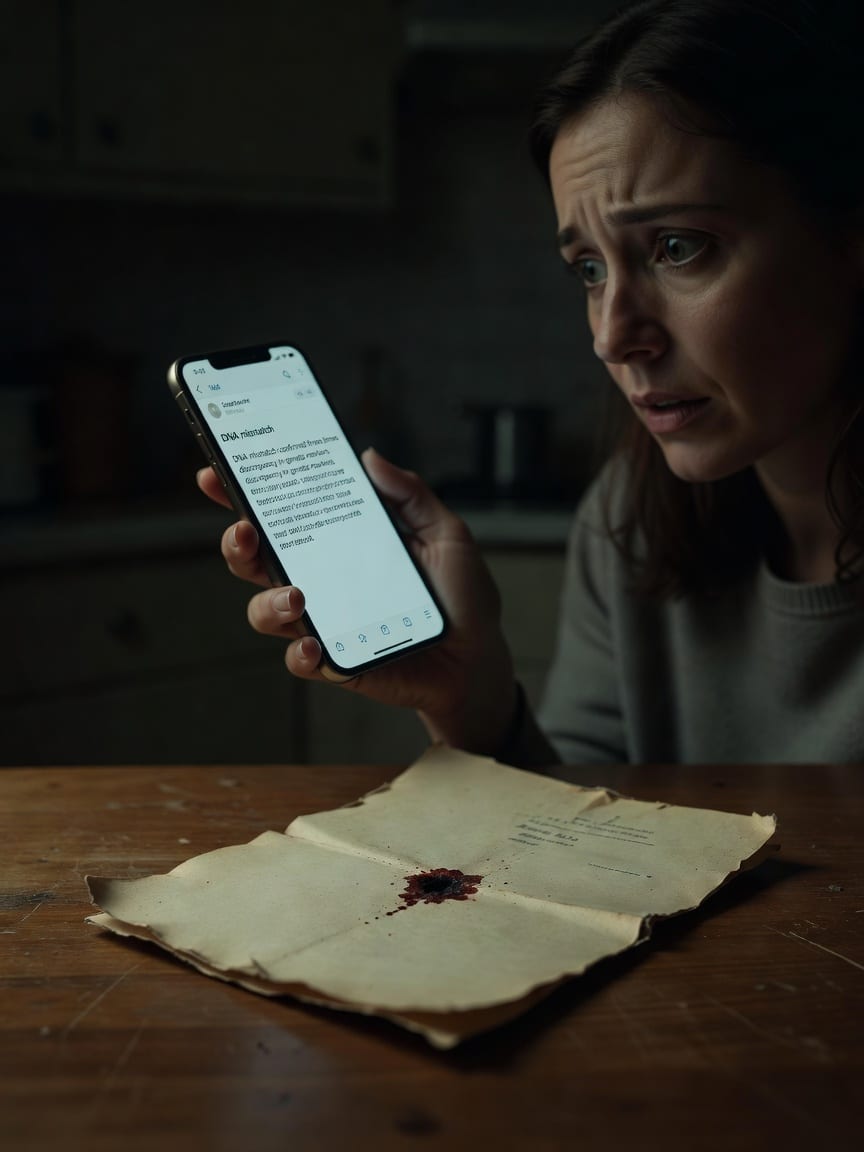
My baby bl**d card doesn't match my own DNA today. The lab ran it three times, confirming the dried spot and my living swab come from two different people.
Sitting at my kitchen table, I opened an email that shattered my quiet afternoon. I'd sent my newborn heel-prick card to a genealogy lab out of harmless curiosity. The results were devastating: the bl**d on that card, preserved for three decades, does not match my DNA.
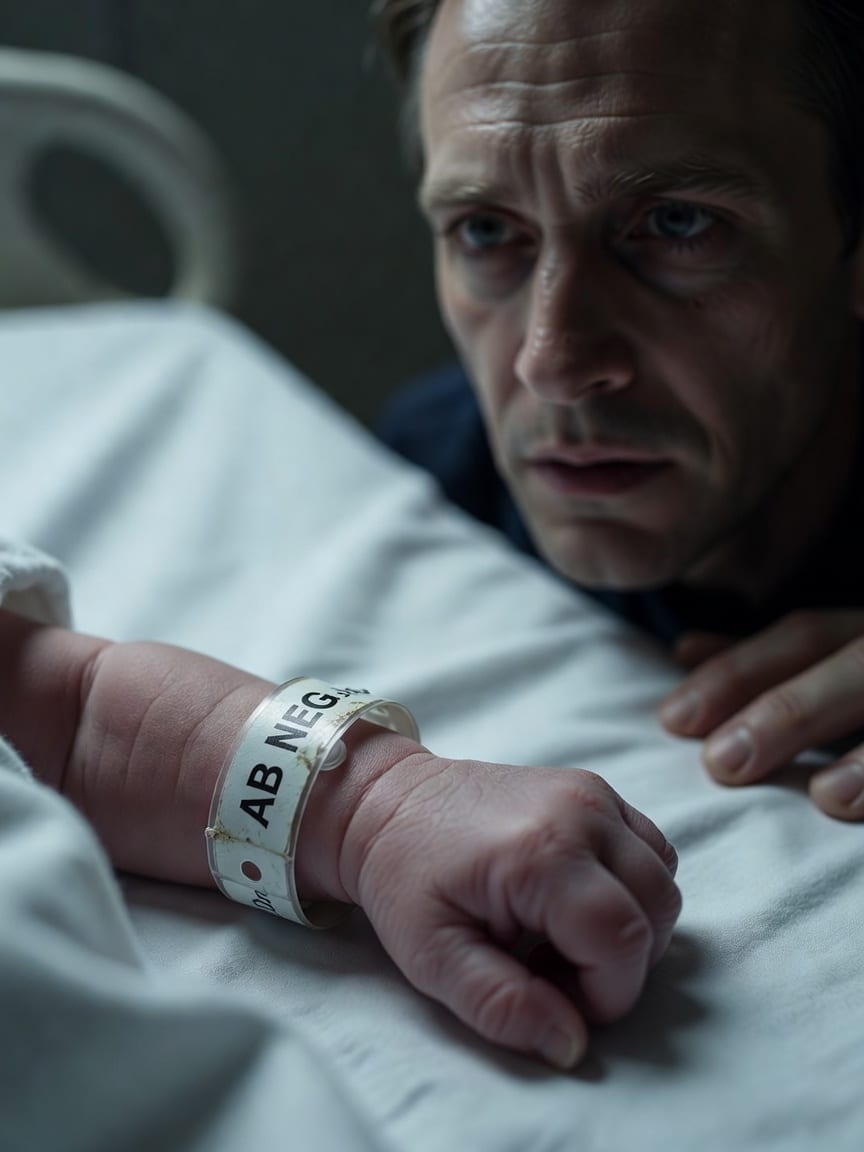
My bl**d type keeps changing. My old donor card says AB negative. Every test since has come back O positive. Doctors can't explain my own handwriting.
I usually find the sterile scent of antiseptic calming, but not today. Dr. Mitchell revealed my bl**d type had changed from AB Negative to O Positive. Despite multiple fresh samples, the new results were undeniable, a medical impossibility that defied everything I knew about my own body.
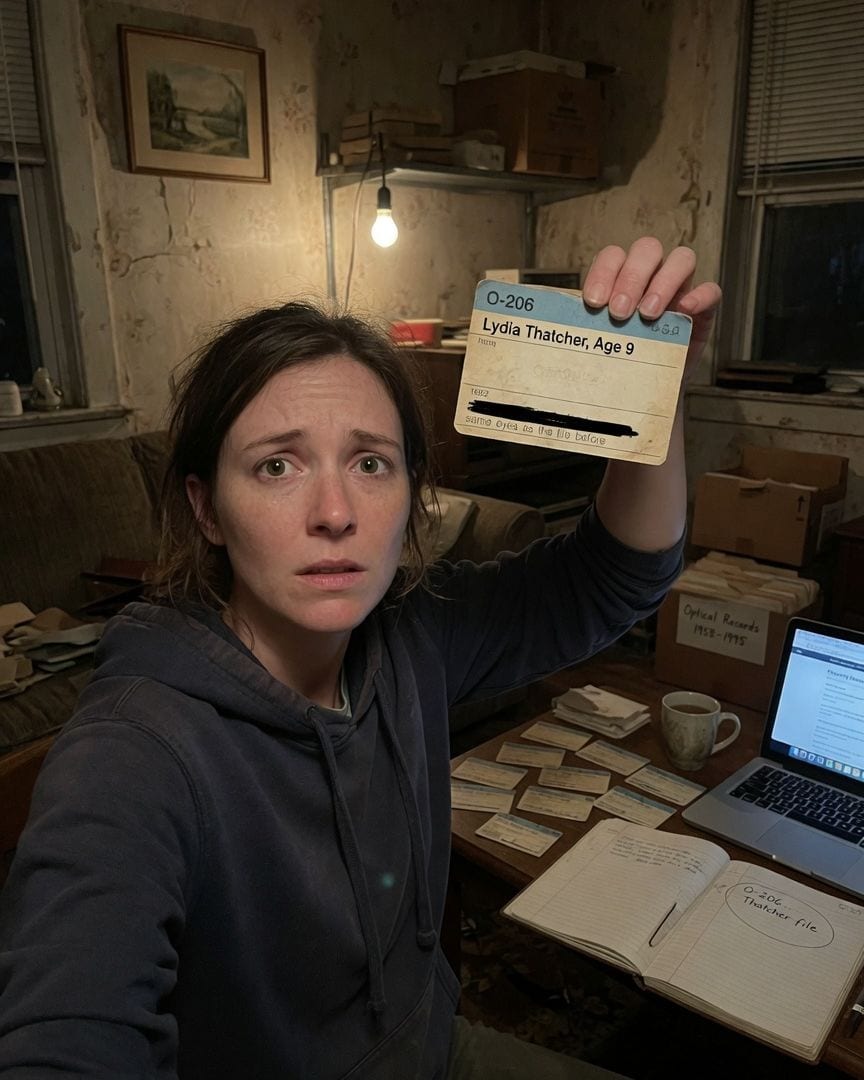
My own optical card is dated 1962, with my name on it. I wasn't born until 1993.
Sifting through old patient files from my former optical practice, I found my own O-206 card. It had my name, Lydia Thatcher, and my current home address printed on it. But the card was dated 1962, decades before I was even born, and a redacted note mentioned 'same eyes.'
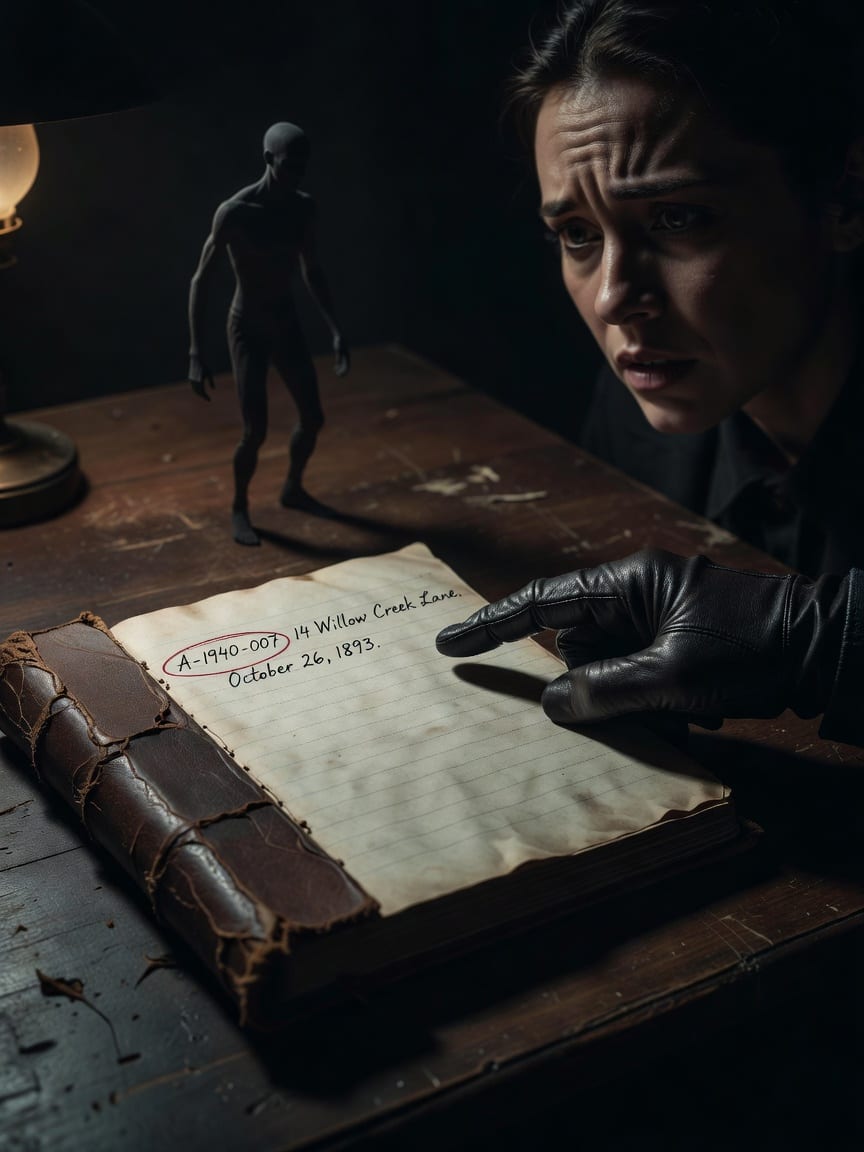
My dead relative's 1940 hospital record had a note: 'same admission number as reissued below.' Below it, decades later, was my home address, and 'hold, do not process new patient.'
As an archivist, I was researching my great-aunt Vera's 1940 psychiatric admission. Her microfiche file, however, contained a handwritten note about a reissued admission number. To my shock, this identical number was later assigned to a blank file listing my own home address, with a chilling directive to 'hold'.
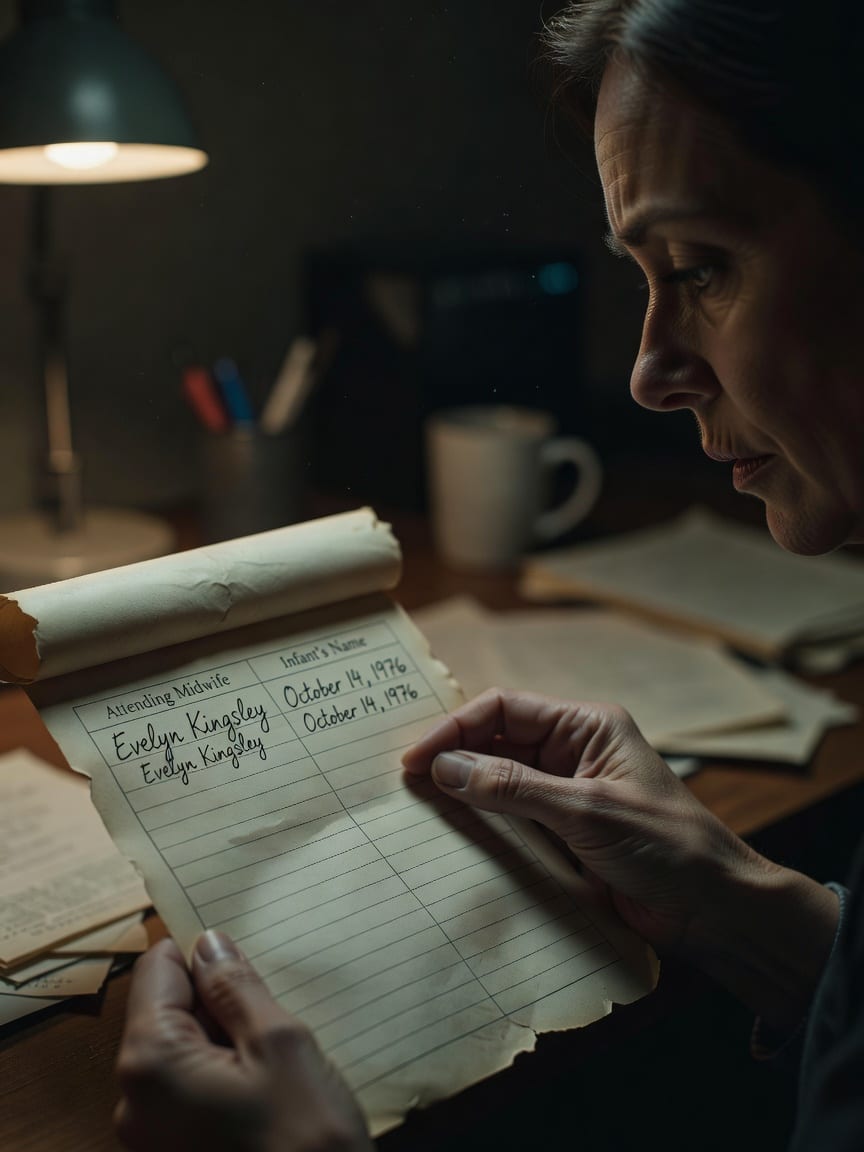
My own handwriting is on my birth certificate, signed as the attending midwife. I was the baby born that night.
I found my adult signature scrawled across my mother’s maternity file, right on my own birth register page. Forensic analysis confirmed it was genuinely my handwriting, dated 1976. But that was the year I was born, and my signature was listed as the attending midwife.
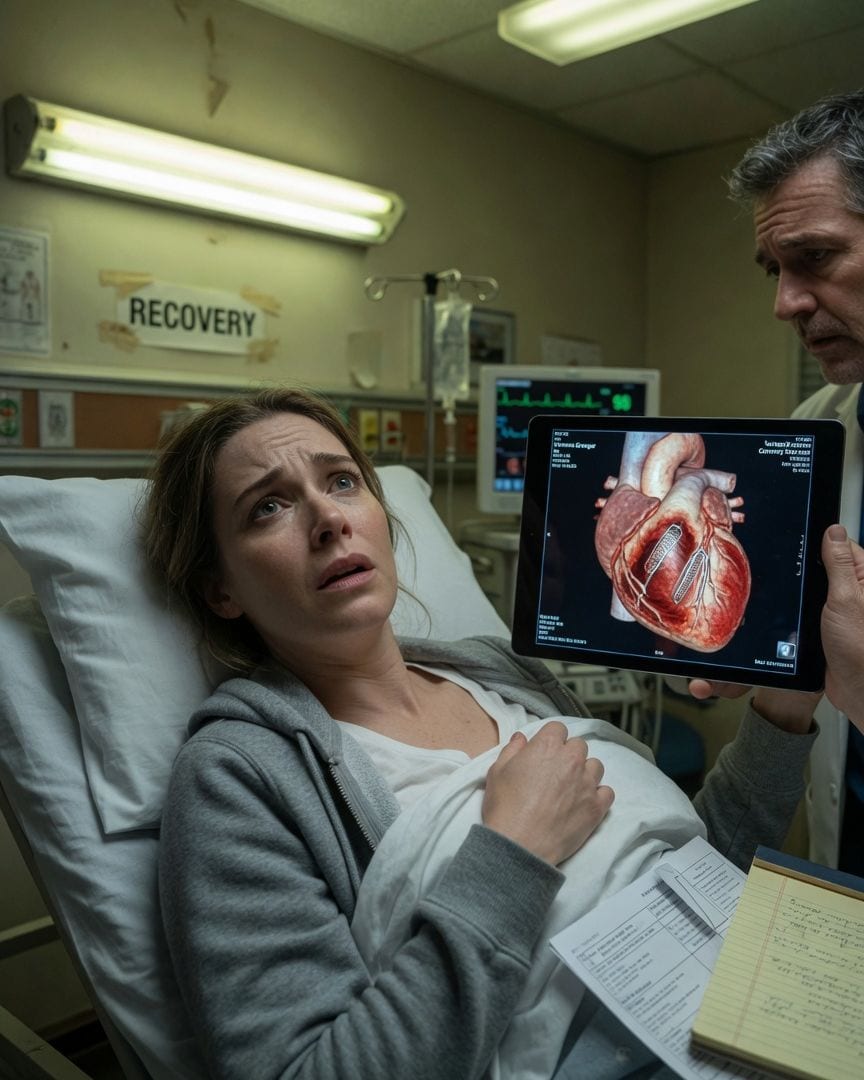
Metal stents are propping open my heart. The doctor rotated the image, but I've never had a cardiac procedure.
After years of dismissed chest pain, a CT scan revealed an impossible truth: my heart contained two metal stents. Dr. Maddox confirmed there was no record of any cardiac procedure in my entire medical history, and I had no memory of ever having surgery. My own body held a secret, alien architecture I couldn't explain.