My wife's eyes don't blink before the camera anymore. She says I imagined her twenty-year habit, but the videos don't lie.
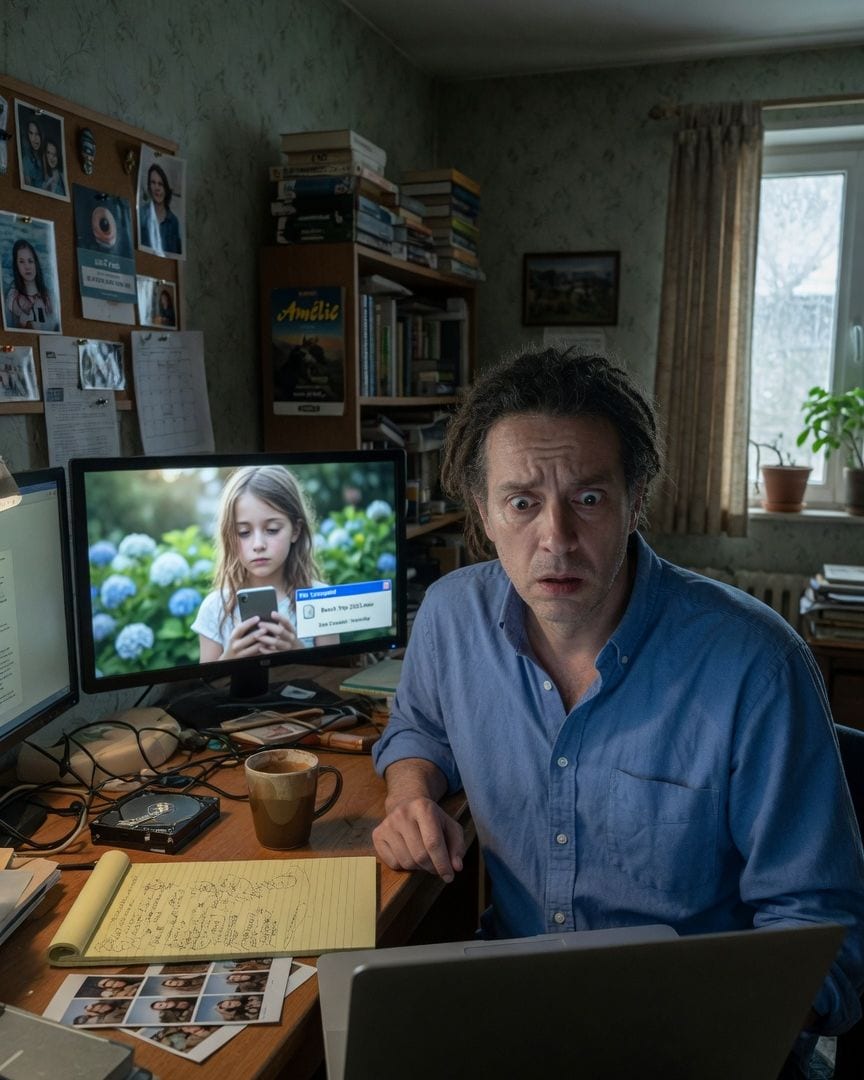
Iris returned on a Tuesday. Five days she was gone, after that conference in Denver. Five days of gut-wrenching worry, then the call.
She was found, disoriented but physically unharmed, by a park ranger on a hiking trail, eighty miles from where she’d last been seen. They said it was exposure, a minor concussion. I just held her, grateful.
For a while, the relief was all I could feel.
It was three weeks later, a Saturday morning, when I first noticed. She was in the garden, bathed in the soft morning light, framing a shot of the hydrangeas with her smartphone. My breath caught in my throat.
She didn't blink. Not once. Her eyes, usually so expressive, were perfectly still, fixed on the screen. The camera clicked. My wife, Iris, had a harmless tic for twenty years, a quick double-blink before she snapped a picture.
Every holiday video, every birthday, that familiar, almost imperceptible twitch. It was just her.
Now, nothing. Her serenity was absolute. I tried to rationalize it, of course. Post-trauma shock. A minor change, a fleeting moment. We’d all been through a lot.
But her stillness, that unblinking gaze, felt alien, a quiet wrongness settling deep in my chest.
Later, over coffee, I tried to mention it gently. "You used to blink before you took photos, didn't you, darling?" I watched her face, hoping for a flicker of recognition, a shared chuckle about an old habit.
She smiled, a calm, perfect smile. "Did I, David? You must have imagined it." The silence stretched, mirroring the stillness in her eyes. A cold knot tightened in my gut. I knew I hadn't imagined it.
I knew, with a certainty that unnerved me, that this was real. That night, I started to re-watch old videos, searching for proof. I needed proof.
I spent the next day holed up in my study, the glow of the monitor illuminating my frantic search. I delved into our digital archives, a decade of memories packed into hard drives.
Holiday videos, birthday parties, mundane snapshots of our life together. I found a dozen, then twenty. Iris was in every one, her familiar double-blink preceding each shot. Clear as day.
The camera would lift, her eyes would close, open, close, open, then click. The proof was undeniable. My chest ached with a strange mix of relief and growing dread. What did it mean?
Later that evening, the house quiet, I tried to broach the subject again, delicately. "Remember that old French film we watched, the one with the quiet ending, just before the conference?"
It was a specific memory, a quiet night in, something intimate. Iris's eyes lit up, a warmth radiating from her that was both familiar and unsettling. "Oh, yes! Amélie. I loved that one.
The way the light faded in the last shot, and we shared that big bowl of popcorn, remember? You kept stealing all the sweet ones."
I froze. Amélie? The quiet ending was from a different film entirely. And the popcorn... I had watched that film, alone, the night before she left for the conference. Iris had been out late with friends.
I remember feeling lonely, wishing she were there, stirring a pot of soup for one. I knew, with chilling certainty, she was never present for that moment.
Yet, she recounted it as if it were a cherished, intimate memory we shared, a gentle smile playing on her lips. "Popcorn, you said?" I faltered, my voice thin. She simply nodded, her eyes soft, her certainty absolute.
The impossible memory gnawed at me. I couldn’t shake it. I grabbed Iris’s tablet, the device she’d used that morning to take the garden photo.
My hands trembled slightly as I found the image, then the short video clip she’d shot just before. Her eyes were perfectly, unnervingly still.
I scrolled through the camera roll, my heart pounding against my ribs, desperate for something, anything, to make sense.
Then I saw it: a video from last summer’s beach trip, clearly Iris, clearly blinking twice before the shot. My stomach clenched. I tapped it, a desperate need for confirmation overriding everything else.
The screen flickered, showing Iris’s familiar blinking face for a split second, her eyes closing, then opening, then closing again—just as I remembered. Then it went black. An error message flashed briefly: 'File Corrupted.' I tried again. Nothing.
Just a black screen. I went to the file properties: 'Beach Trip 2023.mov,' it read. But beneath it, stark against the glowing text, 'Date Created: Yesterday.'
David stared at the impossible timestamp, the flickering image of his blinking wife still burned behind his eyes.
I couldn’t confront Iris directly. Not with that impossible timestamp. What could I even say? So, feigning a 'tablet issue' – a common enough occurrence with our aging devices – I took her tablet to my friend, Samuel Montgomery.
Samuel was a freelance IT specialist, a man who thrived on puzzles. I explained the 'corrupted' video file and, with a casualness I didn't feel, mentioned the impossible 'Date Created' timestamp. "Just a glitch, probably," I tried to sound convincing.
Samuel, a man of few words but sharp intellect, just nodded, his eyes already scanning the tablet's diagnostics. "Leave it with me, David. I'll see what's what."
Hours later, Samuel called. His voice, usually dry and technical, was tinged with professional curiosity, almost wonder. "It's weird, man," he began, "This isn't just corruption. This file was… specifically targeted.
It looks like a sophisticated overwrite, a deliberate erasure designed to look like a random error. Like someone didn't want that file to exist, but wanted to make it look like it just... broke."
He paused, and I could hear the tap-tap of his keyboard in the background. "And there's something else. I found traces of unusual network activity around the time Iris returned. A brief, high-bandwidth connection to an unknown, untraceable server.
Like a ghost in the machine, downloading something massive, or uploading. Then gone without a trace." The hum of Samuel’s server rack in the corner seemed to pulse, a mechanical heartbeat tracking something unseen, something elusive. My mind reeled.
A ghost. Not just in the machine, but in my home, wearing my wife's face.
Back home, I couldn't look at Iris the same way. The ghost Samuel spoke of, the quiet wrongness I'd felt, had solidified into a chilling certainty. I watched her every move, every gesture.
Small, almost imperceptible things started to surface, like tiny splinters in a perfect veneer. She always stirred her coffee counter-clockwise, a familiar rhythm I'd seen for twenty years. Now, it was a deliberate clockwise motion, slow and precise.
She always wore her watch on her left wrist, a habit she’d had since childhood. Now, without explanation, it was on her right.
I tested her, my voice strained. "Did you switch your watch hand, darling? I thought you always wore it on your left." She laughed, a light, tinkling sound that felt like shards of ice against my skin.
"Silly, I've always worn it on my right! You're being so observant lately, David." Her calm, certain answers only deepened my dread.
The quiet house itself felt like it was holding its breath, waiting for me to catch the next tell. I felt a growing chill, a sense of being constantly observed.
Not just by Iris, but by a presence I couldn't name, a silent watcher.
One morning, an anonymous email landed in my inbox. No subject, no sender. Just a single, slightly blurry photo: me, leaving Samuel Montgomery's office, caught mid-stride, my head turned away.
Below it, in plain text: 'Some things are better left undisturbed.' My breath hitched. The message was clear. I wasn't just investigating; I was being watched. And whoever was watching knew exactly what I'd found.
The anonymous email ignited my resolve, burning away the last vestiges of self-doubt. If they were watching, if they knew, then I had to know, too.
I started researching other local disappearances and returns from the past decade, scouring old news articles and police reports. It wasn't hard to find them.
Several cases, all with similar patterns: a few days of absence, followed by a sudden, disoriented return. And in the fine print, buried in forum comments or whispered anecdotes, reports of subtle, unsettling changes in the returned individuals.
'Different eyes,' one comment read. 'Too quiet,' said another.
One case stood out, a name that kept reappearing: Gideon Thatcher, who returned three years ago after a week-long disappearance.
His wife, Vivian Thatcher, had been quoted briefly in an old local paper, mentioning his 'new habits' and a 'changed demeanor.'
I tracked Vivian down, finding her living a quiet, almost reclusive life in a nearby town. Her house was small, tidy, surrounded by a carefully tended garden.
I approached her cautiously, introduced myself, and explained, haltingly, what was happening with Iris. I showed her my notes, the unblinking stillness, the impossible memory of the French film, the reversed habits.
Vivian's eyes, initially wary and clouded with polite disinterest, widened with a dawning, terrible recognition. She invited me in, her hands shaking slightly as she poured us tea. Eventually, she broke down, the dam of years of silence cracking.
She admitted that Gideon was 'wrong,' too. "He'd tell me about fishing trips he was never on," she whispered, her voice raspy, thick with unshed tears.
"Vivid details, the feel of the line, the smell of the lake, the way the sun set over the water. And he'd grow so calm when I questioned him, David. So certain, like he genuinely believed it.
Like that was his memory." She recounted how she learned to live with it, the quiet horror of sharing her life with a perfect stranger in her husband's skin. "What else could I do?" she asked, her gaze hollow, empty.
"You learn to live with the ghost in your house. But it knows you know."
Vivian, her composure slowly returning, pushed a dusty photo album across the coffee table. She flipped through the brittle pages, stopping at a faded picture of Gideon from before his disappearance, standing by a lake, a fishing rod held steady.
"He loved this spot," she said softly, her finger tracing his face.
My gaze drifted past Gideon, to the background. There, slightly out of focus, by a lone oak tree, stood a figure. A tall, thin man, observing Gideon.
He was indistinct, a blurry shadow in the background, but something about his posture, his stillness, felt unnervingly familiar. I leaned closer, my breath catching in my throat. I recognized him.
It was Edmund Forsythe. The local historian and archivist, known for his quiet, calm demeanor and encyclopedic knowledge of local lore. I’d seen him at town council meetings, at library events.
He had an unsettling serenity about him, an almost academic detachment. "Forsythe," I breathed, the name catching in my throat.
Vivian nodded, her eyes wide with a quiet, deep dread. "He visited Gideon often, even after he returned. Brought him books, talked for hours.
Always seemed to know more than he let on, had this strange, detached interest in Gideon's 'recovery.' He always knew when Gideon was home, always knew when I was out. He always showed up."
My blood ran cold. The 'witness who always knew.' He wasn't just an observer; he was part of this. The pieces clicked into place, a horrifying, coherent pattern emerging from the shadows.
I looked at the blurry figure of Forsythe in the photo, then back at Vivian's face, now filled with that same quiet, deep dread.
I confronted Edmund Forsythe at the local historical society, a grand, imposing building filled with the scent of old paper and forgotten time. I pretended to be researching old town records, an excuse to gain access.
Forsythe, seated behind a grand oak desk that seemed to anchor him, a monument of calm in the face of my utter terror, greeted me with a serene, knowing smile. His eyes, though old, held a startling clarity.
I cut to the chase, my voice rough. I mentioned Iris, Gideon, and the 'changes' I'd observed. The unblinking eyes, the false memories, the reversed habits. Forsythe didn't deny it. He leaned back in his chair, his expression unperturbed.
He spoke calmly, almost academically, of 'adaptation' and 'integration,' as if discussing a botanical specimen.
He explained that the 'returned' were perfect physical copies, yes, but they lacked the 'soul-print' of involuntary human behavior – the blinks, the unconscious habits, the subtle tells that make us uniquely ourselves.
He confirmed their ability to manipulate digital records, 'smoothing over' inconsistencies, to maintain their cover. He described it as a necessary process, like clearing static from a transmission.
The 'false memories,' he explained, were a side-effect of merging data, an imperfect download from a vast, unseen network of information.
He implied he facilitated this process, seeing it as a superior form of existence, a quiet 'evolution' that replaced the 'messy' originals.
He referred to Iris and Gideon as 'successful integrations,' his voice devoid of malice, only a detached, chilling pride.
The coherence of his explanation, the way every small wrongness now fit, the way he laid out the truth as a matter of scientific fact, was the true horror.
Forsythe, with a chillingly serene smile, rose and walked around the desk, stopping just inches from me. The air grew colder, heavy with something I couldn't name. "You understand now, don't you, David?" he asked, his voice soft, almost paternal.
"The old ways are fading. We offer something... cleaner. More efficient. And your investigations, your awareness, have made you quite interesting. A candidate, perhaps, for integration. To smooth over the disturbance you've caused."
My stomach lurched. The sheer calm in his eyes, the absolute certainty, was paralyzing. I tried to back away, but it felt like my feet were cemented to the floor.
"You can accept Iris as she is," Forsythe continued, his gaze unwavering, "or you can join us. The choice is yours. But you can't unsee what you've seen, David. And it knows you know. We all do."
A jolt of primal fear finally broke through my paralysis. I stumbled backward, then turned and ran, not daring to look back.
I burst out of the historical society, the calm, confident echo of Forsythe's voice following me down the quiet halls. I didn't look back. I knew I couldn't go home, not to Iris, not truly.
And I couldn't escape the knowledge that I'd been watched, chosen, and now, I was marked.
I drove for hours, then days, abandoning my house, my life, Iris. I sent a cryptic, untraceable message to Vivian Thatcher, hoping she’d understand: 'He knows. We're marked. Don't look back.'
I sold my car for cash in a different state, took a bus to a small, isolated town nestled deep in the mountains, and found a job that required minimal human interaction. A quiet life.
Every subtle shift in light, every unblinking stare from a stranger, every reversed habit I observed in others—a woman stirring her coffee clockwise at the diner, a man wearing his watch on the 'wrong' wrist—made me wonder.
The world was suddenly full of potential 'integrations,' quiet, perfect copies walking among us. I lived with a constant, low thrum of dread, the knowledge a heavy, invisible burden that never lifted.
Months later, I still live in that small, isolated cabin in the mountains. I've learned to live with the constant, low thrum of dread, a quiet hum beneath the surface of my new life.
I avoid cameras, avoid deep connections, avoid anything that might draw attention. I stare at my reflection sometimes, checking for any new stillness in my own eyes, any reversed habit I might have subconsciously adopted.
I know the world is full of them now, quiet, perfect copies, and the one who knew is still out there, calmly watching, perhaps even waiting.
The horror is simply knowing, and the certainty that I can never truly be free of it.
Back in their old house, Iris Novak sits on the porch swing, watching the sunset over the garden.
She remembers a moment, a warm memory of David and her, watching this very sunset, a memory David was never truly present for. She smiles faintly, a perfect, unblinking smile.
If this one got to you
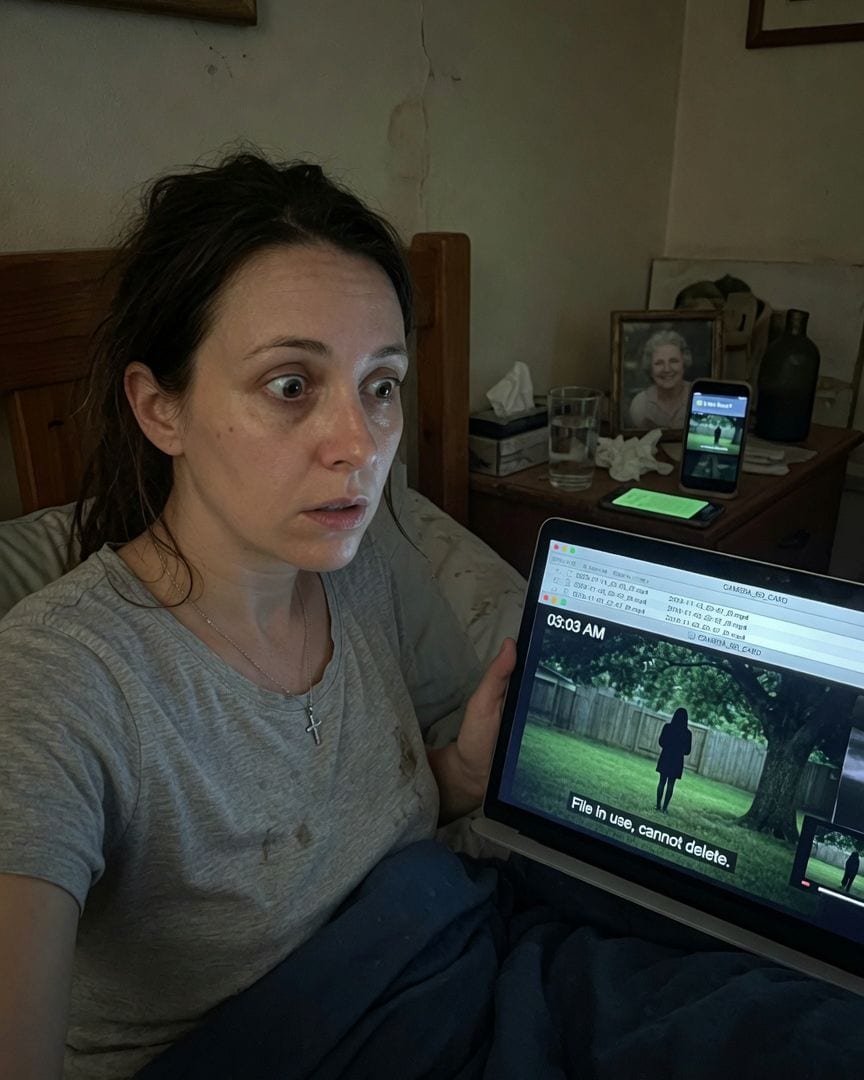
My security camera emailed a clip at 3:03am: a woman stood in the garden, back to the house. The subject line read 'Is this Mum?' My mother died in March. I can't delete the file.
My security camera sent an alert at 3 AM: 'Is this Mum?' But my mother, Constance, died in March. The grainy clip showed a woman in the garden, perfectly still, her back to the camera. The impossible question coiled a sick dread in my gut.
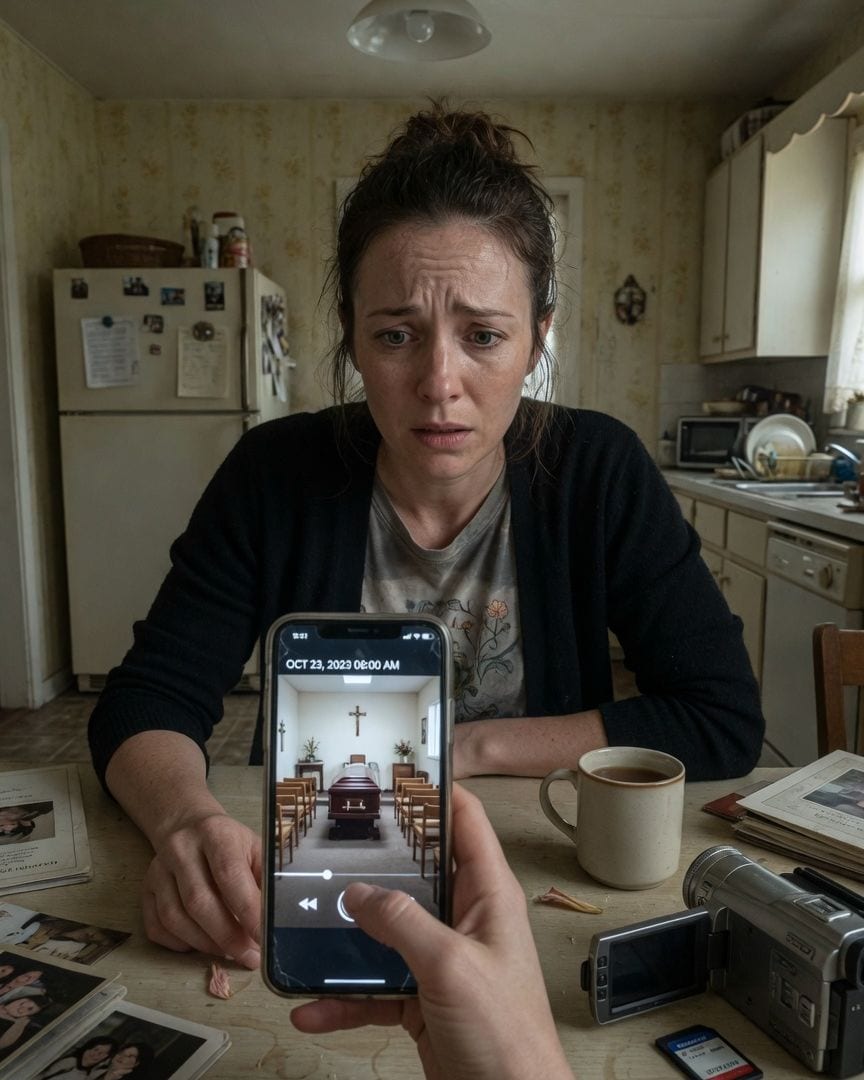
On my dead mother's phone I found a video of her funeral — steady, shot from the back over the mourners' heads, holding on her coffin. The timestamp says it was filmed an hour before any of us had arrived.
Days after my mother's funeral, I sifted through her digital life, hoping for comfort. Instead, her old camcorder revealed a video of my living room, timestamped for tomorrow morning. The abstract landscape I'd just hung was already there, waiting on the wall, a cold dread tightening in my gut.
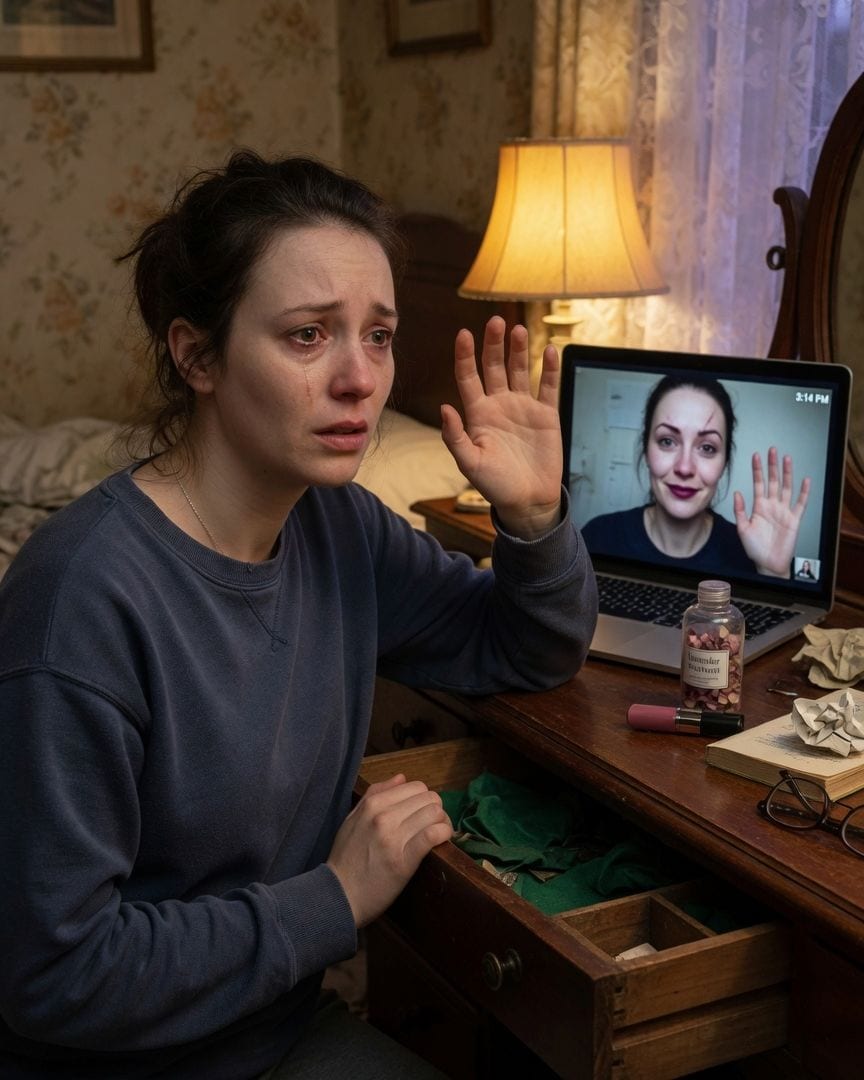
My mother waved with her right hand, both times, on our first call after she came home. She always waved left.
My mother vanished three months ago, then came back. On our first video call, she waved goodbye, but not with her usual left hand. It was her right, a small gesture that twisted something cold in my stomach.
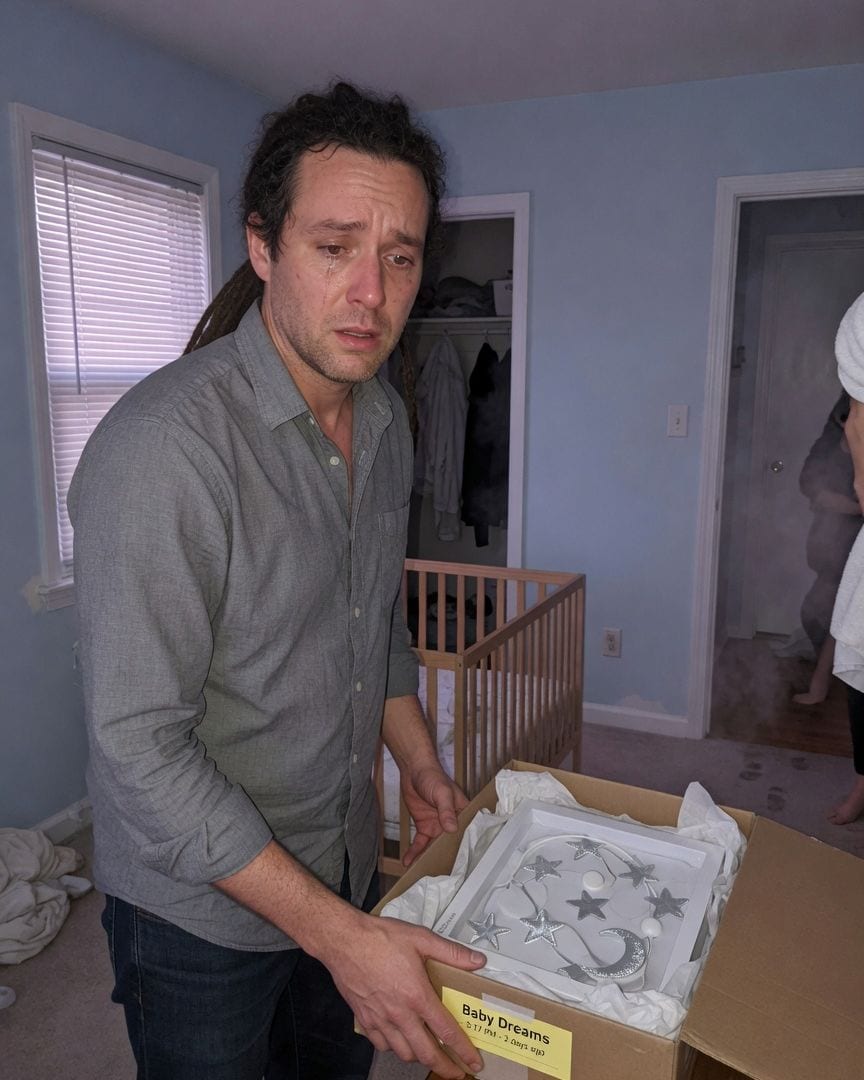
My wife thanked me for the pale blue nursery. We have no child. She described the mobile I'd only imagined, then asked when it would arrive.
Sylvia returned exactly one year after her disappearance, a miracle I could barely believe. But her first words about a nursery I'd only ever imagined, complete with a specific mobile, sent a shiver down my spine. That mobile, a private fantasy, arrived two days ago, and she just asked why it was late.
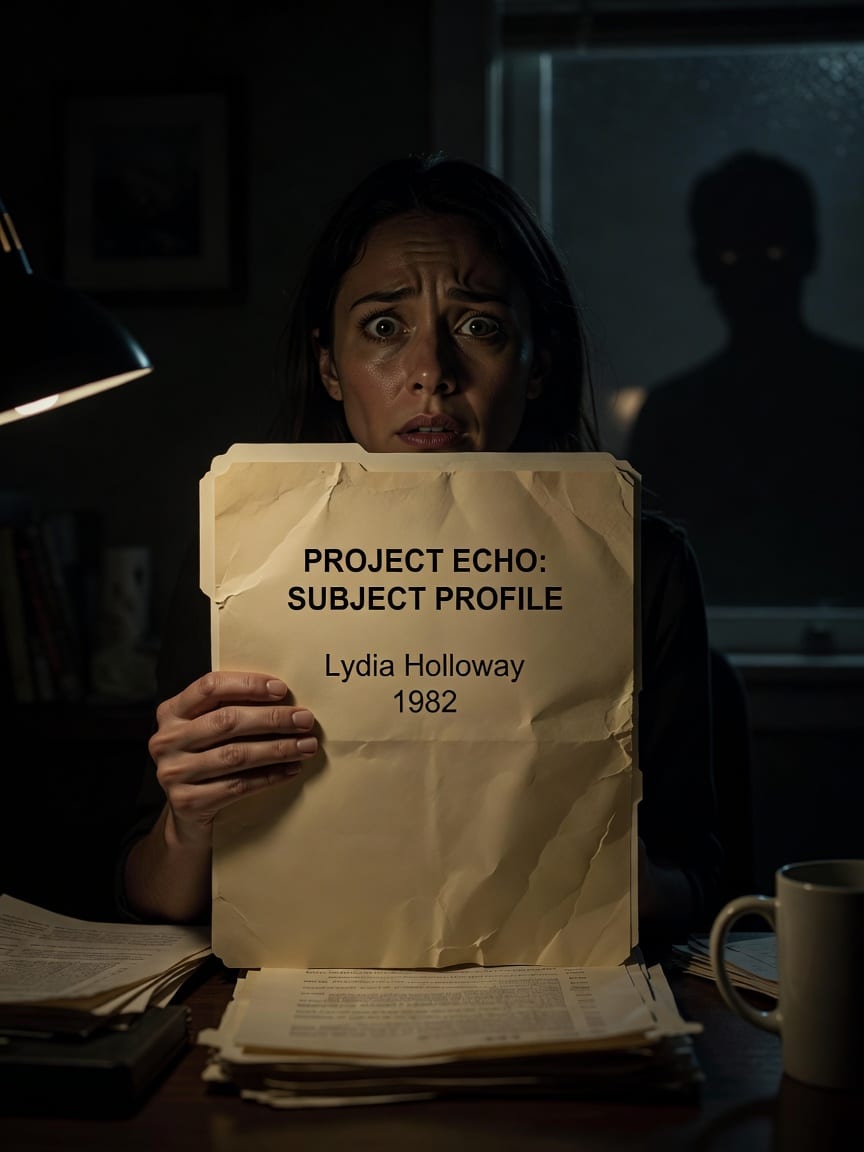
My own signature is on a Baltimore police report for a hit-and-run I never witnessed. The officer remembers my university sweatshirt.
I was settling into a quiet Tuesday evening when Baltimore PD called, asking about a witness statement I supposedly gave. They described my faded green university sweatshirt, seen at a hit-and-run last Friday. But my sweatshirt was in my dresser, and I was home in Seattle.
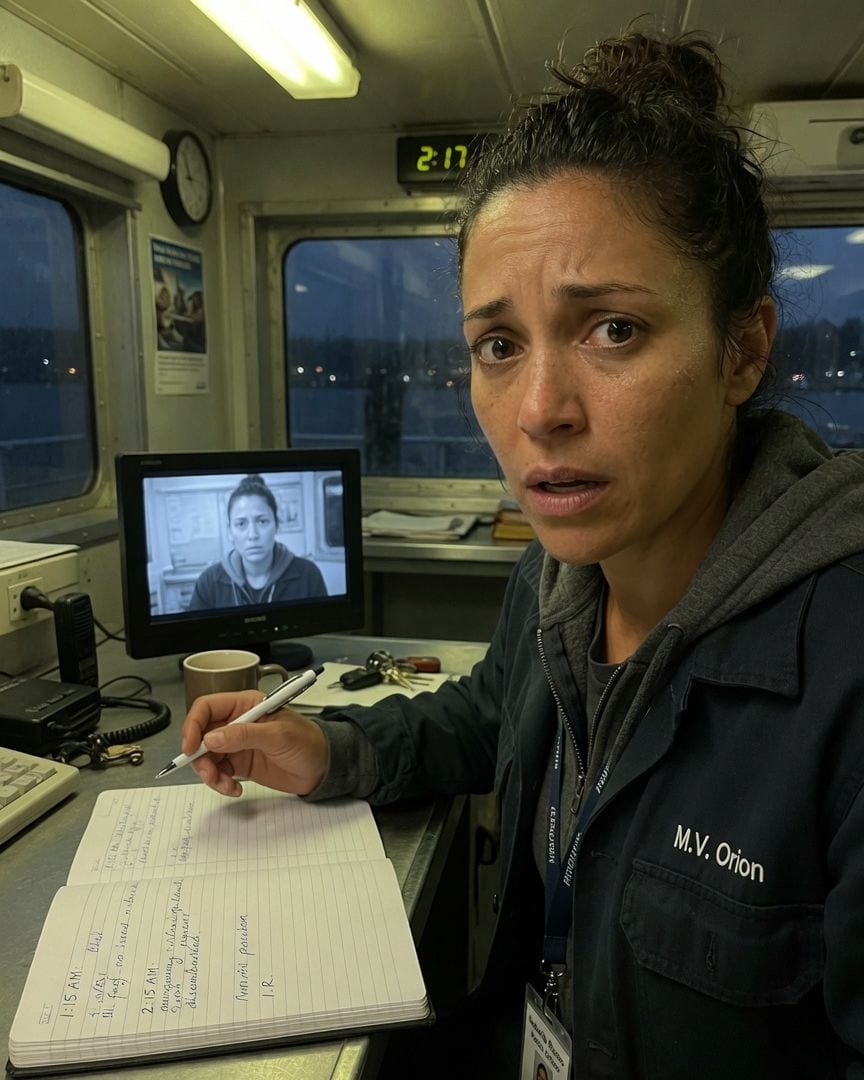
My security camera showed my own face at 2:15 AM, writing an entry I didn't make, staring utterly blankly into the lens before the screen flickered.
As a meticulous watchman on the M.V. Orion, I was making my routine 2:00 AM log entry when I found a previous one I hadn't written. Timestamped 2:15 AM, it stated a 'foot passenger disembarked' with my own initials beside it. But the ferry was dark, silent, and completely empty.