A wreck-hunter found the Cold War B-29 lost in 1945. Its upper escape hatch was open, from the inside.
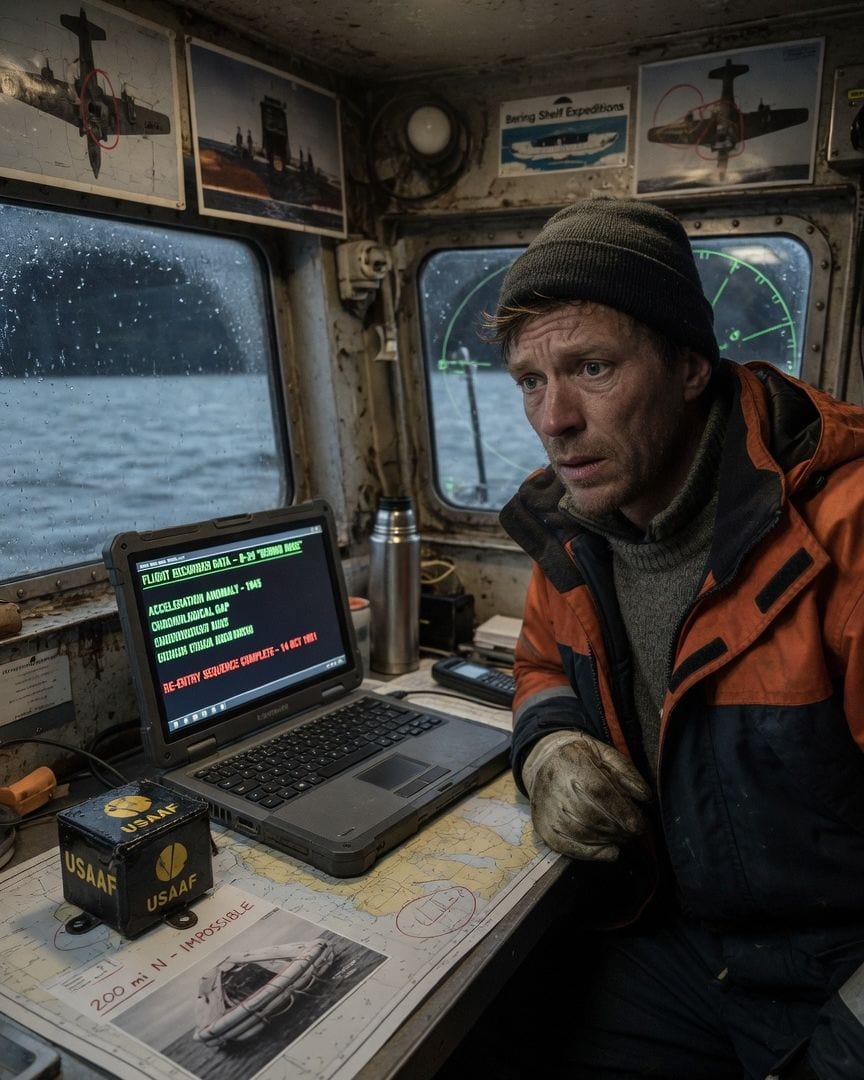
The chill of the Bering Shelf was a familiar ache in Sten Höglund’s bones, but the tremor he felt now was colder, deeper.
For four days, his chartered boat had cut through the grey water, the sonar pinging methodically, a promise he’d made to his aunt Vivian almost a lifetime ago.
She was 98 now, and still, after all these years, she’d never accepted the telegram about the B-29 bomber lost with eleven men in 1945.
Sten, a wreck-hunter by trade, had always been drawn to the loose threads of history, the stories the ocean kept. This one, however, felt less like history and more like a wound that refused to close.
The sonar found her on the third day, a ghost in the mud plain, impossibly intact. ‘The Bering Rose,’ the screen read, clear as day.
A B-29, exactly where the historical records, confirmed by his aunt’s fading memory, said she should be. But when the drop camera descended, its powerful lights cutting through the abyssal dark, what it showed Sten made his rational mind reel.
The bomber lay perfectly upright, seemingly undisturbed by the crushing pressure, save for one detail. Her upper escape hatch, on the fuselage, was not merely dislodged or damaged. It was open. Open from the inside.
And the life raft, meant to be stowed right there, was gone.
Sten replayed the footage, zooming in on the hatch, then pulling back to confirm the empty stowage. Open from the inside. It implied the crew had left, not died in the crash.
A slim thread of hope, for his aunt’s sake, but it snagged almost immediately. If they’d escaped, where had they gone? The Bering Sea in 1945 was no place for a leisurely row.
His mind flashed to a detail from his pre-charter research, a seemingly unrelated anecdote.
David Lambert, a grizzled Fish and Game pilot in his late fifties, had mentioned photographing a derelict life raft on a remote gravel bar two hundred miles north of Sten’s current position, just the summer before.
Lambert had thought nothing of it, just another piece of ocean debris. Sten had filed it away as an interesting but irrelevant curiosity.
Now, it clawed at him. He called Lambert on the satellite phone. ‘That raft, Dave. You remember it clearly? Any markings?’ Lambert, after some prodding, remembered a faded stencil: ‘B-29, US Army Air Forces.’
And, more importantly, a sealed, water-resistant survival log tucked inside. Lambert had taken it, out of habit, and it was now gathering dust in a box in his hangar. Sten felt a cold knot tighten in his gut.
He knew, with a certainty that defied reason, that the log was the key.
He arranged for a bush plane to fly the log to him at the nearest remote landing strip, a tiny gravel patch a day’s boat ride away. When it arrived, sealed in a plastic bag, Sten tore it open.
The log was meticulously kept, entries in a steady hand, detailing rationing, weather, and a desperate hope for rescue. Then he found it. The last entry, dated two weeks after the bomber was officially lost, listed a position.
Sten plotted the coordinates on his chart. It was indeed two hundred miles north, exactly where Lambert found the raft.
But it was also hundreds of miles beyond the operational range of the B-29, far past where she could have possibly flown before losing fuel. The ordinary explanation – the crew escaped and drifted – died a cold, swift death.
The bomber couldn’t have reached that far. The raft couldn’t have drifted that far.
The next morning, Sten knew what he had to do. He couldn’t leave the bomber. Not yet. He suited up, descending again into the crushing blackness, his submersible lights piercing the gloom around ‘The Bering Rose.’
The open hatch was a silent maw, a testament to an impossible departure. He navigated the camera drone into the fuselage, the interior eerily preserved. The crew’s personal effects, scattered, but nothing indicating a violent end.
He searched for the flight recorder, a sturdy black box designed to survive anything. He found it in the tail section, surprisingly accessible. He carefully retrieved it, bringing it back to the surface. It was heavy, cold, and utterly mundane.
Back on the boat, he set up his diagnostic equipment, a specialized laptop and interface. He connected the flight recorder, a knot of anticipation and dread tightening in his stomach. The screen flickered, then resolved.
Not a crash sequence, but a series of impossible accelerations, then a chronological void, and finally, a re-entry trajectory that concluded not in 1945, but in 1951.
Sten stared at the screen, the year ‘1951’ glowing in stark relief against the black data. He ran the diagnostic again, then a third time. The results were identical.
The flight recorder from ‘The Bering Rose,’ a bomber officially lost in 1945, contained data indicating it had somehow ‘re-entered’ the atmosphere six years later. It defied every known law of physics, every piece of aviation history he knew.
He uploaded the raw data, stripped of any identifying information about the bomber, to a secure forum for aviation forensic experts he trusted. He waited.
The responses trickled in, a mix of disbelief and technical jargon failing to mask utter confusion. ‘Corrupted data.’ ‘Sensor malfunction.’ ‘Impossible.’
One expert, a retired Air Force flight dynamics specialist named Maxwell Bennett, privately messaged him: ‘I’ve seen anomalies, but nothing like this. This isn’t a malfunction, Sten. This is… a different kind of physics. Or a very, very elaborate fabrication.’
The word ‘fabrication’ resonated. If the data was real, and it wasn’t a malfunction, then someone, somewhere, knew. Someone had documented this impossible event and then hidden it.
The secrecy machine his niche often hinted at, but rarely revealed, was now humming in his ears. Sten knew his next step couldn’t be about the bomber’s mechanics. It had to be about the records.
If this was a cover-up, there would be a paper trail, however faint. He started with the most mundane request: official declassified records pertaining to ‘anomalous aerial phenomena’ in the Bering Sea region between 1945 and 1960.
He used his connections, leveraging his reputation as a meticulous researcher. It was a long shot, a bureaucratic black hole, but he had to try.
The four days of his charter were ticking down, but the dread of what he’d found eclipsed any concern about deadlines. He felt a chilling certainty that the answers weren’t in the mud, but in the archives.
He downloaded every public record, every obscure report, every single mention of anything out of place in the vast, empty expanse of the Bering.
He wasn’t looking for UFOs; he was looking for the official hand that had tried to erase one.
Sten spent the next day and a half glued to his laptop, the boat rocking gently on the swells, a contrast to the churning unease in his mind.
He cross-referenced names, dates, and locations from the flight recorder’s impossible data with the hundreds of pages of declassified documents he’d managed to pull. Most were innocuous, weather reports, fishing vessel logs, routine military exercises.
But then he found a pattern. A series of redacted reports from a remote radar station on St. Lawrence Island, dated 1950-1952, referenced ‘unidentified atmospheric contacts’ – ‘UACs’ – moving at speeds and altitudes that defied conventional aircraft.
The reports were heavily censored, but the coordinates occasionally overlapped with the general area of the bomber’s recorded ‘re-entry.’
He focused on these reports, searching for any names, any clues. That evening, as he was about to make another call to a contact in the National Archives, his satellite phone buzzed. An unknown number. He answered.
A calm, modulated voice, distinctly feminine, spoke. ‘Mr. Höglund. We understand your interest in the ‘Bering Rose’ incident. It’s been officially closed for decades.’ Sten felt a prickle of cold sweat. ‘Who is this?’
he asked, trying to keep his voice steady. ‘Let’s just say we monitor certain… historical inquiries. Some files are best left undisturbed.’ The voice was not threatening, but it carried an undeniable weight of authority, a quiet implication of consequences.
‘The data I found suggests otherwise,’ Sten countered, feeling a surge of defiant adrenaline. ‘The data you found is incomplete, Mr. Höglund. And potentially misleading. We advise you to conclude your charter and return to port.
Your aunt’s peace of mind is paramount, isn’t it?’ The call disconnected. Sten gripped the phone, his blood running cold. They knew about his aunt. They knew about his motivation. He wasn’t just pulling a thread; he was being watched.
The secrecy machine wasn’t a dusty archive; it was a living, breathing entity.
The warning galvanized Sten, hardening his resolve. He wasn’t just dealing with a historical puzzle; he was challenging a system that actively protected its secrets.
He aborted his charter, making for the nearest port, then caught the fastest flight south, carrying the flight recorder and the survival log like sacred, dangerous relics. He headed straight for Washington D.C., specifically, the National Archives.
He had a name: Walter Walsh, a retired archivist known for his encyclopedic knowledge of declassified military records, a man who, rumor had it, knew where all the bodies were buried, metaphorically speaking.
Walsh was a man in his late sixties, with sharp, intelligent eyes that missed nothing. Sten met him in a quiet, out-of-the-way coffee shop, choosing a public but discreet location.
He laid out the flight recorder data, the survival log, and the redacted radar reports. Walsh listened, his expression unreadable, occasionally nodding.
‘Impossible acceleration, a temporal void, a 1951 re-entry… And a raft log with coordinates beyond its range, dated two weeks after the official loss,’ Walsh murmured, tapping a finger on the table. ‘And the hatch open from the inside. Yes.
It all fits.’ Sten leaned forward. ‘Fits what? What happened to ‘The Bering Rose’?’
Walsh took a slow sip of his coffee. ‘The military called them ‘Thing on the Scope’ events. Not UFOs, not aliens, never that. Just… things. Things that defied physics, things that appeared and disappeared, things that sometimes… processed objects.
Like your bomber.’ He explained that a small, highly compartmentalized unit was established in the late 40s, early 50s, to track these ‘Things.’ ‘They didn’t try to fight them, Mr. Höglund. They tried to understand them.
And when they couldn’t, they tried to bury them. To unhappen them.’ He paused, his gaze meeting Sten’s. ‘The ‘Bering Rose’ wasn’t lost, Mr. Höglund. It was… taken. And then, it was returned.
Not by a rescue mission, not by human hands. The flight recorder data, as impossible as it seems, is real. It’s a record of the ‘Thing’ moving it, processing it.
The crew… some of them made it out, into the raft. But they weren’t rescued either. They were observed. Monitored. Their survival log became part of the ‘file.’
The ordinary explanation, that the crew escaped and drifted, was only a half-truth. They escaped the bomber, yes, but into something far more intricate and cold.
Sten felt a dizzying mix of horror and vindication. The pieces clicked into place, not as a random puzzle, but as a coherent, terrifying pattern.
The open hatch, the impossible log, the 1951 re-entry – all were traces of this ‘Thing on the Scope,’ and the military’s relentless campaign to ‘unhappen’ it. ‘What about the call I received?’ Sten asked, describing the calm, warning voice.
Walsh nodded slowly. ‘They know you’re digging. They always know. This unit, the ‘secrecy machine,’ as you called it, is still active. It doesn’t just bury; it observes.
It monitors those who get too close, and those who have a… connection.’
Walsh then slid a faded, heavily redacted memo across the table. It was titled ‘Operation BERING ROSE Aftermath Protocols.’ Most of the text was blacked out, but Sten could make out sections on ‘containment procedures’ and ‘asset monitoring.’
Walsh pointed to a specific paragraph. ‘This section here… it outlines the long-term observation of individuals connected to ‘Thing on the Scope’ events. Not just the crew, but their families. Anyone who might retain an ‘unusual perspective’ or ‘unexplained knowledge.’
He tapped a line in a list within the paragraph. ‘Family Contacts, Post-Event Monitoring.’ Sten’s eyes scanned the list, his breath catching. There, under Höglund, was Vivian. His aunt. And then, a few lines below, his own name: Sten Höglund.
Dated last month.
Sten’s vision swam. His own name. Dated last month. He gripped the memo, his knuckles white. ‘My name? How? Why?’ Walsh looked at him with a grim sympathy. ‘Your aunt, Vivian. She never accepted the telegram.
That made her an anomaly. Someone who retained ‘unexplained knowledge,’ as the file puts it. She was monitored for decades. And you, Mr. Höglund, by pursuing her quest, by finding the bomber and its impossible records, you inherited that interest.
You made yourself relevant to the file. You were added.’
Walsh explained that the ‘Thing on the Scope’ wasn’t destructive in the conventional sense. It ‘collected’ things. Airplanes, ships, sometimes even small groups of people.
It would take them, process them, and then, sometimes, return them, subtly altered, or in impossible states, as a kind of byproduct. The bomber’s re-entry in 1951 wasn’t a crash; it was a deposition.
The crew in the raft, with their impossible coordinates, had been part of a similar process. They were ‘returned,’ but not to their original lives.
The secrecy machine’s purpose wasn’t just to hide; it was to manage the ‘returns,’ to ensure they didn’t disrupt the fabric of reality too much, and to monitor anyone who might gain insight into the ‘Thing’s’ operations.
‘Your aunt, Vivian, she likely had contact with one of the returned crew, or a family member of one. Perhaps even Samuel Drummond, the co-pilot. She knew something was wrong, something beyond a simple crash.
And that made her a node in the network. You, now, are another node. The file isn’t just a record of past events, Mr. Höglund. It’s a living document. And it’s still being signed.’
The dread settled over Sten, cold and absolute. He wasn’t just investigating a historical anomaly; he had become part of its ongoing, terrifying present.
Sten realized the full horror: he was now a marked man, a data point in a file that stretched back decades and forward into an unknowable future.
He called Nina Pierce, the government liaison who had handled his initial declassification requests, the one who likely had made the warning call. He met her in a sterile, windowless office deep within a federal building. She was calm, unyielding.
‘You know too much, Mr. Höglund. You’ve seen the data, seen the file. What do you intend to do?’ Sten looked at the flight recorder, now sitting on the table between them, a silent, undeniable artifact.
‘I intend to publish it,’ he said, his voice firm, though his hands trembled slightly. ‘To show the world what this ‘Thing on the Scope’ is, and what your ‘secrecy machine’ has been doing.’
Nina Pierce smiled, a faint, unsettling curve of her lips. ‘You think that will stop it? Or change anything? The public prefers a neatly filed explanation. A crash. A loss. They don’t want the truth of things that defy explanation.
And the entity… it continues its work, regardless of what’s published. You’ll simply become a more active part of the file.’
She pushed a thick, sealed envelope across the table. ‘This is your official clearance, Mr. Höglund. Effective immediately. You are now authorized to view a selection of additional materials related to ‘Thing on the Scope’ events.
Your expertise in deep-sea recovery will be… invaluable.’ Sten felt a cold dread seep into his bones. This wasn’t a confrontation; it was an absorption. They weren’t stopping him; they were recruiting him.
He was being folded into the machine, his knowledge and drive now serving the very entity he sought to expose. The artifact, the flight recorder, was real, dated, checkable, and it had killed the ordinary explanation for good.
But the truth hadn’t freed him. It had claimed him. He was no longer a wreck-hunter; he was a ‘node,’ a cog in a system he couldn’t comprehend, tasked with finding more pieces for the file.
Sten Höglund sold his boat, closed his small business, and moved to a nondescript apartment in Arlington, Virginia. His aunt Vivian passed away peacefully a few months later, her last words a whispered, ‘He came back.’
He never saw David Lambert again. Nina Pierce became his primary contact, assigning him tasks, coordinating his access to new files, new sites. He became an auditor of the impossible, a quiet agent for the ‘secrecy machine.’
He was given access to sealed reels of audio from 1945, recordings of Samuel Drummond’s voice, the co-pilot, describing impossible lights and movements before the bomber was taken.
The voice was calm, almost detached, detailing the ‘Thing’s’ operations, as if it were a scientific observation. The final entry on the tape was Drummond reading his own service number back to the operator, a chilling echo of being filed.
The dread never left him. It simply became familiar, a constant hum beneath the surface of his new, orderly life. He understood now. The ‘lost’ were never lost. They were filed. And the file was still being signed.
He was signing it now, in his own way, with every new artifact located, every new impossible event documented.
His new neighbor, Leonard Walsh, often saw Sten sitting by his window late at night, staring out into the dark. ‘Still working on those old records, Sten?’ Leonard would ask kindly.
Sten would turn, a faint, wrong little smile on his face. ‘Always, Leonard. Always.’
If this one got to you
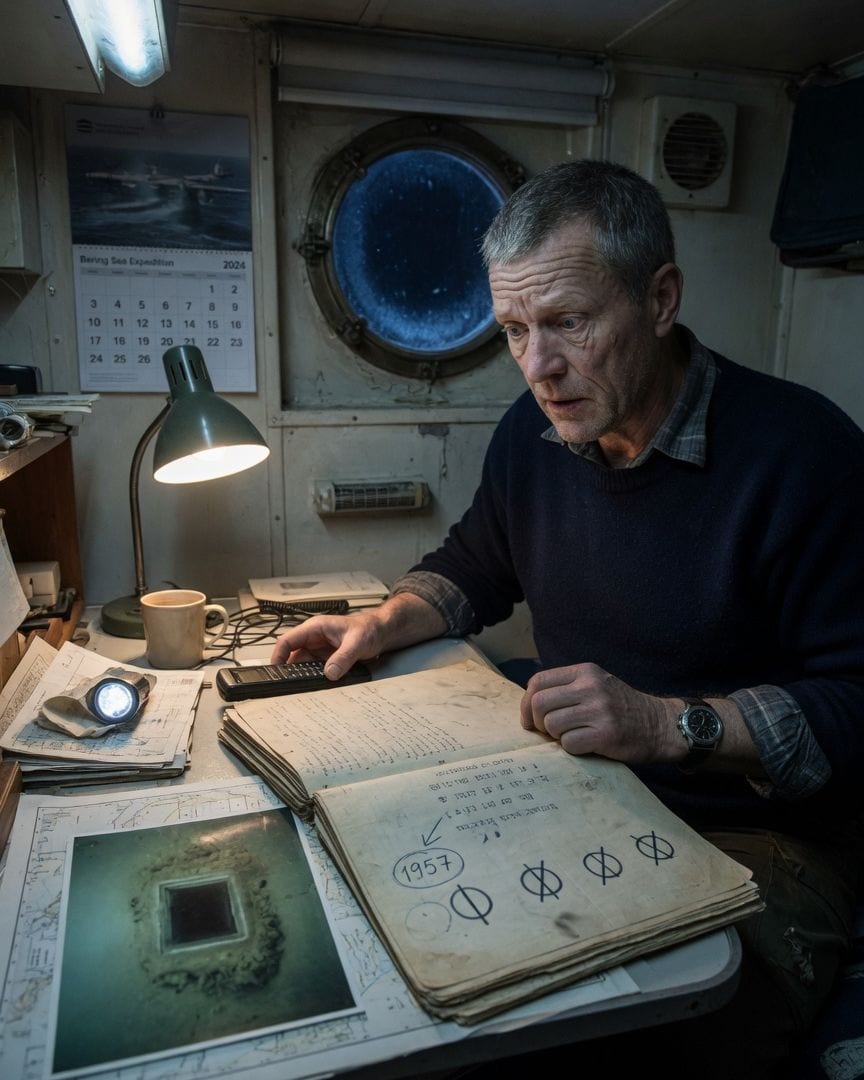
A wreck-hunter found his uncle's lost B-29 bomber. Then a Cold War log appeared, dated 1957, listing impossible coordinates.
Sten Höglund, a dedicated wreck-hunter, navigated the choppy Bering Sea, his quest driven by his aunt’s lingering grief for her brother, Roy Sinclair, lost with his B-29 bomber in 1945. After four days, Sten’s sonar finally located the intact plane, 300 feet below. As his camera explored the eerily preserved fuselage, he saw the upper hatch was open from the inside, with no life raft visible. Yet hours spent replaying the footage offered no rational explanation. Then, a call from a retired pilot revealed a survival raft found in 1999, hundreds of miles north. Inside was a meticulously kept Cold War log, dated 1957, listing coordinates far beyond the B-29’s range. How could a log from twelve years after the crash, found so far away, be tied to his uncle's lost plane?
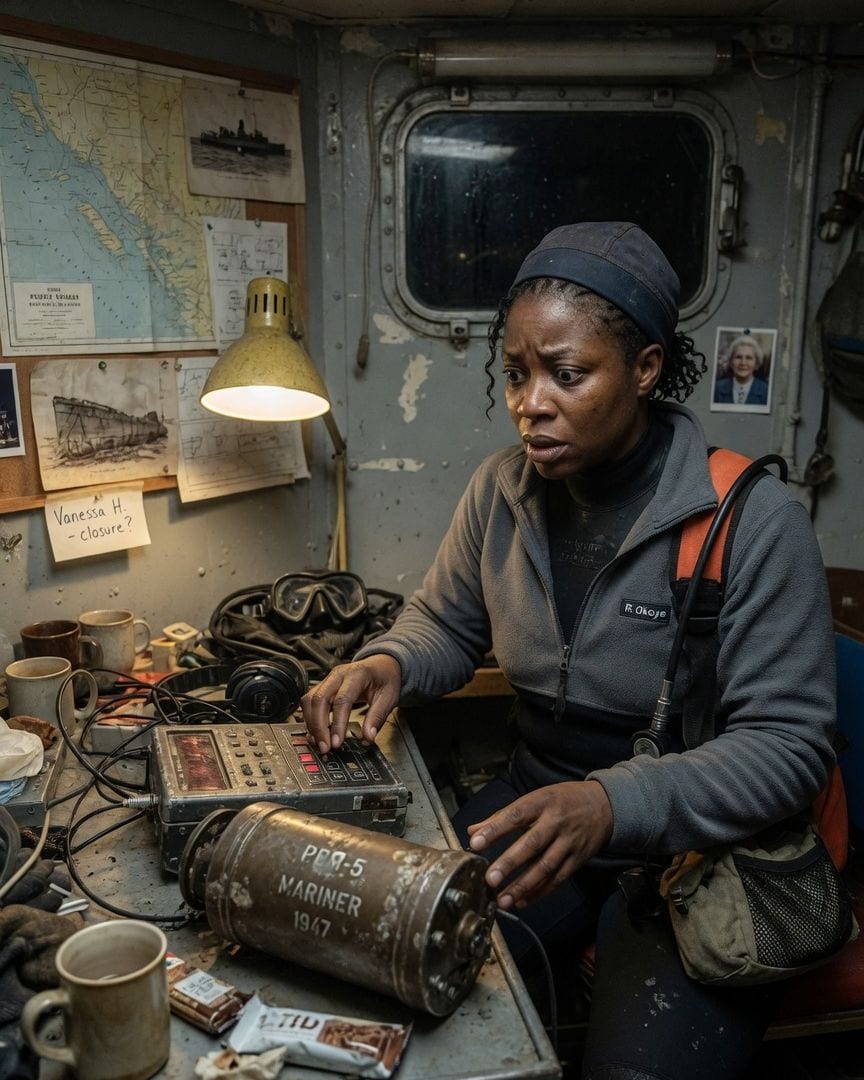
Salvage diver Ruthann found a 1947 bomber's bomb bay meticulously empty. Then the flight recorder played the Cold War pilot saying, 'Transfer confirmed.'
Salvage diver Ruthann Okoye plunged into the murky, cold Puget Sound, hoping to find closure for a pilot's granddaughter exploring a 1947 patrol bomber wreck. As her lights cut through the gloom, she discovered the bomber's bomb bay doors wide open and its ordnance racks meticulously empty. Her dread deepened finding all six arming pins neatly collected in a canvas bag, implying precise, unhurried removal before the plane went down. But the true unease arrived with the flight recorder, where the pilot's calm voice stated, 'Transfer confirmed,' just before an unsettling mechanical thump-thump-thump began. What was transferred from a plane supposedly lost in a gale?
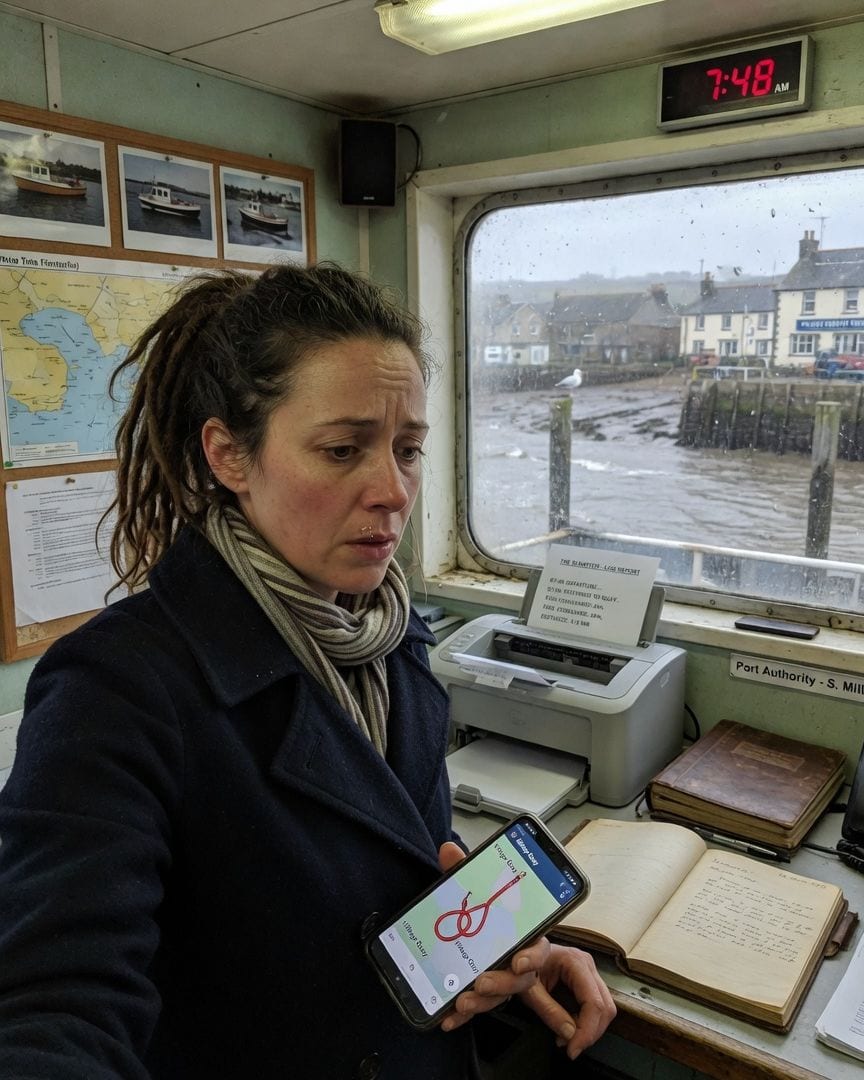
My morning ferry crossed for 40 minutes. The destination town just disappeared.
I board 'The Seawitch' every Tuesday for the familiar eight-minute estuary crossing. But this morning, after making good time, Captain Bernard and I watched the town quay simply fail to appear. Instead, our ferry repeatedly returned to the very same village quay we'd just left, despite burning fuel and advancing the clock.
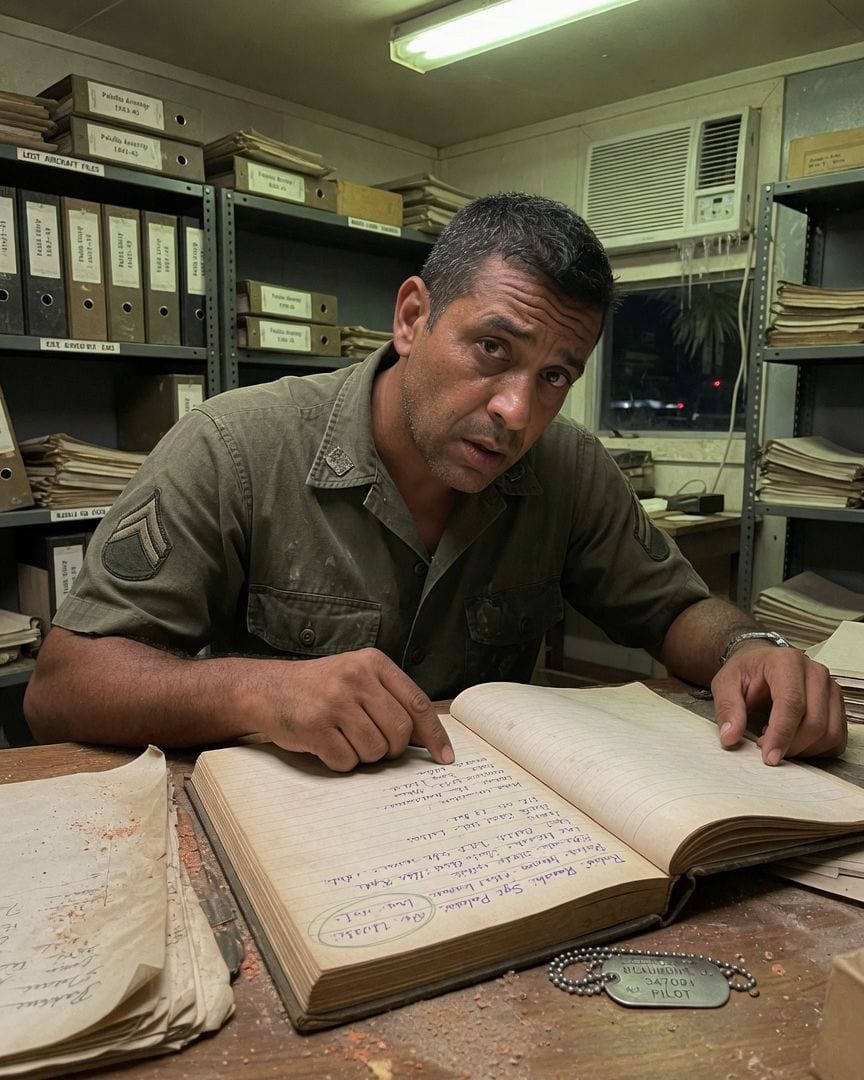
A sergeant's last watch on a forgotten outpost: His own name appeared on an 80-year-old crash manifest.
Sergeant Leon Pulaski spent his last night at the remote Peleliu Atoll Airstrip, its final closure imminent, listening to the rhythmic sigh of the Pacific. Just after 0330, a garbled distress call pierced the silence, requesting the field for a plane with a tail number, 'Ghost Two-Niner-Niner,' retired since World War II. Though Pulaski, disciplined and rational, logged the impossible call as a phantom, the crash crew later found a fresh gouge in the coral and a shard of cockpit glass, still warm, where no wreck existed. His quiet unease only deepened when he discovered a dog tag belonging to a pilot declared lost eighty years prior. But the true chill landed when he found his own name on that same eighty-year-old crash manifest.
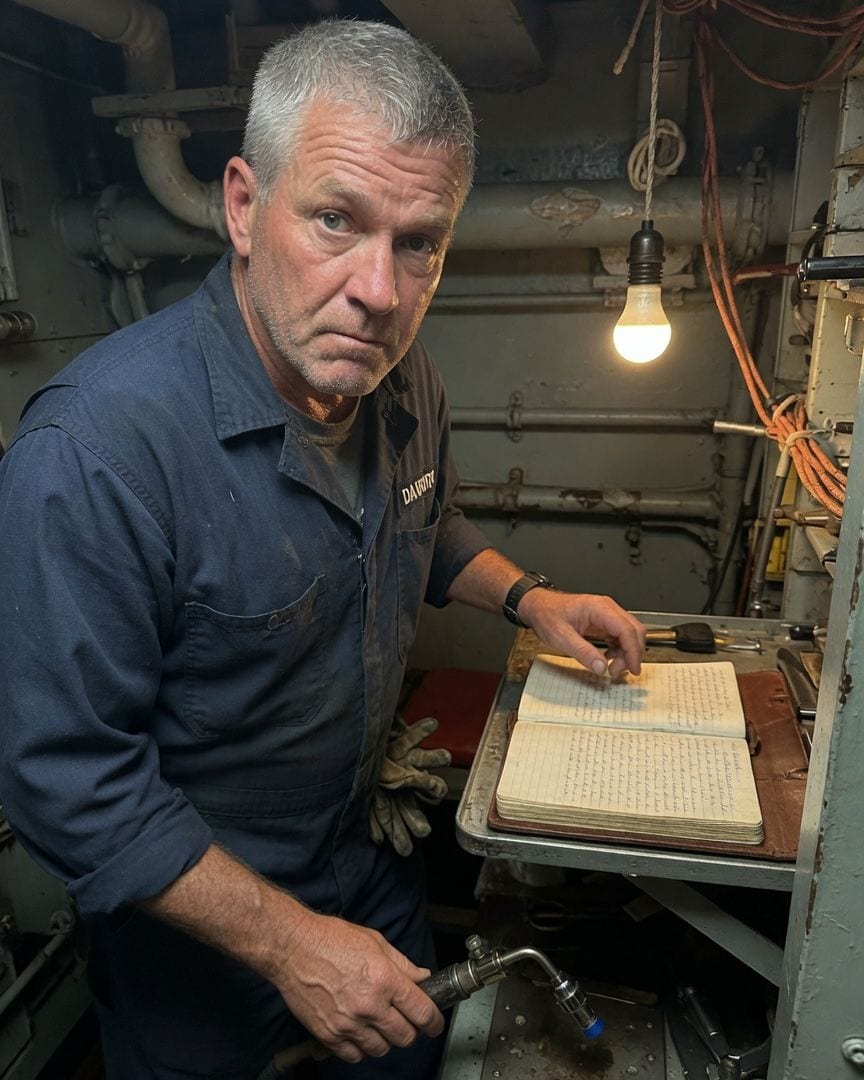
A week from shore duty, Chief Danforth cut a hatch where his ship's plans showed solid steel. An hour later, the wall was seamless, but the Cold War logbook from inside appeared under his mattress.
Chief Petty Officer Raymond Danforth, just a week from ending three decades of service, was intimately familiar with every pipe and plate of the guided-missile destroyer Weatherall. During a mid-cruise overhaul, his gloved hand found a sealed hatch where schematics promised only a solid bulkhead. He cut through the impossible seam to reveal a small, dry compartment, softly lit, containing a logbook filled with an unsettlingly familiar hand. When he returned an hour later with a witness, the hatch was gone, the wall seamless. Later that night, the same logbook appeared beneath his mattress, its pages revealing an entry: 'Petty Officer Howard Montgomery, missing, 1972.' How could a compartment vanish, yet leave its secrets behind?
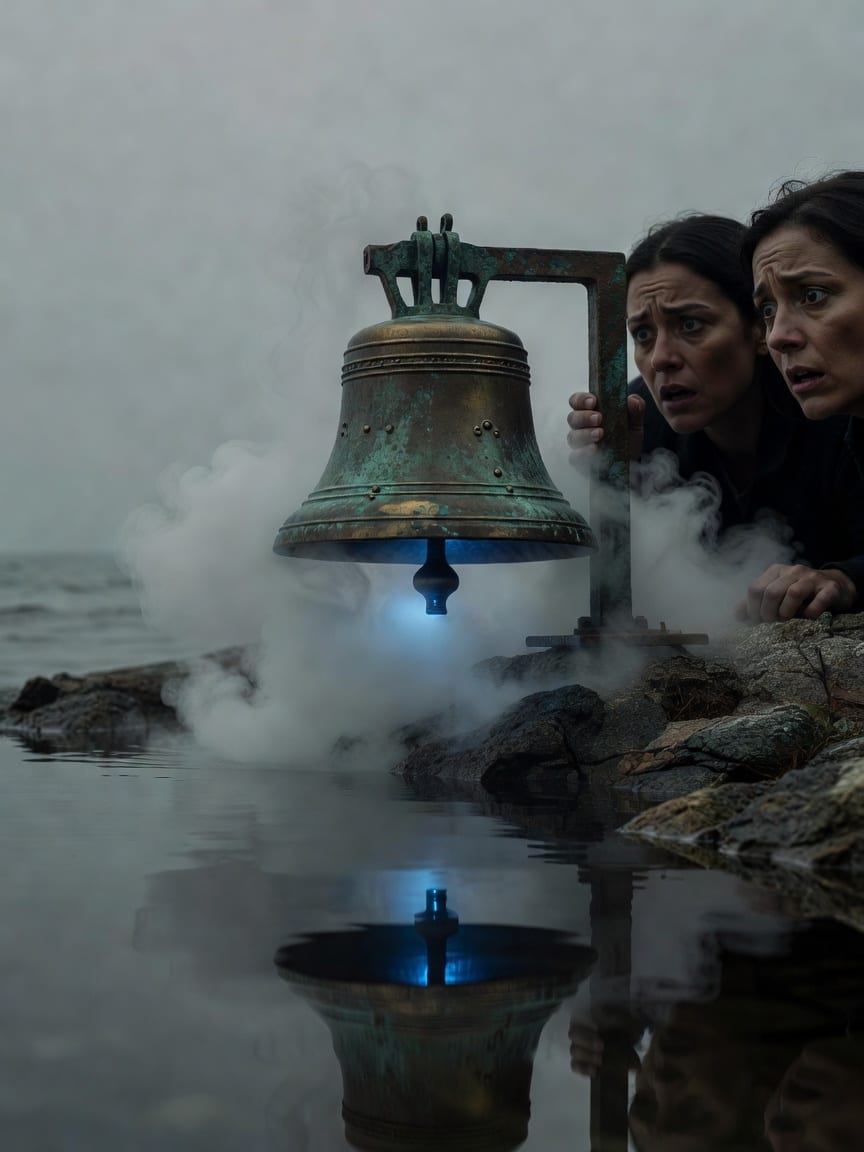
The fog bell on the point rings itself on still nights. The framed log at the yacht club lists eleven calm evenings it rang – each entry beside a boat that never came home.
Moving to a quiet coastal town, I found myself drawn to an old logbook at the yacht club. It recorded the fog bell ringing on flat-calm nights, each instance tied to a boat that simply vanished. Then, I found my own boat's name, 'The Osprey,' penciled at the bottom, marked with an unfinished, cryptic symbol.