A wreck-hunter found his uncle's lost B-29 bomber. Then a Cold War log appeared, dated 1957, listing impossible coordinates.
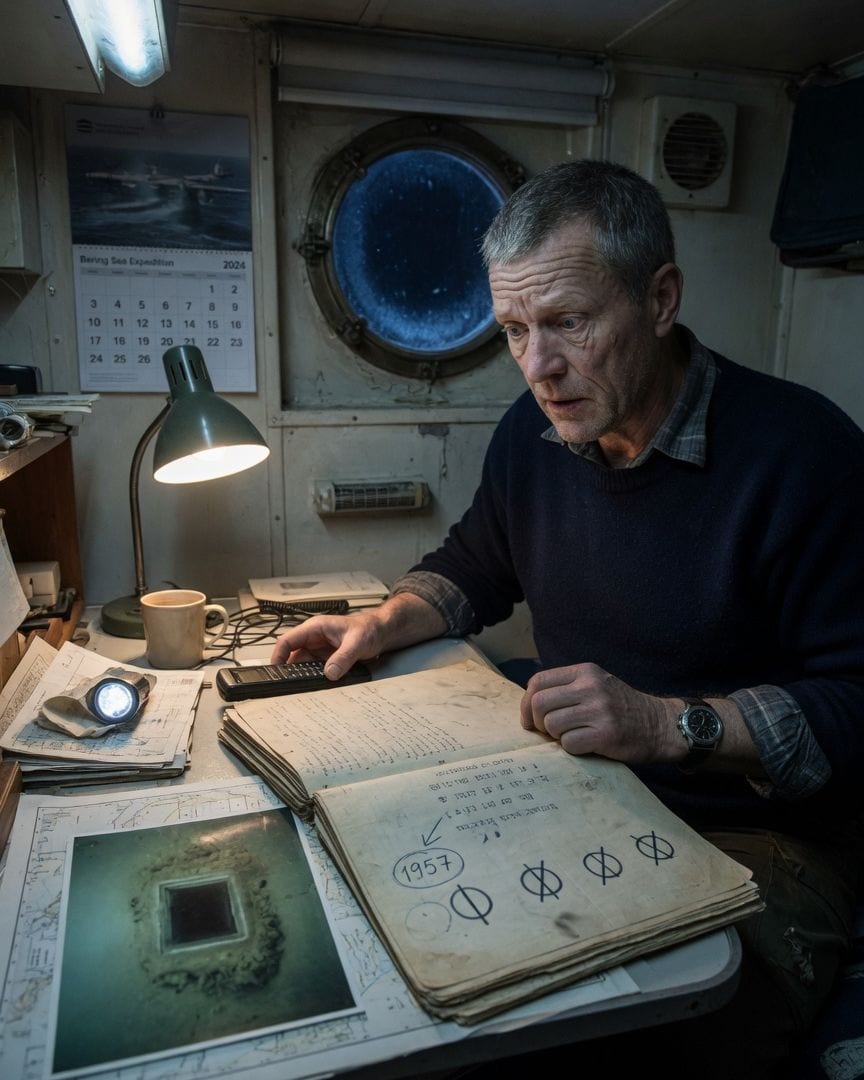
Sten Höglund, a methodical wreck-hunter in his early fifties, navigated his chartered vessel through the choppy, slate-gray waters of the Bering Sea.
For four days, the cold wind had whipped across the deck, stinging his cheeks, but Sten’s focus remained on the sonar screen.
He was here for his aunt, for the B-29 bomber her brother, Roy Sinclair, had piloted, lost with ten others in 1945. The official telegram, received decades ago, had never settled in her heart. Today, the sonar finally sang.
A clear, intact shape on the mud plain, 300 feet below. The drop camera descended, its powerful lights cutting through the murky green. The bomber was there, eerily preserved, a ghost in the deep.
The water, a silent, cold guardian, held it perfectly. But as the camera panned over the fuselage, Sten saw it: the upper hatch, normally dogged shut, was open. A dark, empty rectangle, like a mouth.
No life raft was visible in its stowage. He zoomed in, checking for damage, for signs of a break-in, but there was nothing. Just the hatch, open from the inside.
Sten spent hours replaying the footage, trying to rationalize the open hatch. A structural failure? Unlikely, given the bomber’s otherwise intact state. A rogue current? Impossible to force a hatch open from within.
He considered an earlier, unrecorded salvage, but the plane showed no other signs of disturbance.
The only sign of the plane's long immersion was a thin, fine layer of silt that seemed to cling to every surface, undisturbed around the hatch's edges.
His thoughts were interrupted by a call from Joel Thatcher, a retired Fish and Game pilot in his early forties when he made a find back in 1999. Joel had seen Sten’s initial news release about the B-29 discovery.
“That bomber you found,” Joel’s voice crackled over the satellite phone, faint and distorted by the distance. “It reminded me of something.”
Joel recounted finding a survival raft on a remote gravel bar two hundred miles north of Sten’s current position. He’d photographed it, then thought nothing more of it. “There was a log inside,” Joel added, his voice clearer now.
Sten’s blood ran cold. He immediately arranged for a copy, paying extra for the expedited scan. The log arrived, a series of faded, typewritten pages with handwritten annotations, meticulously kept.
It described the desperate final days of a research vessel crew, battling storms. But the final entry, dated 1957, listed coordinates that placed the raft hundreds of miles beyond the B-29’s maximum fuel range.
And the date itself was twelve years after the bomber was lost. This log could not be from his uncle’s crew. It was a completely different mystery, yet somehow tied to the same impossible geography.
The cabin's heater, usually comforting, now seemed to blow only cold air.
Sten stared at the log’s final entry: latitude, longitude, and then the impossible year, 1957. The neat script detailed a position deep in the Bering, far north of the bomber’s known track.
This wasn't a clerical error, not a simple misfiling in a decades-old record. It was a direct contradiction to everything he knew about the B-29, a statement of defiance from the past.
He traced the coordinates with his finger, then saw it—hastily drawn next to the final position, a small, crude symbol: a circle with a single vertical line through it, repeated three times.
It wasn't a distress signal he recognized, nor any navigational marker in his extensive charts. It looked like a stamp, almost, deliberately placed. A cold certainty settled in his gut: this wasn't about an accident or a misfiled record.
This was about deliberate, impossible events. The dread was a physical thing, tightening in his chest, making the small cabin feel suddenly too small, too silent.
The symbol haunted Sten. He found himself sketching it on napkins, on the margins of his charts, trying to decipher its meaning. He cross-referenced the 1957 date from the log.
It belonged to the RV Isabella, a research vessel that had officially vanished in the Bering Sea that year, declared 'lost with all hands' due to rough weather.
The official report, when he finally obtained it, was concise, almost perfunctory, citing severe weather and a probable structural failure. But Sten’s experience told him that 'probable' was a word for things left unexamined.
Sten began to pull every declassified incident report he could find for the Bering, spanning from the late 40s to the 70s.
He noticed a pattern of official reports that contradicted physical evidence: a Coast Guard cutter’s distress beacon found miles from its last known position, its internal systems still humming; a fishing trawler’s entire catch found frozen solid in its holds but no crew, not even a trace of struggle; a submarine’s escape hatch found dogged from the inside with no crew present, the interior immaculate.
Each report offered a mundane explanation—currents, rogue waves, equipment malfunction—but the details never quite fit. The sheer number of these 'unexplained' incidents was unnerving, far too many to be simple coincidence or bad luck.
He needed an expert in buried records, someone who could see beyond the official narratives. Sten contacted Lydia Yates, a retired archivist in her late sixties known for her meticulous work on Cold War declassification.
She initially dismissed his theories, citing common misfiling and the challenges of historical record-keeping. But when Sten described the symbol and the internally-opened hatch of the bomber, her professional curiosity overrode her skepticism.
“A marking like that… in an official log? And a hatch from the inside?” she mused, her voice crisp over the phone. “That’s not standard procedure for a presumed loss, Mr. Höglund. Not at all.”
She agreed to help, promising to access her old network for a deeper dive into the Isabella’s file. The phone line seemed to hum with a new, subtle tension after their call.
Lydia, using her archived credentials, accessed a restricted section of the National Archives from her home office. The familiar click and whir of her old desktop computer filled the quiet room.
She found a folder on the RV Isabella that was far thicker than its official 'lost' status suggested. Inside, among standard manifests and recovery reports, was an internal, heavily redacted memo.
Its header, a stark, bold font, read: 'Bering Sector Anomalous Recovery Conditions – Cross-Reference Protocol.' The memo explicitly mentioned 'inconsistent timelines' and 'unconventional egress points' for multiple incidents, including the Isabella and, chillingly, a B-29 bomber from 1945.
It was a direct link, undeniable. Lydia’s fingers flew across her keyboard, attempting to download the memo, to save it, to secure this impossible connection. But before she could secure it, her access was abruptly revoked.
The screen flashed 'Access Denied,' a blocky red warning. The entire folder vanished from the database, replaced by a blank page. The fan in her computer seemed to whine louder, a sudden, sharp pitch. Minutes later, her private landline rang.
It was an unlisted number. Lydia hesitated, then answered. A calm, synthesized voice spoke, devoid of inflection, like a machine had been programmed to deliver a threat. “Ms. Yates. It would be advisable to let sleeping files lie.”
The line went dead. Lydia called Sten, her hand trembling slightly as she punched in his satellite number. “They know, Sten. Someone is watching. Someone who doesn't want these connections made.”
Sten felt a profound chill that had nothing to do with the Bering air. He was no longer just a hunter of wrecks; he was being hunted, or at least observed.
The scale of the cover-up, the sheer patience implied by the immediate response, was terrifying. The files weren't just buried; they were actively guarded, monitored from the shadows.
Sten tracked down William Vance, a former intelligence officer now in his late seventies, living in a quiet retirement home nestled among the redwoods of coastal Oregon.
Vance’s name appeared on several declassification review forms related to the Isabella and other Cold War-era disappearances.
Sten presented the log from the raft, the bomber footage showing the open hatch, and the details Lydia had gleaned from the redacted memo before her access was cut.
Vance, a thin man with sharp, unblinking eyes, initially remained impassive, offering boilerplate explanations about national security and Cold War paranoia. “These were sensitive times, Mr. Höglund. Misinformation was a tool. We had to protect assets, prevent panic.”
Sten pushed, describing the internally opened hatch, the impossible log entry that defied physics and time, the cryptic symbol. “These aren't misfiles, Mr. Vance. They’re contradictions. They're physical impossibilities.” Vance sighed, a sound like dry leaves skittering across pavement.
The quiet hum of the retirement home’s air conditioning seemed to drop a few degrees. “No,” he finally said, his voice flat, devoid of the practiced calm. “They weren’t misfiles. We didn’t lose them, Mr. Höglund. We filed them.”
He explained, without a flicker of emotion, that an “untraceable factor” was consistently removing assets from the Bering. Not enemy action, not natural phenomena. Just… removal. Clean, efficient, total.
The institution’s role, Vance clarified, was to “contain information, not the anomaly.” He confirmed the cryptic symbol was an internal 'filing mark,' used by a specific program to categorize these unique disappearances.
He described how the mark denoted something 'reclassified,' not just lost to the sea, but changed. “Your uncle’s bomber,” Vance said, looking Sten directly in the eye, his gaze unwavering, “it was one of the first.
The file contains the mark. We knew then, just as we know now, that some things are simply… processed.” The implications settled over Sten like the cold Bering fog, thick and suffocating.
His uncle wasn't lost, wasn't a victim of a simple accident. He was 'processed,' 'filed.' The open hatch, the impossible log, the vanishing folder—it all snapped into sickening focus, every disjointed piece suddenly forming a coherent, terrifying picture.
Vance, with a chillingly calm expression, leaned forward, his voice dropping to a near whisper, yet every word resonated with terrible clarity. “The mark isn’t just for the lost, Mr. Höglund. It’s for the processed. The ones who were… reclassified.”
He gestured to a faded photograph on his desk, a black and white image curled at the edges. It was a young pilot, Sten’s uncle Roy Sinclair, smiling, confident, next to his B-29 bomber. He looked so vibrant, so alive.
On the photo, almost invisible against the gray of Roy’s flight suit near his shoulder, was the same cryptic symbol Sten had found in the log, crudely drawn in ink.
It had been there all along, a silent confirmation of Vance’s words, a secret waiting decades to be seen.
The realization hit Sten like a physical blow: his uncle wasn't just a victim of an unknown phenomenon, but a part of a systematic, ongoing process. The small table between them seemed to vibrate with a silent, terrible energy.
Vance then reached into a drawer, pulling it open with a soft rasp of wood on wood. He handed Sten a recently printed, unclassified document. It was a requisition form. Its header, bold and official, read: 'Archive Expansion, Bering Sector.'
The date on the form was last month. Sten looked from the photo of his uncle, marked for 'processing,' to the requisition form, dated September 2000. The files were still being signed. The 'filing' was still happening, now.
Sten stared at the requisition form, the date stark and immediate, a fresh wound in the bureaucratic paper.
The signature at the bottom wasn’t Vance’s, but a name he’d seen on other declassification memos – a junior officer from decades past, now in a senior position.
The institution wasn't just old; it was continuous, a patient, self-perpetuating entity, a living archive dedicated to managing the unmanageable. The 'archive expansion' wasn't a metaphor; it was a literal, ongoing process, a continuous intake.
He realized the phrase 'processed' was key. It wasn't about destruction or even capture in a traditional sense. It was about removal, categorization, and then, crucially, reclassification into a state of permanent, managed absence.
The pattern across decades wasn't just about covering up isolated incidents; it was about the systematic management of an ongoing harvest.
The institution wasn't fighting the anomaly; it was coexisting with it, maintaining the illusion of control by simply filing the 'processed.'
His uncle, the crew of the Isabella, the missing Coast Guard cutter, the trawler—they were all entries in a ledger, carefully marked and filed.
The horror was in the cold, administrative detachment of it all, the bureaucratic calm with which human lives were designated 'processed' and 'reclassified.'
Every clue, every impossible detail—the internally opened hatch, the survival log from the future, the cryptic symbol, the censored memo, the unblinking gaze of Vance—now clicked into a coherent, monstrous shape.
The open hatches, the impossible logs, the symbol: they were the signature of a silent, patient harvester, and the institution was its archivist.
Sten raced back to Lydia, the requisition form clutched in his hand, its sharp edges digging into his palm.
She had spent the last few hours trying to re-access the restricted archive, frustrated by the system’s impenetrable walls that had slammed shut against her.
The air in her office felt heavy, charged with her failure and his new, terrible knowledge. Instead, she’d found a deep-web forum, an unofficial hub for retired intelligence analysts, a place where secrets occasionally bled through the cracks.
One recent post, dated just days ago, described 'anomalous data streams' originating from the Bering, coinciding with a cryptic mention of 'internal archive growth.'
The poster, using the handle 'Watcher_77,' recounted an old story: a pilot, a contemporary of Sten's uncle, who claimed to have seen 'the mark' appear on his own instruments just moments before his plane went silent over the Bering.
Sten showed Lydia the requisition form, the date, and the signature. “They’re still doing it,” he said, his voice hollow, dry. “They’re not just covering it up. They’re managing it.”
Lydia’s face paled as she read the forum post, her eyes darting between the digital text and the physical form. “This ‘archive expansion’… it means new entries, Sten. New files.” The implications were clear, brutal.
The pattern wasn't historical; it was active, ongoing, and the 'filing' continued. The deep-web post, the requisition, Vance’s chilling candor—it all painted a picture of an entity that harvested, and an institution that meticulously recorded, the two processes perfectly intertwined.
They couldn’t fight it. It was too vast, too patient, too ingrained in the fabric of their world. “We can’t stop it,” Sten said, the words tasting like ash in his mouth. “But we can expose the pattern.
Make it undeniable.” Lydia nodded, her eyes fixed on the screen, a new resolve hardening her features.
The dread was not of a monster with teeth and claws, but of a cold, indifferent system, both alien and human, that simply… filed.
They began to compile their findings, cross-referencing every impossible detail, every 'filing mark,' every contradictory official report. They would not confront the harvester, nor the institution. They would simply lay bare the ledger.
Sten and Lydia worked tirelessly for weeks, their dining tables and spare rooms becoming war zones of documents, maps, and digital files.
The bomber, the Isabella, the matching 'filing marks' across decades, Vance’s chilling admission, and the recent 'archive expansion' requisition form—all meticulously documented, cross-referenced, and verified.
They leaked the compiled, cross-referenced data anonymously to a small, independent investigative journalism collective known for its deep dives into declassified government records, a collective with a reputation for tenacity and discretion.
The collective, after careful verification and its own extensive corroboration, published a meticulously researched exposé.
It didn't mention 'harvesters' or 'filing marks,' the journalists rightly recognizing the need for empirical evidence, but focused instead on the undeniable, systemic inconsistencies in declassified records concerning Bering Sea disappearances.
The article highlighted the bureaucratic obfuscation and the patterns of impossible physical evidence, pointing to a deliberate effort to manage the information rather than the incidents themselves.
The article ignited a quiet controversy, prompting official denials and internal reviews, but also sparking renewed interest in several long-dormant cold cases. The phone lines to the collective's office were jammed for days.
Sten returned to the Bering Sea months later, but not for a wreck. He stood on the deck of a small research vessel, hired under a false pretense, watching the horizon, the endless expanse of gray meeting gray.
The sun was low, casting long shadows over the restless water, turning the waves to molten lead. The cold wind bit at his face, familiar now, almost a companion.
Far off, almost a speck against the darkening sky, he saw a lone Coast Guard cutter heading north, its lights blinking rhythmically against the growing twilight. He watched it until it became a phantom, swallowed by the vast, indifferent ocean.
It wasn't a search and rescue operation. He knew that now. It was another filing. The sea keeps its secrets, but the files keep growing.
If this one got to you
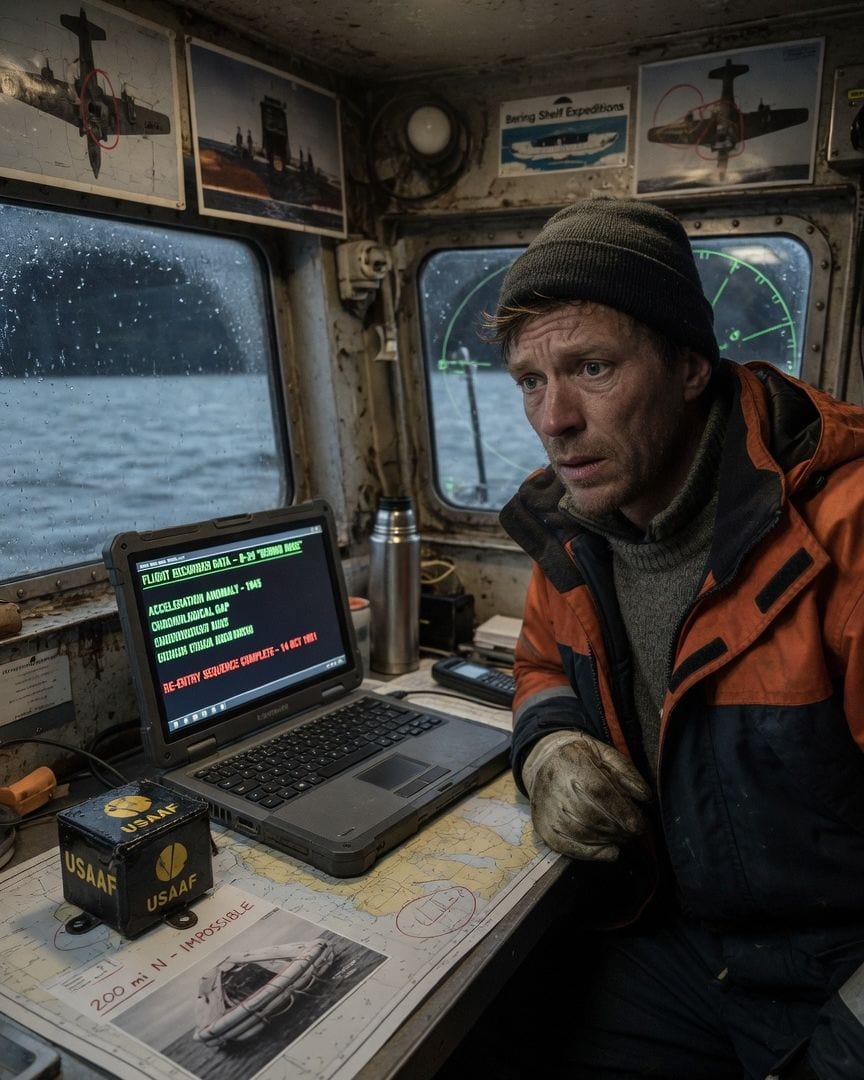
A wreck-hunter found the Cold War B-29 lost in 1945. Its upper escape hatch was open, from the inside.
Wreck-hunter Sten Höglund embarked on a decades-old promise to his 98-year-old aunt, seeking the B-29 bomber lost with eleven men in 1945. Deep on the Bering Shelf, his sonar found the 'Bering Rose' impossibly intact, a ghost in the mud plain. But the drop camera revealed a chilling detail: the bomber's upper escape hatch was not merely damaged, but wide open from the inside, and its life raft was gone. What impossible truth did the ocean hide from a crew that seemingly escaped a crash, only to vanish into the Bering Sea?
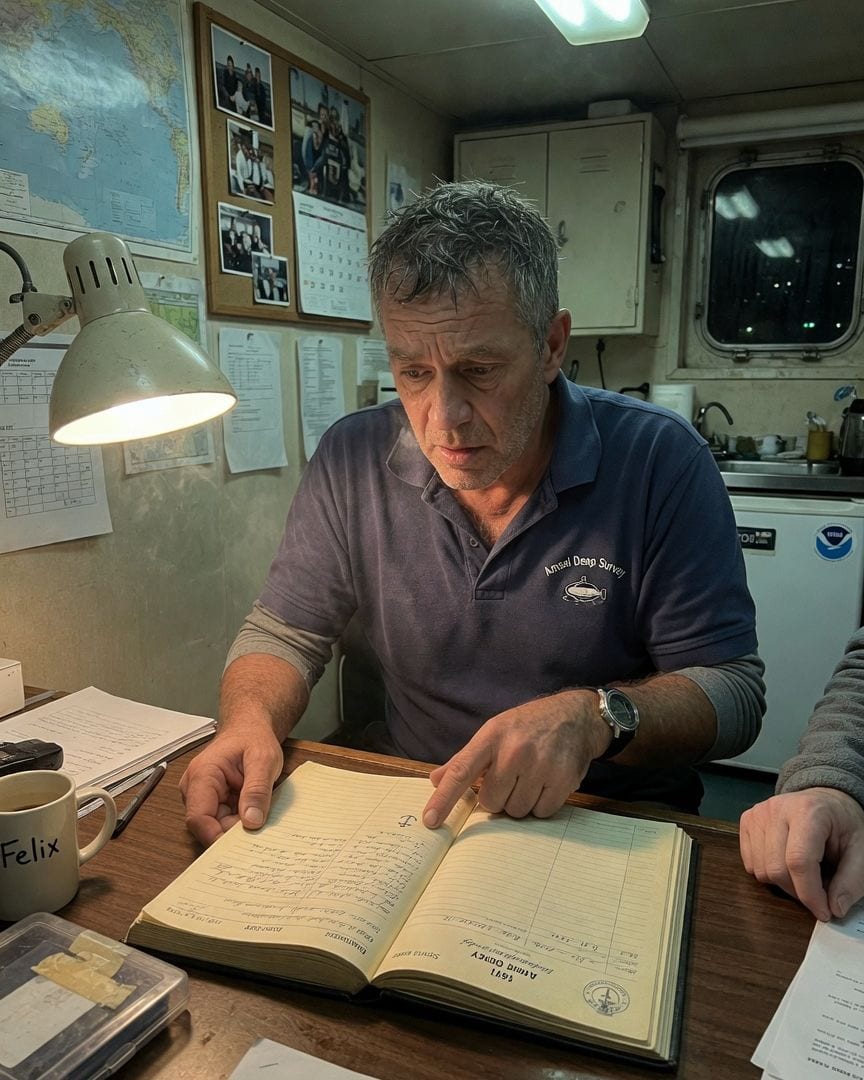
On his final deep-sea survey, a submersible pilot watches a 32-year-old Cold War wreck's rudder shift two degrees.
Deep-sea surveyor Hugo Amsel embarked on his final major dive, anticipating a quiet retirement after decades exploring the crushing pressures of the deep. His submersible's lights cut through the murky green, revealing the *Wynn Portal*, a sealer vanished in 1991, eerily preserved with unnervingly clear windows, free of any marine growth. Then, the inexplicable: the wreck's rudder angle indicator, softly lit, twitched two degrees further to starboard. Later, inside the wheelhouse, Hugo found the ship's official logbook, its final entry dated three days *after* the vessel's recorded disappearance, hundreds of miles north. How could a ship vanish, only to log a journey days later, from a place it never reached?
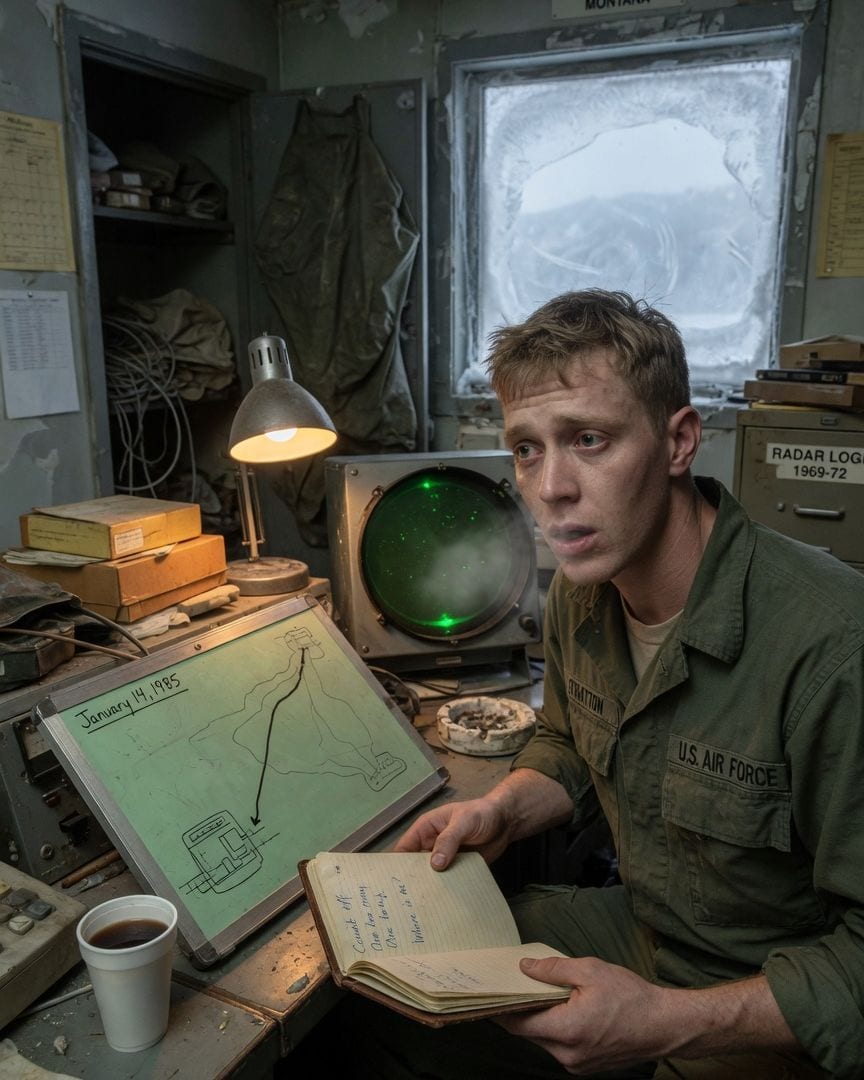
Airman Lars Stratton found an old Cold War manifest listing one name twice: 'Bernard Radcliffe' transferred and 'Bernard Radcliffe' still present.
Airman Second Class Lars Stratton was counting down his final weeks at Echo Station, a desolate Cold War outpost due for mothballing. He longed for home, far from the bitter Montana winds and the constant hum of static. Inside the dim radar shack, he logged the usual nightly ghost blip, a faint contact appearing at 2300, just as it had every winter since 1987. This night, a metallic tang like old blood lingered in the air, raising the hairs on his arms. Seeking distraction, Lars later discovered a leather-bound logbook from 1971, detailing the same 2300 contact, but with chilling notes and a manifest listing one airman's name, Bernard Radcliffe, twice—once transferred, once present. Was he truly alone in the silent, remote station?
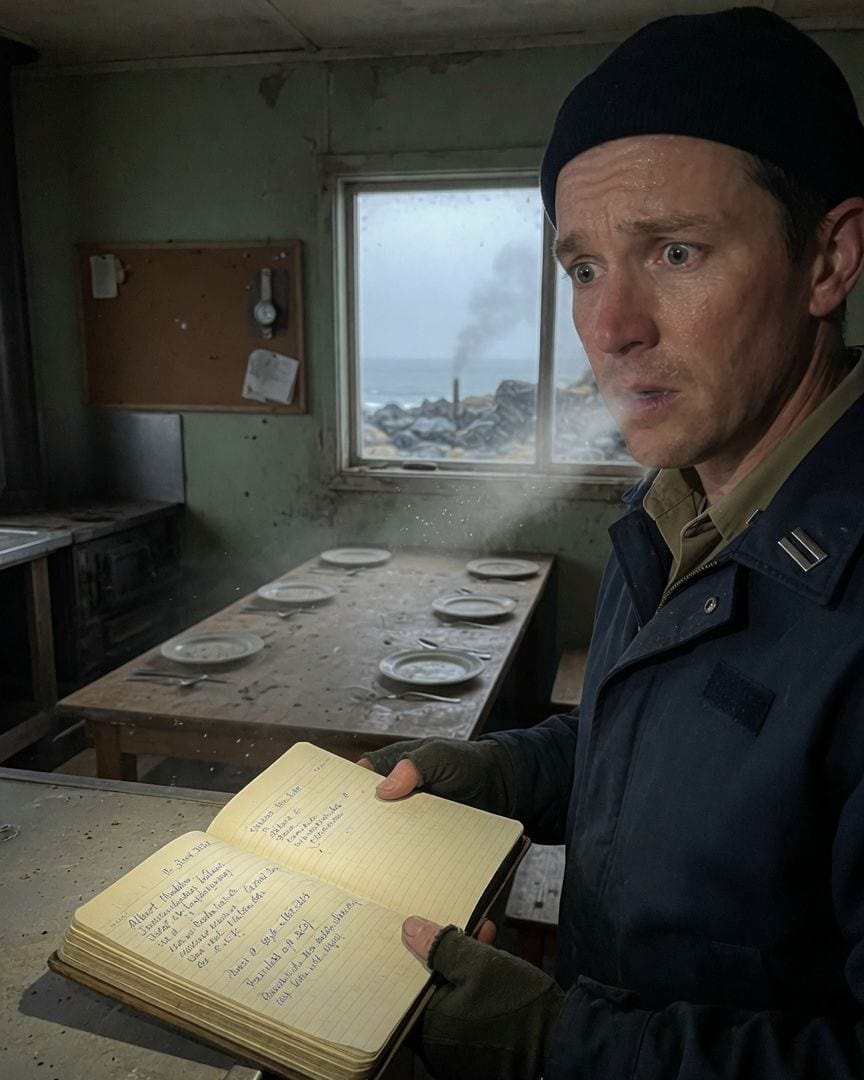
Coast Guard Lieutenant Thatcher finds an old crew photo dated today, June 15, 2024.
Lieutenant Daniel Thatcher leads a survey crew to a derelict LORAN station in the frigid Aleutians, officially abandoned for over a decade. But as they enter, a heavy-bound station log lies open on a counter, its ink startlingly wet, detailing a routine watch from today with names unknown to the Coast Guard.
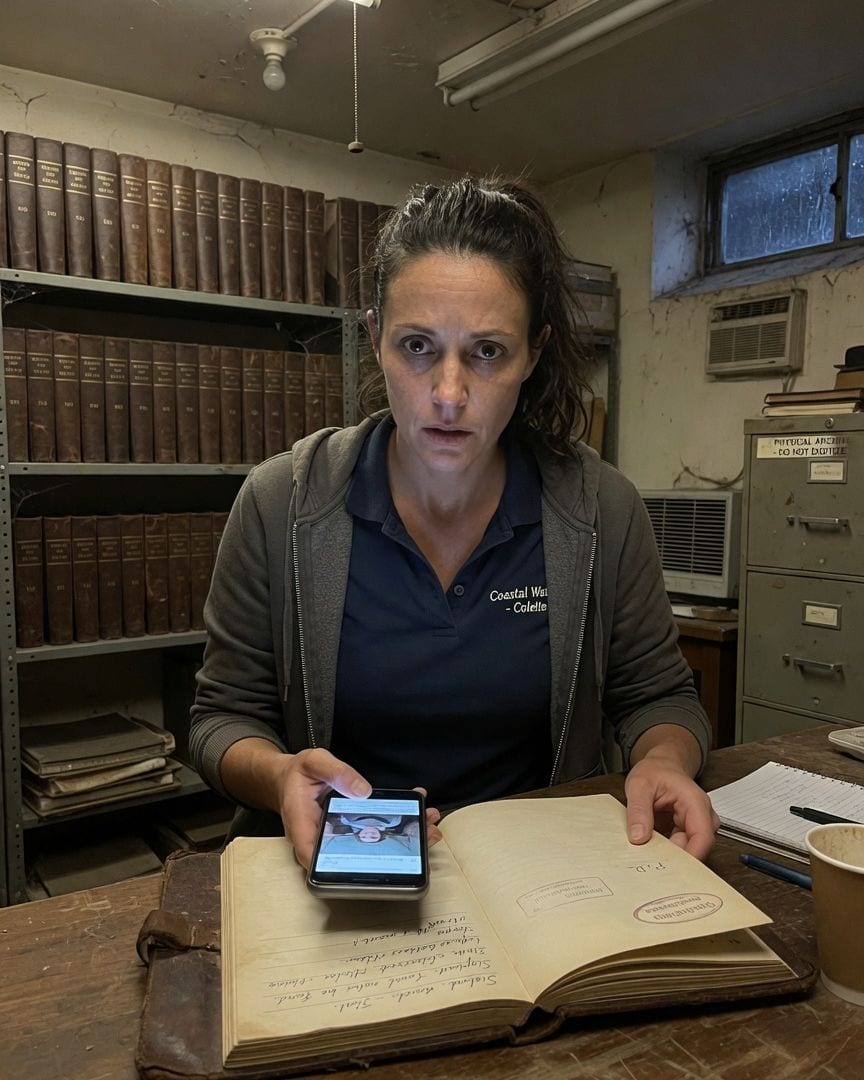
My coastguard log noted Sighting 9 again tonight, a light where no vessel showed. The old logs carry Sighting 9 off Skerry Point at 3:14am every tenth year since 1954, always 'nothing found,' always 'send no boat.'
On my watchtower night shift, the radar screen glowed green and the ocean was quiet. Then, a familiar light appeared off Skerry Point, exactly on cue, just as it had every tenth year for decades. But digging deeper, I found a hidden stamp in an old logbook: 'Operation Skerry. Status: Complete.' It left me with a chilling sense of finality.
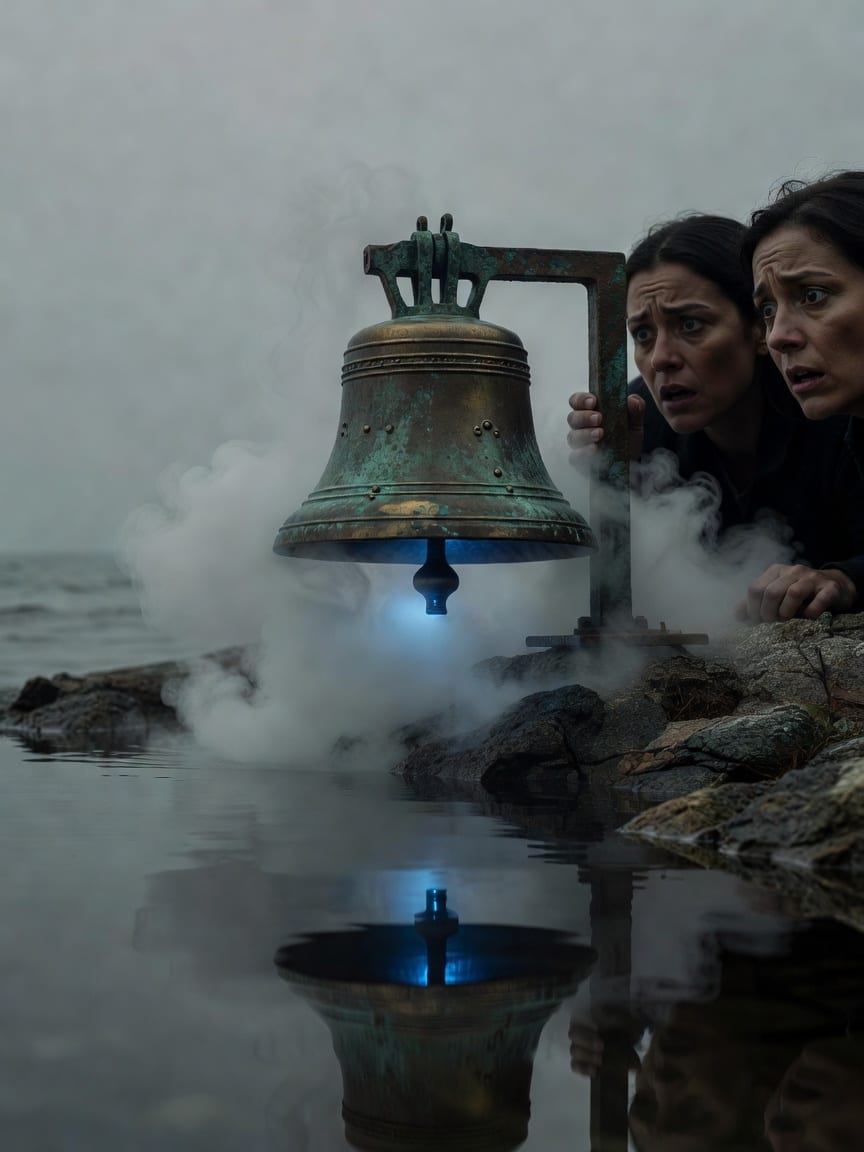
The fog bell on the point rings itself on still nights. The framed log at the yacht club lists eleven calm evenings it rang – each entry beside a boat that never came home.
Moving to a quiet coastal town, I found myself drawn to an old logbook at the yacht club. It recorded the fog bell ringing on flat-calm nights, each instance tied to a boat that simply vanished. Then, I found my own boat's name, 'The Osprey,' penciled at the bottom, marked with an unfinished, cryptic symbol.