My airing cupboard held a brick copper, fire lit, sheets boiling, smelling of soda and wet linen. I live in a modern flat; there's only ever been a boiler and towels.
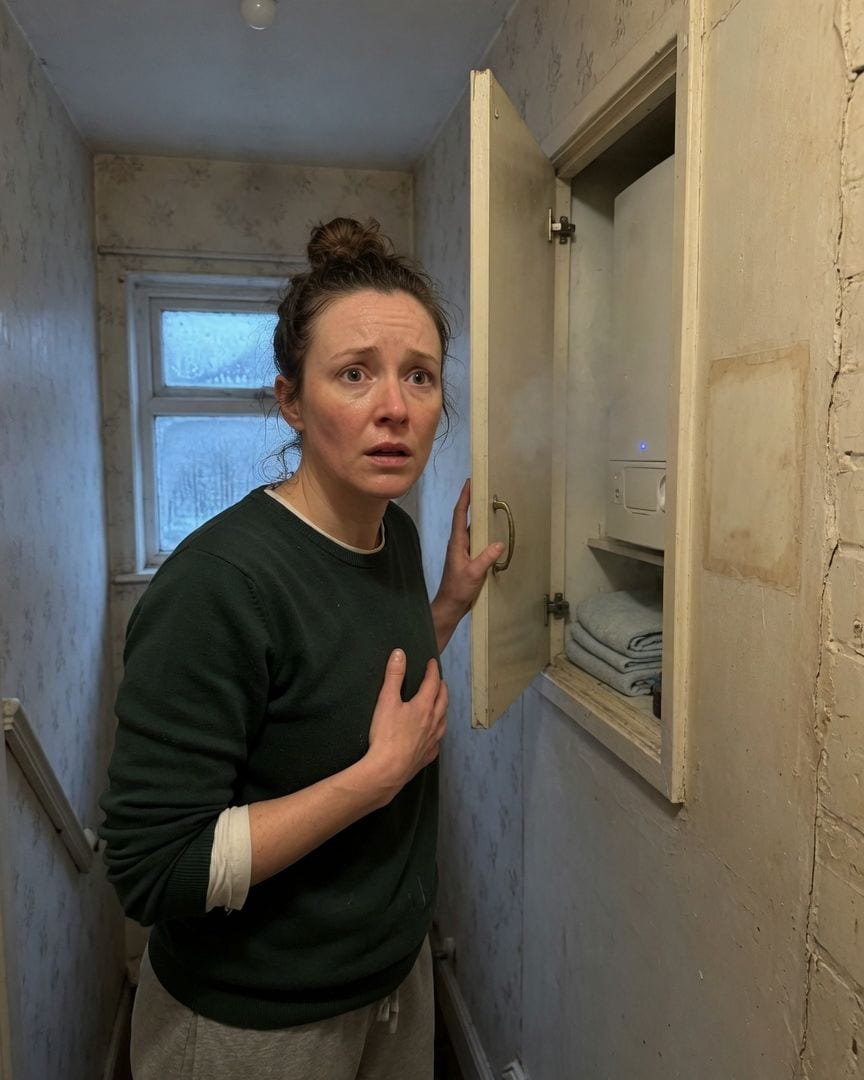
Claire Bishop, 34, a data analyst, had only been in her new house on Elm Street for three months, but she was already settling into its quiet rhythms.
It was the first snow of the season, and the chill had seeped into the old bones of the house. Needing an extra blanket for the sofa, she padded to the airing cupboard on the landing.
It was a standard cupboard, about a meter wide, housing her modern combi boiler and neatly folded towels on a couple of wire shelves. She pulled the handle.
Instead of the usual faint warmth of stored linen, a wave of humid heat, thick and almost cloying, rolled out, smelling intensely of soda and wet fabric. Claire froze, her hand still on the door. The shelves were gone.
In their place, set into a rough brick surround, a heavy copper vessel, stained green and black with age, stood over a small, crackling fire.
Sheets, bleached an impossible white, churned gently in the boiling water, the steam rising in thick plumes. A wooden dolly, smooth and worn from countless uses, leaned against the side of the copper.
The air hummed with an unfamiliar, hushed industry.
Her mind reeled, trying to reconcile the image with the familiar cupboard she knew. It was impossible. Her heart began to pound a slow, heavy rhythm against her ribs.
She slammed the door shut, the thud echoing in the sudden silence of the landing. She stood there, breathing hard, the scent of soda still stinging her nostrils.
Slowly, hesitantly, she reached out and pulled the door open again.
Towels. Boiler. The faint, dry warmth of the cupboard as it always is. The pilot light glowed steadily, a tiny blue flame. No brick. No copper. No fire. No steam.
She closed it, then opened it one more time, just to be sure. Nothing. Just her towels, perfectly stacked, utterly mundane.
Claire spent the next hour meticulously checking the airing cupboard, convinced she’d imagined it, or perhaps a faulty pipe had burst, creating some bizarre steam illusion. She checked the boiler pressure gauge – steady.
She traced the pipework, felt for any unusual heat or leaks – nothing. She even sniffed the towels for any lingering scent of soda. They smelled faintly of laundry detergent, as they should. The cupboard was perfectly normal, mundane even.
Yet the sensory memory, the blast of heat, the acrid, clean smell, the impossible sight of the brick copper, remained unnervingly vivid.
She tried to dismiss it, to chalk it up to a momentary hallucination brought on by fatigue or the strange, diffused light of the snow. But as she walked past the cupboard later that evening, something snagged her attention.
On the wall beside it, almost invisible against the muted cream wallpaper, was a faint, rectangular discoloration. As if something had once been mounted there, or a different, slightly larger, doorframe had been sealed.
It was subtle, easily overlooked, but now, knowing what she thought she’d seen, it seemed to pulse with significance. Her rational mind, usually so quick to find an explanation, found itself grasping at straws. This faded patch wasn't a hallucination.
It was real.
Later, wandering through the downstairs, a cold knot of unease tightening in her stomach, her gaze fell upon a section of the living room wall. It was papered over, a floral pattern she hadn't chosen but had learned to ignore.
But beneath the pattern, a vertical seam was barely visible, a subtle shift in the plaster where the wall wasn't quite flat. Running her hand over it, she felt a distinct, solid line, harder than the surrounding plaster.
A sealed-up doorway. She’d noticed it when she first viewed the house, dismissed it as a minor architectural quirk, a former pantry perhaps, or a passage to a long-demolished extension.
Now, it felt like a silent, waiting clue, a twin to the mystery on the landing. Two places. Two hidden spaces. The house, she realized, had more secrets than she’d first thought.
The next morning, the snow had stopped, leaving a pristine, white world outside. Claire made coffee, then stood at her kitchen window, gazing out at her small, carefully tended garden.
The bird feeder was covered in fresh powder, the patio furniture dusted white, the shed a dark rectangle against the bright landscape. She took a sip of her coffee, the warmth comforting in her hands.
The world outside shimmered, a brief, almost imperceptible tremor, like heat haze distorting a distant road. Then, in an instant, her garden was gone.
The bird feeder, the patio, the neat flowerbeds – replaced by an unruly tangle of wild roses and tall, unkempt grass. A rusted iron gate stood where her modern fence began.
The shed was gone too, replaced by a squat, moss-covered outbuilding. The sky above was a different shade of grey, heavier, older.
Her breath hitched. Then, she saw her. A woman in a faded apron and a simple cotton dress, her back to Claire, was methodically pinning a white sheet to a clothesline stretched between two ancient, gnarled apple trees.
The air seemed to ripple with the faint scent of damp earth and woodsmoke, even through the double glazing. Claire’s heart hammered a frantic rhythm against her ribs.
As if sensing her presence, the woman paused, one hand still on the sheet, her head cocked slightly. Slowly, deliberately, she turned her head.
Her face was obscured by the shadow of a plain bonnet, but Claire felt the distinct, chilling sensation of eyes locking directly onto hers, across a century, through a pane of glass that was no longer just a window.
The image of the woman in the garden haunted Claire. It was too vivid, too real, to be dismissed as another hallucination.
The sealed doorway in the living room and the discolored patch by the airing cupboard now felt like pieces of a larger, terrifying puzzle.
Driven by a desperate need for a rational explanation – for any explanation at all – Claire began to research the house's history.
She visited the local library, poring over dusty property deeds and town archives. The house, 14 Elm Street, was indeed old, built in the late 1880s.
She found faded blueprints from a 1910 renovation, confirming the sealed living room doorway had once been a pantry, connecting to the kitchen. The airing cupboard area had been redesigned, likely to accommodate modern plumbing.
The old layout, with its larger cupboard and separate pantry, matched the impossible glimpses she’d seen.
She also discovered the town’s local historical society, tucked away in an old Victorian schoolhouse. Their elderly volunteer, Deborah Mitchell, a woman with sharp eyes and a memory like a steel trap, seemed to know every house in town.
When Claire mentioned 14 Elm Street, Deborah's gaze sharpened.
“Ah, the old Bishop place,” she mused, adjusting her spectacles. “Heard some stories about that one. The house… remembering things. Old Mrs. Bishop, Dorothy, she was a meticulous woman. Fastidious. Disappeared, you know. Back in the twenties.”
Claire felt a jolt that went right through her. “Dorothy Bishop?” she asked, her voice barely a whisper.
Deborah nodded, a slight frown creasing her brow. “Yes. Ran off, they said. Eloped with a travelling salesman. But never a trace. House was empty for years after. A shame, really. Such a lovely home.”
Claire pushed past the official story. “But… the house ‘remembering things’? What did that mean?”
Deborah looked directly at Claire, her eyes holding a deep, ancient knowing. “Some houses, dear, they hold onto more than just dust. They hold onto lives. And sometimes, those lives… they don’t quite let go.” Claire’s dread deepened.
Then, buried in a folder marked 'Elm Street Residences - Early 20th Century,' Claire found an old photograph. Sepia-toned, faded at the edges, it was an image of 14 Elm Street, circa 1920.
In the background, a garden, overgrown and wild, exactly as Claire had seen it, with two gnarled apple trees and a clothesline.
The blurry figure of a woman hanging laundry, though indistinct, wore a dress eerily similar to the one Claire had witnessed. This wasn’t just a trick of the light. This was history, bleeding through.
As Claire delved deeper into the house’s past, the house itself seemed to grow restless. The unsettling feeling of being watched intensified.
She would hear faint, rhythmic thumping sounds from the landing when she was alone downstairs, like someone methodically scrubbing. Climbing the stairs, her heart pounding, the sounds would cease, replaced by the familiar silence of an empty house.
She started leaving her phone on record in different rooms, hoping to capture something, anything, but the recordings yielded only static, or the normal creaks and groans of an old building.
The smell of soda and wet linen, no longer confined to the fleeting cupboard glimpses, would occasionally waft through her kitchen, even when no laundry was being done.
It was faint, almost a phantom scent, but unmistakable, clinging to the air for a minute or two before dissipating. It was a smell that no modern cleaning product could replicate.
One evening, after a particularly long day at the archives, Claire returned home, exhausted and tense. She tossed her keys on the hall table and headed straight for her bedroom, desperate for a hot bath.
As she walked in, her gaze fell upon her pillow.
Something was there. Small, glinting in the dim light.
It was a small, antique silver thimble, intricately engraved with tiny floral patterns. It wasn't hers. Claire didn't own any thimbles, let alone one so old, so clearly handmade. Her heart leaped into her throat, a sickening lurch.
She picked it up, her fingers trembling. It was cool to the touch, solid and real, heavier than it looked. This wasn't a memory, not a glimpse. This was something tangible, left for her.
A message. A warning. Or perhaps, an invitation. The thimble felt heavy in her palm, a silent, impossible artifact in her modern bedroom, utterly out of place.
It felt personal, as if the house, or something within it, knew exactly what she was searching for, and was now responding directly to her intrusion.
Claire clutched the thimble, her mind racing, a chill spreading through her despite the warmth of the house. This was no longer just about glimpses and phantom smells; this was a physical intrusion.
She drove straight to Deborah Mitchell’s house, the thimble burning a hole in her pocket, the antique silver cool against her clammy palm.
Deborah, sipping tea in her cozy living room, listened patiently as Claire recounted the thimble’s appearance and showed her the old photograph of the house and its bygone garden.
“Dorothy Bishop,” Claire began, her voice tight, straining to remain steady. “You said she was meticulous. Did she… did she sew?”
Deborah’s eyes widened slightly as she took the thimble from Claire’s outstretched hand. Her aged fingers traced the delicate engravings, her expression one of profound recognition. “Oh, yes. Dorothy was a marvel with a needle. Always mending, patching.
Not a tear went unaddressed in that house. She had a thimble, just like this. Her prized possession, she called it. Kept it right by her bed. Never went anywhere without it, not even to the shops.”
Claire leaned forward, her voice low, almost a whisper. “You said she disappeared. ‘Ran off,’ was the official story. But… what did people really say, Deborah?”
Deborah sighed, a long, drawn-out sound that seemed to carry the weight of decades. “Well, the official story was she eloped with a traveling salesman. That’s what Mr. Bishop told the police. But there were whispers, you know.
Nothing concrete, mind you. Just… she was so devoted to that house. And her routine. It just wasn’t like her to vanish without a word, leaving everything. Her thimble, her ledger… all her things.”
Claire pressed, unable to stop herself. “What kind of whispers?”
Deborah hesitated, stirring her tea slowly, her gaze drifting to the window. “They said… the house had a hold on her. That she spent too much time in it. Talking to herself, some claimed. Mumbling to empty rooms.
And then, one day, she was just… gone. Her husband, Mr. Bishop, he was beside himself. Searched for months. But he never found her. Never sold the house either, just locked it up and left town.
Moved to his sister’s, heartbroken, they said.”
Claire’s mind raced, connecting the dots that Deborah’s quiet words now illuminated. The boiling copper, the woman in the garden, the thimble on her pillow. It wasn't just a memory. It was an echo, a presence.
Dorothy Bishop hadn't just disappeared; she had become part of the house. Her meticulous routine continuing, her presence bleeding into Claire's own. The ordinary explanation of a runaway wife crumbled, replaced by a far more chilling reality.
“And the house ‘remembering things’?” Claire asked, her throat dry.
Deborah looked directly at Claire, her eyes holding that deep, ancient knowing again. “Some houses, dear, they hold onto more than just dust. They hold onto lives. And sometimes, those lives… they don’t quite let go. They just… shift.”
The ordinary explanation was dead.
Armed with the knowledge of Dorothy Bishop's likely fate, Claire returned home, a cold certainty settling in her bones. The house was not merely playing tricks; it was a living, breathing archive of a life that refused to end.
Dorothy was still here, caught in some insidious loop, and the house was forcing Claire into it. Claire knew she had to find definitive proof, something tangible that connected Dorothy to these impossible occurrences.
Deborah had mentioned Dorothy’s meticulous nature, her detailed record-keeping. If anyone kept a diary of the impossible, it would be her.
Claire began a systematic search, focusing on hidden nooks and forgotten spaces. She started in the attic, a dusty, cavernous space she’d barely touched since moving in.
Cobwebs clung to the rafters like grey lace, and discarded furniture lay shrouded under white sheets, casting eerie, distorted shapes. She methodically checked every box, every trunk, every loose floorboard she could find.
Hours passed. The sun began to set, casting long, eerie shadows across the attic floor, making the draped furniture seem to shift and breathe.
Just as frustration threatened to overwhelm her, she noticed a section of floorboard near the chimney that seemed slightly raised, almost imperceptibly. Prying it up with a heavy-duty screwdriver, she found a shallow, hidden compartment.
Inside, nestled amongst brittle newspaper clippings detailing the "Bishop Disappearance" and a dried, crumbling sprig of lavender, lay a leather-bound book. It was old, its cover worn smooth with age, its pages yellowed and fragile.
Claire’s hands trembled as she pulled it out, brushing away the thick layer of dust.
It was a household ledger, filled with neat, looping handwriting detailing daily chores, expenses, and observations. Dorothy Bishop’s meticulous record. Claire flipped through the pages, her breath catching in her throat as she saw dates from the early 1920s.
On one page, dated February 12, 1923, she found an entry that echoed her own experience with horrifying precision:
'The copper boils itself again. The smell of soda so strong. I shut it tight, but it keeps… looking back at me.'
And beneath it, scrawled in a different, more frantic hand that seemed to leap off the page, were two words that chilled Claire to the bone:
'Who is looking back?'
Claire stared at the ledger, the two lines of text burning into her mind. The first, Dorothy’s neat, careful script, documented the same uncanny experience Claire had endured.
The second, the frantic, almost desperate scrawl, was a raw, terrified question, not just an observation. Claire turned the page, then another, and another.
The neat, methodical entries of household tasks slowly gave way to more of the desperate, second handwriting. Dorothy’s observations became increasingly erratic, describing impossible glimpses of her own.
She wrote of seeing strange, bright lights in her windows at night, lights that moved with impossible speed.
She described furniture that wasn’t hers appearing and disappearing in her parlor, sleek, modern shapes that had no place in her 1920s home.
She chronicled the faint, unfamiliar scent of coffee that would sometimes fill her kitchen, a bitter, strange aroma. Most chillingly, she spoke of a 'modern woman' she occasionally saw in her garden, watching her, just as Claire had watched her.
Dorothy even mentioned a strange, small metal object she once found on her bedside table, 'cool and intricately wrought,' which she’d taken to keeping under her pillow. The thimble.
The ledger wasn’t just a record of a haunting; it was a diary of a woman experiencing her own reality bleeding into the future. It was a two-way mirror.
Dorothy had been haunted by Claire’s present, just as Claire was now haunted by Dorothy’s past. The entries grew more desperate, detailing Dorothy’s terror as the lines between her time and Claire’s blurred.
She wrote of feeling dizzy, disoriented, of moments where her own hands felt alien to her, as if they weren’t quite solid.
The last coherent entry, dated a week before her disappearance, spoke of a growing pull, a sense that the house itself was trying to claim her, to merge her with the other side.
The final pages were just scribbles, disjointed words, and frantic, overlapping questions – 'Where am I?' 'Whose house?' 'Who is looking back?'
The ledger was not just a historical artifact; it was a living, impossible document, a testament to a shared, cyclical horror.
Every strange detail Claire had encountered, from the smell of soda to the woman in the garden, was now horrifyingly coherent.
Dorothy hadn't run off; she had been pulled away, absorbed into the house’s timeless memory, caught in the temporal flux, forever exchanging glances with her future occupant.
The full truth of the ledger hit Claire like a physical blow. The house wasn't just remembering; it was a hungry, timeless entity, drawing lives into its endless loop.
Dorothy hadn't merely disappeared; she was still here, caught between realities, and the house was now reaching for Claire. Clutching the ledger, its brittle pages a cold comfort, Claire found herself drawn back to the airing cupboard.
The small, unassuming door felt like the mouth of a hungry beast, humming with a faint, internal vibration she could almost feel through the floorboards.
She hesitated, her hand hovering over the handle, her heart hammering against her ribs. She knew what she would see. She had to. Taking a deep, shuddering breath, a primal fear tightening her throat, she pulled it open.
The familiar wave of humid heat, the unmistakable, metallic smell of soda and wet linen, rolled out, thick and suffocating. The brick copper glowed, sheets boiling, steam rising in thick plumes that writhed like living things.
The wooden dolly leaned against the side, exactly as she’d seen it that first night.
But this time, it was different. Through the shimmering, distorting steam, a face began to materialize, indistinct at first, then clearer.
It was a woman's face, pale and drawn, her eyes wide with a profound, desperate fear that mirrored Claire’s own. Dorothy Bishop. Her hand, thin and spectral, reached out from the steam, trembling, beckoning with an agonizing slowness.
Claire felt an undeniable pull, a cold current trying to draw her forward, into the heat, into the past, into the very heart of the steam.
She saw the same terror in Dorothy’s eyes that she now felt in her own heart. This wasn't a re-enactment; it was a live connection.
Dorothy was trying to cross over, or perhaps, trying to pull Claire in, another soul to share her impossible limbo.
The house groaned around her, a deep, resonant sound that vibrated through the floorboards, through her very bones. It was a sound of ancient satisfaction, of a cycle continuing.
With a primal scream that caught in her throat, raw and choked, Claire slammed the cupboard door shut. The clang echoed, sharp and final, cutting off the heat, the steam, the desperate face.
She leaned against it, panting, tears streaming down her face, the ledger clutched to her chest like a shield. The heat, the smell, the desperate face behind the steam – it was all real. She was not safe here.
The house wanted her, just as it had wanted Dorothy. She had to get out, and she had to get out now, before she too became another entry in its endless, terrifying memory.
Claire put the house on the market the very next day, accepting the first offer, even at a significant loss. She didn't bother with explanations, simply told her realtor she needed a change of scenery, a fresh start.
She packed only the essentials, leaving behind most of her furniture, unable to bear the thought of taking anything that might have absorbed the house’s insidious memory.
The only thing she kept, carefully wrapped in an old blanket and hidden deep in her suitcase, was Dorothy Bishop’s ledger. It was a tangible piece of the impossible, a horrific truth she now carried with her, a chilling burden.
She moved into a small, modern apartment across town, a place with no history, no creaking floorboards, no hidden doorways.
She tried to forget the house on Elm Street, to erase the smells, the sights, the chilling sense of being watched from another time. But some things, once seen, cannot be unseen.
Weeks later, in her new apartment, Claire made a cup of tea. The electric kettle hissed as it boiled, releasing a plume of steam.
She watched it, a strange calm settling over her, a fragile peace she hadn't known since leaving Elm Street. She picked up her mug, her fingers brushing against her thumb and forefinger.
They felt faintly red, as if from heat, and for a fleeting moment, she thought she smelled a faint, almost imperceptible hint of soda. She closed her eyes, took a shallow breath, then opened them. The smell was gone.
It had to be. She was safe now. She was. She took a sip of her tea.
Claire Bishop moved out of her house on Elm Street three weeks after the incident, citing “structural issues.” The new owners, a young couple, moved in last Tuesday.
This morning, the wife noticed a faint smell of soda and wet linen coming from the airing cupboard.
If this one got to you
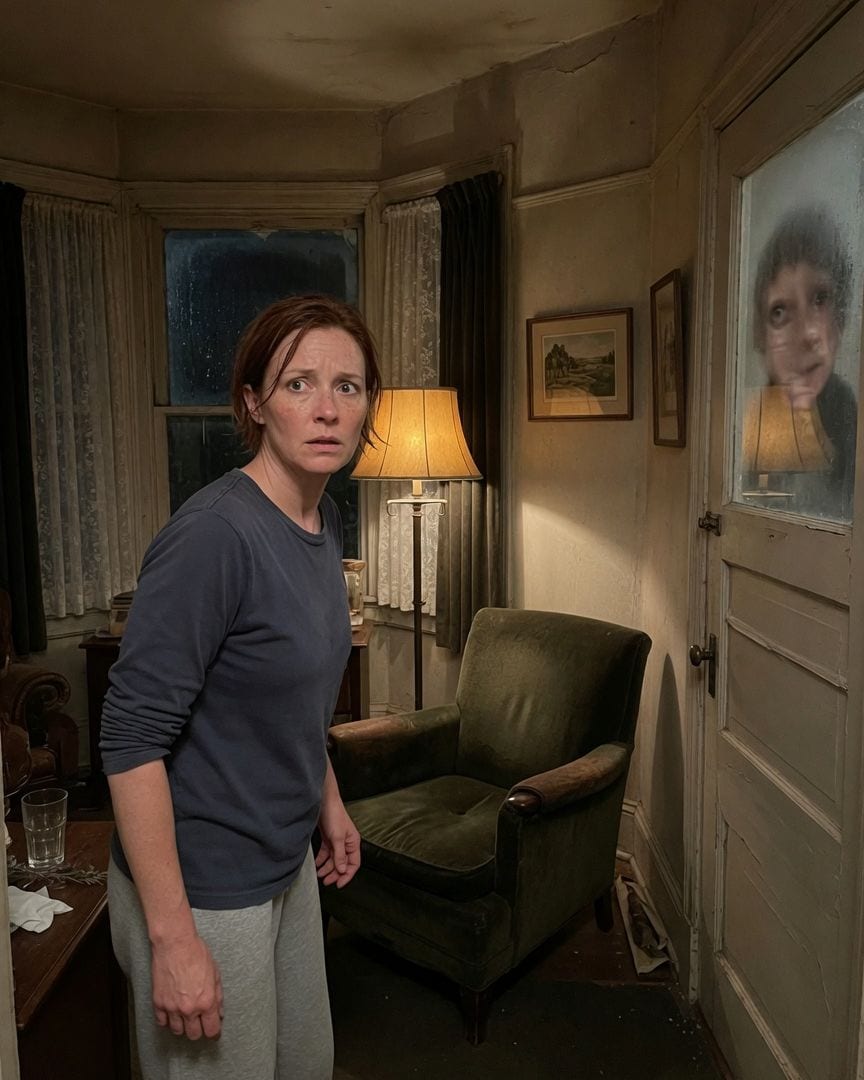
The armchair by the bay window was warm last Tuesday at 9pm. I’ve never sat in it, and the cushion was still settling from a weight that wasn't mine.
I bought this old house for quiet, and most days it's exactly what I needed. But there’s an antique armchair in the living room, deep green velvet, with a permanent hollow from years of use. I’ve never sat in it, yet last Tuesday, I found it radiating a distinct warmth, the cushion slowly settling as if someone had just left.
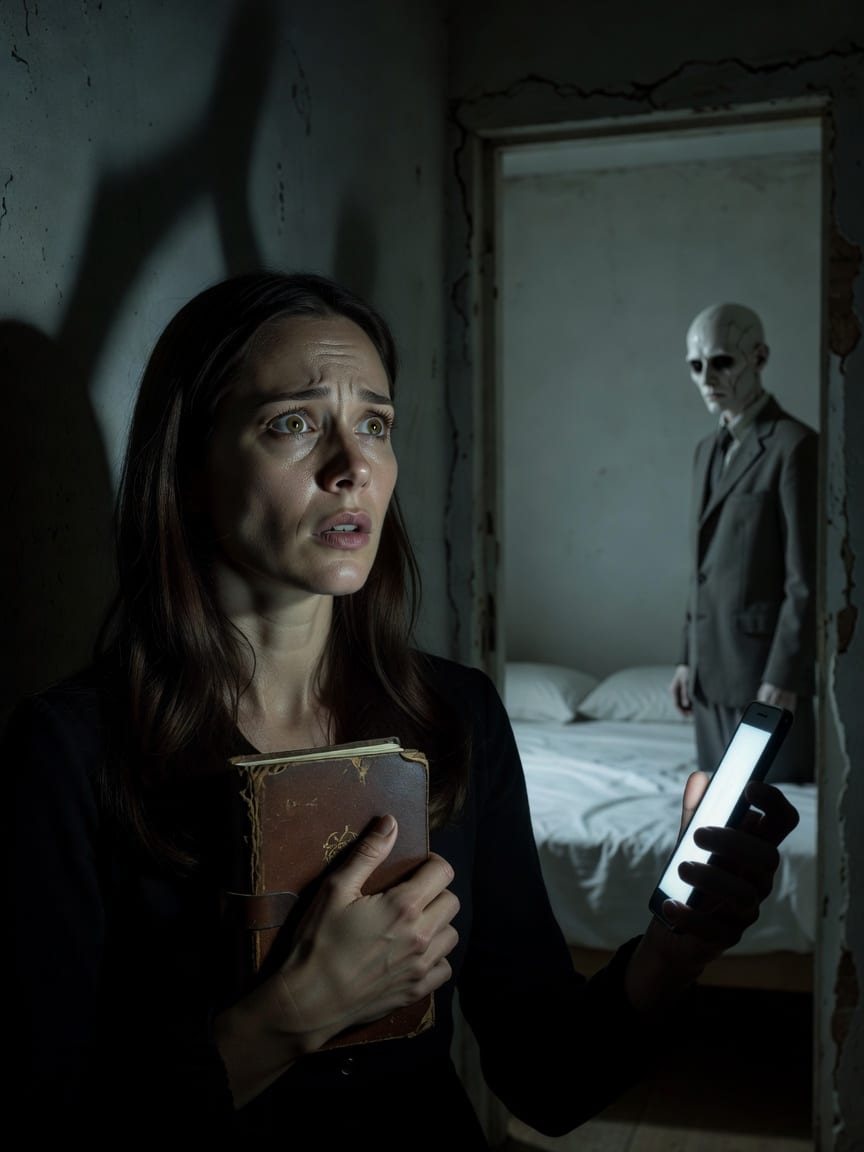
Behind a plastered-over doorway, I found a room. Papered, carpeted, and furnished with a made bed, sealed for decades. The air was dead still, but the bed wasn't dusty. My council tax bill only lists five rooms.
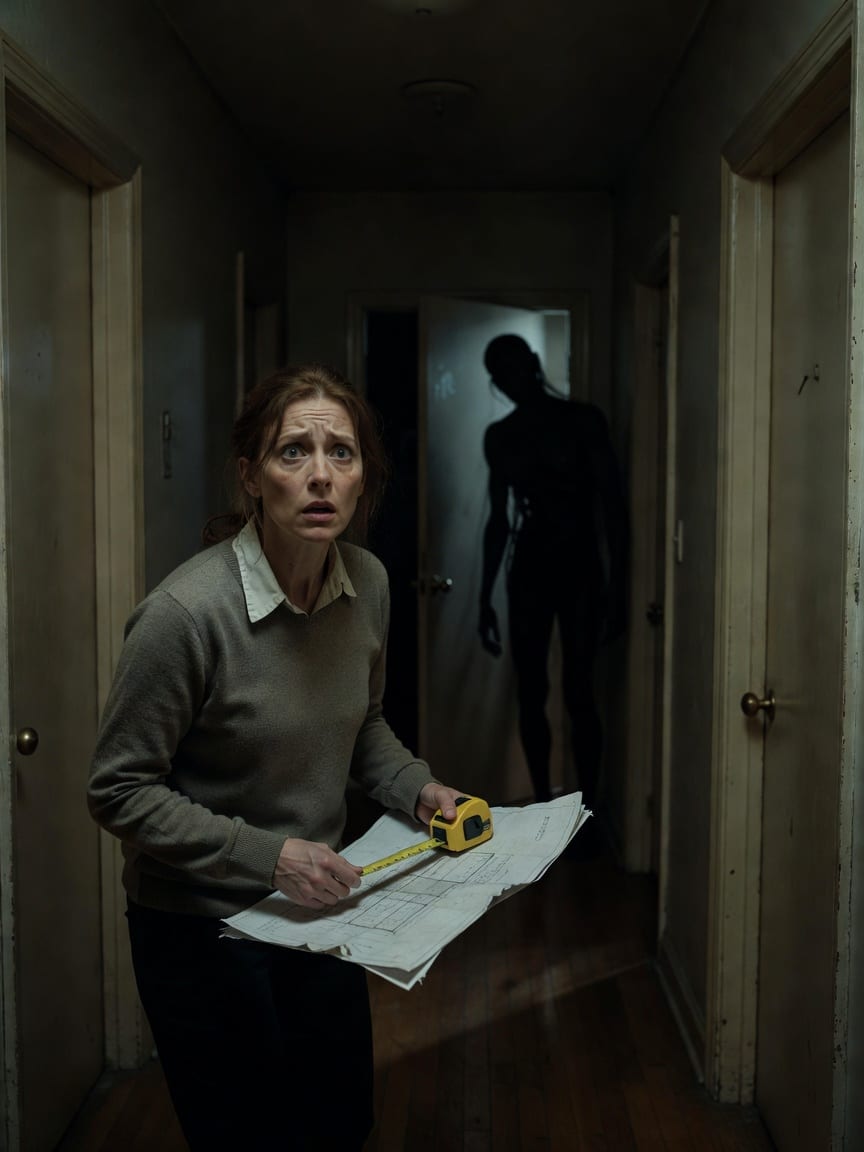
I'm Claire, an architect, meticulously planning my new Victorian terrace renovation. But when I uncovered a hidden room behind a wall, everything I knew about time and decay shattered. The bed was perfectly made, the air still, yet there was no dust, only an unnerving cold.
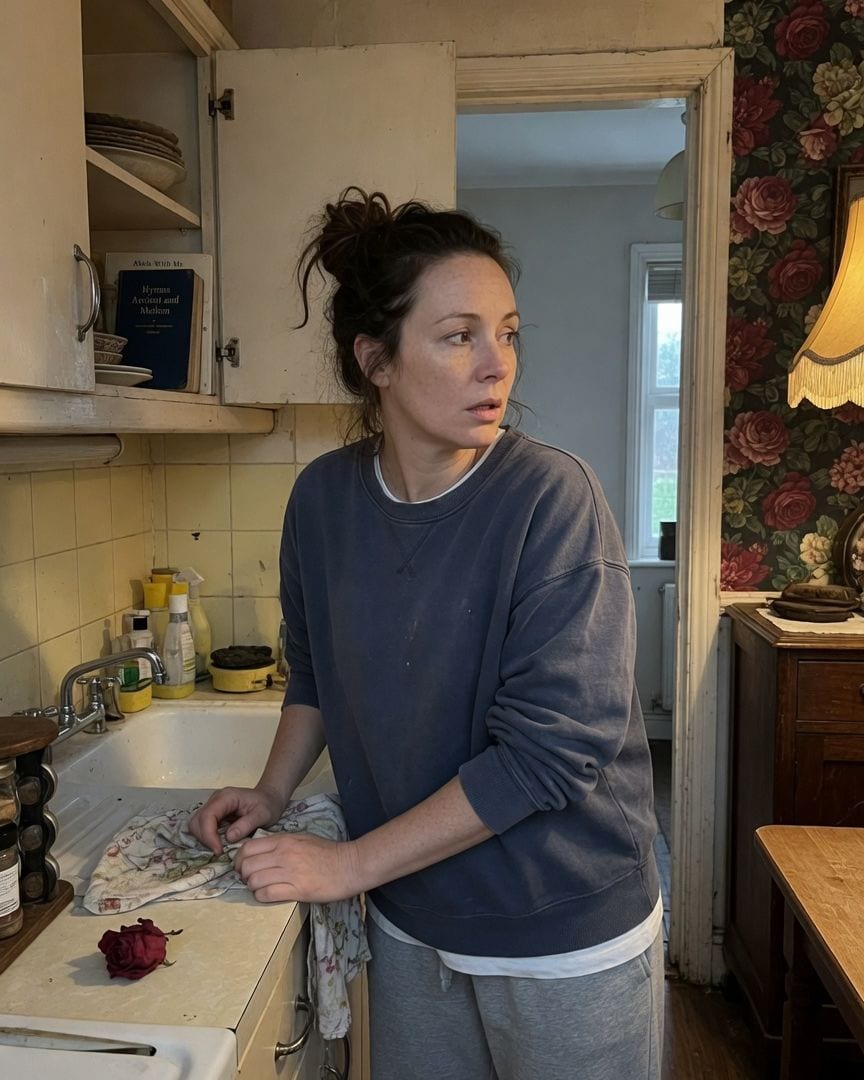
My kitchen taps run themselves on Sundays while a woman hums 'Abide With Me.' I live alone.
I moved into this quiet 1928 house for a fresh start, living alone. But for three months now, every Sunday morning, a low, tuneless hum and the distinct sound of running water drift from my kitchen sink. A plumber found no explanation.
My front door has a dented gate and a dead hydrangea. I walked past it six times, trying to reach the corner shop just a hundred yards away. The pavement kept bringing me back to my own porch, and the shop's light never moved.
My morning started like any other, a quick walk to the corner shop from my home at Number 14, Elm Terrace. But after walking what felt like two minutes, I found myself back at my own front door, the shop no closer. I tried six times, faster and slower, but my street kept compressing, refusing to let me leave.
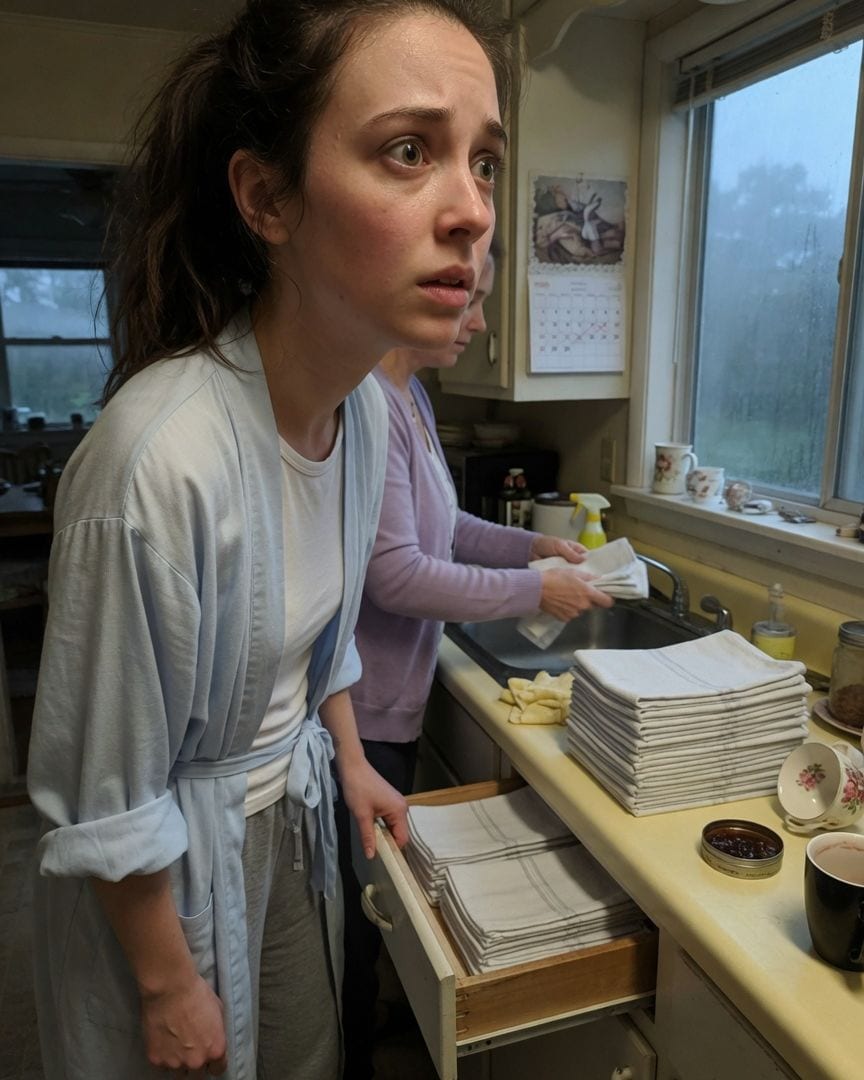
My mother's left wrist has a new scar. She never had one there.
My mother is finally home after her disappearance, and I'm trying to find our old rhythm. But then I watch her fold tea towels, a simple ritual I learned from her. She's doing it completely wrong, seam-out, insisting it's how she's always done it.
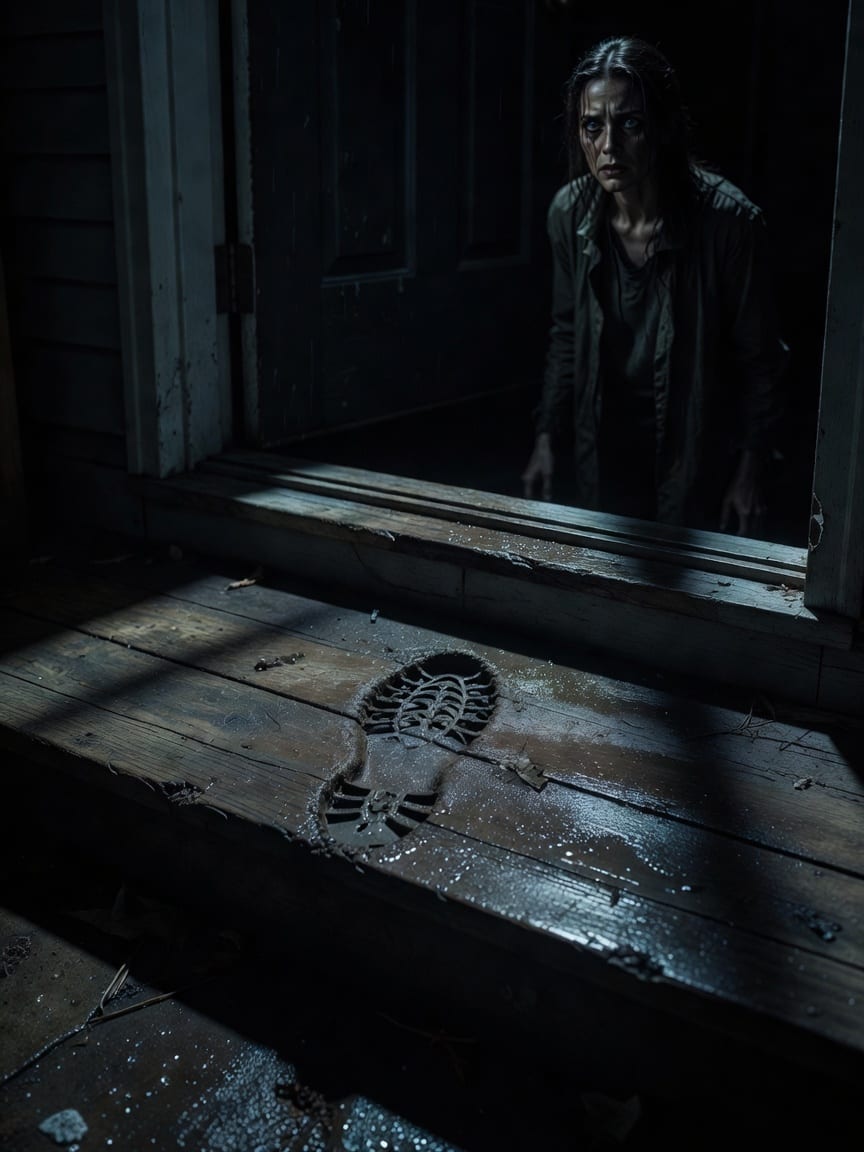
My landlord's only rule: never let the outside tap run after sundown. Last week it dripped. This morning, wet bootprints ringed the back step from the tap to my door, all the same size. The tap was off.
We'd just settled into Waterside House, with its strange landlord rule about the outside tap. After the washer broke, I found perfect, wet bootprints leading from the tap to our back door, but the tap was cranked completely off, tighter than I could manage.