My attic window shows a nursery lit by firelight. The blueprints say no room exists there.
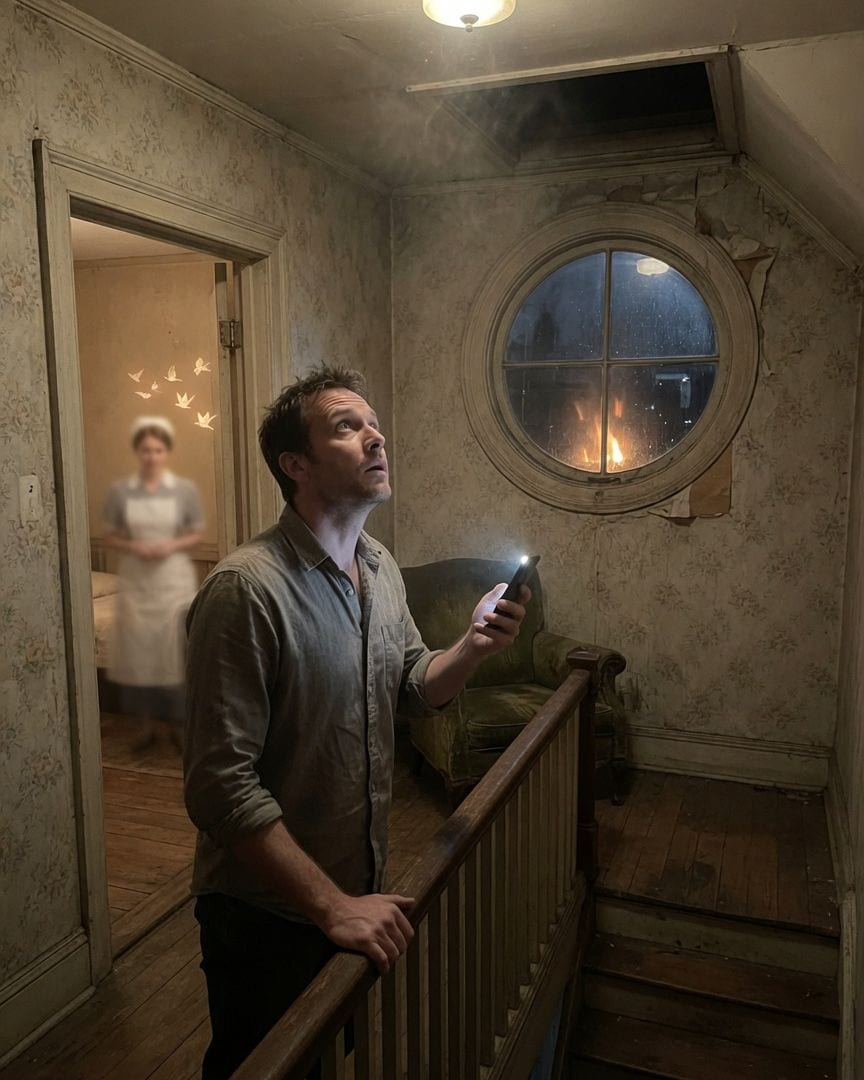
The house was a good deal. Inherited, actually, from a distant aunt I barely knew. A little rundown, sure, but with good bones, as they say. I’m an architect; I saw the potential. Early 1900s, solid construction, nice quiet street.
What’s not to love?
The first time I saw the attic window, it was from the curb, right after I got the keys. It’s a small, round bull's-eye window, set high on the front gable.
From the outside, it was just black glass, reflecting the cloudy sky. But then, as I walked up the driveway, a flicker. Just a flash. And for a split second, I saw something in there.
A room, lit by what looked like firelight. And a cot. A figure, like a nurse, rocking gently beside it. And above the cot, a mobile, with delicate paper birds turning slowly in the warm, orange glow.
It was gone as quickly as it appeared, just a trick of the light, I told myself, or perhaps the street lamp catching the glass at a weird angle.
But it was distinctly a nursery, right where the attic space above my main landing should be. There’s no room there. I knew the blueprints.
I moved in last month. The house still feels new, and I’m still finding my way around, but already, some strange little rhythms have started to establish themselves.
At exactly six AM, without fail, I hear the faint hiss and rumble of a kettle starting to boil, even though I keep mine unplugged in the pantry. It’s always just a moment, barely there, but distinct.
And the stairs – there are eighteen of them leading up to the second floor. I’ve noticed I always seem to skip the third one, unconsciously placing my foot over it, even though it’s perfectly solid.
The wood there is oddly worn smooth, a subtle dip in the center, as if generations of feet have done the same. In the living room, there's an old, velvet armchair, faded green, pushed into a corner.
I’ve never sat in it, but the fabric on the arms is deeply, profoundly worn, almost threadbare, and there’s a distinct impression in the cushion, like someone has spent countless hours rocking there, slowly, rhythmically.
All just quirks of an old house, I’ve decided. Settling in.
The vision in the attic window, however, started coming back. Not every night, but frequently enough to feel less like a trick of the light.
Sometimes, when I’m getting ready for bed, I’ll glance up from the landing, towards the ceiling where that window sits, and catch it again. The warm, flickering light. The soft shape of the nurse, the cot. The silent, turning mobile.
Always paper birds. It always looks so peaceful. So warm. And always exactly where my landing is, a space that should be empty, cold attic air.
I tried to dismiss it, to find a rational explanation. Maybe a neighbor’s window reflecting in a specific way? But my house sits alone on its lot. Perhaps a hidden light fixture from a previous owner?
An old, elaborate nightlight in the attic? It was bothering me more than I cared to admit. The attic itself is just what you'd expect: dusty, unfinished, a maze of exposed beams and insulation.
Nothing up there to create that kind of glow, let alone the detailed scene I kept seeing.
One rainy afternoon, with the light too dim for any strange reflections, I climbed the pull-down stairs into the attic, flashlight in hand. The air was still and cold, tasting of old wood and dust.
Nothing like the warm, firelit room I'd seen. I walked the full length of the attic, right over where my second-floor landing would be below. It was just more of the same, rough floorboards and insulation.
No hidden room, no cot, certainly no mobile. No signs of a nursery. But as I walked across a specific section, right above where my visions appeared, a floorboard gave under my weight.
Not much, just a slight give, a barely perceptible dip. It wasn't rotten, just loose.
I knelt, pressing my hand against it. It definitely shifted. An old house, of course, things settle, floorboards warp. But the wrongness clung to it. And then, a faint scent. Something sweet, almost cloying, but muted by years of dust.
I couldn’t place it. Not floral, not cleaning supplies. Just… old. A ghost of a smell. I tried to pull the board up, but it was stuck fast.
I took my phone out, switched on the flashlight, and angled it into the narrow crack where the board met its neighbor. Dark. Just blackness and dust motes dancing in the beam.
I shifted my phone, trying for a better angle, wondering if a child had simply dropped something down there years ago. A marble, maybe. Or a toy. Then, a glint. Small, pale, and unmistakably wood.
With a grunt, I managed to lever the floorboard up, scraping wood against wood as it finally gave way. I knelt, shining my light into the hidden cavity. Nestled amongst decades of dust and cobwebs, there it was.
A small, intricately carved wooden bird. It was missing a wing, and its surface was blackened and warped on one side, as if by intense heat. The faint smell of old smoke, unmistakable now, clung to it, stronger than before.
The fire-damaged wooden bird lay in my palm, small and heavy with impossible history. I turned it over, feeling the scorched edges, the missing wing. It was undeniable.
What I had seen in the bull's-eye window, the mobile turning above a cot, hadn't been an illusion. This bird was from it. This bird had been there.
The dread that had been a vague unease now solidified into something cold and specific. My rational architect's brain, which typically sought out structural integrity and logical explanations, felt like it was short-circuiting.
I needed answers. Real answers, not spectral visions or phantom smells. I spent the next several days at the local library and the county records office, sifting through microfiche and dusty binders.
I pulled up deeds, old photographs, and property tax records.
The house had changed hands many times over the decades, a curious pattern emerging: short-term occupants, often families, with some records ending abruptly, just a blank space where the next owner should have been listed.
It was as if people simply vanished from the property's history.
I traced the property back to the 1940s, to a family named Lockwood. The records were sparse, but their tenure ended suddenly in 1948. Back at the library, I fed 'Lockwood house fire 1948' into the newspaper archives.
The grainy headlines flickered on the screen. And there it was. A small, unspectacular article, buried deep in the local section: 'Tragedy Strikes Lockwood Home – Fire Claims Mother and Infant.'
My breath caught. The address listed was mine. The article was brief, almost clinical. It mentioned a 'nursery on the upper floor' and a 'faulty heating element' as the suspected cause.
Eleanor Lockwood, age 28, and her infant, unnamed in the article, had perished in the blaze. Eleanor. The name felt like a punch to the gut. 'Nursery on the upper floor.' It resonated with the chilling clarity of a bell.
My attic window. The visions.
The small, inexplicable routines I'd noticed in my house now twisted into something sinister. The 6 AM kettle, the third stair, the worn armchair – they weren't random quirks. They were echoes. Eleanor Lockwood's habits.
Her daily life, playing out, over and over, in the house that remembered her final, desperate days. I found a brief obituary for Eleanor, a short paragraph of sorrow, but there was no mention of the baby's burial. Nothing.
Just 'and her infant.' The unease that had been a tight knot in my stomach now stretched into a specific, cold fear that crept up my spine.
The next day, as I returned home, clutching printouts of the old newspaper articles, I noticed a dark green sedan parked a few houses down. An elderly man sat behind the wheel, his face obscured by shadow.
As I pulled into my driveway, he slowly lowered a pair of binoculars, his gaze fixed on my house. He had a neat, gray beard, and his eyes, even from that distance, felt sharp.
He offered a faint, unsettling smile that didn't reach his eyes before slowly driving away. The encounter left me cold.
Later that week, a small, handwritten note was tucked under my doormat. It was on brittle, yellowed paper, and the cursive script was elegant but unsteady. It read, simply: 'Some things are better left undisturbed. The house remembers.'
My hands trembled as I read it again. No one knew I was researching the house. No one knew what I was finding. The feeling of being watched intensified.
I started checking my locks twice, triple-checking the deadbolts, even casting nervous glances at the bull's-eye attic window. Was someone watching from within now?
I needed to confront him. The old man. He knew something. I found his name, Howard Kingsley, in the local historical society's registry, listed as a contributing member and local historian. His address was on the other side of town.
His house was immaculate, a testament to careful preservation, filled with antique furniture and shelves overflowing with old books. He greeted me at the door with the same unsettling calm I remembered from his sedan.
I didn't waste time on pleasantries. "Mr. Kingsley," I began, trying to keep my voice steady, "I think you left a note on my doormat. And I think you know something about the Lockwood fire."
He didn't flinch. His expression remained placid. "Lily Prescott. I had a feeling you'd come calling. And yes, I did leave the note. You were disturbing the pattern."
"The pattern?" The word sent a shiver through me. "What pattern? What do you know about Eleanor Lockwood and her baby? About the fire in my house?"
He invited me inside, indicating a plush armchair, though I chose to remain standing. His gaze was disconcertingly direct. "The house, Miss Prescott, has a memory. A deep, indelible imprint of Eleanor Lockwood's life. And her baby's final days."
His voice was measured, almost academic, as if discussing a historical fact, not a personal tragedy. "Eleanor was a creature of habit. Obsessive, some might say, especially after the baby arrived.
Her mornings began precisely at six with the boiling of the kettle. She would take her tea, then attend to the infant. She was meticulous about avoiding the third stair on the main flight.
There was a loose riser there, always caught her heel, so she trained herself to step over it. And in the evenings, she would sit in that green armchair in the living room, rocking her child for hours."
My mind raced, connecting the dots of my own observations. The kettle. The stair. The armchair.
"When the fire came," he continued, his eyes distant, "it was sudden. A faulty heating element, as the papers said, in the attic nursery. Eleanor, bless her heart, tried to save the infant.
But the old house's structure, already weakened by age, gave way. She died trying to reach her child." He paused, his gaze returning to me. "The house plays it back, Miss Prescott. Like a film reel.
But it's not just an image. It's an echo of habit, a ghost of routine. The firelight you've been seeing? That was the tragic culmination. And the nurse you thought you saw rocking the cot?
That was Eleanor herself, desperate to soothe her child in those final moments."
The coherence of his explanation, how it fit every small wrongness I had observed, every irrational detail, was more terrifying than any ghost story could have been. It wasn't random. It was deliberate.
I listened, horrified, as Howard detailed the tragedy, his voice never wavering, never betraying a flicker of emotion. "Why do you know so much?" I finally managed to ask, my own voice a strained whisper.
"Are you related to the Lockwoods?"
Howard smiled faintly, a distant, knowing look in his eyes. "My family, the Kingsleys, were the original builders of the house. We've been... involved with it for generations. Not as owners, not exactly, but as caretakers of its particular legacy."
He rose and walked to a tall, dark wood bookshelf, his movements slow and deliberate. From a hidden compartment, he retrieved a yellowed, leather-bound ledger, its cover worn smooth with age.
Its pages were filled with neat, spidery script, each entry a record.
He opened it to a section marked 'Occupants & Returns.' He pointed to Eleanor Lockwood's entry, detailing her tenancy, the birth of her child, and the 1948 fire. Then, with another slow, deliberate movement, he turned a page. And another.
And another. A series of similar entries, each separated by roughly twenty to thirty years: another family, another unexplained loss, another departure. Names I didn't recognize, dates spanning decades.
"The house," he said, his finger tracing a line on the page, "requires a caretaker. Someone to bear witness. To keep the memory alive." He slid the ledger across the antique table towards me.
His finger tapped the last blank line on the current page, and then, with a chillingly calm motion, he dipped an old-fashioned fountain pen into an inkwell and, without looking at me, wrote my name, Lily Prescott, in fresh, stark black ink.
The date beneath it, he noted, was only weeks away.
"The Kingsley family," Howard continued, his voice softer now, almost a murmur, "has, for centuries, been tied to this specific property. Not as owners, as I said, but as guardians of its unique 'memory.'
You see, the land itself, long before any house stood there, was a place of cyclical loss. A place where sorrow seemed to collect. And the house? It simply amplified and focused this energy. It became a vessel."
He leaned back in his chair, his gaze unblinking. "The 'returns' in the ledger, Lily, refer to the house's tendency to draw in new occupants. Often young families. It’s not malicious, not in the way you might understand. It's...
an echo chamber. It needs to replay elements of the 1948 tragedy, specifically the desperate, loving routines of Eleanor Lockwood, culminating in a 're-enactment' of the loss."
He detailed how each cycle begins subtly, with the routines you yourself observed. Then the visions. And finally, a profound sense of foreboding that often drives occupants away – or worse.
"The firelight isn't just a memory, Lily," Howard said, his voice soft as if sharing a secret. "It’s an invitation. A call to complete the cycle. And the house is calling to you now."
He saw his role, he explained, as ensuring the 'memory' was preserved, not broken, as it was part of the land's ancient pattern.
His calm acceptance of this horrifying truth, his belief in its natural order, was far more chilling than any direct threat.
I pushed back from the table, the old ledger with my name on it a burning imprint in my mind. "No," I breathed, shaking my head. "No. I won't accept this. I won't be part of some sick cycle."
I demanded to know how to stop it, how to break the pattern.
Howard shook his head gently, a look of pity, or perhaps resignation, on his face. "You can't stop memory, Lily. Not this kind. You can only witness it, or become part of it."
He suggested I embrace my role, to 'understand the sorrow.' To let it complete its cycle, and then, perhaps, find a measure of peace.
I didn't wait for him to finish. I turned and fled his immaculate, tomb-like house, the knowledge he had imparted a cold, heavy weight in my stomach.
The ledger, my name written on its final line, was seared into my vision. I raced back to my house, the setting sun painting the attic window in a deep orange glow that was too familiar.
My mind was fixed on that window, and on Eleanor. The house wasn't just showing me the past; it was trying to draw me into it, to make me live it.
That night, the firelight in the attic window was brighter than I had ever seen it, a pulsating, vibrant orange. The rocking motion was more pronounced, a silent, desperate rhythm. I didn't bother to unpack the things I'd intended to.
My hands trembled as I packed a single bag, grabbing only essentials – my wallet, my phone, a change of clothes. I didn't even think about the wooden bird. It was still in the cavity in the attic floor.
As I descended the stairs, my heart pounding, the third stair groaned loudly beneath my foot, a sound I'd never heard it make before, a deep, mournful creak. I stumbled, catching myself on the banister.
From the kitchen, the kettle on the stove, which I’d unplugged hours ago and tucked away, let out a piercing shriek, a whistle that seemed to rip through the air.
A cold presence brushed past me, distinct and sharp, raising the hairs on my arms. I caught a faint, sweet smell, the same cloying scent I'd noticed in the attic, only stronger.
It was accompanied by a distinct impression of desperate, hurried routine, a frantic, loving energy that pressed in on me from all sides.
I ran for the door, the house's memory pressing in, trying to hold me, to bind me to its endless cycle.
I fled the house that night, leaving everything behind. My furniture, my clothes, my new life. I never returned. I couldn't.
I sold the property sight unseen through a remote realtor, never engaging with any potential buyers, never stepping foot in that town again.
I moved to a new city, changed my phone number, and tried, with every fiber of my being, to erase the house from my memory.
The wooden bird from the mobile, the only physical thing I took from that place, sits in a sealed box in a storage unit, a physical anchor to the impossible, a reminder of what I escaped.
Howard Kingsley, I assume, remained in his home, a quiet fixture in the town, still tending to his ledgers, still observing the cycles.
Years later, I still find myself sometimes avoiding the third step on a staircase, or flinching at the sound of a kettle boiling at dawn, even if it's in a restaurant or a coffee shop.
I try to rationalize it away, tell myself it's just a habit, a quirk I picked up, but the quiet certainty remains. The house, I know, is still there, still remembering, still waiting.
The memory of the firelight in that attic window, the nurse rocking the cot, is a permanent fixture in my mind, a cold spot I can never quite unsee.
I often wonder who bought the house next, and if they've started noticing the routines yet.
On a quiet street, a realtor's 'SOLD' sign stood proudly in front of a familiar, aging house. A few weeks later, a faint, rhythmic creaking could be heard from the upstairs, just before dawn.
The kettle still boils at six AM, somewhere.
If this one got to you
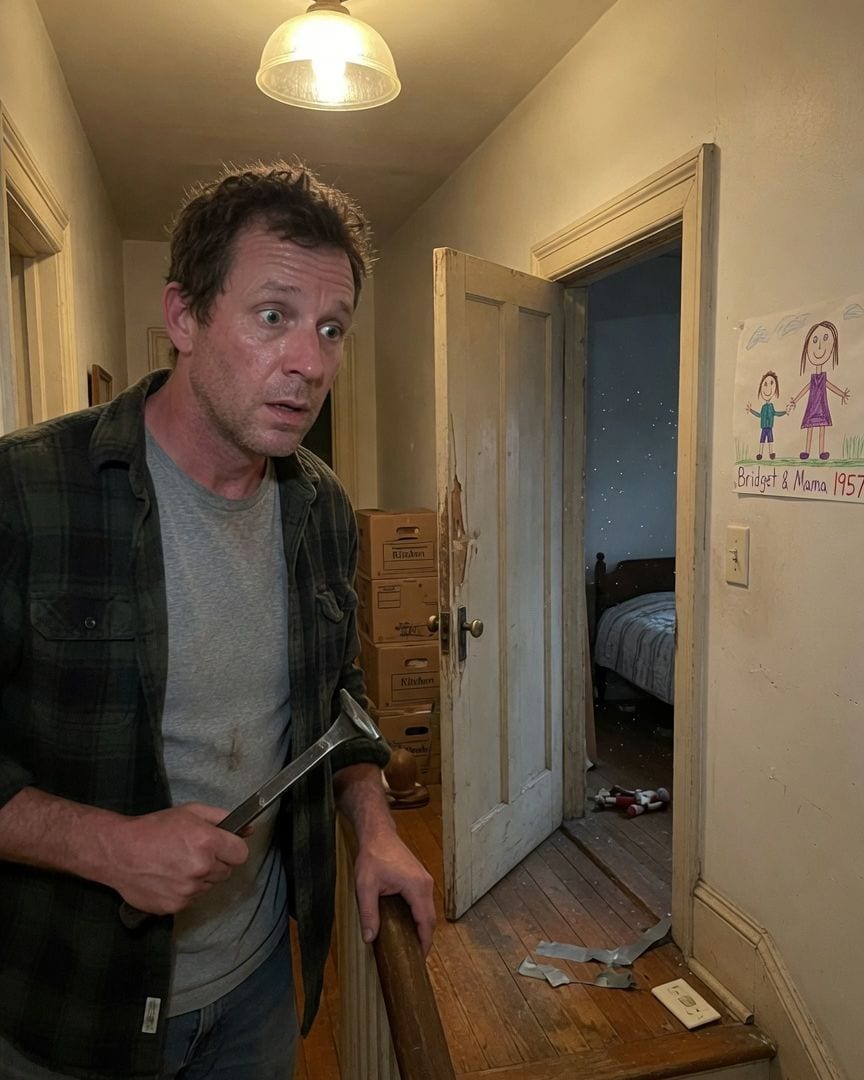
My landing light switches itself off at 9:40 every night. I've watched the switch flick down under nothing, the tape peeled back. The house holds its breath.
My great-uncle's old house was a quiet gift, a place to finally settle. But as I unpacked, a strange worn path on the floorboards led me to a small, barely visible door, perfectly blended into the wall. It was undeniably locked, and felt like a deliberately obscured secret.
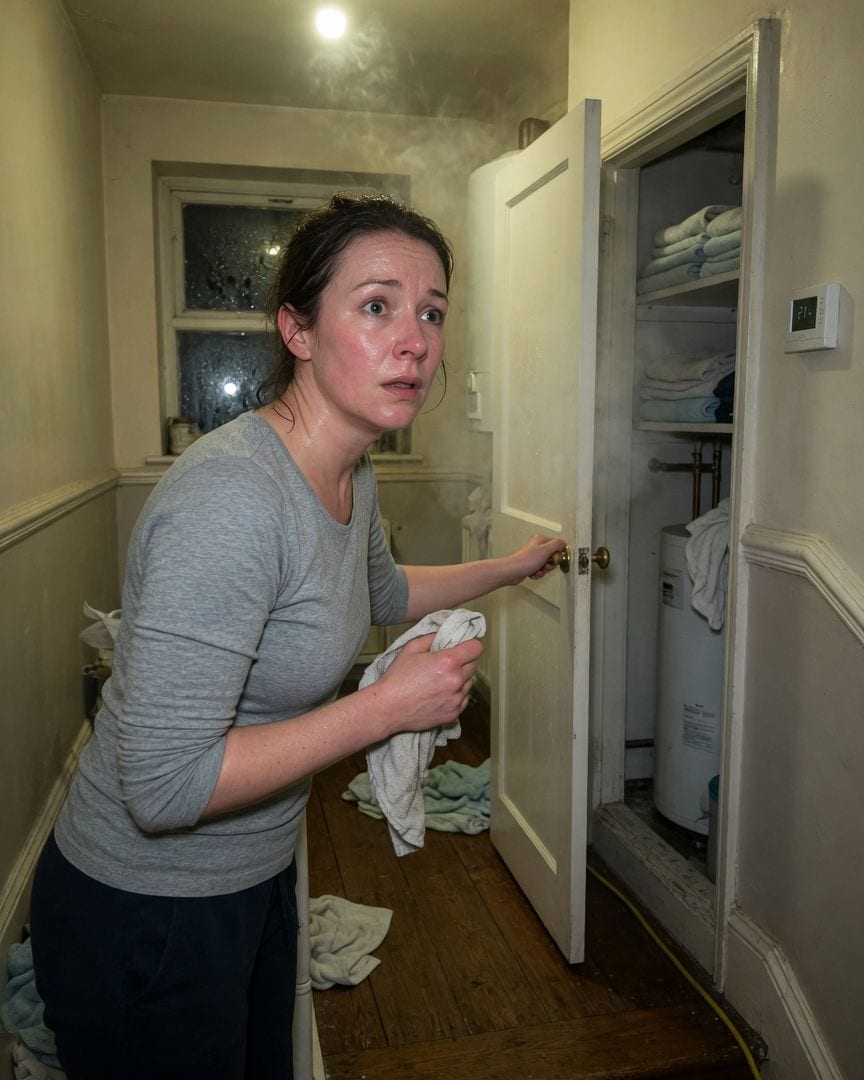
My airing cupboard opened onto a burning brick copper, sheets boiling. The heat rolled out, smelling of soda and wet linen. I shut it; my boiler was back.
My new house, bought just last spring, felt colder than expected. When I opened the airing cupboard, it wasn't mine at all, but a blast of steam and a roaring fire from an impossible past. Days later, a faint, metallic smell still drifted from the landing, and a worn path on the floorboards led to a hidden, ancient sampler beneath my feet, dated 1892.
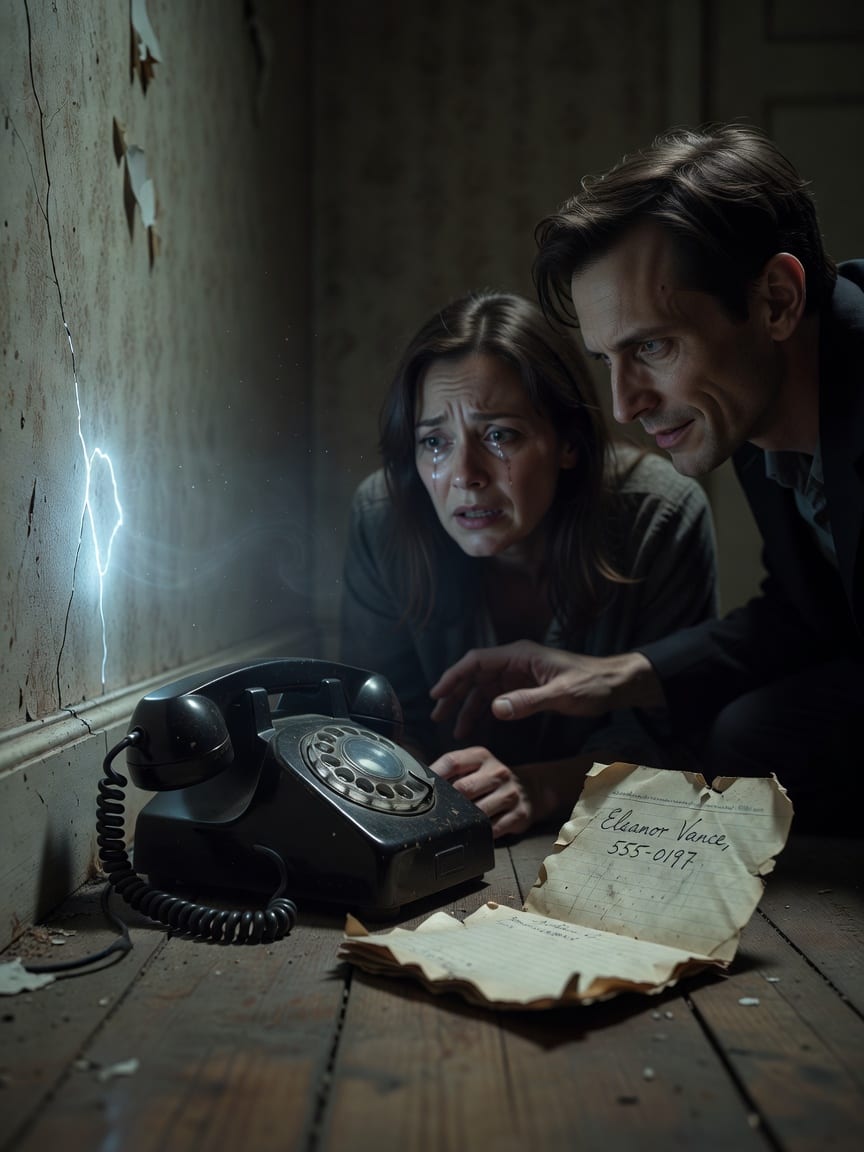
My house's walls ring when I dial a phone number from a 1974 directory. My neighbors said that directory was trash.
I was sifting boxes in my new house when I found an old 1974 telephone directory for my street. It listed my address, 12 Elm Street, under the name "Mr. & Mrs. Sheppard." On a whim, I called the faded seven-digit number. My cell phone rang, but a low, muffled sound also vibrated from the wall beside me.
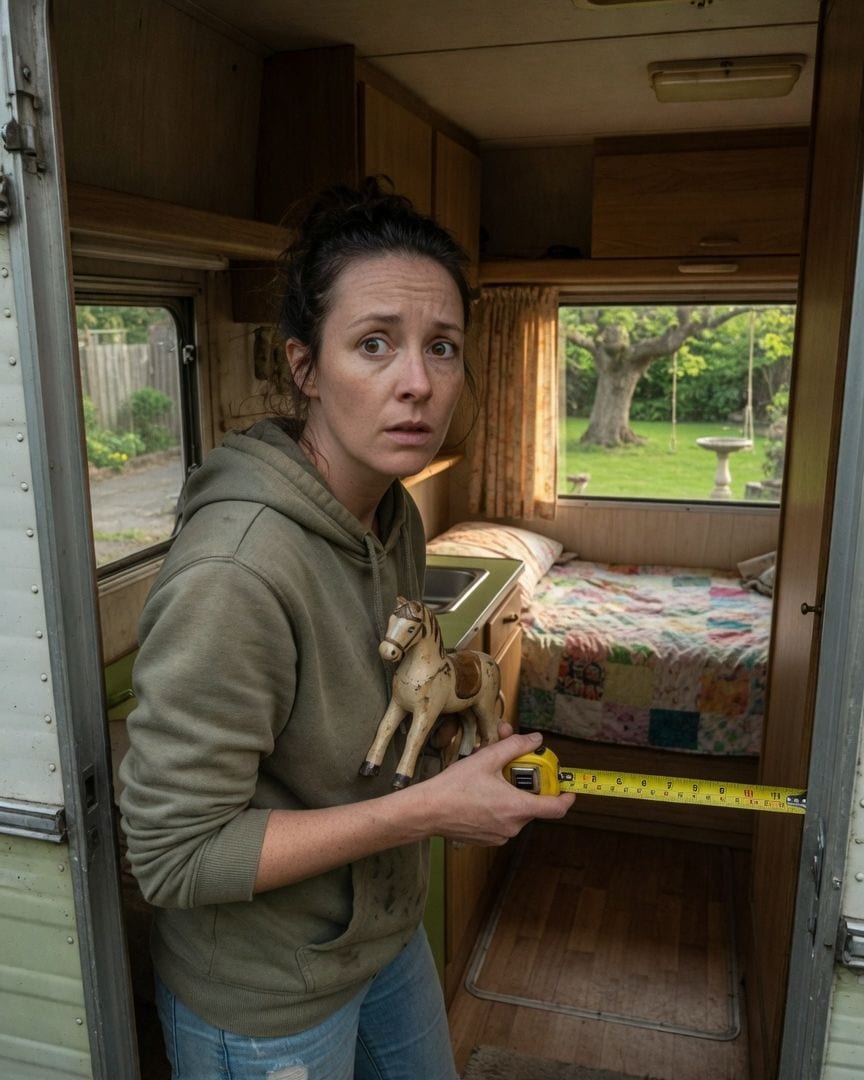
My new caravan's corridor runs longer than the caravan itself. Eleven feet of hallway past the end wall, to a room with a made bed and a window looking out on a garden it's never been parked in.
I finally bought my dream vintage caravan, a twelve-foot beauty. But when I measured inside for a mattress, the numbers didn't add up. Beyond where the wall should be, an impossible room with a window looked out onto a manicured garden I'd never seen before, a garden that couldn't possibly exist.
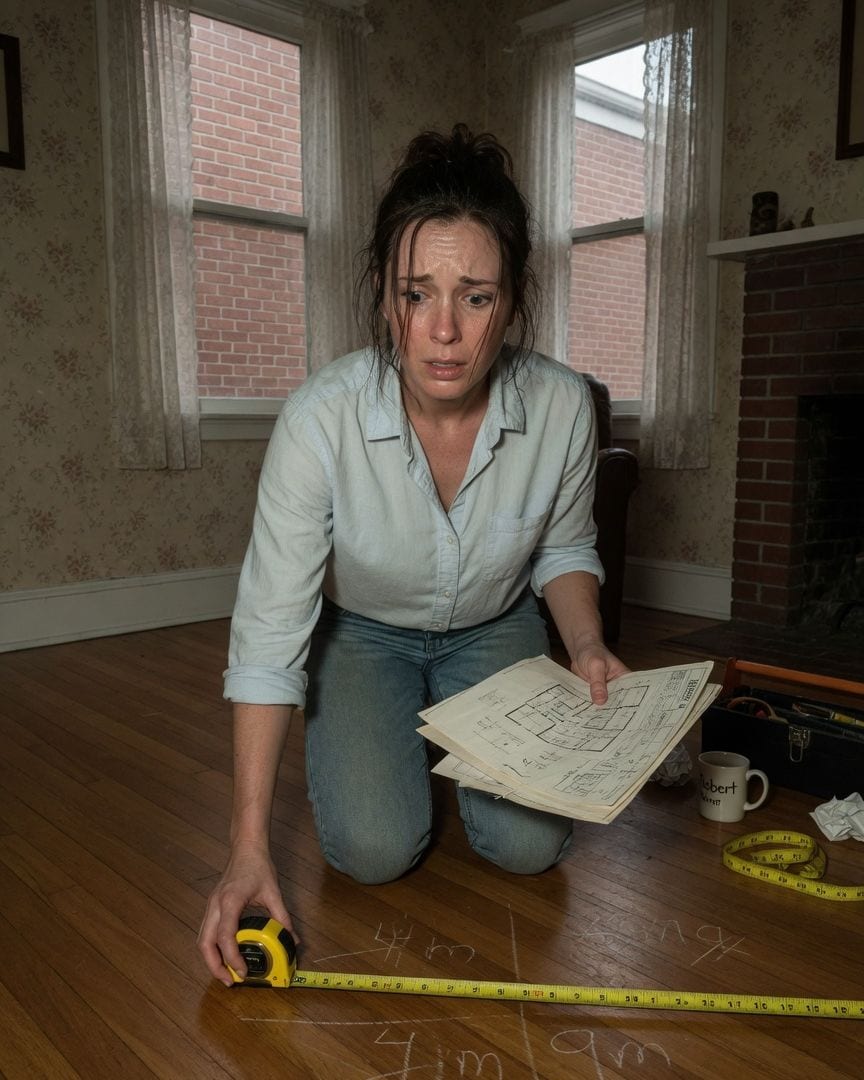
Our living room measures four by five metres. But the outside wall is nine metres long. A metre of house, gone, and I can't find it.
After moving into our charming 1920s house, I was meticulously measuring the living room when the dimensions refused to add up. My calculations of the interior space led me to discover a narrow, unpainted fifth door in the hallway, tucked almost out of sight. It wasn't on any original plans, and it opened to absolute, impenetrable darkness.
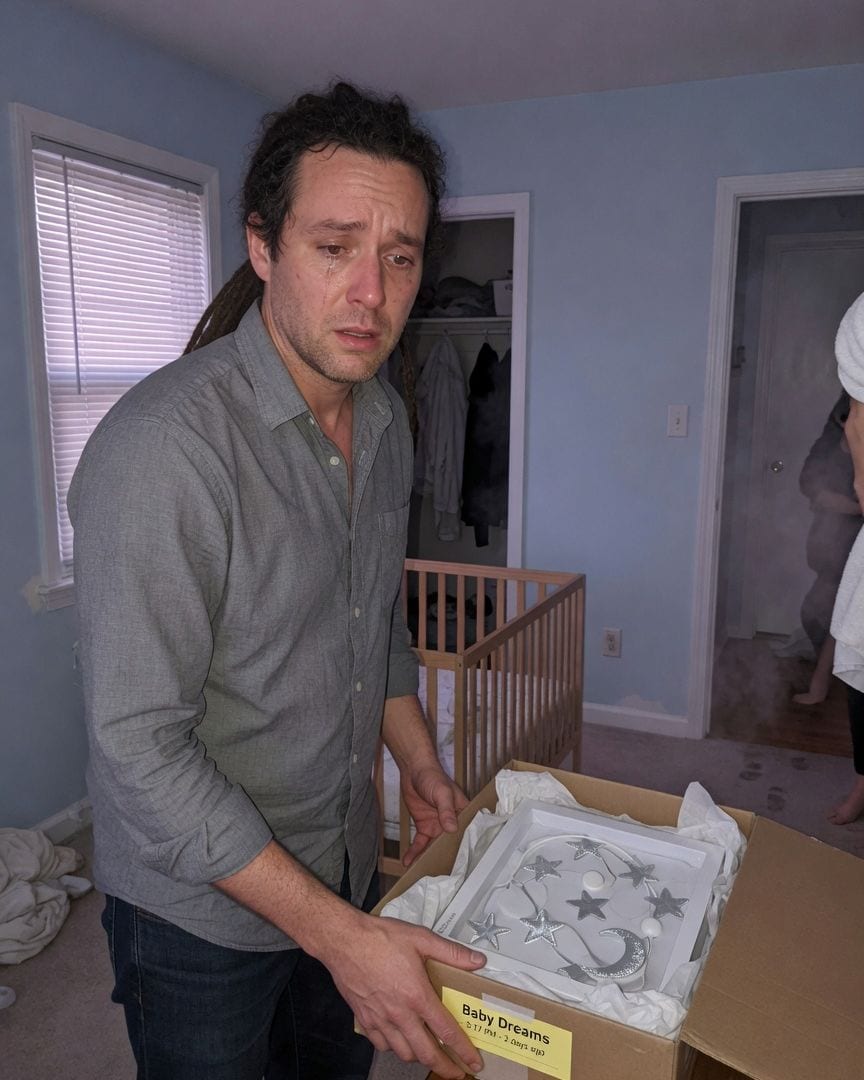
My wife thanked me for the pale blue nursery. We have no child. She described the mobile I'd only imagined, then asked when it would arrive.
Sylvia returned exactly one year after her disappearance, a miracle I could barely believe. But her first words about a nursery I'd only ever imagined, complete with a specific mobile, sent a shiver down my spine. That mobile, a private fantasy, arrived two days ago, and she just asked why it was late.