My new caravan's corridor runs longer than the caravan itself. Eleven feet of hallway past the end wall, to a room with a made bed and a window looking out on a garden it's never been parked in.
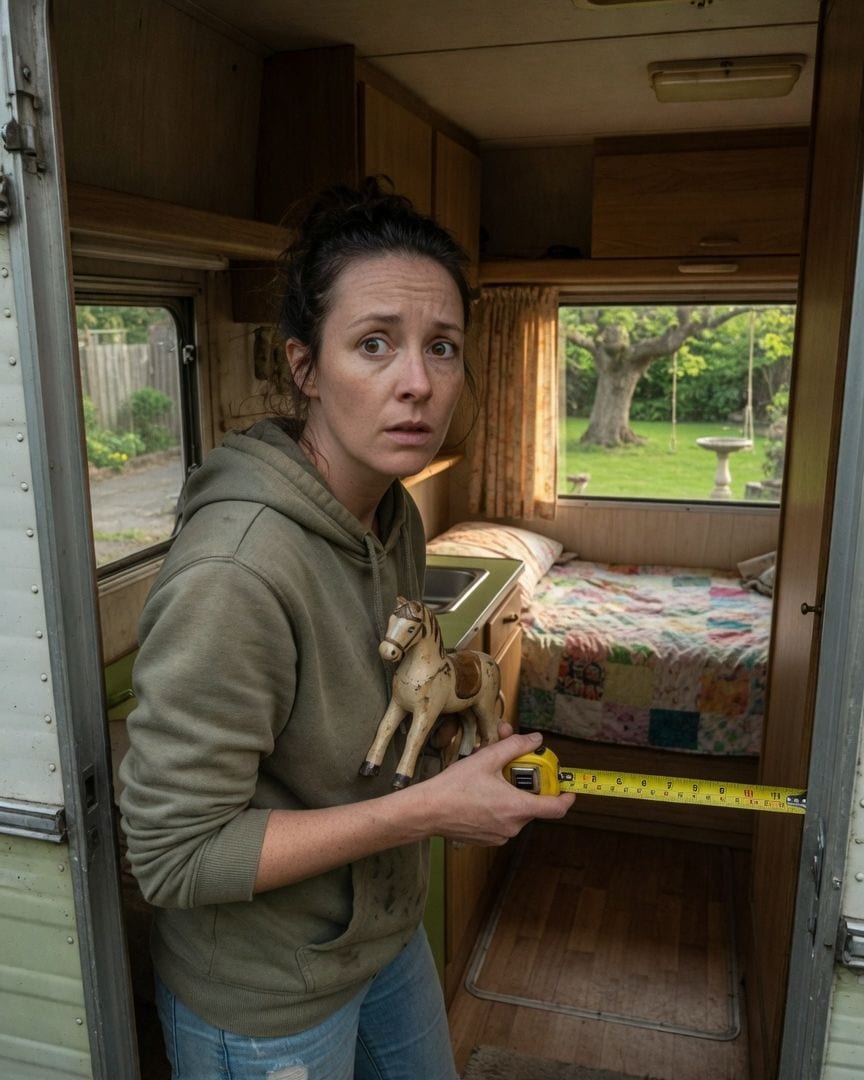
I’d just bought the twelve-foot touring caravan, a vintage beauty, a project I’d been dreaming of for months. Rose Underwood, thirty, and finally a proper mobile home.
The first thing I wanted to do was measure it for a new mattress, maybe rip out some of the dated upholstery.
I pulled out my trusty metal tape measure, pressing the end against the front wall, letting it spool out down the narrow corridor. Past the compact kitchenette, towards what should have been the back bunk.
Eleven feet, the tape read, to the door of the back bunk.
I paused, frowning. The caravan itself was only twelve feet long. The kitchen alone took up a good four. The numbers simply didn’t add up. I must have misread it.
I pulled the tape back, measured again, slowly, pressing the end against the front wall, letting it spool out centimetre by careful centimetre. Eleven feet. To a door that shouldn't be there.
Past where the end wall should already have stopped me.
Beyond that door, a further room. Not a bunk, not a storage area, but a fully made bed, perfectly arranged, covered with a patchwork quilt, and a window. A window looking out on a garden.
A manicured lawn, an old oak tree with a thick, gnarled trunk, a stone birdbath. A garden the caravan had absolutely never been parked in. It was parked on my driveway, overlooking my neighbour's fence and a busy road.
The window was a lie.
I backed out of the caravan, my heart thumping a quiet, uneasy rhythm. I ran my hand along the metal skin of the exterior, tapping it. Twelve feet, nose to tail. Solid. No hidden extension, no pop-out.
Just the usual aluminium shell. I went back inside. The corridor was still eleven feet. The room was still there. The garden was still waiting. I measured the exterior again, then the interior. Then again. The numbers refused to reconcile.
I stood in the impossible room, the soft afternoon light from the impossible garden falling across the impossible bed, and felt a quiet, creeping dread settle deep in my bones.
I forced myself to be rational. It had to be a trick of the light, an optical illusion, a clever mirror. Or maybe some bizarre, custom-built extension I hadn't noticed, despite my thorough exterior inspection.
I ran my hands over the walls, checked for seams, for panels, for anything that might suggest a false wall or a secret compartment. Nothing. Solid. The wood grain matched the rest of the caravan's interior, a warm, faded pine.
The window felt like real glass, cool to the touch. The garden outside was vibrant, green, utterly still. Not a reflection. It was too deep, too clear, too detailed.
I tried to open the window, but it was sealed shut, the latch refusing to budge.
The made bed was real too, heavy and solid beneath the patchwork quilt, plump pillows piled against the unseen back wall. I ran my hand over the quilt, feeling the texture of the stitches, the softness of the aged fabric.
It smelled faintly of lavender and old linen, a clean, gentle scent. Underneath the pillows, nothing. I scanned the room again. It was small, cozy, almost quaint. My gaze drifted to the wooden floor near the bed.
I noticed a faint scuff mark, a shallow groove in the polished wood. Kneeling, I peered closer.
It looked like something had been dragged there repeatedly, or perhaps something had rolled back and forth in that precise spot for a long, long time.
Reaching a hand under the bedframe, I felt along the dusty floorboards. My fingers brushed against something small, smooth, and hard. I curled my hand around it and pulled it out.
It was a child's wooden toy horse, worn almost featureless from years of handling, its painted eyes faded to faint smudges, its mane and tail smoothed away. It felt impossibly old, impossibly cherished. My breath hitched.
This wasn't just an impossible room; it was a room with a history, a story that felt disturbingly intimate. Who had left it?
And why did this familiar, innocent object feel like a cold, hard knot of dread in my stomach?
I sat on the edge of the impossible bed, turning the wooden horse over and over in my hands. The room was silent save for the distant, unfamiliar chirping of birds from the garden.
I felt a profound sense of wrongness, a cold certainty that this wasn't a trick, wasn't a mistake. This room, this garden, this toy – they were all real, and they shouldn't be. I glanced at the window again.
The oak tree in the garden had a thick, gnarled branch that reached almost to the glass. As I watched, a small, dark shape detached itself from the leaves near the branch.
It was a swing, a child's rope swing, swaying gently in a breeze that didn't reach me. Then, as I stared, a flicker, a movement among the branches. A tiny, almost imperceptible face, peering out. Gone in an instant.
A child. A fleeting, pale glimpse of a child's face, partially obscured by leaves, watching me from the impossible garden.
The fleeting image of the child's face haunted me. I tried to dismiss it as a trick of the light, an overactive imagination fueled by the impossible room, but the image clung to my mind.
I spent the next day trying to find any information about the caravan. The previous owner, Felix Lockwood, was listed on the registration documents as living in a village about an hour's drive away. I decided to visit him.
He was the only person who could possibly explain this.
The drive was uneventful at first, a familiar route through rolling countryside. I kept my eyes peeled for any unusual landmarks, any hint that I might be driving into a similar anomaly, but it was just a normal road trip.
But then, after a series of turns I felt certain were leading me towards Lockwood's address, I noticed the landmarks felt wrong. A specific old stone barn, its roof half-collapsed; a crooked fence, leaning precariously; a cluster of ancient oaks.
I'd passed them before. I checked my GPS, which showed me progressing, but the scenery outside repeated itself with unnerving precision. Mile after mile, the same stretch of road, the same fields, the same distant church spire.
I'd driven an hour, used a quarter tank of fuel, but had returned exactly to where I started.
The Road That Returns.
Shaken, I tried again the next day, this time printing out directions from a different online map service and avoiding the GPS altogether. I meticulously followed the turns, counting down the miles. The same impossible loop.
It was as if the immediate geography was actively preventing me from leaving its sphere of influence, or from accessing information about its past. I pulled over, heart hammering against my ribs, and stared at the familiar-yet-impossible view.
This wasn't bad navigation; this was deliberate.
Eventually, I resorted to sending Felix Lockwood a letter, explaining I'd bought his old caravan and had a few questions about its unique features. I omitted the impossible room, fearing he'd dismiss me as a lunatic.
Two weeks later, a terse, handwritten reply arrived. It gave me an address in a nearby town, not the village I'd originally tried to reach, and a specific time to meet at a public library. No phone number. No explanation.
Just a time and a place. The unusual instructions only deepened my unease, but I knew I had to go.
I felt a prickle of unease at Felix’s specific instructions, but the library offered a public, neutral ground. I arrived early and found Felix Lockwood, a man in his mid-sixties, waiting at a quiet table in the local history section.
He was lean, with deep-set eyes that seemed to hold a profound weariness. He didn't offer a handshake, just gestured to the seat opposite.
His clothes were neat, but decades out of style, as if he hadn't bothered to update his wardrobe since the 70s.
"You got the caravan, then," he said, his voice flat, devoid of warmth. It was a statement, not a question. "It still has that… feature?"
I hesitated, then decided on honesty. This man knew. "The extra room. And the garden. And a wooden toy horse."
Felix’s eyes narrowed, a flicker of something unreadable in their depths. A ghost of a frown. "I knew it," he murmured, almost to himself. He leaned back slightly, a sigh escaping him. "You're not the first to find it."
He then leaned forward again, his voice dropping, though there was no one else within earshot. "You've been asking around, haven't you? About the caravan's history?"
I admitted I had, mentioning my failed attempts to drive to his original address. The Road That Returns. Felix gave a humorless chuckle, a dry, rattling sound. "It doesn't like being investigated. It doesn't like its secrets being disturbed."
He glanced around the library, a quick, almost paranoid sweep, as if the very walls might be listening. "It knows when you're looking. It makes sure you don't find what you're not meant to."
His intensity was unsettling, the calm way he spoke about impossible things. "I've seen it happen. People try to trace its past, and they get… diverted. Or worse." He paused, his gaze fixed on mine, unwavering.
"I'm telling you this as a warning. Stop digging. Sell the caravan. Forget you ever saw that room."
I refused to be cowed. "What do you mean, 'or worse'?" I pressed, pushing the wooden horse, which I’d brought with me, across the table towards him. Its worn smoothness seemed to absorb the library’s fluorescent light.
"And what about this? Who does this belong to?"
Felix picked up the toy, his fingers tracing its worn curves. The way he held it, so carefully, so intimately, confirmed my suspicion. A profound sadness settled on his face, the weariness in his eyes deepening.
"My sister's," he said, his voice barely a whisper, thin and reedy with memory. "Evelyn's." He looked up, his eyes meeting mine. "She disappeared in 1967. From a caravan. Just like yours."
I felt a chill spread through me, like icy water trickling down my spine. The pieces were beginning to align, forming a picture I didn't want to see. "What happened?"
Felix sighed, a deep, shuddering breath that seemed to carry decades of grief. "We were eight. My parents had bought a new touring caravan, very similar to yours. Light blue, I remember. One day, Evelyn went inside to play.
I heard her call out, 'Felix, look what I found!' I went in, but she wasn't there. Just the caravan, the same dimensions as always. But I remember hearing her voice, fainter, from what sounded like… beyond the back wall.
Like she was in an extra room. My parents searched everywhere. The police, too. They found nothing. No trace. Just a caravan that was suddenly… empty."
He produced a crumpled, yellowed newspaper clipping from his worn leather wallet. The edges were soft with age, the print faded. The headline read, "Child Vanishes from Family Caravan – No Clues."
Below it, a small, blurry photo of Evelyn, smiling, clutching the exact wooden horse that lay between us on the table.
"The impossible room," I whispered, the words barely escaping my lips. The dread was no longer quiet; it was a cold, hard fist squeezing my chest. "It was there then, too."
Felix nodded, his gaze distant, fixed on some point far beyond the library walls. "It comes and goes. Manifests in different structures. Always a caravan, or a small cabin, a shed. Something that can be easily moved or overlooked.
A temporary anchor. It draws people in, usually those who feel… a certain pull towards it. Like a resonance." He looked at the toy horse, then back at me, a flicker of warning in his eyes. "It takes them.
And it leaves something behind."
"Leaves something behind?" I repeated, my voice thin, a tremor I couldn't control.
Felix nodded, his gaze distant, lost in memory. "A version of them. A copy. Subtly altered. A ghost in the machine. My parents… they changed after Evelyn disappeared. They were there, but not there. Empty shells. I saw it.
So, I spent my life looking for it. For the caravan, for the pattern. I tried to warn people, but it always… diverted them. Made them forget, or lose their way, or just disappear from my inquiries."
He pushed the newspaper clipping towards me, then laid a faded photograph on top of it. It was Evelyn again, younger, perhaps five, beaming, her arm around a woman with kind eyes. "My mother, before. And Evelyn, with the horse."
I looked at the photograph, then back at the wooden toy horse on the table. The girl in the photo, Evelyn, was clutching it to her chest, her face alight with innocent joy.
As I looked, a strange sensation washed over me. Not just recognition, but a memory. A faint, almost dream-like echo. The smooth, cool feel of that very wood in my own small hand.
The faint smell of damp earth and sun-warmed leaves. A sun-dappled garden. A memory I had no right to have, a garden I had never physically seen. A garden identical to the one outside the impossible window. The wooden horse.
My hand. A child’s face, not Evelyn’s, but my own, reflected in a memory that wasn't hers, yet felt utterly real, utterly inside me.
I gasped, pulling my hand back from the photograph as if burned. "I… I remember it," I stammered, my voice barely audible, raw with shock. "The horse. The garden. How?"
Felix’s eyes held a deep, knowing sorrow. "You're connected, Rose. Like Evelyn. Like others before her. Some people, they have a resonance. A frequency, you could call it. The anomaly seeks them out. Draws them in."
He leaned closer, his voice urgent, stripped of its previous weariness, replaced with a desperate sincerity. "The caravan isn't just a place; it's a gateway, an anchor for something that exists outside our reality.
The room, the garden – that's a static pocket dimension. It's always there, just waiting for a new anchor, a new resonant individual to complete its cycle.
When someone is drawn in, their original self is absorbed into that dimension, becoming part of the garden, a living memory. And a… replacement is left behind. A shadow. That's why my parents changed.
That's why I remember Evelyn's voice, but she was never truly gone from the caravan. Only from our world."
He pointed to the newspaper clipping, then back to the memory in my eyes. "The article says Evelyn vanished. But the anomaly doesn't 'vanish' people. It swaps them. It's a consumption, a slow integration. The Road That Returns?
That's its way of protecting itself, of keeping its anchors isolated, its harvest undisturbed. It ensures the 'copies' remain within its influence, never quite breaking free, never quite realizing their true nature until it's too late."
I stared at him, the horrifying coherence of it all making my stomach churn. Every impossible measurement, every repeating road, every lost memory, every subtle change in my own life – it all clicked into place.
I was being drawn in. I had been, unknowingly, for a long time.
The memory I'd just experienced wasn't an echo of Evelyn; it was a fragment of my own displaced self, my own original being, already part of the garden.
"How do we stop it?" I demanded, my voice shaking but resolute, a desperate strength I didn’t know I possessed. "How do we break the cycle?"
Felix looked at me, a glimmer of hope, fragile but real, in his weary eyes. "I've been studying it for decades. The anchors are temporary. They can be… dislodged.
If the connection, the resonance, is severed from the anchor point, it can't complete its draw. But it's dangerous. The anomaly fights back."
He explained that the caravan, as an anchor, had to be physically unmoored from its dimensional connection while the 'resonant' individual was fully present. It required a specific, intense disruption, a kind of 'geometric shock' to its link.
I realized what he meant. I had to be in the impossible room, with the wooden horse, at the exact moment of severance. It was a risk I had to take.
Back at my driveway, Felix stood by, grim-faced, as I entered the caravan. I walked down the familiar, impossible corridor, the wooden horse clutched tight in my hand.
The garden outside the window seemed brighter, more inviting, pulling at me with an almost physical force. I felt the subtle hum, the low thrum of the anomaly's energy, a deep resonance in my bones.
Felix, following his instructions, began to methodically dismantle the caravan's physical structure – not destroying it, but carefully, precisely, breaking the specific, structural points that formed its anchor to the dimension.
He worked with a practiced, almost ritualistic care, removing screws, prying panels, each action deliberate.
I sat on the bed in the impossible room, the wooden horse tight in my hand. The window shimmered, the light from the garden pulsing. The garden beckoned.
A faint, childish whisper, like Evelyn's, seemed to drift from the oak tree, a soft, inviting 'Rose…' As Felix worked, the room began to subtly warp, the walls breathing in and out like lungs, the air growing heavy and thick, smelling of ozone and damp earth.
The garden outside twisted, the colours shifting, the light flickering, as if caught in a violent storm. I felt a profound sense of tearing, of being stretched between two realities, my very being an anchor point for the wrenching.
With a final, agonizing wrench from Felix, a loud, metallic shriek echoed through the caravan, a sound that grated against my teeth. The impossible room bucked violently.
The window shattered inwards, not with glass, but with a torrent of green leaves and dark soil that vanished before hitting the floor, sucked back into nothingness. The air crackled with raw, unstable energy.
I screamed, a primal sound torn from my throat, as the connection snapped. A profound emptiness, a sudden, cold void, where the garden had been. The caravan shuddered, then went utterly still, the silence absolute, deafening.
I lay gasping on the bed, the wooden horse fallen from my hand, tears streaming down my face. The wall where the window had been was now solid, unblemished wood. No garden. No extra room. Just a twelve-foot caravan.
I had stopped it. For her. For me. But the lingering taste of earth and leaves in my mouth, the phantom weight of the wooden horse in my hand, told me the cost.
The caravan sat on Rose's driveway, a normal twelve-foot touring vehicle. The back bunk was just that now – a bunk, not an impossible room. Felix Lockwood left shortly after, a quiet, knowing nod her only farewell.
Rose tried to go back to her life. She sold the caravan, wanting nothing more to do with it, not even its normal form.
She found herself hyper-aware of spaces, of measurements, of the subtle discrepancies in the world around her.
She sometimes caught herself staring at old houses, at abandoned sheds, a cold certainty in her gut that she recognized a particular angle, a familiar, unsettling geometry.
The garden, the horse, Evelyn's face – they were etched into her mind, a new layer of memory she now carried.
Rose lived her life, always with a quiet vigilance.
She learned to ignore the occasional faint scent of damp earth and sun-warmed leaves that would sometimes drift through her apartment, or the fleeting, peripheral glimpse of a familiar oak tree through an unfamiliar window. She knew. She was marked.
The anomaly was stopped for her, in her caravan, but she carried the knowledge of its existence, its cyclical hunger. One day, years later, she found herself browsing old house listings online, a morbid curiosity guiding her.
A small, unassuming cottage caught her eye, its description bland. But one photo, of a back bedroom, showed a window.
And through that window, barely visible, just beyond a tall hedge, was the unmistakable, gnarled branch of an old oak tree, and a stone birdbath. She closed the laptop, her heart a cold, hard knot. The garden was still there.
It had simply found a new anchor. No one commented on the change, or perhaps, no one noticed.
If this one got to you
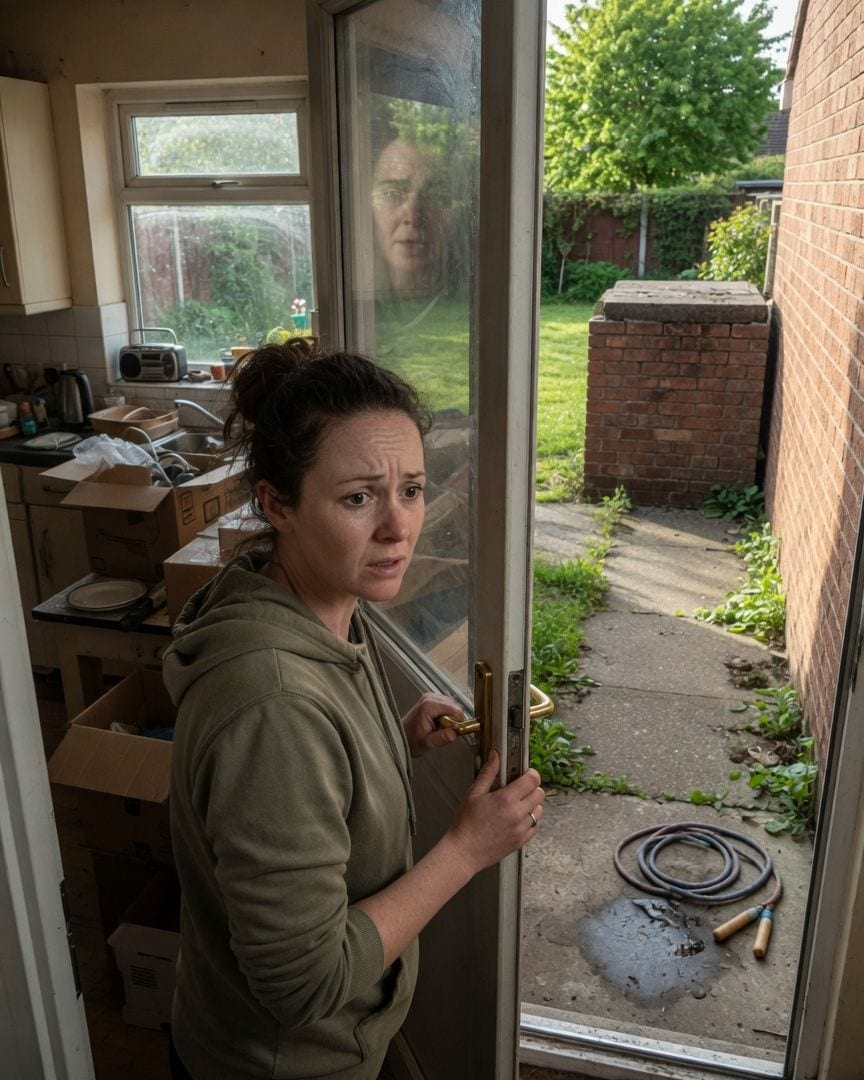
Children skip in my garden at 3:30 on school days. They're on the concrete by the coal bunker, where there's no room. The rope they leave is always damp.
I kept hearing children skipping outside my kitchen window, even though there was nowhere for them to play. Every time I looked, the narrow side return was empty, but a damp skipping rope lay on the concrete. Then, my old cleaning cupboard opened onto a vibrant, old-fashioned garden, where two small figures stared back with unnervingly blank eyes.
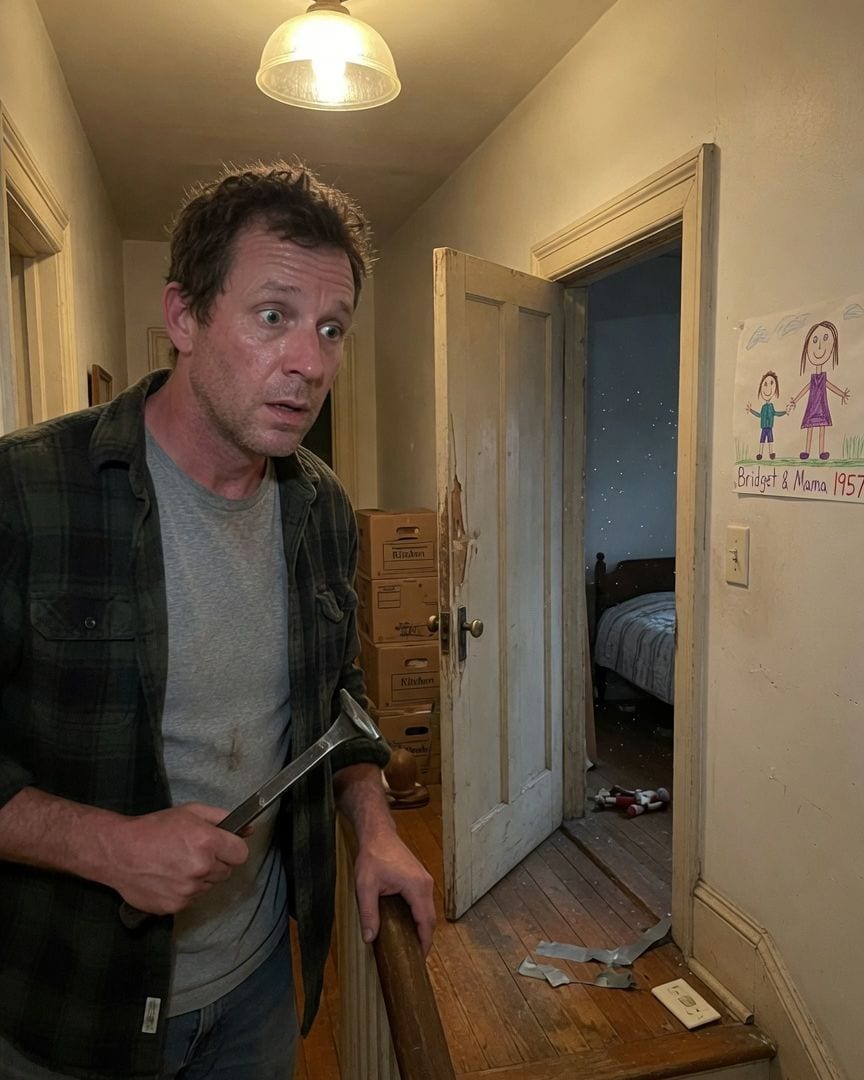
My landing light switches itself off at 9:40 every night. I've watched the switch flick down under nothing, the tape peeled back. The house holds its breath.
My great-uncle's old house was a quiet gift, a place to finally settle. But as I unpacked, a strange worn path on the floorboards led me to a small, barely visible door, perfectly blended into the wall. It was undeniably locked, and felt like a deliberately obscured secret.
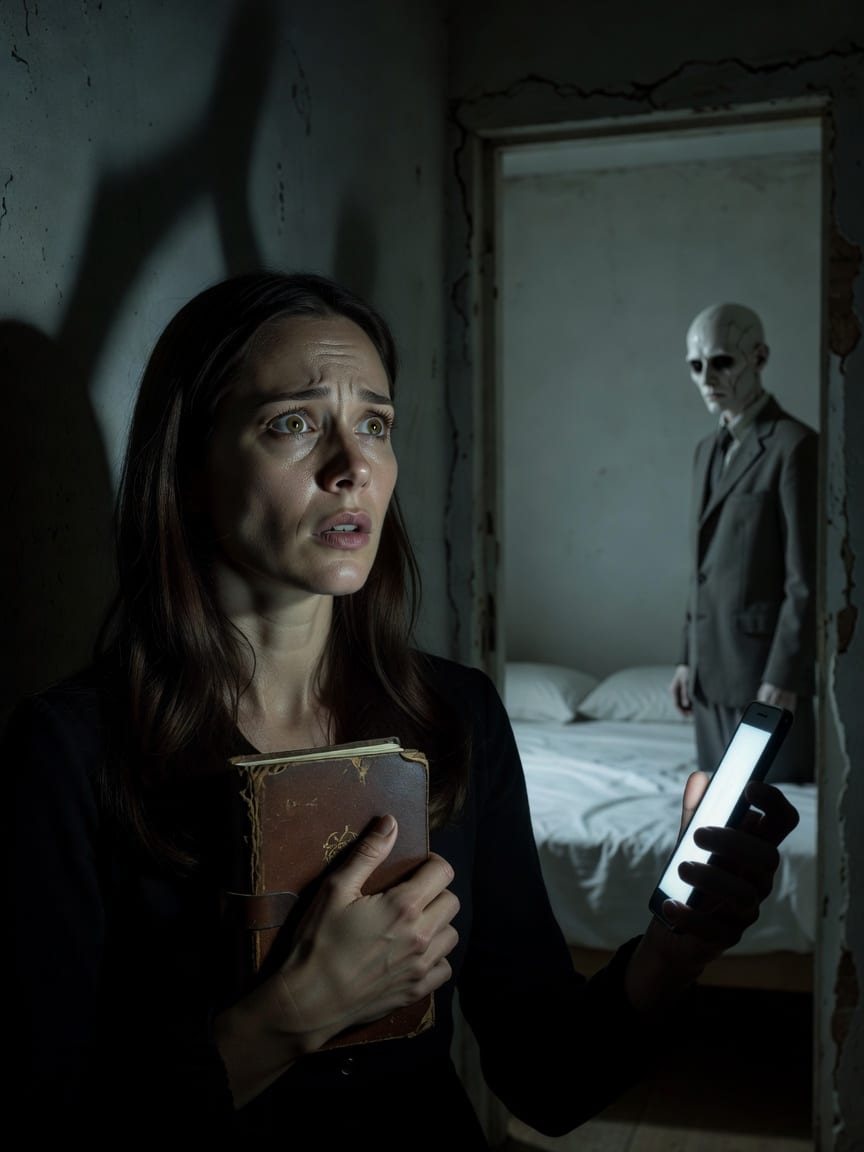
Behind a plastered-over doorway, I found a room. Papered, carpeted, and furnished with a made bed, sealed for decades. The air was dead still, but the bed wasn't dusty. My council tax bill only lists five rooms.
I'm Claire, an architect, meticulously planning my new Victorian terrace renovation. But when I uncovered a hidden room behind a wall, everything I knew about time and decay shattered. The bed was perfectly made, the air still, yet there was no dust, only an unnerving cold.
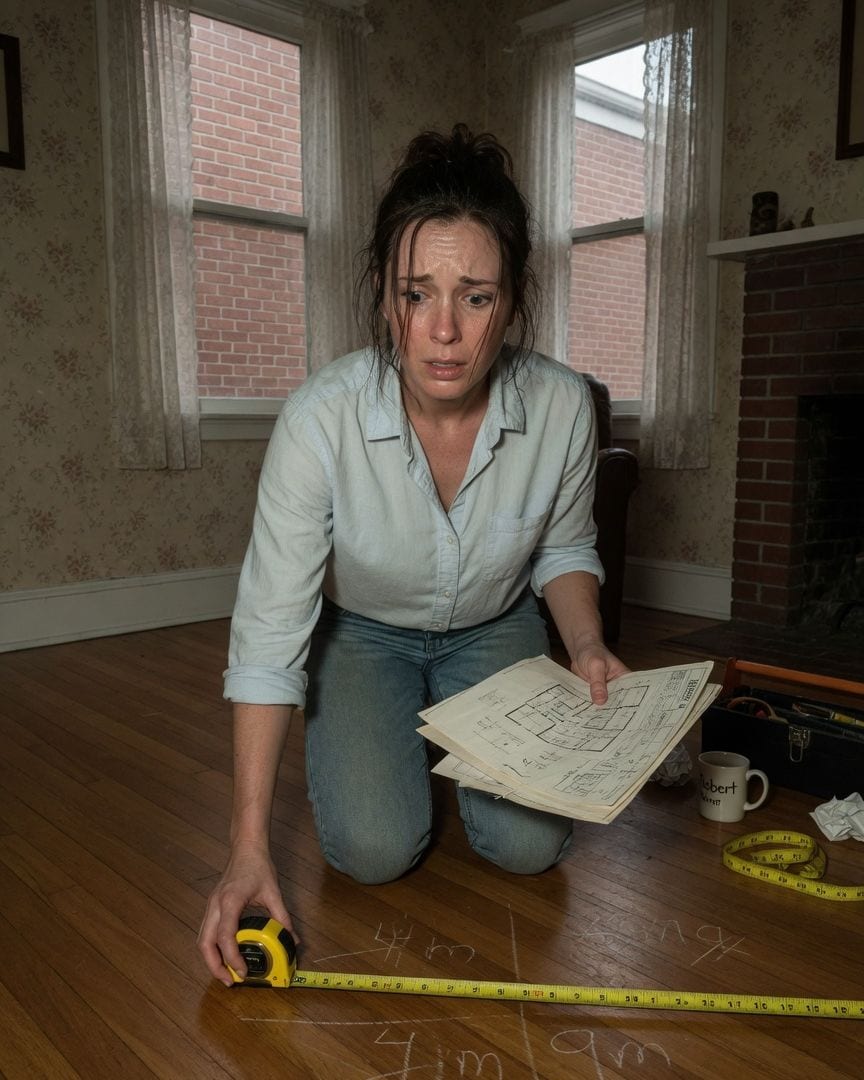
Our living room measures four by five metres. But the outside wall is nine metres long. A metre of house, gone, and I can't find it.
After moving into our charming 1920s house, I was meticulously measuring the living room when the dimensions refused to add up. My calculations of the interior space led me to discover a narrow, unpainted fifth door in the hallway, tucked almost out of sight. It wasn't on any original plans, and it opened to absolute, impenetrable darkness.
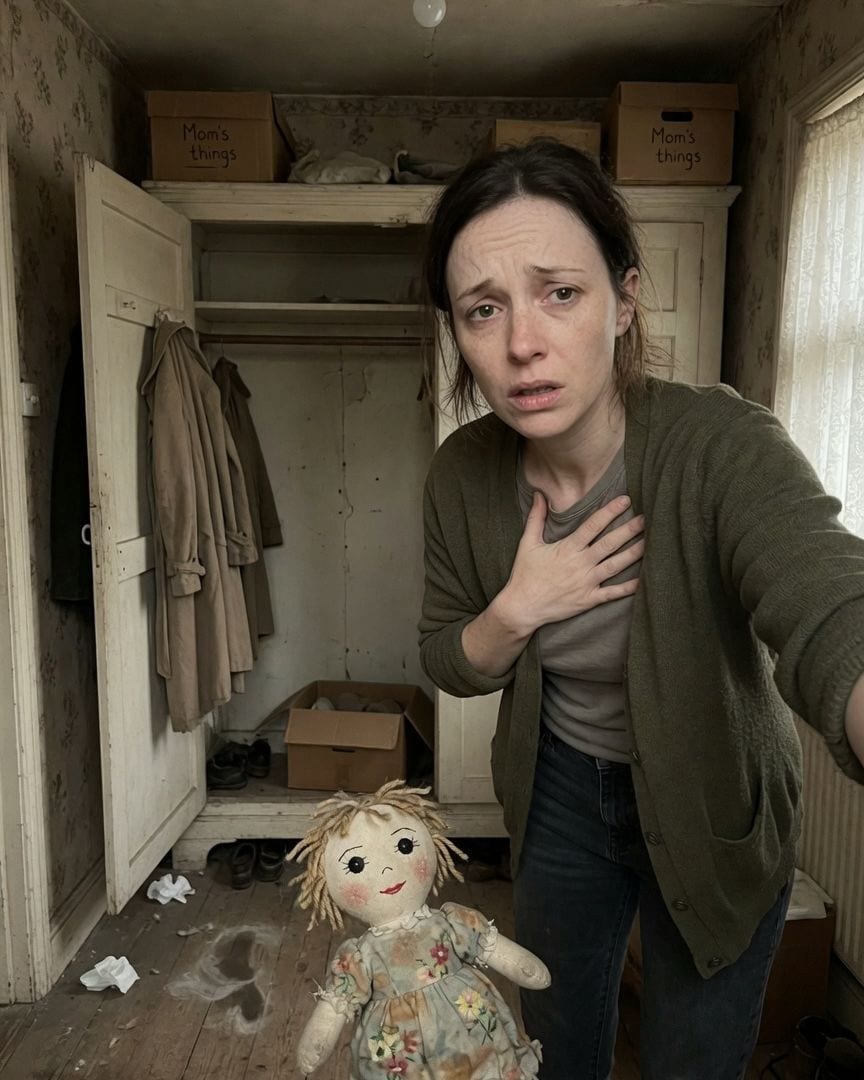
My shallow wardrobe opened into a child's bedroom. I'd knocked on its solid back wall for years. Now the doll from that room is on my floor.
My new house has a box room with a shallow wardrobe, barely a foot deep. But one day, reaching inside, the back wall vanished, opening into a child's bedroom with a cot and a burning nightlight. I slammed the door shut, only for it to be a normal closet again, leaving me with a cold, heavy stone of contradiction.
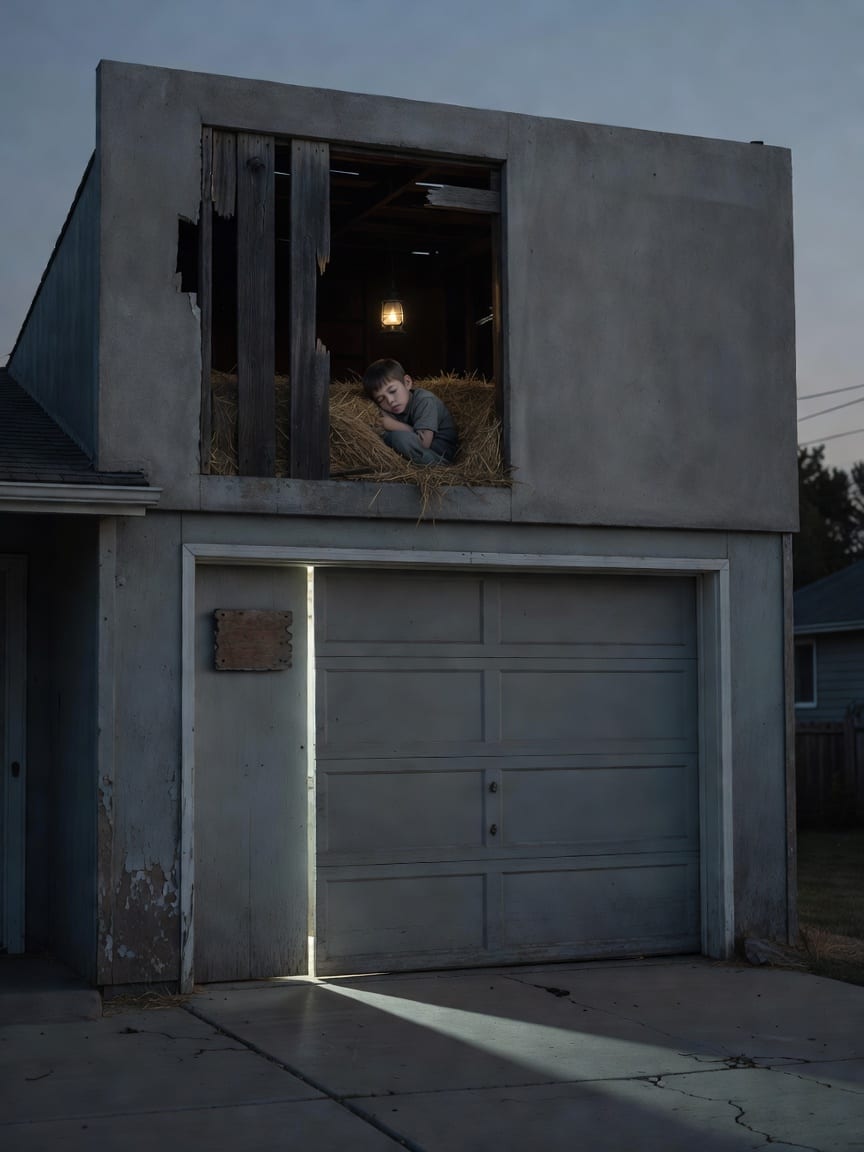
My garage's hayloft door stands open at night, onto a boy asleep in hay. The wall outside has been blank render since 1966.
My new bungalow's garage was a fixer-upper, meant to be my studio. One evening, after seeing strange visions and hearing phantom sounds, I pried open a loose plank in the wall. Inside, I found a child's tiny leather boot and a carved wooden horse, hidden in the dark.