My shallow wardrobe opened into a child's bedroom. I'd knocked on its solid back wall for years. Now the doll from that room is on my floor.
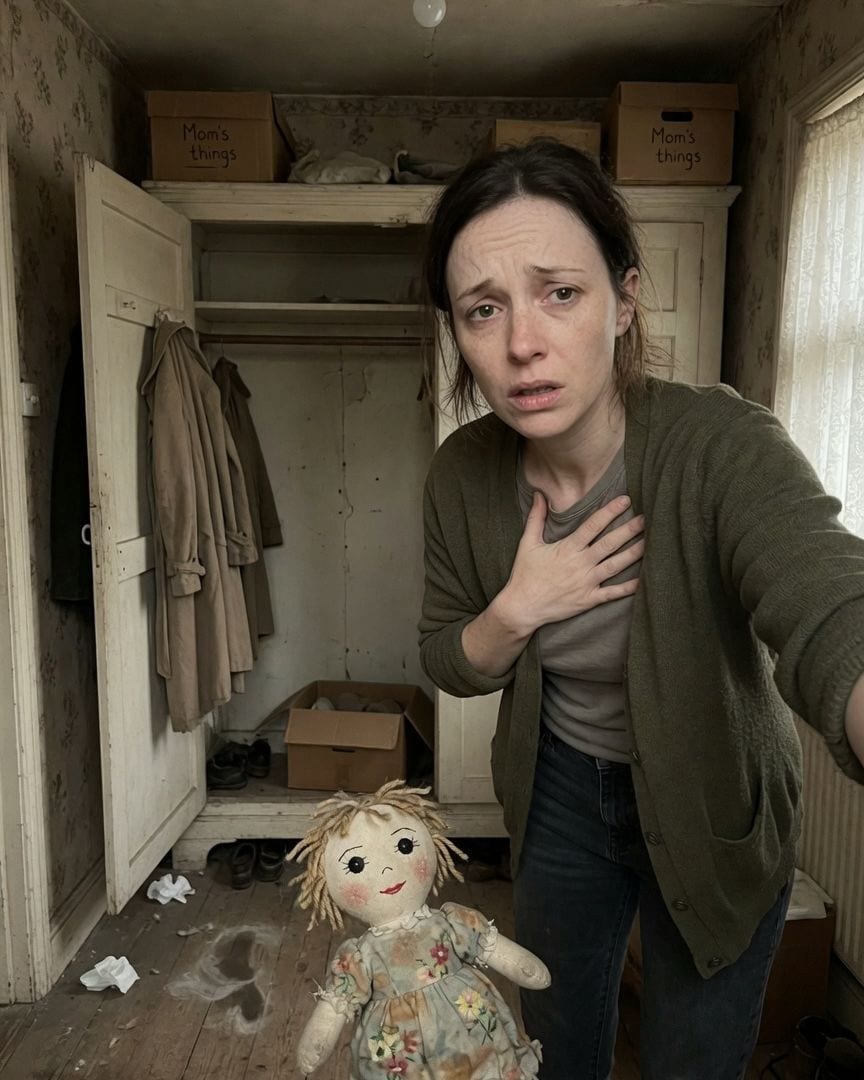
The box room in my new house on Elm Street is exactly what it sounds like – a small, square space, maybe eight feet by ten. Too small for a proper bedroom, too big to be just a closet.
My mother always called it the 'junk room,' and it had a built-in wardrobe, probably from the 1920s. Shallow, maybe a foot deep, with a thin wooden clothes rail.
I'd knocked on the back wall countless times, heard the dull thud of lath and plaster, solid as rock. No hidden passages, no secret compartments. Just old coats.
But a week ago, on the anniversary of my mother's death, something shifted. I remember feeling particularly low, just wanting to bury myself in her old cardigan. I opened the wardrobe, reached for it, and then I stopped.
It wasn’t shallow. It wasn’t a foot deep. Beyond the familiar rail and my musty coats, the space opened up into a child's bedroom.
A tiny cot, painted white, stood against a pale blue wall. A mobile with wooden animals spun slowly above it, casting faint shadows. And there, on a small table beside the cot, a nightlight burned, a soft, orange glow.
The air felt… different. Still. And there was a faint, sweet scent, like baby powder and old cotton. I didn't step in. I just stared, frozen, for what felt like an eternity. Then I slammed the door shut. Hard.
I stood there, heart hammering, trying to make sense of it. Grief, exhaustion, a trick of the light. It had to be. I took a deep breath, counted to three, and opened the wardrobe again.
It was exactly as it always was: a foot deep, my old coats hanging there, the plaster wall a solid, unyielding presence at the back. I reached in, felt the rough texture of my trench coat.
I opened and closed the door ten times, maybe more, each time revealing only the familiar, shallow space. The contradiction sat in my stomach like a cold, heavy stone.
For the next few days, I avoided the box room entirely. I’d walk past its closed door, my gaze skittering away, a knot tightening in my gut.
The image of that impossible room, the turning mobile, the burning nightlight, it gnawed at me. I spent hours online, researching architectural quirks, hidden compartments, anything that could offer a rational explanation for what I’d seen.
Old houses with sliding panels, double-backed closets, wartime hiding spots. Nothing fit the specific, mundane absurdity of my shallow wardrobe opening into a fully furnished, child's bedroom. And certainly not one that then reverted to normal.
One morning, the restless unease became too much. I had to go back. Had to prove to myself I was just losing it, that my grief was playing tricks. I pushed the door open, the box room silent and still.
The wardrobe stood in the corner, a dark, ordinary rectangle. I walked over, my footsteps unnaturally loud on the bare floorboards. I opened it. Just coats. Just the plaster wall.
I ran my hand along the back, feeling the cold, solid surface. I even tapped it again, listening intently. A dull thud. Nothing hollow.
I sighed, a shaky exhalation, and started pulling out a few old boxes from the floor of the closet, intending to sort through them, just to feel productive, normal. And that’s when I saw it.
Tucked against the baseboard, half-hidden by a forgotten dust bunny and a discarded shoe, was a small, hand-stitched doll.
Its body was made of faded calico, its simple dress covered in tiny, worn flowers. Its face was embroidered with thick, button eyes and a faint, red stitch for a smile.
It was clearly old, worn soft from years of handling.
But what truly froze me, what made the air catch in my throat, was the undeniable familiarity of it. I remembered it. Distinctly. Lying on the pillow of the cot, in the impossible child's room.
My heart hammered against my ribs, a frantic drum. I picked it up, the fabric soft and worn beneath my fingers, the stuffing loose.
It smelled faintly of something sweet, like old lavender, and something else I couldn't quite place, but felt intrinsically childish. It was real. Tangible. It was here.
My rational mind scrambled. Maybe my mother had put it there? An old toy from her own childhood?
But the doll’s style felt far older than anything my mother would have kept, and I’d never seen it before, not anywhere in her boxes, not in this house.
The ordinary explanation faltered, leaving a vast, cold void in its wake.
I gripped the doll, its fabric still warm from my hand. I could still see the faint imprint on the dusty floorboards where it had rested, a small, doll-shaped shadow.
I turned it over, examining the crude stitching, the faded pattern on its dress. This isn't just an old toy. This is a key.
A physical, tangible piece of evidence that the impossible room was real, that something from it had crossed over into my world.
My gaze snapped back to the wardrobe, now a dark, silent monolith in the corner of the box room. I knew, with a certainty that chilled me to the bone, that the doll hadn't just appeared from thin air.
It was left. Or it escaped. Chloe stares at the small, hand-stitched doll on her dusty floorboards, its button eyes fixed on nothing.
It's the same doll, the exact one she saw on the cot in the room that shouldn't exist, the room behind her wardrobe.
The doll sat on my bedside table. I couldn't bring myself to put it away, to hide it. It was proof, yes, but also a constant, unsettling presence, those stitched button eyes seeming to watch me.
I tried to ignore it, to dismiss it as an anomaly, a fluke. But the feeling of certainty I'd had in the box room never truly faded.
I started digging. First, the local historical society. Hours spent sifting through dusty archives of Elm Street property deeds, census records. The house had a long, unremarkable history of ownership.
No mention of children vanishing, no strange incidents, nothing that hinted at anything out of the ordinary. I asked my mother’s old friends, casual questions about the house's past, trying to sound nonchalant.
They only remembered it as 'old Mrs. Henderson’s place,' and before that, a succession of quiet families. Nothing.
But as days turned into weeks, other things started. Small things, at first, almost imperceptible. The kettle in my kitchen, for instance. Every morning, at precisely 6:00 AM, I’d hear it. The faint, unmistakable whistle of a kettle boiling.
I live alone. My kettle is electric, a modern one that heats water silently. It’s a phantom sound, a 'routine that continues' without a source. I’d check the time, every time, and it was always, precisely, 6:00 AM.
Then there was the third stair on the main staircase. It’s an old house, so creaks are normal. But this wasn’t just a random creak.
It creaked, not when I stepped on it, but sometimes when I was in another room, usually downstairs. A light, almost skipping sound, always singular, always from that specific step.
I tried to dismiss it as the house settling, old pipes expanding, anything. But the consistency, the precise timing of the kettle, the singular creak from that one step, it began to chip away at my rationality.
The doll felt heavier, more significant, with each unexplained occurrence. I was no longer just investigating a strange event; I was witnessing a pattern, a quiet, persistent echo of a life that wasn't mine.
The growing pattern pushed me to talk to someone. The oldest resident on Elm Street, Felix Radcliffe, lived two doors down.
He was a spry, sharp-eyed man of 78, who seemed to remember everyone and everything that had ever happened in this neighborhood.
I walked over one afternoon, offering him some homemade cookies. He was initially genial, reminiscing about the Henderson family who had lived in my house before my mother inherited it. "Good people," he’d nodded, "kept to themselves."
But when I casually mentioned the box room, asking if he knew anything about built-in wardrobes, a subtle shift occurred. His eyes, which had been warm and open, narrowed.
His gaze flickered past my shoulder, almost as if he was looking at the house behind me. "Just an old storage room," he muttered, his voice suddenly clipped.
I pressed, mentioning how "some things just feel… old, you know? Like the house remembers."
Felix stiffened, visibly. He met my gaze then, and there was a flicker of something in his eyes – alarm? Warning?
"Some things are best left to remember on their own, Miss Merritt," he said, his voice losing all its warmth, turning to stone. The conversation abruptly ended. He took the cookies, but his smile was gone.
Later that week, I started noticing Felix watching me. Not overtly, not staring.
But I’d catch him peering from behind his curtains as I left for work, or lingering on his porch, ostensibly tending to a potted plant, as I came home. He never waved, never acknowledged me. Just watched.
I felt a prickle of unease, then a distinct shiver of dread. He knew something. He wasn’t just an old man; he was a guard.
One evening, I found a small, handwritten note tucked under my front door. The paper was brittle, yellowed, and the ink was faded brown. It was a single sentence, scrawled in shaky, old-fashioned script: 'Don't wake the sleepers.'
There was no name, no context. Just the chilling implication that my digging has been noticed. And that someone, or something, was warning me away.
The danger was no longer just a historical puzzle; it was personal, immediate, and very much alive.
Armed with the note, my blood cold despite the summer evening, I confronted Felix Radcliffe. I walked right up to his door and knocked, hard. When he answered, I didn't mince words.
I held up the note, watching his face pale, his eyes darting to the crumpled paper in my hand. "What sleepers, Felix?" I demanded, my voice tight. "What aren’t you telling me?"
He tried to deny it, shaking his head, mumbling something about kids these days. "I don't know anything about that, Miss Merritt."
But I pushed. "The wardrobe, Felix. The child's room. The doll. The kettle. Every morning at 6 AM. The third stair."
The mention of the kettle made him flinch. His shoulders slumped, as if a great weight had been placed on them.
He closed his eyes for a moment, then opened them, watery and full of a profound sadness I hadn't seen before. He finally gave in, defeated.
"It was the Eastons," he began, his voice a raspy whisper, barely audible. "Martha and John. They lived there before the Hendersons. Good people. They had a little girl, Lily. Sweetest thing you ever saw."
He paused, a faraway, haunted look in his eyes. "Martha, she always made Lily warm milk first thing, 6 AM sharp. Never missed a day. Always heard her kettle whistle, clear as a bell, even from my kitchen."
My blood ran cold. The routine. It wasn't just a routine. It was Lily's.
"And Lily…" Felix continued, a ghost of a smile touching his lips. "She was a lively one, always skipping down the stairs for her milk. That third step always creaked when she came down, just that one."
Every piece clicked into place with sickening clarity. The phantom kettle, the singular creak. My breath hitched. "What happened to Lily?" I asked, my voice barely a whisper, afraid of the answer.
Felix took a long, shuddering breath. "She vanished. Just… gone. One morning, Martha went to wake her, and her room was empty. No open windows, no signs of a struggle. No trace. Police searched everywhere, tore the house apart.
Never found a trace." He looked at me, his eyes full of old sorrow, of something like complicity. "Martha never made that kettle sound again. The house went quiet after that. Like it was holding its breath."
He confirmed the doll, too, was Lily’s favorite. "Martha used to mend it for her every week, little button eyes, tiny stitches on her dress."
The impossible room, the doll, the phantom kettle, the creaking stair – they weren't random events. They were echoes, fragments of Lily Easton's life, trapped and replaying within the house's memory.
The house wasn't just haunted; it was a recording, playing a tragic loop. And I had walked into the middle of it.
Felix's confession left me reeling. The world shifted. I spent the next few days in a daze, the house’s routines now imbued with a horrifying new meaning.
The 6 AM whistle of the kettle was Martha Easton making milk for a child who would soon be gone. The creaking stair was Lily skipping, her last innocent mornings playing out on a loop.
It was a spectral re-enactment, unfolding around me, and I was its unwilling audience.
I returned to the historical society, this time with a name and a year: Lily Easton, 1954. It took hours, sifting through microfiche, feeling the dust of decades on my fingertips. My eyes burned, but I couldn't stop.
I knew it was here. It had to be.
Finally, I found it. A small article, buried deep in the local paper from June 1954. The headline was stark, simple: 'Local Child Vanishes from Elm Street Home.'
Below it, a grainy, black-and-white photo of a smiling girl with dark pigtails, holding what looked like a faded doll. Lily Easton.
My heart pounded against my ribs, a frantic, sickening rhythm. I leaned closer, my finger tracing the faded print. The article stated police found no sign of forced entry, no struggle, no trace of her ever leaving the house.
No broken windows, no footprints in the garden, no disturbed soil. She simply… ceased to be, inside these walls.
The truth was far worse than I had imagined. Lily wasn't taken from the house. She was consumed by it. Chloe's finger traces the faded headline: 'Local Child Vanishes from Elm Street Home'. The date is 1954.
Below it, a grainy photo of a smiling girl with dark pigtails. Lily Easton. The article states police found no sign of forced entry, no struggle, no trace of her ever leaving the house.
She simply… ceased to be, inside these walls.
The newspaper clipping was the final, horrifying piece. I understood now. The house on Elm Street wasn't just remembering Lily; it was actively replaying her final moments, a loop of her last routines.
The wardrobe isn't just a portal; it's the focal point, the 'stage entrance' to a time-locked event. Lily didn't leave her home; the house kept her.
The child's room, the spinning mobile, the burning nightlight—it was all the last flicker of Lily’s life before the house swallowed her whole, an ongoing echo of her disappearance.
The dread wasn't just in the past, a historical tragedy I'd stumbled upon. It was in the present, because the house was still performing this tragedy, and I was now, irrevocably, a part of its audience.
The coherence of it all was terrifying: every phantom kettle, every creaking stair, every glimpse into the impossible room, it all fit perfectly into the narrative of a five-year-old child's last days, trapped in a domestic purgatory.
The doll, a physical anchor, must have been pulled through, an artifact when the 'memory' bled into reality, a little hand perhaps letting it drop as she disappeared.
The house was a living tomb, perpetually reenacting a five-year-old’s final, innocent moments. And I had intruded upon a private, unending grief. The question isn't 'what happened?' anymore, but 'what happens next?'
to me, the new witness to this endless recurrence. I was no longer merely living in the house; I was trapped in its performance.
I knew, with a bone-deep certainty, that I could not stay. The house was not a home; it was a trap, a stage for an endless loop of sorrow.
Every sound, every shadow, was now imbued with the presence of Lily. I felt the routine of her last days pressing in, a suffocating presence. I needed to leave. I needed to escape.
I started packing, frantically, but methodically. I wouldn't leave empty-handed. I took my phone to the box room. I opened the wardrobe, just a crack at first, staring at the familiar coats.
Then, summoning every ounce of courage, I pulled it wide. The child's room was there, waiting. The mobile turned slowly, catching the dim light. The nightlight glowed.
My hand trembled, but I forced myself to raise the phone and snap a blurry shot of the impossible child’s room, the cot, the mobile, the burning nightlight. Then another, wider shot. Proof.
Physical proof, even if it looked like a child’s blurry drawing. I slammed the door shut, my heart racing, feeling like I’d just stolen a moment from something ancient and terrible.
I grabbed the doll from my bedside table. I carefully folded the newspaper clipping and tucked it into my pocket. These were my proof, though I knew no one would ever believe me.
As I carried the last box, heavy with books, down the main staircase, the third step creaked. Not a settling sound, but a distinct, light sound, as if a small child were skipping down behind me, just out of sight.
I froze, my heart pounding a frantic rhythm against my ribs. I felt a cold brush against my leg, a fleeting touch, like a small, icy hand. I didn't look back. I didn't dare.
I just pushed through the front door, leaving the house behind, the key still in the lock.
The cost was immense: the loss of my inherited home, the financial burden of selling a 'cursed' property at a steep discount, and the indelible mark of what I had witnessed.
I drove away, my knuckles white on the steering wheel, looking in the rearview mirror.
I half-expected to see a small face in a window, but there was only the silent, watchful facade of the house on Elm Street, standing in the fading light.
I escaped, but the memory of Lily, the house's perpetual routine, was now etched into my own mind, a shadow I carried with me, a new passenger.
I sold the house quickly, at a significant loss, through an estate agent who asked no questions about my sudden urgency, only nodding vaguely at my 'personal reasons.'
The doll and the clipping are locked away in a safe deposit box now, proof no one will ever see or, more likely, believe.
I moved to a small apartment across town, far from Elm Street, far from the subtle pull of that place.
The phantom sounds, the 6 AM kettle, the creaking stair, they faded over time. They became less distinct, less frequent, but they never entirely vanished from my memory.
Sometimes, in the quiet of my new apartment, a sudden chill in the air would conjure the scent of baby powder. I check my wardrobe often, a nervous habit, always expecting to see more than just my clothes.
The dread of what the house held, and what it still holds, remains a quiet hum beneath the surface of my new, ordinary life. I sleep with a nightlight now, every night.
Years pass. I've rebuilt my life, found a new routine, but the memory of Elm Street is a scar I carry.
Sometimes, late at night, in the deepest silence, I think I hear the faint, almost imperceptible sound of a mobile turning, a lullaby on the very edge of hearing. I never speak of what I saw, what I learned.
Not to friends, not to family, not to new partners. How could I? Who would believe me?
The house, I know, continues its endless, tragic performance, playing to an empty audience. Or perhaps, it's waiting for a new one.
I sometimes wonder who lives there now, if they’ve noticed the kettle, if they’ve glimpsed the child’s room beyond the coats. But I never check. I can’t. Some doors, once opened, never truly close.
If this one got to you
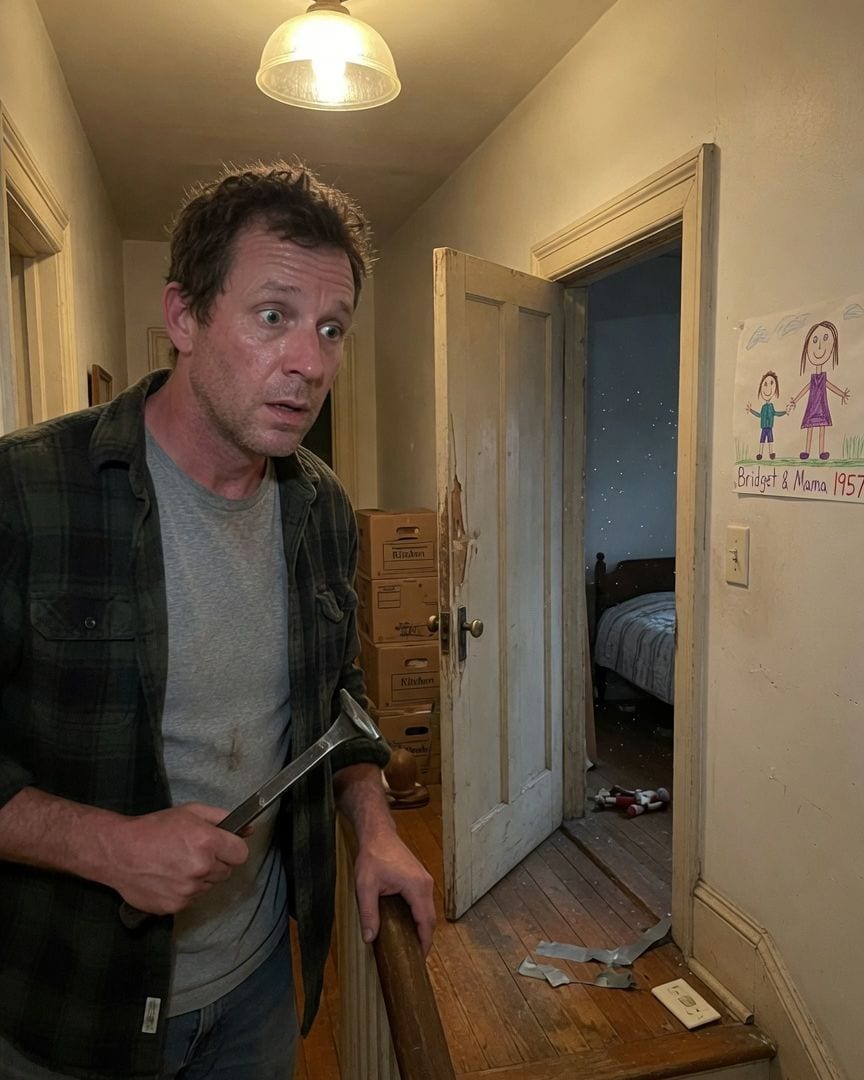
My landing light switches itself off at 9:40 every night. I've watched the switch flick down under nothing, the tape peeled back. The house holds its breath.
My great-uncle's old house was a quiet gift, a place to finally settle. But as I unpacked, a strange worn path on the floorboards led me to a small, barely visible door, perfectly blended into the wall. It was undeniably locked, and felt like a deliberately obscured secret.

My stair gate latches itself every night. Pressure-fitted tight across my empty stairs, no children live here and no fixings exist on the wall.
I live alone in my inherited house, so the toddler gate at the top of my stairs should not be there. Each morning, I find it perfectly latched and sturdy, despite having hidden it away in the shed the day before. This isn't a quirk; it's a routine, and it isn't mine.
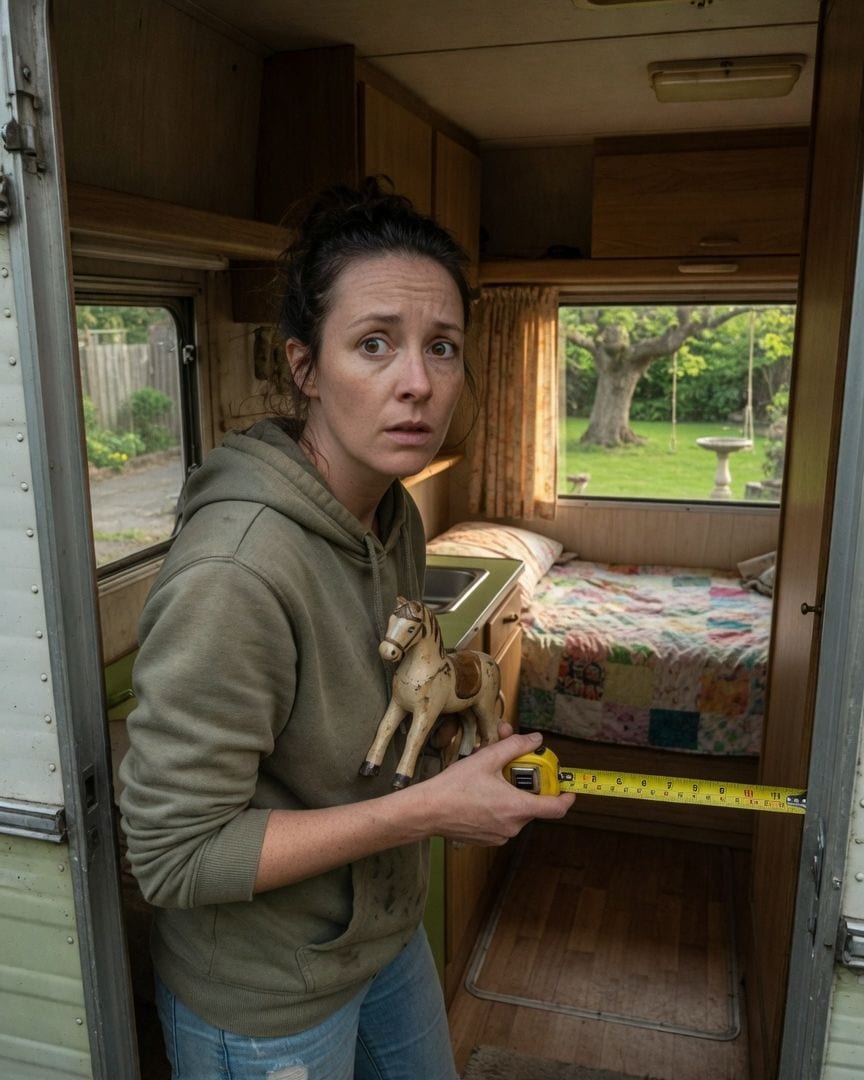
My new caravan's corridor runs longer than the caravan itself. Eleven feet of hallway past the end wall, to a room with a made bed and a window looking out on a garden it's never been parked in.
I finally bought my dream vintage caravan, a twelve-foot beauty. But when I measured inside for a mattress, the numbers didn't add up. Beyond where the wall should be, an impossible room with a window looked out onto a manicured garden I'd never seen before, a garden that couldn't possibly exist.
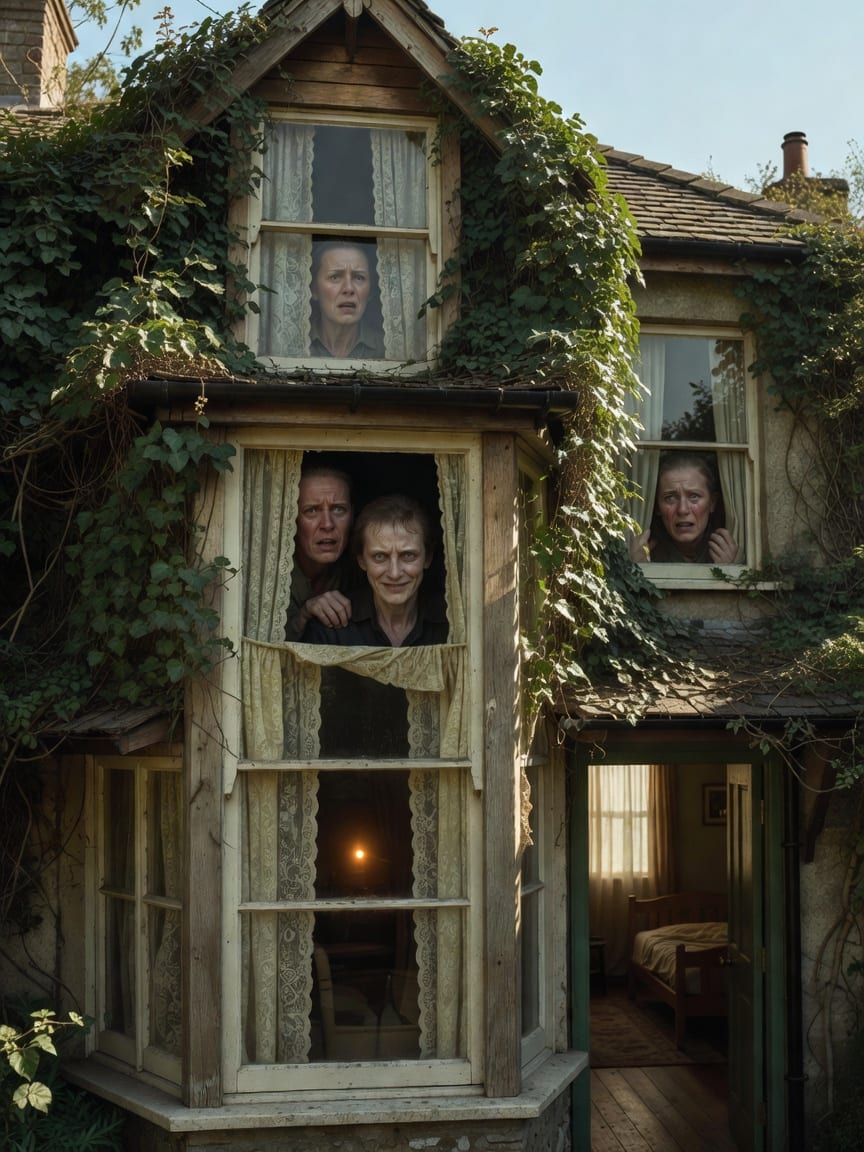
My empty cottage neighbor's electricity meter still climbs every night, and everyone in town says no one has ever lived there.
I moved to Oakhaven for a fresh start, settling into my quaint new cottage. Everyone, from the estate agent to the vicar, insisted the dilapidated cottage next door had been empty for generations. But when I ventured inside, a single porcelain doll sat spotless on a dusty dresser, watching the doorway.
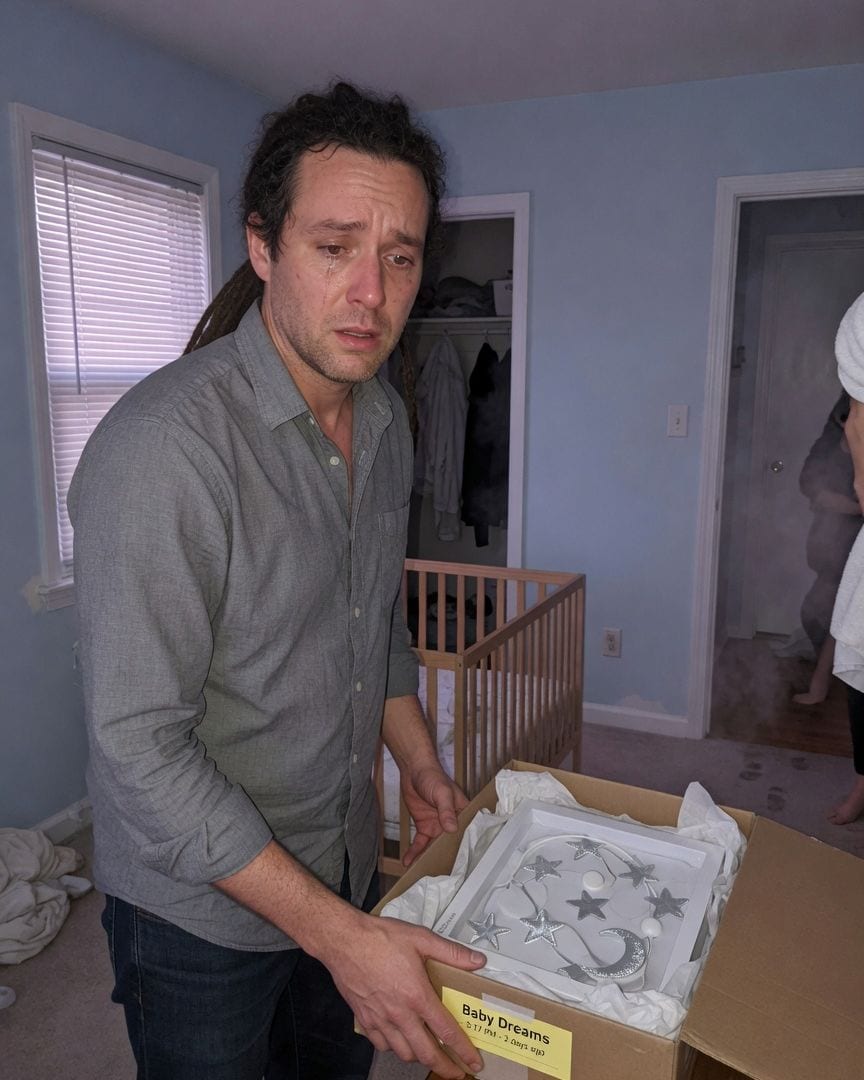
My wife thanked me for the pale blue nursery. We have no child. She described the mobile I'd only imagined, then asked when it would arrive.
Sylvia returned exactly one year after her disappearance, a miracle I could barely believe. But her first words about a nursery I'd only ever imagined, complete with a specific mobile, sent a shiver down my spine. That mobile, a private fantasy, arrived two days ago, and she just asked why it was late.
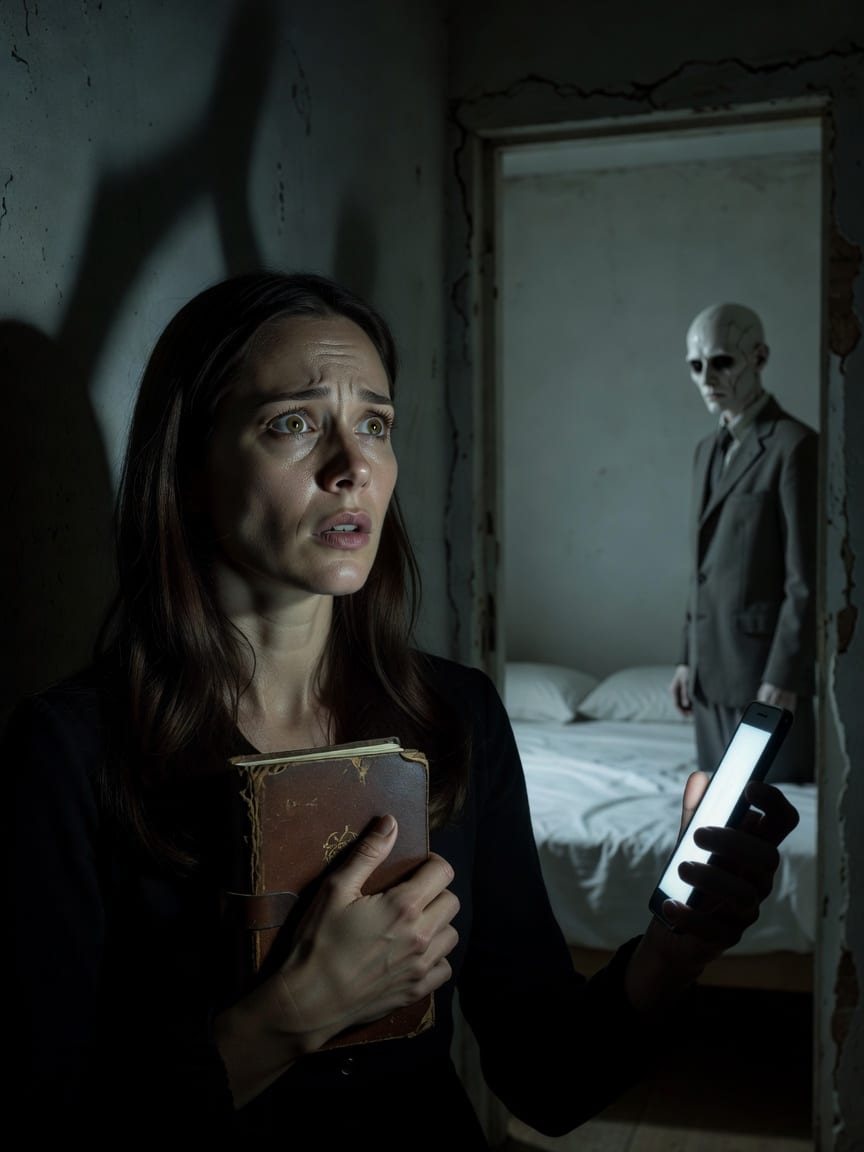
Behind a plastered-over doorway, I found a room. Papered, carpeted, and furnished with a made bed, sealed for decades. The air was dead still, but the bed wasn't dusty. My council tax bill only lists five rooms.
I'm Claire, an architect, meticulously planning my new Victorian terrace renovation. But when I uncovered a hidden room behind a wall, everything I knew about time and decay shattered. The bed was perfectly made, the air still, yet there was no dust, only an unnerving cold.