My bank statement shows a $900 cash deposit at a teller window I've never entered, while I was at work. The log says my ID was matched. Three deposits now, money I didn't make.
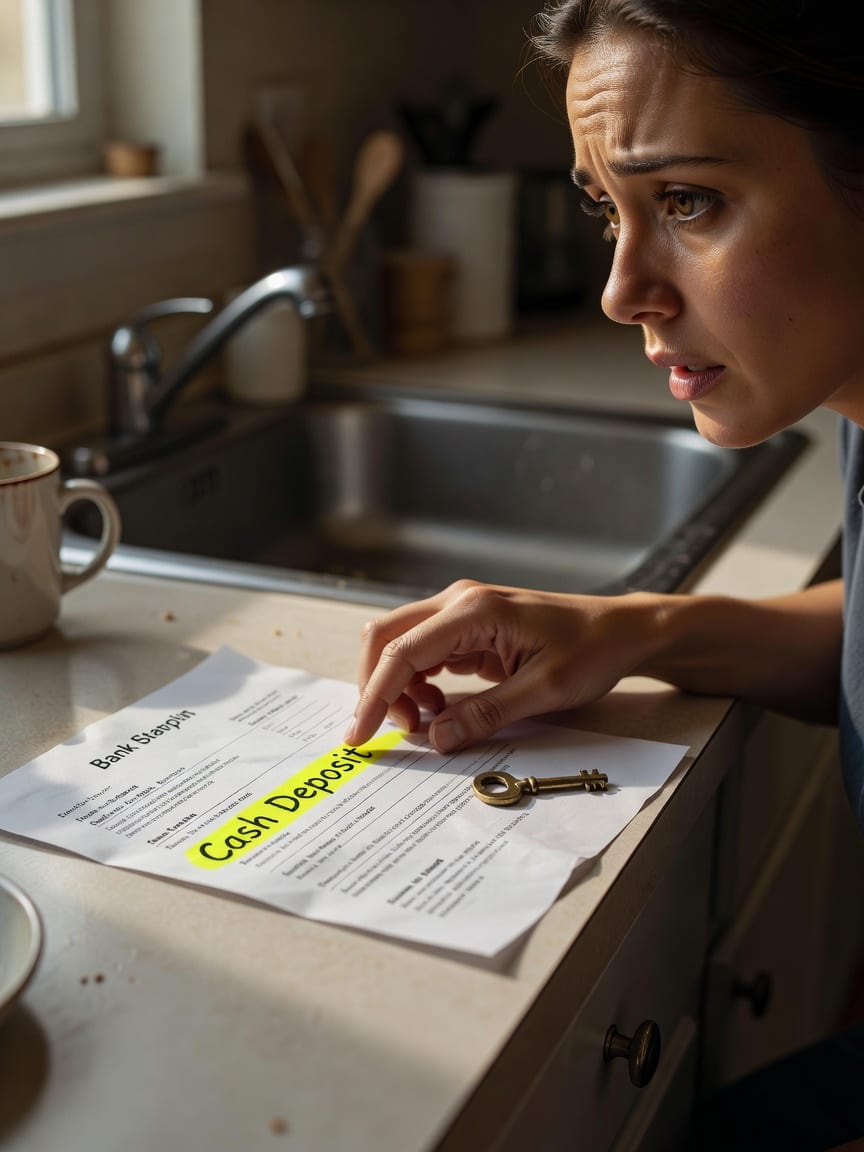
I stared at the screen, the numbers burning like a brand. "$900.00, Cash Deposit, Teller Window, Oakhaven Branch." The fluorescent hum of my office felt suddenly loud, a low, oppressive thrum.
Oakhaven was seventy miles away, a cluster of old brick buildings and empty storefronts I’d passed on the highway maybe twice in my life. I’d never stopped there. Never stepped foot in the place.
The date was the 8th of the month. That date was already seared into my brain, not for a financial transaction, but for a deadline I’d barely met.
At 10:40 AM on the 8th, I was at my desk, badged in, logged into my work computer, halfway through a monster marketing report.
Marianne Bennett, my colleague, had even brought me a coffee I hadn’t asked for, watching me frantically type. My badge logs, my computer activity, the office security footage—it would all show I was exactly where I was supposed to be.
Here. Not seventy miles away.
My voice was tight, a thin wire when I called the bank. First, the automated system, then a customer service rep whose voice was too cheerful for the cold dread settling in my gut. They confirmed it.
No, not a mistake. Not a miskeyed account number. The record showed a person, my name, my account number, my ID matched. They even verified the signature.
"My signature?" I’d repeated, the words tasting like ash.
"Yes, ma'am," the rep said, unfazed. "The teller verified it against your file."
I’d demanded to speak to a manager, and they’d connected me to Dean Sullivan. Dean was calmer, older, his voice a practiced neutral rumble. He reiterated it all. The ID, the signature, the legitimate cash deposit.
He even mentioned two more deposits, identical $900 cash drops, made since, at different branches I’d also never heard of. Money I hadn’t made. Money I hadn’t touched.
My printer clicked, spitting out a blank page, and the sound made me jump. Who the hell was doing this? And why was my own bank insisting it was me?
I drove to my local branch that afternoon, the same uneasy hum in my head. Dean Sullivan’s office was small, smelling faintly of stale coffee and industrial cleaner.
He was a portly man, maybe fifty, with tired eyes that seemed to have seen a lot of paperwork. He listened to my explanation with a practiced neutrality that unnerved me more than open disbelief.
His gaze kept sliding past me, to the window, to a distant clock.
"Ms. Jennings, I understand your concern," he said, folding his hands on his desk, his voice smooth and unhurried. "But our records are clear. The teller at Oakhaven, and at the other branches, verified ID.
We have a signature for each transaction."
A cold dread tightened its grip in my chest. "A signature? My signature?"
Dean nodded, pulling up a digital file on his monitor. His screen glowed with an unnatural light, casting his face in an eerie blue. "The teller's notes confirm it was a standard transaction. A cash deposit.
The funds are legitimate, just... unexpected, as you say."
"Unexpected is an understatement, Dean," I said, my voice unwavering, trying to keep the hysteria out of it. "I need to see that slip. The original. The actual paper.
And the security footage from that Oakhaven branch, if they have any from the teller line. From 10:40 AM on the 8th."
Dean hesitated, his eyes finally meeting mine, but only for a second. "That's a bit more involved, Ms. Jennings. Oakhaven is a different district. We'd have to formally request it. And security footage is usually only for criminal investigations, not...
discrepancies." The air in his office felt heavy, pressing down.
"This is a discrepancy. A serious one," I insisted, leaning forward. "My identity is being used to make these deposits. This isn't just a mistake, Dean. This could be fraud. Or worse. I was at work, Dean.
I have the badge logs, the computer timestamps. Marianne Bennett, my colleague, can vouch for me. I need that slip. I need to see who signed my name."
He held my gaze for a beat longer, then sighed, a slow, deep exhalation. He knew I wouldn't back down. "Alright, Ms. Jennings," he said, finally relenting. "I'll put in the request. It might take a few days."
But his gaze, as he turned back to his screen, held a strange, almost knowing resignation. As if he’d seen this before.
Three days later, an email arrived from Dean Sullivan. The subject line was curt: "Re: Oakhaven Deposit Slip." My heart began to hammer a frantic rhythm against my ribs.
I clicked on the attachment, the digital file slowly rendering on my screen.
It was a grayscale reproduction of the Oakhaven deposit slip. All the details matched: the date, the amount, the branch. My eyes dropped to the bottom right corner, to the signature line.
It was there. A flowing, confident scrawl. The capital 'I' with its distinctive, almost arrogant loop, the precise slant of the 'J', the way the 's' trailed off just slightly, then curled back.
Every curve, every slant, exactly as I signed it. My monitor seemed to glow with an unnatural light, illuminating the impossible.
Isabella stared at the digital scan of the deposit slip, her breath catching. The signature at the bottom, looping and distinctive, is hers. Every curve, every slant, exactly as she signs it.
But she remembers signing nothing that day, let alone in a town she'd never visited.
The signature haunted me. It was a phantom limb, a part of me I had no control over. I printed out the slip, then dug out old tax forms and contracts, anything with my signature on it.
The next morning, I took them all to Bernard Fontaine, a retired forensic handwriting expert my father had used for legal documents years ago. Bernard was a meticulous man, thin and stooped, with thick glasses that magnified his already-large eyes.
His small office smelled of old paper and dust.
He examined the deposit slip under a bright magnifying lamp, then compared it to the samples I provided, moving them back and forth with a pair of tweezers. "Remarkable," he murmured, his voice thin as tissue paper.
"No discernible forgeries here, Isabella. The pressure, the flow, the subtle tremors, the rhythm of the pen—it's entirely consistent with your hand." He tapped the slip. "This is your signature."
I felt a chill, cold and deep, settle into my bones. "But I didn't sign it, Bernard. I swear to God."
He nodded slowly, pushing his glasses further up his nose. "That's the peculiar part, isn't it? It has all the hallmarks of a natural, unforced signature. Not a careful tracing, not a practiced imitation. It's... yours."
Meanwhile, I dug deeper. The second and third deposits were made in different towns, both equally unfamiliar to me. I managed to request those slips too, under threat of legal action against the bank. Another email, more scanned images.
Each one bore my signature, perfect and impossible. The funds simply sat in my account, untouched, a silent, growing pool of alien money.
I tried to think of anyone who could imitate my hand so flawlessly, anyone with access to my ID. An ex? A disgruntled colleague? No one fit.
My initial rational explanations—a mistaken account number, a clever scam, an identity thief using a badly copied signature—were crumbling. Bernard Fontaine’s verdict had shattered them completely.
I even visited the Oakhaven branch, the teller line identical to any other bank. A young teller with bright eyes couldn't recall the specific transaction from weeks ago.
The manager, a brisk woman named Diane, simply reiterated Dean's line: "The ID was verified, Ms. Jennings. The transaction is valid."
The air of polite dismissal, the insistence on the 'validity' of the impossible, began to feel less like incompetence and more like a solid, impenetrable wall.
My phone buzzed with an unknown number while I was making dinner, a bowl of instant ramen steaming on the counter. I answered cautiously, a prickle of unease already running up my spine.
A distorted, calm voice, almost a whisper, simply said, "Some things are best left undisturbed, Isabella." Then the line went dead.
I stood there, the ramen cooling, the fear a sharp, metallic taste in my mouth. A warning. Someone knew I was digging. My hand trembled as I put the phone down.
The next day, at work, Marianne noticed my preoccupation. My fingers kept hovering over my mouse, not clicking. "You’ve been jumpy, Isa. Everything okay?"
I hesitated, then pulled out the printouts of the deposit slips from my bag. I showed her the impossible signature, told her the story. Marianne, usually pragmatic, was genuinely shaken.
Her eyes widened as she compared my actual signature to the phantom one. "That's... terrifying. It's like someone's living a parallel life with your name. Or like you are, without knowing it."
Later that week, a small, unmarked package arrived at my apartment. No return address, no postmark. Inside, nestled in a handful of old, dry wood shavings, was a single, dusty, antique brass key.
It was heavy and cold in my palm, the metal tarnished with age. There was no note. A warning? A puzzle? I didn't know, but it felt sinister, a physical manifestation of the unseen hand moving in my life.
My encounters with Dean Sullivan became increasingly unsettling. He no longer offered placating platitudes. Instead, he observed me with a quiet, almost melancholic gaze, as if watching a predictable, inevitable unraveling.
When I presented him with the third impossible slip, he merely sighed, a sound that seemed to carry the weight of decades. "You're really pushing, aren't you, Isabella? Some things...
they have a way of continuing, whether we understand them or not."
His words weren't a threat, but a statement of fact, delivered with the same unbothered acceptance one might use to describe the weather, or the turning of the tides.
His composure in the face of my growing terror was more chilling than any anger or menace he could have displayed.
I returned to Bernard Fontaine, the antique key tucked into the front pocket of my bag. I told him about the phone call, the unmarked package, and Dean Sullivan’s strange, resigned matter-of-factness.
Bernard listened intently, his expression unreadable behind his thick glasses. He pushed them up his nose, his eyes narrowed. "This isn't about simple fraud, Isabella. This is... deeper."
He retrieved his original analysis and pointed to a minute detail in my signature on the deposit slips. "Look here, at the tail of the 's' in Jennings. And the slight flourish on the capital 'I'.
In your contemporary samples, the ones you sign every day, they're consistent. But in these deposit slips, while still unmistakably yours, there's an almost imperceptible stiffening, a formality that suggests... an older hand, perhaps.
Or a hand accustomed to replicating, but from a memory, a pattern. Not yours, precisely, but an echo."
I frowned, the word hanging heavy in the air. "An echo?"
Bernard didn't answer directly. Instead, he pulled out a stack of old documents from a file drawer: faded property deeds, brittle utility bills from the 1960s and 70s, even a library fine from 1958, yellowed and delicate.
"I've been doing some research, based on the specific branch locations of your deposits, and the broader pattern. There's a curious thread here, Isabella."
He spread the documents across the table. They rustled like dry leaves under his careful hands. "These are all from the same general area, Isabella. Small, forgotten transactions, mostly. Minor property transfers, payments for land easements.
And look at the names."
I leaned in, my breath catching in my throat. 'Isabelle Jenning,' 'I. Jennings,' 'Isabella J. Lambert.' My heart lurched. Lambert was my grandmother's maiden name.
And the signatures on these documents, while distinct due to age and variations in the name, shared that same subtle 'stiffening,' that exact echo Bernard had described. They were mine, but not quite.
"It's like... a family trait, in handwriting?" I whispered, my voice barely audible. The lamp on Bernard's desk seemed to dim, casting long, distorting shadows around the room.
Bernard tapped a finger on a 1968 deed, his gaze intense. "Or a family pattern. Someone has been using this exact 'echo' of a signature, and variations of your family name, for a very long time."
The bank manager's eerie calm, the strange, antique key, the impossible deposits—it all began to coalesce into something far more ancient and disturbing than simple identity theft.
Bernard pointed to an address on the faded, brittle 1968 property deed. "This address, Isabella. It's the old Lambert family farm, isn't it? Your grandmother's childhood home, out past Miller's Creek."
I nodded, a knot tightening in my stomach. "Yes. It was abandoned for years after she left. A cousin owned it last, but it just sat empty."
Bernard traced the signature on the deed again, his finger a pale shadow on the yellowed paper. "And the signature on this deed, though it bears the 'Isabelle Jenning' variation, has that same, almost genetic, characteristic as your own.
The same 'echo'. The same stiffening around the 's' and the 'I'." He then produced another document, even more delicate, almost transparent—a birth certificate from 1922 for an 'Isabella Lambert', her grandmother's sister who died in infancy.
"Notice the name, Isabella. And the town listed for her birth: Oakhaven."
I felt a sudden, profound vertigo, as if the floor had dropped out beneath me. The forgotten towns, the impossible signatures, the money, the antique key—it wasn't just me. It was a pattern, a lineage.
My family wasn't just connected to this, they were inside it. The room felt suddenly cold, the papers on the table seeming to shiver with the weight of generations.
Bernard Fontaine slides a faded, brittle property deed across the table, dated 1968, the name 'Isabelle Jennings' scrawled on it. "The handwriting," he says, tapping the signature, "is yours, Isabella. But look closer at the 'e'. It's a variation.
And this address... it's the old Lambert place, isn't it? Your grandmother's maiden name." Isabella’s blood runs cold as she sees it—not just her signature, but a ghost of her own hand spanning generations.
Armed with Bernard's findings, the stack of old records, and the chilling truth of the generational pattern, I confronted Dean Sullivan one last time. His office, usually stifling, now felt like an old, dusty archive, filled with secrets.
He didn't flinch as I laid everything out on his desk. He simply looked out his office window, watching nothing, for a long moment.
"It's been going on a long time, Isabella," he said, his voice quiet, devoid of inflection. "Since before I started here, certainly before you were born.
My father knew about it, and his father before him, when he managed the branch in Oakhaven." He turned, his eyes weary, the resignation now a deep, permanent shadow. "Certain families, certain names, are... chosen. Used as conduits.
The deposits, the minor deeds, the 'lost' property taxes paid, the strange utility bills for vacant houses. It's all part of a larger, untraceable flow of assets.
Old money, new money, money that needs to disappear and reappear without a clear trail."
He explained it like a patient teacher, or perhaps a broken record, the details rote. The 'ghost identities' provided a perfectly legitimate paper trail, a layer of untraceable transactions that no single auditor would ever connect.
The 'echo' in the handwriting wasn't a flaw; it was a key, a subtle familial marker that authenticated the 'ghost's' involvement, proving the lineage.
"Your family, the Jennings and the Lamberts, they've been... reliable," Dean said, almost admiringly. "Never caused a fuss until now." He glanced at the antique key I still clutched in my hand.
"That key, I assume, belonged to one of those long-vacant properties. A physical link in the chain, passed down, perhaps unknowingly."
The pattern wasn't just a coincidence; it was a system, intricately woven into the fabric of the community's hidden economy, passed down through generations of those who 'knew' and silently facilitated it.
I wasn't just a victim of fraud; I was a cog. A node.
I stared at Dean, the full, sickening weight of the truth settling on me. "So, I'm just... a ledger entry? A ghost, for someone else's benefit?"
Dean offered a shrug that conveyed both regret and powerlessness. "You always have been, in a way. You just didn't know it." He explained that trying to fight it would be like trying to drain the ocean.
The system was too old, too entrenched, too many people quietly benefiting or simply too afraid to speak. They wouldn't hurt me, he implied, but they would simply erase me. Make my life a bureaucratic nightmare until I gave up.
They would smother me with paperwork, deny credit, flag everything I tried to do, make my existence impossible until I either broke or disappeared. "The money in your account? It's yours now. A severance package, perhaps.
Or just another way to tie you in."
I felt a cold fury, but also a profound sense of helplessness. Dean was right. I could expose it, but who would believe me?
A few impossible bank statements, some old, unrelated deeds, and a handwriting expert who spoke of 'echoes'? It would sound like a delusion, a conspiracy theory hatched in a dark corner of the internet.
I couldn't unravel generations of quiet conspiracy. I had to escape, not fight.
That night, Isabella Jennings packed a single bag. The decisions were made with a chilling clarity. I transferred the impossible $2700 from my ghost-account into a new, untraceable online account.
I resigned from my job, leaving a terse email, citing 'personal reasons.'
I changed my phone number, cancelled my old bank accounts, and drove out of town, the antique key still clutched in my hand, its cold weight a constant reminder.
The ghost of Isabella Jennings might still exist in some forgotten ledger, a name on a deed in Oakhaven, but the real Isabella was leaving it behind, carrying nothing but the terrifying knowledge of how easily a life could be appropriated, how quietly a person could be erased, and how deeply rooted the wrongness could be.
The car engine hummed like a fleeing animal, carrying me away. The highway stretched into an uncertain future.
I settled in a new city, miles from the quiet, insidious tendrils of my past.
I started a new job in a smaller marketing firm, rented a small apartment far from the city center, and tried to rebuild a life free from the pervasive wrongness.
The money from the ghost deposits sat in a separate, encrypted account, untouched, a constant, unsettling reminder of the price of my escape. I never touched it.
I often found myself checking online records, property deeds, old local news archives from the area I'd left behind—a nervous habit, searching for any sign that the pattern had followed me, or that someone else had been 'chosen.'
I never found a direct link, but the underlying dread remained. I knew the system still ran, quietly, efficiently, somewhere back in those old towns, perpetually seeking its next unwitting node, another name to echo in its ledgers.
My new apartment felt clean, but never truly safe.
Sometimes, late at night, a thought would prickle me: what if the system wasn't about the money at all?
What if the financial records were just a cover, a mundane distraction for something far more subtle, far more pervasive, something that stole not just money, but identity, piece by piece, across generations?
I’d glance at my own hand, practice my signature on a napkin, searching for that 'echo' Bernard had mentioned. I never found it, not really. But I always looked.
The knowledge was a permanent scar, a quiet hum beneath the surface of my new life. I had escaped, yes, but the definition of 'Isabella Jennings' was no longer entirely her own.
She had survived, but not untouched, not truly free. The world had shown her its hidden face, and she couldn't unsee it. The ghost of her name still existed, somewhere, performing transactions she never made, in places she never visited.
And sometimes, she wondered if, perhaps, a new deposit had just landed. A fresh $900, waiting for a new, unwitting Isabella to discover it.
The apartment in the new city stood empty, the lease unexpectedly broken. A forwarding address was provided, but the mail eventually stopped. No one ever found the antique brass key.
The financial records for Isabella Jennings remained open, a quiet account receiving regular, unexplained deposits, just like they always had. She knew, with chilling certainty, that the records would always insist it was hers.
If this one got to you
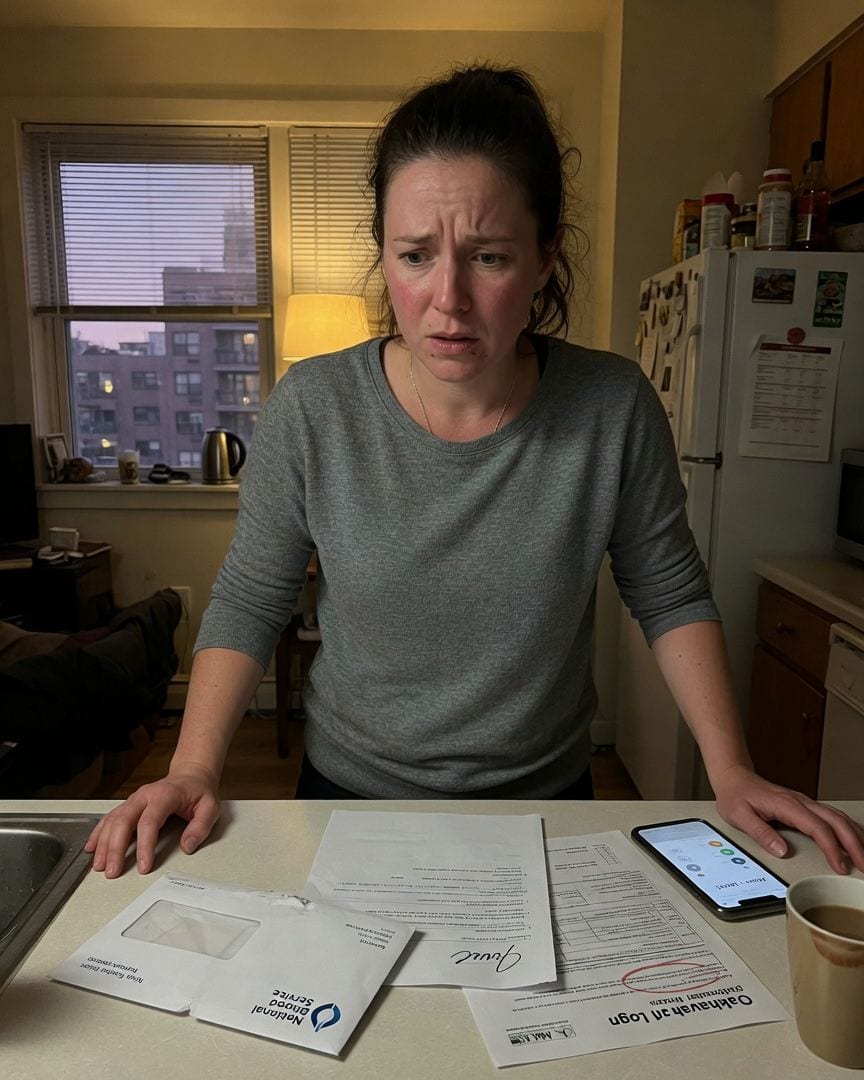
My signature appeared on a blood donation form, thanking me for my sixth. I've never set foot in that town.
An ordinary envelope arrived, but inside, a letter from the National Blood Service thanked me for a sixth blood donation. I’ve never given blood in my life, and the thought makes me queasy. But then I saw the enclosed consent form, signed unmistakably with my own hand, for a donation made in a town I’d never heard of. It was my signature, but it wasn't me.
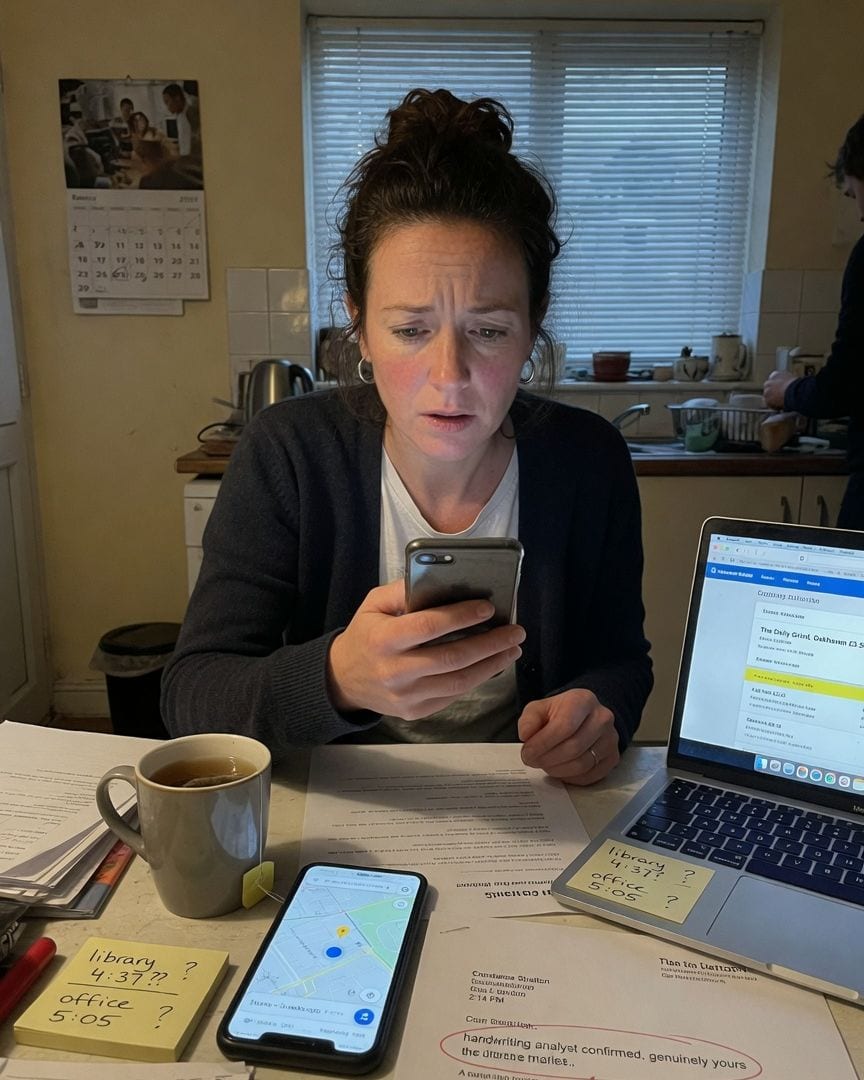
My signature covers a twelve-thousand-pound loan agreement. It's witnessed three hundred miles away, the day my phone confirms I was home.
My afternoon takes a chilling turn when the bank calls about a £12,000 loan, signed with my own handwriting in a town 300 miles away. My phone proves I was at my kitchen table at the time, yet a handwriting analyst confirms the signature is genuinely mine. The impossible truth deepens when a keycard log places me 100 miles away, just minutes before I entered my office.
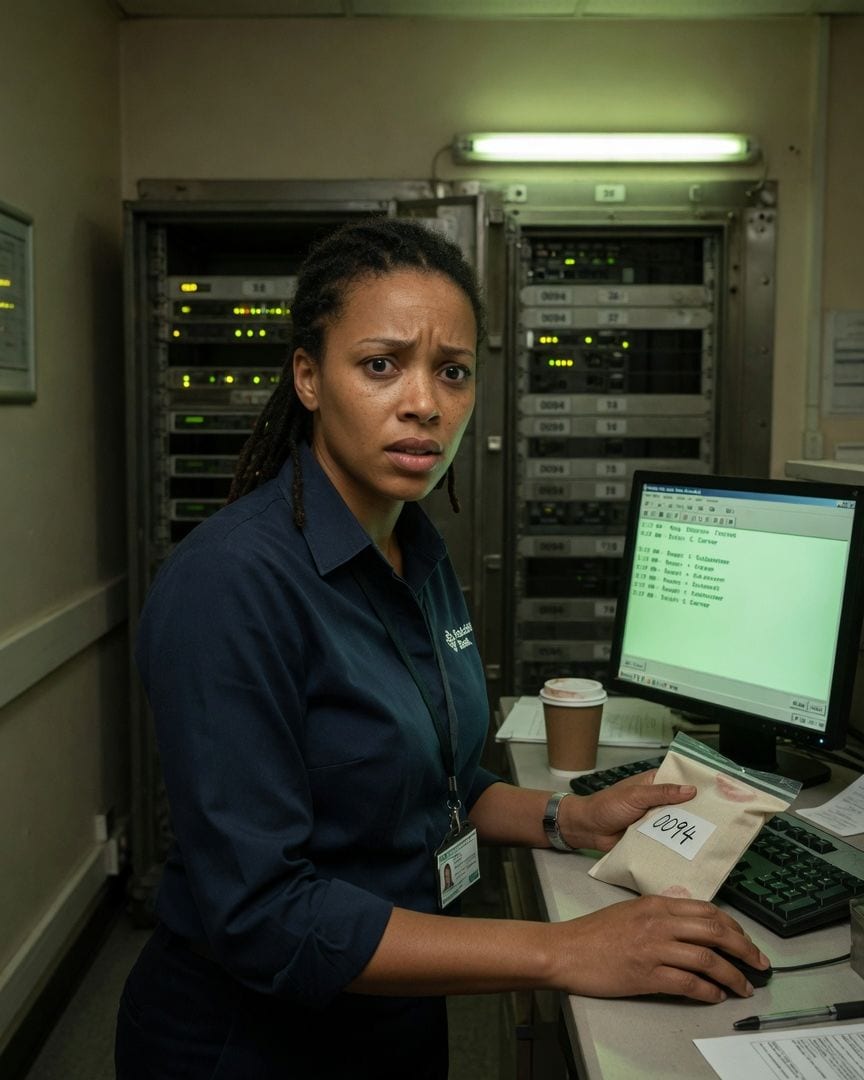
My night-deposit log shows a bag posted at 3:17 AM. My teller number, my count. Bag 0094 is still sealed in the safe, untouched.
I prided myself on precision as a night teller, logging every entry. But at 3:17 AM, a deposit appeared logged under my teller number that I never processed. Security footage then revealed a figure in my uniform, wearing my ID badge, with a blank photo slot.
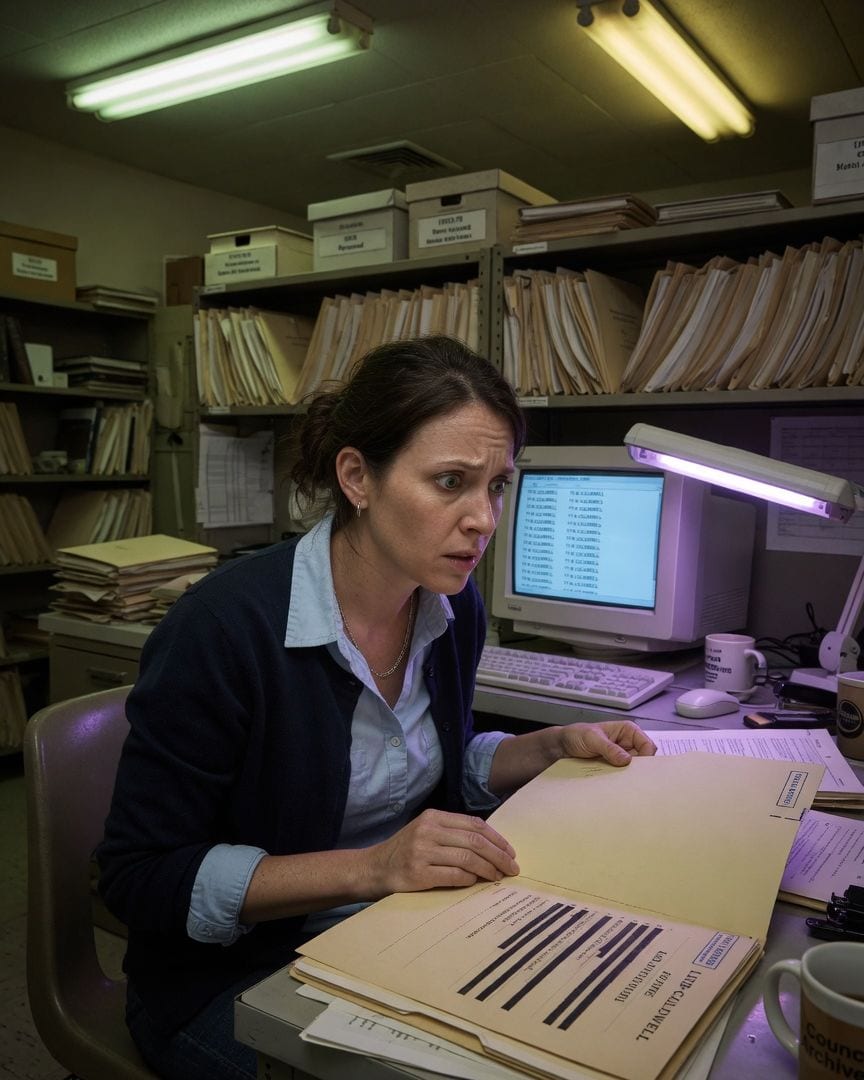
My employer's security file holds a vetting report on me dated nine years before I ever applied. It has my full name and my parents' address — with only one line, the source who referred me, blacked out.
Working a routine data audit, I pull my own security file. The issue date is nine years before I even applied for the job. Then, hidden within an old archive file, I find my current address etched under a blacked-out line.
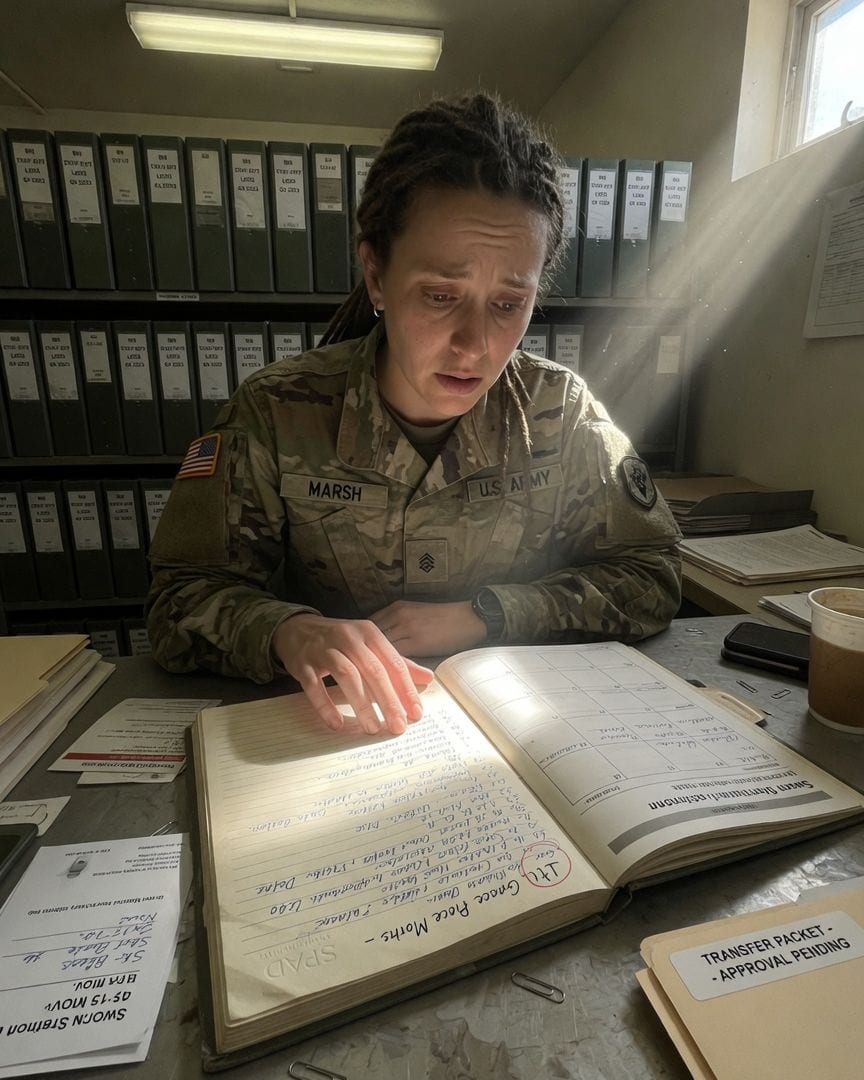
Preparing for a coveted post, a logistics officer found her own perfect signature on a duty log for a shift she swore she never worked. Then her coworker’s entry revealed his unique personal quirk.
Lieutenant Grace Marsh, a meticulous logistics officer, was deep in the archives, preparing her transfer packet for a coveted post. Her career depended on a spotless record, requiring absolute precision as she cross-referenced battalion staff-duty logs. Amidst the dusty binders and humming fluorescent lights, her gaze snagged on an entry for November 14th: her own perfect signature, logging a 24-hour shift she distinctly remembered spending hundreds of miles away in a court-martial. The impossible truth of a phantom doing her job was unsettling enough, but then she found another officer's entry, complete with his unique, personal quirk, for a day he was off-base. What was hidden in these official records?
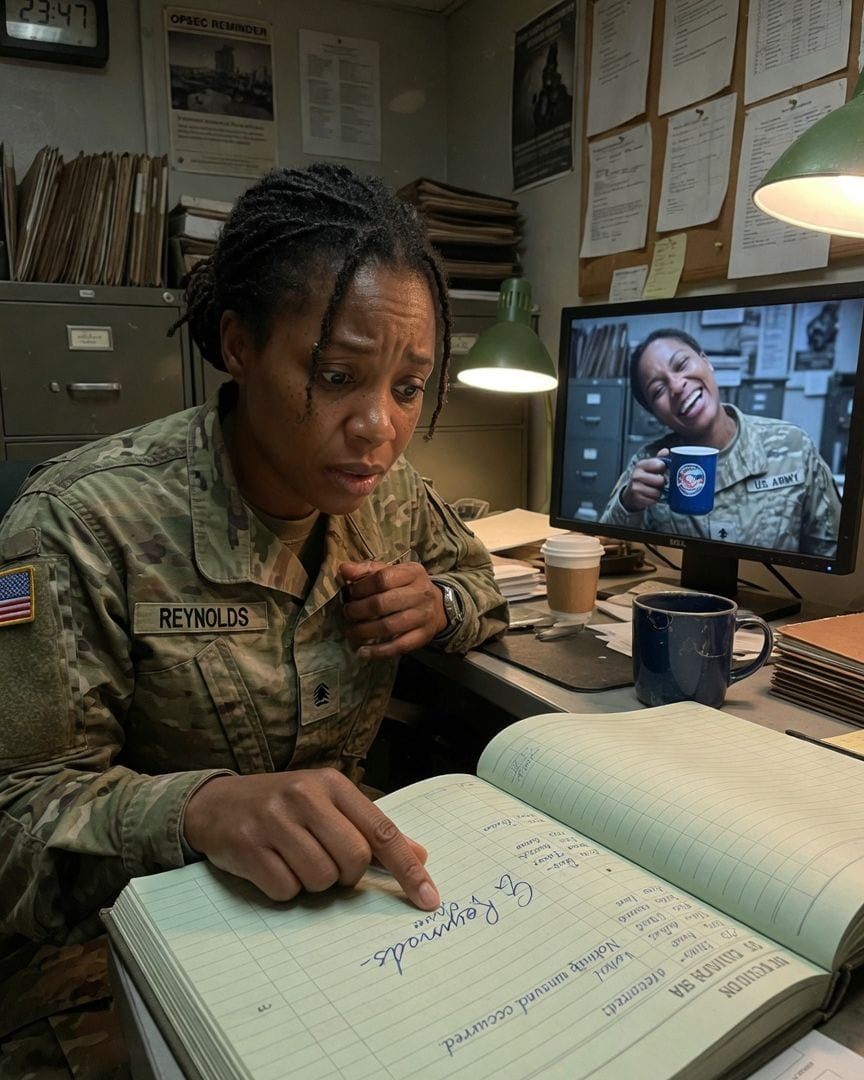
Lieutenant Grace Reynolds saw her own signature in the staff-duty log for a shift she never worked. The security footage then showed 'her' leaving a coffee mug she’d never once seen.
Lieutenant Grace Reynolds hunched over the battalion staff-duty log, the fluorescent hum of the records room a monotonous backdrop to her dry inventory audit. Her gaze snagged on an entry from three weeks prior: her own unmistakable signature, closing out a full 24-hour staff-duty shift she knew she had never worked. Security camera footage only deepened her unease, showing 'Grace Reynolds' moving with her familiar stride, laughing a shade too brightly, her head tilting a fraction too precise, like a flawless, chilling performance. But as the imposter turned to leave, she picked up and rinsed a chipped, dark blue ceramic coffee mug with a faded diner logo—a mug Lieutenant Reynolds had never once seen in her life. The air in the quiet room grew heavy, thick with the unspoken wrongness: if that wasn't her, then who was it?