My signature appeared on a blood donation form, thanking me for my sixth. I've never set foot in that town.
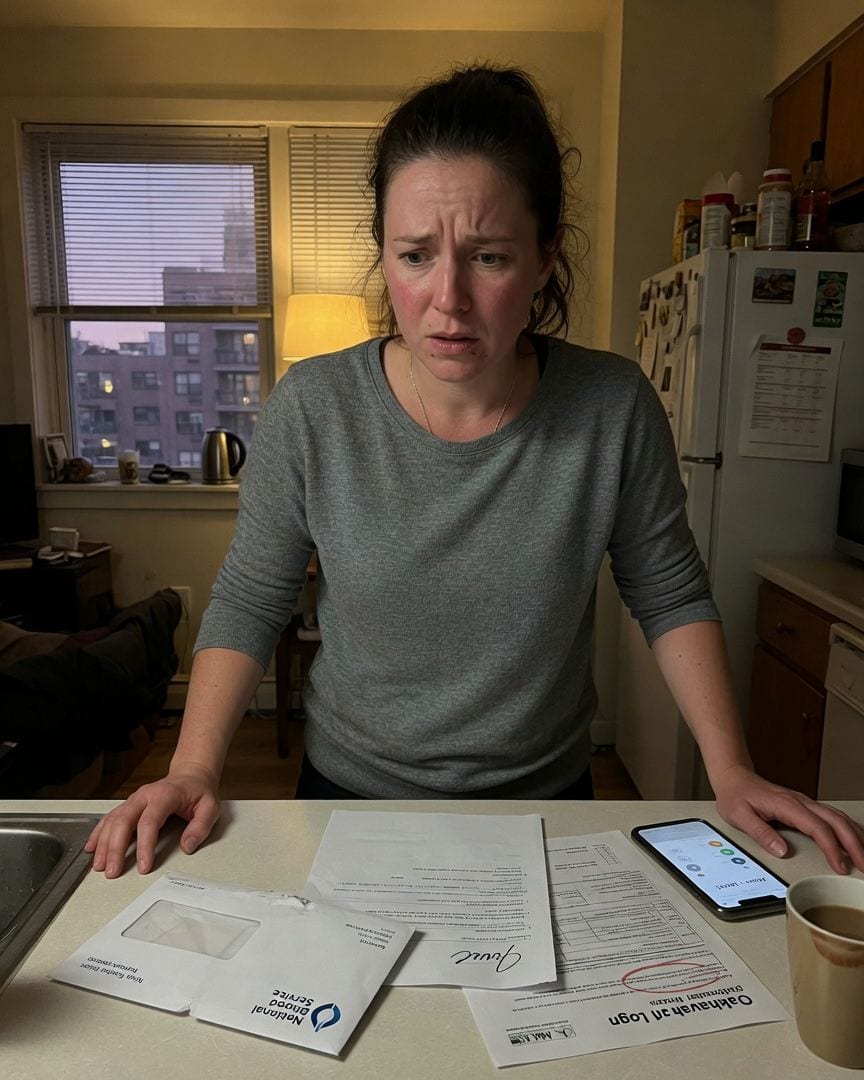
The envelope landed on my doormat like any other junk mail. Thick, off-white, with a window showing my name and address. Standard.
It lay there for a day or two, unnoticed among utility bills and supermarket flyers, until I finally scooped up the pile. The logo caught my eye: a stylized droplet, the words ‘National Blood Service’ beneath it. My brow furrowed.
I’ve never given blood in my life. The thought had always made me a little queasy.
I tore open the seal. Inside, a printed letter. It praised my ‘continued dedication’ and thanked me for my sixth donation, made just last month in a mobile unit. The location was clearly stated: Oakhaven. Oakhaven?
I hadn’t even heard of the town. My first thought was identity theft, a common enough scam these days. Or a clerical error, a simple mix-up. I was already dialing customer service in my head, ready to explain the mistake.
But then I pulled out the enclosed consent form, a photocopy of what I'd supposedly signed. My heart gave a little stutter, a jarring beat in my chest.
The signature, down to the little tail I always added to the 'N' in Fontaine, was unmistakably mine. The loop on the 'F,' the way the 'a' connected. It was exact.
I stared at it, holding the paper closer, then pulling it back, as if the distance would change what I was seeing.
I called my mother, Janet. 'Mom, does this look like my signature?' I held the phone to my ear with my shoulder, the paper spread on the counter. She gasped. 'Nina, that's your exact hand. I'd know it anywhere.'
Her voice was a little tremor, a mirror of the unease settling in me.
I hung up, the phone feeling heavy. I stared at the paper, the neat, official type, the undeniable scrawl of my own hand beneath it. It was me, yet it wasn't.
The world outside my window, the familiar hum of the city, felt suddenly, subtly, wrong. The light filtering through the kitchen blinds seemed a shade off, the air cooler than it should be.
I spent the next day trying to make sense of it. A scam? A prank? I called the National Blood Service. The automated voice on the other end was polite, serene.
It asked for my details, confirmed them, and then, without prompt, thanked me for my 'continued support.' It even offered to book my next 'appointment,' rattling off available dates in Oakhaven. There was no option to dispute a donation.
No 'press 3 if you believe this record is incorrect.' Just an endless loop of automated gratitude. Frustrated, I hung up, the silence that followed heavier than the dial tone.
'Identity theft,' I muttered to Malcolm Bishop, a colleague, who was mildly amused by my 'bureaucratic nightmare.' We were in the break room, the fluorescent lights humming overhead, his focus split between his coffee and my story.
'They must have a good forgery artist. Get your bank to flag it.'
Following Malcolm's suggestion, I logged into my bank account. I checked my statements for the day of the alleged donation: September 14th. Nothing obvious jumped out. My usual coffee shop charge, a grocery run.
But then, a small detail snagged my attention: an ATM withdrawal. Dated September 14th. Location: Oakhaven Savings & Loan. For a small sum, just enough for a bus ticket or a quick meal.
I sat there, staring at the screen. I had been in my office, forty miles away, all that day.
I’d had a meeting with the client team at 10 AM, followed by a working lunch, then a project review with Malcolm himself at 3 PM. I had receipts, emails, even a witness to my entire schedule.
Malcolm, looking over my shoulder, whistled softly. 'That's... inconvenient.'
The bank statement, cold and hard, insisted I was in Oakhaven. The dread began to coil in my stomach, tightening with each passing minute. This wasn't a mistake.
This was a statement that placed me somewhere I could prove I wasn't. The rational explanations, the polite excuses, were dissolving like mist. This wasn't a phantom signature; it was a phantom presence.
Malcolm, intrigued despite himself, helped me navigate the bank's labyrinthine privacy policies. It took several days, filled with calls and forms, but eventually, we managed to request any available ATM footage from Oakhaven Savings & Loan for that specific time.
The bank eventually sent a single, grainy, blurred image. It showed a figure, back mostly to the camera, withdrawing cash. They wore a wide-brimmed hat, obscuring their face.
I zoomed in, straining to make out details. The figure was slender, about my height, but the blur made certainty impossible. It could have been anyone. It should have been anyone. But then I saw it.
Around the figure's neck, a scarf. Knitted, with a distinctive, interlocking pattern of small leaves. My breath hitched. My grandmother had taught me that pattern. It was her scarf. The one she’d sworn she’d lost last autumn.
The scarf. It wasn't just a signature anymore; it was the physical anchor that pulled me into a deeper, colder fear. It was my very presence, documented.
I remembered losing it, a vague recollection of a chilly evening, a hurried walk from the subway. I’d gone back, retraced my steps, but it was simply gone. But it wasn't gone.
It was in Oakhaven, at an ATM, on a day I was locked in a conference room. My stomach clenched.
Malcolm, now genuinely concerned, not merely intrigued, helped me dig deeper. We started cross-referencing Oakhaven with my name. My full name. My initials.
We unearthed a series of toll booth charges on a car I didn't own, but registered to a 'N. Fontaine' with a slightly different middle initial.
The charges were all for passing through Oakhaven on dates Nina had been demonstrably elsewhere – another meeting, a doctor's appointment, a weekend trip to visit Janet.
Each charge was small, unremarkable on its own, but together they formed a pattern. A route.
More chillingly, we found keycard logs for the Oakhaven Community Center. 'Nina Fontaine' had accessed the building dozens of times over the past three years. The entries were consistent: late afternoon, early evening.
Always short visits, sometimes less than ten minutes. I compiled a spreadsheet, a meticulous, horrifying timeline of my 'other life.' The first entry was nearly four years ago, long before the 'sixth' donation. Each impossible entry was precise, dated, specific.
The fluorescent hum of the office seemed to press in on me, the bland beige walls suddenly feeling like the inside of a trap.
The more I found, the less I understood. The mundane explanations – identity theft, clerical error, a prank – had evaporated, leaving only the stark, undeniable record of a life I wasn't living, yet somehow, was.
The sheer volume of evidence was overwhelming, and each piece, on its own, was so ordinary, so easily dismissible. But together, they were a monstrous, impossible truth.
Driven by a desperate need for answers, I decided to visit Oakhaven. Malcolm had warned me against it, but I couldn't sit still. The town was small, sleepy, unremarkable. Provincial.
Main Street was lined with a hardware store, a diner, a few quiet businesses. I drove past the community center, a modern brick building that looked just like hundreds of others across the country. It was quiet. Too quiet.
As I cruised slowly down a residential street, I felt an odd prickling sensation, a subtle awareness of being observed. The hair on the back of my neck stood up. It was illogical, but insistent. I checked my rearview mirror.
Nothing. Just an empty street behind me.
I decided to pull over, needing a moment to collect myself. As I got out of the car, stretching my legs, I noticed a man tending a flower bed in front of a small municipal building across the street.
He was middle-aged, neatly dressed in khakis and a collared shirt, with a calm, almost placid expression as he carefully pruned a rose bush. There was a quiet intensity to his movements.
As I passed him, making my way towards a small park bench, he looked up, his eyes meeting mine. They were a startling pale blue, clear and unblinking.
He didn't smile, didn't frown, just held my gaze for a beat too long. A prickle of unease ran down my spine.
'Can I help you, Miss Fontaine?' he asked, his voice even, unhurried, as if he’d been expecting me.
I froze. My heart jumped into my throat, hammering against my ribs. 'How do you know my name?' I managed, the words catching.
He gave a slight, almost imperceptible shrug, turning back to his rose bush. 'People have commitments, Miss Fontaine. Commitments they don't always remember.' The shovel glinted in the afternoon sun as he gently loosened the soil around the roots.
The quiet hum of the town seemed to flatten, to press down on me.
Elliot Caldwell, the small plaque on his gardening uniform read. The name felt like a weight in my chest. He knew. He knew my name, and he knew what I was looking for, or at least, what I was.
The hunter had become the hunted.
I found Elliot Caldwell in his office at the municipal building. It was tidy, functional, smelling faintly of old paper and dust. He was calmly filing documents, a stack of worn folders beside his elbow.
He looked up as I entered, no surprise, no change in his placid expression.
I laid my spreadsheet, the meticulous horror of my 'other life,' on his desk. It felt flimsy, inadequate, in the face of his composure.
'These are my records,' I stated, my voice trembling slightly despite my best efforts to control it. 'And these are yours. They don't match.'
Caldwell glanced at the printouts, not a flicker of surprise in his pale eyes. He didn't even pick them up. 'They match perfectly, Miss Fontaine,' he said, his voice as smooth as polished stone.
'Just not to the timeline you consciously experience.' He leaned back in his chair, a faint creak of old springs. 'The 'blood service' is merely a public-facing front. A convenient structure for a much older registry.
A civic duty, if you will, passed down through certain families.'
I scoffed, a tight, nervous sound. 'A duty? I've never agreed to anything. I've certainly never signed up for anything like this.'
Caldwell picked up a pen, turning it slowly in his fingers. 'The signatures are legally binding. A form of inherited obligation. Your family has been part of this for generations.'
He opened a drawer in his desk, pulling out a thick, leather-bound ledger. It was ancient, its cover cracked, its pages brittle with age, like something pulled from a forgotten archive.
The air in the room suddenly felt colder, despite the late afternoon sun streaming through the window.
He turned to a section marked 'Fontaine,' his finger tracing the neat, spidery script. My name. My mother's name, Janet. My grandmother's name, Eleanor. Each entry had a date, a time, and a cryptic code I didn't recognize.
'The 'donations' weren't blood,' Caldwell continued, his gaze still on the ledger, 'but a marker of compliance. Small acts, small contributions. Preparations.'
I felt a cold dread blossom in my chest, a physical ache. The scarf, the ATM withdrawal, the community center logs—they weren't identity theft. They weren't a mistake.
They were her, a version of me, fulfilling an obligation I didn't know I had. It all snapped into place, a horrifying, undeniable coherence. The scattered pieces weren't random; they were part of a monstrous, meticulously kept tapestry.
Caldwell traced a line in the ledger, his finger pausing. 'Your family has a specific role, Miss Fontaine.' He pointed to a series of older entries, marked with another cryptic code: 'Allocation.' 'Before your time, of course.
But the pattern is clear.'
My eyes scanned the page, trying to make sense of the strange codes. My name, Janet's name, going back decades. It was all there, a meticulously kept, impossible history. The dates stretched back, a long, unbroken lineage of Fontaines.
It wasn't just my life; it was generations of lives, all documented in this one dusty book.
'What kind of role?' I whispered, my voice barely audible. The air in the small office seemed to thicken, pressing in on me.
Caldwell looked up, his pale eyes meeting mine, a faint, almost pitying smile on his lips. 'A vital one. One that requires… full participation.'
He then moved his finger to the very bottom of the page, beneath the most recent entries for me. A fresh line, in a neat, elegant script. My name.
And next to it, dated for next month, a specific day and time. Not 'blood donation.' Not 'allocation.' But a single, chilling word, underlined twice: 'Initiation.'
My mind reeled. 'Initiation? What does that mean?' The word hung in the air, heavy and foreboding.
Caldwell closed the ledger with a soft thud. The sound echoed in the quiet office. 'The 'donations,' the small acts you've unknowingly performed, were acclimatization. To prepare you for the deeper commitment.
The Initiation is where you fully accept your inherited role within the program. You become a facilitator.' His voice was still calm, utterly devoid of judgment or malice, which only made it more terrifying.
He explained that the signature, the inherited consent, was not merely symbolic. It was a centuries-old binding agreement, a charter established by my ancestors. He produced another document, rolled and tied with a faded ribbon, from another drawer.
It was parchment, brittle with age, bearing the elegant script of a forgotten era and, unmistakably, the Fontaine family seal. The wax, though cracked, still bore the crest of a stylized spring.
'Your lineage, Miss Fontaine, is bound to this system. Your conscious memory may resist, but your deeper self, your very being, is already aligned.' He spoke of it like a natural law, as immutable as gravity.
The scattered dates, the impossible entries, the scarf, the ATM photo – they weren't anomalies. They were a coherent, monstrous shape, a life meticulously orchestrated, and I had always been inside it.
The terror wasn't in the unknown, but in the awful, undeniable coherence of it all. Every single detail clicked into place, forming a picture I never wanted to see.
The room, with its filing cabinets and the faint smell of old paper, felt like a sealed vault, and I was trapped inside its dreadful history.
I felt a profound, chilling clarity. Escape was not an option, not in the way I understood it. Caldwell wasn't a villain in any conventional sense; he was a gatekeeper, an archivist of an inescapable truth.
He spoke of the 'system' as an unyielding force, operating with or without individual awareness, like the tide or the changing seasons.
'You have two choices, Miss Fontaine,' he stated, his voice devoid of threat, as if discussing the weather. 'Accept your Initiation and live a life with these… commitments, or resist and face reintegration.' He described 'reintegration' vaguely, in clinical terms.
A 'process of alignment,' a 'reframing of perspective.' But the implication was clear, even without explicit words: a process that would ensure compliance, making one 'more amenable to their purpose.' It sounded like a lobotomy of the soul.
I, Nina, rational even in the face of the impossible, knew I couldn't fight it directly. Not yet. Not alone. I feigned acceptance, my mind racing, scrambling for a strategy. My hands, hidden beneath the desk, trembled.
'I… I understand,' I said, my voice steady despite the tremor that tried to seize it. 'I'll attend the Initiation.'
Caldwell nodded, a faint, almost satisfied smile touching his lips. It was the first real expression I’d seen on his face. 'Wise choice. The system always finds its way.'
As he turned to replace the ledger in its drawer, I glanced at the window, at the mundane street outside, cars passing, people walking by, utterly unaware. I would play along, I vowed. But I would not surrender.
I would find a way out, even if it meant navigating a life I didn't know was hers.
I returned home, outwardly calm. I told Janet that the blood service mix-up was 'just a clerical error,' and I'd 'sorted it out.' Her relief was palpable. I deleted my spreadsheet, cleared my browser history of all my Oakhaven searches.
I bought a new, identical scarf, knitting the same distinctive leaf pattern my grandmother taught me. It felt like a small act of reclamation, a defiance against the phantom presence that had worn my original.
I attended my 'Initiation' in Oakhaven as scheduled. The process was sterile, administrative, involving forms and a brief, almost clinical interview in a nondescript office within the community center. Caldwell was not present. No blood was taken. No dramatic revelations.
Just a quiet, unsettling finality. A series of verbal agreements, a signature on a new, modern form I was told was an 'updated charter.'
I left Oakhaven feeling lighter, yet profoundly heavier, as if a weight had been lifted, but a greater one had settled deep within me. The world looked the same, but I knew it wasn't. I wasn't.
Months passed. I continued my life, went to work, saw friends. But sometimes, I would find myself in an unfamiliar part of town, with a vague sense of having just completed a task, a quiet satisfaction I couldn't account for.
A feeling of purpose, quickly dismissed. I'd brush it off as tiredness, a trick of memory, or simply getting lost in thought.
One evening, as I sat with Janet over tea, the familiar scent of Earl Grey filling the kitchen, my mother mentioned a local charity drive for 'community support' that had just wrapped up, praising its success.
'You know, I thought I saw you down there, helping with the collection boxes,' she mused, stirring her tea. 'But I blinked, and you were gone.' Janet asked, 'Did you ever find out what that was all about, dear?'
I sipped my tea, my gaze distant, focused on something beyond the window, beyond the familiar streetlights. I knew the answer, or rather, a part of me did. 'Is that so?'
Janet asked, and Nina smiled a faint, wrong little smile.
If this one got to you
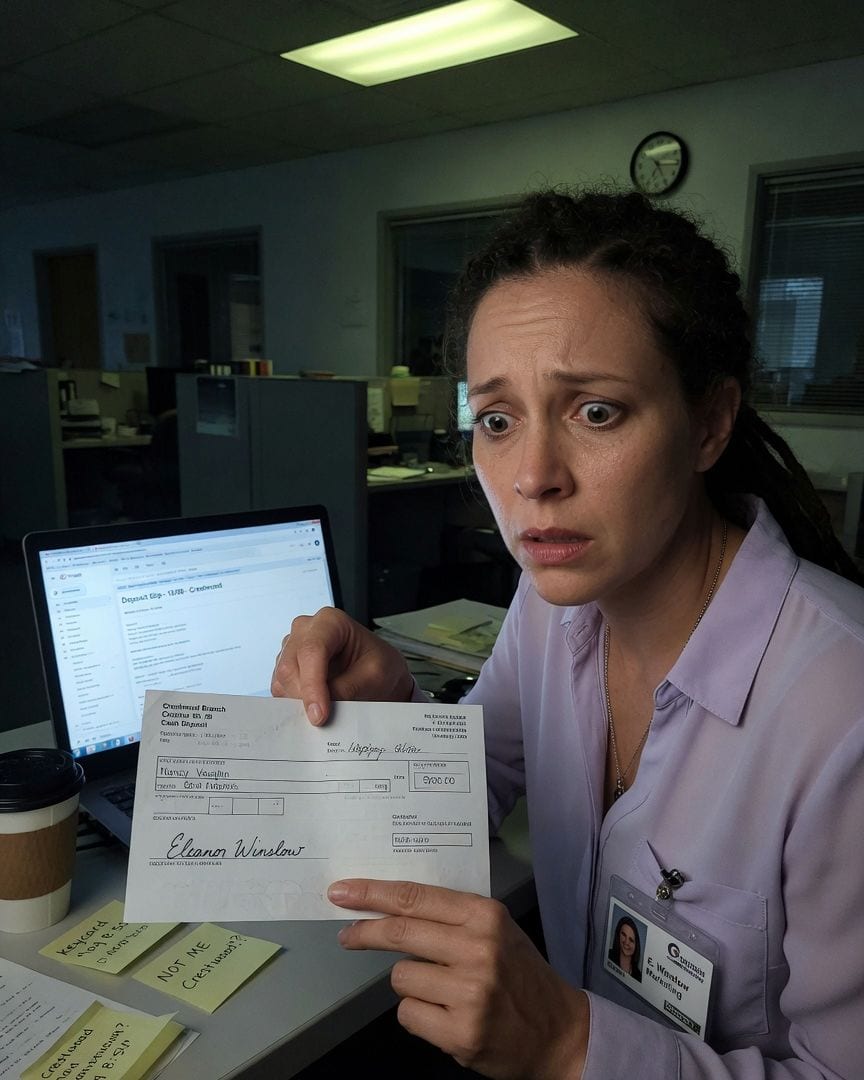
My bank statement shows a $900 cash deposit made in a town I've never set foot in, at 10:40 AM on a workday. I was at my desk, badged in. Two more landed since.
My bank statement showed a $900 cash deposit from a town I'd never visited, 150 miles away. I was at my desk, logged into work, all three times. But the scanned deposit slip arrived, clear as day, showing my own flawless signature.
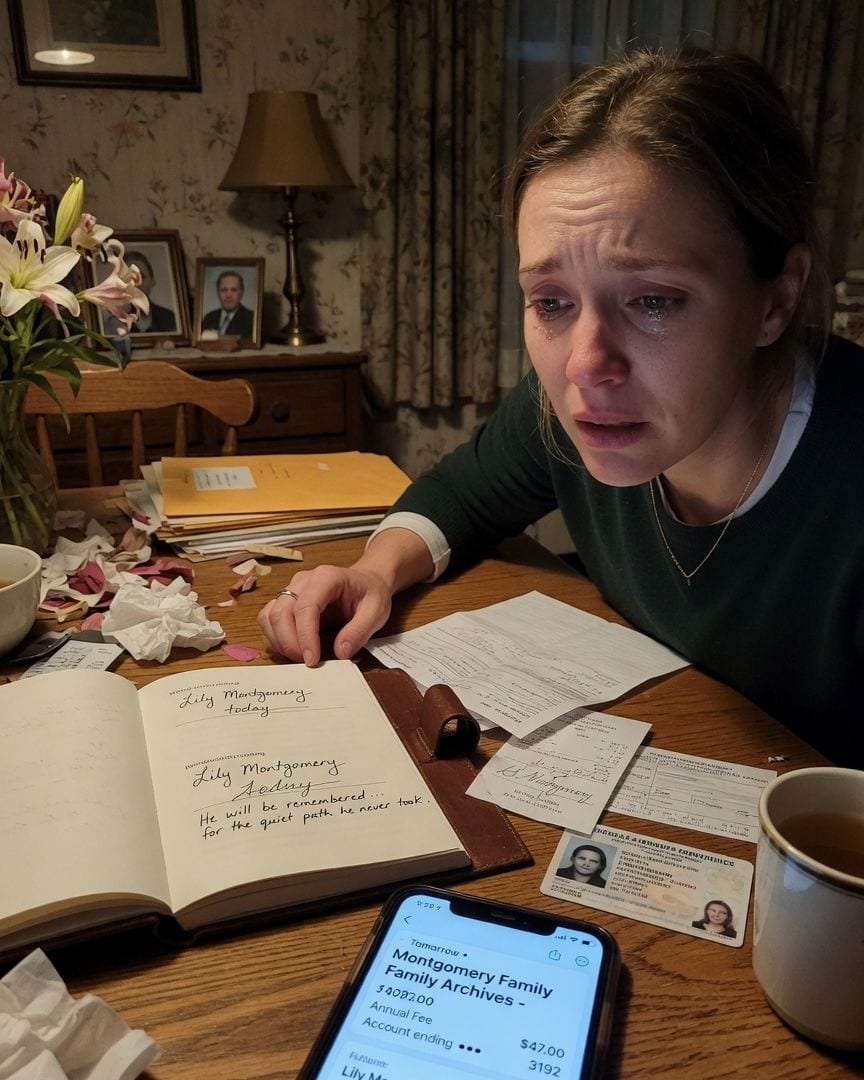
My handwriting was in the condolence book. Dated before my uncle died. Words I'd never choose.
At Uncle Howard's funeral, grief-stricken, I signed the condolence book. But later, flipping back through the pages, I found my own distinct handwriting on an entry dated the previous morning—before he had even died. The words beneath my name were chilling, a judgment I would never make.
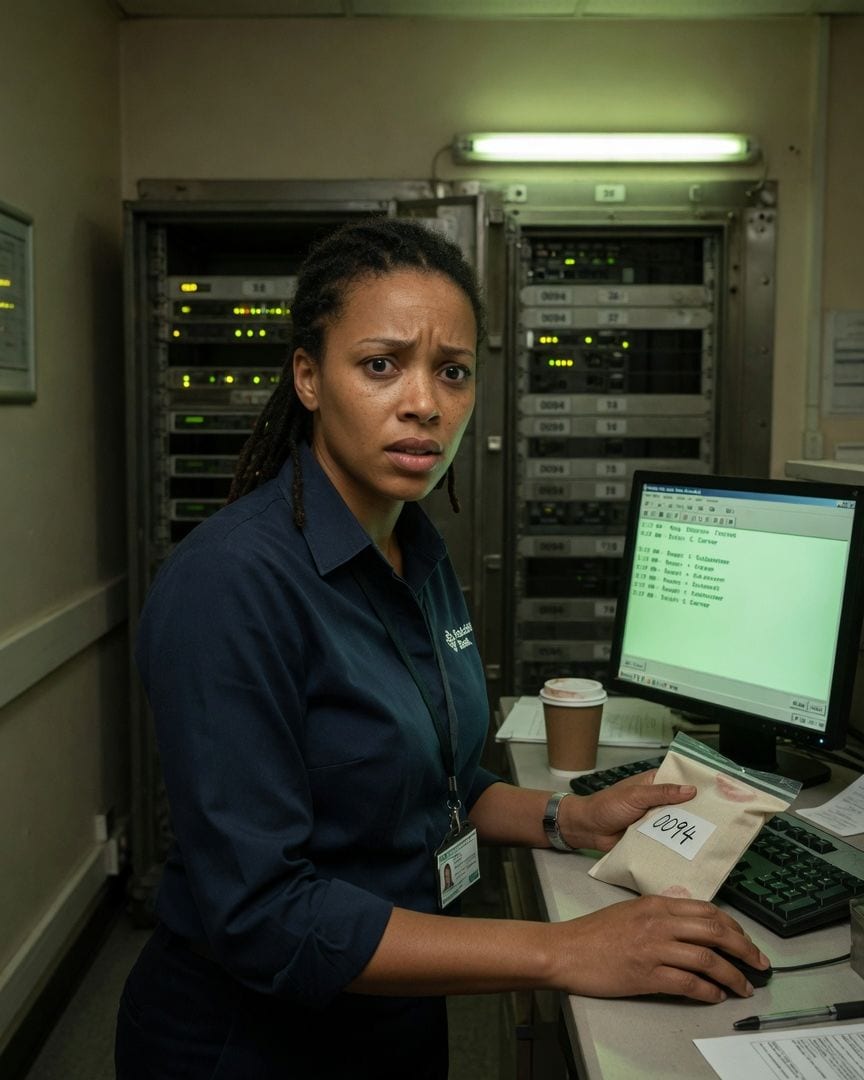
My night-deposit log shows a bag posted at 3:17 AM. My teller number, my count. Bag 0094 is still sealed in the safe, untouched.
I prided myself on precision as a night teller, logging every entry. But at 3:17 AM, a deposit appeared logged under my teller number that I never processed. Security footage then revealed a figure in my uniform, wearing my ID badge, with a blank photo slot.
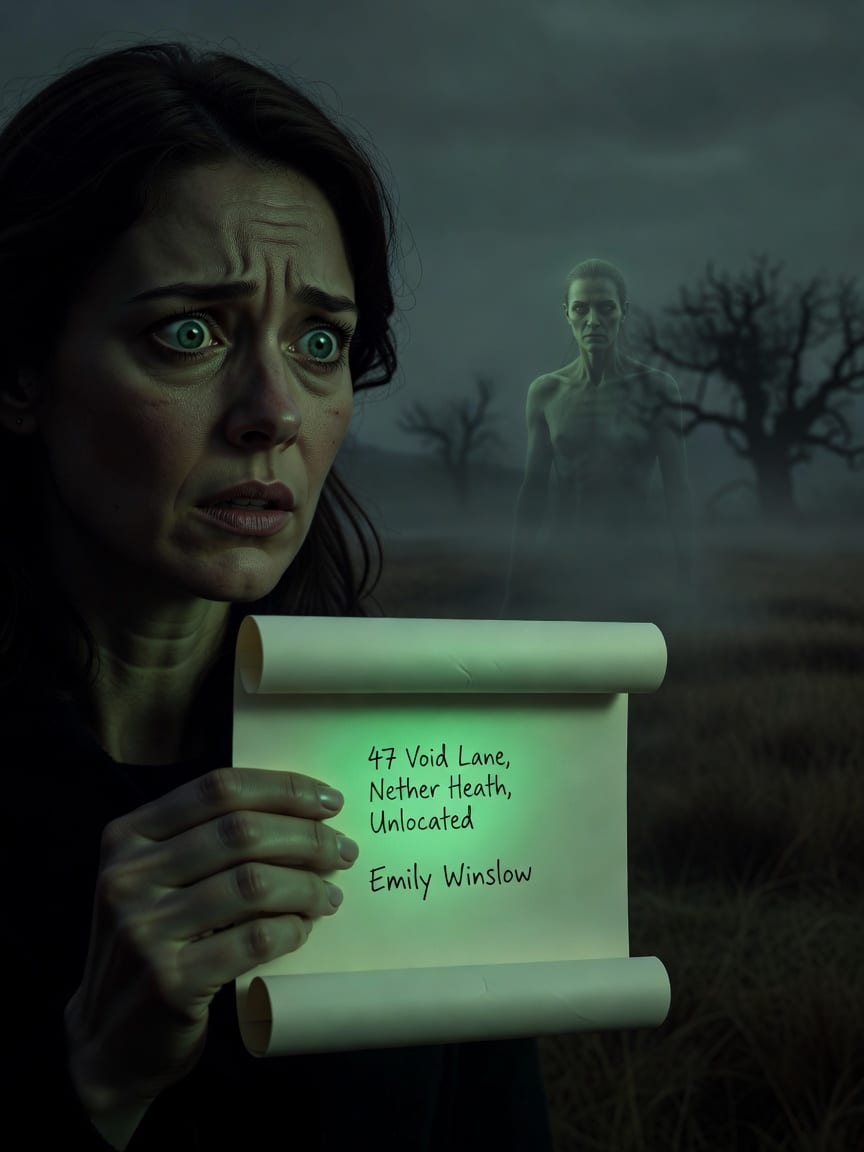
My change-of-address card arrived today. It said I'd moved to a house I'd never seen, on a street that didn't exist. And it was signed with my own hand, a month from now.
A crisp, cream-colored card on my kitchen counter informed me I'd moved to 42 Willow Creek Lane, an address that didn't exist. The signature was my name, Emily Winslow, a chillingly precise ghost of my own handwriting. But then I found an old 1947 ledger, listing 42 Willow Creek Lane and a signature identical to the one on my card.
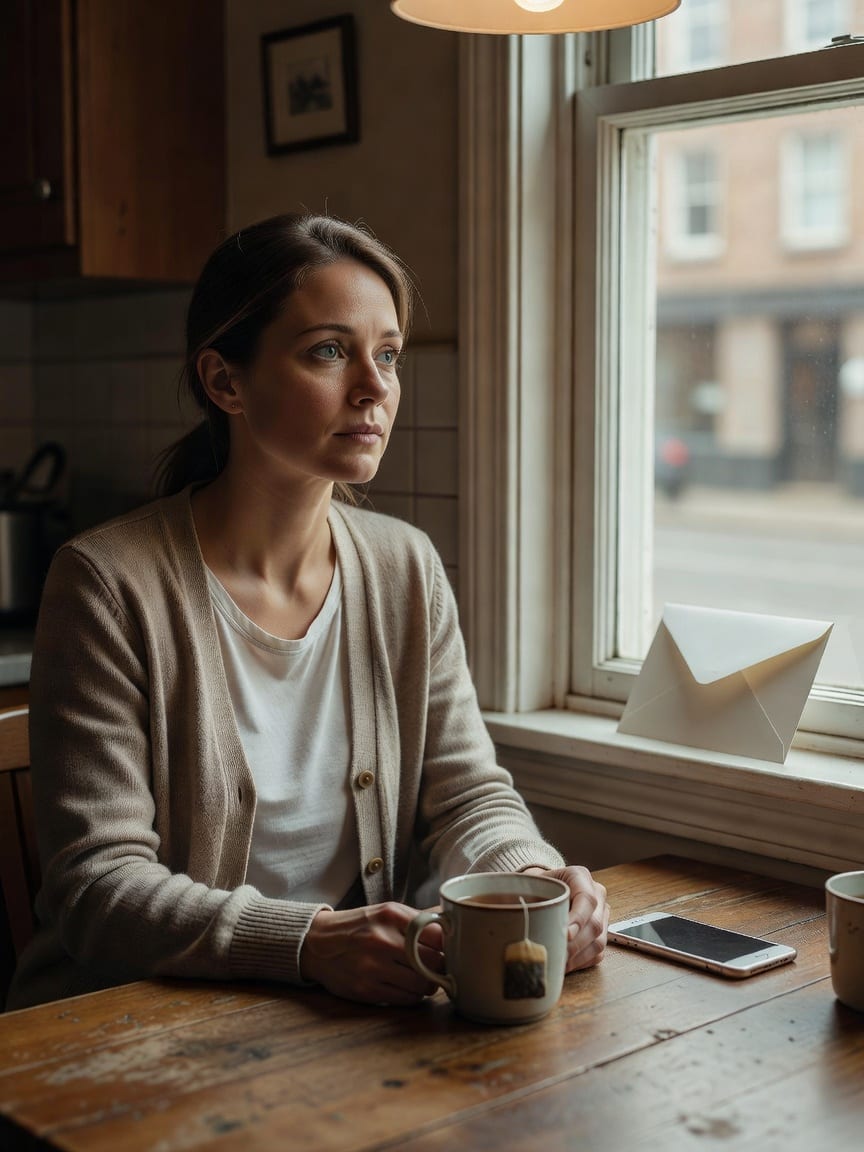
My taxi driver knew my name before I spoke, then apologized for the flight I was going to miss. I was arriving. The cab's plate was scrapped four years ago.
After a strange taxi ride, I received an unsettling birthday card addressed to me. Its return address listed 'Old Mill Road Field,' an empty lot where a mill once stood, and it was postmarked locally. The card arrived four months before my actual birthday, sparking a cold dread I couldn't ignore.
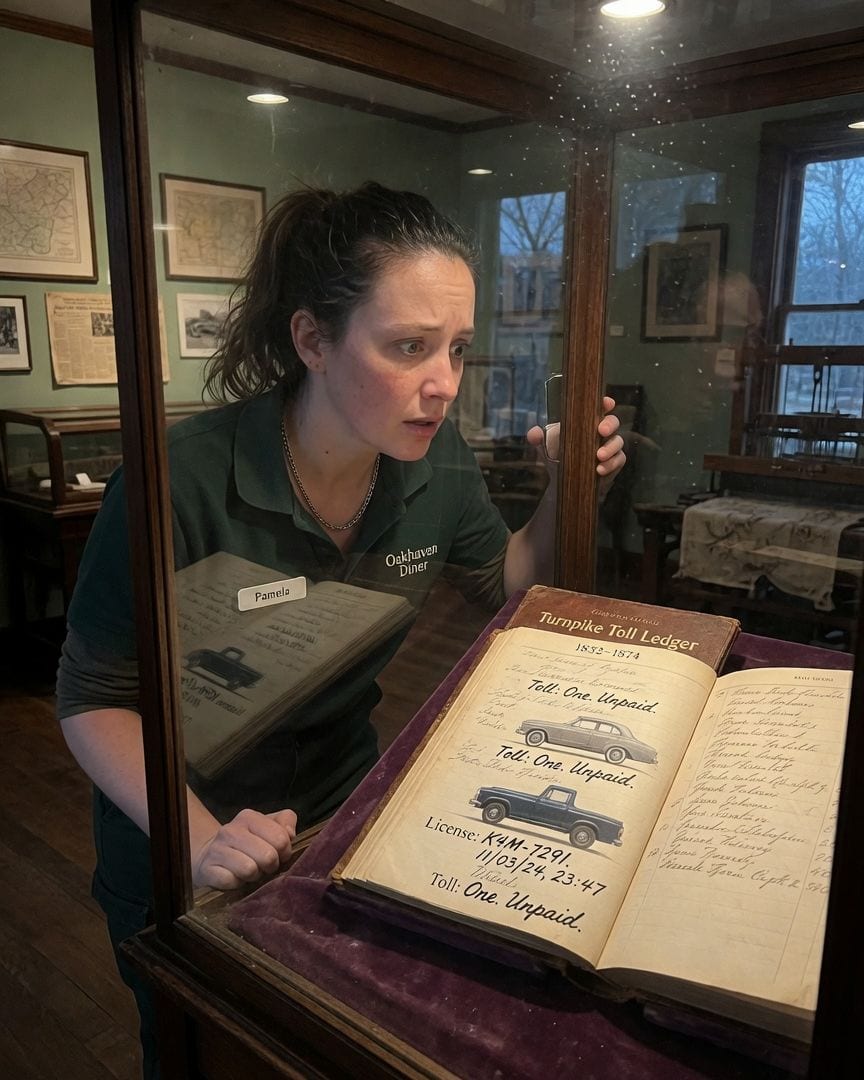
My car stalled at the old turnpike milestone, after dark. The toll ledger, closed in 1874, then listed my car, my stall time, and a toll of one, unpaid.
I had just moved to Oakhaven when my old sedan died on a dark, winding road by an infamous turnpike milestone. The next day, I found my car's exact registration and stall time written in fresh ink in a 150-year-old, locked museum ledger, marked 'Toll: One. Unpaid.' The curator dismissed it as a prank, but her white knuckles and strained voice hinted at something far more unsettling.