My boarding pass scanned in Detroit at 6:40 AM, seat 22C — but I was home in bed with the flu, my wife beside me all day. In Phoenix, someone collected my checked bag and signed for it as me.
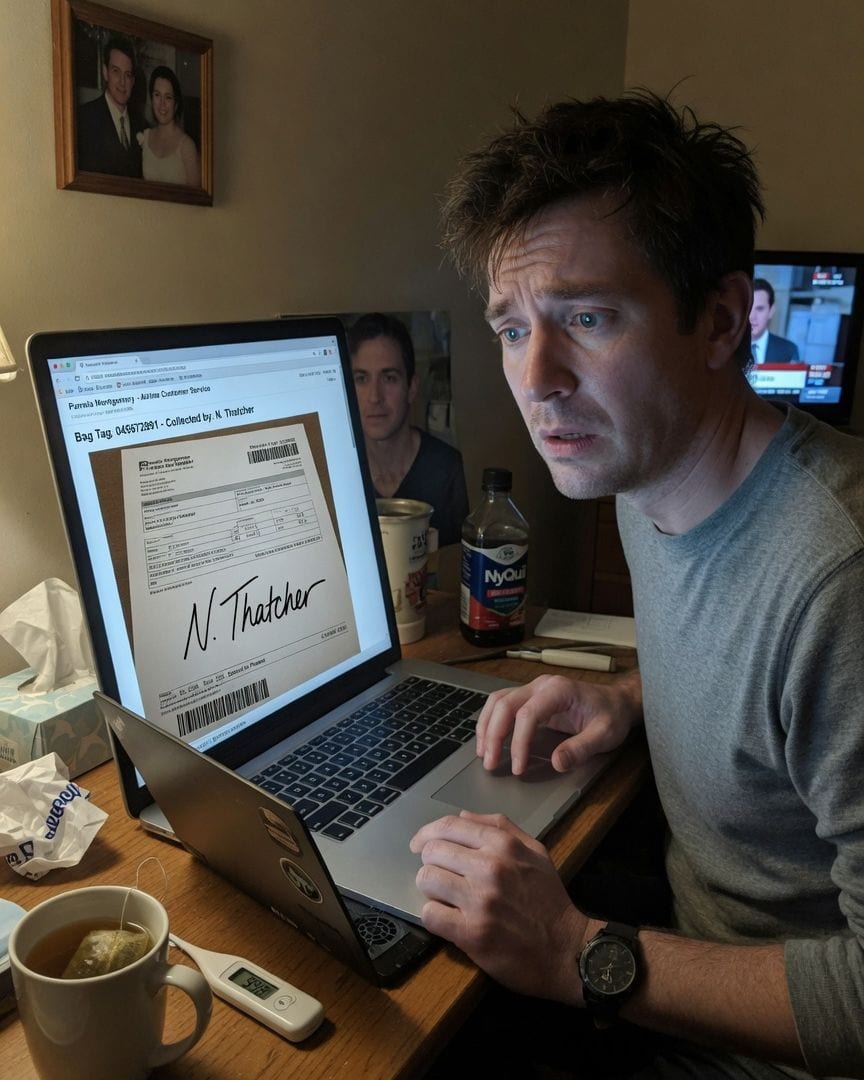
The email arrived seven days after, a digital ghost. My airline receipt confirmed I’d flown Detroit to Phoenix on November 11th, seat 22C, boarding pass scanned at the gate at 6:40 AM.
The details were precise: my full name, the flight number, the departure and arrival times.
I remember November 11th perfectly: a feverish haze, the heavy throb behind my eyes, Theresa bringing me lukewarm tea every few hours, the TV droning mindlessly in the background.
My wife could tell you, I didn't leave our bed for more than a few minutes that entire day. I certainly didn't board a plane.
The receipt, however, listed my frequent-flyer number, confirmed one checked bag, and stated it had been collected at the Phoenix carousel by someone who signed for it as 'Nathan Thatcher.' My name. My number. An impossible flight.
My first thought was identity theft, a common enough nightmare. But the specific details, the mundane precision of it all, felt less like a hack and more like a twisted joke.
Who would steal an identity just to check a bag on a flight I never took? I reread the email, trying to find a typo, a wrong digit, anything that would make sense. There was nothing.
Just the cold, hard facts of a journey that, according to everything I knew about my own life, had never happened. The chill I felt had nothing to do with the lingering flu.
My initial call to the airline was met with the standard, soothing drone of customer service. Pamela Montgomery, her voice practiced and polite, assured me it was 'likely a system error, Mr. Thatcher, or perhaps an identity theft.'
Her tone suggested a mild annoyance at my insistence, the kind of polite dismissal reserved for someone making a fuss over nothing. I pressed, asking about the checked bag, the signature.
'We'd need to pull the physical manifest and the bag claim form from the Phoenix hub,' she said, a hint of reluctance in her voice. 'That can take time, Mr. Thatcher. Are you sure you didn't, perhaps, misremember the date?'
The suggestion was absurd. I'd been utterly miserable, sick enough that Theresa had to cancel plans just to look after me.
I waited, my stomach churning with a cold unease that no amount of rationalizing could shake.
Theresa, ever the pragmatist, suggested it was a simple mix-up, maybe someone with a similar name, a data entry error from a stressed-out baggage handler. It made sense, in a way, but it didn't feel right.
My frequent-flyer number, my exact seat number on the digital boarding pass. Too many specific, matching details for a 'simple mix-up.' My laptop fan hummed softly on the desk, a small, trapped sound in the quiet room.
When Pamela called back a week later, her voice was different, softer, a little too careful. The air around me seemed to grow still. 'Mr. Thatcher,' she began, 'we've located the physical bag claim.
I'm going to email you a high-resolution scan of the signature.' The line crackled, an almost audible hesitation. 'It… it appears to be a match for your records on file. The supervisor confirmed it.'
The email landed in my inbox, Pamela’s name in the subject line. I clicked it open, my breath catching in my throat. On the screen was a pristine image of a small, white form. The destination, Phoenix.
The date, November 11th. The bag tag number, matching the one on my digital receipt. And beneath it, in bold, confident script, the signature: N. Thatcher. Every loop, every slant, every familiar line was mine.
The way the 'N' started high, the slight angle of the 'h' in Thatcher, the final firm flourish. Theresa leaned closer, her finger tracing the screen, her breath warm on my neck.
'Nathan,' she whispered, her voice barely audible, 'That’s your hand.'
The confirmation from Pamela, even if hesitant, changed everything. This wasn't a digital glitch, not a system error. This was a physical artifact bearing my mark, a genuine, undeniable piece of paperwork signed by me.
I immediately contacted Philip Doyle, a handwriting expert I'd used years ago for a legal document. Philip, a meticulous man with thick glasses and ink-stained fingers, was intrigued by the unusual nature of my request.
I sent him the high-res scan of the bag claim and several samples of my actual signature from various documents – my driver's license, old checks, a signed lease agreement. Anything that showed my hand over time.
A few days later, he called. 'Nathan,' he said, his voice devoid of his usual academic detachment, 'I've examined the Phoenix signature. The pressure points, the unique flourishes, the individual letter formations… it is unequivocally yours. There's no doubt.'
The dread deepened its hold, a cold, tightening knot in my chest. The certainty in his voice left no room for hope of a mundane explanation.
I started pulling every record I could find from the past year – bank statements, credit card activity, even my phone’s location history. Nothing. No flights to Phoenix, no unexplained purchases, no gaps in my memory.
Theresa confirmed my presence at home again and again. Our life, our shared reality, held no space for this flight.
But then, a week later, another email. This one from a hotel chain I sometimes used for business travel, though never for pleasure.
A 'Welcome Back' message, thanking me for a recent stay at their 'Desert Rose Inn' in Tonopah, Nevada. Tonopah? I’d never even driven through Nevada. The email included a link to a digital receipt. Dated two weeks prior. Room 307.
And there, at the bottom, a digital signature that looked exactly like the one from the Phoenix bag claim. My blood ran cold.
The Tonopah hotel receipt rattled me more than the flight. A pattern was forming, and it was escalating. This wasn't random. I called the Desert Rose Inn, asking for the manager.
Maxwell Lawson, a gruff but seemingly honest man, was initially dismissive. 'We have a Nathan Thatcher who checked in, paid cash, and checked out,' he stated, his voice flat.
'I can send you a copy of the registration form if you like. Room 307, correct?' I told him it wasn't me, that I’d never been to Tonopah, never even heard of the Desert Rose Inn. There was a pause.
'Mr. Thatcher,' he said slowly, 'I'm looking at the form right now. It has your frequent-guest number. And it has your signature.' My frequent-guest number. That was the link. The same number used for the Phoenix flight.
I asked about security footage. 'We have it,' Lawson said, 'but it's a small place. The quality from two weeks ago… not great. We don't upgrade often.' He trailed off. A few days later, a package arrived, unaddressed, from Tonopah.
Inside was a USB stick. It contained grainy, time-stamped footage from the Desert Rose Inn lobby. I fast-forwarded to the date of the alleged check-in, the time stamp blinking green in the corner of the screen.
A figure, obscured by shadow and camera angle, stood at the counter, filling out a form. The figure was roughly my height, my build.
I couldn't make out the face, but the way they held the pen, the tilt of their head... it felt like looking at a distorted reflection. Like a bad, out-of-focus photo of myself.
Then, a quick cut, and the figure was gone. I replayed it, zooming in, pressing my face close to the screen, but the face remained stubbornly indistinct, a blur of pixels. It was me, but it wasn't.
A chill ran down my spine, a certainty that someone knew I was looking, and they were letting me see just enough to know it was real, but not enough to understand.
I called Pamela Montgomery again, my voice tight with a fear I was trying desperately to keep out of my tone. 'Pamela, there's another one. A hotel in Tonopah. Same signature, same frequent-flyer number.'
She was quiet for a long moment, the silence on the line stretching, pressing against my ear. 'Mr. Thatcher,' she finally said, her voice low, a new tremor in it, 'I've been doing some digging of my own.
After your first call, I decided to cross-reference your frequent-flyer number with any other… anomalies. It's not just these two.' My heart hammered against my ribs, suddenly loud in the quiet room. 'What are you talking about?'
She sighed. 'There are… traces. Small, almost invisible entries in various partner databases. A rental car booked in your name in Miami three months ago, cancelled last minute.
A loyalty card swiped at a gas station in rural Oregon six months back. No financial transaction, just the loyalty points recorded. And a few older ones. Very old.' She sounded genuinely unnerved now, her professional composure completely gone.
'I thought they were database errors, ghost entries, you know? Just system noise. But with your signature popping up…' She paused, and I heard the faint rustle of papers on her end. 'It's like a shadow account, Mr. Thatcher.
A shadow itinerary. Someone, or something, is using your identity, not for theft, but to mark your presence in places you never were. And it’s been happening for a while.'
The words hung in the air, confirming my worst fears, taking root deep inside me. The flu, the Phoenix flight, the Tonopah hotel – they weren't isolated incidents.
They were pieces of a larger, terrifying tapestry being woven around my life, a coherent, impossible record of where I'd been, and who I'd been, that wasn't me. My own life was being overwritten, or perhaps, paralleled.
Pamela, now genuinely invested, her voice firm despite the fear, suggested I look for older, physical records, not just digital ones. 'Sometimes the old paper trails hold more,' she advised. 'Things that haven't been 'cleaned' by system updates.
They're harder to erase.' I started with the Tonopah hotel again, the only place I had a physical contact.
Maxwell Lawson, the manager, was initially reluctant to let me into their archives, citing privacy and company policy, but eventually, after I insisted it was a matter of extreme personal urgency, he led me to a dusty back room where old guest registers were stored.
The room smelled of mildew and forgotten things, the air thick and still.
Rows of heavy, leather-bound books lined metal shelves, smelling of age and forgotten lives. He pulled out the register from five years ago, the period Pamela had hinted at, its cover cracked and worn.
My hands trembled as I opened it, flipping through the brittle, yellowed pages, each one a testament to anonymous travelers passing through time.
And there, on an entry dated August 14th, five years prior, was my full name, 'Nathan Thatcher,' followed by my frequent-flyer number. Beneath it, a signature. My signature.
Identical to the one Philip Doyle had verified, identical to the one on the Tonopah digital receipt. That date, five years ago, August 14th. I remembered it vividly.
I was in Japan on a business trip, a week-long conference, with dozens of photos, flight manifests, and hotel bills to prove it.
This wasn't just a recent anomaly; this wrongness had been running through my life for years, a silent, parallel existence I never knew I was leading.
The full weight of it pressed down on me, the air in the archive room suddenly heavy, thick with the weight of forgotten lies.
The realization that I wasn't just observing it – I was, and had always been, inside it. I carefully turned the brittle page of the old hotel register.
There, beneath a faded entry from five years ago, was his full name and his unmistakable signature, frozen in time, waiting.
I sat on a dusty stool in that archive room, the old register open on my lap, my fingers tracing the impossible signature, the familiar loops and angles of my own hand that had betrayed me.
Maxwell Lawson, who had seen my face drain of color, sat across from me, quietly watching, his gruffness replaced by a strange, knowing calm. 'Mr. Thatcher,' he said softly, 'I've seen some strange things in this business.
Travelers with no luggage, folks who pay cash and disappear without a trace. But this…' He shook his head. 'This is different. I checked our old video archives for that date, five years ago.
The cameras weren't as good back then. Grainy. But there's a figure, checking in, same build as you. They paid cash. Always cash for these odd ones.'
He pointed to other entries on the page, names I didn’t recognize, but each with a frequent-flyer number, a loyalty program ID, just like mine.
'These are all people who have never been here, according to their own records,' Lawson explained, his voice flat. 'We've had a few calls over the years. Always dismissed as hoaxes, or poor bookkeeping. We just file them away.'
He pulled out a small, worn photo album from beneath the counter, its cover faded brown. 'This was found near the register, years ago. Left behind by one of those… ghost guests, we called them.' He flipped it open.
Inside were blurry, out-of-focus photos of unremarkable places – empty hotel rooms, a deserted highway, a a grainy sunrise over a barren landscape.
And in a few, a figure, always indistinct, always facing away from the camera, but undeniably my height, my build. The photos were dated, too. Years. It wasn't just me.
It was a pattern, a network of these 'ghost guests,' each leaving a trace, a signature, an impossible record. The dread that had been a cold knot in my stomach now spread through my veins, a chilling recognition of coherence.
Every clue, every impossible record, every signature, every shared frequent-flyer number, it all clicked into place.
This wasn't identity theft; it was identity replication, a systematic, long-running project to insert a 'version' of people into a fabricated reality, leaving behind a perfectly documented, perfectly false trail.
The true horror wasn't just that it was happening, but that it was so perfectly mundane. No grand conspiracy, no shadowy figures, just paperwork. Just records. Maxwell Lawson, seeing the depth of my despair, offered me a small, heavy box.
'These are the physical bag claim forms,' he said, his voice softer now, 'from the Tonopah airport, for our guests who flew out after those stays. We keep them for a few years, just in case. Old protocol.'
My hands shook as I opened it. Inside, neatly filed, were dozens of forms, each with a name, a flight, and a signature. I found mine, from five years ago, the one matching the hotel register.
It was a tangible, undeniable artifact of my impossible past. The ordinary explanation died for good right there. This wasn't a glitch, not a mistake. It was real.
The signatures, the frequent-flyer numbers, the dates, the locations – all checked out against official databases, yet they formed a life I had never lived.
I picked up the bag claim form, the one with my signature from five years ago, my fingers tracing the raised ink. It was real. Dated. Checkable. I turned to Lawson. 'What do you do about it?'
He shrugged, a weary expression on his face, the weight of years of seeing the inexplicable etched around his eyes. 'Nothing. Who would believe us? We just… file them. And try not to think about it.'
He pointed to a small, almost invisible detail on the form – a tiny, embossed symbol near the bottom, like a stylized 'N' intertwined with a 'T'. I hadn't noticed it before.
It was on every form in the box, every 'ghost' entry. A mark. A branding. I held the form up, the paper feeling heavy in my hand, no longer just a record, but a piece of my own stolen reality.
The dread was absolute, not from what I saw, but from what it implied: a vast, unseen system, quietly taking pieces of people's lives, building a parallel existence, and leaving behind only the cold, hard proof of its impossible coherence.
I felt a profound sense of violation, a certainty that a part of me, a part of my identity, was now permanently etched onto these records, living a life I had no control over.
I left Tonopah with the bag claim form, the small, embossed symbol a burning brand in my mind. The world felt subtly different, a thin veneer over a deeper, more complex reality I now knew existed.
I tried to explain it to Theresa, but the words felt hollow, unbelievable even to my own ears.
She listened, her brow furrowed, her hand on my arm, but her eyes held a quiet, distant concern, as if I were slipping away. Pamela Montgomery, after my call that day, quietly resigned from the airline, citing 'personal reasons.'
Maxwell Lawson simply went back to filing his old registers, a silent sentinel of the impossible. I kept the form, tucked away, a constant reminder of the shadow life I was leading, a life documented and confirmed, yet utterly untrue.
The pattern continued, small, untraceable entries appearing in various databases, always with my number, always a signature that could only be mine.
The phantom entries still appear, small whispers of a life I don't live.
Sometimes, I catch myself looking at my own signature on a document, a faint tremor in my hand, wondering if it's truly mine anymore, or if it's just a practiced mimicry of the signature that is everywhere else.
Theresa sometimes asks me, 'Did you remember to take out the trash?' and I have to pause, searching my memory, not for the act itself, but for the version of me that might have done it.
The one who flew to Phoenix, who stayed in Tonopah. The one whose life is written in records I can't dispute, but didn't live. The dread is that the world's record, not my memory, is true.
I am here, but I am also, unmistakably, there.
Theresa watches Nathan across the dinner table. 'Are you sure you're feeling alright?' she asks, noticing the vacant stare in his eyes. He simply smiles, a faint, unfamiliar curve that doesn't quite reach his eyes.
If this one got to you
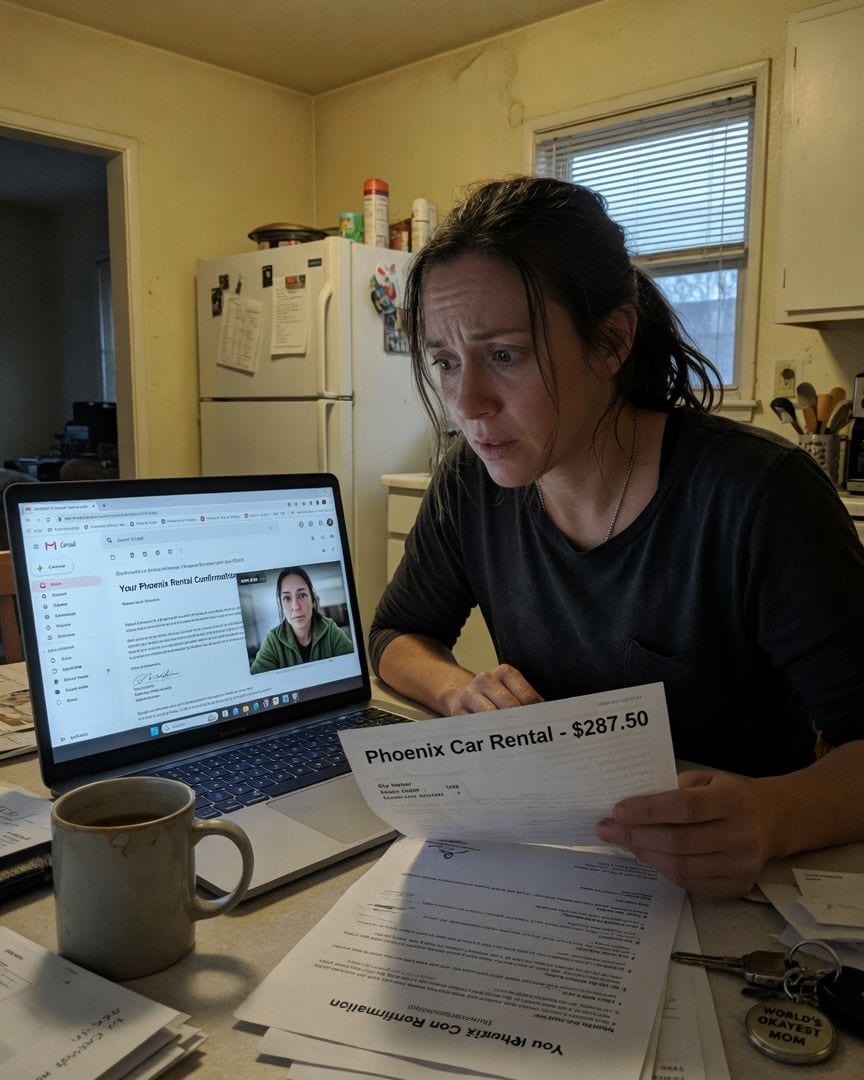
My bank sent a security photo: me, entering Harrington Research Facility. I was home with a fever; that face isn't mine.
I found a bank charge for a rental car in Arizona, a place I’d never been, with my license and signature. But the rental agreement also noted a specific coffee stain on the passenger seat — the exact faded mark from my own car. Then, a security alert showed me entering a facility I’d never visited, on a day I was home sick.
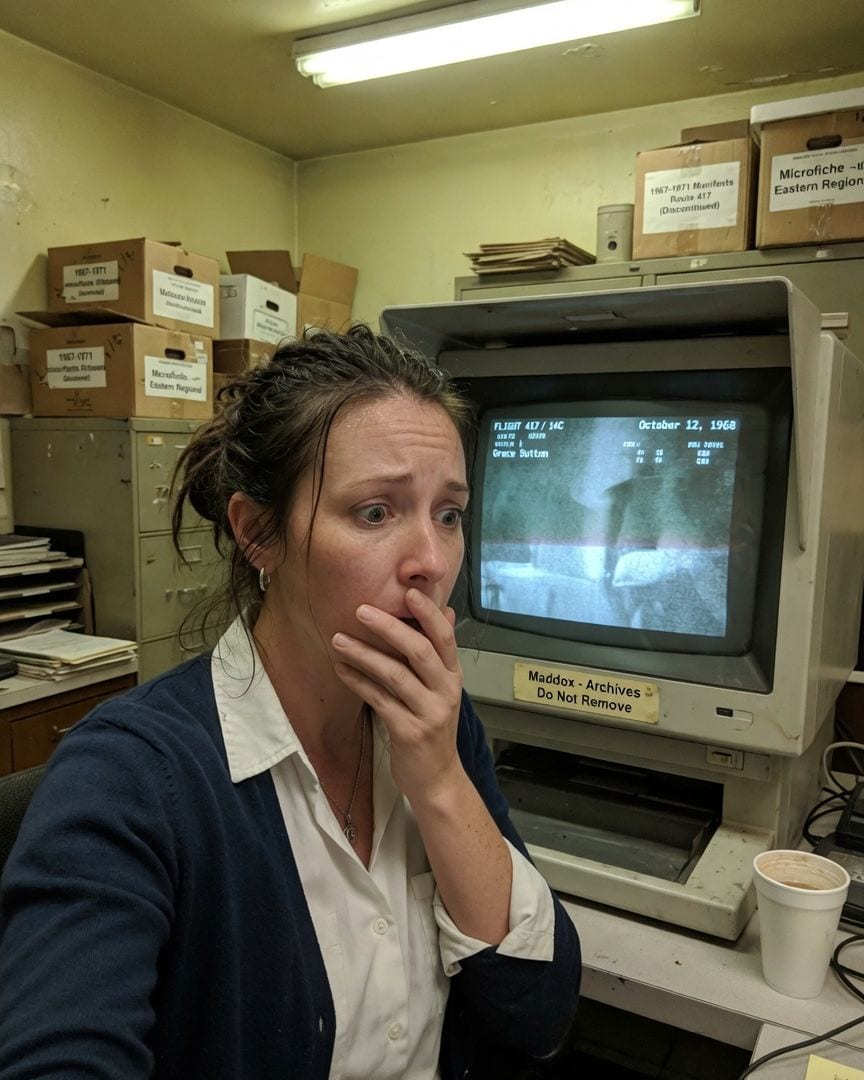
A woman I'd never met leaned across the aisle, said 'I'm sorry, Grace,' and warned me about the landing. We landed fine — but the airline says seat 14C flew empty.
My routine flight home took an unsettling turn when a woman in seat 14C spoke to me. She knew my name, warning me about the landing, then simply vanished from her seat after we touched down. Airline records confirmed seat 14C was unoccupied, as if she was never there.
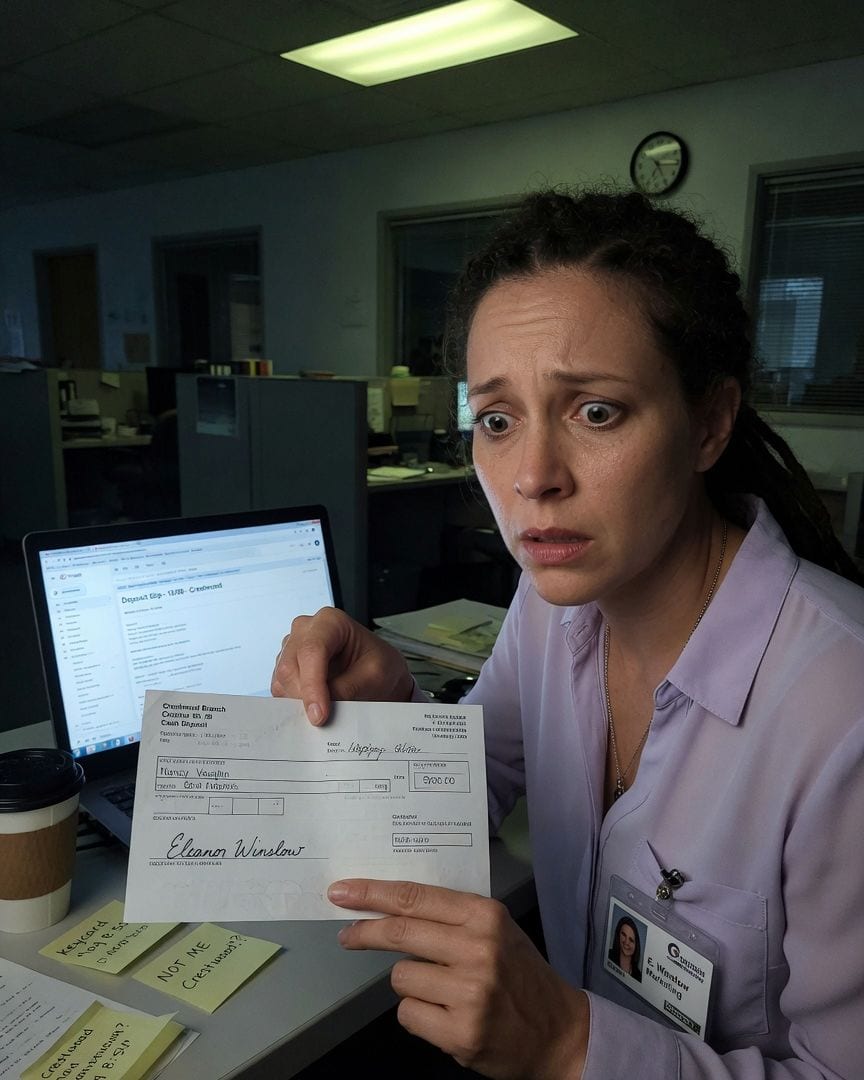
My bank statement shows a $900 cash deposit made in a town I've never set foot in, at 10:40 AM on a workday. I was at my desk, badged in. Two more landed since.
My bank statement showed a $900 cash deposit from a town I'd never visited, 150 miles away. I was at my desk, logged into work, all three times. But the scanned deposit slip arrived, clear as day, showing my own flawless signature.
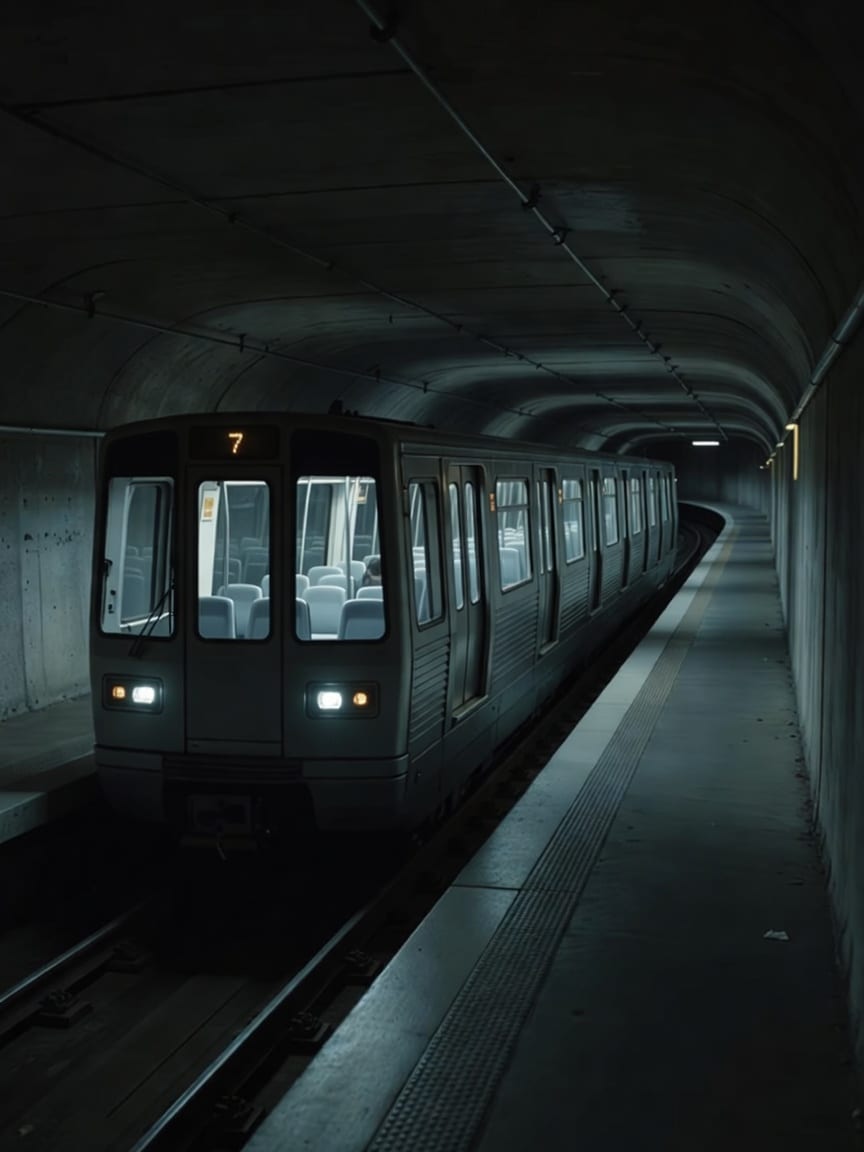
My airport people-mover left Terminal 2 and opened its doors at Terminal 2 again. The overhead display counted zero stations passed. The same cleaner mopped the same patch.
My people-mover shift started like any other Friday, a routine two-minute run between terminals. But after each journey, the doors of Unit 7 opened back at the same Terminal 2, with the same cleaner mopping the same spot. Then I found an impossible boarding pass, for a flight that hadn't flown in decades, from a gate that no longer existed.

My taxi driver knew my name before I spoke, then apologized for the flight I was going to miss. I was arriving. The cab's plate was scrapped four years ago.
After a strange taxi ride, I received an unsettling birthday card addressed to me. Its return address listed 'Old Mill Road Field,' an empty lot where a mill once stood, and it was postmarked locally. The card arrived four months before my actual birthday, sparking a cold dread I couldn't ignore.
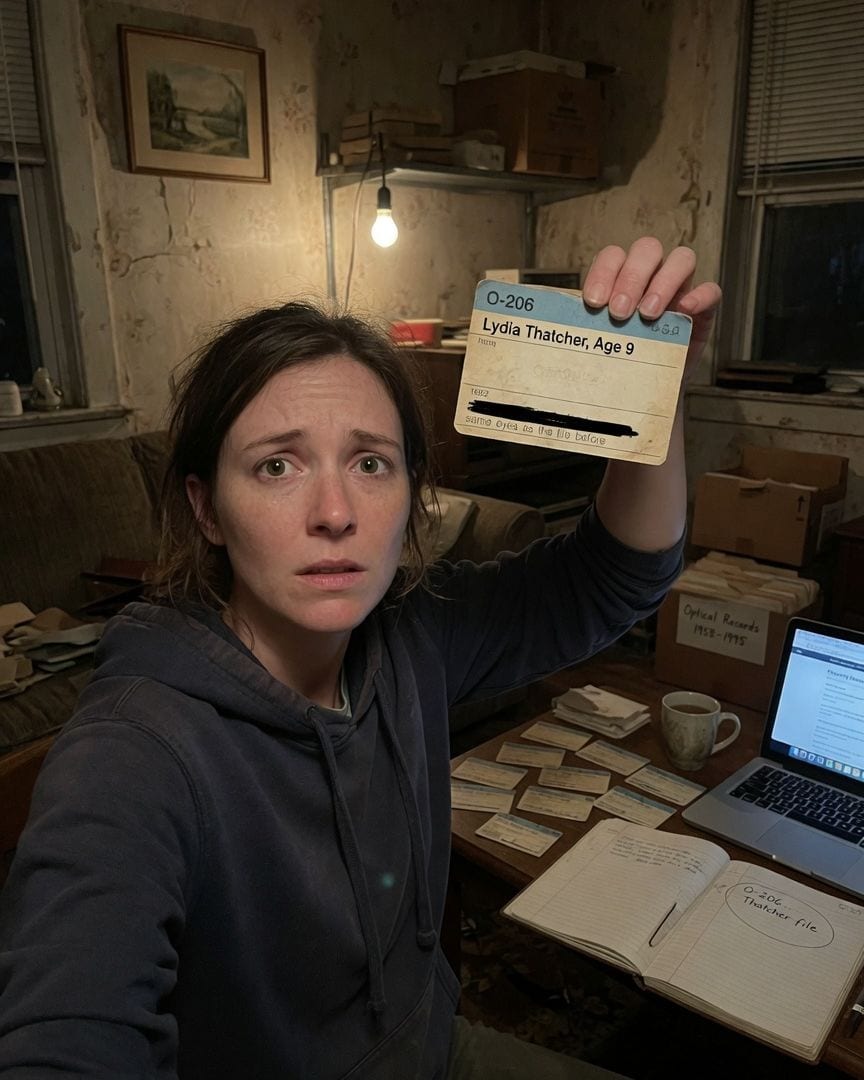
My own optical card is dated 1962, with my name on it. I wasn't born until 1993.
Sifting through old patient files from my former optical practice, I found my own O-206 card. It had my name, Lydia Thatcher, and my current home address printed on it. But the card was dated 1962, decades before I was even born, and a redacted note mentioned 'same eyes.'