A Coast Guard XO's final survey found an abandoned Cold War LORAN station's stovepipe smoking, forty years after a man vanished.
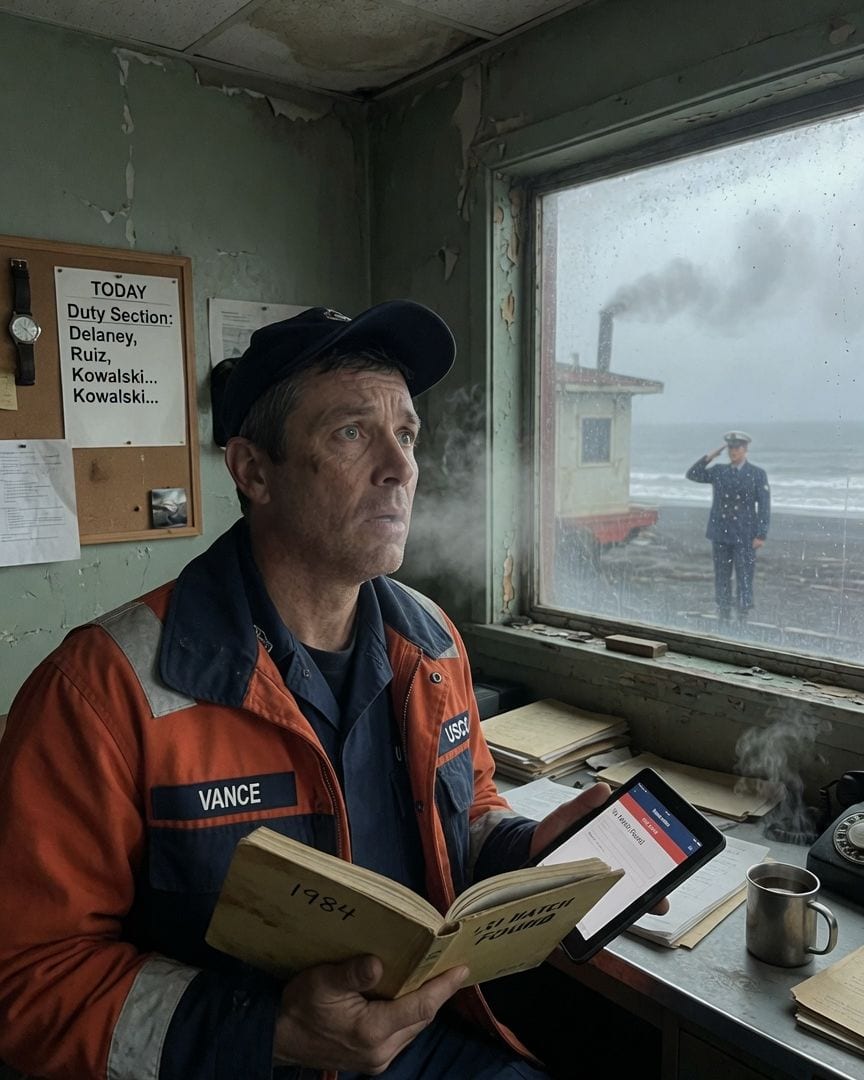
The USCGC Whitfield cut through the gray, choppy waters of the Bering Sea, its destination a remote, fog-locked Aleutian island. Lieutenant Harold Vance, the buoy tender's XO, stood on deck, the salt spray cold on his face.
Their mission: a final survey of the abandoned LORAN station before demolition. The station had been derelict since the LORAN chain went off the air in 2010, its tower toppled, quarters stripped.
As their boat approached the black-sand beach, a stark silhouette against the perpetual mist, Vance spotted it. A faint wisp of smoke, thin and gray, curled from the galley stovepipe.
He blinked, rubbing his eyes, sure it was a trick of the fog, but the smoke persisted, rising steadily into the cold air from a building that should have been long-empty and inert.
Ashore, the boat crew, led by Vance, moved cautiously up the beach. The smoke grew stronger, carrying the faint, impossible scent of coffee and fried rations.
Inside the station, the mess hall was not stripped but set: metal trays on tables, mugs by each plate. A watch bill, dated for that very morning, was freshly tacked to a corkboard. Vance pulled it down, his breath catching.
It listed a full duty section. He moved to the communications room, finding the station logbook open on the desk.
The page was dated today, with entries for routine checks and weather observations, signed by the 'duty section' listed on the watch bill. Vance recognized none of the names.
He pulled out his issued tablet, cross-referencing the names against the Coast Guard's personnel rolls, both active and retired. Each query returned the same result: 'No Match Found.'
He dismissed it as a bizarre, elaborate prank by a local fishing crew, but the meticulous detail, the precise military formatting of the log, felt too authentic, too committed for a mere joke.
The air in the room, despite the smoke from the pipe, remained eerily cold, a chill that had nothing to do with the outside temperature.
Vance continued his search, his unease growing with every perfectly placed item. In the commanding officer's office, behind a loose panel in the wall, he found a second logbook. This one was older, its cover faded, dated 1984.
He flipped it open. It too contained entries for routine operations and phantom names. But then, on a page detailing 'unusual atmospheric disturbances,' he saw it: a signature he recognized from historical files – Lieutenant Commander Richard Delaney.
Delaney, reported MIA from this very station four decades ago, his disappearance a cold case. The entry read: 'The rotations continue. They know. Stay clear of the light.' Vance looked up from the page, his heart hammering.
Through the grimy, salt-crusted window of the abandoned galley, a figure in an old-style Coast Guard uniform stood on the black-sand beach, perfectly still amidst the swirling fog.
The figure slowly raised a hand in a precise, formal salute, its gaze fixed on the buoy tender.
Back on the Whitfield, Vance was a changed man, the cold dread clinging to him tighter than the Aleutian fog. He locked away the logbooks and immediately contacted Shore Patrol.
Commander Frances Porter, sharp and methodical, arrived via helicopter the next day. Vance laid out his findings, his voice strained but rational.
He showed her the current log, the watch bill with its phantom names, then the older, faded log with Delaney's chilling entry.
Porter, initially skeptical, confirmed Delaney’s MIA status and the authenticity of his signature through forensic analysis of old personnel records. She dug deeper, cross-referencing 'unusual atmospheric disturbances' and 'non-standard personnel manifests' from the period.
Her investigation uncovered a faint, almost entirely suppressed pattern: not just at this LORAN station, but at several others across the chain.
Every few decades, after decommissioning, these remote sites would briefly report anomalous activity – phantom radio signals, unexplained power fluctuations, even fleeting visual sightings of crews.
Each incident was followed by a swift, unannounced 'demolition' or 'decommissioning' order, and often, the quiet, unexplained 'transfer' or 'retirement' of a few investigating officers.
The official records were always clean, but the faint digital dust-trails remained, leading back to this disturbing, cyclical pattern. The ship's generator hummed a steady, low note, but to Vance, it now sounded like a nervous tremor.
Vance and Porter, now working together, returned to the LORAN station, armed with Porter’s preliminary findings. The air was heavier, colder, the fog pressing in, tasting of salt and something metallic. They searched for further evidence of Delaney’s last days.
In what had been the radio room, a battered, ancient HF radio unit suddenly crackled to life. A garbled, looping message, heavy with static, played through the speaker.
It sounded like Delaney’s voice, distorted but unmistakable, repeating, 'Stay clear of the light... the rotations... they know...' Porter tried to trace the signal, but it vanished as abruptly as it appeared, leaving only the hiss of dead air.
Outside, on the black sand, they found a fresh set of boot prints. Not their own, and not from their crew.
These prints led from the station's main entrance, around their carefully established perimeter, and then vanished into the fog near the water’s edge.
Vance realized with a sickening lurch that they were no longer just investigating; they were being observed, their presence noted, their digging acknowledged by whatever force inhabited this place.
The wind howled through the station's broken windows, a sound that seemed to carry the echo of other, unseen voices.
Back on the Whitfield, Porter, using her Shore Patrol credentials and a secure satellite link, bypassed several layers of Coast Guard bureaucracy. She eventually accessed a deeply buried, highly classified file: 'Project LORAN Anomaly Protocol – Bering Sea Chain.'
The document was heavily redacted, but enough remained to paint a terrifying picture. It detailed decades of incidents, mirroring what Porter had already found: 'non-standard personnel manifests' and 'unexplained operational activations' at remote LORAN sites.
The protocol described the 'pattern across rotations or dates,' a cyclical phenomenon where decommissioned stations would briefly 're-engage,' staffed by crews whose names never appeared on official rolls.
The document outlined 'containment procedures,' primarily involving rapid, unannounced demolitions and the 'systematic suppression of all related data.' It wasn't a prank, or a glitch. It was a known, documented, and actively managed anomaly.
The Coast Guard hadn't solved it; they had simply buried it, hoping to contain the spread, trying to make the impossible fit into their meticulously accounted-for world. Vance felt the cold dread solidify.
Every odd detail, every missing record, every 'transfer' now clicked into sickening place. The institution had known for decades, and they had been fighting a silent war, not against an enemy, but against reality itself.
The fluorescent lights in the Whitfield's ready room flickered, casting a sickly yellow glow on the screen, as if the ship itself shuddered at the revelation.
Vance and Porter continued to sift through the digitized 'Anomaly Protocol' archive, cross-referencing old LORAN operations maps with the dates of the documented 'activations.'
They found a specific, classified file relating to this Aleutian station, labeled 'Project LORAN-A-17: Personnel Integration & Containment.' Their fingers trembled as they opened it. It contained a series of official-looking, yet entirely unsanctioned, 'Future Duty Rosters.'
They scrolled through pages of phantom names and dates stretching years into the future. Then, on a roster dated for next month, for the Executive Officer position at this very LORAN station, Vance saw it.
His own name, stark and undeniable: 'VANCE, H. R.' Beside it, his full service number, matching perfectly.
Porter gasped, pointing to a small, almost invisible footnote at the bottom of the screen, referencing 'integration protocols' for personnel flagged under the 'Anomaly Protocol.' Vance stared, horrified, at the digitized duty roster on the screen. His name.
His service number. Scheduled for next month, at this impossible station.
The screen glowed, mocking Vance with his own name. Porter quickly scrolled through more of the 'Personnel Integration & Containment' file.
It detailed how officers who investigated too deeply, who crossed a certain threshold of awareness, were eventually 'integrated' into the phantom crews.
Their official records would be quietly 'adjusted' – a transfer here, an early retirement there – while their true fate was to staff the perpetually 'activating' stations across different timelines.
Delaney wasn't MIA; he was serving, endlessly, at this very station, his signature in the old logbook a desperate attempt to break the cycle from within his new reality.
The 'demolition' orders, Vance now understood, weren't to destroy the nexus, but to temporarily disrupt its anchor, to 'reset' the anomaly and prevent its influence from spreading further into conventional reality.
It was a desperate, recurring measure by the institution, a bureaucratic ritual performed to maintain the illusion of control, knowing full well it was a temporary fix.
Every clue, every phantom name, every suppressed record, now clicked into a horrifying, coherent pattern: the Coast Guard wasn't just containing an anomaly, they were feeding it, sacrificing their own to maintain a fragile, impossible balance.
The cold dread in Vance's chest had solidified into a heavy, unbreakable weight.
With their own names now appearing on a future phantom roster, Vance and Porter knew their time was running out. The Whitfield was due to depart in hours. They made a desperate, unsanctioned dash back to the LORAN station.
Their objective: not demolition, but disruption. They searched frantically for the anomaly's anchor.
In the sub-basement, beneath layers of rusted equipment, they found it: a hidden LORAN beacon, humming faintly, drawing power from an unknown source, radiating a cold, impossible energy.
It was not transmitting a conventional signal, but something else entirely – a resonant frequency that seemed to shift and warp the very air around it. This was the nexus, the heart of the station's other reality.
Vance, a former explosives ordnance disposal specialist, quickly rigged a series of charges, targeting the beacon itself, not the building.
As the timer began its silent countdown, faint, disembodied voices echoed through the station's empty corridors – a phantom watch section calling out positions, their voices overlapping, drawing closer. Vance and Porter exchanged a grim look.
They raced back through the fog-shrouded station, the spectral voices growing louder, more distinct, until they sounded like a full crew moving through the building.
They reached the beach, clambered into their boat, and sped away, leaving the island and its impossible crew behind, the distant hum of the beacon still a cold vibration in the fog.
The Whitfield was far out to sea when the demolition charges detonated. They saw no visible explosion, just a brief, impossible ripple in the fog over the island, like a heat haze distorting the air, then silence.
The LORAN station, or at least its visible manifestation, was gone. Vance submitted his official report: LORAN station successfully demolished, all anomalies attributed to environmental factors and isolated power surges.
Porter’s Shore Patrol report was similarly sterile, detailing only 'standard decommissioning procedures' and 'no further action required.' The records were clean, the system protected. But the silence that followed felt heavier, more profound, than any explosion.
It was the sound of a truth swallowed whole.
Back on the Whitfield, Vance was debriefing the Captain. He stated the station was successfully demolished, the mission complete. Later, alone in his cabin, he pulled out his service record.
He flipped through it, finding a commendation he didn't remember, for a deployment to a LORAN station that was decommissioned years ago. He traced the signature on the commendation. It was his own.
The captain of the USCGC Whitfield closed the logbook, noting the successful demolition. He glanced at his Executive Officer, Lieutenant Vance, who was staring out at the open sea, a faint, unreadable smile on his face. 'Anything else, Harold?'
the captain asked. Vance simply shook his head.
If this one got to you
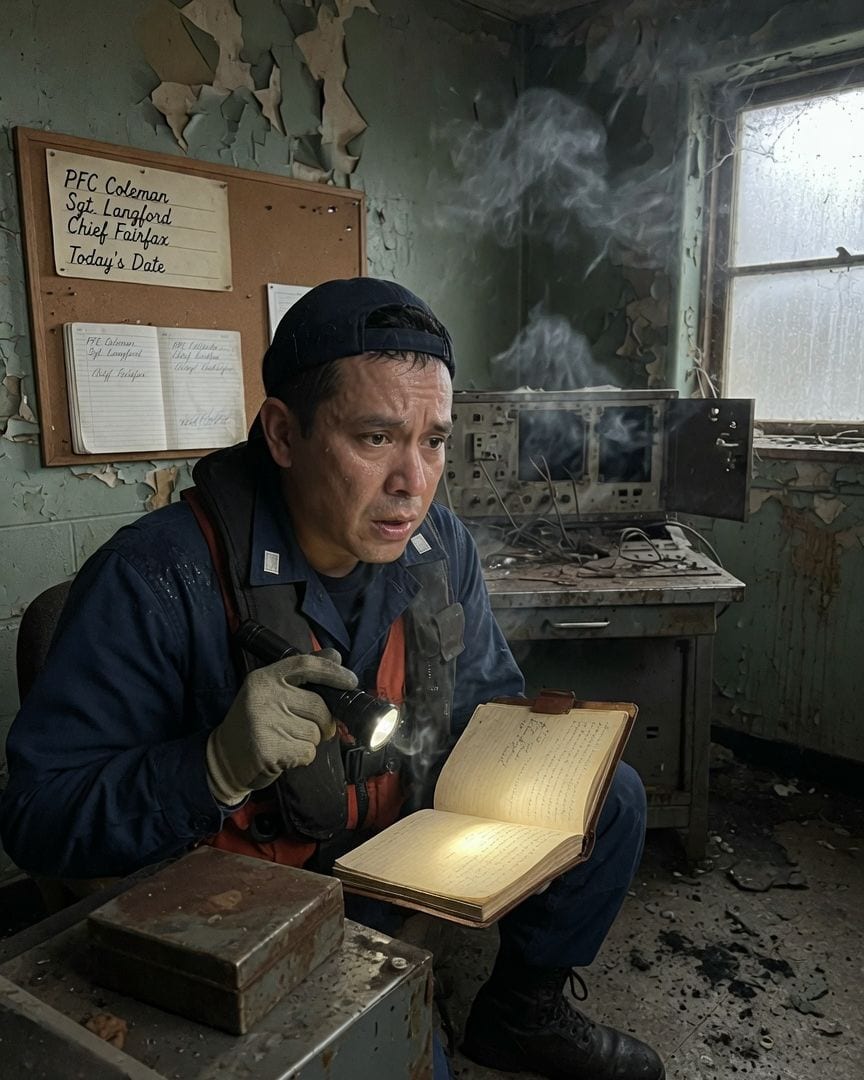
On a final survey, a Coast Guard lieutenant spots smoke from a Cold War station abandoned since 1996. Its mess hall is set for dinner.
Lieutenant Victor Ferro led a final survey team to a long-abandoned LORAN station in the desolate Aleutian fog, a last check before its demolition erased it from memory. But as their boat neared the black-sand beach, a thin plume of smoke curled from the galley stovepipe – from a station officially decommissioned nearly thirty years prior. Inside, the mess hall was eerily neat, tin plates set for a meal, and on a corkboard, a crisp, freshly-inked watch bill listed names unknown to any Coast Guard roll, past or present. The station log lay open to the current date, bearing the same impossible signatures. Who was here, and for whom was dinner being prepared?
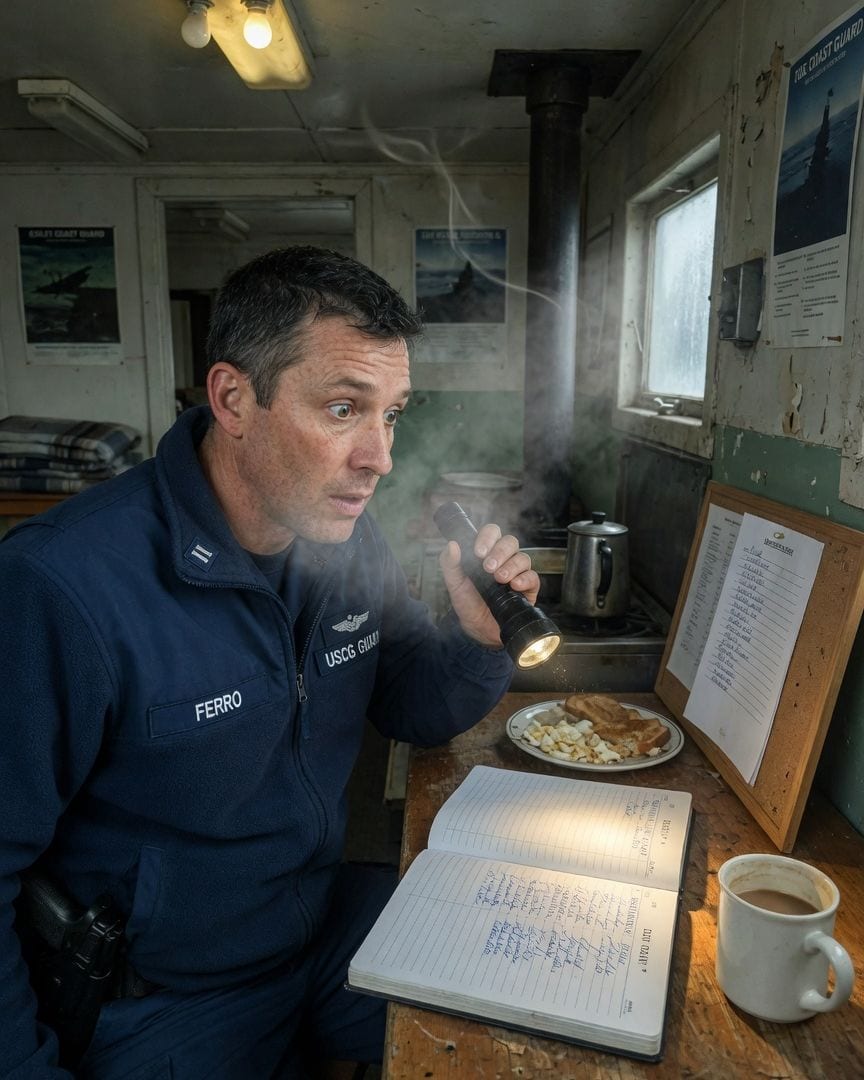
Lieutenant Ferro surveyed a station set for demolition, but its galley stovepipe curled fresh woodsmoke.
Lieutenant Theodore Ferro, Executive Officer of the USCGC Steadfast, braced against the biting Aleutian air, leading a final survey of LORAN Station 14-J before its demolition. The station, officially abandoned for over a decade, should have been a cold, gutted shell on the black-sand beach. Instead, a thin, acrid plume of fresh woodsmoke curled unmistakably from the galley stovepipe, twisting into the thick, low-hanging fog. Inside the unlocked building, a subtle warmth lingered alongside the scent of cooked breakfast, and a crisply printed duty roster listed a full watch section for today, bearing names Lieutenant Ferro knew should not be there. Who could be manning a long-decommissioned post, and why were their freshly laundered uniforms hanging ready for duty?
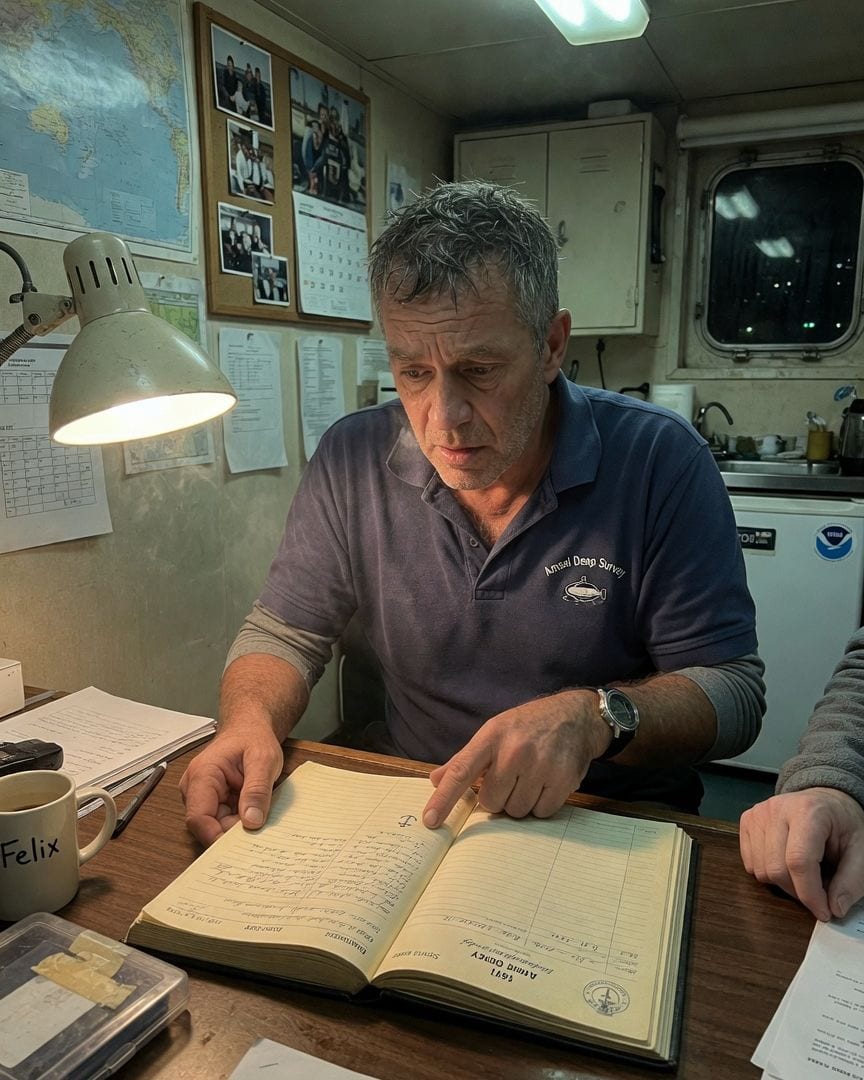
On his final deep-sea survey, a submersible pilot watches a 32-year-old Cold War wreck's rudder shift two degrees.
Deep-sea surveyor Hugo Amsel embarked on his final major dive, anticipating a quiet retirement after decades exploring the crushing pressures of the deep. His submersible's lights cut through the murky green, revealing the *Wynn Portal*, a sealer vanished in 1991, eerily preserved with unnervingly clear windows, free of any marine growth. Then, the inexplicable: the wreck's rudder angle indicator, softly lit, twitched two degrees further to starboard. Later, inside the wheelhouse, Hugo found the ship's official logbook, its final entry dated three days *after* the vessel's recorded disappearance, hundreds of miles north. How could a ship vanish, only to log a journey days later, from a place it never reached?
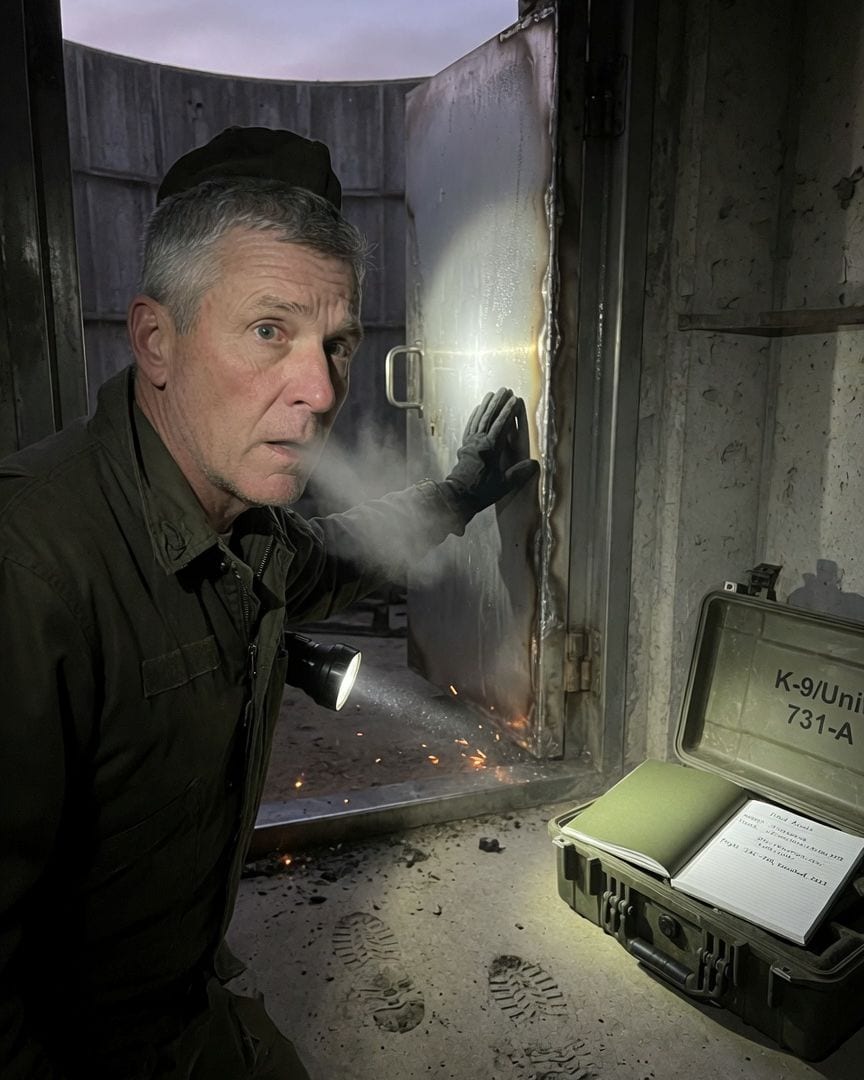
The Cold War silo was welded shut in 1968. A Captain found lights burning, fresh prints leading inside, and a logbook with a vanishing from last week.
Captain Merrit Sable faced a deadline at Silo K-9: one cold morning to retrieve classified hardware before its scheduled demolition at noon. The silo, officially welded shut by the Air Force in 1968 and long off-grid, should have been a tomb of forgotten machinery. Yet, through a cracked port, he saw nine work lights burning steadily forty feet down, and felt the faint suction of an active ventilation system. After breaching the decades-old weld, Merrit found more than just lights; fresh boot prints led deeper into the meticulously clean shaft, but none returned. A hidden compartment in an empty, warm hardcase revealed a logbook, its crisp pages detailing notorious military disappearances, with the latest entry dated just last week.
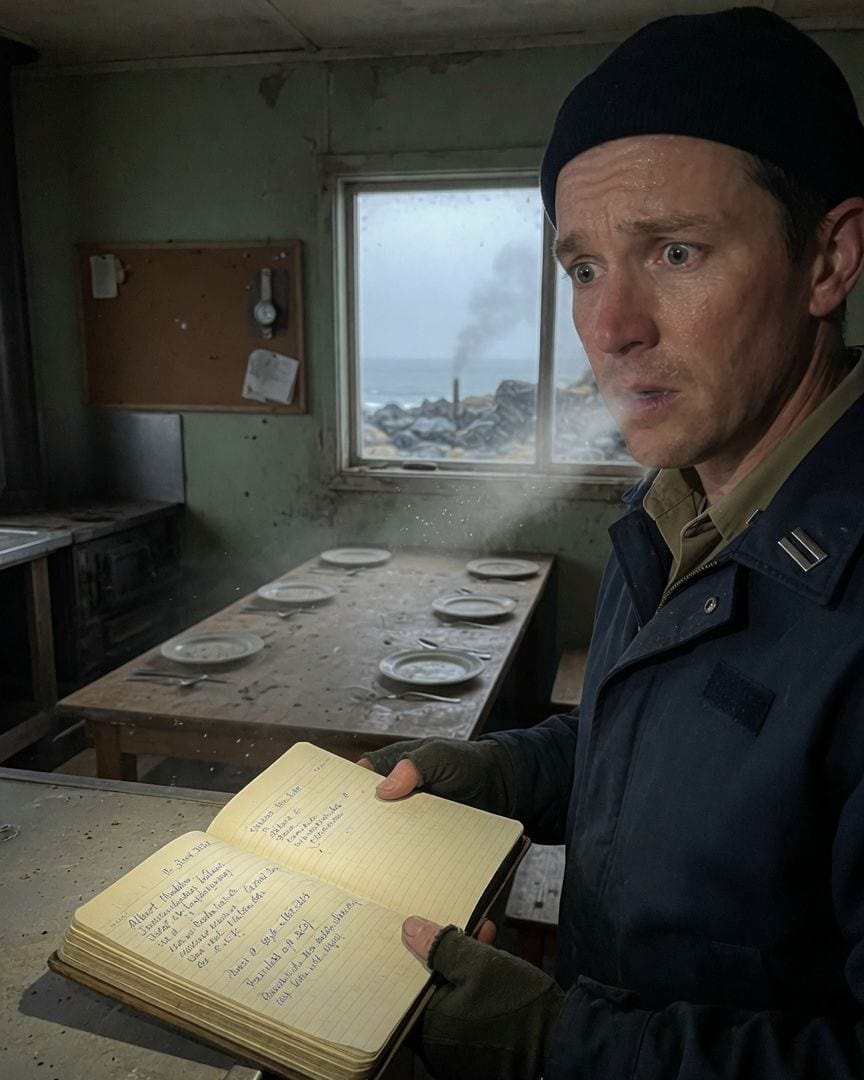
Coast Guard Lieutenant Thatcher finds an old crew photo dated today, June 15, 2024.
Lieutenant Daniel Thatcher leads a survey crew to a derelict LORAN station in the frigid Aleutians, officially abandoned for over a decade. But as they enter, a heavy-bound station log lies open on a counter, its ink startlingly wet, detailing a routine watch from today with names unknown to the Coast Guard.
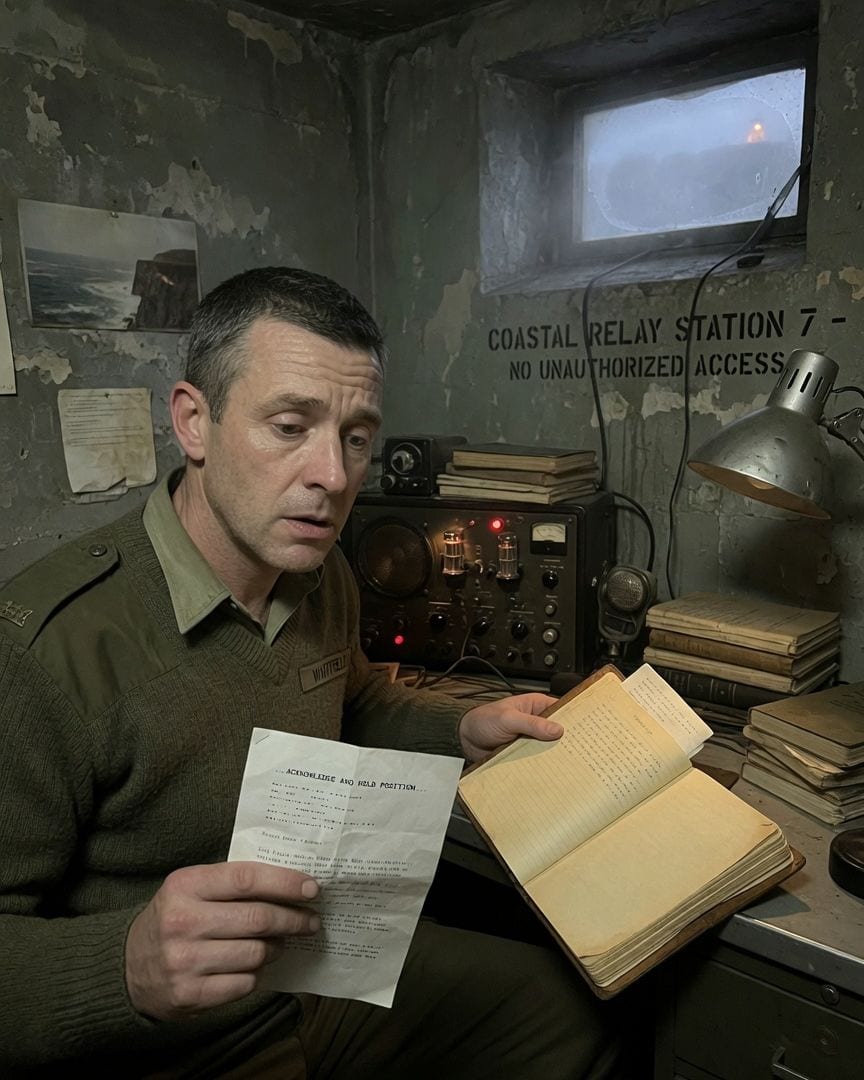
A corporal on his last watch decoded a Morse order for his station. It was sent forty years ago, for *this* very night.
Corporal Greg Whitfield stood watch on one of the final nights before his old coastal relay station was mothballed. The fog-bound English coast echoed with the lonely boom of the sea, the bunker's ancient equipment humming its last familiar tune. Suddenly, a burst of Morse code cut through the static on a long-dead frequency, an impossible convoy sighting for a shipping lane closed for forty years. Decrypted, the message named his exact station and tonight's date, instructing the operator to acknowledge and hold position, no matter what. Later, a dusty archive revealed a logbook entry from precisely forty years ago, recording the same message, acknowledged by a Private Barlow, followed by a chilling blank page. What happened to the last operator who acknowledged a forty-year-old ghost order?